} Crítica Retrô: horror

Tradutor / Translator / Traductor / Übersetzer / Traduttore / Traducteur / 翻訳者 / переводчик

Showing posts with label horror. Show all posts

Friday, February 13, 2026

The Horror of Party Beach (1964)


Motocicletas na estrada, com os motoqueiros vestidos de couro como em “O Selvagem” de 1953. A ambientação é a mesma dos filmes de praia dos anos 1960, como “Férias no Havaí” (1961). E há uma ameaça vinda das profundezas do oceano, mais de uma década antes de “Tubarão” (1975). Se estes ingredientes te deixaram intrigado, você precisa conferir o resultado: o filme mal-feito, porém cômico “The Horror of Party Beach”.


Motorcycles on the road, with their riders dressed in black leather like in 1953’s “The Wild One”. The setting is the same as the Beach Party movies of the 1960s, such as “Gidget Goes Hawaiian” (1961). And there is a menace coming from the depths of the ocean, over a decade before “Jaws” (1975). If these ingredients left you intrigued, you should check the result: the badly made yet comical “The Horror of Party Beach”.


Tudo é muito divertido na praia até que um barril de lixo radioativo é jogado no oceano e dá origem a um monstro a partir de um crânio humano e outros dejetos encontrados no fundo do mar. Vamos chamar esse monstro de Criatura. A primeira pessoa a se encontrar com a Criatura é a pobre Tina (Marilyn Clarke), que havia acabado de brigar com o namoradinho Hank (John Scott). Seu corpo coberto de sangue flutua pelo oceano até chegar à praia. Gritos. Começa uma investigação.


All is fun and games at the beach until a barrel of radioactive waste is thrown in the ocean and assembles a monster from a human skull and other stuff down there. Let’s call this monster a Creature. The first person to have an encounter with the Creature is poor Tina (Marilyn Clarke), who had just had an argument with her beau Hank (John Scott). Her gory body covered in blood fluctuates in the ocean until it reaches the shore. Screams. An investigation starts.


“Ninguém percebeu como a Criatura era ridícula?” - você deve estar se perguntando. Isso me lembra de outro filme tão ruim que chega a ser cômico: “Robot Monster” de 1953. Em ambos os casos, o baixo orçamento foi o óbvio culpado que impediu de fazer uma Criatura crível e capaz de provocar medo. Poderia até se dizer que mais dinheiro foi gasto com os efeitos especiais para destruir a Criatura do que foi gasto para criá-la em primeiro lugar.


“Didn’t anyone notice how ridiculous the Creature was?” - you might be asking. This reminds me of another comically bad movie: 1953’s “Robot Monster”. In both cases, the budget was the obvious constraint to make a believable and fear-inducing Creature. It could even be questioned if more money was spent with the special effects used when the Creature was destroyed than it was spent to build the Creature.


De alguma maneira, o filme consegue encaixar seis canções originais em 78 minutos. Eles conseguiram fazer isso graças a uma boy band na praia que cantava esses “hits”. Uma canção é também entoada por meninas numa festinha que é invadida pelas Criaturas - ah, eu esqueci de dizer que a Criatura se multiplicou?


Somehow the movie manages to squeeze six original songs in 78 minutes. They managed this by having a boy band at the beach, singing these “hits”. There is also a song sung by an all-girls slumber party that is invaded by the Creatures - oh, did I forget to mention that it multiplied?


Com o ataque na praia, na festinha, a sequência com as mulheres viajando juntas, as moças andando até em casa, os dois amigos bêbados e a investigação, poderíamos dizer que o filme é episódico e o que conecta os episódios é a presença das Criaturas. Há ainda outras vítimas que não recebem grande tempo de tela: são mostradas numa montagem em paralelo com manchetes de jornais anunciando os últimos passos da Criatura.


With the beach attack, the slumber party, the sequence with the women in a road trip, the ladies walking home, the two drunk friends and the investigation, we could say that the movie is episodic and what connects the episodes is the presence of the Creatures. There are also the other victims that aren’t given screen time: they are shown in a montage in parallel with newspaper headlines announcing the latest steps of the Creature.


Há momentos que poderiam ser considerados críticas aos filmes de praia em voga na época, mas eles provavelmente não foram concebidos como tal. Podemos destacar, nos primeiros 12 minutos, uma breve sequência na qual uma mulher está beijando um homem, que então dá seu lugar para outro homem. Ela elogia como ele beija bem e, percebendo que ele não é quem ela pensava ser, ela não vê problema e continua beijando o desconhecido.


There are moments that could be considered criticism of the Beach Party subgenre, then a fad, but they probably weren’t conceived as such. We could highlight, in the first 12 minutes, a brief sequence in which a woman is kissing a man, who then gives his place to another man. She compliments his kissing and, realizing he’s not the one she believed he was, she sees no problem and keeps on kissing the unknown.


O mesmo cara que escreveu o roteiro ficou responsável pela fotografia e seu nome é Richard Hilliard. Ele foi também diretor de fotografia para “The Curse of the Living Corpse”, também feito em 1964 e também dirigido por Del Tenney. Richard havia escrito, dirigido e produzido o filme bizarro “The Lonely Sex” em 1959, adiantando temas depois vistos em “Psicose” e “Peeping Tom”, mas, como um usuário do Letterboxd resumiu, “há definitivamente algo aqui, mas isso é arruinado por um cineasta incompetente”.


The same guy who writes the screenplay is responsible for the photography and his name is Richard Hilliard. He was also the cinematographer for “The Curse of the Living Corpse”, also made in 1964 and also directed by Del Tenney. Richard had written, directed and produced the exploitation film “The Lonely Sex” in 1959, pre-dating themes later seen in “Psycho” and “Peeping Tom” but, as a Letterboxd user says, “there’s definitely something here, but it’s ruined by incompetent filmmaking”.

Uma personagem que roubou a cena foi Eulabelle, uma empregada que acredita que as mortes são causadas por algum tipo de zumbi ou vudu. Ela é interpretada por Eulabelle Moore, uma atriz que fez sucesso com papéis cômicos na Broadway. É frustrante ver uma mulher negra mais uma vez interpretando uma empregada, mas é ótimo saber que ela era a única que tinha razão: a Criatura é de fato um tipo de zumbi à procura de sangue humano para sobreviver.


One character who stole the scene was Eulabelle, a maid who believe the deaths are caused by some kind of zombies or voodoo. She is played by Eulabelle Moore, an actress who found success playing comic roles on Broadway. It’s frustrating seeing a black woman once again playing a maid, but it’s great to know that she was the only right person: the Creature is indeed some kind of zombie in need of human blood to survive.


Perfeitamente sumarizado como “tão ruim que é bom”, este filme que sequer recebeu título no Brasil - nunca deve ter estreado oficialmente aqui - é como uma festa na praia: leve, despretensioso e melhor se você estiver com amigos para darem boas risadas.


Perfectly summarized as “so bad it’s good”, this film that didn’t receive a title here in Brazil - it may not have had an official premiere - is like a beach party: light, unpretentious and better if you are with your friends sharing a good laugh.


This is my contribution to the Eighth So Bad It’s Good blogathon, hosted by Rebecca at Taking Up Room.

Monday, November 10, 2025

Häxan - A Feitiçaria Através dos Tempos (1922) / Häxan (1922)


Alguns meses atrás, investiguei a carreira do diretor dinamarquês Urban Gad e mencionei um filme de Benjamin Christensen, “The Mysterious X” (1914). Hoje retorno a Christensen para finalmente assistir à sua obra mais conhecida, um documentário que expande os limites pouco claros do novo gênero com reconstruções e dramatizações 

Earlier this year, I investigated the career of Danish filmmaker Urban Gad and mentioned one film from Benjamin Christensen, “The Mysterious X” (1914). Now I return to Christensen to finally watch his most well-known work, a documentary that expands the blurred limits of the new genre with reconstruction and dramatizations. 

Em inglês, “witch”. Em espanhol, “bruja”. Em alemão, “Hexe”. Em italiano, “strega”. Em francês, “sorcière”. Não importa o nome, quando algo difícil de acreditar ou de explicar acontecia, ela era culpada: a bruxa!

In Portuguese, “bruxa”. In Spanish, “bruja”. In German, “Hexe”. In Italian, “strega”. In French, “sorcière”. No matter the name, when something hard to believe or explain happened, she was blamed: the witch!

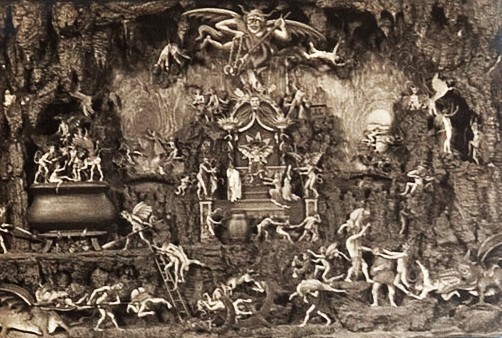
O primeiro capítulo de “Häxan” é muito peculiar porque apresenta o contexto histórico de mitos sobre bruxas e bruxaria em geral, majoritariamente na Idade Média. As cartelas de texto descrevem e contextualizam imagens retiradas de livros antigos e outras fontes históricas. Podemos dizer, com alguma margem de certeza, que ninguém estava fazendo nada parecido com isso na época.

The first chapter of “Häxan” is very unique in the sense it presents historical context for myths about the witch and witchcraft in general, mostly in the Middle Ages. The title cards describe and contextualize ancient images taken from old books and other historical sources. We could say, with a margin of certainty, that nobody was doing this at the time.

No capítulo dois somos levados para dentro do esconderijo de uma bruxa do século XV. A feiticeira Karna (Ella La Cour) usa dedos de enforcados em poções e cadáveres são violados em busca de segredos. A adoração do diabo é explicada, bem como os hábitos das bruxas conforme elas ganham seu poder diretamente do encardido.

In chapter two we’re taken inside a witch’s den in the 15th century. The witch Karna (Ella La Cour) uses fingers of the hanged in potions and corpses are violated in search of meaningful secrets. The adoration of the devil is explained, as well as the habits of witches as they gain their power directly from the king of the underworld.

O capítulo três traz o começo de uma história sobre a Inquisição na Alemanha. Quando um homem adoece, uma mendiga, Maria (Maren Pedersen), é acusada de feitiçaria. O capítulo quatro mostra a tortura e confissão de Maria. O capítulo cinco traz a prisão e tortura de outras mulheres acusadas de feitiçaria e a questão é levantada: como confiar em membros do clero que mentem e enganam?

Chapter three brings the beginning of a story about the Inquisition in Germany. When a man falls ill, a beggar, Maria (Maren Pedersen), is accused of witchcraft. Chapter four shows Maria’s torture and confession. Chapter five brings the arrest and torture of other women accused of witchcraft and the question appear: how can you trust clergy members who lie and deceive?

O capítulo seis é sobre instrumentos de tortura e também a histeria que se espalha num convento quando uma freira é enfeitiçada. Finalmente, o capítulo sete é sobre possessão no mundo moderno - resultado de doenças mentais. A situação muda: a mulher que teria problemas com a igreja no passado agora pode ter problemas com a lei e a polícia. 

Chapter six is all about torture instruments and also the hysteria that spreads in a convent when a nun is bewitched. Finally, chapter seven is about possession in modern days - the results of mental illness. The situation then shifts: the woman who would have had trouble with the church now may face issues with the law and the police.

O poder da feitiçaria reside na sugestão: as pessoas creem que foram enfeitiçadas porque estão sugestionadas a isso. Como o filme coloca em palavras: “a crença era tão forte que o Diabo se tornou algo real”. Em tempos em que a superstição era mais presente, as pessoas acreditavam em coisas surreais quando eram incapazes de explicar algo. Mas como o filme lida com a possessão em tempos modernos, fica claro que não é a época que cria as ilusões: é a fraqueza da mente. E não estou sendo psicofóbica: como alguém com uma doença mental, conheço bem nossas fraquezas.  

The power of witchcraft lies in suggestion: people believe they were bewitched because they are open to it. As the film puts in words: “The belief was so strong that the Devil became something real”. In times when superstitions were more widespread, people believed in surreal things when they couldn’t explain something. But as the movie deals with possession in modern times, it becomes clear that it isn’t the era that allows delusions: it’s the weakness of the mind. And I’m not being against people with mental illnesses: I have one too and I know we have weaknesses.

Uma camada extra de estigma é adicionada quando o filme descreve a parceira do diabo como “velha, pobre e miserável”. Em muitas línguas uma mulher feia pode ser chamada de bruxa, como você deve saber. Mas o filme vai mais além ao dizer que ser velha e feia em tempos medievais era perigoso, mas não era seguro ser jovem e bonita. Uma velha podia enfeitiçar um homem por pirraça, e uma mulher jovem podia fazer um homem religioso ter pensamentos obscenos através da bruxaria. No passado, ainda mais que hoje, era arriscado simplesmente ser mulher. 

An extra layer of stigma is added when the movie describes the devil’s partner as “old, poor and miserable”. In many languages an ugly woman can be called a witch, you know. But the film goes further saying that being old and ugly in Medieval times was dangerous, but it wasn’t safe to be young and pretty. An old woman could bewitch a man out of pettiness, and a young one could make a pious man have dirty thoughts also through witchcraft. In the past, even more than today, it was risky simply being a woman.

O cinema em sua infância já era inventivo. Em “Häxan”, encontramos técnicas como dupla exposição, shots reversos, uso de miniaturas e animação em stop-motion de um boneco do Diabo. O cinema em sua infância também era “assombroso”, conforme usava luzes e sombras para criar o clima e mesmo como elemento narrativo. Para fazer o filme parecer ainda mais sombrio,"Häxan” foi gravado quase sempre à noite. A sequência de bruxas voando atrás de sombras de pessoas é icônica, talvez a mais lembrada do filme. 

Early cinema has always been inventive. In “Häxan”, we can find techniques such as double exposure, reverse shots, miniatures and stop-motion animation of a little Devil doll. Early cinema has also always been “shadowy”, as it uses lights and shadows to create the mood and even as a narrative device. To make the film look even gloomier, “Häxan” was mostly shot at night.The sequence of witches flying behind the shadows of people is iconic, perhaps the one more associated with the film.

Nascido em 1879, Benjamin Christensen queria ser cantor de ópera, mas o medo do palco o impediu de realizar esse sonho. Em vez disso, criou pesadelos para as telas. Depois de “Night of Revenge” de 1916, ele se retirou das telas por alguns anos para criar “Häxan”, no qual ele confiou só em si mesmo para interpretar o Diabo. O sucesso permitiu que ele se mudasse para Hollywood, mas desta fase de sua carreira só um filme sobreviveu, chamado “Nos Domínios de Satã”, de 1929. De volta à Dinamarca, ele dirigiu mais alguns títulos e gerenciou um cinema.

Born in 1879, Benjamin Christensen wanted to become an opera singer, but stage fright prevented him from achieving his dream. Instead, he created nightmares for the screen. After the 1916 “Night of Revenge”, he removed himself from the screen for a few years to craft “Häxan”, in which he trusted only himself to play the Devil. The success made it possible for him to move to Hollywood, but from this phase in his career only one film survives, the aptly titled 1929 “Seven Footprints to Satan”. Back to Denmark, he directed a few more titles and ran a movie theater.

O capítulo cinco termina com a estatística de que oito milhões de pessoas foram queimadas acusadas de feitiçaria - um Holocausto Medievel. Um Pecado, com letra maiúscula, real, pelo qual ninguém - nem a Igreja Católica nem as pessoas que denunciaram, torturaram e queimaram - pediu perdão. Hoje somos queimadas em outros tipos de fogueiras, algumas inclusive metafóricas, e olhamos para trás para enfrentar fanáticos e a superstição. E, como verdadeiro documento histórico, “Häxan” está aqui para nos informar e empoderar.

Chapter five ends with the statistics that eight million people have been burned accused of witchcraft - a Medieval Holocaust. A real Sin, with a capital letter, nobody - not the Catholic Church nor the people who reported, tortured and burned - asked forgiveness for. As we’re tossed to other kinds of fires, some even metaphorical ones, we look back and fight fanatics and superstition. And, as a true historical document, “Häxan” is here to inform and empower us.

This is my contribution to the Early Shadows and Pre-Code Horror blogathon, hosted by the Classic Movie Blog Association.

Friday, October 24, 2025

O Gato e o Canário (1927) / The Cat and the Canary (1927)


O que podemos esperar de um filme que começa com seu cenário sendo descrito como “a grotesca mansão de um milionário excêntrico”? Sustos, arrepios na espinha e diversão: tudo isso em apenas 87 minutos. Este é “O Gato e o Canário”.

What can we expect from a movie that starts with its setting described as “the grotesque mansion of an eccentric millionaire”? Thrills, shills and fun: this all packed in 87 minutes. This is “The Cat and the Canary”.

Quando estava morrendo, Cyrus West sentiu que seus parentes eram como gatos em torno de um canário, isto é, predadores. No vigésimo aniversário de sua morte, esses parentes se reúnem na mansão para finalmente abrirem seu testamento. Todos estão com os nervos à flor da pele por estarem numa mansão mal-assombrada, mas a curiosidade sobre quem ficará com o dinheiro é maior que qualquer medo.

When he was dying, Cyrus West felt that his relatives were like cats around a canary, that is, predators. On the 20th anniversary of his death, these relatives reunite in his mansion to finally hear the reading of his will. Everybody is nervous to be in a haunted mansion, but the wish to know who gets the money is bigger than any fear.

O vencedor leva tudo, e a vencedora é Annabelle West (Laura La Plante). Mas há uma condição: a nova herdeira deve ser examinada por um médico e declarada mentalmente sã, ou o dinheiro irá para outra pessoa. Annabelle e os outros estão se preparando para passar a noite na mansão quando o retrato de Cyrus cai da parede:  é um mau pressentimento, algo terrível acontecerá naquela noite, diz a governanta. Annabelle é agora o canário em meio aos gatos.

Winner takes it all, and the winner is Annabelle West (Laura La Plante). But there is a condition: the new heiress must be examined by a doctor and be declared mentally sane, or the money will go to someone else. Annabelle and the others prepare to spend the night at the mansion when Cyrus’s portrait falls from the wall: it’s a bad omen, something terrible will happen that night, says the housekeeper. Annabelle is now the canary among the cats.

Para ter mais emoção, um guarda chega com a notícia de que um louco fugiu do hospício e provavelmente está escondido em algum canto da mansão. Este louco pensa que é um gato e destrói as suas vítimas como se fossem canários indefesos. Mais essa agora: os convidados começam a suspeitar que Annabelle está louca, até que ela prova que há na mansão passagens secretas e quartos ocultos.

To spice things up, a guard arrives with the news that a lunatic escaped and is probably hidden somewhere inside the mansion. This lunatic thinks he’s a cat and destroys his victims as if they were defenseless canaries. More than that: the guests start suspecting that Annabelle is crazy, until she proves there are secret passages and hidden rooms in the mansion.

Algumas cartelas de texto são muito engraçadas, brincando não apenas com o significado das palavras, mas também com a forma delas e com sua distribuição na tela. O design dos intertítulos era uma arte e o homem responsável por eles neste filme foi Walter Anthony, que estreou nos cinemas fazendo as cartelas de texto para “Esposas Ingênuas” (1922) de Stroheim e trabalhou para além da morte: quatro anos após ele morrer ainda eram feitos curtas que ele escrevera.

Some title cards are very funny, playing not only with the meaning of the words, but also with their shapes and how they’re distributed on screen. Title card design was truly an art and the man responsible for them in this movie was Walter Anthony, who debuted in films doing the title cards for Stroheim’s “Foolish Wives” (1922) and worked beyond his death: four years after he died short films written by him were still being made.

As mãos são um motif importante no filme. Há, obviamente, as mãos que saem da parede para roubar o colar de diamantes de Annabelle, um símbolo que praticamente representa o filme porque permanece nas nossas mentes após o fim da projeção. Mas há também as mãos do médico consultando Annabelle: elas aparecem em close-up na frente do rosto dele, elas sentem o pulso da mulher, elas abrem os olhos dela. Há outros momentos, mas mencioná-los seria dar spoiler. A dúvida permanece: pelas mãos de quem Annabelle perecerá? 

Hands are an important motif in the movie. There are, of course, the hands that come out of the wall to steal Annabelle’s diamond necklace, a symbol that practically represents the film as it remains in our minds after the projection is over. But there are also the hands of the doctor who is analyzing Annabelle: they appear in close-up in front of his face, they feel the woman’s pulse, they open her eyes. There are other handy moments (LOL), but they configure as spoilers. The doubt lingers: by whose hands will Annabelle perish?

“O Gato e o Canário” teve origem como peça de teatro do dramaturgo John Willard. O roteiro é de Robert F. Hill, que também serviu como diretor assistente, e Alfred A. Cohn, com o mesmo sobrenome do editor Martin G. Cohn, e ambos com o mesmo sobrenome de Harry Cohn, o chefão dos estúdios Columbia - os três não eram parentes de sangue e este filme foi feito pelos estúdios Universal. 

“The Cat and the Canary” originated as a stage play by John Willard. The scenario was by Robert F. Hill, who also served as assistant director, and Alfred A. Cohn, who shares a last name with editor Martin G. Cohn, and both shared the last name with Harry Cohn, the big boss at Columbia studios - they weren’t related by blood and this film was made at Universal. 

A tia Susan é interpretada por uma atriz que você deveria conhecer: Flora Finch. Metade de uma das primeiras duplas dinâmicas na História do cinema, a alta e magra Finch foi colocada ao lado do gorducho John Bunny seguindo a lógica de que opostos se atraem. Seus curtas eram chamados de “Bunnyfinches”. Em “O Gato e o Canário”, é possível ver que Flora era uma grande comediante, que fez mais de 270 filmes entre 1908 e 1939, com a maioria de seu trabalho nos talkies sendo como figurante. 

Aunt Susan is played by an actress you must know: Flora Finch. One half of one of the very first dynamic duos in the History of cinema, the tall and thin Finch was paired with the chubby John Bunny following the notion that opposites attract each other. Their shorts were nicknamed “Bunnyfinches”. In “The Cat and the Canary”, you can see that Flora was a pro at comedy, making over 270 movies from 1908 to 1939, and most of her later works were uncredited. 

“O Gato e o Canário” tem a dose certa de suspense. Tem ainda um romance entre Annabelle e Paul Jones, interpretado por Creighton Hale. Um filme perfeito para ver no Halloween, este foi um dos últimos trabalhos do grande diretor Paul Leni, que morreu em 1929 aos 44 anos de complicações causadas por um dente infeccionado. A mistura de horror e humor era uma marca registrada de Leni e é uma pena que ele não tenha vivido mais para nos legar outros grandes filmes. 

“The Cat and the Canary” has just the right amount of spookiness. There is even romance between Annabelle and Paul Jones, played by Creighton Hale. A perfect film to kickstart Halloween season, this was one of the last works of the great director Paul Leni, who died in 1929 at age 44 from complications caused by an untreated tooth infection. The mix of humor and horror was one of Leni’s trademark and it’s a shame that he didn’t live longer to make other great movies like this one.

This is my contribution to the Secret Places and Trippy Houses blogathon, hosted by Rebecca at Taking Up Room.

Sunday, July 3, 2022

A Mulher do Doutor Phibes / Doctor Phibes’ Wife


Dr Phibes é um homem que preza a família. E, como ele não tem filhos, sua família se resume à sua devotada esposa, Victoria Regina Phibes. Mas nós nunca a conhecemos com vida nos filmes estrelando Dr Phibes. No entanto, é ela o catalisador para a trama do primeiro filme desta, podemos dizer, “pequena franquia”: é a morte dela que faz com que Anton Phibes busque vingança.

Dr Phibes is a family-oriented man. And, since he has no children, his whole family is comprised of his devoted wife, Victoria Regina Phibes. But we never met her alive in the movies starring Dr Phibes. However, she is the catalyst for the plot of the first movie of this, could we say, “little franchise”: it’s her death that makes Anton Phibes seek revenge.

O Abominável Dr Phibes” (1971) começa com uma figura sinistra, coberta por uma capa, tocando um órgão – quase como o “Fantasma da Ópera” de Lon Chaney. A figura é o Dr Anton Phibes (Vincent Price), um homem que já matou alguns médicos. Às vezes ele usa animais, como ratos e morcegos e outras pragas, e enquanto ele comete o crime sua assistente Vulnavia (Virrginia North) toca violino. Mas ele cometeu um terrível erro no último assassinato, pois deixou cair um colar na cena do crime.

The Abominable Dr Phibes” (1971) starts with a sinister, cloaked figure playing an organ – almost like Lon Chaney’s “Phantom of the Opera”. The figure is Dr Anton Phibes (Vincent Price), a man that has been going around killing physicians. Sometimes he uses animals, like rats and bats and other plagues, and while he commits the crime, his assistant Vulnavia (Virginia North) plays the violin nearby. But he made a huge mistake in his latest killing, as he left his necklace in the crime scene.

Todas as vítimas têm algo em comum, além da profissão: todos foram, em um momento ou outro de suas vidas, próximos do Dr Vesalius (Joseph Cotten). E todos eles se juntaram para tratar a esposa do Dr Phibes, que acabou morrendo na mesa de cirurgia. Não vai demorar até que o inspetor Harry Trout (Peter Jeffrey) resolva este quebra-cabeça.

All the victims have one thing in common, besides the profession: they all have been, in some point of their lives, associated with Dr Vesalius (Joseph Cotten). And they all came together to take care of Dr Phibes’ wife, who ended up dying during surgery. It won’t be long until Inspector Harry Trout (Peter Jeffrey) puts all the pieces together.

O final de “O Abominável Dr Phibes” – completo com uma versão de “Over the Rainbow” – não é a última vez em que veremos o assassino. “A Volta do Dr Phibes” (1972) começa três anos após os eventos do primeiro filme, quando o Dr Phibes volta à vida graças à luz da lua e sai de sua casa em busca de um papiro que pode levá-lo a desvendar os segredos da ressurreição e da vida eterna.

The ending of “The Abominable Dr Phibes” – complete with a rendition of “Over the Rainbow”- is not the last time we see Phibes. “Dr Phibes Rises Again” (1972) begins three years after the events of the first film, when Dr Phibes is brought back to life by the moonlight and comes out of his house looking for a papyrus that can lead him to the secrets of resurrection and eternal life.

O grande problema agora é que o papiro está nas mãos de Darrus Biederbeck (Robert Quarry), um arqueólogo que promete dar ao joalheiro Harry Ambrose (Hugh Griffith, que interpretou um rabino no primeiro filme) todo o ouro que ele encontrar no local que o papiro indicar. Quando o Dr Phibes volta a matar para roubar o papiro, o inspetor Harry Trout volta à cena.

The main issue now is that the papyrus is currently with Darrus Biederbeck (Robert Quarry), an archaeologist who promises to give jewel maker Harry Ambrose (Hugh Griffith, who played the role of a Rabbi in the first movie) all the gold he might find in the place the papyrus indicates. After Dr Phibes kills once again to steal the papyrus, Inspector Harry Trout gets back to the scene.

Novamente em posse do papiro, Dr Phibes sobe num navio junto com uma nova Vulnavia (Valli Kemp), Biederbeck, Ambrose e a namorada de Biederbeck, Diana (Fiona Lewis). O destino deles é o Egito, onde procurarão o rio da vida.

Once again with the papyrus, Dr Phibes boards a ship together with a new Vulnavia (Valli Kemp), Biederbeck, Ambrose and Biederbeck’s girlfriend Diana (Fiona Lewis). Their destination is Egypt, to find the river of life.

A atriz por trás do retrato de Victoria é Caroline Munro, mais conhecida atualmente por ter interpretado Naomi em “007: o Espião que me Amava” (1977). Pelas datas, Victoria morreu aos 28 anos, enquanto Caroline tinha apenas 22 quando o primeiro filme estreou. Ela não foi creditada em nenhum dos dois filmes porque, segundo o IMDb, ela tinha um contrato com a Hammer Films, estúdio onde fez seus maiores sucessos.

The actress behind Victoria’s picture is Caroline Munro, better known today for playing Naomi in “007: The Spy who Loved Me” (1977). By the dates, Victoria died at 28, while Caroline was only 22 when the first film was released. She wasn’t credited in either of the films because, per IMDb, she was under contract to Hammer Films, studio where she made her biggest successes. 

Esta não é a primeira vez em que um filme com Vincent Price tem um retrato de mulher em destaque: outra vez em que isso acontece é, obviamente, com o retrato de Laura Hunt em “Laura” (1944). Neste filme noir, o detetive Mark McPherson (Dana Andrews) fica obcecado pelo retrato de Laura, mostrando a mesma afeição que levaria o Dr Phibes a matar muitas pessoas após fazer esta promessa ao retrato da falecida esposa.

This is not the first time a Vincent Price movie has a picture of a woman playing a major role: another time it happens is, of course, with Laura Hunt’s picture in “Laura” (1944). In this film noir, detective Mark McPherson (Dana Andrews) becomes infatuated with Laura’s picture, showing the same affection that would lead Dr Phibes to kill many people after promising to do so to his late wife’s picture.

Os filmes são ambientados na década de 1920 – algo que não podemos perceber pelas roupas, mas sim pelos carros e alguns objetos como telefones. Um terceiro filme com Dr Phibes foi planejado, mas nunca realizado, pois Vincent Price tinha outros projetos e o estúdio que fez os dois filmes, American International Pictures, também mudou de estilo em suas produções.

The films are set in the 1920s – something we can’t say by looking at the clothes, but by looking at the cars and some objects like the phones. A third movie featuring Dr Phibes was planned, but never made, as Vincent Price had other projects and the studio that made the two movies, American International Pictures, also shifted ways with their production.

Dr Phibes é um gênio do mal. Ele conseguiu reconstruir seu rosto desfigurado e achou um jeito de continuar falando mesmo depois de um terrível acidente. Ele viajou quilômetros e fez muitas vítimas, em dois filmes de horror que também têm humor. E no final torcemos por ele, afinal, tudo o que Dr Phibes fez foi por amor.

Dr Phibes is an evil mastermind. He managed to reconstruct his disfigured face and find a way to keep on speaking even after a terrible incident. He traveled many miles and made many victims, in two horror films that are also pretty humorous. And in the end we root for him, after all, everything Dr Phibes did, he did for love.

This is my contribution to the Other Than a Bond Girl blogathon, hosted by Gill and Gabriela at Realweegiemidget Reviews and Pale Writer.

Thursday, May 20, 2021

Corredores de Sangue (1958) / Corridors of Blood (1958)


Quando falamos sobre Sir Christopher Lee, a maioria das pessoas se lembra de seu papel em “O Senhor dos Anéis”. Os fãs de cinema clássico em geral o associam com o gênero terror, pois ele interpretou Drácula em sete filmes. No mesmo ano em que ele interpretou o vampiro pela primeira vez, ele esteve em um filme com Boris Karloff, que interpretou Frankenstein na conhecida versão dos estúdios Universal de 1931. Este é o filme “Corredores de Sangue”: quando Drácula e Frankenstein se encontraram – mas, neste caso, Christopher Lee conseguiu ser mais assustador que Karloff.

When we talk about Sir Christopher Lee, most people think about his role in “The Lord of the Rings”. Classic movie fans often associate him with the horror genre, as he played Dracula in seven films. The same year he played the vampire for the first time, he appeared in a movie alongside Boris Karloff, who had played Frankenstein in the well-known Universal version from 1931. This is “Corridors of Blood”: when Dracula met Frankenstein – but, in this case, Christopher Lee managed to be more somber than Karloff.

Nossa história acontece na Londres de 1840, “antes da descoberta da anestesia”, conforme os dizeres na tela. O anfiteatro onde as cirurgias acontecem está cheio de homens que querem ver o Dr Thomas Bolton (Boris Karloff) amputar um fêmur sem anestesia. Depois da operação e de muitos gritos do paciente, um amigo médico diz que a dor é parte de qualquer cirurgia. Dr Bolton acredita que um dia as cirurgias acontecerão com o mínimo possível de dor.

Our story is set in London in 1840, “before the discovery of anaesthesia”, as a title card tells. The operation theatre is full of gentlemen who want to see Dr Thomas Bolton (Boris Karloff) amputating a femur without anesthesia. After the operation and the many screams from the patient, a doctor friend says that pain is part of any surgery. Dr Bolton believes that one day operations will be performed with minimal pain.

O filho do Dr Bolton, Jonathan (Francis Matthews), acha que as ideias do pai sobre anestesia são bobagem, mas isso não impede que o Dr Bolton faça experiências com gases anestésicos... usando a si mesmo como cobaia. Ele logo descobre o poder do gás hilariante para impedir que as pessoas sintam dor. 

Dr Bolton's son, Jonathan (Francis Matthews), believes his father's talk about anesthesia is foolish, but this doesn't stop Dr Bolton from making experiments with anesthetic gas... experimenting them on himself. He quickly finds the power of the laughing gas to prevent people from feeling pain.

Sua primeira demonstração do gás anestésico é um desastre enorme e ele é vaiado por todos que estão assistindo. Agora o Dr Bolton começa a fazer experiências com ópio – e o resultado é promissor! O problema é que o médico fica sedado, sim, mas também anda pela cidade e acredita que tudo não passou de um sonho quando ele acorda.

His first demonstration 0f the anesthetic gas is an enormous disaster and he's booed by everybody watching. Now Dr Bolton starts experimenting with opium – and it works! The problem is that the doctor is sedated, yes, but he also wanders through the city and believes it was all a dream when he wakes up.

Entre essas experiências – e durante seu transe com ópio – o Dr Bolton frequenta uma estalagem e taverna, onde Resurrection Jose faz seu “trabalho”: seu apelido é completamente irônico, pois seu trabalho consiste em sufocar pessoas bêbadas e doentes que chegam à estalagem, ficando com seus pertences e dividindo os objetos de valor com os donos do local. Sempre que alguém morre, eles chamam o Dr Bolton para assinar a certidão de óbito, e dizem que a pessoa chegou ao lugar com uma tosse estranha para enganar o médico.

In-between these experiences – and during his opium trance – Dr Bolton often goes to an inn/tavern, where Resurrection Joe (Christopher Lee) does his “work”: his nickname is completely ironic, as his job is to suffocate drunk, sick people who arrive at the inn and keep their belongings, sharing the valuable things with the innkeeper. Whenever someone dies, they call Dr Bolton to sign the death certificate, and they say the person had arrived with a strange cough to fool the doctor.

Na estalagem e taverna, confuso com a mistura de gás de ópio, o Dr Bolton é roubado por um garoto, que pega seu precioso caderno cheio de anotações sobre suas experiências. O que o Dr Bolton pode fazer sem suas anotações? Fazer outra experiência com a mistura de gás de ópio para tentar lembrar onde o caderno está, é claro! O plano funciona – e mais uma vez na estalagem e taverna, o Dr Bolton é chantageado pelo proprietário Black Ben (Francis De Wolff), sua esposa Rachel (Adrienne Corri) e Resurrection Joe. E este é apenas o menor dos problemas do Dr Bolton.

In the inn/tavern, inebriated with the opium gas mixture, Dr Bolton is robbed by a boy, who gets his precious notebook full of notes about his experiments. What can Dr Bolton do now without his notes? Experiment again with the opium gas mixture to try to remember where the notebook can be, of course! It works – and once back at the inn/tavern, Dr Bolton is blackmailed by the innkeeper Black Ben (Francis De Wolff), his wife Rachel (Adrienne Corri) and Resurrection Joe. And this is just the beginning of Dr Bolton's problems.

É muito interessante assistir a um filme sobre a história da ciência e da medicina – quando os corredores dos hospitais eram literalmente corredores de sangue. Você pode ver os pacientes imobilizados por cintos para não se contorcerem e atrapalharem a cirurgia. Você também pode ver que as cirurgias tinham de ser feitas rapidamente e que os médicos e assistentes não usavam roupas especiais nem luvas. É óbvio que a anestesia foi uma conquista importante na área médica no século XIX, mas a verdadeira revolução foi a adoção de procedimentos higiênicos simples.

It's so interesting to watch a movie about the history of science and medicine – when the hospital corridors were literal corridors of blood. You can see that the patients were immobilized by belts in order to not contort and screw the surgery. You can also see that the surgeries had to be done quickly and the doctors and assistants use neither special clothes nor gloves. Of course anesthesia was a game-changer in the medical field in the 19th century, but the real revolution was the adoption of simple hygienic procedures. 

Dr Bolton queria provocar um avanço na ciência, mas em sua experiência científica ele poderia – ele deveria – ter usado um observador ou uma cobaia. Ele não deveria ter feito o papel de ambos, o que é bem óbvio... mesmo assim, alguns cientistas famosos usaram a si mesmos comocobaias para suas experiências, e muitos doutores até mesmo operaram a si mesmos para provar algumas hipóteses científicas!

Dr Bolton wanted to advance science, but in his scientific experiment he could – he must – have had an observer or a guinea pig. He shouldn't have been both, which is pretty obvious... even though some famous scientists experimented on themselves, and many doctors even went as far as operating themselves to prove some scientific hypothesis!

O Resurrection Joe de Christopher Lee é um homem alto que só usa preto e que tem uma cicatriz no rosto. Ele é um personagem quieto, o que faz dele ainda mais sinistro. Ele parece desperdiçado na maior parte do filme até que o Dr Bolton é chantageado e ele e o médico se tornam parceiros no crime. É curioso notar que, mesmo que Christopher Lee seja mais conhecido pelos fãs de cinema de terror por ter interpretado Drácula, ele fez quatro papéis que já haviam sido interpretados por Boris Karloff: Lee interpretou Frankenstein um ano antes de “Corredores de Sangue”, interpretou a Múmia um ano depois deste filme, Fu Manchu em cinco filmes nos anos 60 e finalmente Rasputin em 1966.

Christopher Lee's Resurrection Joe is a tall man who only wears black and who has a scar on hir face. He is a quiet character, which makes him even more sinister. He seems underused for most of the film, until Dr Bolton is blackmailed and he and the doctor become partners in crime. It's curious to notice that, even though Christopher Lee is better known for horror movie fans for having played Dracula, he played four characters that had been already played by Boris Karloff: Lee played Frankenstein one year before “Corridors of Blood”, he played the Mummy one year after this film, Fu Manchu in five films in the 1960s and finally Rasputin in 1966.

A trilha sonora é muito assustadora, perfeita para criar um clima sombrio. O compositor, Buxton Orr, curiosamente havia estudado medicina e também compôs a trilha de outro filme sobre médicos e medicina: “De Repente, no Último Verão” (1959). Embora seja em geral a fotografia em preto e branco que crie o clima sombrio em filmes de horror de época, aqui é definitivamente a trilha sonora que se destaca.

The soundtrack is very eerie, perfect to create a somber mood. The composer, Buxton Orr, curiously had studied to be a doctor and also composed the soundtrack for another film about doctors and medicine: “Suddenly, Last Summer” (1959). Although it's often the black and white cinematography that creates the mood for horror period pieces, here it is definitely the soundtrack that is outstanding.

Filmado em 1958 e lançado apenas quatro anos depois, “Corredores de Sangue” é um filme muito bom. Pouco conhecido, curto – com apenas 86 minutos – e muito interessante, aqui os monstros são humanos de verdade – o que os torna muitas vezes mais assustadores que qualquer criatura – e Boris Karloff pode mostrar que tinha muito talento, um talento que a maquiagem de Frankenstein não poderia esconder para sempre.

Shot in 1958 and only released four years later, “Corridors of Blood” is a very good movie. Little known, short – only 86 minutes – and very interesting, here the monsters are real humans – which makes them sometimes more scary than any creature – and Boris Karloff can show that he had a lot of talent, a talent that Frankenstein's make-up and prosthetics couldn't keep hidden forever. 

This is my contribution to the Christopher Lee blogathon, hosted by Gill and Barry at Realweegiemidget Reviews and Cinematic Catharsis.


Related Posts Plugin for WordPress, Blogger...