} Crítica Retrô: 1967

Tradutor / Translator / Traductor / Übersetzer / Traduttore / Traducteur / 翻訳者 / переводчик

Showing posts with label 1967. Show all posts

Friday, October 31, 2025

Adivinhe Quem vem para Jantar (1967) / Guess Who’s Coming to Dinner (1967)


Eu fui apresentada a Sidney Poitier pela minha professora de português do Ensino Fundamental II, que passou “Ao Mestre, com Carinho” (1968) para nós na sexta série. Quando eu comentei sobre ter visto o filme, uma das amigas da minha mãe confessou que era apaixonada por Poitier por causa de dois filmes: aquele que eu recém havia visto e “Adivinhe Quem vem para Jantar”. Uns quatro anos mais tarde eu fui apresentada à dupla dinâmica e romântica de Katharine Hepburn e Spencer Tracy. Assisti a alguns dos nove filmes que eles fizeram juntos, mas ainda não era a hora de assistir à colaboração final deles. A hora finalmente chegou.

I was introduced to Sidney Poitier by my middle school grammar teacher, who showed “To Sir, With Love” (1968) for us in sixth grade. When I talked about seeing the movie, one of my mom’s friends confessed she was in love with Poitier because of two films: that one I’d just watched and “Guess Who’s Coming to Dinner”. Some four years later I was introduced to the dynamic and romantic duo of Katharine Hepburn and Spencer Tracy. I watched some of the nine films they made together, but it wasn’t time to watch their final collaboration. The time finally arrived.

Um homem e uma mulher descem de um avião, conversando animadamente e com intimidade. Ele é negro, ela é branca. Um motorista de táxi se surpreende, assim como a plateia, quando eles se beijam no banco de trás do táxi, uma cena vista pelo retrovisor. Ele é o doutor John Prentice (Sidney Poitier), e ela é Joanna Drayton (Katharine Houghton, sobrinha na vida real de Hepburn). Eles se conheceram há somente dez dias, mas já têm certeza de que querem se casar e viver felizes para sempre. O obstáculo? Preconceito.

A man and a woman come off a plane, chatting with excitement and closeness. He’s black, she’s white. A taxi driver is surprised, as we in the audience also are, when they kiss in the back of the taxi, a scene seen by the rear mirror. He is doctor John Prentice (Sidney Poitier) and she is Joanna Drayton (Katharine Houghton, Hepburn’s real-life niece). They have known each other for only 10 days, but they are sure that they want to get married and live happily ever after. The obstacle? Prejudice.

Não é um problema o fato de John ter sido casado e tido um filho, afinal, sua esposa e a criança morreram num acidente de trem oito anos antes. John brinca que Joanna “não tem como saber quando estou com as bochechas vermelhas” e esta é sua maneira de fazer piada sobre um assunto sério. A mãe de Joanna, Christina (Katharine Hepburn), já mostrou surpresa e desapontamento em seu olhar quando ela pôs os olhos em John. O pai dela, Matt (Spencer Tracy), também está embasbacado e decide investigar o doutor Prentice. E eles têm que ser rápidos: John pega um voo naquela noite, e na semana seguinte ele e Joanna se casam em Genebra. Os Draytons darão ao casal sua bênção? 

There is no problem that John had been married and had a son, after all, wife and kid died in a train accident eight years before. John jokes that Joanna “can’t know when I’m blushing” and this is his way to joke about a serious issue. Joanna’s mother Christina (Katharine Hepburn) already showed surprise and disappointment in her look when she laid eyes on John. Her father Matt (Spencer Tracy) is also flabbergasted and decides to investigate Doctor Prentice. And they must be quick: John grabs a plane that night, and the following week he and Joanna will get married in Geneva. Will the Draytons give the couple their blessing?

O preconceito vem também da empregada dos Draytons, Tillie (Isabel Sanford). Ela é direta quando diz para Joanna que não pode se casar com John porque ele é negro. Joanna aponta que Tillie é da mesma cor que John, e por isso por que ela pode amar Tillie e não John? Às vezes o racismo está tão internalizado que negros falam e fazem coisas racistas. 

The prejudice also comes from the Draytons’ maid, Tillie (Isabel Sanford). She is blunt and candid as she says that Joanna can’t marry John because he’s black. Joanna points out that Tillie is the same color as John, so why can she love Tillie and can’t love John? Sometimes racism is so internalized that black people talk and do racist things.

Por outro lado, há aqueles que parecem ser daltônicos com o assunto, como a própria Joanna e um amigo dos Draytons, Monsenhor Ryan (Cecil Kellaway). Ele diz que já viu um bom número de casais interraciais e eles provavelmente vivem melhor porque há mais esforço, consideração e compreensão entre eles para fazer o casamento funcionar. A última lei Jim Crow de segregação havia sido revogada em 1965, e o curioso caso do casal Loving acontecido em 1958 e, como o pai de John o lembra, o casamento interracial era então ainda ilegal em 16 estados.  

On the other hand, there are those who seem to be colorblind about the issue, like Joanna herself and a friend of the Draytons, Monsignor Ryan (Cecil Kellaway). He says he’s seen a good amount of interracial couples and they probably live better together because there is more effort, consideration and comprehension between them to make the marriage work out. The last Jim Crow segregation law had been overruled in 1965, and the curious case of the Loving couple had happened in 1958 and, as John’s father reminds him, interracial marriage by then was still illegal in 16 states.

Em “Old Films, Young Eyes” (resenha em inglês AQUI), a autora Simone Elias transcreve uma fala da avó, que assistiu ao filme perto da estreia: “Na época, foi visto como um filme realmente revolucionário, por causa de uma mulher branca e um homem negro se apaixonando, formando uma relação saudável, e se casando”. Eram tempos revolucionários: pouco antes da estreia, o casamento interracial foi permitido em todos os estados. Era um passo em direção ao progresso.  

In “Old Films, Young Eyes”, author Simone Elias transcribes a quote by her grandmother, who watched the film near its premiere: “At the time, it was thought to be a breakthrough, a real revolutionary movie, because of a white woman and a black man falling in love, forming a healthy relationship, and getting married.” These were revolutionary times: months before the premiere, interracial marriage was allowed in all states. It was a step towards progress.

Spencer Tracy - ganhador de dois Oscars de Melhor Ator - e Sidney Poitier - um Oscar de Melhor Ator - são o primeiro e o segundo nomes nos créditos, e em terceiro lugar vem Katharine Hepburn, que ganharia seu segundo Oscar por esse filme, mais de 40 anos após a primeira vitória. Poitier, Tracy e Hepburn foram todos indicados ao Oscar pelo filme, mas só ela ganhou - uma vitória merecida, pois seus olhos expressivos podiam dizer mais que um monólogo. Mas são os olhos de Tracy que se enchem d’água quando ela fala sobre a melhor época do relacionamento deles - como você deve saber, Tracy e Hepburn estiveram romanticamente envolvidos por 25 anos.

Spencer Tracy - two Best Actor Oscars - and Sidney Poitier - one Best Actor Oscar - are billed first and second, and third comes Katharine Hepburn, who would win her second Oscar for this film, more than forty years after her first win. Poitier, Tracy and Hepburn were all nominated for Oscars for the film, but only she won - a win she deserved, as her expressive eyes could tell more than a long monologue. But it’s Tracy’s eyes that fill with water when she talks about the best time of their relationship - as you may know, Tracy and Hepburn were romantically involved for 25 years.

O diretor e produtor Stanley Kramer nasceu em Nova York em 1913 e era judeu - ele sabia por experiência própria o que era preconceito e discriminação. De acordo com o IMDb, ele produziu 35 títulos entre 1942 e 1979 e dirigiu 19 filmes, sendo indicado ao Oscar nove vezes, mas ganhou apenas o prêmio honorário Irving Thalberg Memorial Award em 1962. Para “Adivinhe Quem vem para Jantar”, tanto Kramer quanto Hepburn usaram seus salários como garantia porque Tracy estava muito doente durante as gravações e a garantia monetária era necessária se ele falecesse antes do fim das gravações. Tracy faleceu 17 dias após o fim das gravações. 

Director and producer Stanley Kramer was born in New York in 1913 and was Jewish - he knew a lot from his own experience about bigotry and discrimination. According to IMDb, he produced 35 titles from 1942 to 1979 and directed 19 films, being nominated for nine Oscars, but won only the Irving Thalberg Memorial Award in 1962. For “Guess Who’s Coming to Dinner”, both Kramer and Hepburn used their salaries as backing because Tracy was too sick while filming and the backing was necessary if he died before the filming was done. Tracy died 17 days after the shooting ended.

Sem dúvida inspirado pelo filme de 1967, no Brasil em 1973 estreou “Compasso de Espera”, no qual Jorge, um escritor e publicitário, se apaixona por Cristina, uma modelo. Ele é negro, ela é branca. No Brasil existe o mito da “democracia racial”, que diz que não existe racismo no país, mas está longe da verdade. O casal interpretado por Zózimo Bulbul e Renée de Vielmond sofre preconceito sobretudo de estranhos. 

Without a doubt inspired by the 1967 film, in Brazil in 1973 premiered the film “Compasso de Espera”, in which Jorge, a writer and publicist, falls in love with Cristina, a model. He’s black, she’s white. In Brazil there is the myth of “racial democracy”, according to which there isn’t racism in the country, but the contrary is true. The couple, played by Zózimo Bulbul and Renée de Vielmond, faces backlash especially from strangers.

A relação entre pais e filhos é desafiadora, e nela ambos os lados podem enfrentar situações que jamais imaginaram - como os Draytons vendo sua filha apaixonada por um homem negro. Mas os obstáculos que enfrentamos podem nos ensinar que somos mais fortes do que pensamos. Como alguém que descobre um novo sabor de sorvete favorito, nos acostumamos com coisas novas. 

The parents-children relationship is a challenging one, in which both sides might face situations they never dreamed about - like the Draytons seeing their daughter falling in love with a black man. But the obstacles we face can teach us that we’re stronger than we thought. Like someone who discovers a new favorite ice cream flavor, we get used to new things.

Saturday, September 28, 2024

Play Time - Tempo de Diversão (1967) / Play Time (1967)


“Meu Tio” (1958), de Jacques Tati, é um dos meus filmes preferidos de todos os tempos. Também gostei muito de “As Férias do Sr Hulot” (1953), do mesmo diretor. Por isso, não poderia estar mais animada para finalmente assistir ao filme que é considerado sua obra-prima “Play Time – Tempo de Diversão” (1967), que é tanto uma ode quanto uma crítica à modernidade. Infelizmente, me desapontei um pouco com o filme.

Jacques Tati’s “Mon Oncle” (1958) is one of my favorite movies of all time. I also highly enjoyed his “Monsieur Holut’s Vacation” (1953). So I couldn’t be more excited to finally watch what is considered his masterpiece, “Play Time” (1967), a movie that is both an ode to and a critic of modernity. Unfortunately, the film left me a bit disappointed.

Há duas linhas narrativas em “Play Time” que convergem em mais de uma ocasião. Uma linha segue um grupo totalmente feminino de turistas norte-americanas em Paris. A segunda segue, a partir dos 12 minutos de projeção, nosso velho amigo, o Sr Hulot (Tati).

There are two narrative lines in “Play Time” that get intertwined in more than one occasion. One line follows a group of North American female tourists in Paris. The second line follows, starting at the 12-minute mark, our old friend Monsieur Hulot (Tati).

Hulot tem um compromisso agendado em um enorme prédio de escritórios onde também está havendo uma feira de bugigangas modernas. Tati leva tempo – e isso é de se admirar – apresentando os ambientes para nós antes que cheguem os personagens. Isso acontece com o aeroporto no começo, o prédio de escritórios e o restaurante chique.

Hulot has an appointment in a huge office building where there is also a fair presenting modern gadgets. Tati takes his time – and that’s something to admire – to present the environments to us before the characters arrive there. This happens with the airport in the beginning, the office building and the fancy restaurant.

No meu DVD havia um especial para a TV norte-americana chamado “Tativille”, mostrando a cidade cenográfica construída por Tati especialmente para o filme. Tati declarou que, quando você inicia um filme, é você contra o mundo. Em “Play Time”, durante toda a projeção, é Hulot contra o mundo moderno. A modernidade é desconjuntada e fria, e Hulot traz calor para contrapor. Ele também traz calor ao quebrar a porta de vidro do restaurante: dali em diante não são só os “escolhidos” que podem entrar no recinto, que se torna então um local para todos.

In my DVD there was an special for American TV called “Tativille”, showing the town built on studio by Tati especially for the film. Tati declared that, when you start a movie, it’s you against the world. In “Play Time”, all during the projection, it’s Hulot against the modern world. Modernity is disjointed and cold, and Hulot brings warmth to it. He also brings warmth as he shatters the glass door in the restaurant: from then on, not only the “chosen ones” can enter the restaurant, it’s now a place for everybody.

Em “Tativille” também fiquei sabendo que Tati escolheu as turistas norte-americanas entre esposas de marinheiros que estavam em serviço perto do estúdio. A única que recebe mais atenção – e um nome – é a charmosa Barbara (Barbara Dennek). Dennek era uma babá alemã vizinha de Tati, por isso ele a contratou para o papel. Ela ficou, entretanto, incomodada com o longo tempo de gravação, por isso não fez mais filmes.

In “Tativille” I also learned that Tati chose the North American tourists among wives of sailors stationed near the studio. The one that receives more attention – and a name – is the charming Barbara (Barbara Dennek). Dennek was a German au pair who lived next door to Tati, so he hired her for the role. She was, however, disillusioned with the long shooting, so she didn’t appear in another film afterwards.

No IMDb fiquei sabendo que a sequência do restaurante demorou sete semanas para ser filmada, por causa de toda a ação que acontecia tanto no background quanto mais perto da câmera. A filmagem completa durou três anos e por não ter conseguido recobrar os gastos com a bilheteria, Tati ficou endividado por muito tempo.

On IMDb I learned that the restaurant sequence took seven weeks to shoot, because of all the action happening both in the background and the foreground. The whole shooting took three years and the failure to recover the costs at the box office left Tati in debt for a long time.

Jacques Tati disse que a estrela de “Play Time – Tempo de Diversão” é a decoração. Eu concordo. O filme é um deleite para os olhos, capaz de enlouquecer arquitetos e engenheiros. Para mim, não teve a simplicidade e o contraste entre o antigo e o novo que fizeram “Meu Tio” funcionar. A falta de uma linha narrativa também não ajudou. Ainda admiro Tati imensamente, mas “Meu Tio” continua sendo meu favorito entre seus filmes.

Jacques Tati said that the real star of “Play Time” is the decor. I agree. The film is a feast for the eyes and will make architects and engineers go crazy. For me, it lacked the simplicity and the contrast between old and new that made “Mon Oncle” work. The lack of a proper storyline to follow also didn’t help. I still admire Tati immensely, but “Mon Oncle” remains my favorite among his movies.

Sunday, March 31, 2024

No Calor da Noite (1967) / In the Heat of the Night (1967)


O que seria do cinema sem as duplas dissonantes? Pessoas que são como yin e yang, mas estão juntas por alguma razão, em uma missão ou para resolver um problema. Pessoas que são unidas pelo destino, pela providência ou qualquer outra crença. A primeira dupla dissonante que me vem à mente são o Gordo e o Magro – Laurel & Hardy – mas assim como eles há dúzias de duplas juntas para resolverem algumas belas bagunças. Isso acontece num dos mais icônicos filmes da década de 1960, “No Calor da Noite”.


What would be of cinema if there weren’t mismatched duos? People who are like yin and yang, but are together for some reason, on a mission or solving a problem. People who are reunited by fate, providence or whatever else you believe in. The first mismatched duo that comes to my mind are Stan Laurel and Oliver Hardy, but like them there are dozens of duos together to solve a nice mess. This happens in one of the most iconic films of the 1960s, “In the Heat of the Night”.

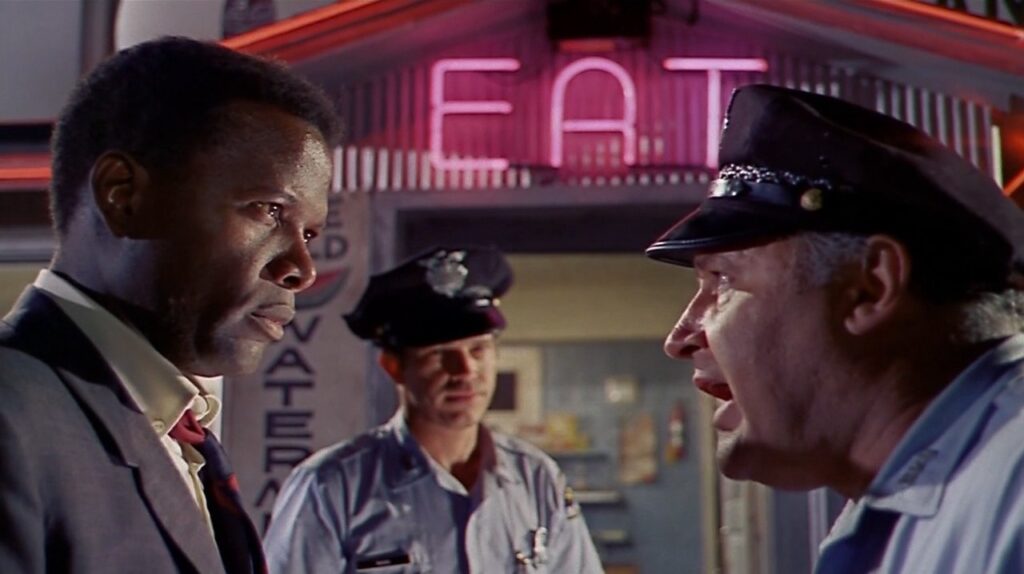
Virgil Tibbs (Sidney Poitier) chega de trem uma noite em Sparta, Mississippi. Ele mal havia descido do trem quando é conduzido à delegacia de polícia local como suspeito de assassinato. Mas é claro, pensa o policial Sam Wood (Warren Oates), pois trata-se de um homem negro estranho com dinheiro demais na carteira. Tibbs, ele próprio um policial na Pensilvânia, estava apenas esperando o próximo trem para Memphis, para ir visitar a mãe.


Virgil Tibbs (Sidney Poitier) arrives by train one night in Sparta, Mississippi. He barely got down the train when he’s taken to the local police station as suspect for a homicide. Of course, thinks police officer Sam Wood (Warren Oates), because he’s a foreign black man with too much money on his wallet. Mr Tibbs, himself a police officer in Pennsylvania, was just waiting for the next train to Memphis, to visit his mother.

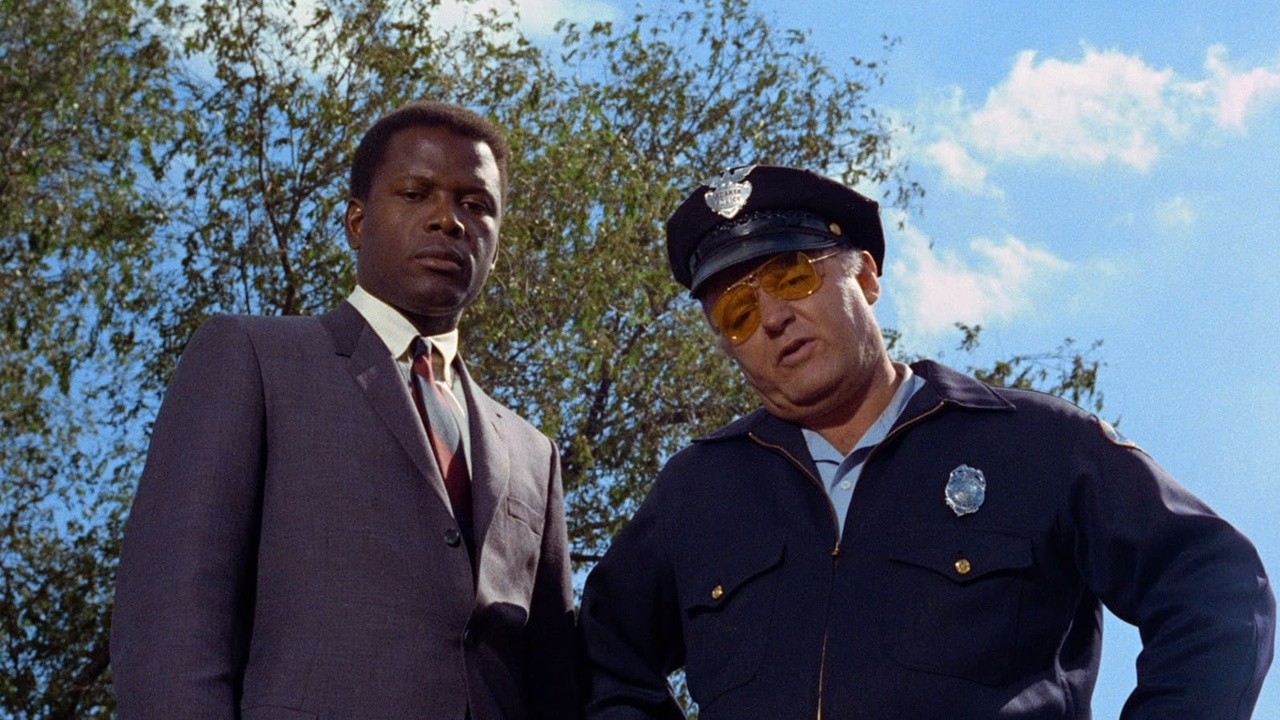
Acontece que Virgil Tibbs é um perito em homicídios, como seu chefe conta aos policiais que o prenderam. De repente, Tibbs, de suspeito torna-se investigador do assassinato do Sr Colbert, um homem rico. Ele trabalhará ao lado do chefe de polícia Bill Gillespie (Rod Steiger), que é o yin do yang representado por Tibbs.


Virgil Tibbs happens to be an expert in homicides, as his boss tells the police officers who arrested him. Suddenly, Tibbs goes from suspect to investigator in the murder of Mr Colbert, a rich man from the town. He’ll work alongside chief of police Bill Gillespie (Rod Steiger), the yin to Tibbs’s yang.   

Na manhã seguinte, Bill e seus homens encontram a carteira do Sr Colbert com um homem, Harvey (Scott Wilson), que tentava escapar para o Arkansas. O suspeito é detido e o caso considerado solucionado por Bill. Mas não está certo, insiste Tibbs, pois Harvey é canhoto e o Sr Colbert foi morto por uma pessoa destra. Vendo Tibbs em ação, a Senhora Colbert (Lee Grant) insiste que ele continue na investigação. Bill não quer trabalhar com Tibbs, mas este é um “mal” necessário.


The following morning, Bill and his men recover Mr Colbert’s wallet with a man, Harvey (Scott Wilson), who intended to escape to Arkansas. The suspect is arrested and the case is considered solved by Bill. But it isn’t, Tibbs insists, as Harvey is left-handed and Mr Colbert was killed by a right-handed person. Seeing Tibbs in action, Mrs Colbert (Lee Grant) insists that he keeps investigating the case. Bill doesn’t want Tibbs working with him, but the needs Tibbs nevertheless.

Harvey é mais hostil com Tibbs do que com Bill. Quando os dois ficam presos na mesma cela – porque Tibbs estava “escondendo evidências” – Harvey pergunta a ele “o que você está fazendo nestas roupas de homem branco?”. É claro que ninguém seria super simpático estando preso acusado de um crime, mas é em momentos como este que as pessoas mostram como são de verdade – e quais os seus preconceitos.


Harvey is more hostile towards Tibbs than Bill. When the two men share a cell – because Tibbs was “hiding evidence” – Harvey asks him “what are you doing wearing white men’s clothes?”. Of course nobody would be fully sympathetic while in a cell accused of a crime, but it’s in moments like those that the people show their true colors – and prejudices.

O próprio crime pode ter a ver com racismo. O Sr Colbert foi para Sparta para construir uma fábrica, onde ele empregaria mil pessoas, metade delas negras. Por enquanto, as únicas pessoas negras na cidade são o mecânico e sua família e os trabalhadores que colhem algodão na propriedade do Sr Endicott – ao passar por eles, Bill até mesmo provoca Virgil dizendo “nada disso foi feito para você, né?”.


The crime itself may be linked to racism. Mr Colbert went to Sparta to build a factory, where he would hire a thousand men, half of them black. For now, the only other black people in town are the mechanic and his family and those picking cotton at Mr Endicott’s property – passing them, Bill even teases Virgil by saying “nothing of this is for you, uh?”.

Apesar de sua resistência contra Tibbs, Bill acaba o salvando quando um grupo de jovens delinquentes, dirigindo um carro com a bandeira confederada na placa, começa a atacar Tibbs num barracão aparentemente abandonado. Tibbs sofre preconceito em muitos outros momentos, como quando o atendente do restaurante se recusa a servi-lo, mas estas coisas são consideradas “normais” por Bill e os demais.


Despite his resistance against Tibbs, Bill ends up saving him when a group of young troublemakers, driving a car with the Confederate flag in the plaque, starts attacking Tibbs in a seemingly abandoned hangar. Tibbs suffers prejudice in many more moments, like when the restaurant clerk refuses to serve him, but these things are deemed “normal” by Bill and the others.

A música é do incomparável Quincy Jones, com a canção de abertura cantada por outra lenda, Ray Charles – esta canção alcançou o TOP 40 da Billboard quando o filme foi lançado. AS letras das canções são de Alan e Marilyn Bergman, que se casaram em 1958 e ficaram juntos por 64 anos. “No Calor da Noite” foi o pontapé inicial para o sucesso do casal no mundo do cinema, e eles mais tarde ganhariam três Oscars.


The music is by the incomparable Quincy Jones, with the title song sung by another music legend, Ray Charles – this song made it to Billboard’s TOP 40 when the movie was released. The lyricists are Alan and Marilyn Bergman, a couple who married in 1958 and were together for 64 years. “In the Heat of the Night” was the couple’s breakthrough in the movie industry and they would go on to win three Oscars.

O editor do filme é Hal Ashby, também assistente do produtor, e que iria se tornar um diretor de sucesso. Ashby ganhou o Oscar de Melhor Edição por “No Calor da Noite”, sendo este o acontecimento que coroou sua parceria com o diretor Norman Jewison, que convenceu Ashby a se aventurar também na direção. Um dos filmes de maior sucesso de Ashby na direção foi “Amargo Regresso” (1978).


The editor of the film is Hal Ashby, also assistant to the producer, who would go on to become a successful director. Ashby won the Best Editing Oscar for “In the Heat of the Night”, being this the crowning achievement of his partnership with director Norman Jewison, who convinced Ashby to try directing as well. One of Ashby’s greatest hits as director was “Coming Home” (1978).

A escolha do elenco foi feita por Lynn Stallmaster. De acordo com o IMDb, George C. Scott era a primeira escolha para interpretar Bill Gillespie, mas estava gravando outro filme. A Robert Mitchum foi oferecido o papel, mas ele o recusou. Rod Steiger, escalado em seu lugar, ganhou o Oscar de Melhor Ator naquele ano. Por outro lado, a Wikipedia, citando o AFI – Instituto de Cinema Americano – diz que Poitier e Steiger foram as primeiras escolhas para os papéis e, sendo velhos amigos, queriam muito trabalhar juntos.


The casting was done by Lynn Stallmaster. According to IMDb, George C. Scott was the first choice to play Bill Gillespie, but was working in another movie at the same time. Robert Mitchum was offered the role, but refused it. Rod Steiger, cast instead, went on to win the Best Actor Oscar that year. On the other hand, Wikipedia, quoting the American Film Institute, says that Poitier and Steiger were the first choices for the roles, and, as old friends, were looking forward to working together.

Eu ouvi numa aula recentemente que os filmes de Sidney Poitier trazem uma “narrativa de assimilação”, o que quer dizer que seus personagens são construídos de tal maneira, com tantas qualidades e nenhum defeito, que as pessoas brancas não têm outra opção a não ser aceitar aquele homem negro perfeito entre elas. Isso acontece novamente em “No Calor da Noite” e inclusive foi apontado por catedráticos que Tibbs é uma figura messiânica trazendo uma comunidade inteira de volta à vida.


I heard in a class recently that Sidney Poitier’s movies bring an “assimilation narrative”, that is to say that they paint his characters with so many qualities and no bad characteristic that white people have no other option than to accept that perfect black man among them. This happens again in “In the Heat of the Night” and it has even been pointed out by scholars that Tibbs is a messianic figure bringing a whole community back to life.

“No Calor da Noite” ganhou cinco Oscars e está presente em diversas listas da AFI de melhores filmes e personagens – Tibbs é o número 19 na lista da AFI de 50 heróis mais inspiradores do cinema. O filme é famoso por uma fala dita de maneira raivosa mas demonstrando muita personalidade: “They call me MISTER Tibbs!” Mas, como o Oscar provou, este é um filme tanto sobre Bill Gillespie quanto sobre Virgil Tibbs, pois eles formaram uma verdadeira dupla dinâmica.


“In the Heat of the Night” won five Oscars and is cited in several AFI lists of best movies and best characters – Tibbs is the number 19 in the AFI list of 50 most inspiring screen heroes. The film is famous for the line with an angry delivery and a lot of personality: “They call me MISTER Tibbs!”. But, as the Oscar proved, this is as much a film about Bill Gillespie as it is about Virgil Tibbs, because they were truly a powerful duo.


This is my contribution to The Mismatched Couples blogathon, hosted by Gill and Barry from Realweegiemidget Reviews and Cinemathic Catharsis.

Saturday, October 22, 2022

Variações sobre um mesmo tema: Casino Royale (1967 e 2006)

 
Variations on the same theme: Casino Royale (1967 and 2006)


Quem é seu James Bond favorito? Sean Connery? Daniel Craig? Roger Moore? Talvez aquele que interpretou Bond só uma vez, George Lazenby? Ou que tal... David Niven? Sim, você leu certo: David Niven foi James Bond, enquanto Sean Connery já interpretava o espião, mas Niven fez o papel numa paródia: o filme de 1967 “Casino Royale”, filme com grande elenco e dirigido por John Huston – entre outros.


Who is your favorite Bond? Sean Connery? Daniel Craig? Roger Moore? Maybe the one-time Bond George Lazenby? Or how about… David Niven? Yes, you’ve read it right: David Niven was Bond, while Connery was already playing the role, but Niven portrayed the character in a parody: the 1967 film “Casino Royale”, with an all-star cast, directed – among others – by John Huston.

James Bond (Niven) é um agente aposentado. Ele gagueja e é conhecido por ser abstêmio e casto – a única mulher que ele realmente amou foi Mata Hari, ao contrário deste novo 007, chamado de “incompetente” pelo velho Bond. Mas o mundo a espionagem precisa mais uma vez dele, porque espiões de diversos países foram mortos. Os chefes de quatro importantes agências de espionagem ao redor do mundo vão encontrar Bond em sua casa de campo e, após uma tragédia, Bond está de volta ao jogo.


James Bond (Niven) is a retired agent. He stutters and is known for being a teetotaler and for his chastity - the only woman he has ever loved was Mata Hari, unlike this new 007, who the old Bond calls “incompetent”. But the espionage world needs him again, as spies from several countries have been killed. The heads of four important espionage agencies around the world go find Bond in his country home and, after tragedy strikes, Bond comes back to the game.

Uma surpresa vem logo no início: David Niven não é o primeiro na lista de créditos. O primeiro lugar pertence a Peter Sellers, que interpreta o vigarista Evelyn Tremble. É para o personagem de Sellers que é tocada a música “The Look of Love” por Dusty Springfield. Há uma razão para isso: em 1967, Sellers era um astro mais em destaque do que David Niven. Podemos dizer que Niven compartilhava com seu Bond o status de ultrapassado. No meio do filme, Evelyn Tremble praticamente se torna o protagonista, sendo treinado pelo MI-6 e chamado de James Bond para uma missão especial: enfrentar Número (Orson Welles) em um cassino. E Sellers até se apresenta oficialmente como 007 com “Meu nome é Bond. James Bond”!


A surprise comes right in the beginning: David Niven is not first billed. Top billing belongs to Peter Sellers, who plays the swindler Evelyn Tremble. It’s for Sellers’s character that the song “The Look of Love” is performed by Dusty Springfield. This has a reason: in 1967, Sellers was a bigger star than Niven. We could say that Niven shared with his Bond the situation of being outdated. In the middle of the movie, Evelyn Tremble practically becomes the lead, being trained by MI-6 and called James Bond for a special mission: to face the Le Chiffre (Orson Welles) in a casino. And Sellers even manages to utter the official Bond introduction: “My name is Bond, James Bond”!

Ainda antes de David Niven, o segundo nome nos créditos é o de Ursula Andress. Sua presença aqui é de interesse, afinal, ela foi a primeiríssima Bond girl em “007 contra o satânico Dr No” (1962). Mas ela não foi a única pessoa a aparecer em um filme de 007 e na paródia “Casino Royale”, pois muitos outros atores secundários partilham deste feito.


Also before David Niven, the second billed is Ursula Andress. Her presence here is interesting, as she was the first ever Bond girl in “Dr No” (1962). But she wasn’t the only Bond cast member to appear in “Casino Royale”, as many other secondary players were also, one time or another, in a Bond film.

Uma das coisas mais bacanas nos filmes de 007 é ver toda a parafernália tecnológica que o MI-6 inventa para seu agente. Em “Casino Royale”, muitas engenhocas são mencionadas, mas um relógio que se parece muito com um smart watch moderno é o destaque. Outro elemento divertido relacionado à espionagem é a Escola de Espionagem Mata Hari, um prédio que tem seus interiores completamente inspirados pelo Expressionismo Alemão, nos fazendo lembrar de “O Gabinete do Dr Caligari” (1920).


One of the coolest things in Bond movies is seeing all the technological stuff MI-6 comes up with for their agent. In “Casino Royale”, lots of tools are mentioned, but a watch that looks a lot with modern smart watches is the highlight. Another fun espionage-related element is the Mata Hari School of Espionage, a building that has its interiors completely inspired by German Expressionism, reminding us of “The Cabinet of Doctor Caligari” (1920).

O que realmente valoriza este filme é a brincalhona e psicodélica trilha sonora. Falando sério, a trilha sonora é fantástica! Além da já mencionada “The Look of Love”, há o tema de Casino Royale tocado por Herb Alpert e The Tijuana Brass. Ambas as músicas foram compostas por Burt Bacharach, que estava ainda praticamente no começo de sua carreira, mas a apenas dois anos de compor a famosa “Raindrops Keep Falling on my Head”.


What really enhances the film is the playful and groovy soundtrack. Seriously, the soundtrack is amazing! Besides the aforementioned “The Look of Love”, there is the Casino Royale theme played by Herb Alpert and The Tijuana Brass. Both songs were composed by Burt Bacharach, who was practically in the beginning of his career then, but only two years before he composed the famous “Raindrops Keep Falling on my Head”.

Eu mencionei que John Huston foi um dos diretores. “Casino Royale” teve cinco diretores e estourou em muito o orçamento, com Peter Sellers infernizando todos no set, até mesmo Orson Welles, que estava se divertindo à beça fazendo truques de mágica.


I mentioned that John Huston was one of the directors. “Casino Royale” had five directors and went extremely over budget, with Peter Sellers pestering everyone on set, even Orson Welles, who was having the time of his life doing magic tricks to the camera.

Vamos para 2006, quase quarenta anos após “Casino Royale” ter sido feito. Em seu primeiro filme como 007, Daniel Craig tem de enfrentar, no Casino Royale de Montenegro, Le Chiffre (Mads Mikkelsen), um banqueiro ligado a grupos terroristas. Neste filme, o jogo de cartas é uma sequência cheia de suspense, ao contrário do que acontece no filme de 1967, no qual a sequência principal do jogo se torna secundária com toda a maluquice que acontece ao seu redor.   


Cut to 2006, nearly forty years after “Casino Royale” was made. In his first movie as 007, Daniel Craig has to face, in the Casino Royale of Montenegro, Le Chiffre (Mads Mikkelsen), a banker who is tied to terrorist groups. In this, the game sequence is very suspenseful, contrary to what happens in the 1967 movie, in which the main game sequence becomes secondary with all the mayhem happening around.

“Casino Royale”, a paródia, só podia ter sido feita nos anos 60. Por vezes datado, às vezes nem um pouco engraçado, é um produto curioso de seu tempo. É quase um crime comparar este filme com a versão de 2006, que segue mais fielmente o livro de Ian Fleming. “Casino Royale”, então, deve permanecer assim: como uma curiosidade, uma anomalia no universo de 007 – e algo que todos nós devemos experimentar pelo menos uma vez.


“Casino Royale”, the parody, could only have been made in the swinging 1960s. Sometimes dated, at times not even funny, it’s a most curious product of its era. It’s almost a crime to compare this film with the 2006 version, one that was much more faithful to Ian Fleming’s book. “Casino Royale”, then, must remain this: a curiosity, an anomaly in the Bond universe – and something we all should experience at least once.

This is my contribution to The “Take Two!” blogathon, hosted by Annette at Hometowns to Hollywood.

Related Posts Plugin for WordPress, Blogger...