} Crítica Retrô: 1910

Tradutor / Translator / Traductor / Übersetzer / Traduttore / Traducteur / 翻訳者 / переводчик

Showing posts with label 1910. Show all posts

Friday, January 19, 2024

O Abismo (1910) / The Abyss (1910) / Afgrunden (1910)


Muito tempo atrás, as estrelas de cinema não recebiam crédito nem no começo nem ao final dos filmes. Esta foi a maneira que os primeiros cineastas encontraram para evitar que atores e atrizes ficassem famosos demais, o que os faria demandar salários maiores. Mas logo antes de descobrirem que a Cachinhos Dourados era a atriz canadense Mary Pickford, que iria se tornar uma superestrela nos EUA, outra superestrela apareceu do outro lado do Atlântico: Asta Nielsen. Com uma dança lasciva em seu primeiro filme, “O Abismo / Afgrunden” de 1910, Nielsen se tornou uma sensação do dia para a noite.


Once upon a time, film stars didn’t receive credit on screen. It was the way the first filmmakers found to not let the actors and actresses become too famous, which would lead to a claim for higher salaries. But just before Little Goldilocks was discovered to be Canadian actress Mary Pickford, who would become a superstar in American cinema, another superstar emerged on the other side of the Atlantic: Asta Nielsen. With a lascivious dance in her first film, 1910’s “The Abyss / Afgrunden”, Nielsen became an overnight sensation.

Um homem e uma mulher se conhecem num bonde. O homem é Knud Svane (Robert Dinesen) e a mulher é Magda Vang (Asta Nielsen). Knud convida Magda para passar uns dias em sua casa de campo durante o verão, e lá ela o convence a assistir a uma performance de um circo itinerante. No circo Magda conhece o artista Rudolf Stern (Paul Reumert), se apaixona e foge com ele. Ela terá seu felizes para sempre? Veremos depois de 38 minutos de projeção.


A man and a woman meet on a trolley. The man is Knud Svane (Robert Dinesen) and the woman is Magda Vang (Asta Nielsen). Knud invites Magda to his country home during summer, and there she convinces him to watch a performance from a traveling circus. At the circus Magda meets performer Rudolf Stern (Paul Reumert), falls in love and runs away with him. Will she get a happily ever after? After 38 minutes of projection, we shall see.
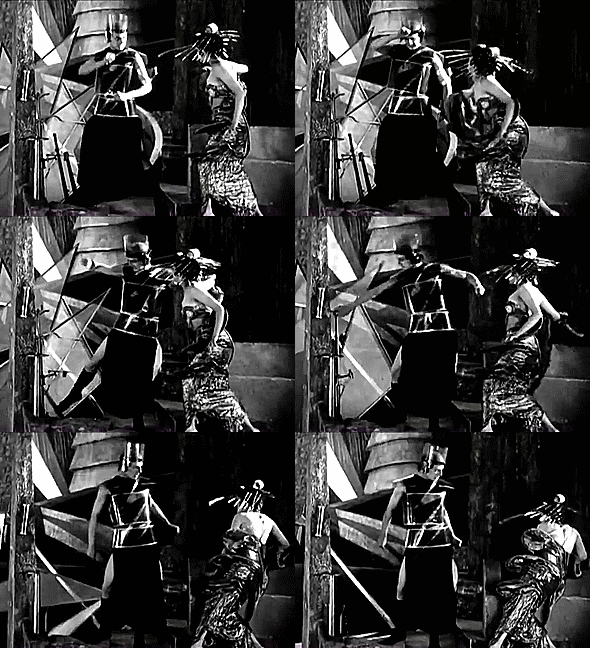
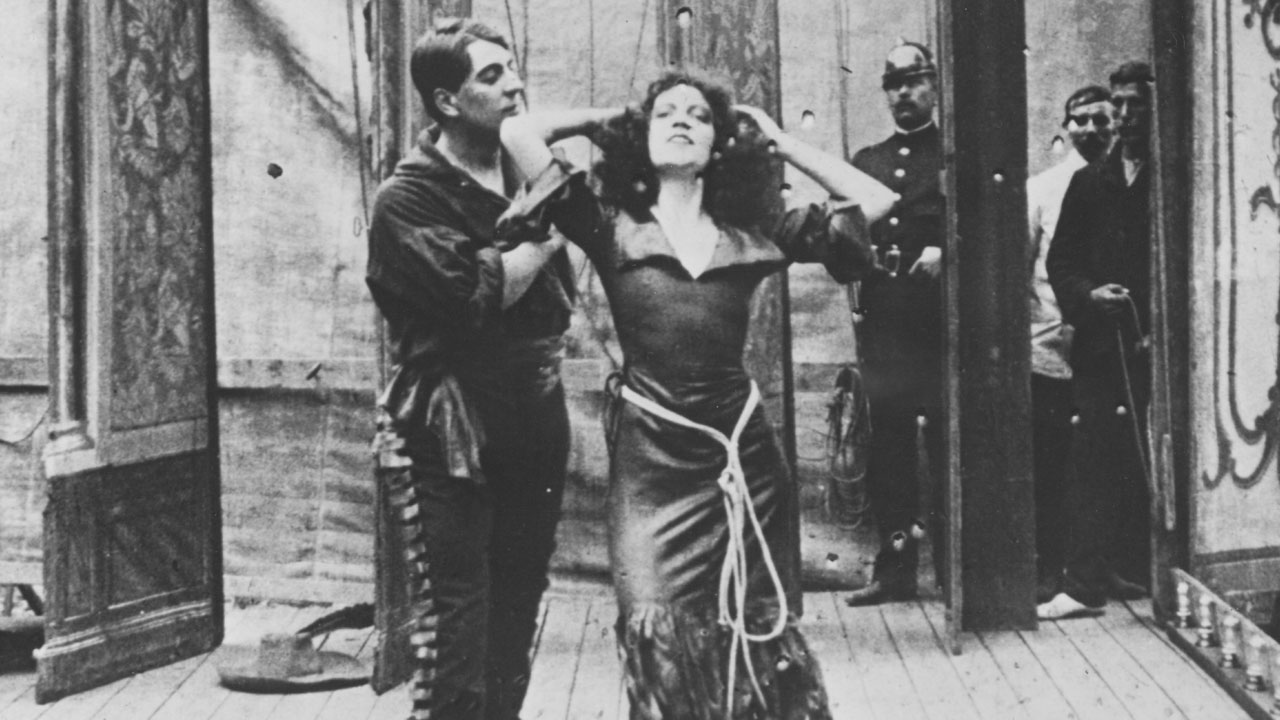
A sequência de dança sugestiva, chamada de “dança Gaucho”, envolve Asta Nielsen esfregando seu corpo, totalmente vestida, num homem que está amarrado por uma corda. A sequência foi considerada escandalosa e censurada nos EUA, Noruega e Suécia, mas foi uma sensação no resto da Europa. Hoje, não vemos nada de errado nem mesmo de sensual na sequência, o que mostra como os tempos mudaram.


The suggestive dance sequence, called “the Gaucho dance”, involves Asta Nielsen rubbing her fully dressed body in a man who is tied with a rope. The sequence was considered scandalous and censored in the US, Norway and Sweden but was a sensation in the rest of Europe. Nowadays, we see nothing wrong nor even sensual about the sequence, a sign of how times have changed.
“O Abismo” foi escrito e dirigido por Urban Gad, que se casaria com Asta em 1912. Eles se mudariam para a Alemanha no mesmo ano, onde Nielsen teria uma bem-sucedida carreira, com Gad dirigindo-a em 30 filmes. Eles se separaram em 1918, quando também terminou a parceria profissional. Asta Nielsen ficou tão famosa em tão pouco tempo que em 1911 foi eleita a maior estrela de cinema numa enquete feita na Rússia.


“The Abyss” was written and directed by Urban Gad, who would marry Asta in 1912. They would move to German that same year, where Nielsen enjoyed a successful career, with Gad directing her in 30 movies. They split in 1918, when the professional partnership also ended. Asta Nielsen became so famous and so quickly that in 1911 she was voted the biggest film star in a poll held in Russia.

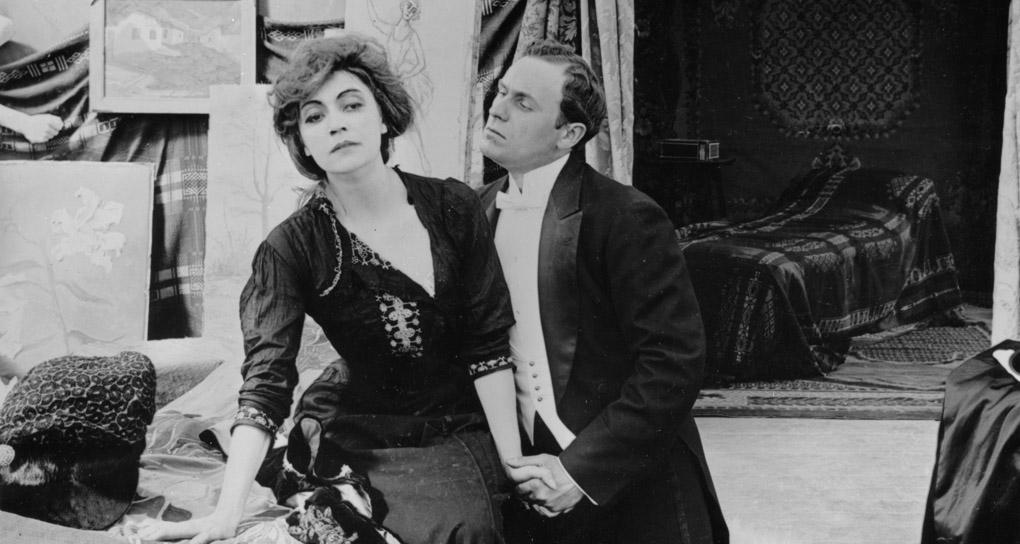
Em 1911, Nielsen fez “A Bailarina / Balletdanserinden” com o diretor August Blom, logo antes de partir para Berlim. Neste filme, ela interpreta Camille, uma bailarina que faz sucesso nos palcos, mas sua vida pessoal é mais complicada: ela está apaixonada por Jean (Johannes Poulsen), que a trai com uma mulher casada, Yvette Simon (Karen Poulsen). Depois de posar para um pintor, Paul (Valdemar Psilander), ela fica dividida entre os dois homens.


In 1911, Nielsen made “The Ballet Dancer / Balletdanserinden” with director August Blom, just before leaving to Berlin. In this movie, she plays Camille, a ballet dancer who finds professional success on stage, but her personal life is more complicated: she is in love with Jean (Johannes Poulsen), who cheats on her with a married woman, Yvette Simon (Karen Poulsen). After posing for a painter, Paul (Valdemar Psilander), she becomes torn between the two men.
Também de 1911 é “O Sonho Negro / Den Sorte Drøm”, um dos mais antigos longas-metragens preservados, no qual Nielsen interpreta a acrobata equestre Stella, por quem dois homens se apaixonam. Ela escolhe o Conde Waldberg (Valdemar Psilander), desprezando o joalheiro Hirsch (Gunnar Helsengreen). Há um duelo entre os dois homens num jogo de cartas, no qual Waldberg perde todas as suas posses, e Stella tem de intervir, sem que ele saiba, roubando um colar de Hirsch. O ciúme consome Waldberg e o que se segue é uma tragédia.


Also from 1911 is “The Black Dream / Den Sorte Drøm”, one of the earliest surviving feature-length films, in which Nielsen plays the equestrian acrobat Stella, with whom two men fall in love. She chooses Count Waldberg (Valdemar Psilander) over the jeweler Hirsch (Gunnar Helsengreen). There is a duel between the two men in the card table, when Waldberg loses all his possessions, and Stella has to intervene, without him knowing, by stealing a necklace from Hirsch. Jealousy consumes Waldberg and tragedy follows.

Já na Alemanha em 1912, Asta Nielsen e Urban Gad fizeram o melodrama “Pobre Jenny / Die Arme Jenny”, no qual ela interpreta o papel-título, uma jovem mulher que precisa cuidar de seus irmãozinhos. Um dia ela é beijada por um homem, Eduard Reinhold (Leo Peukert) contra a vontade dela, mas ela aceita sair com ele. Depois de passar a noite com o homem, ela é expulsa de casa. Ela então vai para a cidade grande e se torna dançarina... até que ela reencontra Eduard e percebe que não esqueceu seu primeiro amor.


Already in German in 1912, Asta Nielsen and Urban Gad made the melodrama “Poor Jenny / Die Arme Jenny”, in which she plays the title role, a young woman who has to take care of her little siblings. One day she is kissed by a man, Eduard Reinhold (Leo Peukert), against her will, but agrees to go out with him. After spending the night with him, she is expelled from home. She then goes to the big city and becomes a dancer… until she meets Eduard again and realizes she didn’t forget her first love.
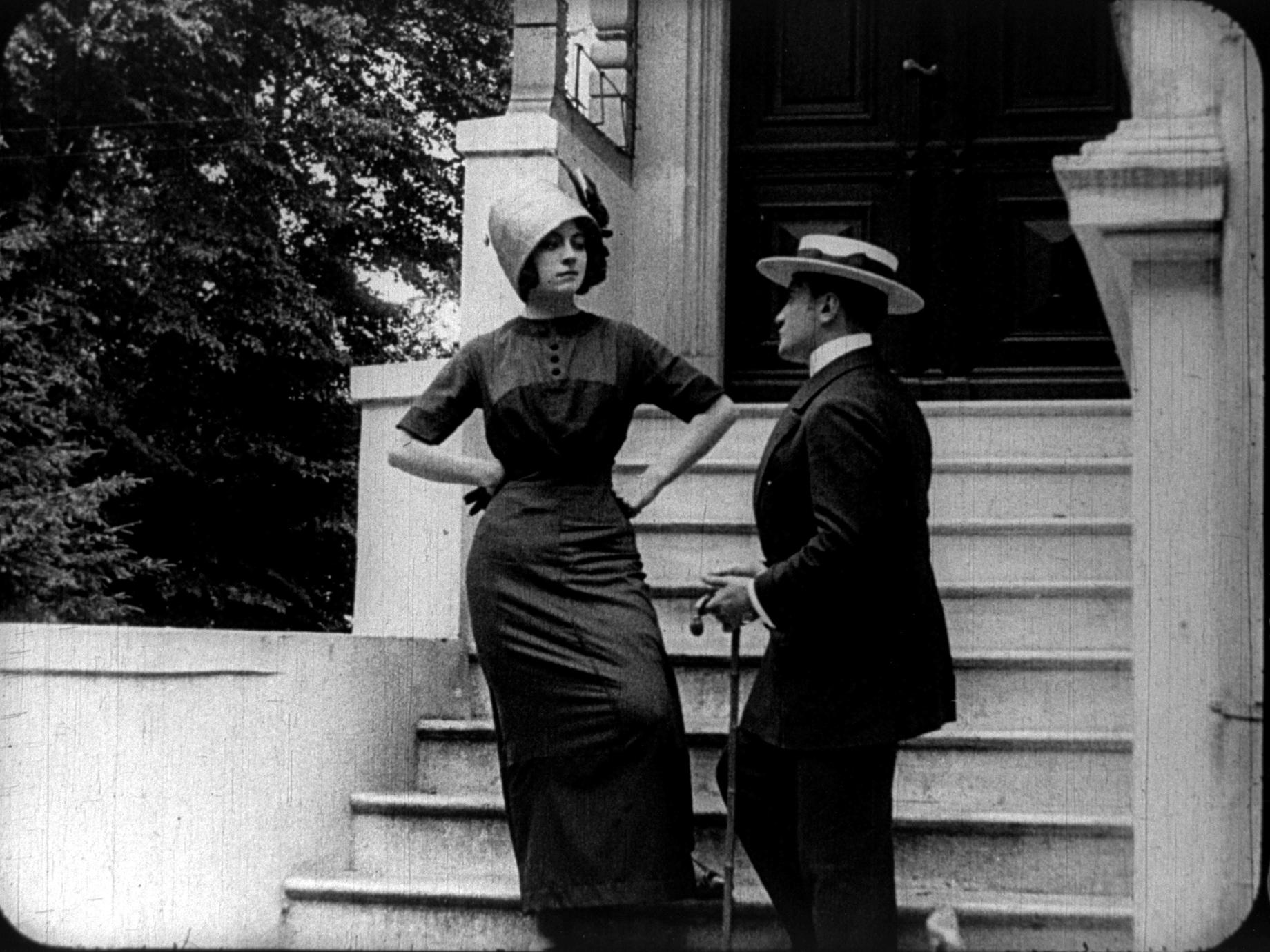
Também em 1912, Nielsen e Gad se juntaram novamente para fazer “A Garota sem Pátria / Das Mädchen ohne Vaterland”. Neste curta, Asta interpreta a cigana Zidra, que é contratada por um homem do exército para uma missão secreta. Esperteza e sedução serão suas armas, mas ela não imaginava que se apaixonaria pelo tenente que tem de espionar.


Also in 1912, Nielsen and Gad teamed up again to make “A Romany Spy / Das Mädchen ohne Vaterland”. In this short, Asta plays gypsy girl Zidra, who is hired by a military man for a secret mission. Smartness and seduction will be her weapons, but she didn’t imagine that she would fall in love with the lieutenant she was supposed to spy on.

Os filmes de Asta Nielsen do começo da década de 1910 não apenas mostram por que ela se tornou uma superestrela mas também nos convencem de que o primeiro cinema é muito mais sofisticado do que o senso comum nos faz acreditar. As histórias são atraentes, com tramas complexas, e as técnicas do fazer cinematográfico ainda estavam sendo desenvolvidas, por isso há muita experimentação. Acima de tudo, há Asta Nielsen e sua persona cinematográfica sexy e ousada, perfeita para a primeira superestrela do cinema.


Asta Nielsen’s films from the early 1910s not only show why she became a superstar but also convince us that early cinema is much more sophisticated than the common sense made us believe. The storytelling is compelling, with complex plots, and the filmmaking techniques were still being developed, so there is experimentation. Above all, there is Asta Nielsen and her sexy, bold screen persona, perfect for the first female film superstar.

Sunday, April 15, 2018

Papai Noel Conquista os Marcianos (1964) e outras vezes em que o cinema foi a Marte


Santa Claus Conquers the Martians (1964) and other film trips to Mars


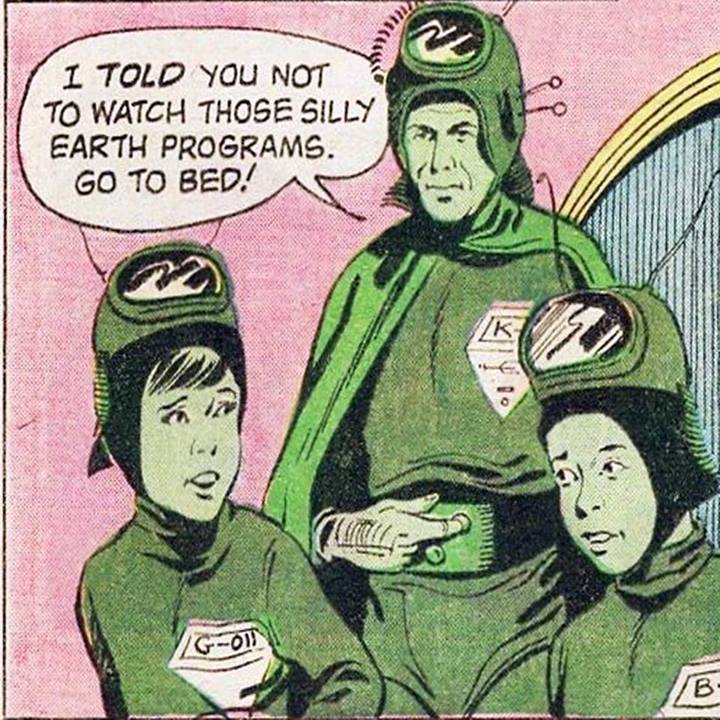
Um repórter da TV, falando diretamente da oficina do Papai Noel no Polo Norte, onde os ajudantes de Noel acabam de mostrar um boneco de um marciano, diz: “Se há [pessoas em Marte] eu espero que elas tenham alguém lá como você, Noel, para levar alegria e felicidade para todas as crianças marcianas”. Corte para os marcianos. Eles são exatamente como os bonecos e não, eles não têm um Papai Noel, mas têm a capacidade de ver os programas de TV da Terra. E, de acordo com um velho sábio, é a ausência de um Papai Noel – e a ausência de uma infância – que causa a tristeza nas crianças marcianas. Por isso, um grupo de marcianos decide vir à Terra para sequestrar o Papai Noel.

A TV reporter, speaking from Santa’s workshop at the North Pole, where the helpers just presented a Martian doll, says: “If there are [people on Mars] I hope they have someone like you up there, Santa, to bring joy and good cheer to all the Martian children”. Cut to the Martians. They are exactly as the doll predicted, and no, they not have a Santa Claus, but they are able to watch TV programs from Earth. And, according to a wise old man, it’s this lack of a Santa Claus – and the extended lack of a childhood – that is leaving Martian kids sad. So a group of Martians decide to come to Earth and kidnap Santa Claus.
É assim que tem início um marco do cinema ruim. Entre atores cobertos de maquiagem verde horrível, crianças sem expressão, piadas sem graça e o próprio Papai Noel, uma coisa salva “Papai Noel Conquista os Marcianos”: Marte. Não, o cenário não é bonito nem sequer bem elaborado, mas é algo que me fez pensar: por que o cinema é tão fascinado por Marte?

This is how a pinnacle of awful filmmaking unfolds. Among actors wearing horrible green make-up, children giving awful performances, unfunny jokes and Santa Claus himself, one thing kind of saves “Santa Claus Conquers the Martians”: Mars. No, the set is not gorgeous or even elaborate, but it is something that made me think: why is the film world so fascinated with Mars?
A resposta é simples: porque somos fascinados pelo desconhecido. E desde que Marte continue inexplorado, não há limite para a imaginação, e filmes no planeta vermelho podem ter praticamente qualquer coisa – até pílulas como refeição, homens verdes maus e um sistema que permite que os marcianos vejam programas de TV da Terra (por que eles não faziam seus próprios programas de TV?).

The answer is simple: because we are fascinated by the unknown. And as long as it remains unknown, there is no limit to imagination, and films set on Mars can have literally anything – even people who eat pills as meals, evil green men and some kind of system that allows Martians to watch TV shows made on Earth (why didn’t Martians make their own TV shows?).
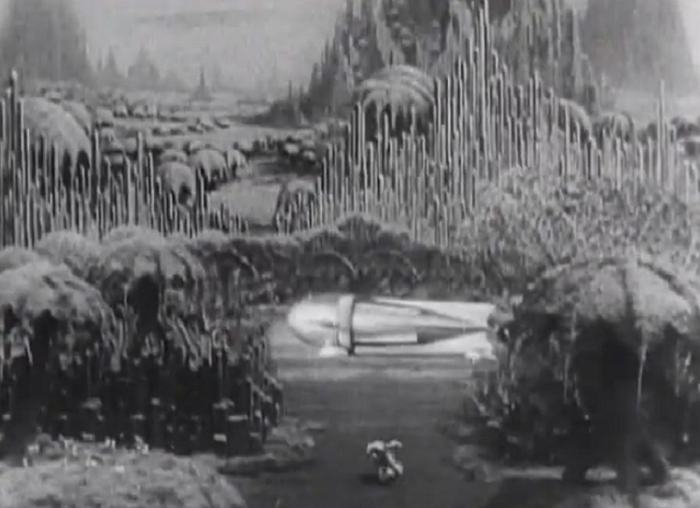
O primeiro cineasta a ir a Marte, surpreendentemente, não foi Georges Méliès, mas Thomas Edison. Em 1910, Edison produziu “A Trip to Mars”, na qual um homem se torna astronauta após descobrir o pó da ‘gravidade reversa’, e em Marte ele encontra marcianos enormes que podem congelar os terráqueos com um simples sopro. Não há limites entre a ficção científica e o horror puro neste filme de cinco minutos.

The first filmmaker to go to Mars, surprisingly, wasn’t Georges Méliès, but Thomas Edison. In 1910, he produced “A Trip to Mars”, in which a man becomes an astronaut thanks to the discovery of the powder of ‘reverse gravity’ and finds out that Martians are HUGE and can freeze Earth people with only a blow. There is no boundary between science fiction and pure horror in this five-minute film.
Em 1918, um grupo muito criativo de dinamarqueses fez o filme “Viagem a Marte” (ou “Himmelskibet”). Nele, um grupo de cientistas liderados por Avanti Planetaros (Gunnar Tolnaes) desafia todos os céticos e chegam a Marte em seis meses – que é, de fato, o tempo que uma viagem ao planeta vermelho demoraria hoje!

In 1918, a group of very creative Danish people made a film called “A Trip to Mars” (aka “Himmelskibet”). In it, a group of scientists led by Avanti Planetaros (Gunnar Tolnaes) challenges all naysayers and reach Mars in six months – what is, indeed, the time a trip to the Red Planet would take today!
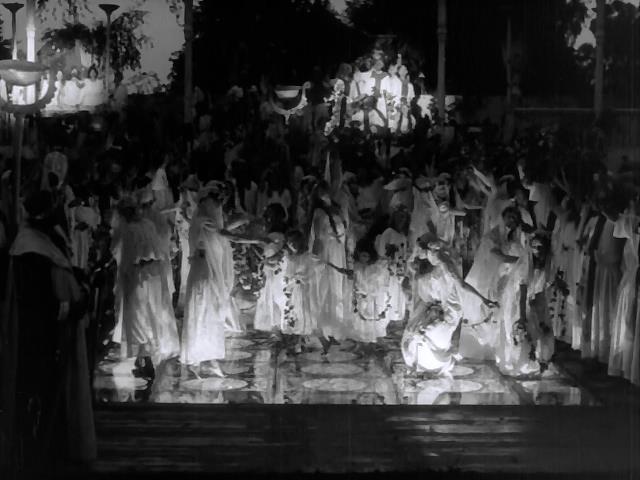
Mas nada poderia prepará-los para o que encontram lá: uma sociedade evoluída, na qual todas as pessoas são vegetarianas e pacifistas, e a guerra e o sofrimento foram abolidos. O líder deles é um homem sábio e ninguém teme a morte. Os marcianos contam que eram como as pessoas da Terra, mas aprenderam a viver em paz. A mesma paz não é compartilhada com o cinema soviético, como podemos ver em “Aelita, Rainha de Marte”, de 1924.

But nothing could prepare them for what they find there: an evolved society, where all people are vegetarians and pacifists, and all war and suffering has been abolished. Their leader is a wise man and nobody fears death. The Martians tell them that they were once like people on Earth, but they learned to live better and in peace. The same peace is not shared with the Soviet cinema, as we can see in the 1924 production “Aelita, Queen of Mars”.
Himmelskibet
Himmelskibet
Aelita
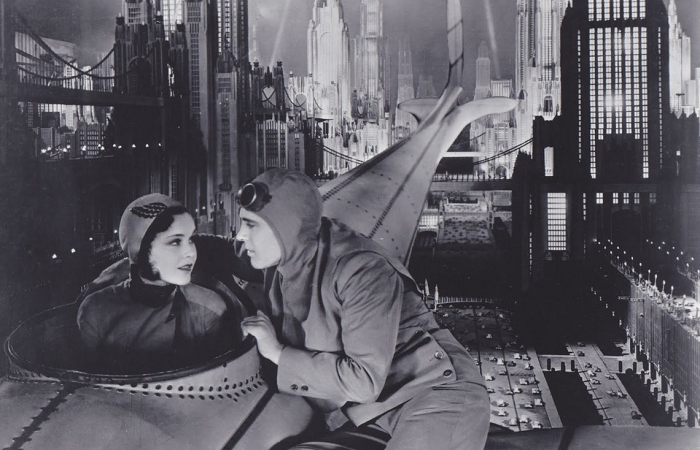
Com a chegada do som, Marte se tornou sinônimo de filme B. Dos anos 30 aos 70, quase todos os filmes sobre expedições a Marte eram seriados ou produções de baixo orçamento. “Fantasias de 1980”, de1930, é um dos mais estranhos de todos. Ele conta a história de um homem chamado J-21 (John Garrick), que, para impressionar a mulher que ama e ganhar o direito de se casar com ela, vai a Marte com um amigo e com um homem que foi morto em 1930 e ressuscitado pela ciência em 1980 (interpretado por El Brendel). Em Marte, eles descobrem uma sociedade em que todos têm um irmão gêmeo (um gêmeo bom e um mau), mas os marcianos são agradáveis, usam pouca roupa, o cenário é lindo e a líder é a rainha Loo Loo (Joyzelle Joyner). Para ser sincera, eu gostaria de visitar esta versão de Marte.

When sound came, Mars became a synonym of cheap movie. From the 1930s until the 1970s, almost all films about expeditions to Mars were serials or low-budget productions. “Just Imagine”, from 1930, is one of the weirdest of them all. Set in the 1980s, it tells the story of a man called J-21 (John Garrick), who, in order to impress his sweetheart and be allowed to marry her, goes to Mars with a friend and a man who was killed in 1930 and resurrected by science in 1980 (played by El Brendel). On Mars, they find a society in which everybody has a twin (one evil and one good), but the Martian people are welcoming, wear few clothes, the set is exquisite and their leader is queen Loo Loo (Joyzelle Joyner). To be sincere, I’d like to visit this version of Mars.
Buster Crabbe, como Flash Gordon, pode ter ido a Marte no seriado de 1938, mas os anos 50 foram a década que trouxe real interesse em viagens espaciais, tanto em filmes quanto em desenhos. Estudos traçam a origem da ideia de que alienígenas são ‘homenzinhos verdes’ até uma lenda contada no século XII, mas foi com as histórias de ficção científica dos anos 1940 e 50 que a ideia se popularizou. Por isso conhecemos Marvin o Marciano em 1948, e ele apareceu em outros desenhos nas décadas seguintes, incluindo o famoso curta “Duck Dodgers in the 24 ½th Century”, de 1953.

Buster-Crabbe-as-Flash-Gordon may have been to Mars in the 1938 serial, but the 1950s were the decade that brought real interest in space travelling, both on feature film and animation. Studies trace the idea of aliens being ‘little green men’ back to a legend told in the 12th century, but it was with science fiction stories from the 1940s and 50s that the idea became popular. No wonder we got Marvin the Martian in 1948, and he appeared in other cartoons the following decades, including the famous “Duck Dodgers in the 24 ½th  Century”, from 1953.
Marvin, 1948: nice skirt
Marvin, 2012: more relatable
Quem mais, além de Pernalonga, já foi a Marte? Ou melhor, quem ainda não foi a Marte? Tom e Jery já foram. Abbott e Costello também. Como vimos, Papai Noel também. Matt Damon esteve lá recentemente – e poderia ter ficado por lá. O que todos esses filmes sobre Marte têm a nos ensinar, não importa quão ridículos ou estúpidos eles sejam?

Who else, besides Bugs Bunny, has been to Mars? I mean, who hasn’t been to Mars? Tom and Jerry have. Abbott and Costello have. As we just saw, Santa Claus had. Matt Damon had been there recently – and he could have been left there. What all those films about Mars teach us, no matter how campy or stupid they are?
Eles nos ensinam que nós amamos o desconhecido e as muitas possibilidades que vêm com ele, mas só até certo ponto. Quando chegam a Marte, todos os personagens, em especial nos filmes mais antigos, encontram seres vivos semelhantes ao homem. Os marcianos podem falar outra língua, usar roupas engraçadas, ser maiores que nós, mas eles sempre se parecem conosco na ficção. Até Marvin tem um cachorro de estimação, o K-9! Explorar pode ser excitante, desde que estejamos no controle. Hoje sabemos que, se há vida em Marte, ela não se parece em nada com os humanos da Terra. Então, talvez, seja mais interessante para nós nos conformarmos com rostos familiares em planetas estranhos – talvez, nesta situação, a ficção científica será mais emocionante que a realidade.

They teach that we love the unknown and its many possibilities, but until a certain point. Once on Mars, almost all characters, especially in older films, find human-like life. Martians may speak a different language, dress funny, be bigger than us, but they always looked like us in fiction. Even Marvin has a dog, K-9, as a pet! Exploring is exciting, as long as we are in control. Today, we know that, if there is life on Mars, it’s nothing like humans on Earth. So, maybe, it’s more interesting for us to conform to familiar faces in strange planets – maybe, in this case, science fiction will be more exciting than reality.

This is my contribution to the Outer Space on Film blogathon, hosted by Debbie from Moon in Gemini.

Sunday, February 11, 2018

Mary Pickford e Mack Sennett: quando os canadenses se encontram

Mary Pickford and Mack Sennett: when Canadians meet

Quando você está em um país estrangeiro, qualquer pessoa que venha do mesmo lugar que você é visto como um aliado. Sempre que brasileiros se encontram no exterior, por exemplo, há sorrisos e risadas e, se eles passam tempo suficiente juntos, tudo acaba em festa. Por isso eu imagino que encontrar outro estrangeiro tentando ganhar a vida nos primeiros tempos da indústria do cinema deve ter sido uma alegria para a jovem Mary Pickford.

When you are in a foreign country, any person who comes from the same place as you is seen as an ally. Whenever Brazilians meet abroad, for instance, there are smiles and laughs and, if they spend enough time together, also a party. That’s why I imagine finding a fellow foreigner trying to earn a living in the early days of film industry must have been a joy for young Mary Pickford.
On the left, Mary and Mack, 1911
A primitiva indústria do cinema estava cheia de estrangeiros. Muitos diretores e, em especial, produtores que alcançaram sucesso em Nova York e em Hollywood não nasceram nos Estados Unidos. Muitas estrelas de cinema também foram importadas – muitas do Canadá, país que nos deu Norma Shearer, Marie Dressler, Walter Huston e muitos outros. Na verdade, a ‘namoradinha da América’ era canadense – e o rei da comédia em Hollywood também.

The early film industry was full of foreigners. Many directors and, in special, producers who made it big in New York studios and in Hollywood were note born in the USA. Several film stars were also imported – notably from Canada, the land that gave us Norma Shearer, Marie Dressler, Walter Huston and many more. To be fair, America’s sweetheart was Canadian – and also Canadian was the King of Comedy in Hollywood.
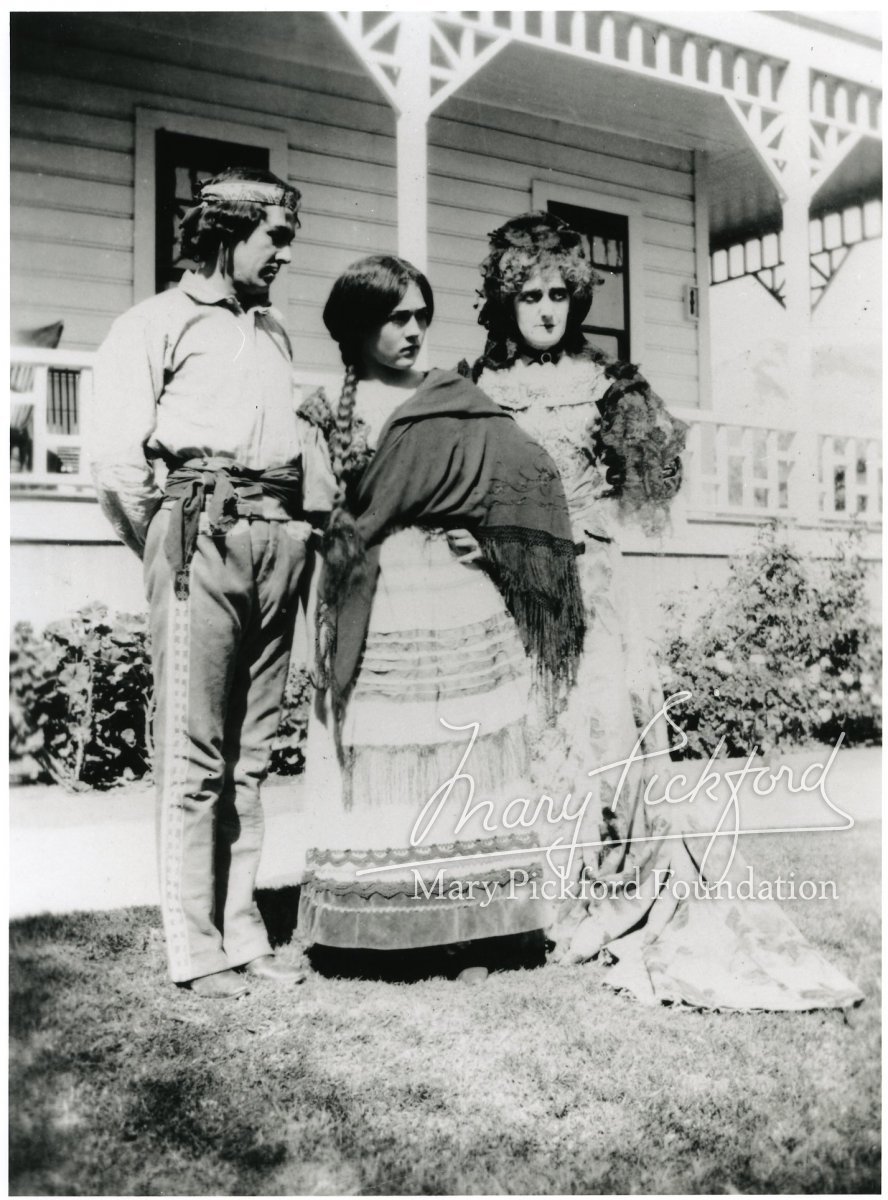
Mary Pickford, in the middle, in Ramona, 1910
Gladys Louise Smith nasceu em Toronto em 1892. Michael Sinnott nasceu em Québec em 1880. Vinda de uma família pobre, Gladys estreou no teatro ainda criança, e viajou pelos EUA atuando e fazendo disso o sustento de sua família. Ela mudou o nome para Mary Pickford por sugestão de um produtor da Broadway em 1907. Em 1909, ela fez seu primeiro filme no estúdio Biograph, comandado por D.W. Griffith.

Gladys Louise Smith was born in Toronto in 1892. Michael Sinnott was born in Québec in 1880. Coming from a poor family, Gladys started appearing in theater plays as a kid, and touring the US in the pursuit of money. She changed her name to Mary Pickford persuaded by a Broadway producer in 1907. In 1909, she made her first film at the Biograph studio, run by D.W. Griffith.
Michael era filho de um dono de pensão. Ele vivia com conforto, mas se mudou para Connecticut quando tinha 17 anos. Quando vivia em Massachusetts, ele considerou se tornar cantor de ópera, mas fizeram-no desistir da ideia. Já em Nova York, ele começou a trabalhar para o estúdio Biograph, onde ele exercia várias funções – incluindo montagem de cenários, direção e até atuação.

Michael was the son of an innkeeper. He lived comfortably, but moved to Connecticut when he was 17. While living in Massachusetts, he thought about becoming an opera singer, but was talked out of the idea. Once in New York, he started working at Biograph studios, where he had several jobs – including set design, director and even actor.
Naqueles tempos primitivos, não havia papel pequeno demais, e todos iam para frente das câmeras vez ou outra – até o próprio Griffith estreou como ator em um curta de Edwin Porteer. Grandes estrelas eram reconhecidas, mas não creditadas – o público não sabia o nome de seus ídolos – e uma carreira poderia ser construída de forma incrivelmente rápida.

Back in those primitive times, there were no small roles, and everybody stepped in front of the camera sometimes – even Griffth himself debuted as an actor in a short film by Edwin Porter. Big stars were recognized, but not advertised – meaning the public didn’t know their names – and a career could be build incredibly quick.
Henry B. Walthall and Mary Pickford, Wilful Peggy, 1910
O site IMDb pode não ser a fonte mais confiável, mas é a mais completa a que temos acesso. De acordo com o site, Mary Pickford fez 248 filmes. Mack Sennett atuou em 363 filmes. Fazendo a interseção das filmografias – com um programa de computador, veja o resultado abaixo – eu descobri que eles apareceram juntos em 76 filmes entre 1909 e 1911. É um número impressionante, mas plausível quando consideramos que todos estes filmes eram curtas-metragens – a maioria deles de 15 minutos de duração, finalizados muito rapidamente.

IMDb may not be the most reliable source, but it is the most complete we have. According to the site, Mary Pickford appeared in 248 movies. Mack Sennett was an actor in 363. I intersected their filmographies – with a computer program, see below – and found out they appeared in 76 films together between 1909 and 1911. This sounds impressive, but plausible once we think that all of those films were shorts – most of them one-reelers that were shot very quickly.
Se a estimativa de que cerca de 75% de todos os filmes mudos estão perdidos for verdade, poderíamos esperar que 19 das colaborações entre Sennett e Pickford ainda existiriam – e todas estariam em domínio público. Eu fiquei boquiaberta quando encontrei 27 dos 76 filmes disponíveis completos no YouTube – mais os fragmentos de outros dois filmes. Eles podem ser encontrados nesta playlist.

If the estimate that roughly 75% of all silent movies are lost is true, we could expect to find 19 of the Sennett-Pickford collaborations still extant – and all of them would be in public domain. I was speechless when I found 27 of the 76 movies fully available on YouTube – plus the fragments of other two movies. They can be found in this playlist.
Mary and Mack in "An Arcadian Maid", 1910
Muitos dos filmes foram preservados pelo Museu de Cinema EYE na Holanda. Nestes curtas-metragens, é interessante notar que estrelato ainda não era um conceito bem estabelecido no cinema: em um filme, como “O Usurário” (1909), Mack Sennett tinha um papel importante, e em um filme posterior, como “Ramona” (1910), protagonizado por Pickford, ele fazia apenas uma participação como extra. Às vezes Mack também tinha uma jornada dupla ou tripla como roteirista e assistente de direção.

Many of these movies were preserved at the EYE Film Museum in Netherlands. In these short films, it’s interesting to notice that stardom wasn’t something established in the film world yet: in one movie, like “The Usurer” (1909), Mack Sennett could have an important role, and in a later movie, like “Ramona” (1910), starred by Pickford, he had just a bit part. Sometimes Mack also had a double or triple journey as writer and assistant director.
The Sealed Room, 1909
Mary Pickford deixou a Biograph para se juntar ao IMP, estúdio de Carl Laemmle, em 1911. Mack Sennett continou trabalhando na Biograph, com mais e mais liberdade criativa, e em 1912 contracenou com outra grande atriz do cinema mudo, Mabel Normand. Ele e Mabel deixaram a Biograph logo depois, e Mack fundou os estúdios Keystone – onde comediantes como Charles Chaplin, Harold Lloyd, Roscoe ‘Fatty’ arbuckle e Louise Fazenda estrearam no cinema.

Mary Pickford left Biograph for IMP, Carl Laemmle’s studio, in 1911. Mack Sennett continued working at Biograph, with more and more creative freedom, and in 1912 shared the screen with another great silent actress, Mabel Normand. He and Mabel left Biograph soon after, and Mack founded Keystone Pictures Studios – where comedians like Charles Chaplin, Harold Lloyd, Roscoe ‘Fatty’ Arbuckle and Louise Fazenda debuted in films.
O estúdio que primeiro empregou Mary Pickford e Mack Sennett, a Biograph, fechou em 1915, quando os longas-metragens ganharam popularidade. Mack Sennett se tornou produtor independente de comédias em 1917. Mary Pickford trabalhou em muitos estúdios, como Famous Players e First National Pictures, e em 1919 foi uma das fundadoras da United Artists. Pickford e Sennett nunca mais trabalharam juntos de novo – mas receberam suas estrelas na Calçada da Fama no mesmo dia, oito de fevereiro de 1960, alguns meses antes da morte de Mack.

Mary Pickford’s and Mack Sennett’s first studio employer, Biograph, closed in 1915, when feature films became popular. Mack Sennett became an independent slapstick producer in 1917. Mary Pickford worked for many studios, like Famous Players and First National Pictures, and in 1919 was one of the founders of United Artists. Pickford and Sennett never worked together again – but they got their stars on the Hollywood Walk of Fame on the same day, February 8th, 1960, a few months before Mack’s passing.

This is my contribution to the O’Canada blogahon, hosted by Ruth and Kristina at Silver Screenings and Speakeasy.

Monday, October 12, 2015

As latinas do cinema mudo: Myrtle Gonzalez e Beatriz Michelena

Latin women in silent cinema: Myrtle Gonzalez and Beatriz Michelena

O mundo real é sexista. O mundo do cinema também. Precisamos de Patricia Arquette clamando por salários iguais para homens e mulheres em seu discurso do Oscar, precisamos de estrelas denunciando o sexismo que existe dentro dos estúdios de cinema, precisamos de estudos que mostram que a minoria dos roteiristas, diretores e produtores de filmes são mulheres. Mas Hollywood nem sempre foi assim. Como toda novidade, a indústria do cinema, em seus primeiros tempos, era vista com desdém, como mera curiosidade passageira, e então muitas mulheres se envolviam no trabalho de fazer filmes. Na época do cinema mudo, havia grandes roteiristas, diretoras, produtoras e, claro, atrizes.

The real world is sexist. The movie world is sexist, too. We need Patricia Arquette asking for equal payment for women and men in her Oscar speech, we need film stars denouncing the sexism inside studios, we need studies showing that the minority of screenwriters, directors and producers are women. But it was not always like that. In its beginnings, the film industry was seen with disdain and as a fad. The consequence: many women were involved in making moving pictures. In the silent film era, there were many great female screenwriters, directors, producers and, of course, actresses.


Se hoje ainda temos de lutar contra o estereótipo da mulher-objeto, em especial quando a personagem feminina não é de origem estado-unidense (hola, Sofía Vergara), esta questão era mais complicada no passado. Nos anos 1910, personagens latinos se limitavam aos greasers: mexicanos com longos bigodes e escuros sombreros que eram invariavelmente vilões das películas. As mulheres latinas nestes filmes eram protótipos de femme fatales, sedutoras e nem um pouco confiáveis. Mas, ao lado das maiores e mais aclamadas atrizes da época, ao lado de Mary Pickford, Lillian Gish e Mabel Normand, havia duas latinas que fugiam de qualquer estereótipo: Myrtle Gonzalez e Beatriz Michelena.

If today we have to fight against the objetification of women, in special when we are talking about non-American women (hola, Sofía Vergara), this question was much more complicated in the past. During the 1910s, the only Latin characters were the greasers: Mexocan men with long moustaches  and dark sombreros who were always the villains in the movie. Latin women were femme fatale prototypes: seductive and not trustworthy. But, next to the biggest and most acclaimed actresses of the time, along Mary Pickford, Lillian Gish and Mabel Normand, there were two Latin girls who didn't fit any stereotype: Myrtle Gonzalez and Beatriz Michelena.


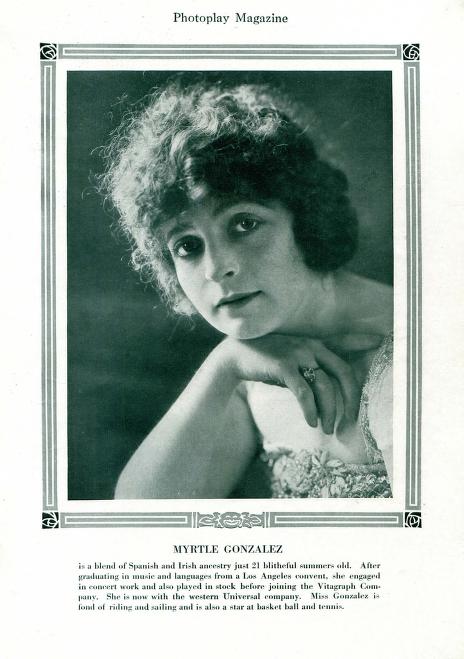
Myrtle Gonzalez nasceu em Los Angeles em 1891. A moça foi batizada com um nome 100% inglês, mas o sobrenome não deixa dúvidas sobre sua origem: seu pai era de origem mexicana, e sua mãe de origem irlandesa. Herdou da mãe o desejo de estar nos palcos, e começou a cantar e atuar ainda criança. Em 1913, quando os estúdios de cinema começavam a mudar de Nova York para Los Angeles, Myrtle conseguiu seu primeiro papel. Àquela altura, ela estava divorciada e tinha um filho bebê. Abaixo está um GIF de seu terceiro filme, “The Courage of the Commonplace” (1913):


Myrtle Gonzalez was born in Los Angeles in 1891. The girl's first name was 100% English, but her last name gives us no doubt about her origins: her father was from a Mexican family, and her mother from an Irish one. She inherited from her mother the desire of being on the stage, so she start singing and acting as a child. In 1913, when film studios started moving from New York to Los Angeles, Myrtle got her first role. At that time, she was divorced and had a baby son. Below there is a GIF from her third film, “The Courage of the Commonplace” (1913):


Myrtle teve pequenos papéis em curtas-metragens da Vitagraph, contracenando com William Desmond Taylor em cinco filmes entre 1913 e 1914. “The Kiss”, de 1914, é um dos poucos registros de Taylor em frente às câmeras. A protagonista do filme é Margaret Gibson, que confessou, em seu leito de morte em 1964, envolvimento com o misterioso assassinato de Taylor em 1922. Nada foi comprovado.

Myrtle had small roles in Vitagraph shorts, playing alongsie William Desmond Taylor in five films between 1913 and 1914. “The Kiss”, from 1914, is one of the few extant registers of Taylor in front of the cameras. The leading lady in this film is Margaret Gibson, who confessed, in her deathbed in 1964, that she was involved with Taylor's mysterious murder in 1922. Nothing was ever proved.


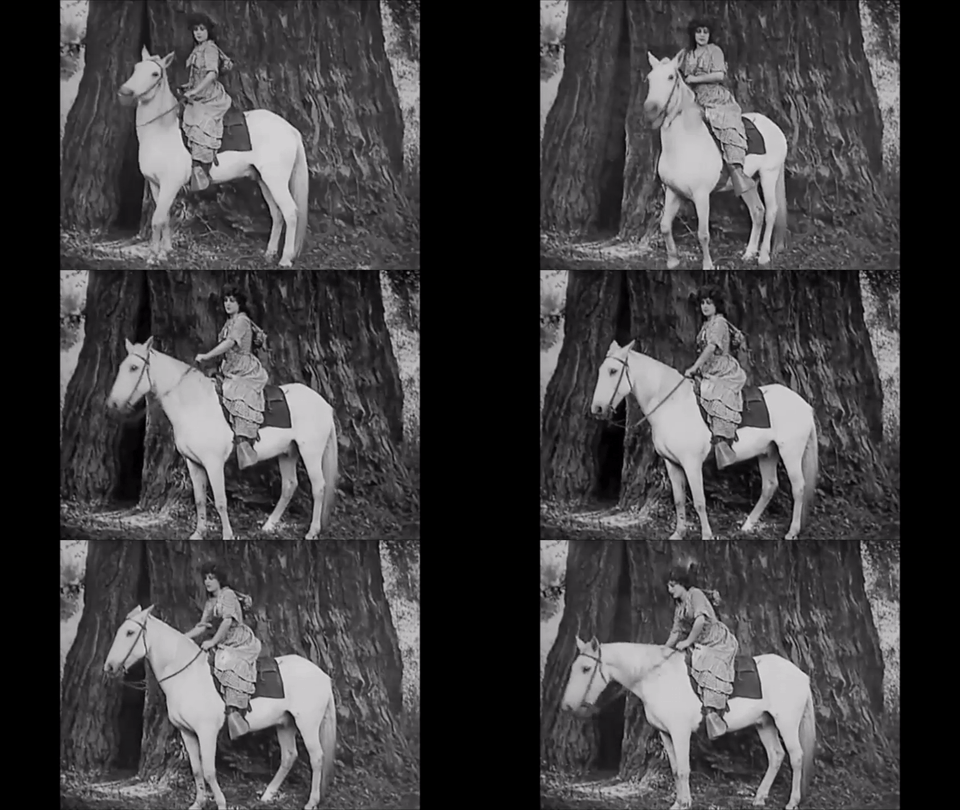
No começo da carreira, Myrtle Gonzalez não teve muito destaque, mas com o tempo conquistou papéis importantes. Suas protagonistas, como em “The End of the Rainbow” (1916), eram heroínas corajosas que viviam cercadas pela natureza e não se deixavam abater pelas adversidades.

In the beginning of her career, Myrtle didn’t call much attention, but with time she got more important papers. Her leading ladies, like in “The End of the Rainbow” (1916), were bold heroines who lived among the nature and didn’t let bad times prevent her from succeeding.


A carreira de Myrtle foi breve. Em dezembro de 1917, ela deixou o cinema para se casar pela segunda vez. Menos de um ano depois, em outubro de 1918, Myrtle Gonzalez sucumbiu à epidemia de gripe espanhola. Tinha apenas 27 anos e um coração frágil. O viúvo Allen Watt dirigiu e atuou em alguns poucos filmes da Universal nos anos 1920.

Myrtle's career was brief. In December 1917, she left the movies to get married for the second time. Less than a year later, in October 1918, Myrtle Gonzalez passed away from Spanish flu. She was only 27 and had a heart condition. Her widower, Allen Watt, direct and acted in a few Univwersal movies in the 1920s.


Beatriz Michelena nasceu em nova York em 1890. Seu pai era um tenor venezuelano que introduziu as duas filhas, Vera e Beatriz, no mundo artístico. Vera ficou no teatro de Nova York, fazendo parte do elenco do Ziegfeld Follies de 1914 a 1921. Beatriz se casou com um amor de infância em 1907, e se dedicou totalmente ao teatro nos anos seguintes.

Beatriz Michelena was born in New York in 1890. Her father was a Venezuelan tenor and he introduced his two daughters, Vera and Beatriz, to show business. Vera worked in the New York theater and was part of the Ziegfeld Follies from 1914 to 1921. Beatriz married her childhood sweetheart in 1907 and worked in theater the following years.


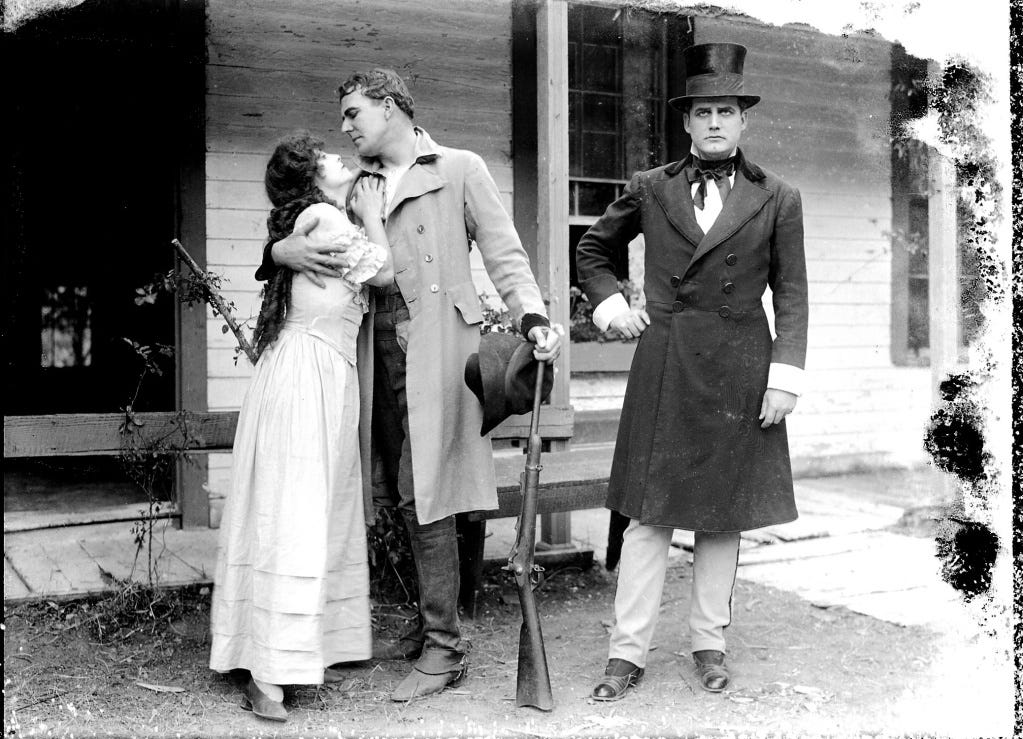
George E. Middleton, o marido de Beatriz, fundou a California Motion Picture Corporation em 1912 para rodar filmes publicitários dos automóveis que ele vendia. Em 1914, Michelena estreou nos cinemas com “Salomy Jane”, um ambicioso e belo western com uma trama complexa e uma bela atuação de sua protagonista. Teria nascido uma estrela para a California Motion Picture Corporation?

George E. Middleton, Beatriz’s husband, created the California Motion Picture Corporation in 1912 to make advertising films for the cars he was selling. In 1914, Michelena made her debut in the movies with “Salomy Jane”, an ambitious beautiful western with a complex plot and a great performance by the leading lady. Was a star born for California Motion Picture Corporation?


A produção caprichada deu uma ideia para George Middleton: sua esposa poderia ser uma estrela maior que Mary Pickford! Beatriz não chegou a este patamar, mas obteve relativo sucesso alternando westerns (em que ela dispensava o trabalho de dublês) e adaptações de óperas.

The gorgeous production from 1914 gave an idea to George Middleton: his wife could be a star bigger than Mary Pickford! Beatriz didn’t reach this point, but she had some success alternating between westerns (in which she dispensed stuntwomen) and opera adaptations. 


Entre 1916 e 1917, problemas na produção do épico “Fausto” levaram Beatriz a romper com a California Motion Picture Corporation. Na época, ela escrevia uma coluna de jornal sobre cinema e dava dicas para aspirantes a atrizes. Fragmentos de “Fausto” foram inseridos no filme “The Price Woman Pays”, de 1919, mas Beatriz já trabalhava em outro empreendimento.

Between 1916 and 1917, problems involving the production of the epic “Faust” amde Beatriz leave the California Motion Picture Corporation. At the time, she also wrote a newspaper column about the movies and gave tips to aspiring starlets. Stills from “Faust” were added to the film “The Price Woman Pays”, from 1919, but Beatriz was already working with something else.


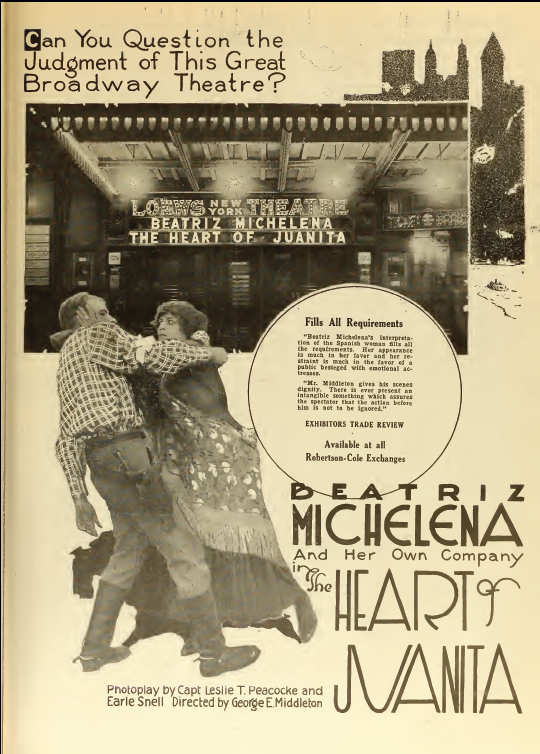
No mesmo ano em que Mary Pickford se tornava sócia da United Artists, Beatriz fundou sua própria produtora: Beatriz Michelena Features. Foram realizados apenas dois filmes pela produtora, mas eles foram suficientes para Beatriz marcar seu lugar na história.
In the same year that Mary Pickford became a partner at United Artists, Beatriz created her own production company: Beatriz Michelena Features. Only two films were produced there, but it was enough to guarantee Beatriz a place in film history.


Aposentada das telas em 1920, Beatriz voltou à ópera. Ela viajou pela América Latina cantando ópera em 1927, e em 1931 um incêndio destruiu todas as cópias dos filmes da Beatriz Michelena Features (algumas cópias sobreviveram em arquivos ao redor do mundo). Beatriz Michelena faleceu em 1942, aos 52 anos.

Retired from the screen in 1920, Beatriz returned to opera. She toured in Latin America singing opera in 1927, and in 1931 a fire destroyed all the film copies at Beatriz Michelena Features (some copies survived in archives around the world). Beatriz Michelena passed away in 1942, aged 52. 


Myrtle e Beatriz, apesar de terem nascido nos Estados Unidos, tinham a força e a graça do sangue latino. Não se curvaram frente às adversidades, conquistaram um lugar ao sol, interpretaram mulheres fortes e corajosas e deixaram um legado a ser admirado por todos, mulheres e homens, latinos e não-latinos.

Myrtle and Beatriz, although American women by birth, had the strengtth and grace found only in Latin blood. They didn’t give up when obstacles appeared, they found a place in the sun, they played courageous strong women and left a legacy that deserves to be admired by all, men and women, Latin or not. 

This is my contribution to the Hollywood's Hispanic Heritage Blogathon 2015, hosted by Aurora at Once Upon a Screen. Bravo!
Related Posts Plugin for WordPress, Blogger...