} Crítica Retrô: 1930

Tradutor / Translator / Traductor / Übersetzer / Traduttore / Traducteur / 翻訳者 / переводчик

Showing posts with label 1930. Show all posts

Wednesday, November 8, 2023

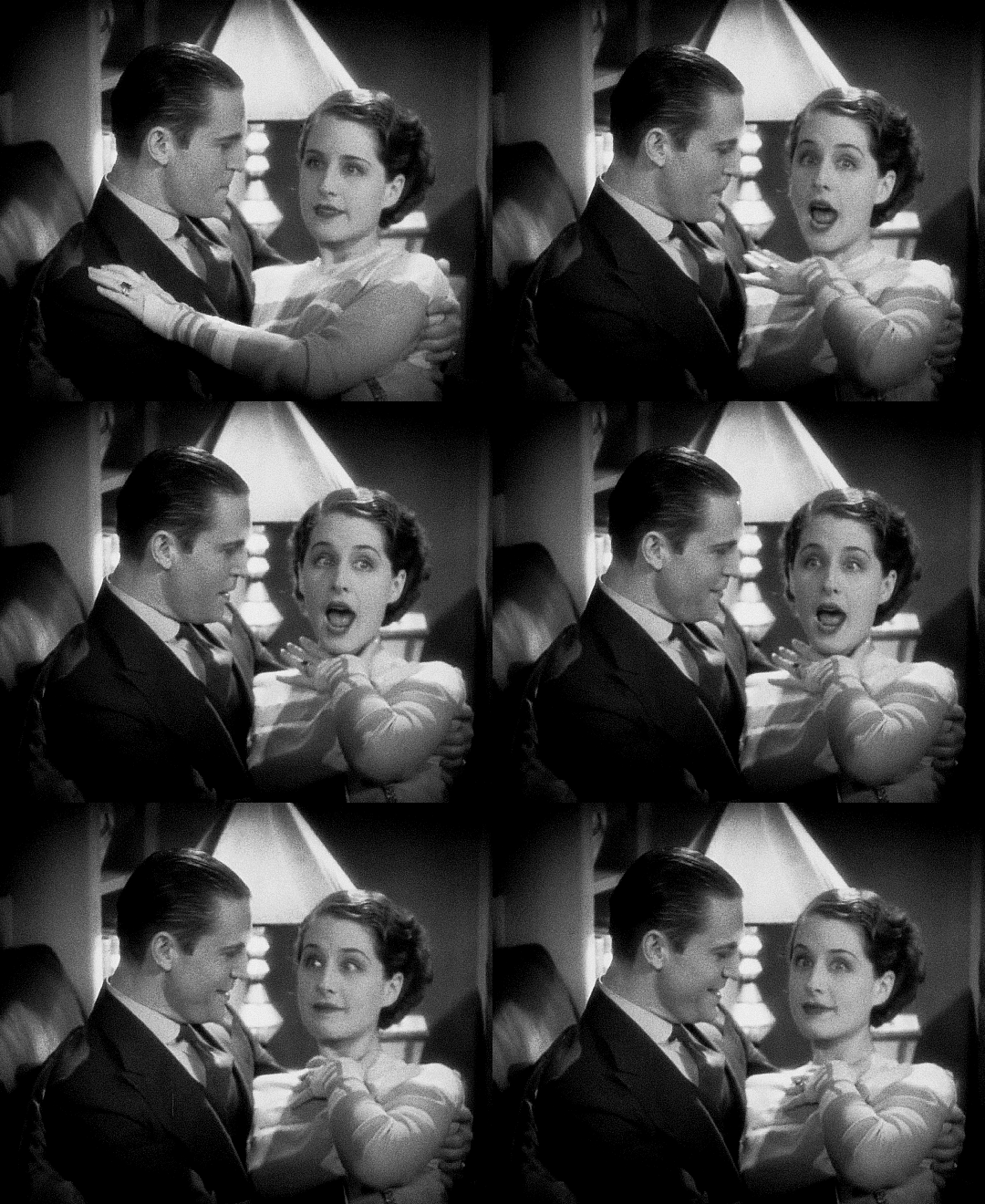
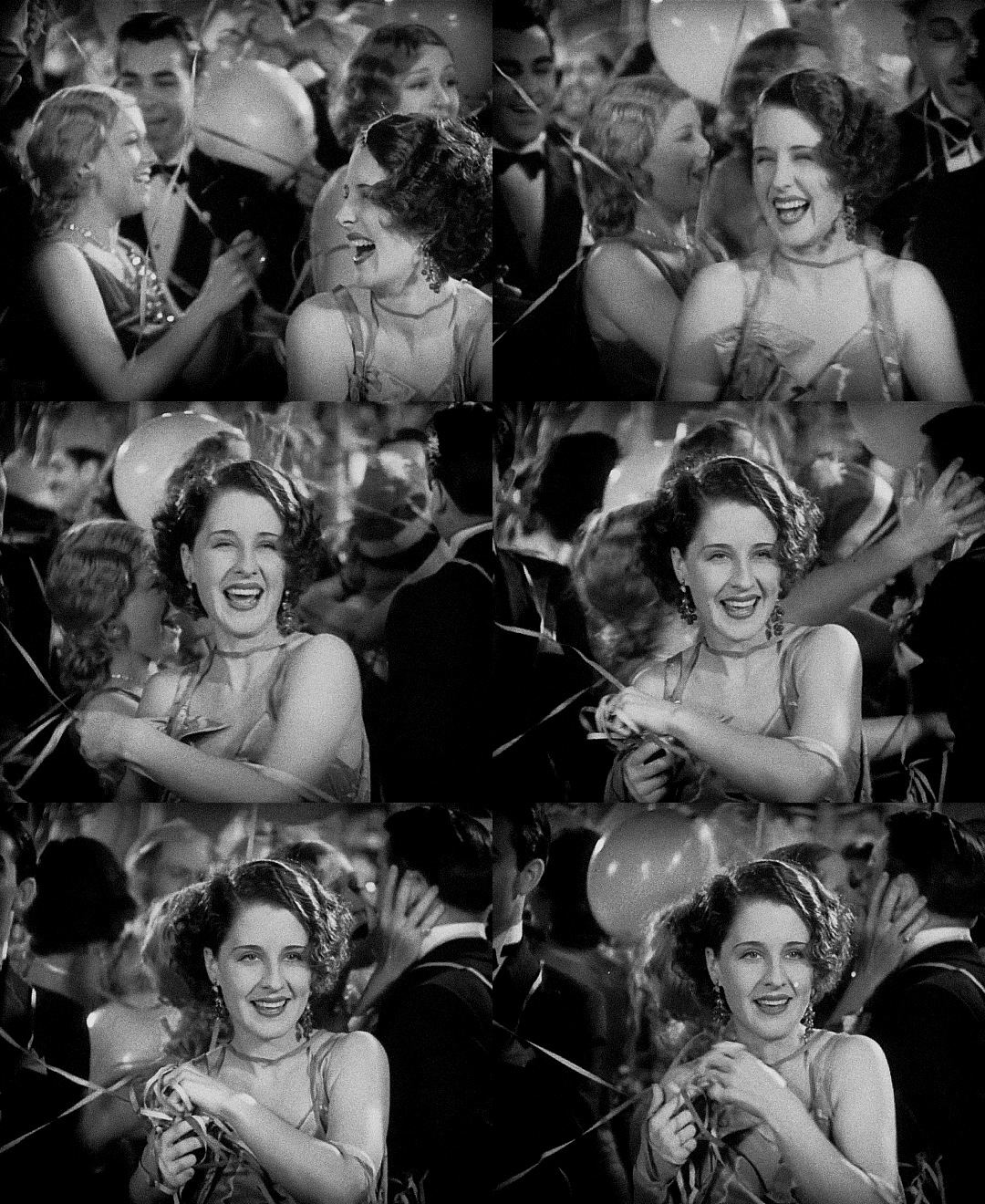
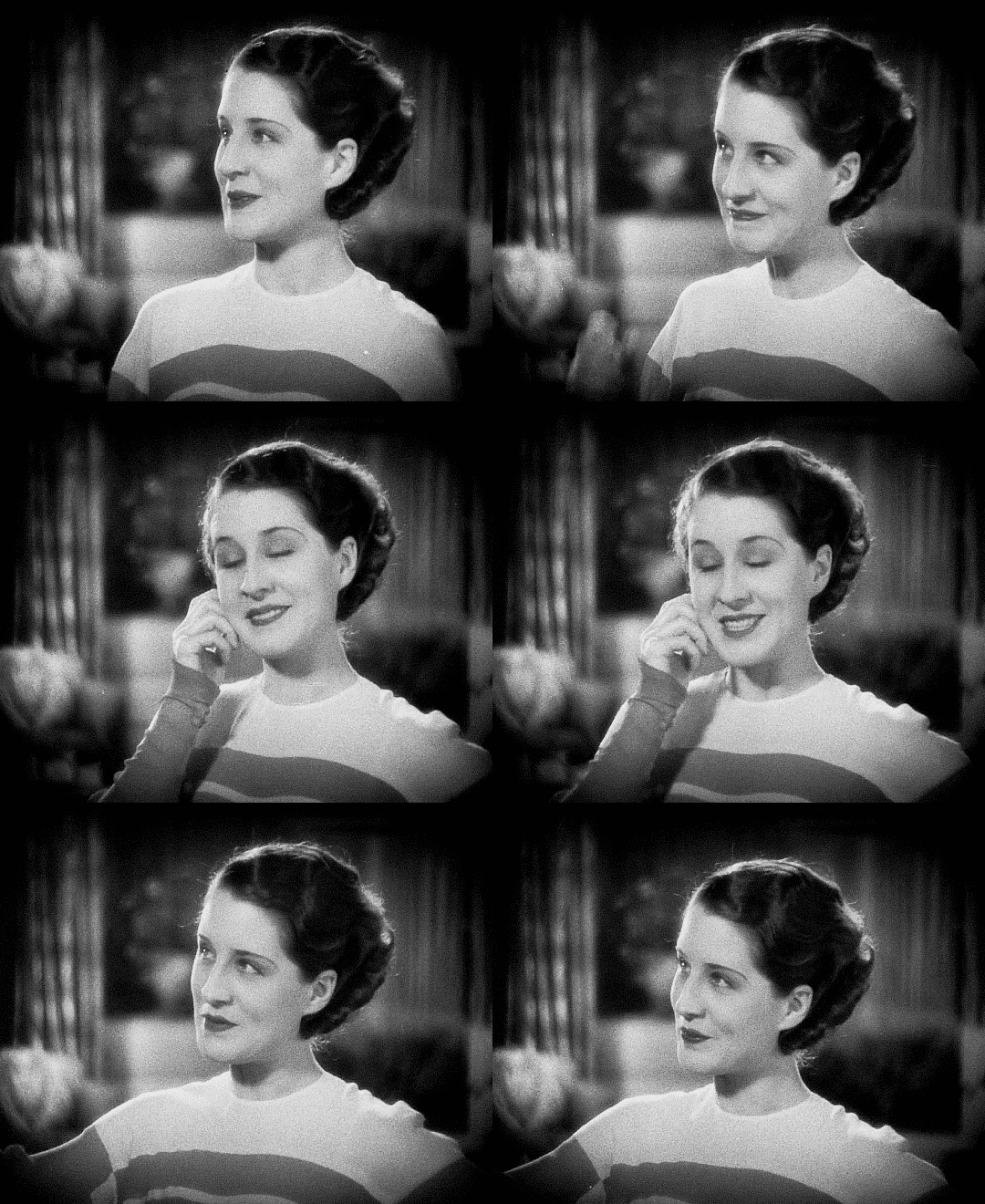
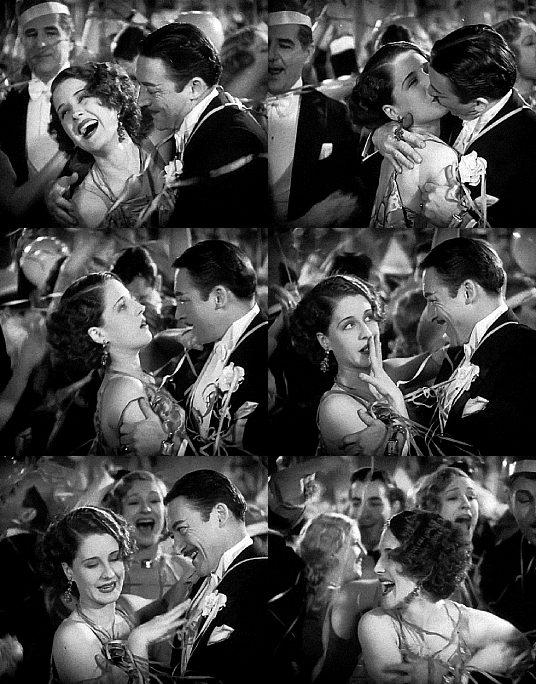
A Divorciada (1930) / The Divorcee (1930)


As heroínas dos filmes feitos antes do Código Hays eram quase sempre personagens femininas admiráveis. Navegando em um mundo masculino e tendo como principal arma seu corpo, elas eram sensuais, ousadas e provocantes. E estes três adjetivos são perfeitos para descrever a protagonista de “A Divorciada”, de 1930.


The heroines of pre-Code films were almost always remarkable female characters. Navigating a man’s world having as their main weapon their body, they were sensual, bold and provocative. And these three adjectives are perfect to describe the lead in 1930’s “The Divorcee”.

Jerry (Norma Shearer) é cobiçada por muitos homens, mas o primeiro a pedi-la em casamento é Ted (Chester Morris). Ela aceita o pedido e eles se casam. Três anos após o casamento, eles parecem viver em perfeita harmonia... até que Janice (Mary Doran), uma velha conhecida de Ted, chega à festa de bodas do casal.


Jerry (Norma Shearer) is wanted by many men but the first to propose is Ted (Chester Morris). She accepts the proposal and they get married. Three years after the wedding, they seem to be perfectly happy… until Janice (Mary Doran), an old acquaintance of Ted’s, arrives at the party being thrown for their anniversary.

Quando ela descobre sobre Ted e Janice, Jerry encontra consolo nos braços do melhor amigo de Ted, Don (Robert Montgomery), que gosta dela mais do que como amiga. Ela então pede o divórcio de Ted, experimentando uma liberdade inédita como a nova ex-esposa.


When she learns about Ted and Janice, Jerry finds consolation with Ted’s best friend Don (Robert Montgomery), who likes her more than as a friend. She then proceeds with the divorce from Ted, experiencing unmatched freedom as the new ex-wife.

Em suas aventuras, Jerry re-encontra Paul (Conrad Nagel), que era apaixonado por ela quando ela anunciou seu noivado com Ted. Paul ficou tão chateado com a notícia que se embebedou e se envolveu em um acidente de carro que deixou o rosto de Dorothy (Helen Johnson) desfigurado. Paul então se casou com Dorothy movido pela culpa. Quando ele re-encontra Jerry, descobrimos que Paul nunca a esqueceu, e agora vê a oportunidade de deixar Dorothy e se casar com Jerry.


In her adventures, Jerry re-encounters Paul (Conrad Nagel), who was in love with her when she announced her engagement to Ted. Paul got so upset with the news that he got drunk and got involved in a car accident that left Dorothy (Helen Johnson) with a disfigured face. Paul then married Dorothy out of guilt. When he meets Jerry again, we learn that Paul never forgot her, and now sees the opportunity to leave Dorothy and marry Jerry.

Em certo momento, depois de ser perguntada o que havia de errado com ela, Jerry responde: “Só estou tentando me agarrar à maravilhosa latitude do ponto de vista de um homem”. Ela está claramente falando sobre os dois pesos e duas medidas a partir dos quais homens e mulheres são julgados. Para um homem, um caso extraconjugal “não significa nada”, mas se é a mulher que trai, ela é julgada sem piedade.


At one point, after being asked what was wrong with her, Jerry answers: “I’m just trying to hang onto the marvelous latitude of the man’s point of view”. She is clearly talking about the double standard from which men and women are judged. For a man, an affair “doesn’t mean a thing”, but if it’s the woman who is cheating, she is judged without mercy.

Jerry não é uma mulher à frente do seu tempo, mas é certamente uma mulher do seu tempo: taxas de divórcio estavam aumentando no final dos anos 1920 e começo dos anos 1930. Menos de 15 anos depois de as sufragistas conseguirem o direito ao voto, mais e mais mulheres estavam vivendo vidas mais livres e se livrando de casamentos nos quais não eram felizes. A taxa de divórcios cairia durante a Grande Depressão – como é comum em tempos de dificuldades – e aumentariam novamente no final da década. Em 1937, um marco legal: o chamado Matrimonial Causes Act permitiu que mulheres pedissem divórcios nos mesmos termos que os homens, embora mantendo a necessidade de demonstrar que um dos três aconteceu: adultério, crueldade ou abandono.


Jerry isn’t a woman ahead of her time, but she’s certainly a woman of her time: divorce rates were on the rise in the late 1920s and early 1930s. Less than 15 years after the suffragettes got their right to vote, more and more women were leading freer lives and getting out of marriages in which they were unhappy. The divorce rate would go down during the Great Depression – as it is common for times of hardship – and go up again by the end of the decade. In 1937, a legal mark: the Matrimonial Causes Act allowed women to petition for divorce on the same terms of men, although keeping the requirement to demonstrate that one of the three happened: adultery, cruelty or desertion.

O divórcio estava dominando tanto as conversas que serviu de mote para outras obras de arte. Um deles foi a peça-que-virou-filme “Vítimas do Divórcio” (1932), hoje mais lembrado por ser a estreia de Katharine Hepburn nas telas. Nele, um homem chamado Hilary (John Barrymore) volta para casa depois de passar 15 anos num hospício e descobre que sua esposa Meg (Billie Burke) pediu o divórcio e está prestes a se casar novamente. Em alguns momentos mais emocionante que “A Divorciada”, este filme poderia ter ditado os termos para normalizar o divórcio no cinema se o Código Hays não tivesse atrapalhado.


Divorce was so much dominating the talks that it inspired more works of art. One of them was the play-turned-into-film “A Bill of Divorcement” (1932), today best remembered for being Katharine Hepburn’s screen debut. In it, a man named Hilary (John Barrymore) comes home after spending 15 years in an asylum and finds out that his wife Meg (Billie Burke) has divorced him and it about to remarry. In some moments more engaging than “The Divorcee”, this film could have set the tone to normalize divorce on screen if there hadn’t been the Hays Code.

“A Divorciada” foi baseado no romance best-seller “Ex-Wife”, de Ursula Parrott, que vendeu os direitos de adaptação para a MGM pela incrível quantia de 20 mil dólares. A própria Ursula era divorciada quando o livro foi publicado, anonimamente, em 1929, e ainda iria casar de novo e se separar outras três vezes. Hoje basicamente esquecida, Ursula Parrott estava sempre nas manchetes das colunas de fofocas e seus livros e contos foram lidos por milhões.


“The Divorcee” was based on the best-seller “Ex-Wife”, by Ursula Parrott, who sold the movie rights to MGM for the amazing sum of $20,000. Ursula herself was a divorcee when the book was published, anonymously, in 1929, and would go on to remarry and divorce three more times. Now basically forgotten, Ursula Parrott was always on the headlines of gossip columns and her novels and short stories was read by millions.

Ursula Parrott

Norma Shearer ganhou o Oscar de Melhor Atriz em 1931 por sua performance em “A Divorciada” – uma performance que não foi particularmente desafiadora, tirando um ousado monólogo. A primeira escolhida para o papel fora Joan Crawford, que para sempre rivalizou Shearer por causa da perda do papel.


Norma Shearer won the Best Actress Oscar in 1931 for her performance in “The Divorcee” – a performance that wasn’t particularly challenging, except for a racy monologue. The first choice to play the role had been Joan Crawford, who became forever bitter with Shearer for having gotten the part instead.

“A Divorciada” é puro ouro pré-Código Hays. Vindo de um livro escandaloso, não é um filme tão escandaloso assim, mas ainda assim um filme que não teria sido feito a partir de 1934. Mais do que isso, ele traz uma protagonista feminina livre, que pode servir de exemplo de ousadia para a heroína da época.


“The Divorcee” is pure pre-Code gold. Coming from a scandalous book, it’s not such a scandalous film, but still a film that wouldn’t have been made from 1934 onwards. More than that, it brings a free female lead, one that can serve as an example of boldness for the pre-Code heroine.


This is my contribution to the Blogathon and the Beast, hosted by the Classic Movie Blog Association.

Thursday, February 20, 2020

Fantasias de 1980 (1930) / Just Imagine (1930)


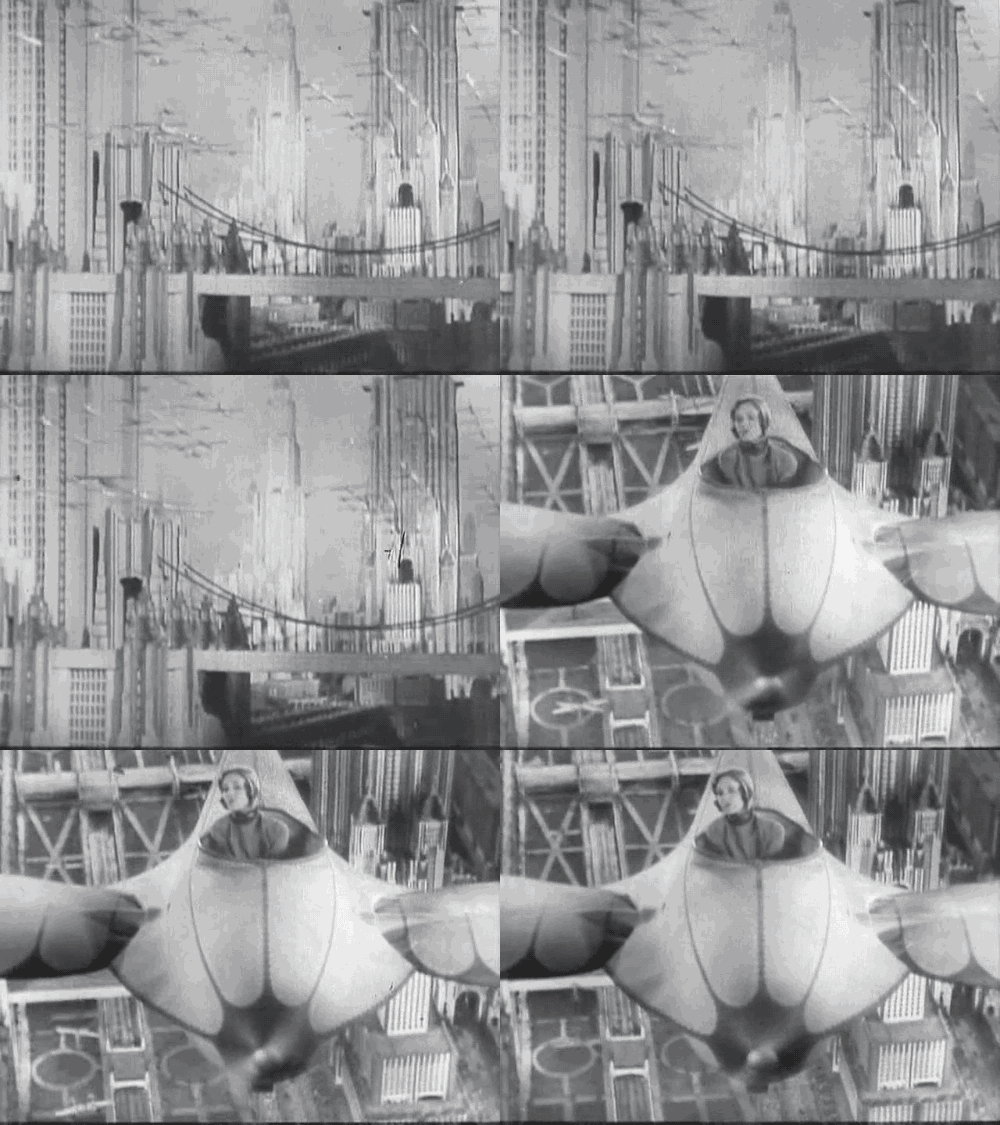
Imagine como o mundo vai ser daqui a 50 anos. Veículos voadores são obrigatórios em todas as previsões futurísticas, mas queremos mais: como as pessoas vão se vestir? Que tipo de música estará na moda? As pessoas serão conhecidas pelo nome ou por um número? Como será o namoro? Nós visitaremos outros planetas? Todas estas questões são respondidas em “Fantasias de 1980” – mas quase nenhuma projeção deste estranho filme se concretizou.

Just imagine how the world will be 50 years from now. Flying vehicles are a must in all futuristic predictions, but we want more: how will people dress? Which kind of music will be in vogue? Will people be called by names or numbers? How will dating be like? Will we visit other planets? All these questions are answered in “Just Imagine” – but almost nothing predicted by this strange film became true.


Nós não sabemos o porquê, mas o filme previu que em 1980 o governo diria às pessoas com quem elas deveriam se casar. Ah, e as pessoas teriam letras e números para identificá-las ao invés de nomes. E é assim que somos apresentados a LN-18 (Maureen O’Sullivan) e J-21 (John Garrick), dois apaixonados que, de acordo com o governo, não foram feitos um para o outro. Ele gosta dela porque ela é uma “garota à moda antiga”, como aquelas de 1930 – como a avó de J-21, ele diz! Ele até canta uma canção sobre garotas à moda antiga...

We don't know why, but the film predicted that in 1980 the government would tell people who they must marry. And, oh, people would have letters and numbers to identify them, not names. So this is how we're introduced to LN-18 (Maureen O'Sullivan) and J-21 (John Garrick), two lovebirds who, according to the government, weren't made for each other. He likes her because she's an “old-fashioned girl”, like the ones from the 1930s – like J-21's grandmother, he says! He even sings about the old-fashioned gals...


Depois da música, J-21 ainda está triste porque não pode se casar com LN-18, mas seu colega de quarto o convida para ver um cientista tentar um feito extraordinário: trazer um homem de volta à vida! Em um laboratório cheio de luzes e equipamentos, o experimento é um sucesso, e um homem (El Brendel) que foi atingido por um raio e morto durante uma partida de golfe em 1930 é ressuscitado. O cientista liberta sua cobaia, e o pobre homem é recebido por J-21 e seu amigo RT-42 (Frank Albertson), que apresentam o novo mundo a ele, e ele escolhe o “nome” Single-O.

After the song, J-21 is still sad because he can't marry LN-18, but his roommate invites him to see a fellow scientist try something astounding: to bring a dead man back to life! In a laboratory full of lights and paraphernalia, the experiment is successful, and a man (El Brendel) who was struck by lightning and killed during a game of golf in 1930 is resurrected. The scientist sets his experiment free, and the poor man is greeted by J-21 and his friend RT-42 (Frank Albertson), who present the new world to him, and he chooses the “name” Single-O.


A comida e a bebida foram substituídas por pílulas saborizadas. Bebês são feitos e entregues por máquinas após o casal depositar uma moeda e escolher o gênero da criança. Por causa destas mudanças, Single-O diz sem parar “Dê-me os velhos tempos de volta”, e seus amigos modernos acham graça do saudosismo dele.

Food and drinks were replaced by flavored pills. Babies are made and delivered by machines after the couple puts a coin and selects the gender of the kid. Because of these changes, Single-O keeps repeating “Give me the good old days”, which amuses his modern-day pals.


A amiga de LN-18, D-6 (a adorável Marjorie White), decide ajudá-la e organiza um encontro com J-21. Quando este encontro é interrompido pelo noivo que o governo escolheu para LN-18, J-21 fica com o coração partido. Entretanto, um estranho o chama e o leva até um cientista que oferece a ele... uma viagem para Marte! J-21 aceita a missão, porque assim ele mostrará seu valor e o tribunal terá de deixá-lo se casar com LN-18.

LN-18’s friend D-6 (the lovely Marjorie White) helps her and stages a meeting with J-21. When this meeting is interrupted by LN-18’s government-assigned fiancé, J-21 is left heartbroken. However, a stranger approaches him and takes him to a scientist who offers him… a trip to Mars! J-21 accepts the mission, because this will show how distinguished he is, and the tribunal will have to let him marry LN-18.


J-21, RT-42 e Single-O – como clandestine – vão a Marte num foguete. Depois de um mês – um intervalo de tempo ridículo, eu sei – eles chegam a Marte, e aqui algumas cópias do filme passam a ser em tons de sépia. Nossos heróis sépia – com trajes especiais vagabundos e nenhum capacete – encontram marcianos em tons de sépia com roupas minúsculas e linguagem difícil – eles só se comunicam através de gestos e gritos – e todos têm um gêmeo do mal! Isso é muito diferente de, digamos, como os marcianos foram retratados em “Himmelskibet” (1918), onde eram vegetarianos e pacifistas.

J-21, RT-42 and Single-O – as a stowaway – go to Mars on a rocket. After one month – a ridiculous amount of time, I know – they get to Mars, and here some copies of the film become sepia-toned. Our sepia heroes – with lousy special suits and no helmet at all – meet sepia-toned Martians with minimum clothing and poor language skills – they only communicate through gestures and screams – and everybody has an evil twin! This is very different from, let’s say, the Martians in “Himmelskibet” (1918), who were vegetarians and pacifists.


Como esse filme tão ruim chega a ser bom? Primeiro, é um musical sem músicas interessantes. Claro, John Garrick é um bom cantor, mas nos anos 30 havia muitos como ele em Hollywood. Segundo, é uma comédia, e com El Brendel como alívio cômico. Brendel é pouquíssimo lembrado atualmente, e algumas de suas piadas são tão bobas que são engraçadas. “Fantasias de 1980” é o filme mais conhecido de Brendel, mas ele também pode ser visto em um pequeno papel cômico em “Asas” (1927).

What makes this movie so bad it’s actually good? First, it’s a musical without any memorable tunes. Sure, John Garrick is a fine singer, but back at the 1930s there were many like him in Hollywood. Second, it’s a comedy, and with El Brendel as comic relief. Brendel is hardly remembered nowadays, and some of his jokes and gags are so silly that they become entertaining. “Just Imagine” is Brendel’s best known film, but he can also be seen in a small comic relief role in “Wings” (1927).


Mesmo sendo um filme bobinho, “Fantasias de 1980” tem um estilo impressionante. Ele foi indicado ao Oscar de Direção de Arte, e a metrópole de 1980 realmente se parece com, bem, a cidade de “Metrópolis” (1927). Além disso, o filme tem a honra de ser o primeiro filme de ficção científica sonoro – e também o primeiro musical de ficção científica! – feito em Hollywood. E ele também foi o último filme de ficção científica de grande orçamento feito por um grande estúdio – no caso a Fox – até os anos 50. Todas as outras tentativas de se fazer ficção científica nas décadas de 30 e 40 foram de estúdios pequenos, e algumas sequências, tomadas e cenários de “Fantasias de 1980” foram reciclados por estes estúdios em suas produções.

Even though it’s a silly movie, “Just Imagine” has an impressive look. It was nominated for an Art Direction Oscar, and the 1980 metropolis really looks like, well, the city from “Metropolis” (1927). Besides that, the film has the honor of being the first science fiction talkie – and also the first science fiction musical! – made in Hollywood. And it was also the last big-budget sci-fi made by a big studio – Fox here – until the 1950s. All other attempts of doing sci-fi in the 30s and 40s were by poverty row studios, and some sequences, shots and sets from “Just Imagine” were recycled by those studios in their productions.


Como é dito no começo do filme, muitas coisas podem mudar em 50 anos. Os cineastas certamente não contaram com mais uma guerra mundial, nem mesmo com mudanças na música e na moda. Mesmo assim, algumas previsões se mostraram corretas. Há telas que mostram o lado de fora para quem está dentro de um apartamento, como as câmeras de monitoramento que temos agora. Um vestido formal se transforma em camisola, em um momento muito pre-Code. Em 1930, o filme foi uma curiosa previsão do futuro, mas hoje, em 2020, é um também curioso vislumbre do passado.

Like it's said in the beginning of the film, a lot of things can change in 50 years. The filmmakers certainly didn't count on another world war, not even with the changes on music and fashion. Nevertheless, they predicted some things right. There are screens that show the outdoors to people indoors, like the monitoring cameras we have now. A dinner dress transforms itself into a nightgown, in a moment that screams pre-Code! In 1930, the film was a curious prediction of the future, but now, in 2020, it’s an equally curious glimpse of the past.

This is my contribution to the Second So Bad It’s Good blogathon, hosted by Rebecca at Taking Up Room.

"Just Imagine" can be found on YouTube.


Sunday, December 22, 2019

François Truffaut, filmes de guerra e eu

François Truffaut, war movies and me

François Truffaut é um dos deuses do cinema. Além de ser um grande diretor, roteirista e por vezes ator, ele amava o cinema acima de todas as coisas. Ele era um de nós, cinéfilos. Mas isso não significa que ele estava sempre correto em suas opiniões sobre o cinema. Há algum tempo eu li algo que Truffaut disse e discordei dele. Truffaut disse que não existe um filme completamente antiguerra porque mesmo os filmes antiguerra acabam glorificando a guerra.

François Truffaut is one of the cinema gods. Besides being a great director, screenwriter and sometimes actor, he loved cinema above all else. He was one of us, film people. But it doesn’t mean he was always right in his opinions about film. A while ago I read something Truffaut said and I strongly disagreed. Truffaut said that there can’t be a completely anti-war movie because even anti-war movies end up glorifying war.

Chicago Tribune - November 11th, 1973 

Eu encontrei esta declaração enquanto pesquisava para uma apresentação. Eu passei 2019 e boa parte de 2018 fazendo esta pesquisa. No final, escolhi 34 filmes, feitos entre 1917 e 2017 – este intervalo de 100 anos foi coincidência – sobre a Primeira e a Segunda Guerras Mundiais.

I came across this declaration when I was doing research for a presentation. I spent 2019 and a good chunk of 2018 doing this research. In the end, I chose 34 films, made between 1917 and 2017 – this 100-year period was a coincidence – about World War I and World War II.


Minha intenção era analisar o discurso nestes filmes, e como ele mudou com o passar do tempo. No final, eu descobri que, durante as guerras, os filmes tinham um tom bem patriótico, mas depois ele mudava. Com “Eu Acuso!” (1919) de Abel Gance, os filmes e a sociedade em geral começaram a ver a Primeira Guerra Mundial como uma guerra na qual não valeu a pena lutar – e que moldou a Geração Perdida. Entretanto, por causa dos horrores dos campos de concentração, a Segunda Guerra Mundial sempre foi retratada no cinema como uma guerra do bem contra o mal, com os bons sendo parte da Geração Grandiosa.

My intention was to analyze the discourse in those films, and how it changed over time. In the end, I found out that, during the wars, the films had a very patriotic tone, but afterwards it changed. With Abel Gance’s “J’Accuse!” (1919), films and society in general started seeing World War I as a war that was not worth fighting – and one that shaped the Lost Generation. However, due to the horrors of concentration camps, World War II was always portrayed in film as a war of good versus evil, with the good ones being part of the Greatest Generation.

Me at the presentation

Isso significa que a maioria dos filmes sobre a Primeira Guerra Mundial é de filmes antiguerra, enquanto filmes sobre a Segunda Guerra Mundial são a favor da guerra. No artigo, Truffaut menciona “Glória Feita de Sangue” (1957), de Kubrick, como um filme antiguerra que na verdade glorifica a guerra. Eu não concordo muito com isso, mas há um filme que é completamente antiguerra e contesta a teoria de Truffaut: “Nada de Novo no Front” (1930).

This means that most films about WWI are anti-war films, while WWII films are pro-war. In the article, Truffaut mentions Kubrick’s “Paths of Glory” (1957) as an anti-war film that actually glorifies war. I don’t really agree with that, but there is one film that is completely anti-war and disproves Truffaut’s theory: “All Quiet on the Western Front” (1930).


“Nada de Novo no Front” é um filme de 1930 da Universal Pictures dirigido por Lewis Milestone. Ele é baseado no romance homônimo de Erich Maria Remarque, publicado em 1928. Ele conta a história do jovem alemão Paul Bäumer (interpretado por Lew Ayres) e seus colegas de classe que se alistam no exército após um inflamado discurso patriótico feito por um professor. Eles aprenderão que a guerra é bem diferente da descrição do professor: menos emocionante e glamourosa.

“All Quiet on the Western Front” is a 1930 Universal Pictures movie directed by Lewis Milestone. It is based on the novel of the same name by Erich Maria Remarque, published in 1928. It follows the young German Paul Bäumer (played by Lew Ayres) and his fellow classmates who enlist in the German Army after their teacher makes an intense patriotic speech. They all will learn that war isn’t that exciting or glamorous as the teacher had painted it.


Para mim, há duas sequências fundamentais que mostram a desilusão destes jovens e também que a guerra não merecia o esforço. A primeira é quando o Cabo Himmelstoss (John Wray) – o homem abusivo que treinou os jovens antes de eles partirem para o campo de batalha – chega ao front e, vendo a guerra pela primeira vez, se mostra um covarde. Himmelstoss só era valente perto de jovens imaturos. Fato curioso: Himmelstoss significa "céu em queda" em alemão.

For me, there are two key sequences that show the disillusionment of those youngsters, also showing that the war was not worth fighting. The first is when Corporal Himmelstoss (John Wray) – the abusive man who trained the boys before they went to the front – arrives in the front and, seeing war for the first time, acts with cowardice. Himmelstoss was, after all, only a big bully. Curious fact: Himmelstoss means "falling sky" in German.


A segunda sequência envolve Paul voltando para casa, de folga. Quando ele chega à sua cidade natal, ele percebe que ninguém lá é capaz de imaginar os horrores da guerra, e eles inclusive acham que a Alemanha está a um passo da vitória. Pior ainda: quando ele visita sua velha escola, ele vê o professor Kantorek (Arnold Lucy) repetindo o mesmo discurso patriótico glorioso para alunos muito mais jovens que Paul. Revoltado, Paul conta a eles a verdade sobre a guerra, e como o professor não sabe do que está falando porque nunca esteve no front. Paul é então chamado de covarde pelos jovens estudantes, em transe com o discurso patriótico.

The second sequence involves Paul coming back home for a while. When he reaches his hometown, he realizes that nobody there imagines the horrors of war, and they all actually think that Germany is almost winning the war. Even worse: when he visits his old school, he finds Professor Kantorek (Arnold Lucy) repeating the same glorious patriotic speech to students much younger than Paul. Revolted, Paul tells them the truth about war, and how the professor can’t know them because he had never been to the front. Paul is then called a coward by the young students entranced by the patriotic speech.


“Nada de Novo no Front” era tão pacifista em sua mensagem que foi banido na Alemanha Nazista, na Itália fascista, na Áustria e até mesmo na França. Estes países só puderam ver a obra-prima de 1930 após a Segunda Guerra Mundial.

“All Quiet on the Western Front” had such a strong pacifist message that it was banned from Nazi Germany, fascist Italy, Austria and even France. Those countries could only see the 1930 masterpiece after World War II.


Além disso, a história foi tão profunda que fez o ator Lew Ayres se tornar pacifista. Isso lhe custou muito: ele se opunha à Segunda Guerra Mundial e se alistou no exército apenas para servir como ajudante médico. Depois de alguma confusão, ele finalmente seguiu no exército no posto desejado.

Moreover, the story was so appealing that it turned actor Lew Ayres into a lifelong pacifist. This cost a lot to him: he was a conscientious objector to the Second World War and enlisted in the army only to serve as medical aid. A little kerfuffle followed, until he was granted his wish.


Eu não consegui encontrar nada sobre o que Truffaut achou de “Nada de Novo no Front” – e sua opinião seria bem-vinda, porque o filme só estreou na França em 1963, quando Truffaut já era crítico de cinema. De qualquer forma, eu posso dizer uma coisa: por ter os vencedores da guerra contando uma história empática sobre os perdedores, “Nada de Novo no Front” humaniza ambos os lados do conflito e mostra que a guerra é inútil porque somos todos iguais. E eu sinto muito, monsieur Truffaut, mas este filme cria este discurso antiguerra da mais perfeita e inquestionável maneira que eu já vi no cinema.

I couldn’t find anything about what Truffaut thought of “All Quiet on the Western Front” – and his thoughts would be welcome, because the film was only allowed to be shown in France in 1963, when Truffaut was already a film critic. Anyway, I can say one thing: by letting the winners of the war tell an empathetic story about the losers, “All Quiet on the Western Front” humanizes both sides of the conflict and shows that war is useless because we’re all equal. And I’m sorry, monsieur Truffaut, but this film does this anti-war speech in the most perfect, unquestionable way I’ve ever seen on a screen.

Sunday, May 20, 2018

Laurel & Hardy


Em 13 de março de 1927, um curta-metragem chamado “Duck Soup” estreou e mudou as carreiras de Stan Laurel e Oliver Hardy para sempre. Ambos já eram comediantes estabelecidos, embora algo desiludidos, mas estavam prestes a se tornar não apenas ídolos do público, mas lendas do cinema.

On March 13th, 1927, a short film called “Duck Soup” was released and it changed the careers of Stan Laurel and Oliver Hardy forever. Both were already established comedians, yet a little sour with their little success, but they were about to become not only movie idols, but also film legends.


Ollie antes de Stan / Hardy before Laurel

Norvell Hardy nasceu na Georgia em 1892. Em 1913, já usando o nome Oliver, que era o primeiro nome do seu pai, Hardy entrou no cinema por trás das câmeras. Primeiro, ele abriu sua própria sala de cinema - Hardy foi o mais jovem gerente de sala de cinema nos Estados Unidos!
Mudando-se para a Florida, para os estúdios Lubin, Hardy se tornou responsável por varias coisas, como objetos de cena e iluminação. Ele apareceu em seu primeiro filme em 1914.
De 1914 a 1926, Hardy fez centenas de filmes, geralmente como coadjuvante e quase sempre como valentão, vilão ou personagem muito nervoso.


Norvell Hardy was born in Georgia in 1892. In 1913, already using the name Oliver, that was his father’s first name, Hardy entered the movie business behind the cameras. First, he opened his own movie theater - Hardy was the youngest movie theater manager in the United States!
Moving to the Lubin studio in Florida, Hardy became responsible for several things, like props and lighting. He appeared in his first film in 1914.
From 1914 until 1926, Hardy made hundreds of films, often as a supporting character and usually as a bully, villain or really nervous character.

Stan antes de Ollie / Laurel before Hardy

Arthur Stanley Jefferson nasceu em Lancashire, Inglaterra, em 1890. Ele veio de uma família do teatro, foi uma criança tímida, fez sua estreia nos palcos quando tinha quase 16 anos e, aos 19, foi contratado pela companhia de Fred Karno como substituto de um cara chamado Charles Chaplin.
Em 1912 a companhia fez um tour pelos EUA, e Stan decidiu ficar por lá - Chaplin só migraria para os EUA dois anos depois. Stan trabalhou no teatro por cinco anos, e em 1917 fez sua primeira aparição no cinema.
Stan normalmente era “escada” para as piadas de outros comediantes - como Larry Semon - e em seus filmes de meados dos anos 1920 já é possível vê-lo interpretando personagens ingênuos.


Arthur Stanley Jefferson was born in Lancashire, England, in 1890. He came from a theater family, was a shy kid, made his stage debut when he was about to turn 16 and, at 19, was employed by Fred Karno’s company as an understudy for a little fella called Charles Chaplin.
In 1912 the company toured the US, and Stan decided to stay - Chaplin would only migrate to the US two years later. Stan worked in theater the five following years, and in 1917 he made his first film appearance.
Stan often played second fiddle to other comedians - such as Larry Semon - and in films from the mid-1920s it’s already possible to see him playing naïve characters.

O primeiro encontro: The Lucky Dog (1921) / The first meeting: The Lucky Dog (1921)

Algumas coisas são questão de timing, não de ocasião. Por exemplo: no primeiro filme juntos, “The Lucky Dog” (1921): Oliver Hardy roubou, espancou e ameaçou Stan Laurel com uma arma. Neste filme. “Stanley Laurel” era um homem que havia sido recém-despejado de uma hospedaria, e encontrava um vira-lata que o ajudava a conquistar uma jovem rica. “Babe Hardy” era um ladrão.
“The Lucky Dog” foi filmado alguns anos antes, provavelmente em 191. Podemos afirmar isso por causa da maquiagem nos olhos de Stan - tendência chamada de “kohl eyes” - algo que ele usava apenas nos seus primeiros filmes na década de 1910.
O segundo filme deles foi “45 Minutes From Hollywood” (1926), mas eles não tinham cenas juntos.


Some things are a matter of timing, not chance. For instance: in their first screen appearance together, in “The Lucky Dog” (1921), Oliver Hardy robbed, punched and threatened Stan Laurel with a gun. In this film, “Stanley Laurel” was a man who had just been expelled from a boarding house, and found a stray dog that helped him conquer a young heiress. “Babe Hardy” was a thief.
“The Lucky Dog” was shot a few years earlier, probably in 1919. We can say that because of Stan’s strong eye makeup- “kohl eyes” -, something he used only in his earlier movies of the 1910s.
Their second film was “45 Minutes From Hollywood” (1926), but they didn’t appear in scenes together.

A dupla e o legado / The duo and the legacy 

Em 1926, tanto Laurel quanto Hardy foram contratados por Hal Roach - Laurel como roteirista, Hardy como coadjuvante. Normalmente se diz que quem sugeriu que eles formassem uma dupla foi Leo McCarey, então funcionário de Hal Roach. Roach preferia dizer que foi ele mesmo que juntos os extremos para fazer rir. Não importa quem foi. A parceria funcionou. E como!

In 1926, both Laurel and Hardy were hired by Hal Roach - Laurel as a screenwriter, Hardy as a supporting player. It’s often said that their pairing was suggested by Leo McCarey, then a Hal Roach employee. Roach preferred to say it was him that brought the extremes together for laughs. No matter who did it, the partnership worked. And how!


Laurel e Hardy fizeram tanto curtas quanto longas-metragens, tanto filmes mudos quanto filmes falados, e trabalharam em vários estúdios, como o de Roach, MGM e Fox. “Caixa de Música” (1932), feito nos estúdios de Roach e distribuído pela MGM, é um curta-metragem maravilhoso dirigido por James Parrott - irmão de Charley Chase - com gags diversas, variadas e fugindo do óbvio. “Caixa de Música” ganhou o primeiríssimo Oscar de Melhor Curta-metragem.

Laurel and Hardy did both short and feature films, both silents and talkies, and worked in several studios, like Roach’s, MGM and Fox. “The Music Box” (1932), made at Hal Roach studios and distributed by MGM, is a superior short film directed by James Parrott - Charley Chase’s brother - with several varied, not so obvious, gags. “The Music Box” went to win the first ever Oscar for Best Short Film.


No cinema eles amavam comédia física e slapstick, e também experimentaram com trocadilhos e humor verbal nos longas-metragens. As histórias de Laurel e Hardy se expandiram para outros meios, como histórias em quadrinhos e, mais tarde, desenhos animados - aliás, Walt Disney gostava muito deles. Eles também eram favoritos nas redes de televisão e nas reprises, e em alguns lugares ainda é possível encontrar filmes deles sendo exibidos. Desta maneira, muitas gerações cresceram com Laurel e Hardy.

In movies they loved physical comedy and slapstick, and also experimented with puns and verbal humor in feature films. Laurel and Hardy’s stories expanded to other media, such as comic books and, later, cartoons- by the way, Walt Disney liked them very much. They were also favorites for reruns on television and syndication, and in some places they are exhibited until today. This way, many generations grew up with Laurel and Hardy.

Laurel and Hardy cartoon from the 1960s
Mas há muitos de nós que não os conhecemos como “Stan e Ollie”. Aqui no Brasil a duplo foi batizada de “O Gordo e o Magro”, o mesmo nome dos países que falam espanhol (“El Gordo y El Flaco”). Na Alemanha, eles eram “Dick und Doof” (“o Gordo e o Bobo”) e em Portugal, “Bucha e Estica”.

But there are many of us who don’t know them as “Stan and Ollie”. Here in Brazil the duo was baptized as “O Gordo e o Magro”, the same as it was in Spanish-speaking countries (“El Gordo y El Flaco”). In Germany, they were “Dick und Doof” (“Fat and Dumb”) and in Portugal they were “Bucha e Estica” (slangs for someone fat and someone slim).

Brazilian cartoonist Angelo France transformed Timon and Pumbaa in Laurel and Hardy 

Não importa como você os chama, você não pode negar que eles eram uma grande dupla. Não importa onde você vá, lá você vai encontrar lembrancinhas, estátuas e muitas, muitas pessoas que têm doces memórias envolvendo Laurel e Hardy.

No matter how you call then, you can’t deny they were a great duo. No matter where you go, you can find memorabilia, statues and many, many people with tender memories involving Laurel e Hardy.


Disney artist Hank Porter drew Laurel, Hardy and the Three Little Pigs in the early 1930s

This is my contribution to the Dynamic Duos in Classic Film blogathon, hosted by Aurora and Annmarie at Once upon a Screen and Classic Movie Hub.
Related Posts Plugin for WordPress, Blogger...