} Crítica Retrô: Norma Shearer

Tradutor / Translator / Traductor / Übersetzer / Traduttore / Traducteur / 翻訳者 / переводчик

Showing posts with label Norma Shearer. Show all posts

Wednesday, November 8, 2023

A Divorciada (1930) / The Divorcee (1930)


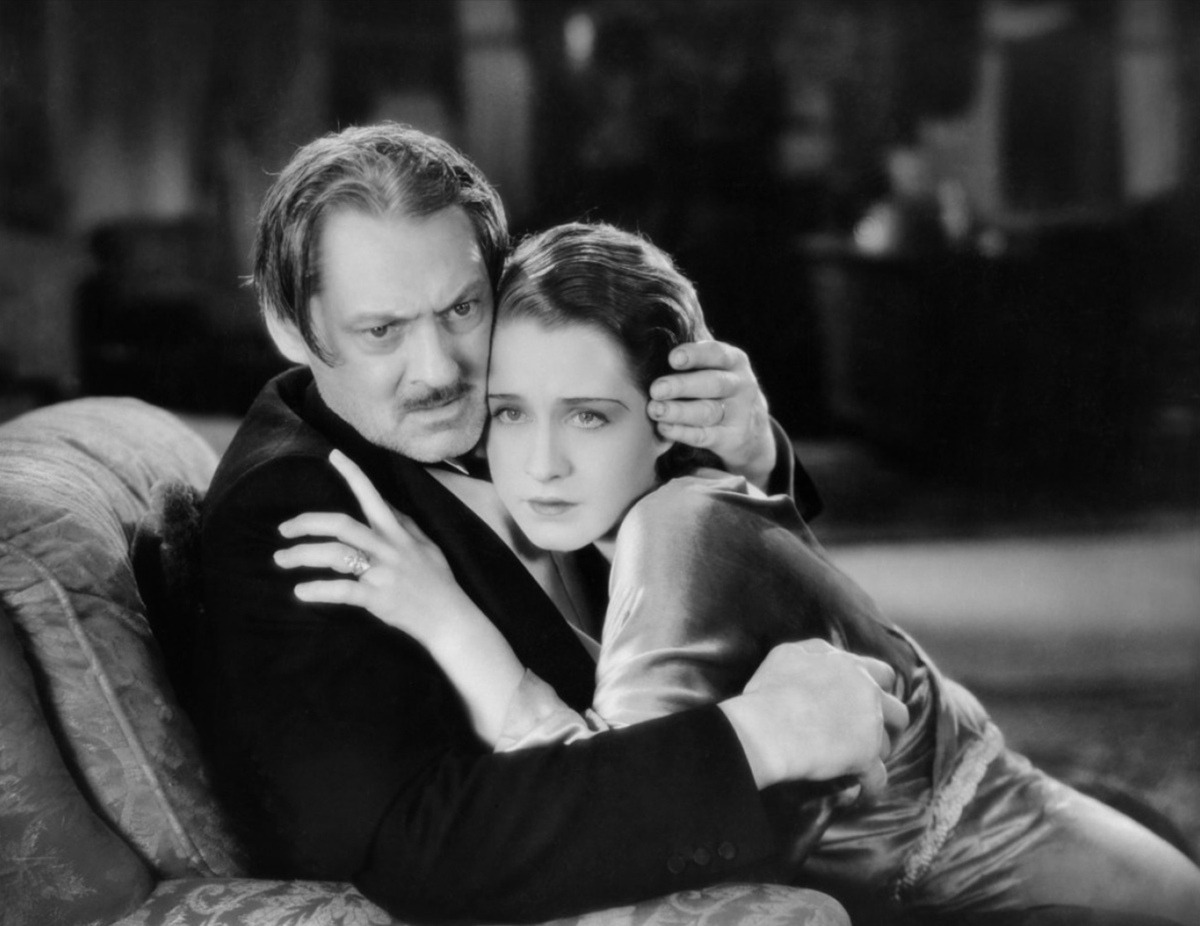
As heroínas dos filmes feitos antes do Código Hays eram quase sempre personagens femininas admiráveis. Navegando em um mundo masculino e tendo como principal arma seu corpo, elas eram sensuais, ousadas e provocantes. E estes três adjetivos são perfeitos para descrever a protagonista de “A Divorciada”, de 1930.


The heroines of pre-Code films were almost always remarkable female characters. Navigating a man’s world having as their main weapon their body, they were sensual, bold and provocative. And these three adjectives are perfect to describe the lead in 1930’s “The Divorcee”.

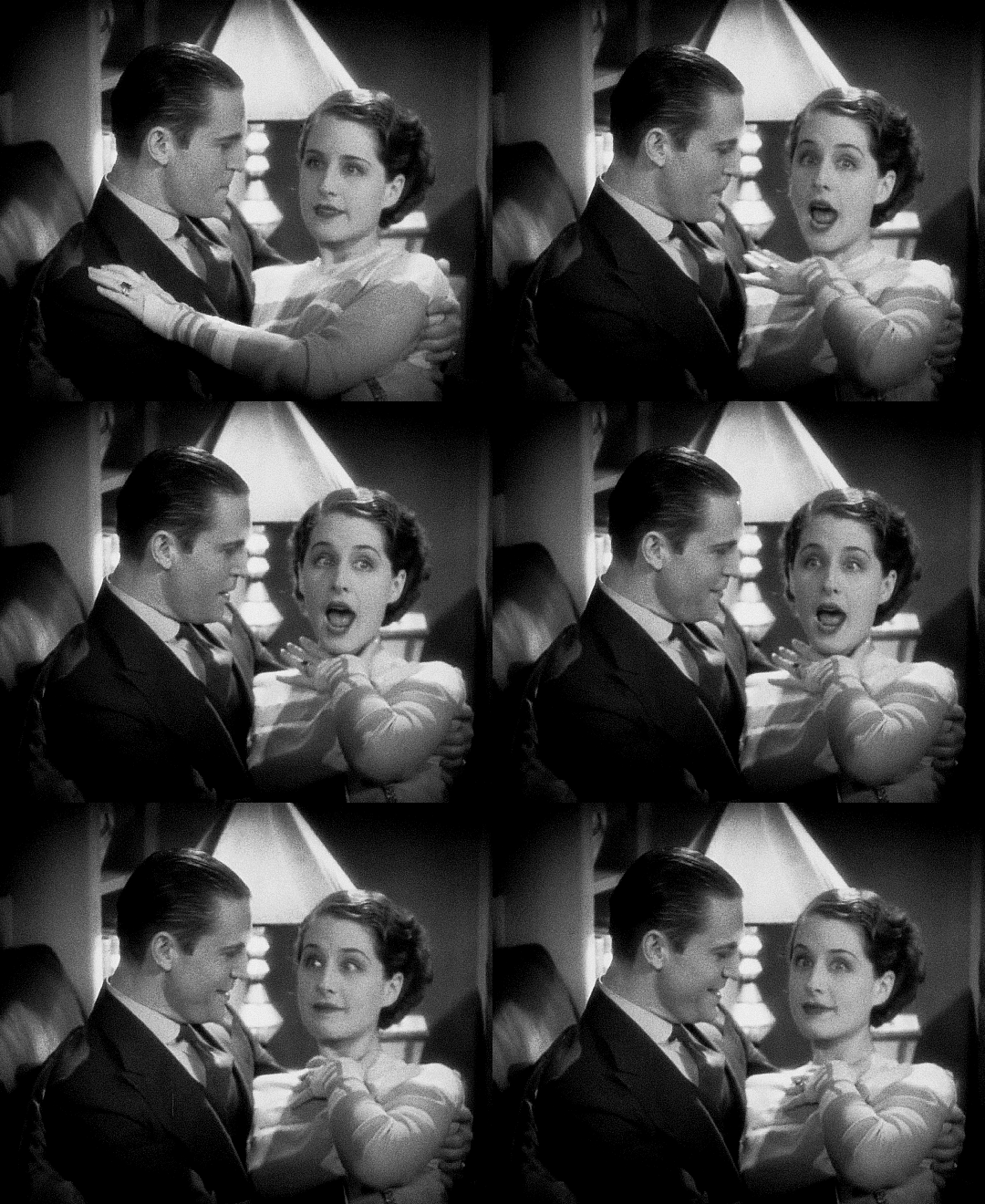
Jerry (Norma Shearer) é cobiçada por muitos homens, mas o primeiro a pedi-la em casamento é Ted (Chester Morris). Ela aceita o pedido e eles se casam. Três anos após o casamento, eles parecem viver em perfeita harmonia... até que Janice (Mary Doran), uma velha conhecida de Ted, chega à festa de bodas do casal.


Jerry (Norma Shearer) is wanted by many men but the first to propose is Ted (Chester Morris). She accepts the proposal and they get married. Three years after the wedding, they seem to be perfectly happy… until Janice (Mary Doran), an old acquaintance of Ted’s, arrives at the party being thrown for their anniversary.

Quando ela descobre sobre Ted e Janice, Jerry encontra consolo nos braços do melhor amigo de Ted, Don (Robert Montgomery), que gosta dela mais do que como amiga. Ela então pede o divórcio de Ted, experimentando uma liberdade inédita como a nova ex-esposa.


When she learns about Ted and Janice, Jerry finds consolation with Ted’s best friend Don (Robert Montgomery), who likes her more than as a friend. She then proceeds with the divorce from Ted, experiencing unmatched freedom as the new ex-wife.
Em suas aventuras, Jerry re-encontra Paul (Conrad Nagel), que era apaixonado por ela quando ela anunciou seu noivado com Ted. Paul ficou tão chateado com a notícia que se embebedou e se envolveu em um acidente de carro que deixou o rosto de Dorothy (Helen Johnson) desfigurado. Paul então se casou com Dorothy movido pela culpa. Quando ele re-encontra Jerry, descobrimos que Paul nunca a esqueceu, e agora vê a oportunidade de deixar Dorothy e se casar com Jerry.


In her adventures, Jerry re-encounters Paul (Conrad Nagel), who was in love with her when she announced her engagement to Ted. Paul got so upset with the news that he got drunk and got involved in a car accident that left Dorothy (Helen Johnson) with a disfigured face. Paul then married Dorothy out of guilt. When he meets Jerry again, we learn that Paul never forgot her, and now sees the opportunity to leave Dorothy and marry Jerry.
Em certo momento, depois de ser perguntada o que havia de errado com ela, Jerry responde: “Só estou tentando me agarrar à maravilhosa latitude do ponto de vista de um homem”. Ela está claramente falando sobre os dois pesos e duas medidas a partir dos quais homens e mulheres são julgados. Para um homem, um caso extraconjugal “não significa nada”, mas se é a mulher que trai, ela é julgada sem piedade.


At one point, after being asked what was wrong with her, Jerry answers: “I’m just trying to hang onto the marvelous latitude of the man’s point of view”. She is clearly talking about the double standard from which men and women are judged. For a man, an affair “doesn’t mean a thing”, but if it’s the woman who is cheating, she is judged without mercy.
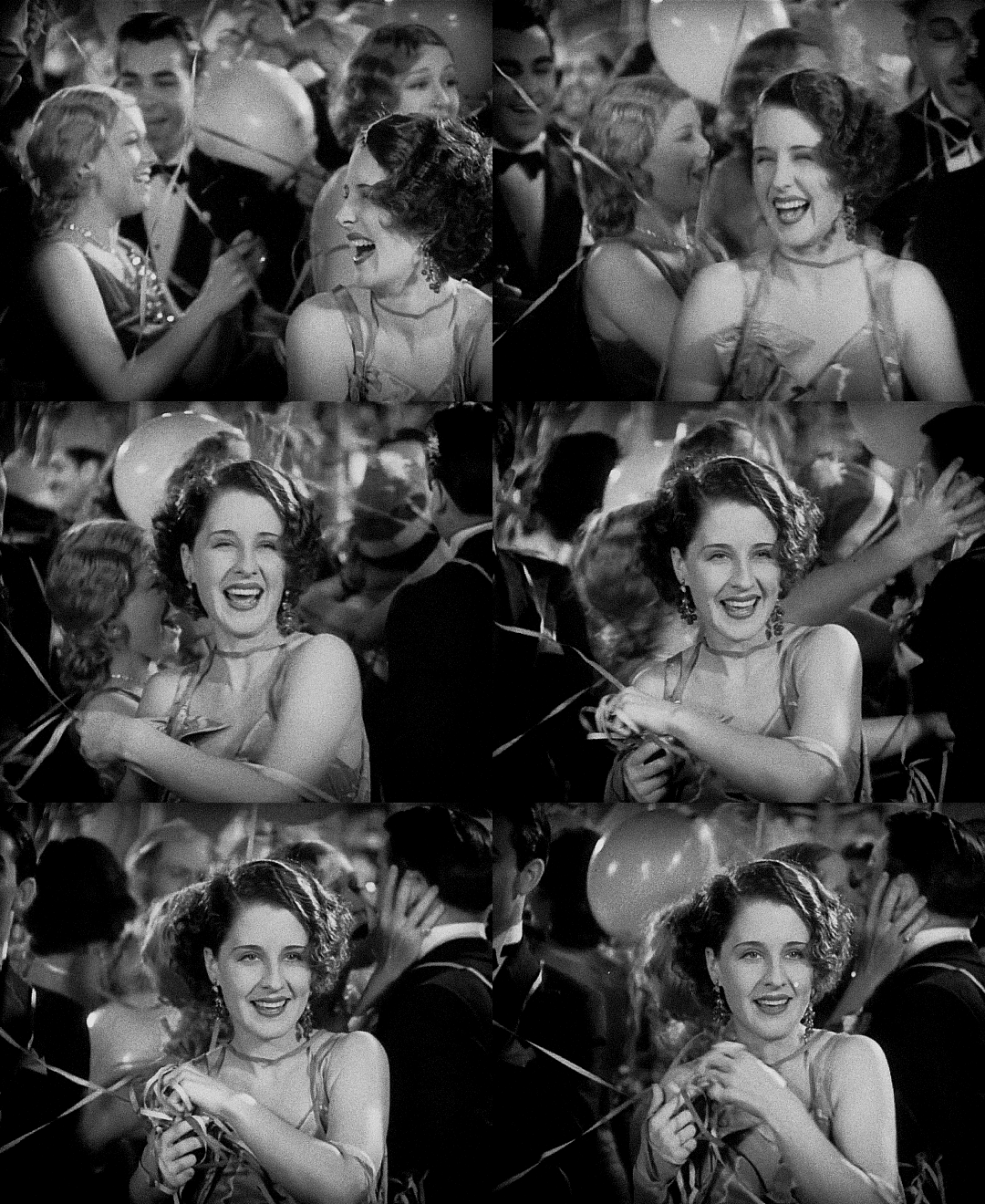
Jerry não é uma mulher à frente do seu tempo, mas é certamente uma mulher do seu tempo: taxas de divórcio estavam aumentando no final dos anos 1920 e começo dos anos 1930. Menos de 15 anos depois de as sufragistas conseguirem o direito ao voto, mais e mais mulheres estavam vivendo vidas mais livres e se livrando de casamentos nos quais não eram felizes. A taxa de divórcios cairia durante a Grande Depressão – como é comum em tempos de dificuldades – e aumentariam novamente no final da década. Em 1937, um marco legal: o chamado Matrimonial Causes Act permitiu que mulheres pedissem divórcios nos mesmos termos que os homens, embora mantendo a necessidade de demonstrar que um dos três aconteceu: adultério, crueldade ou abandono.


Jerry isn’t a woman ahead of her time, but she’s certainly a woman of her time: divorce rates were on the rise in the late 1920s and early 1930s. Less than 15 years after the suffragettes got their right to vote, more and more women were leading freer lives and getting out of marriages in which they were unhappy. The divorce rate would go down during the Great Depression – as it is common for times of hardship – and go up again by the end of the decade. In 1937, a legal mark: the Matrimonial Causes Act allowed women to petition for divorce on the same terms of men, although keeping the requirement to demonstrate that one of the three happened: adultery, cruelty or desertion.

O divórcio estava dominando tanto as conversas que serviu de mote para outras obras de arte. Um deles foi a peça-que-virou-filme “Vítimas do Divórcio” (1932), hoje mais lembrado por ser a estreia de Katharine Hepburn nas telas. Nele, um homem chamado Hilary (John Barrymore) volta para casa depois de passar 15 anos num hospício e descobre que sua esposa Meg (Billie Burke) pediu o divórcio e está prestes a se casar novamente. Em alguns momentos mais emocionante que “A Divorciada”, este filme poderia ter ditado os termos para normalizar o divórcio no cinema se o Código Hays não tivesse atrapalhado.


Divorce was so much dominating the talks that it inspired more works of art. One of them was the play-turned-into-film “A Bill of Divorcement” (1932), today best remembered for being Katharine Hepburn’s screen debut. In it, a man named Hilary (John Barrymore) comes home after spending 15 years in an asylum and finds out that his wife Meg (Billie Burke) has divorced him and it about to remarry. In some moments more engaging than “The Divorcee”, this film could have set the tone to normalize divorce on screen if there hadn’t been the Hays Code.

“A Divorciada” foi baseado no romance best-seller “Ex-Wife”, de Ursula Parrott, que vendeu os direitos de adaptação para a MGM pela incrível quantia de 20 mil dólares. A própria Ursula era divorciada quando o livro foi publicado, anonimamente, em 1929, e ainda iria casar de novo e se separar outras três vezes. Hoje basicamente esquecida, Ursula Parrott estava sempre nas manchetes das colunas de fofocas e seus livros e contos foram lidos por milhões.


“The Divorcee” was based on the best-seller “Ex-Wife”, by Ursula Parrott, who sold the movie rights to MGM for the amazing sum of $20,000. Ursula herself was a divorcee when the book was published, anonymously, in 1929, and would go on to remarry and divorce three more times. Now basically forgotten, Ursula Parrott was always on the headlines of gossip columns and her novels and short stories was read by millions.

Ursula Parrott

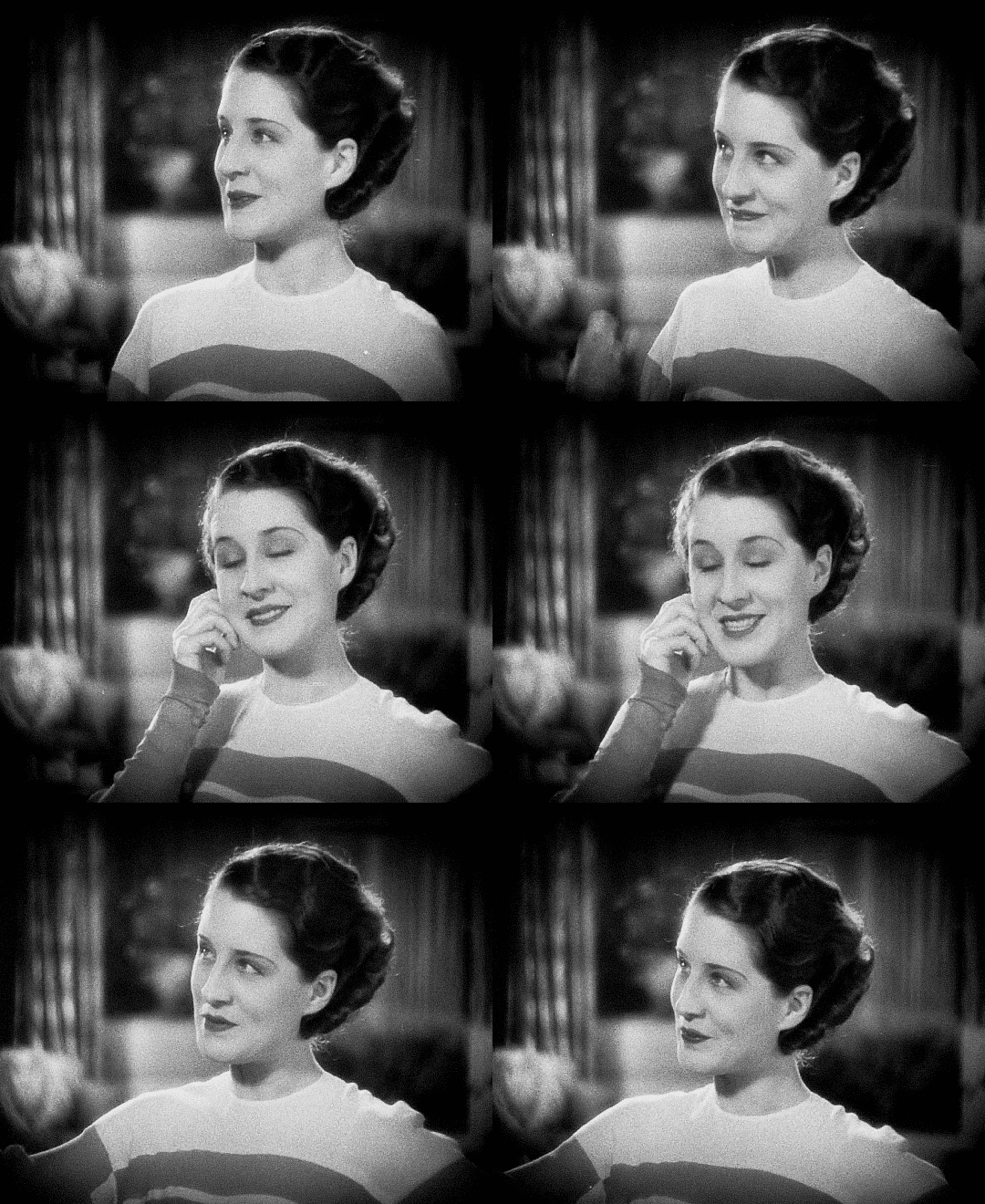
Norma Shearer ganhou o Oscar de Melhor Atriz em 1931 por sua performance em “A Divorciada” – uma performance que não foi particularmente desafiadora, tirando um ousado monólogo. A primeira escolhida para o papel fora Joan Crawford, que para sempre rivalizou Shearer por causa da perda do papel.


Norma Shearer won the Best Actress Oscar in 1931 for her performance in “The Divorcee” – a performance that wasn’t particularly challenging, except for a racy monologue. The first choice to play the role had been Joan Crawford, who became forever bitter with Shearer for having gotten the part instead.
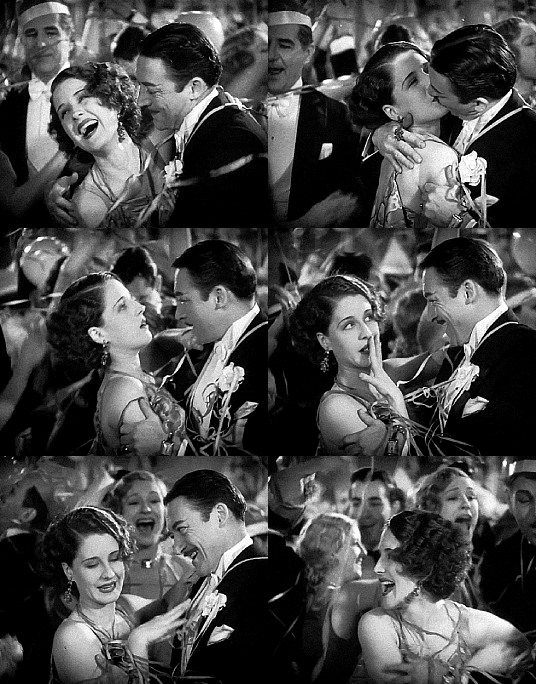
“A Divorciada” é puro ouro pré-Código Hays. Vindo de um livro escandaloso, não é um filme tão escandaloso assim, mas ainda assim um filme que não teria sido feito a partir de 1934. Mais do que isso, ele traz uma protagonista feminina livre, que pode servir de exemplo de ousadia para a heroína da época.


“The Divorcee” is pure pre-Code gold. Coming from a scandalous book, it’s not such a scandalous film, but still a film that wouldn’t have been made from 1934 onwards. More than that, it brings a free female lead, one that can serve as an example of boldness for the pre-Code heroine.


This is my contribution to the Blogathon and the Beast, hosted by the Classic Movie Blog Association.

Saturday, January 22, 2022

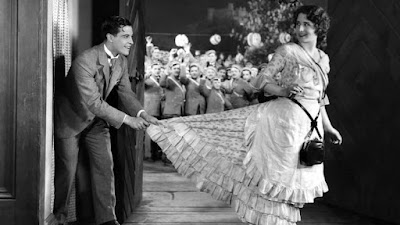
O Príncipe Estudante (1927) / The Student Prince in Old Heidelberg (1927)


Reza a lenda que, no funeral de Ernst Lubitsch, os diretores William Wyler e Billy Wilder estavam conversando. Wyler disse: “Nunca mais teremos Lubitsch”, ao que Wilder respondeu: “Pior ainda. Nunca mais teremos filmes de Lubitsch”. Lubitsch era muito estimado por seus colegas de profissão, graças ao que hoje é chamado de “o toque de Lubitsch”. Muitos críticos e historiadores tentaram definir este toque, e a maioria concorda que ele envolve sofisticação, sabedoria e sutileza. Podemos encontrar o toque de Lubitsch já nos filmes mudos do diretor? Vamos dar uma olhada em um destes filmes, “O Príncipe Estudante” (1927).

There is a story that goes like this: at Ernst Lubitch’s funeral, fellow film directors William Wyler and Billy Wilder were chatting. Wyler said “No more Lubitsch”, to which Wilder answered: “Worse than that. No more Lubitsch pictures”. Lubitsch was highly estimated among his peers, thanks to what is now called “the Lubitsch touch”. Many critics and historians tried to define this touch, and most of them agree that it involves sophistication, wit and subtlety. Can we find the Lubitsch touch already in the director’s silent movies? Let’s take a look at one of those movies, “The Student Prince in Old Heidelberg” (1927).

Karl Heinrich (Philippe De Lacy) é sobrinho do rei de Karlsburg, Karl VII (Gustav von Seyffertitz) e herdeiro do trono. Ao ver uma foto de Karl Heinrich na vitrine de uma loja, um garoto diz que deve ser ótimo ser um príncipe. Mas a vida não é tão boa para Karl Heinrich, que apenas queria ser uma criança normal. Em vez de brincar lá fora, ele tem lições de bom comportamento com o Dr Jüttner (Jean Hersholt), um tutor gentil.

Karl Heinrich (Philippe De Lacy) is the nephew of the king of Karlsburg, Karl VII (Gustav von Seyffertitz) and the heir to the throne. Upon seeing a picture of Karl Heinrich in a store window, a boy says that it must be great to be a prince. But it isn’t so great for Karl Heinrich, who only wishes to be a normal kid. Instead of playing outside, he’s taught how to behave by Dr Jüttner (Jean Hersholt), a kind tutor.

Os anos passam, e o já crescido Karl Heinrich (Ramon Novarro) sabe que não dá para se divertir com seu tio, mas é sempre bom passar um tempo com o Dr Jüttner. Mas o jovem rapaz terminou seus estudos, o que significa que o Dr Jüttner terá de ir embora em breve. Entretanto, ambos são surpreendidos quando o rei Karl VII decide mandar Karl Heinrich para Heidelberg e manda Jüttner como acompanhante.

The years pass, and the grown-up Karl Heinrich (Ramon Novarro) knows that there is no fun with his uncle, but you can always have a good time with Dr Jüttner. But the young man has finished high school, which means that Dr Jüttner will have to leave soon. However, both are surprised when King Karl VII decides to send Karl Heinrich to Heidelberg and tells Jüttner to accompany him.

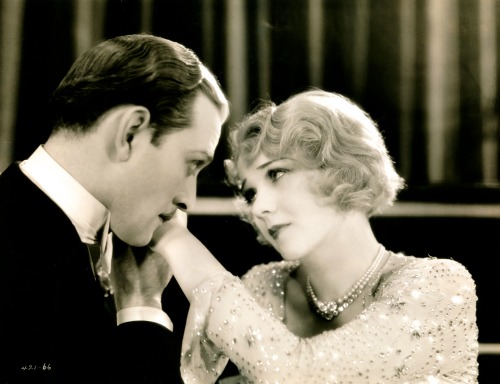
Em Heidelberg, Karl Heinrich se apaixona instantaneamente por Kathi (Norma Shearer), que trabalha em uma pousada local – e ela se apaixona por ele também! Todos sabem que Kathi é a garota mais bonita de Heidelberg, e que consegue beber uma garrafa cheia de cerveja de uma só vez, o que impressiona o príncipe. O problema é que Kathi é meio noiva, já que ela não sabe se ama seu noivo. E Karl Heinrich também já está comprometido com outra pessoa.

In Heidelberg, Karl Heinrich instantly falls in love with Kathi (Norma Shearer), who works at a local inn – and she falls for him too! Everybody knows that Kathi is the prettiest girl in Heidelberg, and someone who can drink a full mug of beer at once, which amazes the prince. The problem is that Kathi is kind of engaged, because she doesn’t know if she loves the guy. And Karl Heinrich was also promised to marry someone else.

O príncipe faz amizade com um grande grupo de estudantes e passa a festejar e beber com eles. Ele se aproxima de Kathi e os dois saem juntos e fazem planos. A diversão deles é interrompida pela notícia de que o rei Karl VII está doente, o que significa que Karl Heinrich precisa voltar imediatamente para Karlsburg.

The prince befriends a large group of students and starts drinking and partying hard with them. He becomes close to Kathi and the two go out and make plans. Their fun is interrupted by the news that king Karl VII is ill, which means that Karl Heinrich must return immediately to Karlsburg.

Há relativamente poucas cartelas de texto no filme, quando comparado a outros filmes do período – em especial os de Griffth! Alguns momentos poderiam ser melhorados com a adição de uma ou duas cartelas de texto – como quando Kathi está declamando um poema para o príncipe e se esquece do final. As pessoas creditadas como designs de títulos são Marian Ainslee e Ruth Cummings. No IMDb, não há muito sobre Ainslee, apenas que ela trabalhou majoritariamente como design de títulos, e na era sonora sua maior contribução foi ter dado a ideia para o filme “Dance Comigo” (1938), de Astaire e Rogers. Ruth Cummings era casada com o diretor Irving Cummings e mãe do roteirista Irving Cummings Jr.

There are relatively few title cards in this movie, when compared with others from the period – especially Griffith’s! Some moments could be better with the addition of a title card or two – like when Kathi is saying a poem to the prince and forgets the ending. The people credited as title designers are Marian Ainslee and Ruth Cummings. On IMDb, there is not much on Ainslee, only that she worked mostly making title cards for movies, and in the talkie era her main credit was “based on an original idea by” in the Astaire-Rogers vehicle “Carefree” (1938). Ruth Cummings was married to director Irving Cummings and mother of screenwriter Irving Cummings Jr.

Cedric Gibbons é uma das duas pessoas responsáveis pela decoração dos sets. Os sets são simples mas decorados com bom gosto. Há, entretanto, um belo campo artificial usado em uma cena de amor. Nós – e a comitiva do príncipe – esperávamos que ele ficasse em um resort ou hotel chique em Heidelberg, mas é numa pousada comum que ele encontrou amor e felicidade.

Cedric Gibbons is one of two people responsible for the sets. The sets are simple yet decorated in a pleasant manner. There is, however, a beautiful artificial field used in the famous love scene. We – and the prince’s entourage – expected him to stay in a fancy resort or hotel in Heidelberg, but it is in a common inn that he found love and happiness. 

Tanto Ramon Novarro quanto Norma Shearer já eram grandes estrelas em 1927. Novarro estava mais bonito em two-strip Technicolor em “Ben-Hur” (1925), mas está bem aqui também. Shearer teria seus melhores trabalhos – e um Oscar – nos anos posteriores a “O Príncipe Estudante”. Curiosidade interessante:: Lubitsch achava que tanto Novarro quanto Shearer foram péssimas escolhas para os protagonistas do filme!

Both Ramon Novarro and Norma Shearer were already big stars in 1927. Novarro had looked better in two-strip Technicolor in “Ben-Hur” (1925), but looks good here too. Shearer would find her best work – and an Oscar – in the years after “The Student Prince in Old Heidelberg”, during the pre-Code era. Interesting trivia: Lubitsch thought that both Novarro and Shearer were miscast as the leads!

Gustav von Seyffertitz já é um velho conhecido dos fãs de cinema mudo. Entre seus trabalhos mais lembrados destacamos sua atuação como o vilão que inferniza a vida de Mary Pickford em “Aves Sem Ninho” (1926). Jean Hersholt era um ator dinamarquês que começou a atuar nos cinemas em 1906 e interpretou principalmente vilões em seus primeiros anos em Hollywood – bem diferente de seu papel em “O Príncipe Estudante”!

Gustav von Seyffertitz is already an old acquaintance of silent film fans. Among his best remembered works we highlight his turn as the bad guy making Mary Pickford’s life miserable in “Sparrows” (1926). Jean Hersholt was a Danish actor who started acting in movies in 1906 and played mainly villains in his first few years in Hollywood – so far away from his character in “The Student Prince in Old Heidelberg”!

O Príncipe Estudante” teve um remake em 1954, com Edmund Purdom e Ann Blyth. Este foi um musical, pois a história havia se originado em uma opereta em 1902. O filme, entretanto, não manteve todas as canções da opereta e mudou a maioria das letras das canções que manteve. A voz de Edmund Purdom, nos momentos de cantoria, foi dublada por Mario Lanza.

The Student Prince in Old Heidelberg” was remade in 1954 with Edmund Purdom and Ann Blyth. This was a musical, as the story originated in an operetta in 1902. The film, however, didn’t keep all the songs from the operetta and changed most of the lyrics. Edmund Purdom’s singing was dubbed by Mario Lanza.

O Príncipe Estudante” é um filme mais complexo e melancólico do que aparenta ser de início. Como dito no site do TCM, é mais próximo dos filmes que Lubitsch fez na Alemanha do que dos filmes que ele faria em Hollywood. Baseado apenas neste filme, diríamos que o toque de Lubitsch é como o de Chaplin: um sorriso e, talvez, uma lágrima. Mas, talvez, possamos dizer outra coisa: que Lubitsch é muito mais que seu famoso toque.

The Student Prince in Old Heidelberg” is a more complex and melancholic movie than it seems at first. As the TCM website mentions, it’s closer to the movies Lubitsch did in Germany than the ones he’d make in Hollywood. Based solely on this film, we would say that Lubitsch’s touch is like Chaplin’s: a laugh and perhaps a tear. But, maybe, we could say something else: Lubitsch was much more than his touch.

This is my contribution to the Odd or Even blogathon, hosted by Gill and Rebecca at Realweegiemidget Reviews and Taking Up Room.

Friday, May 18, 2018

The Hollywood Revue of 1929

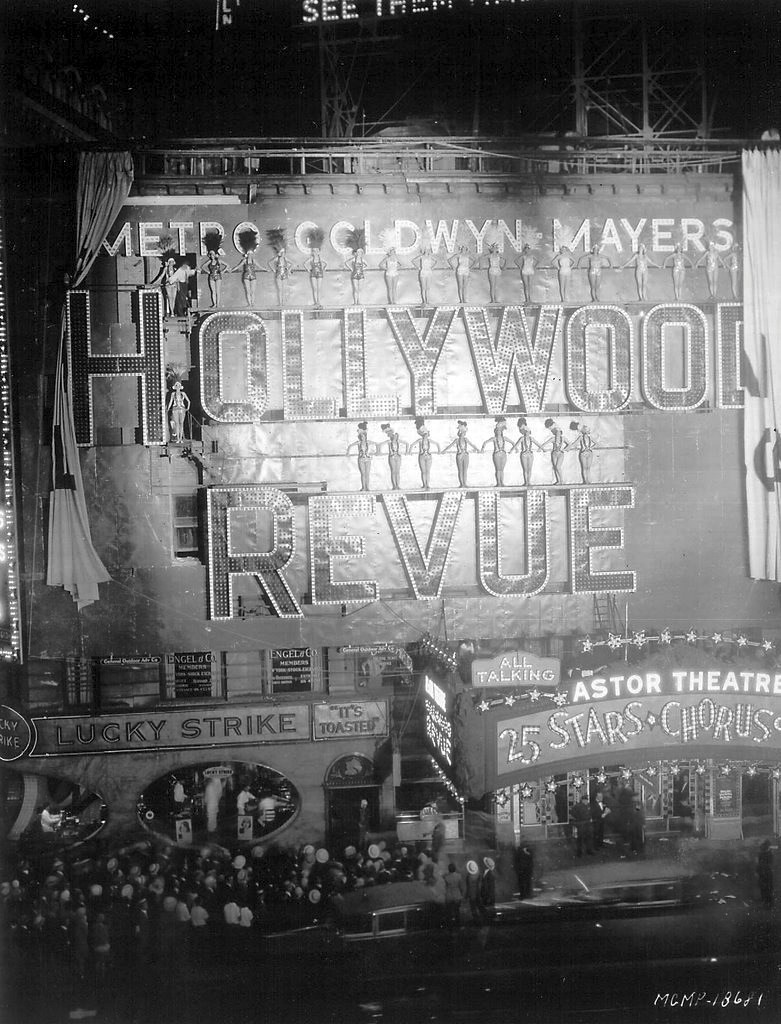
O que era moda em 1929? E o que era novidade? Para responder a ambas as perguntas, você apenas tem de assistir a “Hollywood Revue”, de 1929, que foi de fato o primeiro grande musical da MGM. O filme traz todas as grandes estrelas que tinham contrato com o estúdio – exceto Greta Garbo, Ramon Novarro e Lon Chaney, que prezavam muito pela privacidade – e ele apresenta sequências em two-strip Technicolor, efeitos especiais de encolhimento e muita música e dança.

What was in vogue in 1929? And what was brand new? To answer both these questions, you just have to watch “The Hollywood Revue of 1929”, truly MGM’s first ever extravaganza. The film brings all the big stars under contract with the studio – except Greta Garbo, Ramon Novarro and Lon Chaney, who were very worried with privacy – and it also presents sequences in two-strip Technicolor, downsizing special effects and a lot of singing and dancing.
“Hollywood Revue” é vaudeville filmado para a tela do cinema – e completo com um pequeno intervalo entre os atos. E deveria ser assim mesmo: os shows do chamado “teatro de revista” não tinham uma história única, mas sim apresentavam diversas atrações. Em um palco gigantesco e impressionante, os mestres de cerimônia Conrad Nagel e Jack Benny – representando, respectivamente, o mundo do cinema e o mundo do teatro – apresentam vários números, alguns cheios de piadas, mas a maioria musical. É como se a MGM quisesse dizer: “nossas maiores estrelas conseguem cantar, dançar e falar!”

“The Hollywood Revue of 1929” is vaudeville on the screen – complete with intermission. And of course it is this way: a “revue” is a theatrical show without a plot, presenting several attractions. In a huge, impressive stage, masters of ceremonies Conrad Nagel and Jack Benny – representing, respectively, the movie world and the theater world – present several numbers, some of them full of jokes, but the majority is all about music. It's like MGM wanted to say: “our greatest stars CAN SING, CAN DANCE AND CAN TALK!”
Joan Crawford
Não podemos negar que o tempo não foi bom com o filme, e muitas das piadas hoje não têm graça. Entretanto, Marie Dressler, Polly Moran e Bessie Love formam um trio divertido, e o Gordo e o Magro estão engraçados como sempre ao interpretarem dois mágicos atrapalhados – sendo que o Magro não fala uma palavra! Quem também não fala nada é Buster Keaton, que substitui Carla Laemmle – que usava um provocante biquíni de duas peças – como a filha dançarina de Poseidon, deus dos mares.

We can't deny that time hasn't been kind to the film, and many of the jokes fall flat nowadays. However, Marie Dressler, Polly Moran and Bessie Love make a funny trio, and Laurel and Hardy are they usual selves as two clumsy magicians – even though Laurel doesn't say a word! Another one who doesn't say a word is Buster Keaton, who replaces Carla Laemmle – who was in a risky two-piece swimsuit – as the dancing daughter of Poseidon, the god of the sea.
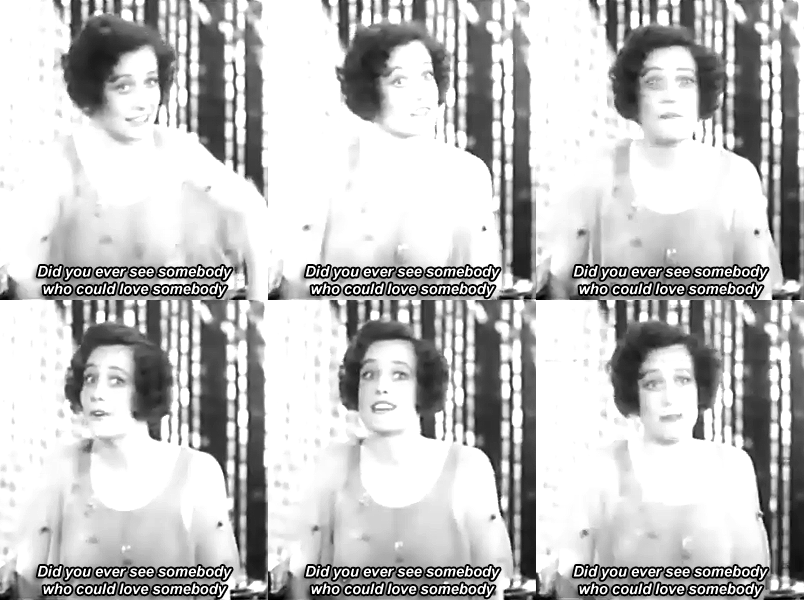
Joan Crawford é fofa cantando e dançando “Gotta Feeling for You”. Joan é melhor dançarina que cantora, e é óbvio que ela não canta e dança ao mesmo tempo, porque, mesmo havendo a música, seus lábios não se mexem. Não há nada de extraordinário no número de Joan, mas quando as dezenas de dançarinos se juntam no palco, tudo fica melhor: o trabalho de coreografia com o grupo é maravilhoso, e os dançarinos comumente chamam mais atenção que as músicas e os cantores.

Joan Crawford is cute singing and dancing “Gotta Feeling for You”. Joan is a better dancer than singer, and it’s obvious that she is not singing and dancing at the same time, because her mouth does not move, even though the song goes on. There is nothing extraordinary in Joan's number, but when the dozens of dancers join any number, things get much better: the chorus is very well-coordinated and choreographed, and they often distract us from the music and the singers.
Mas o que é aquilo no número “Lon Chaney is Gonna Get You If You Don’t Watch Out?” E uma coreografia ao estilo de Busby Berkeley! Este é um momento interessante, provavelmente influenciado pela Broadway, que é onde Berkeley trabalhava na época. É também uma coincidência curiosa, considerando que Busby Berkeley trabalhou na MGM na década de 1940.

But what is that in the number “Lon Chaney is Gonna Get You If You Don’t Watch Out”? It is a Busby Berkeley-style choreography! It's an interesting bit, much probably coming from Broadway, where Berkeley worked at the time, and a curious coincidence, considering that Berkeley worked at MGM in the 1940s.
Regular Broadway
Berkeley Broadway
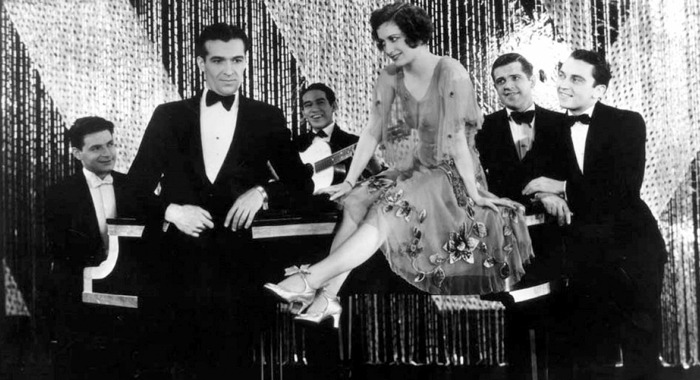
O popular cantor de vaudeville Charles King diz ao galã de cinema Conrad Nagel que “hoje, você precisa fazer amor com palavras e música”. Charles menciona uma música que ele interpretara em “Melodia da Broadway” (1929) chamada “You Were Meant For Me”. Para a surpresa de todos, e em especial de Charles, Nagel senta em um piano e interpreta lindamente a música para Anita Page. Mas era tudo um truque, nunca revelado durante o filme: na verdade, era o próprio Charles King que dublou Conrad Nagel na cena! Com ou sem dublagem, Nagel sobreviveu à chegada do cinema falado e teve uma longa carreira como coadjuvante no cinema e na televisão até 1967.

Popular vaudeville singer Charles King says movie star Conrad Nagel that “today, you've got to make love with words and music”. Charles mentions a song he interpreted in “Broadway Melody” (1929) called “You Were Meant For Me”. For everybody’s surprise, and especially Charles’, Nagel sits in a piano and sings the song beautifully to Anita Page. But it all was a trick, not revealed in the movie: actually, it was King himself who dubbed Conrad Nagel’s singing voice! With or without dubbing, Nagel survived the talkie revolution, and had a long career as a supporting player on film and TV until 1967.
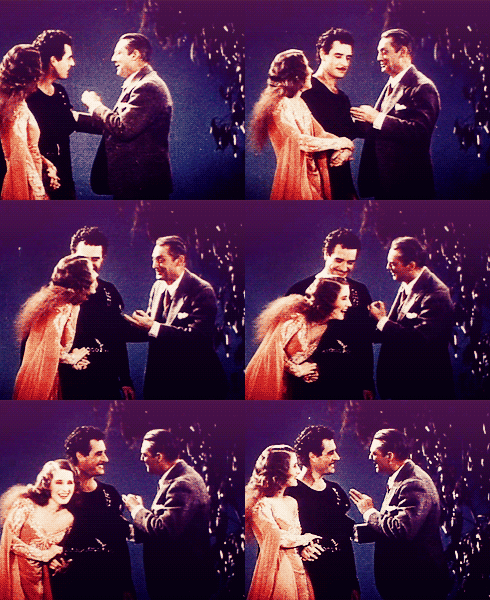
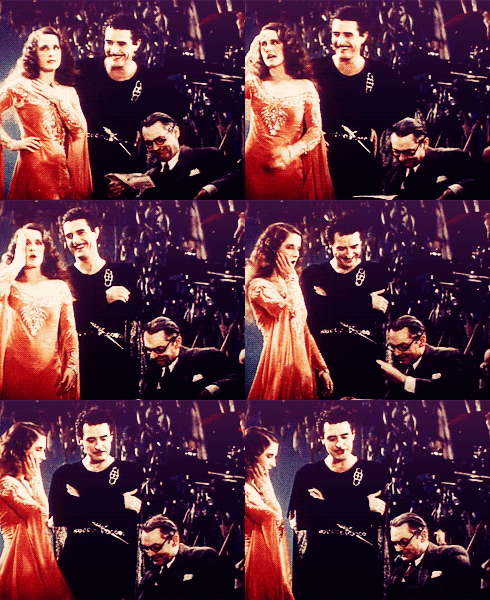
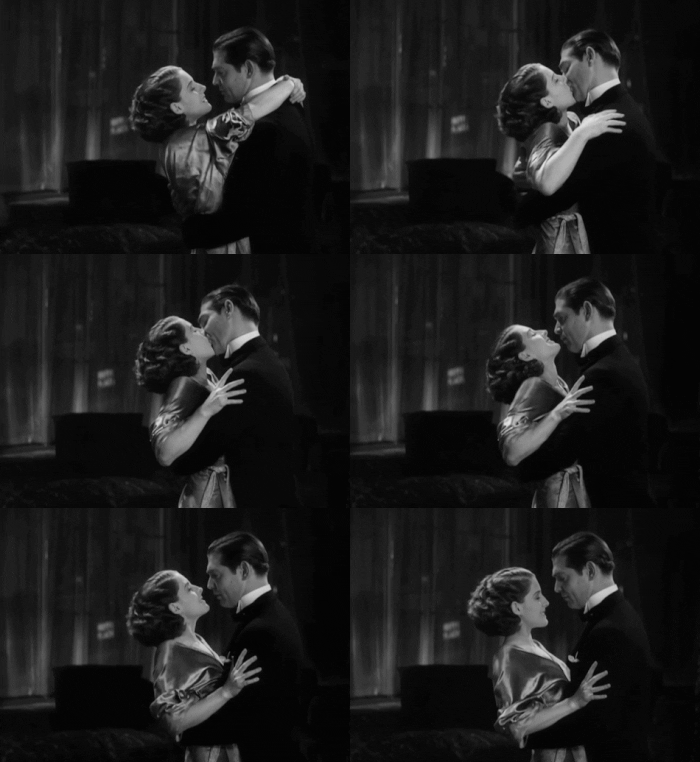
E se falamos sobre a transição do cinema mudo para o falado, precisamos mencionar a surpreendente e inteligente sequência de Romeu e Julieta. Filmada em two-strip Technicolor, suas estrelas são John Gilbert e Norma Shearer. A voz de Gilbert é boa, e esta pequena sequência já é suficiente para nos mostrar que a história sobre “a voz de taquara rachada” que é usada para justificar o fracasso de Gilbert no cinema falado é uma falácia. A sequência, já interessante, se torna ainda mais legal quando o diretor da cena, interpretado por Lionel Barrymore, diz aos atores para modernizar as falas, e eles refazem a cena da sacada de Romeu e Julieta usando gírias dos anos 1920.

If we're talking about the silent-to-talkie transition, we must mention the impressive and clever Romeo and Juliet sequence. Shot in two-strip Technicolor, it stars John Gilbert and Norma Shearer. Gilbert's voice is fine, and this simple sequence is enough to show us that the “funny voice story” that is used to justify his short career in talkies is a myth. The already cool sequence becomes even nicer when the scene's director, played by Lionel Barrymore, tells them to modernize the dialogue, and they redo the balcony scene in Romeo and Juliet with 1920's slang.
A MGM foi o primeiro estúdio a apresentar uma revista como esta, cheia de estrelas, e a fórmula foi rapidamente copiada por outros estúdios. A Warner Brothers foi o estúdio seguinte, fazendo “A Parada das Maravilhas / The Show of Shows”, filmado quase totalmente em two-strip Technicolor. Depois veio a Fox, com “Dias Felizes”, e então a Paramount com “Paramount em Grande Gala / Paramount on Parade” (1930). A Fox também fez as revistas menores “Fox Movietone Follies” em 1929 (antes da MGM, este filme foi perdido) e em 1930 (o filme sobrevive).

MGM was the first studio to present an all-star revue, and the formula was quickly copied by other studios. Warner Brothers followed with “Show of Shows”, almost fully shot in two-strip Technicolor. The next studio to make a revue was Fox, with “Happy Days”, followed by Paramount with “Paramount on Parade”, from 1930. Fox did also the smaller revues “Fox Movietone Follies” in 1929 (before “Hollywood Revue of 1919”, this film is now lost) and 1930 (still extant).
Se você não gosta de musicais, não chegue perto de “Hollywood Revue”. Quer dizer, se você não suporta um musical com uma história, você é capaz de se imaginar vendo um musical SEM uma história? Caso contrário, se você ama musicais, história do cinema ou se você é um historiador amador e curioso, “The Hollywood Revue of 1929” é um documento interessante – na falta de termos melhores. Afinal, se não é por causa das coisas estranhas que você encontra no processo, por que você estuda história?

If you don’t like musicals, don’t go near “The Hollywood Revue of 1929”. I mean, if you can’t stand a musical with a plot, can you imagine yourself sitting through a musical WITHOUT a plot? On the contrary, if you love musicals, film history or if you are a curious history buff, “The Hollywood Revue of 1929” is an interesting document – for lack of better terms. Because, if not for the weird things you find along the way, why do you study history?

This is my contribution to The MGM Musical Magic Blogathon, hosted by Annette at Hometowns to Hollywood.

Wednesday, August 16, 2017

Uma Alma Livre / A Free Soul (1931)

É San Francisco, a cidade do pecado! Um homem (Lionel Barrymore) está lendo um jornal quando a sombra de uma mulher se projeta na parede do banheiro. A mulher está nua e pede para ele trazer a lingerie até ela. Ele faz isso, e podemos ver um belo sutiã sendo exibido. A garota (Norma Shearer) sai do banheiro e toma o café da manhã mais rápido da história enquanto fala que ambos “não são respeitáveis”. Nós descobrimos que eles são Stephen e Jan Ashe, pai e filha, e felizmente não outra coisa, como imaginamos.

It's San Francisco, the Sin City! A man (Lionel Barrymore) is reading the newspaper when a woman's shadow appears in the bathroom walls. The woman is naked and asks him to bring her undergarments. He does that, and we can see a bra being exhibited. The girl (Norma Shearer) goes out of the bathroom and has the quickest breakfast in history while saying that they both “are not respectable”. We learn that they are Stephen and Jan Ashe, father and daughter, and thankfully not something else as we were lead to believe.
Stephen é um advogado brilhante. Infelizmente, ele também é alcoólatra – algo para que todos ao seu redor literalmente viram as costas. O cliente a defender naquele dia é o jogador Ace Wilfong (Clark Gable sem bigode), um homem cuja vida depende de um chapéu como evidência. Jan e Ace se interessam um pelo outro quando trocam o primeiro olhar.

Stephen is a brilliant lawyer. Unfortunately, he is also a hevay drinker – something everybody around him literally turn their backs to. His client of the day is gambler and bootlegger Ace Wilfong (Clark Gable sans moustache), a man whose life depends on a hat as an evidence. Jan and Ace get interested in each other in the moment their eyes meet.
Mas Jan recentemente ficou noiva de Dwight Winthrop (Leslie Howard), um homem insistente que é aprovado por todos da esnobe família dela, incluindo o pai dela. Mas ela não quer aprovação: ela quer amor e prazer. Quando seu pai demonstra que não está feliz com o relacionamento, ela propõe uma troca: Jan vai parar de se encontrar com Ace se Stephen parar de beber.

But Jan has recently got engaged to Dwight Winthrop (Leslie Howard), an insistent man who her whole snob family, including her father, approves. But she doesn't want approval: she wants love and pleasure. When her father shows he isn't happy with her relationship, she sets a deal: Jan will stop seeing Ace if Stephen stops drinking.
Jan é dona de si. Ele é adorável, charmosa, provocante. Ela veste lindas roupas – desenhadas por Adrian! - e ama seu pai mais que tudo no mundo. Norma Shearer e Lionel Barrymore estão ótimos juntos. Eu adorei a cena em que Stephen vê pela primeira vez Jan e Ace juntos: em completo silêncio, nós podemos perceber a vergonha e frustração nos olhos deles.

Jan is a free woman. She is adorable, charming, provocative. She has wonderful clothes – designed by Adrian! - and loves her father more than anything in the world. Norma Shearer and Lionel Barrymore are great together. I loved the scene in which Stephen first saw Jan with Ace: it's completely silent, but we can see the shame and disappointment in their eyes.
Lionel Barrymore é o primeiro de uma lista de atores que ganharam o Oscar interpretando bêbados. Ele também é um dos atores que ganharam o Oscar interpretando um advogado – veja o diagrama de Venn abaixo. Suas cenas durante a crise de abstinência são poderosas, mas não tanto quanto as de Ray Milland em “Farrapo Humano” (1945). Seu grande final no tribunal é cheio de honra e culpa ultrapassadas, mas é ali que ele mostra a que veio.

Lionel Barrymore is the first in a list of actors who won the Oscar playing drunk characters. He is also one of the actors who won the Oscar playing a lawyer – see the Venn diagram below. His scenes during abstinence are powerful, but not as powerful as Ray Milland in “The Lost Weekend” (1945). His grand finale in the courtroom is filled with outdated honor and guilt, but it is here that he nails it.
P.S.: Click to enlarge
O filme é cheio de elementos dos pre-Codes e toques eróticos. Ele certamente deu dor de cabeça para a censura. Se você gosta de dramas com surpresas e toques ousados, “Uma Alma Livre” é um filme que você não pode perder.

The film is full with pre-Code elements and erotic touches. It was certainly a headache for the censors. If you like dramas with plot twists and naughty touches, “A Free Soul” is definetely a film not to be missed.

This is my contribution to the Third Annual Barrymore Trilogy Blogathon, hosted by Crystal at In the Good Old Days of Classic Hollywood.

Saturday, December 13, 2014

Resenha: Joan Crawford – Uma Homenagem, de Walter Machado

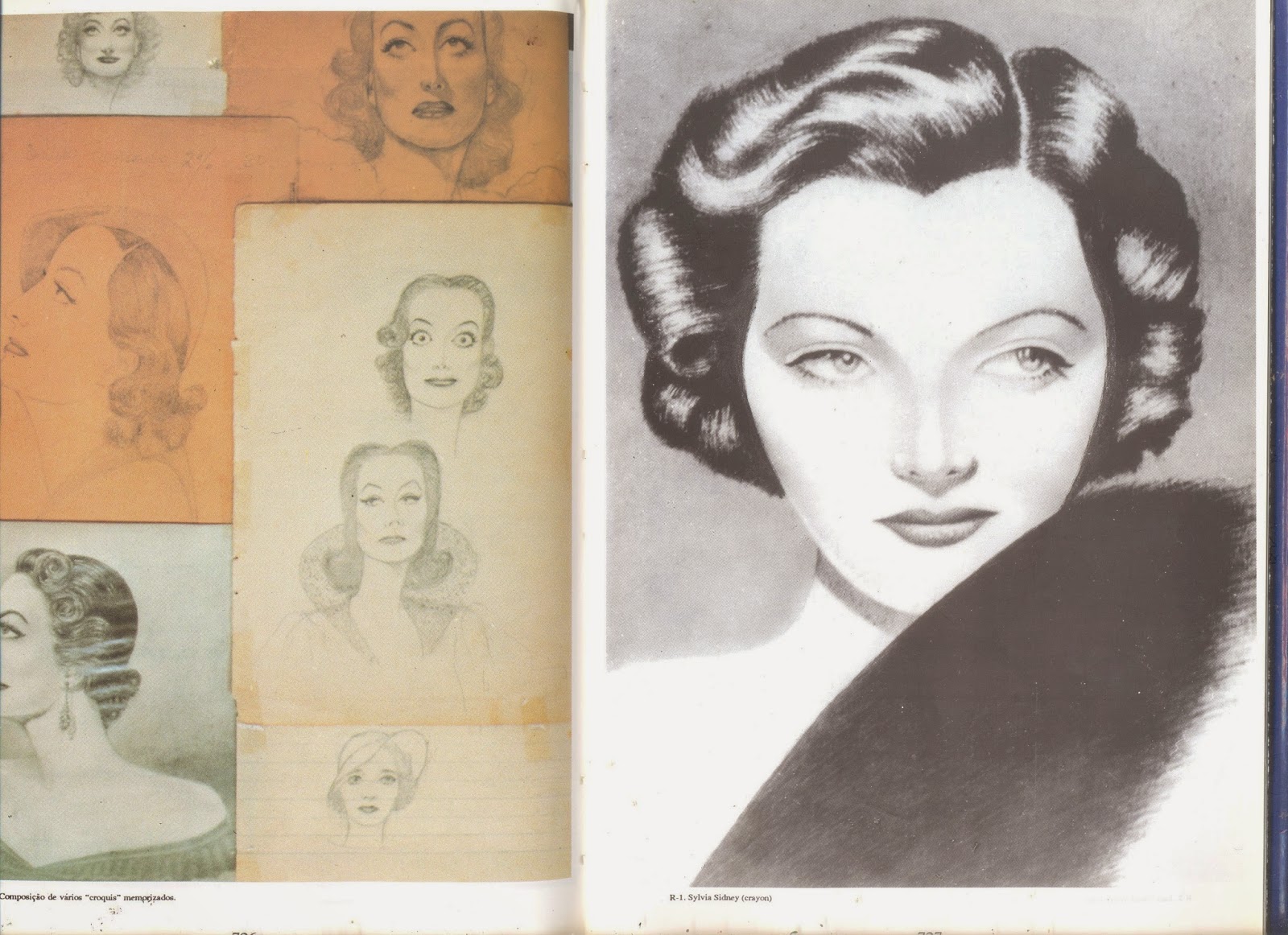
Uma bíblia sobre Joan Crawford: esta foi a primeira coisa que me veio à cabeça quando peguei aquele livro com 750 páginas, mais de 200 figuras, pesando dois quilos (sim, eu coloquei na balança). Nunca havia visto uma obra tão ambiciosa sobre uma personalidade do cinema. Toda uma vida e carreira esmiuçadas por um fã determinado, que também fazia as vezes de desenhista na juventude e retratava as divas do cinema com papel, lápis e carvão (com exceção da foto de Joan Crawford com um belíssimo vestido, todas as imagens que ilustram este post são desenhos de Walter Machado). Mas ele deveria ter ficado só com os desenhos, pois a escrita não era seu forte.

Se há algo que aprendemos com o livro, é que um fã ardoroso jamais deveria escrever uma biografia de seu ídolo. Pode haver admiração do biógrafo com relação ao biografado, mas jamais uma idolatria cega. Além de cometer o terrível erro de não ver os defeitos de Joan, Walter ainda se dá ao trabalho de menosprezar todas as contemporâneas da estrela. Para ele, Garbo não tinha talento, Norma Shearer era uma víbora (nessas exatas palavras), Katharine Hepburn mereceu ser chamada de veneno de bilheteria e Bette Davis era a criatura mais odiosa e egoísta da terra. Joan, ao contrário, era uma santa. Ajudava todas as pessoas ao seu redor, nunca reclamava, estava sempre sorrindo e fazia tudo com boas intenções.

Outro grande problema são os erros. Walter Machado era professor de arquitetura na UFMG, e espanta que uma universidade tenha empregado um professor que escreva tão mal. Ele usa palavras rebuscadas, é verdade, mas escorrega muitas vezes na gramática (sério, “ponhem” foi a pior escorregada). Ele e algum parente (alguém com o mesmo sobrenome, talvez uma filha) foram os responsáveis pela revisão, e não é raro que o próprio autor, por conhecer o que está escrito, passe os olhos pelo texto rápido demais, ignorando alguns erros. Ah, e ele repete alguns termos de modo cansativo. Entre as expressões vazias repetidas estão “a maior lenda do cinema” e “dançarina de Black Bottom e Charleston em Nova York”, ambas qualidades de Crawford.
Mas os erros factuais são imperdoáveis. Alguns chegam até a ser repetidos e reforçados por artigos de revista, provando que a crítica cinematográfica, considerada “jornalismo fácil”, também é capaz de errar quando feita por maus profissionais. Outra coisa que percebemos é que o tempo é o melhor crítico de cinema, e obras criticadas duramente na época de estreia são consideradas hoje obras-primas.

Claro que nem tudo é negativo. O trabalho por si só merece ser aplaudido de pé, ainda mais se considerarmos que Walter fez toda esta pesquisa em uma época sem internet, em que os arquivos eram a principal fonte de informação. Foi assim que ele conseguiu descobrir, por exemplo, que Joan Crawford tinha família no Brasil, devido a um parente comum em um galho distante da árvore genealógica da família Le Sueur da França (o nome verdadeiro de Joan é Lucille Le Sueur).
Crawford e Garbo 
Além de uma homenagem, é uma tese de defesa: Walter lista TODAS as contradições de “Mamãezinha Querida”, o livro venenoso de memórias escrito por Christina Crawford, filha de Joan. Aqui o autor apresenta uma hipótese bem interessante: ao escrever o livro, Christina ao mesmo tempo conseguiu destruir a imagem da mãe para o grande público e também recuperou financeiramente o que havia perdido quando foi retirada do testamento de Joan.
Para começar e terminar o livro, Walter Machado faz um pequeno balanço de sua vida, sempre permeada por Joan (ele chegou a conhecer a estrela nos anos 60) e descobrimos que dois grandes brasileiros o apoiaram neste projeto jumbo: Carlos Drummond de Andrade (também fã de Crawford) e Chico Xavier, que Walter conheceu por um amigo em comum. O início e o fim do livro têm tom de memória (sério, como o autor lembra tão bem acontecimentos da infância?), gerando praticamente duas obras em uma: a biografia e seu making-off.
Afinal, com tantos erros e defeitos, o livro vale a pena ser lido? Sim. Será um bom exercício de jogo dos sete erros e também de desconfiança: lembre-se de que não dá para confiar cegamente no autor, mas é possível apreciar a obra e descobrir muito com ela (especialmente se lida junto com uma pesquisa básica no IMDb). Aprecie com moderação.
Várias Crawfords e Sylvia Sidney
Related Posts Plugin for WordPress, Blogger...