} Crítica Retrô: pre-Code

Tradutor / Translator / Traductor / Übersetzer / Traduttore / Traducteur / 翻訳者 / переводчик

Showing posts with label pre-Code. Show all posts

Wednesday, November 8, 2023

A Divorciada (1930) / The Divorcee (1930)


As heroínas dos filmes feitos antes do Código Hays eram quase sempre personagens femininas admiráveis. Navegando em um mundo masculino e tendo como principal arma seu corpo, elas eram sensuais, ousadas e provocantes. E estes três adjetivos são perfeitos para descrever a protagonista de “A Divorciada”, de 1930.


The heroines of pre-Code films were almost always remarkable female characters. Navigating a man’s world having as their main weapon their body, they were sensual, bold and provocative. And these three adjectives are perfect to describe the lead in 1930’s “The Divorcee”.

Jerry (Norma Shearer) é cobiçada por muitos homens, mas o primeiro a pedi-la em casamento é Ted (Chester Morris). Ela aceita o pedido e eles se casam. Três anos após o casamento, eles parecem viver em perfeita harmonia... até que Janice (Mary Doran), uma velha conhecida de Ted, chega à festa de bodas do casal.


Jerry (Norma Shearer) is wanted by many men but the first to propose is Ted (Chester Morris). She accepts the proposal and they get married. Three years after the wedding, they seem to be perfectly happy… until Janice (Mary Doran), an old acquaintance of Ted’s, arrives at the party being thrown for their anniversary.

Quando ela descobre sobre Ted e Janice, Jerry encontra consolo nos braços do melhor amigo de Ted, Don (Robert Montgomery), que gosta dela mais do que como amiga. Ela então pede o divórcio de Ted, experimentando uma liberdade inédita como a nova ex-esposa.


When she learns about Ted and Janice, Jerry finds consolation with Ted’s best friend Don (Robert Montgomery), who likes her more than as a friend. She then proceeds with the divorce from Ted, experiencing unmatched freedom as the new ex-wife.
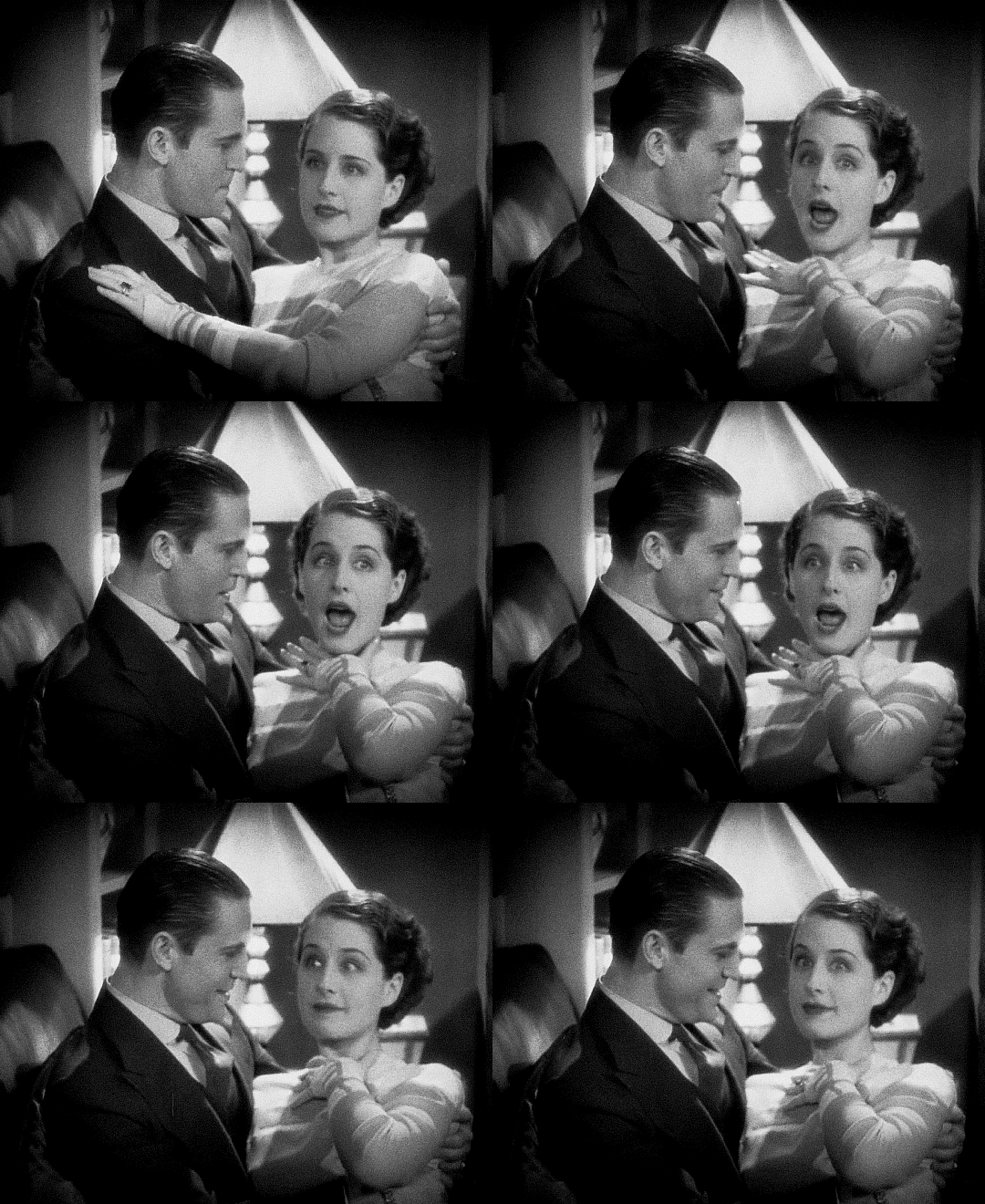
Em suas aventuras, Jerry re-encontra Paul (Conrad Nagel), que era apaixonado por ela quando ela anunciou seu noivado com Ted. Paul ficou tão chateado com a notícia que se embebedou e se envolveu em um acidente de carro que deixou o rosto de Dorothy (Helen Johnson) desfigurado. Paul então se casou com Dorothy movido pela culpa. Quando ele re-encontra Jerry, descobrimos que Paul nunca a esqueceu, e agora vê a oportunidade de deixar Dorothy e se casar com Jerry.


In her adventures, Jerry re-encounters Paul (Conrad Nagel), who was in love with her when she announced her engagement to Ted. Paul got so upset with the news that he got drunk and got involved in a car accident that left Dorothy (Helen Johnson) with a disfigured face. Paul then married Dorothy out of guilt. When he meets Jerry again, we learn that Paul never forgot her, and now sees the opportunity to leave Dorothy and marry Jerry.
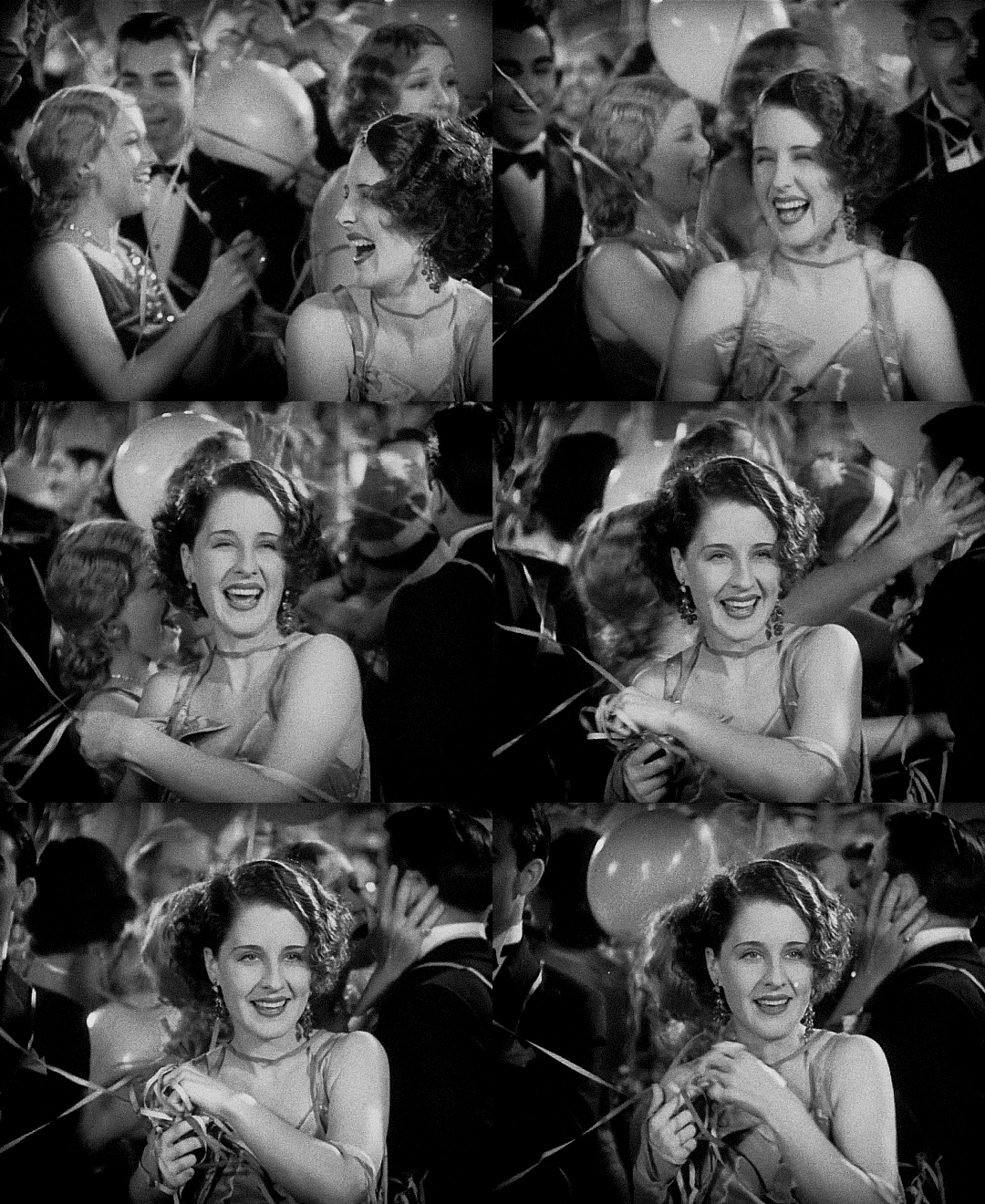
Em certo momento, depois de ser perguntada o que havia de errado com ela, Jerry responde: “Só estou tentando me agarrar à maravilhosa latitude do ponto de vista de um homem”. Ela está claramente falando sobre os dois pesos e duas medidas a partir dos quais homens e mulheres são julgados. Para um homem, um caso extraconjugal “não significa nada”, mas se é a mulher que trai, ela é julgada sem piedade.


At one point, after being asked what was wrong with her, Jerry answers: “I’m just trying to hang onto the marvelous latitude of the man’s point of view”. She is clearly talking about the double standard from which men and women are judged. For a man, an affair “doesn’t mean a thing”, but if it’s the woman who is cheating, she is judged without mercy.
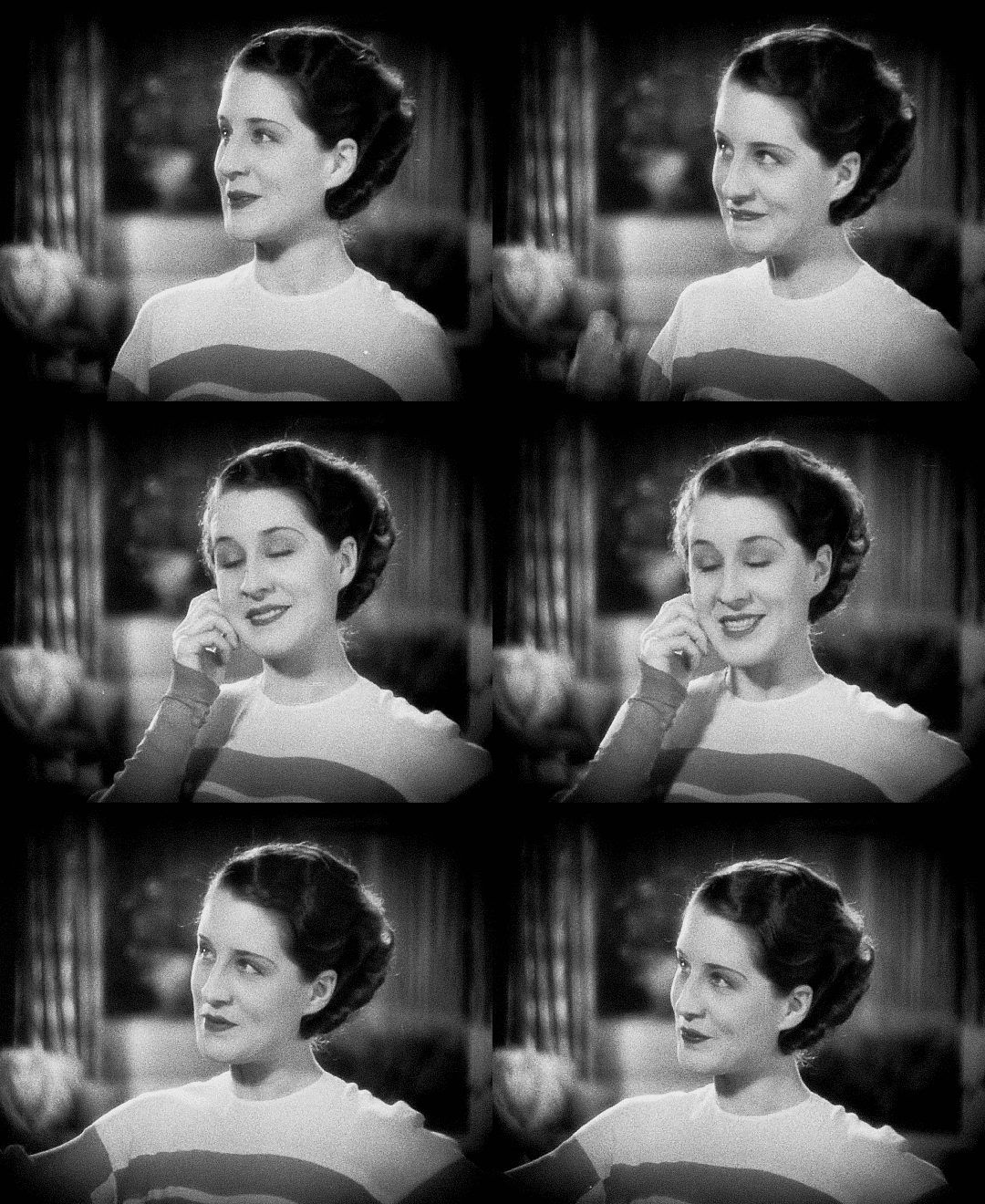
Jerry não é uma mulher à frente do seu tempo, mas é certamente uma mulher do seu tempo: taxas de divórcio estavam aumentando no final dos anos 1920 e começo dos anos 1930. Menos de 15 anos depois de as sufragistas conseguirem o direito ao voto, mais e mais mulheres estavam vivendo vidas mais livres e se livrando de casamentos nos quais não eram felizes. A taxa de divórcios cairia durante a Grande Depressão – como é comum em tempos de dificuldades – e aumentariam novamente no final da década. Em 1937, um marco legal: o chamado Matrimonial Causes Act permitiu que mulheres pedissem divórcios nos mesmos termos que os homens, embora mantendo a necessidade de demonstrar que um dos três aconteceu: adultério, crueldade ou abandono.


Jerry isn’t a woman ahead of her time, but she’s certainly a woman of her time: divorce rates were on the rise in the late 1920s and early 1930s. Less than 15 years after the suffragettes got their right to vote, more and more women were leading freer lives and getting out of marriages in which they were unhappy. The divorce rate would go down during the Great Depression – as it is common for times of hardship – and go up again by the end of the decade. In 1937, a legal mark: the Matrimonial Causes Act allowed women to petition for divorce on the same terms of men, although keeping the requirement to demonstrate that one of the three happened: adultery, cruelty or desertion.

O divórcio estava dominando tanto as conversas que serviu de mote para outras obras de arte. Um deles foi a peça-que-virou-filme “Vítimas do Divórcio” (1932), hoje mais lembrado por ser a estreia de Katharine Hepburn nas telas. Nele, um homem chamado Hilary (John Barrymore) volta para casa depois de passar 15 anos num hospício e descobre que sua esposa Meg (Billie Burke) pediu o divórcio e está prestes a se casar novamente. Em alguns momentos mais emocionante que “A Divorciada”, este filme poderia ter ditado os termos para normalizar o divórcio no cinema se o Código Hays não tivesse atrapalhado.


Divorce was so much dominating the talks that it inspired more works of art. One of them was the play-turned-into-film “A Bill of Divorcement” (1932), today best remembered for being Katharine Hepburn’s screen debut. In it, a man named Hilary (John Barrymore) comes home after spending 15 years in an asylum and finds out that his wife Meg (Billie Burke) has divorced him and it about to remarry. In some moments more engaging than “The Divorcee”, this film could have set the tone to normalize divorce on screen if there hadn’t been the Hays Code.

“A Divorciada” foi baseado no romance best-seller “Ex-Wife”, de Ursula Parrott, que vendeu os direitos de adaptação para a MGM pela incrível quantia de 20 mil dólares. A própria Ursula era divorciada quando o livro foi publicado, anonimamente, em 1929, e ainda iria casar de novo e se separar outras três vezes. Hoje basicamente esquecida, Ursula Parrott estava sempre nas manchetes das colunas de fofocas e seus livros e contos foram lidos por milhões.


“The Divorcee” was based on the best-seller “Ex-Wife”, by Ursula Parrott, who sold the movie rights to MGM for the amazing sum of $20,000. Ursula herself was a divorcee when the book was published, anonymously, in 1929, and would go on to remarry and divorce three more times. Now basically forgotten, Ursula Parrott was always on the headlines of gossip columns and her novels and short stories was read by millions.

Ursula Parrott

Norma Shearer ganhou o Oscar de Melhor Atriz em 1931 por sua performance em “A Divorciada” – uma performance que não foi particularmente desafiadora, tirando um ousado monólogo. A primeira escolhida para o papel fora Joan Crawford, que para sempre rivalizou Shearer por causa da perda do papel.


Norma Shearer won the Best Actress Oscar in 1931 for her performance in “The Divorcee” – a performance that wasn’t particularly challenging, except for a racy monologue. The first choice to play the role had been Joan Crawford, who became forever bitter with Shearer for having gotten the part instead.
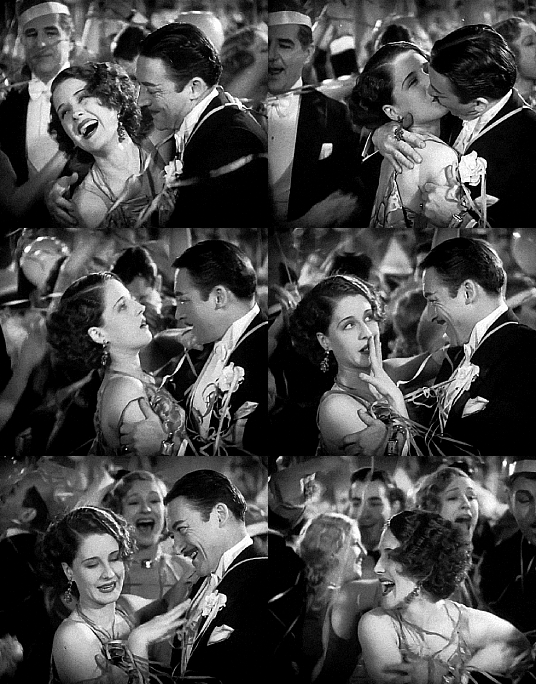
“A Divorciada” é puro ouro pré-Código Hays. Vindo de um livro escandaloso, não é um filme tão escandaloso assim, mas ainda assim um filme que não teria sido feito a partir de 1934. Mais do que isso, ele traz uma protagonista feminina livre, que pode servir de exemplo de ousadia para a heroína da época.


“The Divorcee” is pure pre-Code gold. Coming from a scandalous book, it’s not such a scandalous film, but still a film that wouldn’t have been made from 1934 onwards. More than that, it brings a free female lead, one that can serve as an example of boldness for the pre-Code heroine.


This is my contribution to the Blogathon and the Beast, hosted by the Classic Movie Blog Association.

Friday, May 26, 2023

Vozes do coração (1933) / Torch Singer (1933)


Se há uma coisa boa – entre as MUITAS coisas boas – no cinema pre-Code é que vários bons filmes têm menos de 90 minutos. Tome como exemplo “Três... Ainda é Bom” (1932) que tem apenas 63 minutos ou “Serpentes de Luxo” (1933), com 71 minutos de duração. Também de 1933 e também durando 71 minutos temos “Vozes do Coração” outro pequeno grande filme.


If there is one good thing - among the MANY good things - in pre-Code cinema is that several very good movies are under 90 minutes. Take for instance “Three on a Match” (1932), that is only 63 minutes long, or “Baby Face” (1933), clocking in at 71 minutes. Also from 1933 and also lasting only 71 minutes is “Torch Singer”, another excellent little movie.

A primeira coisa que vemos na tela são chamas. Este será um filme flamejante, sem dúvidas! E ele já começa com algo que seria proibido pelo Código Hays: moças solteiras grávidas indo para um hospital comandado por freiras. Uma destas mulheres em busca de ajuda é Sally Trent (Claudette Colbert), que na cena seguinte é vista em um delírio febril chamando pelo nome de Mike.


The first thing we see on screen are flames. This will be a burning movie, no doubt about that! And it already begins with something that would be forbidden by the Hays Code: unmarried pregnant ladies going to a hospital run by nuns. One of these women seeking help is Sally Trent (Claudette Colbert), who in the next scene is seen feverishly calling someone named Mike.

No hospital Sally se torna amiga de Dora (Lyda Roberti) e quando elas recebem alta depois de darem à luz as duas vão dividir um apartamento e seguir com suas vidas agora acompanhadas de seus filhos. Sem conseguir um trabalho como corista e sem ter como pagar as contas, Sally não tem outra opção a não ser dar sua filha para as freiras criarem.


At the hospital Sally befriends Dora (Lyda Roberti) and, when they are discharged after giving birth, the two go share an apartment and move on with their lives, now with their children. Unable to find a job as a chorus girl and pay the bills, Sally has no other option but give her daughter for the nuns to raise.

Agora usando o nome artístico Mimi Benton, nossa heroína galga o caminho do sucesso: primeiro ela canta numa cantina, depois num restaurante e de repente ela está cantando acompanhada por uma orquestra. Por acaso ela acaba num programa de rádio interpretando Tia Jenny, que conta histórias para crianças. Com o sucesso do programa de rádio Mimi vê uma oportunidade para encontrar a filha – até Mike (David Manners) reaparecer em sua vida... logo quando ela está ensaiando um romance com o dono de uma casa noturna, Tony (Ricardo Cortez).


Now under the name Mimi Benton, our hero takes all the steps to success: first she sings in a canteen, then at a restaurant, and suddenly she’s singing with a full orchestra. By chance, she ends up in a radio show as Aunt Jenny, telling stories for children. With the success of the radio show, Mimi sees an opportunity to find her daughter - until Mike (David Manners) reappears in her life… right when she’s rehearsing a romance with nightclub owner Tony (Ricardo Cortez).

Alguns detalhes nos dão uma nova perspectiva sobre ver filmes antigos. O bebê que Claudette Colbert beija no começo do filme tem hoje 90 anos de idade se ainda estiver viva. Imortalizada em nitrato, esta criança e as outras crianças do filme, assim como os atores conhecidos podem ser vistos hoje pelas massas do jeito que eram há tanto tempo atrás. Esta é a mágica dos filmes: manter as pessoas vivas para novas gerações verem!


Some details give us a new perspective about watching old movies. The baby Claudette Colbert kisses in the beginning of the movie is now 90 years old, if she’s alive at all. Immortalized on nitrate, this kid and the other kids in the movie, together with the well-known actors, can now be seen by the masses as they were in times so long gone. This is the magic of movies: keeping people alive for new generations to come and see!

Só mulheres foram responsáveis pela história que vemos na tela: o roteiro foi escrito por Lenore Coffee e Lynn Starling, baseadas na história “Mike” de Grace Perkins. Há uma sequência de Dora contando para Sally sobre ser assediada no trabalho algo que só roteiristas mulheres poderiam por no papel, e algo que infelizmente desapareceria com o Código Hays. Há ainda outras coisas em “Vozes do Coração” que seriam proibidas no ano seguinte como frases de duplo sentido, chantagem e muita bebedeira.


Only women were responsible for the story we see on screen: the screenplay was written by Lenore Coffee and Lynn Starling, based on the story “Mike” by Grace Perkins. There is a sequence of Dora telling Sally about her being harassed at work, something only female screenwriters could think of, and something that would unfortunately disappear with the Hays Code. There is even more things in “Torch Singer” that would be prohibited the following year, such as double entendres, bribery and lots of drinking.

Claudette Colbert está muito bem em “Vozes do Coração”. Ela tem uma cena bêbada e também cenas emotivas que demandaram choro. Tudo o que Mimi faz, ela faz por causa de sua filha, e este filme é sobre isso: a história de uma mãe sofredora que por acaso é uma cantora.


Claudette Colbert is very good in “Torch Singer”. She gets to play a drunk scene, and also has emotional scenes that required crying. Everything Mimi does, she does because of her daughter, and this film is ultimately that: the story of a suffering mother who happens to be a torch singer.

O final pode ser meio amargo para muitos – para mim foi – embora tente ser fofo e romântico. Não é um final satisfatório para audiências modernas – pois não podemos ver como os personagens seriam felizes para sempre depois dos créditos. Mas isso não estraga a diversão, mesmo que o elenco não tenha gostado muito do resultado. É um tour-de-force para Claudette Colbert, e um muito bom, compactado em apenas 71 minutos. As pessoas sabiam como fazer filmes no passado!


The ending might be a little sour for many - for me it was - despite trying to be cute and romantic. It’s not a satisfactory ending for modern audiences - as we can’t see how things will be happily ever after when the credits roll. But this doesn’t spoil the fun, even though the cast didn’t regard the film highly after making it. It’s a tour-de-force for Claudette Colbert, and a very good one compacted in only 71 minutes. People really knew how to make movies back then!

Thursday, July 16, 2020

A Mulher Miraculosa (1931) / The Miracle Woman (1931)

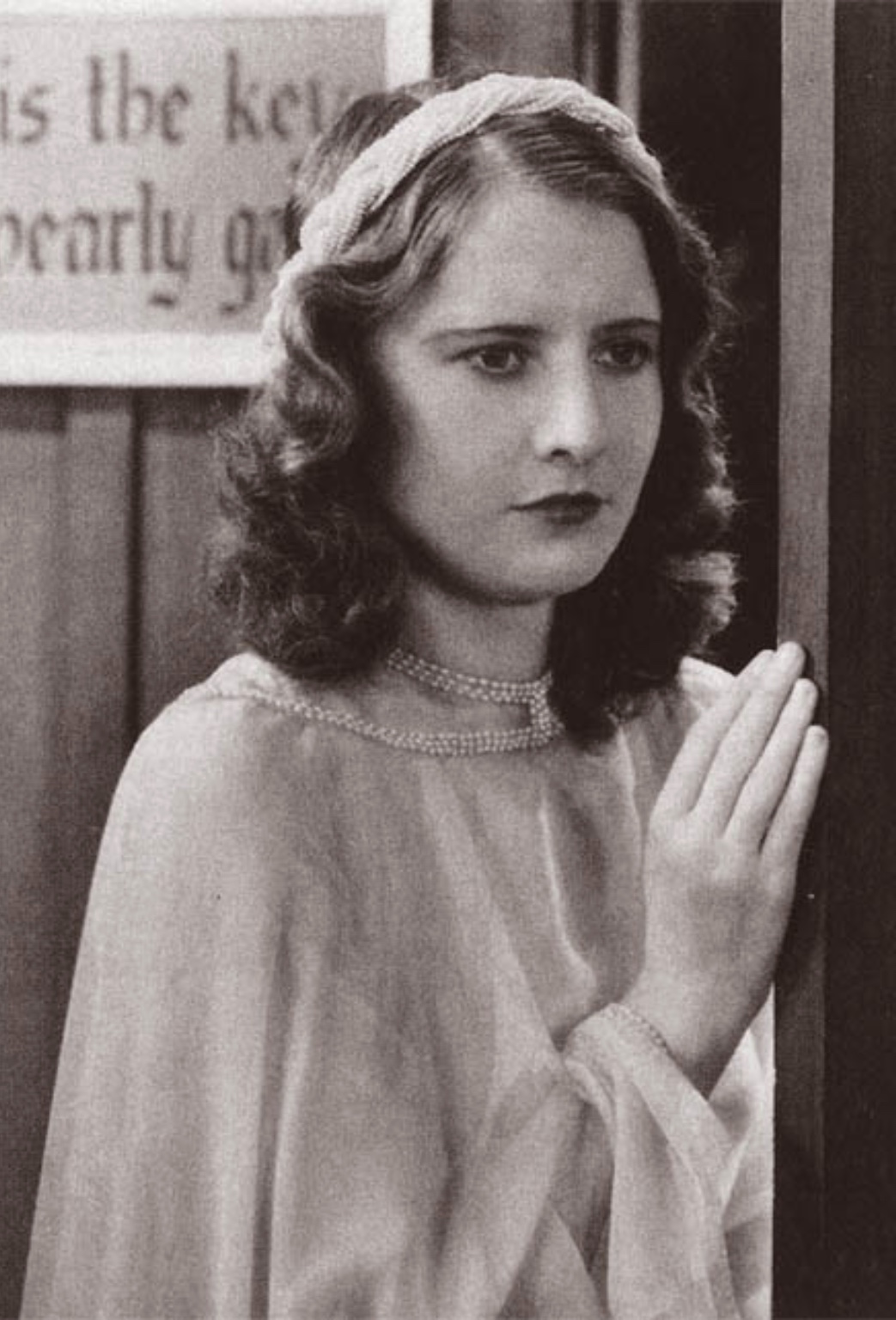
Nas últimas semanas, minhas noites de domingo têm sido dedicadas ao reboot de “Perry Mason” exibido na HBO. Embora Mason seja um personagem conhecido e o protagonista da série, desde o começo a personagem que me chamou a atenção foi a Irmã Alice, interpretada por Tatiana Maslany. Quando eu a vi pregando no trailer da série, só consegui pensar numa coisa: ela é exatamente igual à Barbara Stanwyck em “A Mulher Miraculosa” (1931), um filme subestimado de Frank Capra no qual, na minha opinião, Stanwyck tem uma de suas melhores performances.

In the last few weeks, my Sunday nights have been occupied by the HBO reboot of “Perry Mason”. Although Mason is a well-known character and the lead of the show, since the beginning the character who called my attention was Sister Alice, played by Tatiana Maslany. When I saw her preaching in the trailer, I could only think about one thing: she was exactly like Barbara Stanwyck in “The Miracle Woman” (1931), an underrated Frank Capra film in which Stanwyck delivers, in my opinion, one of her best performances.

Em “A Mulher Miraculosa”, Stanwyck interpreta Florence Fallon, a filha de um pastor. Os serviços de seu pai não são mais necessários na igreja, e ele morre antes de fazer seu último sermão para os fiéis. Florence é incumbida de ler o último sermão, mas entra em colapso no meio da leitura e começa a dizer algumas verdades inconvenientes para os fiéis, que abandonaram o pai dela quando ele ficou doente e agora ele nem pode ter um enterro decente. Ela chama os fiéis de hipócritas e pecadores e todos eles deixam o recinto porque não aguentam ouvir a verdade.

In “The Miracle Woman”, Stanwyck plays Florence Fallon, the daughter of a preacher. Her father’s services are no longer needed by the church, and he dies before addressing his people for the last time. Florence receives the mission to read his final speech, but she breaks in the middle of it and starts telling inconvenient truths to the churchgoers, who abandoned her father when he got ill and now he can’t even have a decent burial. She calls the churchgoers hypocrites and sinners and they all leave because they can’t handle the truth.

Um homem chamado Bob Hornsby (Sam Hardy) estava de passagem pela igreja naquele dia e, depois que o ataque de fúria de Florence termina, ele oferece uma parceria: com a administração dele e os conhecimentos que ela tem da Bíblia, eles podem criar uma nova igreja. Sem nada a perder, Florence aceita a oferta e o Templo da Felicidade surge.

A man called Bob Hornsby (Sam Hardy) happened to be at the church that day and, after Florence’s rage is over, he offers her a business partnership: with his management and her knowledge of the Bible, they can create a new church. Without anything to lose, Florence accepts the offer and the Temple of Happiness is born.

Em pouco tempo o templo está cheio e as pregações dela estão sendo transmitidas pelo rádio. Um dia, um homem cego ouve uma dessas pregações através do rádio da vizinha e muda de ideia sobre seu suicídio iminente. O homem é John Carson (David Manners), um ex-aviador e atualmente músico desempregado. As palavras de Florence – ou da Irmã Fallon – dão a ele esperança e ele decide não apenas continuar perseguindo o sucesso, mas também que deve conhecer a pregadora.

Soon her temple is full and her addresses are being broadcasted in the radio. One day, a blind man listens to one of these addresses through his neighbor’s radio and changes his mind about committing suicide. The man is John Carson (David Manners), a former aviator and currently unemployed musician. Florence’s – or Sister Fallon’s – words give him hope in the future and he decides not only to keep going after success, but also to meet the preacher.

A proprietária do apartamento de John, Senhora Higgins (Beryl Mercer), o leva ao templo logo no dia em que a Irmã Fallon está fazendo um showzinho dentro de uma jaula com leões. John se oferece para entrar na jaula quando Florence garante que aqueles que acreditam em Deus não serão atacados pelos leões. Ela usa o fato de John ser cego na performance e promete que ele voltará a ver – mas não diz quando – porque ele é um homem de fé.

John’s landlady Mrs Higgins (Beryl Mercer) takes him to the temple and they happen to go on the day Sister Fallon is performing a stunt inside a cage full of lions. John volunteers to enter the cage when Florence guarantees that people who believe in God won’t be attacked by the lions. She uses the fact that John is blind in her performance and promises that he shall see again – but doesn’t give him a date – because he is a faithful man.

Em seguida vemos Bob, o braço direito de Florence, dando bronca em algumas pessoas que ele contratou para participar de alguns milagres, incluindo dois homens que deveriam interpretar paralíticos mas que estavam com problemas para “entrar no personagem”. É então que Florence descobre que John não era mais um ator contratado por Bob, mas um homem cego de verdade que realmente acreditou nela. Ela já demonstra insatisfação com a maneira como Bob está conduzindo os negócios.

We next see her right hand Bob lecturing some people he had hired to participate in some miracles, including two men who should play paralyzed people but are having trouble “entering into character”. That’s when Florence learns that John wasn’t another actor hired by Bob, but a real blind man who actually believed in her. She already shows disappointment by how Bob is conducting the business.

Naquela noite, em vez de ir à festa de Bob, Florence encontra John do lado de fora da igreja. Está chovendo e ela oferece uma carona até a casa dele. Ele a convida para subir para seu apartamento e ela aceita, o que inicia uma noite agradável com eles cantando, jogando cartas e com John fazendo um show com um boneco de ventríloquo – que é meio bizarro. Como Judy menciona no site Movie Classics, o boneco é uma metáfora para como Florence está sendo manipulada e manipulando outros em seus sermões, mas isso não torna a cena menos bizarra. Ao final da noite, Florence descobriu que John desistiu do suicídio após ouvi-la, John é contratado para escrever um hino religioso para Florence e eles se beijam.

That night, instead of attending Bob's wild party, Florence bumps into John outside the church. It’s raining so she offers him a ride home. He invites her to his apartment and she accepts, which leads to a pleasant evening singing, playing cards and seeing John do an act with a ventriloquist dummy – which is kind of creepy. As Judy mentions at Movie Classics, the dummy is a metaphor for Florence serving as a mouthpiece only in her addresses, but it doesn't make the dummy less creepy. By the end of the night, Florence had learned that John had given up the idea of suicide after listening to her, John is hired to compose a religious hymn for Florence and they kiss.

Um momento-chave é quando John diz que o pai de Florence deve estar orgulhoso do sucesso dela como pastora. Ela então se mostra completamente desolada com o caminho que escolheu, mas abandonar este caminho será muito difícil porque Bob começa a chantageá-la. Ela alcançará a redenção ou perecerá na tragédia?

A triggering moment happens when John says that Florence’s father must be proud of her success as a preacher. She then achieves full disappointment with her chosen path, but abandoning this path will be very difficult because Bob starts blackmailing Florence. Will she achieve redemption or perish in a tragedy?

É interessante notar que, enquanto o povo entra na igreja, a música que toca é o hino patriótico “Over There”, composto por George M. Cohan durante a Primeira Guerra Mundial. Esta mistura de religião e patriotismo para tirar dinheiro das pessoas é uma velha técnica que ainda vem sendo usada, quase 90 anos depois da estreia de “A Mulher Miraculosa”. Achamos que evoluímos - como sociedade, como humanidade - muito no último século, mas não é verdade: continuamos caindo nos mesmos velhos truques.

It’s interesting to notice that, while the people enter the church, the music playing is the patriotic hymn “Over There”, composed by George M. Cohan during World War I. This mix of religion and patriotism to take money away from people is an old technique and one that is still being used, almost 90 years after “The Miracle Woman” was made. We think we - as a society, as mankind - evolved a lot in the last century, but it’s not true: we are still falling for the same old tricks.

Como Danny do site Pre-Code.com escreveu, “A Mulher Miraculosa” nasceu de uma década de dor. Após a Primeira Guerra Mundial, o charlatanismo cresceu através de pregadores falsos e do espiritualismo – afinal, milhões de pessoas queriam entrar em contato com entes queridos que morreram na guerra ou foram vítimas da Gripe Espanhola. O filme foi baseado em uma peça chamada “Bless You, Sister”, escrita por Robert Riskin, que se tornaria um colaborador constante de Frank Capra, mas que não se envolveu na adaptação da peça para o cinema. Quando o Código Hays foi imposto, filmes como “A Mulher Miraculosa” não mais poderiam ser feitos – provando que a censura não era apenas sobre moralidade, mas também sobre política e religião.

As Danny from PreCode.com wrote, “The Miracle Woman” is born out of the fabric of a decade of pain. After World War I, charlatanism grew in the forms of fake preachers and spiritualism – after all, millions of people wanted to contact the loved ones they lost at the war or because of the Spanish flu. The film was based on a play called “Bless You, Sister”, written by Robert Riskin, who would go on to become Capra's constant collaborator, but had nothing to do with the adaptation of the play to the screen. Once the Hays Code was enforced, films like “The Miracle Woman” couldn't be made anymore – proving that the censorship wasn't only about morality, but also about politics and religion. 

Ao rever este filme, percebi que estava certa: a Irmã Alice de “Perry Mason” tem muito em comum com Florence de “A Mulher Miraculosa”. Ambas usam robes brancos esvoaçantes para parecerem puras e sobrenaturais, uma mistura de anjo e apóstolo. Ambas obedecem a pessoas mais inescrupulosas e ambiciosas que elas: Florence obedece a Bob e Alice obedece à mãe, Birdy, interpretada por Lili Taylor. Ambas fazem falsos milagres. A única diferença é a cor do cabelo! É por isso que “A Mulher Miraculosa” deve ter sido uma inspiração para “Perry Mason”, pois a série tem início na Véspera do Ano Novo de 1932 e o filme é de 1931. Uma inspiração para ambas as pregadoras fictícias é a pregadora Aimée Semple McPherson (1890-1944), uma das fundadoras da Igreja Quadrangular.

By rewatching this film, I realized I was right: Sister Alice from “Perry Mason” has a lot in common with Florence from “The Miracle Woman”. Both wear flowing white robes during their addresses, in order to look otherworldly and pure, a mix of angel and apostle. Both obey more unscrupulous and greedy people: Florence obeys Bob, while Alice obeys her mother, Birdy, played by Lili Taylor. Both perform fake miracles. Their only difference is the hair color! That’s why “The Miracle Woman” must have been an inspiration for “Perry Mason”, as the series starts on New Year’s Eve of 1932, and the film is from 1931. One inspiration for both fictional preachers is the preacher Aimée Semple McPherson (1890-1944), one of the founders of the Foursquare Church.

Aimée Semple McPherson / Sister Alice in "Perry Mason"

John sabe ler Braille, mas para se comunicar com Florence ele pede que ela escreva cartas formando as palavras com letras cortadas, uma a uma, de revistas e jornais, para que ele possa reconhecer as formas. Eu particularmente nunca havia visto nada parecido, apesar de fazer sentido. David Manners se sai bem como um homem cego, sem exagerar ou nos fazer duvidar da cegueira de John. Manners é mais conhecido por ter feito filmes de terror nos estúdios Universal. Ele se aposentou do cinema em 1936.

John knows how to read Braille, but to communicate with Florence he asks her to write letters by making the words from letters cut, one by one, from magazines and newspapers, so he can recognize the shapes. I particularly had never witnessed something like that, but it makes sense. David Manners does well as a blind man, never exaggerating or making it hard for us to believe John is blind. Manners is best known for appearing in horror movies at Universal studios. He retired from the screen in 1936.

Embora “A Mulher Miraculosa” tenha seus problemas – e eu estou, sim, falando do boneco de ventríloquo – é inegável que Barbara Stanwyck mostra uma força imensa como protagonista toda vez que ela sobe ao púlpito e se dirige aos fiéis. Florence é ambígua, por vezes confusa e irada, e muito humana. “A Mulher Miraculosa” - este excelente, pouco comentado e tão atual filme – é a prova perfeita de que o melhor ainda estava por vir para Barbara Stanwyck.

Although “The Miracle Woman” has its problems – I’m looking at you, dummy – it’s undeniable that Barbara Stanwyck shows immense strength as the lead whenever she goes to the pulpit and addresses the churchgoers. Florence is ambiguous, sometimes confused and enraged, and very human. “The Miracle Woman” - this excellent seldom mentioned and very modern movie – is the proof that the best was yet to come for Barbara Stanwyck.

This is my contribution to The Queen of Sass: Barbara Stanwyck blogathon, hosted by Gabriela at Pale Writer.

Friday, March 6, 2020

Pleasure Cruise (1933)


Todos nós desejamos felicidade e tranquilidade na vida – mas não no cinema. Aqueles de nós que querem se casar desejam poucas brigas e nenhum ciúme – mas quem quer ver um filme sobre um casal que não tem absolutamente nenhum problema? No cinema, quanto mais problemático for um casamento, melhor, seja o filme uma comédia ou um drama. Na comédia pre-Code de 1933 “Pleasure Cruise”, um marido ciumento segue a esposa em um cruzeiro – e planeja ensinar-lhe uma lição da maneira mais nojenta possível.

We all long for happiness and calm in life – but not on screen. Those of us who want to get married wish few fights and no jealousy – but who wants to watch a movie about a couple that has absolutely no problems? On film, the most troubled a marriage is, the better, no matter if the movie is a comedy or a drama. In the 1933 pre-Code comedy “Pleasure Cruise”, a jealous husband follows his wife in a cruise trip – and plans to teach her a lesson in the vilest way.


Da primeira vez que vemos Andrew Poole (Roland Young), ele está leiloando todos os seus pertences e dando uma festa para os amigos enquanto suas coisas estão sendo levadas embora. Ele pretende desmanchar o noivado com Shirley (Genevieve Tobin), agora que está pobre, mas ela não aceita. Ele tem uma carreira promissora como escritor pela frente e ele tem um emprego, o que significa que eles podem se casar e ela pode sustentar a casa enquanto o livro dele não é publicado.

The first time we see Andrew Poole (Roland Young), he's auctioning all his belongings and throwing a party for his friends while his things are being taken away. He intends to break the engagement with his fiancée, Shirley (Genevieve Tobin), now that he is poor, but she doesn't want it. He has a promising career ahead as a writer and she has a job, which means that they can get married and she can be the breadwinner of the household while his book is not published.


Da próxima vez que vemos Andrew, ele é um homem casado usando um avental – que, no cinema, é um sinal de castração – e organizando as compras na cozinha. É seu aniversário de um ano de casamento, mas ele se esqueceu. Sua amiga Judy (Minna Gombell) o visita e traz flores para ele presentear Shirley. Enquanto cozinha, ele confessa para Judy que tem ciúmes dos colegas de trabalho de Shirley – em uma vinheta criativa e divertida, vemos que estes colegas não são nada do que ele imagina.

The next time we see Andrew, he is a married man wearing an apron – which, in a movie, is a sign of emasculation – and organizing the things he bought in the kitchen. It's his one-year wedding anniversary, but he has forgotten it. His friend Judy (Minna Gombell) visits him and brings flowers for him to give Shirley. While cooking, he confesses to Judy that he's jealous of Shirley's male coworkers – in a creative and fun vignette, we see that they're nothing like he imagines.


Naquela tarde, Andrew e Shirley saem para dar uma volta, e começam a discutir porque ela diz que não sairia do emprego se ele conseguisse um trabalho. Ela então sugere que ele vá pescar para descansar. Ironicamente, ele sugere que ela faça uma viagem num cruzeiro sozinha, e fica chocado quando ela aceita a ideia e imediatamente compra a viagem. Mas ele não pode ir pescar em paz, por isso ele consegue um emprego no mesmo cruzeiro em que ela viaja para ficar de olho nela – sem ser visto, obviamente.

Andrew and Shirley go out for a stroll in the rain that evening, and start arguing because she says she wouldn’t give her job up if he found a job. She then suggests for him to go on a fishing trip to rest. He ironically suggests for her to go solo on a pleasure cruise, and is shocked when she accepts the idea and immediately books the trip. But he can't go fishing in peace, so he gets a job in the same cruise she's travelling to watch her – without being seen, of course.


Fingindo ser barbeiro, Andrew tenta manter todos os homens longe de Shirley, contando mentiras sobre ela. Ao mesmo tempo, ele precisa escapar das investidas da Sra. Signus (Uma O’Connor), uma senhora que adora flertar. Para tornar as coisas mais complicadas, a cabine de Shirley é do lado da cabine da Sra. Signus, e Andrew frequentemente entra na cabine da Sra. Signus para espiar Shirley pelo buraco da fechadura.

Posing as a barber, Andrew tries to keep all men far from Shirley, telling lies about her. At the same time, he needs to escape Mrs Signus (Una O'Connor), a very flirty older lady. To make things more complicated, Shirley's cabin is next to Mrs Signus, and Andrew frequently enters Mrs Signus' cabin only to spy on Shirley through the keyhole.


Assim como muitos outros filmes do começo da era falada, “Pleasure Cruise” teve uma versão em língua estrangeira gravada ao mesmo tempo e enviada para países que não falavam inglês. A versão em espanhol, “No Dejes La Puerta Abierta”, era estrelada pelo brasileiro Raul Roulien e pela espanhola Rosita Moreno. Raul e Rosita fizeram muitas versões em espanhol de filmes em inglês nos estúdios Fox.

Like many other early talkies, “Pleasure Cruise” had a foreign language version shot at the same time for non-English speaking markets. The Spanish version, “No Dejes la Puerta Abierta” (Don't Leave the Door Open), starred Brazilian import Raul Roulien and Spanish actress Rosita Moreno. Roulien and Moreno did a lot of Spanish versions of English-speaking films at Fox studios.


Podemos perceber que este filme foi feito antes do Código Hays pelo primeiro frame. Quando o filme começa, vemos as costas de uma mulher nua e alguém ordena “vire-se”. Para nosso alívio, vemos que se trata de uma pintura, não de uma mulher nua – e os cineastas sorriem porque acabaram de nos enganar. Além disso, há muitas – e eu quero dizer MUITAS – insinuações sexuais no filme.

We can see this a pre-Code by the very first frame. When the film begins, we see a naked woman's back and someone orders “turn around”. To our relief, we realize it's a painting, not a naked woman – and the filmmakers smile as they see they fooled us. Besides that, there is a lot – and I mean a LOT – of sexual innuendo in this film.


Algumas transições chamaram minha atenção por causa da criatividade envolvida. Quando Andrew e Shirley saem da casa deles, a câmera foca nos pés do casal. No momento seguinte, eles estão saindo da igreja, casados. No próximo momento, ainda com a Marcha Nupcial tocando, Andrew está caminhando sozinho, depois de fazer compras para casa. Em outra sequência, um chuveiro aberto se transforma em chuva caindo do lado de fora de uma janela e, mas tarde, a passagem do tempo é simbolizada pela chuva que para de cair em uma poça. Um balão estoura e uma grande festa no cruzeiro acaba. São todos pequenos truques, muito bem executados, que tornam o filme visualmente bonito.

Some scene transitions really caught my attention because of the creative way they were done. As Andrew and Shirley leave his house, the camera focuses on their feet. The next moment, they are walking down the aisle, married. The next one, still with the Wedding March playing, Andrew is walking alone, after buying groceries for his home. In another sequence, an open shower transforms into rain falling outside of a window and, later, the passing of time is symbolized by the rain that stops falling in a puddle. A balloon pops and a huge party at the cruise is over. These are little tricks that, well done, make the film visually pleasing.


Genevieve Tobin está ótima nos momentos cômicos de “Pleasure Cruise”. Nascida em Nova York em 1899, Genevieve fez seu primeiro filme aos 10 anos. Sua irmã Vivian e seu irmão George também eram atores. Ao contrário de sua personagem em “Pleasure Cruise”, Genevieve deixou Hollywood em 1940 após se casar. Ela faleceu em 21 de julho de 1995 – meu segundo aniversário.

Genevieve Tobin is great at comical moments in “Pleasure Cruise”. Born in New York in 1899, Genevieve made her first film at age 10. Her sister Vivian and her brother George were also actors. Unlike her character from “Pleasure Cruise”, Genevieve left Hollywood in 1940 after getting married. She passed away on July 21st, 1995 – which was my second birthday.


Aqui, Roland Young me lembrou de Bruce Willis, mas com um bigode. O ator inglês fez sua estreia no cinema como Watson no “Sherlock Holmes” de 1922, com John Barrymore como Sherlock. No começo da década de 1930 ele passou a trabalhar como freelancer – sem ter contrato com um único estúdio – e fez sucesso em muitos papéis coadjuvantes, incluindo “A Dupla do Outro Mundo” (1937), pelo qual ele recebeu uma indicação ao Oscar.

Roland Young here reminded me of Bruce Willis, but with a mustache. The English actor made his film debut as Watson in 1922’s “Sherlock Holmes”, with John Barrymore as Sherlock. In the early 1930s he started working as a freelancer – not having a contract with a single studio – and found success in many supporting roles, including “Topper” (1937), for which he was nominated for an Oscar.


Com apenas 72 minutos, “Pleasure Cruise” é um filme prazeroso até os minutos finais. Uma escolha de mau gosto – e é de MUITO mau gosto – é feita quando Andrew vai longe demais para ensinar uma lição para a esposa. Não darei spoilers, mas Danny do site pre-code.com discute esta questão na crítica dele AQUI (em inglês). Por causa deste detalhe não tão pequeno, “Pleasure Cruise” é um filme que podemos dizer que envelheceu mal, e nos faz agradecer pelas constantes mudanças na sociedade.

Clocking at 72 minutes, “Pleasure Cruise” is a delightful pre-Code movie up until the final minutes. A twist of bad taste – and I mean VERY bad taste – happens when Andrew goes too far to teach his wife a lesson. I won’t give spoilers, but Danny from pre-code.com discusses this plot point in his review of the film HERE. Because of this not so small detail, “Pleasure Cruise” is a film we can say aged badly, and it makes us be thankful that times are constantly changing.

This is my contribution to the Out to Sea blogathon, hosted by Debra at Moon in Gemini.
Related Posts Plugin for WordPress, Blogger...