} Crítica Retrô: Conrad Nagel

Tradutor / Translator / Traductor / Übersetzer / Traduttore / Traducteur / 翻訳者 / переводчик

Showing posts with label Conrad Nagel. Show all posts

Wednesday, November 8, 2023

A Divorciada (1930) / The Divorcee (1930)


As heroínas dos filmes feitos antes do Código Hays eram quase sempre personagens femininas admiráveis. Navegando em um mundo masculino e tendo como principal arma seu corpo, elas eram sensuais, ousadas e provocantes. E estes três adjetivos são perfeitos para descrever a protagonista de “A Divorciada”, de 1930.


The heroines of pre-Code films were almost always remarkable female characters. Navigating a man’s world having as their main weapon their body, they were sensual, bold and provocative. And these three adjectives are perfect to describe the lead in 1930’s “The Divorcee”.

Jerry (Norma Shearer) é cobiçada por muitos homens, mas o primeiro a pedi-la em casamento é Ted (Chester Morris). Ela aceita o pedido e eles se casam. Três anos após o casamento, eles parecem viver em perfeita harmonia... até que Janice (Mary Doran), uma velha conhecida de Ted, chega à festa de bodas do casal.


Jerry (Norma Shearer) is wanted by many men but the first to propose is Ted (Chester Morris). She accepts the proposal and they get married. Three years after the wedding, they seem to be perfectly happy… until Janice (Mary Doran), an old acquaintance of Ted’s, arrives at the party being thrown for their anniversary.

Quando ela descobre sobre Ted e Janice, Jerry encontra consolo nos braços do melhor amigo de Ted, Don (Robert Montgomery), que gosta dela mais do que como amiga. Ela então pede o divórcio de Ted, experimentando uma liberdade inédita como a nova ex-esposa.


When she learns about Ted and Janice, Jerry finds consolation with Ted’s best friend Don (Robert Montgomery), who likes her more than as a friend. She then proceeds with the divorce from Ted, experiencing unmatched freedom as the new ex-wife.
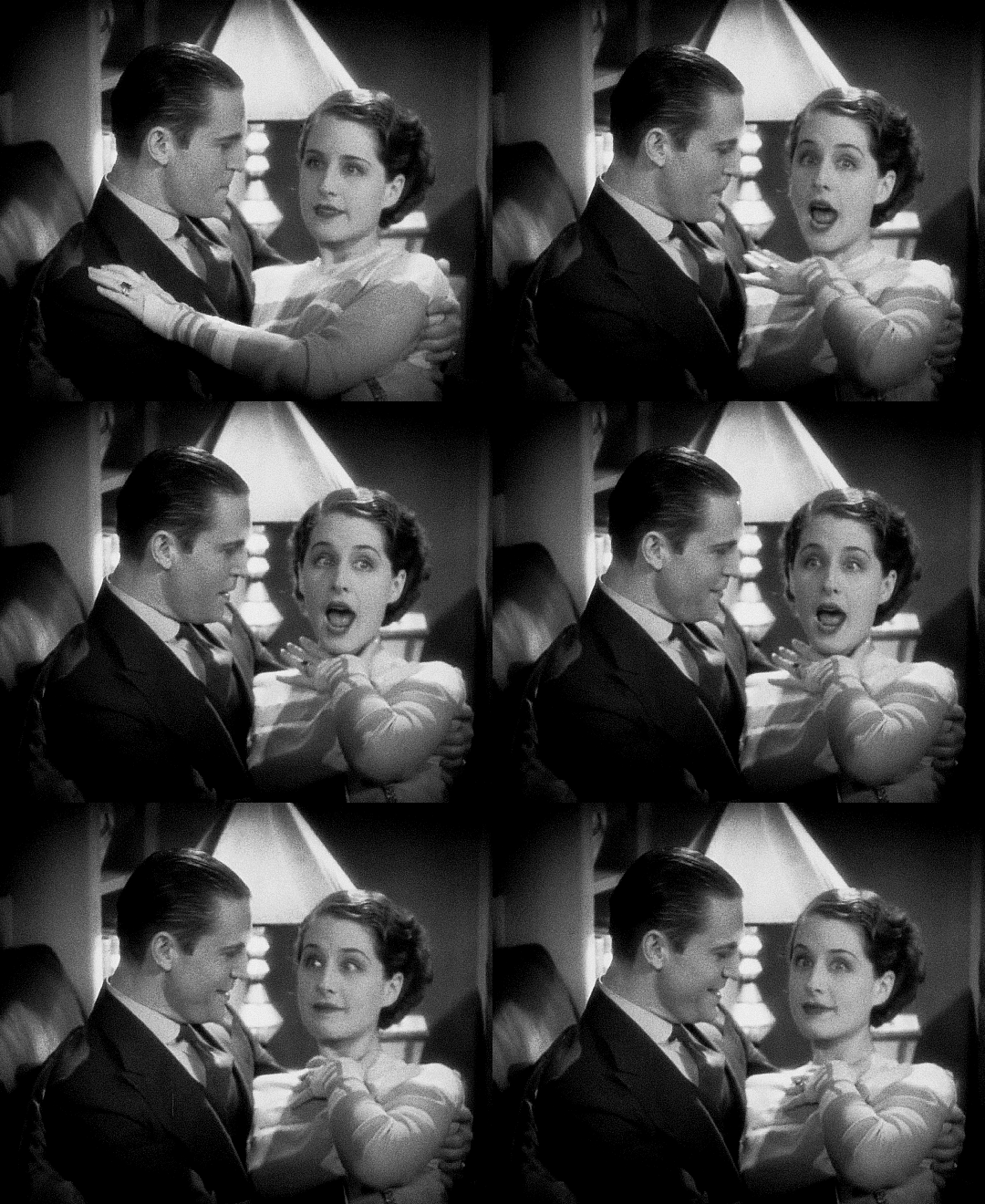
Em suas aventuras, Jerry re-encontra Paul (Conrad Nagel), que era apaixonado por ela quando ela anunciou seu noivado com Ted. Paul ficou tão chateado com a notícia que se embebedou e se envolveu em um acidente de carro que deixou o rosto de Dorothy (Helen Johnson) desfigurado. Paul então se casou com Dorothy movido pela culpa. Quando ele re-encontra Jerry, descobrimos que Paul nunca a esqueceu, e agora vê a oportunidade de deixar Dorothy e se casar com Jerry.


In her adventures, Jerry re-encounters Paul (Conrad Nagel), who was in love with her when she announced her engagement to Ted. Paul got so upset with the news that he got drunk and got involved in a car accident that left Dorothy (Helen Johnson) with a disfigured face. Paul then married Dorothy out of guilt. When he meets Jerry again, we learn that Paul never forgot her, and now sees the opportunity to leave Dorothy and marry Jerry.
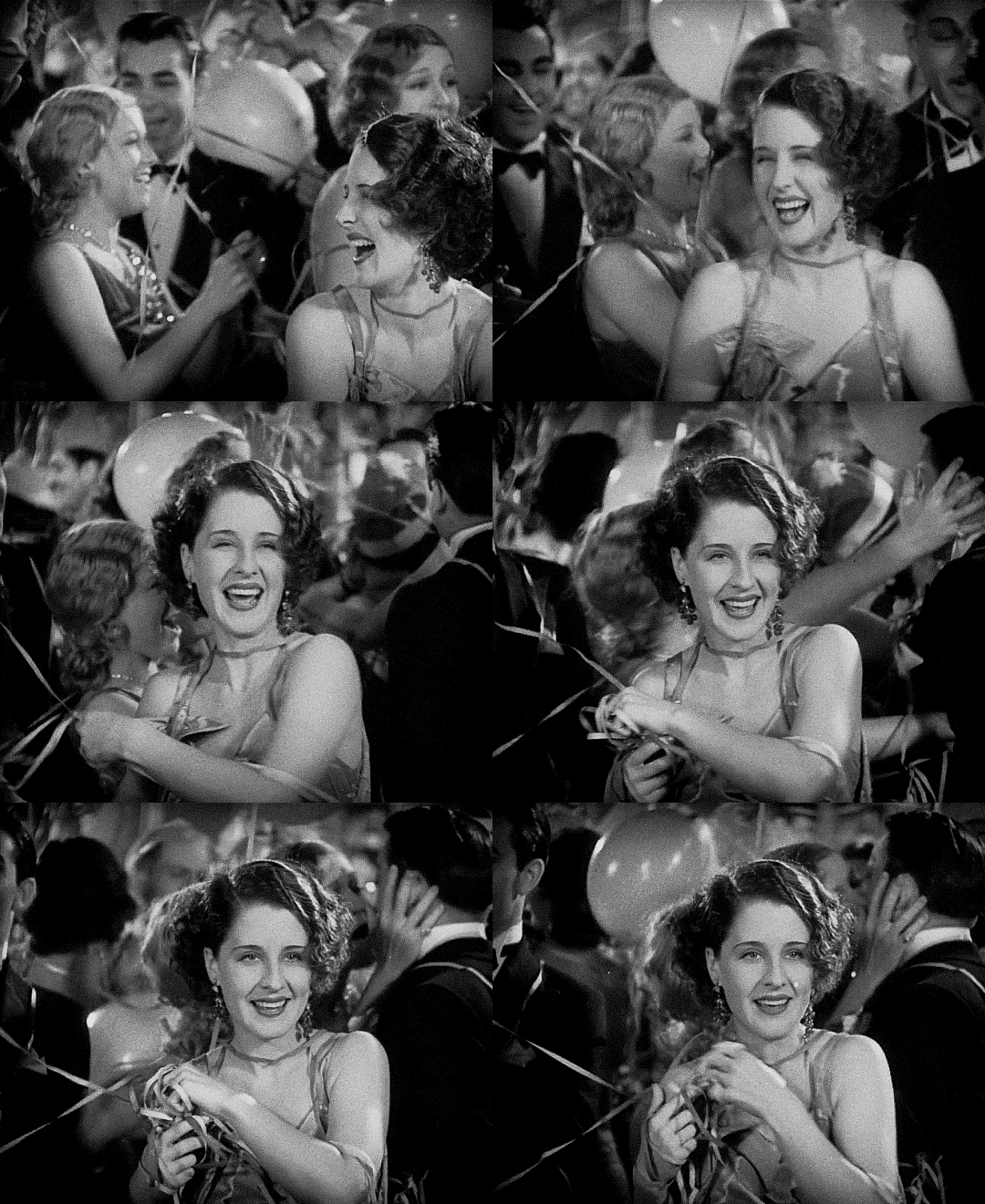
Em certo momento, depois de ser perguntada o que havia de errado com ela, Jerry responde: “Só estou tentando me agarrar à maravilhosa latitude do ponto de vista de um homem”. Ela está claramente falando sobre os dois pesos e duas medidas a partir dos quais homens e mulheres são julgados. Para um homem, um caso extraconjugal “não significa nada”, mas se é a mulher que trai, ela é julgada sem piedade.


At one point, after being asked what was wrong with her, Jerry answers: “I’m just trying to hang onto the marvelous latitude of the man’s point of view”. She is clearly talking about the double standard from which men and women are judged. For a man, an affair “doesn’t mean a thing”, but if it’s the woman who is cheating, she is judged without mercy.
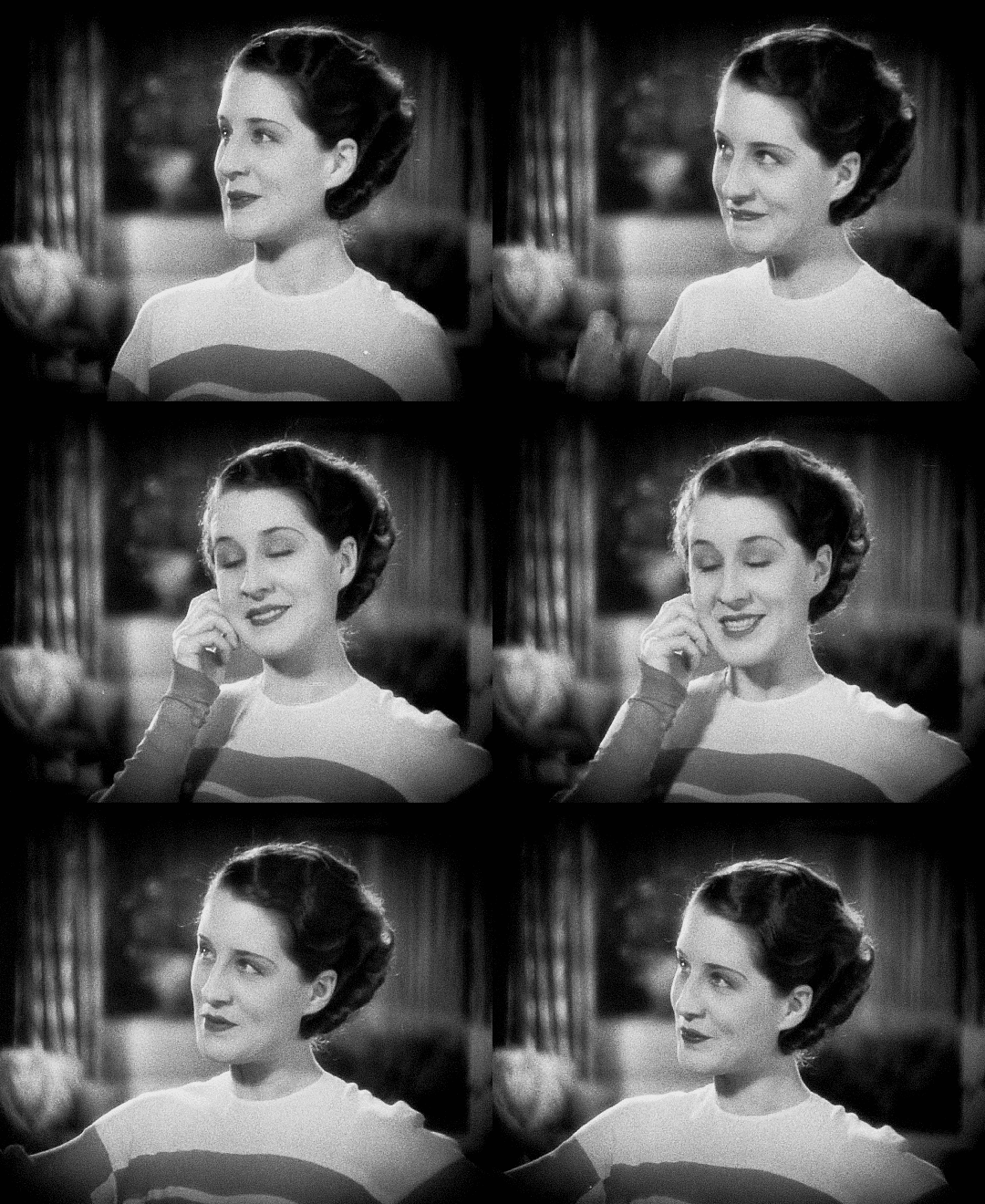
Jerry não é uma mulher à frente do seu tempo, mas é certamente uma mulher do seu tempo: taxas de divórcio estavam aumentando no final dos anos 1920 e começo dos anos 1930. Menos de 15 anos depois de as sufragistas conseguirem o direito ao voto, mais e mais mulheres estavam vivendo vidas mais livres e se livrando de casamentos nos quais não eram felizes. A taxa de divórcios cairia durante a Grande Depressão – como é comum em tempos de dificuldades – e aumentariam novamente no final da década. Em 1937, um marco legal: o chamado Matrimonial Causes Act permitiu que mulheres pedissem divórcios nos mesmos termos que os homens, embora mantendo a necessidade de demonstrar que um dos três aconteceu: adultério, crueldade ou abandono.


Jerry isn’t a woman ahead of her time, but she’s certainly a woman of her time: divorce rates were on the rise in the late 1920s and early 1930s. Less than 15 years after the suffragettes got their right to vote, more and more women were leading freer lives and getting out of marriages in which they were unhappy. The divorce rate would go down during the Great Depression – as it is common for times of hardship – and go up again by the end of the decade. In 1937, a legal mark: the Matrimonial Causes Act allowed women to petition for divorce on the same terms of men, although keeping the requirement to demonstrate that one of the three happened: adultery, cruelty or desertion.

O divórcio estava dominando tanto as conversas que serviu de mote para outras obras de arte. Um deles foi a peça-que-virou-filme “Vítimas do Divórcio” (1932), hoje mais lembrado por ser a estreia de Katharine Hepburn nas telas. Nele, um homem chamado Hilary (John Barrymore) volta para casa depois de passar 15 anos num hospício e descobre que sua esposa Meg (Billie Burke) pediu o divórcio e está prestes a se casar novamente. Em alguns momentos mais emocionante que “A Divorciada”, este filme poderia ter ditado os termos para normalizar o divórcio no cinema se o Código Hays não tivesse atrapalhado.


Divorce was so much dominating the talks that it inspired more works of art. One of them was the play-turned-into-film “A Bill of Divorcement” (1932), today best remembered for being Katharine Hepburn’s screen debut. In it, a man named Hilary (John Barrymore) comes home after spending 15 years in an asylum and finds out that his wife Meg (Billie Burke) has divorced him and it about to remarry. In some moments more engaging than “The Divorcee”, this film could have set the tone to normalize divorce on screen if there hadn’t been the Hays Code.

“A Divorciada” foi baseado no romance best-seller “Ex-Wife”, de Ursula Parrott, que vendeu os direitos de adaptação para a MGM pela incrível quantia de 20 mil dólares. A própria Ursula era divorciada quando o livro foi publicado, anonimamente, em 1929, e ainda iria casar de novo e se separar outras três vezes. Hoje basicamente esquecida, Ursula Parrott estava sempre nas manchetes das colunas de fofocas e seus livros e contos foram lidos por milhões.


“The Divorcee” was based on the best-seller “Ex-Wife”, by Ursula Parrott, who sold the movie rights to MGM for the amazing sum of $20,000. Ursula herself was a divorcee when the book was published, anonymously, in 1929, and would go on to remarry and divorce three more times. Now basically forgotten, Ursula Parrott was always on the headlines of gossip columns and her novels and short stories was read by millions.

Ursula Parrott

Norma Shearer ganhou o Oscar de Melhor Atriz em 1931 por sua performance em “A Divorciada” – uma performance que não foi particularmente desafiadora, tirando um ousado monólogo. A primeira escolhida para o papel fora Joan Crawford, que para sempre rivalizou Shearer por causa da perda do papel.


Norma Shearer won the Best Actress Oscar in 1931 for her performance in “The Divorcee” – a performance that wasn’t particularly challenging, except for a racy monologue. The first choice to play the role had been Joan Crawford, who became forever bitter with Shearer for having gotten the part instead.
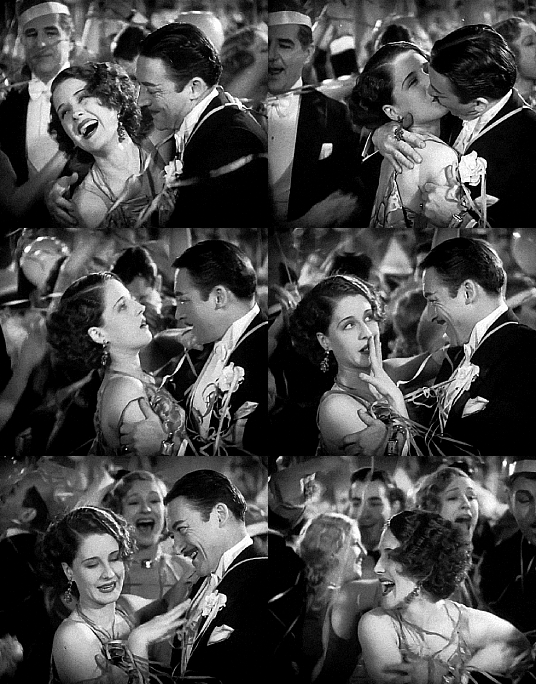
“A Divorciada” é puro ouro pré-Código Hays. Vindo de um livro escandaloso, não é um filme tão escandaloso assim, mas ainda assim um filme que não teria sido feito a partir de 1934. Mais do que isso, ele traz uma protagonista feminina livre, que pode servir de exemplo de ousadia para a heroína da época.


“The Divorcee” is pure pre-Code gold. Coming from a scandalous book, it’s not such a scandalous film, but still a film that wouldn’t have been made from 1934 onwards. More than that, it brings a free female lead, one that can serve as an example of boldness for the pre-Code heroine.


This is my contribution to the Blogathon and the Beast, hosted by the Classic Movie Blog Association.

Friday, May 18, 2018

The Hollywood Revue of 1929

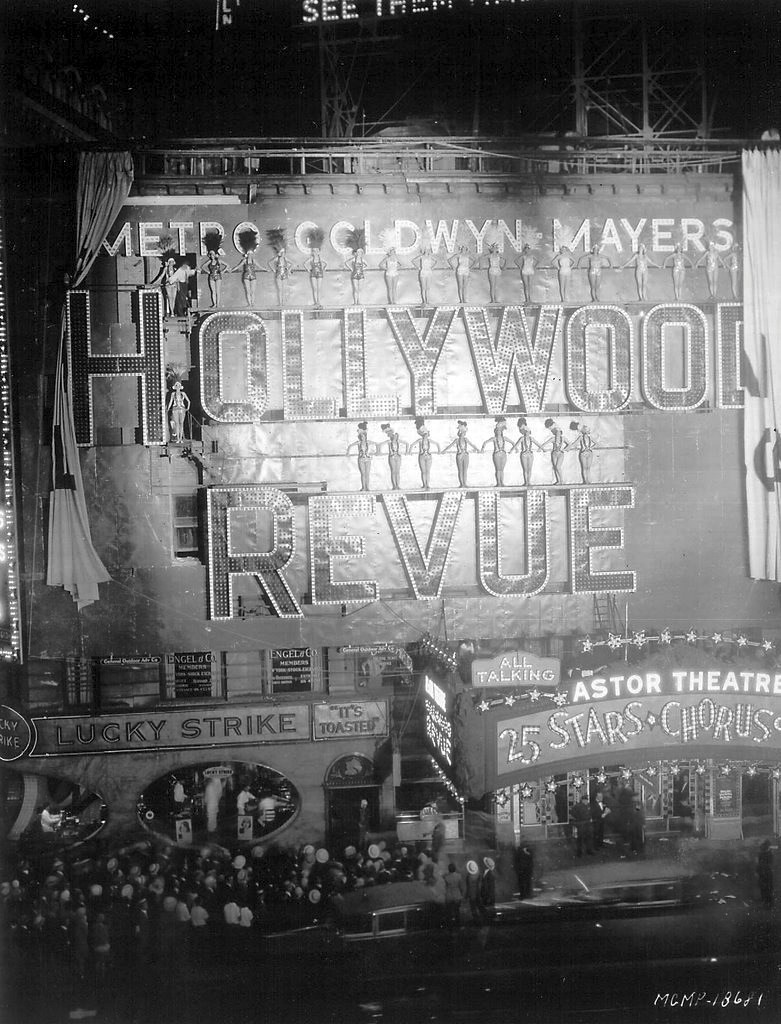
O que era moda em 1929? E o que era novidade? Para responder a ambas as perguntas, você apenas tem de assistir a “Hollywood Revue”, de 1929, que foi de fato o primeiro grande musical da MGM. O filme traz todas as grandes estrelas que tinham contrato com o estúdio – exceto Greta Garbo, Ramon Novarro e Lon Chaney, que prezavam muito pela privacidade – e ele apresenta sequências em two-strip Technicolor, efeitos especiais de encolhimento e muita música e dança.

What was in vogue in 1929? And what was brand new? To answer both these questions, you just have to watch “The Hollywood Revue of 1929”, truly MGM’s first ever extravaganza. The film brings all the big stars under contract with the studio – except Greta Garbo, Ramon Novarro and Lon Chaney, who were very worried with privacy – and it also presents sequences in two-strip Technicolor, downsizing special effects and a lot of singing and dancing.
“Hollywood Revue” é vaudeville filmado para a tela do cinema – e completo com um pequeno intervalo entre os atos. E deveria ser assim mesmo: os shows do chamado “teatro de revista” não tinham uma história única, mas sim apresentavam diversas atrações. Em um palco gigantesco e impressionante, os mestres de cerimônia Conrad Nagel e Jack Benny – representando, respectivamente, o mundo do cinema e o mundo do teatro – apresentam vários números, alguns cheios de piadas, mas a maioria musical. É como se a MGM quisesse dizer: “nossas maiores estrelas conseguem cantar, dançar e falar!”

“The Hollywood Revue of 1929” is vaudeville on the screen – complete with intermission. And of course it is this way: a “revue” is a theatrical show without a plot, presenting several attractions. In a huge, impressive stage, masters of ceremonies Conrad Nagel and Jack Benny – representing, respectively, the movie world and the theater world – present several numbers, some of them full of jokes, but the majority is all about music. It's like MGM wanted to say: “our greatest stars CAN SING, CAN DANCE AND CAN TALK!”
Joan Crawford
Não podemos negar que o tempo não foi bom com o filme, e muitas das piadas hoje não têm graça. Entretanto, Marie Dressler, Polly Moran e Bessie Love formam um trio divertido, e o Gordo e o Magro estão engraçados como sempre ao interpretarem dois mágicos atrapalhados – sendo que o Magro não fala uma palavra! Quem também não fala nada é Buster Keaton, que substitui Carla Laemmle – que usava um provocante biquíni de duas peças – como a filha dançarina de Poseidon, deus dos mares.

We can't deny that time hasn't been kind to the film, and many of the jokes fall flat nowadays. However, Marie Dressler, Polly Moran and Bessie Love make a funny trio, and Laurel and Hardy are they usual selves as two clumsy magicians – even though Laurel doesn't say a word! Another one who doesn't say a word is Buster Keaton, who replaces Carla Laemmle – who was in a risky two-piece swimsuit – as the dancing daughter of Poseidon, the god of the sea.
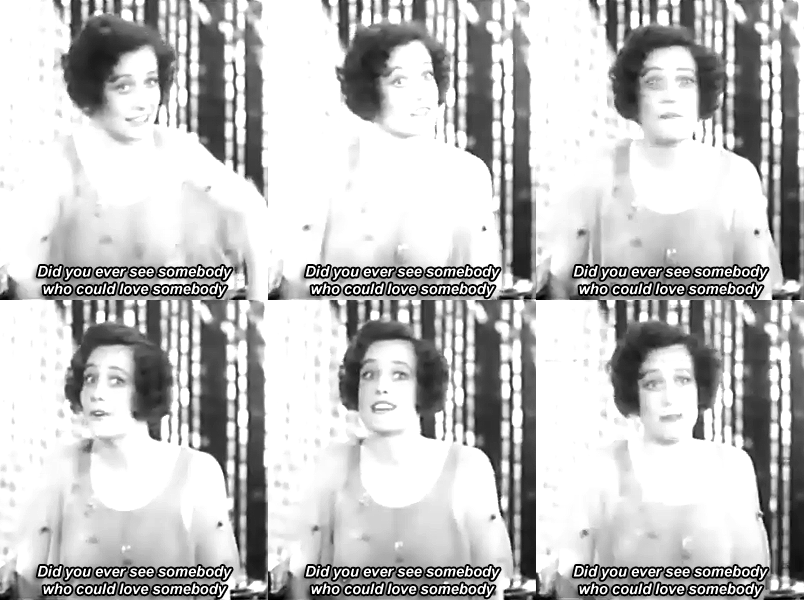
Joan Crawford é fofa cantando e dançando “Gotta Feeling for You”. Joan é melhor dançarina que cantora, e é óbvio que ela não canta e dança ao mesmo tempo, porque, mesmo havendo a música, seus lábios não se mexem. Não há nada de extraordinário no número de Joan, mas quando as dezenas de dançarinos se juntam no palco, tudo fica melhor: o trabalho de coreografia com o grupo é maravilhoso, e os dançarinos comumente chamam mais atenção que as músicas e os cantores.

Joan Crawford is cute singing and dancing “Gotta Feeling for You”. Joan is a better dancer than singer, and it’s obvious that she is not singing and dancing at the same time, because her mouth does not move, even though the song goes on. There is nothing extraordinary in Joan's number, but when the dozens of dancers join any number, things get much better: the chorus is very well-coordinated and choreographed, and they often distract us from the music and the singers.
Mas o que é aquilo no número “Lon Chaney is Gonna Get You If You Don’t Watch Out?” E uma coreografia ao estilo de Busby Berkeley! Este é um momento interessante, provavelmente influenciado pela Broadway, que é onde Berkeley trabalhava na época. É também uma coincidência curiosa, considerando que Busby Berkeley trabalhou na MGM na década de 1940.

But what is that in the number “Lon Chaney is Gonna Get You If You Don’t Watch Out”? It is a Busby Berkeley-style choreography! It's an interesting bit, much probably coming from Broadway, where Berkeley worked at the time, and a curious coincidence, considering that Berkeley worked at MGM in the 1940s.
Regular Broadway
Berkeley Broadway
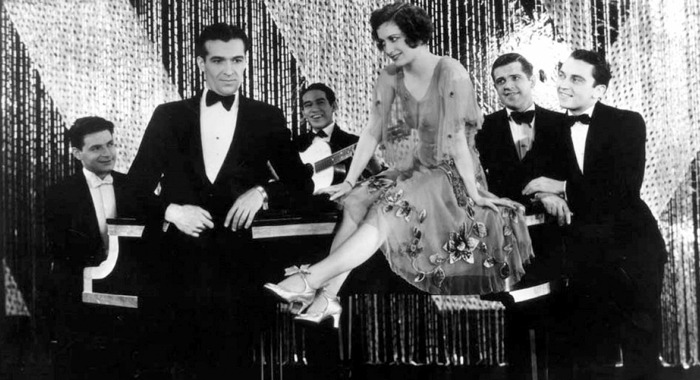
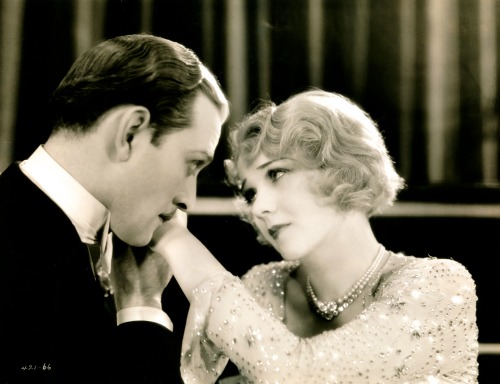
O popular cantor de vaudeville Charles King diz ao galã de cinema Conrad Nagel que “hoje, você precisa fazer amor com palavras e música”. Charles menciona uma música que ele interpretara em “Melodia da Broadway” (1929) chamada “You Were Meant For Me”. Para a surpresa de todos, e em especial de Charles, Nagel senta em um piano e interpreta lindamente a música para Anita Page. Mas era tudo um truque, nunca revelado durante o filme: na verdade, era o próprio Charles King que dublou Conrad Nagel na cena! Com ou sem dublagem, Nagel sobreviveu à chegada do cinema falado e teve uma longa carreira como coadjuvante no cinema e na televisão até 1967.

Popular vaudeville singer Charles King says movie star Conrad Nagel that “today, you've got to make love with words and music”. Charles mentions a song he interpreted in “Broadway Melody” (1929) called “You Were Meant For Me”. For everybody’s surprise, and especially Charles’, Nagel sits in a piano and sings the song beautifully to Anita Page. But it all was a trick, not revealed in the movie: actually, it was King himself who dubbed Conrad Nagel’s singing voice! With or without dubbing, Nagel survived the talkie revolution, and had a long career as a supporting player on film and TV until 1967.
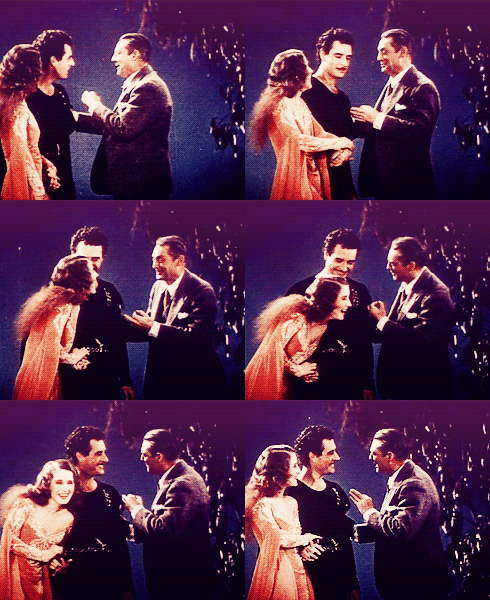
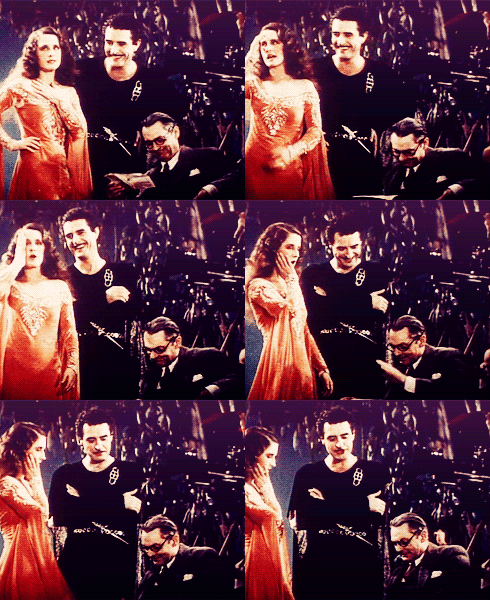
E se falamos sobre a transição do cinema mudo para o falado, precisamos mencionar a surpreendente e inteligente sequência de Romeu e Julieta. Filmada em two-strip Technicolor, suas estrelas são John Gilbert e Norma Shearer. A voz de Gilbert é boa, e esta pequena sequência já é suficiente para nos mostrar que a história sobre “a voz de taquara rachada” que é usada para justificar o fracasso de Gilbert no cinema falado é uma falácia. A sequência, já interessante, se torna ainda mais legal quando o diretor da cena, interpretado por Lionel Barrymore, diz aos atores para modernizar as falas, e eles refazem a cena da sacada de Romeu e Julieta usando gírias dos anos 1920.

If we're talking about the silent-to-talkie transition, we must mention the impressive and clever Romeo and Juliet sequence. Shot in two-strip Technicolor, it stars John Gilbert and Norma Shearer. Gilbert's voice is fine, and this simple sequence is enough to show us that the “funny voice story” that is used to justify his short career in talkies is a myth. The already cool sequence becomes even nicer when the scene's director, played by Lionel Barrymore, tells them to modernize the dialogue, and they redo the balcony scene in Romeo and Juliet with 1920's slang.
A MGM foi o primeiro estúdio a apresentar uma revista como esta, cheia de estrelas, e a fórmula foi rapidamente copiada por outros estúdios. A Warner Brothers foi o estúdio seguinte, fazendo “A Parada das Maravilhas / The Show of Shows”, filmado quase totalmente em two-strip Technicolor. Depois veio a Fox, com “Dias Felizes”, e então a Paramount com “Paramount em Grande Gala / Paramount on Parade” (1930). A Fox também fez as revistas menores “Fox Movietone Follies” em 1929 (antes da MGM, este filme foi perdido) e em 1930 (o filme sobrevive).

MGM was the first studio to present an all-star revue, and the formula was quickly copied by other studios. Warner Brothers followed with “Show of Shows”, almost fully shot in two-strip Technicolor. The next studio to make a revue was Fox, with “Happy Days”, followed by Paramount with “Paramount on Parade”, from 1930. Fox did also the smaller revues “Fox Movietone Follies” in 1929 (before “Hollywood Revue of 1919”, this film is now lost) and 1930 (still extant).
Se você não gosta de musicais, não chegue perto de “Hollywood Revue”. Quer dizer, se você não suporta um musical com uma história, você é capaz de se imaginar vendo um musical SEM uma história? Caso contrário, se você ama musicais, história do cinema ou se você é um historiador amador e curioso, “The Hollywood Revue of 1929” é um documento interessante – na falta de termos melhores. Afinal, se não é por causa das coisas estranhas que você encontra no processo, por que você estuda história?

If you don’t like musicals, don’t go near “The Hollywood Revue of 1929”. I mean, if you can’t stand a musical with a plot, can you imagine yourself sitting through a musical WITHOUT a plot? On the contrary, if you love musicals, film history or if you are a curious history buff, “The Hollywood Revue of 1929” is an interesting document – for lack of better terms. Because, if not for the weird things you find along the way, why do you study history?

This is my contribution to The MGM Musical Magic Blogathon, hosted by Annette at Hometowns to Hollywood.
Related Posts Plugin for WordPress, Blogger...