} Crítica Retrô: código Hays

Tradutor / Translator / Traductor / Übersetzer / Traduttore / Traducteur / 翻訳者 / переводчик

Showing posts with label código Hays. Show all posts

Wednesday, November 8, 2023

A Divorciada (1930) / The Divorcee (1930)


As heroínas dos filmes feitos antes do Código Hays eram quase sempre personagens femininas admiráveis. Navegando em um mundo masculino e tendo como principal arma seu corpo, elas eram sensuais, ousadas e provocantes. E estes três adjetivos são perfeitos para descrever a protagonista de “A Divorciada”, de 1930.


The heroines of pre-Code films were almost always remarkable female characters. Navigating a man’s world having as their main weapon their body, they were sensual, bold and provocative. And these three adjectives are perfect to describe the lead in 1930’s “The Divorcee”.

Jerry (Norma Shearer) é cobiçada por muitos homens, mas o primeiro a pedi-la em casamento é Ted (Chester Morris). Ela aceita o pedido e eles se casam. Três anos após o casamento, eles parecem viver em perfeita harmonia... até que Janice (Mary Doran), uma velha conhecida de Ted, chega à festa de bodas do casal.


Jerry (Norma Shearer) is wanted by many men but the first to propose is Ted (Chester Morris). She accepts the proposal and they get married. Three years after the wedding, they seem to be perfectly happy… until Janice (Mary Doran), an old acquaintance of Ted’s, arrives at the party being thrown for their anniversary.

Quando ela descobre sobre Ted e Janice, Jerry encontra consolo nos braços do melhor amigo de Ted, Don (Robert Montgomery), que gosta dela mais do que como amiga. Ela então pede o divórcio de Ted, experimentando uma liberdade inédita como a nova ex-esposa.


When she learns about Ted and Janice, Jerry finds consolation with Ted’s best friend Don (Robert Montgomery), who likes her more than as a friend. She then proceeds with the divorce from Ted, experiencing unmatched freedom as the new ex-wife.
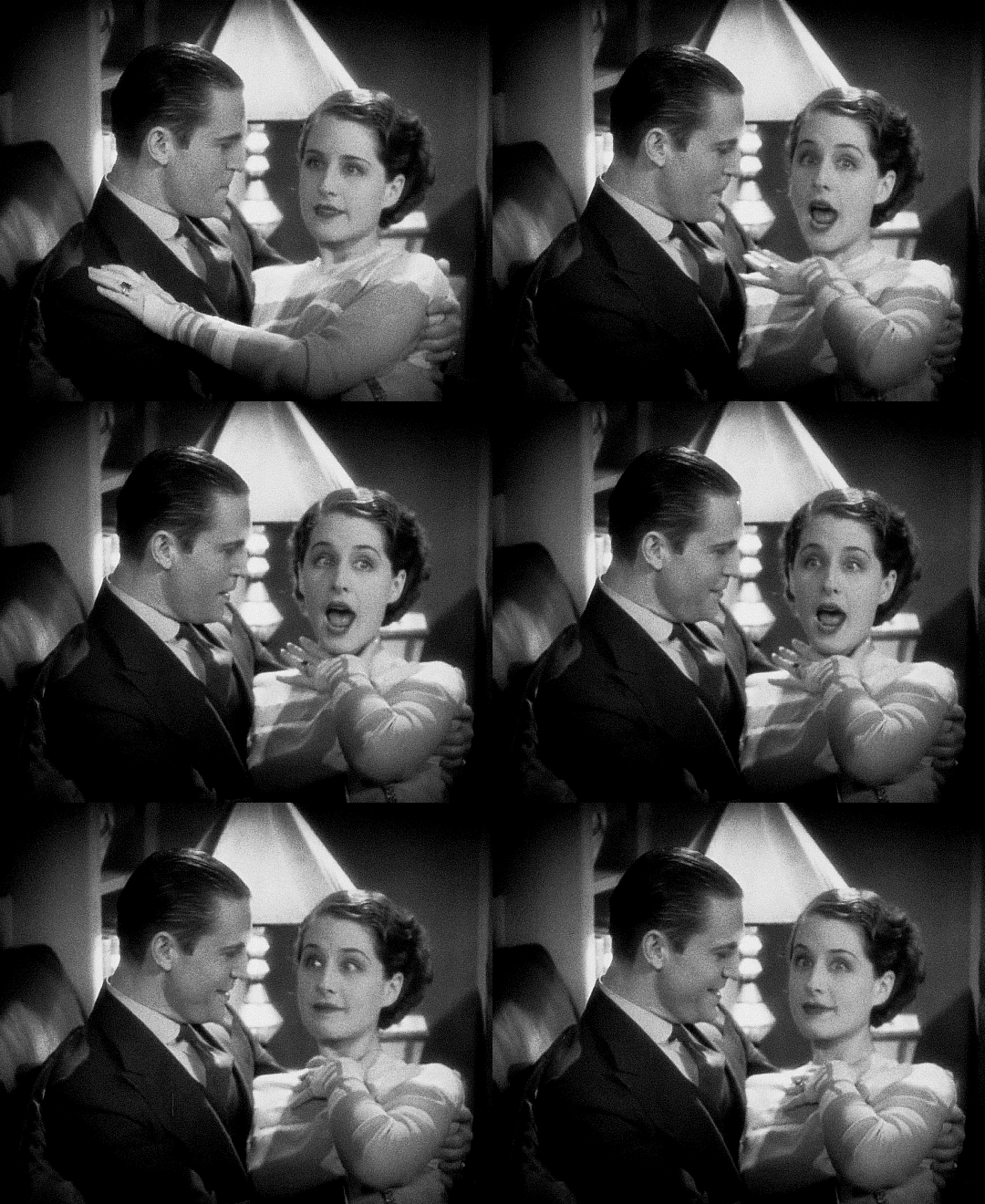
Em suas aventuras, Jerry re-encontra Paul (Conrad Nagel), que era apaixonado por ela quando ela anunciou seu noivado com Ted. Paul ficou tão chateado com a notícia que se embebedou e se envolveu em um acidente de carro que deixou o rosto de Dorothy (Helen Johnson) desfigurado. Paul então se casou com Dorothy movido pela culpa. Quando ele re-encontra Jerry, descobrimos que Paul nunca a esqueceu, e agora vê a oportunidade de deixar Dorothy e se casar com Jerry.


In her adventures, Jerry re-encounters Paul (Conrad Nagel), who was in love with her when she announced her engagement to Ted. Paul got so upset with the news that he got drunk and got involved in a car accident that left Dorothy (Helen Johnson) with a disfigured face. Paul then married Dorothy out of guilt. When he meets Jerry again, we learn that Paul never forgot her, and now sees the opportunity to leave Dorothy and marry Jerry.
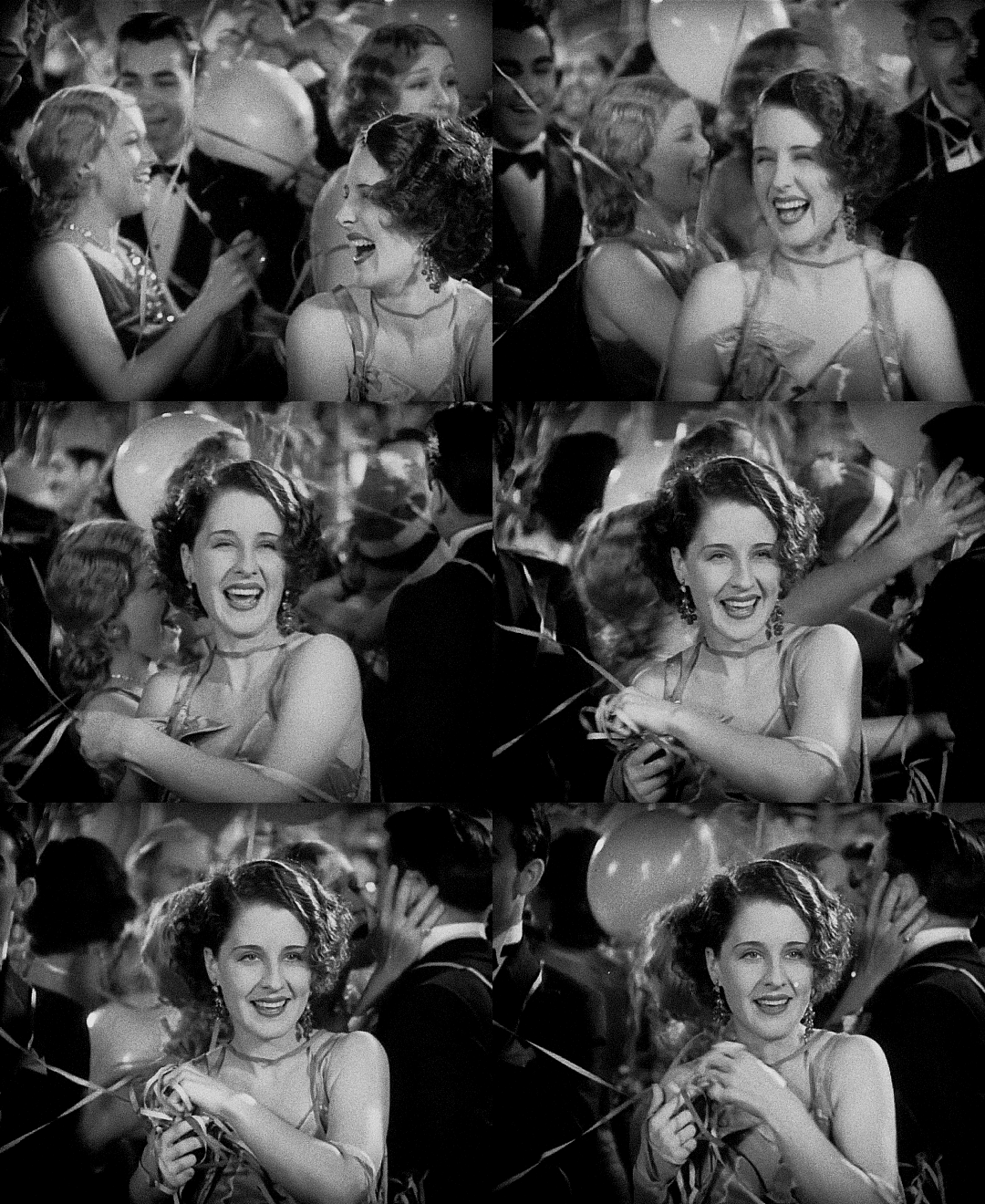
Em certo momento, depois de ser perguntada o que havia de errado com ela, Jerry responde: “Só estou tentando me agarrar à maravilhosa latitude do ponto de vista de um homem”. Ela está claramente falando sobre os dois pesos e duas medidas a partir dos quais homens e mulheres são julgados. Para um homem, um caso extraconjugal “não significa nada”, mas se é a mulher que trai, ela é julgada sem piedade.


At one point, after being asked what was wrong with her, Jerry answers: “I’m just trying to hang onto the marvelous latitude of the man’s point of view”. She is clearly talking about the double standard from which men and women are judged. For a man, an affair “doesn’t mean a thing”, but if it’s the woman who is cheating, she is judged without mercy.
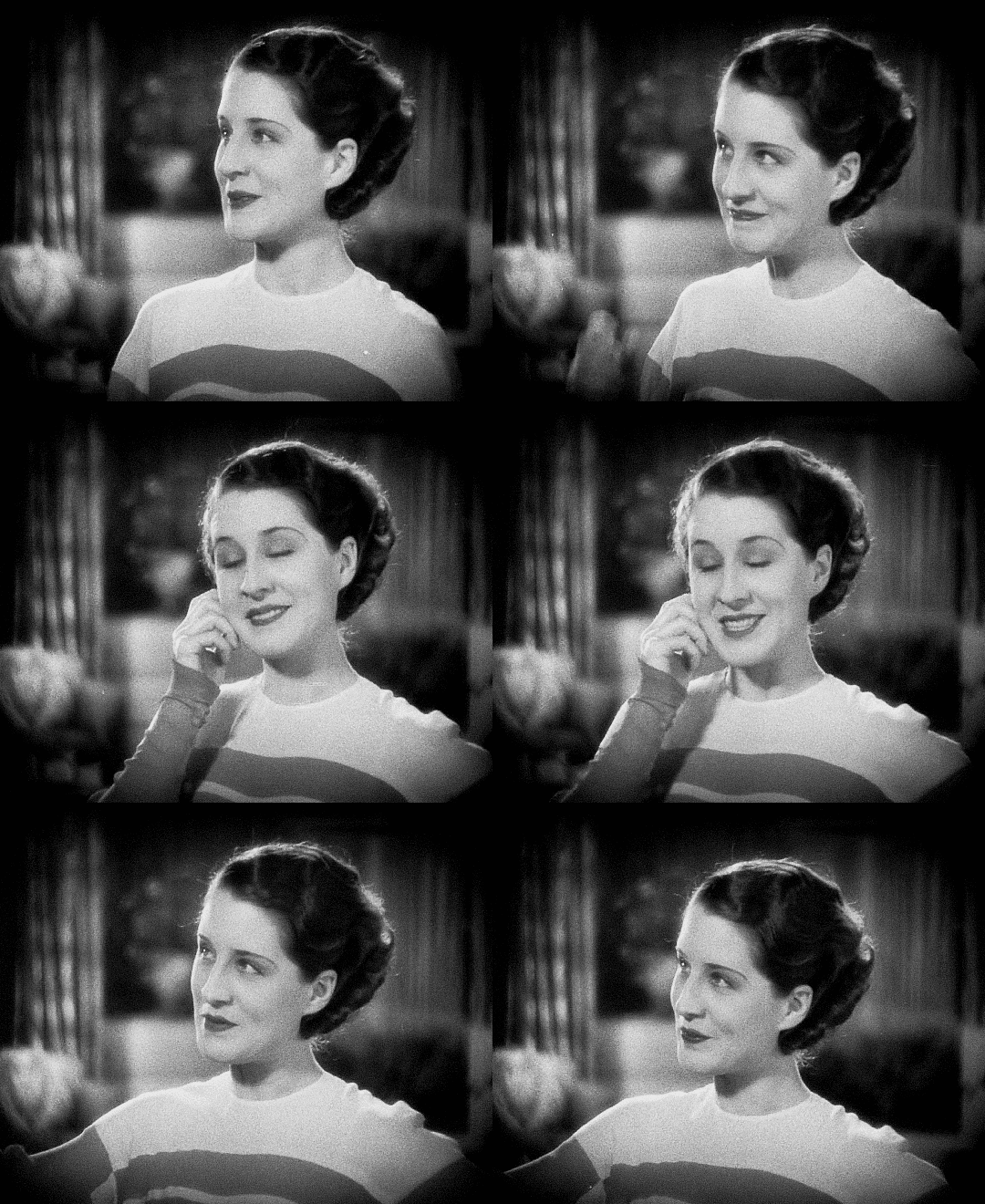
Jerry não é uma mulher à frente do seu tempo, mas é certamente uma mulher do seu tempo: taxas de divórcio estavam aumentando no final dos anos 1920 e começo dos anos 1930. Menos de 15 anos depois de as sufragistas conseguirem o direito ao voto, mais e mais mulheres estavam vivendo vidas mais livres e se livrando de casamentos nos quais não eram felizes. A taxa de divórcios cairia durante a Grande Depressão – como é comum em tempos de dificuldades – e aumentariam novamente no final da década. Em 1937, um marco legal: o chamado Matrimonial Causes Act permitiu que mulheres pedissem divórcios nos mesmos termos que os homens, embora mantendo a necessidade de demonstrar que um dos três aconteceu: adultério, crueldade ou abandono.


Jerry isn’t a woman ahead of her time, but she’s certainly a woman of her time: divorce rates were on the rise in the late 1920s and early 1930s. Less than 15 years after the suffragettes got their right to vote, more and more women were leading freer lives and getting out of marriages in which they were unhappy. The divorce rate would go down during the Great Depression – as it is common for times of hardship – and go up again by the end of the decade. In 1937, a legal mark: the Matrimonial Causes Act allowed women to petition for divorce on the same terms of men, although keeping the requirement to demonstrate that one of the three happened: adultery, cruelty or desertion.

O divórcio estava dominando tanto as conversas que serviu de mote para outras obras de arte. Um deles foi a peça-que-virou-filme “Vítimas do Divórcio” (1932), hoje mais lembrado por ser a estreia de Katharine Hepburn nas telas. Nele, um homem chamado Hilary (John Barrymore) volta para casa depois de passar 15 anos num hospício e descobre que sua esposa Meg (Billie Burke) pediu o divórcio e está prestes a se casar novamente. Em alguns momentos mais emocionante que “A Divorciada”, este filme poderia ter ditado os termos para normalizar o divórcio no cinema se o Código Hays não tivesse atrapalhado.


Divorce was so much dominating the talks that it inspired more works of art. One of them was the play-turned-into-film “A Bill of Divorcement” (1932), today best remembered for being Katharine Hepburn’s screen debut. In it, a man named Hilary (John Barrymore) comes home after spending 15 years in an asylum and finds out that his wife Meg (Billie Burke) has divorced him and it about to remarry. In some moments more engaging than “The Divorcee”, this film could have set the tone to normalize divorce on screen if there hadn’t been the Hays Code.

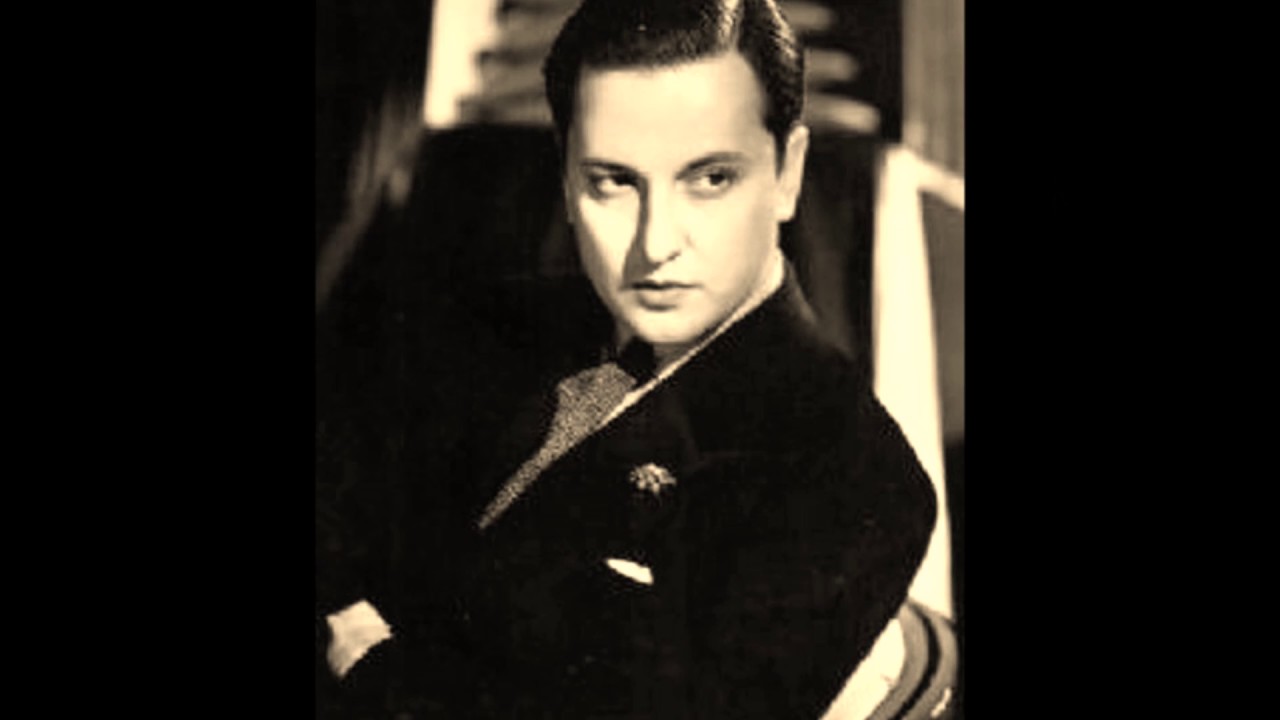
“A Divorciada” foi baseado no romance best-seller “Ex-Wife”, de Ursula Parrott, que vendeu os direitos de adaptação para a MGM pela incrível quantia de 20 mil dólares. A própria Ursula era divorciada quando o livro foi publicado, anonimamente, em 1929, e ainda iria casar de novo e se separar outras três vezes. Hoje basicamente esquecida, Ursula Parrott estava sempre nas manchetes das colunas de fofocas e seus livros e contos foram lidos por milhões.


“The Divorcee” was based on the best-seller “Ex-Wife”, by Ursula Parrott, who sold the movie rights to MGM for the amazing sum of $20,000. Ursula herself was a divorcee when the book was published, anonymously, in 1929, and would go on to remarry and divorce three more times. Now basically forgotten, Ursula Parrott was always on the headlines of gossip columns and her novels and short stories was read by millions.

Ursula Parrott

Norma Shearer ganhou o Oscar de Melhor Atriz em 1931 por sua performance em “A Divorciada” – uma performance que não foi particularmente desafiadora, tirando um ousado monólogo. A primeira escolhida para o papel fora Joan Crawford, que para sempre rivalizou Shearer por causa da perda do papel.


Norma Shearer won the Best Actress Oscar in 1931 for her performance in “The Divorcee” – a performance that wasn’t particularly challenging, except for a racy monologue. The first choice to play the role had been Joan Crawford, who became forever bitter with Shearer for having gotten the part instead.
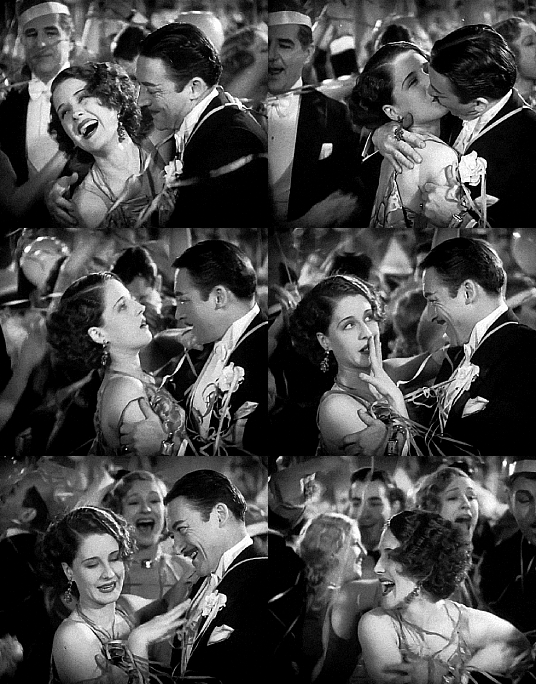
“A Divorciada” é puro ouro pré-Código Hays. Vindo de um livro escandaloso, não é um filme tão escandaloso assim, mas ainda assim um filme que não teria sido feito a partir de 1934. Mais do que isso, ele traz uma protagonista feminina livre, que pode servir de exemplo de ousadia para a heroína da época.


“The Divorcee” is pure pre-Code gold. Coming from a scandalous book, it’s not such a scandalous film, but still a film that wouldn’t have been made from 1934 onwards. More than that, it brings a free female lead, one that can serve as an example of boldness for the pre-Code heroine.


This is my contribution to the Blogathon and the Beast, hosted by the Classic Movie Blog Association.

Monday, December 30, 2019

Kitty Foyle (1940)


O que te faz querer ver um filme? É o elenco, o diretor ou a sinopse? Você tem uma lista de filmes para assistir? Você se planeja com antecedência ou assiste a qualquer coisa que encontrar na TV ou no streaming? Você se importa com os prêmios que um filme ganhou ou isso é irrelevante? Estou perguntando porque há muitos, muitos filmes para ver, e algum critério deve ser aplicado para que possamos escolher quais filmes ver e quais deixar passar. “Kitty Foyle”, de 1940, por exemplo, parecia digno de ser visto por ter trazido a única indicação ao Oscar de Ginger Rogers... e ela ganhou o Oscar! E, de fato, “Kitty Foyle” me fez refletir bastante.

What makes you want to watch a movie? Is it the cast, the director or the synopsis? Do you have a watch list? Do you plan ahead or do you watch whatever is on TV or streaming? Do you care if a film has won awards or isn’t it relevant for you? I’m asking because there are many, many movies to see, and some criteria must be applied for us to choose which ones to check and which ones to ignore. “Kitty Foyle”, from 1940, for instance, seemed worth checking out because it brings Ginger Roger’s only Oscar nomination… and she won that Oscar! And, indeed, “Kitty Foyle” made me think a lot.


O começo do filme é de doer: em uma breve sequência ambientada no começo do século XX, o filme mostra uma jovem vivendo uma vida perfeita, completa com marido e filhos. A mulher decide “descer de seu pedestal” e perder “privilégios” para conseguir direitos iguais – isto é, poder votar e trabalhar fora de casa. Já dá para perceber que o livro “Kitty Foyle” e o roteiro do filme foram escritos por homens?

The beginning of the film is cringe worthy: in a brief sequence set in the 1900s, the film shows a girl living the perfect life, complete with husband and kids. The woman decided to “climb down her pedestal” and lose her “privileges” in order to achieve equal rights – that is, to be able to vote and join the workforce. Can you see that the novel “Kitty Foyle” was written by a man, and so was the screenplay?


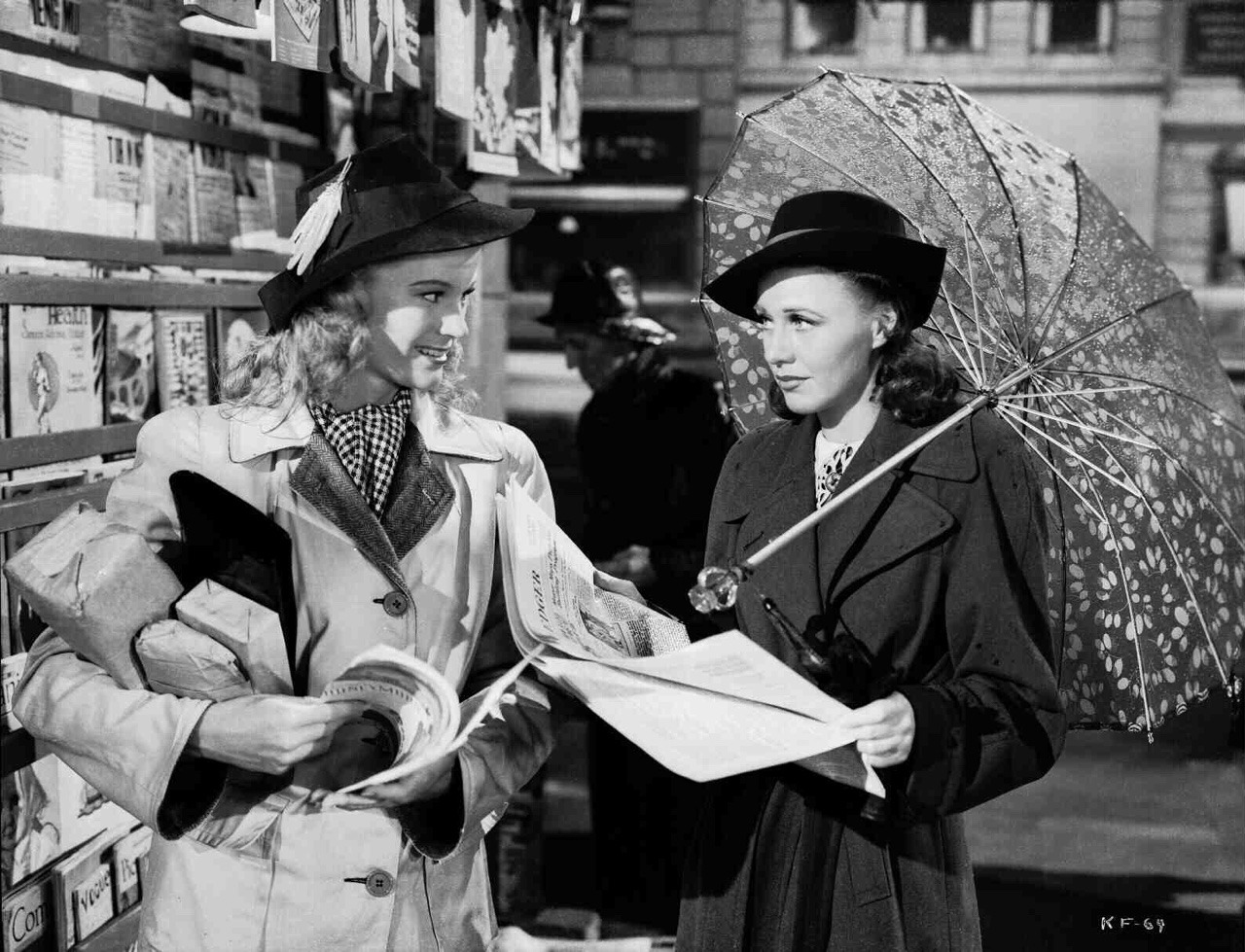
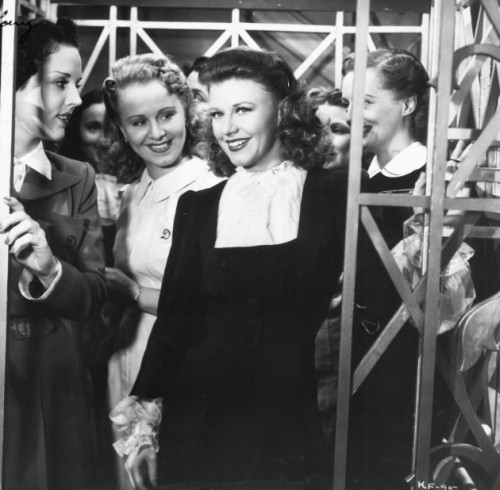
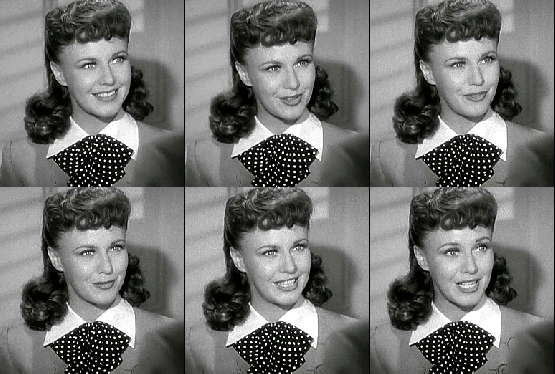
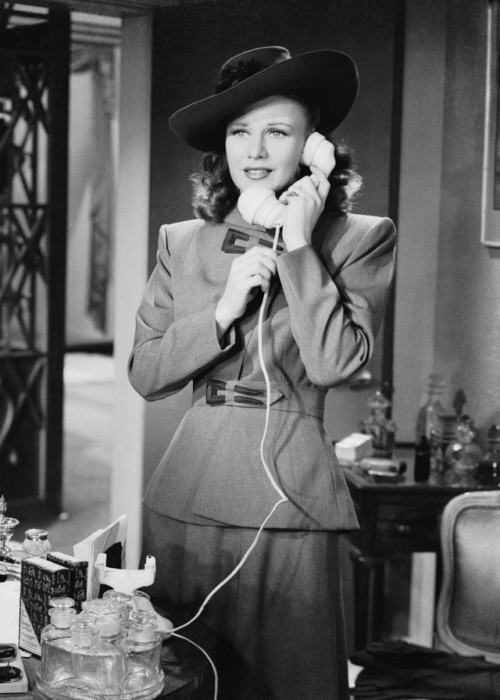
Kitty (uma Ginger Rogers morena) é uma jovem trabalhadora dos anos 40 tendo que escolher entre dois pretendentes. Uma noite, após sair do trabalho, ela acompanha seu namorado médico Mark (James Craig) até a casa de uma paciente. Lá ele ajuda no parto de um bebê e, quando Kitty o ajuda e segura o bebê, ele a pede em casamento. Ela aceita e ainda diz que se sente “tão completa” segurando aquele bebê. Eles planejam se casar naquela mesma noite, mas quando Kitty chega à pensão onde vive, ela encontra seu outro pretendente, Wyn (Dennis Morgan). Só há um problema: Wyn quer ficar com ela, mas se recusa a se divorciar de sua esposa.

Kitty (a brunette Ginger Rogers) is a 1940s “white-collar girl” having to choose between two beaus. One night, after leaving her work, she accompanies her doctor boyfriend Mark (James Craig) to a patient's house. There he helps deliver a baby and, when Kitty helps him and holds the baby, he proposes to her. She says yes, and also says that she feels “so right” holding that baby. They plan to get married that same night, but when Kitty arrives at the boarding house she lives in, she finds her other beau, Wyn (Dennis Morgan). There is only a problem: Wyn wants to be with her, but he won't divorce his wife.


Uma sequência em flashback nos mostra que Kitty havia trabalhado para Wyn como datilógrafa. Em um gesto que deveria ser romântico, mas que se parece mais com assédio no trabalho, ele confessa seu amor por ela. E ela não conhece Mark em circunstâncias mais convenientes: ele a ajuda quando ela acidentalmente dispara o alarme da loja em que havia sido recém-contratada, e ele a chantageia para que ela aceite sair com ele.

A flashback sequence shows us that Kitty had worked for Wyn as a typist. In a move that should be romantic but looks more like workplace harassment, he confesses he loves her. And she doesn't meet Mark in more convenient circumstances either: he helps her when she accidentally sounds the alarm from the store she has just started working in and he humorously blackmails her to go on a date with him.


Há momentos mais progressistas no filme. Em um deles, Kitty enfrenta a família rica de Wyn, quando descobre que ele só poderia usar o dinheiro de sua herança se ele e ela vivessem na casa da família. Quando ela protesta por “gente morta poder ditar como Wyn vive sua vida”, nós quase nos esquecemos do discurso datado do começo.

There are more progressive moments in the film. In one of them, Kitty faces Wyn's rich family, when learning that he would only use his inheritance money if he and she lived in the family property. As she protests about how “dead people can say how Wyn must live his life”, we almost forget about the dated speech from the beginning.


O filme também lida com gravidez fora do casamento, mas encontra uma maneira muito convencional de rapidamente se livrar do assunto. Curiosamente, o livro era muito mais controverso – ele era vendido como “a novela mais ousada sobre uma mulher a ser escrita por um homem” – mas quase todos os temas controversos foram excluídos do roteiro por causa do Código Hays. Mais uma vez, o Código arruinou um filme – afinal, não podemos nos esquecer de que, na época, até a palavra “grávida” era proibida no cinema.

The film also deals with pregnancy out of wedlock, but it finds a very conventional way to quickly erase the subject. Interestingly, the novel was much more controversial – it was marketed as “the most daring novel ever written by a man about a woman” – but nearly all controversial themes had to be excluded from the screenplay due to the Hays Code. Once again, the Code has ruined a movie – after all, let’s not forget that back in the day even the word “pregnant” was forbidden in a film.


O título completo do filme é: “Kitty Foyle – A história natural de uma mulher”.  Isto é revelador, como se contentar-se com menos, com o mais conveniente, fosse o destino de todas as mulheres. Eu costumo dizer que se a poligamia fosse normalizada, 90% de todas as tramas de filmes perderiam o sentido. Isso aconteceria aqui, onde Kitty tem de escolher entre um homem que ela ama demais, mas com quem seu futuro é incerto, e um homem que ela não aprecia muito, mas com quem seu futuro será seguro.

The full title of the film is: “Kitty Foyle – The natural history of a woman”. This is revealing, as if settling for less, for the most convenient, was the fate of all women. I usually say that if polygamy was normalized, 90% of all film plots would stop working. This would happen here, where Kitty needs to choose between a man she loves deeply, but with whom her future is uncertain, and a man that she doesn’t like so much, but with whom her future will be safe.


Gostar de coisas antigas não significa ter valores antiquados. Eu não gostaria de ter nascido nos anos 1930. Eu sei que, se eu tivesse nascido naquela época, minha chance de ser uma mulher comum, dona de casa e mãe, seria muito maior do que minha chance de ter sido uma mulher trabalhadora e independente. Eu acredito que meu ponto de vista feminista é algo único que eu trago para minhas críticas, e tenho de apontar detalhes antiquados em filmes como “Kitty Foyle” para que possamos parar de romantizar a Era de Ouro do cinema como uma época melhor. Ela certamente não foi melhor para todos – talvez apenas para os homens brancos e heterossexuais, e é ótimo que nós, como sociedade, estejamos mudando isso.

Liking vintage things does not mean having vintage values. I don't wish I was born in the 1930s. I know that, if I was born back then, my chance of being a common woman, housewife and mother, would be much bigger than my chance of being an independent career woman. I believe that my feminist point of view is something unique I add to my reviews, and I have to point out those dated details in films like “Kitty Foyle” for us to sometimes stop romanticizing the Golden Age of Film as a better time. It certainly wasn’t better for all – maybe only for straight white man, and it’s so good that we, as a society, are changing this.


O roteiro foi escrito por Dalton Trumbo, com ajuda de Donald Ogden Stewart, mas ele pouco se parece com os melhores trabalhos destes grandes escritores. A história é romântica e por vezes engraçada, mas não tem o charme de “A Princesa e o Plebeu” (1953) de Trumbo e de “Núpcias de Escândalo” (1940) de Stewart.

The screenplay was written by Dalton Trumbo with help from Donald Ogden Stewart, but it hardly looks like the best works by those great writers. The story is romantic and sometimes funny, but lacks the charm of Trumbo’s “Roman Holiday” (1953) and Stewart’s “The Philadelphia Story” (1940).


Aliás, Ginger ganhou o Oscar derrotando Katharine Hepburn, de “Núpcias de Escândalo” – que havia se recusado a fazer “Kitty Foyle” – e outras indicadas cujas performances parecem ter merecido mais o prêmio do que ela: Joan Fontaine em “Rebecca” (1940) e a melhor de todas as indicadas, Bette Davis em “A Carta” (1940). Ah, e devemos nos lembrar de que Vivien Leigh sequer foi indicada por sua performance arrebatadora em “A Ponte de Waterloo” (1940)!

By the way, Ginger won her Oscar over Katharine Hepburn, from “The Philadelphia Story” – who had refused to star in “Kitty Foyle” – and other nominees whose performances seem more deserving than hers: Joan Fontaine in “Rebecca” (1940) and, the best of the bunch, Bette Davis in “The Letter”. Oh, and we must remember that Vivien Leigh wasn’t even nominated for her heartbreaking performance in “Waterloo Bridge” (1940)!


Ginger também lançou moda dentro e for a do filme. Do filme veio o “vestido Kitty Foyle”, um vestido escuro com colarinho e abotoadura brancos. Fora do filme, no Oscar, Ginger usou um vestido que causou frisson: com a parte de cima parecendo uma lingerie, o vestido de seda cinza foi considerado ousado demais. Mesmo que Ginger tenha seguido a sugestão de usar “tons sérios” por causa da guerra que estava em curso, foi a transparência do vestido que gerou críticas.

Ginger also created fashion trends in and outside the film. From the film came the “Kitty Foyle dress”, a dark dress with white collar and cuffs. Outside the film, at the Academy Awards, Ginger wore a dress that caused a stir: with the top part looking like a negligee, the grey silk dress was considered too daring. Although Ginger kept with the suggestion of wearing “muted tones” because of the ongoing war, it was the transparency of her dress that brought criticism.


“Kitty Foyle” é ruim? Não. É datado? Sim. Com um discurso de que o destino da mulher trabalhadora ainda é o casamento, o filme tem as qualidades e os defeitos que também encontramos nos melodramas de Douglas Srik, e nos anos 1950 Sirk provavelmente teria remodelado a história para torná-la mais interessante. Afinal, se havia alguém na Velha Hollywood que conhecia a “história natural de uma mulher”, este alguém era Sirk.

Is “Kitty Foyle” bad? No. Is it dated? Yes. With the speech about how the fate of the “white-collar girl” is still marriage, it has the positive and negative characteristics we also find in Douglas Sirk’s melodramas, and in the 1950s Sirk would probably have revamped the story to make it more interesting. After all, if there was someone in the Old Hollywood who knew about “the natural history of a woman”, this someone was Sirk.

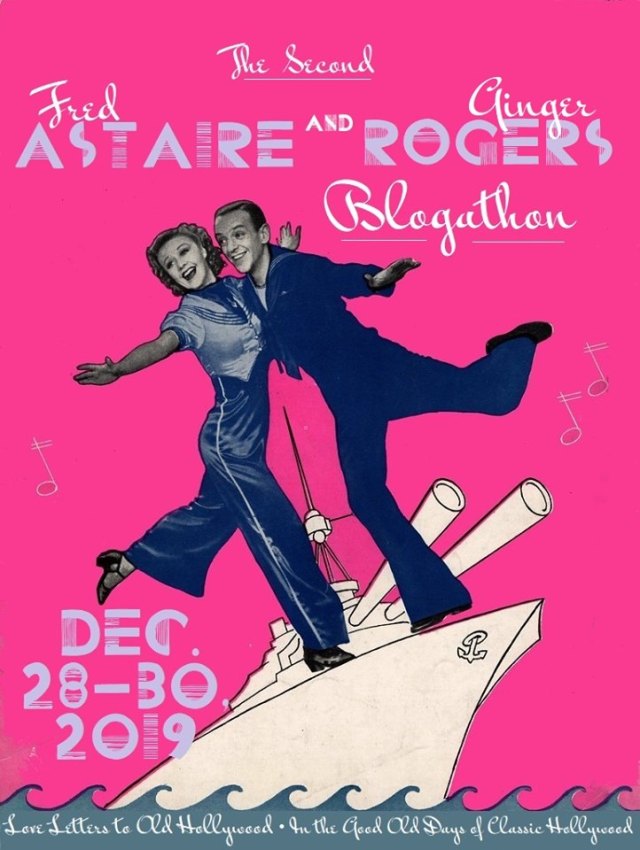
This is my contribution to the Second Fred Astaire and Ginger Rogers blogathon, hosted by Michaela and Crystal at Love Letters to Old Hollywood and In the Good Old Days of Classic Hollywood.

Friday, April 19, 2019

Ingênua Até Certo Ponto (1953) / The Moon is Blue (1953)


Eu sou fascinada por filmes que foram condenados ou censurados. Eu amo quando um filme ri na cara da Legião da Decência ou da Igreja Católica. Eu adoro filmes provocantes. Por isso que fiquei intrigada com “Ingênua Até Certo Ponto” (1953), um filme que foi condenado pela Production Code Administration e pela Legião da Decência. Além disso, ele tem o comercial de cerveja mais estranho de todos os tempos.

I’m fascinated by films that were either condemned or censored. I love whenever a film laughed at the face of the Legion of Decency or the Catholic Church. I adore provocative movies. That’s why I was more than intrigued with “The Moon is Blue” (1953), a film that was condemned by the Production Coda Administration and the Legion of Decency. Also, it has the weirdest beer commercial ever.


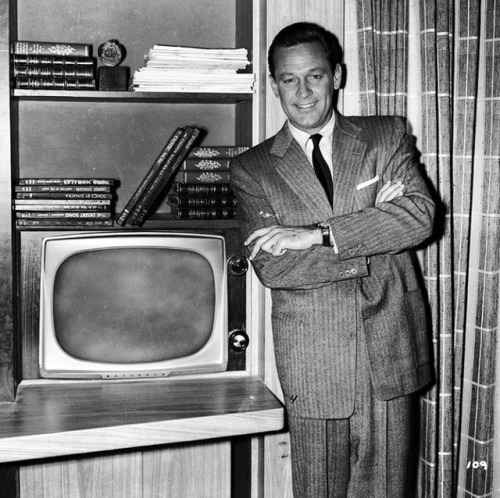
Patty (Maggie McNamara) está vendo as vitrines das lojas quando seus olhos encontram os de um estranho. Este homem começa a segui-la em outras lojas e vai atrás dela até o topo do Empire State Bulding. Isso deveria ser uma sequência engraçada e charmosa, mas se você é uma mulher você sabe que ser seguida por um homem é assustador. Felizmente, este estranho é inofensivo porque ele é interpretado pelo grande William Holden – mas este é só o começo dos problemas para Patty.

Patty (Maggie McNamara) is window shopping when she locks eyes with a stranger. This man starts following her to other stores and eventually to the top of the Empire State Building. It's supposed to be a funny and charming sequence, but if you're a woman you know that being followed by a man is terrifying. Fortunately, this stranger is harmless because he is played by the great William Holden – but this is just the beginning of Patty's problems.


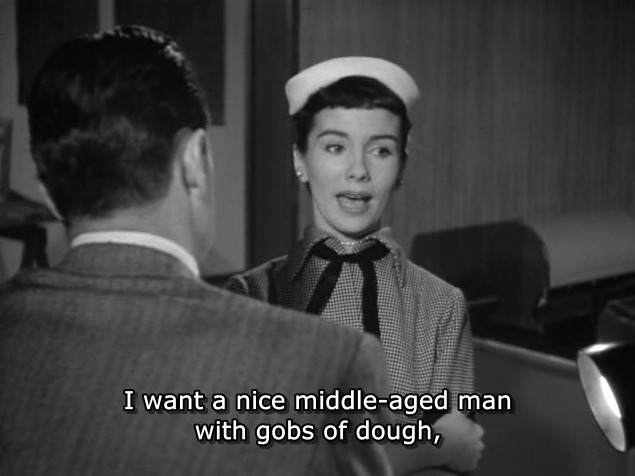
Ainda bem que Patty não é boba. Ela vai com Don (o personagem de Holden) até o escritório dele, e lá ela diz que é atriz e está procurando um homem com quem se casar. Mas não qualquer homem: de preferência um homem de meia-idade que já tenha sido casado e que não vá babar em cima dela. Don é muito jovem e está babando. Um pouco depois, ela também surpreende uma taxista com sua conversa franca com Don sobre as intenções dele e, confuso, ele aceita que o jantar deles tenha “afeto, mas sem paixão”.

A good thing is that Patty is not a fool. She goes with Don (Holden's character) to his office, and there she says that she is an actress trying to get a man to marry her. But not any man: preferably a middle-aged man who had been married before and won't drool over her. Don is too young and currently drooling. A while later, she also surprises a taxi driver with her blunt talk to Don about his intentions, and, confused, he agrees that their dinner can have “affection, but no passion”.


Depois de uma conversa reveladora no apartamento de Don, ele sai para comprar ingredientes para Patty preparar o jantar. Enquanto Don está fora, seu vizinho David (David Niven) bate à porta à procura de Don, e se surpreende ao encontrar uma garota como Patty no lugar. David quer falar com Don porque a filha de David, Cynthia (Dawn Addams), passou a noite com Don e estava furiosa porque “ele fez mal a ela” – nesse caso, ela estava furiosa porque Don não a tocou!

After a revealing chat at Don’s apartment, he leaves to buy ingredients for Patty to make dinner. While Don is out, his neighbor David (David Niven) knocks on his door looking for him, and is surprised to find a girl like Patty there. David wants to talk to Don because David’s daughter, Cynthia (Dawn Addams), had spent the night with Don and was sour because “he had done her wrong” – in this case, she was sour because Don didn’t touch her!


David fica para jantar com Don e Patty, e mais tarde David e Patty vão até o apartamento dele, onde ele fala sobre os sentimentos que tem por ela. Cynthia também aparece, e assuntos como virtude, dar o exemplo e pureza são discutidos.

David stays for dinner with Don and Patty, and later David and Patty go to his apartment, when he talks about his feelings for her. Cynthia also appears, and issues like virtue, leading by example and purity are discussed.


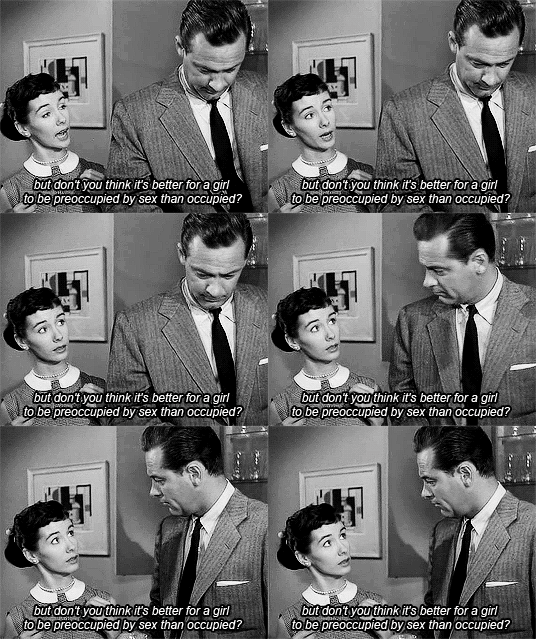
É fácil perceber por que “Ingênua Até Certo Ponto” foi condenado: a protagonista está longe de ser o que era esperado para uma mulher dos anos 1950. Patty O’Neill poderia ser considerada um mau exemplo para as jovens espectadoras. Patty não acredita no amor, é completamente prática ao falar sobre casamento e considera natural discutir sexo e sedução. Ela não quer ilusões românticas, ela quer segurança. Você consegue imaginar, nos anos 50, o que aconteceria se as mulheres começassem a ser tão... EXIGENTES?

It’s easy to see why “The Moon is Blue” was condemned: the leading lady was not what is expected of women to be in the 1950s. Patty O’Neill could even be considered a bad role model for young moviegoers. Patty doesn’t believe in love, she is completely practical when talking about marriage and considers it’s natural to discuss sex and seduction. She doesn’t want romantic illusions, she wants security. Can you imagine, in the 1950s, what would happen if women started being so… DEMANDING?


Tanto Patty quanto Cynthia são novos tipos de mulher, que gostam de ser beijadas e tocadas, e não necessariamente se envolver romanticamente com um homem. Elas não podem dizer não a um homem e não gostam que os homens digam não a elas. Elas são mulheres modernas, modernas demais para os anos 50, mesmo Patty ainda sendo virgem.

Both Patty and Cynthia are new kinds of women, who enjoy being kissed and touched, and not necessarily get romantically involved with a man. They can’t say no to a man and don’t like when a man says no to them. They are modern women, too modern for the 50s, even though Patty is still a virgin.


E aí está o problema: “Ingênua Até Certo Ponto” ousou usar a palavra “virgem” – algo que nenhum outro filme da era do Código Hays havia ousado fazer! E tem mais: este filme também foi pioneiro no uso de “seduzir” e “amante”, por isso a Legião da Decência deu ao filme uma nota C – a mais baixa possível – e a película foi banida em algumas cidades, como Boston e Memphis.

And there lies the problem: “The Moon is Blue” was bold enough to use the word “virgin” – something that no other film from the Code era had done until them! There is more: this film was also a pioneer of the use of both “seduce” and “mistress”, so the Legion of Decency gave it a C rating – the lowest possible –  and the film was banned in some cities, like Boston and Memphis.


“Ingênua Até Certo Ponto” teve origem como uma peça da Broadway que também foi dirigida por Otto Preminger. Assim que ele conseguiu os direitos de adaptação da peça para o cinema, Preminger fez escolhas curiosas no elenco, escalando David Niven, então considerado uma estrela em decadência, e a novata Maggie McNamara, que havia interpretado a protagonista da peça em Chicago. Para equilibrar as coisas, ele escolheu William Holden para completar o trio – Holden era então um ator muito popular nas bilheterias.

“The Moon is Blue” originated as Broadway play that was also directed by Otto Preminger. As he secured the rights to adapt the play to the screen, Preminger made odd cast choices as he chose David Niven, then considered a fading star, and newcomer Maggie McNamara, who had played the lead of the play in Chicago. To balance things, he chose William Holden to complete the trio – Holden was then a very popular actor among moviegoers.


Maggie McNamara é adorável como a tagarela Patty – ela inclusive foi indicada a um Oscar por “Ingênua Até Certo Ponto”, seu primeiro filme. A atriz, que se parecia muito com Jean Simmons, foi uma das três protagonistas de “A Fonte dos Desejos”, de 1954. Infelizmente, sua carreira nunca decolou e anos mais tarde ela passou a trabalhar como datilógrafa para sobreviver. Maggie cometeu suicídio em 1978, aos 48 anos.

Maggie McNamara is adorable as the talkative Patty – she was even nominated for an Oscar for “The Moon is Blue”, her very first film. The actress, who looked a lot like Jean Simmons, was one of the three leads in 1954’s “Three Coins in the Fountain”. Unfortunately, her career never took off and later in life she worked as a typist to survive. Maggie committed suicide in 1978, at age 48.


David Niven ganhou um Globo de Ouro por interpretar David, o que deu nova vida à sua carreira, e William Holden teve um ótimo ano de 1953: ele apareceu em quatro filmes naquele ano – além de uma participação na versão alemã de “Ingênua Até Certo Ponto” – e um desses filmes, “Inferno nº 17”, deu a ele um Oscar. Como uma coincidência curiosa, Otto Preminger interpreta o antagonista de “Inferno nº 17”.

David Niven won a Golden Globe for his portrayal of David, what gave new life to his career, and William Holden had an overall great year of 1953: he appeared in four films that year – plus a cameo in the German version of “The Moon is Blue” – and one of those films, “Stalag 17”, gave him his only Oscar. As a curious coincidence, Otto Preminger plays the antagonist in “Stalag 17”.


No final das contas, “Ingênua Até Certo Ponto” e Otto Preminger riram por último: a United Artists distribuiu o filme mesmo sem o selo de aprovação do Código. O filme foi um sucesso de bilheteria e as pessoas perceberam que ele não tinha nada questionável – ele era, na verdade, um filme bastante decente, charmoso e divertido. Era o começo do fim do Código Hays. Viva “Ingênua Até Certo Ponto”!

In the end, “The Moon is Blue” and Otto Preminger had the last laugh: United Artists distributed the movie even though it didn’t receive a Code Seal from Breen’s office. The film was a box-office hit and people realized that it had nothing to object – it was actually a very decent, charming and entertaining movie. It was the beginning of the end of the Code. Hooray for “The Moon is Blue”!

This is my contribution to the 4th Golden Boy blogathon, hosted by Virginie, Michaela and Emily at The Wonderful World of Cinema, Love Letters to Old Hollywood and The Flapper Dame.


Friday, February 27, 2015

E o Mundo Marcha (1934) / The World Moves On (1934)

*Atenção: No IMDb o título do filme é “A Marcha dos Séculos”. Entretanto, ele foi exibido na televisão como “E o Mundo Marcha”*
Vez ou outra encontro um filme em preto e branco na TV a cabo e, não importa seu enredo ou seus protagonistas, sempre o assisto. E vez ou outra este filme surpresa se transforma, em frente aos meus olhos, em uma obra-prima desconhecida e menosprezada. “E o Mundo Marcha” só é lembrado por ter sido o primeiro filme aprovado pelo Código Hays (está lá o selo número 1 no começo da película), mas este belo trabalho de John Ford merece muito mais reconhecimento.

Every now and then, I find a black and white film on cable TV and, no matter the story or the leads, I watch it. And every now and then this surprise film becomes, in front of my eyes, in an unknown and underrated masterpiece. “The World Moves On” is only rememberd as the first film approved by the Hays Office (the seal with the number 1 is there in the beginning of the film”, but this beautiful film by John Ford deserves a lot more recognition.


Só o nome de John Ford já anuncia que estamos prestes a ver algo muito bom. E a história dividida em fases não decepciona. No início do século XIX, as famílias Warburton e Girard se unem no negócio do algodão. O marido de Mary Warburton (Madeleine Carroll) se torna sócio de Richard Girard (Franchot Tone), mas Mary e Richard se apaixonam. Quase um século se passa até que esse amor possa ser consumado através dos bisnetos de Mary e Richard, que “por acaso” têm o mesmo nome dos antepassados e são interpretados pelos mesmos atores. Até então o negócio do algodão foi um sucesso total, mas tempos tempestuosos estão por vir.

John Ford’s name alone announces that we’re about to see something very good. And the story that is divided in phases does not disappoint. In the beginning of the 19th century, the families Warburton and Girard make a partnership to sell cotton. Mary Warburton’s (Madeleine Carroll) husband becomes partners with Richard Girard (Franchot Tone), but Mary and Richard fall in love. Almost a century goes by until this love can be consummated through Mary’s and Richard’s great-grandkids, who “by chance” have the same name as them and are played by the same actors. Until then the cotton business had been going well, but bad times are coming.


Um fortuito detalhe do enredo: o negócio de algodão é comandado por diversos herdeiros, cada um vivendo em um país afetado pela Primeira Guerra Mundial. Temos percepções diferentes dos campos de batalha e da luta dentro dos exércitos francês, inglês, americano e alemão. O ator que interpreta Henri Girard, aliás, é o brasileiro Raul Roulien, que John Ford considerava “meu amigo e grande ator”.

An interesting detail in the plot: the cotton business is managed by several heirs, each one living in a country affected by World War I. Because of this we have different perceptions of the battle field and the fights inside the French, English, American and German armies. The actor who plays Henri Girard, by the way, is the Brazilian Raul Roulien, who John Ford considered “my friend and great actor”.


Todo e qualquer espectador fica boquiaberto nos minutos finais do filme, quando John Ford prevê a Segunda Guerra Mundial – com uma marcha de suásticas e tudo o mais. Serão tempos difíceis, prevê a personagem de Madeleine Carroll.

Each and all viewers become speechless in the final minutes of the film, when John Ford predicts World War II – with a march full of swastikas. These will be difficult times, and Madeleine Carroll’s character predicts.


Há, sim, um detalhe que mancha o filme, e não posso deixar de citá-lo: o tratamento do personagem Dixie (Stepin Fetchit) é muito, muito racista. O pobre negro não é nada inteligente, e por isso sempre está envolvido em confusões. Obviamente, a intenção original era usar o personagem como contraponto cômico em meio ao drama, mas aqui John Ford cometeu um grande erro. Em 1934 o personagem poderia ter sido engraçado (e ele até é divertido ainda hoje, porém causa mais vergonha que riso), mas o tempo e as novas ideias de igualdade e respeito mancharam este aspecto do enredo. Só que Stepin Fetchit pouco importava com as reações contra sua persona cinematográfica: parceiro constante de John Ford, foi o primeiro ator negro de cinema a ficar milionário.

There is a negative detail in the film, and I have to mention it: the treatment of the character Dixie (Stepin Fetchit) is very, very racist. The poor black man is not intelligent, and gets involved in many troubles because of it. Obviously, the original intention was to use the character as a comic relief in the middle of so much drama, but John Ford made a huge mistake. In 1934 the character could have been funny (and he is kinda funny even today, but now he generates more shame than laugh), but time and new widespread ideas of equality and respect stained this detail of the film. But Stepin Fetchit didn’t really care about the reactions against his film persona: a constant in John Ford’s stock company, he was the first black actor to become a millionaire.

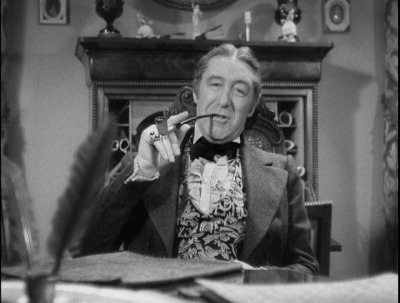
Raul Roulien e Stepin Fetchit
É o melhor filme de algum dos envolvidos? Definitivamente não. Madeleine Carroll fez “Os 39 Degraus / The 39 Steps” em 1935, mesmo ano em que Franchot Tone esteve em “O Grande Motim / Mutiny on the Bounty” e “Perigosa / Dangerous”. John Ford esteve envolvido na confecção de uma dúzia de clássicos, e por isso é até compreensível a mínima atenção dada a este filme.

Is this the best film of any of the involved cast? Not at all. Madeleine Carroll did “The 39 Steps” in 1935, the same year when Franchot Tone did “Mutiny on the Bounty” and “Dangerous”. John Ford was involved in the making of a dozen classics, and that’s why we can understand the little attention given to this film.


Para Peter Bogdanovich, John Ford confessou que gostaria de esquecer que fez “E o Mundo Marcha”. Ele não queria dirigir o filme. Brigou, discutiu, ganhou a fama de durão, e não escapou. A Fox o obrigou a dirigir a película, pois a intenção era repetir o sucesso de “Cavalgada / Cavalcade”, Oscar de Melhor Filme de 1933 que também contava a saga de uma família durante muitas gerações e vários conflitos. Não havia sobrado criatividade para o roteirista Reginald Berkeley, e o resultado são diálogos e situações que não ficam muito tempo na nossa memória.

To Peter Bogdanovich, John Ford confessed that he’d like to forget that he did “The World Moves On”. He didn’t want to direct the movie. He fought, argued, became known as a tough guy, and had to do it anyway. Fox made him direct the film, because they wanted to repeat the success of “Cavalcade”, the 1933 Best Picture Winner that also told the story of a family through several generations and many conflicts. There was not much creativity left for screenwriter Reginald Berkeley, and the result are dialogs and a situations that don’t stay long in our memories.


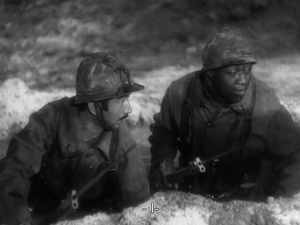
O que fica são as cenas de guerra, que causam um estranho déjà vu até no espectador mais jovem. Associei as cenas com “O Grande Desfile/ The Big Parade” (1925), mas a fonte era outra: as elogiadas cenas de batalha eram nada mais que cenas não utilizadas de “Cruzes de Madeira”, filme francês de 1932.

What stay with us is the war scenes, that cause a strange déjà vu even in the youngest viewer. I associated the scenes with “The Big Parade” (1925), but the source was different: the great battle scenes were only unused footage from “Wooden Crosses”, a French film made in 1932.


Madeleine Carroll, emprestada ao estúdio Fox em seu primeiro trabalho nos Estados Unidos, estava mais interessada no diretor Ford que no filme em si. John Ford preferiu esquecer esta sua obra. Franchot Tone não parece ter comentado sobre ela. O filme foi um fracasso de bilheteria, mas surpreende quem hoje, oitenta anos após ser filmado, lhe dá uma chance de mostrar a que veio. Porque até o pior filme de John Ford é excelente.

Madeleine Carroll, loaned to Fox in her first work in the US, was more interested in director Ford than in the film itself. John Ford preferred to forget this work. It looks like Franchot Tone never said anything about it. The film was a box-office failure, but it surprises whoever gives it a try today, eighty years after it was filmed. Because even John Ford’s wors movie is excellent.

This is my contribution to the Madeleine Carroll blogathon, hosted by Dorian at Tales of the Easily Distracted and Ruth at Silver Screenings!
Related Posts Plugin for WordPress, Blogger...