} Crítica Retrô: 1942

Tradutor / Translator / Traductor / Übersetzer / Traduttore / Traducteur / 翻訳者 / переводчик

Showing posts with label 1942. Show all posts

Friday, September 11, 2026

Ser ou Não Ser (1942) / To Be or Not to Be (1942)

 Ser ou não ser: eis a questão. A frase de Shakespeare conhecida até mesmo por quem não sabe quem foi Shakespeare. Naquele que seria o último filme de Carole Lombard, a frase é um código para um encontro furtivo entre amantes. Nas habilidosas mãos de Ernst Lubitsch, aqui como diretor e produtor, a frase também funciona como o título de uma comédia de humor negro essencial dentro da História do cinema.

To be or not to be: that’s the question. The Shakespearean line known even by those who don’t know who Shakespeare was. In what was Carole Lombard’s last film, the line is a code for a furtive encounter between lovers. In the skillful hands of Ernst Lubitsch, here as both director and producer, the line also works as the title of a quintessential black comedy.

Damos a primeira risada quando Bronski (Tom Dugan), vestido como Hitler, faz a saudação nazista e diz “Heil, eu”. Tudo o que havíamos presenciado até então não é nada além de uma peça encenada pela companhia do Sr Dobosh (Charles Halton). É agosto de 1939 na Polônia e a peça “Gestapo” não pode estrear porque pode desagradar a Hitler. Eles então reencenam Hamlet.

The first laugh is upon us when Bronski (Tom Dugan), dressed as Hitler, does the Nazi salute and says “Heil, me”. All we had been witnessing is nothing but a play staged by the company that belongs to Mr Dobosh (Charles Halton). It’s August 1939 in Poland and their play “Gestapo” can’t open because it may upset Hitler. They go on to stage Hamlet once again.

As principais estrelas da companhia são Joseph Tura (Jack Benny) e sua esposa Maria (Carole Lombard). Maria recebe a visita de um piloto, Stanislav Sobinski (Robert Stack), sempre que seu marido está no meio do famoso solilóquio “ser ou não ser”. E então a guerra é declarada. 

The company’s main stars are Joseph Tura (Jack Benny) and his wife Maria (Carole Lombard). Maria receives the visit of a pilot, Stanislav Sobinski (Robert Stack), always when her husband is in the middle of the “to be or not to be” soliloquy. War is then declared.

Stanislav vai para a Inglaterra para se juntar à Real Força Aérea britânica. Lá ele se aproxima de um professor chamado Siletsky (Stanley Ridges), que diz ser polonês. Mas ele nunca ouviu falar de Maria Tura, o que acende um sinal de alerta na mente de Stanislav. Siletsky vai para Varsóvia e Stanislav o segue, temendo que ele possa ser um agente alemão levando informações secretas para a Gestapo. Stanislav envolve Joseph e Maria no jogo de espionagem.

Stanislav goes to England to join the Royal Air Force, the RAF. There he befriends a professor named Siletsky (Stanley Ridges) who claims to be Polish. But he had never heard of Maria Tura, which is a red flag according to Stanislav. Siletsky goes to Warsaw and Stanislav follows him, fearing he could be a German agent bringing top secret information to the Gestapo. Stanislav then involves Maria and Joseph in the espionage game.

Durante a guerra, entregar uma mensagem podia ser uma missão complexa. Você tinha que falar através de códigos que só as pessoas certas sabiam. Você tinha que carregar fotos em lugares incomuns. Você tinha que esconder as evidências. Você não podia se comunicar rapidamente pelo telefone ou por mensagens de texto. Mas você também não conhecia o rosto das pessoas, o que permite, por exemplo, que Joseph finja ser o coronel Ehrhardt para econtrar Siletsky.  

During the war, delivering a message could be a tricky task. You had to speak using codes that only the right people knew. You had to take photos in the most unusual places. You had to hide evidence. You couldn’t communicate quickly through the phone or text message. But you also didn’t know the face of the person you had to meet, which allows, for instance, Joseph to pose as colonel Ehrhardt for Siletsky.

Jack Benny é mais conhecido por seu trabalho no rádio e na televisão. Ele foi a primeira e única opção para interpretar Joseph Tura, pois Lubitsch escreveu o personagem com o ator em mente. Isso levou Benny a aceitar o papel de imediato. Entretanto, para a protagonista feminina a primeira opção foi Miriam Hopkins, mas ela e Jack Benny não se deram bem e Carole Lombard foi escalada. 

Jack Benny is better known for his radio and television work. He was the first and only option to play Joseph Tura, as Lubitsch wrote the character with the actor in mind. This led to Benny accepting the role immediately. However, for the female lead the first option was Miriam Hopkins, but she and Jack Benny didn’t get along, so Carole Lombard was cast instead.

A única indicação para o Oscar que este filme teve foi na categoria Melhor Música. A trilha sonora deveria ter sido composta por Miklós Rózsa, mas ele não concordou com uma sátira ao regime Nazista e recusou o trabalho. Rózsa era húngaro, assim como o produtor Alexander Korda, e foi substituído pelo judeu alemão Werner Heymann, que já havia trabalhado com Lubitsch anteriormente. Curiosidade: naquele ano, 18 filmes foram indicados ao Oscar de Melhor Música! 

The only nomination for the Oscar for this film came for Best Music. The soundtrack was supposed to have been composed by Miklós Rózsa, but he didn’t agree with a satirization of the Nazi regime and refused the job. Rózsa was Hungarian, as was the producer Alexander Korda, and was replaced by Jewish and German Werner Heymann, who had worked with Lubitsch previously. Curious tidbit: that year, 18 films were nominated for the Best Music Oscar! 

O filme estreou logo depois de os EUA entrarem na guerra. Carole Lombard, podemos dizer, foi vítima da guerra, pois faleceu num acidente de avião numa campanha de bônus de guerra dias depois de terminar de rodar “Ser ou Não Ser”.  

The movie premiered right after the USA entered the war. Carole Lombard, we could say, was a victim of the war, as she died in a plane crash while promoting war bonds days after she finished shooting “To Be or Not to Be”.

Anos antes de assistir a este filme, assisti ao remake de 1983 com Mel Brooks. Lembro que era um filme divertido, mas nem tanto quanto o original, e também tinha menos senso de urgência que o filme de Lubitsch. Fazer piada com os nazistas em 1983 era anacrônico, fazer piada com os nazistas em 1942 e hoje é catártico. Se toda catarse fosse como este filme hilário, o mundo seria um fardo bem mais leve de carregar.  

Years before I watched this film, I watched the 1983 remake with Mel Brooks. I remember it being funny, but not as much as the original, and also lacking the sense of urgency the Lubitsch film has. Making fun of Nazis in the 1980s was anachronistic, making fun of Nazis in the 1940s and nowadays is a catharsis. If all catharsis could play like this hilarious film, the world would be a lighter burden for us to carry.

Tuesday, July 30, 2024

Na Noite do Passado (1942) / Random Harvest (1942)


Um dos filmes mais românticos de todos os tempos e o filme favorito do grande Gene Wilder, “Na Noite do Passado” é um filme cuja existência eu conhecia já há algum tempo. Com minhas Resoluções de Ano Novo de 2024, finalmente assisti a ele pela primeira vez - e foi ótimo! Trata-se realmente de um filme tocante, que brinca com nossas emoções sem nos incomodar e nos faz suspirar em muitas ocasiões.

One of the most romantic movies of all times and the favorite movie of the great Gene Wilder, “Random Harvest” has been on my radar for quite some time. With my 2024 New Year Resolutions, I finally watched it for the first time - and had a blast! It’s really a touching movie, one that plays with our emotions without us getting upset and makes us swoon in many occasions.

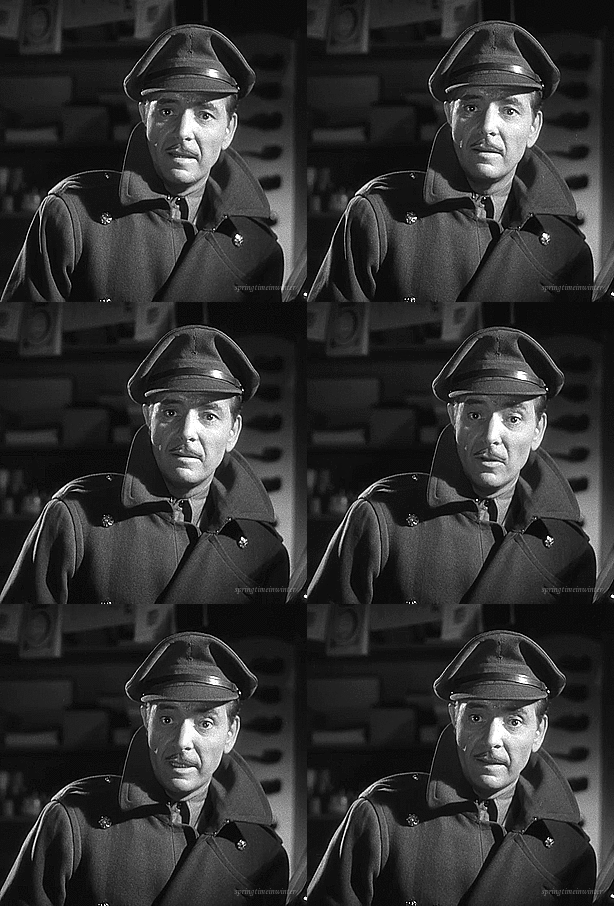
Outono de 1918. Smith (Ronald Colman) está internado num hospício na Inglaterra, porque ele perdeu a memória durante a guerra e desenvolveu também um problema de fala. No Dia do Armistício, ele sai para a rua e conhece a artista Paula (Greer Garson). O dono do grupo de teatro do qual Paula faz parte não aceita Smith, temendo que ele seja um lunático perigoso. Paula e Smith seguem então para o campo.

Autumn, 1918. Smith (Ronald Colman) is staying in an asylum in England, because he lost his memory during the war and developed a speech issue. On Armistice Day, he goes to the streets and meets the artist Paula (Greer Garson). The owner of the theater group Paula works with doesn’t accept Smith, afraid that he is a dangerous lunatic. Paula and Smith leave for the countryside.


O namoro é breve e eles se casam. Smith consegue um emprego escrevendo para um jornal e o casal tem um filho, batizado de “John” como o pai. Tudo vai bem, até que Smith é atropelado por um carro... e recobra a memória. Ele se esquece de Paula e do pequeno Johnny e volta para sua velha mansão, onde descobre que seu pai havia falecido e que ele, Charles Rainier, herdou o local. Rainier se transforma no “Príncipe da Indústria” e, depois de ver a foto dele no jornal, Paula se torna sua secretária, sob o nome de senhorita Hanson. Ela espera que ele se lembre dos anos que passaram juntos, mas a única coisa que acontece é que ele vai se casar com outra mulher, Kitty (Susan Peters). Será que ele vai se lembrar da noite do passado antes que seja tarde?

The courtship is brief and they are married. Smith gets a job writing for a newspaper and the couple has a son, named “John” after the father. Everything is fine, until Smith is hit by a car… and recovers his memory. He forgets all about Paula and Little Johnny and goes back to his old mansion, where he finds out his father has died and he, Charles Rainier, inherited the place. Rainier becomes “The Industrial Prince” and, after seeing his picture in the newspaper, Paula becomes his secretary, under the name Miss Hanson. She’s waiting for him to remember their years together, but the only thing that is happening is that he’s getting married to another woman, Kitty (Susan Peters). Will he remember it all before it’s too late?

Em 1942 Greer Garson fez dois filmes, este e “Rosa de Esperança”, pelo qual ela ganhou o Oscar de Melhor Atriz. Nascida em Londres, Garson começou sua carreira como atriz nos palcos em 1932 e fez seu primeiro filme em Hollywood em 1939. “Rosa de Esperança” não deu a ela apenas um Oscar, mas também um marido: em 1943 ela se casou com Richard Ney, que era 12 anos mais novo que ela e havia interpretado seu filho no filme. O casamento durou quatro anos e Ney abandonou o cinema nos anos 60. Garson trabalhou até o fim dos anos 70 tanto no cinema quanto na televisão.

In 1942 Greer Garson appeared in two films, this one and “Mrs. Miniver”, for which she won a Best Actress Oscar. Born in London, Garson had started her career on stage in 1932 and made her first Hollywood movie in 1939. “Mrs. Miniver” didn’t give her only an Oscar, but also a husband: in 1943 she married Richard Ney, who was 12 years her junior and had played her son in the movie. The marriage lasted four years and Ney abandoned cinema in the 1960s. Garson worked until the late 1970s on both film and TV.

Ronald Colman ganharia seu Oscar cinco anos depois, mesmo tendo sido indicado a um por “Na Noite do Passado”. Nascido na Inglaterra como Garson, ele fez sua primeira peça de teatro em 1914, aos 23 anos. Assim como seu personagem Smithy, ele lutou na Primeira Guerra Mundial e foi ferido em batalha. Ele voltou para os palcos e fez seu primeiro curta na Inglaterra em 1917. Sua estreia em Hollywood em 1923, “Irmã Branca”, fez dele uma estrela do dia para a noite e daí em diante ele fez 61 filmes e programas de TV, até sua performance final em “A História da Humanidade” (1957).

Ronald Colman would win his Oscar five years later, even though he was nominated for one for “Random Harvest”. Born in England like Garson, he appeared in his first play in 1914, aged 23. Like his character Smithy, he fought in World War I and was wounded in battle. He returned to the stage and made his first short film in England in 1917. His Hollywood debut in 1923, “The White Sister”, made him a star overnight and from then on he appeared in 61 films and TV shows, until his last performance in “The Story of Mankind” (1957).


Uma atriz que merece ser destacada é Susan Peters. Sua carreira havia começado em 1940 e por “Na Noite do Passado” ela recebeu sua única indicação ao Oscar na categoria Atriz Coadjuvante. Seu mentor, George Cukor, disse que ela o lembrava de uma jovem Katharine Hepburn. Infelizmente, sua vida foi interrompida por uma tragédia: no Ano Novo de 1945, ela sofreu um acidente enquanto caçava e ficou paraplégica. Ela recebeu e recusou várias propostas da MGM por não querer interpretar heroínas paralisadas. Ela teve uma volta aos filmes em 1948 no papel de uma vilã, mas sua saúde estava frágil e ela ficava sem comer com frequência. Peters faleceu em 1952, aos 31 anos de idade. Greer Garson e Ronald Colman estavam entre as estrelas que compareceram ao seu funeral.

One performer to highlight is Susan Peters. Her career in film had started in 1940 and for “Random Harvest” she received her only Oscar nomination in the Best Supporting Actress category. Her mentor, George Cukor, said she reminded him of a young Katharine Hepburn. Unfortunately, her life was cut short by a tragedy: on New Year’s Day of 1945, she suffered an accident while hunting and was left paraplegic. She received and refused several scripts from MGM, not wanting to play paralyzed heroines. She made a comeback in 1948 in the role of a villain, but her health declined as she started starving herself. Peters died in 1952, aged 31. Greer Garson and Ronald Colman were among those who attended her funeral.

O diretor Mervin LeRoy nasceu em San Francisco em 1900, sobreviveu junto com seu pai ao terremoto de 1906 na cidade, e despontou no vaudeville como imitador de Chaplin. Aos 19 anos, ele pela primeira vez trabalhou em um filme, e ficou intrigado por todas as técnicas cinematográficas. Ele faria 11 filmes como ator entre 1922 e 1946. Ele trabalhou dobrando figurinos, como técnico de laboratório, assistente de câmera e escritor de gags antes de dirigir seu primeiro filme em 1927. Seu período de maior sucesso foram os anos 1930, mas ele seguiu dirigindo até 1968.

Director Mervin LeRoy was born in San Francisco in 1900, survived with his father the 1906 earthquake in the city, and appeared on vaudeville as a Chaplin impersonator. At 19, he experienced working on cinema for the first time, and became intrigued by the whole modus operandi. He would appear in 11 films as an actor between 1922 and 1946. He worked folding costumes, as a lab technician, assistant cameraman and gag man before directing his first film in 1927. His most successful period was the 1930s, when he worked for Warner Bros, but he directed until 1968.

Um filme cheio de surpresas, do começo ao fim, “Na Noite do Passado” é um verdadeiro tesouro. Sua cena final nos lembra de outro lacrimoso fim: o de “Luzes da Cidade” (1931) de Chaplin. Na trigésima sexta posição na lista de filmes mais românticos do Instituto de Cinema Americano, “Na Noite do Passado” é mais que um filme: é uma experiência que brinca com tudo o que pensamos que sabemos sobre amor.

A film full of surprises, from start to finish, “Random Harvest” is truly a gem. Its end scene reminds us of another teary famous ending: Chaplin’s “City Lights” (1931). Appearing as the 36th film in the AFI list of Most Romantic films of all time, “Random Harvest” is more than a film: is an experience that plays with all we think we know about love.

Tuesday, August 22, 2023

Uma Aventura em Paris (1942) / Reunion in France (1942)


Durante alguns anos, nas décadas de 1930 e 1940, Joan Crawford foi uma das atrizes mais bem-pagas de Hollywood. Nos anos 1950, John Wayne foi um dos atores mais bem-pagos de Hollywood. E um dia os dois se encontraram, mas muitas pessoas desconhecem este filme que juntou as duas superestrelas: “Uma Aventura em Paris”, uma propaganda anti-nazista de 1942 dirigida por Jules Dassin - um filme não muito inspirado.


For a while, in the 1930s and 1940s, Joan Crawford was one of the highest-paid actresses in Hollywood. In the 1950s, John Wayne was one of the highest-paid actors in Hollywood. And one day the two of them met, but many people aren’t aware of this film that brings the two superstars together: “Reunion in France”, a 1942 anti-Nazi propaganda directed by Jules Dassin - and lacking inspiration.

“Em tempos de guerra, o amor é uma ofensa digna de punição”, diz Michele de la Becque (Joan Crawford) para seu namorado, Robert Cortot (Philip Dorn), quando ele recusa o convite dela para uma escapada. Eles não têm com o que se preocupar, porque Hitler não pode invadir a França, disse um general num evento em que estava o casal. A Linha Maginot parecia intransponível, até que se provou o contrário, e numa questão de semanas a França se rendeu aos nazistas.  


“In times of war, love is a punishable offense”, says Michele de la Becque (Joan Crawford) to her boyfriend, Robert Cortot (Philip Dorn), when he refuses her invitation for an escapade. They have nothing to worry about, because Hitler can’t invade France, a general said in an event both were attending. The Maginot Line seemed insurmountable, until it wasn’t, and in a matter of weeks Paris fell under the Nazis.

Michele volta de sua escapada e encontra sua mansão “tomada de empréstimo” pelos nazistas e transformada em posto de distribuição de carvão. Ela se horroriza com o pensamento de que Robert estaria colaborando com os nazistas. Sem dinheiro, ela aceita um emprego numa loja de roupas e é saindo do trabalho que ela conhece o tenente da aeronáutica Pat Talbot (John Wayne), com quem ela se compromete: ela vai ajudá-lo a escapar da França.


Michele comes back from her escapade only to find her mansion “borrowed” by Nazis as an outpost to distribute coal. She’s truly horrified when she starts thinking that Robert is collaborating with the Nazis. Penniless, she accepts a job at a clothes store and it’s leaving her job that she meets flight lieutenant Pat Talbot (John Wayne), who she vows to help leave France.

Joan Crawford e John Wayne tinham praticamente a mesma idade - dependendo da fonte que você usa para o ano de nascimento de Joan. Entretanto, no filme a história é construída como se Michele fosse uma mulher mais velha e com mais experiência, e Pat fosse um garoto que acabou de se alistar. Já se passaram alguns anos desde a performance que transformou Wayne em estrela, em “No Tempo das Diligências” (1939), mas seu papel é de coadjuvante - “Uma Aventura em Paris” pertence a Joan Crawford, e só a ela.


Joan Crawford and John Wayne were practically the same age - depending on the source you follow for Joan’s birth date. However, in the film the story is built as if Michele was an older, experienced woman and Pat was a boy who just enlisted. It was already past Wayne’s star-making performance in “Stagecoach” (1939), but his is a supporting role - “Reunion in France” belongs to Crawford, and Crawford only.

Numa entrevista para o programa The Merv Griffin Show em 1963, Joan Crawford contou que já queria contracenar com John Wayne algum tempo antes de “Uma Aventura em Paris”, entretanto, nas próprias palavras dela: “quando nós de fato contracenamos, foi com o pior roteiro que eu já vi ou li na minha vida”. Em outra entrevista, ela foi mais além: “Oh, Deus. Se houver vida após a morte e eu tiver de ser punida por meus pecados, este é um dos filmes que eles me farão ver de novo e de novo. John Wayne e eu sofremos, não apenas por causa do roteiro bobo, mas porque éramos uma dupla sem harmonia. Tire John do cavalo, e você terá problemas”. Profundamente criticado por sua própria estrela, não é de se espantar que “Uma Aventura em Paris” seja tão pouco conhecido.


In an interview given a The Merv Griffin Show in 1963, Joan Crawford said that she had wanted to play opposite John Wayne for some time before “Reunion in France”, however, in her words, “when we really worked together it was the lousiest script I have ever seen or read in my life.” In another interview, she went further: “Oh God. If there is an afterlife and I am to be punished for my sins, this is one of the pictures they'll make me see over and over again. John Wayne and I both went down for the count, not just because of a silly script but because we were so mismatched. Get John out of the saddle, and you've got trouble." Deeply disliked by its star, there is no wonder “Reunion in France” isn’t a more well-known film.

Philip Dorn tem um papel de responsa como um dos protagonistas, Robert Cortot, namorado de Michele. Nascido na Holanda, ele começou a carreira sob o nome artístico de Frits van Dongen e deixou seu país natal, indo para a Alemanha, em 1938. Em 1939, semanas antes de a Segunda Guerra Mundial começar, ele se mudou para Hollywood e mudou o nome artístico para Philip Dorn. Lá, ele interpretou diversos patriotas anti-nazistas e teve relativo sucesso, o que não o impediu de voltar para a Alemanha nos anos 50.


Philip Dorn has a juicy role as one of the leads, Robert Cortot, Michele’s boyfriend. Born in the Netherlands, he started his career under the name Frits van Dongen and left his home country for Germany in 1938. In 1939, just weeks before the beginning of World War II, he moved to Hollywood and changed his stage name to Philip Dorn. There, he played several anti-Nazis patriots and had relative success, which didn’t prevent him from going back to Germany in the 1950s.

“Uma Aventura em Paris” foi dirigido por Jules Dassin, que dirigiu, de acordo com o IMDb, 25 filmes em sua carreira, em diversos idiomas.Dassin estava tendo sucesso moderado quando, em 1952, ele foi acusado de ser comunista - na verdade, ele havia abandonado o partido em 1939 - e teve de se mudar para a França, onde fez muito sucesso.


“Reunion in France” is directed by Jules Dassin, who directed, according to IMDb, 25 films in his career, in several languages. Dassin was enjoying moderate success when, in 1952, he was accused of being a communist - he had actually left the party in 1939 - and had to move to France, where he found bigger success.   

Quando ela fala sobre como alguns franceses traíram seus conterrâneos, Michele pergunta “o que será da França?” Nós vimos, nos últimos anos, algo impensável: populações sendo divididas por política, especialmente por partidos, candidatos e governos da extrema direita. Se você, como eu, vive em um país que ainda se sente dividido, você conhece a sensação quando ela diz essa frase: é de desolação e perda da esperança.  


 When talking about how some French people betrayed their fellow countrymen, Michele asks “what’s become of France?” We’ve seen, in the past few years, something unthinkable: populations being divided by politics, especially by far-right parties, candidates and governments. If you, like me, live in a country that still feels divided, you know the sensation when she utters the line: it’s of desolation and loss of hope.

“Uma Aventura em Paris” não é uma joia escondida. Pode ser curioso, interessante e agradável, mas não é um filme obrigatório nas filmografias de suas estrelas. É providencial, porque a Resistência não foi embora junto com a primeira derrota da extrema direita. É mais um melodrama que um filme de guerra, mas é, acima de tudo, um veículo para o talento de Joan Crawford.


“Reunion in France” isn’t a hidden gem. It may be curious, interesting and enjoyable, but not mandatory viewing in any of its stars’ filmography. It’s timely, as the Resistance didn’t go away in the first defeat of the far-right. It’s more of a melodrama than a war movie, but it is, above all, a Joan Crawford vehicle.


Saturday, July 1, 2023

Minha Secretária Brasileira (1942) / Springtime in the Rockies (1942)


Um mesmo filme pode ser visto de formas diferentes por diferentes públicos. Aspectos culturais podem nos fazer focar em um detalhe do filme e não vê-lo como ele foi primeiramente concebido. Tomemos como exemplo um filme estrelado por Betty Grable, “Minha Secretária Brasileira”. No Brasil, quando o filme estreou e mesmo hoje, ninguém o procura por causa de Grable: todos queremos ver Carmen Miranda, daí vem o título em português – o título original é “Springtime in the Rockies”, ou “Tempo de Primavera nas Montanhas Rochosas”. Para nós do lado debaixo do Equador, este filme é todo sobre Carmen Miranda.


The same film can be seen differently by different audiences. Cultural aspects may make us focus on a detail of the film and not see it as it was first conceived. Take for instance the Betty Grable vehicle “Springtime in the Rockies” (1942). In Brazil, when it premiered and even today, nobody went to the movies to see Grable: we all wanted to see Carmen Miranda. That’s why the film got a different title here: “My Brazilian Secretary”. For us below the Equator, this movie is all about Carmen Miranda.


Vicky Lane (Betty Grable) e Dan Christy (John Payne) são uma dupla no palco e fora dele. Ela é visitada uma noite em seu camarim por seu antigo parceiro de dança, Victor Prince (Cesar Romero), que quer retomar a parceria. Para a sorte de Victor, isto acontece na mesma noite em que Dan é pego em mais uma de suas aventuras com outras mulheres. Farta do comportamento de Dan, Vicky o deixa e volta para Victor.


Vicky Lane (Betty Grable) and Dan Christy (John Payne) are an item on and outside the stage. She is visited one night in her dressing room by her former dance partner, Victor Prince (Cesar Romero), who wants to resume their partnership. Luckily for Victor, this happens the same night Dan was in another of his adventures with other women. Fed up with Dan’s actions, Vicky leaves him for Victor.


A velha-porém-nova dupla, Victor e Victoria, sai em turnê pelas Montanhas Rochosas do Canadá e Dan vai atrás deles, com o objetivo de reconquistar Vicky. Ele leva consigo seus novos empregados: o criado McTavish (Edward Everett Horton), a secretária irlandês-brasileira Rosita Murphy (Carmen Miranda) e os seis irmãos de Rosita (interpretados pelos integrantes d’O Bando da Lua). Dan planeja usar Rosita para despertar o ciúme de Vicky.


The old-now-new duo, Victor and Victoria, go on tour to the Canadian Rockies and Dan goes after them, wishing to reconquer Vicky. He takes with him his new employees: valet McTavish (Edward Everett Horton), Irish-Brazilian secretary Rosita Murphy (Carmen Miranda) and Rosita’s six brothers (played by the men in the band O Bando da Lua). Dan plans to use Rosita to make Vicky jealous.


O destaque do elenco é Edward Everett Horton como McTavish, o criado de Dan. Um homem ultra-inteligente que tem vários diplomas universitários, ele agora quer aprender sobre coisas práticas da vida. Como sempre, Horton rouba a cena sempre que aparece. Há também espaço para a assistente pessoal de Vicky, Phoebe (Charlotte Greenwood), brilhar, quando ela fala sobre querer ter todos os homens antes de fazer seu próprio pequeno número de dança.


The highlight of the cast is Edward Everett Horton as McTavish, Dan’s valet. An ultra-intelligent man who has several college degrees, he now wants to learn the practical things in life. As always, Horton steals all the scenes he’s in. There is also space for Vicky’s personal assistant Phoebe (Charlotte Greenwood) to shine, when she talks about wanting all the men before doing her own little dance number.


Os cenários mostrados são simplesmente maravilhosos e nos fazem querer visitar as Montanhas Rochosas canadenses. Viajar através dos filmes é uma realidade: de fato, nós acabamos conhecendo muitos lugares primeiro através dos filmes, e só depois na vida real, quando viajamos. Dan diz que não precisa de uma bela vista quando tem Vicky consigo, mas eu discordo: as paisagens são mais bonitas que Betty Grable.


The landscapes shown are simply outstanding and make you wish to visit the Canadian Rockies. Travelling through movies is a reality: in fact, we get to know most places first through movies, and only later in real life, when we travel. Dan says that he needs no scenery when he has Vicky, but I disagree: the landscapes are more beautiful than Betty Grable.


“Minha Secretária Brasileira” é um remake de “Segunda Lua de Mel”, filme de 1937 estrelado por Tyrone Power e Loretta Young. Alice Faye deveria interpretar a protagonista, mas engravidou e precisou deixar a produção. Entra então Betty Grable e suas pernas de um milhão de dólares: o resultado é excelente. Grable traz vitalidade e atrevimento ao papel, estando perfeita tanto em momentos musicais quanto nos não-musicais.


“Springtime in the Rockies” is a remake of “Second Honeymoon”, a 1937 film starring Tyrone Power and Loretta Young. Alice Faye was supposed to play the lead, but got pregnant and had to leave the film. Enter Betty Grable and her million dollar legs and the result is amazing. Grable brings vitality and sass to the role, being perfect in both musical and non-musical moments.


Os números de dança ficaram a cargo do lendário coreógrafo Hermes Pan. Tendo trabalhado em filmes como “O Picolino” (1935) até “Minha Bela Dama” (1967), Pan foi um colaborador constante nos filmes de Fred Astaire, e até foi dublê de corpo de Astaire. Hermes Pan também dançou em frente às câmeras, tendo dançado em quatro filmes com Betty Grable, mas este não é o caso em “Minha Secretária Brasileira”.


The dances were staged by the legendary choreographer Hermes Pan. A choreographer who worked in films like “Top Hat” (1935) to “My Fair Lady” (1964), Pan was a constant collaborator on Fred Astaire movies, and even was Astaire’s body double. Hermes Pan also danced on screen, appearing alongside Betty Grable in four movies, but not in this “Springtime in the Rockies”.


O diretor é Irving Cummings. Hoje um nome praticamente esquecido, na Era de Ouro de Hollywood Cummings dirigiu vários filmes de sucesso. Ele começou como ator na Broadway, sendo parte da lendária companhia de teatro de Lillian Russell. Ele fez seu primeiro filme como ator em 1909 e em 1920 era um protagonista popular, quando começou a dirigir. Alguns dos filmes que ele dirigiu foram “No Velho Arizona” (1928), “A Pequena Órfã” (1935) com Shirley Temple, “Serenata Tropical” (1940) e “Minha Namorada Favorita” (1942).


The director is Irving Cummings. Now a practically forgotten name, in the Golden Age of Hollywood Cummings directed several successful pictures. He had his start as an actor on Broadway, being part of the legendary Lillian Russell’s company. He made his first film as an actor in 1909 and by 1920 was a popular leading man, when he started directing. Some of the films he directed were “In Old Arizona” (1928), “Curly Top” (1935) with Shirley Temple, “Down Argentine Way” (1940) and “My Gal Sal” (1942).


Não importa se você for ver o filme por Betty Grable ou por Carmen Miranda. “Minha Secretária Brasileira” é um musical muito divertido. Pode não ter músicas chiclete ou números de dança exagerados, mas é um bom exemplo do que os estúdios de Hollywood estavam fazendo nos anos 40: puro entretenimento.


No matter if you watch it for Betty Grable or Carmen Miranda, “Springtime in the Rockies” is a very enjoyable musical. It may not have catchy songs or over-the-top dance numbers, but it is a fine example of what Hollywood studios were doing in the 1940s: pure entertainment.


This is my contribution to the Betty Grable blogathon, hosted by Rebecca at Taking Up Room.

Monday, February 26, 2018

There's One Born Every Minute (1942)


Em qualquer carreira, é raro começar no topo. No cinema, em especial, é raro começar como protagonista de um filme. A maioria, se não todas, as lendas do cinema começaram em papéis secundários, alguns até sem fala. Elizabeth Taylor também começou pequena – de ambas as maneiras: ela tinha apenas 10 anos quando fez seu primeiro filme, “There’s One Born every Minute”, que é um exemplo perfeito de filme B.

You rarely get to start on top in any career. In film, especially, it's rare to start as the star of a big picture. Most, if not all, film legends started in secondary roles, some of them as extras, others as walk-on roles. Elizabeth Taylor also started small – in both meanings: she was only 10 when she did her first film, and this film, “There's One Born Every Minute”, is a perfect example of a B-picture.


Curiosamente, a personagem de Elizabeth, Gloria, diz a primeira frase do filme: “Este cara engraçado é meu tataravô Claudius?”. Ela se refere a uma pintura que sua mãe, Minerva (Catherine Doucet) está pendurando na parede. A pintura está ali para inspirar grandeza, porque o pai de Gloria, Lemuel Twine (High Herbert), se candidatou ao cargo de prefeito da cidade de Witumpka Falls.

Curiously, Elizabeth's character, Gloria, says the very first sentence in the movie: “Is that funny-looking bloke (=man) my great-great-grandfather Claudius?”. She is referring to the painting her mother, Minerva (Catherine Doucet) is hanging on the wall. The painting is there to evoke greatness, because Gloria's father, Lemuel Twine (Hugh Herbert), is running for the position of mayor of the city of Witumpka Falls.


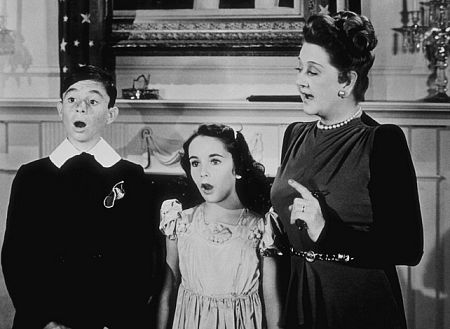
Gloria é a filha mais nova. Sua irmã mais velha Helen Barbara (Peggy Moran) é uma adolescente e seu irmão Junior (Carl ‘Alfalfa’ Switzer) é pouco mais velho que ela. O papai Lemuel ganha dinheiro fazendo pó para preparo de pudim – e age como um cientista maluco enquanto mistura os ingredientes, em busca do pudim perfeito. O pudim perfeito pode não existir, mas pode ser anunciado – e é isso que o marketeiro de Lemuel, Jimmy Hanagan (Tom Brown) faz: ele inventa uma nova vitamina, chamada Zumf, que é extremamente benéfica e que só é encontrada nos pudins de Lemuel.

Gloria is the youngest kid. Her older sister Helen Barbara (Peggy Moran) is a teenager and her brother Junior (Carl 'Alfalfa' Switzer) is just a little older than her. Daddy Lemuel makes pudding powder for a living – acting like a mad scientist while mixing the ingredients in search of a perfect pudding. The perfect pudding may not exist, but you can certainly advertise it – and that's what Lemuel's advertising assistant, Jimmy Hanagan (Tom Brown) does: he makes up a new vitamin, called Zumf, that is extremely beneficial and can only be found at Lemuel's puddings.


As vendas do pó para pudim aumentam vertiginosamente – e a popularidade de Lemuel também. O rico vendedor Lester Cadwalader (Guy Kibbee) não fica feliz com isso, porque ele está do lado do atual e estúpido perfeito, e precisa arranjar um jeito de sabotar a campanha de Lemuel. Lemuel não é um homem muito esperto, e deverá contar com a ajuda de seus ancestrais para fugir da sabotagem e continuar a ter chance na eleição.

The sales of pudding powder skyrocket – and so does Lemuel's popularity. Rich shop owner Lester Cadwalader (Guy Kibbee) is not happy with it, because he is supporting the current stupid mayor for re-election and must find a way of sabotaging Lemuel's campaign. Lemuel is not a very bright man, and must count with the help of his ancestors to escape the sabotage and compete fairly in the election.


Por causa do tema da eleição, podemos dizer que “There’s One Born Every Minute” é como uma versão pobre de “Herói de Mentira” – se “Herói de Mentira” estivesse drogado. É um filme engraçado, com um final muito machista e diversos momentos esquisitos.

By the election theme, you can say “There's One Born Every Minute” is like a poor version of “Hail the Conquering Hero” - if “Hail the Conquering Hero” was in an acid trip. It's a humorous film, with a very sexist ending and many weird moments.

Elizabeth Taylor não tem muito que fazer. Ela é a irmã levada, que vive correndo e importunando o irmão. Ela é fofa e divertida, e nada mais. De fato, seu primeiro empregador, Universal Pictures, não sabia o que fazer com ela – um diretor de elenco disse que ela tinha “olhos velhos demais para uma criança” e Elizabeth achava que ela intimidava os adultos no set – e após apenas um filme o estúdio a dispensou.

Elizabeth Taylor doesn't do much. She is the brat sister, running around and teasing her brother. She is cute and funny, and nothing else. Yet, she is wasted in this film. Indeed, her first studio, Universal Pictures, didn’t know what to do with her – one casting director said she had “eyes too old for a child” and Elizabeth thought she intimidated the adults on set – and after only one film they let her go.


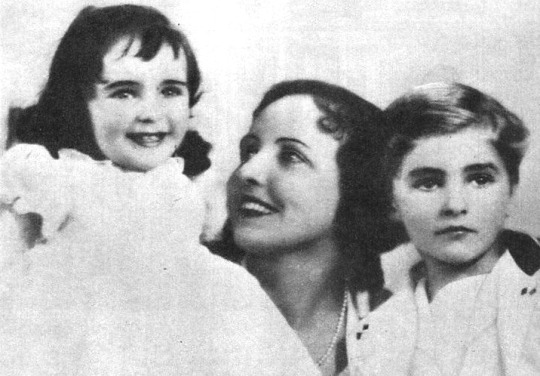
Elizabeth era perfeita para ser uma estrela de cinema desde a infância: com cabelos pretos e olhos violeta, ela era uma criança que se parecia com um anjo único e exclusivo. Seu pai, Francis, era dono de uma galeria de arte. Sua mãe, Sara Sothern, foi atriz da Broadway e deixou os palcos quando se casou. Ambos os pais eram americanos, mas Elizabeth e seu irmão mais velho nasceram em Londres. A família voltou para os EUA em abril de 1939, devido ao clima político tenso na Europa. Dois anos depois, Elizabeth deu início a sua carreira no cinema.

Elizabeth was tailor-made (HA!) to be a movie star since childhood: with black hair and violet eyes, she was a kid that resembled an unusual angel. Her father, Francis, was an art dealer and gallery owner. Her mother, Sara Sothern, was a Broadway actress who left the stage after getting married. Both were Americans, but Elizabeth and her older brother were born in London. The family left for the US in April 1939, because of the tense political situation in Europe. Two years later, Elizabeth started her screen career.

Elizabeth, mother Sara and brother Howard 
Em 1943, já contratada pela MGM, a pequena Elizabeth apareceria, mais uma vez sem receber créditos, em “Jane Eyre” como uma garota sofredora no orfanato, e como Priscilla em “A força do coração”. Seu maior sucesso viria no ano seguinte. Elizabeth Taylor dizia que sua infância acabou quando ela se tornou uma estrela, e ela com certeza sofreu um bocado durante a carreira – mas isto é uma história a ser contada em outra ocasião.

In 1943, already signed by MGM, little Elizabeth would appear, once again uncredited, in “Jane Eyre” as an ill-fated girl at the orphanage, and as Priscilla in “Lassie Come Home”. Her biggest success yet would come the following year. Elizabeth Taylor said that her childhood ended when she became a star, she certainly suffered during her career – but that’s another story.

This is my contribution to the Elizabeth Taylor blogathon, hosted by Crystal at In the Good Old Days of Classic Hollywood.
Related Posts Plugin for WordPress, Blogger...