} Crítica Retrô: estreia

Tradutor / Translator / Traductor / Übersetzer / Traduttore / Traducteur / 翻訳者 / переводчик

Showing posts with label estreia. Show all posts

Sunday, June 23, 2019

In the Wake of the Bounty (1933): o primeiro filme the Errol Flynn

In the Wake of the Bounty (1933): Errol Flynn's first film


Muitos de nós devem ter conhecido a história do motim a bordo do navio HMS Bounty através de um filme. De farto, o famoso motim foi levado para as telas muitas vezes, sendo os filmes mais notáveis os de 1935, 1962 e 1984. Nestes filmes, o líder do motim, Fletcher Christian, foi interpretado por, respectivamente, Clark Gable, Marlon Brando e Mel Gibson. Mas estes não foram os únicos filmes sobre o ocorrido. Em um dos menos conhecidos filmes sobre o motim, um novato chamado Errol Flynn foi escalado como Fletcher Christian.

Many of us may have learned the story of the mutiny aboard the HMS Bounty through a film. Indeed, the infamous mutiny was translated to the screen several times, most notably in 1935, 1962 and 1984. In these films, the leader of the mutiny, Fletcher Christian, was portrayed by, respectively, Clark Gable, Marlon Brando and Mel Gibson. But those weren't the only films about the fact. In one of the lesser-known mutiny movies, a newcomer called Errol Flynn was cast as Fletcher Christian.
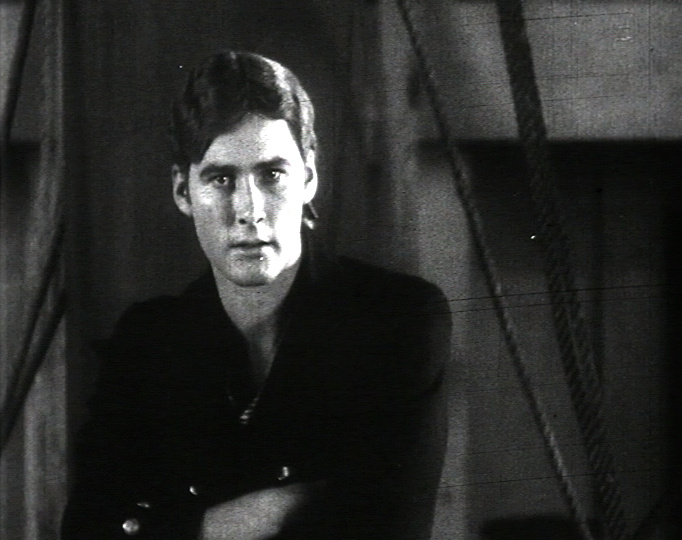

“In the Wake of the Bounty” começa com o aviso de que não se trata de um filme dramático qualquer. Na realidade, ele é o primeiro de uma série prevista de “grandes filmes de viagem”, filmados em locação pelo estúdio Expeditionary Films. Aparentemente, o plano nunca se concretizou, pois o IMDb mostra que apenas mais uma película foi feita pelo estúdio.

“In the Wake of the Bounty” begins with a warning that it was not a common drama film. In reality, it is the first of an intended series of “great travel films”, shot on location by Expeditionary Films. Apparently, this never happened, as IMDb lists only one more film made by the studio.


Um homem cego chamado Michael (Victor Gouriet) conta a história do HMS Bounty – história da qual ele foi testemunha – para seus amigos em um bar. Através de uma narração solene, ele fala sobre o terrível temperamento do capitão Bligh (Mayne Lynton). O contraste é óbvio quando vemos Bligh sozinho em uma sala grande e bem decorada, enquanto os marinheiros estão todos juntos, empilhados, no convés. Quem recebe ordens do capitão é Fletcher Christian (Errol Flynn). Uma surpresa é que a câmera balança um pouco nas cenas dentro do navio, criando uma sensação que é ao mesmo tempo verdadeira e nauseante.

A blind man named Michael (Victor Gouriet) tells the story of the HMS Bounty – one he witnessed – to his drinking peers. Through a solemn narration, he talks about Captain Bligh's (Mayne Lynton) terrible temper. The contrast is obvious when we see Bligh alone in a huge, well-furnished room, while the sailors are all together in the deck. Receiving orders from the captain is Fletcher Christian (Errol Flynn). Surprisingly, the camera rocks a little in these ship scenes, creating a feeling that is at the same time true and dizzying.


Depois de uma viagem extenuante na qual os marinheiros são explorados e punidos, o navio chega ao Taiti. Lá, eles encontram estereótipos e nudez. Eles ficam seis meses no Taiti, dançando e se divertindo com os nativos. Quando os marinheiros são chamados de volta para o navio, todos ficam desolados – incluindo Fletcher Christian, que se apaixonou por uma nativa. Amor e luxúria serão os combustíveis do motim.

After an extenuating trip in which the sailors are explored and punished, the ship arrives in Tahiti. There, they find stereotypes and nudity. They spend six months in Tahiti, dancing and enjoying their time with the natives. When the sailors are called back to the ship, they are all desolate – including Fletcher Christian, who fell in love with a native. Love and lust will be the fuels for the mutiny on the bounty.


Como o líder do motim menos sangrento da história, Errol Flynn se sai bem, mas está ridículo com uma peruca de rabo de cavalo. Sua voz é clara e ele demonstra alguma emoção, mas aí o filme se torna... um documentário sobre o Taiti! E volta para a ficção de novo! E depois para o documentário mais uma vez! É tudo uma bela e interessante bagunça.

As the leader of the least bloody mutiny in history, Errol Flynn is good, but looks quite ridiculous with a wig with a ponytail. His voice is clear and he shows some emotion but then the film changes... to a documentary about Tahiti! And then to fiction again! And then documentary once again! It's all a beautiful, interesting mess.


A história do cinema australiano é um tópico selvagem. Embora o primeiro longa-metragem seja australiano – “The Story of the Kelly Gang” (1906) – o país não teve grande tradição cinematográfica. Mais do que isso: as produções de Hollywood demoravam alguns anos para chegar à Oceania. A indústria do cinema australiana  estava em crescimento na década de 1910, mas sofreu um grande golpe com a guerra, e só se recuperou deste golpe nos anos 30.

Australian film history is a wild topic. Even though the first feature film was Australian – “The Story of the Kelly Gang” (1906) – the country didn’t have a big tradition in filmmaking. More than that: Hollywood movies took a couple of years to reach Oceania. The Australian film industry was thriving in the 1910s, but the war came and it suffered a big blow, from which the industry didn’t recover until the 1930s.
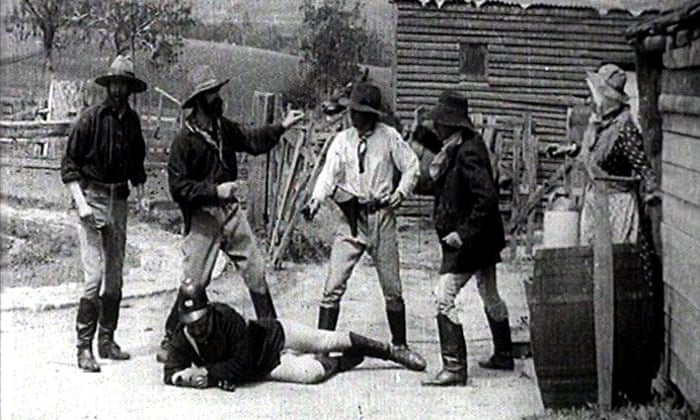
"The Story of the Kelly Gang"
Errol Flynn, nascido na Tasmânia em 1909, tinha 24 anos quando “In the Wake of the Bounty” foi feito. Há várias histórias sobre como ele foi escalado para o filme. Também foram criadas diversas histórias para vender o filme, e uma delas dizia que Flynn era descendente direto de Fletcher Christian – ele, obviamente, não era.

Errol Flynn, born in 1909 in Tasmania, was 24 when “In the Wake of the Bounty” was made. There are different stories about how he was cast in the picture. There were also created stories to sell the film, with one of them saying Flynn was a direct descendant of Fletcher Christian – which, of course, he wasn’t.


Na estranha cinebiografia “Flynn” – também conhecida pelo título “My Forgotten Man” – o jovem Errol Flynn é mostrado como um mentiroso que não conhecia limites quando se tratava de conseguir o que ele queria, e isso incluía roubar, dormir com homens e mulheres e entrar em brigas. O filme conta que Errol (interpretado por Guy Pearce) conseguiu o papel em “In the Wake of the Bounty” depois de embebedar outro ator e tomar o lugar dele, assinando um contrato. Não há outra evidência para comprovar essa história que não seja o filme. A película também termina com Flynn se tornando uma sensação do dia para a noite por causa de sua performance, o que não ocorreu, pois foi uma performance muito curta e amadora.

In the odd 1993 biopic “Flynn” – sometimes also called “My Forgotten Man” – young Errol Flynn is portrayed as a liar who saw no limits to get what he wanted, and this included stealing, sleeping with men and women and getting in fights. The film tells that Errol (played by Guy Pearce) got the part in “In the Wake of the Bounty” by getting an actor drunk and showing up in his place to sign the contract. There is no other evidence of this story but the film. The movie also ends with Flynn becoming an overnight sensation due to his performance, which didn’t happen, as it was a very short and incipient performance.   
 
Guy Pearce
Depois de “In the Wake of the Bounty”, Flynn foi para a Inglaterra, onde ele trabalhou no teatro e fez dois filmes. O produtor Irving Asher então recomendou Flynn para a Warner Brothers. Em Hollywood, ele foi primeiro testado em dois filmes B e finalmente se tornou uma estrela com “Capitão Blood” (1935).

After “In the Wake of the Bounty”, Flynn went to England, where he worked in the theater and made two movies. Producer Irving Asher then recommended Flynn to Warner Brothers. In Hollywood, he first was tested in two B-movies and finally became a star with “Captain Blood” (1935).
 
"Murder at Monte Carlo", 1935 (lost film)
Fletcher Christian e Errol Flynn têm algumas coisas em comum. Ambos eram aventureiros mulherengos que, mais de uma vez, tomaram decisões pensando em mulheres. Ambos eram rebeldes à sua maneira, e ambos escreveram seus nomes na história por seus atos.

Fletcher Christian and Errol Flynn have some things in common. Both were adventurous womanizers who, more than once, had women in mind when making decisions. Both were rebellious in their own way, and both wrote their names in history thanks to their devilish actions.
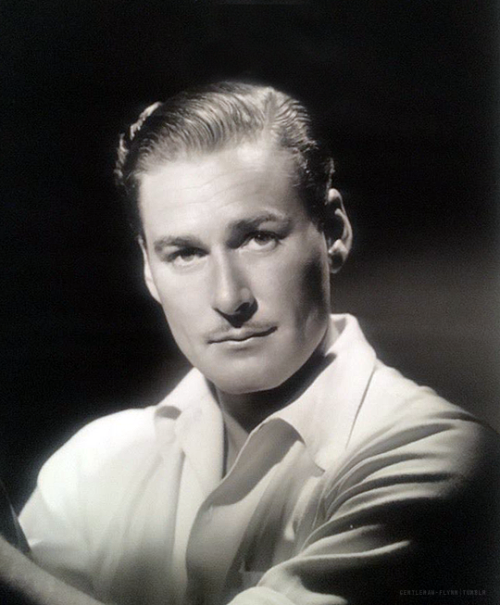

“In the Wake of the Bounty” desafia todos os limites entre ficção e documentário, e só por isso já merece ser visto. Ah, e também tem Errol Flynn, é claro.

“In the Wake of the Bounty” defies all limits between fiction and documentary, and for this alone it's a movie worth checking. Oh, and there is Errol Flynn, too.

“In the Wake of the Bounty” is available on YouTube and Internet Archive.

This is my contribution to the Blizzard of Oz blogathon, hosted by Quiggy at The Midnite Drive-In.


Monday, April 2, 2018

Romance em Alto Mar (1948) / Romance on the High Seas (1948)

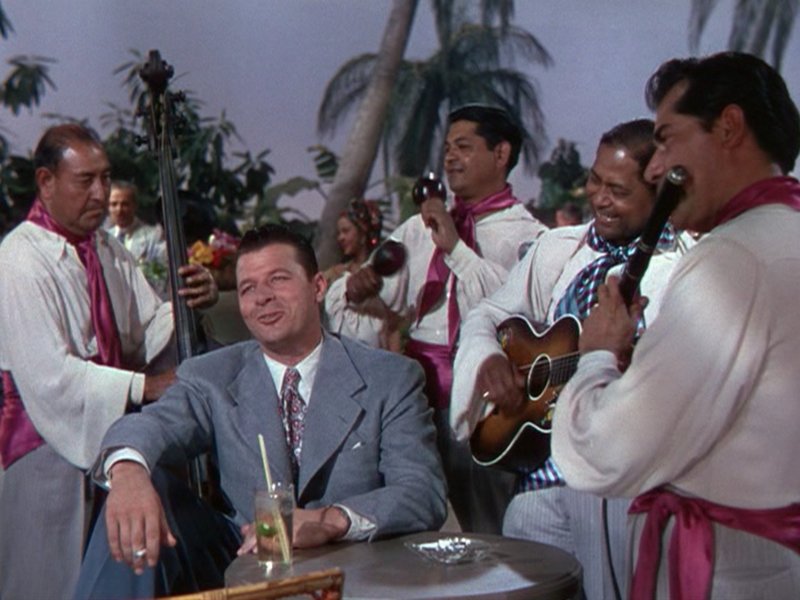
70 anos atrás, uma jovem encantadora cuja vida seria marcada por tragédias apareceu pela primeira vez nas telas do cinema. Ela havia sonhado em ser uma dançarina, mas um acidente grave interrompeu seu sonho. Durante a recuperação, ela fez aulas de canto e sua vida tomou um novo caminho. Em 1948 esta garota – chamada Doris Day – entrou para a indústria na qual teria mais sucesso e reconhecimento com o filme “Romance em Alto Mar”.

70 years ago, a young and lovely woman whose life was marked by tragedy appeared for the first time on the silver screen. She had dreamed of being a dancer, but a serious accident cut her dream short. While recovering, she took singing lessons and her life took a new path. In 1948 this girl – named Doris Day – entered the business that would give her the most success and recognition with the film “Romance on the High Seas”.
Elvira (Janis Paige) e Michael Kent (Don DeFore) são casados, mas não confiam um no outro. Eles nunca confiaram, nem mesmo antes do casamento. Um deles sempre pensa que o outro está flertando ou sendo infiel. No terceiro aniversário de casamento deles, Elvira tenta mais uma vez planejar uma viagem – algo que já foi planejado e cancelado nos dois anos anteriores por causa dos compromissos de Michael – e reserva uma cabine em um cruzeiro pela América do Sul. Na agência de viagens ela encontra a cantora de cabaré Georgia Garrett (Doris Day), que adora planejar viagens, mas nunca tem dinheiro suficiente para de fato fazê-las.

Elvira (Janis Paige) and Michael Kent (Don DeFore) are married, but they don't trust each other. They have never trusted each other, not even on their wedding day. One always thinks the other is flirting with someone else and being unfaithful. On their third wedding anniversary, Elvira tries to plan a trip once again – something that had been planned and cancelled due to Michael's commitments in two previous years – and books a cabin in a cruise to South America. At the travel agency she meets the cabaret singer Georgia Garrett (Doris Day), who loves to plan trips, but never has the money to actually go.
Com a viagem correndo perigo mais uma vez, Elvira cria um plano: ela deixará que Georgia vá no cruzeiro sob a identidade de senhora Kent, e a própria Elvira vai ficar em Nova York e vigiar o marido. Mas Michael também está preocupado, e decide mandar um detetive, Peter Virgil (Jack Carson), seguir sua esposa no cruzeiro. Obviamente, Virgil nunca viu a senhora Kent antes...

With the trip on jeopardy once more, Elvira elaborates a plan: she will let Georgia go on the cruise under the name of Mrs Kent, and Elvira herself will stay in New York and follow her husband. But Michael is also worried, and decides to send a detective, Peter Virgil (Jack Carson), to follow his wife on the cruise. Obviously, Virgil has never seen Mrs Kent before…
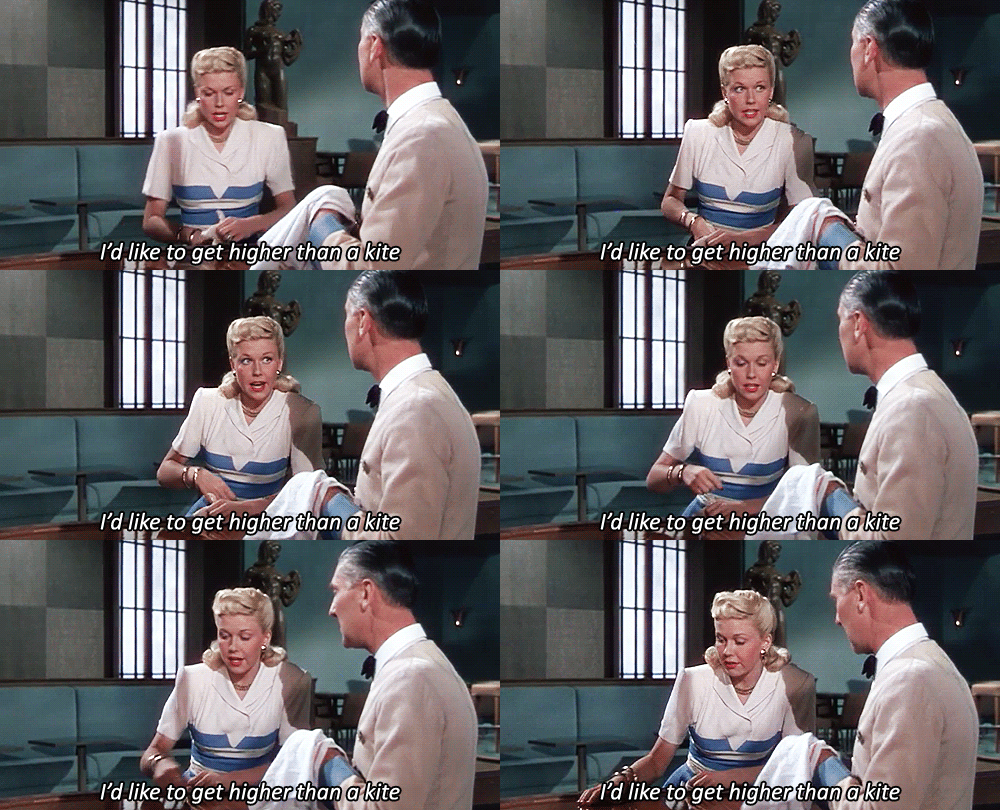
Doris Day já é adorável normalmente, mas neste filme ela está super adorável. Dodo tinha apenas 26 anos quando fez “Romance em Alto Mar” – a mesma idade de Janis Paige, que certamente parece mais madura e séria – e tem as bochechas cobertas de sardas. Sua personagem, Georgia, é divertida, charmosa e tem ótimas tiradas.

Doris Day is usually adorable, but in this film she is extra adorable. Dodo was only 26 when she made “Romance on the High Seas” – the same age as Janis Paige, who certainly looks more mature and serious – and has her cheeks covered in freckles. Her character, Georgia, is funny, charming and street-wise.
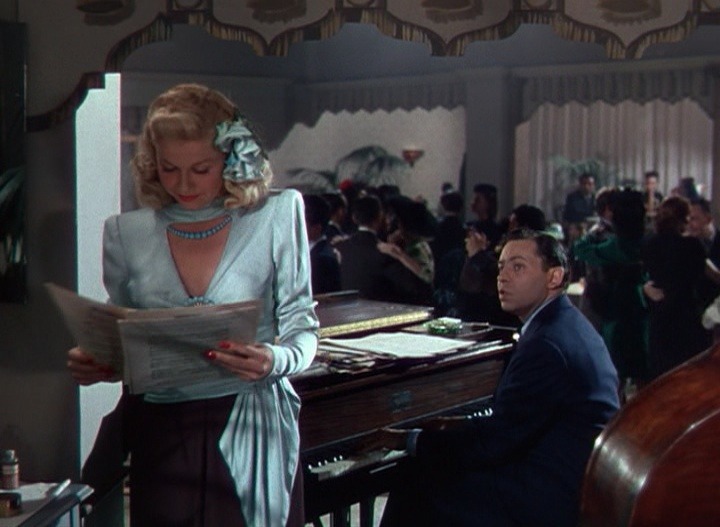
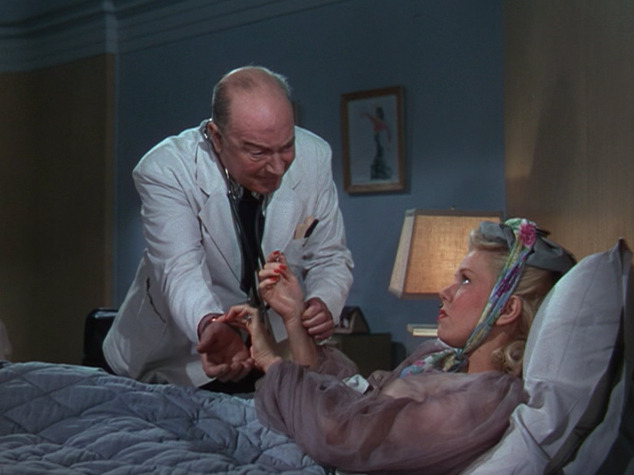
Os coadjuvantes são particularmente maravilhosos. S.Z. Sakall interpreta Lazlo Lazlo, tio de Elvira que adora paquerar mulheres jovens e rememorar o passado. Oscar Levant é Oscar Farrar, o pianista de cabaré que quer se casar com Georgia, e que vai causar problemas no cruzeiro. Uma sequência hilária acontece quando Eric Blore aparece interpretando um médico desastrado que provavelmente está bem pior do que qualquer um de seus pacientes. Grady Sutton como um operador de rádio no navio e John Berkes como um bêbado em Trinidad também farão você dar boas risadas.

The supporting cast is a particular treat. S.Z. Sakall plays Lazlo Lazlo, Elvira's uncle who loves to hit on girls and reminisce the past. Oscar Levant is Oscar Farrar, the pianist at the cabaret who wants to marry Georgia, and who will make things difficult at the cruise. A hilarious moment happens when Eric Blore appears playing a ship doctor that is clumsy and may be much sicker than his patient. Grady Sutton as a ship radio operator and John Berkes as a drunken man in Trinidad also give us a good laugh.
O cruzeiro tem paradas em Cuba, Trinidad e Rio de Janeiro. A maneira como o comércio é retratado em Cuba não é nem um pouco lisonjeiro, e causa alguma vergonha alheia. Em Trinidad, o Calypso é obviamente a atração principal. E no Rio há, claro, um baile de Carnaval! Pelo menos não há ninguém falando espanhol – uma garota é até vista falando português em uma cabine telefônica!

The cruise stops in Cuba, Trinidad and Rio de Janeiro. The way sales in Cuba are shown is not something flattering at all, and makes us uncomfortable watching. In Trinidad, the Calypso is obviously the main attraction. And in Rio of course there is a Carnival ball! Bonus points because no one speaks Spanish – a girl is even seen speaking Portuguese in a telephone booth!
Os personagens se hospedam no Hotel Atlântico. Embora tal hotel de fato exista e seja localizado na famosa praia de Copacabana, não h        á indícios na imprensa de que qualquer cena tenha sido filmada no Brasil. É bem mais provável que imagens de arquivo tenham sido usadas para o voo panorâmico pelo Rio de Janeiro, enquanto os atores ficaram bem longe da cidade maravilhosa.

The characters go to the Hotel Atlântico. Although this hotel exists and until today it is located at the famous Copacabana beach, there are no notes in the newspapers in magazines about shooting the film in Brazil. It’s quite obvious that archive footage was used for the panoramic view of the city, and the actors remained far away from our beaches and beauties.
Romance em Alto Mar” é um filme delicioso, embora previsível. E a trama sequer foi criada em Hollywood: ela se originou em um filme argentino de 1947, chamado “Mulher Infiel”, com Libertad Lamarque. Sim, meus amigos, “Romance em Alto Mar” é um remake!

Romance on the High Seas” is a delightful movie, although predictable. And the plot wasn’t created in Hollywood, since it originated with the Argentinian film “Romance Musical”, from 1947, starring Libertad Lamarque. Yes, my friend, “Romance on the High Seas” is a remake!
Original
Remake
Delicioso é a melhor palavra para descrever tanto “Romance em Alto Mar” quanto a estrela que o filme revelou. O mundo foi rapidamente conquistado pelo sorriso, charme e talento de Doris Day – e é adorável ver como tudo começou.

Delightful is the best word to describe both “Romance on the High Seas” and the star it helped reveal. The world was quickly conquered by Doris Day’s smile, charm and talent – and it’s lovely to see where it all started.

This is my contribution to The Second Doris Day Blogathon, hosted by Michaela at Love Letters to Old Hollywood.

Monday, February 26, 2018

There's One Born Every Minute (1942)


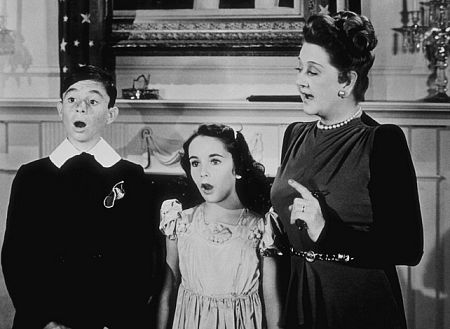
Em qualquer carreira, é raro começar no topo. No cinema, em especial, é raro começar como protagonista de um filme. A maioria, se não todas, as lendas do cinema começaram em papéis secundários, alguns até sem fala. Elizabeth Taylor também começou pequena – de ambas as maneiras: ela tinha apenas 10 anos quando fez seu primeiro filme, “There’s One Born every Minute”, que é um exemplo perfeito de filme B.

You rarely get to start on top in any career. In film, especially, it's rare to start as the star of a big picture. Most, if not all, film legends started in secondary roles, some of them as extras, others as walk-on roles. Elizabeth Taylor also started small – in both meanings: she was only 10 when she did her first film, and this film, “There's One Born Every Minute”, is a perfect example of a B-picture.


Curiosamente, a personagem de Elizabeth, Gloria, diz a primeira frase do filme: “Este cara engraçado é meu tataravô Claudius?”. Ela se refere a uma pintura que sua mãe, Minerva (Catherine Doucet) está pendurando na parede. A pintura está ali para inspirar grandeza, porque o pai de Gloria, Lemuel Twine (High Herbert), se candidatou ao cargo de prefeito da cidade de Witumpka Falls.

Curiously, Elizabeth's character, Gloria, says the very first sentence in the movie: “Is that funny-looking bloke (=man) my great-great-grandfather Claudius?”. She is referring to the painting her mother, Minerva (Catherine Doucet) is hanging on the wall. The painting is there to evoke greatness, because Gloria's father, Lemuel Twine (Hugh Herbert), is running for the position of mayor of the city of Witumpka Falls.


Gloria é a filha mais nova. Sua irmã mais velha Helen Barbara (Peggy Moran) é uma adolescente e seu irmão Junior (Carl ‘Alfalfa’ Switzer) é pouco mais velho que ela. O papai Lemuel ganha dinheiro fazendo pó para preparo de pudim – e age como um cientista maluco enquanto mistura os ingredientes, em busca do pudim perfeito. O pudim perfeito pode não existir, mas pode ser anunciado – e é isso que o marketeiro de Lemuel, Jimmy Hanagan (Tom Brown) faz: ele inventa uma nova vitamina, chamada Zumf, que é extremamente benéfica e que só é encontrada nos pudins de Lemuel.

Gloria is the youngest kid. Her older sister Helen Barbara (Peggy Moran) is a teenager and her brother Junior (Carl 'Alfalfa' Switzer) is just a little older than her. Daddy Lemuel makes pudding powder for a living – acting like a mad scientist while mixing the ingredients in search of a perfect pudding. The perfect pudding may not exist, but you can certainly advertise it – and that's what Lemuel's advertising assistant, Jimmy Hanagan (Tom Brown) does: he makes up a new vitamin, called Zumf, that is extremely beneficial and can only be found at Lemuel's puddings.


As vendas do pó para pudim aumentam vertiginosamente – e a popularidade de Lemuel também. O rico vendedor Lester Cadwalader (Guy Kibbee) não fica feliz com isso, porque ele está do lado do atual e estúpido perfeito, e precisa arranjar um jeito de sabotar a campanha de Lemuel. Lemuel não é um homem muito esperto, e deverá contar com a ajuda de seus ancestrais para fugir da sabotagem e continuar a ter chance na eleição.

The sales of pudding powder skyrocket – and so does Lemuel's popularity. Rich shop owner Lester Cadwalader (Guy Kibbee) is not happy with it, because he is supporting the current stupid mayor for re-election and must find a way of sabotaging Lemuel's campaign. Lemuel is not a very bright man, and must count with the help of his ancestors to escape the sabotage and compete fairly in the election.


Por causa do tema da eleição, podemos dizer que “There’s One Born Every Minute” é como uma versão pobre de “Herói de Mentira” – se “Herói de Mentira” estivesse drogado. É um filme engraçado, com um final muito machista e diversos momentos esquisitos.

By the election theme, you can say “There's One Born Every Minute” is like a poor version of “Hail the Conquering Hero” - if “Hail the Conquering Hero” was in an acid trip. It's a humorous film, with a very sexist ending and many weird moments.

Elizabeth Taylor não tem muito que fazer. Ela é a irmã levada, que vive correndo e importunando o irmão. Ela é fofa e divertida, e nada mais. De fato, seu primeiro empregador, Universal Pictures, não sabia o que fazer com ela – um diretor de elenco disse que ela tinha “olhos velhos demais para uma criança” e Elizabeth achava que ela intimidava os adultos no set – e após apenas um filme o estúdio a dispensou.

Elizabeth Taylor doesn't do much. She is the brat sister, running around and teasing her brother. She is cute and funny, and nothing else. Yet, she is wasted in this film. Indeed, her first studio, Universal Pictures, didn’t know what to do with her – one casting director said she had “eyes too old for a child” and Elizabeth thought she intimidated the adults on set – and after only one film they let her go.


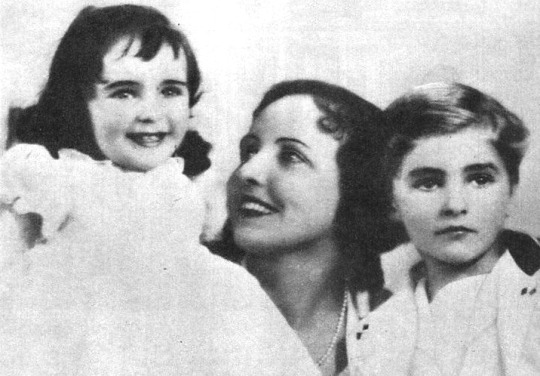
Elizabeth era perfeita para ser uma estrela de cinema desde a infância: com cabelos pretos e olhos violeta, ela era uma criança que se parecia com um anjo único e exclusivo. Seu pai, Francis, era dono de uma galeria de arte. Sua mãe, Sara Sothern, foi atriz da Broadway e deixou os palcos quando se casou. Ambos os pais eram americanos, mas Elizabeth e seu irmão mais velho nasceram em Londres. A família voltou para os EUA em abril de 1939, devido ao clima político tenso na Europa. Dois anos depois, Elizabeth deu início a sua carreira no cinema.

Elizabeth was tailor-made (HA!) to be a movie star since childhood: with black hair and violet eyes, she was a kid that resembled an unusual angel. Her father, Francis, was an art dealer and gallery owner. Her mother, Sara Sothern, was a Broadway actress who left the stage after getting married. Both were Americans, but Elizabeth and her older brother were born in London. The family left for the US in April 1939, because of the tense political situation in Europe. Two years later, Elizabeth started her screen career.

Elizabeth, mother Sara and brother Howard 
Em 1943, já contratada pela MGM, a pequena Elizabeth apareceria, mais uma vez sem receber créditos, em “Jane Eyre” como uma garota sofredora no orfanato, e como Priscilla em “A força do coração”. Seu maior sucesso viria no ano seguinte. Elizabeth Taylor dizia que sua infância acabou quando ela se tornou uma estrela, e ela com certeza sofreu um bocado durante a carreira – mas isto é uma história a ser contada em outra ocasião.

In 1943, already signed by MGM, little Elizabeth would appear, once again uncredited, in “Jane Eyre” as an ill-fated girl at the orphanage, and as Priscilla in “Lassie Come Home”. Her biggest success yet would come the following year. Elizabeth Taylor said that her childhood ended when she became a star, she certainly suffered during her career – but that’s another story.

This is my contribution to the Elizabeth Taylor blogathon, hosted by Crystal at In the Good Old Days of Classic Hollywood.

Saturday, February 18, 2017

O Ódio é Cego / No Way Out (1950)

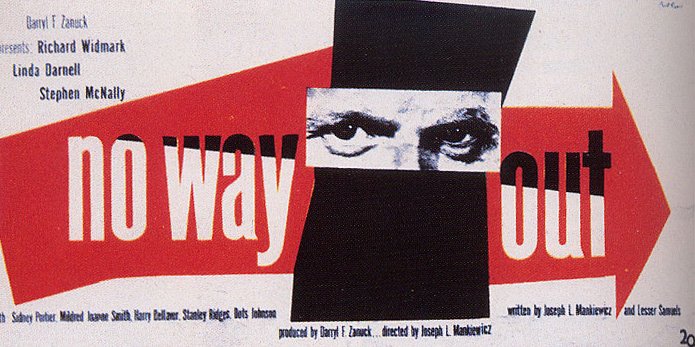
Existe algo pior que ser um ladrão? Claro: ser um ladrão RACISTA! Quando havia menos tensão, Martin Luther King era praticamente desconhecido e a marcha pelos direitos iguais era apenas um sonho, Hollywood lidou com o racismo e nos apresentou um ator que se tornaria uma lenda: Sidney Poitier.

Is there anything worse than being a thief? Of course: being a RACIST thief! When there was less racial tension, Martin Luther King was virtually unknown and the march for racial equality was nothing but a dream, Hollywood tackled racism and introduced an actor who would become a legend: Sidney Poitier.
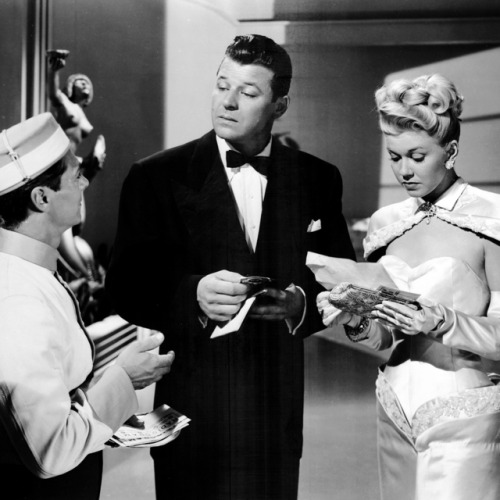
O jovem e brilhante Luther Brooks (Poitier) acabou de passar seu último exame e começou a trabalhar como médico. Infelizmente, os primeiros pacientes que ele trata são dois ladrões que foram feridos enquanto roubavam um posto de gasolina. Eles são os irmãos Ray (Richard Widmark) e Johnny (Dick Paxton).

The young and bright Luther Brooks (Poitier) has just passed his final college exams and started working as a physician. Unfortunately, the first patients he treats are two thieves who were wounded while robbing a gas station. They are the brothers Ray (Richard Widmark) and Johnny (Dick Paxton).
Ray é nervoso, grosso e reclama demais, tudo porque ele não confia em um médico negro – quando ele vê Luther pela primeira vez, ele cospe no chão e manda o médico pegar seu esfregão e limpar o cuspe. Luther trata os irmãos com justiça na área prisional do hospital, mas Johnny morre. Ray acredita que Luther matou seu irmão de propósito, e começa a planejar a vingança.

Ray is angry, rude and complains a lot, in special because he can’t trust a black doctor – when he first sees Luther he spits on the floor and tells him to get his mop and clean. Luther treats the brothers fairly in the prison ward of the hospital, but Johnny dies. Ray believes Luther killed his brother on purpose, and starts plotting revenge.
Toda primeira perda hospitalar de um jovem médico é um acontecimento importante, às vezes um choque. Mas a primeira perda de Luther é mais perigosa. Ray está cego pela dor e, acima de tudo, pelo preconceito. Ele não aceita que seu irmão já era um homem doente antes de levar o tiro. Luther se preocupa com o fato de Ray acreditar que ele matou Johnny. Luther percebe que corre perigo e decide provar que Johnny não morreu em decorrência do tiro ou do tratamento que recebeu no hospital.

Every young doctor’s first hospital loss is a milestone, sometimes a shock. But Luther’s first loss is more dangerous. Ray is blinded by pain and, above all, prejudice. He can’t accept that his brother was already a sick man before getting shot. Luther and is worried about Ray thinking he murdered Johnny. Luther can sense the danger coming, and wants to prove that Johnny didn’t die because of the shot or hospital treatment.
Não é apenas com palavras e ações que Ray ataca Luther. Ele também olha para o médico com imenso nojo. E ele espalha seu racismo.Ele convence sua ex-amante e ex-cunhada, Edie Johnson (Linda Darnell), de que Luther matou Johnny. Mesmo de dentro do hospital ele incita um ataque de brancos contra o bairro negro onde Luther mora.

It’s not only with words and actions that Ray attacks Luther. He also looks at the doctor with utter disgust. And he spreads his racism. He convinces his former lover and former sister-in-law, Edie Johnson (Linda Darnell), that Luther killed Johnny. Even inside the hospital prison warden, he starts an attack of white people against the black neighborhood Luther comes from.
Este filme mostra como o racismo – e o preconceito em geral – é fruto da ignorância, ou melhor, da falta de reflexão. Ray manipula os sentimentos de Edie usando “fatos alternativos” e a coloca contra o doutor Luther. Mais tarde, ela entra em contato com os negros que ajudou a maltratar e, quando é bem tratada por eles, ela percebe que cometeu um erro ao ser racista e buscar vingança.

This film shows how racism – and prejudice in general – is the child of ignorance, or better, lack of proper reflection. Ray manipulates Edie’s feelings by using “alternative facts” and puts her against Doctor Luther. Later, she gets in touch with the black people she might have helped hurt and, upon being treated well by them, realizes the mistake she has made in being racist and looking for vengeance.
Este foi o primeiro filme de Sidney Poitier e, embora ele seja o quarto nos créditos, ele é a grande estrela. Desde este primeiro filme ele construiu sua persona, a de um homem negro inteligente, educado e muito correto, como se a plateia só fosse capaz de aceitar uma estrela negra se ele fosse um santo. Mesmo assim, “O Ódio é Cego”, um grande sucesso de bilheteria, foi banido em algumas cidades e considerado anti-americano pela HUAC (Casa das Atividades Anti-Americanas).

This was Sidney Poitier’s first feature film and, even though he is the fourth billed, he is the star. Since this first film he built his persona of an extremely smart, polite and correct black man, as if movie-going audiences could only accept a black star if he was a saint. Nevertheless, “No Way Out”, a big box-office success, was banned in some cities and considered un-American by HUAC (House of Un-American Activities).
Mesmo sendo Poitier a força motriz da película, Linda Darnell e Richard Widmark também merecem elogios. Widmark e Poitier se tornaram amigos, e Widmark se desculpava com Poitier após cada take em que seu personagem ofendia o doutor Luther.  

Despite Poitier being the main force, Linda Darnell and Richard Widmark also deserve praise. Widmark and Poitier quickly became good friends, with Widmark apologizing Sidney after each take in which his character treated doctor Luther badly.
Good friends
Foi o começo de uma carreira luminosa para Poitier. Foi também um grande acontecimento para seus pais nas Bahamas, porque “O Ódio é Cego” foi o primeiro filme que eles viram no cinema. Foi uma fonte de orgulho colossal para o senhor e a senhora Poitier, e ainda é um filme necessário, emocionante e cheio de suspense, que deveria ser visto por todas as pessoas da Terra.

It was the beginning of a luminous career for Poitier. It was also a milestone for his parents in the Bahamas, because “No Way Out” was the first film they ever saw in a movie theater. It was a source of colossal pride for Mr and Mrs Poitier, and it still is a necessary, chilling and poignant movie every person on Earth should watch.

This is my contribution to the 90 Years of Sidney Poitier blogathon, hosted by pal Virginie at The wonderful World of Cinema.

Monday, June 20, 2011

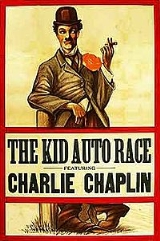
Nasce um astro: Kids Auto Races at Venice (1914)


Durante seis minutos, uma situação cômica se repete. Durante 240 segundos, uma figura chama nossa atenção: um homem de trajes rotos, chapéu e bengala, com modos elegantes. É a primeira aparição do adorável vagabundo (The Tramp, chamado por aqui de Carlitos) criado por Charles Chaplin.
Sim, é um curta histórico. Mas isso não ameniza suas falhas. A situação cômica é repetida à exaustão. O vagabundo nada mais faz do que entrar na frente de um cinegrafista que grava a corrida das crianças. Parece engraçado no início, mas conforme o filme avança temos a impressão de que, de “acidente”, a ação passa a travessura, e o vagabundo irrita-se ao ter sua intervenção criticada. Ele invade a pista e atrapalha a corrida das crianças e parece fazer isso de propósito.

Ainda distante nos modos e no bom coração do mendigo que faz de tudo para que sua amada volte a enxergar em “Luzes da Cidade” (City Lights, 1931) ou o pedinte que aceita ser preso no lugar de uma bela órfã em “Tempos Modernos” (Modern times, 1936), aqui a personagem parece sempre zangada.  Embora não seja tratado com polidez pelos cinegrafistas, há algo de furioso e desagradável em sua expressão facial. Ele chega inclusive a irritar-se com as crianças passando, mesmo sabendo que ele é que está no lugar errado.

A estreia pode não ser cheia de glamour ou méritos, mas arranca algumas risadas. Felizmente, durante mais de 20 anos, Chaplin pôde desenvolver ao máximo as potencialidades cômicas da personagem e, finalmente, chegar ao ápice com obras-primas como “Em busca do ouro” (The gold rush, 1925) e as duas pérolas valiosas do cinema mudo da década de 1930. 

Monday, November 15, 2010

Cinebiografias pelas quais esperamos ansiosos

Quem tem um grande ídolo não se cansa de correr atrás de novidades sobre ele: sites, livros, artigos, notícias em jornais e revistas e fotos. Quando sai um filme sobre a vida dessa pessoa adorada, então, que alegria! Por um bom tempo a produção cinematográfica vai gerar publicidade e curiosidade em relação ao seu ídolo! É por isso que nós, grandes fãs, estamos esperando ansiosos por muitas cinebiografias que foram prometidas. Saca só alguns boatos:


Marlon Brando: Dizem que haverá um filme centrado principalmente na vida pessoal de Brando, sem se preocupar tanto com a carreira. E olha que isso já dá muitas histórias cabeludas. Para quem teve aquela infinidade de mulheres...

Greta Garbo:
Outra promessa, tendo eu já visto o nome esquisito de uma atriz européia que iria interpretar a diva sueca. Se bem que capturar a personalidade de Greta já é um trabalho muito árduo...


Frank Sinatra:
Saiu notícia até no Yahoo que Leonardo Di Caprio iria interpretar o “voz de veludo”. OK, maquiagem e tintura fazem milagres, mas será que o magnífico cantor será bem representado? É esperar e torcer ( ainda mais porque eu exijo alguém que interprete Gene Kelly no filme!).


Get Happy - A vida de Judy Garland: Confirmadíssima produção com Anne Hathaway (Diário da Princesa, o Segredo de Brockeback Mountain) no papel da cantora. Estava prevista para esse ano, mas parece que só sai ano que vem... Ai, quero ir à estréia e vestida como Judy (não como Dorothy, porque aí já é mico demais...)!


Por último, uma bela foto unindo passado e presente: Chris Colfer, o fofíssimo Kurt de Glee, com alguns discos de vinil da diva Judy Garland!

Beijos,
Lê ^_^

Monday, July 12, 2010

Os losers estão de volta!


Eles surgiram há pouco tempo e já viraram mania mundial.Depois de milhões de downloads, visualizações dos vídeos no YouTube, muitos prêmios no Globo de Ouro, Satellite Awards e outros, 19 indicações para o Emmy de 2010, o seriado Glee volta para a segunda parte da sua primeira temporada na Fox nesta quarta-feira (14).


A história é simples e diferente: em uma escola, alguns dos alunos mais marginalizados e mal-vistos do Ensino Médio (entre eles, um homossexual, um cadeirante, asiáticos, líderes de torcida burrinhas e uma garota que não admite que alguém seja melhor que ela) entram para o desacreditado clube do coral. Então, descobrem o que têm de melhor (e de pior), passam a se aceitar e encontram forças na amizade, além de fazerem sucesso nos palcos.


Finalmente, desde os primeiros seriados teen da década de 90, são quebradas as odiosas panelinhas e é dado destaque para os excluídos, os diferentes, os “esquisitos”. A moda idiotamente copiada por adolescentes brasileiros do ataque e preconceito contra esses losers parece agora ter de enfrentar o sucesso de um grupo deles. É louvável que os seriados comecem essa reação cultural contra o preconceito, como acontece em “The Big Bang Theory”, em que os nerds são mostrados como pessoas interessantes, apesar de parecerem excêntricas, indo muito além de qualquer clichê ou estereótipo. Aliás, na década de 90, era comum ver, em traduções de filmes e séries, as palavras “nerd” ou “geek” virem como “idiota” ou “otário”.


Particularmente, me agrada muito a escolha das músicas, que vi desde os sucessos atuais aos mais antigos. Adoro o Kurt (e quem não gosta?) e amaria se ele tivesse mais solos, o que provavelmente não ocorrerá (quem assistiu ao episódio “Wheels” sabe o porquê). Gostaria muito que Chris Colfer ganhasse o Emmy de Ator Coadjuvante em Comédia. Mas ainda torço por Jim Parsons para Ator Principal em Comédia, pois o sem-sal professor Will não me agrada nem um pouco.


Como sempre, minha birra é pela mania da Fox de dublar suas séries, o que as descaracteriza um pouco, além de ser esquisito na hora em que o áudio original começa durante as músicas.


Enfim, ficamos prontos para o início deste novo ciclo e, espero, de uma nova mentalidade da juventude.
Beijos mil,
Lê ^_^
Related Posts Plugin for WordPress, Blogger...