} Crítica Retrô: documentário

Tradutor / Translator / Traductor / Übersetzer / Traduttore / Traducteur / 翻訳者 / переводчик

Showing posts with label documentário. Show all posts

Wednesday, June 18, 2025

Silvino Santos: o cineasta da selva

 
Silvino Santos: a filmmaker from the jungle 

Dois anos atrás, eu não sabia quem foi Silvino Santos. Claro, eu sabia que seu documentário “No Paiz das Amazonas” de 1922 estava no 71º lugar na lista de 100 melhores documentários feitos no Brasil segundo ranking da Associação Brasileira de Críticos de Cinema, da qual faço parte - mesmo tendo entrado na associação depois desta votação. Minha história com Silvino Santos começa na Le Giornate del Cinema Muto, o Festival de Cinema Mudo de Pordenone em 2023. 

Two years ago, I didn’t know who Silvino Santos was. Sure, I knew that his documentary “No Paiz das Amazonas” from 1922 was ranked #71 at the 100 best documentaries made in Brazil listed by the Brazilian Association of Film Critics, which I’m a member of - even though I entered the association after this poll was released. My story with Silvino Santos begins at Le Giornate del Cinema Muto, the Pordenone Silent Film Festival in 2023.

A 42ª edição da Giornate exibiu, em sua versão presencial na Itália, uma cópia recém-restaurada de um filme considerado perdido: “Amazonas, o Maior Rio do Mundo”, dirigido por Silvino Santos em 1918 e o primeiro documentário em longa-metragem da História. Foi a estreia mundial da restauração e foi inclusive matéria de jornal na TV brasileira. Depois disso, a cópia restaurada foi exibida em diversas cidades do Brasil, até que foi disponibilizada no site da Cinemateca.

The 42nd edition of the Giornate exhibited, in its in-person event in Italy, a recently restored copy of a film considered lost: Silvino Santos’ “Amazonas, o Maior Rio do Mundo” (“Amazonas, the Biggest River in the World”) from 1918, the first documentary feature ever. It was the world premiere of the restoration and it was even covered in the TV news here. Afterwards, the restored copy toured several cities in Brazil, until it was uploaded to the Cinematheque website.

Eu assisti a “Amazonas…” no conforto do meu quarto, mas a emoção de vê-lo pela primeira vez num século com acompanhamento musical faria do momento bem mais memorável. Mas foi memorável o suficiente: eu fiquei maravilhada com o que eu vi. Foi o passado voltando à vida. Dali em diante, fiquei mais próxima de Silvino Santos: vi e escrevi sobre “No Paiz das Amazonas” em fevereiro e em março me surpreendi ao saber que um documentário / cinebiografia sobre ele seria exibida na TV. E então me surpreendi ainda mais com os paralelos entre a trajetória de Silvino e a vida do meu bisavô. 

I watched “Amazonas…” in the comfort of my bedroom, but the emotion of seeing it for the first time in a century with a live musical would make the moment more memorable. But it was memorable enough: I was amazed by what I saw. It was the past coming back to life. From then on, I kept Silvino Santos in my radar: I watched and reviewed “No Paiz das Amazonas” last February and in March was surprised by the fact that a biopic / documentary about him from 1997 would be shown on TV. And then I was much more surprised by the parallels between Silvino’s trajectory and my great-grandfather’s life.

Silvino Santos nasceu em Cernache do Bonjardim, Portugal, em 1886 e veio para o Brasil aos 14 anos, enfeitiçado pela descrição do Amazonas que encontrou num livro. Meu bisavô, José D’Oliveira Magalhães, nasceu em Caldas de Aregos, Portugal, em 1895 e veio para o Brasil aos 19, fugindo da guerra. Santos começou a trabalhar como fotógrafo aos 17 e nem tinha completado 30 anos quando ficou famoso e foi contratado para fazer um filme para o magnata da borracha Juan Araña. Logo depois de chegar, meu bisavô começou a trabalhar como caixeiro viajante e não tinha completado 30 anos quando conheceu o amor de sua vida - na verdade, seu primeiro encontro com minha bisavó foi assistindo a um filme de Mary Pickford! 

Silvino Santos was born in Cernache do Bonjardim, Portugal, in 1886 and came to Brazil aged 14, bewitched by the description of the Amazon he read in a book. My great-grandfather, José D’Oliveira Magalhães, was born in Caldas de Aregos, Portugal, in 1895 and came to Brazil aged 19, escaping the war. Santos started working as a photographer at 17 and he wasn’t 30 yet when he became famous and was commissioned to make a movie for latex mogul Juan Araña. My great-grandfather right after arriving started working as a traveling salesman and wasn’t 30 yet when he met the love of his life - in fact, his first date with my great-grandmother was watching a Mary Pickford movie!

My great-grandparents

O primeiro filme de Silvino literalmente afundou porque o navio que o levava da América do Sul para a Inglaterra foi vítima de um ataque alemão durante a Primeira Guerra Mundial. Mas naquele momento ele já estava apaixonado pelo fazer cinematográfico. Ele logo se tornou sócio, diretor e produtor na companhia Amazônia Cine Film. Ele começou a trabalhar em sua estreia nos longas com o já mencionado “Amazonas…”. Um distribuidor vendeu as cópias do filme na Europa como se fossem dele, e o filme permaneceu incógnito até que foi redescoberto dois anos atrás.

Silvino’s first movie literally sank as the ship that was taking it from South America to England was the victim of a German attack during World War I. But by then he was totally in love with filmmaking. He soon became a partner, director and producer in the company Amazonia Cine Film. He began working on his feature debut, the aforementioned “Amazonas…”. A distributor sold the copies of the film in Europe as his own, and it remained mislabeled until the movie was rediscovered a couple of years ago.

Também um projeto sob encomenda, “No Paiz das Amazonas” foi um imenso sucesso, sendo assistido por 15 mil pessoas em um único fim de semana e ficando em cartaz nos cinemas por cinco meses consecutivos. Estando no Rio para a estreia do filme, Silvino rodou outro filme, “Terra Encantada”. De volta a Manaus, outra encomenda faz de Silvino responsável pela primeira tomada aérea do Amazonas. Mais viagens resultaram em mais filmes, como “Terra Portuguesa”, exibida com som semi-sincronizado em 1927 - na verdade, uma trilha sonora com canções e vozes foi sobreposta às imagens.  

Also a commissioned project, “No Paiz das Amazonas” was a huge success, being watched by 15,000 people in only one weekend and staying in theaters for five consecutive months. Once in Rio for his film’s premiere, Silvino shot another movie there, “Terra Encantada”. Back to Manaus, another commissioned project makes Silvino responsible for the first aerial shot of the Amazonas. More trips resulted in more movies, such as “Terra Portuguesa”, exhibited with semi-synchronized sound in 1927 - in reality, a soundtrack was recorded with songs and voices.

“O cineasta da selva” é, como eu disse, uma mistura de cinebiografia e documentário. Como Silvino Santos, o ator José de Abreu divide a narração com uma voz feminina - de Rosi Campos, com a narração de Abreu sendo em primeira pessoa. A atriz Denise Fraga tem um pequeno papel como a esposa de Silvino, Anita. Os filhos deles, Guilherme e Lília, são entrevistados. Fragmentos de seus filmes são mostrados.   

“A filmmaker from the jungle” is, as I said, a mix of biopic and documentary. As Silvino Santos, actor José de Abreu shares the narration with a female voice - by Rosi Campos -, with Abreu’s narration being in the first person. Actress Denise Fraga has a bit part as Silvino’s wife Anita. Their children Guilherme and Lília are interviewed. Fragments of his films are shown.

Algo muito interessante retratado é o misticismo de Silvino. Ele teve uma experiência de quase morte aos cinco anos, considerava-se protegido por alguma força porque nunca foi atacado por indígenas ferozes nem adoeceu durante suas expedições, e já idoso comentava que conversava com espíritos, como o fantasma do também diretor de cinema F.W. Murnau.

One very interesting thing portrayed is Silvino’s mysticism. He had a near-death experience when he was five, considered to be blessed or protected in some way because he never got attacked by ferocious Indians nor got sick during his expeditions, and at an old age talked about communicating with spirits, such as the ghost of fellow filmmaker F.W. Murnau.

Silvino Santos fez mais de 50 curtas, as “Silvinadas”, e nove longas entre 1914 e 1957. Ele faleceu em 1970. Meu bisavô teve seis filhos entre 1920 e 1931. Ele faleceu em 1976. Silvino Santos escreveu seu nome na História do Cinema. Meu bisavô marcou as vidas de quem o conheceu e ainda é lembrado com carinho por eles. Dois imigrantes portugueses que venceram no Brasil, mesmo de maneiras bem diferentes.

Silvino Santos made more than 50 shorts, the “Silvinadas”, and nine features from 1914 to 1957. He died in 1970. My great-grandfather had six children between 1920 and 1931. He died in 1976. Silvino Santos wrote his name in Film History. My great-grandfather marked the lives of people who met him and is still fondly remembered by them. Two Portuguese emigrés who won in Brazil, albeit in very different manners.

This is my contribution to the Fifth Luso World Cinema blogathon, hosted by me here at Crítica Retrô and Beth at Spellbound with Beth Ann.

Friday, February 28, 2025

No País das Amazonas (1922)


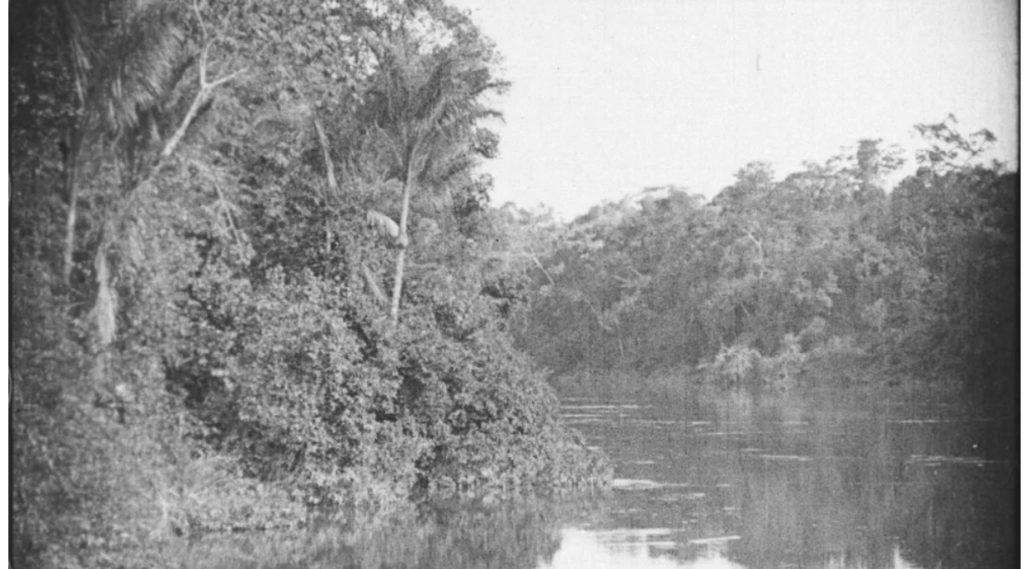
O primeiro documentário de longa-metragem - de cinco ou mais rolos de filme - foi “Nanook, o Esquimó” de 1922, certo? ERRADO. Quatro anos antes, um longa documentário foi gravado no Brasil, “Amazonas - O maior rio do mundo”, por um português chamado Silvino Santos, que teve seu filme roubado pelo distribuidor europeu, que passou a declarar que o filme era seu. E no mesmo ano em que obtivemos Nanook, Santos mais uma vez filmou o Amazonas, maior estado do Brasil.

The first feature-length - five reels or more of film - documentary was 1922’s “Nanook of the North”, right? WRONG. Four years prior a feature-length documentary was shot in Brazil, “Amazonas - The biggest river in the world”, by a Portuguese man named Silvino Santos, who had his film stolen by its distributors in Europe, who then claimed the movie was their own. And in the same year that gave us Nanook, Santos once again filmed the Amazonas, the biggest state in Brazil.

A capital do estado, Manaus, é ostensivamente mostrada no começo. Muitas atrações turísticas desfilam diante de nossos olhos e, como eu ainda não estive em Manaus, não tenho ideia de quantas ainda estão de pé. O Theatro Amazonas (abaixo), entretanto, é uma atração que eu sei que ainda está aqui.

The capital of the state, Manaus, is ostensibly shown in the beginning. Many tourist attractions parade before our eyes and, since I haven’t been there yet, I have no idea how many still stand. The Amazonas Theater (below), however, is an attraction I know is still there.

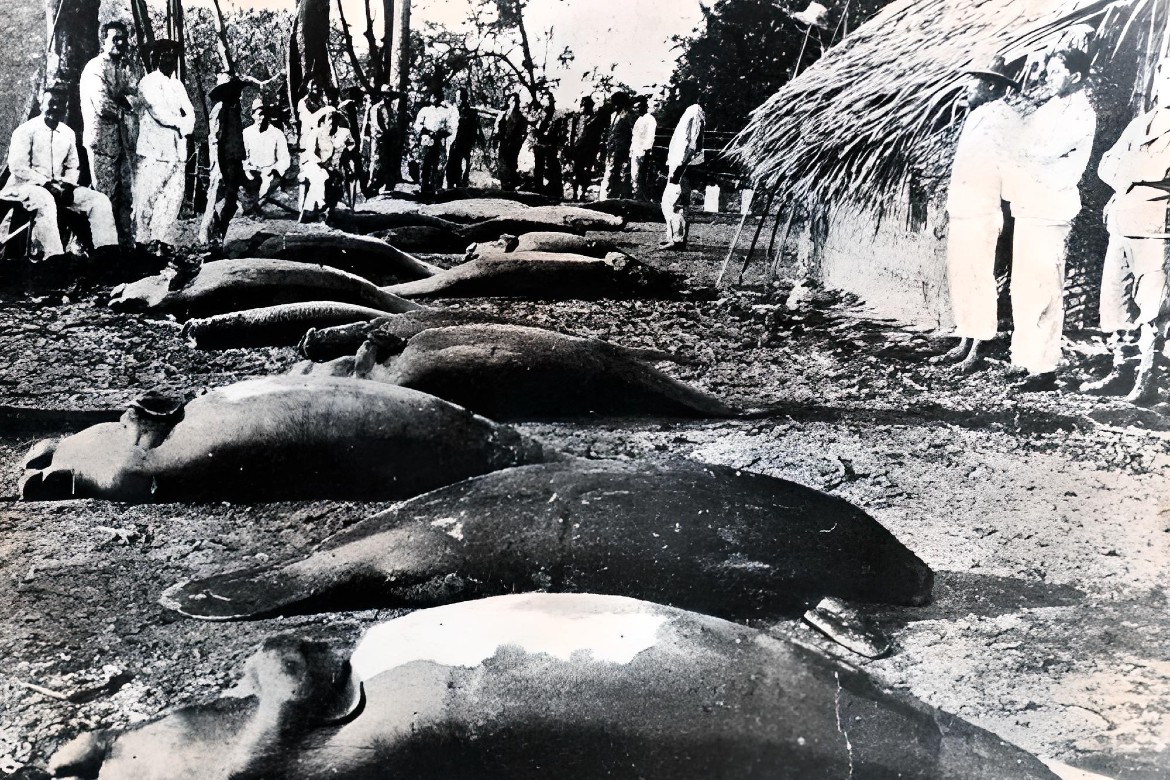
A natureza tem um papel importante no documentário. Vemos uma onça, um tamanduá, preguiças, lontras, jacarés, macacos, aves, peixes, borboletas - “o Amazonas é o paraizo (sic) das borboletas”, uma cartela de texto nos conta - e até alguns infelizmente mortos peixes-boi - na verdade, nos ensinam a pescar estes animais majestosos. A pesca do peixe-boi também foi exibida no documentário de 1918 e teve consequências: o peixe-boi da Amazônia é hoje considerado uma espécie vulnerável. Outro animal ameaçado, a tartaruga, é brevemente mostrado botando ovos, com pessoas mais tarde recolhendo os ovos para consumo próprio, o que acelerou o declínio da espécie. A retirada de penas de garças é condenada no filme, o que não acontece com os outros crimes ambientais.

Nature plays a big role in the documentary. We spot a jaguar, an anteater, sloths, otters, alligators, monkeys, birds, fish, butterflies - “the Amazonas is the paradise of butterflies”, a title card tells us - and even some unfortunately dead manatees - in fact, we’re taught how to hunt these majestic animals. The hunt of the manatee was also exhibited in the 1918 documentary and had its consequences: the manatee from the Amazon is today considered a vulnerable species. Another threatened animal, the turtle, is briefly shown laying eggs, with people then harvesting the eggs for consumption, which accelerated the species’s decline. The extraction of the feathers in herons is condemned by the movie, but not these other environmental crimes.

Todas as atividades econômicas do Amazonas têm um bom tempo de tela: a caça e a pesca, extração de castanhas, borracha e madeira, plantação de guaraná, criação de gado. É bacana notar que muitas mulheres são empregadas nessas atividades, especialmente descascando castanhas e a fruta do guaraná.

All the economic activities of the Amazonas are given a good amount of screen time: hunting and fishing, nut, rubber and wood extraction, guaraná plantation, cattle. It’s worth noting that many women are employed in these activities, especially taking the nuts out of their shells and peeling the guaraná fruit.

Há índios, tratados com o já esperado exotismo. O interesse ainda é atual, pelos índios “não-civilizados”. Rituais indígenas também são de interesse para os documentaristas, e há até um aviso sobre “índias bastante decoradas”. Em tempos recentes, os índios do Amazonas vêm sendo ameaçados de ficar sem casa - ou melhor, sem terra - por causa do absurdo Marco Temporal.

There are Indians, treated with the expected exoticism. The interest is one that still exists, about “non-civilized” Indians. Indian rituals are also of interest to the documentarists, and there is even a warning for “female Indians very adorned”. In recent times, the Indians in Amazonas were threatened to become homeless - or rather landless - because of the absurd Marco Temporal.

Mesmo antes de o presidente Washington Luís ser eleito, seu lema “governar é construir estradas” era sentido no Amazonas. Não são mostradas apenas estradas em travelogues, mas também estradas de ferro que cruzam a selva. Os documentaristas viajam de trem, carro e navio.

Even before president Washington Luis was elected, his motto “to govern is to build roads” was felt in the Amazonas. Not only roads are shown in travelogues, but also train tracks that crossed the jungles. The documentarists travel by train, car and boat.

Recentemente vêm acontecendo conversas sobre exploração de petróleo na Amazônia. Muito do que é mostrado no documentário foi, sem dúvida, destruído nos últimos 100 anos e muito mais pode ruir com essa terrível ideia. O Greenpeace alertou que não é viável extrair petróleo da Amazônia e que a vida dos animais e das comunidades indígenas ao redor pode ser afetada e, ainda pior, destruída.

Recently there have been talks about drilling oil in the Amazon. Much of what is shown in the documentary was without a doubt destroyed in the past 100 years and much more can be destroyed with this terrible idea. Greenpeace warned that it’s not viable to drill oil in the Amazon and the lives of animals and Indian communities nearby could be affected and, even worse, destroyed.

O diretor Silvino Santos nasceu em Portugal em 1886 e faleceu em Manaus em 1970. Sua primeira experiência com cinema foi um filme feito sob encomenda para o empresário Julio Cezar Araña, que estava sendo acusado de usar trabalho escravo em sua propriedade e queria sua defesa feita pelo cinema. O filme foi rodado em 1912 mas os negativos foram perdidos num naufrágio dois anos depois. Quando seu filme de 1918 foi roubado e rebatizado de “Maravilhas da Amazônia”, Silvino tentou recriá-lo quase quadro a quadro e o resultado, um filme bem diferente, foi “No País das Amazonas”. O patrocinador do documentário, Joaquim Gonçalves de Araújo, é comumente creditado como co-diretor.

Director Silvino Santos was born in Portugal in 1886 and died in Manaus in 1970. His first experience with cinema was a film made for hire for the entrepreneur Julio Cezar Araña, who was being accused of using slaves in his property and wanted his defense to be made via cinema. The film was shot in 1912 but the negatives were lost in a shipwreck two years later. When his 1918 film was stolen and relabeled as “Wonders of the Amazon”, Silvino tried to recreate it almost frame by frame, and the result, a very different movie, was “No País das Amazonas”. The sponsor of the documentary, Joaquim Gonçalves de Araujo, is often credited as co-director.

Como aconteceu quando eu assisti à “Amazonas - O maior rio do mundo”, eu fiquei muda e hipnotizada com as imagens na real. Eu me lembrei do que minha mãe sempre diz quando assiste a filmes antigos: “todas essas pessoas já morreram, não é?”. Considerando que o documentário foi feito há mais de 100 anos, a resposta é sim. Mas esta é a beleza do cinema: as pessoas podem ser imortalizadas ao participarem de um filme. E nós podemos viajar, algumas vezes muito longe e outras dentro do nosso próprio país, sem sair de casa.

Like it happened when I watched “Amazonas - The biggest river in the world”, I was speechless and hypnotized by the images on the screen. I was reminded of what my mom always says when watching old movies: “all these people are dead, aren’t they?”. Considering that the documentary was made over 100 years ago, the answer is yes. But this is the beauty of cinema: people can be immortalized by being in a movie. And we can travel, sometimes far away and sometimes in our own country, without leaving our houses.

Monday, March 4, 2024

The Great Buster: A Celebration (2018)


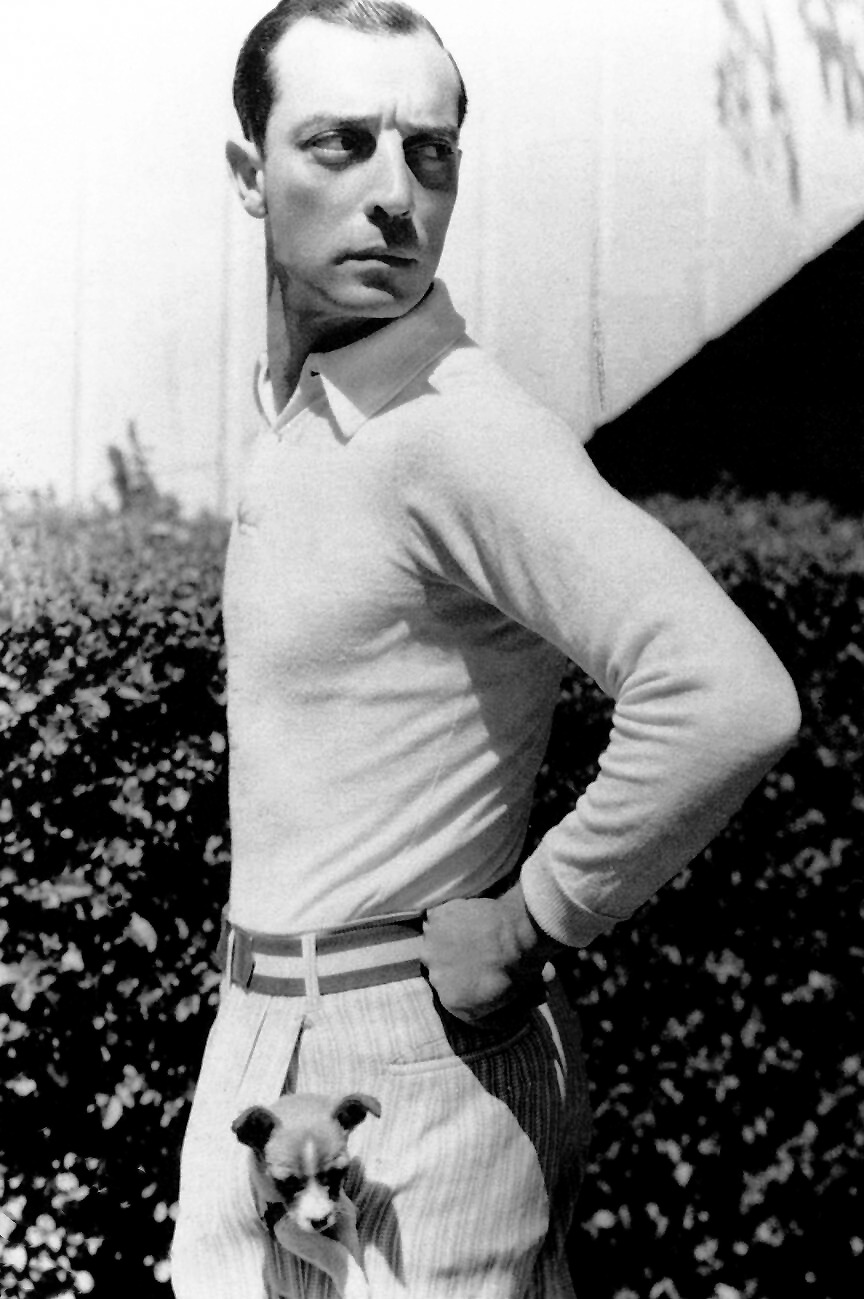
Uma das razões para o sucesso da Nova Hollywood - nome utilizado para se referir aos cineastas que começaram suas carreiras no final da década de 1960 e início de 1970 - foi que eles não eram apenas cineastas: eram também cinéfilos. O exemplo máximo é Martin Scorsese, que tem até uma fundação para preservar e restaurar filmes antigos, e em documentários, assim como em seus filmes de ficção, já demonstrou sua paixão pela História do Cinema. Peter Bogdanovich é outro nome da Nova Hollywood que amava filmes clássicos - tanto que ele homenageou mais de uma vez as comédias malucas. O último filme de Bogdanovich foi um documentário sobre o grande Buster Keaton, um filme bastante informativo sobre este ícone inesquecível.


One of the reasons for the success of the New Hollywood – a name used to refer to filmmakers who started in the late 1960s and early 1970s – was that they weren’t only filmmakers: they were also cinephiles. The maximum example is Martin Scorsese, who even has a foundation to preserve and restore old films, and in documentaries, just like in his fiction films, has demonstrated his passion for the History of Cinema. Peter Bogdanovich is another name from New Hollywood who loved classic movies – so much that he paid tribute more than once to screwball comedies. Bogdanovich’s last film was a documentary about the great Buster Keaton, a very informative film about this unforgettable icon.

Nós, fãs de Buster Keaton, conhecemos a história. Buster nasceu em 1895 e, ainda bebê, se juntou aos pais no palco. Ele cresceu como uma popular estrela de vaudeville, se tornando, antes dos 10 anos de idade, o astro do número dos Keaton graças às suas quedas - quedas que podem ter inspirado Houdini a dar ao menino o apelido de Buster. Em 1917 ele adentra no mundo do cinema com Roscoe Arbuckle, que se tornaria seu mestre e amigo próximo, e em 1920 ele fez seu primeiro longa-metragem, “O Pesado”.


We, Buster Keaton fans, know all the basics. Buster was born in 1895 and, as a baby, joined his parents on stage. He grew up as a popular vaudevillian, becoming, before he turned 10, the star of the Keatons’ act with his falls – falls that might have inspired Houdini to give him the nickname Buster. In 1917 he enters the movie world with Roscoe Arbuckle, who would become his professor and close friend, and in 1920 he made his first feature, “The Saphead”.

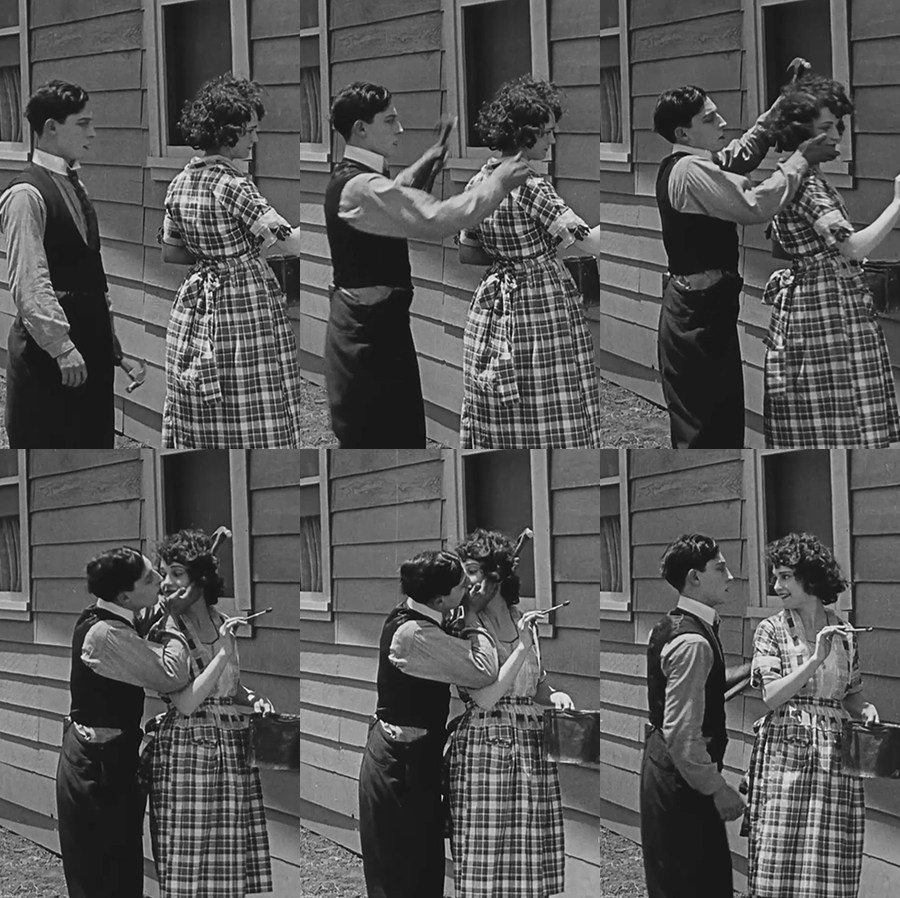
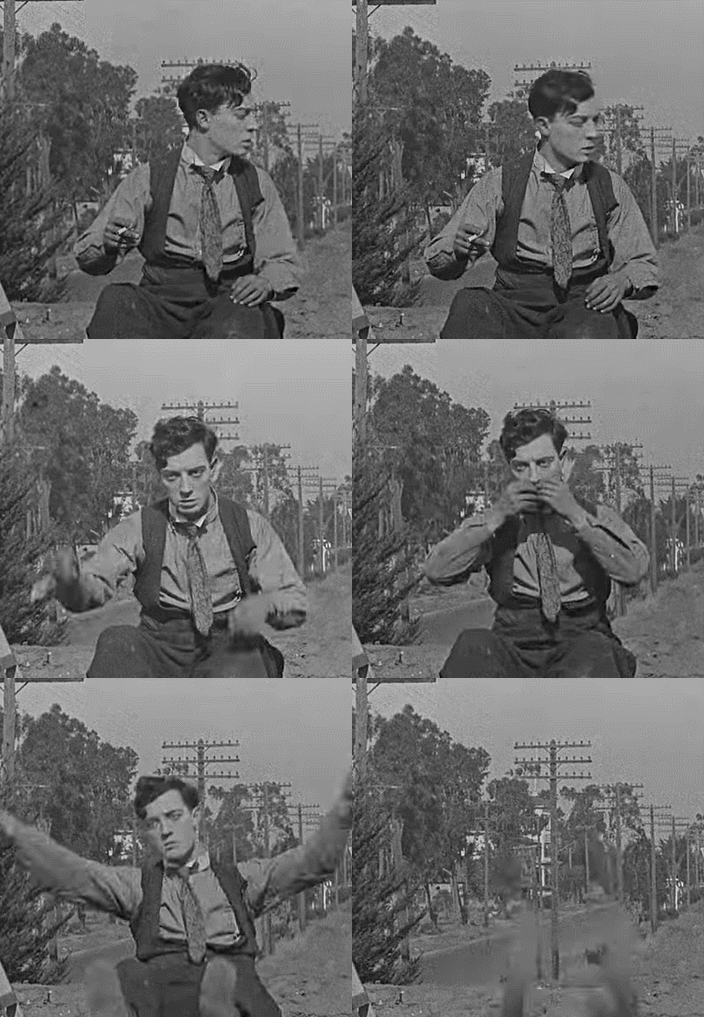
Walter Kerr, famoso escritor, disse que assistir ao primeiro curta-metragem solo de Buster, “One Week”, é como ver um jardim no exato momento de florescer. Todos os curtas são mencionados e vemos clipes deles, provando que Buster, com vinte e poucos anos, já era um cineasta genial.


Walter Kerr, a famous writer, said that watching Buster’s first released solo short, “One Week”, is like seeing a garden in the exact moment of blooming. All his shorts are mentioned and we see clips of them, proving that Buster, in his mid-20s, was already a genius filmmaker.

Buster nunca trabalhou com um roteiro na década de 1920. Ele sabia o começo e o fim dos seus filmes, mas como ele disse, “o meio tomará conta de si mesmo”. Isto muda quando ele se associa à MGM, e sua carreira sofre. Ao mesmo tempo, Buster tem que encarar o fim da era muda no cinema, o fim de seu casamento, seu vício em álcool e uma nova maneira de fazer filmes na MGM.


Buster never worked with a script during the 1920s. He knew the beginning and the ending of his films, but, as he said, “the middle would take care of itself”. This changes when he joins MGM, and his career suffers. At the same time, Keaton has to face the end of the silent era, the end of his marriage, his drinking addiction and a new way of making pictures at MGM.

Há várias manchetes de jornal mostradas ao longo da vida e carreira de Buster, incluindo algumas da época em que ele foi demitido da MGM e sofreu um colapso nervoso, o que o levou a uma hospitalização. Os jornais disseram que ele se aposentaria e nunca mais trabalharia no cinema, o que provou ser uma mentira após ele voltar à sobriedade. Ele encontra trabalho novamente com a Educational Pictures e depois com a Columbia, mas os filmes que faz nessa época são tão ruins que o próprio Buster os chama de “traições”.


There are several newspaper headlines shown throughout Keaton’s life and career, including some from the time he was fired from MGM and had a nervous breakdown, which made him be hospitalized. Newspapers said that he would retire and never work again in film, which proved to be a lie after he became sober again. He finds work again with Educational Pictures and later Columbia, but the movies he makes at that time are so bad that Keaton himself calls them “cheaters”.

Felizmente, Buster é salvo por seu último casamento. Em 1940 ele se casa com Eleanor Norris, que se torna Eleanor Keaton, e é ela quem mais o apoia. Esse apoio vem nos maus momentos e também quando as coisas começam a melhorar, com Keaton se apresentando num circo internacional, na TV, fazendo comerciais e pontas em filmes.


Luckily, Buster is saved by his last marriage. In 1940 he weds Eleanor Norris, who becomes Eleanor Keaton, and she is his biggest cheerleader. She supports him through bad and also when things start to look good again, with Keaton appearing at an international circus, on TV, making commercials and cameos in film.

Há algo novo no documentário mesmo para os velhos fãs como eu. Eu nunca havia visto alguns dos comerciais que Buster fez, nem seu episódio do programa de TV “This is Your Life”, em que ele se emociona bastante. Isso prova que há sempre mais sobre Buster para ser redescoberto e virar assunto de artigos. O documentário também ousa ao escolher contar a vida toda de Buster e só depois analisar os dez filmes - dez obras-primas! - que ele fez nos anos 20.


There is something new in the documentary even for old fans like me. I had never seen some commercials Buster did, as well as his “This is Your Life” TV episode, in which he’s deeply moved. This is proof that there is always more about Buster to be rediscovered and written about. The documentary also takes a bold turn by choosing to tell Buster’s whole life and then analyze the ten films - ten masterpieces! - he made in the 1920s.

Buster foi apelidado de “great stone face” (“grande cara de pedra”), mas o documentário nos faz lembrar que ele tinha olhos muito expressivos, algo que valia ouro no cinema mudo. E não apenas nesta época: o diretor Jon Watts, de “Homem-Aranha: De Volta para Casa” (2017), nos conta que se inspirou em Buster para criar as emoções de um Homem-Aranha com rosto também inexpressivo, coberto por uma máscara.   


Buster was nicknamed “the great stone face”, but the documentary reminds us that he had very expressive eyes, a feature that was like gold for silent cinema. And not only for that: director Jon Watts, from “Spider-Man: Homecoming” (2017), tells us that he was inspired by Buster to create the emotions of an also stone-faced Spider-Man, whose face is covered by a mask.

São muitos os entrevistados no documentário: amigos de Keaton, como Dick Van Dyke, atores, como Bill Hader e Mel Brooks, diretores, tais quais Werner Herzog e Tarantino, dublês, historiadores, a exemplo de Leonard Maltin, e pesquisadores. Todos eles falam sobre como Buster influenciou seus trabalhos, em especial com seus feitos sobre-humanos sem o uso de dublês.


The “talking heads” in the documentary are many: friends of Keaton, such as Dick Van Dyke, actors, such as Bill Hader and Mel Brooks, directors, like Werner Herzog and Tarantino, stuntmen, historians, like Leonard Maltin, and researchers. They all talk about how Buster influenced their works, especially his super-human stunts.

O produtor do documentário é Charles S. Cohen. De acordo com Bogdanovich, Cohen adquiriu os direitos sobre a obra de Keaton e ofereceu ao cineasta a oportunidade de fazer o documentário com todo o material de arquivo de que ele dispunha - uma oferta que nem Peter, nem ninguém, poderia recusar. Bogdanovich escreveu, dirigiu e narrou o documentário.


The producer of the documentary is Charles S. Cohen. According to Bogdanovich, Cohen got the rights over Keaton’s oeuvre and offered the filmmaker the opportunity to make a documentary with all the archival footage he got – an offer Peter, or anyone, couldn’t refuse. Bogdanovich wrote, directed and narrated the documentary.

Numa entrevista para Ben Mankiewicz no TCM, Bogdanovich disse que fazer este documentário foi só alegria e - polêmico! - que Keaton é melhor que Chaplin porque o humor de Chaplin era demasiado Vitoriano, enquanto o humor de Keaton era moderno. Mesmo assim, não havia animosidade entre eles: Eleanor Keaton disse que Chaplin tratou Keaton como um rei quando eles filmaram a única cena em que contracenaram, em “Luzes da Ribalta” (1952).


In an interview to Ben Mankiewicz on TCM, Bogdanovich said that making this documentary was a joy and – polemic! – that Keaton is better than Chaplin because Chaplin’s humor was too Victorian, while Keaton’s humor was modern. Nevertheless, there was a lovely relationship between them: Eleanor Keaton claimed that Chaplin treated Keaton like a king when they shot their only appearance together, in “Limelight” (1952).

Leonard Maltin diz que Buster Keaton sempre se esforçou 100% para fazer todas as coisas que fez. É por isso que ele teve êxito em seu objetivo máximo: nos fazer rir - o que ele continua fazendo mesmo 100 anos após seu auge. É por isso que ele é o Grande Buster Keaton.


Leonard Maltin says that Buster Keaton always gave 100% of his efforts to all the things he did. That’s why he succeeded in his ultimate goal: to make us laugh – which he keeps doing despite it’s been 100 years since his heyday. This is why he is the Great Buster.


This is my contribution to the 10th Annual Buster Keaton blogathon, hosted by Lea at Silent-ology.

Friday, October 14, 2022

41 Giornate del Cinema Muto - 41st Pordenone Silent Film Festival


A melhor semana do ano veio… e já se foi. Esta semana é, obviamente, a semana em que o Festival de Cinema Mudo de Pordenone acontece. Este ano, a semana veio com notícias muito especiais: eu ganhei o prêmio do Collegium! Explicando: em 2020 eu fui uma das onze jovens pessoas escolhidas para o Collegium, um grupo de discussão dentro do festival. Todos nós tivemos que submeter um artigo documentando nossa participação e discutindo um ou mais filmes do festival. Eu escrevi sobre o insano “La Tempesta in un Cranio” e seus temas paralelos de doença mental, slapstick e estrelato. E meu artigo foi escolhido como o melhor de todos, empatado com o artigo escrito por meu amigo Travis. O artigo em breve estará no site do festival, por isso agora vou discutir os filmes exibidos na edição online de 2022 da Le Giornate del Cinema Muto.

The best week of the year has come… and gone. This week is, of course, the week when the Pordenone Silent Film Festival happens. This year, it came with very special news: I won the Collegium Prize! Explaining: in 2020 I was one of eleven young people chosen to be in the Collegium, a discussion group within the festival. We all had to submit a paper documenting our participation and discussing one or more films from the festival. I wrote about the wacky “La Tempesta in un Cranio” (1922) and its underlying themes of mental illness, slapstick and stardom. And my paper was chosen as the best of the batch, tied with the paper written by my friend Travis. The paper will soon be up at the festival website, so now I’ll discuss the films shown in the 2022 online edition of Le Giornate del Cinema Muto.


Houve dois grandes temas na Giornate deste ano. O primeiro era a Ruritania. Ruritania é uma região fictícia nos Bálcãs onde muitas aventuras aconteceram, começando com “O Prisioneiro de Zenda”. O reino de Silistria - onde a ação de “Sui Gradini del Trono” (1912) acontece - é o equivalente à Ruritania na arte italiana. No filme, o regente Backine (Giovanni Enrico Vidali) tenta substituir o Príncipe Herdeiro Wladimiro (Alberto Capozzi) por um sósia, o dançarino Chichito, e casar sua filha como o falso Príncipe Herdeiro. Como os filmes de super-heróis da atualidade, filmes “Silistrianos” emocionavam o público e era sucessos de bilheteria, mas não agradavam aos críticos.

There were two grand themes in this year’s Giornate. The first was Ruritania. Ruritania is the fictional region in the Balkans where many stories happened, starting with “The Prisoner of Zenda”. The kingdom of Silistria - where the action for “On the Steps of the Throne” (1912) happens - is the equivalent of Ruritania in Italian art. In the movie, the regent Backine (Giovanni Enrico Vidali) tries to substitute the Crown Prince Wladimiro (Alberto Capozzi) for a doppelgänger, the dancer Chichito, and marry his daughter to the fake Crown Prince. Like the superhero movies of nowadays, Silistrian movies excited the audience and were box office successes, but didn’t please the critics.

Outro filme da Ruritania no programa foi “His Majesty The Barber” (1928), um filme sueco-alemão que nos apresenta a Nickolo (o ator chileno Enrique Rivero), um barbeiro que é na verdade rei de um reino chamado Tirania. Nickolo não sabe que é um rei, pois o segredo é bem guardado por seu avô, também barbeiro e amigo pessoal da rica senhora Sophie Svensson (Karin Swamströn), que quer casar sua neta Astrid (Brita Appelgren) com um homem rico. Isso não é o que você espera, pois o filme tem um plot twist incrível no final.

Another Ruritanian movie in the programme was “His Majesty The Barber” (1928), a Swedish-German movie that introduces us to Nickolo (Chilean actor Enrique Rivero), a barber who is actually the king of a kingdom called Tirania. Nickolo doesn’t know he is a king, as the secret has been kept by his grandfather, also a barber and a personal friend of the well-to-do Mrs Sophie Svensson (Karin Swamströn), who wants to marry her granddaughter Astrid (Brita Appelgren) to a rich man. This is not what you expect, as the film has a wild plot twist in the end.

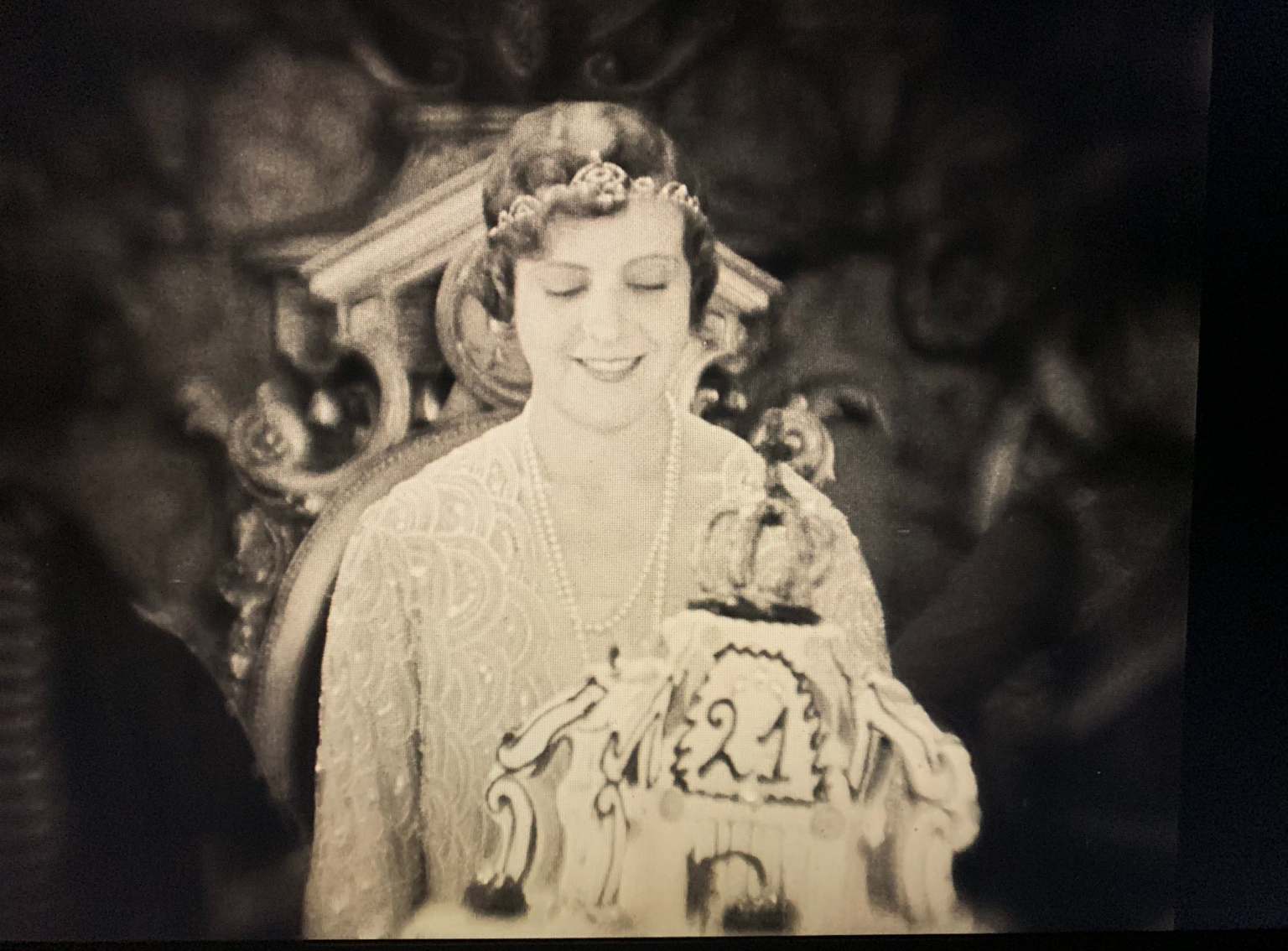
O reino de Lothen-Kunitz é onde a ação começa em “The Runaway Princess” (1929). A princesa Priscilla (Mady Christians) acaba de fazer 21 anos e isso significa que seu noivado com um príncipe de algum reino vizinho está para acontecer. Insatisfeita com a ideia de se casar com alguém que não conhece, Priscilla foge para Londres, onde ela se envolve com um grupo de falsários. Este filme tem poucas cartelas de títulos, algo que eu apreciei, mas é previsível.

The kingdom of Lothen-Kunitz is where the action starts in “The Runaway Princess” (1929). Princess Priscilla (Mady Christians) has just turned 21 and this means that her engagement with a Prince from a nearby kingdom will happen soon. Dissatisfied with the idea of marrying someone she’s never met, Priscilla runs away to London, where she gets involved with a group of forgers. This film has few title cards, something I liked, but it’s rather predictable.

O segundo tema era Norma Talmadge. No evento presencial, 15 dos filmes de Norma - mais três fragmentos de filmes - foram exibidos, enquanto na versão online três de seus filmes fizeram parte da mostra: o curta de 1912 “Mrs ‘Enry ‘Awkins” e dois longa-metragens. Em “Yes or No” (1920), Norma interprets dois papéis: a rica Margaret Vane, cujo marido está doente mas não conta para ela, e Minnie Berry, cujo marido é um operário que estuda à noite. Ambas as mulheres se sentem negligenciadas pelos maridos, e ambas são seduzidas por outros homens: a senhora Vane pelo bon-vivant Paul Derreck (Lowell Sherman) e a senhora Berry pelo seu inquilino Ted Leach (Gladden James). Essas mulheres dirão sim ou não para a tentação? Também no elenco está Natalie Talmadge - a futura esposa de Buster Keaton- como Emma, criada da senhora Vane e irmã de Minnie. Em “Yes or No” o papel duplo não é igual ao de “Sui Gradini del Trono”, no qual os sósias trocam de lugar, mas é uma boa técnica de qualquer maneira.

The second grand theme was Norma Talmadge. In the in-person event 15 of Norma’s movies - plus three fragments of movies - were screened, while in the online version three of her movies were shown: the 1912 short “Mrs ‘Enry ‘Awkins” and two features. In “Yes or No” (1920), Norma plays two roles: the rich Margaret Vane, whose husband is ill but doesn’t tell her, and Minnie Berry, whose husband is a factory worker by day and goes to school at night. Both women feel neglected by their husbands, and both are seduced by other men: Mrs Vane by the bon-vivant Paul Derreck (Lowell Sherman) and Mrs Berry by her tenant Ted Leach (Gladden James). Will these women say yes or no to temptation? Also in the cast there is Natalie Talmadge - aka Buster Keaton’s future wife - as Emma, Mrs Vane’s maid and Minnie’s sister. In “Yes or No” the dual role is not played as in “On the Steps of the Throne”, in which there is an exchange of doppelgängers, but it is a nice device nevertheless.

O segundo filme de Norma Talmadge exibido foi “The Lady”, dirigido por Frank Borzage. O filme começa com Polly Pearl, uma mulher de meia-idade (já interpretada por Talmadge), em sua taverna em Marselha. Lá ela reconta sua história de vida, primeiro como dançarina num teatro, ao que se segue um casamento com o rico Leonard St Aubyns (Wallace MacDonald), um casamento que só durou até a lua de mel. Sempre com o objetivo de ser uma dama, ela vai para a França, onde sofre um bocado. Os destaques deste drama lacrimoso foram a decoração de interiores de William Cameron Menzies e a atuação de Norma Talmadge, especialmente perto do final.

The second Norma Talmadge movie screened was “The Lady”, directed by Frank Borzage. The film begins with Polly Pearl, a middle-aged woman (already being played by Talmadge), in her tavern in Marseille. There she retells her life story, first as a dancer at a music hall, followed by her marriage to the rich Leonard St Aubyns (Wallace MacDonald), a marriage that lasted only as long as their honeymoon. Always with the goal of being a lady, she goes to France where she suffers a bit. The highlights of this tearful drama were William Cameron Menzies’ set decorations and Norma Talmadge’s acting, especially near the end.

“Just Around the Corner” (1921) foi escrito para as telas e dirigido por Frances Marion. O filme conta a vida da família Birdsong: Ma (Margaret Seddon), Essie (Sigrid Holmquist) e Jimmie (Lewis Sargent, ótimo no papel). Essie é influenciada por uma má amiga, que a leva a mudar de trabalho e a apresenta a um golpista, Joe Ullman (Edward Phillips). A mãe se preocupa com um possível casamento entre Essie e um homem decente, por isso ela fica sempre à espera da noite em que Essie trará seu namorado para jantar em casa. Este filme foi restaurado graças à atuação conjunta da Biblioteca do Congresso dos EUA e o sempre excelente Eyefilmmuseum da Holanda, e a cópia exibida estava incrível.

“Just Around the Corner” (1921) was written for the screen and directed by Frances Marion. It chronicles the life of the Birdsong family: Ma (Margaret Seddon), Essie (Sigrid Holmquist) and Jimmie (Lewis Sargent, great in the role). Essie is influenced by a bad friend who makes her change jobs and introduces her to a con man, Joe Ullman (Edward Phillips). Ma’s main concern is about Essie getting married to a decent man, that’s why she’s always waiting for the night Essie will take her beau home to dinner. This movie was restored thanks to a joint effort by the Library of Congress and the always excellent Eyefilmmuseum of the Netherlands, and the print was gorgeous.

As pessoas responsáveis por fazer o Código Hays ser respeitado ficariam malucas se tivessem que censurar o filme italiano “Profanazione”, de 1926. Estrelando Leda Gys, o filme conta a história de Giulia, uma mulher que, para pagar uma dívida, transa, contra sua vontade, com Roberto (de novo Alberto Capozzi), um homem que sempre a cobiçou. Giulia engravida e tem duas filhas, vive feliz por alguns anos, até que seu marido descobre que uma das meninas não é sua filha legítima.

People on the Hays Office would completely freak out if they had to censor the 1926 Italian film “Profanazione”. Starring Leda Gys, it tells the story of Giulia, a woman who, in order to pay a debt, has sex, against her will, with Roberto (again Alberto Capozzi), a man who always pursued her. Giulia gets pregnant and has two daughters, living happily for a few years, until her husband discovers that one of the girls is not his legitimate child.

Também teve espaço em Pordenone para documentários, tanto curtas quanto longa-metragens. Os curtas foram apresentados dentro da sessão da Ruritania e consistiam em newsreels mostrando os reis de Montenegro e da Eslovênia. Outro curta mostrava três festivais no Japão da década de 1910. O longa “Over Mountains, Over Valleys” (1929) não fez meu tipo, mas foi interessante ao mostrar principalmente crianças brincando em vilas da Eslováquia. Eu gostei muito das roupas das pessoas… e das ovelhas no começo. O diretor Karel Plicka realmente insere no filme traços etnográficos, fazendo dele um objeto muito curioso.

There was also space in Pordenone for documentary films, both shorts and features. The shorts were presented inside the Ruritanian session and consisted of newsreels showing the kings of Montenegro and Slovenia. Another short chronicled three festivals in 1910s Japan. The feature “Over Mountains, Over Valleys” (1929) was not my cup of tea, as I’m not that fond of documentaries, but it was interesting as it showed mostly children playing games in Slovakian villages. I really enjoyed the people’s clothes… and the sheep in the beginning. Filmmaker Karel Plicka really infuses the film of ethnographic traces, making this a most curious object.

Na Giornate pude ver qual é o apelo de Ivan Mosjoukine, um querido dos Twitter os que tratam do cinema mudo. E, uau, que estrela! Ele é o protagonista de “Manolescu”, de 1929, interpretando um homem que se transforma em um trapaceiro, com a ajuda de sua amante, Cleo (Brigitte Helm). Quando ele é atingido na cabeça por um inimigo, ele conhece a adorável enfermeira Jeanette (Dita Parlo) e passa a viver um dilema amoroso. Curiosamente, como referência ao tema da Ruritania, o título do filme em inglês é “Manolescu, o Príncipe das Aventuras”.

At the Giornate I could see what is the appeal of Ivan Mosjoukine, a favorite of Silent Film Twitter. And, wow, what a star! He is the lead of 1929’s “Manolescu”, playing a man who becomes a swindler and is helped in his “business” by his lover, Cleo (Brigitte Helm). When he suffers a blow to the head, he meets the lovely nurse Jeanette (Dita Parlo) and finds himself at an amorous crossroads. Curiously, as a tie to the Ruritanian theme, the title of this movie in English is “Manolescu, the Prince of Adventures”.

Outro ator que pude conhecer melhor na Giornate foi Harrison Ford - não, não o Indiana Jones, mas um astro do cinema mudo com o mesmo nome. Em “Up in Mabel’s Room” (1926), Mabel (Marie Prevost) havia se divorciado do marido Garry (Ford) por causa de uma bobagem. Agora ela está determinada a se casar novamente com Garry, e uma festa numa mansão é a oportunidade perfeita para Mabel acabar com o noivado de Garry com Phyllis (Phyllis Haver) e tomar seu homem de volta. Duas coisas chamaram minha atenção neste filme: a trilha brilhante da Zerorchestra e o papel do mordomo Hawkins, interpretado por William Orlamond.

Another lead that I could know better at the Giornate was Harrison Ford- no, not Indiana Jones, but a silent film star with this name. In “Up in Mabel’s Room” (1926), Mabel (Marie Prevost) had divorced her husband Garry (Ford) because of a small issue. Now she is serious about remarrying Garry, and a party at a mansion is the perfect opportunity for Mabel to end Garry’s engagement with Phyllis (Phyllis Haver) and get her man back. Two things called my attention in this film: the brilliant score by Zerorchestra and the role of Hawkins the butler, played by William Orlamond.

“O Grande Amor de uma Pequena Dançarina” (1924, título traduzido do original alemão) foi uma pérola. A animação feita com marionetes é a única sobrevivente do estúdio Piccolo-Film, e é o que chamamos de um “filme órfão”: não foi dirigido ou protagonizado por pessoas famosas, por isso não é o tipo de filme que chama atenção suficiente para ser restaurado e exibido. Também conhecido pelo maravilhoso título com trocadilho “The Cabinet of Dr Larifari”, este foi meu filme favorito de toda a Giornate, mesmo ele terminado com o deus ex-machina que eu mais detesto. Todo o resto foi perfeito: o trabalho com as marionetes, a atmosfera, a cor da cópia, a trilha sonora… Bem, se eu estivesse no Collegium este ano, escreveria meu artigo sobre este filme!

“The Big Love of a Little Dancer” (1924, title translated from the original German) was a gem. This animation made with puppets is the sole survivor of the Piccolo-Film studio, and it’s what we call an “orphan film”: not directed by nor starring famous people, it’s not the kind of film that calls enough attention to be restored and screened. Also known by the amazing punny title “The Cabinet of Dr Larifari”, this was my favorite movie of the entire Giornate, even though it ends with the deus ex-machina that I hate the most. The rest was everything perfect: the puppetry, the atmosphere, the tinting of the print, the soundtrack… Well, if I was in the Collegium this year, I’d write my paper entirely about this short!

Obviamente, seguindo a Giornate online e também vendo o que estava acontecendo presencialmente na Itália gera uma tristeza. Eu amaria ter visto “The Unknown” (1927), com meu ator favorito do cinema mudo, Lon Chaney, e dez minutos extras que eram desconhecidos do público. Eu amaria ter visto o programa especial das Nasty Women, porque eu recentemente entrevistei as curadoras desta sessão e foi uma entrevista fantástica. E, o desejo mais óbvio, eu amaria ter estado lá no dia do aniversário de Buster Keaton para receber meu prêmio no palco do Teatro Verdi.

Of course, following the Giornate online and also seeing what was happening on site in Italy leaves a bittersweet taste. I’d love to see “The Unknown” (1927), with my favorite silent film actor Lon Chaney and ten extra minutes previously unknown to the public. I’d love to have seen the Nasty Women special programme, because I recently interviewed the curators of this session and it was a great interview. And, the most obvious desire, I’d love to be there on Buster Keaton’s birthday to accept my prize at the stage of Teatro Verdi.

Todos nós que amamos cinema mudo sabemos o quanto desta arte está perdido: na verdade, o diretor da Giornate, Jay Weissberg, em uma das introduções, disse que 96% de todos os filmes feitos no Japão antes de 1945 estão perdidos! Mesmo assim, há tanto para ser descoberto - muito nos arquivos, precisando de restauração - e eu sempre me alegro de acompanhar a Giornate e descobrir tanta coisa. Pordenone é parte da minha história desde 2020, quando eles precisaram mudar para o ambiente online, e hoje estou feliz por ser também parte da história de Pordenone. Vejo vocês ano que vem, Pordenone - quem sabe presencialmente?

All of us who love silent film know how much of this art was lost: in fact, Giornate director Jay Weissberg, in one of his intros, said that 96% of all movies shot in Japan before 1945 are lost! Nevertheless, there is so much to be discovered - a lot in the vaults, needing restoration - and I’m always glad to follow the Giornate and discover so much. Pordenone has been part of my story since 2020, when they needed to switch to online, and now I’m glad to be also part of Pordenone’s history.
See you next year, Pordenone - maybe in person?

Related Posts Plugin for WordPress, Blogger...