} Crítica Retrô: festival

Tradutor / Translator / Traductor / Übersetzer / Traduttore / Traducteur / 翻訳者 / переводчик

Showing posts with label festival. Show all posts

Friday, September 4, 2026

Dois filmes mudos no Stummfilmtage Bonn 2026


Two silents at the Stummfilmtage Bonn 2026

Alguns dias atrás percebi que algumas pessoas que eu seguia no Letterboxd haviam logado alguns filmes mudos dos quais eu nunca havia ouvido falar. Em seus comentários, eu encontrei o link para o Stummfilmtage Bonn 2026 - que em alemão é o mesmíssimo título da Giornate del Cinema Muto é em italiano: Dias de Cinema Mudo. Além da versão presencial na Alemanha, eles tinham uma programação online grátis! Eu cheguei bem no fim da festa, mas pude assistir a três filmes mudos intrigantes. O primeiro, “Béhula” (1921), será analisado mais profundamente no meu blog Lost and Found films, por isso vamos focar nos outros dois filmes. 

A few days ago I noticed that some people I followed on Letterboxd had logged some silent films I had never heard of. In their reviews, I found the link to the Stummfilmtage Bonn 2026 - which in German is the very same as is the title for Le Giornate del Cinema Muto in Italian: Days of Silent Cinema. Besides its onsite version in Germany, they provided an online program that was free! I arrived pretty late for the party, but I could watch three intriguing silents. The first, “Béhula” (1921), will be analyzed deeper on my blog Lost and Found Films, so let’s dive into the other two movies.

Ambos tinham referências bíblicas em seus títulos e ambos não puderam ser exibidos no evento presencial por causa do mau tempo. Um deles tinha uma trilha pré-gravada, enquanto o outro foi exibido totalmente silencioso. Um veio de Hollywood, o outro da Tchecoslováquia.

Both had biblical references in their titles and both couldn’t be screened at the onsite event due to bad weather. One had a soundtrack pre-recorded, while the other was screened totally silent. One came from Hollywood, the other from Czechoslovakia.

Em “The Garden of Eden” (1928), somos apresentados a Toni (Corinne Griffith), uma garota de Viena que quer ser cantora de ópera. Ela recebe uma carta de Budapeste convidando-a para cantar no Palácio de Paris; uma carta assinada por M. Bauer. Chegando lá, ela descobre que Bauer (Maude George) é uma mulher que administra um show de mau gosto. Ela aceita cantar mesmo assim, mas é humilhada em seu primeiro número, o que a leva a ser despedida junto à costureira do local, Rosa (Louise Dresser), que defendeu a menina.  

In “The Garden of Eden” (1928), we’re introduced to Toni (Corinne Griffith), a girl from Vienna who wants to be an opera singer. She receives a letter from Budapest inviting her to sing at the Palais de Paris; a letter signed by M. Bauer. Arriving there, she finds out that Bauer (Maude George) is a woman who manages a show house of poor taste. She accepts to sing anyway, but is humiliated in her first number, which leads to her firing alongside the house seamstress Rosa (Louise Dresser), who defended her.

Rosa é na verdade uma Baronesa e, amadrinhando Toni, a leva para Monte Carlo no Hotel Eden para viver com pompa e circunstância duas semanas patrocinadas pela pensão de viúva de guerra. Lá, elas conhecem o Coronel Dupont (Edward Martindel) e seu sobrinho Richard (Charles Ray), e ambos se apaixonam por Toni, ou melhor, a Baronesa Antoinette. 

Rosa is actually a Baroness and, taking Toni under her wing, takes her to Monte Carlo to Hotel Eden to live lavishly two weeks from her war widow pension. There, they meet the Colonel Dupont (Edward Martindel) and his nephew Richard (Charles Ray), and both fall for Toni, or better, Baroness Antoinette.

Em “Adam and Eva” (1922), somos apresentados aos gêmeos chamados Adam e Eva, ambos interpretados por Suzanne Marwille. Ela é sapeca, sempre pregando peças nos outros, especialmente no irmão. Quando ambos têm dezesseis anos, Adam decide ensinar uma lição para Eva e se veste como ela para seduzir o vizinho. Eva então se veste de Adam para se vingar da vingança dele. 

In “Adam and Eva” (1922), we’re introduced to twins named Adam and Eva, both played by Suzanne Marwille. She is the mischievous one, always pranking other people and especially her brother. When they’re sixteen, Adam decides to teach Eva a lesson and dresses like her to seduce a neighbor. Eva then dresses as Adam to take revenge on his revenge.

Somos informados por uma cartela de texto que “The Garden of Eden” tinha uma sequência de sonho em Technicolor no primeiro rolo que atualmente está perdida. “Adam e Eva” termina de maneira abrupta, o que nos leva a imaginar se não tem nada faltando. Esses detalhes, entretanto, não impactaram as sessões, e agora eu sei que há outro maravilhoso festival de cinema mudo para nós amantes dessa arte.

We are informed by a title card that “The Garden of Eden” had a Technicolor dream sequence in the first reel that’s currently lost. “Adam and Eva” ends abruptly and lets us imagine if there isn’t anything missing. These things, however, didn’t make the viewing experience any worse, and now I know that there is another wonderful silent film festival for us lovers of this art.

Tuesday, October 14, 2025

44ª Giornate del Cinema Muto / 44th Pordenone Silent Film Festival

 Não curto muito celebrar meu aniversário. Gosto bastante das festividades do Natal. Mas minha época favorita do ano é outra: a semana quando acontece a Giornate del Cinema Muto. Desde a pandemia, o time por trás do festival vem sendo fantástico por oferecer uma programação online com um pouco de tudo que é exibido in loco em Pordenone, para os fãs do cinema mudo ao redor do mundo. Estou entre esses fãs espectadores pelo quinto ano consecutivo e aqui está um vislumbre desta semana mágica.

I’m not very fond of celebrating my birthday. I really like the parties around Christmas. But my favorite time of the year is another: the week when the Pordenone Silent Film Festival happens. Since the pandemic, the Giornate team has been kind enough to offer an online program with a little bit of everything that is shown in loco in Pordenone, for silent film fans around the world. I’m among them for the fifth consecutive year and here is an overview of this magic week.


O festival online começou com “Saias / A Little Bit of Fluff”, feito quando o som já estava chegando ao mundo do cinema – o glorioso ano de 1928. É uma farsa deliciosa sobre os vizinhos Bertram (Syd Chaplin), recém-casado, e Mamie (Betty Balfour), uma artista. A trama gira em torno das estripulias dele quando sua esposa deveria estar fora de casa e inclui ainda uma questão sobre um colar de pérolas e diamantes.

The online Giornate kicked off with “A Little Bit of Fluff”, from when sound was already arriving in the film world - the glorious year of 1928. It was a delightful farce about neighbors Bertram (Syd Chaplin), recently married, and Mamie (Betty Balfour), a showgirl. It revolves around his shenanigans when his wife is supposed to be out of town and also the ownership of a pearl and diamonds necklace.


Mais cedo este ano eu escrevi sobre o recentemente restaurado “Satan Fait la Noce”, de 1907. Na Giornate eu encontrei um Louis Feuillade mais contido fazendo uma série de filmes intitulados “A Vida como Ela É” entre 1911 e 1912. A restauração destes curtas estava ótima e as cópias perfeitas. Através deles fui introduzida a uma das maiores estrelas francesas da época Suzanne Grandais. A composição abaixo, de “Le Nain” de 1912, foi mais tarde imitada mas permanece como uma prova surpreendente de que o primeiro cinema era muito mais elaborado que comumente se pensa. Outro curta revelador da série foi “Erreur Tragique”, com um filme dentro do filme, com o protagonista vendo sua esposa com outro homem num filme exibido num cinema em Paris.

Earlier this year I’ve reviewed the recently recovered short “Satan Fait la Noce”, from 1907. At the Giornate I found a less mischievous Louis Feuillade making a series of films titled “Life As It Is” between 1911 and 1912. The restoration of these shorts was amazing and the prints were pristine. Through them I was introduced to one of the biggest French stars of the era, Suzanne Grandais. The shot below, from 1912’s “Le Nain”, was later imitated but remains a surprise proof that early film was much more elaborated than most think. Another revealing short of the series was “Erreur Tragique”, with a film-within-the-film, with the lead seeing his wife with another man in the film showing at a Paris movie theater.


Pela primeira vez na Giornate tive a chance de revisitar alguns “velhos amigos”, filmes que eu já havia visto antes. O primeiro foi o curta de abertura da programação online, “The Bond”, um filme patriótico com páthos. O esforço para venda de bônus de guerra pareceria propaganda sem-graça nas mãos de um cineasta menos habilidoso, mas Chaplin faz algo divertido e aprazível. Aliás, Chaplin e seus imitadores foram o foco de uma série na Giornate deste ano, e o que seguiu naturalmente a “the Bond” foi um filme do mesmo ano estrelando Billy West, reconhecido pelo próprio Chaplin como o melhor imitador de Chaplin. “His Day Out” foi divertido e quase tão bom quanto um filme do Vagabundo original. 

For the first time at the Giornate I had the chance to revisit some “old friends”, films I’ve watched before. The first one was the opening short for the online program, Chaplin’s “The Bond”, a film that is patriotic yet has pathos. The effort to sell liberty bonds would look like a dull propaganda in the hands of a less talented filmmaker, but Chaplin makes it fun and heartwarming. By the way, Chaplin and Chaplin imitators were the focus of a series at this year’s Giornate, and the natural follow-up to “The Bond” was a film from the same year with Billy West, acknowledged by Chaplin himself as the best Chaplin imitator. “His Day Out” was fun and almost as good as a film from the original Tramp.


O outro velho amigo que eu reassisti na Giornate foi a versão de 1913 de “Os Últimos Dias de Pompeia”. Cinco anos atrás (!) eu escrevi sobre as duas versões – dos estúdios Pasquali e Ambrosio – da história, ambos feitos em 1913. A Giornate apresentou a versão de Ambrosio, dirigida por Eleuterio Rodolfi. Eu não podia dizer não para uma restauração do filme, ainda mais com um tempo de exibição um pouco mais longo que o que eu vi. Falando em velhos amigos, houve também na Giornate um filme de Maurice Tourneur, que dirigiu um dos meus filmes mudos favoritos, “O Pássaro Azul / The Blue Bird”, de 1918. Mas eu vou falar mais sobre “A Urze Branca / The White Heather” no meu blog Lost and Found Films.

The other old friend I rewatched at the Giornate was the 1913 “The Last Days of Pompeii”. Five years ago (!) I reviewed the two versions - from the Pasquali and Ambrosio studios - of the story both made in 1913 in Italy. The Giornate screened the Ambrosio version, directed by Eleuterio Rodolfi. I couldn’t say no to a restoration of the print, with a slightly longer runtime. Speaking of old friends, there was also at the Giornate a film by Maurice Tourneur, who directed one of my favorite silents, 1918’s “The Blue Bird”. But I’ll talk more about “The White Heather” (1919) on my blog Lost and Found Films.


Além de “The Bond”, houve espaço para outro tipo de propaganda em Pordenone, mas bem diferente: propaganda soviética feita na Ucrânia e destinada para crianças! Primeiro exibiram “Robinson on His Own” (1929), sobre um garotinho nerd chamado Vasja (Boria Bohdanovskyi) que gosta de ler livros de aventura (norte-americanos) e decide partir em sua própria aventura. Foi tipo Madame Bovary ou Dom Quixote para crianças: cuidado com o que você lê!

Besides “The Bond”, there was plenty of space for another kind of propaganda in Pordenone, yet a very different one: Soviet propaganda made in Ukraine and aimed at children! First they showed “Robinson on his Own” (1929), about a nerdy boy named Vasja (Boria Bohdanovskyi) who likes to read (American) adventure novels and decides to go on his own adventure. It was kind of Madame Bovary or Don Quijote for children: beware at what you read!


O segundo filme de propaganda soviética com / para crianças foi “Adventures of a Penny” (também 1929), ambientado em tempos czaristas, quando crianças da classe trabalhadora fumavam e só podiam brincar nas ruas. A história é do traquinas Fedka (Kolia Kopelian) em suas muitas aventuras, sempre invadidas pelo rico e mimado Tolya (Mark Orlov). Este filme teve um excelente acompanhamento musical de Olga Podgaiskaya, completado por um coro de crianças no começo e no final.

The second Soviet propaganda film with / for children was “Adventures of a Penny” (also 1929), set in Tsarist times, when working-class children smoked and could only play on the streets. It follows naughty Fedka (Kolia Kopelian) in his many adventures, always perpassed by the rich and spoiled Tolya (Mark Orlov). This movie had a great musical accompaniment by Olga Podgaiskaya, complete with a children’s chorus in the beginning and end.


Os estúdios Ambrosio se fizeram presentes novamente com “O Torpedeamento do Oceânia” (191), feito por Augusto Genina em seu quinto ano como cineasta e estrelando Ileana Leonidoff em seu primeiro papel no cinema, e já como vilã. Algo curioso é que todas as cartelas de texto de “Os Últimos Dias de Pompeia” estão marcadas com o número 899, enquanto as cartelas aqui têm o número 1159. Isso significa que quase 300 filmes foram feitos pelos estúdios Ambrosio em quatro anos? Talvez. E não pense que Ambrosio só fazia filmes sobre desastres: o afundar do navio ocupa só a primeira curta parte do filme, o resto envolve um casal de “aventureiros” e uma herdeira numa corrida por uma herança. Outra coisa bacana de se ver é o uso de um avião como parte da trama, meros dez anos depois que Santos Dumont o inventou.

Ambrosio studios was present once again in “Il Siluramento dell’Oceania” (1917), made be Augusto Genina on his fifth year as a filmmaker and starring Ileana Leonidoff in her first film role – and as a villain. One curious thing is that all title cards from “The Last Days of Pompeii” are marked with the number 899, while all the title cards here have the number 1159. Does it mean that almost 300 films were made by Ambrosio in four years? Maybe. And don’t think that Ambrosio only made movies about disasters: the sinking of the ship is only the short first part, the rest of the movie involves a couple of “adventurers” and the rightful heiress in a race to secure an inheritance. Another nice thing to see is an airplane as a plot device, mere ten years after Santos Dumont invented it.


Falando em navios, o filme que se seguiu ao Oceânia na programação foi “O Navio Sangrento / The Blood Ship” (1927). Ele segue um marinheiro ingênuo (Richard Arlen) que embarca no Golden Bough, um navio comandado pelo sádico capitão Angus Swope (Walter James). Com Jacqueline Logan como interesse amoroso do personagem de Arlen e Hobart Bosworth num papel incomum em sua carreira, este é um filme relativamente curto com muita ação e plot twists.

Speaking of ships, the film that followed the Oceania in the program was “The Blood Ship” (1927). It follows a naïve sailor (Richard Arlen) who goes aboard the Golden Bough, a ship commanded by the sadistic Captain Angus Swope (Walter James). With Jacqueline Logan as a love interest for Arlen’s character and Hobart Bosworth playing against type, this is a short-ish film with lots of action and plot twists.


Uma série na Giornate permitiu que o público redescobrisse o imenso talento de Italia Almirante Manzini, que curiosamente morreu aqui no Brasil – mas NÃO em decorrência de uma picada de aranha, como comumente se diz. Em “A Sombra / L’Ombra”, um drama de 1923 em sete partes, Italia interpreta Berta, uma mulher da alta sociedade que repentinamente fica paralisada do pescoço para baixo. Como ela passa anos nesta condição, sob esta “sombra”, seu marido Gerardo (Alberto Collo) se transforma num famoso pintor e forma uma nova família com a amiga de Berta Elena (Liliana Ardea). Ele terá coragem de contar a verdade para Berta? Ou Berta milagrosamente se recuperará? Quem viu sabe!

A series at the Giornate allowed the audience to rediscover the huge talent of Italia Almirante Manzini, who curiously died here in Brazil - but NOT from a spider bite as it’s often claimed. In “The Shadow / L’Ombra”, a 1923 drama in seven parts, Italia plays Berta, a high-society woman who suddenly becomes paralyzed from the neck down. As she passes years under this condition, under this “shadow”, her husband Gerardo (Alberto Collo) becomes a famous painter and forms a new family with Berta’s friend Elena (Liliana Ardea). Will he get the courage to tell the truth to Berta? Will Berta make a miracle recovery? Watch and see!


Em seguida, “The Lady with the Mask / Die Dame mit der Maske” (1928), baseado em ideia original de Henrik Galeen – a mesma mente por trás de “Nosferatu” de 1922. A história se passa na Alemanha num período de hiperinflação, que abala o mundo do Barão von Seefeld (Max Gülstorff) e de sua filha Doris (Arlette Marchal). Também com dívidas está o diretor de uma revista de teatro que é obrigado a dar um papel para Kitty (Dita Parlo), amante do homem para quem o diretor deve dinheiro. Doris encontra, numa casa de penhores, seu velho amigo Alexander (Vladimir Gajdarov), que é figurante na revista e sugere que ela vá ao teatro tentar um papel. Ela consegue um papel, mas quer permanecer anônima, e a saída é usar uma máscara na revista, pois seu distinto pai não pode saber o que ela está fazendo para ganhar dinheiro. Então uma subtrama sobre a recuperação de um par de botas é inserida, e o resultado é suspense e diversão. Filmes mudos alemães nunca me decepcionam, e com este até aprendi algumas palavras com as cartelas de texto.

Next, “The Lady with the Mask / Die Dame mit der Maske” (1928), from an original idea by Henrik Galeen - the same mind behind 1922’s “Nosferatu”. The story happens in Germany in a period of hiperinfaltion, which makes things difficult for the Baron von Seefeld (Max Gülstorff) and his daughter Doris (Arlette Marchal). Also in debt is the director of a theater revue that is forced to cast Kitty (Dita Parlo), the lover of the man the director owes money to. Doris meets at a pawnshop her old friend Alexander (Vladimir Gajdarov), who is an extra at the revue and suggests she should go to the theater and maybe grab a role. She gets a role, but wants to remain uncredited, so the way out is performing wearing a mask, since her distinguished father can’t know what she is doing for money. Then a subplot about the recovery of a pair of boots is inserted, and the result is suspense and fun. German silents never fail to amuse me, and in this I even learned a few words in the title cards.


Even the flowers wear a mask!

No último dia a programação fechou o ciclo com a Chaplin Connection mais uma vez. Desta vez o curta foi “Soldier Man” (1926), que serve ao mesmo tempo como proto “O Grande Ditador” e um remix de “Carlitos nas Trincheiras” com um twist. Estrelando Harry Langdon, a gag com a vaca explodindo foi a mais engraçada. E mais diversão estava reservada para nós com o filme de encerramento, “Are Parents People?”. Nele, uma jovem chamada Lita (Betty Bronson) descobre, em choque, que seus pais (Adolphe Menjou e Florence Vidor) vão se separar. O fato de Lita ser expulsa do colégio interno só a ajuda em seu plano de fazer seus pais se preocuparem por algo em comum – ela mesma – e assim se reconciliarem.

On the last day the program came full circle with the Chaplin Connection all over again. This time the short was “Soldier Man” (1926), one that serves at the same time as a proto “The Great Dictator” and a retelling of “Shoulder Arms” with a twist. Starring Harry Langdon, the gag with the cow exploding was the funniest. And more fun was in storage for us with the closing film, “Are Parents People?”. In it, a young woman named Lita (Betty Bronson) learns with shock that her parents (Adolphe Menjou and Florence Vidor) are separating. Lita being expelled from boarding school only helps her plan to make her parents worry about a common subject - herself - and thus reconcile.


Os curtas na programação foram todos muito bons, e fiquei intrigada com aqueles que formaram parte da série que o diretor da Giornate Jay Weissberg chamou de “The World that Was, the World to Come”. Estes curtas, travelogues ou filmados por encomenda, nos permitem ver tempos, lugares e pessoas que se foram há muito tempo. Cidades destruídas pela guerra, como Aleppo na Síria e Kharkiv na Ucrânia, voltam à vida à nossa frente. Mesmo o Rio de Janeiro, na era do cinema mudo a capital do Brasil, foi o assunto do curta “La Capital de Brésil”, que inclusive me ensinou algumas coisas – aqui, duas observações: dê uma olhada no artigo sobre o filme no catálogo, escrito pelo diretor premiado em Cannes Kleber Mendonça Filho, e há surpresa genuína na inclusão de pessoas negras nos círculos da alta sociedade, mas lembremo-nos de que o Brasil é um país profundamente racista e o era ainda mais nos anos 30, mas havia na época o mito da “democracia racial”, que defendia uma coexistência pacífica entre brancos e negros. Bobagem.

The shorts in the program were all very good, and I was intrigued by the ones in a series the Giornate director Jay Weissberg called “The World that Was, the World to Come”. These shorts, either travelogues or commissioned works, allow us to see times, places and people long gone. Cities destroyed by the war, like Aleppo in Syria and Kharkiv in Ukraine, come back to life in front of us. Even Rio de Janeiro, during the silent era the capital of Brazil, got the treatment and the short “La Capital de Brésil” even taught me a couple of things - here, two thoughts by Jay are worth mentioning: do take a look at the catalogue notes for the film, written by the Cannes-winning director, Kleber Mendonça Filho, and the surprise of the existence of an elite that includes black people is genuine, but let’s remember that Brazil is a very racist country and was even more in the 1930s, but there was at the time the myth of the “racial democracy”, claiming that white and black people in the country lived harmoniously. Bullshit.


Além da tela dividida em “Le Nain”, houve outros truques de câmera bacanas, como a reflexão na taça em “Saias”, visto abaixo, os binóculos sem uma lente em “Robinson on his Own”, entre outros. Além disso, houve muitas metáforas visuais em “Sketches of a Soviet City” (1929). Surpreendentemente, houve momentos em que o som foi necessário, e aqui destaco dois momentos de “The Lady with the Mask”: quando o colega de quarto de Alexander está usando um martelo para pregar uma nota na porta da frente, e a festa após a estreia, quando Charleston foi executado na trilha sonora.

Besides the split-screen in “Le Nain”, there were other cool camera tricks, such as the reflection at the glass in “A Little Bit of Fluff”, seen below, the binoculars without a glass in “Robinson on his Own”, among others. Moreover, there were plenty of visual metaphors in “Sketches of a Soviet City” (1929). Surprisingly, there were moments when sound was necessary, and here I highlight two moments from “The Lady with the Mask”: when Alexander’s roommate is using a hammer to hang a note at the front door and the premiere after party, when Charleston was executed on the soundtrack.


O que eu mais amo sobre os filmes mudos é que eu posso saber muito sobre eles e muitos estão perdidos, mas há sempre algo mais para aprender com a imensa quantidade que há disponível. E isso foi mais uma vez reforçado pela incrível Giornate deste ano.


What I love the most about silent movies is that I may know a lot about them and there is so much lost, but there is always more to learn with the mammoth amount that is available. And this was again reinforced by this year’s amazing Giornate.

Friday, October 14, 2022

41 Giornate del Cinema Muto - 41st Pordenone Silent Film Festival


A melhor semana do ano veio… e já se foi. Esta semana é, obviamente, a semana em que o Festival de Cinema Mudo de Pordenone acontece. Este ano, a semana veio com notícias muito especiais: eu ganhei o prêmio do Collegium! Explicando: em 2020 eu fui uma das onze jovens pessoas escolhidas para o Collegium, um grupo de discussão dentro do festival. Todos nós tivemos que submeter um artigo documentando nossa participação e discutindo um ou mais filmes do festival. Eu escrevi sobre o insano “La Tempesta in un Cranio” e seus temas paralelos de doença mental, slapstick e estrelato. E meu artigo foi escolhido como o melhor de todos, empatado com o artigo escrito por meu amigo Travis. O artigo em breve estará no site do festival, por isso agora vou discutir os filmes exibidos na edição online de 2022 da Le Giornate del Cinema Muto.

The best week of the year has come… and gone. This week is, of course, the week when the Pordenone Silent Film Festival happens. This year, it came with very special news: I won the Collegium Prize! Explaining: in 2020 I was one of eleven young people chosen to be in the Collegium, a discussion group within the festival. We all had to submit a paper documenting our participation and discussing one or more films from the festival. I wrote about the wacky “La Tempesta in un Cranio” (1922) and its underlying themes of mental illness, slapstick and stardom. And my paper was chosen as the best of the batch, tied with the paper written by my friend Travis. The paper will soon be up at the festival website, so now I’ll discuss the films shown in the 2022 online edition of Le Giornate del Cinema Muto.


Houve dois grandes temas na Giornate deste ano. O primeiro era a Ruritania. Ruritania é uma região fictícia nos Bálcãs onde muitas aventuras aconteceram, começando com “O Prisioneiro de Zenda”. O reino de Silistria - onde a ação de “Sui Gradini del Trono” (1912) acontece - é o equivalente à Ruritania na arte italiana. No filme, o regente Backine (Giovanni Enrico Vidali) tenta substituir o Príncipe Herdeiro Wladimiro (Alberto Capozzi) por um sósia, o dançarino Chichito, e casar sua filha como o falso Príncipe Herdeiro. Como os filmes de super-heróis da atualidade, filmes “Silistrianos” emocionavam o público e era sucessos de bilheteria, mas não agradavam aos críticos.

There were two grand themes in this year’s Giornate. The first was Ruritania. Ruritania is the fictional region in the Balkans where many stories happened, starting with “The Prisoner of Zenda”. The kingdom of Silistria - where the action for “On the Steps of the Throne” (1912) happens - is the equivalent of Ruritania in Italian art. In the movie, the regent Backine (Giovanni Enrico Vidali) tries to substitute the Crown Prince Wladimiro (Alberto Capozzi) for a doppelgänger, the dancer Chichito, and marry his daughter to the fake Crown Prince. Like the superhero movies of nowadays, Silistrian movies excited the audience and were box office successes, but didn’t please the critics.

Outro filme da Ruritania no programa foi “His Majesty The Barber” (1928), um filme sueco-alemão que nos apresenta a Nickolo (o ator chileno Enrique Rivero), um barbeiro que é na verdade rei de um reino chamado Tirania. Nickolo não sabe que é um rei, pois o segredo é bem guardado por seu avô, também barbeiro e amigo pessoal da rica senhora Sophie Svensson (Karin Swamströn), que quer casar sua neta Astrid (Brita Appelgren) com um homem rico. Isso não é o que você espera, pois o filme tem um plot twist incrível no final.

Another Ruritanian movie in the programme was “His Majesty The Barber” (1928), a Swedish-German movie that introduces us to Nickolo (Chilean actor Enrique Rivero), a barber who is actually the king of a kingdom called Tirania. Nickolo doesn’t know he is a king, as the secret has been kept by his grandfather, also a barber and a personal friend of the well-to-do Mrs Sophie Svensson (Karin Swamströn), who wants to marry her granddaughter Astrid (Brita Appelgren) to a rich man. This is not what you expect, as the film has a wild plot twist in the end.

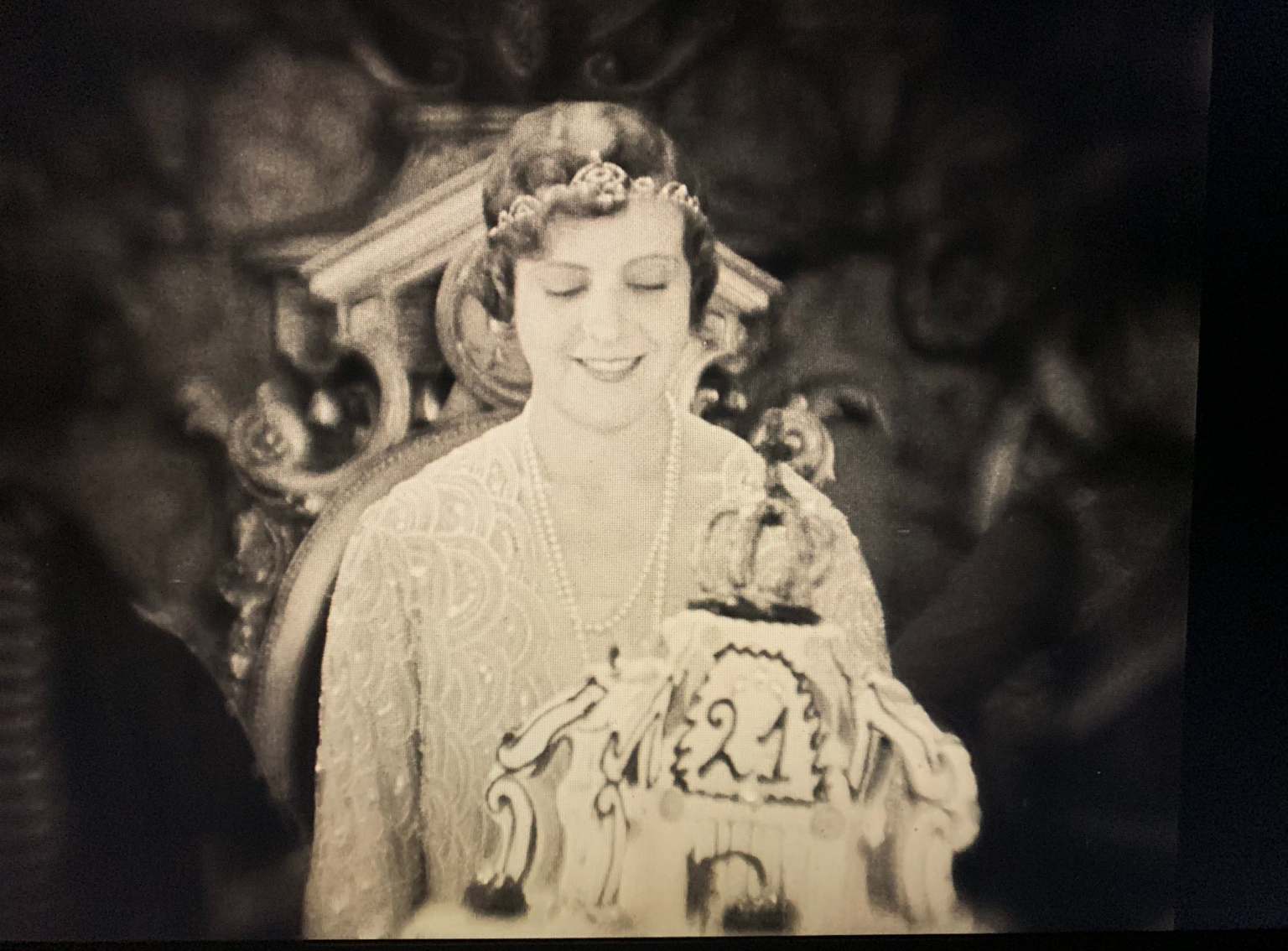
O reino de Lothen-Kunitz é onde a ação começa em “The Runaway Princess” (1929). A princesa Priscilla (Mady Christians) acaba de fazer 21 anos e isso significa que seu noivado com um príncipe de algum reino vizinho está para acontecer. Insatisfeita com a ideia de se casar com alguém que não conhece, Priscilla foge para Londres, onde ela se envolve com um grupo de falsários. Este filme tem poucas cartelas de títulos, algo que eu apreciei, mas é previsível.

The kingdom of Lothen-Kunitz is where the action starts in “The Runaway Princess” (1929). Princess Priscilla (Mady Christians) has just turned 21 and this means that her engagement with a Prince from a nearby kingdom will happen soon. Dissatisfied with the idea of marrying someone she’s never met, Priscilla runs away to London, where she gets involved with a group of forgers. This film has few title cards, something I liked, but it’s rather predictable.

O segundo tema era Norma Talmadge. No evento presencial, 15 dos filmes de Norma - mais três fragmentos de filmes - foram exibidos, enquanto na versão online três de seus filmes fizeram parte da mostra: o curta de 1912 “Mrs ‘Enry ‘Awkins” e dois longa-metragens. Em “Yes or No” (1920), Norma interprets dois papéis: a rica Margaret Vane, cujo marido está doente mas não conta para ela, e Minnie Berry, cujo marido é um operário que estuda à noite. Ambas as mulheres se sentem negligenciadas pelos maridos, e ambas são seduzidas por outros homens: a senhora Vane pelo bon-vivant Paul Derreck (Lowell Sherman) e a senhora Berry pelo seu inquilino Ted Leach (Gladden James). Essas mulheres dirão sim ou não para a tentação? Também no elenco está Natalie Talmadge - a futura esposa de Buster Keaton- como Emma, criada da senhora Vane e irmã de Minnie. Em “Yes or No” o papel duplo não é igual ao de “Sui Gradini del Trono”, no qual os sósias trocam de lugar, mas é uma boa técnica de qualquer maneira.

The second grand theme was Norma Talmadge. In the in-person event 15 of Norma’s movies - plus three fragments of movies - were screened, while in the online version three of her movies were shown: the 1912 short “Mrs ‘Enry ‘Awkins” and two features. In “Yes or No” (1920), Norma plays two roles: the rich Margaret Vane, whose husband is ill but doesn’t tell her, and Minnie Berry, whose husband is a factory worker by day and goes to school at night. Both women feel neglected by their husbands, and both are seduced by other men: Mrs Vane by the bon-vivant Paul Derreck (Lowell Sherman) and Mrs Berry by her tenant Ted Leach (Gladden James). Will these women say yes or no to temptation? Also in the cast there is Natalie Talmadge - aka Buster Keaton’s future wife - as Emma, Mrs Vane’s maid and Minnie’s sister. In “Yes or No” the dual role is not played as in “On the Steps of the Throne”, in which there is an exchange of doppelgängers, but it is a nice device nevertheless.

O segundo filme de Norma Talmadge exibido foi “The Lady”, dirigido por Frank Borzage. O filme começa com Polly Pearl, uma mulher de meia-idade (já interpretada por Talmadge), em sua taverna em Marselha. Lá ela reconta sua história de vida, primeiro como dançarina num teatro, ao que se segue um casamento com o rico Leonard St Aubyns (Wallace MacDonald), um casamento que só durou até a lua de mel. Sempre com o objetivo de ser uma dama, ela vai para a França, onde sofre um bocado. Os destaques deste drama lacrimoso foram a decoração de interiores de William Cameron Menzies e a atuação de Norma Talmadge, especialmente perto do final.

The second Norma Talmadge movie screened was “The Lady”, directed by Frank Borzage. The film begins with Polly Pearl, a middle-aged woman (already being played by Talmadge), in her tavern in Marseille. There she retells her life story, first as a dancer at a music hall, followed by her marriage to the rich Leonard St Aubyns (Wallace MacDonald), a marriage that lasted only as long as their honeymoon. Always with the goal of being a lady, she goes to France where she suffers a bit. The highlights of this tearful drama were William Cameron Menzies’ set decorations and Norma Talmadge’s acting, especially near the end.

“Just Around the Corner” (1921) foi escrito para as telas e dirigido por Frances Marion. O filme conta a vida da família Birdsong: Ma (Margaret Seddon), Essie (Sigrid Holmquist) e Jimmie (Lewis Sargent, ótimo no papel). Essie é influenciada por uma má amiga, que a leva a mudar de trabalho e a apresenta a um golpista, Joe Ullman (Edward Phillips). A mãe se preocupa com um possível casamento entre Essie e um homem decente, por isso ela fica sempre à espera da noite em que Essie trará seu namorado para jantar em casa. Este filme foi restaurado graças à atuação conjunta da Biblioteca do Congresso dos EUA e o sempre excelente Eyefilmmuseum da Holanda, e a cópia exibida estava incrível.

“Just Around the Corner” (1921) was written for the screen and directed by Frances Marion. It chronicles the life of the Birdsong family: Ma (Margaret Seddon), Essie (Sigrid Holmquist) and Jimmie (Lewis Sargent, great in the role). Essie is influenced by a bad friend who makes her change jobs and introduces her to a con man, Joe Ullman (Edward Phillips). Ma’s main concern is about Essie getting married to a decent man, that’s why she’s always waiting for the night Essie will take her beau home to dinner. This movie was restored thanks to a joint effort by the Library of Congress and the always excellent Eyefilmmuseum of the Netherlands, and the print was gorgeous.

As pessoas responsáveis por fazer o Código Hays ser respeitado ficariam malucas se tivessem que censurar o filme italiano “Profanazione”, de 1926. Estrelando Leda Gys, o filme conta a história de Giulia, uma mulher que, para pagar uma dívida, transa, contra sua vontade, com Roberto (de novo Alberto Capozzi), um homem que sempre a cobiçou. Giulia engravida e tem duas filhas, vive feliz por alguns anos, até que seu marido descobre que uma das meninas não é sua filha legítima.

People on the Hays Office would completely freak out if they had to censor the 1926 Italian film “Profanazione”. Starring Leda Gys, it tells the story of Giulia, a woman who, in order to pay a debt, has sex, against her will, with Roberto (again Alberto Capozzi), a man who always pursued her. Giulia gets pregnant and has two daughters, living happily for a few years, until her husband discovers that one of the girls is not his legitimate child.

Também teve espaço em Pordenone para documentários, tanto curtas quanto longa-metragens. Os curtas foram apresentados dentro da sessão da Ruritania e consistiam em newsreels mostrando os reis de Montenegro e da Eslovênia. Outro curta mostrava três festivais no Japão da década de 1910. O longa “Over Mountains, Over Valleys” (1929) não fez meu tipo, mas foi interessante ao mostrar principalmente crianças brincando em vilas da Eslováquia. Eu gostei muito das roupas das pessoas… e das ovelhas no começo. O diretor Karel Plicka realmente insere no filme traços etnográficos, fazendo dele um objeto muito curioso.

There was also space in Pordenone for documentary films, both shorts and features. The shorts were presented inside the Ruritanian session and consisted of newsreels showing the kings of Montenegro and Slovenia. Another short chronicled three festivals in 1910s Japan. The feature “Over Mountains, Over Valleys” (1929) was not my cup of tea, as I’m not that fond of documentaries, but it was interesting as it showed mostly children playing games in Slovakian villages. I really enjoyed the people’s clothes… and the sheep in the beginning. Filmmaker Karel Plicka really infuses the film of ethnographic traces, making this a most curious object.

Na Giornate pude ver qual é o apelo de Ivan Mosjoukine, um querido dos Twitter os que tratam do cinema mudo. E, uau, que estrela! Ele é o protagonista de “Manolescu”, de 1929, interpretando um homem que se transforma em um trapaceiro, com a ajuda de sua amante, Cleo (Brigitte Helm). Quando ele é atingido na cabeça por um inimigo, ele conhece a adorável enfermeira Jeanette (Dita Parlo) e passa a viver um dilema amoroso. Curiosamente, como referência ao tema da Ruritania, o título do filme em inglês é “Manolescu, o Príncipe das Aventuras”.

At the Giornate I could see what is the appeal of Ivan Mosjoukine, a favorite of Silent Film Twitter. And, wow, what a star! He is the lead of 1929’s “Manolescu”, playing a man who becomes a swindler and is helped in his “business” by his lover, Cleo (Brigitte Helm). When he suffers a blow to the head, he meets the lovely nurse Jeanette (Dita Parlo) and finds himself at an amorous crossroads. Curiously, as a tie to the Ruritanian theme, the title of this movie in English is “Manolescu, the Prince of Adventures”.

Outro ator que pude conhecer melhor na Giornate foi Harrison Ford - não, não o Indiana Jones, mas um astro do cinema mudo com o mesmo nome. Em “Up in Mabel’s Room” (1926), Mabel (Marie Prevost) havia se divorciado do marido Garry (Ford) por causa de uma bobagem. Agora ela está determinada a se casar novamente com Garry, e uma festa numa mansão é a oportunidade perfeita para Mabel acabar com o noivado de Garry com Phyllis (Phyllis Haver) e tomar seu homem de volta. Duas coisas chamaram minha atenção neste filme: a trilha brilhante da Zerorchestra e o papel do mordomo Hawkins, interpretado por William Orlamond.

Another lead that I could know better at the Giornate was Harrison Ford- no, not Indiana Jones, but a silent film star with this name. In “Up in Mabel’s Room” (1926), Mabel (Marie Prevost) had divorced her husband Garry (Ford) because of a small issue. Now she is serious about remarrying Garry, and a party at a mansion is the perfect opportunity for Mabel to end Garry’s engagement with Phyllis (Phyllis Haver) and get her man back. Two things called my attention in this film: the brilliant score by Zerorchestra and the role of Hawkins the butler, played by William Orlamond.

“O Grande Amor de uma Pequena Dançarina” (1924, título traduzido do original alemão) foi uma pérola. A animação feita com marionetes é a única sobrevivente do estúdio Piccolo-Film, e é o que chamamos de um “filme órfão”: não foi dirigido ou protagonizado por pessoas famosas, por isso não é o tipo de filme que chama atenção suficiente para ser restaurado e exibido. Também conhecido pelo maravilhoso título com trocadilho “The Cabinet of Dr Larifari”, este foi meu filme favorito de toda a Giornate, mesmo ele terminado com o deus ex-machina que eu mais detesto. Todo o resto foi perfeito: o trabalho com as marionetes, a atmosfera, a cor da cópia, a trilha sonora… Bem, se eu estivesse no Collegium este ano, escreveria meu artigo sobre este filme!

“The Big Love of a Little Dancer” (1924, title translated from the original German) was a gem. This animation made with puppets is the sole survivor of the Piccolo-Film studio, and it’s what we call an “orphan film”: not directed by nor starring famous people, it’s not the kind of film that calls enough attention to be restored and screened. Also known by the amazing punny title “The Cabinet of Dr Larifari”, this was my favorite movie of the entire Giornate, even though it ends with the deus ex-machina that I hate the most. The rest was everything perfect: the puppetry, the atmosphere, the tinting of the print, the soundtrack… Well, if I was in the Collegium this year, I’d write my paper entirely about this short!

Obviamente, seguindo a Giornate online e também vendo o que estava acontecendo presencialmente na Itália gera uma tristeza. Eu amaria ter visto “The Unknown” (1927), com meu ator favorito do cinema mudo, Lon Chaney, e dez minutos extras que eram desconhecidos do público. Eu amaria ter visto o programa especial das Nasty Women, porque eu recentemente entrevistei as curadoras desta sessão e foi uma entrevista fantástica. E, o desejo mais óbvio, eu amaria ter estado lá no dia do aniversário de Buster Keaton para receber meu prêmio no palco do Teatro Verdi.

Of course, following the Giornate online and also seeing what was happening on site in Italy leaves a bittersweet taste. I’d love to see “The Unknown” (1927), with my favorite silent film actor Lon Chaney and ten extra minutes previously unknown to the public. I’d love to have seen the Nasty Women special programme, because I recently interviewed the curators of this session and it was a great interview. And, the most obvious desire, I’d love to be there on Buster Keaton’s birthday to accept my prize at the stage of Teatro Verdi.

Todos nós que amamos cinema mudo sabemos o quanto desta arte está perdido: na verdade, o diretor da Giornate, Jay Weissberg, em uma das introduções, disse que 96% de todos os filmes feitos no Japão antes de 1945 estão perdidos! Mesmo assim, há tanto para ser descoberto - muito nos arquivos, precisando de restauração - e eu sempre me alegro de acompanhar a Giornate e descobrir tanta coisa. Pordenone é parte da minha história desde 2020, quando eles precisaram mudar para o ambiente online, e hoje estou feliz por ser também parte da história de Pordenone. Vejo vocês ano que vem, Pordenone - quem sabe presencialmente?

All of us who love silent film know how much of this art was lost: in fact, Giornate director Jay Weissberg, in one of his intros, said that 96% of all movies shot in Japan before 1945 are lost! Nevertheless, there is so much to be discovered - a lot in the vaults, needing restoration - and I’m always glad to follow the Giornate and discover so much. Pordenone has been part of my story since 2020, when they needed to switch to online, and now I’m glad to be also part of Pordenone’s history.
See you next year, Pordenone - maybe in person?

Related Posts Plugin for WordPress, Blogger...