} Crítica Retrô: 1914

Tradutor / Translator / Traductor / Übersetzer / Traduttore / Traducteur / 翻訳者 / переводчик

Showing posts with label 1914. Show all posts

Thursday, January 29, 2026

Idílio Desfeito (1914) / Tillie’s Punctured Romance (1914)


Quando falamos sobre revoluções no cinema, pensamos na chegada do som sincronizado, uma revolução que mudou tudo e fez muitas “vítimas”: estrelas que desapareceram das telas, mas não porque elas tinham vozes horríveis como muitos dizem por aí. Mas em meados dos anos 1910 houve outra revolução: quando longas-metragens dominaram a cena.

When we talk about revolutions in cinema, we think about the arrival of synchronized sound, a revolution that was a true game changer and came with several “casualties”: stars who faded from the screen, but not because they had hideous voices as many claim. But in the mid 1910s there was another revolution: when feature films became the norm.

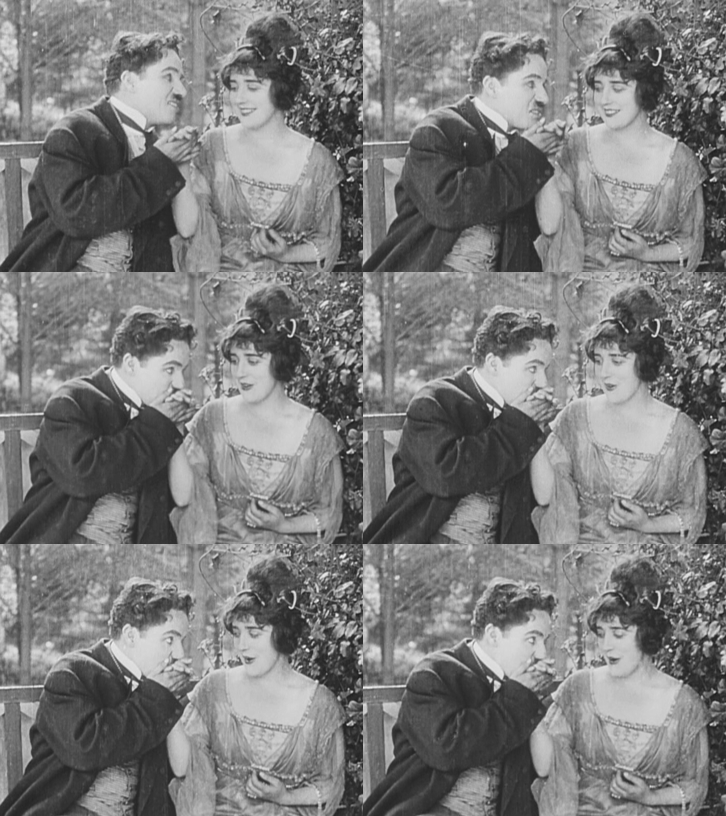
No mesmo ano em que estreou no cinema, Charles Chaplin já estava fazendo longas. Não apenas ele: as comediantes Mabel Normand e Marie Dressler estavam em “Idílio Desfeito” de 1914, o primeiro e único longa feito pelos estúdios Keystone. Completando o time temos Mack Swain e Charles Bennett. Em 82 minutos, seis partes no total, uma história de ambição, desilusão e surpreendente sororidade é contada em meio a muitas risadas.  

In the same year as his film debut, Charles Chaplin was already making feature films. Not only him: comediennes Mabel Normand and Marie Dressler were in “Tillie’s Punctured Romance” from 1914, the first and only feature comedy made by Keystone studios. Completing the team we have Mack Swain and Charles Bennett. In 82 minutes, six parts total, a story of ambition, heartbreak and surprise sorority is told amidst many laughs.


Tillie Banks (Marie Dressler) está em sua casa no interior quando ela conhece um Estranho (Chaplin) e eles começam uma estranha paquera. Logo eles decidem fugir juntos. Chegando à cidade, eles encontram a mulher que o Estranho deixou para trás, a rival de Tillie, Mabel (Mabel Normand). Quando o Estranho consegue o que quer, ele abandona Tillie e se junta novamente a Mabel. Porém um tio rico entra na história para ajudar Tillie.

Tillie Banks (Marie Dressler) is in her country home when she meets a Stranger (Chaplin) and they start a weird courtship. Soon they decide to elope. Arriving in the city, they run into the woman the Stranger left behind, Tillie’s rival Mabel (Mabel Normand). When the Stranger gets what he wanted, he leaves Tillie and reteams with Mabel. But a rich uncle enters the story to help Tillie.

Curiosamente, o Estranho e Mabel (quase) mudam de ideia ao assistirem a um filme que espelha suas ações de um jeito que não podia ser coincidência. Ao inserir um filme dentro de outro - sem dúvida “Idílio Desfeito” foi um dos primeiros a fazer isso - eles também reproduzem os hábitos das plateias de cinema nos anos 1910. Há um pianista acompanhando a exibição e o silêncio não é necessário, pois podemos ver Mabel e Chaplin conversando durante todo o filme-dentro-do-filme.

Curiously, the Stranger and Mabel (almost) change their minds by watching a movie that mirrors their actions in a way that can’t be a coincidence. By inserting a movie inside another - for sure “Tillie’s Punctured Romance” was one of the first films to do that - they also reproduce the way it was watching a movie in the 1910s. There is a pianist accompanying the flick and no silence is needed, as we see Mabel and Chaplin talking throughout the movie-within-the-movie.

Vale mencionar que Chaplin não está interpretando seu personagem Vagabundo aqui: com um bigode fino, ele é chamado apenas de “um Estranho” e só está atrás do dinheiro do pai de Tillie. Embora estejamos rindo com ele, ele é mais um vilão do que um herói. Ele até dá um tapa no rosto de uma criança!

It’s worth mentioning that Chaplin isn’t playing his Tramp character here: with a thin moustache, he is referred to as “a Stranger” and is only after Tillie’s father’s money. Although we laugh at him, he’s more a villain than a hero. He even slaps a kid in the face!

Não podemos evitar chegar à conclusão de que cada parte do filme funciona como um curta-metragem com começo, meio e fim. O mesmo pode ser dito até de alguns curtas: na era muda havia filmes de dois rolos cujas ações e contexto mudaram significativamente do primeiro para o segundo rolo.

We can’t avoid realizing that each part of the film works as a perfectly fine short film with beginning and end. The same can be said even about some shorts: in the silent era there were two-reelers whose action and context changed significantly from reel one to reel two.

Eu já tratei do diretor de “Idílio Desfeito”, Mack Sennett. Muito foi escrito sobre Chaplin e eu já publiquei alguns fatos rápidos sobre Marie Dressler. Por isso gostaria de destacar agora Mack Swain, que interpreta o pai de Tillie - mesmo sendo sete anos mais novo que Dressler! Mais lembrado pelo papel de Big Jim McKay em “Em Busca do Ouro” (1925) de Chaplin, Mack fez mais de 160 filmes entre 1913 e 1935. Ele interpretou o famoso mas quase esquecido personagem Ambrose em diversos curtas mudos e dirigiu 15 deles.  

I’ve talked about the director of “Tillie’s Punctured Romance”, Mack Sennett, before. A lot has been written about Chaplin and I’ve already published some fast facts about Marie Dressler. So I’d like to highlight now Mack Swain, who plays Tillie’s father - even though he was seven years younger than Dressler! Best remembered as Big Jim McKay in Chaplin’s “The Gold Rush” (1925), Mack was in over 160 movies between 1913 and 1935. He played the famous but nearly forgotten character Ambrose in several silent shorts and directed 15 of those. 

E obviamente precisamos falar sobre Mabel Normand, que foi mentora de Chaplin mas foi retratada como uma diva temperamental na cinebiografia “Chaplin” (1992). Na realidade, Mabel interpretava heroínas que eram atraentes e doces, mas também independentes. Steve Massa, autor de “Slapstick Divas”, escolheu Mabel como uma das Quatro Grandes Comediantes da era muda - as outras três foram Alice Howell, Louise Fazenda e Gale Henry. 

And of course we need to talk about Mabel Normand, who was Chaplin’s mentor but was portrayed as a temperamental diva in the biopic “Chaplin” (1992). In reality, Mabel played heroines who were attractive and sweet, but also independent. Steve Massa, author of “Slapstick Divas”, chose Mabel as one of the Big Four comediennes of the silent era - the other three were Alice Howell, Louise Fazenda and Gale Henry.


Mais interessante que o elenco creditado são os talentos que não receberam crédito em “Idílio Desfeito”. De acordo com o IMDb, sem créditos no filme temos: Chester Conklin, Glen Cavender, Charley Chase, Minta Durfee, Alice Davenport, Hampton Del Ruth, Alice Howell, Edgar Kennedy, Hank Mann, Al St. John e muitos outros.

More interesting than the credited cast is the uncredited talents in “Tillie’s Punctured Romance”. According to IMDb, uncredited in the movie there were: Chester Conklin, Glen Cavender, Charley Chase, Minta Durfee, Alice Davenport, Hampton Del Ruth, Alice Howell, Edgar Kennedy, Hank Mann, Al St. John and many others.


“Idílio Desfeito” pode parecer um bocado estático, uma vez que foi adaptado de uma peça de teatro, algo incomum para Mack Sennett. Foi um desvio do caos trazido pelos Keystone Cops, que aparecem somente no final. Mesmo assim, é ótimo perceber que a comédia é universal e atemporal: muitas das gags de mais de 110 anos atrás ainda são engraçadas e o filme ainda é agradável de se ver. 

“Tillie’s Punctured Romance” may feel a bit static, as it was adapted from a play, something unusual for Mack Sennett. It is a diversion from his antics and the chaos brought to the screen by the Keystone Cops, who only make an appearance near the end. Nevertheless, it’s great to see that comedy is universal and timeless: many of the gags from over 110 years ago are still funny and Tillie is still a watchable and enjoyable movie.

Thursday, June 21, 2018

Springtime Silent Movie Challenge – girls run the silent film world


Eu amo desafios – especialmente quando eles envolvem filmes. Por isso, quando a Fritzi do site Movies, Silently propôs um desafio de primavera para nós, amantes do cinema, eu tive de aceitar. O desafio consiste em ver dez filmes bem antigos. Mas estes não são filmes antigos como “O Cantor de Jazz” (1927) ou “Hollywood Revue” (1929). Nós tínhamos de ver 10 filmes feitos antes de 1914.

I love challenges - especially when they involve movies. So, when Fritzi from the site Movies, Silently proposed a springtime challenge for us, movie lovers, I had to join. The challenge consists in watching ten early movies. But those aren’t early movies like “The Jazz Singer” (1927) or “The Hollywood Revue” (1929). We had to watch 10 films from 1914 or before.

Isso é difícil? Nem um pouco. Por isso eu resolve deixar as coisas mais interessantes criando minha própria regra: no espírito do meu site colaborativo e feminista, Cine Suffragette, eu veria dez filmes estrelados por mulheres ou, de preferência, com mulheres atrás das câmeras – como produtoras, roteiristas ou diretoras. E, bem, ainda ficou fácil! Vamos ver o que eu consegui...

Is it difficult? Not at all. So I decided to spice things up and created my own rule: in the spirit of my collaborative feminist site Cine Suffragette, I’d watch ten films starring women or, preferably, with women behind the cameras - as producers, writers or directors. And, well, it was still easy! Let’s see what I came up with..


Cinco filmes feitos em 1905 ou antes:

Five Movies made in 1905 or before:

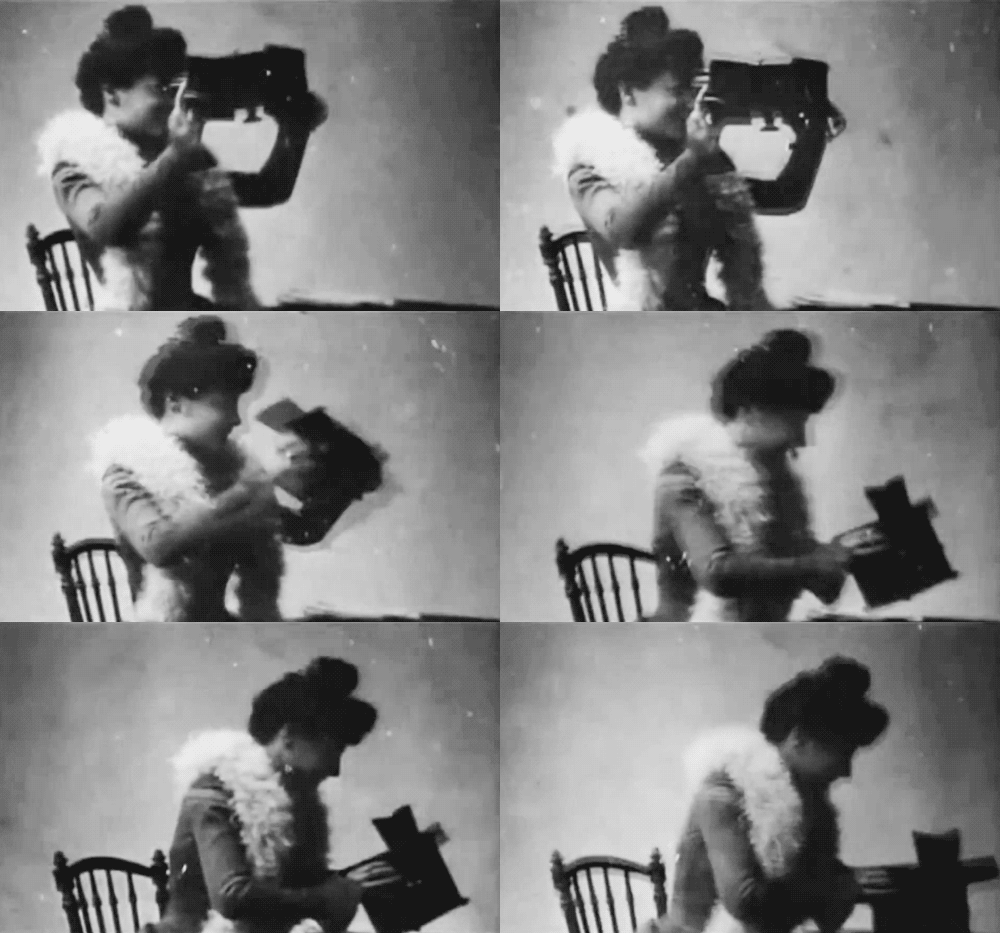
Carmencita (Estrelando Carmencita, 1894): Eu posso ter trapaceado com este, mas aqui está uma curiosidade interessante: a dançarina espanhola Carmencita foi provavelmente a primeira mulher a ser filmada nos Estados Unidos. O diretor William K.L. Dickson fazia experimentos com câmeras desde a série Monkeyshine, em 1890, e demorou quatro anos para finalmente filmar uma mulher. Esta exibição de dança de apenas um minuto foi a primeira e única experiência de Carmencita no cinema, enquanto Dickson fundou em 1895 o estúdio que depois viria a ser conhecido como Biograph.

Carmencita (Starring Carmencita, 1894): I may be cheating on this one, but here it is some interesting trivia: Spanish dancer Carmencita is probably the very first woman to appear in a motion picture in the US. Director William K.L. Dickson was making experiments with cameras since his Monkeyshine series in 1890, and it took him four years to finally film a woman. This one minute long dancing exhibition was the first and only experience Carmencita had with films, while Dickson founded in 1895 the studio later known as Biograph.

Cendrillon (Estrelando Jeanna D’Alcy, 1899): Georges Méliès leva o conto de fadas da Cinderela para as telas pela primeira vez em 1899. Como a fada madrinha, temos a esposa de Méliès, Jeanne D’Alcy. Assim como tudo o mais que o pioneiro do cinema fez, sua Cinderela é divertida e cheia de truques – sempre que um desejo é concedido à nossa heroína, um pouquinho de mágica acontece nas telas. Há também o uso de transições interessantes em várias ocasiões. Não há maneira melhor de passar cinco minutos ociosos do que com Méliès.

Cendrillon (Starring Jeanne D’Alcy, 1899): Georges Méliès brings the Cinderella fairy tale for the first time to the screen in 1899. As the fairy godmother, we have Méliès’s wife, Jeanne D’Alcy. As everything the pioneer did, his Cinderella is amusing and full of clever tricks whenever a wish was granted for our heroine. There is also the interesting use of “dissolve” transition in several occasions. There is no better way to spend five lazy minutes than with Méliès.

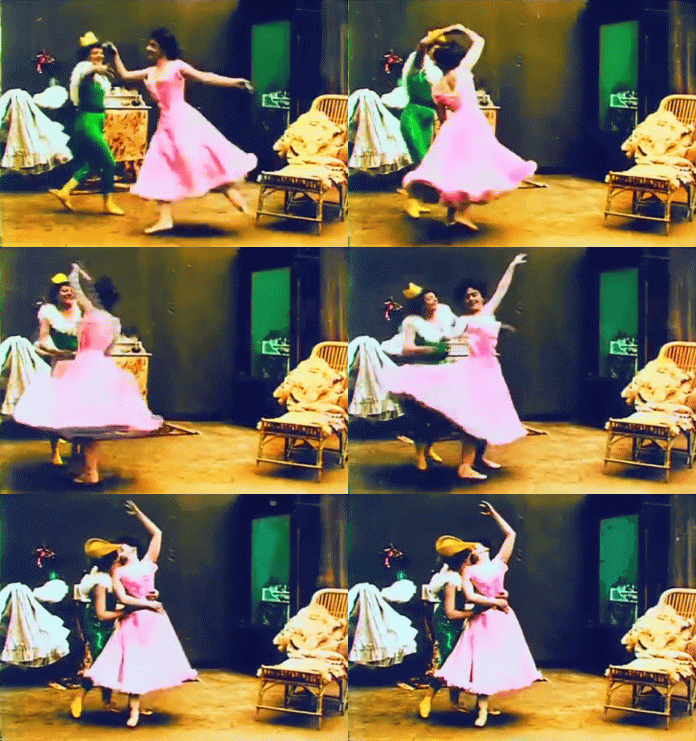
Pierrette’s Escapade (Dirigido por Alice Guy, 1900): A Pierrette conversa com o Pierrot através de gestos muito teatrais e enérgicos. E então, quando ele não está olhando, ela dá uma ‘escapadinha’ com a Arlequina, dançando com ela e beijando-a – sim, é um pequeno romance LGBT de 118 anos atrás. A dança é uma das melhores coisas aqui – a outra é que este é um filme colorido! O filme foi pintado à mão e, mesmo que a versão em domínio público esteja em condições não tão boas, ainda é possível aproveitar o filme, que nos mostra como as cineastas estavam sempre procurando trazer realismo e novidades para o público.

Pierrette’s Escapades (Directed by Alice Guy, 1900): The Pierrette talks to the Pierrot putting a lot of energy in her very theatrical gestures. And then, when he is not looking, she makes an escapade with the Harlequin, dancing and kissing her - yeah, it’s a petit 118 year-old LGBT romance. The dance is one of the best things here - the other being the color! The film was hand-tinted and, even if the public domain print is not in the best conditions, it is still enjoyable and shows us how filmmakers were always looking for realism and novelties for the audience.
A Parteira da Classe Média (Dirigido por Alice Guy, 1902): Os nostálgicos tinham razão: a vida era bem melhor no começo do século. Por exemplo, um casal que decidia ter um filho – depois de o homem insistir muito – poderia simplesmente... comprar um bebê de uma parteira! Sem dor, sem bagunça, sem sangue. Obviamente, isso era uma fábula, e Alice Guy já a havia filmado em 1896, também para o estúdio Gaumont, em “A Fada do Repolho”: era a velha superstição de que meninas nasciam de rosas, e meninos, de repolhos. O casal quer um menino – eu até acho que consegui ler os lábios da moça dizendo “garçon” – mas não ficam contentes com as opções mostradas pela parteira. Então, a parteira leva os dois até uma plantação de repolhos e começa a tirar BEBÊS DE VERDADE dos repolhos.

Midwife to the Upper Classes (Directed by Alice Guy, 1902): Nostalgic people were right: life was much better in the beginning of the century. For instance, a couple that decided to have a baby – after the man insists on the issue – could just... buy one with a midwife! No pain, no mess, no blood. Of course, this was a fable, and Alice Guy had already filmed it in 1896, also for the Gaumont studio, in “The Cabbage Fairy”: the old wives' tale that baby girls came from roses, and baby boys, from cabbages. The couple wants a boy – I even think I can read the woman's lips saying “garçon” - but is not happy with the “ready-made” options. So the midwife just shows them a cabbage field and starts taking REAL BABIES from the cabbage.

The Spring Fairy (1902): Este pequeno filme tem duas personagens femininas, mas infelizmente os nomes das atrizes que as interpretam são desconhecidos. O filme conta a história de um casal solitário que dá comida e abrigo a uma velha senhora durante um dia de inverno. A velha senhora revela, na verdade, ser uma fada, e concede um desejo ao casal, porque eles foram bondosos com ela. O casal quer um bebê, e a fada transforma um pouco da neve em flores e das flores o casal tira duas meninas – parece que a nossa fada aprendeu algumas coisas com Alice Guy! E deixe-me dizer que tanto o vestido da fada quanto as flores de primavera são pintadas de amarelo, enquanto o resto da cena continua em preto e branco – um truque de cor bolado pelo incrível Segundo de Chomón.

The Spring Fairy (1902): This little film has two female characters, but unfortunately the names of the actresses portraying them are unknown. The film depicts the story of a lonely couple that gives food and shelter to an old woman during a cold winter day. The older woman reveals to be, actually, a fairy, and concedes the couple a wish, because they were nice to her. The couple wants a baby, so she transforms some of the snow into flowers and from the flowers the couple collects two baby girls – it looks like our fairy learned a few things with Alice Guy! And let me say that both the fairy’s dress and the spring flowers are painted in yellow, while the rest of the scene remains in black and white - a color trick applied by the great Segundo de Chomón.


Cinco filmes feitos entre 1906 e 1914:

Five Movies made between 1906 and 1914:

Canned Harmony (Dirigido por Alice Guy-Blaché, 1912): Que diferença dez anos fazem! Alice se casou com Herbert Blaché em 1907 e foi para os EUA. Em 1912, ela já assinava como Alice Guy-Blaché e tinha seu próprio estúdio, Solax, onde ela fez “Canned Harmony” e muitos, muitos outros filmes. Aqui, um professor de música só aceita que um músico virtuoso se case com sua filha, Evelyn (Blanche Cornwall). O namorado de Evelyn, Billy (Billy Quirk), sofre muito com esta exigência, até que seu colega de quarto o aconselha a usar um fonógrafo e um disco de um violinista para impressionar o futuro sogro. Sim, esta é uma comédia muda que depende do som para ser engraçada – e funciona! É interessante notar como, neste filme em particular, os intertítulos são usados para explicar a ação antes de ela acontecer. E há também um uso notável da tela dividida.

Canned Harmony (Directed by Alice Guy-Blaché, 1912): What a difference 10 years make! Alice married Herbert Blaché in 1907, and then went to the US. By 1912, she signed as Alice Guy-Blaché and had her own studio, Solax, where she made “Canned Harmony” and many, many more films. In this, a music professor will only accept a virtuoso musician to marry his daughter, Evelyn (Blanche Cornwall). Evelyn's beau, Billy (Billy Quirk), will suffer a lot with this exigency, until his roommate tells him to use a phonograph and a record of a violin virtuoso to impress his future father-in-law. Yes, this is a silent comedy that relies on sound to be funny – and it works! It's interesting that, in this particular film, the intertitles are used to explain the action before it happens. And there is also a notable use of split screen.
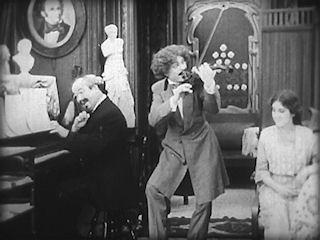
His Mother (Escrito e estrelado por Gene Gauntier, 1912): Dois turistas americanos estão na Irlanda quando ouvem uma melodia maravilhosa. O senhor Foster, um banqueiro, e sua filha (Gene Gauntier) descobrem que a música vem de uma casa pobre, onde o jovem Terence (J.J. Clark) toca seu violino. O senhor Foster dá seu cartão a ele, para quando Terence for à Nova York. Alguns meses depois, a mãe de Terence (Anna Clark – não sei se ela era de fato parente de J.J., mas me parece que não) dá a ele todas as suas econômicas para comprar uma passagem para Nova York. Terence faz isso e obtém sucesso, mas com o êxito profissional e a felicidade ele se esquece de mandar notícias para a mãe. Então a velha senhora decide ir atrás dele. E um filme simples, emocionante e com cenários ricamente decorados.

His Mother (Written and starred by Gene Gauntier, 1912): Two American tourists are in Ireland when they hear an incredible music. Mr Foster, a banker, and his daughter (Gene Gauntier) find out that the music comes from a poor house, where Terence (J.J. Clark) plays his violin. Mr Foster gives the man his card, for when the man goes to New York. A few months later, the Terence’s mother (Anna Clark – I don’t know if she was really related to J.J., but I believe she wasn’t) gives him all her savings to buy a passage to New York. Terence does it and succeeds, but with success and happiness he stops writing to his mom. So the old woman decides to go after him. Simple, moving, and with great set decoration.

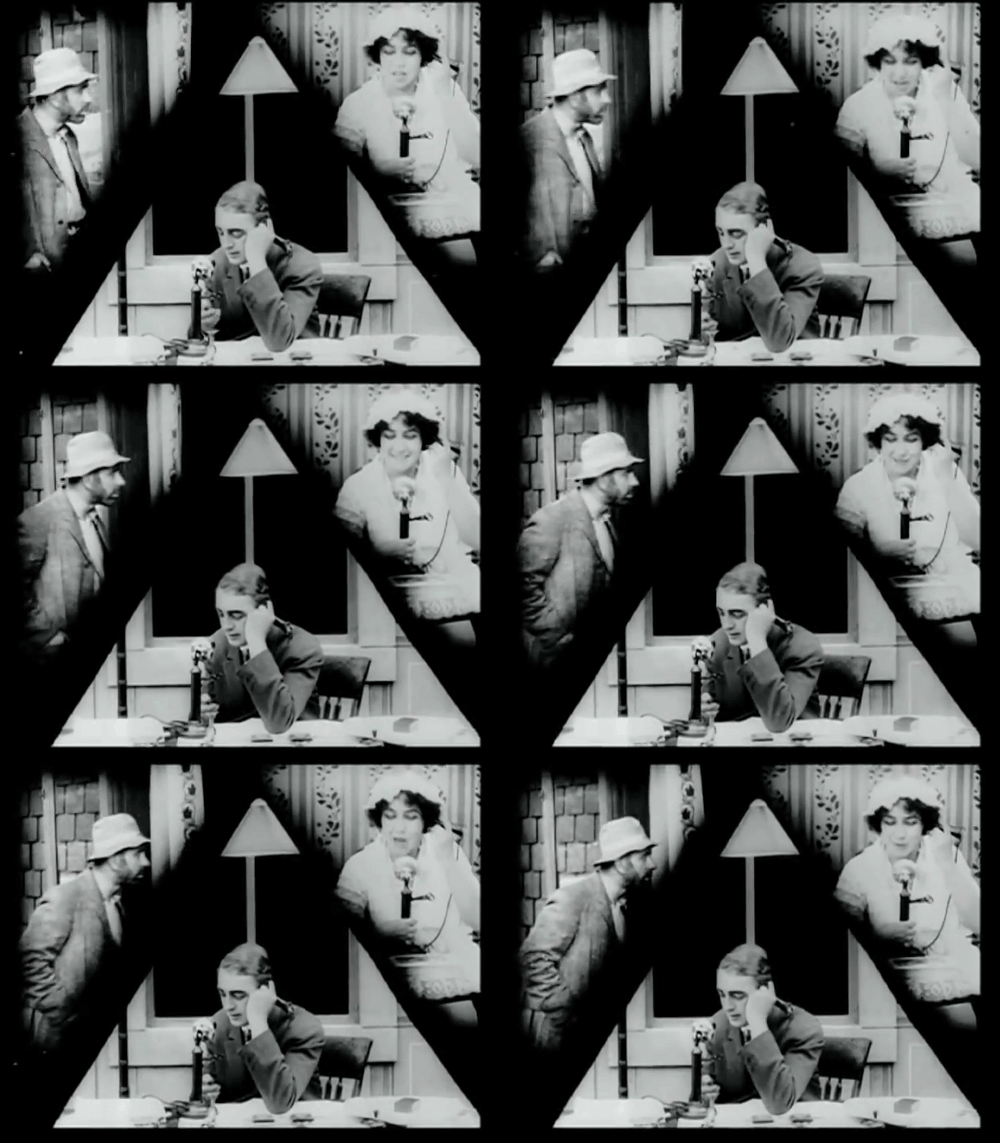
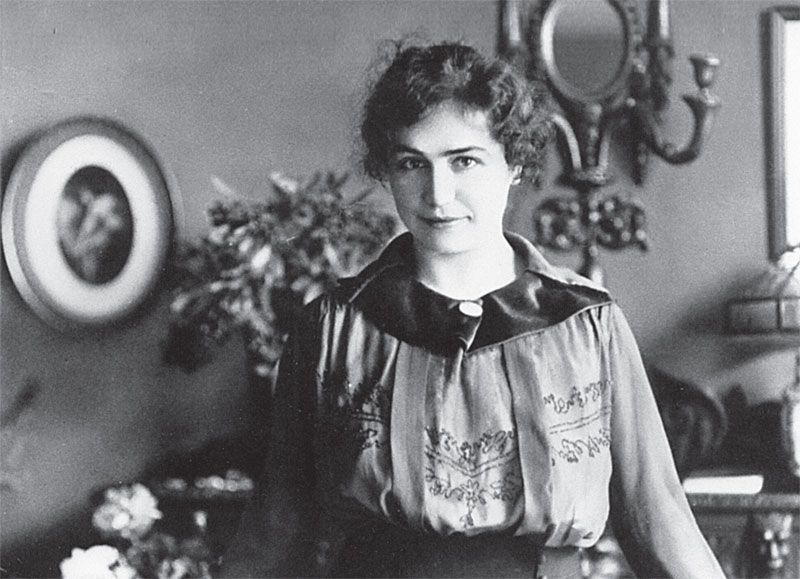
Suspense (Dirigido e estrelado por Lois Weber, 1913): Você quer ser maravilhado, surpreendido e assustado por um filme feito há 105 anos? Veja “Suspense”. Nele, uma dona de casa (interpretada pela própria diretora Lois Weber) é deixada sozinha em casa. Ela mora em uma área quase desértica, e um andarilho (Sam Kaufman) decide invadir sua casa. Ela telefona para o marido (Valentine Paul), e ele começa uma corrida frenética para chegar em casa antes que algo trágico aconteça. Devemos prestar atenção aos truques de câmera de Lois – como a tomada pelo buraco da fechadura – e àquele que é provavelmente o primeiro uso de tela dividida no cinema. E eu estou vendo Lon Chaney sendo atropelado por um carro? À primeira vista eu achei que sim, mas agora não tenho certeza...

Suspense (Directed and starred by Lois Weber, 1913): Do you want to be amazed, surprised and scared by a film that is 105 years old? Just watch “Suspense”. In it, a housewife (played by director Lois Weber herself) is left home alone. She lives in a near-desert area, and a tramp (Sam Kaufman) decides to invade her house. She phones her husband (Valentine Paul), and he starts a frantic race to arrive home before something tragic happens. We must pay attention to Lois’s camera tricks – like the door lock shot – and what is probably the first use of split screen on film. And is that Lon Chaney being hit by a car? At first I thought so, but now I’m not so certain…
Daisy Doodad’s Dial (Produzido, escrito e estrelado por Florence Turner, 1914): Florence Turner – anteriormente conhecida como “a Vitagraph Girl” – interpreta Daisy Doodad, que lê em um jornal o anúncio de um concurso de caretas. Infelizmente, ela não pode ir ao grande evento, por causa de uma dor de dente, e seu marido (talvez Tom Powers ou Lawrence Trimble, não há consenso) entra no concurso e ganha o primeiro prêmio. Mas outra competição de caretas acontece pouco tempo depois e, a caminho do evento, Daisy decide praticar suas caretas e acaba criando problemas com a polícia. O filme é muito divertido – ou talvez meu humor seja muito vintage – e há um bom uso de efeitos especiais perto do final.

Daisy Doodad's Dial (Produced, written and starred by Florence Turner, 1914): Florence Turner – formerly known as “The Vitagraph Girl” - plays Daisy Doodad, who reads in the newspaper about a face making contest that is about to happen. Unfortunately, she can't attend the great event, because of a toothache, and her husband (maybe Tom Powers or Lawrence Trimble, there is no consensus) goes instead and wins first prize. But another face making competition takes place a little time later, and, while en route to it, Daisy decides to practice her faces and ends up creating trouble with the police. The film is very funny – or maybe my humor is very vintage – and there is a good use of special effects near the end.

Caught in a Cabaret (Dirigido, escrito e estrelado por Mabel Normand, 1914): Neste curta-metragem, Chaplin trabalha como garçom em um bar da periferia. Em sua folga, ele ajuda uma mulher rica (Mabel) que está sendo assediada por um homem. Chaplin se apresenta a ela como Primeiro-Ministro, e é convidado para uma festa na casa de Mabel, o que deixa o pretendente ela (Harry McCoy) furioso. E, obviamente, Chaplin não para de trabalhar no bar enquanto mantém a farsa, o que leva Harry a bolar um plano para desmascará-lo.

Caught in a Cabaret (Directed, written and starred by Mabel Normand, 1914): In this, Chaplin works as a waiter in a bar at the slums. In his free hour, he helps a rich woman (Mabel) who is being harassed by a man. Chaplin then presents himself as a Prime Minister and is invited to a party at Mabel’s house, what makes her beau (Harry McCoy) furious. And, of course, Chaplin doesn’t really stop working at the bar during his farce, and this gives Harry an idea of what to do to expose Chaplin.


O que eu aprendi com o desafio

Mesmo que eu tenha visto apenas uma porcentagem ínfima dos filmes disponíveis deste primeiríssimo período do cinema – não nos esqueçamos de que muitos destes filmes com mais de 100 anos foram perdidos, e na minha seleção, por causa de questões de tempo, eu não incluí longas-metragens – eu consegui aprender algumas coisas.
O cinema está sempre evoluindo, portanto a história do cinema é a história desta evolução. Os primeiros filmes tinham apenas uma cena, então eles evoluíram para múltiplas cenas, múltiplos cenários e múltiplas histórias em um mesmo filme. Transições e técnicas de edição foram criadas. Houve experimentação com edição, cores, tela dividida, ângulos de câmera e muito mais. O cinema evoluiu muito de 1894 até 1914.
Muitas mulheres estavam envolvidas no ‘fazer cinematográfico’ neste período, e muitas mais na “era de ouro do cinema mudo” – um conceito que eu mesma criei. Quando o cinema era visto como moda passageira, uma curiosidade sem futuro, as mulheres podiam ir para trás das câmeras, escrever, editar, experimentar e ter suas próprias produtoras. Quando as pessoas começaram a ver que o cinema era lucrativo, os homens tomaram conta de tudo. Nós temos, agora, menos mulheres atrás das câmeras do que tínhamos 100 anos atrás. É hora de nos inspirarmos por Alice Guy, Gene Gauntier, Mabel Normand e muitas outras e recobrar nosso lugar como cineastas.
Lois Weber
What I have learned with the challenge

Even though I have barely scratched the surface of the earliest cinema available - let’s not forget that many of these 100+ year-old movies are lost, and in my selection, because of time constraints, I didn’t include feature films - I was able to learn a few things.
Film is always evolving; therefore film history is the history of this evolution. The first movies had only one scene, and then they evolved to multiple scenes, multiple sets, and multiple storylines. Transitions and editions were created. There was experimentation with edition, color, split screen, camera angles and so on. Cinema evolved a lot from 1894 to 1914.
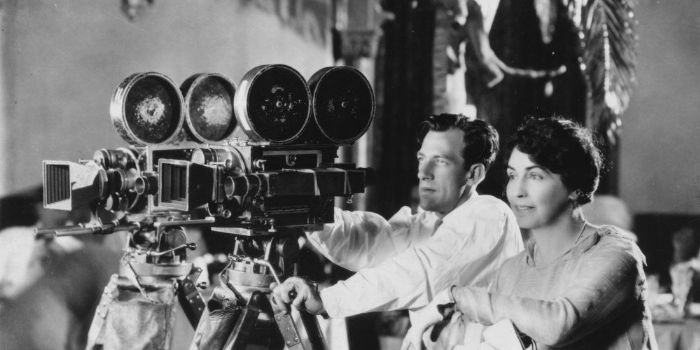
Many women were involved in the making of movies in this first period, and even more in the “golden age of silent cinema” - a concept created by me. When film was viewed as a fad, a curiosity with no future, women could handle cameras, write, edit, experiment and have their own production companies. When people started seeing that cinema was profitable, men took charge of everything. We are, now, with fewer women behind the cameras than there was 100 years ago. It’s time to be inspired by Alice Guy, Gene Gauntier, Mabel Normand and many more and recover our place as filmmakers.

Thanks again to Fritzi at Movies, Silently for creating this amazing challenge.

Monday, October 12, 2015

As latinas do cinema mudo: Myrtle Gonzalez e Beatriz Michelena

Latin women in silent cinema: Myrtle Gonzalez and Beatriz Michelena

O mundo real é sexista. O mundo do cinema também. Precisamos de Patricia Arquette clamando por salários iguais para homens e mulheres em seu discurso do Oscar, precisamos de estrelas denunciando o sexismo que existe dentro dos estúdios de cinema, precisamos de estudos que mostram que a minoria dos roteiristas, diretores e produtores de filmes são mulheres. Mas Hollywood nem sempre foi assim. Como toda novidade, a indústria do cinema, em seus primeiros tempos, era vista com desdém, como mera curiosidade passageira, e então muitas mulheres se envolviam no trabalho de fazer filmes. Na época do cinema mudo, havia grandes roteiristas, diretoras, produtoras e, claro, atrizes.

The real world is sexist. The movie world is sexist, too. We need Patricia Arquette asking for equal payment for women and men in her Oscar speech, we need film stars denouncing the sexism inside studios, we need studies showing that the minority of screenwriters, directors and producers are women. But it was not always like that. In its beginnings, the film industry was seen with disdain and as a fad. The consequence: many women were involved in making moving pictures. In the silent film era, there were many great female screenwriters, directors, producers and, of course, actresses.


Se hoje ainda temos de lutar contra o estereótipo da mulher-objeto, em especial quando a personagem feminina não é de origem estado-unidense (hola, Sofía Vergara), esta questão era mais complicada no passado. Nos anos 1910, personagens latinos se limitavam aos greasers: mexicanos com longos bigodes e escuros sombreros que eram invariavelmente vilões das películas. As mulheres latinas nestes filmes eram protótipos de femme fatales, sedutoras e nem um pouco confiáveis. Mas, ao lado das maiores e mais aclamadas atrizes da época, ao lado de Mary Pickford, Lillian Gish e Mabel Normand, havia duas latinas que fugiam de qualquer estereótipo: Myrtle Gonzalez e Beatriz Michelena.

If today we have to fight against the objetification of women, in special when we are talking about non-American women (hola, Sofía Vergara), this question was much more complicated in the past. During the 1910s, the only Latin characters were the greasers: Mexocan men with long moustaches  and dark sombreros who were always the villains in the movie. Latin women were femme fatale prototypes: seductive and not trustworthy. But, next to the biggest and most acclaimed actresses of the time, along Mary Pickford, Lillian Gish and Mabel Normand, there were two Latin girls who didn't fit any stereotype: Myrtle Gonzalez and Beatriz Michelena.


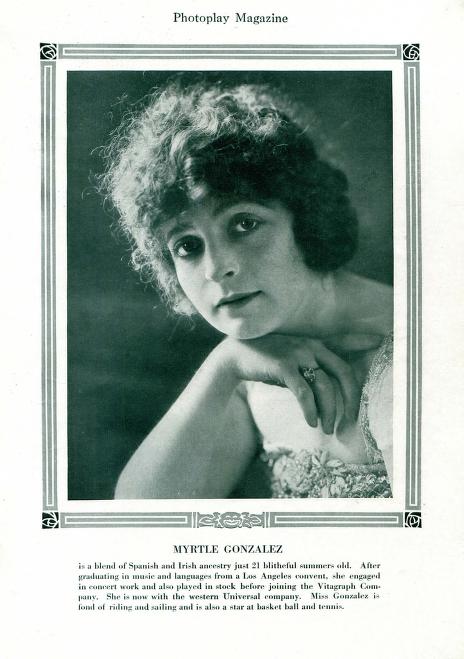
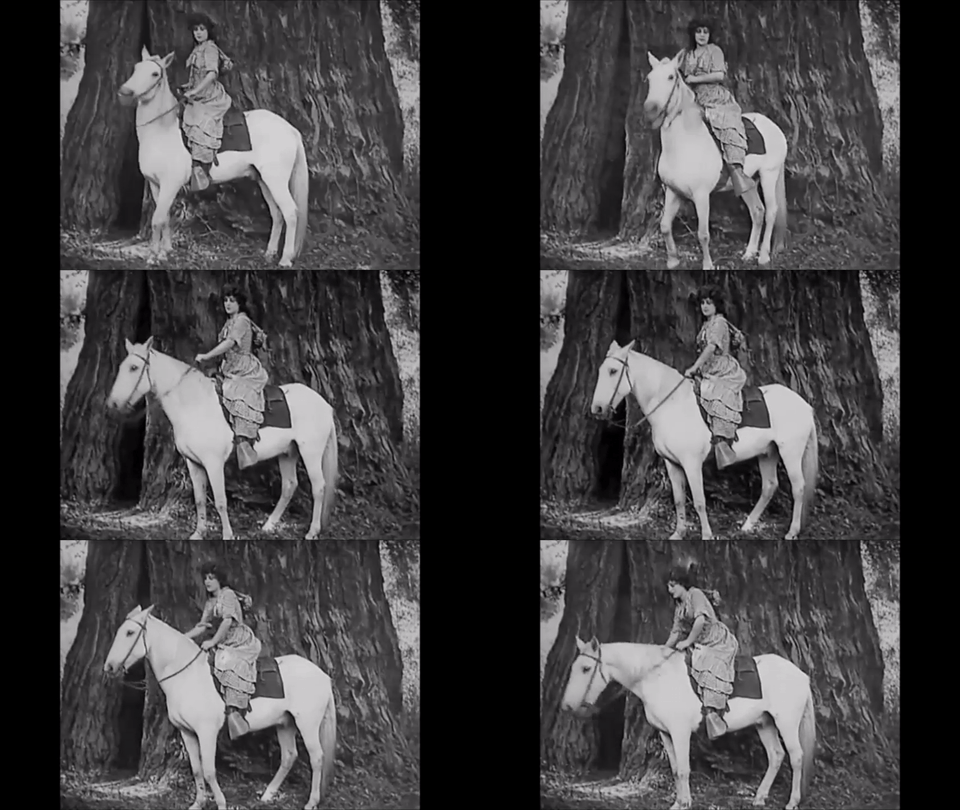
Myrtle Gonzalez nasceu em Los Angeles em 1891. A moça foi batizada com um nome 100% inglês, mas o sobrenome não deixa dúvidas sobre sua origem: seu pai era de origem mexicana, e sua mãe de origem irlandesa. Herdou da mãe o desejo de estar nos palcos, e começou a cantar e atuar ainda criança. Em 1913, quando os estúdios de cinema começavam a mudar de Nova York para Los Angeles, Myrtle conseguiu seu primeiro papel. Àquela altura, ela estava divorciada e tinha um filho bebê. Abaixo está um GIF de seu terceiro filme, “The Courage of the Commonplace” (1913):


Myrtle Gonzalez was born in Los Angeles in 1891. The girl's first name was 100% English, but her last name gives us no doubt about her origins: her father was from a Mexican family, and her mother from an Irish one. She inherited from her mother the desire of being on the stage, so she start singing and acting as a child. In 1913, when film studios started moving from New York to Los Angeles, Myrtle got her first role. At that time, she was divorced and had a baby son. Below there is a GIF from her third film, “The Courage of the Commonplace” (1913):


Myrtle teve pequenos papéis em curtas-metragens da Vitagraph, contracenando com William Desmond Taylor em cinco filmes entre 1913 e 1914. “The Kiss”, de 1914, é um dos poucos registros de Taylor em frente às câmeras. A protagonista do filme é Margaret Gibson, que confessou, em seu leito de morte em 1964, envolvimento com o misterioso assassinato de Taylor em 1922. Nada foi comprovado.

Myrtle had small roles in Vitagraph shorts, playing alongsie William Desmond Taylor in five films between 1913 and 1914. “The Kiss”, from 1914, is one of the few extant registers of Taylor in front of the cameras. The leading lady in this film is Margaret Gibson, who confessed, in her deathbed in 1964, that she was involved with Taylor's mysterious murder in 1922. Nothing was ever proved.


No começo da carreira, Myrtle Gonzalez não teve muito destaque, mas com o tempo conquistou papéis importantes. Suas protagonistas, como em “The End of the Rainbow” (1916), eram heroínas corajosas que viviam cercadas pela natureza e não se deixavam abater pelas adversidades.

In the beginning of her career, Myrtle didn’t call much attention, but with time she got more important papers. Her leading ladies, like in “The End of the Rainbow” (1916), were bold heroines who lived among the nature and didn’t let bad times prevent her from succeeding.


A carreira de Myrtle foi breve. Em dezembro de 1917, ela deixou o cinema para se casar pela segunda vez. Menos de um ano depois, em outubro de 1918, Myrtle Gonzalez sucumbiu à epidemia de gripe espanhola. Tinha apenas 27 anos e um coração frágil. O viúvo Allen Watt dirigiu e atuou em alguns poucos filmes da Universal nos anos 1920.

Myrtle's career was brief. In December 1917, she left the movies to get married for the second time. Less than a year later, in October 1918, Myrtle Gonzalez passed away from Spanish flu. She was only 27 and had a heart condition. Her widower, Allen Watt, direct and acted in a few Univwersal movies in the 1920s.


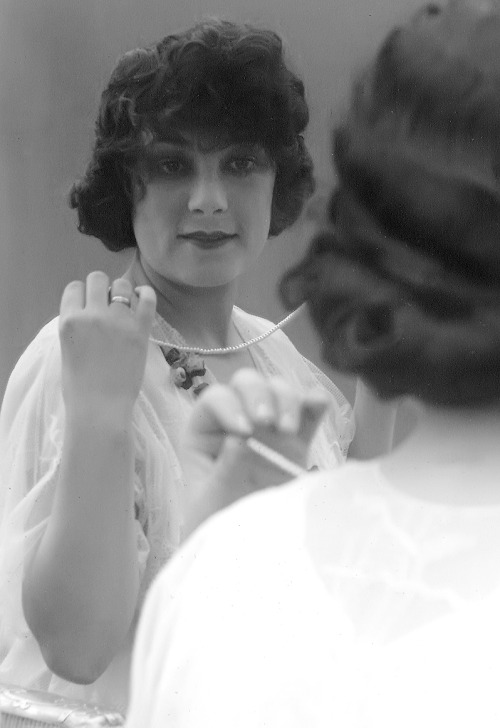
Beatriz Michelena nasceu em nova York em 1890. Seu pai era um tenor venezuelano que introduziu as duas filhas, Vera e Beatriz, no mundo artístico. Vera ficou no teatro de Nova York, fazendo parte do elenco do Ziegfeld Follies de 1914 a 1921. Beatriz se casou com um amor de infância em 1907, e se dedicou totalmente ao teatro nos anos seguintes.

Beatriz Michelena was born in New York in 1890. Her father was a Venezuelan tenor and he introduced his two daughters, Vera and Beatriz, to show business. Vera worked in the New York theater and was part of the Ziegfeld Follies from 1914 to 1921. Beatriz married her childhood sweetheart in 1907 and worked in theater the following years.


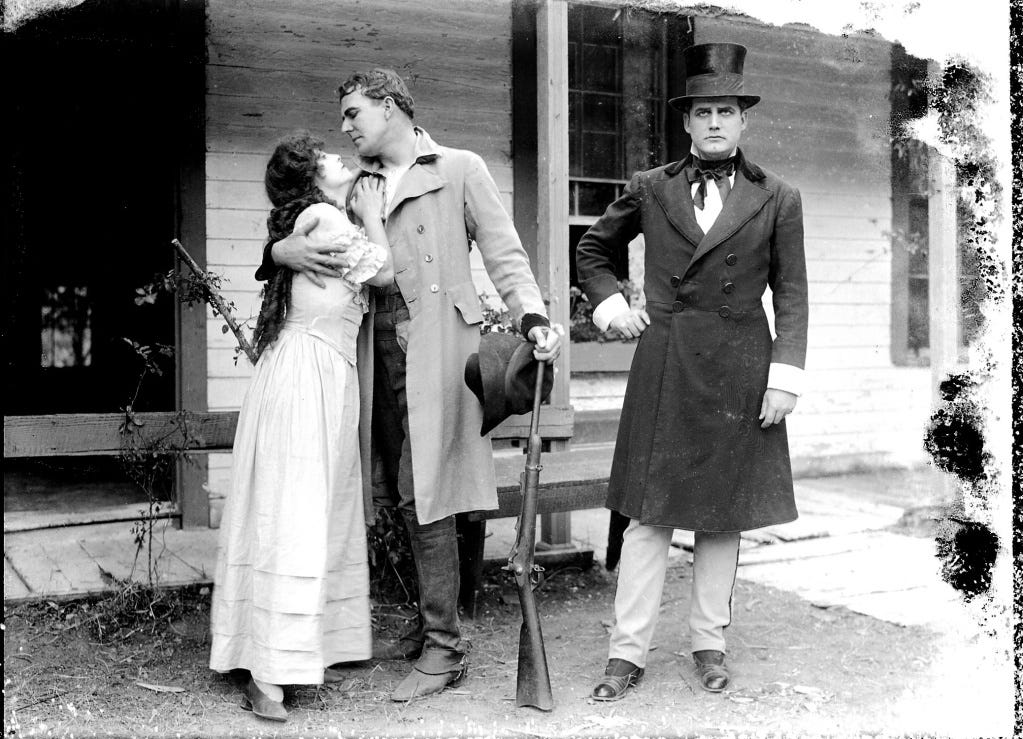
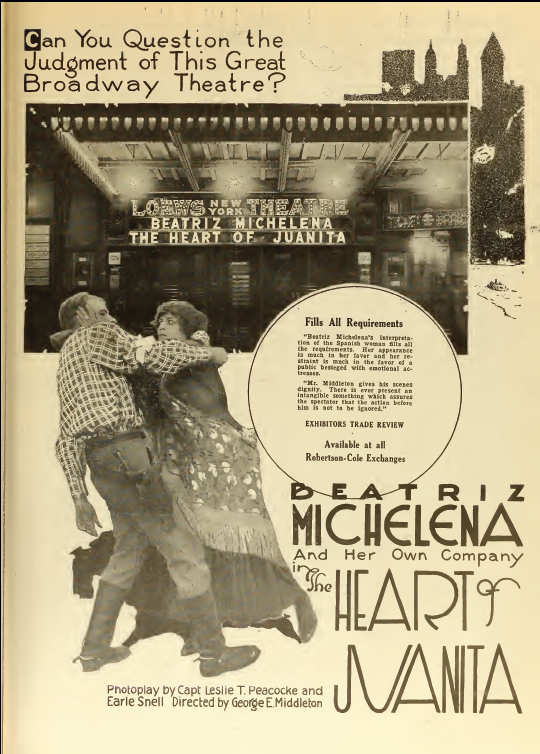
George E. Middleton, o marido de Beatriz, fundou a California Motion Picture Corporation em 1912 para rodar filmes publicitários dos automóveis que ele vendia. Em 1914, Michelena estreou nos cinemas com “Salomy Jane”, um ambicioso e belo western com uma trama complexa e uma bela atuação de sua protagonista. Teria nascido uma estrela para a California Motion Picture Corporation?

George E. Middleton, Beatriz’s husband, created the California Motion Picture Corporation in 1912 to make advertising films for the cars he was selling. In 1914, Michelena made her debut in the movies with “Salomy Jane”, an ambitious beautiful western with a complex plot and a great performance by the leading lady. Was a star born for California Motion Picture Corporation?


A produção caprichada deu uma ideia para George Middleton: sua esposa poderia ser uma estrela maior que Mary Pickford! Beatriz não chegou a este patamar, mas obteve relativo sucesso alternando westerns (em que ela dispensava o trabalho de dublês) e adaptações de óperas.

The gorgeous production from 1914 gave an idea to George Middleton: his wife could be a star bigger than Mary Pickford! Beatriz didn’t reach this point, but she had some success alternating between westerns (in which she dispensed stuntwomen) and opera adaptations. 


Entre 1916 e 1917, problemas na produção do épico “Fausto” levaram Beatriz a romper com a California Motion Picture Corporation. Na época, ela escrevia uma coluna de jornal sobre cinema e dava dicas para aspirantes a atrizes. Fragmentos de “Fausto” foram inseridos no filme “The Price Woman Pays”, de 1919, mas Beatriz já trabalhava em outro empreendimento.

Between 1916 and 1917, problems involving the production of the epic “Faust” amde Beatriz leave the California Motion Picture Corporation. At the time, she also wrote a newspaper column about the movies and gave tips to aspiring starlets. Stills from “Faust” were added to the film “The Price Woman Pays”, from 1919, but Beatriz was already working with something else.


No mesmo ano em que Mary Pickford se tornava sócia da United Artists, Beatriz fundou sua própria produtora: Beatriz Michelena Features. Foram realizados apenas dois filmes pela produtora, mas eles foram suficientes para Beatriz marcar seu lugar na história.
In the same year that Mary Pickford became a partner at United Artists, Beatriz created her own production company: Beatriz Michelena Features. Only two films were produced there, but it was enough to guarantee Beatriz a place in film history.


Aposentada das telas em 1920, Beatriz voltou à ópera. Ela viajou pela América Latina cantando ópera em 1927, e em 1931 um incêndio destruiu todas as cópias dos filmes da Beatriz Michelena Features (algumas cópias sobreviveram em arquivos ao redor do mundo). Beatriz Michelena faleceu em 1942, aos 52 anos.

Retired from the screen in 1920, Beatriz returned to opera. She toured in Latin America singing opera in 1927, and in 1931 a fire destroyed all the film copies at Beatriz Michelena Features (some copies survived in archives around the world). Beatriz Michelena passed away in 1942, aged 52. 


Myrtle e Beatriz, apesar de terem nascido nos Estados Unidos, tinham a força e a graça do sangue latino. Não se curvaram frente às adversidades, conquistaram um lugar ao sol, interpretaram mulheres fortes e corajosas e deixaram um legado a ser admirado por todos, mulheres e homens, latinos e não-latinos.

Myrtle and Beatriz, although American women by birth, had the strengtth and grace found only in Latin blood. They didn’t give up when obstacles appeared, they found a place in the sun, they played courageous strong women and left a legacy that deserves to be admired by all, men and women, Latin or not. 

This is my contribution to the Hollywood's Hispanic Heritage Blogathon 2015, hosted by Aurora at Once Upon a Screen. Bravo!
Related Posts Plugin for WordPress, Blogger...