} Crítica Retrô: mudo

Tradutor / Translator / Traductor / Übersetzer / Traduttore / Traducteur / 翻訳者 / переводчик

Showing posts with label mudo. Show all posts

Friday, February 27, 2026

David, o Caçula (1921) / Tol'able David (1921)


Anos atrás, escrevi um perfil de Richard Barthelmess para uma publicação conhecida como The Pre-Code Companion. Considerando o título, foquei mais nas performances de Richard em filmes pre-Code, e assim descobri um novo filme favorito, “Fome por Glória” de 1933. Mas ele fez 81 filmes, numa carreira que durou décadas. Alguns filmes me escaparam na época, e decidi assisti-los depois. Um deles é “David, o Caçula”, e o momento de assisti-lo é agora.  

Years ago, I wrote a profile of Richard Barthelmess for a publication known as The Pre-Code Companion. Given the title, I focused more on Richard’s performances in pre-Code films, and by doing this I discovered a new favorite, 1933’s “Heroes for Sale”. But he made 81 movies in a career that spanned decades. Some movies couldn’t fit my schedule, so I decided to watch them later. One of them was “Tol’able David”, and the moment to watch it is now.

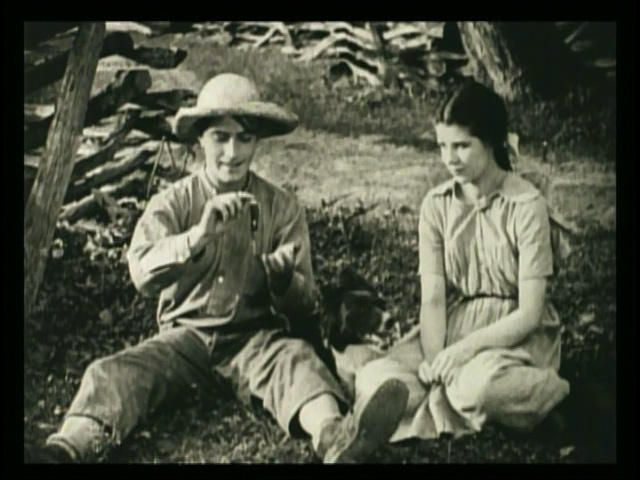
A família Kinemon vive alegremente em Greenstream. Os pais têm dois filhos: Allan (Warner Richmond), o mais velho que já trabalha como carteiro, e David (Barthelmess), o filhinho da mamãe. Há também uma família de malfeitores, os Hatburns, formada por pai e dois filhos. Os Hatburns decidem visitar um primo, que é vizinho dos Kinemon e avô de Esther (Gladys Hulette), interesse amoroso de David. 

The Kinemon family lives happily in Greenstream. Ma and Pa have two sons: Allan (Warner Richmond), the oldest and already working as a mailman, and David (Barthelmess), mother’s boy. There is also a family of wrongdoers, the Hatburns, comprised of father and two sons. The Hatburns decide to visit a cousin, who is the Kinemon’s neighbor and the grandfather of Esther (Gladys Hulette), David’s love interest.

David não é adulto ainda, ele é apenas o caçula. Esther também não o vê como um adulto. Quando seu irmão é ferido pelos Hatburn e seu pai morre, David tem de crescer e se tornar o novo Homem da Casa. Isso inclui tomar para si a obrigação do irmão de entregar as cartas.

David isn’t an adult yet, he’s only “Tol’able” as an adult. Esther doesn’t see him as an adult either. When his brother is wounded by the Hatburns and his father dies, David has to grow up and become the new Man of the House. This includes taking as his the brother’s obligation to deliver the mail.

Um “ator” que merece destaque é o cachorro da família Kinemon, Rocket. Ele rouba as calças de David quando o garoto vai nadar, acompanha-o nas aventuras com ou sem Esther, David quase senta nele, mas o cachorro não se importa. O IMDb dá o crédito de Rocket para um cão chamado Lassie, que fez mais dois filmes. 

One “performer” to highlight is the Kinemon dog, Rocket. It steals David’s pants when the boy is swimming, accompanies David in his adventures with or without Esther, David almost sits on it, but the dog is fine with it. IMDb credits a dog named Lassie as Rocket, with two other film appearances.

No começo do filme David e Esther jogam um jogo chamado Mumblety-Peg, que eu desconhecia. Numa busca pela internet, o curioso site The Art of Manliness me informou que o jogo consiste em jogar uma faca para o ar e ver quem consegue fazê-la cair com a lâmina furando o chão. O vencedor afunda um graveto ou parafuso no chão, que o perdedor precisa tirar com os dentes. 

Early in the movie David and Esther play a game called Mumblety-Peg, which I didn’t know. In a web search, the website weirdly titled The Art of Manliness informed me that the game consists in throwing up a knife and seeing who can get it to stick to the ground. The winner plants a stick on the ground and the loser has to remove the stick with his teeth.

“David, o Caçula” foi feito pela Inspiration Pictures e é claramente um melodrama, mesmo com um momento engraçado não-intencional quando a mãe de David está esperando por ele toda arrumada e com um sorrisinho enquanto ele está envolvido numa briga com um Hatburn. Inspiration Pictures era a produtora de Richard Barthelmess e “David, o Caçula” foi seu primeiro crédito como produtor.

“Tol’able David” was made by Inspiration Pictures and it’s clearly a melodrama, even though there is an unintentional funny moment with David’s mom waiting for him all dolled up and with a silly smile while he is involved in a fistfight with a Hatburn. Inspiration Pictures was Richard Barthelmess’s own production company and “Tol’able David” was his first credit as a producer.  

O diretor e co-roteirista Henry King começou no cinema como ator em 1912 e três anos depois dirigiu seu primeiro filme. Ele dirigiu mais de 100 filmes tanto na era muda quanto após a chegada do cinema falado. Ele foi um dos fundadores da Academia, o órgão que organiza o Oscar. Ele próprio foi indicado a dois Oscars, mas não ganhou nenhum. Em “David, o Caçula”, King emula o estilo cinematográfico de Griffith, que foi o primeiro a receber a oferta para adaptar o livro para as telas mas recusou a oportunidade.

Director and co-screenwriter Henry King started as an actor in film in 1912 and three years later had his first directing credit. He directed over 100 movies both in the silent era and later with the talkies. He was one of the founders of the Academy, the organ that presents the Oscars. King himself was nominated for two Oscars, but failed to win both. In “Tol’able David” King emulates Griffith’s filmmaking style, as Griffith was first offered to adapt the novel to the screen but refused the opportunity.

Barthelmess, que fez um par de filmes com Griffith, traz a quantia certa de charme jovial e ambição para o papel. Mesmo assim, David é tão delicado que chuta uma porta, abrindo-a, e não entra no recinto, só fica do lado de fora parado, sem saber o que fazer. Mas ele é nosso herói e sabemos que ele triunfará no final desta história sobre o que acontece quando meninos se tornam homens.

Barthelmess, who appeared in a couple of Griffith’s films, brings the right amount of young charm and ambition to the lead. Even so, David is so delicate that he kicks a door open and doesn’t enter the room, just stands outside without knowing what to do. But he is our hero and we know he’ll triumph in the end of this story of what happens when boys become men.

Monday, November 10, 2025

Häxan - A Feitiçaria Através dos Tempos (1922) / Häxan (1922)


Alguns meses atrás, investiguei a carreira do diretor dinamarquês Urban Gad e mencionei um filme de Benjamin Christensen, “The Mysterious X” (1914). Hoje retorno a Christensen para finalmente assistir à sua obra mais conhecida, um documentário que expande os limites pouco claros do novo gênero com reconstruções e dramatizações 

Earlier this year, I investigated the career of Danish filmmaker Urban Gad and mentioned one film from Benjamin Christensen, “The Mysterious X” (1914). Now I return to Christensen to finally watch his most well-known work, a documentary that expands the blurred limits of the new genre with reconstruction and dramatizations. 

Em inglês, “witch”. Em espanhol, “bruja”. Em alemão, “Hexe”. Em italiano, “strega”. Em francês, “sorcière”. Não importa o nome, quando algo difícil de acreditar ou de explicar acontecia, ela era culpada: a bruxa!

In Portuguese, “bruxa”. In Spanish, “bruja”. In German, “Hexe”. In Italian, “strega”. In French, “sorcière”. No matter the name, when something hard to believe or explain happened, she was blamed: the witch!

O primeiro capítulo de “Häxan” é muito peculiar porque apresenta o contexto histórico de mitos sobre bruxas e bruxaria em geral, majoritariamente na Idade Média. As cartelas de texto descrevem e contextualizam imagens retiradas de livros antigos e outras fontes históricas. Podemos dizer, com alguma margem de certeza, que ninguém estava fazendo nada parecido com isso na época.

The first chapter of “Häxan” is very unique in the sense it presents historical context for myths about the witch and witchcraft in general, mostly in the Middle Ages. The title cards describe and contextualize ancient images taken from old books and other historical sources. We could say, with a margin of certainty, that nobody was doing this at the time.

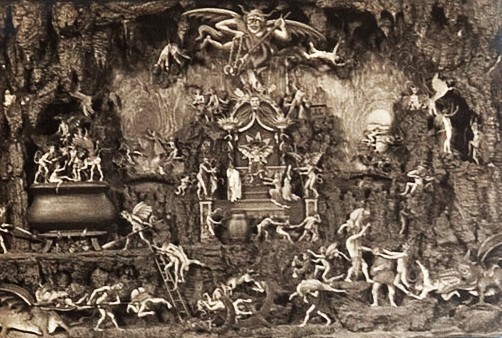
No capítulo dois somos levados para dentro do esconderijo de uma bruxa do século XV. A feiticeira Karna (Ella La Cour) usa dedos de enforcados em poções e cadáveres são violados em busca de segredos. A adoração do diabo é explicada, bem como os hábitos das bruxas conforme elas ganham seu poder diretamente do encardido.

In chapter two we’re taken inside a witch’s den in the 15th century. The witch Karna (Ella La Cour) uses fingers of the hanged in potions and corpses are violated in search of meaningful secrets. The adoration of the devil is explained, as well as the habits of witches as they gain their power directly from the king of the underworld.

O capítulo três traz o começo de uma história sobre a Inquisição na Alemanha. Quando um homem adoece, uma mendiga, Maria (Maren Pedersen), é acusada de feitiçaria. O capítulo quatro mostra a tortura e confissão de Maria. O capítulo cinco traz a prisão e tortura de outras mulheres acusadas de feitiçaria e a questão é levantada: como confiar em membros do clero que mentem e enganam?

Chapter three brings the beginning of a story about the Inquisition in Germany. When a man falls ill, a beggar, Maria (Maren Pedersen), is accused of witchcraft. Chapter four shows Maria’s torture and confession. Chapter five brings the arrest and torture of other women accused of witchcraft and the question appear: how can you trust clergy members who lie and deceive?

O capítulo seis é sobre instrumentos de tortura e também a histeria que se espalha num convento quando uma freira é enfeitiçada. Finalmente, o capítulo sete é sobre possessão no mundo moderno - resultado de doenças mentais. A situação muda: a mulher que teria problemas com a igreja no passado agora pode ter problemas com a lei e a polícia. 

Chapter six is all about torture instruments and also the hysteria that spreads in a convent when a nun is bewitched. Finally, chapter seven is about possession in modern days - the results of mental illness. The situation then shifts: the woman who would have had trouble with the church now may face issues with the law and the police.

O poder da feitiçaria reside na sugestão: as pessoas creem que foram enfeitiçadas porque estão sugestionadas a isso. Como o filme coloca em palavras: “a crença era tão forte que o Diabo se tornou algo real”. Em tempos em que a superstição era mais presente, as pessoas acreditavam em coisas surreais quando eram incapazes de explicar algo. Mas como o filme lida com a possessão em tempos modernos, fica claro que não é a época que cria as ilusões: é a fraqueza da mente. E não estou sendo psicofóbica: como alguém com uma doença mental, conheço bem nossas fraquezas.  

The power of witchcraft lies in suggestion: people believe they were bewitched because they are open to it. As the film puts in words: “The belief was so strong that the Devil became something real”. In times when superstitions were more widespread, people believed in surreal things when they couldn’t explain something. But as the movie deals with possession in modern times, it becomes clear that it isn’t the era that allows delusions: it’s the weakness of the mind. And I’m not being against people with mental illnesses: I have one too and I know we have weaknesses.

Uma camada extra de estigma é adicionada quando o filme descreve a parceira do diabo como “velha, pobre e miserável”. Em muitas línguas uma mulher feia pode ser chamada de bruxa, como você deve saber. Mas o filme vai mais além ao dizer que ser velha e feia em tempos medievais era perigoso, mas não era seguro ser jovem e bonita. Uma velha podia enfeitiçar um homem por pirraça, e uma mulher jovem podia fazer um homem religioso ter pensamentos obscenos através da bruxaria. No passado, ainda mais que hoje, era arriscado simplesmente ser mulher. 

An extra layer of stigma is added when the movie describes the devil’s partner as “old, poor and miserable”. In many languages an ugly woman can be called a witch, you know. But the film goes further saying that being old and ugly in Medieval times was dangerous, but it wasn’t safe to be young and pretty. An old woman could bewitch a man out of pettiness, and a young one could make a pious man have dirty thoughts also through witchcraft. In the past, even more than today, it was risky simply being a woman.

O cinema em sua infância já era inventivo. Em “Häxan”, encontramos técnicas como dupla exposição, shots reversos, uso de miniaturas e animação em stop-motion de um boneco do Diabo. O cinema em sua infância também era “assombroso”, conforme usava luzes e sombras para criar o clima e mesmo como elemento narrativo. Para fazer o filme parecer ainda mais sombrio,"Häxan” foi gravado quase sempre à noite. A sequência de bruxas voando atrás de sombras de pessoas é icônica, talvez a mais lembrada do filme. 

Early cinema has always been inventive. In “Häxan”, we can find techniques such as double exposure, reverse shots, miniatures and stop-motion animation of a little Devil doll. Early cinema has also always been “shadowy”, as it uses lights and shadows to create the mood and even as a narrative device. To make the film look even gloomier, “Häxan” was mostly shot at night.The sequence of witches flying behind the shadows of people is iconic, perhaps the one more associated with the film.

Nascido em 1879, Benjamin Christensen queria ser cantor de ópera, mas o medo do palco o impediu de realizar esse sonho. Em vez disso, criou pesadelos para as telas. Depois de “Night of Revenge” de 1916, ele se retirou das telas por alguns anos para criar “Häxan”, no qual ele confiou só em si mesmo para interpretar o Diabo. O sucesso permitiu que ele se mudasse para Hollywood, mas desta fase de sua carreira só um filme sobreviveu, chamado “Nos Domínios de Satã”, de 1929. De volta à Dinamarca, ele dirigiu mais alguns títulos e gerenciou um cinema.

Born in 1879, Benjamin Christensen wanted to become an opera singer, but stage fright prevented him from achieving his dream. Instead, he created nightmares for the screen. After the 1916 “Night of Revenge”, he removed himself from the screen for a few years to craft “Häxan”, in which he trusted only himself to play the Devil. The success made it possible for him to move to Hollywood, but from this phase in his career only one film survives, the aptly titled 1929 “Seven Footprints to Satan”. Back to Denmark, he directed a few more titles and ran a movie theater.

O capítulo cinco termina com a estatística de que oito milhões de pessoas foram queimadas acusadas de feitiçaria - um Holocausto Medievel. Um Pecado, com letra maiúscula, real, pelo qual ninguém - nem a Igreja Católica nem as pessoas que denunciaram, torturaram e queimaram - pediu perdão. Hoje somos queimadas em outros tipos de fogueiras, algumas inclusive metafóricas, e olhamos para trás para enfrentar fanáticos e a superstição. E, como verdadeiro documento histórico, “Häxan” está aqui para nos informar e empoderar.

Chapter five ends with the statistics that eight million people have been burned accused of witchcraft - a Medieval Holocaust. A real Sin, with a capital letter, nobody - not the Catholic Church nor the people who reported, tortured and burned - asked forgiveness for. As we’re tossed to other kinds of fires, some even metaphorical ones, we look back and fight fanatics and superstition. And, as a true historical document, “Häxan” is here to inform and empower us.

This is my contribution to the Early Shadows and Pre-Code Horror blogathon, hosted by the Classic Movie Blog Association.

Friday, October 24, 2025

O Gato e o Canário (1927) / The Cat and the Canary (1927)


O que podemos esperar de um filme que começa com seu cenário sendo descrito como “a grotesca mansão de um milionário excêntrico”? Sustos, arrepios na espinha e diversão: tudo isso em apenas 87 minutos. Este é “O Gato e o Canário”.

What can we expect from a movie that starts with its setting described as “the grotesque mansion of an eccentric millionaire”? Thrills, shills and fun: this all packed in 87 minutes. This is “The Cat and the Canary”.

Quando estava morrendo, Cyrus West sentiu que seus parentes eram como gatos em torno de um canário, isto é, predadores. No vigésimo aniversário de sua morte, esses parentes se reúnem na mansão para finalmente abrirem seu testamento. Todos estão com os nervos à flor da pele por estarem numa mansão mal-assombrada, mas a curiosidade sobre quem ficará com o dinheiro é maior que qualquer medo.

When he was dying, Cyrus West felt that his relatives were like cats around a canary, that is, predators. On the 20th anniversary of his death, these relatives reunite in his mansion to finally hear the reading of his will. Everybody is nervous to be in a haunted mansion, but the wish to know who gets the money is bigger than any fear.

O vencedor leva tudo, e a vencedora é Annabelle West (Laura La Plante). Mas há uma condição: a nova herdeira deve ser examinada por um médico e declarada mentalmente sã, ou o dinheiro irá para outra pessoa. Annabelle e os outros estão se preparando para passar a noite na mansão quando o retrato de Cyrus cai da parede:  é um mau pressentimento, algo terrível acontecerá naquela noite, diz a governanta. Annabelle é agora o canário em meio aos gatos.

Winner takes it all, and the winner is Annabelle West (Laura La Plante). But there is a condition: the new heiress must be examined by a doctor and be declared mentally sane, or the money will go to someone else. Annabelle and the others prepare to spend the night at the mansion when Cyrus’s portrait falls from the wall: it’s a bad omen, something terrible will happen that night, says the housekeeper. Annabelle is now the canary among the cats.

Para ter mais emoção, um guarda chega com a notícia de que um louco fugiu do hospício e provavelmente está escondido em algum canto da mansão. Este louco pensa que é um gato e destrói as suas vítimas como se fossem canários indefesos. Mais essa agora: os convidados começam a suspeitar que Annabelle está louca, até que ela prova que há na mansão passagens secretas e quartos ocultos.

To spice things up, a guard arrives with the news that a lunatic escaped and is probably hidden somewhere inside the mansion. This lunatic thinks he’s a cat and destroys his victims as if they were defenseless canaries. More than that: the guests start suspecting that Annabelle is crazy, until she proves there are secret passages and hidden rooms in the mansion.

Algumas cartelas de texto são muito engraçadas, brincando não apenas com o significado das palavras, mas também com a forma delas e com sua distribuição na tela. O design dos intertítulos era uma arte e o homem responsável por eles neste filme foi Walter Anthony, que estreou nos cinemas fazendo as cartelas de texto para “Esposas Ingênuas” (1922) de Stroheim e trabalhou para além da morte: quatro anos após ele morrer ainda eram feitos curtas que ele escrevera.

Some title cards are very funny, playing not only with the meaning of the words, but also with their shapes and how they’re distributed on screen. Title card design was truly an art and the man responsible for them in this movie was Walter Anthony, who debuted in films doing the title cards for Stroheim’s “Foolish Wives” (1922) and worked beyond his death: four years after he died short films written by him were still being made.

As mãos são um motif importante no filme. Há, obviamente, as mãos que saem da parede para roubar o colar de diamantes de Annabelle, um símbolo que praticamente representa o filme porque permanece nas nossas mentes após o fim da projeção. Mas há também as mãos do médico consultando Annabelle: elas aparecem em close-up na frente do rosto dele, elas sentem o pulso da mulher, elas abrem os olhos dela. Há outros momentos, mas mencioná-los seria dar spoiler. A dúvida permanece: pelas mãos de quem Annabelle perecerá? 

Hands are an important motif in the movie. There are, of course, the hands that come out of the wall to steal Annabelle’s diamond necklace, a symbol that practically represents the film as it remains in our minds after the projection is over. But there are also the hands of the doctor who is analyzing Annabelle: they appear in close-up in front of his face, they feel the woman’s pulse, they open her eyes. There are other handy moments (LOL), but they configure as spoilers. The doubt lingers: by whose hands will Annabelle perish?

“O Gato e o Canário” teve origem como peça de teatro do dramaturgo John Willard. O roteiro é de Robert F. Hill, que também serviu como diretor assistente, e Alfred A. Cohn, com o mesmo sobrenome do editor Martin G. Cohn, e ambos com o mesmo sobrenome de Harry Cohn, o chefão dos estúdios Columbia - os três não eram parentes de sangue e este filme foi feito pelos estúdios Universal. 

“The Cat and the Canary” originated as a stage play by John Willard. The scenario was by Robert F. Hill, who also served as assistant director, and Alfred A. Cohn, who shares a last name with editor Martin G. Cohn, and both shared the last name with Harry Cohn, the big boss at Columbia studios - they weren’t related by blood and this film was made at Universal. 

A tia Susan é interpretada por uma atriz que você deveria conhecer: Flora Finch. Metade de uma das primeiras duplas dinâmicas na História do cinema, a alta e magra Finch foi colocada ao lado do gorducho John Bunny seguindo a lógica de que opostos se atraem. Seus curtas eram chamados de “Bunnyfinches”. Em “O Gato e o Canário”, é possível ver que Flora era uma grande comediante, que fez mais de 270 filmes entre 1908 e 1939, com a maioria de seu trabalho nos talkies sendo como figurante. 

Aunt Susan is played by an actress you must know: Flora Finch. One half of one of the very first dynamic duos in the History of cinema, the tall and thin Finch was paired with the chubby John Bunny following the notion that opposites attract each other. Their shorts were nicknamed “Bunnyfinches”. In “The Cat and the Canary”, you can see that Flora was a pro at comedy, making over 270 movies from 1908 to 1939, and most of her later works were uncredited. 

“O Gato e o Canário” tem a dose certa de suspense. Tem ainda um romance entre Annabelle e Paul Jones, interpretado por Creighton Hale. Um filme perfeito para ver no Halloween, este foi um dos últimos trabalhos do grande diretor Paul Leni, que morreu em 1929 aos 44 anos de complicações causadas por um dente infeccionado. A mistura de horror e humor era uma marca registrada de Leni e é uma pena que ele não tenha vivido mais para nos legar outros grandes filmes. 

“The Cat and the Canary” has just the right amount of spookiness. There is even romance between Annabelle and Paul Jones, played by Creighton Hale. A perfect film to kickstart Halloween season, this was one of the last works of the great director Paul Leni, who died in 1929 at age 44 from complications caused by an untreated tooth infection. The mix of humor and horror was one of Leni’s trademark and it’s a shame that he didn’t live longer to make other great movies like this one.

This is my contribution to the Secret Places and Trippy Houses blogathon, hosted by Rebecca at Taking Up Room.

Tuesday, October 14, 2025

44ª Giornate del Cinema Muto / 44th Pordenone Silent Film Festival

 Não curto muito celebrar meu aniversário. Gosto bastante das festividades do Natal. Mas minha época favorita do ano é outra: a semana quando acontece a Giornate del Cinema Muto. Desde a pandemia, o time por trás do festival vem sendo fantástico por oferecer uma programação online com um pouco de tudo que é exibido in loco em Pordenone, para os fãs do cinema mudo ao redor do mundo. Estou entre esses fãs espectadores pelo quinto ano consecutivo e aqui está um vislumbre desta semana mágica.

I’m not very fond of celebrating my birthday. I really like the parties around Christmas. But my favorite time of the year is another: the week when the Pordenone Silent Film Festival happens. Since the pandemic, the Giornate team has been kind enough to offer an online program with a little bit of everything that is shown in loco in Pordenone, for silent film fans around the world. I’m among them for the fifth consecutive year and here is an overview of this magic week.


O festival online começou com “Saias / A Little Bit of Fluff”, feito quando o som já estava chegando ao mundo do cinema – o glorioso ano de 1928. É uma farsa deliciosa sobre os vizinhos Bertram (Syd Chaplin), recém-casado, e Mamie (Betty Balfour), uma artista. A trama gira em torno das estripulias dele quando sua esposa deveria estar fora de casa e inclui ainda uma questão sobre um colar de pérolas e diamantes.

The online Giornate kicked off with “A Little Bit of Fluff”, from when sound was already arriving in the film world - the glorious year of 1928. It was a delightful farce about neighbors Bertram (Syd Chaplin), recently married, and Mamie (Betty Balfour), a showgirl. It revolves around his shenanigans when his wife is supposed to be out of town and also the ownership of a pearl and diamonds necklace.


Mais cedo este ano eu escrevi sobre o recentemente restaurado “Satan Fait la Noce”, de 1907. Na Giornate eu encontrei um Louis Feuillade mais contido fazendo uma série de filmes intitulados “A Vida como Ela É” entre 1911 e 1912. A restauração destes curtas estava ótima e as cópias perfeitas. Através deles fui introduzida a uma das maiores estrelas francesas da época Suzanne Grandais. A composição abaixo, de “Le Nain” de 1912, foi mais tarde imitada mas permanece como uma prova surpreendente de que o primeiro cinema era muito mais elaborado que comumente se pensa. Outro curta revelador da série foi “Erreur Tragique”, com um filme dentro do filme, com o protagonista vendo sua esposa com outro homem num filme exibido num cinema em Paris.

Earlier this year I’ve reviewed the recently recovered short “Satan Fait la Noce”, from 1907. At the Giornate I found a less mischievous Louis Feuillade making a series of films titled “Life As It Is” between 1911 and 1912. The restoration of these shorts was amazing and the prints were pristine. Through them I was introduced to one of the biggest French stars of the era, Suzanne Grandais. The shot below, from 1912’s “Le Nain”, was later imitated but remains a surprise proof that early film was much more elaborated than most think. Another revealing short of the series was “Erreur Tragique”, with a film-within-the-film, with the lead seeing his wife with another man in the film showing at a Paris movie theater.


Pela primeira vez na Giornate tive a chance de revisitar alguns “velhos amigos”, filmes que eu já havia visto antes. O primeiro foi o curta de abertura da programação online, “The Bond”, um filme patriótico com páthos. O esforço para venda de bônus de guerra pareceria propaganda sem-graça nas mãos de um cineasta menos habilidoso, mas Chaplin faz algo divertido e aprazível. Aliás, Chaplin e seus imitadores foram o foco de uma série na Giornate deste ano, e o que seguiu naturalmente a “the Bond” foi um filme do mesmo ano estrelando Billy West, reconhecido pelo próprio Chaplin como o melhor imitador de Chaplin. “His Day Out” foi divertido e quase tão bom quanto um filme do Vagabundo original. 

For the first time at the Giornate I had the chance to revisit some “old friends”, films I’ve watched before. The first one was the opening short for the online program, Chaplin’s “The Bond”, a film that is patriotic yet has pathos. The effort to sell liberty bonds would look like a dull propaganda in the hands of a less talented filmmaker, but Chaplin makes it fun and heartwarming. By the way, Chaplin and Chaplin imitators were the focus of a series at this year’s Giornate, and the natural follow-up to “The Bond” was a film from the same year with Billy West, acknowledged by Chaplin himself as the best Chaplin imitator. “His Day Out” was fun and almost as good as a film from the original Tramp.


O outro velho amigo que eu reassisti na Giornate foi a versão de 1913 de “Os Últimos Dias de Pompeia”. Cinco anos atrás (!) eu escrevi sobre as duas versões – dos estúdios Pasquali e Ambrosio – da história, ambos feitos em 1913. A Giornate apresentou a versão de Ambrosio, dirigida por Eleuterio Rodolfi. Eu não podia dizer não para uma restauração do filme, ainda mais com um tempo de exibição um pouco mais longo que o que eu vi. Falando em velhos amigos, houve também na Giornate um filme de Maurice Tourneur, que dirigiu um dos meus filmes mudos favoritos, “O Pássaro Azul / The Blue Bird”, de 1918. Mas eu vou falar mais sobre “A Urze Branca / The White Heather” no meu blog Lost and Found Films.

The other old friend I rewatched at the Giornate was the 1913 “The Last Days of Pompeii”. Five years ago (!) I reviewed the two versions - from the Pasquali and Ambrosio studios - of the story both made in 1913 in Italy. The Giornate screened the Ambrosio version, directed by Eleuterio Rodolfi. I couldn’t say no to a restoration of the print, with a slightly longer runtime. Speaking of old friends, there was also at the Giornate a film by Maurice Tourneur, who directed one of my favorite silents, 1918’s “The Blue Bird”. But I’ll talk more about “The White Heather” (1919) on my blog Lost and Found Films.


Além de “The Bond”, houve espaço para outro tipo de propaganda em Pordenone, mas bem diferente: propaganda soviética feita na Ucrânia e destinada para crianças! Primeiro exibiram “Robinson on His Own” (1929), sobre um garotinho nerd chamado Vasja (Boria Bohdanovskyi) que gosta de ler livros de aventura (norte-americanos) e decide partir em sua própria aventura. Foi tipo Madame Bovary ou Dom Quixote para crianças: cuidado com o que você lê!

Besides “The Bond”, there was plenty of space for another kind of propaganda in Pordenone, yet a very different one: Soviet propaganda made in Ukraine and aimed at children! First they showed “Robinson on his Own” (1929), about a nerdy boy named Vasja (Boria Bohdanovskyi) who likes to read (American) adventure novels and decides to go on his own adventure. It was kind of Madame Bovary or Don Quijote for children: beware at what you read!


O segundo filme de propaganda soviética com / para crianças foi “Adventures of a Penny” (também 1929), ambientado em tempos czaristas, quando crianças da classe trabalhadora fumavam e só podiam brincar nas ruas. A história é do traquinas Fedka (Kolia Kopelian) em suas muitas aventuras, sempre invadidas pelo rico e mimado Tolya (Mark Orlov). Este filme teve um excelente acompanhamento musical de Olga Podgaiskaya, completado por um coro de crianças no começo e no final.

The second Soviet propaganda film with / for children was “Adventures of a Penny” (also 1929), set in Tsarist times, when working-class children smoked and could only play on the streets. It follows naughty Fedka (Kolia Kopelian) in his many adventures, always perpassed by the rich and spoiled Tolya (Mark Orlov). This movie had a great musical accompaniment by Olga Podgaiskaya, complete with a children’s chorus in the beginning and end.


Os estúdios Ambrosio se fizeram presentes novamente com “O Torpedeamento do Oceânia” (191), feito por Augusto Genina em seu quinto ano como cineasta e estrelando Ileana Leonidoff em seu primeiro papel no cinema, e já como vilã. Algo curioso é que todas as cartelas de texto de “Os Últimos Dias de Pompeia” estão marcadas com o número 899, enquanto as cartelas aqui têm o número 1159. Isso significa que quase 300 filmes foram feitos pelos estúdios Ambrosio em quatro anos? Talvez. E não pense que Ambrosio só fazia filmes sobre desastres: o afundar do navio ocupa só a primeira curta parte do filme, o resto envolve um casal de “aventureiros” e uma herdeira numa corrida por uma herança. Outra coisa bacana de se ver é o uso de um avião como parte da trama, meros dez anos depois que Santos Dumont o inventou.

Ambrosio studios was present once again in “Il Siluramento dell’Oceania” (1917), made be Augusto Genina on his fifth year as a filmmaker and starring Ileana Leonidoff in her first film role – and as a villain. One curious thing is that all title cards from “The Last Days of Pompeii” are marked with the number 899, while all the title cards here have the number 1159. Does it mean that almost 300 films were made by Ambrosio in four years? Maybe. And don’t think that Ambrosio only made movies about disasters: the sinking of the ship is only the short first part, the rest of the movie involves a couple of “adventurers” and the rightful heiress in a race to secure an inheritance. Another nice thing to see is an airplane as a plot device, mere ten years after Santos Dumont invented it.


Falando em navios, o filme que se seguiu ao Oceânia na programação foi “O Navio Sangrento / The Blood Ship” (1927). Ele segue um marinheiro ingênuo (Richard Arlen) que embarca no Golden Bough, um navio comandado pelo sádico capitão Angus Swope (Walter James). Com Jacqueline Logan como interesse amoroso do personagem de Arlen e Hobart Bosworth num papel incomum em sua carreira, este é um filme relativamente curto com muita ação e plot twists.

Speaking of ships, the film that followed the Oceania in the program was “The Blood Ship” (1927). It follows a naïve sailor (Richard Arlen) who goes aboard the Golden Bough, a ship commanded by the sadistic Captain Angus Swope (Walter James). With Jacqueline Logan as a love interest for Arlen’s character and Hobart Bosworth playing against type, this is a short-ish film with lots of action and plot twists.


Uma série na Giornate permitiu que o público redescobrisse o imenso talento de Italia Almirante Manzini, que curiosamente morreu aqui no Brasil – mas NÃO em decorrência de uma picada de aranha, como comumente se diz. Em “A Sombra / L’Ombra”, um drama de 1923 em sete partes, Italia interpreta Berta, uma mulher da alta sociedade que repentinamente fica paralisada do pescoço para baixo. Como ela passa anos nesta condição, sob esta “sombra”, seu marido Gerardo (Alberto Collo) se transforma num famoso pintor e forma uma nova família com a amiga de Berta Elena (Liliana Ardea). Ele terá coragem de contar a verdade para Berta? Ou Berta milagrosamente se recuperará? Quem viu sabe!

A series at the Giornate allowed the audience to rediscover the huge talent of Italia Almirante Manzini, who curiously died here in Brazil - but NOT from a spider bite as it’s often claimed. In “The Shadow / L’Ombra”, a 1923 drama in seven parts, Italia plays Berta, a high-society woman who suddenly becomes paralyzed from the neck down. As she passes years under this condition, under this “shadow”, her husband Gerardo (Alberto Collo) becomes a famous painter and forms a new family with Berta’s friend Elena (Liliana Ardea). Will he get the courage to tell the truth to Berta? Will Berta make a miracle recovery? Watch and see!


Em seguida, “The Lady with the Mask / Die Dame mit der Maske” (1928), baseado em ideia original de Henrik Galeen – a mesma mente por trás de “Nosferatu” de 1922. A história se passa na Alemanha num período de hiperinflação, que abala o mundo do Barão von Seefeld (Max Gülstorff) e de sua filha Doris (Arlette Marchal). Também com dívidas está o diretor de uma revista de teatro que é obrigado a dar um papel para Kitty (Dita Parlo), amante do homem para quem o diretor deve dinheiro. Doris encontra, numa casa de penhores, seu velho amigo Alexander (Vladimir Gajdarov), que é figurante na revista e sugere que ela vá ao teatro tentar um papel. Ela consegue um papel, mas quer permanecer anônima, e a saída é usar uma máscara na revista, pois seu distinto pai não pode saber o que ela está fazendo para ganhar dinheiro. Então uma subtrama sobre a recuperação de um par de botas é inserida, e o resultado é suspense e diversão. Filmes mudos alemães nunca me decepcionam, e com este até aprendi algumas palavras com as cartelas de texto.

Next, “The Lady with the Mask / Die Dame mit der Maske” (1928), from an original idea by Henrik Galeen - the same mind behind 1922’s “Nosferatu”. The story happens in Germany in a period of hiperinfaltion, which makes things difficult for the Baron von Seefeld (Max Gülstorff) and his daughter Doris (Arlette Marchal). Also in debt is the director of a theater revue that is forced to cast Kitty (Dita Parlo), the lover of the man the director owes money to. Doris meets at a pawnshop her old friend Alexander (Vladimir Gajdarov), who is an extra at the revue and suggests she should go to the theater and maybe grab a role. She gets a role, but wants to remain uncredited, so the way out is performing wearing a mask, since her distinguished father can’t know what she is doing for money. Then a subplot about the recovery of a pair of boots is inserted, and the result is suspense and fun. German silents never fail to amuse me, and in this I even learned a few words in the title cards.


Even the flowers wear a mask!

No último dia a programação fechou o ciclo com a Chaplin Connection mais uma vez. Desta vez o curta foi “Soldier Man” (1926), que serve ao mesmo tempo como proto “O Grande Ditador” e um remix de “Carlitos nas Trincheiras” com um twist. Estrelando Harry Langdon, a gag com a vaca explodindo foi a mais engraçada. E mais diversão estava reservada para nós com o filme de encerramento, “Are Parents People?”. Nele, uma jovem chamada Lita (Betty Bronson) descobre, em choque, que seus pais (Adolphe Menjou e Florence Vidor) vão se separar. O fato de Lita ser expulsa do colégio interno só a ajuda em seu plano de fazer seus pais se preocuparem por algo em comum – ela mesma – e assim se reconciliarem.

On the last day the program came full circle with the Chaplin Connection all over again. This time the short was “Soldier Man” (1926), one that serves at the same time as a proto “The Great Dictator” and a retelling of “Shoulder Arms” with a twist. Starring Harry Langdon, the gag with the cow exploding was the funniest. And more fun was in storage for us with the closing film, “Are Parents People?”. In it, a young woman named Lita (Betty Bronson) learns with shock that her parents (Adolphe Menjou and Florence Vidor) are separating. Lita being expelled from boarding school only helps her plan to make her parents worry about a common subject - herself - and thus reconcile.


Os curtas na programação foram todos muito bons, e fiquei intrigada com aqueles que formaram parte da série que o diretor da Giornate Jay Weissberg chamou de “The World that Was, the World to Come”. Estes curtas, travelogues ou filmados por encomenda, nos permitem ver tempos, lugares e pessoas que se foram há muito tempo. Cidades destruídas pela guerra, como Aleppo na Síria e Kharkiv na Ucrânia, voltam à vida à nossa frente. Mesmo o Rio de Janeiro, na era do cinema mudo a capital do Brasil, foi o assunto do curta “La Capital de Brésil”, que inclusive me ensinou algumas coisas – aqui, duas observações: dê uma olhada no artigo sobre o filme no catálogo, escrito pelo diretor premiado em Cannes Kleber Mendonça Filho, e há surpresa genuína na inclusão de pessoas negras nos círculos da alta sociedade, mas lembremo-nos de que o Brasil é um país profundamente racista e o era ainda mais nos anos 30, mas havia na época o mito da “democracia racial”, que defendia uma coexistência pacífica entre brancos e negros. Bobagem.

The shorts in the program were all very good, and I was intrigued by the ones in a series the Giornate director Jay Weissberg called “The World that Was, the World to Come”. These shorts, either travelogues or commissioned works, allow us to see times, places and people long gone. Cities destroyed by the war, like Aleppo in Syria and Kharkiv in Ukraine, come back to life in front of us. Even Rio de Janeiro, during the silent era the capital of Brazil, got the treatment and the short “La Capital de Brésil” even taught me a couple of things - here, two thoughts by Jay are worth mentioning: do take a look at the catalogue notes for the film, written by the Cannes-winning director, Kleber Mendonça Filho, and the surprise of the existence of an elite that includes black people is genuine, but let’s remember that Brazil is a very racist country and was even more in the 1930s, but there was at the time the myth of the “racial democracy”, claiming that white and black people in the country lived harmoniously. Bullshit.


Além da tela dividida em “Le Nain”, houve outros truques de câmera bacanas, como a reflexão na taça em “Saias”, visto abaixo, os binóculos sem uma lente em “Robinson on his Own”, entre outros. Além disso, houve muitas metáforas visuais em “Sketches of a Soviet City” (1929). Surpreendentemente, houve momentos em que o som foi necessário, e aqui destaco dois momentos de “The Lady with the Mask”: quando o colega de quarto de Alexander está usando um martelo para pregar uma nota na porta da frente, e a festa após a estreia, quando Charleston foi executado na trilha sonora.

Besides the split-screen in “Le Nain”, there were other cool camera tricks, such as the reflection at the glass in “A Little Bit of Fluff”, seen below, the binoculars without a glass in “Robinson on his Own”, among others. Moreover, there were plenty of visual metaphors in “Sketches of a Soviet City” (1929). Surprisingly, there were moments when sound was necessary, and here I highlight two moments from “The Lady with the Mask”: when Alexander’s roommate is using a hammer to hang a note at the front door and the premiere after party, when Charleston was executed on the soundtrack.


O que eu mais amo sobre os filmes mudos é que eu posso saber muito sobre eles e muitos estão perdidos, mas há sempre algo mais para aprender com a imensa quantidade que há disponível. E isso foi mais uma vez reforçado pela incrível Giornate deste ano.


What I love the most about silent movies is that I may know a lot about them and there is so much lost, but there is always more to learn with the mammoth amount that is available. And this was again reinforced by this year’s amazing Giornate.
Related Posts Plugin for WordPress, Blogger...