} Crítica Retrô: 1955

Tradutor / Translator / Traductor / Übersetzer / Traduttore / Traducteur / 翻訳者 / переводчик

Showing posts with label 1955. Show all posts

Saturday, March 4, 2023

O Bobo da Corte (1955) / The Court Jester (1955)


Há beleza na incompletude. Deixe-me explicar: não importa se assistimos a milhares de filmes, sempre tem algo faltando na nossa educação fílmica. Esses são pontos cegos que tentamos consertar, seja com resoluções de Ano Novo ou com simples promessas de “eu verei isso algum dia”. Eu sempre dizia para mim mesma que “eu verei “O Bobo da Corte” algum dia” para consertar meu ponto cego envolvendo Danny Kaye. E este “algum dia” finalmente chegou.

There is beauty in incompleteness. Let me explain: no matter if we watch thousands of movies, there is always something missing from our film education. These are the blind spots we try to fill, let this be with New Year’s resolutions or with simple promises of “I’ll watch it someday”. I kept saying to myself that “I’ll watch “The Court Jester” someday” as a way of filling my blindspot about Danny Kaye. And this “someday” finally arrived.


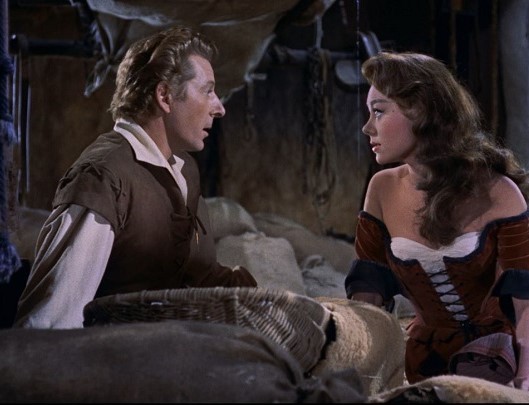
Na Inglaterra, há muitos séculos, o Rei Roderick (Cecil Parker) governa como um tirano. Ele subiu ao trono após um massacre liquidar com a Família Real, mas um membro da família sobreviveu: um bebê com uma marca de nascença que agora é cuidado por um grupo de camponeses e outras gentes do povo, cujo líder é o benfeitor Raposa Negra.

In England, many centuries ago, King Roderick (Cecil Parker) governs as a tyrant. He rose to the throne after a massacre swept the Royal Family, but one member of the family survived: an infant with a birthmark that is now taken care of by a group of peasants and simple people, whose leader is the do-gooder Black Fox.


Entre aqueles que tomam conta do jovem e legítimo herdeiro do trono, temos Hubert Hawkins (Danny Kaye) e a nobre Maid Jean (Glynis Johns). Seus caminhos cruzam com o do novo Bobo da Corte, e Jean vê uma oportunidade de ouro: colocar Hawkins no lugar do Bobo da Corte, para que ele possa entrar no castelo e ajudar, de dentro da corte, a tirar o Rei Roderick do trono. É assim que Hawkins se torna “Rei dos Animadores, Animador dos Reis”.

Among those who take care of the rightful young heir to the throne, there are Hubert Hawkins (Danny Kaye) and the noble Maid Jean (Glynis Johns). Their path crosses with the new Court Jester, and Maid Jean sees a golden opportunity: trade places between the jester and Hawkins, so he can enter the castle and help overthrow King Roderick from the inside of the court. This is how Hawkins becomes “King Of Jesters, Jester of Kings”.


Dentro do castelo, há intrigas acontecendo: Sir Ravenhurst (Basil Rathbone) quer mais poder e acredita que o novo Bobo da Corte está lá para ajudá-lo a tomar o poder. Enquanto isso, a Princesa Gwendolyn (Angela Lansbury) ouviu de sua criada que o novo Bobo da Corte é sua alma gêmea. Hawkins será enfeitiçado, o que torna sua missão mais caótica mas também mais divertida.

Inside the castle, there is intrigue going on: Sir Ravenhurst (Basil Rathbone) wants more power and believes the new Court Jester is there to help him seize this power. Meanwhile, Princess Gwendolyn (Angela Lansbury) has been told by her maid that the new Court Jester is her soulmate. Hawkins will be put under a spell, what makes his whole mission more chaotic and also more fun.


As canções estão presentes desde os créditos iniciais. As canções entretêm conforme são cantadas, mas não são “chiclete” - não ficam na nossa cabeça depois. Há apenas três canções principais no filme todo - o que cria o debate sobre se “O Bobo da Corte” pode ser chamado verdadeiramente de um filme musical - e minha favorita delas foi “Life Could Not Better Be”, cantada nos créditos iniciais. As canções foram compostas por Sammy Cahn e Sylvia Fine, que era esposa de Danny Kaye.

Songs are present starting in the opening credits. The songs are entertaining as they are being sung, but are not catchy- they don’t remain with us afterwards. There are only three main songs in the whole movie - which creates the debate about if “The Court Jester” could be called a true movie musical - and my favorite of them was “Life Could Not Better Be”, sung in the credits. The songs were composed by Sammy Cahn and Sylvia Fine, who was Danny Kaye’s wife.


Danny Kaye é excelente como o protagonista. Eu o havia visto apenas em papéis coadjuvantes, e este papel principal é perfeito para ele. Um dos meus momentos favoritos é a sequência de “estalar de dedos” no quarto da Princesa Gwendolyn. Também gostei da sequência de testes pelos quais Hawkins teve de passar para se tornar um cavaleiro. Entretanto, algumas piadas envolvendo jogos de palavras se perderam na tradução.

Danny Kaye is outstanding as the lead. I had only seen him in supporting roles, and this starring role is perfect for him. One of my favorite bits is the snapping sequence in Princess Gwendolyn’s chamber. I also liked the sequence of tests Hawkins had to pass in order to become a knight. A few jokes involving wordplay ended up lost in translation, though.


“O Bobo da Corte” foi completamente concebido - isto é, escrito, produzido e dirigido- por uma dupla: Melvin Frank e Norman Panama. Os dois se conheceram na Universidade de Chicago, onde Melvin estava estudando engenharia, mas foi convencido por Norman a trocar pelo curso de Inglês. Já formados e trabalhando juntos, eles escreviam gags para Bob Hope e Milton Berle no rádio, e logo foram contratados pelos estúdios Paramount para escreverem comédias. Eles trabalharam juntos até meados dos anos 1960, quando seguiram caminhos distintos: Melvin se tornou diretor e produtor solo, além de roteirista, e Norman trabalhou como diretor para filmes para a TV.

“The Court Jester” was entirely conceived - that is, written, produced and directed - by a duo: Melvin Frank and Norman Panama. The two met at the University of Chicago, where Melvin was pursuing an engineering degree, but was convinced by Norman to switch to English. Graduated and working together, they provided gags for Bob Hope and Milton Berle on radio, and soon were employed by Paramount Studios to write comedies. They worked together until the mid-1960s, when they went separate ways: Melvin became a solo director and producer, besides screenwriter, and Norman worked as director for made-for-TV movies.


Incrivelmente divertido e fonte de muitas risadas, “O Bobo da Corte” é realmente uma das melhores comédias feitas na era de ouro de Hollywood. Eu fiquei bem surpresa ao descobrir que o filme foi um fracasso nas bilheterias! Considerado - provavelmente com razão - o melhor filme de Danny Kaye, fico feliz em finalmente tê-lo visto, pois me diverti muito.

Incredibly entertaining and the source of many laughs, “The Court Jester” is truly one of the best comedies made in the golden age of Hollywood. I was quite surprised to learn that the film bombed at the box office! Considered - probably with reason - Danny Kaye’s best film, I’m glad I finally checked this movie, as I had a lot of fun watching it.

This is my contribution to the Danny Kaye blogathon, hosted by Erica at Poppity Talks Classic Film.

Sunday, July 7, 2019

Taverna Maldita (1955) / Pete Kelly's Blues (1955)

A história começa em 1915 em Nova Orleans, onde um membro de uma família negra está sendo enterrado no campo, à margem do rio. Depois do funeral, uma corneta cai no chão. A linha do tempo pula para 1919, Jersey City, onde a mesma corneta, agora velha e amassada, é o prêmio ganho em um jogo de dados por Pete Kelly (Jack Webb). Nossa próxima parada é Kansas city, 1927, e Pete está tocando com sua banda num bar – ele toca, obviamente, a corneta.

The story starts in 1915 in New Orleans, where a member of a black family is being buried in the field, by the river. After the funeral, a cornet falls on the ground. We jump to 1919, Jersey City, where the same cornet, now old and smashed, is won in a dice game by Pete Kelly (Jack Webb). Our next stop is Kansas City, 1927, and Pete is playing with his band in a bar – he is playing, obviously, the cornet.


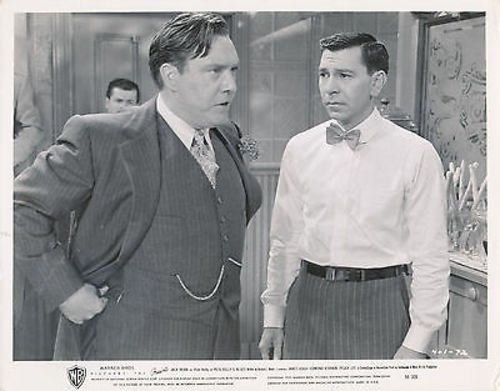
Entretanto, a banda de Pete não é um sucesso. Eles tocam em um speakeasy e não recebem nada do dono do lugar, que está mais interessado em contrabandear bebida do que em patrocinar a banda. Por isso ele não se importa quando um gângster – e estamos falando de um grande e influente gângster – tenta extorquir a banda. Frank McCarg (Edmond O'Brien) oferece proteção em troca de 25% dos ganhos da banda – e ele não aceitará um não como resposta.

However, Pete's band is not a success. They play in a speakeasy and receive nothing from the owner of the place, who is more interested in smuggling booze than in funding the band. So he doesn't care when a gangster – and we're talking about a big, influent gangster – tries to extort them. Frank McCarg (Edmond O'Brien) offers protection over 25% over the band's earnings – and he won't accept no as an answer.


Enquanto isso, uma garota festeira chamada Ivy Conrad (Janet Leigh) se apaixona por Pete e se mostra insistente na conquista. Outro problema surge quando o clarinetista de Pete, Al (Lee Marvin), diz a ele que está infeliz e que acha que a banda não tem futuro.

Meanwhile, a party girl called Ivy Conrad (Janet Leigh) falls in love with Pete and she is insistent about it. Another trouble arises as Pete's clarinetist, Al (Lee Marvin), tells him he's unhappy and how he thinks the band is going nowhere. 


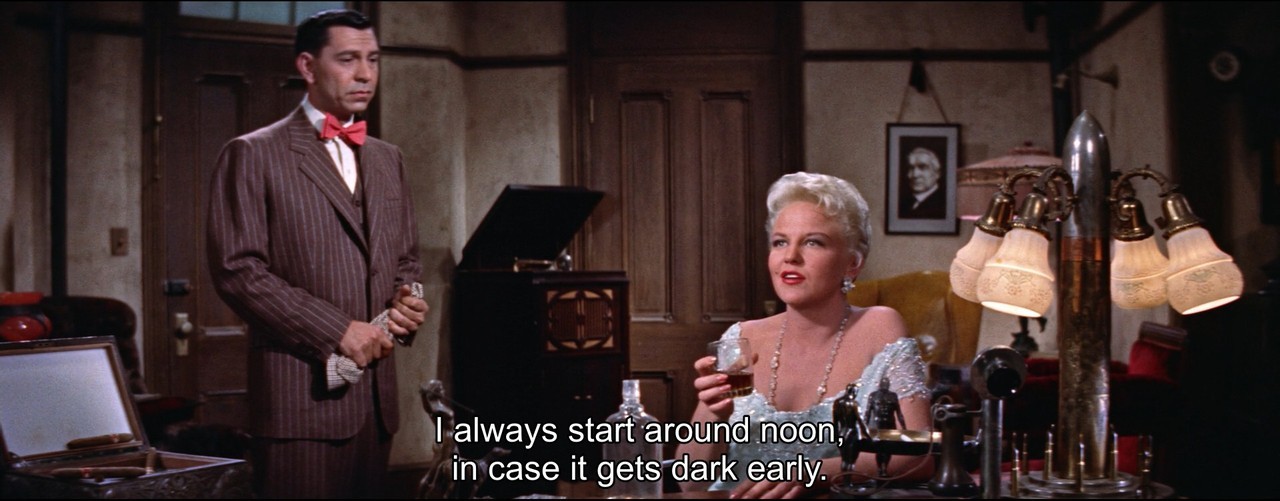
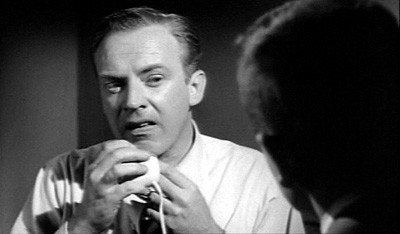
Mais tarde Pete descobre que McCarg só está interessado em ter a banda para acompanhar a namorada dele, a cantora alcoólatra Rose Hopkins (Peggy Lee) – Pete não quer uma cantora, mas McCarg está disposto a PAGAR a banda para que ela cante. E então um policial chamado George Tenell (Andy Devine) pede que Pete colabore para que ele possa prender McCarg.

Later Pete learns that McCarg is only interested in having a band to accompany his girlfriend, alcoholic singer Rose Hopkins (Peggy Lee) – Pete doesn't want a singer, but McCarg is willing to PAY the band to have her. And then a cop named George Tenell (Andy Devine) asks for Pete's collaboration to get McCarg arrested. 


Fazer com que a corneta seja originária de uma família negra de Nova Orleans e seja o prêmio de Pete Kelly, então um soldado certamente voltando da guerra, é um artifício do enredo que envelheceu mal. Era para dizer que a musicalidade de Pete estava toda naquela corneta? Era para usar o mito do negro feliz que tem muito ritmo nas veias – e nos instrumentos musicais? É uma variação do estereótipo do “negro mágico”?  De qualquer forma, é estranho e desnecessário – e me fez ficar esperando  uma história como a do terno que passa de mão em mão em “Seis Destinos” (1942).

To have the cornet come from a black family in New Orleans and be won by Pete Kelly, then a soldier certainly coming home from the war, is a plot point that aged badly. Did they mean that Pete's musicality was all in that cornet? Did they mean to use the myth of the happy black person who has a lot of rhythm running in their veins – and in their musical instruments? Is this a brief twist of the “magical negro” trope? Anyway, it is odd and unnecessary – and left me waiting for a story like the one about the suit in “Tales of Manhattan” (1942).


Filmado em Warnercolor, “Taverna Maldita” usa a cor para ampliar os sentimentos em uma cena sempre que possível. Uma cena em um clube na qual filtros de cor se revezam para mostrar a mudança na iluminação é simplesmente uma festa para os olhos, e é o destaque visual de um filme bastante vivo – com cores mais vivas do que é de se esperar para um filme que se passa em 1927.

Filmed in Warnercolor, “Pete Kely's Blues” uses color to enhance the feelings of a scene whenever possible. A scene at a nightclub in which color filters change to show the change in illumination is simply a feast for the eyes, and is a visual highlight of a rather bright movie – brighter than expected for a film set in 1927.


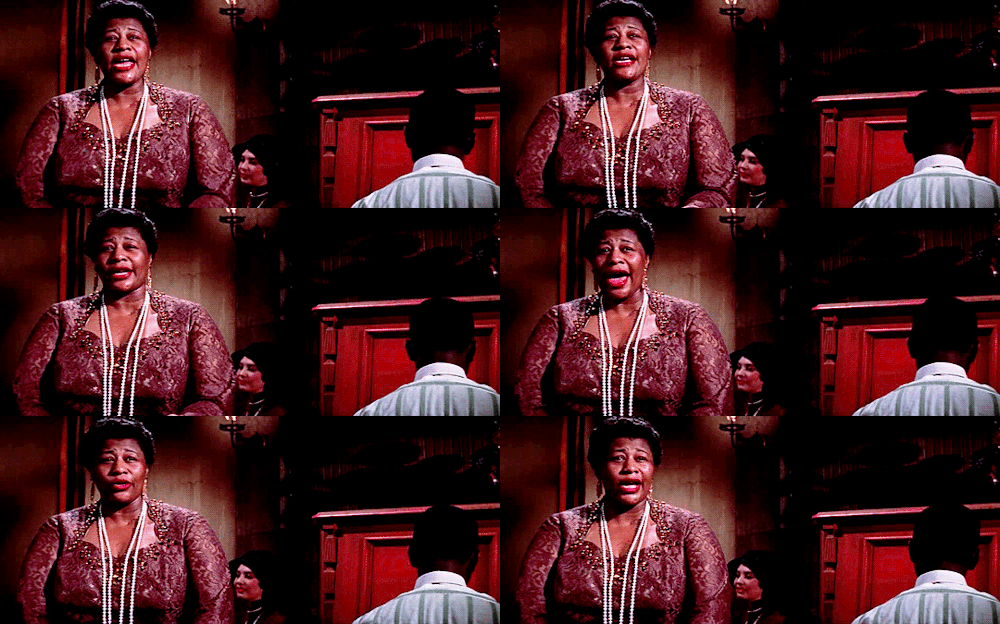
Eu gostei muito dos figurinos de Janet Leigh, em especial do vestido prateado com sapatos vermelhos muito, muito lindos – eu certamente usaria aqueles sapatos! Embora ela seja a melindrosa chique, seu papel não é o de maior destaque: Peggy Lee tem o papel mais desafiador em “Taverna Maldita”. Há ainda duas mulheres notáveis: uma jovem Jayne Mansfield é uma vendedora de cigarros e Ella Fitzgerald é cantora e proprietária do bar Fat Annie's.

I really liked Janet Leigh's outfits, in special her silver dress and wonderful, wonderful red shoes – I'd certainly wear those shoes! Although she is the fancy flapper, her role isn't the most substantial one: Peggy Lee has the most challenging role in “Pete Kelly's Blues”. There are also two other ladies of notice: a young Jayne Mansfield as a cigarette girl and Ella Fitzgerald as the main singer and owner of a bar called Fat Annie's.


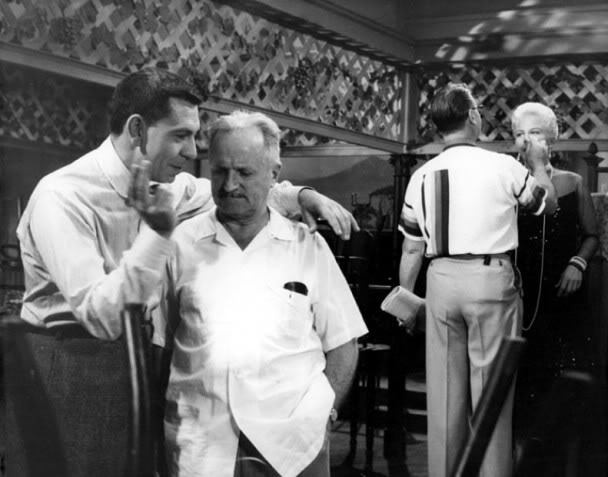
Além de ser a estrela de “Taverna Maldita”, Jack Webb também dirigiu o filme – e ele até sabia tocar corneta! Jack esteve envolvido com o projeto desde o início. No começo, “Taverna Maldita” foi um programa de rádio, protagonizado por Jack Webb, que foi exibido em 1951. Depois do filme, em 1959, Webb produziu a série de TV de “Taverna Maldita”, que durou apenas uma temporada.

Besides being the star of “Pete Kelly's Blues”, Jack Webb also directed the film – and he also knew how to play the cornet! Jack was involved with the project since the beginning. At first, “Pete Kelly's Blues” was a radio show, starring Jack Webb, that was broadcast in 1951. After the film, in 1959, Webb produced the TV show “Pete Kelly's Blues”, that lasted only one season.


Com uma mistura inovadora de música e elementos do subgênero gângster, “Taverna Maldita” é um filme agradável e pouco visto que demonstra os muitos talentos de Jack Webb, Ella Fitzgerald e, em particular, de Peggy Lee, que foi inclusive indicada a um Oscar de Atriz Coadjuvante.

With an innovative mix of music and gangster elements, “Pete Kelly's Blues” is an enjoyable and underseen film that showcases the many talents of Jack Webb, Ella Fitzgerald and, in special, Peggy Lee, who was even nominated for a Supporting Actress Oscar.

This is my contribution to the Janet Leigh blogathon, hosted by Michaella at Love Letters to Old Hollywood.

Sunday, February 17, 2019

A Fúria dos Justos (1955) / Trial (1955)


Quando passamos a assistir muitos filmes, vemos além dos grandes atores de praxe e começamos a prestar atenção nos coadjuvantes que roubam a cena. No pouco conhecido “A Fúria dos Justos” (1955), um desses coadjuvantes brilha: é Anthony Kennedy, que nos faz sentir todo tipo de emoção através de seu personagem.

Once we start watching more and more movies, we get past the usual great actors and start paying attention to character actors and supporting actors who are scene stealers. In the little known film “Trial” (1955), one of these supporting actors shines: Arthur Kennedy, who makes us feel all kinds of emotions through his character.


Quando uma adolescente morre em circunstâncias misteriosas, o suspeito óbvio é o garoto que estava com ela, o adolescente latino Angel Chavez (Rafael Campos). Isto é horrível para o menino e para a mãe dele, que de repente se veem no centro da raiva de uma cidade inteira, mas é uma grande oportunidade para David Blake (Glenn Ford), um professor universitário que ia ser demitido porque não tinha experiência em julgamentos. Agora, com a ajuda do amigo Barney (Arthur Kennedy), ele pode ganhar a experiência necessária ajudando Chavez.

When a teenager girl dies in mysterious circumstances, the obvious suspect is the boy who was with her, Latino teen Angel Chavez (Rafael Campos). This is horrible for the boy and his mother, suddenly in the center of the rage of the whole town, but it is a great opportunity for David Blake (Glenn Ford), a college professor who was about to be dismissed because of his lack of experience in trials. Now, with his friend Barney's (Arthur Kennedy) help, he can earn his experience by defending Chavez.


Logo se aglomera uma multidão raivosa na frente da prisão, com o objetivo de linchar o garoto – assim como em “O Sol é para Todos” (1962). A multidão acaba não fazendo nada, mas a cidade inteira está de olho em David – e o país inteiro está de olho na pequena cidade, esperando para ver como eles irão punir o criminoso. E aqui está uma das preocupações de David: desde o início, todos estão prontos para punir o garoto, sem sequer ouvir a defesa dele.

Soon there is an angry mob in front of the prison wanting to lynch the boy – just like in “To Kill a Mockingbird” (1962). The mob does nothing, but the whole town is watching David – and the whole country is watching the tiny town, waiting to see how they punish a criminal. And here lies one of David's preoccupations: since the beginning, everybody is ready to punish the boy, without listening to his defense.


Ajudando David temos a secretária Abbe (Dorothy McGuire), e acusando o garoto temos o promotor Armstrong (John Hodiak), um homem cuja futura carreira política depende do seu sucesso no caso. Como podemos ver, há muito mais em jogo do que apenas a justiça.

Helping David we have the secretary Abbe (Dorothy McGuire), and accusing the boy we have attorney Armstrong (John Hodiak), a man looking for a political career that will depend of his success in the case. As we can see, there is much more than simple justice at stake.


Em “A Fúria dos Justos”, não vemos apenas o julgamento, mas também o que acontece nos bastidores. Muito dinheiro precisa ser arrecadado, em comícios que parecem comícios políticos, mas são na verdade um circo. No maior comício, outro problema surge, pois David e Barney aceitam doações do Partido de Todos os Povos, um grupo comunista.

In “Trial” we don't see only the trial, but also what happens backstage. A lot of money needs to be raised, in rallies that look a lot like political rallies, but are more like circuses. At the biggest rally, another problem arises as David and Barney accept donations from the All Peoples' Party, a communist group.


Vemos a parte suja do direito quando ele envolve a política. O funeral da vítima se torna um comício de supremacistas brancos quando o local é invadido por um grupo que quer explorar a morte dela para espalhar a ideologia racista deles. O discurso do supremacista branco sobre dividir as “raças”, desenhar uma linha divisória e buscar voltar aos velhos tempos é algo que poderia ter sido escrito ontem em um fórum da deep web ou em um tweet de Trump.

We see the dirty part of practicing law when politics get involved. The funeral of the victim becomes a white supremacy rally when invaded by a group wanting to exploit her death to spread their racist ideology. The white supremacist's speech about dividing the races, drawing a line and looking for the old times is something that could have been written yesterday in a deep web forum or in a Trump tweet.


Barney é mentor de David, é um advogado truculento, um showman, um manipulador, um homem histriônico e que sempre rouba atenção para si. Arthur Kennedy, indicado para um Oscar de Melhor Ator Coadjuvante pelo papel, lida bem com um personagem tão complexo, enquanto Glenn Ford interpreta um personagem mais ingênuo e simpático. Kennedy foi indicado a cinco Oscars – quatro dessas indicações aconteceram em filmes dirigidos por Mark Robson, diretor de “A Fúria dos Justos” – mas ele nunca ganhou o prêmio. Entretanto, ele ganhou o Globo de Ouro por sua performance em “A Fúria dos Justos”.

Barney is David's mentor, a truculent lawyer, a showman, a manipulator, a histrionic speaker and a scene / attention stealer. Arthur Kennedy, nominated for a Best Supporting Actor Oscar for this role, handles well such a complex character, while Glenn Ford plays a more naïve and sympathetic one. Kennedy was nominated for five Oscars – four of those nominations were in movies directed by Mark Robson, director of “Trial” - but he never won. He won a Golden Globe for his performance in “Trial”, though.


Outra grande atuação é de Katy Jurado, que interpreta a mãe desesperada de Angel, Consuelo Chavez. O que mais se pode esperar de uma atriz que interpreta uma mãe cujo filho pode ser condenado à morte se for considerado culpado? Como Abbe, Dorothy McGuire interpreta uma secretária cuja mente é tão afiada quanto a de um advogado, e que também está sofrendo com a desilusão por causa da ética de trabalho de Barney – ou pela falta de ética dele.

Another great performance comes from Katy Jurado, who plays Angel's desperate mother, Consuelo Chavez. What else can you expect from an actress that plays a mother whose son can be hanged if he is guilty if not a lot of emotion? As Abbe, Dorothy McGuire plays a secretary whose mind is as sharp as any lawyer's, and who is also disillusioned with Barney's work ethic – or lack of one.


Os assuntos como o racismo contra Angel Chavez e o comunismo não são muito bem desenvolvidos – especialmente se considerarmos o MacCarthismo que se espalhava nos anos 50. Mesmo assim, “A Fúria dos Justos” é um ótimo filme, uma mistura única de “O Sol é para Todos” e “A Grande Ilusão” (1949) e, apesar de raramente aparecer nas listas de melhores filmes de julgamento, deveria com certeza figurar nas primeiras posições destas listas.

The issues like racism against Angel Chavez and communism are not so well developed – especially considering the MacCarthism going on in the 1950s. Nevertheless, “Trial” is a great movie, an unique mix of “To Kill a Mockingbird” and “All the King’s Men” (1949), and one that rarely appear in the list of best trial movies, but for sure deserved to figure in the first positions of those lists.

This is my contribution to the Arthur Kennedy’s Conquest of the Screen blogathon, hosted by Virginie at The Wonderful World of Cinema.

Tuesday, April 17, 2018

William Holden’s guide to a Picnic (1955)

  Um guia de William Holden para ter "Férias de Amor" (1955)

 
A primeira vez em que eu vi William Holden foi em uma propaganda do filme “Férias de Amor”. Eu me lembro bem de seu peito nu. Mas eu não me apaixonei por Holden naquele instante. Demoraria algum tempo até que eu fosse ver os seus filmes, incluindo “Férias de Amor”. A visão do peito dele não mudou minha vida, mas mudou a de Kim Novak, Rosalind Russell, Berry Field e Susan Strasberg.

The first time I ever saw William Holden, it was in a commercial for “Picnic”. I remember well his bare torso. But I didn't fall in love with him right then. It would take me some time to watch his films, including “Picnic”. The sight of his torso didn't change my life like it did for Kim Novak, Rosalind Russell, Betty Field and Susan Strasberg.
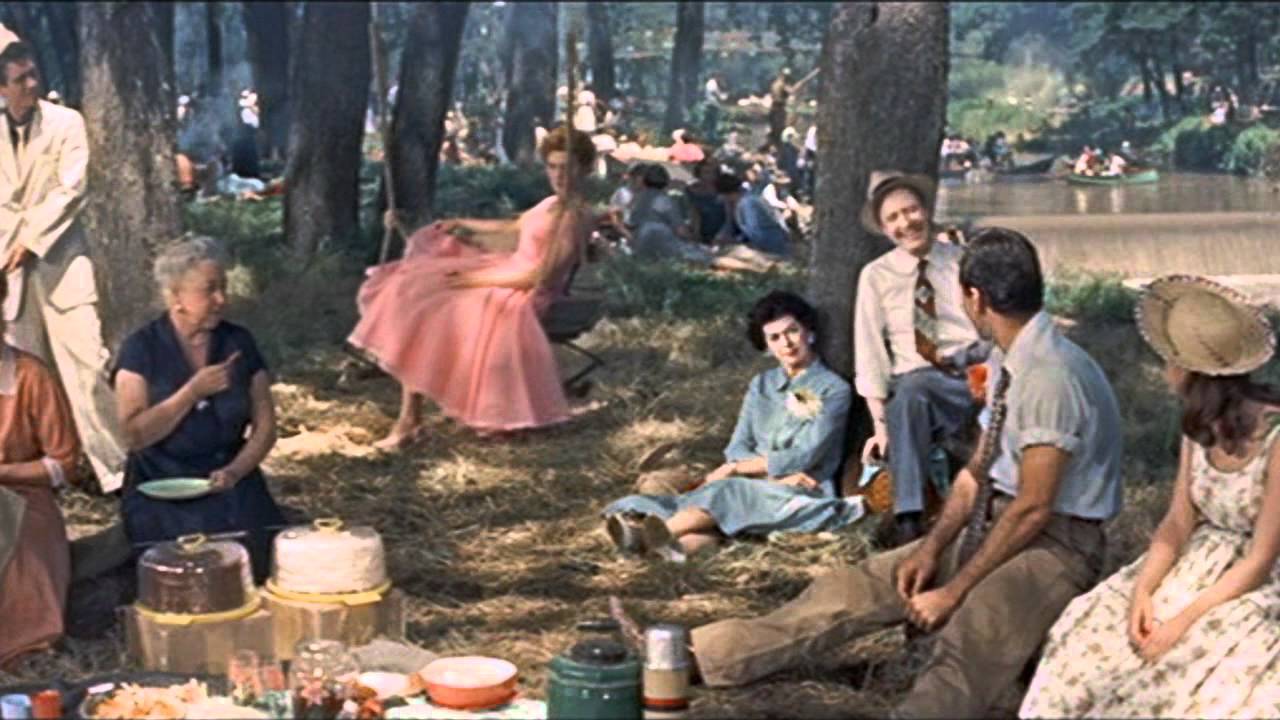
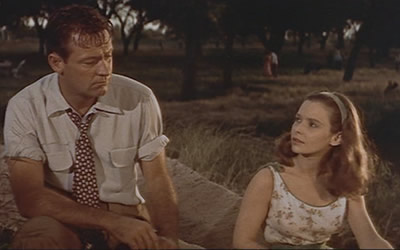
Em “Férias de Amor”, William Holden interpreta Hal Carter, um homem sem rumo que acaba de chegar a uma cidadezinha do Kansas, onde more um velho amigo da faculdade que ele acredita que poderá ajudá-lo. A primeira pessoa que se torna amiga de Hal é a senhora Helen Potts (Verna Felton), vizinha da família Owens. A senhora Potts, as Owens e praticamente todos na cidade irão a um piquenique para comemorar o Dia do Trabalho naquela tarde, e Hal é também convidado para o evento – e nem imagina que isso mudará sua vida.

In “Picnic” William Holden plays Hal Carter, a man without a plan that has just arrived to a small city of Kansas, going after his friend from college, who may help him. The first person Hal befriends is the nice Mrs Helen Potts (Verna Felton), neighbor to the Owens family. Mrs Potts, the Owens and basically everybody else in town will attend the Labor Day Picnic that afternoon, for which Hal is invited – not knowing it'd change his life.
Aqui está o guia de William Holden de como se comportar em um piquenique:
Here it is William Holden's guide on how to behave in a picnic:

1- Convide uma garota para ir ao piquenique com você – mesmo se você a tiver conhecido apenas algumas horas atrás. Seja muito legal com ela. Se ela é uma moleca, assim como Millie (Susan Strasberg), é uma boa ideia apostar corrida até o carro e ir cantando músicas populares até o local do piquenique.

1- Invite a girl to go to the Labor Day Picnic with you – no matter if you have met her f0r only a few hours. Be very nice to her. If she is a tomboy, like Millie (Susan Strasberg), it's a good idea to race her to the car and to sing old folk songs from home until the picnic.
2- Não se envergonhe por ter de pedir emprestadas as roupas de outra pessoa. Talvez você precise da ajuda de um colega da faculdade para ficar bonito! E ninguém te julgará se você tirar o paletó no meio do evento.

2- Don't be ashamed to ask for someone else's clothes. Maybe you'll need the help from a friend from college to look dapper! And nobody will judge you if you take off your blazer in the middle of the party.

3- Veja se as mães estão de olho nos seus filhos – se cordas forem necessárias para garantir a segurança, tudo bem.

3- Be sure that mothers are keeping an eye on their kids – if ropes are necessary for this to happen, OK.
4- Participe de jogos divertidos, mesmo que eles pareçam bobos. A corrida com três pernas é um clássico!

4- Engage in fun games, no matter if they look silly. The three-legged race is a classic!

5- Saiba que, para algumas pessoas, o piquenique é um evento social que pode mudar a vida delas para sempre. É o caso de Flo (Betty Field), uma mulher simples que quer que sua filha se case com um herdeiro.

5- Know that, for some people, the picnic means a social gathering in which their lives can change forever. This happens to Flo (Betty Field), a simple woman who wants her daughter to get married to a heir.
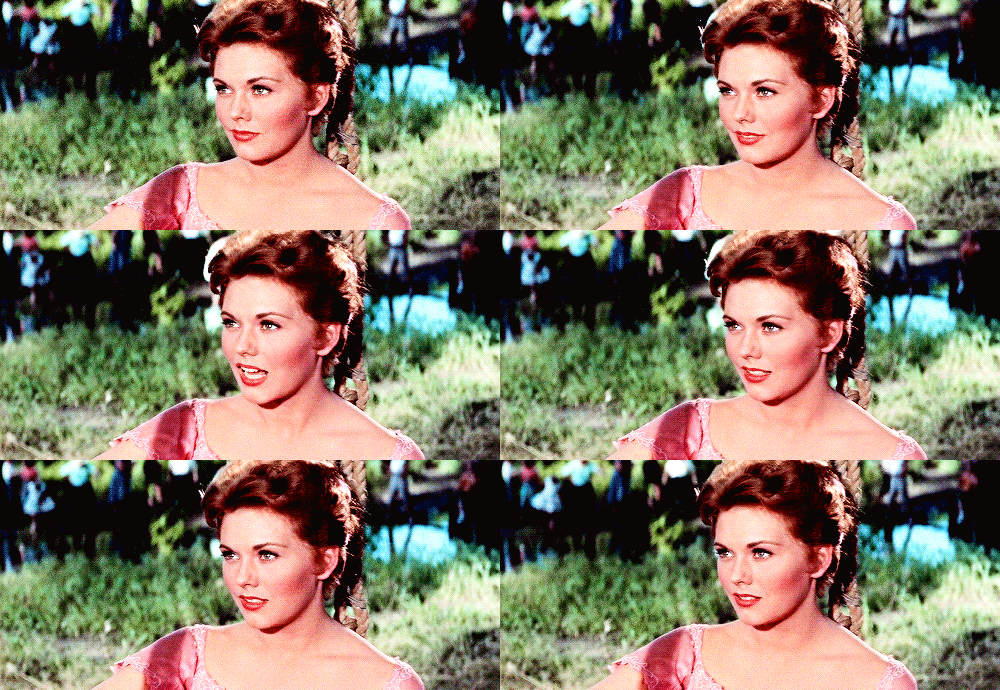
6- Saiba que, para outras pessoas, um piquenique traz tristeza e ressentimento. É o caso de Madge (Kim Novak), que está cansada de ser considerada apenas uma garota bonita, e Alan Benson (Cliff Robertson), que tem problemas com o pai e vai falar umas verdades para seu velho amigo da faculdade.

6- Know that, for other people, a picnic brings sorrow and resentment. This happens to Madge (Kim Novak), who is tired of being just a pretty girl and nothing else, and Alan Benson (Cliff Robertson), who has troubles with his father and is ready to tell what he really thinks about his old college friend.

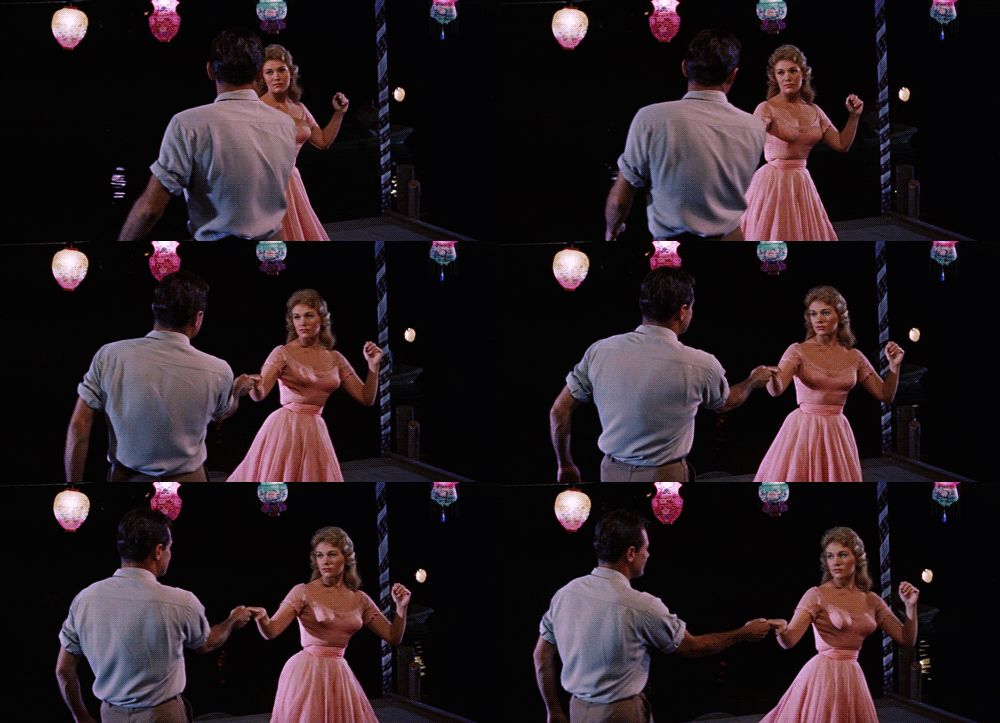
7- Não tenha medo de mostrar os passos de dança que você conhece.

7- Don't be afraid to show the moves you've got.
8- Saiba que haverá um momento em que você pensará que existem no mundo somente você e a pessoa por quem você se apaixonou.

8- Know that there will be a moment when you'll think that there are only you and the person you fell in love with in the world.

9- Entenda que algumas pessoas sofrem muita pressão durante um piquenique e podem beber demais. A senhorita Rosemary Sydney (Rosalind Russell), uma professora solteirona, passa por isso durante seu encontro com o comerciante Howard (Arthur O'Connell). Tenha paciência com pessoas que se embebedam em piqueniques.

9- Understand that some people are in a lot of  pressure during a picnic and may drink too much. Miss Rosemary Sydney (Rosalind Russell), a spinster schoolteacher, goes through this in her date with businessman Howard (Arthur O'Connell). Be patient with people who get drunk at picnics.
10 – Tudo é muito divertido até que você é acusado de fazer algo que não fez e tudo sai do controle. Quando isso acontece, escolha bem quem será sua companhia na fuga, com quem você dividirá seus segredos.

10- Everything is all fun and games until you're accused of doing stuff you haven't done and everything spirals out of control. When this happens, choose wisely who will be your escape companion with which you'll share your secrets.
As coisas começam a esquentar a partir daqui. “Férias de Amor” é um filme charmoso, com um clima agradável até a metade e um ritmo completamente diferente a partir de então. Devemos prestar atenção a Rosalind Russell, em uma performance perfeita com boa dose de ridículo – não no sentido engraçado, mas no sentido de que sentimos pena de sua personagem. O piquenique pode ser o destaque do filme, mas é também só o ponto de partida para mudanças em muitas vidas.

Things will just start heating from here. “Picnic” is a charming movie, with a nice feeling until half the projection, and a completely different pace from then on. We must pay attention to Rosalind Russell, in a perfect performance with a good amount of ridiculousness – not in the humorous sense, but in the sense that we may feel sorry for her character. “Picnic” may be the title of the movie, but it's just the starting point for changes in many human lives.
This is my contribution to the 3rd Golden Boy Blogathon, hosted by Virginie, Michaela and Emily at The Wonderful World of Cinema, Love Letters to Old Hollywood and The Flapper Dame.

Saturday, November 4, 2017

A Dama, o Vagabundo e o espaguete / The Lady, the Tramp and the spaghetti

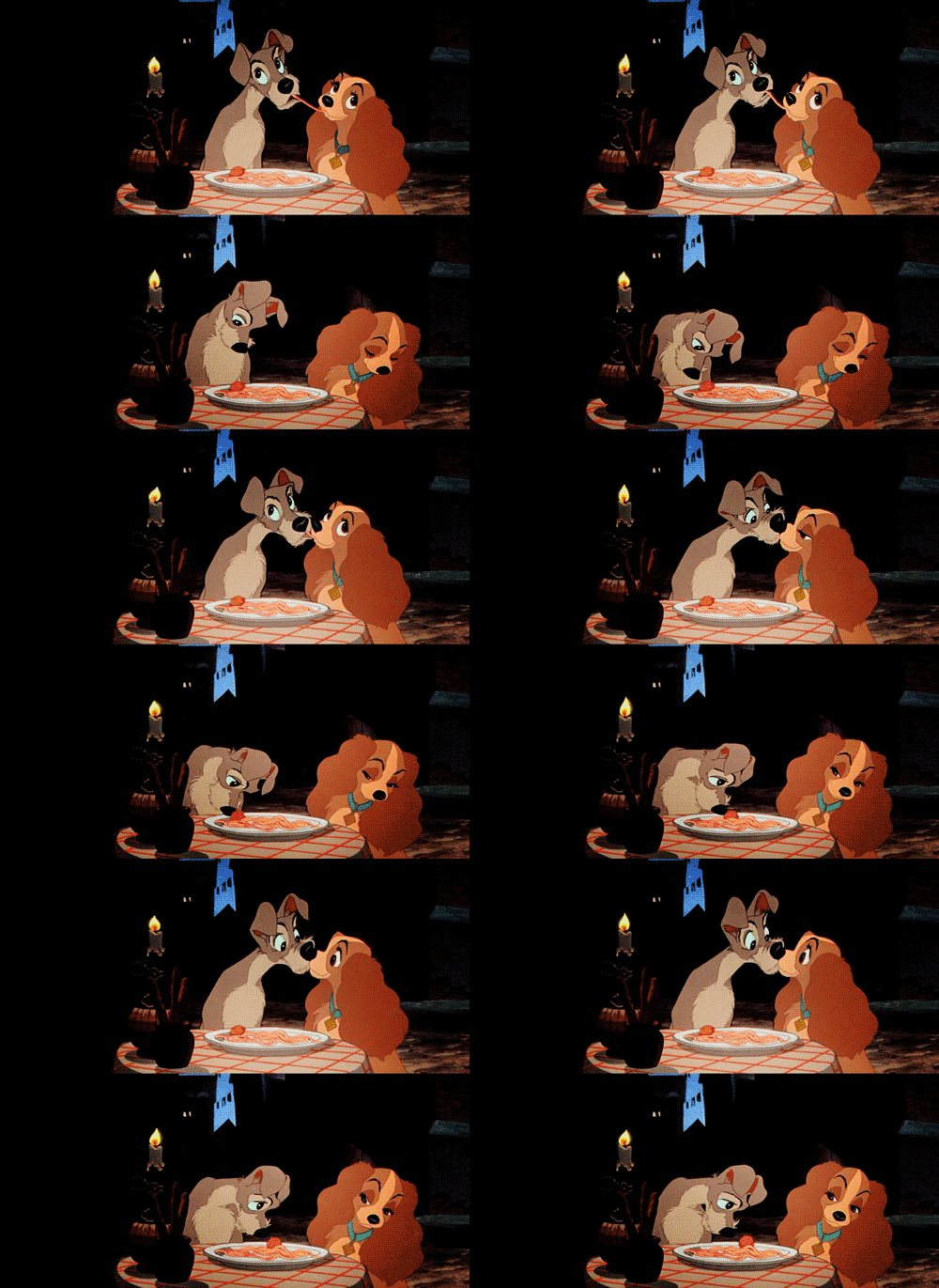
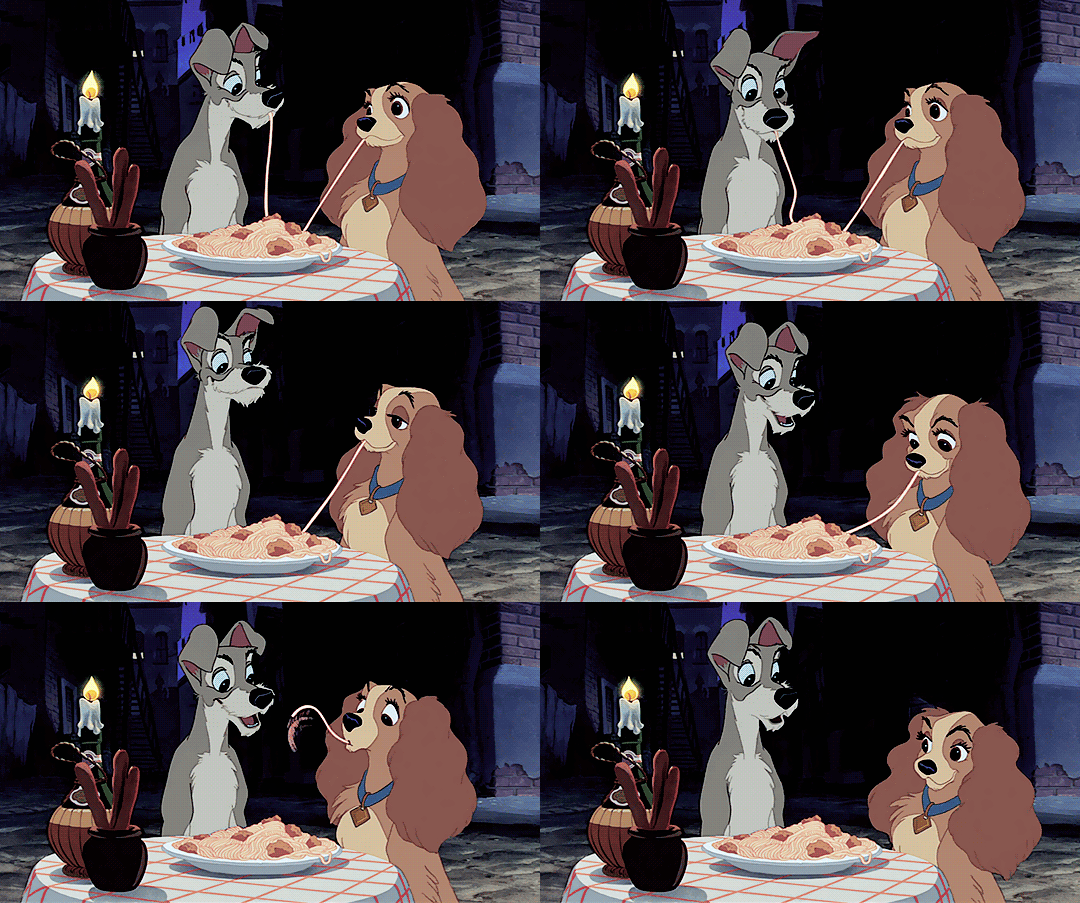
Alguns momentos cinematográficos ficam para sempre nas nossas mentes. Gene Kelly cantando na chuva. Dorothy e seus amigos indo ver o maravilhoso mágico de Oz. Scarlett O’Hara prometendo nunca mais passar fome. O vestido branco de Marilyn sendo levantado pela corrente de ar. Audrey Hepburn tomando café da manhã na frente da joalheria Tiffany’s. E, claro, a Dama e o Vagabundo dividindo de maneira roântica um prato de espaguete.

Some movie moments are forever in our minds. Gene Kelly singing in the rain. Dorothy and her pals off to see the wonderful wizard of Oz. Scarlett O’Hara promising to never be hungry again. Marilyn’s white dress flying with the air current. Audrey Hepburn having her breakfast at Tiffany’s. And, of course, the Lady and the Tramp romantically sharing a plate full of spaghetti.
A história do filme é bem simples: Lady é uma cachorrinha mimada da raça Cocker Spaniel cuja rotina muda quando seus donos têm um bebê. Eles saem de viagem e deixam Lady e o bebê aos cuidados de Tia Sara e de seus dois malvados gatos siameses. Logo Lady encontra problemas. A Tia Sarah a leva para colocar uma focinheira, e Lasdy foge. Então ela encontra o Vagabundo, um vira-lata que sabe muito bem como se virar vivendo nas ruas. Na primeira noite juntos, eles dividem uma refeição romântica enquanto Toni, o dono do restaurante, canta “Bella Notte”.

The story of the film is pretty simple: Lady is a spoiled Cocker Spaniel whose routine is changed when her owners have a baby. They go on a trip, and leave Lady and the baby with Aunt Sarah and her two evil Siamese cats. Soon Lady is in trouble. Aunt Sarah takes her to put on a nose-piece, and Lady escapes. Then she meets the Tramp, a stray dog who knows how to survive in the streets. On their first night together, they share a romantic meal while Toni, the restaurant owner, sings “Bella Notte”.
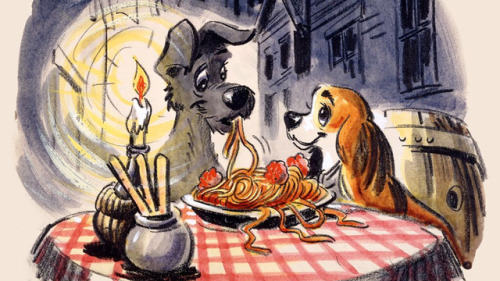
Uma das cenas mais famosas na história da Disney quase foi cortada. Sim, o próprio Walt Disney achava que dois cachorros comendo espaguete era algo muito bobo para incluir no filme. Felizmente, o animador Frank Thomas trabalhou por conta própria na sequência, e o resultado deixou Disney impressionado. Frank Thomas havia sido responsável pela animação dos anões em “Branca de Neve e os Sete Anões” (1937) e em 1964 animaria ainda os pinguins dançarinos de “Mary Poppins”.

One of the most famous scenes in Disney history was almost cut. Yes, Walt Disney himself thought that two dogs eating spaghetti was something too silly to be in a movie. Luckily, animator Frank Thomas went on to animate the sequence alone, and the result left Disney impressed. Frank Thomas was already responsible for the animation of the Dwarfs in “Snow white and the Seven Dwarfs” (1937) and in 1964 would be the one to animate the dancing penguins in “Mary Poppins”.
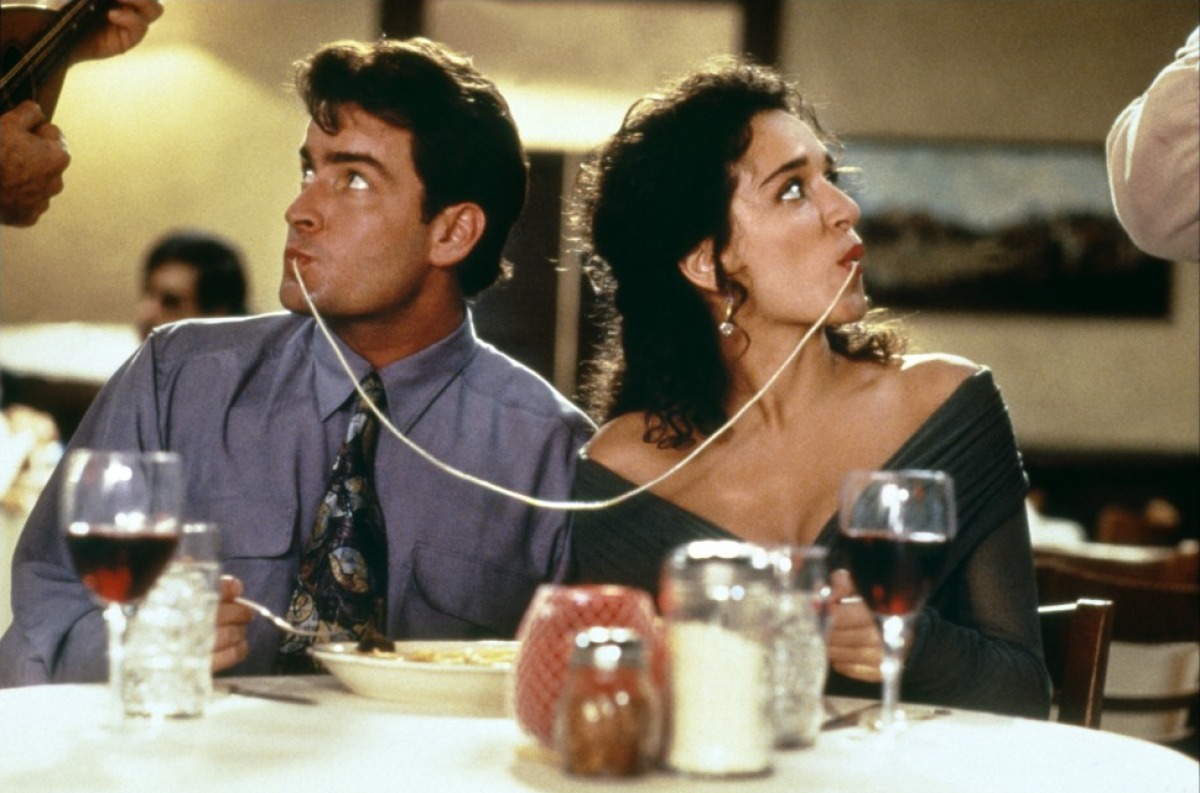
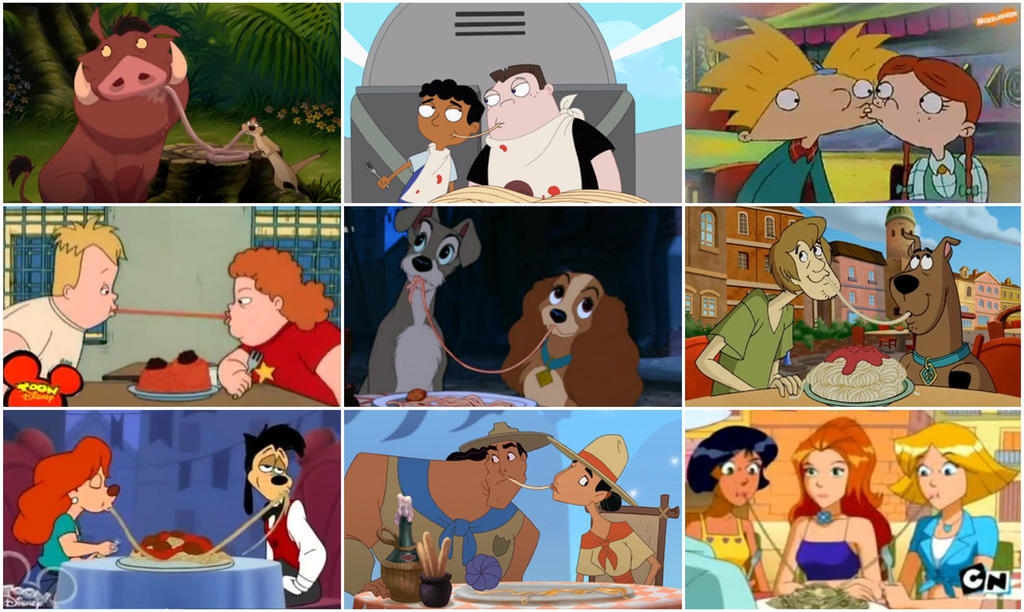
A sequência ficou, e com o tempo passou a ser referenciada e parodiada muitas vezes. Em algumas ocasiões o espaguete com almôndegas (ou porpettas?) é substituído por outra comida, e em outras ocasiões todo o estilo da sequência famosa é copiado. Veja:

The sequence stayed, and afterwards was often referenced and parodied. In some occasions the spaghetti with meatballs is replaced by some other food, sometimes the whole mood of the sequence is copied. Take a look:


Hot Shots! (1991)
Lady and the Tramp 2 (2001)

Simpsons
More Simpsons
Gravity Falls (2013)

“A Dama e o Vagabundo” estreou em 1955. O filme é hoje considerado um dos maiores clássicos da Disney, graças à animação, ao formato CinemaScope, ao tratamento de temas como amor, companheirismo – e até sexo antes do casamento! – e, sem dúvida, graças à inesquecível cena do espaguete.

“Lady and the Tramp” was released in 1955. It is now regarded as a major Disney classic, because of the animation, the CinemaScope format, the themes of love, partnership – and even pre-marital sex! – and without a doubt because of the unforgettable spaghetti scene.


This is my contribution to the Food in Film blogathon, hosted by Ruth at Silver Screenings and Kristina at Speakeasy.
Related Posts Plugin for WordPress, Blogger...