} Crítica Retrô: Janet Leigh

Tradutor / Translator / Traductor / Übersetzer / Traduttore / Traducteur / 翻訳者 / переводчик

Showing posts with label Janet Leigh. Show all posts

Sunday, July 7, 2019

Taverna Maldita (1955) / Pete Kelly's Blues (1955)

A história começa em 1915 em Nova Orleans, onde um membro de uma família negra está sendo enterrado no campo, à margem do rio. Depois do funeral, uma corneta cai no chão. A linha do tempo pula para 1919, Jersey City, onde a mesma corneta, agora velha e amassada, é o prêmio ganho em um jogo de dados por Pete Kelly (Jack Webb). Nossa próxima parada é Kansas city, 1927, e Pete está tocando com sua banda num bar – ele toca, obviamente, a corneta.

The story starts in 1915 in New Orleans, where a member of a black family is being buried in the field, by the river. After the funeral, a cornet falls on the ground. We jump to 1919, Jersey City, where the same cornet, now old and smashed, is won in a dice game by Pete Kelly (Jack Webb). Our next stop is Kansas City, 1927, and Pete is playing with his band in a bar – he is playing, obviously, the cornet.


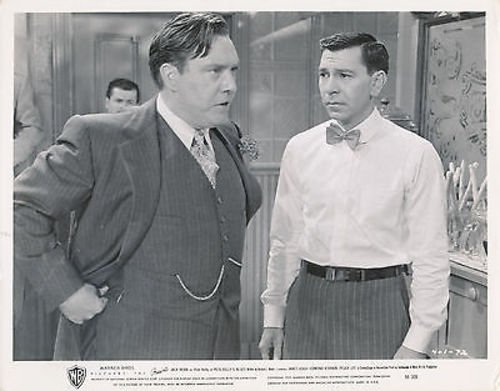
Entretanto, a banda de Pete não é um sucesso. Eles tocam em um speakeasy e não recebem nada do dono do lugar, que está mais interessado em contrabandear bebida do que em patrocinar a banda. Por isso ele não se importa quando um gângster – e estamos falando de um grande e influente gângster – tenta extorquir a banda. Frank McCarg (Edmond O'Brien) oferece proteção em troca de 25% dos ganhos da banda – e ele não aceitará um não como resposta.

However, Pete's band is not a success. They play in a speakeasy and receive nothing from the owner of the place, who is more interested in smuggling booze than in funding the band. So he doesn't care when a gangster – and we're talking about a big, influent gangster – tries to extort them. Frank McCarg (Edmond O'Brien) offers protection over 25% over the band's earnings – and he won't accept no as an answer.


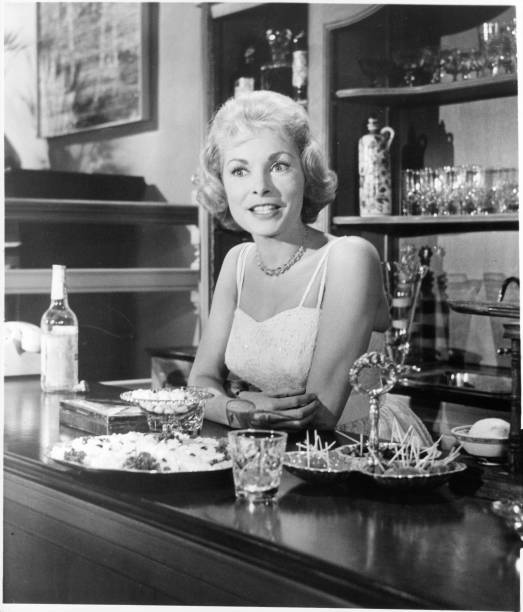
Enquanto isso, uma garota festeira chamada Ivy Conrad (Janet Leigh) se apaixona por Pete e se mostra insistente na conquista. Outro problema surge quando o clarinetista de Pete, Al (Lee Marvin), diz a ele que está infeliz e que acha que a banda não tem futuro.

Meanwhile, a party girl called Ivy Conrad (Janet Leigh) falls in love with Pete and she is insistent about it. Another trouble arises as Pete's clarinetist, Al (Lee Marvin), tells him he's unhappy and how he thinks the band is going nowhere. 


Mais tarde Pete descobre que McCarg só está interessado em ter a banda para acompanhar a namorada dele, a cantora alcoólatra Rose Hopkins (Peggy Lee) – Pete não quer uma cantora, mas McCarg está disposto a PAGAR a banda para que ela cante. E então um policial chamado George Tenell (Andy Devine) pede que Pete colabore para que ele possa prender McCarg.

Later Pete learns that McCarg is only interested in having a band to accompany his girlfriend, alcoholic singer Rose Hopkins (Peggy Lee) – Pete doesn't want a singer, but McCarg is willing to PAY the band to have her. And then a cop named George Tenell (Andy Devine) asks for Pete's collaboration to get McCarg arrested. 
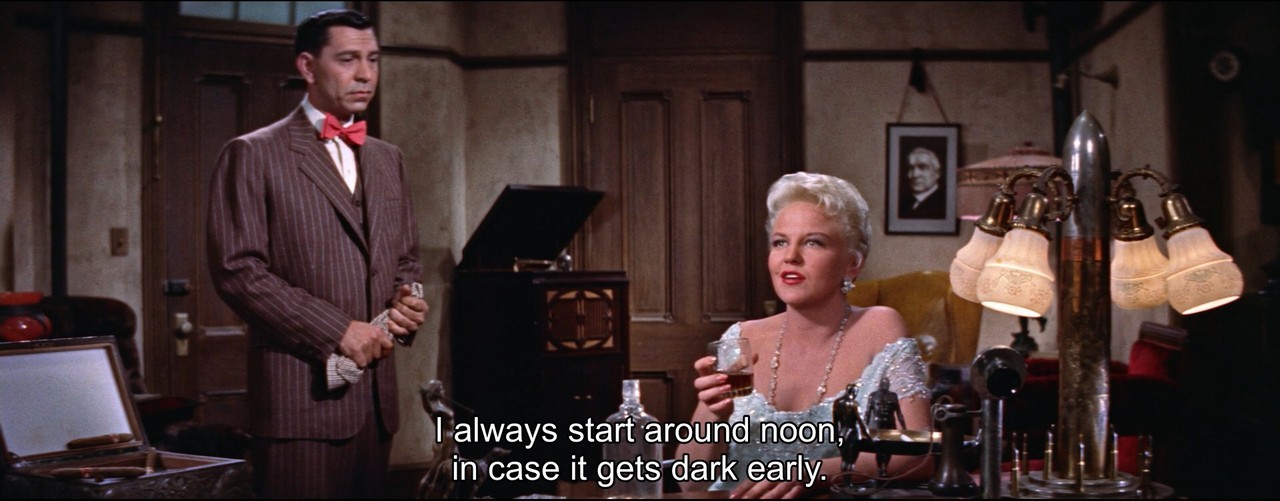


Fazer com que a corneta seja originária de uma família negra de Nova Orleans e seja o prêmio de Pete Kelly, então um soldado certamente voltando da guerra, é um artifício do enredo que envelheceu mal. Era para dizer que a musicalidade de Pete estava toda naquela corneta? Era para usar o mito do negro feliz que tem muito ritmo nas veias – e nos instrumentos musicais? É uma variação do estereótipo do “negro mágico”?  De qualquer forma, é estranho e desnecessário – e me fez ficar esperando  uma história como a do terno que passa de mão em mão em “Seis Destinos” (1942).

To have the cornet come from a black family in New Orleans and be won by Pete Kelly, then a soldier certainly coming home from the war, is a plot point that aged badly. Did they mean that Pete's musicality was all in that cornet? Did they mean to use the myth of the happy black person who has a lot of rhythm running in their veins – and in their musical instruments? Is this a brief twist of the “magical negro” trope? Anyway, it is odd and unnecessary – and left me waiting for a story like the one about the suit in “Tales of Manhattan” (1942).
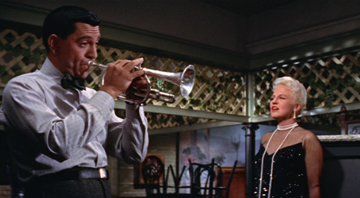


Filmado em Warnercolor, “Taverna Maldita” usa a cor para ampliar os sentimentos em uma cena sempre que possível. Uma cena em um clube na qual filtros de cor se revezam para mostrar a mudança na iluminação é simplesmente uma festa para os olhos, e é o destaque visual de um filme bastante vivo – com cores mais vivas do que é de se esperar para um filme que se passa em 1927.

Filmed in Warnercolor, “Pete Kely's Blues” uses color to enhance the feelings of a scene whenever possible. A scene at a nightclub in which color filters change to show the change in illumination is simply a feast for the eyes, and is a visual highlight of a rather bright movie – brighter than expected for a film set in 1927.


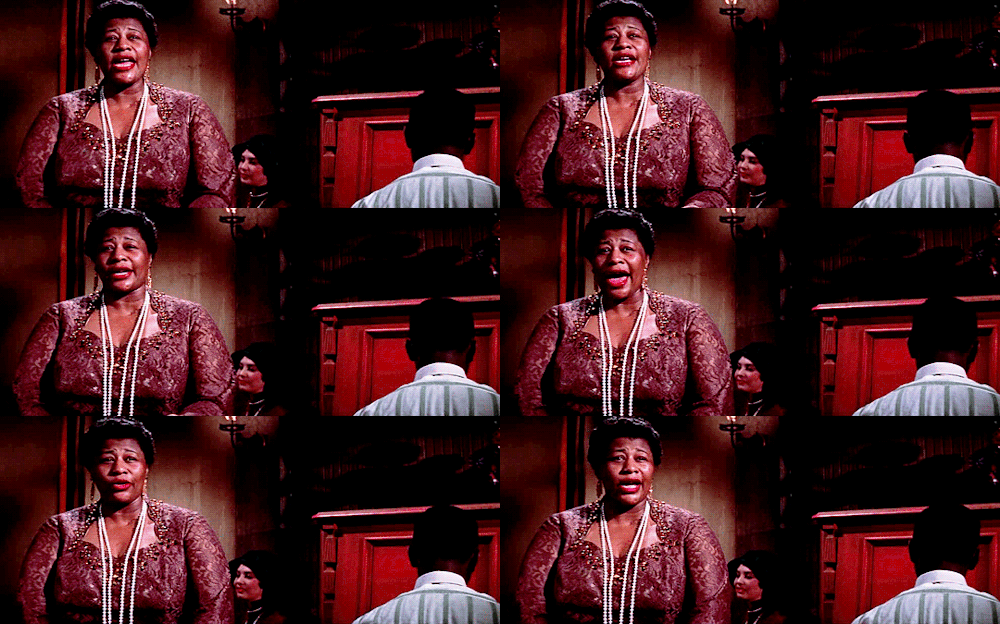
Eu gostei muito dos figurinos de Janet Leigh, em especial do vestido prateado com sapatos vermelhos muito, muito lindos – eu certamente usaria aqueles sapatos! Embora ela seja a melindrosa chique, seu papel não é o de maior destaque: Peggy Lee tem o papel mais desafiador em “Taverna Maldita”. Há ainda duas mulheres notáveis: uma jovem Jayne Mansfield é uma vendedora de cigarros e Ella Fitzgerald é cantora e proprietária do bar Fat Annie's.

I really liked Janet Leigh's outfits, in special her silver dress and wonderful, wonderful red shoes – I'd certainly wear those shoes! Although she is the fancy flapper, her role isn't the most substantial one: Peggy Lee has the most challenging role in “Pete Kelly's Blues”. There are also two other ladies of notice: a young Jayne Mansfield as a cigarette girl and Ella Fitzgerald as the main singer and owner of a bar called Fat Annie's.


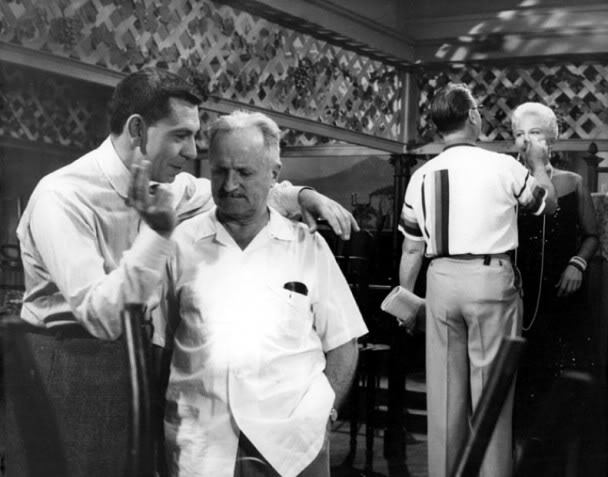
Além de ser a estrela de “Taverna Maldita”, Jack Webb também dirigiu o filme – e ele até sabia tocar corneta! Jack esteve envolvido com o projeto desde o início. No começo, “Taverna Maldita” foi um programa de rádio, protagonizado por Jack Webb, que foi exibido em 1951. Depois do filme, em 1959, Webb produziu a série de TV de “Taverna Maldita”, que durou apenas uma temporada.

Besides being the star of “Pete Kelly's Blues”, Jack Webb also directed the film – and he also knew how to play the cornet! Jack was involved with the project since the beginning. At first, “Pete Kelly's Blues” was a radio show, starring Jack Webb, that was broadcast in 1951. After the film, in 1959, Webb produced the TV show “Pete Kelly's Blues”, that lasted only one season.


Com uma mistura inovadora de música e elementos do subgênero gângster, “Taverna Maldita” é um filme agradável e pouco visto que demonstra os muitos talentos de Jack Webb, Ella Fitzgerald e, em particular, de Peggy Lee, que foi inclusive indicada a um Oscar de Atriz Coadjuvante.

With an innovative mix of music and gangster elements, “Pete Kelly's Blues” is an enjoyable and underseen film that showcases the many talents of Jack Webb, Ella Fitzgerald and, in special, Peggy Lee, who was even nominated for a Supporting Actress Oscar.

This is my contribution to the Janet Leigh blogathon, hosted by Michaella at Love Letters to Old Hollywood.

Saturday, August 25, 2018

Esposas e Amantes (1963) / Wives and Lovers (1963)


Ah, os anos 60! A época da revolução sexual, da segunda onda do feminismo, da extinção do ridículo Código Hays... e Hollywood tinha de lidar com todos eles. De repente, temas mais polêmicos poderiam ser retratados em filmes... não, eles deveriam aparecer, porque a sociedade queria vê-los no cinema e porque eles faziam parte da realidade. De repente, um infiel não tinha de sofrer e ser condenado... e até uma comédia poderia ser feita com o tema infidelidade.

Oh, the 1960s! Time of the sexual revolution, of the second wave of feminism, of the end of the ridiculous Hays Code... And Hollywod had to deal with them all. Suddenly, more risky themes could appear in movies... no, they should appear, because society wanted them and because they mirrored the reality. Suddenly, a cheater didn't have to suffer and be condemned... and even a comedy could be made about cheating.


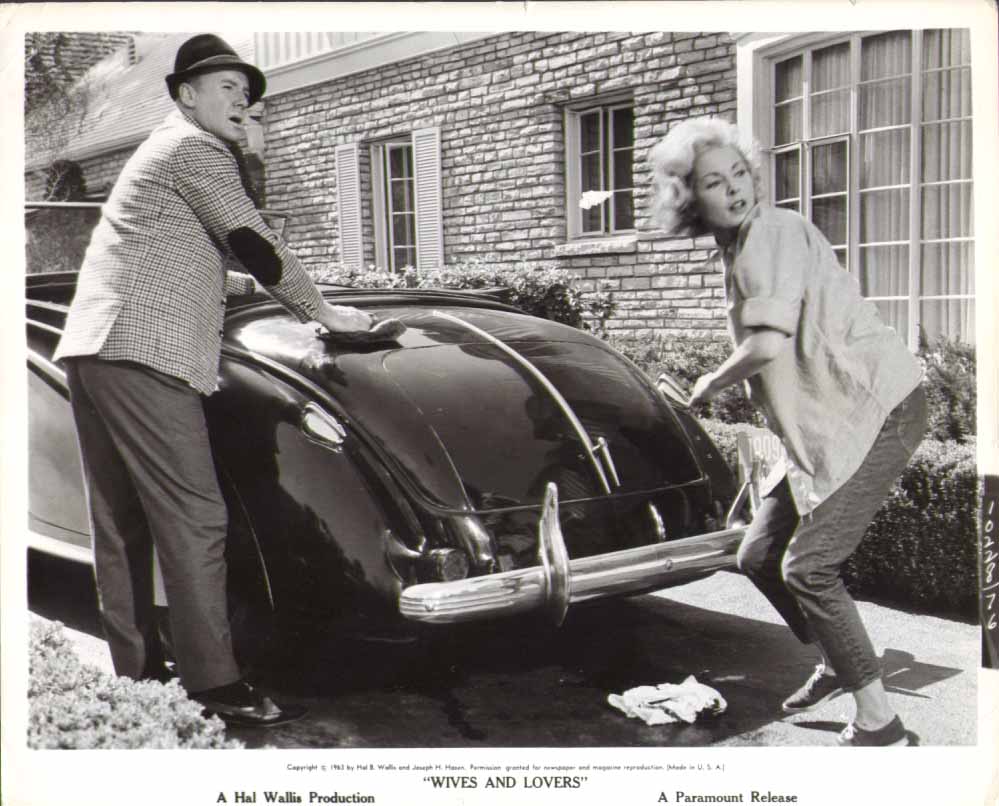
No começo, William ‘Bill’ Austin (Van Johnson) é um aspirante a escritor, que atualmente escreve um livro de receitas. Sua esposa Bertie (Janet Leigh) é quem traz dinheiro para casa, e ela trabalha em um consultório de dentista. Eles têm uma filha, uma peculiar garotinha de sete anos e ¾ de idade, Julie (Claire Wilcox). O ego masculino e frágil de Bill está machucado porque sua esposa trabalha fora e ele não, mas logo uma grande mudança acontece: a agente literária de Bill, Lucinda Ford (Martha Hyer) vende os direitos do romance de Bill para um clube de leitura e para uma peça.

At first, William 'Bill' Austin (Van Johnson) is a struggling writer, currently writing a cookbook. His wife Bertie (Janet Leigh) is the breadwinner of the house, and she works in a dentist's office. They have a daughter, the quirky seven and ¾ year-old Julie (Claire Wilcox). Bill's fragile male ego was hurt because his wife was working and he wasn't, until a big change happens: Bill's literary agent Lucinda Ford (Martha Hyer) sells Bill's novel's rights for a book club and a play.


A vida da família muda completamente. Bill insiste para que eles se mudem do pequeno apartamento em Nova York para uma casa elegante em Connecticut. Lá eles conhecem os enxeridos vizinhos Fran (Shelley Winters) e Wylie (Ray Walston). Fran é divorciada – seu ex-marido é ator – e Wylie é um designer de interiores que vive na casa dos fundos de Fran. Eles são incríveis!

Their life changes completely. Per Bill's insistence, they move from a small New York apartment to a fancy house in Connecticut. There they meet nosy neighbors Fran (Shelley Winters) and Wylie (Ray Walston). Fran is divorced – her ex-husband is an actor – and Wylie is an interior decorator who lives in the smaller house on the back of Fran's home. They're a riot!
 
Nouveau riches
Bill começa a sair com Lucinda para aparecer em eventos sociais, deixando sua família de lado. Mas coisas só dão errado de fato quando Bill e Bertie oferecem um jantar em casa e convidam Fran, Wylie, Lucinda e o ator Gar Aldrich (Jeremy Slate), a estrela da peça que Bill está escrevendo. Quando Lucinda começa a paquerar Bill, Gar, que já havia namorado Lucinda, passa a paquerar Bertie.

Bill starts to go out with Lucinda to social gatherings, leaving his family behind. But things go really wrong when Bill and Bertie host a dinner party in their house, and the guests are Fran, Wylie, Lucinda and actor Gar Aldrich (Jeremy Slate), the star of the play Bill is writing. As Lucinda starts flirting with Bill, Gar, who used to date Lucinda, flirts with Bertie.


Era óbvio que o novo estilo de vida prejudicaria o casal. É possível ver isso em uma poderosa metáfora visual: depois de receber a notícia de que os direitos do romance haviam sido vendidos, Bill imediatamente compra para Bertie o casaco chique que Lucinda estava usando. Bertie é deixada na cozinha, e coloca um avental por cima do casaco chique – a nova vida e a velha vida entram em confronto em uma imagem.

It was obvious that the new lifestyle would harm the Austins. You can see this in a powerful visual metaphor: after receiving the news that his novel's rights were sold, Bill buys Bertie the fancy coat Lucinda is wearing and goes out to celebrate. Bertie is left in the kitchen, and puts an apron over the fancy coat – it's the old life and the new life clashing in one image.


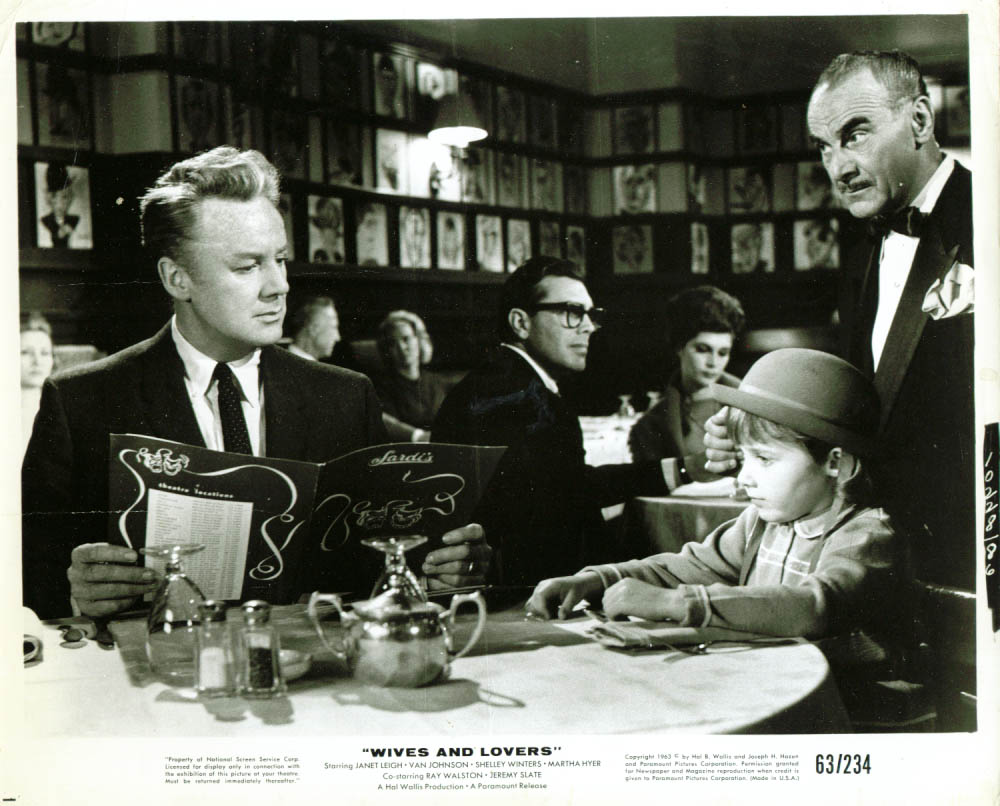
Todos os atores estão muito bem em cena. “Esposas e Amantes” é uma comédia romântica sobre sexo, como aquelas estreladas por Doris Day e Rock Hudson, e temos algumas gags divertidas, como o aparelho de som sofisticado de Bill, que ele não consegue ligar, mas todos os outros conseguem.  Também gostei de quando Wylie fabricou um móvel antigo artificialmente. Julie é provavelmente a fonte da maioria das piadas. Suas perguntas de criança são engraçadas, mas para mim o mais engraçado é seu hábito de só comer se os alimentos não estiverem tocando uns aos outros – isto é, ela come um sanduíche só se os ingredientes vierem em pratos separados.

Everybody delivers very good performances. “Wives and Lovers” is a sex comedy, like the ones with Doris Day and Rock Hudson, and we have some funny gags, like Bill's fancy sound stereo that he apparently can't turn on, but almost everybody else can. I also enjoyed when Wylie fabricated an antique piece of furniture artificially. Julie is probably the source of the most jokes. Her childish questions are funny, but for me the funniest thing is her habit of only eating when her food is not touching each other on the plate – that means, she eats a sandwich only if the ingredients come in separate plates.


Van Johnson é um charme como Bill. Janet Leigh brilha como Bertie. É interessante notar que ela menciona que a sociedade queria que ela se sentisse como “pão mofado”, como uma mulher que não podia mais ser desejada – e Leigh tinha apenas 36 anos quando o filme foi feito! De fato, o interesse de Gar é um obstáculo na relação do casal Austin, mas também é uma oportunidade para Bertie perceber que ela é uma mulher linda e desejável. Aliás, a química de Leigh e Johnson não é surpresa: eles eram bons amigos, e foi o próprio Van Johnson que sugeriu a Jeanette Helen Morrison o nome artístico de Janet Leigh em 1947, quando ela fazia com ele seu primeiro filme, “Reconcilização”.

Van Johnson is charming as Bill. Janet Leigh shines as Bertie. It's interesting to notice that she mentions that society wanted her to feel like if she was “like molded bread”, like a woman that couldn't be desired anymore – and Leigh was only 36 when the film was made! Indeed, Gar's courtship is an obstacle in the Austin's relationship, but it is also an opportunity for Bertie to realize that she is a gorgeous, desirable woman. By the way, the chemistry between Leigh and Johnson is no surprise, since they were god friends, and it was Johnson himself who suggested for Jeanette Helen Morrison the screen name Janet Leigh in 1947, when she was making her first film, “The Romance of Rosy Ridge”.
 
1947
1963
“Esposas e Amantes” é cheia de altos e baixos. Eu gostei do fato de que tanto o marido quanto a esposa são tentados a trair, por isso não há julgamento, falso moralismo ou outras bobagens. Eu não gostei do fato de que alguns personagens masculinos, em especial Wylie, têm de ser rudes e tratar as mulheres mal para serem levados a sério por elas. Eu realmente detestei alguns momentos sexistas, como esta horrível “piada” dita por Shelley Winters: “Estuprada e desmembrada. Por que não se pode ter um sem o outro?”

“Wives and Lovers” is a series of hits and misses. I liked the fact that both the husband and wife are tempted to cheat, so there is no judgment, fake morals or other bullshit. I disliked the fact that some male characters, in special Wylie, had to be rude and mistreat women in order to be taken seriously by then. I completely disliked some sexist moments like the horrible joke uttered by Shelley Winters: “Raped and dismembered. Why can't you have one without the other?”
 
Director John Rich with Johson, Slate and Leigh
Você deve conhecer a música “Wives and Lovers”, que foi gravada pela primeira vez no mesmo ano em que o filme estreou. A música de Burt Bacharach e Hal David foi, na verdade, inspirada pelo filme! Foi uma “exploitation song”, uma canção composta para ajudar na divulgação do filme, mas sem fazer parte de sua trilha sonora. Hoje, a música é bem mais conhecida que o filme, mas eu não acredito que sua letra expresse a mesma complexidade das relações como o filme faz.

You may be familiar with the song “Wives and Lovers”, that came out the same year the film did. The song by Burth Bacharach and Hal David was actually inspired by the movie! It was an exploitation song, a song composed to help promote a film, but not appearing on it. Today, the song is much better known if compared to the film, but yet I don't think the lyrics express the same complexity of relationships as the movie does.


“Esposas e Amantes” deveria ser mais conhecido. Porque todos precisam de uma amiga como a personagem de Shelley Winters. Porque a ausência de julgamento moral em um filme dos anos 60 é algo raro. Porque é melhor que outras comédias românticas sobre sexo da época – estou falando da terrível “Amor Daquele Jeito”, também de 1963, que desperdiça Paul Newman e Joanne Woodward. Porque o trailer de “Esposas e Amantes” nos engana e promete bem mais conteúdo sexual do que realmente entrega. E porque todos precisamos dar risada de vez em quando.

“Wives and Lovers” should be better known. Because everybody needs a friend like Shelley Winter's character. Because no moral judgment in a 1960s movie is something rare. Because it is better than other sex comedies of the time – I'm thinking about the awful “A New Kind of Love”, also from 1963, a film that wastes Paul Newman and Joanne Woodward. Because the trailer for “Wives and Lovers” is deceiving and promises a sexual feast that doesn't happen. And because we all need a laugh once in a while.

This is my contribution to the Second Van Johnson blogathon, hosted by Michaela at Love Letters to Old Hollywood.
Related Posts Plugin for WordPress, Blogger...