} Crítica Retrô: 1921

Tradutor / Translator / Traductor / Übersetzer / Traduttore / Traducteur / 翻訳者 / переводчик

Showing posts with label 1921. Show all posts

Friday, March 13, 2026

A Carruagem Fantasma (1921) / The Phantom Carriage (1921) / Körkarlen (1921)


Novembro passado, quando a Classic Movie Blog Association anunciou um evento entitulado “Sombras Primitivas e Horror Pre-Code”, eu escolhi escrever sobre “Häxan - A Feitiçaria Através dos Tempos". Eu imediatamente me arrependi de minha escolha, pois achei que “A Carruagem Fantasma” era mais assombrosa. Minha única imagem mental do filme, entretanto, era o fantasmagórico veículo do título. Acontece que este não era um filme cheio de sombras e contrastes - mas seu uso de efeitos especiais foi algo realmente de assombrar. 

Last November, when the Classic Movie Blog Association hosted a blogathon titled “Early Shadows and Pre-Code Horror”, I chose to review 1922’s “Häxan”. I immediately regretted my choice, as I thought that “The Phantom Carriage” was more shadowy. My only mental image of this movie, however, was the phantasmagoric vehicle of the title. It turned out it wasn’t a movie full of shadows, after all - but its use of special effects was something that bewitched. 

Na véspera de Ano Novo, três indigentes estão no cemitério bebendo e esperando o relógio bater meia-noite. Um deles está contando a história de seu amigo Georges (Tore Svennberg). Geralmente um cara alegre, Georges ficava triste e sorumbático toda véspera de Ano Novo. O motivo? Porque ele sabia que a última pessoa a morrer num ano teria de dirigir a carruagem da Morte no ano seguinte - uma função na qual uma noite de trabalho se assemelha a 100 anos de labuta. No ano passado, logo antes da meia-noite, Georges morreu.

On New Year’s Eve, three bums are at the cemetery drinking and waiting for the clock to strike midnight. One of them starts telling the story of his friend Georges (Tore Svennberg). Generally a joyful fellow, Georges would get sad and moody every New Year’s Eve. The reason? Because he knew that whoever dies last in a given year will have to drive Death’s carriage for the following year - a duty during which one single night of work feels like 100 years. Last year, just before midnight, Georges passed away.

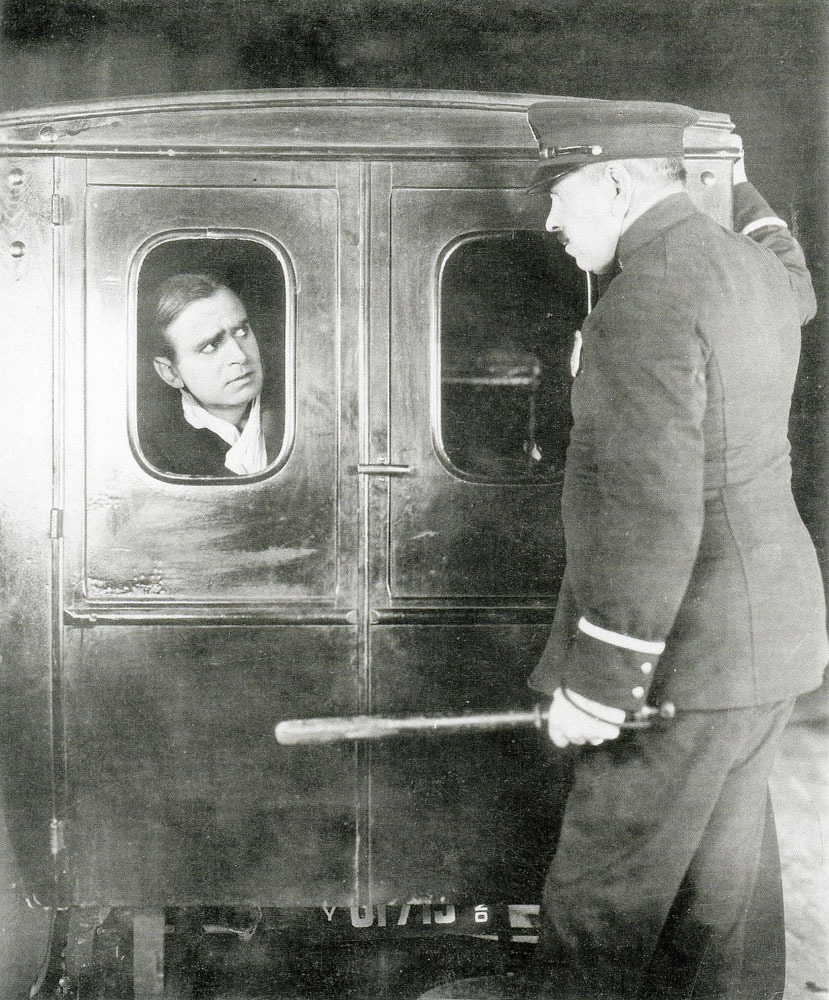
Em seu leito de morte, a Irmã Edit (Astrid Holm) do Exército da Salvação pede a quem está a seu lado para encontrar David Holm (Victor Sjöström). Ele é um dos indigentes bebendo e batendo papo no cemitério. Ele se recusa a ir ver Edit, e tem início uma briga com os outros dois indigentes. Um deles quebra uma garrafa na cabeça de David, ferindo-o mortalmente. O relógio bate meia-noite e David se torna o próximo motorista da Carruagem Fantasma, substituindo Georges.

On her deathbed, Salvation Army Sister Edit (Astrid Holm) asks people by her side to find David Holm (Victor Sjöström). He is one of the bums drinking and chatting at the cemetery. He refuses to go see Edit, which starts a fistfight with the two other bums. One of them breaks a bottle on David’s head, mortally wounding him. The clock strikes midnight and David becomes the next driver for the Phantom Carriage, replacing Georges.

Flashback! Quando vivo e mais jovem, David encontrou a desgraça na bebida. Por causa de seu vício, sua esposa (Hilda Borgström) e filhos partiram sem deixar rastros. Ele se torna indigente influenciado por Georges, até que um dia seu caminho se cruza com o da Irmã Edit do Exército da Salvação.  

Flashback! When alive and young, David found disgrace in the bottle. Because of his addiction his wife (Hilda Borgström) and children left leaving no trace. He becomes a bum influenced by Georges, until one day his path crosses with Sister Edit from the Salvation Army.

As sequências do ajudante da Morte dirigindo a carruagem e coletando almas mostram ele e o veículo transparentes, um efeito atingido através de dupla exposição. Décadas antes do CGI e do Chroma Key, a dupla exposição havia sido usada anteriormente pelo diretor de fotografia Julius Jaenzon, que trabalhou frequentemente com Sjöström e num número de adaptações para os cinemas das obras literárias de Selma Lagerlöf, que também escreveu o material original para “A Carruagem Fantasma”.

The sequences of Death’s helper driving the carriage and collecting souls show him and the vehicle transparent, an effect achieved by double exposure. Decades before CGI and Chroma Key, double exposure had been used before by cinematographer Julius Jaenzon, who worked often with Sjöström and on a number of adaptations of literary works by Selma Lagerlöf, who also wrote the source material for “The Phantom Carriage”.

Victor Sjöström é hoje mais lembrado como o velho Professor em “Morangos Silvestres” (1957) de Ingmar Bergman. Mas que carreira ele teve antes disso! Estreou como ator e diretor em 1912, foi para Hollywood em 1924, onde dirigiu alguns grandes filmes, e focou na atuação em sua Suécia nativa quando o som chegou ao cinema. Para “A Carruagem Fantasma”, Victor se disfarçou de indigente e fez pesquisas de campo nos bairros pobres de Estocolmo!

Victor Sjöström is now best remembered as the Old Professor in Ingmar Bergman’s “Wild Strawberries” from 1957. But what a career he had before that! He debuted as both actor and director in 1912, went to Hollywood in 1924, where he directed a few great movies, and focused on acting in his native Sweden when sound arrived at the movies. For “The Phantom Carriage”, Victor disguised himself as a poor man and did research in the slums of Stockholm!

A atriz Hilda Borgström, que interpretou a esposa de David Holm, era mais velha que Sjöström e já havia feito um filme com ele quase uma década antes, “Ingeborg Holm” em 1913. Ela fez 82 filmes, entre mudos e falados. A dinamarquesa Astrid Holm, que interpreta a Irmã Edit, por sua vez fez apenas 15 filmes. Para ambas “A Carruagem Fantasma” foi o ápice de suas carreiras.

Actress Hilda Borgström, who played David Holm’s wife, was older than Sjöström and had made another film with him nearly a decade before, “Ingeborg Holm” from 1913. She appeared in 82 movies, both silents and talkies. Danish Astrid Holm, who plays Sister Edit, on her hand appeared in only 15 films. For both “The Phantom Carriage” was an apex in their careers.

O Exército da Salvação é uma organização de caridade religiosa fundada na Inglaterra em 1865. Está atualmente presente em 14 países, incluindo o Brasil, onde chegou em 1922. Ele trabalha com respostas a desastres, exames médicos, educação, entre outras áreas. O primeiro filme a mencionar a organização, segundo a Wikipedia, foi feito em 1900. Uma Irmã do Exército da Salvação, interpretada por Jean Simmons, é alvo de sátira no musical “Eles e Elas” de 1955

The Salvation Army is a religious charitable organization founded in England in 1865. It is currently present in 134 countries, including Brazil, where it arrived in 1922. It works in disaster response, health check-ups, education, among other areas. The first film to address the organization, according to Wikipedia, was made in 1900. A Salvation Army Sister, played by Jean Simmons, is material for satire in the 1955 musical “Guys and Dolls”.  

Com uma narrativa complexa, que inclui flashbacks dentro de flashbacks, “A Carruagem Fantasma” foi um grande sucesso e um filme que influenciou cineastas nas décadas que se seguiram - o mais famoso exemplo sendo a cópia da cena com o machado quase sessenta anos depois por Stanley Kubrick em “O Iluminado”. Charles Chaplin disse que esse era o melhor filme já feito. Bergman o tinha entre seus favoritos. Com tantos admiradores, podemos só repetir: “A Carruagem Fantasma” é de fato um grande filme. 

With a complex narrative, that includes flashbacks within flashbacks, “The Phantom Carriage” was a huge success and a film that influenced filmmakers in the decades to come - the most famous influence being the imitation of the axe scene near sixty years later in Stanley Kubrick’s “The Shining”. Charles Chaplin said that this was the best film ever made. Bergman had it among his favorites. With so many admirers, we can only repeat: “The Phantom Carriage” is indeed a great film. 

Friday, February 27, 2026

David, o Caçula (1921) / Tol'able David (1921)


Anos atrás, escrevi um perfil de Richard Barthelmess para uma publicação conhecida como The Pre-Code Companion. Considerando o título, foquei mais nas performances de Richard em filmes pre-Code, e assim descobri um novo filme favorito, “Fome por Glória” de 1933. Mas ele fez 81 filmes, numa carreira que durou décadas. Alguns filmes me escaparam na época, e decidi assisti-los depois. Um deles é “David, o Caçula”, e o momento de assisti-lo é agora.  

Years ago, I wrote a profile of Richard Barthelmess for a publication known as The Pre-Code Companion. Given the title, I focused more on Richard’s performances in pre-Code films, and by doing this I discovered a new favorite, 1933’s “Heroes for Sale”. But he made 81 movies in a career that spanned decades. Some movies couldn’t fit my schedule, so I decided to watch them later. One of them was “Tol’able David”, and the moment to watch it is now.

A família Kinemon vive alegremente em Greenstream. Os pais têm dois filhos: Allan (Warner Richmond), o mais velho que já trabalha como carteiro, e David (Barthelmess), o filhinho da mamãe. Há também uma família de malfeitores, os Hatburns, formada por pai e dois filhos. Os Hatburns decidem visitar um primo, que é vizinho dos Kinemon e avô de Esther (Gladys Hulette), interesse amoroso de David. 

The Kinemon family lives happily in Greenstream. Ma and Pa have two sons: Allan (Warner Richmond), the oldest and already working as a mailman, and David (Barthelmess), mother’s boy. There is also a family of wrongdoers, the Hatburns, comprised of father and two sons. The Hatburns decide to visit a cousin, who is the Kinemon’s neighbor and the grandfather of Esther (Gladys Hulette), David’s love interest.

David não é adulto ainda, ele é apenas o caçula. Esther também não o vê como um adulto. Quando seu irmão é ferido pelos Hatburn e seu pai morre, David tem de crescer e se tornar o novo Homem da Casa. Isso inclui tomar para si a obrigação do irmão de entregar as cartas.

David isn’t an adult yet, he’s only “Tol’able” as an adult. Esther doesn’t see him as an adult either. When his brother is wounded by the Hatburns and his father dies, David has to grow up and become the new Man of the House. This includes taking as his the brother’s obligation to deliver the mail.

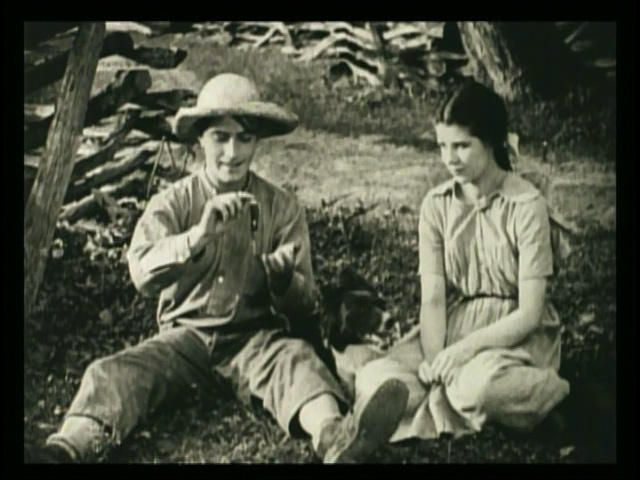
Um “ator” que merece destaque é o cachorro da família Kinemon, Rocket. Ele rouba as calças de David quando o garoto vai nadar, acompanha-o nas aventuras com ou sem Esther, David quase senta nele, mas o cachorro não se importa. O IMDb dá o crédito de Rocket para um cão chamado Lassie, que fez mais dois filmes. 

One “performer” to highlight is the Kinemon dog, Rocket. It steals David’s pants when the boy is swimming, accompanies David in his adventures with or without Esther, David almost sits on it, but the dog is fine with it. IMDb credits a dog named Lassie as Rocket, with two other film appearances.

No começo do filme David e Esther jogam um jogo chamado Mumblety-Peg, que eu desconhecia. Numa busca pela internet, o curioso site The Art of Manliness me informou que o jogo consiste em jogar uma faca para o ar e ver quem consegue fazê-la cair com a lâmina furando o chão. O vencedor afunda um graveto ou parafuso no chão, que o perdedor precisa tirar com os dentes. 

Early in the movie David and Esther play a game called Mumblety-Peg, which I didn’t know. In a web search, the website weirdly titled The Art of Manliness informed me that the game consists in throwing up a knife and seeing who can get it to stick to the ground. The winner plants a stick on the ground and the loser has to remove the stick with his teeth.

“David, o Caçula” foi feito pela Inspiration Pictures e é claramente um melodrama, mesmo com um momento engraçado não-intencional quando a mãe de David está esperando por ele toda arrumada e com um sorrisinho enquanto ele está envolvido numa briga com um Hatburn. Inspiration Pictures era a produtora de Richard Barthelmess e “David, o Caçula” foi seu primeiro crédito como produtor.

“Tol’able David” was made by Inspiration Pictures and it’s clearly a melodrama, even though there is an unintentional funny moment with David’s mom waiting for him all dolled up and with a silly smile while he is involved in a fistfight with a Hatburn. Inspiration Pictures was Richard Barthelmess’s own production company and “Tol’able David” was his first credit as a producer.  

O diretor e co-roteirista Henry King começou no cinema como ator em 1912 e três anos depois dirigiu seu primeiro filme. Ele dirigiu mais de 100 filmes tanto na era muda quanto após a chegada do cinema falado. Ele foi um dos fundadores da Academia, o órgão que organiza o Oscar. Ele próprio foi indicado a dois Oscars, mas não ganhou nenhum. Em “David, o Caçula”, King emula o estilo cinematográfico de Griffith, que foi o primeiro a receber a oferta para adaptar o livro para as telas mas recusou a oportunidade.

Director and co-screenwriter Henry King started as an actor in film in 1912 and three years later had his first directing credit. He directed over 100 movies both in the silent era and later with the talkies. He was one of the founders of the Academy, the organ that presents the Oscars. King himself was nominated for two Oscars, but failed to win both. In “Tol’able David” King emulates Griffith’s filmmaking style, as Griffith was first offered to adapt the novel to the screen but refused the opportunity.

Barthelmess, que fez um par de filmes com Griffith, traz a quantia certa de charme jovial e ambição para o papel. Mesmo assim, David é tão delicado que chuta uma porta, abrindo-a, e não entra no recinto, só fica do lado de fora parado, sem saber o que fazer. Mas ele é nosso herói e sabemos que ele triunfará no final desta história sobre o que acontece quando meninos se tornam homens.

Barthelmess, who appeared in a couple of Griffith’s films, brings the right amount of young charm and ambition to the lead. Even so, David is so delicate that he kicks a door open and doesn’t enter the room, just stands outside without knowing what to do. But he is our hero and we know he’ll triumph in the end of this story of what happens when boys become men.

Friday, February 16, 2024

Seja Minha Mulher (1921) / Be My Wife (1921)

O IMDb lista 234 créditos para Max Linder como ator, mas provavelmente há muito mais. É difícil voltar no tempo e verificar seus primeiros papéis, como coadjuvante, na Pathé de 1905 em diante. Três anos depois, Max já era uma superestrela, mas quase uma década se passou antes da primeira vez de Max em Hollywood. Nessa primeira empreitada, ele fez alguns curtas-metragens para o estúdio Essanay. Max Linder voltaria para Hollywood para fazer três médias-metragens: Sete Anos de Azar (1921), O Mosqueteiro (1922) e este Seja Minha Mulher, também de 1921. Eu tomei como missão escrever sobre todos estes três médias-metragens. Aqui está a crítica que faltava.


IMDb lists 234 credits for Max Linder as an actor, but there are probably many more. It’s difficult to trace back to his first roles, as a supporting player, at Pathé starting in 1905. Three years later, Max was already a superstar, but nearly a decade passed before he had his first stint in Hollywood. This first time, he made some short films for Essanay. Max Linder would come back to Hollywood to make three five-reelers: Seven Years Bad Luck (1921), The Three Must-Get-Theres (1922) and this Be My Wife, also from 1921. As a huge Max Linder fan, I had to review all of his American featurettes. Here’s the review that was missing.

Max (Max Linder) está apaixonado por Mary (Alta Allen) e quer se casar com ela, mas a tia dela, Agatha (Caroline Rankin), não concorda com o casamento e preferiria que a sobrinha se casasse com Archie (Lincoln Stedman). Max se disfarça de professor de canto para se aproximar de Mary, mas só ganha a aprovação da família dela após demonstrar sua bravura. Na segunda metade do filme, entra a Madame Coralie (Rose Dione), costureira e vendedora de bebidas alcoólicas, e os personagens se alvoroçam por uma possível traição.


Max (Max Linder) is in love with Mary (Alta Allen) and wants to marry her, but her Aunt Agatha (Caroline Rankin) doesn’t agree with the marriage and would rather see her married to Archie (Lincoln Stedman). Max disguises as a voice teacher to be near Mary, but only wins over her family by showing his bravery. In the second half of the movie, enter Madame Coralie (Rose Dione), dressmaker and booze seller, and shenanigans about cheating.

Alta Allen também esteve em “Sete Anos de Azar” como a protagonista feminina, enquanto Caroline Rankin também aparece em “O Mosqueteiro” como a Rainha. Ambas têm aqui mais tempo em cena para mostrar talento para a comédia. Alta Allen nasceu com o nome de Alta Crowin em 1904 e atuou pela primeira vez no teatro aos dez anos de idade. Ela só fez dez filmes entre 1921 e 1926 e se casou com o gerente de produção e roteirista Hampton Del Ruth. Enquanto isso, Caroline Rankin nasceu em 1880 e fez 54 filmes, aparecendo sem receber créditos a partir da introdução do som no cinema.


Alta Allen was also in “Seven Years Bad Luck” as the leading lady, while Caroline Rankin also appeared in “The Three Must-Get-Theres” as the Queen. Both women have here more screen time to show their comedy skills. Alta Allen was born Alta Crowin in 1904 and had her first role in theater at age ten. She only made ten films from 1921 to 1926 and married production manager and writer Hampton Del Ruth. Meanwhile, Caroline Rankin was born in 1880 and made 54 films, appearing without receiving credit in talkies.

Na primeira metade do filme, outra estrela é o cachorro Pal. Ele fez 50 filmes tendo começado aos quatro anos em 1921. Pal rapidamente se tornou um dos favoritos do público tanto em curtas quanto em longas-metragens. Ele não deve ser confundido com outro cachorro chamado Pal, um Collie que foi um dos primeiros cães a interpretar Lassie.


In the first half of the movie, another star is the dog Pal. He appeared in 50 movies starting in 1921, aged four. Pal quickly became an audience favorite in both shorts and features. He must not be mistaken for another dog named Pal, a Collie that was one of the first dogs to play Lassie.

Escrito e dirigido pelo astro Max Linder, “Seja Minha Mulher” foi também produzido por Linder, e distribuído pela Goldwyn, que três anos depois sofreria uma fusão e se transformaria na Metro-Goldwyn-Mayer. Samuel Goldwyn, nascido em Varsóvia, Polônia, chegou aos EUA em 1899 para vender luvas. Em 1913, tendo sucesso em sua profissão, ele foi um dos co-fundadores da Paramount Pictures, e no ano seguinte a companhia lançou o primeiro curta-metragem rodado em Hollywood. Ele fundou a Goldwyn Pictures em 1916, e a MGM herdou a maior marca registrada da companhia: a presença do leão Leo no começo de cada filme.


Written and directed by its star Max Linder, “Be Me Wife” was also produced by Linder, and distributed by Goldwyn, who three years later would merge and form Metro-Goldwyn-Mayer. Samuel Goldwyn, born in Warsaw, Poland, arrived in the US in 1899 to sell gloves. In 1913, being successful in his métier, he was one of the co-founders of Paramount Picture, and the following year the company released the first feature-length film shot in Hollywood. He formed Goldwyn Pictures in 1916, and MGM inherited the most prominent thing from the company: Leo the Lion in the beginning of each film.

Quando este filme foi exibido na TV, foi acompanhado de um aviso dizendo que era um produto do seu tempo, e agora o preconceito não tem mais lugar nos filmes. Isto se refere a duas cenas: primeiro, há um caso de gordofobia durante um desfile de modelos, mais tarde um Max bêbado flerta com uma empregada negra. Mary até vai mais longe e diz que “vai encontrar um chinês ou um índio” para que ela também traia o marido. Ambas as sequências foram, obviamente, concebidas com o humor em mente, mas agora mostram como estereótipos não podem ser - e esperamos que não sejam - reproduzidos no cinema.


When this movie was shown on TV, it was accompanied by a disclaimer saying that it was a product of its time, and now prejudice doesn’t find a place in the movies anymore. This is about two scenes: first, there is fat-shaming during a model show, later a drunk Max flirts with a black maid. Mary even goes further saying that she was “going to find a Chinaman or a Redskin” for herself to cheat too. Both sequences were, of course, made for laughs, but now show stereotypes that can’t - and hopefully won’t - be reproduced on film anymore.

“Seja Minha Mulher” foi o segundo filme a estrear na segunda tentativa de Max de conquistar Hollywood. Eu o considero o menos engraçado do trio, mas ainda assim adorável. Não tem a icônica sequência do espelho de “Sete Anos de Azar” nem os trocadilhos e subversões históricos de “O Mosqueteiro”, mas ainda conta com boas performances e uma bela sequência coreografada na venda de bebidas alcoólicas. E o mais importante: material suficiente para transformar qualquer um num fã de Max Linder.


“Be My Wife” was the second film released in Max’s second attempt in Hollywood. I found it to be the least funny of the trio, but still enjoyable. It doesn’t have the iconic mirror sequence from “Seven Years Bad Luck” nor the historical puns and subversions from “The Three Must-Get-Theres”, but still has good performances and a great choreographed sequence at the booze seller. And the most important: just enough material to convert anyone into a Max Linder fan. 

Monday, October 18, 2021

Sete Anos de Azar (1921) / Seven Years Bad Luck (1921)


Você é supersticioso? Devo confessar que sou um pouquinho supersticiosa - não gosto muito do número sete, por exemplo. Pessoas muito supersticiosas são uma inspiração para o cinema desde a era muda: o IMDb lista mais de mil filmes com a palavra-chave “superstição”. Alguns destes filmes são comédias sobre o quão absurdo é ser supersticioso, que é o caso de “Sete Anos de Azar”, de Max Linder.

Are you superstitious? I must confess that I’m a bit superstitious - I don’t really like the number seven, for instance. Very superstitious people have been a big inspiration for films since the silent era: IMDb lists over one thousand movies with the keyword “superstition”. Some of these films are comedies about the absurdity of being too superstitious, which is the case of Max Linder’s “Seven Years Bad Luck”.

Praticamente todo mundo conhece a superstição que diz respeito a quebrar um espelho e ter sete anos de azar. No filme, Max (Max Linder) é um homem que está prestes a se casar. Sua criada e mordomo quebram seu espelho e o substituem, mas Max quebra o espelho e fica apreensivo com o mau presságio.

Practically everybody knows the superstition about breaking a mirror and this bringing you seven years bad luck. In the movie, Max (Max Linder) is a man about to be married. His maid and butler break his mirror and replace it, but Max breaks it again and gets nervous because of the bad omen.

De início, a superstição mostra-se verdadeira, pois Max briga com sua noiva Betty (Alta Allen) e vai para o campo, criando uma oportunidade para que seu melhor amigo (F.B. Crayne) roube sua garota. Max é roubado antes de pegar um trem, e isso leva a várias estripulias numa estação de trem, no zoológico e na cadeia - e há até uma sequência de sonho!

Initially the superstition proves to be true, as Max has a fight with his fiancée Betty (Alta Allen) and goes to the countryside, creating an opportunity for his best friend (F.B. Crayne) to steal his fiancée. Max is robbed before he gets in the train, and this leads to various shenanigans in a train station, a zoo and a jail - and there is even a dream sequence!

Design de cartelas de títulos era uma arte, e isto pode ser visto em “Sete Anos de Azar”: sempre que um personagem fala ao telefone, a cartela de texto tem as palavras emolduradas por linhas telefônicas. É algo simples mas muito eficiente que adiciona charme ao filme.

Title card design was an art, and this can be seen in “Seven Years Bad Luck”: whenever a character was talking on the phone, the title card has the words framed by drawings of phone lines. It’s something simple yet very effective that adds charm to the movie.

No comecinho do filme há a famosa cena cômica do espelho, mais tarde feita pelos irmãos Marx e também por Lucille Ball. A origem da cena dos espelhos é a peça “My Friend from India”, de 1894. Max Linder tentou filmar esta cena já em 1911, mas a dupla alemã dos irmãos Schwartz ameaçou processá-lo por copiar o show deles. Eles de fato processaram Max quando “Sete Anos de Azar” estreou, mas o caso nunca foi julgado.

In the very beginning of the movie there is the famous mirror comedy routine, done later by the Marx brothers and also by Lucille Ball. The origin of the mirror routine is the play “My Friend from India”, first staged in 1894. Max Linder tried to add this routine to a film as early as 1911, but the German duo Schwartz Brothers threatened to sue him for copying their act. They did sue Max when “Seven Years Bad Luck” was released, but the case never made it to the court.

Max Linder pode ser considerado o primeiro astro internacional do cinema. Ele fez seu primeiro filme em 1905 e em 1912 era o atos mais bem pago do mundo, conhecido por todo o globo graças ao seu personagem Max, um homem elegante. Havia um star system rudimentar construído ao redor de Max já em 1909. Desde 1908 ele também dirigia e escrevia alguns de seus filmes. Linder teve duas fases da carreira nos EUA: da primeira vez ele fez três curtas-metragens para a Essanay entre 1916 e 1917, e nesta segunda vez ele fez três longas-metragens que foram mal recebidos na época, mas que hoje são considerados clássicos da comédia.

Max Linder can be considered the first international movie star. He made his first movie in 1905 and in 1912 was the highest paid actor in the world, recognized all over the globe thanks to his character Max, a dapper man. There was a rudimentary star system built around him as early as 1909. Since 1908 he also directed and wrote some of his movies. Linder had two phases of filmmaking in the US: the first time he did three shorts for Essanay between 1916 and 1917, and in this second time he made three features that were poorly received at the time, but are now considered comedy classics.

Outra comédia muda sobre superstição é “O Supersticioso” (1919), estrelando Douglas Fairbanks como Daniel Boone Brown, um homem muito supersticioso que se torna vítima de um psiquiatra do mal. Este filme é famoso por outra cena curiosa: a do quarto que gira, que seria repetida por Fred Astaire em 1951.

Another silent comedy about superstition is “When the Clouds Roll By” (1919), starring Douglas Fairbanks as Daniel Boone Brown, a very superstitious man who becomes the victim of an evil psychiatrist. This film is famous for another visual routine: the one of a revolving bedroom, that would be done again by Fred Astaire in 1951.

Como dito anteriormente, “Sete Anos de Azar” teve um mau desempenho nas bilheterias mas foi elogiado pelos críticos na época da estreia. Com apenas 62 minutos, tem muitos momentos cômicos, dignos de gargalhada. É também uma introdução perfeita ao gênio Max Linder, que merece mais reconhecimento - afinal, o primeiro astro internacional do cinema não pode simplesmente desaparecer. Seria muito azar se Max fosse esquecido.

As stated, “Seven Years Bad Luck” did poorly at the box-office but was praised by critics when it was released. At only 62 minutes, it packs plenty of comic, laugh-out-loud moments. It’s also a perfect introduction to the genius of Max Linder, who deserves to be more recognized - after all, the first international movie star can’t simply disappear. It’d be the worst luck if Max was forgotten.

This is my contribution to the Laughter is the Best Medicine blogathon, hosted by the Classic Movie Blog Association.

Sunday, June 9, 2019

O Maluco (1921) / The Nut (1921)

Ou: por que fiquei maluca por Douglas Fairbanks em “O Maluco” (1921)

Or: why I'm nuts for Douglas Fairbanks in “The Nut” (1921)

No começo dos anos 20, a maioria das frequentadoras das salas de cinema estava apaixonada por Douglas Fairbanks. Elas tinham bom gosto: Doug era bonito, alto, moreno, com um sorriso charmoso e um porte atlético que era sempre explorado nas telas. Por isso seria uma grande surpresa vê-lo em um filme de 1921 interpretando um inventor nerd – e foi uma surpresa muito agradável.

In the early 1920s, most female moviegoers were in love with Douglas Fairbanks. They had good taste: Doug was handsome, tall, with a dark complexion, a charming smile and he always showed his athleticism on screen. So it would come as a huge surprise to see him in a 1921 film playing a nerdy inventor - and it was a very pleasant surprise.


Charlie (Fairbanks) é um inventor. Ele está apaixonado por Estrell (Marguerite De La Motte). Estrell trabalha por uma causa: ela recebe crianças pobres em casa durante uma hora todos os dias, porque ela acredita que casas refinadas irradiam ideias refinadas, por isso as crianças terão mais oportunidades na vida se passarem algum tempo em lugares refinados.

Charlie (Fairbanks) is an inventor. He is love with Estrell (Marguerite De La Motte). Estrell works for a cause: she receives a few poor children in her house one hour every day, because she thinks refined houses irradiate refined ideals, so those kids will have more opportunities when they grow up because they spent time in nice places.


Além de Charlie, outro homem está interessado em Estrell: o apostador Philip (William Lowery). Philip é tão mau que seu telefonista é o diabo em pessoa – e isso não é uma metáfora! Estrell, Charlie e Philip se encontram em uma festa que Charlie organiza para que Estrell possa discursar sobre a sua causa. Embora ela consiga alguns voluntários, uma invenção de Charlie sai do controle e isso acaba atrapalhando a festa.

Besides Charlie, Estrell has another suitor: the gambler Philip (William Lowery). Philip is so bad his telephone operator is the devil himself - and this is not a metaphor! Estrell, Charlie and Philip meet at a party Charlie throws so Estrell can spread the word about her cause. Although she gets some new volunteers, Charlie’s invention gets out of control and this spoils the party.


Toda a confusão leva Charlie para a cadeia. Lá, ele é colocado na mesma cela que um criminoso conhecido como Gentleman George (Gerald Pring). George, entretanto, se apresenta como um membro da rica família Vanderbrook – e Charlie acredita que ele tem uma chance de fazer com que Estrell o perdoe se ele conseguir espalhar a teoria dela entre os milionários.

All the confusion leads Charlie to jail. There, he is put in the same cell as a crook known as Gentleman George (Gerald Pring). George, however, introduces himself as a member of the rich Vanderbrook family – and Charlie thinks he has a chance to win Estrell back if he spreads her theory among millionaires.


Charlie fará qualquer coisa para ver Estrell feliz. Enquanto isso, Philip se aproxima dela interessado apenas em um caso rápido e isso desagrada à amante dele a exótica Claudine (Barbara La Marr). Algumas confusões com o Vanderbrook real e o filho dele vão acontecer nesta história sobre criatividade e adoração – e Doug até fará alguns saltos!

Charlie will do anything to see Estrell happy. Meanwhile, Philip gets close to her only interested in a quick affair, and this displeases his lover, the exotic Claudine (Barbara La Marr). A few confusions with the real Vanderbrook and his son will also happen in this tale of creativity and adoration - and Doug even manages to do some jumps!


Sim, Charlie é bonito, alto, moreno, com um sorriso charmoso e um corpo atlético. Mas o que realmente o faz se destacar é como ele trata Estrell. Ele acredita nela e quer que a teoria dela seja um sucesso – muito embora ela seja bem estranha. Em tempos como os nossos, de mansplaining e manterrupting, é raro ver um homem apoiando as ideias de uma mulher. Isso devia ser algo muito mais raro na década de 1920. Ter alguém que lhe estimule e que fique feliz quando você alcança seus objetivos é algo tão raro que esse apoio pode ser mais valioso e atraente que qualquer característica física.

Yes, Charlie is handsome, tall, with a dark complexion, a charming smile and an athletic body. But what makes him really stand out is how he treats Estrell. He believes her and wants to see her theory be successful - even though it sounds very, very odd. In times like today, full of mansplaining and manterrupting, it’s rare to see a man support a woman’s ideas. It must have been even rarer in the 1920s. To have someone who stimulates you and cheers when you achieve your goals is something so rare that this support can be more valuable and attractive than any physical trait.


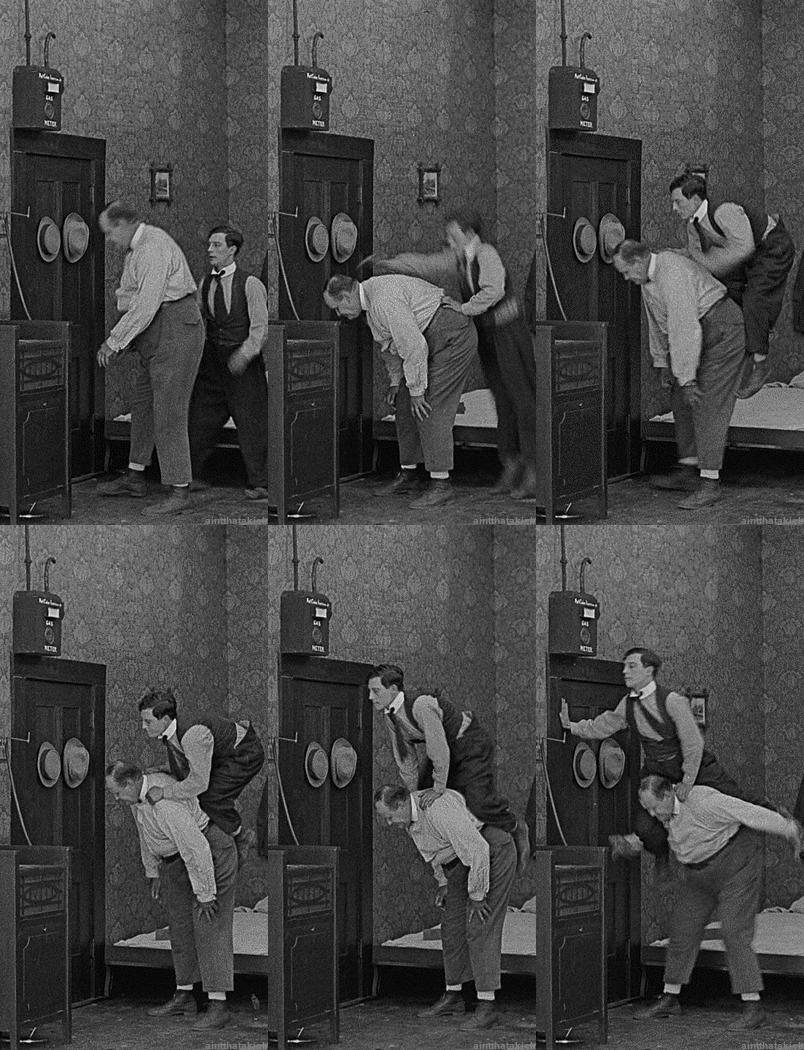
Em 1915, Douglas Fairbanks fez uma comédia chamada “The Lamb” - foi seu primeiríssimo filme. Em 1920, quando o remake foi feito, Doug, agora produtor de suas próprias películas, indicou Buster Keaton para seu papel, um galã sério que foi interpretado com maestria por Keaton em "O Pesado". Em uma troca curiosa, posso visualizar Keaton perfeitamente como o protagonista de “O Maluco”. Como “O Maluco” tem muita comédia – e às vezes comédia física – Buster seria uma escolha perfeita. Além disso, ele poderia fazer a sequência inicial muito bem, pois Buster também se divertiu com algumas maravilhas modernas no curta-metragem “O Espantalho” (1920).

In 1915, Douglas Fairbanks did a comedy film called “The Lamb” - it was his very first film. In 1920, when this film was remade, Doug, already producing his own films, suggested Buster Keaton for his role, a straight lead that he played very well in "The Saphead". In a curious change, I can perfectly envision Buster as the lead in “The Nut”. Since “The Nut” has a lot of comedy – and sometimes relies on physical comedy – Buster would be a perfect choice. Furthermore, he could have played the opening sequence with the inventions very well, because Buster also had a good time with modern marvels in the short “The Scarecrow” (1920).


Marguerite De La Motte, que já havia trabalhado com Fairbanks em outros filmes como “A Marca do Zorro” (1920), era a melhor amiga da outra atriz de destaque do filme, Barbara La Marr. A atriz e roteirista La Marr, que também trabalhou com Fairbanks em “Os Três Mosqueteiros” (1921), tem o pequeno papel de uma vamp ciumenta em “O Maluco” - ela é um protótipo de femme fatale. La Marr faleceu tragicamente em 1926, aos 29 anos, vítima de tuberculose.

Marguerite De La Motte, who had worked with Fairbanks in other films such as “The Mark of Zorro” (1920), was best friends with the other important actress in the film, Barbara La Marr. Actress and writer La Marr, who also had worked with Fairbanks in “The Three Musketeers” (1921), has a small role of a jealous vamp in “The Nut” - a femme fatale prototype. La Marr tragically passed away in 1926, at 29, from tuberculosis.

Marguerite de la Motte
Barbara La Marr / William Lowery 

Eu gargalhei em muitas cenas de “O Maluco”. Não apenas as ações eram engraçadas, mas também as cartelas de texto. Houve, no entanto, alguns momentos quando Charlie estava tentando reconquistar Estrell em que as ações pareciam fora do lugar – eu me pergunto se o editor fez escolhas incomuns ou se há alguns fragmentos faltando.

I laughed out loud in many scenes in “The Nut”. Not only the actions were funny, but also the title cards. There were, however, some moments when Charlie was trying to get Estrell back in which the actions looked out of place – I wonder if the editor made unusual choices or if there are fragments missing.


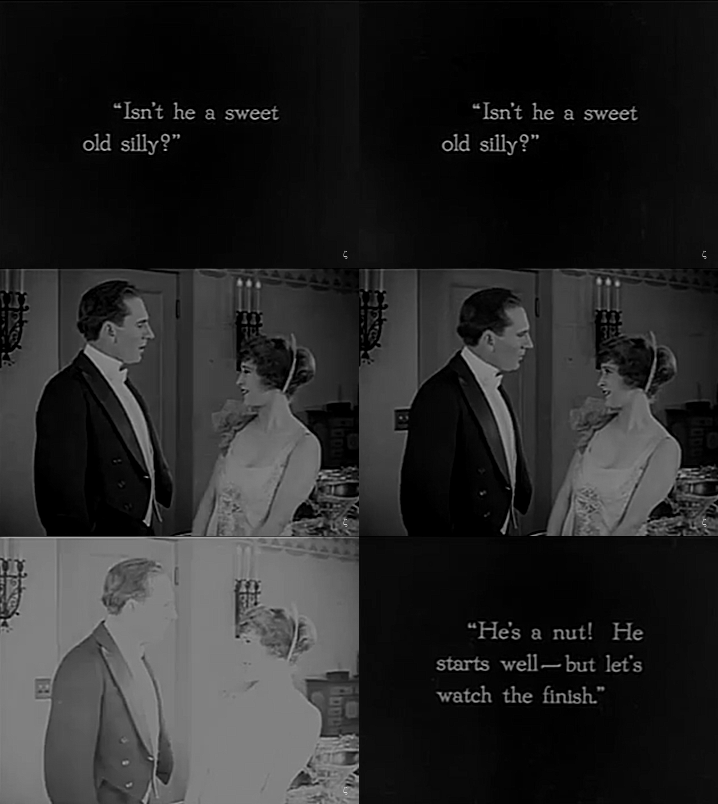
Uma das muitas cartelas de textos hilárias diz: “Talvez a necessidade seja a mãe de todas as invenções – mas o pai delas é um maluco”. Infelizmente, nós vemos todas essas invenções nos primeiros minutos. Eu estava esperando mais criações loucas, mas, com a evolução da história, Charlie teve de mostrar sua criatividade de outras maneiras – por exemplo, usando sua malsucedida máquina de incenso para criar a impressão de que um boneco de cera era um homem de verdade fumando.

One of the many hilarious title cards says: “Maybe necessity is the mother of all inventions – but the father of these is a nut.” Unfortunately, we see all those inventions in the first few minutes. I was expecting more zany creations, but as the story went on, Charlie had to show his creativity in other ways – for instance, using his failed incense machine to make a waxwork look like a real man smoking.


O Maluco” nos mostra que nerds também podiam ser heróis românticos muito antes de se tornar bacana ser nerd. O filme também mostrou que nem todas as mulheres precisam de um homem para salvá-las quando elas estão em perigo: algumas só precisam de alguém para apoiá-las. E “O Maluco” também mostrou que Fairbanks pode ter se tornado uma superestrela com seus filmes de capa e espada, mas foi com comédias modernas que ele começou – e ele se saía muito bem nelas.

The Nut” shows us that nerds could also be romantic heroes way before being nerd became cool. It also showed us that not all girls need a man to save them when they're in danger: some girls just need someone to show support. And “The Nut” also showed that Fairbanks may have became a superstar with his swashbuckler roles, but it was in modern-day comedies that he started and also excelled.

O Maluco” está disponível, sem legendas, no YouTube e Internet Archive.

The Nut” is available on YouTube and Internet Archive.

This is my contribution to the Reel Infatuation blogathon, hosted by Ruth and Maedez at Silver Screenings and Font and Frock.


Related Posts Plugin for WordPress, Blogger...