} Crítica Retrô: Max Linder

Tradutor / Translator / Traductor / Übersetzer / Traduttore / Traducteur / 翻訳者 / переводчик

Showing posts with label Max Linder. Show all posts

Friday, February 16, 2024

Seja Minha Mulher (1921) / Be My Wife (1921)

O IMDb lista 234 créditos para Max Linder como ator, mas provavelmente há muito mais. É difícil voltar no tempo e verificar seus primeiros papéis, como coadjuvante, na Pathé de 1905 em diante. Três anos depois, Max já era uma superestrela, mas quase uma década se passou antes da primeira vez de Max em Hollywood. Nessa primeira empreitada, ele fez alguns curtas-metragens para o estúdio Essanay. Max Linder voltaria para Hollywood para fazer três médias-metragens: Sete Anos de Azar (1921), O Mosqueteiro (1922) e este Seja Minha Mulher, também de 1921. Eu tomei como missão escrever sobre todos estes três médias-metragens. Aqui está a crítica que faltava.


IMDb lists 234 credits for Max Linder as an actor, but there are probably many more. It’s difficult to trace back to his first roles, as a supporting player, at Pathé starting in 1905. Three years later, Max was already a superstar, but nearly a decade passed before he had his first stint in Hollywood. This first time, he made some short films for Essanay. Max Linder would come back to Hollywood to make three five-reelers: Seven Years Bad Luck (1921), The Three Must-Get-Theres (1922) and this Be My Wife, also from 1921. As a huge Max Linder fan, I had to review all of his American featurettes. Here’s the review that was missing.

Max (Max Linder) está apaixonado por Mary (Alta Allen) e quer se casar com ela, mas a tia dela, Agatha (Caroline Rankin), não concorda com o casamento e preferiria que a sobrinha se casasse com Archie (Lincoln Stedman). Max se disfarça de professor de canto para se aproximar de Mary, mas só ganha a aprovação da família dela após demonstrar sua bravura. Na segunda metade do filme, entra a Madame Coralie (Rose Dione), costureira e vendedora de bebidas alcoólicas, e os personagens se alvoroçam por uma possível traição.


Max (Max Linder) is in love with Mary (Alta Allen) and wants to marry her, but her Aunt Agatha (Caroline Rankin) doesn’t agree with the marriage and would rather see her married to Archie (Lincoln Stedman). Max disguises as a voice teacher to be near Mary, but only wins over her family by showing his bravery. In the second half of the movie, enter Madame Coralie (Rose Dione), dressmaker and booze seller, and shenanigans about cheating.

Alta Allen também esteve em “Sete Anos de Azar” como a protagonista feminina, enquanto Caroline Rankin também aparece em “O Mosqueteiro” como a Rainha. Ambas têm aqui mais tempo em cena para mostrar talento para a comédia. Alta Allen nasceu com o nome de Alta Crowin em 1904 e atuou pela primeira vez no teatro aos dez anos de idade. Ela só fez dez filmes entre 1921 e 1926 e se casou com o gerente de produção e roteirista Hampton Del Ruth. Enquanto isso, Caroline Rankin nasceu em 1880 e fez 54 filmes, aparecendo sem receber créditos a partir da introdução do som no cinema.


Alta Allen was also in “Seven Years Bad Luck” as the leading lady, while Caroline Rankin also appeared in “The Three Must-Get-Theres” as the Queen. Both women have here more screen time to show their comedy skills. Alta Allen was born Alta Crowin in 1904 and had her first role in theater at age ten. She only made ten films from 1921 to 1926 and married production manager and writer Hampton Del Ruth. Meanwhile, Caroline Rankin was born in 1880 and made 54 films, appearing without receiving credit in talkies.

Na primeira metade do filme, outra estrela é o cachorro Pal. Ele fez 50 filmes tendo começado aos quatro anos em 1921. Pal rapidamente se tornou um dos favoritos do público tanto em curtas quanto em longas-metragens. Ele não deve ser confundido com outro cachorro chamado Pal, um Collie que foi um dos primeiros cães a interpretar Lassie.


In the first half of the movie, another star is the dog Pal. He appeared in 50 movies starting in 1921, aged four. Pal quickly became an audience favorite in both shorts and features. He must not be mistaken for another dog named Pal, a Collie that was one of the first dogs to play Lassie.

Escrito e dirigido pelo astro Max Linder, “Seja Minha Mulher” foi também produzido por Linder, e distribuído pela Goldwyn, que três anos depois sofreria uma fusão e se transformaria na Metro-Goldwyn-Mayer. Samuel Goldwyn, nascido em Varsóvia, Polônia, chegou aos EUA em 1899 para vender luvas. Em 1913, tendo sucesso em sua profissão, ele foi um dos co-fundadores da Paramount Pictures, e no ano seguinte a companhia lançou o primeiro curta-metragem rodado em Hollywood. Ele fundou a Goldwyn Pictures em 1916, e a MGM herdou a maior marca registrada da companhia: a presença do leão Leo no começo de cada filme.


Written and directed by its star Max Linder, “Be Me Wife” was also produced by Linder, and distributed by Goldwyn, who three years later would merge and form Metro-Goldwyn-Mayer. Samuel Goldwyn, born in Warsaw, Poland, arrived in the US in 1899 to sell gloves. In 1913, being successful in his métier, he was one of the co-founders of Paramount Picture, and the following year the company released the first feature-length film shot in Hollywood. He formed Goldwyn Pictures in 1916, and MGM inherited the most prominent thing from the company: Leo the Lion in the beginning of each film.

Quando este filme foi exibido na TV, foi acompanhado de um aviso dizendo que era um produto do seu tempo, e agora o preconceito não tem mais lugar nos filmes. Isto se refere a duas cenas: primeiro, há um caso de gordofobia durante um desfile de modelos, mais tarde um Max bêbado flerta com uma empregada negra. Mary até vai mais longe e diz que “vai encontrar um chinês ou um índio” para que ela também traia o marido. Ambas as sequências foram, obviamente, concebidas com o humor em mente, mas agora mostram como estereótipos não podem ser - e esperamos que não sejam - reproduzidos no cinema.


When this movie was shown on TV, it was accompanied by a disclaimer saying that it was a product of its time, and now prejudice doesn’t find a place in the movies anymore. This is about two scenes: first, there is fat-shaming during a model show, later a drunk Max flirts with a black maid. Mary even goes further saying that she was “going to find a Chinaman or a Redskin” for herself to cheat too. Both sequences were, of course, made for laughs, but now show stereotypes that can’t - and hopefully won’t - be reproduced on film anymore.

“Seja Minha Mulher” foi o segundo filme a estrear na segunda tentativa de Max de conquistar Hollywood. Eu o considero o menos engraçado do trio, mas ainda assim adorável. Não tem a icônica sequência do espelho de “Sete Anos de Azar” nem os trocadilhos e subversões históricos de “O Mosqueteiro”, mas ainda conta com boas performances e uma bela sequência coreografada na venda de bebidas alcoólicas. E o mais importante: material suficiente para transformar qualquer um num fã de Max Linder.


“Be My Wife” was the second film released in Max’s second attempt in Hollywood. I found it to be the least funny of the trio, but still enjoyable. It doesn’t have the iconic mirror sequence from “Seven Years Bad Luck” nor the historical puns and subversions from “The Three Must-Get-Theres”, but still has good performances and a great choreographed sequence at the booze seller. And the most important: just enough material to convert anyone into a Max Linder fan. 

Friday, March 31, 2023

O Mosqueteiro (1922) / The Three Must-Get-Theres (1922)


Quanto de ação pode ser contida em alguns minutes de projeção de um filme? Se você é fã de filmes mudos, você sabe que a resposta para esta pergunta é MUITA AÇÃO. Há milhares de exemplos de filmes de um ou dois rolos cheios de ação feitos na era muda. Mas hoje vamos além deles e analisamos um filme de cinco rolos cheio de ação feito por Max Linder - seu mais conhecido trabalho filmado em Hollywood.

How much action can you pack in a few minutes of film? If you are a silent movie fan, you know the answer is A LOT. There are thousands of examples of action-packed one-reelers and two-reelers in silent cinema. But today we go beyond and analyze an action-packed five reeler by Max Linder - his best known effort in Hollywood.

Dart-In-Again (Max Linder) recebe uma espada de seu pai e sai para conquistar o mundo. Seu destino é Paris, onde reina o Rei Luís XIII (Frank Cooke). Há diversas intrigas em andamento na corte: a Rainha Anne (Caroline Rankin) tem um amante, enquanto o conselheiro do rei, Cardeal Richie-Loo (Bull Montana), está conspirando contra o monarca.

Dart-In-Again (Max Linder) receives a spear from his father and leaves to conquer the world. His destination is Paris, where King Louis XIII (Frank Cooke) reigns. There are several intrigues going on at the court: Queen Anne (Caroline Rankin) has a lover, while the King’s counselor Cardinal Richie-Loo (Bull Montana) is conspiring against the King.

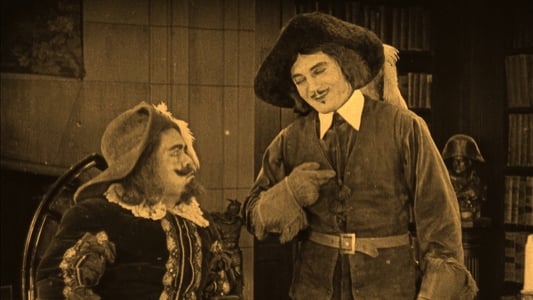
Dart-In-Again demonstra sua bravura e seus movimentos com a espada e é aceito como um dos Mosqueteiros do Rei. Ele recebe como sua primeira missão uma viagem para a Inglaterra para recuperar as jóias semipreciosas da Rainha que estão com o amante dela. Mas o Cardeal Richie-Loo tentará impedir que Dart-In-Again cumpra sua missão.

Dart-in-Again showcases his bravery and his moves with the sword and is accepted as the fourth of the King’s Musketeers. He receives as his first mission a trip to England to recover the Queen’s semi-precious jewels that are currently with her lover. But the Cardinal Richie-Loo will try to stop Dart-In-Again from accomplishing the recovery.

É óbvio que “O Mosqueteiro” é uma paródia de “Os Três Mosqueteiros” de Douglas Fairbanks, que estreou em agosto de 1921. O filme de Max Linder estreou um ano depois, em setembro de 1922 e, apesar de não ser tão atlético quanto Fairbanks, Linder consegue exibir suas habilidades como acrobata. Ele interpreta Dart-In-Again não como um bobo para alívio cômico: na verdade, o personagem se mostra mais esperto que o cardeal e seus capangas.

It’s obvious that “The Three Must-Get-Theres” is a spoof of Douglas Fairbanks’ “The Three Musketeers”, that premiered in August 1921. Max Linder’s film premiered one year later, in September of 1922, and, although not as athletic as Fairbanks, Linder manages to show off his skills as an acrobat. He plays Dart-In-Again not like a fool for comic purposes: in fact, Dart outsmarts the Cardinal and many of his foes.

O que é sim usado como alívio cômico são os anacronismos: podemos ver durante o filme diversos equipamentos - que não haviam ainda sido inventados na época do Rei Luís XIII - sendo usados pelos personagens, como o telefone em várias cenas, a máquina de escrever e a motocicleta.

What is actually used for comic purposes is anachronism: we can see throughout the movie several gadgets - that were not yet invented by the time of Louis XIII - being used by the characters, like the telephone in several moments, the typing machine and the motorcycle.

Como Connie Bonne-aux-Fieux, a criada particular da Rainha e sua confidente, temos uma atriz que foi popular na era muda, mas está quase esquecida atualmente: Jobyna Ralston. Este é um de seus primeiros filmes e ela encontraria a fama como protagonista dos filmes de Harold Lloyd a partir de 1923. Um de seus mais famosos papéis é o de Sylvia Lewis em “Asas” (1927). Depois de três filmes falados, ela abandonou o cinema, pois estava casada com seu colega de elenco de “Asas”, Richard Arlen.

As Connie Bonne-aux-Fieux, the Queen’s chambermaid and confidant, we have an actress popular in the silent era, but nearly forgotten today: Jobyna Ralston. This is one of her first movies and she would find more fame as Harold Lloyd’s leading lady starting in 1923. One of her best known roles is Sylvia Lewis in “Wings” (1927). After three talkies, she left the movie business, as she was now married to her “Wings” co-star Richard Arlen.

Max Linder foi verdadeiramente a primeira estrela de cinema internacional. Ele começou como coadjuvante  para os estúdios Pathé em 1905, e em 1911 já estava escrevendo e co-dirigindo curtas em que interpretava Max, um homem elegante sempre em apuros. Seus curtas eram sucesso por toda parte, mas veio a guerra e Max foi lutar pela França. Ele se envolveu em um sério acidente de carro, e sua vida nunca mais foi a mesma. A depressão crônica surgiu em sua vida naquele momento e jamais abandonou Max, causando problemas para trabalhar e por fim matando Max em um suicídio em 1925.

Max Linder was truly the first international movie star. He started as a supporting player for Pathé shorts in 1905, and by 1911 was already writing and co-directing shorts in which he played Max, a dapper gentleman always in trouble. His shorts found success everywhere, but the war came and Max went to fight for France. He was involved in a serious car crash, and his life was never the same again. Chronic depression appeared at the time in Linder’s life and would never leave him, causing trouble to work and ultimately killing him in a suicide in 1925.

“O Mosqueteiro” é um dos três médias-metragens feitos por Max Linder em Hollywood com sua própria produtora, sendo os outros dois “Sete Anos de Azar” e “Seja Minha Mulher”, ambos de 1921. Linder produziu, escreveu e dirigiu o filme. Ele demonstra perfeito domínio da língua inglesa, fazendo jogos de palavras com os nomes de seu e de outros personagens, além de adicionar diversos trocadilhos às cartelas de texto. Infelizmente, muitos destes trocadilhos se perdem com a tradução: na versão a que eu assisti, o tradutor escolheu eliminar todos os nomes com trocadilhos, usando no lugar os nomes reais dos personagens verídicos e dos mosqueteiros.

“The Three Must-Get-Theres” is one of three featurettes made by Max Linder in Hollywood under his own production company, the two others being “Seven Years Bad Luck” and “Be my Wife”, both from 1921. Linder produced, wrote and directed the film. He shows perfect knowledge of the English language, doing wordplay with his and other characters’ names, as well as adding several puns to the title cards. Unfortunately, many of these puns get lost in translation: in the version I saw, the translator chose to eliminate all punny names, using instead the real names of historical characters and the musketeers.

No começo do filme aparece um aviso de que a versão norte-americana do filme se perdeu, e o que podemos ver hoje é uma restauração feita usando como base a versão no Netherlands Filmmuseum. A restauração e gravação da nova trilha sonora foram feitas em 2008. Não há por que se perguntar qual a causa do desaparecimento da versão norte-americana: o filme não foi um sucesso de bilheteria, o que deixou Linder desapontado e achando que ele não era mais engraçado.

In the beginning of the film, there is a disclaimer that the American version of the film has disappeared, and what we can see today is a restoration made using as basis the version at the Netherlands Filmmuseum. The restoration and recording of the new soundtrack were made in 2008. There is no wonder to why the American version of the film disappeared: it wasn’t a box-office success, which left Linder disappointed and thinking he just wasn’t funny anymore.

Admirado por Charles Chaplin - que se referia a ele como “Professor” em algumas fotos autografadas - Max Linder merece o reconhecimento que vem recebendo agora, mais de um século após experimentar pela primeira vez o estrelato. Se você nunca viu Linder em ação, ou se ainda tem dúvidas sobre por que ele foi a primeira estrela de cinema internacional, não precisa procurar outro filme: “O Mosqueteiro” foi totalmente concebido por ele e é uma amostra perfeita do talento único que Linder tinha para a comédia.

Admired by Charles Chaplin - who called him his “Professor” in some autographed photos - Max Linder deserves the recognition he is receiving now, more than a century after he first experienced stardom. If you have never seen Linder in action, or if you still have doubts about why he was the first international movie star, look no further: “The Three Must-Get-Theres” is wholly his brainchild and a perfect showcase of Linder’s unmatched talent for comedy.

Monday, October 18, 2021

Sete Anos de Azar (1921) / Seven Years Bad Luck (1921)


Você é supersticioso? Devo confessar que sou um pouquinho supersticiosa - não gosto muito do número sete, por exemplo. Pessoas muito supersticiosas são uma inspiração para o cinema desde a era muda: o IMDb lista mais de mil filmes com a palavra-chave “superstição”. Alguns destes filmes são comédias sobre o quão absurdo é ser supersticioso, que é o caso de “Sete Anos de Azar”, de Max Linder.

Are you superstitious? I must confess that I’m a bit superstitious - I don’t really like the number seven, for instance. Very superstitious people have been a big inspiration for films since the silent era: IMDb lists over one thousand movies with the keyword “superstition”. Some of these films are comedies about the absurdity of being too superstitious, which is the case of Max Linder’s “Seven Years Bad Luck”.

Praticamente todo mundo conhece a superstição que diz respeito a quebrar um espelho e ter sete anos de azar. No filme, Max (Max Linder) é um homem que está prestes a se casar. Sua criada e mordomo quebram seu espelho e o substituem, mas Max quebra o espelho e fica apreensivo com o mau presságio.

Practically everybody knows the superstition about breaking a mirror and this bringing you seven years bad luck. In the movie, Max (Max Linder) is a man about to be married. His maid and butler break his mirror and replace it, but Max breaks it again and gets nervous because of the bad omen.

De início, a superstição mostra-se verdadeira, pois Max briga com sua noiva Betty (Alta Allen) e vai para o campo, criando uma oportunidade para que seu melhor amigo (F.B. Crayne) roube sua garota. Max é roubado antes de pegar um trem, e isso leva a várias estripulias numa estação de trem, no zoológico e na cadeia - e há até uma sequência de sonho!

Initially the superstition proves to be true, as Max has a fight with his fiancée Betty (Alta Allen) and goes to the countryside, creating an opportunity for his best friend (F.B. Crayne) to steal his fiancée. Max is robbed before he gets in the train, and this leads to various shenanigans in a train station, a zoo and a jail - and there is even a dream sequence!

Design de cartelas de títulos era uma arte, e isto pode ser visto em “Sete Anos de Azar”: sempre que um personagem fala ao telefone, a cartela de texto tem as palavras emolduradas por linhas telefônicas. É algo simples mas muito eficiente que adiciona charme ao filme.

Title card design was an art, and this can be seen in “Seven Years Bad Luck”: whenever a character was talking on the phone, the title card has the words framed by drawings of phone lines. It’s something simple yet very effective that adds charm to the movie.

No comecinho do filme há a famosa cena cômica do espelho, mais tarde feita pelos irmãos Marx e também por Lucille Ball. A origem da cena dos espelhos é a peça “My Friend from India”, de 1894. Max Linder tentou filmar esta cena já em 1911, mas a dupla alemã dos irmãos Schwartz ameaçou processá-lo por copiar o show deles. Eles de fato processaram Max quando “Sete Anos de Azar” estreou, mas o caso nunca foi julgado.

In the very beginning of the movie there is the famous mirror comedy routine, done later by the Marx brothers and also by Lucille Ball. The origin of the mirror routine is the play “My Friend from India”, first staged in 1894. Max Linder tried to add this routine to a film as early as 1911, but the German duo Schwartz Brothers threatened to sue him for copying their act. They did sue Max when “Seven Years Bad Luck” was released, but the case never made it to the court.

Max Linder pode ser considerado o primeiro astro internacional do cinema. Ele fez seu primeiro filme em 1905 e em 1912 era o atos mais bem pago do mundo, conhecido por todo o globo graças ao seu personagem Max, um homem elegante. Havia um star system rudimentar construído ao redor de Max já em 1909. Desde 1908 ele também dirigia e escrevia alguns de seus filmes. Linder teve duas fases da carreira nos EUA: da primeira vez ele fez três curtas-metragens para a Essanay entre 1916 e 1917, e nesta segunda vez ele fez três longas-metragens que foram mal recebidos na época, mas que hoje são considerados clássicos da comédia.

Max Linder can be considered the first international movie star. He made his first movie in 1905 and in 1912 was the highest paid actor in the world, recognized all over the globe thanks to his character Max, a dapper man. There was a rudimentary star system built around him as early as 1909. Since 1908 he also directed and wrote some of his movies. Linder had two phases of filmmaking in the US: the first time he did three shorts for Essanay between 1916 and 1917, and in this second time he made three features that were poorly received at the time, but are now considered comedy classics.

Outra comédia muda sobre superstição é “O Supersticioso” (1919), estrelando Douglas Fairbanks como Daniel Boone Brown, um homem muito supersticioso que se torna vítima de um psiquiatra do mal. Este filme é famoso por outra cena curiosa: a do quarto que gira, que seria repetida por Fred Astaire em 1951.

Another silent comedy about superstition is “When the Clouds Roll By” (1919), starring Douglas Fairbanks as Daniel Boone Brown, a very superstitious man who becomes the victim of an evil psychiatrist. This film is famous for another visual routine: the one of a revolving bedroom, that would be done again by Fred Astaire in 1951.

Como dito anteriormente, “Sete Anos de Azar” teve um mau desempenho nas bilheterias mas foi elogiado pelos críticos na época da estreia. Com apenas 62 minutos, tem muitos momentos cômicos, dignos de gargalhada. É também uma introdução perfeita ao gênio Max Linder, que merece mais reconhecimento - afinal, o primeiro astro internacional do cinema não pode simplesmente desaparecer. Seria muito azar se Max fosse esquecido.

As stated, “Seven Years Bad Luck” did poorly at the box-office but was praised by critics when it was released. At only 62 minutes, it packs plenty of comic, laugh-out-loud moments. It’s also a perfect introduction to the genius of Max Linder, who deserves to be more recognized - after all, the first international movie star can’t simply disappear. It’d be the worst luck if Max was forgotten.

This is my contribution to the Laughter is the Best Medicine blogathon, hosted by the Classic Movie Blog Association.

Sunday, May 3, 2015

12 curtas-metragens mudos para alegrar seu dia

12 silent shorts to brighten your day

Você acordou atrasado para o trabalho? Tirou uma nota ruim naquela prova da faculdade? Seu cachorro comeu um pé do seu chinelo favorito? Você acabou de comprar um sorvete e o derrubou inteiro no chão? Em suma, você teve um dia ruim? Não se preocupe, porque eu tenho o remédio: você estará alegre novamente em menos de 30 minutos com estas pequenas e infalíveis comédias feitas há mais de 90 anos.

Did you wake up and discovered you were late for work? Did you get a bad grade at a college test? Did your dog eat your favorite slipper? Did you drop the ice cream you had just bought? Did you have a bad day? Don't worry, because I have the solution: you'll be happy again in less than 30 minutes with these short and infalible comedies made more than 90 years ago.

Os primeiros filmes da história do cinema (e, via de regra, os primeiros filmes das carreiras de grandes diretores) são curtas-metragens. Se as primeiríssimas projeções, ainda do século XIX, tinham apenas alguns segundos, nas primeiras décadas do século XX elas ficaram cada vez mais longas, elaboradas e divertidas. Comédias mudas de curta-metragem são doses de humor na medida certa para qualquer espectador.

The first films in move history (and, more often than not, the first film in the director's careers) are short films. If the very first exhibitions, still in the 19th century, lasted only a few seconds, in the first decades of the 20th century they became longer, more ellaborated and funnier. Short silent comedies are dosis of doozy perfect for any audience.

Aperte o play, você não vai se arrepender!

Press play and you won't regret it!

The Drunken Mattress (1906): Começamos com um filme dirigido por uma mulher, a pioneira Alice Guy-Blaché. Um homem bêbado (já aviso que mais filmes da lista incluem bêbados) entra em um colchão que está sendo fabricado. Depois de costurado, o colchão apresenta um comportamento estranho (eu não acredito que eu escrevi isto).

The Drunken Mattress (1906): we start with a film direct by a woman, the pioneer Alice Guy-Blaché. A drunken man (I'll already tell you that more films in this list involve drunken men) enters a mattress about to be sewn. After being sewn, the mattress has a weird behavior (I can't believe I wrote that).


The ? Motorist (1906): Ele não arranca muitas risadas, mas impressiona pelos efeitos especiais. Se Méliès havia ido à Lua em 1902, quatro anos depois W.R. Booth leva seus personagens não apenas para a Lua (que, novamente, tem um rosto animado), mas também pelos anéis de Saturno! Se piscar você perde um detalhe delicioso desta comédia primitiva.

The ? Motorist (1906): it may not be so funny, but it is a film with impressive special effects. If Méliès had traveled to the moon in 1902, four years later W.R. Booth takes his characters not only to the moon (who has an animated face once again), but also to the Saturn's rings! If you blink I'll miss a delightful detail in this early comedy.


Max takes tonics (1911): O ator francês Max Linder foi o primeiro grande astro internacional da comédia cinematográfica. A persona criada por ele é um homem muito elegante e louco por mulheres, que tem problemas por seus excessos. Em seu melhor filme, Max precisa tomar vinho como remédio, mas exagera na dose e acaba bêbado – e confuso.

Max takes tonics (1911): French actor Max Linder was the first big international comedy film star. His persona was of a very fancy man, a womanizer always in trouble for his excesses. In his best film, Max has to take wine as a medicine, but he exaggerates and ends up drunk – and confused.


An Interrupted Elopement (1912): Mabel Normand quer se casar com seu namorado, mas o pai dela não quer ver a filha casada com um “chorão”. Os amigos do pobre moço apaixonado sugerem que o casal fuja e oficialize a união com um padre. Mas o pai da moça vai atrás deles.

An Interrupted Elopement (1912): Mabel Normand wants to marry her boyfriend, but her father doesn't want to see his daughter married to a “cry-baby”. His friends suggest an elopement, but Mabel's father goes after the couple.


Pool Sharks (1915): O tema principal de muitas comédias (e outras obras de arte em geral) é o amor. E, em seu primeiro filme, W.C. Fields disputa o amor de uma mulher através de um jogo de sinuca. Apesar de ter um final abrupto, as sequências da sinuca fazem o filme valer a pena – mesmo que você não goste de jogar sinuca.

Pool Sharks (1915): The main theme of many comedies (and other art works in general) is love. And, in his film debut, W.C. Fields fights for the love of a woman through a pool game. Even though the film has an abrupt ending, the pool sequences make it worth watching – even if you don't enjoy playing pool.

One AM (1916): Esqueça o personagem vagabundo. Aqui Charles Chaplin chega tarde (e bêbado) à sua luxuosa casa. Poucos cenários, muitos obstáculos e apenas Chaplin em cena: os ingredientes para o melhor curta-metragem do ator (na minha humilde opinião).

One AM (1916): Forget the Tramp character. Here Charles Chaplin arrives late (and drunk) to his mansion. Few sets, a lot of obstacles and only Chaplin on the screen: the ingredients for the best short film in his career (in my humble opinion).


Coney Island (1917): Este é um filme de Fatty Arbuckle, mas sabe o que realmente importa? É que aqui Buster Keaton, o homem da cara de pedra, não apenas ri, mas gargalha... duas vezes!

Coney Island (1917): This is a Fatty Arbuckle vehicle, but do you know what really matters? It's that in this film Buster Keaton, the great stone face, not only smiles, but laughs... twice!

Ask Father (1919): Harold Lloyd quer apenas perguntar ao pai da mulher que ama se ela pode se casar com ele. Mas o homem é muito ocupado e trabalha em um escritório difícil de se infiltrar, cheio de funcionários e até armadilhas. E prova que Harold gostava de escalar prédios bem antes de “O Homem-Mosca”.

Ask Father (1919): Harold Lloyd only wants to ask for his girlfriend's hand for her father. But the old man is very busy and works in an office hard to get in, full of employees and traps. This film proves that Harold enjoyed climbing buildings way before “Safety Last!”.


The Electric House (1922): Esta lista poderia conter apenas filmes do genial Buster Keaton, mas preferi escolher apenas uma pequena e deliciosa comédia. O que acontece aqui é que Keaton, recém-formado, é contratado para projetar uma casa extremamente moderna. O problema é que ele não é engenheiro, houve uma confusão em uma troca de diplomas, mas ele aceita o desafio assim mesmo.

The Electric House (1922): this list could only have films from genius Buster Keaton, but I decided to choose only one little and delightful comedy. What happens here is that Keaton, recently graduated from college, is hired to build a very modern house. The trouble is that he is not an engineer, there was a mistake involving his diploma, but he decides to get the job.


Felix in Hollywood (1923): Este filme é o máximo. O gato Félix (ele mesmo que você está pensando) vai a Hollywood com seu dono, um aspirante a ator, e lá conhece as versões animadas de Charles Chaplin, Ben Turpin, Gloria Swanson, Douglas Fairbanks e William S. Hart.

Felix in Hollywood (1923): This film is wonderful. Felix the cat (yes, THAT Felix the cat) goes to Hollywood with his owner, an aspiring actor, and there he meets animated versions of Charles Chaplin, Ben Turpin, Gloria Swanson, Douglas Fairbanks and William S. Hart.


It’s a Gift (1923): Conheci este curta divertido através de um trabalho detetivesco que me foi dado pelo leitor Martin Carone dos Santos. Ele queria saber qual comediante do cinema mudo era chamado de “cara linda” no Brasil. Depois de uma pequena descrição de um filme com ele, descobri a identidade do “cara linda”: é Snub Pollard, que aqui interpreta o excêntrico cientista que inventa um carro movido a ímã.

It's a Gift (1923): I got to know this fun short through an investigative work that a reader gave me. He wanted to know which silent comedian was nicknamed “pretty face” in Brazil. After a small description of a film starring him, I discovered the true identity of “pretty face”: he is Snub Pollard, who plays in this film the ecentric scientist who invents a car powered by a magnet.


Leave 'Em Laughing (1928): um humor simples, que agrada a todas as pessoas, de todas as idades. Com Leo McCarey como assistente de direção, o curta-metragem apresenta Stan Laurel com dor de dente (esta é a origem da bela foto que enfeitava o apartamento de Joey e Chandler em FRIENDS) e os efeitos que o gás hilariante do dentista causam na dupla de amigos. Mas fica a dúvida: por que Laurel e Hardy dormem na mesma cama?

Leave 'Em Laughing (1928): a simple humor that pleases people of any age, from any place. With Leo McCarey as assistant director, the short film has Stan Laurel with a toothache (this is the origin of the big photo hanging in Joey and Chandler's apartment in FRIENDS) and the effects that the laughing gas used by the dentist cause in the duo. But there is still a doubt: why do Laurel and Hardy sleep in the same bed?


This is my contribution to Shorts! A Tiny Blogathon, hosted by blogathon Jedi Fritzi at Moveis, Silently.
Related Posts Plugin for WordPress, Blogger...