} Crítica Retrô: 1970

Tradutor / Translator / Traductor / Übersetzer / Traduttore / Traducteur / 翻訳者 / переводчик

Showing posts with label 1970. Show all posts

Wednesday, November 26, 2025

Os Abutres Têm Fome (1970) / Two Mules for Sister Sara (1970)


A expectativa de vida vem crescendo e hoje temos muitas pessoas vivendo para além dos 90 anos de idade, incluindo algumas pessoas famosas. Algumas delas ainda estão trabalhando, e outras aproveitando a aposentadoria. Clint Eastwood pertence ao primeiro grupo, de nonagenários ativos, enquanto Shirley MacLaine pode não ser tão ativa quanto ele, com sua última aparição tendo sido em “Only Murders in the Building”. Cinquenta e cinco anos atrás, eles formaram uma estranha dupla no faroeste “Os Abutres Têm Fome”.

Life expectancy is growing and now we have many people living over the barrier of 90 years old, including some famous people. Some of them are still working, some are enjoying their retirement. Clint Eastwood belongs to the first group, of active nonagenarians, while Shirley MacLaine may not be as active as he is, but she still acts, with her last appearance being in “Only Murders in the Building”. Fifty-five years ago, they formed an unlikely duo in the western “Two Mules for Sister Sara”.

Numa terra cheia de animais peçonhentos e esqueletos, um caubói resgata uma mulher de um trio que queria estuprá-la e matá-la. O caubói é Hogan (Clint Eastwood) e a mulher, surpreendendo a ele e ao público, é uma freira chamada Irmã Sara (Shirley MacLaine). A freira está em fuga: fugindo do exército francês porque eles descobriram que ela estava ajudando o exército mexicano.  

In a land full of poisonous animals and skeletons, a cowboy rescues a woman from a trio that wanted to rape and kill her. The cowboy is Hogan (Clint Eastwood) and the woman, a surprise for him and the audience, is a nun called Sister Sara (Shirley MacLaine). The nun is on the run: she’s running away from the French army because they found out that she was helping the Mexican army.

Esta dupla estranha bola um plano: ele quer ir até Chihuahua, de onde ela partiu, e destruir o quartel-general francês que fica lá. Eles têm oito dias para executar o plano. Isso muda quando eles ficam sabendo de um trem com carregamento para os franceses e decidem, juntos, explodir uma ponte. Mas não se engane: isso é só uma pequena mudança de rota!

This unlikely duo comes up with a plan: he wants to go to Chihuahua, where she came from, and destroy the French headquarters there. They have eight days to execute the plan. This shifts when they learn about a train carrying goods for the French, and instead decide to, together, blow up a bridge. But don’t be fooled: this is just a small detour!

Hogan pensa que uma mulher como Sara ser freira é um “desperdício” e, uma vez bêbado, confessa seus sentimentos pela Irmã Sara numa sequência tensa na qual pensamos que ele vai beijá-la, afinal, eles estão perigosamente perto. Mas ela é uma mulher de fé e uma mulher razoável: ela sabe que as palavras dele podem vir do coração, mas só saíram por causa do álcool. 

Hogan thinks that a woman like Sara being a nun is a “waste” and, when drunk, confesses his feelings for Sister Sara in a tense sequence in which we think he will kiss her, after all, they’re dangerously close. But she is a woman of faith and also a reasonable woman: she knows his words may come from his heart, but we’re only enabled by the alcohol.

Uma atriz proeminente desde o fim dos anos 1950, Shirley MacLaine vê seu nome primeiro nos créditos e após ela, mas ainda acima do título, vem Clint Eastwood. Em “Os Abutres Têm Fome”, Shirley fala inglês, obviamente, mas também um pouco de francês e espanhol com forte sotaque. O papel havia sido oferecido primeiro para Elizabeth Taylor, que o recusou, e Shirley MacLaine não se deu bem com o diretor Don Siegel. 

A prominent actress since the late 1950s, Shirley MacLaine is first billed and behind her, but still above the title, comes Clint Eastwood. In “Two Mules for Sister Sara”, Shirley speaks English, of course, but also a bit of French and Spanish with a heavy accent. The role was first offered to Elizabeth Taylor, who turned it down, and Shirley MacLaine didn’t get along with director Don Siegel.

A música é do grande Ennio Morricone, que na época já tinha carreira sólida. Ele fez a trilha de mais de 550 filmes e séries de TV, começando sua carreira no cinema em 1961. Sobre seu começo, ele declarou: “Meus primeiros filmes foram comédias leves ou filmes que época que precisavam de trilhas simples que eram facilmente criadas, um gênero que eu nunca abandonei por completo quando fui trabalhar em filmes muito mais importantes com grandes diretores”. Como sempre, sua trilha é um ponto alto em “Os Abutres Têm Fome”.

The music is by the great Ennio Morricone, who at the time had already a solid career. He scored more than 550 films and TV shows, starting his film career in 1961. He talked about his beginnings: "My first films were light comedies or costume movies that required simple musical scores that were easily created, a genre that I never completely abandoned even when I went on to much more important films with major directors". As always, Morricone’s score is a high point in “Two Mules for Sister Sara”.

O diretor Don Siegel começou sua carreira no cinema como bibliotecário no acervo da Warner Bros e aprendeu a editar no estúdio. Ele trabalhou em diversos gêneros, tanto em filmes B como em “filmes A”. Sua primeira colaboração com Clint Eastwood foi em”Meu Nome é Coogan” em 1968. Juntos eles fizeram cinco filmes e o faroeste de Clint “Os Imperdoáveis”, que estreou um ano após a morte de Siegel, foi dedicado ao mentor.

Director Don Siegel started his film career as a film librarian at Warner Bros and learned editing there. He worked in a plethora of genres, both B-movies and A-listers. His first collaboration with Clint Eastwood was in “Coogan’s Bluff” in 1968. Together they made five movies and Clint’s western “Unforgiven”, released one year after Siegel’s death, was dedicated to his mentor.

“Os Abutres Têm Fome” foi filmado no México, e isso pode ser notado pelos créditos, com todos os latinos em papéis coadjuvantes. A história se passa quando os franceses estavam forçando para que o México se tornasse colônia francesa, após a Guerra Civil Americana. A Irmã Sara está ajudando os Juaristas, isto é, os seguidores do político Benito Juárez García, que se tornaria o primeiro presidente indígena do México. Como sempre, cinema também é cultura!

“Two Mules for Sister Sara” was filmed in Mexico, and a hint is in the credits with all the Latinos in supporting roles. The story is set when the French were forcing Mexico to become their colony following the American Civil War. Sister Sara is aiding the Juaristas, that is, the followers of politician Benito Pablo Juárez García, who would become the first Indigenous president of Mexico. As always, cinema is also culture!

Não importa se você acredita em milagres como a Irmã Sara ou apenas em acidentes como Hogan: se você gosta de faroestes, e faroestes dirigidos por mestres como Don Siegel, “Os Abutres Têm Fome” deveria estar no seu radar. Já que todo mundo tem direito de ser um otário uma vez, não desperdice sua chance ao deixar passar este filme!

No matter if you believe in miracles like Sister Sara or only in accidents like Hogan: if you like westerns, and westerns directed by masters such as Don Siegel, “Two Mules for Sister Sara” should be in your radar. Since everybody has the right to be a sucker once, don’t waste your chance by not watching this movie!

Friday, August 29, 2025

Caminhando Sob a Chuva de Primavera (1970) / A Walk in the Spring Rain (1970)


Quando dois ícones do cinema se encontram, a Magia pode acontecer. Não estamos falando de “all-star movies”, mas do simples encontro de dois artistas celebrados. Como quando a ganhadora de três Oscars Ingrid Bergman (então com apenas dois prêmios) encontrou o ganhador de dois Oscars Anthony Quinn, ambos se aproximando do fim de suas carreiras - mas ainda tão bons como sempre foram. O filme em questão é “Caminhando Sob a Chuva de Primavera” (1970)

When two cinema icons meet, Magic can happen. We’re not talking about the “all-star movie”, but the simple encounter of two celebrated performers. Like when three-time Oscar winner Ingrid Bergman (then with only two awards under her belt) met the two-time Oscar winner Anthony Quinn, both nearing the end of their careers - but still as good as ever. The film was “A Walk in the Spring Rain” (1970).

O professor universitário Roger Meredith (Fritz Weaver) e sua esposa Libby (Ingrid Bergman) são aparentemente um casal feliz e têm uma filha que quer voltar a estudar para se tornar advogada, algo que seu pai desaprova. Aqui estamos: já com asco deste personagem. O casal decide tirar um ano sabático nas montanhas, por isso alugam uma cabana administrada por Will Cade (Anthony Quinn). O novo trio bebe e canta junto, Will consegue para o casal dois cabritinhos e tudo parece correr bem. Até que vem o choque.

College professor Roger Meredith (Fritz Weaver) and his wife Libby (Ingrid Bergman) are apparently happily married and have a daughter who wants to go back to school to become a lawyer, something her father disapproves of. Here we are: already disliking this character. The couple decides to spend a sabbatical in the mountains, so they rent a cabin managed by Will Cade (Anthony Quinn). The newly-formed trio drinks and sings songs together, Will gets them a couple of baby goats and everything seems to be alright. Until it isn’t.

Do jeito mais natural possível, numa conversa casual, Will diz a Libby que a ama. Ele não se importa se for um sentimento unilateral - tudo bem se o amor não for correspondido. O problema é que ela também sente algo mais por ele - mesmo eles podendo ser “amantes inadequados”. O problema maior é que o filho encrenqueiro dele vê os dois juntos.

In the most natural way, in a casual conversation, Will tells Libby that he loves her. He doesn’t care if it is a one-way infatuation - he’s fine even if she doesn’t love him back. The issue is that she also has feelings for him - even though they might be “unsuitable lovers”. The bigger issue is that his troublemaker son sees them together.

O arco narrativo de um filho não concordar com o relacionamento de seu pai ou mãe com outra pessoa é comum e pode ser encontrado em muitos livros, filmes e novelas. O personagem que aqui desaprova o romance alheio, o filho de Will, nos é apresentado rolando na neve durante uma briga causada por ciúmes. É outro personagem de quem não gostamos de cara.

The plot element of having someone’s child disapproving of the relationship between his/her father or mother with someone else is common and can be found in several books, movies and soap operas. The character here who is bitter with others’ romance, Will’s son, is first shown rolling in the snow in a fistfight over a woman. It’s another character who we dislike from the start.

Eu ri alto quando Libby contou para Will que seu marido está escrevendo um livro e o homem perguntou “para quê? Você já tem livros suficientes”. Estou fazendo um curso de escrita criativa e sei por experiência que nós escritores somos nossos primeiros leitores e mais severos críticos. Nós devemos escolher como contar uma história, que pode ter sido contada antes, e devemos julgar e validar nossas escolhas o tempo todo. Para fazer isso, devemos ser como Roger: leitores ávidos.

I laughed out loud when Libby tells Will that her husband is currently writing a book and the man asks “what for? You already have plenty”. I’ve been taking a course on writing and I know by experience that we writers are our own first readers and most severe critics. We must choose how to tell a story, sometimes a story already told before, and must judge and validate our choices all the time. To do this, we must be like Roger: avid readers.

Eu disse que nós instantaneamente detestamos Roger por causa de seus pensamentos retrógrados sobre a filha voltar a estudar depois de se casar e ter um filho. Mas Libby pensa igual, é o que é mostrado mais adiante no filme. Ela acredita que uma mulher deve contribuir para o casamento sendo uma boa esposa e mãe, não estudando e trabalhando. É o tipo de pensamento que poderia ser esperado de alguém nascido na década de 1910 - como é o caso tanto com Bergman quanto com Quinn -, conflitante com os valores e pensamentos da nova geração, representados pela filha (Katherine Crawford, nascida em 1944). Mas há outra razão para Libby não aprovar o plano da filha: se ela voltar a estudar, Libby vai ter que se dedicar o tempo todo aos cuidados com o neto, e ela quer ser livre, não uma cuidadora. O buraco é mais embaixo.

I’ve said that we instantly hate Roger for his retrograde thoughts about his daughter going back to school after getting married and having a child. But Libby thinks the same, we learn later in the film. She thinks a woman must contribute to a marriage by being a good wife and mother, not studying or working. It’s the kind of thinking that could be expected from someone born in the 1910s - the case with both Bergman and Quinn -, clashing with the values and thoughts of the new generation, represented by the daughter (Katherine Crawford, born in 1944). But there is another reason for Libby to disapprove of her daughter’s plan: if she starts studying again, Libby will have to take full-time care of her grandson, and she wants to be free, not a caretaker. The plot thickens.

Os músicos responsáveis pela música-título foram Elmer Bernstein - que não era parente de Leonard Bernstein, apenas amigo - e Don Black. A carreira de Bernstein durou cinco décadas e ele escreveu quase 200 trilhas para o cinema e a TV. Em 1970 já era ganhador do Oscar, pelo delicioso e pouco conhecido musical “Positivamente Millie” (1967).  Don Black, que em 1970 já havia escrito a música-tema de três filmes de 007 e do faroeste “Bravura Indômita” (1969), trabalhou no teatro musical junto a Andrew Lloyd Weber.

The musicians responsible for the title song were Elmer Bernstein - not related to Leonard Bernstein, though they were friends - and Don Black. Bernstein’s career spanned five decades and he wrote nearly 200 movie and TV soundtracks. By 1970 he was already an Oscar winner, for the delightful and underrated musical “Thoroughly Modern Millie” (1967). Don Black, who by 1970 had written theme songs for three 007 movies and the western “True Grit” (1969), worked closely on musical theatre with Andrew Lloyd Weber. 

Bergman e Quinn já haviam feito juntos “A Visita”, de 1964, e é só por causa de seus talentos que “Caminhando Sob a Chuva de Primavera” escapa de ser um melodrama esquecível. O romance é bom, o perigo, palpável, e o discurso quase-feminista, basicamente jogado para escanteio. Mas é um filme que merece ser visto, graças ao talento de Anthony Quinn e, em especial, da incrível Ingrid Bergman.  

Bergman and Quinn had already starred together in 1964’s “The Visit”, and it’s only because of their talents that “A Walk in the Spring Rain” escapes from being a forgettable melodrama. The romance is nice, the danger, tangible, and the quasi-feminist discourse, basically wasted. But it’s a film worth watching, thanks to Anthony Quinn and, especially, the amazing Ingrid Bergman.

This is my contribution to the 110 Years of Ingrid Bergman blogathon, hosted by Virginie at The Wonderful World of Cinema.

Friday, November 24, 2023

Por Que Deu a Louca no Sr R? (1970) / Why Does Herr R. Run Amok (1970) / Warum läuft Herr R. Amok (1970)?


ESTA CRÍTICA TEM SPOILERS

THIS REVIEW HAS SPOILERS


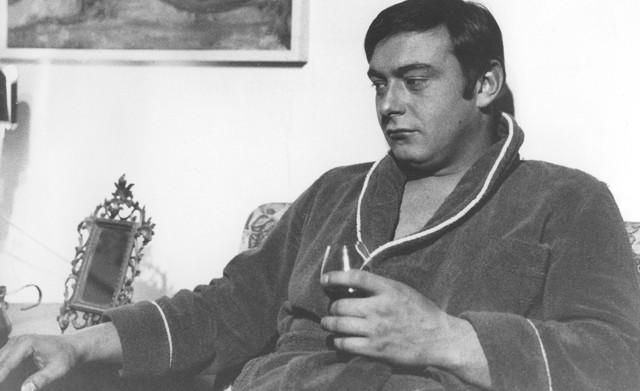
Meu primeiro contato com a obra do diretor alemão Rainer Werner Fassbinder se deu há mais ou menos dez anos, quando alguns de seus filmes foram exibidos no Cine Conhecimento do Canal Futura. Da seleção, meu favorito foi seu último filme, “O Desespero de Veronika Voss” (1982). Eu teria outro encontro com Fassbinder quando cursei uma disciplina de mestrado e lemos um texto bem-humorado assinado por ele, e também assistimos à sua obra-prima “Ali: o Medo Devora a Alma” (1974). Foi uma surpresa que um de seus filmes tenha sido exibido na TV recentemente, por isso eu o gravei e aqui ei-lo: um dos oito (!) filmes que ele dirigiu no ano de 1970, “Por Que Deu a Louca no Sr. R?”


My first contact with the works of German director Rainer Werner Fassbinder was about ten years ago, when some of his films were shown on a TV program called Cine Conhecimento (Kino Knowledge, in a free but accurate translation) at the channel Futura. Of the bunch, my favorite was his very last film, “Veronika Voss” (1982). I would encounter Fassbinder again when I took a class at a master’s degree program and we read a very humorous text written by him and later watched his masterpiece “Ali: Fear Eats the Soul” (1974). It was a surprise that one of his films was shown on TV recently, so I recorded it and here it is: one of eight (!) films he directed in the year of 1970, “Why Does Herr R. Run Amok?”

O filme começa com um grupo de quatro amigos contando piadas. Algumas são engraçadas, outras nem tanto. Um dos amigos, o único que não contou nenhuma piada, se separa do grupo, virando à esquerda enquanto os outros seguem à direita. O homem é Herr (Sr.) R. (Kurt Raab), um desenhista técnico que espera por um novo posto de trabalho. Ele vive em Munique com sua esposa, Frau (Sra.) R. (Lilith Ungerer), e filho, Amadeus (Amadeus Fengler).


The film begins with a group of four friends telling jokes. Some are funny, others not so much. One of the friends, the only who didn’t tell a single joke, parts from the group, going left while the others go right. The man is Herr (Mr) R. (Kurt Raab), a draughtsman waiting for a new job position. He lives in Munich with his wife Frau (Mrs) R. (Lilith Ungerer) and son, Amadeus (Amadeus Fengler).

Quando estão caminhando pelas ruas, indo a uma reunião na escola do filho, Frau R. fala sobre uma conhecida que surtou depois de uma explosão de gás: foi a gota d’água para ela. Durante a reunião, quem fala é só Frau R., enquanto a câmera foca em Herr R. e podemos vê-lo dissociando da conversa. Sua gota d’água está próxima.


While they are strolling in the streets, going to a meeting at their son’s school, Frau R. talks about an acquaintance who freaked out after a gas explosion: it was her last straw. During the meeting, only Frau R. speaks, while the camera focuses on Herr R. and we can sense him dissociating. His last straw is near.

Eu pensei que iria dar a louca em Herr R. durante um almoço no seu trabalho. Ele fica bêbado e fala sem parar sobre seus colegas, enfurecendo sua esposa. Então eu percebi: este filme é POR QUE deu a louca no Sr. R. Vê-lo louco seria a última coisa que veríamos: o filme todo serviria para nos mostrar as razões.


I first thought that Herr R. would run amok during a get-together from his work. He gets drunk and talks aimlessly about his co-workers, making his wife mad. Then I realized: this movie is WHY Herr R. ran amok. Seeing him running amok would be the last thing we see: the whole movie would first show us the reasons.

Há alguns momentos muito datados, que são entretanto divertidos por serem o retrato de uma época. Por exemplo: quando nosso herói entra numa loja e pergunta sobre uma música que ele ouvira no domingo passado no rádio. Ele descreve a canção em detalhes, causando riso numa das vendedoras. Hoje, com aplicativos como Shazam e Spotify, os problemas dele diminuiriam bastante.


There are very dated moments, that are funny nonetheless for being the portrait of a time. For instance: when our hero enters a store and asks about a song he heard that past Sunday in the radio. He describes the song extensively, causing one of the clerks to laugh. Today, with apps like Shazam and Spotify, his trouble would diminish a lot.

Outros momentos datados não são tão divertidos. Quando Amadeus fica brevemente perdido na floresta, a avó do menino culpa a mãe, Frau R., dizendo que a única missão dela era ficar de olho no garoto. Esta é a única sequência com a mãe de Herr R., e por isso ela nos parece egoísta e muito crítica com sua nora.


Other dated moments are not so amusing. When Amadeus gets briefly lost in the woods, his grandmother blames his mother,  Frau R., saying that it was her only duty to keep an eye on the boy. This is the only bit with Herr R.’s mother, and because of that she passes to us as being selfish and overly critical of her daughter-in-law.

Outros momentos são tão frescos que poderiam ter sido filmados hoje. Um exemplo: uma das amigas de Frau R. conta-lhe que ela está indo esquiar e alugou uma casinha porque é mais barato que ficar num hotel – exatamente o tipo de coisa que seria dita pelos defensores do Airbnb! Não é à toa que é aí que dá a louca no Sr. R!


Other moments are fresh as new. One example: one of Frau R.’s friends tells her that she is going skiing and rented a little house because it’s cheaper than staying in a hotel- exactly the kind of thing the defenders of Airbnb would say! It’s not by chance that it is there that Herr R. runs amok!

Este filme é assinado por Fassbinder e Michael Fengler. Entretanto, a atriz Hanna Schygulla, que interpreta rapidamente a personagem Hanna, declarou que Fassbinder teve pouco a ver com o filme, sendo este feito quase totalmente por Michael Fengler, uma declaração mais tarde confirmada por Fengler. Este foi o primeiro filme de Fengler, que mais tarde se dedicou aos trabalhos como roteirista e produtor.


The film is signed by Fassbinder and Michael Fengler. However, actress Hanna Schygulla, who plays the character Hanna in a brief performance, claimed that Fassbinder had little to do with the shooting of the film, and it was made almost solely by Michael Fengler, a claim later confirmed by Fengler. This was Fengler’s first film and he later served more as screenwriter and producer.

Esta não é uma comédia, como o título poderia nos levar a crer. É um drama, mas não um drama intenso, e muitos podem até chama-lo de um filme chato. No final das contas, “Por Que Deu a Louca no Sr. R.?” é sobre os perigos da rotina, ou, como diz o velho ditado: “all work and no play make Jack a dull boy” (“só trabalho e nenhuma diversão fazem de Jack um garoto sem-graça”).


This is not a comedy, as the title could make us believe. It’s a drama, but not intense drama, and many could even call it a boring movie. In the last stance, “Why Does Herr R. Run Amok?” is about the dangers of routine, or, as the old saying goes: “all work and no play makes Jack a dull boy”.

Friday, February 22, 2019

The Terror of Tiny Town (1938)


Atualmente, um diretor muito prolífico faz, no máximo, dois filmes por ano. Em 1938, Sam Newfield fez 15 filmes em 12 meses – um a menos que no ano anterior. Obviamente, estes eram filmes de baixo orçamento feitos por pequenos estúdios – geralmente faroestes com menos de uma hora de duração. Mas um destes faroestes de 1938 se destaca: o bizarro “The Terror of Tiny Town”, um filme que tem de tudo.

Nowadays, a very prolific director makes, at most, two films a year. In 1938, Sam Newfield made 15 films in 12 months – which was one less than he did the previous year. Of course, those were low-budget films made for poverty row studios - often westerns that were under one hour long. But one of his westerns from 1938 stands out: the bizarre “The Terror of Tiny Town”, a film that has everything.


E quando eu digo que tem de tudo eu quero dizer TUDO mesmo: “The Terror of Tiny Town” é um faroeste musical com toques de comédia. Tem famílias rivais e uma trama com um romance ao estilo Romeu e Julieta, um xerife corrupto e ladrões de gado. Há um cozinheiro que persegue um pato para servir de alívio cômico, um pinguim em uma barbearia sem motivo algum e um número musical com homens de rosto infantil dublados com vozes de tenor. Tudo isso em apenas 60 minutos.

And when I say everything I mean EVERYTHING: “The Terror of Tiny Town” is a musical western with touches of comedy. It has rival families and a plot that involves a Romeo and Juliet kind of romance, a corrupt sheriff and cattle thieves. There is a cook chasing a duck for comic relief, a penguin at a barber shop for no reason at all and a musical number with baby-faced men dubbed with tenor voices. All this in only 60 minutes.


Em Tiny Town, um local no Oeste habitado apenas por anões, vivem duas famílias rivais: os Lawson e os Preston. Buck Lawson (Billy Curtis) se apaixona por Nancy (Yvonne Moray), sobrinha do patriarca Preston. Enquanto isso, o gado das duas famílias está sendo roubado, e o ladrão é Bat Haines (‘Little Billy’ Rhodes), um membro da família Preston que quer que a rivalidade continue indefinidamente. Ao seu lado Bat tem o corrupto xerife da cidade (Joseph Herbst) e uma namorada ciumenta identificada apenas como uma Vamp (Nita Krebs).

In Tiny Town, a place in the West inhabited only by little people, live two rival families: the Lawsons and the Prestons. Buck Lawson (Billy Curtis) is in love with Nancy (Yvonne Moray), the Preston patriarch’s niece. Meanwhile, cattle is being robbed from both families, and the thief is Bat Haines ('Little Billy' Rhodes), a member of the Preston family that wants the rivalry to go on indefinitely. On his side Bat has the corrupt town sheriff (Joseph Herbst) and a jealous girlfriend identified only as a Vamp (Nita Krebs).


Embora Tiny Town seja habitada apenas por anões, os cenários eram de tamanho normal. Isso significa que os atores quase sempre passavam por baixo da porta do saloon e das cercas. Eles também tinham de lidar com mobília normal, por vezes entrando dentro dos armários. O pior disso tudo é o tamanho de uma arma normal nas mãos pequenas dos atores. Estes detalhes foram, obviamente, pensados para serem engraçados, mas mostram como o único objetivo do filme era rir dos anões.

Although Tiny Town is inhabited only by little people, the sets were normal size. That means that the actors often passed under the saloon doors and under fences. They also had to deal with normal furniture, often entering inside closets. The worst of all is the size of a normal gun in the actors' small hands. Those details were, of course, thought to bring laughter, but they show that the film was made for exploitation purposes only.


E que outra opção eles tinham nos anos 30 além de serem explorados dessa forma? A inclusão é difícil até hoje, e naquela época os anões ou viviam trancados em suas casas ou em instituições de caridade ou entravam para o elenco de circos e shows de horrores. No cinema, eles eram usados, mais uma vez, como curiosidades ou como alívio cômico. Uma exceção é o surpreendente “Monstros” (1932), que tem como estrela um anão que se apaixona por uma trapezista. O astro de “Monstros”, Harry Earles, e boa parte do elenco de “The Terror of Tiny Town” tiveram mais uma oportunidade de brilhar em Hollywood como Munchkins em “O Mágico de Oz” (1939).

And what other option had a little person in the 1930s if not being exploited? Inclusion is difficult until today, and back then those people had to either live locked in their homes or in institutions or join circuses and freak shows. On film, they were used again as curiosities and sometimes as comic relief. One exception is the chilling “Freaks” (1932), that stars a dwarf who is in love with a trapeze girl. The star of “Freaks”, Harry Earles, and most of the cast of “The Terror of Tiny Town” had another opportunity to shine in Hollywood as Munchkins in “The Wizard of Oz” (1939).


A vida nem sempre foi tão difícil para os anões. No Egito Antigo, por exemplo, eles eram considerados seres divinos e tinham altos cargos junto ao faraó. A mesma coisa acontecia na China Antiga. Na Europa Moderna e Medieval, entretanto, os anões eram ou bobos da corte ou tratados como animais de estimação pela nobreza e monarquia. Quando começou a Era da Razão, eles passaram a ser exibidos como curiosidade ou estudados por cientistas que procuravam a cura do nanismo.

Life wasn’t always so difficult for little people. In the Ancient Egypt, for instance, they were considered divine beings and held high positions near the Pharaoh. The same happened in Ancient China. In Medieval and Modern Europe, however, little people were either court jesters or treated as pets by the nobility or the monarchs. As the Age of Reason started, they were either exhibited as freaks or studied by scientists looking for a cure for dwarfism.
 
A deusa egípcia Bes era uma anã /
Egyptian goddess Bes was a dwarf
Em quase todos estes casos, há um denominador comum: os anões não eram ouvidos. O diretor alemão Werner Herzog, em seu segundo longa-metragem, tentou dar voz aos anões ao mesmo tempo em que mandava uma mensagem mais profunda – e foi tudo uma bagunça... exatamente como ele planejou.

In almost all these cases, there is one thing in common: little people weren’t heard about what they wanted. German director Werner Herzog, in his second feature, tried to give a voice to little people while also sending a deeper message – and, boy, it was a mess... just as he intended.


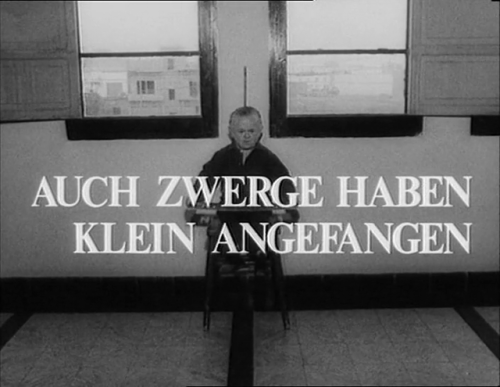
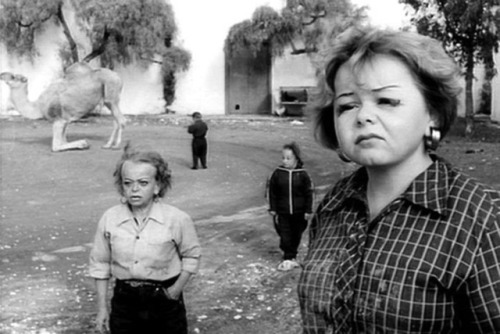
Um anão é uma pessoa que, na idade adulta, mede menos de 1,20 m – o que significa que eu escapei por 30 cm. No filme “Os Anões Também Começaram Pequenos” (1970), vemos uma instituição de caridade habitada apenas por anões. Quando um destes internos, Pepe (Gerd Gickel), é detido pelo instrutor da instituição – que também é anão – e é acusado de atacar outra interna, todos os anões se rebelam, causando caos - e abuso animal.

A little person or a dwarf is a person who, as an adult, is less than 4 feet tall – which means that I escaped by a whole foot. In the film “Even Dwarfs Started Small” (1970), we see an institution inhabited only by little people. When one of those interns, Pepe (Gerd Gickel), is detained by an instructor of the institution – who is also a dwarf – and accused of attacking another intern, all little people revolt, resulting in chaos - and animal abuse.


Os anões se revoltam contra as regras do lugar, contra as atividades que eles têm de fazer 'porque faz bem à saúde', como caminhar ao ar livre, regar as plantas e cuidar dos animais. Você pode pensar que foi uma tentativa de dar voz a quem não era ouvido, mas por fim vemos que eles gostam de fazer coisas infantis – como pregar peças em dois anões cegos e encenar um falso casamento entre uma anã com alguma deficiência mental e o homem mais baixo do lugar, um cara chamado Hombre (Helmut Döring). Tudo em meio a muitas risadinhas.

The little people revolt against the norms of the place, against the activities they have to do 'for their health', such as walking outdoors, watering plants and taking care of the animals. You may think it was an attempt to give a voice to the voiceless, but eventually we see that they engage in childish adventures – like pranking two blind dwarfs and holding a fake wedding between a mentally impaired female dwarf and the shortest man there, a guy called Hombre (Helmut Döring). All in between many giggles.


À primeira vista, é difícil entender os temas subjacentes que Herzog adiciona aos seus filmes. Em “Os Anões Também Começaram Pequenos”, há o absurdo da situação toda, a ideia de que toda revolução termina em caos se não há foco e cooperação e muitos outros – porque cada espectador interpretará o filme de maneira diferente. Havia uma resão mais profunda e mais nobre para Herzog fazer este filme do que a exploração dos seus atores – mas só entendemos isso depois de refletir sobre o filme dentro da carreira do diretor.

It's difficult at first to understand the underlying themes Herzog adds to his films. In “Even Dwarfs Started Small”, there is the absurdity of the whole situation, the idea that all revolution ends in chaos if there is no focus and cooperation and many others – because all viewers will interpret the film differently. There was a deeper, nobler reason for Herzog to make this movie than simple exploitation – but we just understand that after reflecting upon the film inside of the director's career.


Recentemente, um monte de reality shows de televisão estrelando anões surgiu e teve muito sucesso. Há muita controvérsia sobre estes programas, em especial quando consideramos que muitos espectadores apenas os veem em busca do mesmo tipo de exploração que era oferecido pelos shows de horrores.

Recently, a plethora of reality TV shows starring little people appeared and became hits. There is a lot of controversy around those shows, in special considering that many viewers only follow the shows looking for the same kind of exploitation offered by freak shows.
Todos os atores de “The Terror of Tiny Town” já eram profissionais no palco, e continuaram atuando. A maioria dos atores de “Os Anões Também Começaram Pequenos” não era profissional, e quase todos eles fizeram apenas este filme e nada mais no cinema. “The Terror of Tiny Town” pode não ter beneficiado a carreira de nenhum de seus atores, mas imortalizou-os, e gerou um debate que nos mostra que ainda há muito a fazer para que os anões sejam incluídos no cinema como as pessoas completas, capazes, inteligentes e talentosas que eles são.

All actors in “The Terror of Tiny Town” were already professionals of the stage, and went on acting. Most actors of “Even Dwarfs Started Small” were not professionals, and almost all of them didn't do other films. “The Terror of Tiny Town” may not have furthered anyone's career, but it immortalized those little actors, and sparkled a debate that shows us that there is still a long way to go for little people to be fully included in movies as the whole, capable, intelligent and talented people they are.

This is my contribution to the So Bad It’s Good Blogathon, hosted by Rebecca at Taking Up Room.

Related Posts Plugin for WordPress, Blogger...