} Crítica Retrô: melodrama

Tradutor / Translator / Traductor / Übersetzer / Traduttore / Traducteur / 翻訳者 / переводчик

Showing posts with label melodrama. Show all posts

Tuesday, October 14, 2025

44ª Giornate del Cinema Muto / 44th Pordenone Silent Film Festival

 Não curto muito celebrar meu aniversário. Gosto bastante das festividades do Natal. Mas minha época favorita do ano é outra: a semana quando acontece a Giornate del Cinema Muto. Desde a pandemia, o time por trás do festival vem sendo fantástico por oferecer uma programação online com um pouco de tudo que é exibido in loco em Pordenone, para os fãs do cinema mudo ao redor do mundo. Estou entre esses fãs espectadores pelo quinto ano consecutivo e aqui está um vislumbre desta semana mágica.

I’m not very fond of celebrating my birthday. I really like the parties around Christmas. But my favorite time of the year is another: the week when the Pordenone Silent Film Festival happens. Since the pandemic, the Giornate team has been kind enough to offer an online program with a little bit of everything that is shown in loco in Pordenone, for silent film fans around the world. I’m among them for the fifth consecutive year and here is an overview of this magic week.


O festival online começou com “Saias / A Little Bit of Fluff”, feito quando o som já estava chegando ao mundo do cinema – o glorioso ano de 1928. É uma farsa deliciosa sobre os vizinhos Bertram (Syd Chaplin), recém-casado, e Mamie (Betty Balfour), uma artista. A trama gira em torno das estripulias dele quando sua esposa deveria estar fora de casa e inclui ainda uma questão sobre um colar de pérolas e diamantes.

The online Giornate kicked off with “A Little Bit of Fluff”, from when sound was already arriving in the film world - the glorious year of 1928. It was a delightful farce about neighbors Bertram (Syd Chaplin), recently married, and Mamie (Betty Balfour), a showgirl. It revolves around his shenanigans when his wife is supposed to be out of town and also the ownership of a pearl and diamonds necklace.


Mais cedo este ano eu escrevi sobre o recentemente restaurado “Satan Fait la Noce”, de 1907. Na Giornate eu encontrei um Louis Feuillade mais contido fazendo uma série de filmes intitulados “A Vida como Ela É” entre 1911 e 1912. A restauração destes curtas estava ótima e as cópias perfeitas. Através deles fui introduzida a uma das maiores estrelas francesas da época Suzanne Grandais. A composição abaixo, de “Le Nain” de 1912, foi mais tarde imitada mas permanece como uma prova surpreendente de que o primeiro cinema era muito mais elaborado que comumente se pensa. Outro curta revelador da série foi “Erreur Tragique”, com um filme dentro do filme, com o protagonista vendo sua esposa com outro homem num filme exibido num cinema em Paris.

Earlier this year I’ve reviewed the recently recovered short “Satan Fait la Noce”, from 1907. At the Giornate I found a less mischievous Louis Feuillade making a series of films titled “Life As It Is” between 1911 and 1912. The restoration of these shorts was amazing and the prints were pristine. Through them I was introduced to one of the biggest French stars of the era, Suzanne Grandais. The shot below, from 1912’s “Le Nain”, was later imitated but remains a surprise proof that early film was much more elaborated than most think. Another revealing short of the series was “Erreur Tragique”, with a film-within-the-film, with the lead seeing his wife with another man in the film showing at a Paris movie theater.


Pela primeira vez na Giornate tive a chance de revisitar alguns “velhos amigos”, filmes que eu já havia visto antes. O primeiro foi o curta de abertura da programação online, “The Bond”, um filme patriótico com páthos. O esforço para venda de bônus de guerra pareceria propaganda sem-graça nas mãos de um cineasta menos habilidoso, mas Chaplin faz algo divertido e aprazível. Aliás, Chaplin e seus imitadores foram o foco de uma série na Giornate deste ano, e o que seguiu naturalmente a “the Bond” foi um filme do mesmo ano estrelando Billy West, reconhecido pelo próprio Chaplin como o melhor imitador de Chaplin. “His Day Out” foi divertido e quase tão bom quanto um filme do Vagabundo original. 

For the first time at the Giornate I had the chance to revisit some “old friends”, films I’ve watched before. The first one was the opening short for the online program, Chaplin’s “The Bond”, a film that is patriotic yet has pathos. The effort to sell liberty bonds would look like a dull propaganda in the hands of a less talented filmmaker, but Chaplin makes it fun and heartwarming. By the way, Chaplin and Chaplin imitators were the focus of a series at this year’s Giornate, and the natural follow-up to “The Bond” was a film from the same year with Billy West, acknowledged by Chaplin himself as the best Chaplin imitator. “His Day Out” was fun and almost as good as a film from the original Tramp.


O outro velho amigo que eu reassisti na Giornate foi a versão de 1913 de “Os Últimos Dias de Pompeia”. Cinco anos atrás (!) eu escrevi sobre as duas versões – dos estúdios Pasquali e Ambrosio – da história, ambos feitos em 1913. A Giornate apresentou a versão de Ambrosio, dirigida por Eleuterio Rodolfi. Eu não podia dizer não para uma restauração do filme, ainda mais com um tempo de exibição um pouco mais longo que o que eu vi. Falando em velhos amigos, houve também na Giornate um filme de Maurice Tourneur, que dirigiu um dos meus filmes mudos favoritos, “O Pássaro Azul / The Blue Bird”, de 1918. Mas eu vou falar mais sobre “A Urze Branca / The White Heather” no meu blog Lost and Found Films.

The other old friend I rewatched at the Giornate was the 1913 “The Last Days of Pompeii”. Five years ago (!) I reviewed the two versions - from the Pasquali and Ambrosio studios - of the story both made in 1913 in Italy. The Giornate screened the Ambrosio version, directed by Eleuterio Rodolfi. I couldn’t say no to a restoration of the print, with a slightly longer runtime. Speaking of old friends, there was also at the Giornate a film by Maurice Tourneur, who directed one of my favorite silents, 1918’s “The Blue Bird”. But I’ll talk more about “The White Heather” (1919) on my blog Lost and Found Films.


Além de “The Bond”, houve espaço para outro tipo de propaganda em Pordenone, mas bem diferente: propaganda soviética feita na Ucrânia e destinada para crianças! Primeiro exibiram “Robinson on His Own” (1929), sobre um garotinho nerd chamado Vasja (Boria Bohdanovskyi) que gosta de ler livros de aventura (norte-americanos) e decide partir em sua própria aventura. Foi tipo Madame Bovary ou Dom Quixote para crianças: cuidado com o que você lê!

Besides “The Bond”, there was plenty of space for another kind of propaganda in Pordenone, yet a very different one: Soviet propaganda made in Ukraine and aimed at children! First they showed “Robinson on his Own” (1929), about a nerdy boy named Vasja (Boria Bohdanovskyi) who likes to read (American) adventure novels and decides to go on his own adventure. It was kind of Madame Bovary or Don Quijote for children: beware at what you read!


O segundo filme de propaganda soviética com / para crianças foi “Adventures of a Penny” (também 1929), ambientado em tempos czaristas, quando crianças da classe trabalhadora fumavam e só podiam brincar nas ruas. A história é do traquinas Fedka (Kolia Kopelian) em suas muitas aventuras, sempre invadidas pelo rico e mimado Tolya (Mark Orlov). Este filme teve um excelente acompanhamento musical de Olga Podgaiskaya, completado por um coro de crianças no começo e no final.

The second Soviet propaganda film with / for children was “Adventures of a Penny” (also 1929), set in Tsarist times, when working-class children smoked and could only play on the streets. It follows naughty Fedka (Kolia Kopelian) in his many adventures, always perpassed by the rich and spoiled Tolya (Mark Orlov). This movie had a great musical accompaniment by Olga Podgaiskaya, complete with a children’s chorus in the beginning and end.


Os estúdios Ambrosio se fizeram presentes novamente com “O Torpedeamento do Oceânia” (191), feito por Augusto Genina em seu quinto ano como cineasta e estrelando Ileana Leonidoff em seu primeiro papel no cinema, e já como vilã. Algo curioso é que todas as cartelas de texto de “Os Últimos Dias de Pompeia” estão marcadas com o número 899, enquanto as cartelas aqui têm o número 1159. Isso significa que quase 300 filmes foram feitos pelos estúdios Ambrosio em quatro anos? Talvez. E não pense que Ambrosio só fazia filmes sobre desastres: o afundar do navio ocupa só a primeira curta parte do filme, o resto envolve um casal de “aventureiros” e uma herdeira numa corrida por uma herança. Outra coisa bacana de se ver é o uso de um avião como parte da trama, meros dez anos depois que Santos Dumont o inventou.

Ambrosio studios was present once again in “Il Siluramento dell’Oceania” (1917), made be Augusto Genina on his fifth year as a filmmaker and starring Ileana Leonidoff in her first film role – and as a villain. One curious thing is that all title cards from “The Last Days of Pompeii” are marked with the number 899, while all the title cards here have the number 1159. Does it mean that almost 300 films were made by Ambrosio in four years? Maybe. And don’t think that Ambrosio only made movies about disasters: the sinking of the ship is only the short first part, the rest of the movie involves a couple of “adventurers” and the rightful heiress in a race to secure an inheritance. Another nice thing to see is an airplane as a plot device, mere ten years after Santos Dumont invented it.


Falando em navios, o filme que se seguiu ao Oceânia na programação foi “O Navio Sangrento / The Blood Ship” (1927). Ele segue um marinheiro ingênuo (Richard Arlen) que embarca no Golden Bough, um navio comandado pelo sádico capitão Angus Swope (Walter James). Com Jacqueline Logan como interesse amoroso do personagem de Arlen e Hobart Bosworth num papel incomum em sua carreira, este é um filme relativamente curto com muita ação e plot twists.

Speaking of ships, the film that followed the Oceania in the program was “The Blood Ship” (1927). It follows a naïve sailor (Richard Arlen) who goes aboard the Golden Bough, a ship commanded by the sadistic Captain Angus Swope (Walter James). With Jacqueline Logan as a love interest for Arlen’s character and Hobart Bosworth playing against type, this is a short-ish film with lots of action and plot twists.


Uma série na Giornate permitiu que o público redescobrisse o imenso talento de Italia Almirante Manzini, que curiosamente morreu aqui no Brasil – mas NÃO em decorrência de uma picada de aranha, como comumente se diz. Em “A Sombra / L’Ombra”, um drama de 1923 em sete partes, Italia interpreta Berta, uma mulher da alta sociedade que repentinamente fica paralisada do pescoço para baixo. Como ela passa anos nesta condição, sob esta “sombra”, seu marido Gerardo (Alberto Collo) se transforma num famoso pintor e forma uma nova família com a amiga de Berta Elena (Liliana Ardea). Ele terá coragem de contar a verdade para Berta? Ou Berta milagrosamente se recuperará? Quem viu sabe!

A series at the Giornate allowed the audience to rediscover the huge talent of Italia Almirante Manzini, who curiously died here in Brazil - but NOT from a spider bite as it’s often claimed. In “The Shadow / L’Ombra”, a 1923 drama in seven parts, Italia plays Berta, a high-society woman who suddenly becomes paralyzed from the neck down. As she passes years under this condition, under this “shadow”, her husband Gerardo (Alberto Collo) becomes a famous painter and forms a new family with Berta’s friend Elena (Liliana Ardea). Will he get the courage to tell the truth to Berta? Will Berta make a miracle recovery? Watch and see!


Em seguida, “The Lady with the Mask / Die Dame mit der Maske” (1928), baseado em ideia original de Henrik Galeen – a mesma mente por trás de “Nosferatu” de 1922. A história se passa na Alemanha num período de hiperinflação, que abala o mundo do Barão von Seefeld (Max Gülstorff) e de sua filha Doris (Arlette Marchal). Também com dívidas está o diretor de uma revista de teatro que é obrigado a dar um papel para Kitty (Dita Parlo), amante do homem para quem o diretor deve dinheiro. Doris encontra, numa casa de penhores, seu velho amigo Alexander (Vladimir Gajdarov), que é figurante na revista e sugere que ela vá ao teatro tentar um papel. Ela consegue um papel, mas quer permanecer anônima, e a saída é usar uma máscara na revista, pois seu distinto pai não pode saber o que ela está fazendo para ganhar dinheiro. Então uma subtrama sobre a recuperação de um par de botas é inserida, e o resultado é suspense e diversão. Filmes mudos alemães nunca me decepcionam, e com este até aprendi algumas palavras com as cartelas de texto.

Next, “The Lady with the Mask / Die Dame mit der Maske” (1928), from an original idea by Henrik Galeen - the same mind behind 1922’s “Nosferatu”. The story happens in Germany in a period of hiperinfaltion, which makes things difficult for the Baron von Seefeld (Max Gülstorff) and his daughter Doris (Arlette Marchal). Also in debt is the director of a theater revue that is forced to cast Kitty (Dita Parlo), the lover of the man the director owes money to. Doris meets at a pawnshop her old friend Alexander (Vladimir Gajdarov), who is an extra at the revue and suggests she should go to the theater and maybe grab a role. She gets a role, but wants to remain uncredited, so the way out is performing wearing a mask, since her distinguished father can’t know what she is doing for money. Then a subplot about the recovery of a pair of boots is inserted, and the result is suspense and fun. German silents never fail to amuse me, and in this I even learned a few words in the title cards.


Even the flowers wear a mask!

No último dia a programação fechou o ciclo com a Chaplin Connection mais uma vez. Desta vez o curta foi “Soldier Man” (1926), que serve ao mesmo tempo como proto “O Grande Ditador” e um remix de “Carlitos nas Trincheiras” com um twist. Estrelando Harry Langdon, a gag com a vaca explodindo foi a mais engraçada. E mais diversão estava reservada para nós com o filme de encerramento, “Are Parents People?”. Nele, uma jovem chamada Lita (Betty Bronson) descobre, em choque, que seus pais (Adolphe Menjou e Florence Vidor) vão se separar. O fato de Lita ser expulsa do colégio interno só a ajuda em seu plano de fazer seus pais se preocuparem por algo em comum – ela mesma – e assim se reconciliarem.

On the last day the program came full circle with the Chaplin Connection all over again. This time the short was “Soldier Man” (1926), one that serves at the same time as a proto “The Great Dictator” and a retelling of “Shoulder Arms” with a twist. Starring Harry Langdon, the gag with the cow exploding was the funniest. And more fun was in storage for us with the closing film, “Are Parents People?”. In it, a young woman named Lita (Betty Bronson) learns with shock that her parents (Adolphe Menjou and Florence Vidor) are separating. Lita being expelled from boarding school only helps her plan to make her parents worry about a common subject - herself - and thus reconcile.


Os curtas na programação foram todos muito bons, e fiquei intrigada com aqueles que formaram parte da série que o diretor da Giornate Jay Weissberg chamou de “The World that Was, the World to Come”. Estes curtas, travelogues ou filmados por encomenda, nos permitem ver tempos, lugares e pessoas que se foram há muito tempo. Cidades destruídas pela guerra, como Aleppo na Síria e Kharkiv na Ucrânia, voltam à vida à nossa frente. Mesmo o Rio de Janeiro, na era do cinema mudo a capital do Brasil, foi o assunto do curta “La Capital de Brésil”, que inclusive me ensinou algumas coisas – aqui, duas observações: dê uma olhada no artigo sobre o filme no catálogo, escrito pelo diretor premiado em Cannes Kleber Mendonça Filho, e há surpresa genuína na inclusão de pessoas negras nos círculos da alta sociedade, mas lembremo-nos de que o Brasil é um país profundamente racista e o era ainda mais nos anos 30, mas havia na época o mito da “democracia racial”, que defendia uma coexistência pacífica entre brancos e negros. Bobagem.

The shorts in the program were all very good, and I was intrigued by the ones in a series the Giornate director Jay Weissberg called “The World that Was, the World to Come”. These shorts, either travelogues or commissioned works, allow us to see times, places and people long gone. Cities destroyed by the war, like Aleppo in Syria and Kharkiv in Ukraine, come back to life in front of us. Even Rio de Janeiro, during the silent era the capital of Brazil, got the treatment and the short “La Capital de Brésil” even taught me a couple of things - here, two thoughts by Jay are worth mentioning: do take a look at the catalogue notes for the film, written by the Cannes-winning director, Kleber Mendonça Filho, and the surprise of the existence of an elite that includes black people is genuine, but let’s remember that Brazil is a very racist country and was even more in the 1930s, but there was at the time the myth of the “racial democracy”, claiming that white and black people in the country lived harmoniously. Bullshit.


Além da tela dividida em “Le Nain”, houve outros truques de câmera bacanas, como a reflexão na taça em “Saias”, visto abaixo, os binóculos sem uma lente em “Robinson on his Own”, entre outros. Além disso, houve muitas metáforas visuais em “Sketches of a Soviet City” (1929). Surpreendentemente, houve momentos em que o som foi necessário, e aqui destaco dois momentos de “The Lady with the Mask”: quando o colega de quarto de Alexander está usando um martelo para pregar uma nota na porta da frente, e a festa após a estreia, quando Charleston foi executado na trilha sonora.

Besides the split-screen in “Le Nain”, there were other cool camera tricks, such as the reflection at the glass in “A Little Bit of Fluff”, seen below, the binoculars without a glass in “Robinson on his Own”, among others. Moreover, there were plenty of visual metaphors in “Sketches of a Soviet City” (1929). Surprisingly, there were moments when sound was necessary, and here I highlight two moments from “The Lady with the Mask”: when Alexander’s roommate is using a hammer to hang a note at the front door and the premiere after party, when Charleston was executed on the soundtrack.


O que eu mais amo sobre os filmes mudos é que eu posso saber muito sobre eles e muitos estão perdidos, mas há sempre algo mais para aprender com a imensa quantidade que há disponível. E isso foi mais uma vez reforçado pela incrível Giornate deste ano.


What I love the most about silent movies is that I may know a lot about them and there is so much lost, but there is always more to learn with the mammoth amount that is available. And this was again reinforced by this year’s amazing Giornate.

Friday, August 29, 2025

Caminhando Sob a Chuva de Primavera (1970) / A Walk in the Spring Rain (1970)


Quando dois ícones do cinema se encontram, a Magia pode acontecer. Não estamos falando de “all-star movies”, mas do simples encontro de dois artistas celebrados. Como quando a ganhadora de três Oscars Ingrid Bergman (então com apenas dois prêmios) encontrou o ganhador de dois Oscars Anthony Quinn, ambos se aproximando do fim de suas carreiras - mas ainda tão bons como sempre foram. O filme em questão é “Caminhando Sob a Chuva de Primavera” (1970)

When two cinema icons meet, Magic can happen. We’re not talking about the “all-star movie”, but the simple encounter of two celebrated performers. Like when three-time Oscar winner Ingrid Bergman (then with only two awards under her belt) met the two-time Oscar winner Anthony Quinn, both nearing the end of their careers - but still as good as ever. The film was “A Walk in the Spring Rain” (1970).

O professor universitário Roger Meredith (Fritz Weaver) e sua esposa Libby (Ingrid Bergman) são aparentemente um casal feliz e têm uma filha que quer voltar a estudar para se tornar advogada, algo que seu pai desaprova. Aqui estamos: já com asco deste personagem. O casal decide tirar um ano sabático nas montanhas, por isso alugam uma cabana administrada por Will Cade (Anthony Quinn). O novo trio bebe e canta junto, Will consegue para o casal dois cabritinhos e tudo parece correr bem. Até que vem o choque.

College professor Roger Meredith (Fritz Weaver) and his wife Libby (Ingrid Bergman) are apparently happily married and have a daughter who wants to go back to school to become a lawyer, something her father disapproves of. Here we are: already disliking this character. The couple decides to spend a sabbatical in the mountains, so they rent a cabin managed by Will Cade (Anthony Quinn). The newly-formed trio drinks and sings songs together, Will gets them a couple of baby goats and everything seems to be alright. Until it isn’t.

Do jeito mais natural possível, numa conversa casual, Will diz a Libby que a ama. Ele não se importa se for um sentimento unilateral - tudo bem se o amor não for correspondido. O problema é que ela também sente algo mais por ele - mesmo eles podendo ser “amantes inadequados”. O problema maior é que o filho encrenqueiro dele vê os dois juntos.

In the most natural way, in a casual conversation, Will tells Libby that he loves her. He doesn’t care if it is a one-way infatuation - he’s fine even if she doesn’t love him back. The issue is that she also has feelings for him - even though they might be “unsuitable lovers”. The bigger issue is that his troublemaker son sees them together.

O arco narrativo de um filho não concordar com o relacionamento de seu pai ou mãe com outra pessoa é comum e pode ser encontrado em muitos livros, filmes e novelas. O personagem que aqui desaprova o romance alheio, o filho de Will, nos é apresentado rolando na neve durante uma briga causada por ciúmes. É outro personagem de quem não gostamos de cara.

The plot element of having someone’s child disapproving of the relationship between his/her father or mother with someone else is common and can be found in several books, movies and soap operas. The character here who is bitter with others’ romance, Will’s son, is first shown rolling in the snow in a fistfight over a woman. It’s another character who we dislike from the start.

Eu ri alto quando Libby contou para Will que seu marido está escrevendo um livro e o homem perguntou “para quê? Você já tem livros suficientes”. Estou fazendo um curso de escrita criativa e sei por experiência que nós escritores somos nossos primeiros leitores e mais severos críticos. Nós devemos escolher como contar uma história, que pode ter sido contada antes, e devemos julgar e validar nossas escolhas o tempo todo. Para fazer isso, devemos ser como Roger: leitores ávidos.

I laughed out loud when Libby tells Will that her husband is currently writing a book and the man asks “what for? You already have plenty”. I’ve been taking a course on writing and I know by experience that we writers are our own first readers and most severe critics. We must choose how to tell a story, sometimes a story already told before, and must judge and validate our choices all the time. To do this, we must be like Roger: avid readers.

Eu disse que nós instantaneamente detestamos Roger por causa de seus pensamentos retrógrados sobre a filha voltar a estudar depois de se casar e ter um filho. Mas Libby pensa igual, é o que é mostrado mais adiante no filme. Ela acredita que uma mulher deve contribuir para o casamento sendo uma boa esposa e mãe, não estudando e trabalhando. É o tipo de pensamento que poderia ser esperado de alguém nascido na década de 1910 - como é o caso tanto com Bergman quanto com Quinn -, conflitante com os valores e pensamentos da nova geração, representados pela filha (Katherine Crawford, nascida em 1944). Mas há outra razão para Libby não aprovar o plano da filha: se ela voltar a estudar, Libby vai ter que se dedicar o tempo todo aos cuidados com o neto, e ela quer ser livre, não uma cuidadora. O buraco é mais embaixo.

I’ve said that we instantly hate Roger for his retrograde thoughts about his daughter going back to school after getting married and having a child. But Libby thinks the same, we learn later in the film. She thinks a woman must contribute to a marriage by being a good wife and mother, not studying or working. It’s the kind of thinking that could be expected from someone born in the 1910s - the case with both Bergman and Quinn -, clashing with the values and thoughts of the new generation, represented by the daughter (Katherine Crawford, born in 1944). But there is another reason for Libby to disapprove of her daughter’s plan: if she starts studying again, Libby will have to take full-time care of her grandson, and she wants to be free, not a caretaker. The plot thickens.

Os músicos responsáveis pela música-título foram Elmer Bernstein - que não era parente de Leonard Bernstein, apenas amigo - e Don Black. A carreira de Bernstein durou cinco décadas e ele escreveu quase 200 trilhas para o cinema e a TV. Em 1970 já era ganhador do Oscar, pelo delicioso e pouco conhecido musical “Positivamente Millie” (1967).  Don Black, que em 1970 já havia escrito a música-tema de três filmes de 007 e do faroeste “Bravura Indômita” (1969), trabalhou no teatro musical junto a Andrew Lloyd Weber.

The musicians responsible for the title song were Elmer Bernstein - not related to Leonard Bernstein, though they were friends - and Don Black. Bernstein’s career spanned five decades and he wrote nearly 200 movie and TV soundtracks. By 1970 he was already an Oscar winner, for the delightful and underrated musical “Thoroughly Modern Millie” (1967). Don Black, who by 1970 had written theme songs for three 007 movies and the western “True Grit” (1969), worked closely on musical theatre with Andrew Lloyd Weber. 

Bergman e Quinn já haviam feito juntos “A Visita”, de 1964, e é só por causa de seus talentos que “Caminhando Sob a Chuva de Primavera” escapa de ser um melodrama esquecível. O romance é bom, o perigo, palpável, e o discurso quase-feminista, basicamente jogado para escanteio. Mas é um filme que merece ser visto, graças ao talento de Anthony Quinn e, em especial, da incrível Ingrid Bergman.  

Bergman and Quinn had already starred together in 1964’s “The Visit”, and it’s only because of their talents that “A Walk in the Spring Rain” escapes from being a forgettable melodrama. The romance is nice, the danger, tangible, and the quasi-feminist discourse, basically wasted. But it’s a film worth watching, thanks to Anthony Quinn and, especially, the amazing Ingrid Bergman.

This is my contribution to the 110 Years of Ingrid Bergman blogathon, hosted by Virginie at The Wonderful World of Cinema.

Wednesday, May 28, 2025

O Campeão (1931) / The Champ (1931)

 Maio é o mês em que celebramos as mães, as noivas… e o melodrama. Bem, pelo menos este mês de maio foi melodramático o suficiente neste blog com uma crítica de um melodrama feito por uma mulher - filmes deste gênero específico são em geral feitos PARA mulheres, mas dificilmente POR elas. Há uma mulher forte também por trás do melodrama de hoje: Frances Marion escreveu o roteiro de “O Campeão”.


May is the month we celebrate mothers, brides… and melodrama. Well, at least this May was melodramatic enough on this blog with a review of a melodrama made by a woman - movies from this specific genre are often targeted to women, but not made by them. There is one strong woman also behind today’s melodrama: Frances Marion wrote the screenplay for “The Champ”.


Os anos de glória do boxeador Andy (Wallace Beery) já passaram, mas ele ainda é conhecido como Champ (de “Champion”: campeão). Seu treinador e gerente de sua carreira é seu filho Dink (Jackie Cooper), que ainda é um garoto. Os maiores inimigos de Champ são o álcool e as apostas.


Andy (Wallace Beery) is a has-been boxer, but is still known as Champ. His trainer and career manager is his son Dink (Jackie Cooper), who is just a boy. Champ’s biggest enemies are alcohol and gambling.


Pai e filho vivem num apartamento de um quarto só com uma cama que dividem. Tem uma cadeira de balanço igualzinha à de Champ na minha casa! Numa manhã, Dink está fazendo as tarefas do lar quando Champ chega com um presente: um cavalo! Eles decidem rebatizar o animal, de Butterfly para Little Champ, e treiná-lo para se tornar um cavalo de corrida. Um dia, nas pistas de corrida, Champ encontra uma figura do passado que irá assombrá-lo.


Father and son live in a one-bedroom apartment with a shared bed. There is a rocking chair exactly like Champ’s in my house! One morning, Dink is doing the household chores when Champ arrives with a present: a horse! They decide to rename the animal, from Butterfly to Little Champ, and train it to become a race horse. One day, on the race tracks, Champ meets a figure from his past who will haunt him.


Wallace Beery ganhou o Oscar de Melhor Ator - empatado com Fredric March de “O Médico e o Monstro” - por sua interpretação de Champ, mas o filme pertence a Dink e sua ampla gama de expressões. Jackie Cooper mais tarde declarou que Beery tentou aparecer mais que ele a todo momento, mas os resultados mostram que o ator adulto falhou. O que realmente aconteceu foi a revitalização da carreira de Beery, que se tornou então o ator mais bem pago da época quando ele assinou contrato com a MGM.


Wallace Beery won the Best Actor Oscar - tied with Fredric March from “Dr Jekyll and Mr Hyde” -  for playing Champ, but the movie belongs to Dink and his wide range of expressions. Jackie Cooper later claimed that Beery tried to upstage him at all times, but results prove that the adult actor failed. What did happen was the revitalization of Beery’s career, making him the highest-paid actor of the time when he signed with MGM.


Jackie Cooper foi indicado para o Oscar um ano antes por “Skippy” e, durante a cerimônia, adormeceu encostado no ombro de Marie Dressler! Cooper ainda é a única pessoa menor de 18 anos a ser indicado ao Oscar de Melhor Ator. Frances Marion também ganhou o Oscar na categoria Melhor Roteiro - História Original. Ela havia escrito a história tendo Wallace Beery em mente para ser o protagonista.


Jackie Cooper was nominated for the Oscar one year before for “Skippy” and, during the ceremony, fell asleep on Marie Dressler’s shoulder! Cooper remains the only person under 18 to be nominated for a Best Actor Oscar. Frances Marion also won the Oscar in the category Best Writing - Original Story. She had written the story with Wallace Beery in mind to star.


Dink tem um amigo da sua idade chamado Jonah e, quando o apresenta para Linda (Irene Rich), Dick enfatiza que “ele é de cor”. Jesse Scott interpreta Jonah, no primeiro de seus seis papéis no cinema, metade deles sem receber crédito.


Dink has a friend his age named Jonah and, as he introduces him to Linda (Irene Rich), Dink emphasizes that “he’s colored”. Jesse Scott plays Jonah, in the first of six screen roles, half of them uncredited.


Como escrito na Wikipedia, “a crítica de cinema Judith Christ declarou que quase todo filme contendo um ator adulto junto a um ator mirim deve ser comparado com O Campeão em termos da química entre os atores e a eficácia do filme”. “Química” não é exatamente a melhor palavra para descrever o que havia entre Beery e Cooper, mas você não pode sentir a animosidade enquanto assiste ao filme. Talvez o melhor ator mirim desde Jackie Coogan - de “O Garoto” (1921) de Chaplin - , Cooper é o campeão real aqui.


As written in Wikipedia, “Film critic Judith Christ has argued that almost any film pairing an adult actor alongside a child actor must be compared to The Champ in terms of the chemistry between the actors and the effectiveness of the film.” “Chemistry” isn’t exactly the best word to describe what was going on between Beery and Cooper, but you can’t tell about the animosity while watching the film. Arguably the best child actor since Jackie Coogan - from Chaplin’s “The Kid” (1921) - , Cooper is the real champion here. 

Monday, May 12, 2025

Sublime Redenção (1925) / The Red Kimona (1925)


“A tragédia apela ao coração. A comédia, à mente. O melodrama, aos olhos.” - Victor Hugo

“Tragedy appeals to the heart. Comedy, to the mind. Melodrama, to the eyes.” - Victor Hugo


Melodramas - aqueles filmes melosos que nos fazem chorar - são filmes pensados para um público majoritariamente feminino. Considerado não um gênero, mas uma forma de apresentar histórias, é geralmente do agrado das mulheres… mas pode uma mulher também realizar um melodrama?

Melodramas - also called tearjerkers or weepies - are movies that target a mostly female audience. Not considered a genre, but a way to present stories, it is often enjoyed by women… but can it also be made by women?

Quando mais mulheres estavam trabalhando atrás das câmeras, na era muda do cinema, algumas se aventuraram no melodrama, por exemplo a atriz que se tornou diretora Dorothy Davenport, que fez da perda de seu marido, o ídolo das matinês Wallace Reid, uma oportunidade para uma nova carreira contando histórias instigantes. “Sublime Redenção” foi um dos filmes que ela produziu e co-dirigiu.

When more ladies were working behind the cameras, in the silent movie era, some ventured into melodrama, for example actress turned filmmaker Dorothy Davenport, who made the loss of her husband, matinee idol Wallace Reid, an opportunity for a new career telling compelling stories. “The Red Kimona” was one of the films she produced and co-directed.

“Essa é uma história real”, nos conta a própria Dorothy no prólogo. Apertem seus cintos. Gabrielle (Priscilla Bonner) descobre que seu amado Howard (Carl Miller) foi para Los Angeles se casar - mas ele vai voltar para pegar de volta os anéis que deu para ela de presente. Ela o segue e atira nele dentro de uma joalheria. Ela é presa e conta sua história no tribunal.

“This is a true story”, we’re told by Dorothy herself in the prologue. Brace yourselves. Gabrielle (Priscilla Bonner) learns that her beloved Howard (Carl Miller) has gone to Los Angeles to get married - but he’ll come back to fetch the rings he gave her as a gift. She follows him and shoots him inside a jewelry store. She is arrested and tells her story at the trial.

Gabrielle conheceu Howard quando era mais nova, e vivia com seus irmãos e seu severo pai (Tyrone Power sR). Howard diz que a ama e a leva para Nova Orleans, onde ela é obrigada a se prostituir (prática então chamada de “white slavery”). Ouvindo a história dela, o júri declara Gabrielle inocente.

Gabrielle met Howard when she was younger, living with her siblings and strict father (Tyrone Power Sr). Howard says he loves her and takes her to New Orleans, where she is forced into prostitution (what was then called “white slavery”). Hearing her story, the jury declares Gabrielle not guilty.

Depois do julgamento ela é acolhida na casa de uma benfeitora chamada Beverly Fontaine (Virginia Pearson), que faz caridade só para ganhar fama. Gabrielle é chamada de “Madalena moderna” pelo jornal e a Sra Fontaine só quer que sua nova protegida pareça “interessante” para suas amigas ricas, que são como gatos brincando com um rato de brinquedo. Mas tudo que Gabrielle quer é parar de ser vista como um objeto e se tornar enfermeira. Mas seu passado não vai voltar para assombrá-la?  

After the trial she is taken to the home of a philanthropist named Beverly Fontaine (Virginia Pearson), who does charity only to gain publicity. Gabrielle is called a “modern Magdalen” by the newspaper and Mrs Fontaine only wants her new protégée to look “interesting” for her rich friends, who are like cats playing with a toy mouse. But all Gabrielle wants is to stop being seen as an object and become a nurse. But won’t her past come back to haunt her?

A Letra Escarlate / The Scarlet Letter

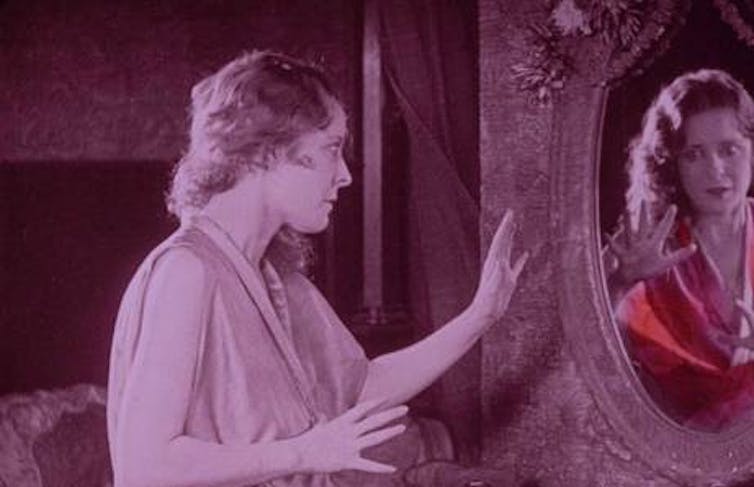
Nem 30 minutos se passaram desde o início quando vemos a imagem mais icônica do filme - imagem que você pode já ter visto sem saber que era de “Sublime Redenção”: Gabrielle vendo sua imagem refletida num espelho, primeiro vestida de noiva, depois com o quimono vermelho do título original - sim, o negativo foi pintado de vermelho neste momento particular. Outras sequências visualmente interessantes são a metáfora visual já mencionada com os gatos e uma tomada de dentro de uma agência da Western Union apontando para a rua.

Not 30 minutes have passed when we see the most iconic image of the film - one you might have seen without knowing it’s from “The Red Kimona”: Gabrielle seeing her image reflected on a mirror, first as a bride, then with the red Kimona from the title - yes, the negative was tinted red in this particular moment. Other visually interesting sequences are the aforementioned visual metaphor with the cats and a view from inside a Western Union agency pointing to the streets.

O melodrama é como um sucessor da tragédia grega para a sociedade burguesa. Suas raízes podem ser traçadas até Shakespeare, a ópera e principalmente um autor chamado Pixérécourt. Os melodramas trazem mensagens moralizantes que são como a “moral da história” de contos de fadas e outras histórias infantis; É por isso que esta forma foi adotada após a Revolução Francesa para moralizar e educar as massas - um conceito que também era novidade.

Melodrama is kind of the successor to the Greek tragedy for the bourgeois society. Its roots can be traced to Shakespeare, opera and mainly to an author called Pixérécourt. Melodramas bring moralizing messages that are like the “moral of the story” from fairy and children’s tales. That’s why this form was adopted after the French Revolution to moralize and educate the masses - a concept that was also brand new.

O melodrama também foi bem-sucedido nas primeiras décadas do cinema, especialmente com D.W. Griffith. Ele faz sua pupila favorita Lillian Gish sofrer para ensinar uma lição em filmes como “Inocente Pecadora” (1920) e “Órfãs da Tempestade” (1921, abaixo).

Melodrama was also successful in the first decades of cinema, especially with D.W. Griffith. He makes his favorite pupil Lillian Gish suffer to teach a lesson in movies such as “Way Down East” (1920) and “Orphans of the Storm” (1921, picture below).

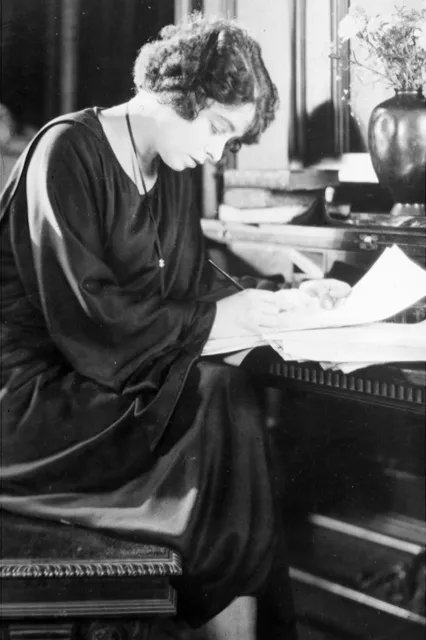
“Sublime Redenção” foi baseada numa história original de Adela Rogers St. John e adaptada para as telas pela futura diretora Dorothy Arzner. O novato Walter Lang é em geral creditado como único diretor, mas Dorothy Davenport - creditada como Sra Wallace Reid - também dirigiu o filme, e merece ser conhecida por seu próprio nome. 

“The Red Kimona” was based on an original story by Adela Rogers St. John and adapted to the screen by future director Dorothy Arzner. Newcomer Walter Lang is often credited solo as the director, but Dorothy Davenport - credited Mrs Wallace Reid - also directed the movie, and deserves to be known by her own name.

A verdadeira Gabrielle Darley não ficou feliz ao ver sua história contada nas telas sem sua aprovação nem sequer uma mudança de nome. Graças a isso, um caso que foi esquecido é hoje conhecido pelo público mais de 100 anos após o acontecido. Dorothy Davenport teve de pagar 50 mil dólares para Gabrielle após um processo. O filme foi também banido em algumas cidades, embora sua mensagem final seja de misericórdia e não vício. 

The real Gabrielle Darley wasn’t happy seeing her story told on screen without her approval nor at least a name change. Thanks to that, a case that fell into obscurity is now known by audiences over 100 years after it happened. Dorothy Davenport had to pay fifty thousand dollars to Gabrielle following a lawsuit. The film was also banned in some cities, even though its final message is of mercy, not vice.

De acordo com a professora Mary Ann Doane, quando uma mulher olha para outra mulher na tela, ela pode ou ter uma profunda identificação com a personagem - como nos “women’s films” - ou desejar a personagem como um voyeur masculino. Colocar-nos no lugar de uma vítima de prostituição e assassina não é exatamente fácil, mas é um milagre que pode ser alcançado com o poder do cinema. Como o final diz, qualquer uma de nós poderia ser uma Madalena.

According to scholar Mary Ann Doane, when a woman looks at another woman on screen, she can either have a deep identification with the character - like in “women’s films” - or desire the character like a male voyeur. Putting ourselves in the place of a prostitution victim and murder isn’t exactly easy, but it’s a miracle that can be accomplished by the power of cinema. As the ending says, we could all be modern Magdalens.

Em “Meanings of Melodrama”, o professor Ben Singer menciona as características definidoras do melodrama. Vejamos se elas se aplicam a “Sublime Redenção”:

In “Meanings of Melodrama”, scholar Ben Singer mentions the defining characteristics of melodrama. Let’s see if they apply to “The Red Kimona”:

1- Pathos, isto é, o que causa compaixão: com certeza nos sentimos mal por Gabrielle. Por isso é que se chama “empatia” - de pathos.

1- Pathos, that is, what causes pity: we for sure feel bad for Gabrielle. No wonder it’s called “empathy” - from pathos.

2- Emoção exagerada: há muito sofrimento.

2- Exaggerated emotion: there is a lot of suffering.

3- Polarização moral: o vil Howard não tem qualidades que o redimem.

3- Moral polarization: the vile Howard has no redeeming qualities.

4- Estrutura narrativa não-clássica, isto é, feita de coincidências: Gabrielle conhece Howard por acaso, e o mesmo acontece com a saga de seu par final para vê-la novamente.

4- Non-classic narrative structure, that is, made of coincidences: Gabrielle meets Howard by chance, and the same happens with her final suitor’s saga to see her again.

5- Sensacionalismo: há suspense no tribunal e ação perto do final, fazendo nosso coração disparar.

5- Sensationalism: there is suspense in the trial and action near the end, making our hearts race.

No melodrama, o amor cego não é uma virtude. O herói melodramático ou, menos comumente, a heroína, ganha o amor como recompensa por obter outra coisa que beneficia o coletivo. É isso que acontece em “Sublime Redenção”, um exemplo perfeito de melodrama mudo - e mais: feito por mulheres! 

In melodrama, blind love is not a virtue. The melodramatic hero or, less common, heroine gains love as a reward for obtaining something else that is good for the collective. This is what happens in “The Red Kimona”, a perfect example of silent melodrama - and a plus: made by women!

This is my contribution to the Cry Me a River: Tearjerkers Blogathon, hosted by the Classic Movie Blog Association.

Related Posts Plugin for WordPress, Blogger...