} Crítica Retrô: Frances Marion

Tradutor / Translator / Traductor / Übersetzer / Traduttore / Traducteur / 翻訳者 / переводчик

Showing posts with label Frances Marion. Show all posts

Wednesday, May 28, 2025

O Campeão (1931) / The Champ (1931)

 Maio é o mês em que celebramos as mães, as noivas… e o melodrama. Bem, pelo menos este mês de maio foi melodramático o suficiente neste blog com uma crítica de um melodrama feito por uma mulher - filmes deste gênero específico são em geral feitos PARA mulheres, mas dificilmente POR elas. Há uma mulher forte também por trás do melodrama de hoje: Frances Marion escreveu o roteiro de “O Campeão”.


May is the month we celebrate mothers, brides… and melodrama. Well, at least this May was melodramatic enough on this blog with a review of a melodrama made by a woman - movies from this specific genre are often targeted to women, but not made by them. There is one strong woman also behind today’s melodrama: Frances Marion wrote the screenplay for “The Champ”.


Os anos de glória do boxeador Andy (Wallace Beery) já passaram, mas ele ainda é conhecido como Champ (de “Champion”: campeão). Seu treinador e gerente de sua carreira é seu filho Dink (Jackie Cooper), que ainda é um garoto. Os maiores inimigos de Champ são o álcool e as apostas.


Andy (Wallace Beery) is a has-been boxer, but is still known as Champ. His trainer and career manager is his son Dink (Jackie Cooper), who is just a boy. Champ’s biggest enemies are alcohol and gambling.


Pai e filho vivem num apartamento de um quarto só com uma cama que dividem. Tem uma cadeira de balanço igualzinha à de Champ na minha casa! Numa manhã, Dink está fazendo as tarefas do lar quando Champ chega com um presente: um cavalo! Eles decidem rebatizar o animal, de Butterfly para Little Champ, e treiná-lo para se tornar um cavalo de corrida. Um dia, nas pistas de corrida, Champ encontra uma figura do passado que irá assombrá-lo.


Father and son live in a one-bedroom apartment with a shared bed. There is a rocking chair exactly like Champ’s in my house! One morning, Dink is doing the household chores when Champ arrives with a present: a horse! They decide to rename the animal, from Butterfly to Little Champ, and train it to become a race horse. One day, on the race tracks, Champ meets a figure from his past who will haunt him.


Wallace Beery ganhou o Oscar de Melhor Ator - empatado com Fredric March de “O Médico e o Monstro” - por sua interpretação de Champ, mas o filme pertence a Dink e sua ampla gama de expressões. Jackie Cooper mais tarde declarou que Beery tentou aparecer mais que ele a todo momento, mas os resultados mostram que o ator adulto falhou. O que realmente aconteceu foi a revitalização da carreira de Beery, que se tornou então o ator mais bem pago da época quando ele assinou contrato com a MGM.


Wallace Beery won the Best Actor Oscar - tied with Fredric March from “Dr Jekyll and Mr Hyde” -  for playing Champ, but the movie belongs to Dink and his wide range of expressions. Jackie Cooper later claimed that Beery tried to upstage him at all times, but results prove that the adult actor failed. What did happen was the revitalization of Beery’s career, making him the highest-paid actor of the time when he signed with MGM.


Jackie Cooper foi indicado para o Oscar um ano antes por “Skippy” e, durante a cerimônia, adormeceu encostado no ombro de Marie Dressler! Cooper ainda é a única pessoa menor de 18 anos a ser indicado ao Oscar de Melhor Ator. Frances Marion também ganhou o Oscar na categoria Melhor Roteiro - História Original. Ela havia escrito a história tendo Wallace Beery em mente para ser o protagonista.


Jackie Cooper was nominated for the Oscar one year before for “Skippy” and, during the ceremony, fell asleep on Marie Dressler’s shoulder! Cooper remains the only person under 18 to be nominated for a Best Actor Oscar. Frances Marion also won the Oscar in the category Best Writing - Original Story. She had written the story with Wallace Beery in mind to star.


Dink tem um amigo da sua idade chamado Jonah e, quando o apresenta para Linda (Irene Rich), Dick enfatiza que “ele é de cor”. Jesse Scott interpreta Jonah, no primeiro de seus seis papéis no cinema, metade deles sem receber crédito.


Dink has a friend his age named Jonah and, as he introduces him to Linda (Irene Rich), Dink emphasizes that “he’s colored”. Jesse Scott plays Jonah, in the first of six screen roles, half of them uncredited.


Como escrito na Wikipedia, “a crítica de cinema Judith Christ declarou que quase todo filme contendo um ator adulto junto a um ator mirim deve ser comparado com O Campeão em termos da química entre os atores e a eficácia do filme”. “Química” não é exatamente a melhor palavra para descrever o que havia entre Beery e Cooper, mas você não pode sentir a animosidade enquanto assiste ao filme. Talvez o melhor ator mirim desde Jackie Coogan - de “O Garoto” (1921) de Chaplin - , Cooper é o campeão real aqui.


As written in Wikipedia, “Film critic Judith Christ has argued that almost any film pairing an adult actor alongside a child actor must be compared to The Champ in terms of the chemistry between the actors and the effectiveness of the film.” “Chemistry” isn’t exactly the best word to describe what was going on between Beery and Cooper, but you can’t tell about the animosity while watching the film. Arguably the best child actor since Jackie Coogan - from Chaplin’s “The Kid” (1921) - , Cooper is the real champion here. 

Monday, January 1, 2018

Resoluções cinematográficas 2017 – Resultado / 12 classics for 2017 – results

Eu falhei.

I failed.
Pela primeira vez desde que me comprometi a cumprir esta tarefa hercúlea, três anos atrás, eu falhei e não assisti a todos os filmes da minha lista. E não foi minha culpa: eu simplesmente não consegui encontrar uma cópia de “Cilada Amorosa” (1929). Ele nunca saiu em DVD onde eu moro e eu não consegui encontrar o filme mesmo através de, hum, meios nem sempre legalizados. Mas eu não desisti: ainda estou procurando por “Cilada Amorosa” como quem procura o Santo Graal, e um dia eu assistirei ao filme e completarei esta lista.

For the first time since I took on this yearly Herculean task, three years ago, I failed to watch all the films on my list. And it was not my fault: I simply couldn't find a copy of “The Love Trap” (1929). It was never released on DVD where I live and it couldn't even be found in, er, less than legal ways. I haven't given up: I'm still looking for “The Love Trap” as one looks for a Holy Grail, and one day I intend to watch it and complete my list.

Agora, vamos esquecer minha vergonha por um momento e ler minhas impressões sobre cada clássico que eu vi pela primeira vez em 2017:

Now, let's forget my shame for a while and read my thoughts on each of the classics I saw for the first time in 2017:

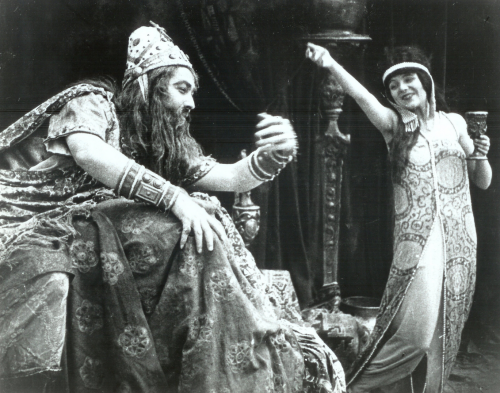
Judith of Bethulia (1914): Esta é a história bíblica de como Jerusalém foi salva quando a mística Judith (Blanche Sweet) seduziu e matou o príncipe Holofernes (Henry B. Walthall.) Não seo fã de Griffith, e não estava tão familiarizada com a história quanto o público de 1914 provavelmente estava, mas este filme me lembrou do estilo das novelas da Record.

Judith of Bethulia (1914): This is the biblical story of how Jerusalem was saved when mystical Judith (Blanche Sweet) seduced and killed prince Holofernes (Henry B. Walthall). I’m not a Griffith fan, and I was not as familiar with story as the 1914 moviegoers probably were, but this film reminded me of the production values of a corny biblical soap opera.
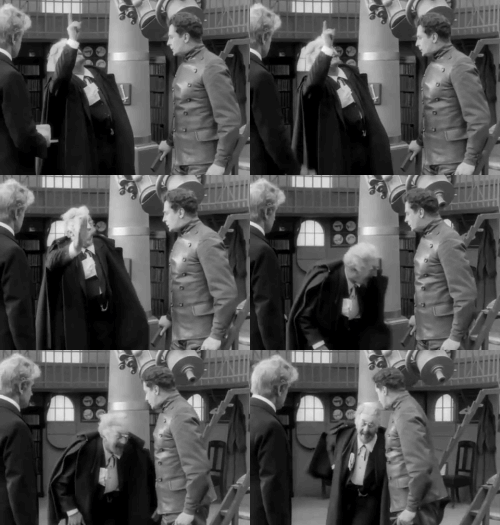
Himmelskibet (1918): É basicamente o que o título em inglês diz – uma viagem para Marte – mas é muito impressionante para algo feito em 1918. E é ainda mais surpreendente o fato de que eles acertaram o tempo que leva uma viagem da Terra à Marte – cerca de seis meses! Os efeitos especiais são muito bons, e você se surpreenderá ao descobrir como os marcianos vivem. Eu também adorei os nomes dos personagens em Latim – Planetaros, Corona, Dubius.

A Trip to Mars / Himmelskibet (1918): It’s basically that – A Trip to Mars – but very impressive for 1918. And it’s even more impressive that they got right the time to travel from Earth to Mars – about six months! The special effects are very good, and you’ll be surprised to find out how Martians live. I also loved the Latin names– Planetaros, Corona, Dubius.
A Morte Cansada / Der Müde tod (1921): Este feito só poderia ter sido feito durante o Expressionismo Alemão. Em Hollywood, o filme teria um final feliz, mais facilmente digerível, mas nada realista. Na Alemanha, a história da mulher (Lil Dagover) que tenta salvar uma das três almas em diferentes lugares e épocas com o intuito de trazer seu amado de volta dos mortos é contada com perfeição – como se “Intolerância” (1916) tivesse sido bem feito.

Destiny / Der Müde Tod (1921): This film could only be made during the German Expressionism movement. In Hollywood, it would have been pushed to a palatable, but not realistic, happy ending. In Germany, the story of a woman (Lil Dagover) who tries to save one of three souls in different places and times to have her boyfriend back from the dead is perfectly developed – like an “Intolerance” (1916) done right.
L’Inhumaine (1924): A história envolve uma cantora fria, Claire (Georgette Leblanc) e seus muitos admiradores. Há um toque dramático e ao fim o filme se transforma em ficção científica. Mas os cenários são a verdadeira atração: idealizados por dois diretores de arte (o brasileiro Alberto Cavalcanti e o francês Claude Autant-Lara), os cenários são ousados, futuristas, assimétricos, cubistas, assustadores e tão impressionantes quanto os de “Metrópolis” (1927) – ou até um pouco mais.

The New Enchantment / L’inhumaine (1924): The story involves a cold singer, Claire (Georgette Leblanc) and her many admirers. There is a dramatic touch and then it becomes science fiction. But the sets are the real attraction here: designed by two art directors (Brazilian Alberto Cavalcanti and French Claude Autant-Lara), they’re bold, futuristic, cubist, asymmetric, awe-inducing and as impressive as the sets in “Metropolis” (1927) – maybe even more.
Uma Página de Loucura (1926): Este clássico japonês é contado sem intertítulos e é, por causa disso e de outras coisas, fascinante. O final é maravilhoso, e trata-se de um filme que você deve assistir muitas vezes para apreciá-lo por completo. Leia minha crítica completa AQUI.

A Page of Madness (1926): This Japanese classic is told without intertitles and is, because of this and other things, fascinating. The ending is wonderful, and it is one film you should watch many times to fully appreciate it. My full review is HERE.
Aurora / Sunrise (1927): Eu devo confessar que na metade do filme pensei ser estranho e até sexista o fato de que a esposa (Janet Gaynor) havia perdoado o marido (George O’Brien) e estava se divertindo muito com ele algumas horas depois de ele ter tentado matá-la. Mas então os 15 minutos finais me deixaram sem palavras. Que surpresa. Bravo, Murnau, você merece ser aplaudido de pé.

Sunrise (1927): I must confess that in the middle of the film I thought it was weird and even sexist the fact that the wife (Janet Gaynor) forgave her husband (George O’Brien) and was having the time of her life with him some mere hours after he tried to kill her. But then the final 15 minutes came and OH MY. What a plot twist. Bravo, Murnau, I ended up giving you a standing ovation.
Cilada Amorosa / The Love Trap (1929)

Ver para Crer / Why Be Good? (1929): Este filme tem um subtexto feminista e Colleen Moore arrasa na pista de dança. Ela é Pert Kelly, uma vendedora que adora festejar – e cuja reputação a prejudica quando o filho de seu patrão (Neil Hamilton) se apaixona por ela. Eu pretendo escrever mais sobre este filme.

Why Be Good? (1929): This film has a feminist subtext and Colleen Moore rocks some dance movements. She’s Pert Kelly, a salesgirl who loves to party – and whose reputation precedes her when the boss’s son (Neil Hamilton) falls in love with her. I intend to write more about this movie.
O Presídio / The Big House (1930): Este filme foi escrito por Frances Marion – a primeira mulher a ganhar um Oscar de roteiro e também a primeira mulher a ganhar um Oscar em categorias diferentes da atuação. É a história de Kent (Robert Montgomery), que dirigia embriagado e matou um homem atropelado, e seus companheiros de cela durões: Butch (Wallace Beery) e Morgan (Chester Morris). O filme também deu a Douglas Shearer o primeiro Oscar de Mixagem Som da história.

The Big House (1930): This film was written by the great Frances Marion – the first woman to win a Screenplay Oscar and also the first woman to win a non-acting Oscar. It’s the story of Kent (Robert Montgomery), who killed a man by driving drunk, and his though cell companions: Butch (Wallace Beery) and Morgan (Chester Morris). The film also gave Douglas Shearer the first Best Sound Mixing Oscar ever.
Glória e Poder / The Power and the Glory (1933): É Cidadão Kane oito anos antes de Cidadão Kane – ou quase isso. Este filme tem um excelente roteiro – obrigada, Preston Sturges! – e traz Colleen Moore naquele que é provavelmente seu melhor momento. Crítica completa AQUI.

The Power and the Glory (1933): It is Citizen Kane eight years before Citizen Kane – kind of. This film is beautifully written – thanks, Preston Sturges! – and showcases Colleen Moore at probably her best moment. Full review HERE.
A Mulher de Branco / Woman in White (1948): É místico, e se parece muito com um conto de fadas noir. O filme também trata de alienação e roubo. Crítica completa AQUI.

Woman in White (1948): It’s mystical, and it’s much like a noir fairy tale. It also involves alienation and robbery. Eleanor Parker is amazing. Full review HERE.
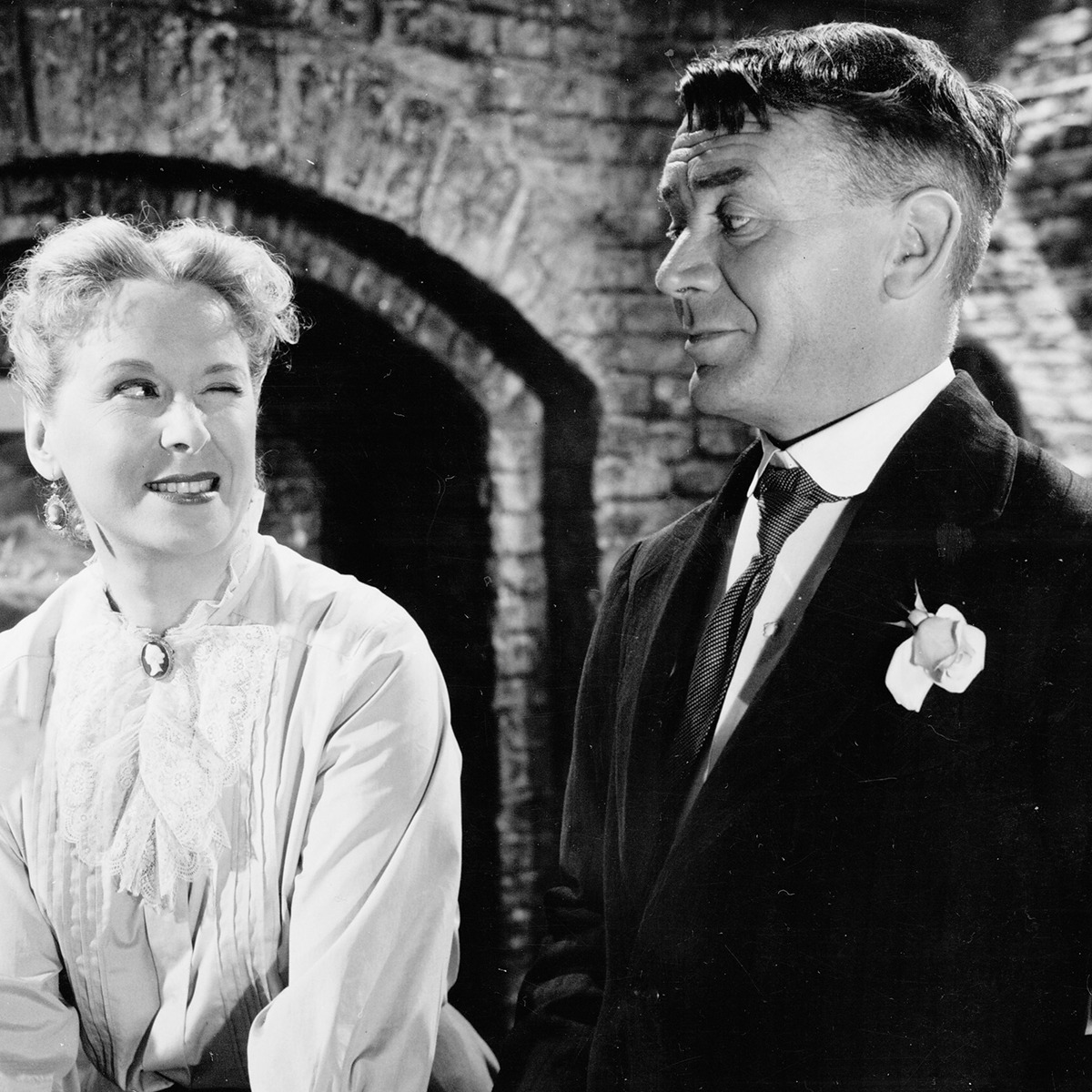
Papai é do Contra / Hobson’s Choice (1954): Charles Laughton está ótimo como o conservador Hobson, mas eu gostei especialmente de Brenda de Banzie como sua esperta filha mais velha e do brilhante John Mill como um funcionário talentoso porém ingênuo. Crítica completa AQUI.


Hobson’s Choice (1954): Charles Laughton is great as old-fashioned Hobson, but I especially loved Brenda de Banzie as his smart older daughter and brilliant John Mills as a talented but naïve employee. Full review HERE.
Related Posts Plugin for WordPress, Blogger...