} Crítica Retrô: 1924

Tradutor / Translator / Traductor / Übersetzer / Traduttore / Traducteur / 翻訳者 / переводчик

Showing posts with label 1924. Show all posts

Monday, April 27, 2026

Figuras de Cera (1924) / Waxworks (1924)


Este gabinete veio depois do de Doutor Caligari. As figuras de cera não ganham vida à noite, como na trilogia “Uma Noite no Museu”: elas ganham vida graças à imaginação de um escritor contratado para fazer propaganda do gabinete de figuras de cera com histórias instigantes. O resultado é um triunfo de direção para Paul Leni e de atuação para Conrad Veidt e Emil Jannings, anos antes de os três irem para Hollywood. 

This cabinet came after Doctor Caligari’s. The wax figures don’t become alive at night, like in the “Night at the Museum” trilogy: they come alive thanks to the imagination of a writer hired to advertise the waxworks cabinet with engaging stories. The result is a triumph of directing for Paul Leni and acting for Conrad Veidt and Emil Jannings, years before the three went to Hollywood.

O Califa Haroun Al-Raschid (Emil Jannings) odeia monotonia, por isso ele tem uma esposa para cada dia do ano - mas nenhuma delas é mais bonita que a esposa do padeiro, Zarah, que passa a ser cortejada pelo Grande Vizir e gosta da paquera, pois está infeliz com o casamento. Para mudar a situação, o padeiro promete roubar um anel mágico do Califa. Mas ele não sabe que o Califa vai até a sua casa bem na hora em que ele leva a cabo o roubo no palácio. 

The Caliph Haroun Al-Raschid (Emil Jannings) hates monotony, so he has one wife for each day of the year - but none is more beautiful than the baker’s wife, Zarah, who starts being coveted by the Grand Vizier and likes being coveted, as she’s unhappy in her marriage. To change the situation, the baker vows to steal the Caliph’s Wishing Ring. Unbeknownst to him, the Caliph goes to his house while the baker goes to the palace to steal the ring.

Ivan, o Terrível (Conrad Veidt) está especialmente interessado em venenos e outras maneiras de eliminar seus inimigos. Como ele fez muitos inimigos, bola um plano para viajar sem que haja a possibilidade de ser assassinado - mas o perigo o ronda assim mesmo.

Ivan the Terrible (Conrad Veidt) is especially interested in poisons and other means to eliminate his enemies. Since he has made so many enemies, he plots a plan to travel without the possibility of being murdered - but danger lurks anyway.

E então Jack, o Estripador (Werner Krauss) volta à vida

And then Jack the Ripper (Werner Krauss) becomes alive.

Este é um filme de antologia, algo que sempre foi um pouco raro no mundo do cinema, mas que chama a atenção de muitos - e eu me incluo neste grupo - quando são feitos. Um exemplo também do cinema de Weimar é “A Morte Cansada” (1921), de Fritz Lang. Originalmente, “Figuras de Cera” contaria quatro histórias mas não sobrou dinheiro para fazer a última, porque o plano era gravar este episódio na Itália. 

This is an anthology movie, something that has always been a bit rare in the movie world, but drives the interest of many - me included - when they’re made. One early example, also from Weimar Cinema, is Fritz Lang’s “Destiny” (1921). Originally, “Waxworks” would have four stories told, but there wasn’t enough money to do the fourth, because the plan was to shoot this episode in Italy.

Emil Jannings foi um verdadeiro camaleão que se tornou o primeiro agraciado com o Oscar de Melhor Ator. Conrad Veidt tinha olhos líquidos inimitáveis. Mas gostaríamos de destacar outro intérprete: Werner Krauss. O próprio Doutor Caligari do filme de 1920, Krauss apareceu em diversos clássicos do cinema mudo e teve uma transição tranquila para o cinema falado… até que fez o filme de propaganda antissemita “Judeu Suss” em 1940. Após a queda do Nazismo, ele declarou que foi coagido a fazer o filme, mas mesmo assim foi considerado um criminoso de guerra menor e teve de se mudar para a Áustria, onde continuou trabalhando mas morreu relativamente esquecido em 1959 - como deveria acontecer com todo nazista. 

Emil Jannings was a true chameleon who became the first Best Actor Oscar recipient. Conrad Veidt had unmistakable liquid eyes. But here we’d like to showcase someone else: Werner Krauss. THE Doctor Caligari in the 1920 film, Krauss made appearances in several classic silent movies and transitioned well to talkies… until he appeared in the antissemitic propaganda film “Jud Suess” in 1940. After the fall of Nazism, he proclaimed that he was coerced into making the movie, nevertheless he was considered a minor war criminal and had to move to Austria, where he kept working until he died in relative obscurity in 1959 - which should happen to all Nazis.

Outro intérprete digno de destaque é William Dieterle, que faz o Poeta que escreve todas as histórias para as figuras de cera, e também Assad o Padeiro na história do Califa e um Boiardo na história de Ivan. Ele começou a atuar aos dezesseis anos e logo se tornou um favorito do diretor de teatro Max Reinhardt, trabalhando ao seu lado entre 1919 e 1924. Tendo feito seu primeiro filme como ator em 1921 e o primeiro como diretor em 1923, ele foi bem-sucedido em ambas as funções. Indo para Hollywood em 1930 para fazer versões dubladas para o alemão de filmes norte-americanos, ele em vez disso se tornou um prolífico diretor. No IMDb, ele conta com 67 créditos como ator e 91 como diretor. 

Another performer to showcase is William Dieterle, who plays The Poet who writes all the stories for the wax figures, and also Assad the Baker in the Caliph story and a Boyar in Ivan’s story. He started acting at age sixteen and soon became a favorite of theater director Max Reinhardt, who worked with him between 1919 and 1924. Making his first film as an actor in 1921 and the first as director in 1923, he was successful in both functions. Going to Hollywood in 1930 to make German-dubbed versions of North American films, he instead became a prolific director. On IMDb, he has 67 credits as an actor and 91 as director.

Com uma mistura perfeita de terror e comédia, “Figuras de Cera” foi escrito por Henrik Galeen, também responsável pelo roteiro de “Nosferatu” (1922). Como um exemplo tardio do Expressionismo Alemão, pode não ser tão lembrado quanto Caligari, que é uma obra-prima, mas este é um filme interessante que sabe entreter.

With a perfect mix of horror and comedy, “Waxworks” was written by Henrik Galeen, also responsible for the screenplay of “Nosferatu” (1922). As a late German Expressionism flick, it is not as well remembered as Caligari, which is a masterpiece, but this is an interesting and entertaining film.

Thursday, February 6, 2025

Sucessos de bilheteria de 1924 e 2024 / Box Office hits: from 1924 to 2024


O começo de um novo ano traz muitas coisas: energia e esperança renovadas, disposição para fazer tudo diferente e listar resoluções… e as inevitáveis listas de retrospectiva. Estas se dividirem entre as “melhores do ano”, cujo critério é totalmente subjetivo, e as objetivas listas dos maiores sucessos de bilheteria. Como aqui no blog gostamos de olhar para trás, mas bem para trás mesmo, postulamos a pergunta: o que há de comum entre os sucessos de bilheteria de 2024 e os de cem anos atrás, de 1924?

The beginning of a new year brings a lot of things: renewed energy and hopes, disposition to do things differently and list resolutions… and the inevitable lists about retrospectives. These can be the “best of the year”, when the criteria is purely subjective, and the objective lists of the greatest box office hits. Since here in this blog we like to look back, but waaaay back, we ask a question: what common traits can we find between the box office hits of 2024 and the ones from 100 years ago, from 1924?

Quando falei da ideia deste post para minha mãe, ela disse que era uma comparação estapafúrdia. Em parte ela tem razão: em 1924 não existia como hoje um controle de bilheteria e todos os números são apenas estimativas. Baseio-me aqui na lista da Wikipédia para o ano de 1924 no cinema, que elenca os dez maiores sucessos de bilheteria de acordo com um almanaque de 1938. Com essa fonte não necessariamente irrefutável em mãos, vamos à análise.

When I talked to my mother about my idea for this post, she said it’s an absurd comparison. She’s partially right: in 1924 there wasn’t, like today, a box office control and all numbers are only a rough estimate. I here use the Wikipedia list for the year 1924 in film, that lists the top 10 box office hits according to a 1938 magazine. With this not completely accurate source, let’s take a look at the numbers.

Macy's first Thanksgiving Day parade happened in 1924

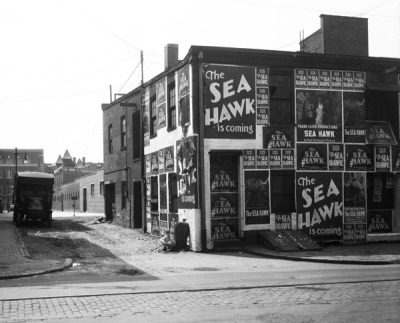
O maior sucesso de bilheteria de 1924 foi “O Gavião do Mar” (“The Sea Hawk”), no qual um nobre inglês se torna um temido corsário. Os protagonistas são Milton Sills e Enid Bennett, ambos muito famosos na época, mas nomes que só são reconhecidos hoje pelos muito aficionados pela História do cinema. Isso coloca uma dúvida na nossa cabeça: será que daqui a cem anos só os extremamente cinéfilos saberão quem foram Timothée Chalamet e Anya Taylor-Joy?

The greatest box office hit of 1924 was “The Sea Hawk”, in which an English nobleman becomes a pirate. The leads are Milton Sills and Enid Bennett, both very famous at the time, but who are now only recognized by the most diehard Movie History buffs. This gives us food for thought: in one hundred years will only the greatest cinephiles know who were Timothée Chalamet and Anya Taylor-Joy?   

Apostando no exotismo, “O Gavião do Mar” arrecadou dois milhões de dólares de bilheteria - o equivalente a 36 milhões de dólares atualmente. A fórmula do exótico foi repetida pelo quarto maior sucesso de bilheteria do ano, “O Ladrão de Bagdá”, protagonizado por Douglas Fairbanks. O topo da lista de 2024 foi ocupado com “Divertida Mente 2”, que arrecadou mais de um bilhão de dólares no mundo todo, e quase 653 milhões só nos EUA.

Focusing on the exoticism, “The Sea Hawk”’s box office is estimated at two million dollars - the equivalent to 36 million dollars nowadays. The exotic formula was repeated by the fourth greatest box office hit of the year, “The Thief of Bagdad”, who lead was Douglas Fairbanks. The top of the 2024 list was occupied by “Inside Out 2”, that obtained more than one billion dollars around the world, and almost 653 million in the USA alone.

Advertisement for "The Sea Hawk"

Na lista de 1924, um ator-realizador aparece duas vezes: Harold Lloyd. Em segundo lugar entre as maiores bilheterias está seu “O Maricas” (“Girl Shy”), sobre um falso conquistador que tem medo de ser abordado pelas mulheres. Em quinto lugar, seu “Sogra Fantasma” (“Hot Water”), com três esquetes da vida doméstica.

In the 1924 list, an actot-filmmaker appears twice: Harold Lloyd. The second place among the box office hits is his “Girl Shy”, about a fake ladies’ man who is afraid to talk to women. The fifth place is his “Hot Water”, with three sketches of domestic life.

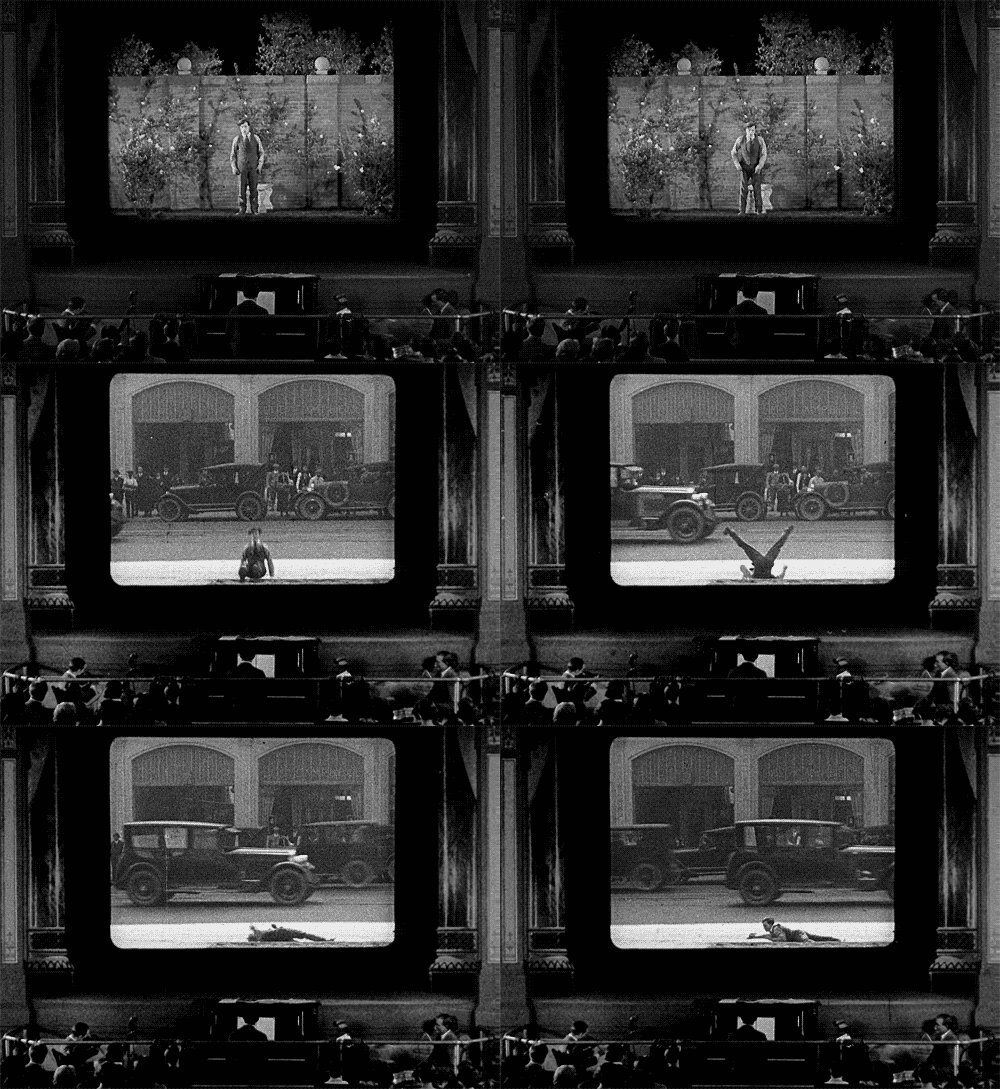
Assim como Lloyd, Buster Keaton também lançou dois filmes em 1924, que hoje seriam considerados médias-metragens. Em “O Navegador” (“The Navigator”), ele divide a direção com Donald Crisp, ator versátil que obteve muito sucesso tanto na era muda quanto nos filmes falados. Mas Keaton assina sozinho a direção de “Bancando o Águia” (“Sherlock Jr”), filme com a popular e muitíssimo bem feita sequência em que Keaton invade a tela do cinema. Por outro lado, em “O Navegador” - o maior sucesso de bilheteria da carreira de Keaton - há uma elaborada sequência subaquática.

Just like Lloyd, Buster Keaton also released two movies in 1924, now considered neither shorts nor features. In “The Navigator”, he shares the direction with Donald Crisp, a versatile actor who was successful both in the silent era and with the talkies; But Keaton is the solo director of “Sherlock Jr”, the film with the very popular and extremely well-made sequence that has Keaton entering a movie screen. On the other hand, “The Navigator” - the biggest box office hit of Keaton’s career - has an elaborated underwater sequence.

Há espaço no Top 10 de 1924 para filmes perdidos e fora de circulação: enquanto “Secrets” de Frank Borzage, “Triumph” de DeMille e “His Hour” de King Vidor ainda existem mas não circulam, “Feet of Clay”, também de Cecil B. DeMille não tem cópias restantes.

There is space in the Top 10 of 1924 for lost and out of circulation movies: while Frank Borzage’s “Secrets”, DeMille’s “Triumph” and King Vidor’s “The Hours” still exist but aren’t exhibited, “Feet of Clay”, also made by Cecil B. DeMille, has no copies extant.

Not ready for my close-up, Mr DeMille

1924 viu o nascimento do que seria um gigante: os estúdios MGM. A Disney foi estabelecida um ano antes e em 1924 focava suas energias em produzir as misturas de animação com live-action “Alice’s Wonderland”. Um século depois e o estúdio tem duas animações no Top 5, ambas sequências : além de “Divertida Mente 2”, temos “Moana 2”.

1924 saw the birth of what would be a movie giant: the MGM studios. Disney was established one year earlier and in 1924 focused on making the live-action with cartoons mix “Alice’s Wonderland”. One century later and the studio has two animations in the Top 5, both sequels: besides “Inside Out 2”, there is “Moana 2”.

A primeira cartela de texto que aparece em “O Gavião do Mar” fala de “forgotten yesterdays”. Essa é a matéria-prima do cinema: o tempo. É também ingrediente principal, embora tentemos freá-lo, o esquecimento. Os sucessos de bilheteria de cem anos atrás podem não nos dizer muita coisa, mas dizem isso com total fluência: não há arte mais volátil que o cinema.

The first intertitle that appears in “The Sea Hawk” talks about “forgotten yesterdays”. This is the main ingredient of cinem: the time. Another main ingredient, even though we try to stop it, is oblivion. The box office hits from one century ago may not say much, but this they say fluently: there is no other art as volatile as cinema.  

Friday, April 28, 2023

Aelita – A Rainha de Marte (1924) / Aelita, Queen of Mars (1924)

 ESTA CRÍTICA TEM SPOILERS / THIS REVIEW HAS SPOILERS


Marte! O sonho de muitos aventureiros, astronautas e lunáticos. Um local que já foi visitado, através do cinema: eu já escrevi sobre viagens cinematográficas para Marte antes, mas há uma lista infindável de filmes com passagem por Marte. Um destes filmes, feito na União Soviética na era muda, é o estranho filme de propaganda “Aelita – A Rainha de Marte”, de 1924.

Mars! The dream of many adventurers, astronauts and lunatics. A place that was already visited, through cinema: I’ve talked about movie trips to Mars before, but there is a never-ending list of films with a passage to Mars. One of these films, made in the Soviet Union in the silent era, is the strange propaganda flick “Aelita, Queen of Mars”, from 1924.

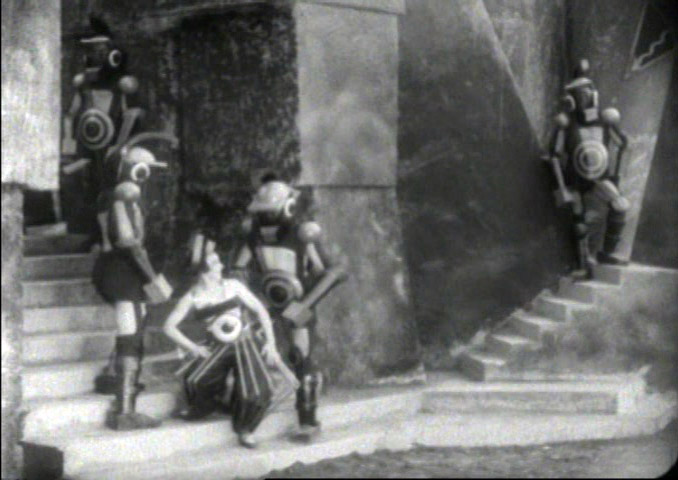
Em Marte, a rainha Aelita (Yuliya SoIntseva) vê num telescópio os habitantes do planeta vizinho, a Terra, com genuína curiosidade. Ela se apaixona por um dos terráqueos. Enquanto isso, na Terra, muitas pessoas em laboratórios recebem uma estranha mensagem: “Anta Odeli Uta”. Acreditando ser uma mensagem de Marte, o engenheiro Loss (Nikolai Tsereteli) decide construir uma nave espacial para visitar o planeta vermelho.

On Mars, Queen Aelita (Yuliya SoIntseva) sees throw a telescope the inhabitants of the neighboring planet, Earth, with genuine curiosity. She falls in love with one of them. Meanwhile, on Earth, several people in laboratories receive a strange message: “Anta Odeli Uta”. Believing it’s a message from Mars, the engineer Loss (Nikolai Tsereteli) decides to build a spaceship to visit the red planet.


Depois de seis meses trabalhando numa usina, Loss volta para casa e encontra a esposa Natasha (Valentina Kuindhzi) numa pose comprometedora com um canalha. Loss atira em Natasha e decide que é hora de ir para Marte. No planeta vermelho, ele encontra Aelita e causa profundo impacto com mudanças para os menos afortunados.

After six months working on a power plant, Loss returns home to find his wife Natasha (Valentina Kuindhzi) in a compromising pose with a scoundrel. Loss shoots Natasha and decides it’s the ideal time to go to Mars. On the red planet, he meets Aelita and has a deep impact on changing how things happen there for the less powerful.


Marte em “Aelita” é futurístico, mas não muito. As roupas usadas pelos marcianos são brilhantes e curiosas – mais curiosas que belas. Não há equipamentos futurísticos mostrados além do estranho telescópio do começo do filme. É futurístico em Marte, mas a norma social vigente é construída em cima da escravidão.

Mars in “Aelita” is futuristic, but not so much. The clothes worn by the Martians are shiny and curious – more curious than charming. There is no futuristic gadget shown other than the weird-looking telescope from the beginning. It’s futuristic on Mars, but the societal norm is built on slavery.


Loss acredita que pode ajudar a “reconstruir a Rússida” com sua missão para Marte. A mensagem “Anta Odeli Uta” é recebida em quatro de dezembro de 1921: apenas quatro anos após a Revolução Russa. Neste sentido, “Aelita” é um tipo estranhíssimo de propaganda, pois os russos vão para Marte para ajudar a estabelecer uma União de Repúblicas Socialistas Soviéticas por lá.

Loss believes he can help “reconstruct Russia” with his mission to Mars. The message “Anta Odeli Uta” is received on December 4th, 1921: only four years after the Russian Revolution. In this sense, “Aelita” is the oddest kind of propaganda, as the Russians who go to Mars help establish a Union of Socialist Soviet Republics there.

Yuliya SoIntseva é mais lembrada hoje como a primeira mulher a ganhar o prêmio de Melhor Direção no Festival de Cinema de Cannes, com o filme “A Epopeia dos Anos de Fogo” (1961). Yuliya foi casada com o diretor Aleksandr Dovzhenko e estreou como assistente de direção no seu filme “Terra” (1930), hoje um clássico cult. “Aelita” foi o primeiro trabalho de Yuliya como atriz, e ela apareceu em outros sete filmes até 1930, quando fez a mudança para trás das câmeras. Yuliya dirigiu 14 filmes entre 1939 e 1980.

Yuliya SoIntseva is best remembered today as the first female filmmaker to win the Best Director Award at the Cannes Film Festival, with the film “The Story of the Flaming Years” (1961). Yuliya was married to the director Aleksandr Dovzhenko and debuted as assistant director in his film “Earth” (1930), now a cult classic. “Aelita” was Yuliya’s first role as an actress, and she appeared in seven more films until 1930, when she went behind the cameras for good. Yuliya directed 14 films between 1939 and 1980.

O director Yakov Protazanov estava voltando do exílio. Ele havia deixado o país durante a Revolução Russa, e fez filmes na França e na Alemanha enquanto estava exilado. Protazanov fazia filmes desde 1909, quando dirigiu seu primeiro curta, e escreveu boa parte dos filmes que dirigiu.

Director Yakov Protazanov was coming back from exile. He had fled the country during the Russian Revolution, and made films in France and Germany while on exile. Protazanov had been making films since 1909, when he directed his first short, and he had written a good amount of the movies he directed.

Algo que ninguém esperava: o filme é baseado num romance de Tolstoy. Mas não é Lev Tolstoy: o autor é Alexei Tolstoy, um homem provavelmente assombrado por ter o mesmo nome de um autor conhecidíssimo. Mais lembrado hoje exatamente por escrever o material que deu origem a “Aelita”, Alexei Tolstoy é também o autor de “The Golden Key, or Buratino’s Adventure”, algo que surgiu como um fanfic de Pinóquio.

Something nobody expected: the movie is based on a novel by Tolstoy. But it’s not Leo Tolstoy: the author is Alexei Tolstoy, a man probably plagued by having the same last name of a remarkable writer. Best remembered today exactly for writing the material that gave birth to “Aelita”, Alexei Tolstoy is also the writer of “The Golden Key, or Buratino’s Adventure”, something that was originally a Pinocchio fanfic.

Eu ouvi falar tanto de “Aelita” nos últimos anos e estava animada por finalmente poder conferir o filme. Infelizmente, minhas expectativas eram altas demais, e acabei a sessão frustrada. Eu esperava mais cenas em Marte e, o pior de tudo, o filme tem meu tipo mais odiado de Deus ex machina: a resolução “foi tudo um sonho” – neste caso, foi tudo um sonho acordado. Eu reconheço a importância de “Aelita” para a história da ficção científica e como o filme influenciou o retrato de Marte e dos marcianos em filmes subsequentes. Há muito para se gostar em “Aelita” – isto é, se você não estiver esperando um filme só sobre Marte. É possível fazer uma viagem melhor para Marte em outros filmes.

I’ve heard about “Aelita” so much over the years and was excited to finally see it. Unfortunately, my high expectations weren’t met and I left the session underwhelmed. I expected more scenes in Mars, and, the worst of all, the movie had my least favorite kind of Deus ex machina: the “it was all a dream” resolution – in this case, it was all a daydream.  I recognize the importance “Aelita” has in sci-fi history and in shaping the overall look of Mars and Martians in future films. There is plenty to like in “Aelita” – that is, if you don’t come expecting a huge Mars festival. You can take a better trip to Mars elsewhere..


This is my contribution to the Futurethon, hosted by Gill and Barry at Realweegiemidget Reviews and Cinematic Catharsis

Wednesday, September 28, 2022

As Finanças do Grão-Duque (1924) / The Finances of the Grand Duke (1924)


Quantas obras-primas podem ser feitas numa vida? E quantas obras-primas podem ser feitas por alguém cuja carreira durou apenas 12 anos, produzindo 21 filmes? Este alguém é Friedrich Wilhelm Murnau, ou F.W. Murnau. Suas três obras-primas mais conhecidas são “Nosferatu” (1922), “A Última Gargalhada” (1924) e “Aurora” (1927), com uma possível obra-prima no atualmente perdido “Os Quatro Diabos” (1928). Trabalhando sem parar, Murnau fez outros filmes, não tão perfeitos quanto suas obras-primas, mas filmes que merecem ser vistos de qualquer maneira - devemos nos lembrar de que apenas 12 dos filmes de Murnau estão atualmente disponíveis. No mesmo ano em que Murnau fez “A Última Gargalhada”, ele fez outro filme ambicioso, “As Finanças do Grão-Duque”.


How many masterpieces can be made in a lifetime? And how many masterpieces can be made by someone whose career lasted for only 12 years and 21 films? This someone is Friedrich Wilhelm Murnau, or F.W. Murnau. His three best known masterpieces are “Nosferatu” (1922), “The Last Laugh” (1924) and “Sunrise” (1931), with a possible masterpiece in the currently lost “4 Devils” (1928). Working steadily, Murnau delivered other movies to the world, not as perfect as his masterpieces, but movies that deserved to be seen anyway - we should be reminded that only 12 of Murnau’s films are currently available. The same year Murnau made “The Last Laugh”, he made another ambitious film, “The Finances of the Grand Duke”.

As coisas não vão bem para Ramon XII, o Grão-Duque de Abacco (Harry Liedtke). Ele tem uma dívida enorme para com Marcowitz (Guido Herzfeld) e precisa pagar tudo em três dias, ou o Grão-Ducado de Abacco não mais pertencerá a ele. Uma solução cai do céu com uma carta da Princesa Olga da Rússia (Mady Christians), que deseja se casar com o Grão-Duque apesar das circunstâncias financeiras.


Things are not going well for Ramon XII, the Grand Duke of Abacco (Harry Liedtke). He has an enormous debt with Marcowitz (Guido Herzfeld) and needs to pay everything in three days, or the Grand Dukedom of Abacco will no longer belong to the Grand Duke. A solution falls from heaven as a letter from Princess Olga of Russia (Mady Christians), who wants to marry the Grand Duke despite his financial situation.

Mas há muito mais. O homem de negócios Bekker (Hermann Vallentin) está interessado em comprar Hermosa Point, parte do território de Abacco, para explorar as reservas de enxofre. O Grão-Duque não aceita a proposta de cinco milhões de Bekker em troca de Hermosa Point. Incapaz de ouvir um “não” como resposta, Bekker descobre quatro desajustados e se oferece para patrocinar o golpe que eles querem dar no Grã-Duque. Mais personagens aparecem, como o aventureiro Philipp Collins (Alfred Abel), que terá um papel de destaque na história.


 But there is much more. Businessman Bekker (Hermann Vallentin) is interested in buying Hermosa Point, part of Abacco’s territory, to explore the sulfur reservations. The Grand Duke doesn’t accept Bekker’s five million in exchange of Hermosa Point. Unable to hear “no” as an answer, Bekker finds four misfits and offers to fund their coup against the Grand Duke. More characters appear, like the adventurer Philipp Collins (Alfred Abel), who will have a role in the story.

Os 77 minutos de projeção são divididos em seis capítulos. A pessoa responsável pelo roteiro é ninguém menos que Thea von Harbou, então já casada com Fritz Lang. É curioso notar que Von Harbou escolhe Marcowitz - um homem com sobrenome judeu - como a fonte primária de problemas para o Grão-Duque. Todos nós sabemos que Von Harbou não fugiu da Alemanha com a ascensão do nazismo e era inclusive simpática ao partido. É sempre “interessante” observar pedacinhos de antissemitismo em seu trabalho anterior a 1933.


The 77 minutes of the film are divided in six chapters. The person responsible for the script is none other than Thea von Harbou, then already Fritz Lang’s wife. It’s curious to notice that Von Harbou chooses Marcowitz - a man with a Jewish last name - as the first source of problems for the Grand Duke. We all know that Von Harbou didn’t leave Germany with the rise of the Nazis and was even sympathetic to the party. It’s always “interesting” to notice bits of anti-Semitism in her early work.

Alguns rostos familiares do cinema mudo alemão, como Alfred Abel, que interpreta Philipp Collins, aparecem aqui e ali. Outro rosto familiar é mais difícil de distinguir: Max Schreck, que interpretou o papel-título em “Nosferatu”, é um dos revolucionários. O personagem de Schreck é simplesmente chamado de “o sinistro”.


Some familiar faces of German silent film, like Alfred Abel, who plays Philipp Collins, pop up here and there. Another familiar face is harder to distinguish: Max Schreck, who played the title role in “Nosferatu”, is one of the insurrectionists. Schreck’s character is simply named “the sinister one”.

A história é muito complexa, com muitos personagens e situações entrelaçadas, por vezes fica um pouco complicado seguir o andamento dos fatos.  Felizmente, no começo de cada capítulo há uma descrição da ação, algo que ajuda muito. Vale mencionar que a história não foi inventada pot Thea von Harbou: “As Finanças do Grão-Duque” foi baseado num livro de Frank Heller, escritor sueco.


The story is very complex, with many characters and intertwined situations, and sometimes it becomes a bit hard to follow. Luckily, in the beginning of each chapter there is a description of the action, something that comes in handy. It’s worth mentioning that the story wasn’t invented by Thea von Harbou: “The Finances of the Grand Duke” was based in a book by Frank Heller, a Swedish writer.

Algumas fontes dizem que este filme é uma comédia - aliás, a única comédia de Murnau. Pode não ser um filme cheio d humor, pois “As Finanças do Grão-Duque” é mais uma farça, dependendo de identidades falsas que só são reveladas no último minuto. Há muito absurdo non filme, mas ele não deixa de ser agradável e divertido. Vendo mais um dos bons filmes de Murnau, continuamos esperando e tendo esperança de que mais filmes dele sejam encontrados e redescobertos pelas plateias modernas.


 Some sources say that this film is a comedy - Murnau’s only comedy, by the way. It may not be very humorous, as “The Finances of the Grand Duke” is more of a farce, relying heavily on fake identities not revealed until the last minute. There is a lot of absurd in the movie, but it is enjoyable and entertaining. As we watch another of Murnau’s good movies, we keep waiting and hoping that more of his movies are found and rediscovered by modern audiences.

This is my contribution to the Silent Movie Day blogathon, hosted by Lea and Crystal at Silent-ology and In the Good Old Days of Classic Hollywood


Tuesday, March 10, 2020

Bancando o Águia (1924) / Sherlock Jr (1924)


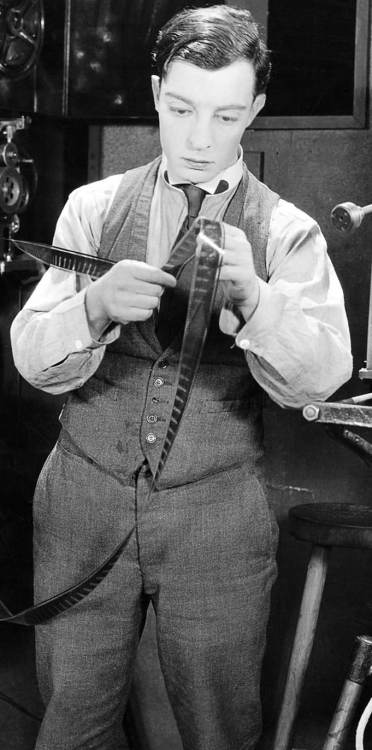
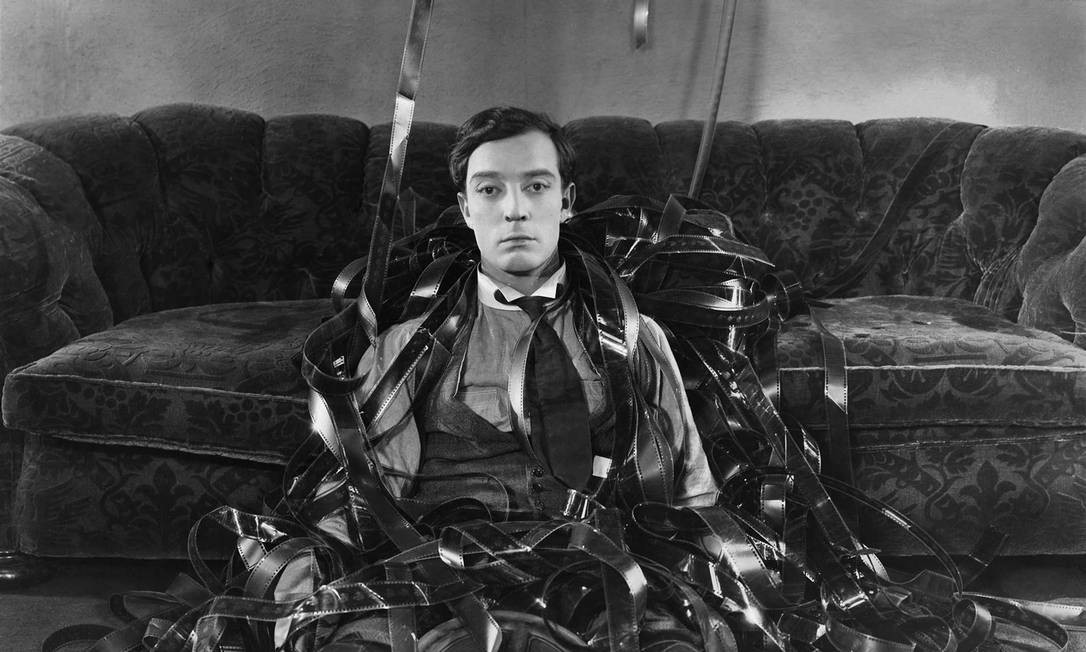
Mise-en-abyme. Você pode não ter ouvido este termo – mas certamente sabe o que é: você já leu um livro ou, mais provável, viu um filme que usa esta técnica. Mise-en-abyme é uma narrativa dentro da narrativa, ou, no cinema, um filme dentro do filme. O primeiro deste tipo é provavelmente “The Countryman and the Cinematograph”, de 1901, mas um dos exemplos mais memoráveis vem de 1924, quando Buster Keaton não apenas apresentou um filme dentro do filme em “Bancando o Águia”, mas também entrou na tela para ser o herói com quem sonhava.

Mise-en-abyme. You may not have heard this term – but you certainly know what it is: you already have read a book or, more probably, seen a film that uses this technique. Mise-en-abyme is the narrative-within-a-narrative, or, in cinema, a film-within-a-film. The first of its kind is probably “The Countryman and the Cinematograph”, from 1901, but one of the most memorable examples comes from 1924, when Buster Keaton not only featured a film within a film in “Sherlock Jr”, but also entered the screen to be the hero of his dreams.


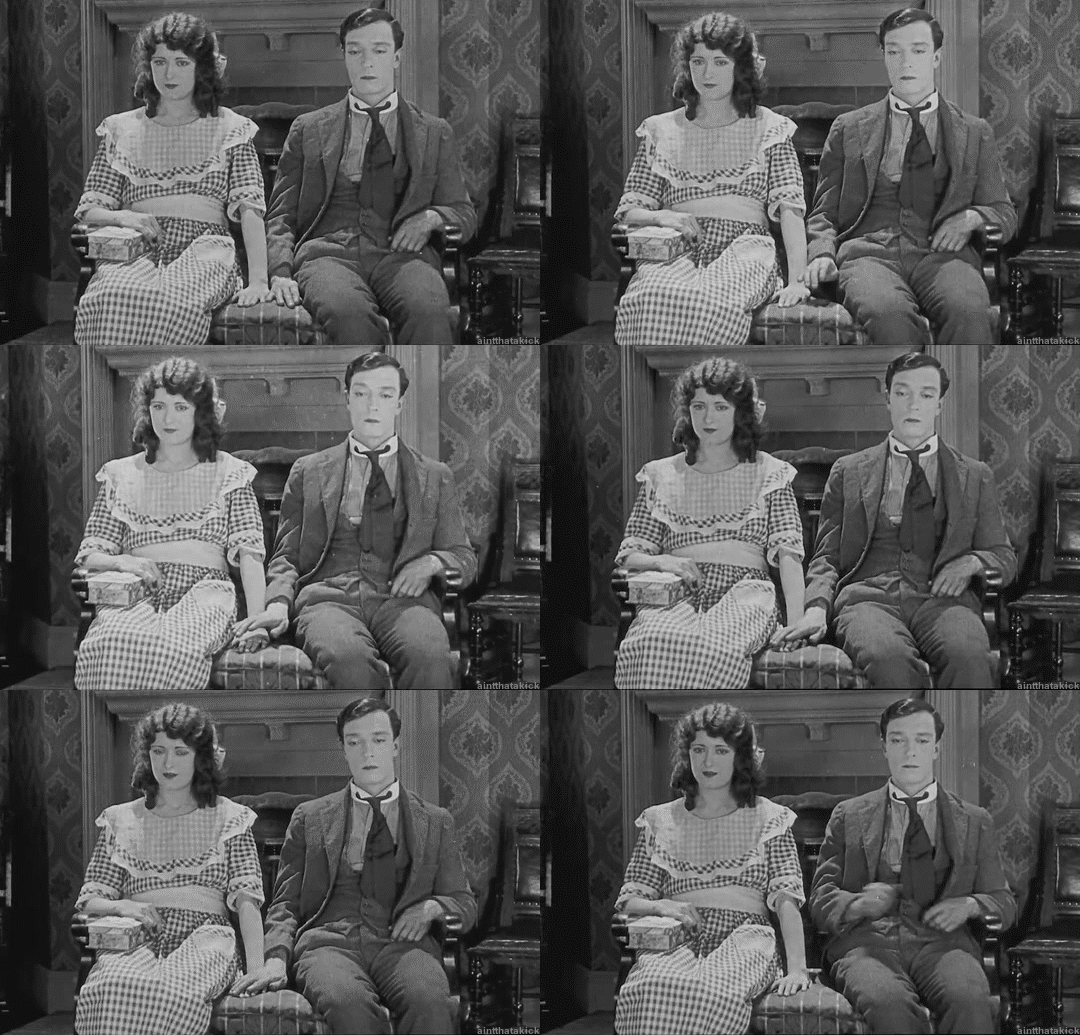
Um garoto (nosso Buster) é projecionista num cinema e aprendiz de detetive. Ele está apaixonado por uma garota (Kathryn McGuire), que também é cortejada por outro cara, o “Sheik Local” (Ward Crane). Um dia, o Sheik rouba um relógio do pai da garota e a culpa recai sobre Keaton. Buster segue o rival por um tempo, em uma cena perfeitamente coreografada, mas mais uma vez é enganado por ele.

A boy (our Buster) is a movie theater projectionist and a detective-in-training. He is in love with a girl (Kathryn McGuire), who is also courted by another guy, the Local Sheik (Ward Crane). One day, the Local Sheik steals a watch from the girl’s father and the blame falls on Keaton. Buster follows the Local Sheik for a while, in a perfectly choreographed scene, but is once again outsmarted by him.


Triste com seu fracasso investigativo, Buster vai trabalhar no cinema. O filme daquela noite é “Corações e Pérolas”, um romance de mistério e aventura sobre pérolas roubadas, estrelado pela mente brilhante de Sherlock Jr. Buster cai no sono na sala de projeção e sonha que está no filme – na verdade, a garota, o pai e a mãe dela e o Sheik Local estão todos no filme. Como Sherlock Jr, Buster tem inclusive seu próprio assistente, Gillette – uma homenagem a William Gillette, o primeiro ator a interpretar Sherlock nos palcos. Gillette é interpretado por Ford West, que também é o gerente do cinema e patrão de Buster.

Sad with his investigative failure, Buster goes to work in the movie theater. That night’s movie is “Hearts and Pearls”, a mystery-adventure-romance about stolen pearls starring the master mind Sherlock Jr. Buster falls asleep in the projection cabin and dreams he’s in the movie – indeed, the girl, her father, mother and the Local Sheik are all characters of the movie. As Sherlock Jr, Buster even has his own assistant, Gillette – an homage to William Gillette, the first actor to play Sherlock on stage. Gillette is played by Ford West, who also plays the theater manager.


O roteiro foi escrito por Jean Havez e Joe Mitchell, colaboradores frequentes de Buster, e Clyde Bruckman, um brilhante escritor de gags que co-dirigiu “A General” (1926). Lutando contra o alcoolismo desde o começo da era falada do cinema, Bruckman nunca recuperou sua carreira e se matou em 1955 usando a arma de Buster Keaton.

The screenplay was written by Jean Havez and Joe Mitchell, frequent Keaton contributors, and Clyde Bruckman, a brilliant gag writer who co-directed “The General” (1926). Battling alcoholism starting in the beginning of the sound era, Bruckman never regained his career and killed himself in 1955 using Buster Keaton’s gun.


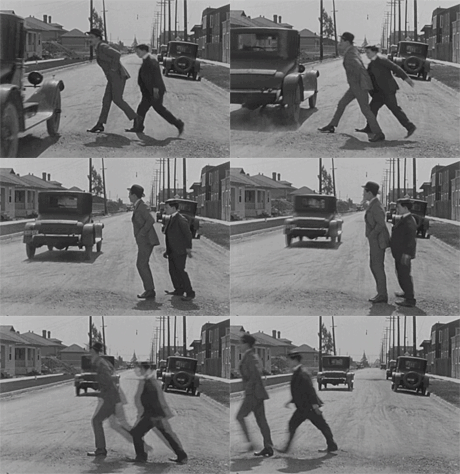
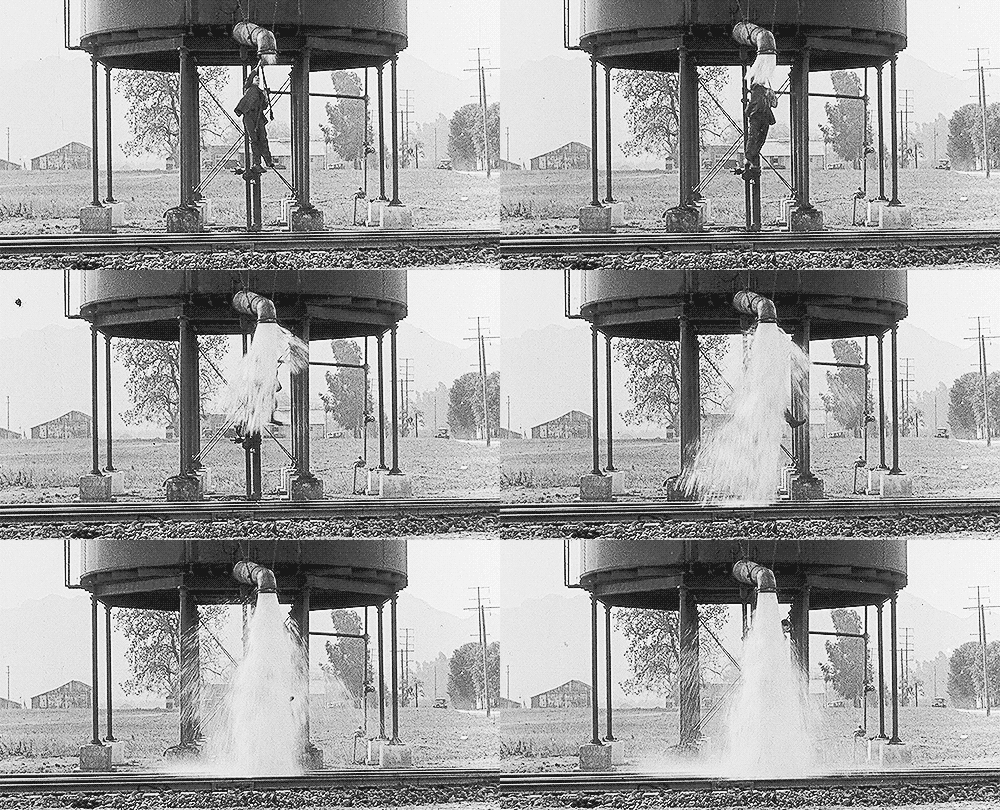
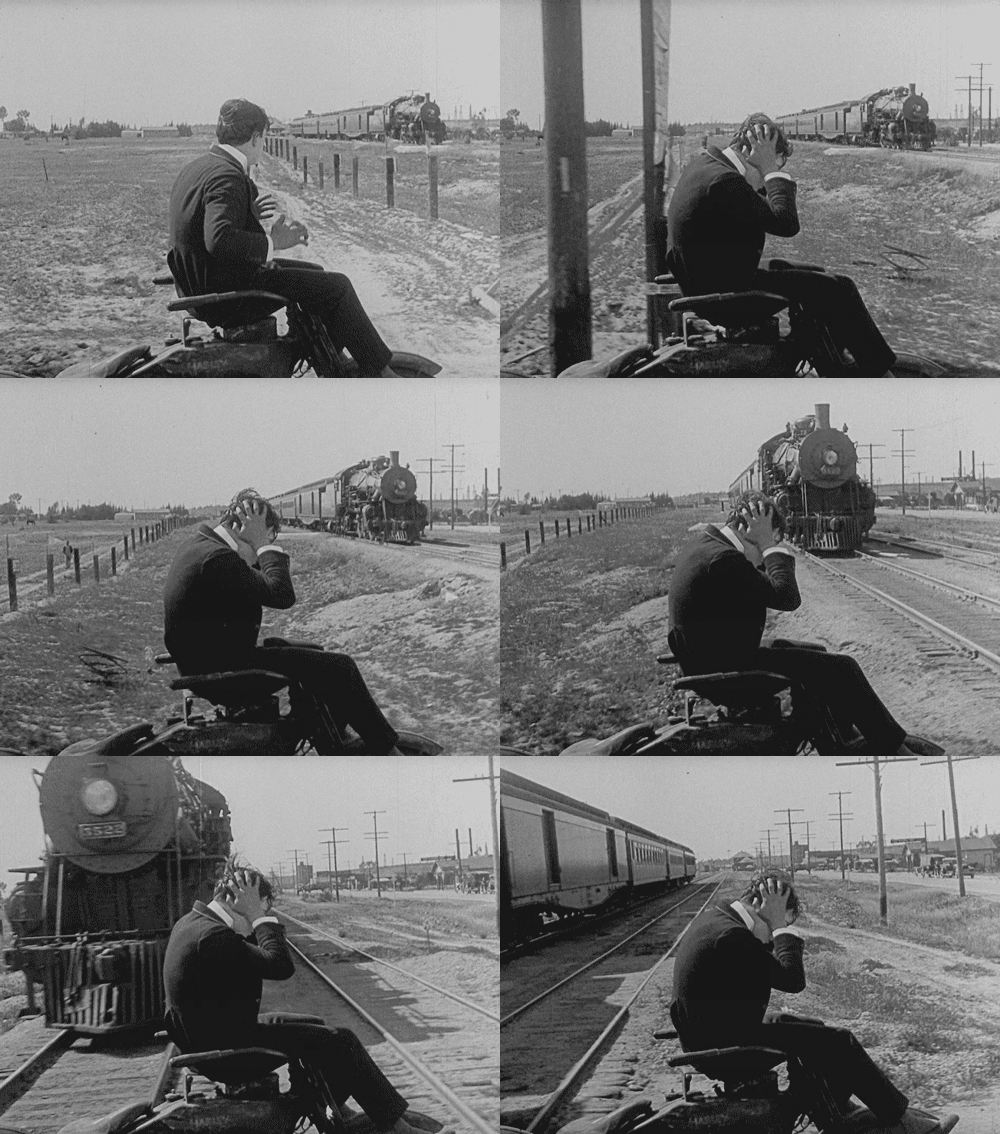
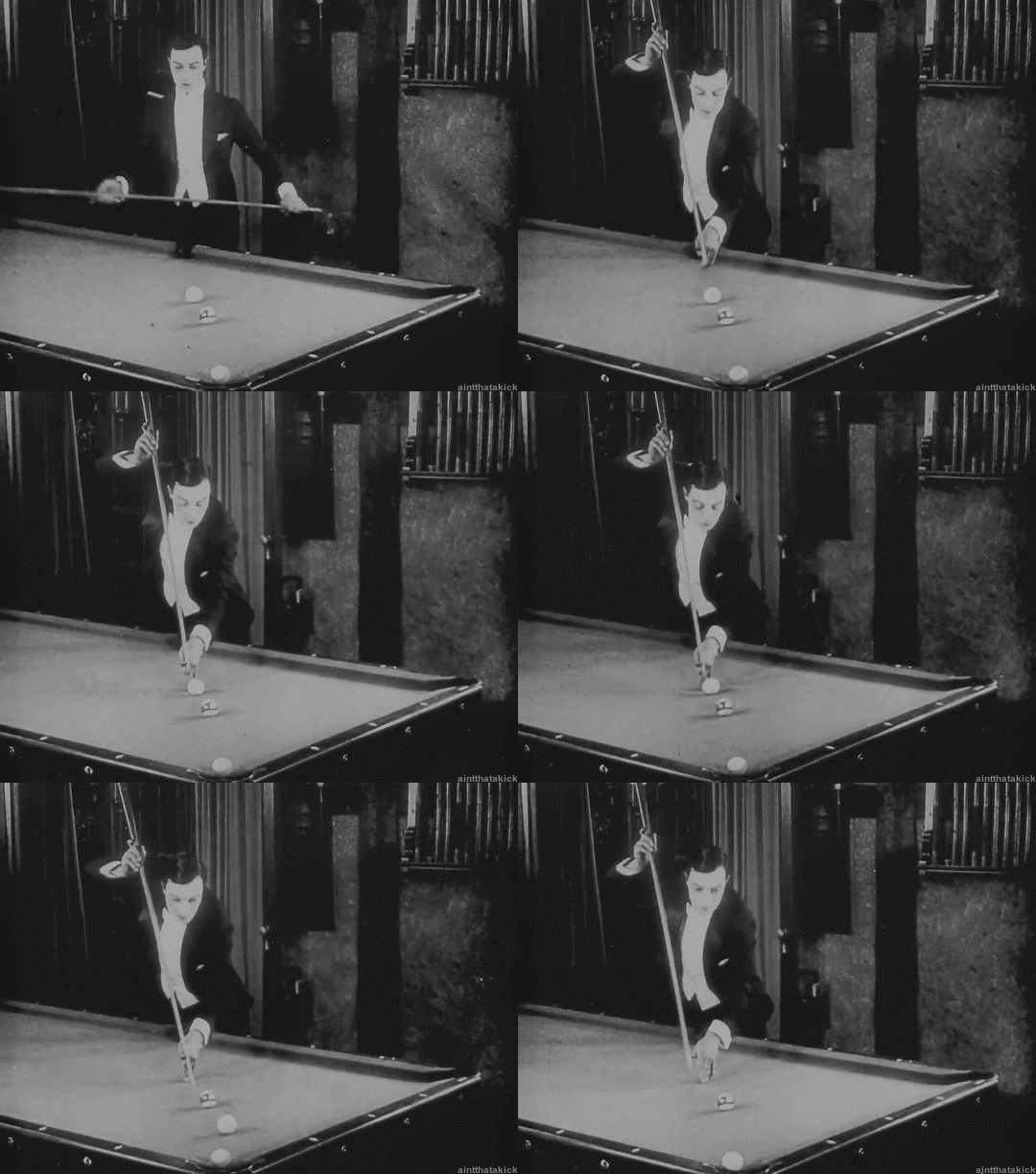
“Bancando o Águia” traz a famosa cena da caixa d’água em que Buster quebrou o pescoço – mas não percebeu que estava quebrado até os anos 30, quando consultou um médico por causa de dores de cabeça. Também merece ser mencionada a sequência do bilhar. Buster teve de praticar por quatro meses e demorou cinco dias para filmar a sequência, e na tela ela flui com facilidade e mágica. Outra sequência memorável, porém perigosa, envolve Buster andando numa moto sem motorista, evitando acidentes por um triz.

“Sherlock Jr” brings the infamous water tower stunt in which Buster broke his neck – but didn’t realize it was broken until the 1930s, when he saw a doctor and complained about migraines. It’s also worth mentioning the pool playing sequence. Buster had to practice for four months and took five days to shoot the sequence, and in the screen it flows easily and magically. Another memorable yet dangerous sequence involves Buster riding in a motorcycle without a driver, avoiding accidents by a millimeter.

TRAIN!
Muito se debate sobre se Roscoe Arbuckle trabalhou ou não como diretor neste filme. Roscoe e Buster eram bons amigos, e foi nos curtas de Arbuckle que Buster estreou no cinema. Buster nos conta o que aconteceu de verdade no set de “Bancando o Águia” em sua autobiografia “My Wonderful World of Slapstick”: Roscoe ainda era um pária por causa do escândalo de Virginia Rappe alguns anos antes. Buster lhe ofereceu um trabalho como diretor sob um pseudônimo. Entretanto, Roscoe era insuportável no set. Sem autoconfiança e muito nervoso, ele fazia, segundo Buster, Kathryn McGuire chorar doze vezes por dia. Buster então convenceu Marion Davies a contratar Roscoe para dirigir o filme “O Moinho Vermelho” – e ela o fez, deixando que Buster dirigisse “Bancando o Águia” sozinho.

It’s debated whether or not Roscoe Arbuckle worked as a director in this film. Roscoe and Buster were good friends, and it was in Arbuckle’s shorts that Buster got his start in the movies. Buster tells us what really happened on the set of “Sherlock Jr” in his autobiography “My Wonderful World of Slapstick”: Roscoe was still a pariah due to the Virginia Rappe scandal a few years before. Buster offered him a directing job under a pseudonym. However, Roscoe was just irascible on set. Without self-confidence and very nervous, he’d make, as Buster states, Kathryn McGuire cry a dozen times a day. Buster then convinced Marion Davies to hire Roscoe to direct her picture “The Red Mill” – which she did, and Buster alone directed “Sherlock Jr”.

Assim como muitos outros, eu adoraria se “Bancando o Águia” fosse mais longo – afinal, quando mais Buster Keaton, melhor. Entretanto, este filme de 44 minutos consegue contar duas histórias paralelas, apresentar muitas gags e, o mais importante, mostrar como o cinema pode ser ao mesmo tempo escapismo e inspiração.

As I’m sure many others would, I’d love if “Sherlock Jr” was longer – after all, the more Buster, the better. However, this 44-minute film manages to tell two parallel stories, deliver a lot of gags and, the most important, show how cinema can be at the same time escapism and inspiration.


This is my contribution to the Sixth Annual Buster Keaton blogathon, hosted by Lea at Silent-ology.


Related Posts Plugin for WordPress, Blogger...