} Crítica Retrô: expressionismo alemão

Tradutor / Translator / Traductor / Übersetzer / Traduttore / Traducteur / 翻訳者 / переводчик

Showing posts with label expressionismo alemão. Show all posts

Monday, April 27, 2026

Figuras de Cera (1924) / Waxworks (1924)


Este gabinete veio depois do de Doutor Caligari. As figuras de cera não ganham vida à noite, como na trilogia “Uma Noite no Museu”: elas ganham vida graças à imaginação de um escritor contratado para fazer propaganda do gabinete de figuras de cera com histórias instigantes. O resultado é um triunfo de direção para Paul Leni e de atuação para Conrad Veidt e Emil Jannings, anos antes de os três irem para Hollywood. 

This cabinet came after Doctor Caligari’s. The wax figures don’t become alive at night, like in the “Night at the Museum” trilogy: they come alive thanks to the imagination of a writer hired to advertise the waxworks cabinet with engaging stories. The result is a triumph of directing for Paul Leni and acting for Conrad Veidt and Emil Jannings, years before the three went to Hollywood.

O Califa Haroun Al-Raschid (Emil Jannings) odeia monotonia, por isso ele tem uma esposa para cada dia do ano - mas nenhuma delas é mais bonita que a esposa do padeiro, Zarah, que passa a ser cortejada pelo Grande Vizir e gosta da paquera, pois está infeliz com o casamento. Para mudar a situação, o padeiro promete roubar um anel mágico do Califa. Mas ele não sabe que o Califa vai até a sua casa bem na hora em que ele leva a cabo o roubo no palácio. 

The Caliph Haroun Al-Raschid (Emil Jannings) hates monotony, so he has one wife for each day of the year - but none is more beautiful than the baker’s wife, Zarah, who starts being coveted by the Grand Vizier and likes being coveted, as she’s unhappy in her marriage. To change the situation, the baker vows to steal the Caliph’s Wishing Ring. Unbeknownst to him, the Caliph goes to his house while the baker goes to the palace to steal the ring.

Ivan, o Terrível (Conrad Veidt) está especialmente interessado em venenos e outras maneiras de eliminar seus inimigos. Como ele fez muitos inimigos, bola um plano para viajar sem que haja a possibilidade de ser assassinado - mas o perigo o ronda assim mesmo.

Ivan the Terrible (Conrad Veidt) is especially interested in poisons and other means to eliminate his enemies. Since he has made so many enemies, he plots a plan to travel without the possibility of being murdered - but danger lurks anyway.

E então Jack, o Estripador (Werner Krauss) volta à vida

And then Jack the Ripper (Werner Krauss) becomes alive.

Este é um filme de antologia, algo que sempre foi um pouco raro no mundo do cinema, mas que chama a atenção de muitos - e eu me incluo neste grupo - quando são feitos. Um exemplo também do cinema de Weimar é “A Morte Cansada” (1921), de Fritz Lang. Originalmente, “Figuras de Cera” contaria quatro histórias mas não sobrou dinheiro para fazer a última, porque o plano era gravar este episódio na Itália. 

This is an anthology movie, something that has always been a bit rare in the movie world, but drives the interest of many - me included - when they’re made. One early example, also from Weimar Cinema, is Fritz Lang’s “Destiny” (1921). Originally, “Waxworks” would have four stories told, but there wasn’t enough money to do the fourth, because the plan was to shoot this episode in Italy.

Emil Jannings foi um verdadeiro camaleão que se tornou o primeiro agraciado com o Oscar de Melhor Ator. Conrad Veidt tinha olhos líquidos inimitáveis. Mas gostaríamos de destacar outro intérprete: Werner Krauss. O próprio Doutor Caligari do filme de 1920, Krauss apareceu em diversos clássicos do cinema mudo e teve uma transição tranquila para o cinema falado… até que fez o filme de propaganda antissemita “Judeu Suss” em 1940. Após a queda do Nazismo, ele declarou que foi coagido a fazer o filme, mas mesmo assim foi considerado um criminoso de guerra menor e teve de se mudar para a Áustria, onde continuou trabalhando mas morreu relativamente esquecido em 1959 - como deveria acontecer com todo nazista. 

Emil Jannings was a true chameleon who became the first Best Actor Oscar recipient. Conrad Veidt had unmistakable liquid eyes. But here we’d like to showcase someone else: Werner Krauss. THE Doctor Caligari in the 1920 film, Krauss made appearances in several classic silent movies and transitioned well to talkies… until he appeared in the antissemitic propaganda film “Jud Suess” in 1940. After the fall of Nazism, he proclaimed that he was coerced into making the movie, nevertheless he was considered a minor war criminal and had to move to Austria, where he kept working until he died in relative obscurity in 1959 - which should happen to all Nazis.

Outro intérprete digno de destaque é William Dieterle, que faz o Poeta que escreve todas as histórias para as figuras de cera, e também Assad o Padeiro na história do Califa e um Boiardo na história de Ivan. Ele começou a atuar aos dezesseis anos e logo se tornou um favorito do diretor de teatro Max Reinhardt, trabalhando ao seu lado entre 1919 e 1924. Tendo feito seu primeiro filme como ator em 1921 e o primeiro como diretor em 1923, ele foi bem-sucedido em ambas as funções. Indo para Hollywood em 1930 para fazer versões dubladas para o alemão de filmes norte-americanos, ele em vez disso se tornou um prolífico diretor. No IMDb, ele conta com 67 créditos como ator e 91 como diretor. 

Another performer to showcase is William Dieterle, who plays The Poet who writes all the stories for the wax figures, and also Assad the Baker in the Caliph story and a Boyar in Ivan’s story. He started acting at age sixteen and soon became a favorite of theater director Max Reinhardt, who worked with him between 1919 and 1924. Making his first film as an actor in 1921 and the first as director in 1923, he was successful in both functions. Going to Hollywood in 1930 to make German-dubbed versions of North American films, he instead became a prolific director. On IMDb, he has 67 credits as an actor and 91 as director.

Com uma mistura perfeita de terror e comédia, “Figuras de Cera” foi escrito por Henrik Galeen, também responsável pelo roteiro de “Nosferatu” (1922). Como um exemplo tardio do Expressionismo Alemão, pode não ser tão lembrado quanto Caligari, que é uma obra-prima, mas este é um filme interessante que sabe entreter.

With a perfect mix of horror and comedy, “Waxworks” was written by Henrik Galeen, also responsible for the screenplay of “Nosferatu” (1922). As a late German Expressionism flick, it is not as well remembered as Caligari, which is a masterpiece, but this is an interesting and entertaining film.

Friday, October 27, 2017

Uma Página de Loucura (1926) / A Page of Madness (1926)

Eu adoro receber recomendações de filmes – em especial quando estes filmes são recomendados por pessoas cultas. Eu confio no gosto da Nora Fiore (mais conhecida como The Nitrate Diva) em relação a filmes. Ela é uma jovem da geração millennial que, além de inteligente e talentosa, ama tanto clássicos quanto eu. Por isso eu adicionei “Uma Página de Loucura” (1926) à minha lista de filmes assim que ela o recomendou neste post.

I love movie recommendations – especially when they come from knowledgeable people. I really rely on Nora Fiore’s (aka The Nitrate Diva’s) taste on film. She is a wise and talented millennial who shares my passion for classics. That’s why I added “A Page of Madness” (1926) to my watch list when she recommended the film in this post.

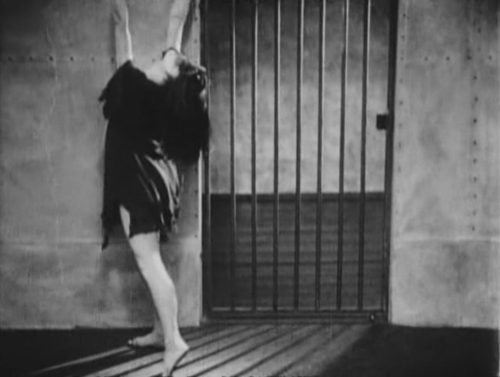
Enquanto a chuva cai lá fora, os pacientes em um hospício são acompanhados apenas por seus delírios. Uma garota dança sem parar em sua cela, imaginando que é uma bailarina ou uma deusa, e os trovões são os instrumentos criando a música para sua performance. Uma mulher está deitada no chão de sua cela, e apenas olha pra cima para ver o zelador. Mas há muito neste olhar: o zelador e a paciente são marido e esposa. Ele quer que ela, e todos os outros pacientes, sejam libertados daquele inferno.

While the rain falls outside, the patients inside an insane asylum are left with their deliriums. One girl dances nonstop in her cell, imagining she is a performer or a goddess, and the thunders are the instruments making the music for her ballet. A woman lies on the floor of her cell, only looking up to see the janitor. But there is a lot in this look: the janitor and the patient are husband and wife. He wants to take her, and eventually all patients, out of that hell.

Você percebeu que eu usei a palavra “cela” em vez de “quarto” para me referir ao espaço que cada paciente ocupa, não? Bem, eu tenho razões para a escolha da palavra: este é, de fato, um ambiente que parece uma prisão. Há um portão de ferro na entrada da ala, e cada paciente é também preso atrás de grades.

You noticed that I wrote “cell” instead of “room” to talk about the space each patient has, didn’t you? Well, I have a reason: it is, indeed, an environment like a prison. There is an iron gate made in the room entrance, and each patient is also kept behind bars.
É possível ver reflexos de muitos filmes e movimentos nesta película. A influência de Caligari é a mais óbvia: “Uma Página de Loucura” conta uma história que se passa em um hospício, e tem muitas sombras. Há tomadas angulosas e de cabeça para baixo. Ângulos de câmera ousados e truques com a câmera dão origem a imagens distorcidas.

You can see many films and movements reflected in this film. The Caligari influence is the most obvious: “A Page of Madness” is a film set in an insane asylum, and has lots of shadows. There are angular and upside-down shots. Unusual camera angles and wise camera tricks create distorted images.

Em muitos momentos, a edição é tão frenética e nauseante quanto o melhor de Eisenstein. Isso acontece logo no começo do filme. Na teoria da montagem soviética, a maneira e velocidade com que as imagens são editadas evocam um sentimento ou ideia. Em “Uma Página de Loucura”, a montagem nos ajuda a entrar nas mentes dos pacientes.

In many moments, the editing is as frantic and dizzying as the best Eisenstein. This happens right in the beginning of the movie. In the Soviet montage, the way and speed images are edited together evoke a feeling or idea. In “A Page of Madness”, the montage actually helps us enter the patients’ minds.

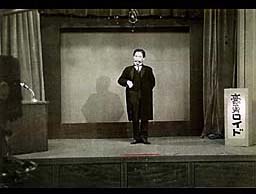
Assim como “A Última Gargalhada” (1924), de Murnau, “Uma Página de Loucura” não tem intertítulos. Algumas pessoas podem pensar que aí está a genialidade do filme, enquanto outras podem ficar incomodadas e confusas com a falta de explicações. Você consegue entender perfeitamente a narrativa de “A Última Gargalhada”, mas em “Uma Página de Loucura” muitas hipóteses podem surgir devido à ausência de intertítulos. Não nos esqueçamos que o cinema nunca foi mudo no Japão – até os anos 1930, ele foi narrado por artistas conhecidos como Benshi.

Just like Murnau’s “The Last Laugh” (1924), “A Page of Madness” has no intertitles. Some people may think this is where the geniality of the film lies, while others may be bothered and confused by the lack of explanation. If you can understand perfectly what is going on in “The Last Laugh”, in “A Page of Madness” many hypothesis and interpretations are originated from the lack of intertitles. Let’s not forget that there was never a truly silent cinema in Japan – until the 1930s, movies were narrated by artists called Benshi.

Devemos nos lembrar de que “O Gabinete do Dr Caligari” estreou em 1920, os filmes soviéticos com edição ousada como “Greve” e “O Encouraçado Potemkin” são, respectivamente, de 1924 e 1925, e “A Última Gargalhada” estreou em 1924. Estes filmes chegaram ao Japão em tempo de influenciar “Uma Página de Loucura”?

We must remember that “The Cabinet of Dr Caligari” was released in 1920, the heavily edited Soviet movies “Strike” and “Battleship Potemkin” are, respectively, from 1924 and 1925, and “The Last Laugh” was released in 1924. Did all these works arrive in Japan in time to influence “A Page of Madness”?

“O Gabinete do Dr Caligari” certamente chegou a tempo: de acordo com o IMDb, o filme estreou no Japão em 1921. “A Última Gargalhada” foi visto cinco vezes pelo diretor Teinosuke Kinugasa, que inclusive o classificou como seu filme favorito em uma entrevista em 1926. De acordo com o IMDb, os filmes soviéticos só foram exibidos no Japão nos anos 60. Kinugasa tinha outras influências em mente quando filmou “Uma Página de Loucura”.

“The Cabinet of Dr Caligari” certainly arrived in time: according to IMDb, the film was released in Japan in 1921.”The Last Laugh” was seen five times by director Teinosuke Kinugasa, who also cited it as his favorite film in an interview in 1926. According to IMDb, the Soviet films were seen in Japan only in the 1960s. Kinugasa had other influences in mind when he was shooting “A Page of Madness”.
Teinosuke Kinugasa
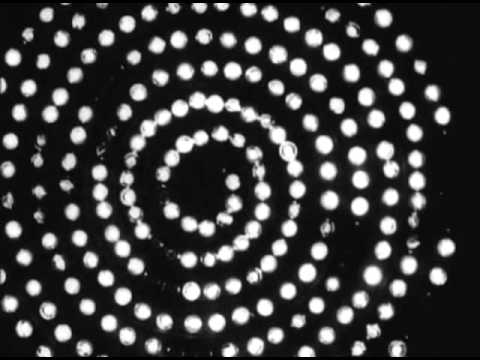
O mundo todo estava fazendo experimentos nos anos 20. Nas artes, havia o Surrealismo, Dadaísmo, Art Deco e Expressionismo. É possível ver um pouco de cada um em “Uma Página de Loucura”. Kinugasa também tinha um grupo envolvido com vanguardas artísticas trabalhando para ele atrás das câmeras. No circuito cinematográfico, havia muitas discussões no Japão acerca dos filmes Impressionistas de Abel Gance e Marcel L’Herbier.

The whole world was experimenting in the 1920s. In the arts, we had Surrealism, Dadaism, Art Deco and Expressionism. You can see a little bit of them all in “A Page of Madness”. Kinugasa also had a group of avant-garde lovers helping him behind the cameras. In the film circles, there was a lot of discussing in Japan about the Impressionist works by Abel Gance and Marcel L’Herbier.

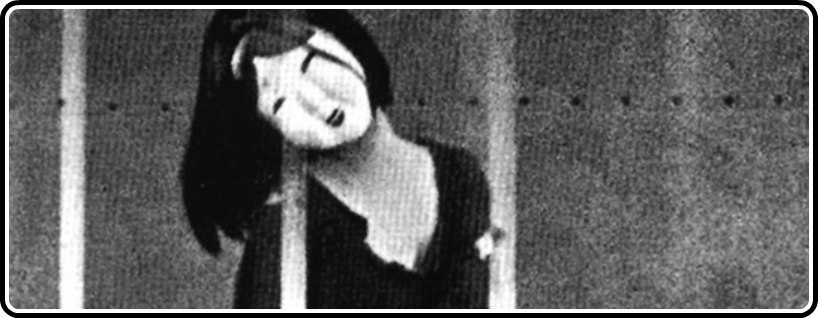
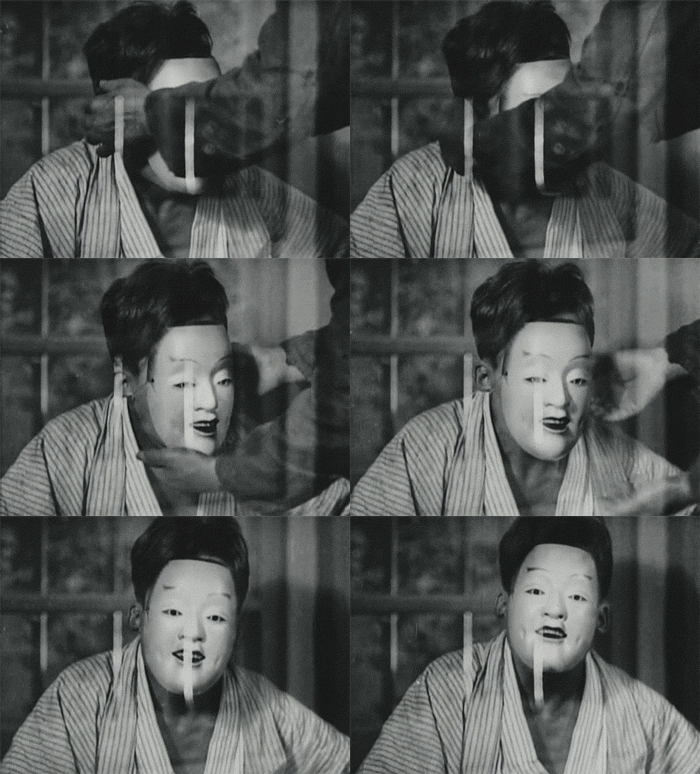
“Uma Página de Loucura” pode assustar você, com certeza – especialmente se você tiver alguma coisa contra máscaras sem expressão. Eu ficaria assustada se tivesse visto este filme quando era mais nova. Mas o terror real é perceber como eram – e infelizmente ainda são – tratadas as pessoas que não se encaixam no padrão de “sanidade”.

“A Page of Madness” can scare you, sure – especially if you have something against expressionless masks. I’d be scared if I watched this film when I was younger. But the real horror here is realizing how badly people who don’t follow a “sanity” pattern were – and unfortunately still are – treated.

Talvez você ame “Uma Página de Loucura”. Talvez você o odeie. Talvez você tenha de assisti-lo muitas vezes, e a cada vez encontrar novos significados. Mas você não poderá ficar indiferente em relação a “Uma Página de Loucura”.

You may love “A Page of Madness”. You may hate it. You may have to watch the movie several times and, each time, find more meanings. But you can’t be indifferent after watching “A Page of Madness”.


This is my contribution to the Horrorathon, hosted by Maddy at Maddylovesherclassicfilms.

Wednesday, June 24, 2015

A Dama de Xangai (1947) / The Lady from Shanghai (1947)

Era a noite de Natal de 2009. A única fonte de luz na sala escura era a tela da televisão. Foi então que eu vi um filme que me marcou profundamente, cujos diálogos e imagens continuam vivos, perfeitos, em minha mente, mesmo eu nunca mais tendo visto o filme novamente. Que obra me causou tamanha impressão? Aquela que considero a obra-prima de Orson Welles, o cineasta que foi de menino prodígio a maldito em uma só encarnação: “A Dama de Xangai”, de 1947.

It was Christmas night, 2009. The only source of light in the dark room was the TV screen. It was then that I watched a film that touched me deeply, whose dialogues and images remain alive, perfect, in my mind, even though I never rewatched it. Which movie caused this to me? The one I consider to be Orson Welles’ masterpiece - Welles, the filmmaker who went from prodigious child to maudit in a single incarnation - : “The Lady from Shanghai”, from 1947.

Em um podcast presente no curso “Investigating Film Noir”, o professor Richard L. Edwards e seu convidado chamam 1947 de “o ano do suicídio no cinema”. Não, nenhum artista / diretor se matou naquele ano, felizmente. O argumento é que o ano já começou com um personagem inesquecível que imagina como seria o mundo sem ele em “A Felicidade não se Compra”, e os cadáveres se amontoam em outras tantas produções do ano – em especial em filmes noir como “A Dama de Xangai”.

In a podcast that was parto f the online course “Investigating Film Noir”, professor Richard Edwards and his guest call 1947 “the year of suicide at the movies”. No, no artist / director committed suicide that year, thankfully. The explanation is that the year already started with an unforgettable character imagining how the world without him would be in “It’s a Wonderful Life”, and the corpses keep appearing in other movies released that year - especially in noirs like “The Lady from Shanghai”.

Além de dirigir, roteirizar e produzir o filme, Orson Welles interpreta o protagonista Michael O'Hara. Ele é um irlandês à procura de emprego que acaba contratado pelo advogado manco Arthur Bannister (Everett Sloane), após Michael salvar a jovem esposa de Arthur, Elsa (Rita Hayworth), de um assalto. A partir daí, uma trama de assassinato e luxúria se desenrola.

Besides directing, producing and writing the screenplay, Orson Welles plays the lead Michael O’Hara. He is an Irishman looking for a job who ends up being hired by the lawyer with a limp Arthur Bannister (Everett Sloane), after Michael saves Arthur’s young wife Elsa (Rita Hayworth) from a robbery. From then on, a plot full of lust and murder starts.

Uma das minhas cenas favoritas no filme cita o Brasil, e eu fiquei em êxtase quando isso aconteceu. É raro uma citação séria e profunda sobre este país tropical e caliente, mas encontramos isso no filme graças a um episódio interessante da história: em 1942, Orson Welles passou um tempo no Brasil filmando um documentário, “It's All True”, que nunca ficou pronto. Ele esteve em Fortaleza, e de lá tirou uma anedota perfeita para “A Dama de Xangai”. A anedota gira em torno de dezenas de tubarões que enlouquecem e começam a comer uns aos outros. Fascinante e premonitório.

One of my favorite scenes in the film mentions Brazil, and I was ecstactic when I saw it. It’s rare to see Brazil mentioned in a serious and deep way, but we find it in this movie thanks to an interesting episode in flm history: in 1942, Orson Welles spent some time in Brazil shooting a documentary, “It’s All True”, that was never finished. He went to Fortaleza, where he got a perfect story for “The Lady from Shanghai”. The story is about dozens of sharks that go mad and start eating each other. Fascinating and prescient.

Outra cena inesquecível envolve Arthur Bannister em um julgamento... usando ele mesmo como testemunha. Aqui não importam os argumentos, as perguntas, os diálogos: a cena existe apenas para mostrar a confusão deliciosa da justiça no mundo do filme noir (e, por que não?, no mundo real também) e é a situação ridícula ao extremo (sequer o juiz parecia interessado no caso).

Another unforgettable scene involves Arthur Bannister in a trial… calling himself as a witness. Here there is no importance given to the arguments, the questions, the dialogues: the scene exists simply to show the delicious mess that is justice in the world of film noir (and why not? In the real world as well) and it is ridiculous to the extreme (even the judge seemed nor interested in the case).

Mas a cena mais memorável ainda é a do clímax, que acontece em uma sala de espelhos em um circo itinerante. A fotografia da sequência é de tirar o fôlego, e em muitos momentos chama mais atenção que a própria ação. Os personagens se confundem e se multiplicam na sala de espelhos, formando um quebra-cabeça tão fascinante quanto a trama do filme (Welles se inspirou em “O Gabinete do Doutor Caligari”, 1920, para criar o cenário, e contou com ajuda do especialista em efeitos especiais Lawrence W. Butler, que trabalhou em “O Ladrão de Bagdá”, de 1940). O que estraga um pouco a cena (e eu só percebi após rever a cena múltiplas vezes) é a trilha sonora assustadora e pesada que começa quando tiros são disparados. A sequência teria ficado melhor sem música, apenas com o som dos tiros, e Orson Welles concordava com isso: o ator / diretor ficou furioso com a trilha sonora escolhida para a cena!

But the most memorable scene is the climax, in a fun house from a travelling show. The photography in the sequence is breathtaking and in many moments it calls more attention than the action itself. The characters multiply in the mirror room, creating a puzzle as fascinating as the plot of the film (Welles was inspired by “The Cabinet of Dr Caligari”, 1920, to create the set, and was helped by the special effects expert Lawrence W. Butler, who worked in “The Thief of Bagdad”, from 1940). What ruins the scene a little (and I only realized it after multiple viewings of the scene) is the heavy and scary soundtrack that begins the moment the first guns are shot. The sequence would have been better without music, only with the sound of the gunshots, and Orson Welles agreed with thay: the actor / director got mad at the soundtrack chosen for the scene!

A Dama de Xangai” é um filme de Orson Welles. Isso significa que a filmagem foi conturbada (com direito a alugar o iate de um sempre bêbado Errol Flynn no México), o filme ficou longo demais (155 minutos no corte de Welles), o estúdio fez muitas alterações na sala de edição e as plateias americanas não gostaram muito do resultado, enquanto os europeus adoraram. Mas, sendo um filme de Welles, pode esperar que, ainda mutilado, tenha indícios de obra-prima. Ao final, “A Dama de Xangai” se transformou nisto: uma soma de cenas memoráveis em um filme noir que, apesar de tudo, não deixa de ser brilhante.

The Lady from Shanghai” is a film by Orson Welles. This means that the shooting was complicated (in Mexico they even rented the yacht belonging to a permanently drunk Errol Flynn), the film was too long (155 minutes in Welles’ cut), the studio made many changes at the editing room and the American audience didn’t like it very much, while the Europeans loved it. But, being a film by Welles, you can always expect that, even mutilated, it contains traces of a masterpiece. In the end, “The Lady from Shanghai” became this: a sum of memorable scenes in a film noir that, despite it all, can be considered brilliant.


This is my contribution to the “…And Scene!” Blogathon, hosted by Sister Celluloid! And Cut!
Related Posts Plugin for WordPress, Blogger...