2024 was great. It was the year I published my first children’s book. The year in which I found out that my love for writing had just been sleeping, and in a loving way it woke up. The year I read well over four thousand pages. The year I joined TikTok (follow @magalhaesleticiacine) and Bluesky (@magalhaesleticia). This year I watched more than 560 movies, both shorts and features, 85 of them were press screenings and 100 were watched in January alone. These were the highlights of this amazing year on film:
Janeiro: O dia que te conheci (2023)
Num mês rico que incluiu um curso sobre cineastas negras e um vislumbre dos primeiros filmes de Asta Nielsen, o destaque foi este filme brasileiro exibido na inauguração da nova sala de cinema do Instituto Moreira Salles na minha cidade.
Zeca (Renato Novais), bibliotecário numa escola, conhece a coordenadora Luisa (Grace Passô), no seu último dia de trabalho. Ela oferece a ele uma carona para voltar para casa e, num romance muito moderno, eles encontram interesses em comum em coisas como remédios psiquiátricos. Divertido, emocionante e surpreendente, com apenas 71 minutos esta é uma pequena pérola e foi um deleite ouvir o diretor após a sessão.
January: The day I met you / O dia que te conheci (2023)
In a rich month that included a course on black female filmmakers and an overview of Asta Nielsen’s early films, the highlight was this Brazilian movie that was shown in the inauguration of a new movie theater at Instituto Moreira Salles, in my hometown.
Zeca (Renato Novais), a librarian at a school, meets the coordinator Luisa (Grace Passô) on his last day in the job. She offers him a ride back home and, in a very modern romance, they bond over things such as medicine for mental illness. Funny, touching and surprising, at only 71 minutes this was a little gem and it was a pleasure to listen to the director speaking after the screening.
Fevereiro: O Menino e a Garça (2023)
Num mês com Max Linder, o bizarro “Zardoz” e muitos curtas do My French Film Festival, escolhi minha única ida ao cinema, com uma sala cheia para ver a mais recente - e talvez última - animação de Hayao Miyazaki.
A história surreal de um relacionamento que não chega a ser amizade entre um menino que perdeu a mãe e um híbrido de pessoa e pássaro foi elogiada por muitos, incluindo eu, mas desagradou à minha mãe, que me acompanhou na sessão. Foi o primeiro filme que ela viu do Studio Ghibli, e não foi uma boa porta de entrada para quem gosta de filmes realistas. O resto de nós no cinema não podia estar mais feliz com toda a magia e estranheza típicas do Ghibli neste filme vencedor do Oscar.
Outro filme que chamou minha atenção neste mês e merece ser mencionado é o curta experimental “Removed”, de 1999. Nele, a cineasta Naomi Urman trabalhou com uma fita pornô e quimicamente apagou todas as mulheres de cada cena usando esmalte e água oxigenada. O resultado é um filme em que mulheres só estão presentes na forma de espectros, num comentário sobre o male gaze.
February: The Boy and the Heron (2023)
In a month with Max Linder, the so-bad-it’s-good “Zardoz” and many shorts from My French Film Festival, I chose my only time at a movie theater, a packed house to watch Hayao Miyazaki’s latest - and maybe last - feature.
The surreal tale of a not-quite-friendship between a boy who lost his mother and a bird/man has been praised by many, including myself, but displeased my mother, who was accompanying me to the session. It was her first Studio Ghibli film, and not a good start for someone who prefers realistic movies. The rest of us at the movie theater couldn’t be happier with all the Ghibli magic and weirdness in this Oscar-winning animated feature.
Another film that called my attention this month and is worth mentioning is the experimental short “Removed”, from 1999. In it, filmmaker Naomi Uman worked with a porn tape and chemically erased all the women from the scenes using nail polish and bleach. The result is a movie where women are present just in the shape of spectrums, in a commentary about the male gaze.
Março: Estação de Trem para Dois (1983)
Mês em que mergulhei na carreira de Sessue Hayakawa e assisti, no feriado de Páscoa, a duas boas comédias: “As Férias do Sr Hulot” (1953, que minha avó viu comigo e se divertiu muito) e “As 12 Cadeiras” (1971). Mas o destaque foi o filme russo “Estação de Trem para Dois”. Segue uma fórmula sem erros, com duas pessoas que começam se desentendendo e acabam desenvolvendo um sentimento profundo. O pianista Platon (Oleg Basilashvili) e a garçonete Vera (Lyudmila Gorchenko) tiveram uma ótima jornada que inclusive me lembrou de um ótimo filme recente, “Folhas de Outono” (2023). Eu não fui a única a gostar do filme, que foi o maior sucesso de bilheteria na União Soviética em 1983. Como tema, também assisti no final de março a outro filme em que duas pessoas solitárias se encontram e criam laços, “Drive My Car” de 2021.
March: Station for Two (1983)
In the month of March I dived deep into Sessue Hayakawa’s career and watched, on Easter Holiday, two good comedies: “Mr Hulot’s Vacation” (1953, which my grandmother watched with me and had a lot of fun) and “12 Chairs” (1971). But my highlight was the Russian film “Station for Two”. It follows a sure formula, bringing two people who start bickering with each other and then develop deeper feelings. The pianist Platon (Oleg Basilashvili) and the waitress Vera (Lyudmila Gorchenko) had a great chemistry and their journey even reminded me of a good recent film, “Fallen Leaves” (2023). I wasn’t the only one who liked this movie, as it was the biggest box-office in the Soviet Union in 1983. As a theme, in the last days of March I watched another movie about two lonely people who meet and bond, 2021’s “Drive my Car”.
Abril: La Chimera (2023)
Tirei férias neste mês e viajei com minha mãe, e por isso vi menos filmes. Eu me diverti muito, entretanto, no final do mês, assistindo a dois filmes sobre os quais escrevi: “À Margem da Vida” (1950) e “La Chimera” (2023). Este filme é sobre um arqueólogo que rouba artefatos etruscos de túmulos. Ele foi preso e está finalmente livre, mas volta aos velhos hábitos. Enquanto vive o luto pela mulher que ama, ele visita a ex-sogra (interpretada pela grande Isabella Rossellini) e conhece uma mulher brasileira (interpretada por Carol Duarte) que lhe ensinará algumas lições.
April: La Chimera (2023)
I was on vacation this month, traveling with my mom, and because of that I watched fewer films. I had a great time, though, later in the month, watching two movies I reviewed: “Caged” (1950) and “La Chimera” (2023). This movie is about an archeologist who robs Etruscan artifacts from tombs. He has been arrested and is finally free, but gets back to his old business. While grieving the absence of the woman he loves, he goes to his mother-in-law’s (played by the great Isabella Rossellini) and meets a Brazilian woman (played by Carol Duarte) who will teach him a few lessons.
Maio: Sociedade da Neve (2023)
O indicado espanhol para o Oscar de Melhor Filme em Língua Estrangeira é uma maravilha. Como um membro do Letterboxd disse, se fosse um filme hollywoodiano ele teria ganhado seis Oscars. A própria história soa como ficção: um grupo de viajantes consegue sobreviver por 72 dias na congelante Cordilheira dos Andes comendo a carne dos amigos e parentes que morreram quando o avião deles bateu nas montanhas. Bem escrito e com boas atuações, o filme também teve ótimos efeitos especiais.
May: Society of the Snow (2023)
The Spanish nomination for the Best Foreign Language Oscar is a marvel. As one Letterboxd member said, if it was a Hollywood production it would have won six Oscars. The story itself sounds like fiction: a group of travelers is able to survive 72 days in the freezing Andes Cordillera by eating the flesh of their friends and relatives who died when the plane crashed in the mountain. Well-written and well-acted, the movie also had top-notch special effects.
Junho: Early to Bed (1928)
Este curta fez parte da Silent Comedy Watch Party e eu simplesmente amei! Nele, a dinâmica entre Stan Laurel e Oliver Hardy é um pouco diferente. Ollie ganhou uma herança e decidiu contratar seu amigo Stan para ser seu mordomo. O problema é que Stan tenta deixar todas as coisas bem organizadas na casa, enquanto Ollie passa a noite na farra. O clímax numa fonte no jardim, que o anfitrião Steve Massa disse ter sido originado num filme de Mabel Normand, é muito engraçado.
June: Early to Bed (1928)
This short was featured at the Silent Comedy Watch Party and I simply loved it! In this short, the dynamic between Stan Laurel and Oliver Hardy is a bit different. Ollie got an inheritance and decided to hire his friend Stan as his butler. The problem is that Stan tries to let all things in the house organized, while Ollie spends the nights partying until very late. The climax at a garden fountain, something that Party host Steve Massa said to have been originated in a Mabel Normand film, is extremely funny.
Julho: Amazonas, o Maior Rio do Mundo (1918)
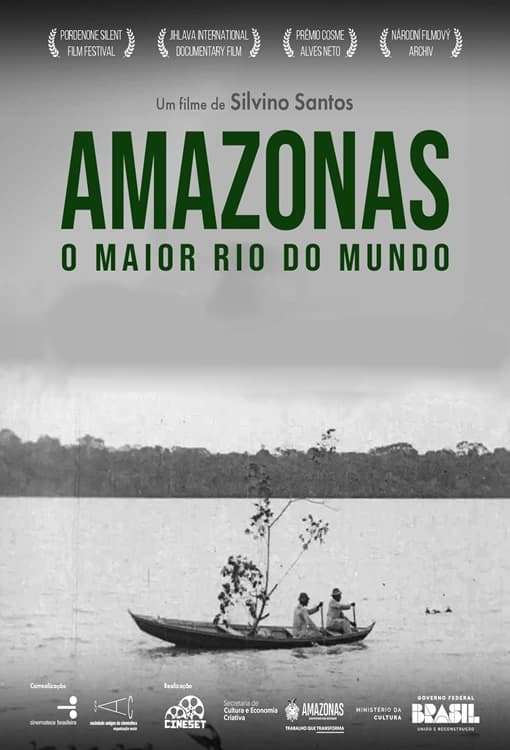
Mesmo antes de o mês terminar eu sabia que este seria o destaque. Mesmo antes do filme terminar eu sabia! Este documentário brasileiro de 1918 - sim, feito quatro anos antes do mais famoso “Nanook, o Esquimó” - teve uma jornada que poderia ser o roteiro de uma boa ficção. Foi considerado perdido desde os anos 1930, porque o distribuidor europeu do filme roubou as cópias e fez turnê pela Europa dizendo que havia sido ele quem fez o filme. Uma cópia foi redescoberta num arquivo em Praga, República Tcheca, e depois da restauração o filme estreou no festival de Pordenone. Depois da estreia, ele foi exibido em diversas cidades no Brasil e em julho uma alma boa subiu o filme no YouTube (que depois foi retirado de lá e disponibilizado no site da Cinemateca) - foi incrível vê-lo no meu quarto, e posso apenas imaginar qual teria sido a sensação de vê-lo em Pordenone com música ao vivo.
O documentário segue o fluxo do Rio Amazonas, trazendo uma visão geográfica, econômica e cultural da área. Eu já sabia sobre a extração de látex, mas fiquei muito surpresa com a extração das castanhas e pesca de peixes-boi - e também com a tartaruga de duas cabeças. A parte com os indígenas poderia ter vindo direto de um filme etnográfico e é, como esperado, contaminado pelo olhar do colonizador - o diretor Silvino Santos é português.
Um exemplo perfeito do passado que retorna à vida na frente dos nossos olhos, este é um filme que eu desejei nunca terminar.
July: Amazon: longest river in the world / Amazonas, o Maior Rio do Mundo (1918)
Even before the month ended I knew this would be the highlight. Damn, even before this movie ended I knew. This 1918 Brazilian documentary - yes, made four years before the more famous “Nanook of the North” - had a journey that could be the script of a fictional film. It was believed to be lost since the 1930s, because the European distributor of the film stole the copies and toured Europe claiming that he had made the film. It was rediscovered in an archive in Prague, Czech Republic, and after a restoration the film premiered at Pordenone. After this premiere, it was exhibited in several cities in Brazil, and in July a good soul uploaded it on YouTube (later it was taken down and uploaded to the Cinemateca website) - it was a blast to watch it in my bedroom, and I could only imagine how it would have been in Pordenone with live music.
The documentary follows the flow of the Amazon River, making a geographical, economical and cultural overview of the land. I was already familiar with the extraction of latex, but was very surprised to learn about the extraction of Brazilian nuts and the hunting of manatees - and also with the two-headed turtle. The part with the Indians could have come from an ethnographic movie and is, as expected, contaminated by the colonizer’s eye - the director Silvino Santos was Portuguese.
A perfect example of the past coming to life in front of your eyes, this was the kind of film I wish never ended.
Agosto: Nove Dias em Um Ano (1962)
Este belo filme soviético lida com o preço das descobertas científicas - um preço muito pessoal pago por Mitya (Aleksey Batalov), um físico que consegue isolar nêutrons, mas é exposto à muita radiação no processo. Ele tem um amigo que também é apaixonado pela ciência e pela também cientista Lyolya (Tatyana Lavrova). Mitya se casa com Lyolya, mas adoece, o que quase acaba com seu otimismo em relação à vida e à ciência.
Como um filme sobre física nuclear conseguiu ser tão belo? Com uma linda fotografia - no sentido de que muitos frames poderiam ser pinturas em preto e branco - e um poderoso storytelling, que nos faz nos importar com os personagens. É também ótimo que um dos dias destacados naquele ano é um dia comum, no qual Lyolya pensa no fardo que é cuidar de uma casa e um marido e ter seu trabalho como cientista.
August: Nine Days of One Year (1962)
This beautiful Soviet film deals with the price of scientific discoveries - a very personal price paid by Mitya (Aleksey Batalov), a physicist who manages to isolate neutrons, but is exposed to a huge amount of radioactivity in the process. He has a friend who shares both his passion for science and for the also scientist Lyolya (Tatyana Lavrova). Mitya marries Lyolya, but falls ill, which almost breaks his optimism about life and science.
How could a film about nuclear physics be se beautiful? With a great cinematography - in the sense that many frames could be paintings in black and white - and powerful storytelling, that makes us care for all the characters. It’s also great to have one of the days highlighted in that one year a common day, in which Lyolya thinks about the burden of taking care of a house and a husband and also being a scientist.
Setembro: Retribuição (1924)
O que eu pensei que nunca aconteceria aconteceu: uma sessão de um filme mudo com música ao vivo na minha cidade. Tinha que ser o destaque do mês! “Retribuição” é o filme que inaugura o Ciclo do Recife, e é também uma produção que foi claramente inspirada nos filmes norte-americanos da época, em especial os seriados. Foi dirigido pelo ourives Gentil Roiz e tem como estrela a linda e vivaz Almeri Steves.
Edith (Steves) perde o pai, mas logo antes de morrer ele dá a ela um mapa com a localização de um tesouro. Um ano se passa e ela não faz nada, até que ajuda um homem que havia sido machucado por um bandido numa floresta. Em retribuição a essa ajuda, o homem, Arthur (Barretto Junior), se oferece para ajudar Edith a localizar o tesouro. Uma gangue fica sabendo do plano deles e vai atrás do casal aventureiro.
O acompanhamento musical foi feito com um teclado, uma guitarra e os muitos instrumentos de uma percussionista. Foi uma experiência interessante, mas minha mãe achou a música moderna demais para o filme. Ela disse preferir o acompanhamento só no piano, como na nossa querida Silent Comedy Watch Party.
September: Retribuição (1924)
What I believe would never happen actually happened: a session of a silent film with live music accompaniment in my hometown. It had to be the highlight of my month! “Retribution” is the film that inaugurates the Recife Cycle, and a production that was clearly inspired by North American films of the time, especially the serials. It was directed by jewel engraver Gentil Roiz and stars the gorgeous and lively Almeri Steves.
Edith (Steves) loses her father, but right before dying he gives her a map with the location of a treasure. One year goes by and she does nothing, until she helps a man who has been hurt by a bandit on the forest. In retribution to her help, this man, Arthur (Barretto Junior), offers to help Edith find the treasure. A gang ends up learning about their plan and go after the adventurous couple.
The live accompaniment was made with a keyboard, an electric guitar and many instruments from a percussionist. It was an interesting experience, but my mother thought the music was too modern for the film. She said she preferred piano-only accompaniment, like in the much beloved in our house Silent Comedy Watch Party.
Outubro: Suzy Saxophone (1928)
Meu filme favorito de outubro tinha de vir do Festival de Cinema Mudo de Pordenone, que mais uma vez eu acompanhei online. E seguindo a tradição, meu filme favorito do festival foi visto numa terça-feira! “Suzy Saxophone”, de 1928, é uma delícia do cinema alemão. A estrela é Anny Ondra, uma garota rica que troca de lugar com uma amiga mais pobre. Ondra vai para uma academia de dança, enquanto a amiga vai para um colégio interno. O ambiente na academia é severo e três homens, sabendo disso, apostam que um deles não consegue tirar Ondra de lá para uma noite de diversão. E diversão é o que você terá aos montes com este filme descrito como verdadeiramente efervescente!
October: Suzy Saxophone (1928)
My favorite film from October simply had to come from the Pordenone Silent Film Festival, that once again I attended online. And following a tradition, my favorite of the festival was the film I watched on a Tuesday! “Suzy Saxophone”, from 1928, is a delightful German film. It stars Anny Ondra as a rich girl who trades places with her poorer friend. Ondra goes to a dance academy, while the friend goes to boarding school. The environment at the academy is strict, and three men, knowing this, place a bet that one of them can’t take Ondra out for a night of fun. And fun is everything you will have in this film that was described truly as effervescent!
Novembro: Ainda estou aqui (2024)
A obra-prima que veio do meu país este ano foi o melhor filme que vi - nos cinemas! - em novembro. Narra a história da inquebrável Eunice (Fernanda Torres), uma mulher cujo marido, Rubens Paiva (Selton Mello), é preso pela ditadura militar brasileira. É 1971 e a ditadura duraria mais 14 anos, porém Eunice não parou de lutar desde o momento em que Rubens foi levado da casa da família. Ela e uma das filhas também são presas e mantidas numa cela por vários dias, sofrendo tortura psicológica. Quando ela é libertada, Eunice se reinventa e se torna advogada de causas indígenas. Fernanda Montenegro - mãe de Fernanda Torres e única atriz brasileira a ser indicada ao Oscar (até agora) - não diz uma única palavra, porém sua performance emociona e traz lágrimas aos nossos olhos. E, como eu disse nas redes sociais depois de assistir ao filme: negar a ditadura brasileira é como negar o Holocausto. E pedir por uma nova ditadura deveria ser um crime contra a humanidade.
Também em novembro participei do Festival de Cinema Italiano, que foi online e gratuito. Ele trouxe uma retrospectiva sobre comédia e pude ver o amado cômico italiano Totò em diversos filmes. Meu favorito foi “O Homem da Caixainha” (1950), que tem muito em comum com um favorito da vida inteira, o também italiano “La Tempesta in un Cranio” (1921).
November: I’m Still Here / Ainda estou aqui (2024)
The masterpiece that came from my country this year was the best film I watched - in a movie theater! - in November. It tells the story of the mighty Eunice (Fernanda Torres), a woman whose husband, Rubens Paiva (Selton Mello), is arrested during the military dictatorship in Brazil. It’s 1971 and the dictatorship would last for another 14 years, yet Eunice didn’t stop fighting from the moment Rubens was taken from the family house. She and one of her daughters are also arrested and she is kept in a cell for several days, enduring psychological torture. When she is freed, Eunice reinvents herself and becomes a lawyer for indigenous causes. Fernanda Montenegro - Torres’ real-life mother and the only Brazilian actress to be nominated for an Oscar (so far) - doesn’t utter a single word but her performance moves us and brings tears to our eyes. And, as I have said in social media after watching this movie: denying the Brazilian dictatorship is like denying the Holocaust. And asking for a new dictatorship should be a crime against human rights.
Also in November I could take part in the Italian Film Festival, that was online and free. They had a retrospective on comedy and I could see the beloved movie star Totò in several films. My favorite was “47 Talking Corpses” (1950), that has many similarities with a lifetime favorite, the also Italian “La Tempesta in un Cranio” (1921).
Dezembro: Uma história de amor e fúria (2013)
Animações no cinema brasileiro são raras, mas quando estreiam, você pode esperar algo incrível. Este filme traz a história de um ser imortal (dublado por Selton Mello, salvador do cinema brasileiro) que se torna humano em quatro momentos diferentes da História do Brasil: o século XVI, o século XIX, 1968 e 2096. Mesmo sendo formada em História, aprendi algumas coisas bem interessantes neste filme e me surpreendi com algumas previsões para 2096 já acontecendo.
Eu não poderia terminar este ano sem mencionar a melhor estreia de 2024 na minha humilde opinião: “Jurado nº 2”, o mais novo de Clint Eastwood. Um filme de tribunal sólido e intrigante que, se tivesse sido feito nos anos 50, seria um clássico, e sem dúvida se consolidará como um clássico nas próximas décadas.
December: Rio 2096: A Story of Love and Fury / Uma história de amor e fúria (2013)
Animations in Brazilian cinema are rare, but when they are released, you can expect something great. This movie brings the story of an immortal male (voiced by Selton Mello, who was also in “I’m Still Here”) that becomes human in four different times in Brazilian History: the 16th century, the 19th century, 1968 and 2096. Even though I hold a degree in History, I learned a couple of very interesting things from this film and was surprised as I saw some predictions for 2096 already happening.
I couldn’t put an end to this year without mentioning the best movie released in 2024 in my humble opinion: Clint Eastwood’s newest, “Juror #2”. A solid and compelling courtroom drama that, if made in the 1950s, would be a classic, and without a doubt it’ll be a classic of the genre in the decades to come.











.png/220px-Alice's_Egg_Plant_(1925).png)


