} Crítica Retrô: 1961

Tradutor / Translator / Traductor / Übersetzer / Traduttore / Traducteur / 翻訳者 / переводчик

Showing posts with label 1961. Show all posts

Friday, January 9, 2026

Férias no Havaí (1961) / Gidget Goes Hawaiian (1961)


Em 1959, o mundo foi apresentado, desta vez através de um filme - o livro foi publicado em 1957 - a Francine, uma “gidget” (girl + midget) que decide aprender a surfar. O filme foi um sucesso nas bilheterias e Gidget provou ser corajosa ao conquistar não apenas as ondas da Califórnia, mas também o coração de um surfista. Uma sequência era o próximo passo, obviamente. E ela veio dois anos depois.

In 1959 the world was introduced, this time through film - the book came out in 1957 - to Francine, a gidget (girl + midget) who decides to learn how to surf. The film was a box-office hit and Gidget proved to be fearless by conquering not only the waves of California, but also love. A sequel was the natural next step. And it came two years later.

Mas o problema é que Gidget não é Gidget. Interpretada por uma sapeca e charmosa Sandra Dee no primeiro filme, em “Férias no Havaí” ela é interpretada por uma novata - que recebe o crédito “apresentando” - chamada Deborah Walley. Nem mesmo a cor do cabelo é a mesma! Mas de alguma forma a sequência acaba funcionando.

But the issue is that Gidget is not Gidget. Played by a spunky and charming Sandra Dee in the first move, in “Gidget Goes Hawaiian” she is played by newcomer - she receives an “introducing” credit - Deborah Walley. Not even the hair color is the same! But somehow the sequel works.

A notícia de que a família iria de férias para o Havaí faria qualquer pessoa ficar animada, mas não Gidget. Ora, ela acaba de começar um namoro com o também surfista Moondoggie (James Darren)! Sua recusa inicial faz com que seus pais pensem que eles vão sozinhos para uma segunda lua-de-mel, mas ela muda de ideia quando Moondoggie fala que vai ficar bem sem ela. Chocada, Gidget termina o namoro e tristemente ruma para o Havaí.  

The news that the family is going on vacation to Hawaii would make anyone excited, but not Gidget. See, she has just begun a relationship with fellow surfer Moondoggie (James Darren)! Her initial refusal makes her parents believe they will go alone to a second honeymoon, but she changes her mind as Moondoggie says he’ll manage without her around. Shocked, Gidget breaks up with him and sadly goes to her vacation.

Gidget faz amizade no avião com Abby (Vicki Trickett), mas quando pousa ela pode ser encontrada triste no seu quarto de hotel ou lendo um livro em vez de aproveitando as ondas. Preocupado, o pai dela manda um telegrama para Moondoggie chamando-o para ir ao Havaí e, depois de colocar muita roupa na mala, ele pega o avião. Mas no Havaí ele terá um rival, pois lá podemos encontrar o famoso dançarino Eddie Horner (Michael Callan) e seu trio de amigos.

Gidget makes a friend at the airplane, Abby (Vicki Trickett), but once at land she can be found miserable in her hotel room or reading a book instead of surfing. Worried, her father sends a telegram to Moondoggie asking him to come to Hawaii and, after packing too much clothing, he boards a plane. But in Hawaii he’ll have a rival, as there we can find the famous dancer Eddie Horner (Michael Callan) and his trio of friends.

Em “Férias no Havaí” você pode encontrar tudo o que em geral se encontra nas férias. Há nativos dançando danças típicas no hotel, o que gera um momento cultural bacana. Há também muitos hóspedes cantando e dançando e Gidget se destaca dançando mambo. Assistir a tudo isso é como tirar férias - ou assistir a “The White Lotus”.

In “Gidget Goes Hawaiian” you can find the same things you find in any vacation. There are natives doing their dances at the hotel, which serves as a cool cultural moment. There is also a lot of singing and dancing for the guests of the hotel and Gidget shines dancing mambo. Watching it all is like taking a vacation - or watching “The White Lotus”.

Foram feitas cinco sequências com Gidget, entre esta aqui em 1961 e a última em 1985, sendo as últimas três filmes feitos para a TV. Cada filme teve uma atriz diferente interpretando Gidget, enquanto James Darren seguiu como Moondoggie nos primeiros três filmes. Nada mal para Darren, que substituiu ninguém menos que Elvis Presley, que não pôde fazer o primeiro filme por duas razões: 1- Ele estava servindo ao Exército e 2- Ele era caro demais para o estúdio. “Gidget” também evoluiu para uma sitcom nos anos 60 que durou apenas uma temporada. Uma segunda sitcom, chamada “The New Gidget”, teve duas temporadas em meados dos anos 80.   

Five sequels with Gidget were made, between this one in 1961 and the last one in 1985, being the last three television movies. Each movie had a different actress playing Gidget, while James Darren was Moondoggie in the first three films. Not bad for Darren, who was a replacement for none other than Elvis Presley, who couldn’t make the first film for two reasons: 1- He was serving the US Army and 2- He was too expensive for the studio. “Gidget” also evolved into a sitcom in the 1960s that lasted only one season. A second sitcom, named “The New Gidget”, aired in the 1980s for two seasons.

O primeiro filme termina com uma virada conservadora e o segundo é muito mais livre e aberto na conversa sobre sexo. No avião, conversando com Abby, Gidget diz que Moondoggie “proposed” - na verdade, ofereceu a ela seu broche - e ela disse que sim e se entregou para ele. Em seguida, um grupo de garotos conta que vão se matricular na Universidade do Havaí para estudar a vida sexual de muitas criaturas marinhas.

The first movie ends with a conservative twist and the second is much freer and open in the sex talk. In the airplane, talking to Abby, Gidget says that Moondoggie proposed - actually, offered her his pin - and she said yes and gave herself to him. Next, a group of boys talk about how they are enrolling in the University of Hawaii to study the sex life of many marine creatures.

Se no primeiro filme a turma de surfistas, todos homens, trata Gidget de forma condescendente, por vezes até abusiva, aqui ela tem em Abby uma amiga invejosa. Tudo fica mais complicado quando Abby decide seduzir Moondoggie como maneira de compensar o fato de que os quatro amigos só dão atenção para Gidget. E então Abby espalha fofocas sobre nossa pequena surfista! Se o primeiro filme não tinha uma vilã, Abby faz esse papel aqui.  

If in the first movie the all-male gang of surfers treats Gidget in a patronizing, sometimes even abusive, way, here she gets a jealous friend in Abby. Things get more complicated when Abby decides to seduce Moondoggie as a way of compensating that the four friends are giving all their attention to Gidget. And then she spreads gossip about our little surfer! If the first film lacked a villain, Abby pretty much does the job here.

Sandra Dee deveria reprisar seu papel como Gidget, mas devido a seu contrato com a Universal Pictures ela não podia fazer o filme para a Columbia. Deborah Walley foi escolhida para o papel, e “Férias no Havaí” foi seu primeiro filme. Ela não ficou muito feliz com o papel, no entanto, pois acreditava, com razão, que ao aceitar interpretar Gidget ela nunca se tornaria uma atriz séria.

Sandra Dee was supposed to reprise her role as Gidget, but due to commitments to Universal Pictures she wasn't allowed to make the film for Columbia. Deborah Walley was chosen to replace her, and “Gidget Goes Hawaiian” was her first film role. She wasn’t very happy with the role, though, as she believed, with reason, that by accepting to play Gidget she would never become a serious actress.

Tanto o filme original, intitulado no Brasil “Maldosamente Ingênua”, quanto “Férias no Havaí” duram mais do que deveriam com tramas de desencontros, mas é o único senão. Mesmo assim, gostei demais de ambos. Eu normalmente vou para a praia nas férias, mas não sei surfar. Obviamente, você não precisa surfar para aproveitar a praia - algo que os “Beach Movies”, um subgênero iniciado por Gidget, nos mostram perfeitamente. Mas essa já é outra história.  

Both “Gidget” and “Gidget Goes Hawaiian” go on for too long with misunderstandings in the plot, and it’s their only downside. Nevertheless, I enjoyed both immensely. I usually go on vacation to the beach, although I don’t surf. Of course, you don’t have to surf to enjoy the beach - something the Beach Movies, a subgenre that “Gidget” kickstarted, perfectly shows us. But that’s another story.

This is my contribution to the Film. Release. Repeat blogathon, hosted by The Midnite Drive-In and Hamlette’s Soliloquy.

Sunday, April 14, 2019

Salomé (1953) / Salome (1953)


ESTE ARTIGO TEM SPOILERS

THIS ARTICLE HAS SPOILERS

Primeiro, ela foi Gilda, arrasando corações em um cassino em Buenos Aires em 1946. Depois, em 1948, ela foi Carmen, uma cigana que faz um militar se tornar fora da lei na Espanha. O próximo passo para ela foi dar vida à Salomé, que pediu a cabeça de João Batista na Galileia. A atriz Rita Hayworth interpretou muitas femme fatales – na lista, apenas Gilda seria considerada a femme fatale regular do cinema noir – e ela era a escolha óbvia para interpretar a femme fatale bíblica em “Salomé”, de 1953 – e corajosamente subverter a famosa história.

First, she was Gilda, wrecking hearts in a casino in Buenos Aires in 1946. Then, in 1948, she was Carmen, a gypsy that makes an officer become an outlaw in Spain. The next step for her was to embody Salome, who asked for John the Baptist's head in Galilee. Actress Rita Hayworth played many femme fatales – in the list, only Gilda could be considered the common noir femme fatale – and she was the obvious choice to play the Biblical femme fatale in 1953's “Salome” - and boldly subvert the well-known story.


Um pouco do básico de história bíblica: antes de Jesus ficar conhecido como o Messias, seu primo, João Batista, era considerado o Messias, embora sempre negasse isso. John era alguns meses mais velho que Jesus e Jesus, já adulto, foi batizado por João.

A little of Biblical history 101: before Jesus became known as the Messiah, his cousin, John the Baptist, was considered the Messiah, although he denied the title. John was a few months older than Jesus and Jesus, already in his adulthood, was baptized by John.


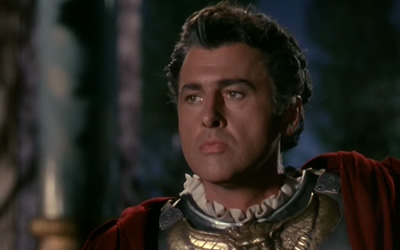
Assim como outros profetas, João Batista (Alan Badel) prega contra tiranos, como o rei Herodes (Charles Laughton) – o filho de Herodes o Grande, aquele rei que quis matar todos os bebês do gênero masculino quando Jesus nasceu. Quem está mais ansiosa com a crescente popularidade de João é a rainha Herodias (Judith Anderson), que quer que seu marido faça algo antes que o pregador os tire do trono.

Like other prophets, John the Baptist (Alan Badel) preaches and talks against tyrants, like King Herod (Charles Laughton) – the son of Herod the Great, that king who wanted all baby boys killed by the time Jesus was born. The one more anxious about John's growing popularity is Queen Herodias (Judith Anderson), who wants her husband to do something about the preacher before he dethrones them.


Filha da rainha Herodias e enteada do rei Herodes, a princesa Salomé (Rita Hayworth) vive em Roma. Marcellus (Rex Reason), sobrinho do imperador Tiberius Cesar (Cedric Hardwicke), quer se casar com Salomé, mas o imperador o proíbe, porque Salomé não é romana, e então bane Salomé de Roma. No caminho para casa, ela conhece o comandante Claudius (Stewart Granger), que deve acompanhar a caravana dela par a Galileia. O provocador e pio comandante se apaixona por ela.

Queen Herodias's daughter and king Herod's stepdaughter, Princess Salome (Rita Hayworth), lives in Rome. Marcellus (Rex Reason), the nephew of emperor Tiberius Caesar (Cedric Hardwicke), wants to marry Salome, but the emperor forbids him to do so, because Salome is not a Roman, and banishes Salome from Rome. On her way home, she meets commander Claudius (Stewart Granger), who must accompany her caravan to Galilee. The provocative and pious commander falls in love with her.


Atravessando a planície rumo à Galileia, a caravana encontra João Batista e seus seguidores e ocorre um confronto. Claudius impede que João seja morto por um soldado – ele diz que a morte de João causaria revolta entre o povo, mas na realidade Claudius e João são amigos.

When going by land to Galilee, the caravan meets with John the Baptist and his followers and there is confrontation. Claudius prevents John from being killed by a soldier – he says that killing John would cause uproar among the people, but in reality Claudius and John are friends.


No palácio, o rei Herodes se interessa pela enteada, enquanto a rainha Herodias cria um plano para usar a beleza de Salomé a seu favor. Salomé vai ao mercado e ouve João Batista falando mal da mãe dela, e por isso começa a se opor a ele, o que é perfeito para o plano de Herodias.

In the palace, King Herod lusts over her stepdaughter, while Queen Herodias plots a plan to use Salome's beauty to her favor. Salome goes to the market and listens to John the Baptist speaking ill of her mother, and thus starts to oppose him, which is perfect for Herodias's plan.


Entre 1949 e 1951, Rita Hayworth se afastou de Hollywood ao se casar com o príncipe Ali Khan e se tornar a primeira atriz / princesa. Em 1951, DeMille disse que queria Hayworth para interpretar Salomé em um filme que ele faria no futuro. O chefe da Columbia, Harry Cohn, roubou a ideia e fez “Salomé” em 1953, com Hayworth também como produtora do filme, através de sua produtora Beckworth Company, que produziu três de seus filmes.

Between 1949 and 1951, Rita Hayworth took a break from Hollywood as she married Prince Aly Khan and became the first actress / princess. In 1951, DeMille said he wanted Hayworth to play Salome in an upcoming picture. Columbia boss Harry Cohn stole the idea and made “Salome” in 1953, with Hayworth serving also as a producer, under her company Beckworth, that produced only three of her movies.


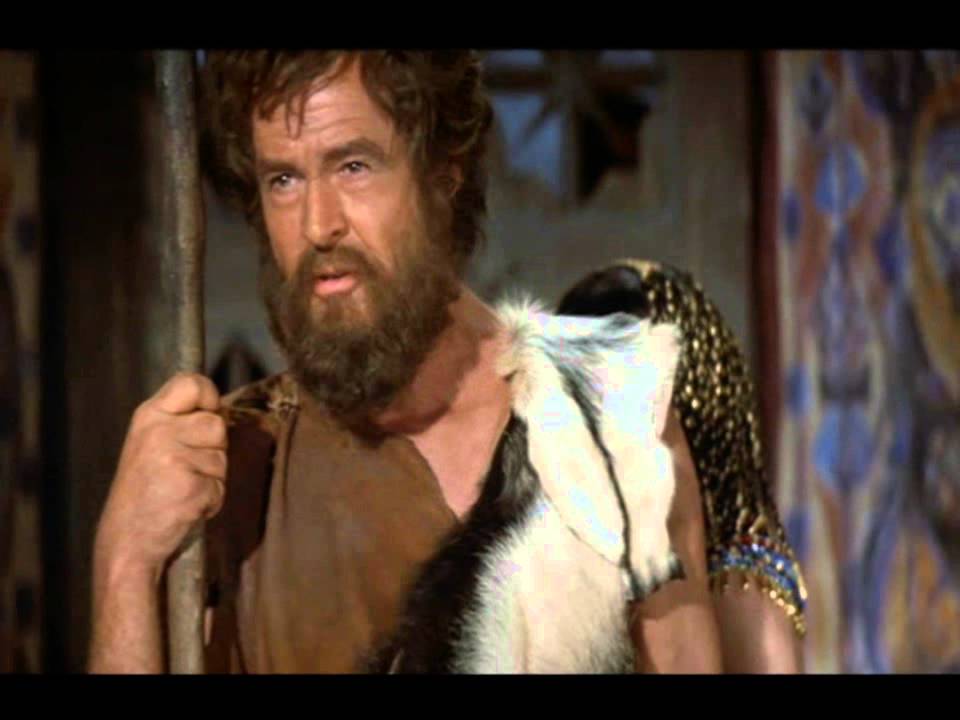
Alan Badel, olhando para cima o tempo todo com olhos arregalados, faz João Batista parecer um pouco lunático. Em “Rei dos Reis” (1961), João Batista é interpretado por Robert Ryan, o que faz com que ele pareça bem mais velho que o Jesus de Jeffrey Hunter, e também mais circunspecto. No épico de 1961, Salomé é interpretada por Brigid Bazlen, uma garota parecida com Elizabeth Taylor que tinha apenas 16 anos na época.

Alan Badel, looking up all the time with wide open eyes, makes John the Baptist look a little bit lunatic. In “King of Kings” (1961), John the Baptist is played by Robert Ryan, what makes him look much older than Jeffrey Hunter’s Jesus, and also more circumspect. In the 1961 epic, Salome is played by Brigid Bazlen, an Elizabeth Taylor lookalike who was only 16 at the time.

John the Baptist in 1953
John the Baptist in 1961

Falando em louco, o Herodes de Charles Laughton nos lembra um pouco do Nero de Peter Ustinov em “Quo Vadis” (1951), com a diferença de que Nero era mais megalomaníaco, enquanto Herodes é mais como uma criatura nojenta.
Judith Anderson, conhecida como a vilã de “Rebecca” (1940), é perfeita como a maldosa rainha Herodias.

Speaking of crazy, Charles Laughton's Herod kind of reminds us of Peter Ustinov's Nero in “Quo Vadis” (1951), with the difference that Nero was more megalomaniac, while Herod is more of a disgusting creature. Judith Anderson, known as the villain in “Rebecca” (1940), is perfect as the evil Queen Herodias.


Assim como em “Ben-Hur”, em “Salomé” Jesus também aparece, mas seu rosto não é mostrado. Mas, aqui, o personagem mais importante é fictício: Claudius é um homem bom entre homens maus, dividido entre o dever e sua nova crença. Quando se apaixona por Salomé, um novo conflito surge, pois ele tenta mostrar a ela que a mãe dela está errada e que João Batista está pregando uma doutrina que durará séculos.

Like in “Ben-Hur”, in “Salome” Jesus is also there, but his face is not shown. But, here, the most important character is a fictional one: Claudius is a good man among bad men, torn between duty and his new belief. As he falls in love with Salome, a new conflict appears, as he tries to show her that her mother is wrong and John the Baptist is actually preaching about something that will last centuries.


Podemos até ser subversivos e dizer que “Salomé” é tão subversivo quanto “Bastardos Inglórios” (2009), de Tarantino. Salomé se redime e sua culpa no assassinato de João Batista é apagada, e ela se torna uma vítima e não uma femme fatale. Nesta versão, ela faz a Dança dos Sete Véus – que Hayworth mencionou como a coreografia mais difícil que teve de fazer – como distração para que Claudius tente libertar João Batista. Obviamente, isso não termina bem para João, mas é bom ver Salomé como um ser humano, que ri, ama e aprende.
  
We can even be subversive and say that “Salome” is as subversive as Tarantino's “Inglorious Basterds” (2009). Salome is redeemed and her guilt in John the Baptist's assassination is erased, and she becomes a victim rather than a femme fatale. In this version, she performs the Dance of the Seven Veils – that Hayworth mentioned as the most demanding dance routine she ever performed – as a distraction while Claudius tries to free John. Of course, it doesn’t end well for John, but it’s nice to see Salome as a human, laughing, loving and learning.

This is my contribution to the Stewart Granger blogathon, hosted by Maddy at Maddy Loves Her Classic Movies.


Saturday, August 27, 2016

Mais uma Vez, Adeus (1961) / Goodbye Again (1961)

Eu nunca falei isso no blog, mas adoro Anthony Perkins. OK, OK, preciso confessar: tenho um crush nele. Fofo, talentoso, mas desperdiçado pelo preconceito e pelos estereótipos. E mesmo com toda essa admiração, nunca havia escrito nenhuma crítica de um filme estrelado por ele. Está na hora de mudar isso.

I never said this on this blog, but I adore Anthony Perkins. OK, OK, I must confess: I have a crush on him. Cute, talented, but wasted thanks to prejudice and stereotyping. And even with all my admiration, I had never written about a film starring him. It’s time to change this. 
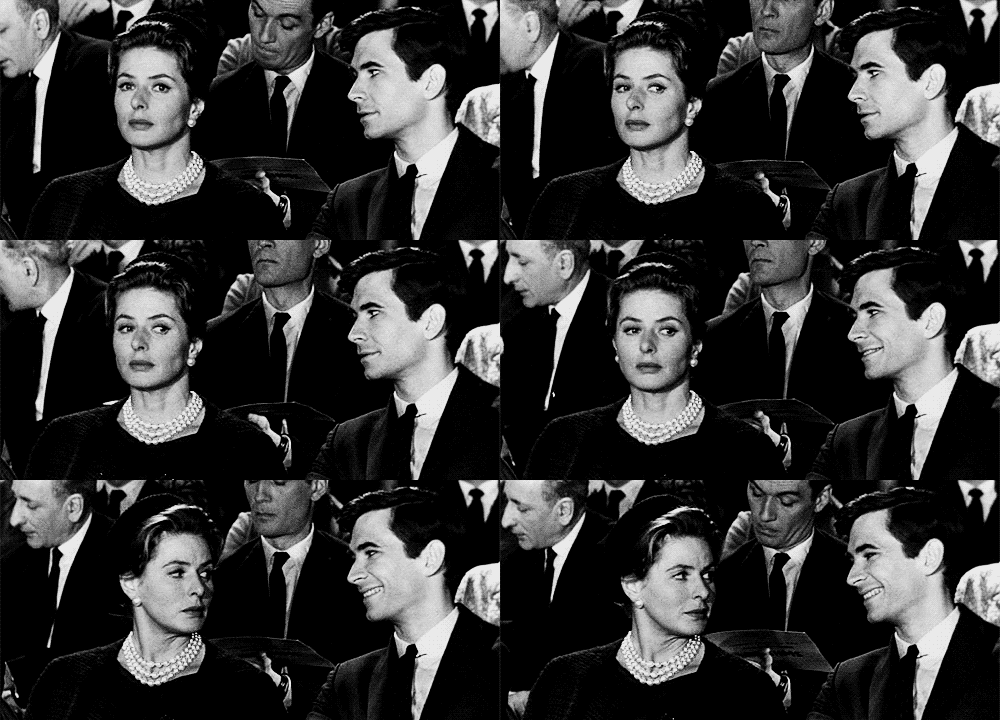
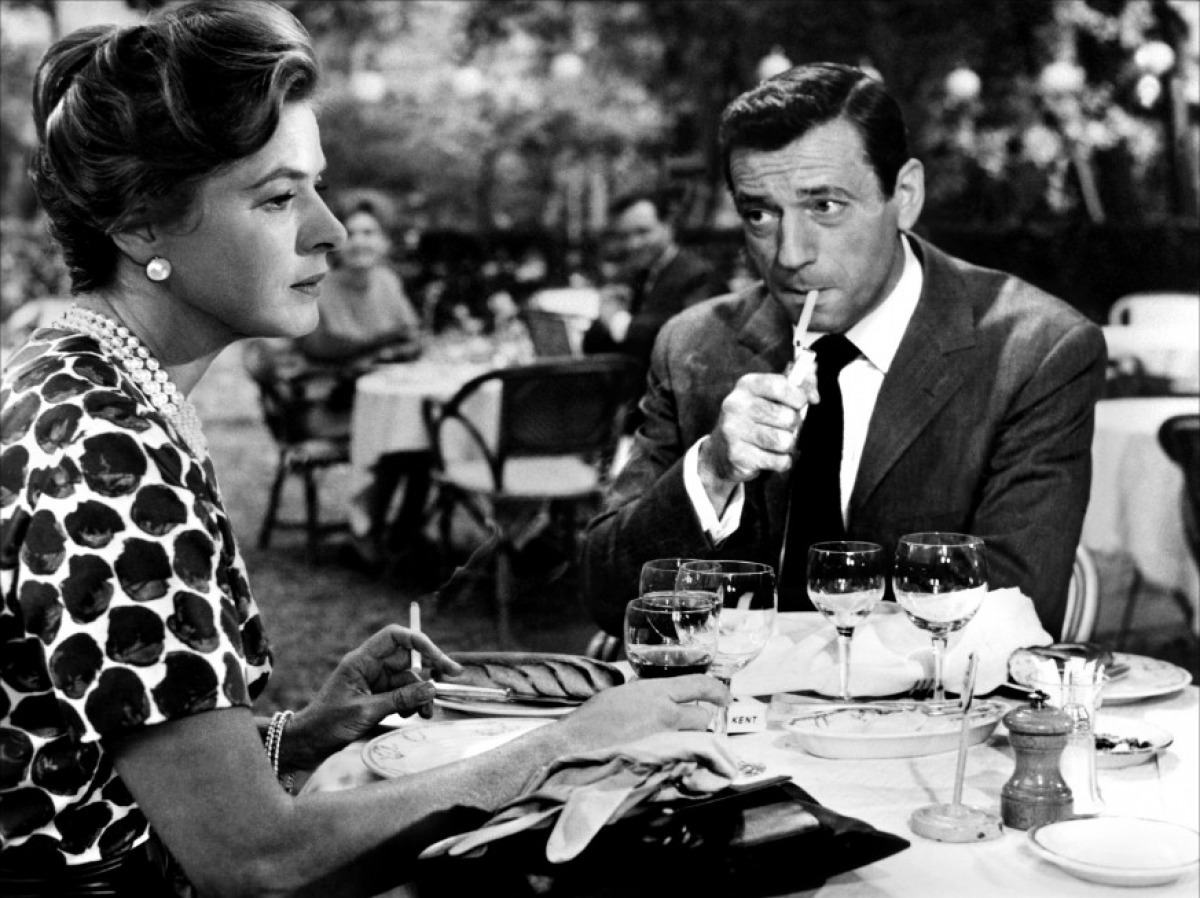
Paula Tessier (Ingrid Bergman) é uma decoradora de 40 anos, divorciada e aparentemente bem resolvida, vivendo em Paris. Ela tem um moderníssimo relacionamento aberto com Roger Desmarest (Yves Montand), e eles não pensam em casamento.

Paula Tessier (Ingrid Bergman) is a 40-year-old interior decorator, divorced and apparently happy who lives in Paris. She is in an über-modern open relationship with Roger Desmarest (Yves Montand), and they don’t think about getting married so soon – or ever.
Roger indica Paula para decorar o novo apartamento da excêntrica e distraída Teresa Van der Besh (Jessie Royce Landis). Com ela mora o filho playboy, Philip (Anthony Perkins), de 25 anos, que se apaixona por Paula. Tudo que ele precisa para conquistá-la é fazer uma pergunta: “você gosta de Brahms?”.

Roger sends Paula to decorate the new apartment bought by excenrtic and absent-minded Teresa Van der Besh (Jessie Royce Landis). Her carefree son Philip (Anthony Perkins) lives with her, and the 25-year-old young man falls in love with Paula. All he needs to do to conquer her is to make one question: “do you like Brahms?”.
O filme, apesar de ter sido feito há 55 anos, é moderníssimo. Com as investidas do rapaz, Paula passa a questionar se realmente ama Roger, e se ele a ama de volta. A relação de Paula e Roger, aliás, é algo que não se vê com frequência na ficção: sem meias palavras, completamente honesta.

The film was released more than 55 years ago, but it is incredibly modern. With the young man’s flirting, Paula starts to question if she really loves Roger, and if he loves her back. Paula and Roger’s relationship, by the way, is something we don’t see frequently in fiction: without white lies, completely honest.
Paula não tem medo de dizer o que pensa e o que sente, mesmo que o mais esperado era que ela escondesse que nutre afetos também por Philip. Ela é uma mulher incrível, e quando Roger se sente incomodado por ela passar tempo com Philip, ela retruca: e quando você fica falando dos seus casos com outras menininhas? A resposta dele? “Pelo menos isso é normal”. É uma frase muito machista, mas a dura verdade é que muitos homens pensavam assim em 1961 – e pensam ainda hoje. O filme está cheio de duras verdades.

Paula is not afraid to say what she thinks and feels, although the expected attitude was her hiding her feelings about Philip. She is an incredible woman, and when Roger feels uncomfortable because she spends time with Philip, she tells him: “You always made sure that I hear yours [stories about his love life] with your girls”. His answer? “At least that’s normal”. It is a very sexist sentence, but the bitter truth is that many men had this mentality in 1961 – and think the same even today. The film is full of bitter truths.
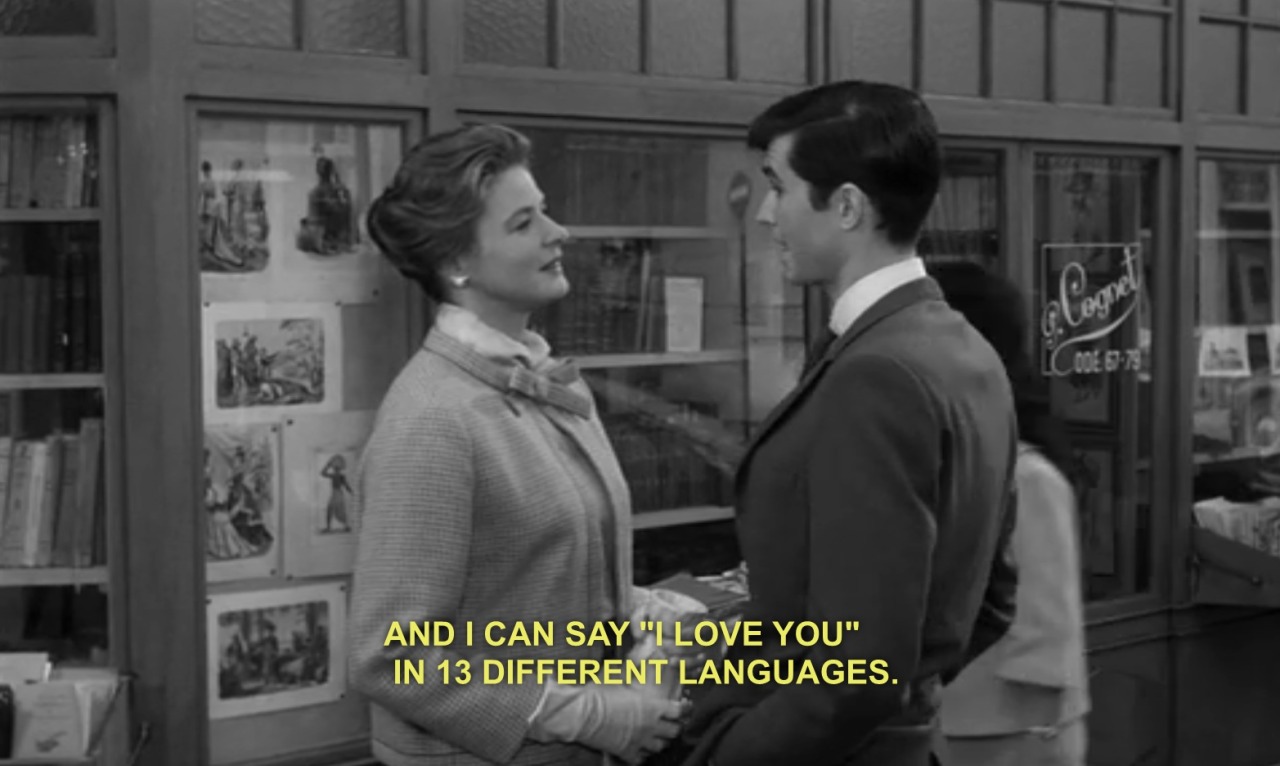
É interessante que a protagonista desta história seja interpretada justamente por Ingrid Bergman, uma mulher que não deixou falsos moralismos impedirem-na de viver um romance. É ainda mais interessante que Philip diz para Paula que sabe falar “eu te amo” em 13 línguas, quando o que Ingrid escreveu para o diretor Roberto Rossellini em uma carta foi: “de uma atriz [...] que em italiano só sabe falar 'ti amo' e que está pronta para ir até você e fazer um filme juntos”.

It’s interesting that the leading lady is played by Ingrid Bergman, a woman who didn’t let false moralism stay between her and romance. It’s also interesting that Philip could mention to Paula he can say “I love you” in 13 languages, when in real life Ingrid wrote the following to Italian director Roberto Rossellini in a letter: “a Swedish actress […] in Italian knows only ‘ti amo’, I am ready to come and make a film with you.”. 
E é também curioso que Ingrid esteja no centro daquele que provavelmente é o mais famoso triângulo amoroso da história do cinema: Rick Blaine, Ilsa Lund e Victor Laszlo em “Casablanca” (1942). O triângulo de “Mais uma Vez, Adeus” é tão confuso quanto o de “Casablanca”, e só poderia ter sido criado pela mente sagaz da escritora Françoise Sagan.

And it is also curious noting that Ingrid was in the center of the most famous love triangle in film history: Rick Blaine, Ilsa Lund and Victor Laszlo in “Casablanca” (1942). The love triangle in “Goodbye Again” is as complicated as the one in “Casablanca”, and could only have been created by the sagacious mind of novelist Françoise Sagan.
E Perkins? Bem, Anthony Perkins está muito convincente como Philip, e inclusive ganhou o prêmio de Melhor Ator no Festival de Cannes por sua performance. Mas Ingrid, vestida por Dior, é quem brilha sempre neste filme pouco conhecido, mas tão bom quanto Casablanca.

What about Perkins? Well, Anthony Perkins is very convincing as Philip, and his performance earned him the Best Actor prize in the Cannes Festival. But Ingrid, dressed by Dior, is the one who shines in every moment of this little known film. Little known, but as good as Casablanca.

This is my contribution to the 2nd Wonderful Ingrid Bergman Blogathon, hosted by Virginie at The Wonderful World of Cinema. 

Saturday, April 12, 2014

O vento será tua herança (1961) / Inherit the Wind (1961)

O vento será tua herança” é um filme, sobretudo, sobre as relações entre o velho e o novo. O tema principal é o embate entre religião e ciência e, por consequência, entre as velhas e novas crenças. E na tela vemos atores de diversas faixas etárias, desde os mais experientes, ganhadores do Oscar, até novatos na profissão, passando por intérpretes com uma carreira ainda em construção. Embora tenhamos nossa opinião sobre a questão central, criacionismo contra evolucionismo, não podemos negar que o filme só é esplêndido graças à mistura do antigo e do novo. 

Inherit the Wind” is above all a movie about the relationship between old and new. The main theme is the feud involving science and religion and, as a consequence, the old and the new beliefs. On the screen we see actors of several ages, from veteran Oscar winners to newcomers, and also the ones still building a career and playing in new genres. We may have our personal opinion about the main theme (Creationism versus Evolutionism), but we cannot deny that the film is only fantastic because of this mix of old and new.


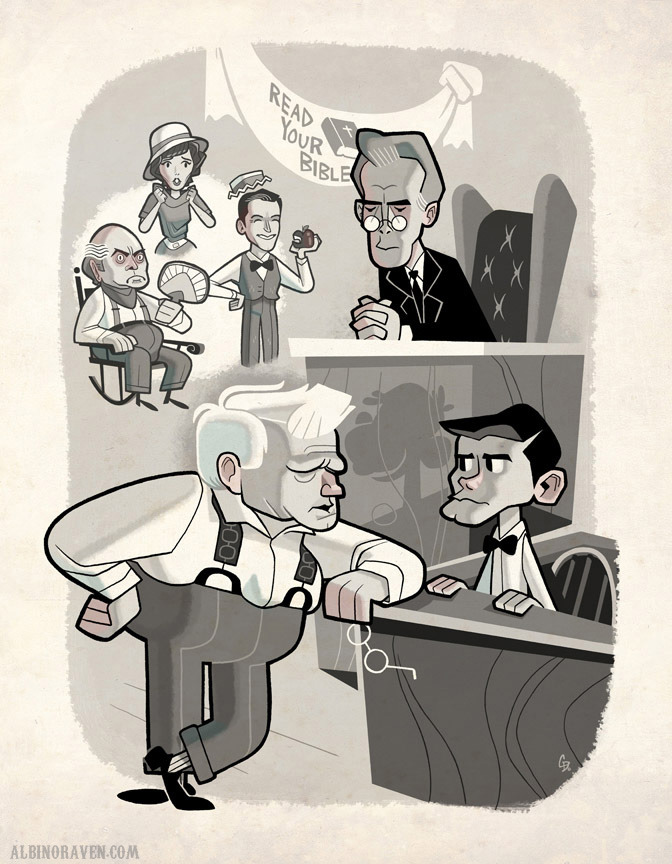
Anos 1920, cidade de Hillsboro. Além de ser afastado da escola, o professor Bertram Cates (Dick York) é preso por estar ensinando a teoria da evolução de Darwin para sua turma de biologia. O que era uma questão local acaba se tornando um debate que chama a atenção do país inteiro, boa parte graças à cobertura da imprensa. Entre os jornalistas destaca-se E.K. Hornbeck (Gene Kelly), que faz de tudo em busca de uma grande notícia. E o debate toma tamanhas proporções que são chamados dois renomados advogados para o caso: Matthew Harrison Brady (Fredrich March) fica com a acusação e Henry Drummond (Spencer Tracy) com a defesa. Para piorar a situação, a namorada de Bertram, Rachel (Donna Anderson), é filha do pastor que o está perseguindo.

1920s, city of Hillsboro. Teacher Bertram Cates (Dick York) is withdrawn from his classes at scholl and also arrest because he is teaching Darwin's evolutionary theory at his Biology class. This local question becomes a national debate thanks to the press coverage. Among the journalists we have E.K. Hornbeck (Gene Kelly), who can do anything for a scoup. And the debate becomes so big that two famous lawyers are called: Matthew Harrison Brady (Fredrich March) works for the prosecution and Henry Drummond (Spencer Tracy) is hired for the defense. To make things worse, Bertram's girlfriend, Rachel (Donna Anderson) is the daughter of  the preacher who is discursing against him.


Muitas vezes o filme mostra como toda a situação é absurda. Em pouco tempo nós nos cansamos e ficamos com raiva da música-tema dos conservadores, “Give me that old time religion”. A recepção calorosa de Matthew Brady é acompanhada por coros de mulheres pedindo decência e um desfile com muitos cartazes que dizem “deixem o demônio longe de Hillsboro”, “fora com Darwin” (“down with Darwin” no original), “não coloque uma cauda em mim” (?!), “Godliness, not gorillas”, “ateísta, volte para seus macacos”, “você não pode nos fazer de macacos” e alguns até aproveitam a situação para fazer propaganda de seus restaurantes, anunciando que “a comida é celestial”. Isso tudo contribui para que o debate pareça ridículo, mas não se engane: em muitos locais (atenção, leitores americanos), os pais ainda podem proibir seus filhos de terem aulas que contradigam o criacionismo!

At many moments the film shows how absurd the situation is. We quickly get tired and angry at the conservative theme song “Give me that old time religion”. The warm wlecome to Matthew Brady is filled with choruses of women asking for decency and a parade of posters saying “leave the devil far from Hillsboro”, “down with Darwin”, “don't put a tail in me” (?!), “Godliness, not gorillas”, “atheist, go back to your monkeys”, “you can't make us monkeys” and even some use the situation to advertise their restaurants, saying that “the food is heavenly”. This makes the debate look ridiculous, but don't be fooled: in many places (attention, American readers), parents can still forbid their children to attend classes that contradict creationism.


Mesmo que quase todos vejam o filme já acreditando na teoria da evolução, há ainda um interessante debate que devemos acompanhar. Embora as testemunhas chamadas por Drummond sejam recusadas pelo tribunal, ele ainda consegue dar seu recado, e o faz de maneira muito interessante: chamando Brady, o advogado da acusação, como testemunha, e fazendo-o confrontar os fatos da Bíblia e os fatos científicos. Mas não se enganem: o filme tem um rumo bem diferente do esperado!

Even though most of us see the movie with the firm belief in the evolutionary theory, there is still an interesting debate we should follow. Although the witnesses called by Drummond are not accepted by the court, he still can make his point, and does it in a very interesting way: he calls Brady, the prosecution lawyers, as a witness, and makes him compare stuff written at the Bible and the scientific facts. But don't be fooled: the film follows not as you expect!


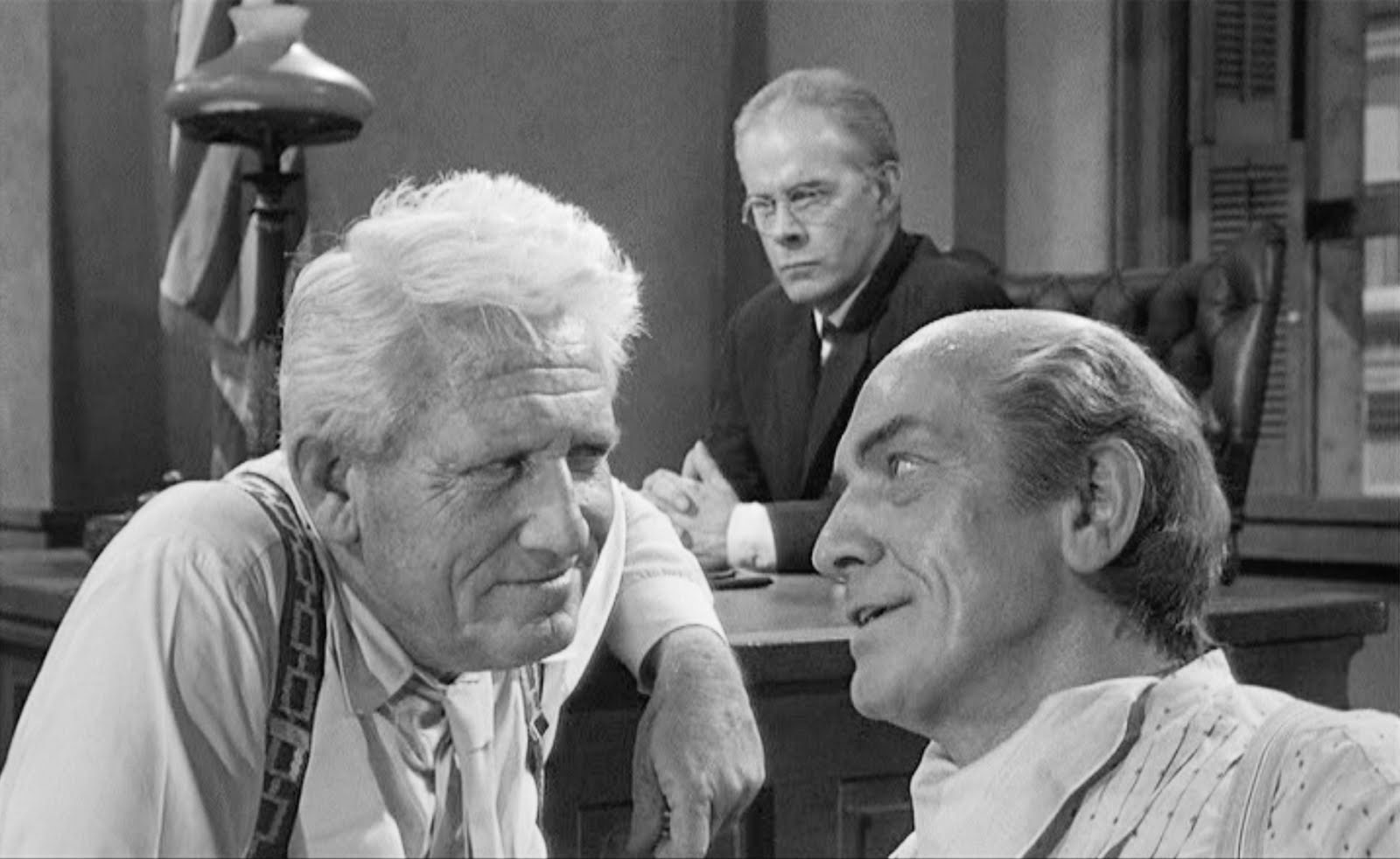
Tanto Spencer Tracy quanto Fredric March tinham dois Oscars na bagagem. March era três anos mais velho que Tracy. Dois dos melhores atores dos anos 30 estão aqui mais velhos, March careca e Tracy mais gordo, mas o talento continua o mesmo. É impossível escolher qual dos dois está melhor, e ambos são absolutamente críveis e, como bons advogados, têm argumentos muito convincentes. Brady e Drummond são velhos conhecidos cujos caminhos se desviaram em um ponto da vida e, mesmo de lados opostos, ainda se estimam. Prova disso é a conversa que têm na varanda. Observe, nesta cena, como as cadeiras de balanço oscilam em direções opostas: são as opiniões conflitantes mostradas através de uma perspicaz metáfora visual.
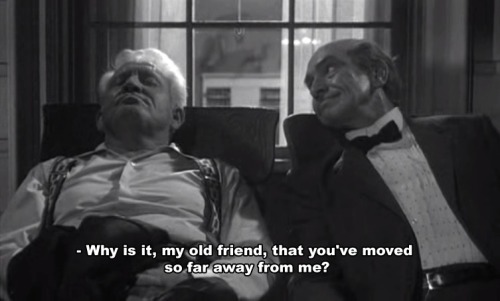
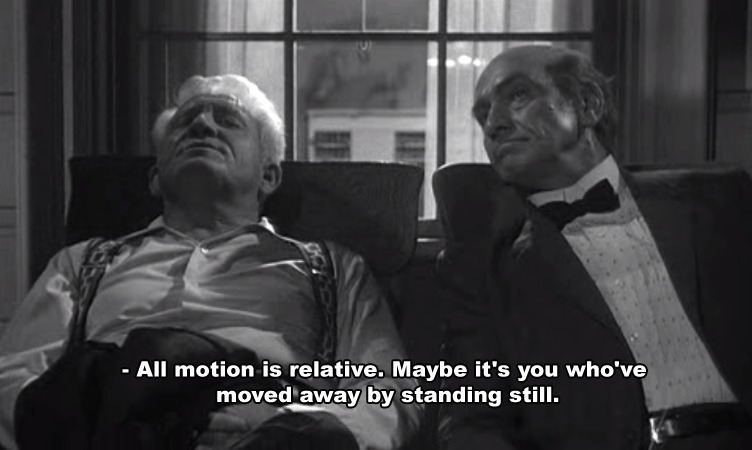
Both Spencer Tracy and Fredric March had two Oscars. March was three years older than Tracy. Two of the best actors from the 1930s are older here, March is bald and Spencer is a bit fatter, but the talent didn't change. It's impossible to point out who is better, both are believable and, as good lawyers, have very convincing arguments. Brady and Drummond are old acquaintances whose paths deviated somewhere in life and, although they are at opposite sides of the court, they still like each other. We can see it with the conversation they have at the balcony. Pay attention on how the rocking chairs move in different directions: their opposite opinions are shown through this wise visual metaphor.


Mais uma do time mais velho é Florence Eldridge, que interpreta Sarah, a esposa de Brady, e era também casada com March na vida real. Florence alcançou fama e colecionou elogios na década de 1920, tanto nas telas quanto nos palcos. Ao se casar com March, em 1927, sua carreira passou a ser composta de personagens coadjuvantes nas telas, mas ainda alguns sucessos no teatro. Enquanto March e Tracy fizeram seus últimos filmes em 1967, Florence atuou pela última vez em 1978, dez anos antes de falecer e três anos depois de ter ficado viúva de March.

Another actress from the older generation is Florence Eldridge, who plays Sarah, Brady's wife. Florence was also married to March in real life. She became famous in the 1920s, and was successful both in film and theater. When she got married to March, in 1927, she started playing character parts onscreen, but still had a lot of success at the theater. March and Tracy did their final films in 1967, and Florence acted for the last time in 1978, three years before dying and ten after March had passed away.


Gene Kelly, vivendo já a decadência dos musicais, desempenha muito bem um papel que não é de todo dramático, mas sim bastante irônico. Na turma mais nova também estão Donna Anderson, naquele que é seu papel mais conhecido, e o sempre reconhecível Dick York, com sua expressão de espanto que ficaria famosa no rosto de Darrin Stephens, esposo da protagonista da série “A Feiticeira”. Este foi o último filme de York, que passou então a atuar exclusivamente na TV. Curiosidade: York foi o responsável por escrever a cena da prisão de seu personagem em “O vento será tua herança”.

Gene Kelly, experiencing the decadence of musicals, perfectly plays a role that is not totally dramatic, but very ironic. Other young performers are Donna Anderson, in her best known role, and the always recognizable Dick York, whose shock expression became famous at Darrin Stephens's face, when he played the husband of the lead in “Bewitched”. This was York's last film, and from then on he only worked on TV. Trivia: York was the one who wrote the prison scene for his character in “Inherit the Wind”.


O filme é a adaptação de uma peça que conta, com várias mudanças, o evento de 1925 que ficou conhecido como “Scopes Monkey Trial”, sendo Scopes o sobrenome do professor real. Os nomes foram todos trocados e aqui uma decisão é muito curiosa: Matthew Brady, nome escolhido para o advogado conservador, foi o responsável pela acusação no caso que acabou com a carreira de Roscoe “Fatty” Arbuckle. Os autores da peça também aumentaram a tensão acrescentando cenas de hostilidade para com Drummond. E lembre-se de que a peça foi escrita durante o McCarthismo, e o direito de pensar livremente é um ponto fundamental.

The film is an adaptation of a play that tells, with several factual changes, the 1925 event that became known as “Scopes Monkey Trial”, since Scopes was the last name of the real teacher. The names were all changed for the play and movie, and here we have a very curious decision: Matthew Brady, the name chosen for the conservative lawyer, was the name of the guy responsible for the prosecution on the case that ended Roscoe 'Fatty' Arbuckle's career. The authors of the play also added the tension by adding hostility situations towards Drummond. Remember that the play was written during McCarthism, and the right of free thinking is a main point. 
 
By Glen Brogan
Mesmo depois de escrever tudo isso sobre o filme, creio que ainda não lhe fiz justiça. Nem se o roteiro inteligentíssimo estivesse publicado aqui, ainda não seria suficiente para demonstrar a grandeza do filme. Veja (ou reveja) “O vento será tua herança”. Preste atenção nos diálogos, nos detalhes, tire um tempo para refletir depois que o filme acabar. Talvez não seja um filme que mudará drasticamente sua vida. Mas, se todos vissem este filme, creio que o mundo seria um lugar melhor.

Even after writing that much about the film, I don't think I've been fair to it. Not even if the very witty screenplay was published here, it still wouldn't be enough to show how wonderful the film is. Watch (or rewatch) “Inherit the Wind”. Pay attention to the dialogs, the details, take your time to think when the film is over. Maybe it won't be a film that will change your life drastically. But if everybody could watch this film I believe the world would be a better place.

This is my contribution for the Diamonds and Gold Blogathon, hosted by dynamic duo Rich at Wide Screen World and Patricia at Caftan Woman.


P.S.: Não se esqueçam de conferir minhas duas novas empreitadas: a coluna semanal Crítica Retrô no site Os Cinéfilos e o blog de literatura Diário de uma Quase-Escritora.
Related Posts Plugin for WordPress, Blogger...