} Crítica Retrô: Salomé

Tradutor / Translator / Traductor / Übersetzer / Traduttore / Traducteur / 翻訳者 / переводчик

Showing posts with label Salomé. Show all posts

Sunday, April 14, 2019

Salomé (1953) / Salome (1953)


ESTE ARTIGO TEM SPOILERS

THIS ARTICLE HAS SPOILERS

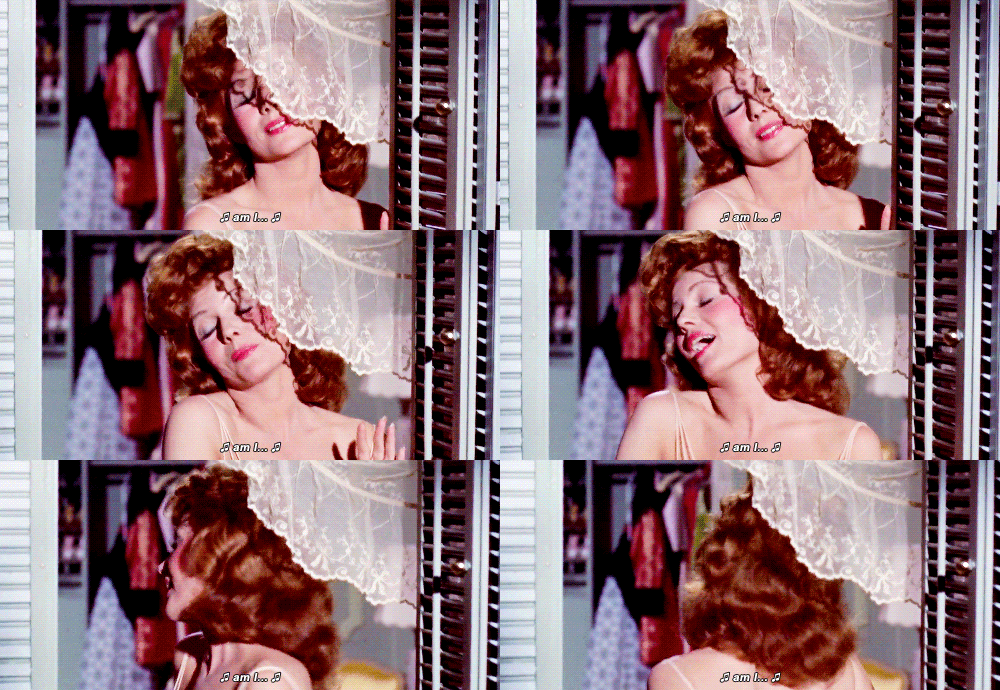
Primeiro, ela foi Gilda, arrasando corações em um cassino em Buenos Aires em 1946. Depois, em 1948, ela foi Carmen, uma cigana que faz um militar se tornar fora da lei na Espanha. O próximo passo para ela foi dar vida à Salomé, que pediu a cabeça de João Batista na Galileia. A atriz Rita Hayworth interpretou muitas femme fatales – na lista, apenas Gilda seria considerada a femme fatale regular do cinema noir – e ela era a escolha óbvia para interpretar a femme fatale bíblica em “Salomé”, de 1953 – e corajosamente subverter a famosa história.

First, she was Gilda, wrecking hearts in a casino in Buenos Aires in 1946. Then, in 1948, she was Carmen, a gypsy that makes an officer become an outlaw in Spain. The next step for her was to embody Salome, who asked for John the Baptist's head in Galilee. Actress Rita Hayworth played many femme fatales – in the list, only Gilda could be considered the common noir femme fatale – and she was the obvious choice to play the Biblical femme fatale in 1953's “Salome” - and boldly subvert the well-known story.

Um pouco do básico de história bíblica: antes de Jesus ficar conhecido como o Messias, seu primo, João Batista, era considerado o Messias, embora sempre negasse isso. John era alguns meses mais velho que Jesus e Jesus, já adulto, foi batizado por João.

A little of Biblical history 101: before Jesus became known as the Messiah, his cousin, John the Baptist, was considered the Messiah, although he denied the title. John was a few months older than Jesus and Jesus, already in his adulthood, was baptized by John.


Assim como outros profetas, João Batista (Alan Badel) prega contra tiranos, como o rei Herodes (Charles Laughton) – o filho de Herodes o Grande, aquele rei que quis matar todos os bebês do gênero masculino quando Jesus nasceu. Quem está mais ansiosa com a crescente popularidade de João é a rainha Herodias (Judith Anderson), que quer que seu marido faça algo antes que o pregador os tire do trono.

Like other prophets, John the Baptist (Alan Badel) preaches and talks against tyrants, like King Herod (Charles Laughton) – the son of Herod the Great, that king who wanted all baby boys killed by the time Jesus was born. The one more anxious about John's growing popularity is Queen Herodias (Judith Anderson), who wants her husband to do something about the preacher before he dethrones them.


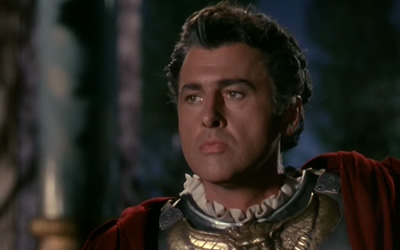
Filha da rainha Herodias e enteada do rei Herodes, a princesa Salomé (Rita Hayworth) vive em Roma. Marcellus (Rex Reason), sobrinho do imperador Tiberius Cesar (Cedric Hardwicke), quer se casar com Salomé, mas o imperador o proíbe, porque Salomé não é romana, e então bane Salomé de Roma. No caminho para casa, ela conhece o comandante Claudius (Stewart Granger), que deve acompanhar a caravana dela par a Galileia. O provocador e pio comandante se apaixona por ela.

Queen Herodias's daughter and king Herod's stepdaughter, Princess Salome (Rita Hayworth), lives in Rome. Marcellus (Rex Reason), the nephew of emperor Tiberius Caesar (Cedric Hardwicke), wants to marry Salome, but the emperor forbids him to do so, because Salome is not a Roman, and banishes Salome from Rome. On her way home, she meets commander Claudius (Stewart Granger), who must accompany her caravan to Galilee. The provocative and pious commander falls in love with her.


Atravessando a planície rumo à Galileia, a caravana encontra João Batista e seus seguidores e ocorre um confronto. Claudius impede que João seja morto por um soldado – ele diz que a morte de João causaria revolta entre o povo, mas na realidade Claudius e João são amigos.

When going by land to Galilee, the caravan meets with John the Baptist and his followers and there is confrontation. Claudius prevents John from being killed by a soldier – he says that killing John would cause uproar among the people, but in reality Claudius and John are friends.

No palácio, o rei Herodes se interessa pela enteada, enquanto a rainha Herodias cria um plano para usar a beleza de Salomé a seu favor. Salomé vai ao mercado e ouve João Batista falando mal da mãe dela, e por isso começa a se opor a ele, o que é perfeito para o plano de Herodias.

In the palace, King Herod lusts over her stepdaughter, while Queen Herodias plots a plan to use Salome's beauty to her favor. Salome goes to the market and listens to John the Baptist speaking ill of her mother, and thus starts to oppose him, which is perfect for Herodias's plan.
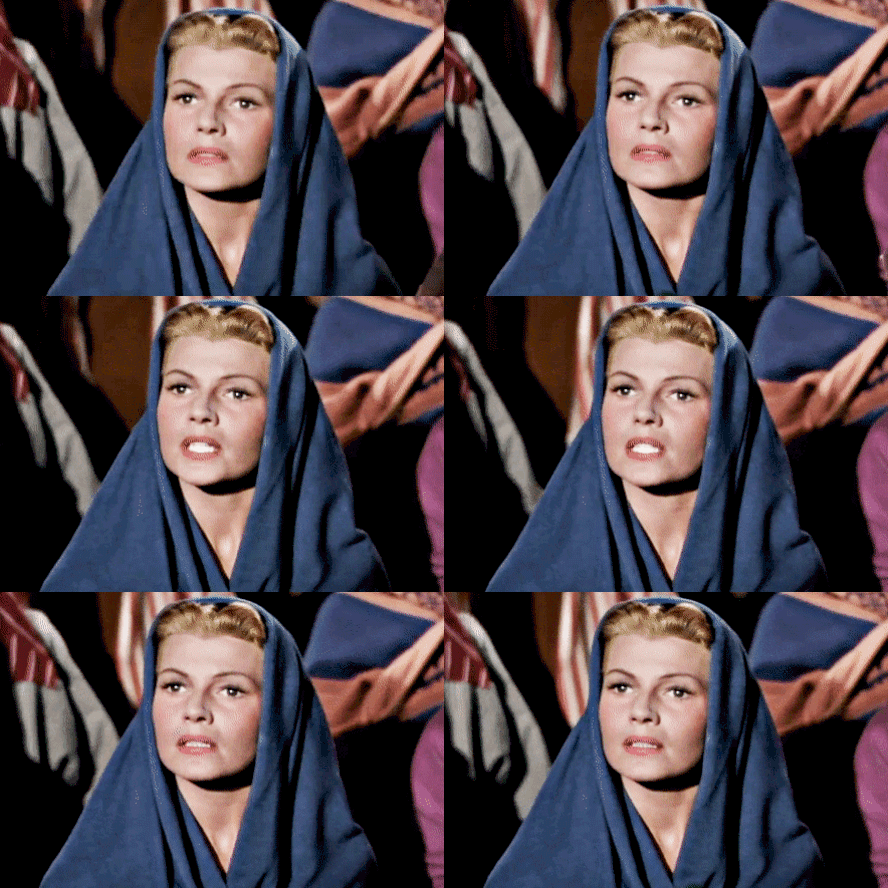

Entre 1949 e 1951, Rita Hayworth se afastou de Hollywood ao se casar com o príncipe Ali Khan e se tornar a primeira atriz / princesa. Em 1951, DeMille disse que queria Hayworth para interpretar Salomé em um filme que ele faria no futuro. O chefe da Columbia, Harry Cohn, roubou a ideia e fez “Salomé” em 1953, com Hayworth também como produtora do filme, através de sua produtora Beckworth Company, que produziu três de seus filmes.

Between 1949 and 1951, Rita Hayworth took a break from Hollywood as she married Prince Aly Khan and became the first actress / princess. In 1951, DeMille said he wanted Hayworth to play Salome in an upcoming picture. Columbia boss Harry Cohn stole the idea and made “Salome” in 1953, with Hayworth serving also as a producer, under her company Beckworth, that produced only three of her movies.

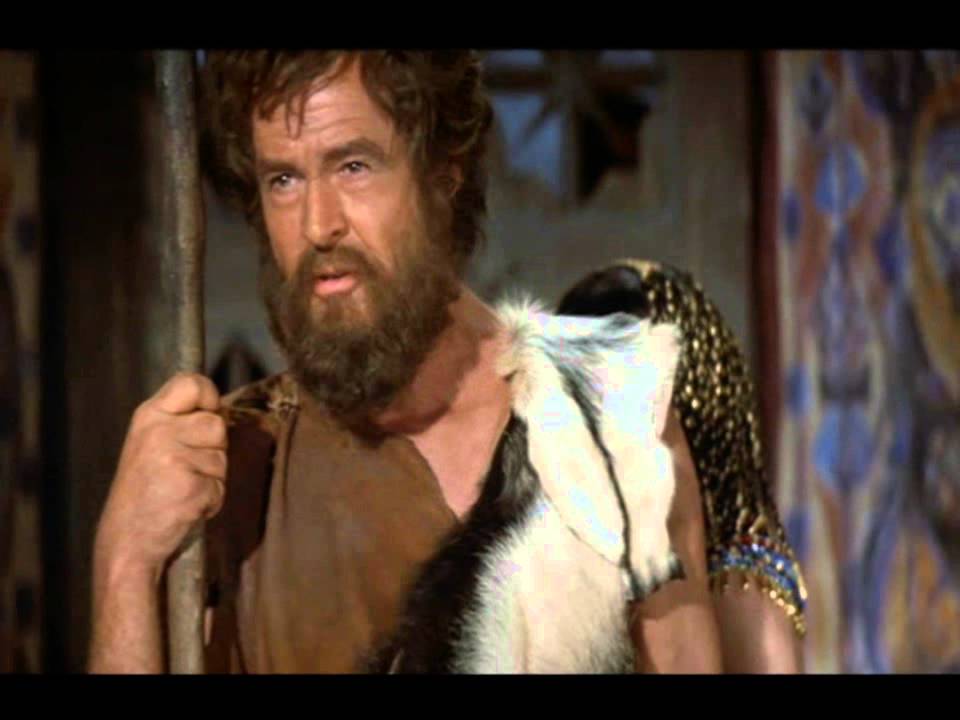
Alan Badel, olhando para cima o tempo todo com olhos arregalados, faz João Batista parecer um pouco lunático. Em “Rei dos Reis” (1961), João Batista é interpretado por Robert Ryan, o que faz com que ele pareça bem mais velho que o Jesus de Jeffrey Hunter, e também mais circunspecto. No épico de 1961, Salomé é interpretada por Brigid Bazlen, uma garota parecida com Elizabeth Taylor que tinha apenas 16 anos na época.

Alan Badel, looking up all the time with wide open eyes, makes John the Baptist look a little bit lunatic. In “King of Kings” (1961), John the Baptist is played by Robert Ryan, what makes him look much older than Jeffrey Hunter’s Jesus, and also more circumspect. In the 1961 epic, Salome is played by Brigid Bazlen, an Elizabeth Taylor lookalike who was only 16 at the time.
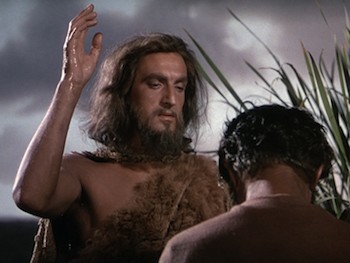
John the Baptist in 1953
John the Baptist in 1961

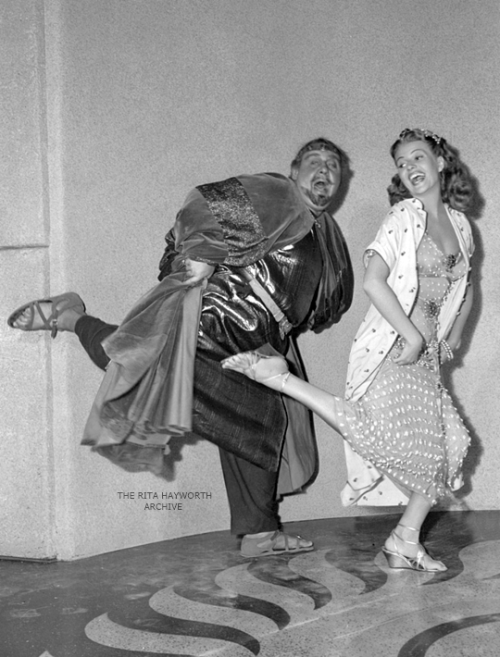
Falando em louco, o Herodes de Charles Laughton nos lembra um pouco do Nero de Peter Ustinov em “Quo Vadis” (1951), com a diferença de que Nero era mais megalomaníaco, enquanto Herodes é mais como uma criatura nojenta.
Judith Anderson, conhecida como a vilã de “Rebecca” (1940), é perfeita como a maldosa rainha Herodias.

Speaking of crazy, Charles Laughton's Herod kind of reminds us of Peter Ustinov's Nero in “Quo Vadis” (1951), with the difference that Nero was more megalomaniac, while Herod is more of a disgusting creature. Judith Anderson, known as the villain in “Rebecca” (1940), is perfect as the evil Queen Herodias.

Assim como em “Ben-Hur”, em “Salomé” Jesus também aparece, mas seu rosto não é mostrado. Mas, aqui, o personagem mais importante é fictício: Claudius é um homem bom entre homens maus, dividido entre o dever e sua nova crença. Quando se apaixona por Salomé, um novo conflito surge, pois ele tenta mostrar a ela que a mãe dela está errada e que João Batista está pregando uma doutrina que durará séculos.

Like in “Ben-Hur”, in “Salome” Jesus is also there, but his face is not shown. But, here, the most important character is a fictional one: Claudius is a good man among bad men, torn between duty and his new belief. As he falls in love with Salome, a new conflict appears, as he tries to show her that her mother is wrong and John the Baptist is actually preaching about something that will last centuries.


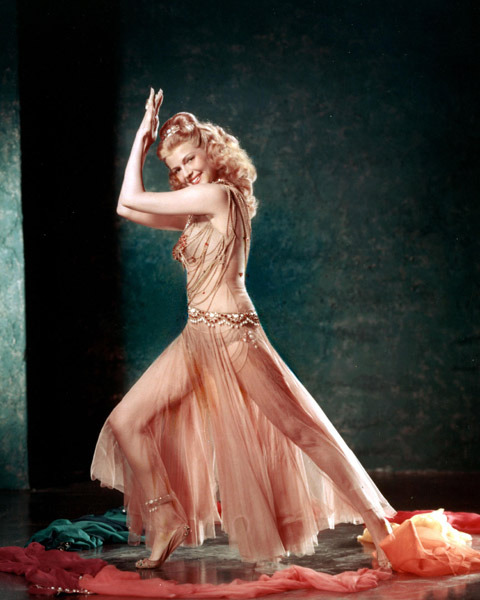
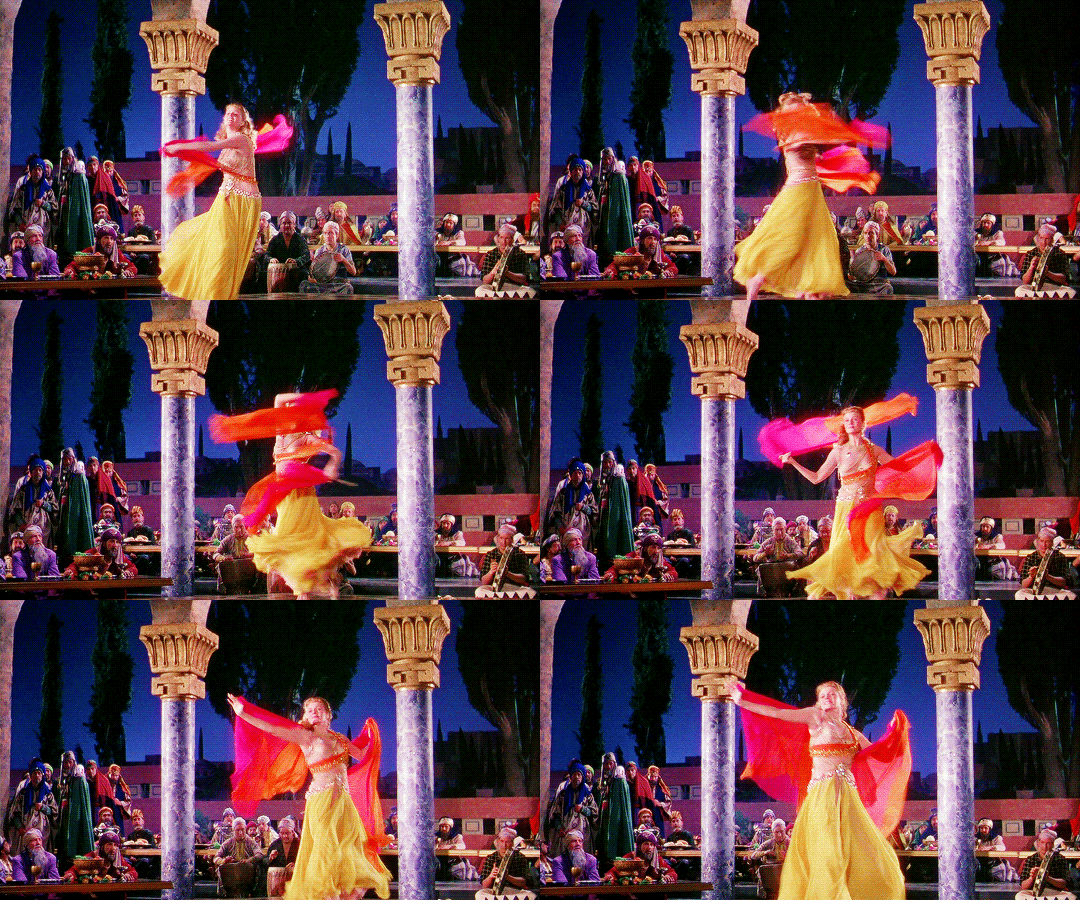
Podemos até ser subversivos e dizer que “Salomé” é tão subversivo quanto “Bastardos Inglórios” (2009), de Tarantino. Salomé se redime e sua culpa no assassinato de João Batista é apagada, e ela se torna uma vítima e não uma femme fatale. Nesta versão, ela faz a Dança dos Sete Véus – que Hayworth mencionou como a coreografia mais difícil que teve de fazer – como distração para que Claudius tente libertar João Batista. Obviamente, isso não termina bem para João, mas é bom ver Salomé como um ser humano, que ri, ama e aprende.
  
We can even be subversive and say that “Salome” is as subversive as Tarantino's “Inglorious Basterds” (2009). Salome is redeemed and her guilt in John the Baptist's assassination is erased, and she becomes a victim rather than a femme fatale. In this version, she performs the Dance of the Seven Veils – that Hayworth mentioned as the most demanding dance routine she ever performed – as a distraction while Claudius tries to free John. Of course, it doesn’t end well for John, but it’s nice to see Salome as a human, laughing, loving and learning.

This is my contribution to the Stewart Granger blogathon, hosted by Maddy at Maddy Loves Her Classic Movies.


Thursday, October 30, 2014

Rita Hayworth: a deusa e a femme fatale / Rita Hayworth: the goddess and the femme fatale

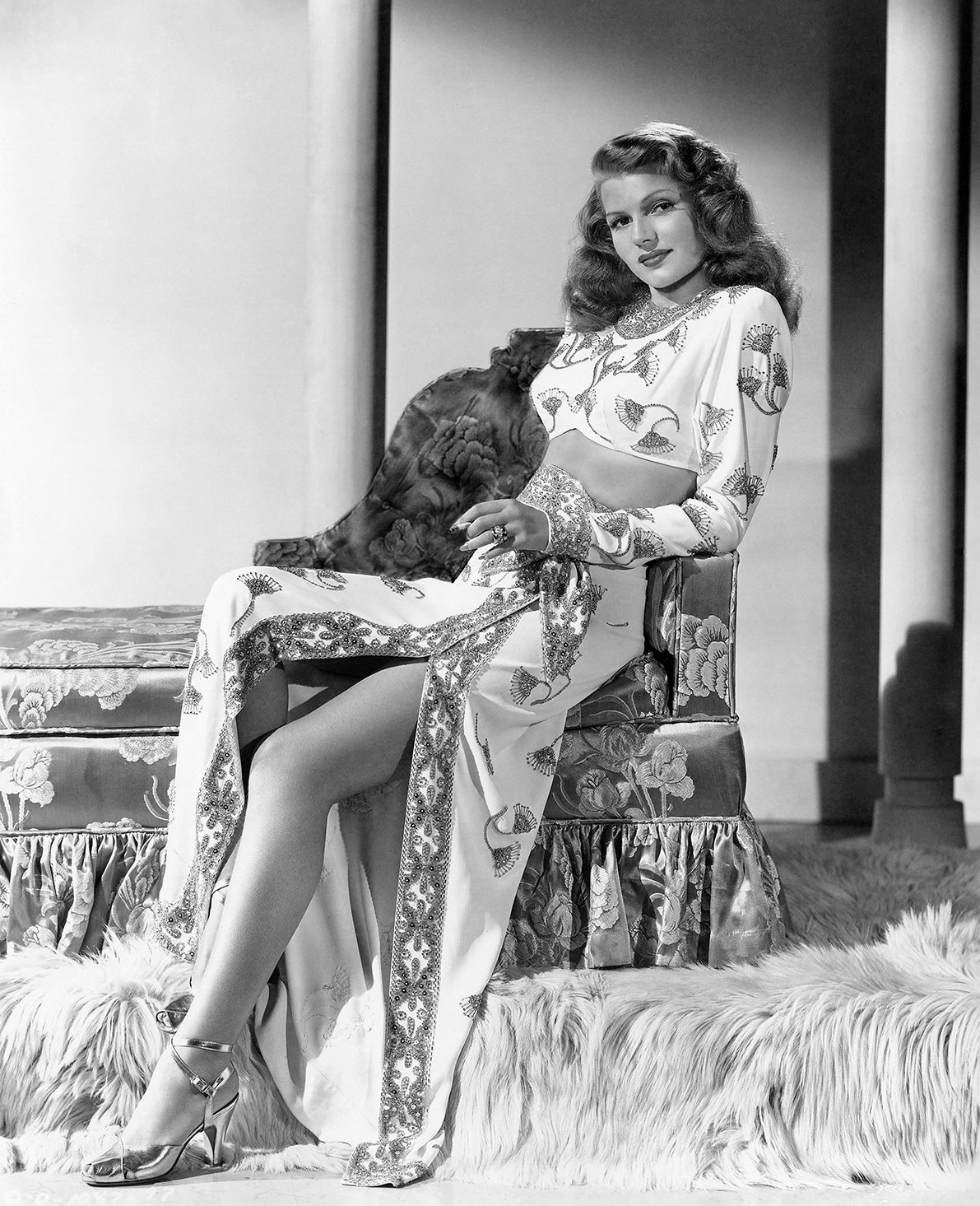
Ela nasceu Margarita Carmen Cansino em 1918. Para milhões de pessoas, ela será para sempre Gilda, a protagonista do filme homônimo de 1946. Mas Rita Hayworth foi muito mais que a sex symbol que seduziu Glenn Ford no clássico noir. Ela inclusive chegou a dizer que seus relacionamentos haviam falhado porque os homens se apaixonavam por Gilda, mas acordavam com Rita.

She was born Margarita Carmen Cansino in 1918. For millions, she will always be Gilda, the leading lady in the homonimous 1946 film. But Rita Hayworth was much more than the sex symbol who seduced Glenn Ford in the noir classic. She even said that all her relationships had failed because the men fell in love with Gilda, but woke up with Rita.
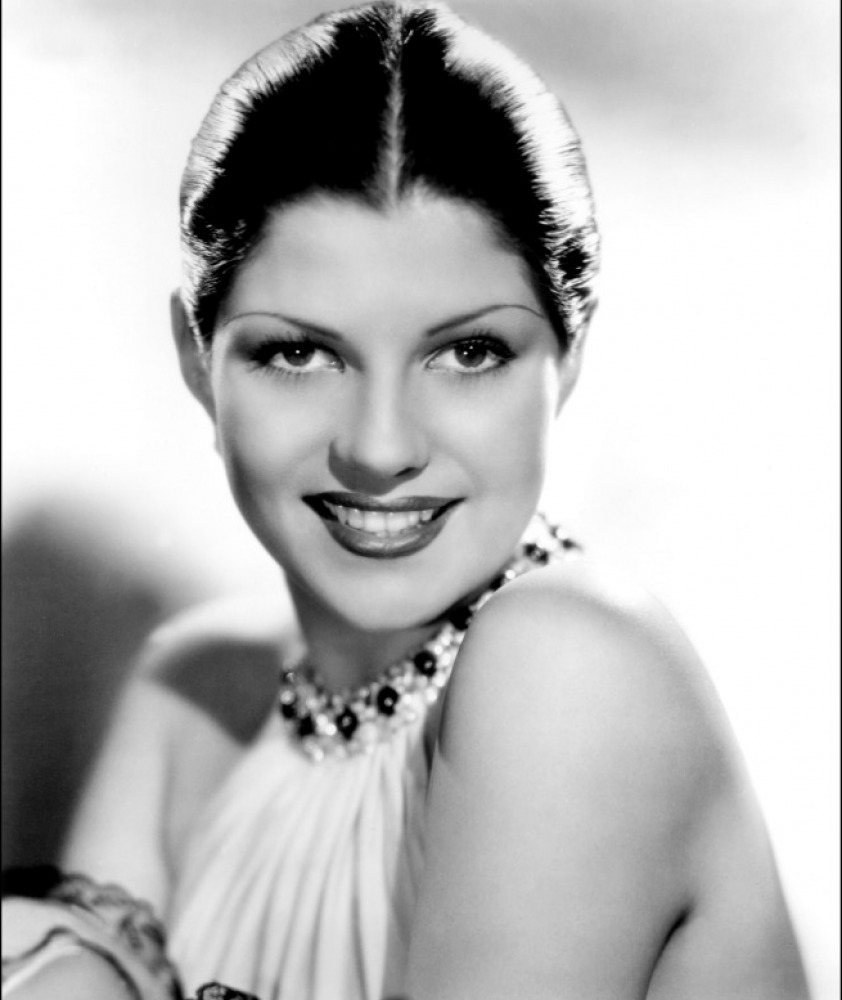
Começou como dançarina, formava uma dupla com o pai, professor de dança, e brilhou nas telas pela primeira vez em 1934 (é praticamente impossível vê-la em seu primeiríssimo filme, de 1926). Não tentem encontrar a Rita que todos conhecemos: aos 16 anos, Rita Cansino era uma moça morena com fortes traços latinos. Precisou se “americanizar” para conseguir papéis melhores e não ser estereotipada. Tornou-se ruiva e fez eletrólise nos cabelos para aumentar o tamanho da testa. Estava criada a lenda.

She started as a dancer, was in a duo with her father, a dance teacher, and was alrady shining in her first film, from 1934 (it's neraly impossible to spot her in her very first screen appearance, from 1926). Don't try to find the Rita we all know: at age 16, Rita Cansino was a brunette with strong Latin features. She had to be “Americanized” to get better roles and not become sterotyped. She became a red-head and did eletrolisis in her hairline in order to widen her forehead. The legend was then created.
A música e a dança estavam muito presentes nos primeiros sucessos de Rita. Embora ela tenha sido notada pelo grande público pela primeira vez em “Paraíso Infernal / Only Angels Have Wings” (1939), foi com os musicais que alcançou maior prestígio no início da carreira. Teve a honra de dançar com Fred Astaire e Gene Kelly. O próprio Fred disse uma vez que Rita foi sua parceira de dança favorita.

Music and dance were always present in her first screen successes. Even though she had been noticed by the audience for the first time in “Only Angels Have Wings” (1939), she got more compliments in musicals when she was starting. She had the honor to dance with both Fred Astaire and Gene Kelly. Astaire himself once said that Rita was his favorite dance partner.


E ela foi, realmente, uma deusa em “Quando os Deuses Amam / Down to Earth” (1947). Rita interpreta Terpsícore, a musa grega da música e da dança. Sua função era inspirar os artistas, mas ela tem uma ideia bem diferente: quer atrapalhar o musical de Danny Miller (Larry Parks), que não está tratando as musas com o devido respeito. Ela convence Mr. Jordan (Roland Culver) e o mensageiro 7013 (Edward Everett Horton) a deixarem-na ir para a Terra, prometendo ajudar Danny. O plano de Terpsícore não é executado, porque ela se apaixona por Danny e ainda consegue o papel principal no musical.

She was a literal goddess in “Down to Earth” (1947). Rita plays  Terpsichore, the Greek muse of music and dance. Her function was to inspire artists, but she has a very different idea: she wants to cause trouble in the musical made by Danny Miller (Larry Parks), who is not treating the muses respectifully. She convinces Mr. Jordan (Roland Culver) and Messenger 7013 (Edward Everett Horton) to let her come to Earth, promising she will help Danny. Therpsicore's plan does not go on, because she falls in love with Danny and gets the leading role in the musical.
“Quando os Deuses Amam” não é o melhor musical do mundo. Faltam as músicas que ficam na memória horas, dias, meses após vermos o filme. Alguns momentos são de vergonha extrema (eu não queria ser nenhuma daquelas chorus girls com figurino rosa bizarro). Mas mesmo assim é um filme adorável, graças, principalmente, a Rita Hayworth. É incontestável que ela está realmente divina aqui em Technicolor.

“Down to Earth” is not the best musical in the world. There are no musics that stick to our memory for days, even months, after we saw the movie. Some moments involve extreme shame (I wouldn't want to be one of those chorus girls wearing bizarre pink clothes). Nevertheless, it is an adorable film thanks to Rita Hayworth. We can't deny that she is a goddess in Technicolor.
Ela foi femme fatale mais que tudo: “Gilda” (1946), “A Dama de Xangai / The Lady from Shanghay” (1947), “Carmen / The Loves of Carmen” (1948) e “Salomé” (1953). Com sua sensualidade, ela sempre levava um homem à ruína ao final desses filmes. E foram muitas as vítimas, incluindo Glenn Ford – mais de uma vez – e o então marido / diretor Orson Welles, na obra-prima noir de 1947.

She was a femme fatale in several occasions: in “Gilda” (1946), “The Lady from Shanghai” (1947), “The Loves of Carmen” (1948) and “Salome” (1953). With her sex appeal, she always ruined a man by the end of these films. And there were many victims, including Glenn Ford – more than once – and her then husband and director Orson Welles in the noir masterpiece from 1947.
Mesmo nestes filmes, a música ainda estava presente. Gilda faz o strip-tease comportado e feroz ao som da canção “Put the Blame on Mame”. Como Elsa Bannister, a loira fatal, ela apenas canta “Don’t Kiss Me”, tornando mais fácil o processo de enlouquecimento de Michael O’Hara (Welles) e do marido Arthur (Everett Sloane). A cigana Carmen se exibe em uma taverna. Salomé faz sua dança dos sete véus.

Even in these films, the music was still present. Gilda does a different kind of striptease while singing “Put the Blame on Mame”. As Elsa Bannister, the fatal blonde, she only sings “Don't Kiss Me”, making it easier for Michael O'Hara (Welles) and her husband Arthur (Everett Sloane) to be driven crazy. Carmen the gypsy exhibits her moves in a tavern. Salome does the seven veils dance. 
Talvez seja aí que vemos o talento de uma atriz: na capacidade de interpretar uma personagem tão diferente de si de maneira a convencer o público. Acreditamos no poder destruidor de Rita enquanto femme fatale, mas ela também se mostra crível como a dançarina adorável de “Minha Namorada Favorita / My Gal Sal” (1942) ou Vera, que disputa Frank Sinatra com Kim Novak em “Meus Dois Carinhos / Pal Joey” (1957).

Maybe this is where we see an actress's talent: in her ability to play a character that is so different from herself in a convincing way. We believe in Rita's destructive power as a femme fatale, but she is also believable as the lovely dancer from “My Gal Sal” (1942) or as Vera, who fights with Kim Novak for Frank Sinatra in “Pal Joey” (1957).
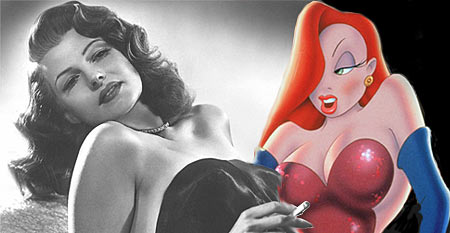
Há quem diga que a personagem interpretada por Ava Gardner em “A Condessa Descalça / The Barefoot Contessa” (1954) foi inspirada em Rita. De fato, a personagem María Vargas é uma moça exótica que alcança sucesso no cinema e depois se casa com um nobre. Rita casou-se com o príncipe Aly Khan em 1949 e ficou três anos afastada do cinema.  Há outra lenda, esta mais difícil de ser comprovada, que diz que a Margarita (o drink!) recebeu este nome em homenagem à jovem dançarina que se apresentava uma vez no México. Ah, e outra homenagem: ela foi uma das sexy symbols que serviu de inspiração para criar a personagem Jessica Rabbit.

Some rumors say that the character played by Ava Gardner in “The Barefoot Contessa” (1954) was inspired by Rita. Indeed, the character María Vargas is an exotic lady who becomes a successful movie star and then gets married to a nobleman. Rita got married to prince Aly Khan in 1949 and spent three years away from the screen. Another legend, mor difficult to be proved true or false, is that the drink Margarita was baptized after a young dancer who was working once in Mexico... And one more homage: she was one of the sex symbols who served as an inspiration to create the character Jessica Rabbit.


Na vida pessoal, Rita era quieta, sofria de complexo de inferioridade e lutava contra o vício em álcool. Sonhava com uma família e acreditou que poderia abandonar o cinema depois de seu casamento com o príncipe Aly Khan, mas não foi bem assim. A história de Rita Hayworth talvez tenha sido um conto de fadas sem final feliz. Rita não foi princesa feliz para sempre. Mas foi deusa. E, para chegar a esse patamar, uma dose de sofrimento é, infelizmente, necessária.

In real life, Rita was shy, suffered from inferiority complex and fought against an addiction to alcohol. She dreamed of having a family and believed she could abandon the cinema after she married prince Aly Khan. It didn't happen. Rita Hayworth's story was, maybe, a fairytale without a happy ending. Rita wasn't a princess for ever after. But she was a goddess. And, in order to achieve this, a dosis of suffering is unfortunately necessary.

This post is part of the “getTV Rita Hayworth Blogathon” hosted by Classic Movie Hub and running during the entire month of October. Please visit getTVschedule to see a full list of Rita Hayworth films airing on the channel this month, and please be sure to visit Classic Movie Hub for a full list of other Blogathon entries.

Related Posts Plugin for WordPress, Blogger...