} Crítica Retrô: femme fatale

Tradutor / Translator / Traductor / Übersetzer / Traduttore / Traducteur / 翻訳者 / переводчик

Showing posts with label femme fatale. Show all posts

Wednesday, April 17, 2019

A Fera da Cidade (1932) e a gênese da femme fatale

The Beast of the City (1932) and the genesis of the femme fatale

Podemos traçar as origens de muitos traços dos filmes noir para mais de uma década antes que o primeiro “noir verdadeiro” – “O Falcão Maltês”, de 1941 – chegasse aos cinemas. Muitas escolhas de fotografia usadas no noir vêm do Expressionismo Alemão dos anos 1920, por exemplo. Mas e quanto aos personagens do noir? De onde vêm os detetives durões e as femme fatales? Nosso foco hoje serão as mulheres más do noir e do proto-noir.

We can trace the origins of many film noir traits back to over a decade before the first “true noir” – aka “The Maltese Falcon”, 1941 – hit the screens. Many cinematography choices used in noir date from the German Expressionism from the 1920s, for instance. But what about the noir characters? Where do hard-boiled detectives and femme fatales come from? Our focus today will be only the evil dames of noir and proto-noir.


As origens das femme fatales do noir podem ser encontradas nas vamps dos filmes mudos. Em Hollywood, algumas das vamps mais icônicas foram Theda Bara em diversos filmes e Nita Naldi em “Os Dez Mandamentos”, de 1923. Nos anos 30, considerando o começo do cinema falado, o período pre-Code e o período com o Código Hays já em vigor, houve um período nebuloso para as mulheres más. Foi um momento em que a vamp se metamorfoseava e se transformava na femme fatale – e houve mais mulheres independentes nas telas do que nos 70 anos seguintes.

The origins of the noir femme fatales can be found in the silent film vamps. In Hollywood, some of the most iconic vamps were Theda Bara in many of her films and Nita Naldi in “The Ten Commandments”, from 1923. In the 1930s, considering beginning of the sound era, the pre-Code period and the Code period per se, there was a nebulous time for bad women. It was a moment when the vamp was metamorphosing into the femme fatale – and there were more independent women on screen than there would be for the next 70 years or so.
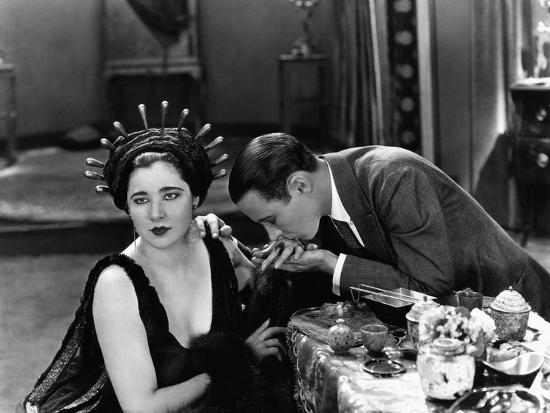
 
Nita Naldi in "The Ten Commandments"
“A Fera da Cidade” começa com uma mensagem que parece uma provocação da MGM para os estúdios Warner. A mensagem é sobre como a sociedade deve parar de glorificar gângsteres e começar a glorificar os policiais que perseguem estes gângsteres. Assim que a mensagem acaba, descobrimos que ela foi dita pelo então presidente Herbert Hoover.

“The Beast of the City” starts with a message that sounds like a provocation MGM is making to the Warner studios. The message is about how society should stop glorificating gangsters and start glorificating the policemen who fight those gangsters. As the message ends, we find out it was uttered by the then president Herbert Hoover.
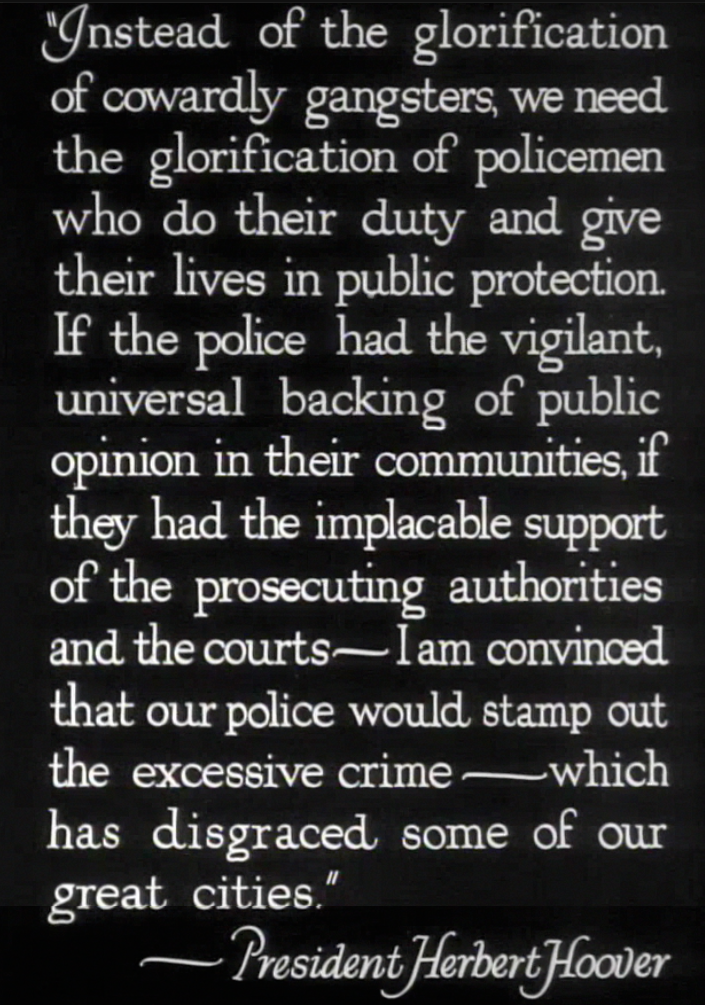
 
Via PreCode.com
O capitão Jim ‘Fitz’ Fitzpatrick (Walter Huston) e seu time estão investigando o enforcamento de quatro pessoas. Jim já tem um suspeito: o famoso malfeitor Sam Belmonte (Jean Hersholt). No escritório de Belmonte, Jim vê Daisy (Jean Harlow) pela primeira vez, mas não dá atenção a ela.

Captain Jim 'Fitz' Fitzpatrick (Walter Huston) and his team are investigating the hanging of four people. Jim has one suspect already: well-known wrongdoer Sam Belmonte (Jean Hersholt). At Belmonte's office, Jim sees Daisy (Jean Harlow) for the first time, but doesn’t pay attention to her.
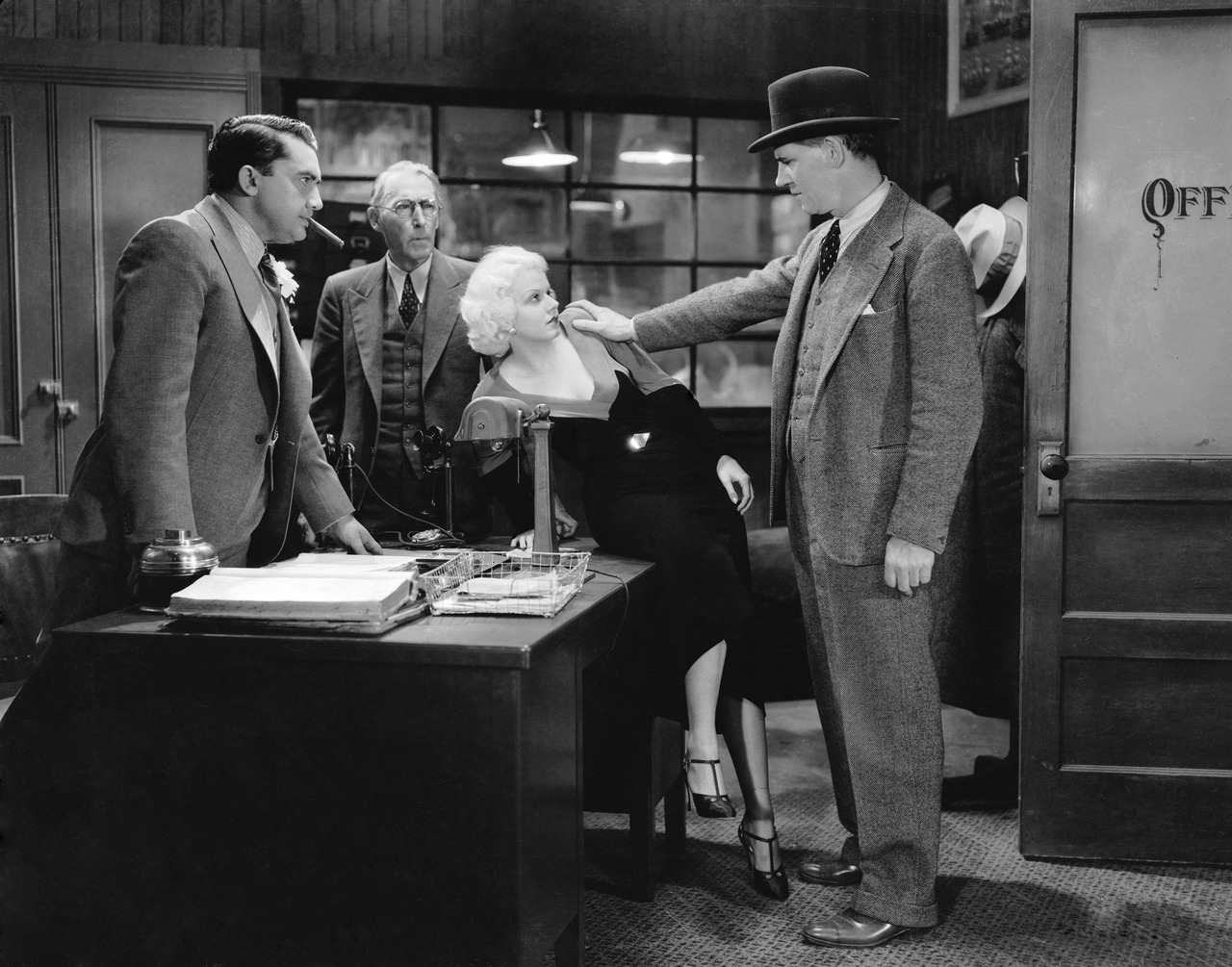

A próxima vez que nós e a polícia vemos Daisy, ela é uma suspeita esperando para ser reconhecida pela vítima de um acidente de carro. O policial Ed Fitzpatrick (Wallace Ford), irmão de Jim, se interessa por ela, mesmo estando claro que ela não teve nada a ver com o acidente. Ela, entretanto, já esteve presa por seis meses e, ao sair da sala de interrogatório, ela desrespeita um policial que fala com ela.

The next time we and the police see Daisy, she is held as a suspect waiting to be recognized by a victim of a road accident. Policeman Ed Fitzpatrick (Wallace Ford), Jim's brother, gets interested in her, even though it's clear she had nothing to do with the road accident. She, however, had already been in jail for six months, and as she leaves the police station room, she shows no respect for the policeman who talks to her.


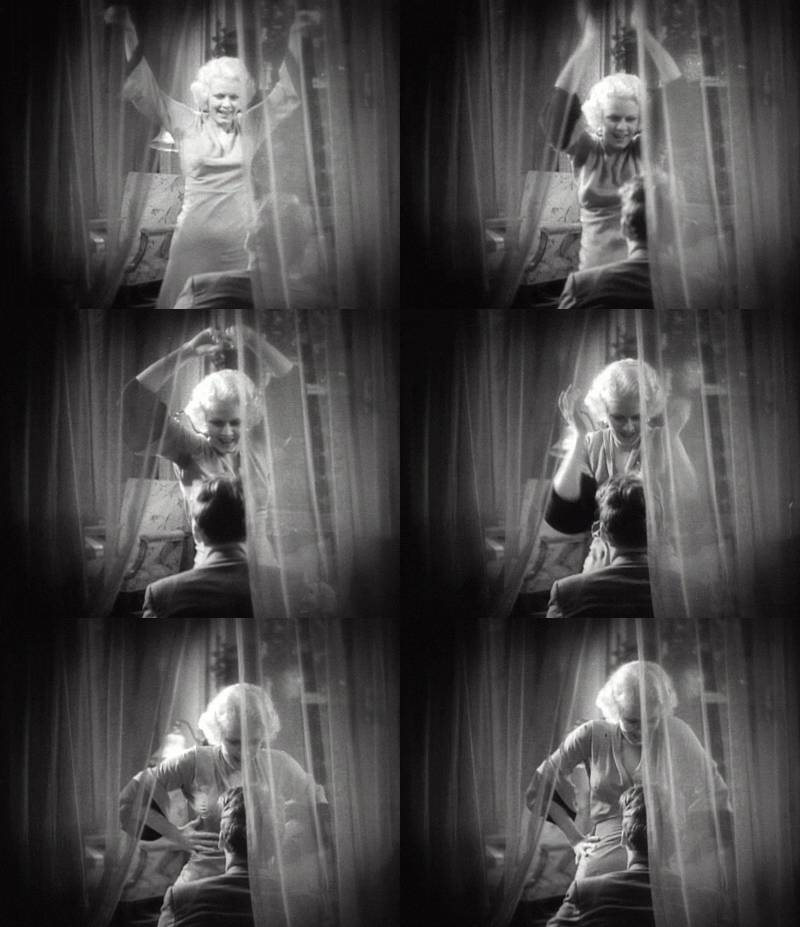
Ed segue Daisy até o apartamento dela e fala com a moça. Quando eles estão entrando no imóvel, há um breve momento com as sombras de ambos emolduradas pela sombra da porta – um frame que é puro noir. Dentro do apartamento, eles bebem cerveja, - Ed fica muito bêbado – Daisy dança e eles se beijam.

Ed follows Daisy to her apartment and talks to her. As they're entering the place, there is a brief moment with only their shadows framed by the shadow of the door – a moment that is pure noir. Inside the apartment, they drink beer, – Ed gets so drunk – Daisy dances and they kiss.

Enquanto isso, Jim e sua família – esposa, filhas gêmeas e filho mais novo interpretado por Mickey Rooney – têm de se mudar porque ele foi transferido para outra estação. Sua reação rápida ao roubo de um banco, além de deixá-lo ferido, leva-o a ser nomeado Chefe de Polícia. Ed, por outro lado, fica chateado porque Jim se recusa a promovê-lo a tenente.

Meanwhile, Jim and his family – wife, twin daughters and young son played by Mickey Rooney – have to move as he is transferred to another station. His quick response to a bank robbery leaves him wounded, but gives him the status of Chief of Police. Ed, on the other hand, gets sour because Jim refuses to promote him to lieutenant.


Daisy, querendo mais poder e dinheiro, pergunta a Ed sobre a promoção sem parar. Vendo que nada vai acontecer, ela apresenta Ed a Sam Belmonte, e convence Ed a investir seu dinheiro com o gângster. Ao mesmo tempo, Jim manda Ed para uma importante missão de escolta de um caminhão de dinheiro, mas Ed conta tudo sobre a missão a Daisy, que por sua vez conta os detalhes para outro gângster, sócio de Belmonte, Cholo (J. Carrol Naish) – e então convence Ed a se juntar ao crime.

Daisy, wanting money and power, asks Ed all the time about when he will be promoted. Seeing that nothing is going to happen, she introduces Ed to Sam Belmonte, and convinces Ed to invest his money with the gangster. At the same time, Jim sends Ed in an important mission to escort a truck full of money, but Ed spills the beans about the mission to Daisy, who in her turn tells everything to another gangster, Belmonte's partner Cholo (J. Carrol Naish) – and then she convinces Ed to take part in the crime.
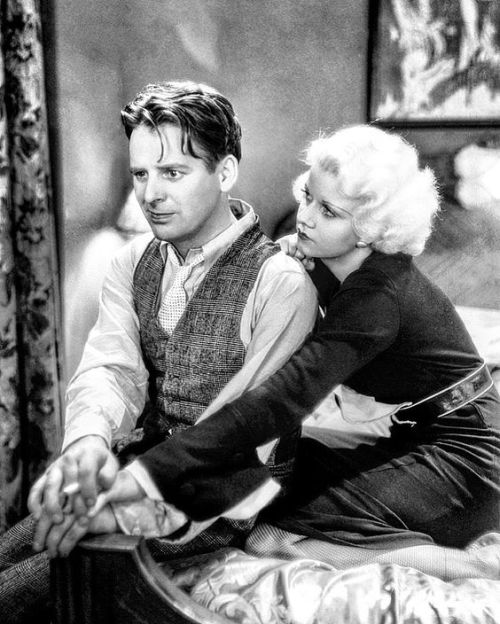

Se considerarmos que uma femme fatale é qualquer personagem feminina que é muito independente, interessada em riqueza e faz algum mal a um protagonista do gênero masculino, podemos encontrar mais femme fatales em filmes proto-noir do que era de se esperar. Por exemplo, a personagem Marie Woods de Glenda Farrell em “O Fugitivo” (1932) pode ser considerada uma femme fatale, enquanto a Gwen Allen de Jean Harlow em “Inimigo Público” (1931) não pode, porque Marie prejudica o protagonista, mas Gwen não.

If we consider a femme fatale any female character that is very independent, interested in riches and does any harm to a male protagonist, we can find more femme fatales in proto-noir films than expected. For instance, Glenda Farrell's Marie Wood in “I was a Fugitive from a Chain Gang” (1932) can be considered a femme fatale, while Jean Harlow’s Gwen Allen in “The Public Enemy” (1931) can’t, because Marie harms the lead, but Gwen doesn’t.
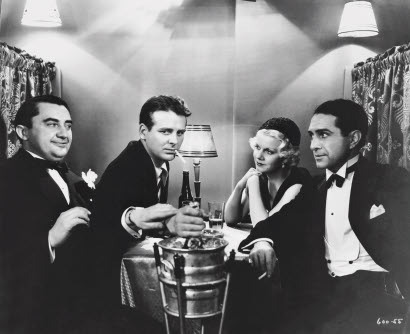

Se Jean Harlow tivesse vivido mais tempo, eu duvido que ela interpretaria muitas femme fatales. Nos últimos dois anos de sua vida e carreira, ela explorou mais seu lado cômico, e com sucesso. Eu acredito que ela teria seguido o caminho da comédia e se tornado uma rainha do screwball comedy, com poucas incursões por papéis mais dramáticos.

If Jean Harlow had lived longer, I doubt she would play many femme fatales. In the last two years of her career and life, she explored more her comedienne side, and with success. I believe she would have followed the funny path and became a screwball queen, with a few incursions into more dramatic roles.
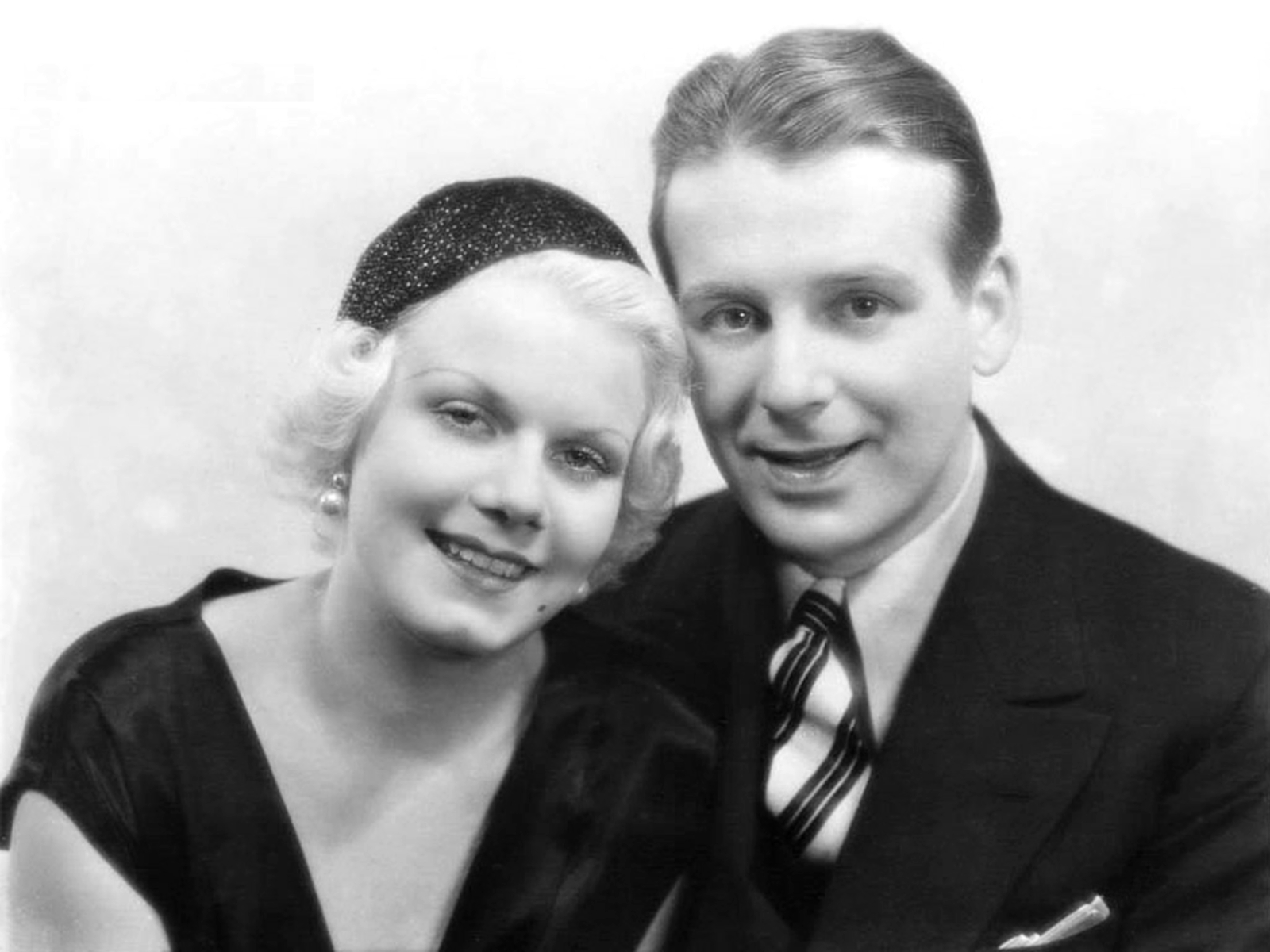

Não há dúvidas de que a Daisy de Jean Harlow é uma femme fatale no ótimo e duro proto-noir “A Fera da Cidade” – um filme que passei a conhecer quando ele foi citado no livro “Cine Negro”, de Alain Silver e James Ursini. O esquema dela traz desgraça a muitas pessoas, pois há várias mortes no confronto final – incluindo a dela própria. Daisy foi uma femme fatale cujos atos foram fatais para ela mesma. E haveria algo pior do que isso?

There is no doubt Jean Harlow's Daisy is a femme fatale in the great and raw proto-noir “The Beast of the City” – a film I first heard about when it was mentioned in the book “Cine Negro”, by Alain Silver and James Ursini. Her scheme disgraces many lives, as in the final confrontation there are a lot of deaths – including her own. Daisy was a femme fatale whose acts were fatal to herself. And could there be anything worse than that?

This is my contribution to the Femme / Homme Fatales of Film Noir blogathon, hosted by the Classic Movie Blog Association.


Thursday, October 30, 2014

Rita Hayworth: a deusa e a femme fatale / Rita Hayworth: the goddess and the femme fatale

Ela nasceu Margarita Carmen Cansino em 1918. Para milhões de pessoas, ela será para sempre Gilda, a protagonista do filme homônimo de 1946. Mas Rita Hayworth foi muito mais que a sex symbol que seduziu Glenn Ford no clássico noir. Ela inclusive chegou a dizer que seus relacionamentos haviam falhado porque os homens se apaixonavam por Gilda, mas acordavam com Rita.

She was born Margarita Carmen Cansino in 1918. For millions, she will always be Gilda, the leading lady in the homonimous 1946 film. But Rita Hayworth was much more than the sex symbol who seduced Glenn Ford in the noir classic. She even said that all her relationships had failed because the men fell in love with Gilda, but woke up with Rita.
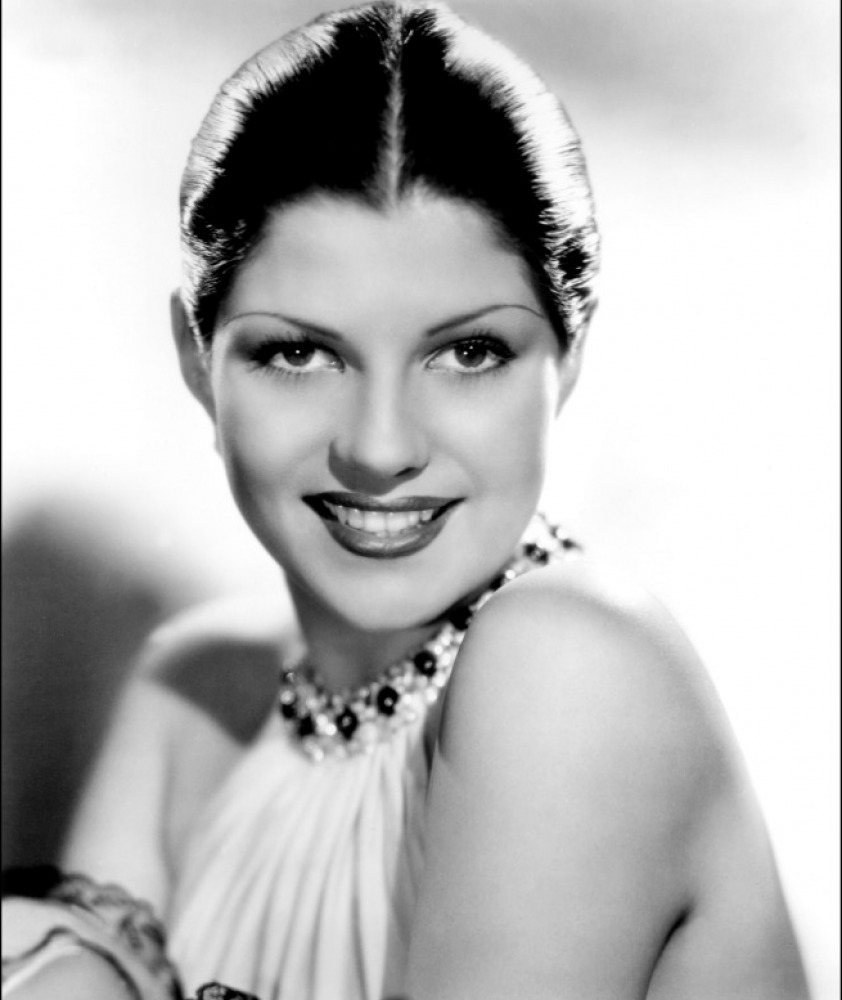
Começou como dançarina, formava uma dupla com o pai, professor de dança, e brilhou nas telas pela primeira vez em 1934 (é praticamente impossível vê-la em seu primeiríssimo filme, de 1926). Não tentem encontrar a Rita que todos conhecemos: aos 16 anos, Rita Cansino era uma moça morena com fortes traços latinos. Precisou se “americanizar” para conseguir papéis melhores e não ser estereotipada. Tornou-se ruiva e fez eletrólise nos cabelos para aumentar o tamanho da testa. Estava criada a lenda.

She started as a dancer, was in a duo with her father, a dance teacher, and was alrady shining in her first film, from 1934 (it's neraly impossible to spot her in her very first screen appearance, from 1926). Don't try to find the Rita we all know: at age 16, Rita Cansino was a brunette with strong Latin features. She had to be “Americanized” to get better roles and not become sterotyped. She became a red-head and did eletrolisis in her hairline in order to widen her forehead. The legend was then created.
A música e a dança estavam muito presentes nos primeiros sucessos de Rita. Embora ela tenha sido notada pelo grande público pela primeira vez em “Paraíso Infernal / Only Angels Have Wings” (1939), foi com os musicais que alcançou maior prestígio no início da carreira. Teve a honra de dançar com Fred Astaire e Gene Kelly. O próprio Fred disse uma vez que Rita foi sua parceira de dança favorita.

Music and dance were always present in her first screen successes. Even though she had been noticed by the audience for the first time in “Only Angels Have Wings” (1939), she got more compliments in musicals when she was starting. She had the honor to dance with both Fred Astaire and Gene Kelly. Astaire himself once said that Rita was his favorite dance partner.


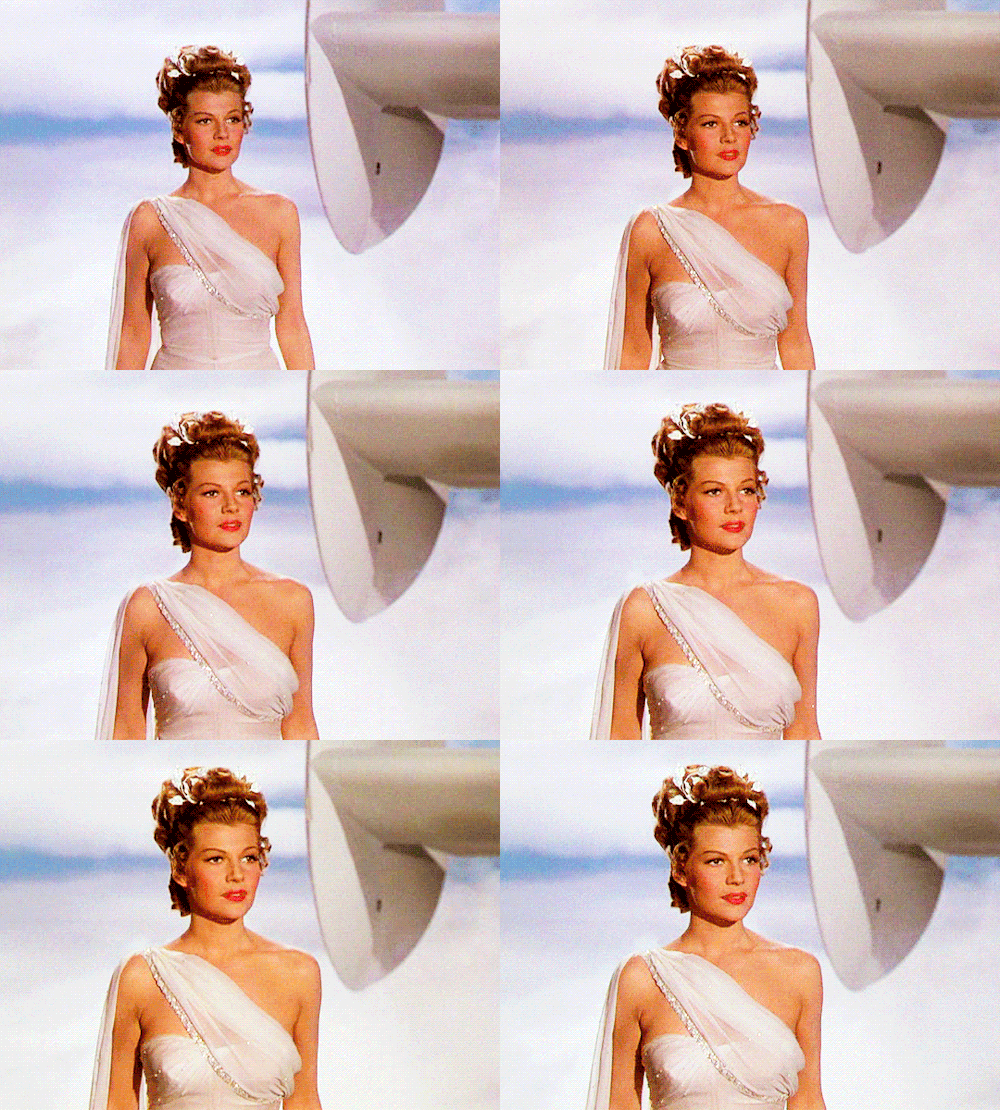
E ela foi, realmente, uma deusa em “Quando os Deuses Amam / Down to Earth” (1947). Rita interpreta Terpsícore, a musa grega da música e da dança. Sua função era inspirar os artistas, mas ela tem uma ideia bem diferente: quer atrapalhar o musical de Danny Miller (Larry Parks), que não está tratando as musas com o devido respeito. Ela convence Mr. Jordan (Roland Culver) e o mensageiro 7013 (Edward Everett Horton) a deixarem-na ir para a Terra, prometendo ajudar Danny. O plano de Terpsícore não é executado, porque ela se apaixona por Danny e ainda consegue o papel principal no musical.

She was a literal goddess in “Down to Earth” (1947). Rita plays  Terpsichore, the Greek muse of music and dance. Her function was to inspire artists, but she has a very different idea: she wants to cause trouble in the musical made by Danny Miller (Larry Parks), who is not treating the muses respectifully. She convinces Mr. Jordan (Roland Culver) and Messenger 7013 (Edward Everett Horton) to let her come to Earth, promising she will help Danny. Therpsicore's plan does not go on, because she falls in love with Danny and gets the leading role in the musical.
“Quando os Deuses Amam” não é o melhor musical do mundo. Faltam as músicas que ficam na memória horas, dias, meses após vermos o filme. Alguns momentos são de vergonha extrema (eu não queria ser nenhuma daquelas chorus girls com figurino rosa bizarro). Mas mesmo assim é um filme adorável, graças, principalmente, a Rita Hayworth. É incontestável que ela está realmente divina aqui em Technicolor.

“Down to Earth” is not the best musical in the world. There are no musics that stick to our memory for days, even months, after we saw the movie. Some moments involve extreme shame (I wouldn't want to be one of those chorus girls wearing bizarre pink clothes). Nevertheless, it is an adorable film thanks to Rita Hayworth. We can't deny that she is a goddess in Technicolor.
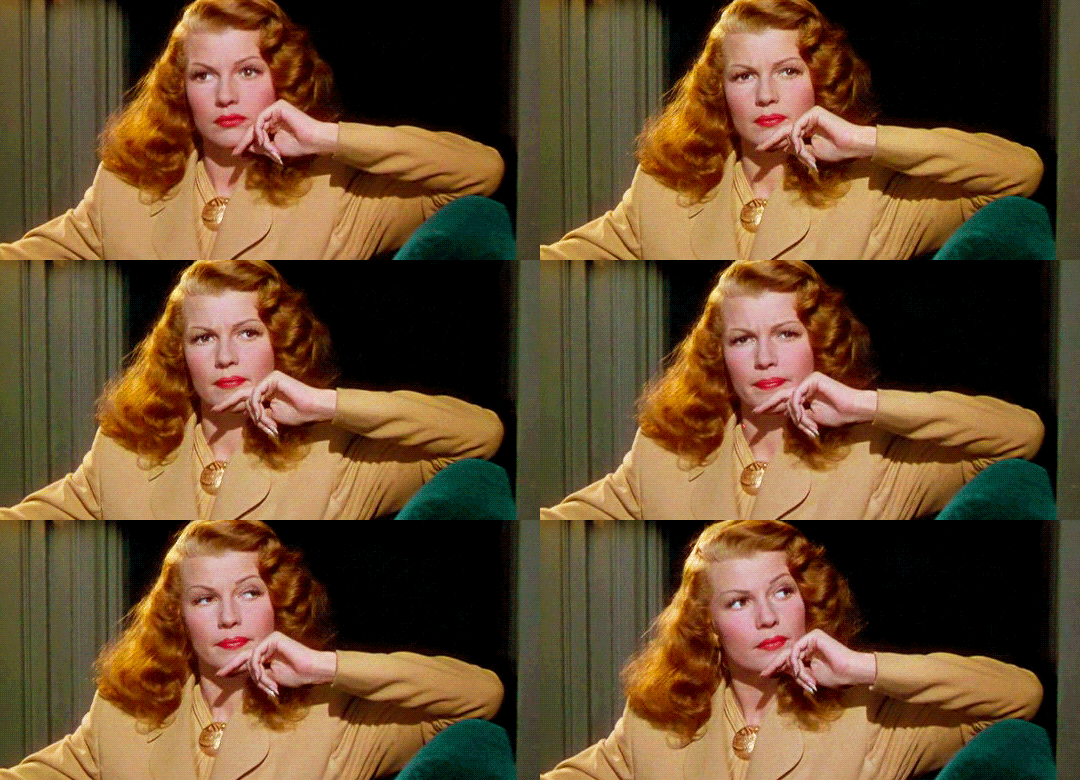
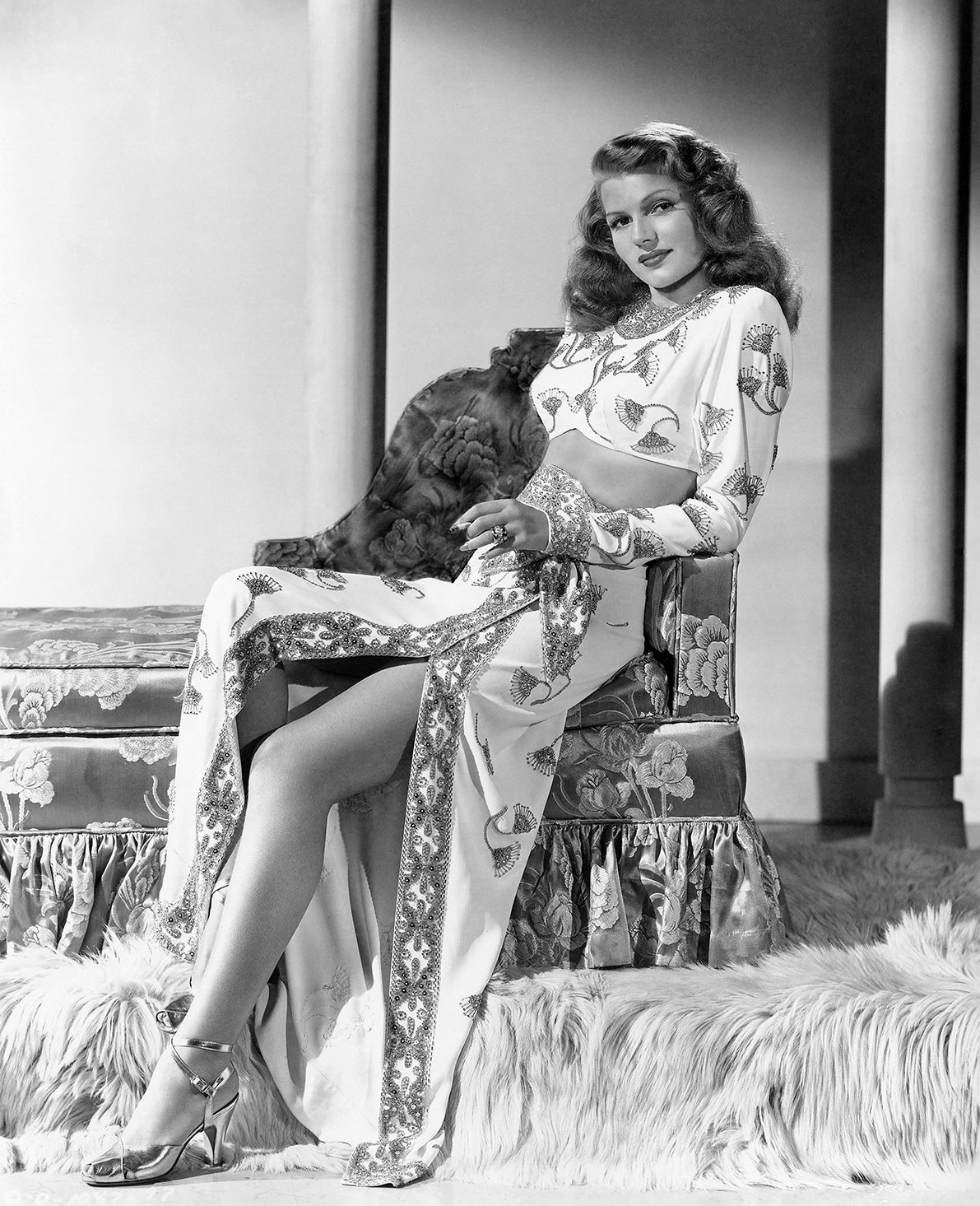
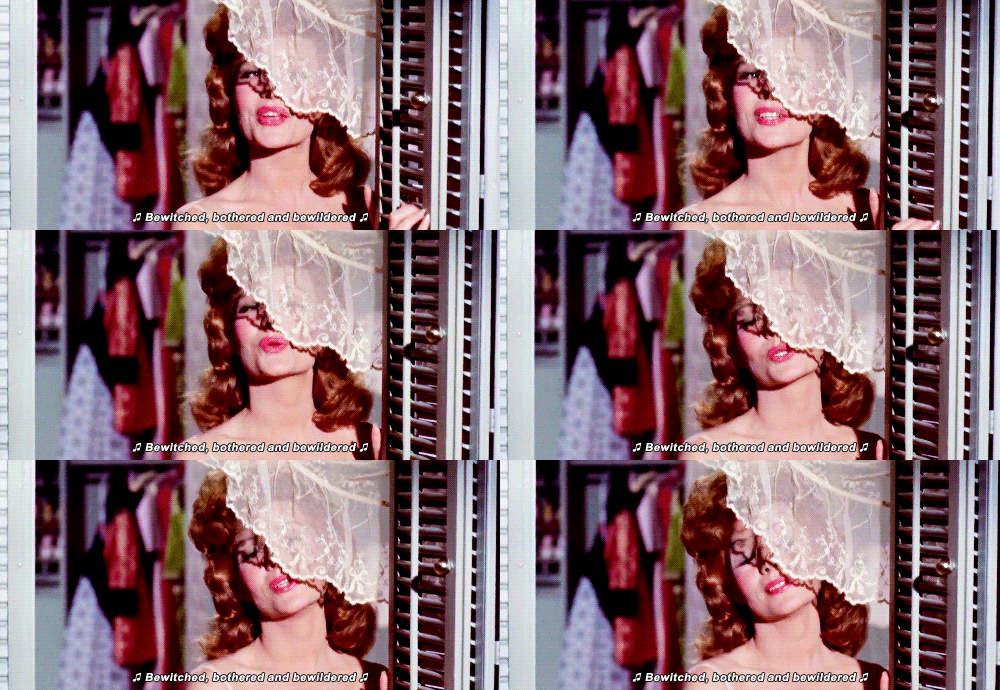
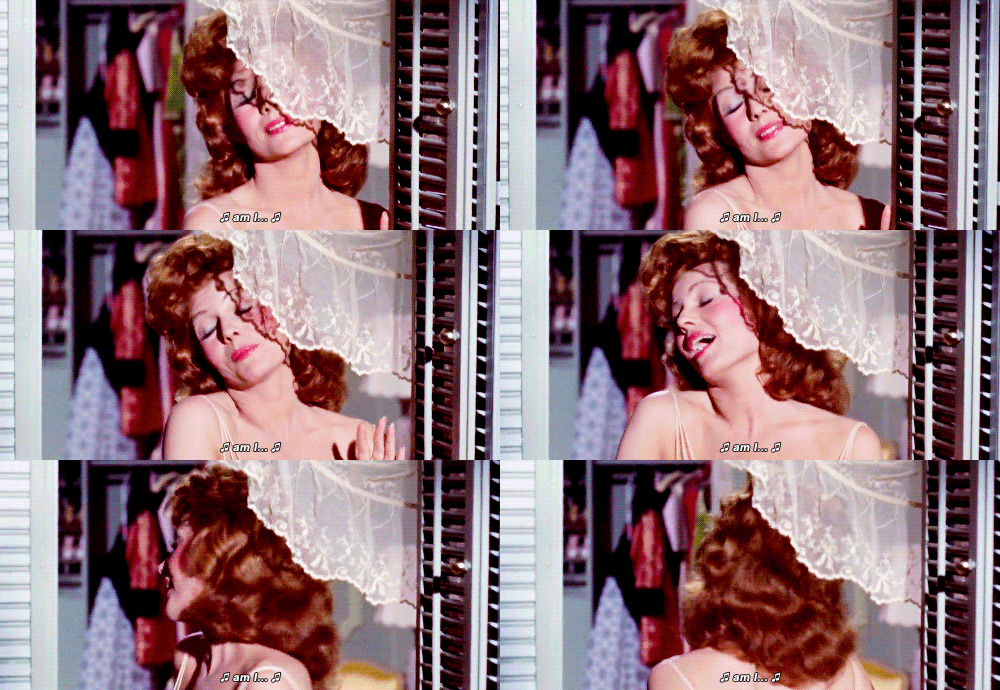
Ela foi femme fatale mais que tudo: “Gilda” (1946), “A Dama de Xangai / The Lady from Shanghay” (1947), “Carmen / The Loves of Carmen” (1948) e “Salomé” (1953). Com sua sensualidade, ela sempre levava um homem à ruína ao final desses filmes. E foram muitas as vítimas, incluindo Glenn Ford – mais de uma vez – e o então marido / diretor Orson Welles, na obra-prima noir de 1947.

She was a femme fatale in several occasions: in “Gilda” (1946), “The Lady from Shanghai” (1947), “The Loves of Carmen” (1948) and “Salome” (1953). With her sex appeal, she always ruined a man by the end of these films. And there were many victims, including Glenn Ford – more than once – and her then husband and director Orson Welles in the noir masterpiece from 1947.
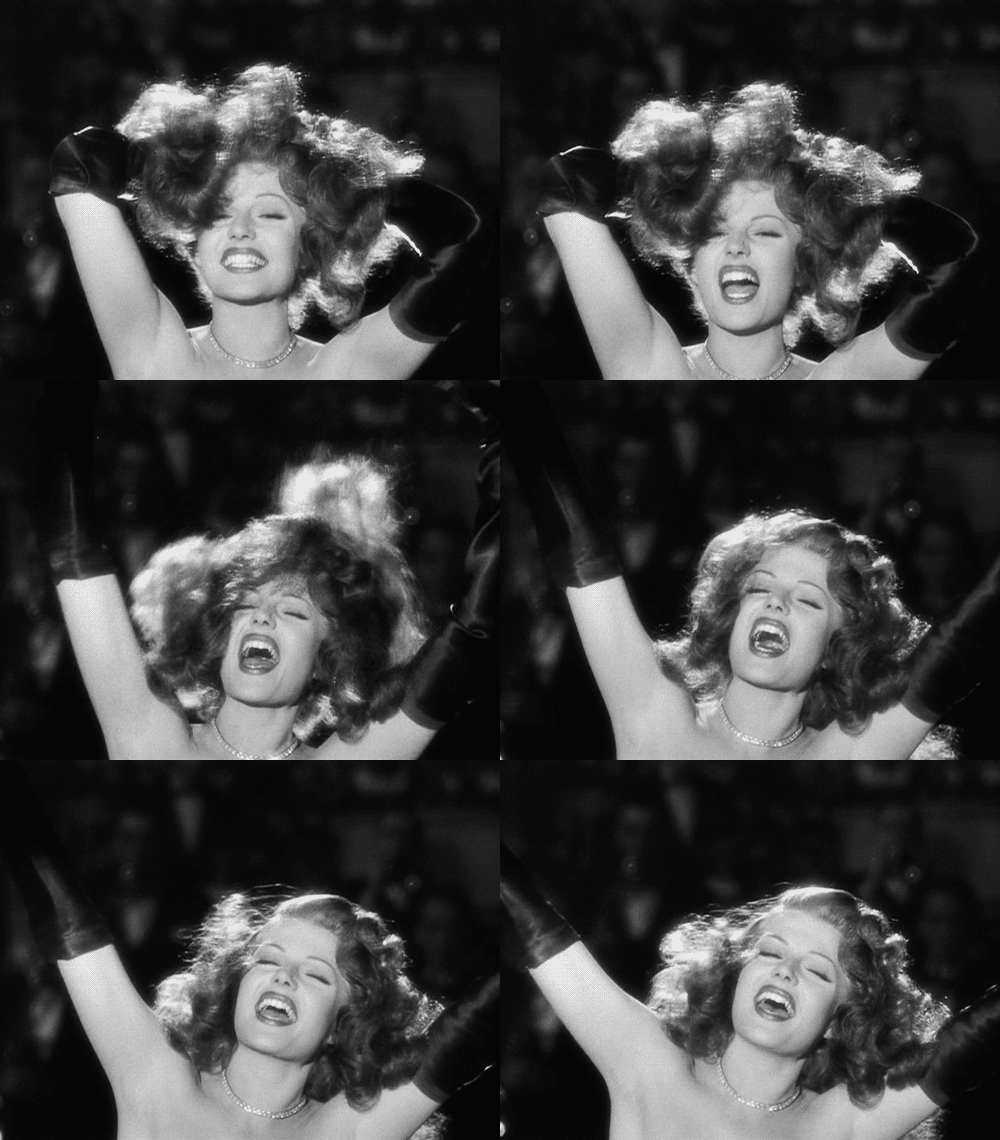
Mesmo nestes filmes, a música ainda estava presente. Gilda faz o strip-tease comportado e feroz ao som da canção “Put the Blame on Mame”. Como Elsa Bannister, a loira fatal, ela apenas canta “Don’t Kiss Me”, tornando mais fácil o processo de enlouquecimento de Michael O’Hara (Welles) e do marido Arthur (Everett Sloane). A cigana Carmen se exibe em uma taverna. Salomé faz sua dança dos sete véus.

Even in these films, the music was still present. Gilda does a different kind of striptease while singing “Put the Blame on Mame”. As Elsa Bannister, the fatal blonde, she only sings “Don't Kiss Me”, making it easier for Michael O'Hara (Welles) and her husband Arthur (Everett Sloane) to be driven crazy. Carmen the gypsy exhibits her moves in a tavern. Salome does the seven veils dance. 
Talvez seja aí que vemos o talento de uma atriz: na capacidade de interpretar uma personagem tão diferente de si de maneira a convencer o público. Acreditamos no poder destruidor de Rita enquanto femme fatale, mas ela também se mostra crível como a dançarina adorável de “Minha Namorada Favorita / My Gal Sal” (1942) ou Vera, que disputa Frank Sinatra com Kim Novak em “Meus Dois Carinhos / Pal Joey” (1957).

Maybe this is where we see an actress's talent: in her ability to play a character that is so different from herself in a convincing way. We believe in Rita's destructive power as a femme fatale, but she is also believable as the lovely dancer from “My Gal Sal” (1942) or as Vera, who fights with Kim Novak for Frank Sinatra in “Pal Joey” (1957).
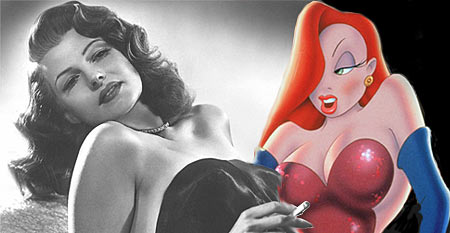
Há quem diga que a personagem interpretada por Ava Gardner em “A Condessa Descalça / The Barefoot Contessa” (1954) foi inspirada em Rita. De fato, a personagem María Vargas é uma moça exótica que alcança sucesso no cinema e depois se casa com um nobre. Rita casou-se com o príncipe Aly Khan em 1949 e ficou três anos afastada do cinema.  Há outra lenda, esta mais difícil de ser comprovada, que diz que a Margarita (o drink!) recebeu este nome em homenagem à jovem dançarina que se apresentava uma vez no México. Ah, e outra homenagem: ela foi uma das sexy symbols que serviu de inspiração para criar a personagem Jessica Rabbit.

Some rumors say that the character played by Ava Gardner in “The Barefoot Contessa” (1954) was inspired by Rita. Indeed, the character María Vargas is an exotic lady who becomes a successful movie star and then gets married to a nobleman. Rita got married to prince Aly Khan in 1949 and spent three years away from the screen. Another legend, mor difficult to be proved true or false, is that the drink Margarita was baptized after a young dancer who was working once in Mexico... And one more homage: she was one of the sex symbols who served as an inspiration to create the character Jessica Rabbit.


Na vida pessoal, Rita era quieta, sofria de complexo de inferioridade e lutava contra o vício em álcool. Sonhava com uma família e acreditou que poderia abandonar o cinema depois de seu casamento com o príncipe Aly Khan, mas não foi bem assim. A história de Rita Hayworth talvez tenha sido um conto de fadas sem final feliz. Rita não foi princesa feliz para sempre. Mas foi deusa. E, para chegar a esse patamar, uma dose de sofrimento é, infelizmente, necessária.

In real life, Rita was shy, suffered from inferiority complex and fought against an addiction to alcohol. She dreamed of having a family and believed she could abandon the cinema after she married prince Aly Khan. It didn't happen. Rita Hayworth's story was, maybe, a fairytale without a happy ending. Rita wasn't a princess for ever after. But she was a goddess. And, in order to achieve this, a dosis of suffering is unfortunately necessary.

This post is part of the “getTV Rita Hayworth Blogathon” hosted by Classic Movie Hub and running during the entire month of October. Please visit getTVschedule to see a full list of Rita Hayworth films airing on the channel this month, and please be sure to visit Classic Movie Hub for a full list of other Blogathon entries.

Related Posts Plugin for WordPress, Blogger...