} Crítica Retrô: anos 20

Tradutor / Translator / Traductor / Übersetzer / Traduttore / Traducteur / 翻訳者 / переводчик

Showing posts with label anos 20. Show all posts

Sunday, December 11, 2016

Quando John Ford conheceu John Wayne / When Ford Met Wayne

Todo mundo tem de começar de algum lugar. No cinema, o começo em geral envolve papéis como extra, sem crédito, até que, um dia, você tem seu primeiro grande sucesso. Para os atroes, o grande sucesso geralmente vem mais tarde que para as atrizes. Se você gosta de filmes clássicos, deve saber que o primeiro grande sucesso de John Wayne veio em 1939 com “No Tempo das Diligências”, uma produção que deu novos rumos às carreiras tanto do ator John Wayne quanto do diretor John Ford. Mas talvez você não saiba que Wayne e Ford já se conheciam antes de 1939 – e já haviam trabalhado juntos.

Everybody has to start somewhere. In the movie business, the start is often through uncredited roles as extras until, someday, you’re given your big break. For males, the big break often comes later than for females. If you like classic movies, you must know that John Wayne’s big break came in 1939 with the film “Stagecoach”, a production that gave a new path to the careers of both actor John Wayne and director John Ford. But maybe you don’t know that Wayne and Ford were no strangers before 1939.
John Wayne apareceu em 178 filmes e séries de TV em 50 anos de carreira. Mais da metade destes filmes foram feitos entre 1926 e 1939, quando Wayne era figurante ou parte de um grupo de faroestes B chamado ‘Os Três Mosqueteiros’ (lembre-se de que quem também fazia parte deste grupo era um homem chamado Lullaby Joslin, e ele tinha um boneco de ventríloquo bem esquisito).

John Wayne made 178 movies and TV shows in a career that lasted 50 years. More than half of them were made between 1926 and 1939, as an extra or part of a B-western group called The Three Mesquiteers (remember that another member of this group was a guy named Lullaby Joslin who had a creepy-looking puppet).
John Wayne ou, como ele era chamado na época, Duke Morrison, chegou em Hollywoodland em 1925, com 18 anos. Ele fez muitas coisas: trabalhou com objetos de cena, cuidou de animais de Hollywood, foi ajudante de eletricista e até atuou de vez em quando. Ou melhor: de vez em quando ele até teve a chance de ficar EM FRENTE às câmeras!

John Wayne, or, as he was called back then, Duke Morrison, arrived in Hollywoodland in 1925, aged 18. He did a lot of things: worked with props, handled animals, helped electricians and even acted every now and then. Or better: he sometimes was given the chance to stand IN FRONT of the camera!
John Ford era diretor desde 1917. Com o sucesso de“O Cavalo de Ferro” (1924), ele passou a fazer mais e mais longa-metragens para os estúdios Fox em Glendale, Califórnia. Seu primeiro encontro com John Wayne nunca foi descrito em detalhes, e eles provavelmente cruzaram os caminhos um do outro sem saber que aquele era um momento histórico – e, nem tão prontamente, o começo de uma bela amizade.

John Ford had been directing movies since 1917. After the success of “The Iron Horse” (1924), he had worked steadily in feature films for Fox studios in Glendale, California. His first meeting with John Wayne was never recorded, and they probably crossed each other’s paths without knowing that was a historical moment – and, not quite quickly, the beginning of a beautiful friendship.
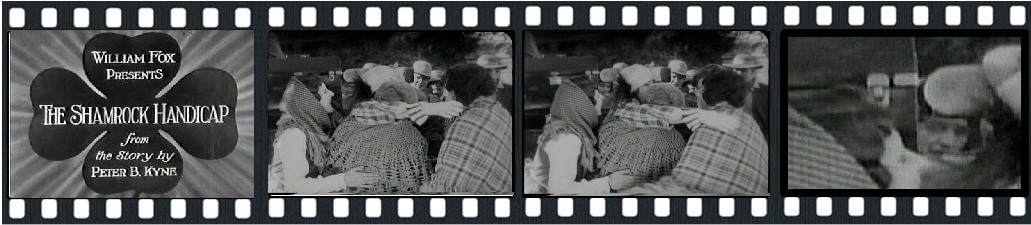
O comediante Lloyd ‘Ham’ Hamilton apresentou o jovem Wayne a Ford. A primeira vez em que Wayne trabalhou com Ford foi em 1926. Ele foi um figurante no filme “A Folha do Trevo”, estrelado por Janet Gaynor. Eles também filmaram “Minha Mãe”, que só estreou dois anos depois. John Wayne pode ser identificado no primeiro filme:

The comedian Lloyd ‘Ham’ Hamilton introduced young Wayne to Ford. The first time Wayne worked with Ford was in 1926. He was an extra in the movie “The Shamrock Handicap”, starring Janet Gaynor. They also shot “Mother Machree”, only released two years later, in 1928. John Wayne can be identified only in the earlier (click to enlarge):

John Ford usou John Wayne novamente como figurante não-creditado em 1928, no filme “Quatro Filhos” – no qual não podemos identificá-lo claramente – e em “Justiça do Amor” – no qual ele aparece duas vezes: primeiro vendado em uma cena fantástica de flashback e depois como um espectador que quebra uma cerca em uma corrida de cavalos.

John Ford used John Wayne again as an unbilled extra in 1928, in the movies “Four Sons” – in which we can’t clearly identify him – and “Hagman’s House” – in which he appears twice: once blindfolded in a very well-done flashback and again as a horserace spectator who breaks a fence.
E então John Ford começou a fazer filmes falados. John Wayne estava logo ali fazendo figuração no primeiro filme falado de Ford, “A Guarda Negra” (1929), estrelado por Victor McLaglen e Myrna Loy. Em seu filme seguinte com Ford, John Wayne teve até nome e algumas falas, mas permaneceu não-creditado: ele foi o marujo Bill no filme “Em Continência” (1929).

And then John Ford started making talkies. John Wayne was right there, in the background, in Ford’s first talkie, “The Black Watch” (1929), starring Victor McLaglen and Myrna Loy, and with Randolph Scott also as an extra. In his next film with Ford, Wayne even got a name and a few lines, but remained uncredited: he was midshipman Bill in “Salute” (1929).
"Salute" (1929)
Em 1930 outros dois filmes da dupla estrearam: “Homens sem Mulheres”, no qual Wayne tem algumas falas, e “Galanteador Audaz”. E então eles seguiram caminhos diferentes, porque Duke Morrison conseguiu um papel importante em “A Grande Jornada” e mudou seu nome para John Wayne a pedido dos produtores. Em 1939, John Ford procurou por John Wayne e lhe ofereceu o papel do ladrão Ringo em “No Tempo das Diligências”. O resto é história.

In 1930 two other films of the duo followed: “Men Without Women”, in which Wayne has a few lines, and “Born Reckless”. And then they parted for nine years, because Duke Morrison got an important role in “The Big Trail” and changed his name to John Wayne, at the producers’ request. In 1939, John Ford looked for John Wayne again, and offered him the role of the thief Ringo in “Stagecoach”. The rest is history.

Some stills and information were found at The John Wayne Database.

This is my contribution to the John Wayne Blogathon, hosted by Quiggy and Hamlette at The Midnite Drive-In and Hamlette’s Soliloquy.

Thursday, June 16, 2016

Harold Lloyd – um adorável nerd

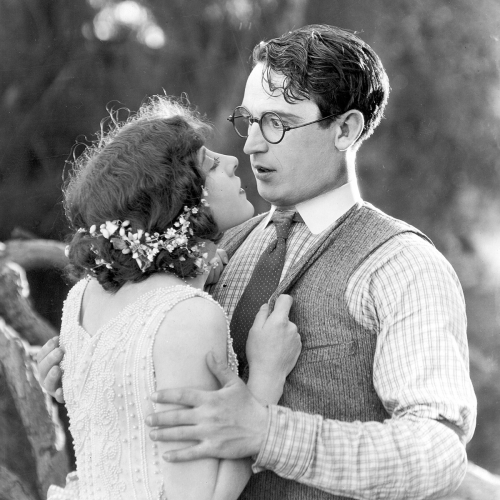
Eu uso óculos. Na verdade, toda minha família usa óculos. Muitas pessoas que eu admiro usam óculos. E não é de se espantar que eu ache óculos um acessório sexy. Você talvez nunca tenha achado óculos sexy, mas eles realmente me atraem – em especial se estiverem no rosto de uma pessoa charmosa, simpática e de bom coração. E você provavelmente nunca achou Harold Lloyd sexy – mas eu o considero o mais fofo dos nerds do cinema mudo.
I wear glasses. In fact, my whole family wear glasses. Many people that I admire wear glasses. And it is not surprising that I think glasses are sexy. Maybe you have never thought glasses could be sexy, but they really attract me – especially if they are on the face of someone who is charming, nice and has a heart of gold. And you probably never thought Harold Lloyd could be sexy – but I consider him the cutest nerd of silent cinema.
O Harold Lloyd dos filmes mudos é o molde perfeito do loser. Ele é muito atrapalhado, sempre se torna alvo de gozação, mas está cheio de boas intenções e mantém sempre um grande sorriso no rosto.
Silent Harold Lloyd is the perfect example of the loser. He is very goofy, is always bullied and laughed at, but has a lot of good intentions and keeps a huge smile in his face.
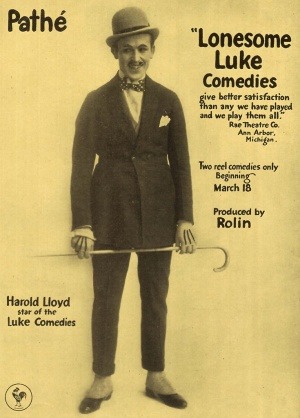
Harold estreou no cinema em 1913, e a partir de 1915 ele passou a interpretar o personagem Lonesome Luke. Para atrair o público, na época e também agora, era preciso desenvolver uma persona identificável. Lonesome Luke era facilmente reconhecido por seu bigode, entretanto era muito semelhante ao vagabundo de Chaplin.
Harold entered the movie business in 1913, and in 1915 he started to play a character called Lonesome Luke. To attract the public, then and also now, some actors had to develop an identifiable persona. Lonesome Luke was easily indentified by his moustache, but he was very similar to Chaplin's tramp.
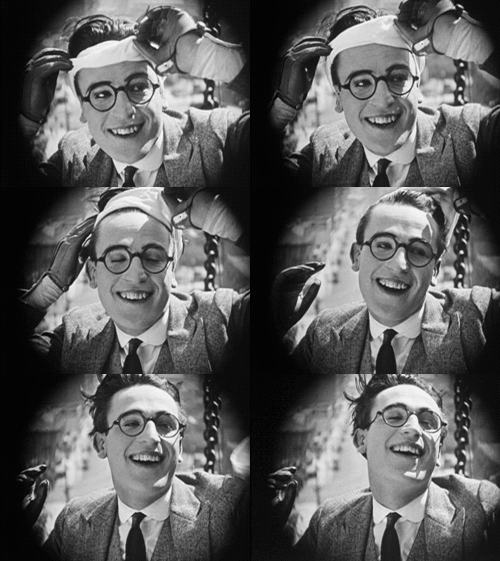
E foi quando Harold, com a ajuda de Hal Roach, desenvolveu um personagem original que ele encontrou seu lugar ao sol em Hollywood. Em 1917 surgiu o personagem “Glasses” - um garoto comum, que em muitos filmes recebia o nome de Harold. Em uma entrevista em 1962, Lloyd declarou sobre seus óculos: “eles mais ou menos me colocaram em uma categoria diferente porque eu me tornei um ser humano. Meu personagem era o garoto que mora na casa ao lado ou na sua rua, mas que ao mesmo tempo podia fazer todas as coisas malucas que fazíamos antes [com Lonesome Luke], mas era crível. Era algo natural e o romance era crível”.
And it was only when Harold, with Hal Roach's help, developed an original character that he found his place in the sun in Hollywood. In 1917 the character “Glasses” appeared – he was a regular boy, and in many films was named Harold. In an interview in 1962, Lloyd recalled about his glasses: “"it more or less put me in a different category because I became a human being. He was a kid that you would meet next door, across the street, but at the same time I could still do all the crazy things that we did before, but you believed them. They were natural and the romance could be believable."
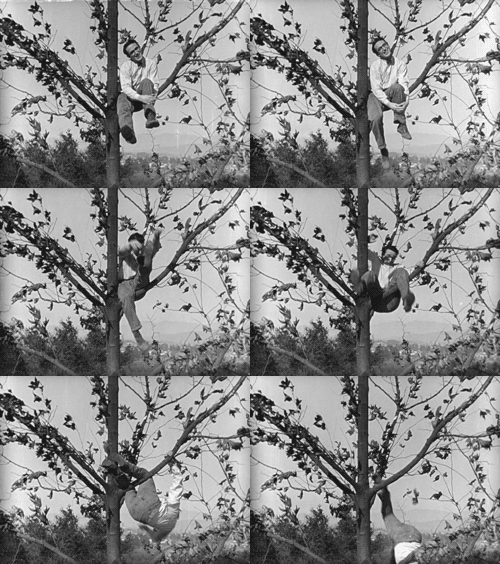
São muitos os filmes, entre longas e curtas-metragens, em que Harold conquistou meu coração – e o do público também. São especialmente adoráveis os filmes em que Harold quer conquistar uma garota, mas não sabe muito bem como (por exemplo, em “Ask Father”, 1919, “Harold, Neto Mimado”, 1922 e as obras-primas “O Homem-Mosca”, 1923, e “O Calouro”, 1925). E há também os filmes com situações mais mundanas, como “Just Neighbors” (1919), que foi o primeiro curtas-metragem de Harold Lloyd que eu vi.
In many of his films, both shorts and features, Harold Lloyd conquered me – and also the audience. There are adorable films in which Harold tries to get a girl (like “Ask Father”, 1919, “Grandma's Boy”, 1922 and the masterpieces “Safety Last!”, 1923, and “The Freshman”, 1925). And there are also the films showing daily situations, like “Just Neighbors” (1919), the first short film I've ever seen from Harold.
É difícil apontar precisamente o que tornava esta persona de Harold Lloyd tão amável. Provavelmente era a maneira com que o público se identificava com ele, e torcia por ele. Talvez fossem mesmo os óculos. Mas o fato é que Harold é carismático e apaixonante. Afinal, não é à toa que Harold Lloyd e seu adorável loser de óculos tenha servido de inspiração para Clark Kent, o jornalista comportado mais famoso dos quadrinhos – e, secretamente, um herói. Igualzinho a Harold Lloyd.
It's difficult to point out precisely what made Harold Lloyd's persona so easy to love. It probably was because the public had an identification with him, and therefore rooted for him. Maybe it was the glasses, after all. The truth is that Harold is charismatic and lovely. And that's why Harold Lloyd and his cute loser with glasses were the inspiration for Clark Kent, the most famous well-behaved journalist from comic books – who was secretely a hero. Just like Harold Lloyd.
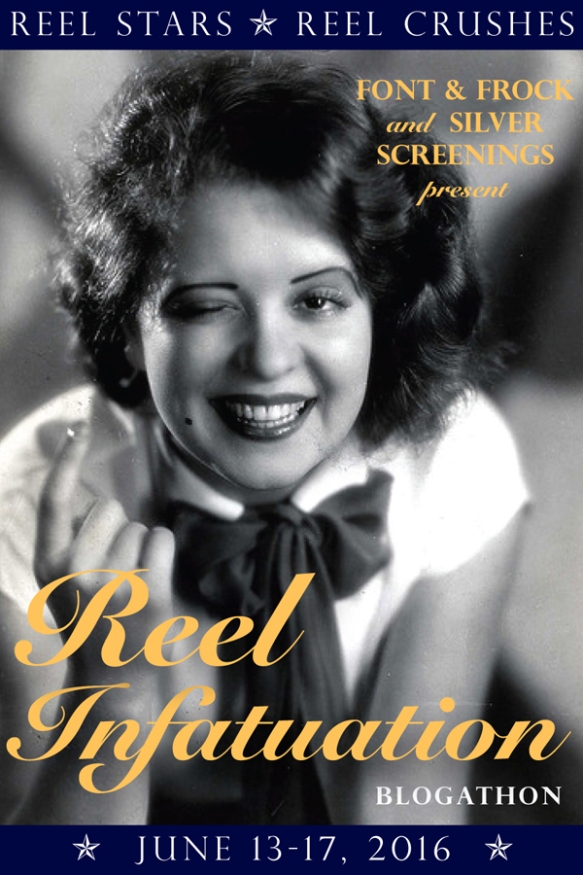
This is my contribution to the Reel Infatuation blogathon, hosted by lovely ladies Ruth and Maedez at Silver Screenings and Font and Frock.

Friday, October 23, 2015

It (1927)

Existem alguns filmes que mudam a história do cinema para sempre. “It” não introduziu uma estética, mas levou uma jovem atriz ao topo de Hollywood. Existem filmes que nos ensinam algo. “It” não ensina a flertar, mas mostra como a conquista pode ser um jogo divertido – e como a vida pode ser encarada com leveza e uma dose de coragem. “It” não foi um filme revolucionário, mas conseguiu definir perfeitamente uma era. Se você quiser saber como viviam as flappers e como começou a independência feminina nos loucos anos 20, este é o filme!

There are certain movies that change film history forever. “It” didn’t introduce any aesthetical trait, but took a young actress to the top of Hollywood. There are certain movies that teach us something. “It” doesn’t teach how to flirt, but shows how flirting can be a fun game – and how life can be faced with lightness and a dosis of courage. “It” wasn’t a revolutionary movie, but it could perfectly define an era. If you want to know how flappers lived and how female independence started in the 1920s, this is the film to watch!

Betty (Clara Bow) é uma funcionária de uma grande loja que sabe bem o que quer. Seu objetivo é conquistar seu novo patrão, Cyrus Waltham (Antonio Moreno). Muito decidida e bastante esperta, ela convida Monty (William Austin), grande amigo de Cyrus, para um jantar chique no Ritz. Basta usar um vestido customizado e muito charme e pronto: Betty atrai a atenção de Cyrus.

Betty (Clara Bow) is a clerk at a deparment store and knows exactly what she wants. Her goal is to conquer her new boss, Cyrus Waltham (Antonio Moreno). With this in mind and lots of wit, she invited Monty (William Austin), Cyrus’ good friend, for a fancy dinner at the Ritz. By just using a DIY dress and lots of charms the magic is made: Betty calls Cyrus’ attention.

Monty estava à procura de uma mulher com “IT”, com sex appeal, e encontrou isto em Betty. Ela usou o pobre Monty (que, coitado, pensava ter também “IT”) para fazer charme para o patrão, e a estratégia funcionou. Na noite seguinte, Betty e Cyrus se divertem na praia, em um parque de diversões com brinquedos estranhíssimos (“social mixer”????).

Monty was looking for a woman with “IT”, with sex appeal, and found this in Betty. She used poor Monty (who, poor thing, thought he also had “IT”) to ignite jealousy in her boss, and the strategy worked. The following night, Betty and Cyrus have fun at the beach, in an amusement park with very strange attractions (“social mixer”????).

Além de sedutora, Betty tem um bom coração. Sua companheira de quarto, Molly (Priscilla Bonner) está doente, sem poder trabalhar, e precisa sustentar o filho pequeno. Quando duas senhoras aparecem querendo levar o bebê para o orfanato, Betty não pensa duas vezes: “O filho é meu e eu tenho emprego para sustentá-lo!”. Ela inventa uma mentira e salva a amiga, mas Monty ouve a confissão – e não apenas ele: um jornalista (o jovem e esquálido Gary Cooper) anota tudo e publica a história. A seguir temos confusões, lágrimas, corações partidos e um clímax em um iate.

Besides being a seductress, Betty has a heart of gold. Her roommate, Molly (Priscilla Bonner) is sick, without a job and doesn’t have the means to support her infant child. When two women appear wanting to take the baby to an orphanage, Betty doesn’t think twice: “The child is mine and I have a job to support him!”. With this lie she saves her friend, but Monty hears the confession – not only him, but also a journalist (a young and very slim Gary Cooper) takes note of everything and publishes the story. To follow we have confusion, tears, broken hearts and a climax in a yacht. 

Gary Cooper

O filme deve todo seu valor a Clara Bow. Ela é simplesmente adorável, e ainda demonstra talento quando precisa derramar algumas lágrimas. Linda, risonha e charmosa, ela parece uma garota moderna, e é impossível não se apaixonar ou não se inspirar por seu jeito. Decidida, corajosa, inteligente, Betty não mede esforços para conseguir o que quer, mas sem abandonar a doçura e o tom de brincadeira. Há momentos em que eu gostaria de ser mais como Betty, e levar a vida com um misto de leveza e ambição, determinação e feminilidade. Betty tem “IT”. Clara Bow tinha “IT”. Será que nem todos nascem com “IT”? Ou será que houve um momento em que a humanidade deixou o “IT” escapar?

The film owes everything to Clara Bow. Sh is simply adorable, and also shows a lot of talent when she needs to cry. Pretty, always laughing, and charming, she looks like a modern girl and it’s impossible not to fall in love or get inspired by her ways. Resourceful, brave, intelligent, Betty goes all the way to get what she wants, but without losing the tenderness and the playfulness. There are moments I’d like to be like Betty, and live life with a mix of lightness and ambition, determination and feminility. Betty has “IT”. Clara Bow had “IT”. Maybe not everybody is Born with “IT”? Or maybe there was a moment when mankind let “IT” slip away?

Uma frase em particular mostra como Betty é uma personagem moderna. Enquanto defende a amiga Molly, Betty é questionada sobre onde está o pai de seu suposto filho. A resposta? “Não te interessa!”. Não há heroína de comédia romântica mais incrível que Betty!

One sentence in particular shows how Betty is a modern character. As she’s defending her friend Molly, Betty is asked about where is her supposed son’s father. The answer? “That’s none of your business!”. There is not a single romantic comedy heroine more amazing than Betty! 


Clara Bow pode ser a “It Girl”, mas quem lucrou realmente com o filme foi a mulher que inventou o “IT” (ou pelo menos que popularizou o termo, já usado por Rudyard Kipling): Elinor Glyn, autora de best-sellers escandalosos. É através de um artigo de Glyn na revista Cosmopolitan (propriedade do amigo íntimo de Elinor, William Randolph Hearst) que Monty descobre o significado de “IT” no filme, e a própria autora aproveita para fazer uma breve aparição no jantar no Ritz e explicar o que é “IT”. E “IT” tem um preço: Elinor recebeu 50 mil dólares para que o filme fosse feito ao redor do seu conceito de “IT”.

Clara Bow may be the “It girl”, but the person who got rich with the movie was the woman who invented “IT” (or at least made the word, already used by Rudyard Kipling, popular): Elinor Glyn, the author of scandalous best-sellers. It is through one article by Elinor Glyn at the Cosmopolitan magazine (a property of her close friend Willian Randolph Hearst) that Monty gets to know the meaning of “IT” in the movie and the author herself has a cameo at the Ritz dinner to explain what is “IT”. And “IT” has a price: Elinor received 50 thousand dollars so a movie could be made around her concept of “IT”.   

Todos os olhares deveriam ir para Clara Bow, mas William Austin também atrai a atenção e é a fonte de muitas risadas. Nascido na Guiana em 1884, William Austin estudou na Inglaterra, fez negócios em Shanghai e estreou no cinema em 1920. Seu irmão, Albert Austin, trabalhava como coadjuvante nos filmes de Charles Chaplin. “It”, entretanto, não foi o filme mais famoso de William Austin. Em 1943, ao interpretar o mordomo Alfred em um seriado do Batman, William reformulou totalmente a aparência do personagem, e o Alfred dos quadrinhos foi remodelado com base em William Austin.

All the eyes should be directed to Clara Bow, but William Austin also calls the attention and generates many laughs. Born in Guyana in 1884, William Austin studied in England, was a businessman in Shanghai and debuted in movies in 1920. His brother, Albert Austin, was a supporting player in Chaplin’s movies. “It”, however, wasn’t Austin’s most famous film. In 1943, playing the butler Alfred in one Batman serial, William totally reformulated the character’s appearance, and the Alfred from comic books was completely remodeled having as the basis the appearance of William Austin.

William Austin tinha "IT" / William Austin had "IT"

Perdido durante várias décadas, “It” (o filme, e não o charme) foi reencontrado em Praga, atual República Tcheca, nos anos 60. Carl Davis apreendeu perfeitamente o tom de brincadeira da película, compondo uma trilha sonora adorável nos anos 80. “It” é precursor das screwball comedies e melhor que qualquer comédia romântica atual – mas, acima de tudo, uma prova de que o passado é muito mais próximo de nós do que imaginamos – e de que devemos sempre perseguir nosso “IT”.

Lost during many decades, “It” (the movie, not the charm) was found again in Prague, currently Czech Republic, in the 1960s. Carl Davis perfectly understood the playfulness of the movie, composing a lovely soundtrack in the 1980s. “It” is a forerunner of screwball comedies and better than any modern romantic comedy - but, above all, a proof that the past is much closer to us than we think - and that we all must look for our “IT”.   


This is my contribution to The Silent Cinema blogathon, hosted by Crystal at In the Good Old Days of Classic Hollywood and Lauren Champkin!

Related Posts Plugin for WordPress, Blogger...