} Crítica Retrô: 1972

Tradutor / Translator / Traductor / Übersetzer / Traduttore / Traducteur / 翻訳者 / переводчик

Showing posts with label 1972. Show all posts

Monday, September 26, 2022

Cabaret (1972)


Você sabe quando uma flor aparece no meio do concreto? O mesmo pode acontecer com as artes: no meio do caos, às vezes a arte - arte bem feita, até mesmo obras-primas - floresce. E então as pessoas são felizes e livres... até que a tragédia acontece. Isso aconteceu na República de Weimar (1918-1933), uma época que viu o Expressionismo Alemão e o Kammerspiel no cinema, a cultura dos cabarés e a liberdade de ser quem você realmente é. O perigo estava se aproximando, mesmo assim: incapazes de verem os outros felizes, os nazistas surgiram e se espalharam, prontos para recobrar o controle da vida das pessoas em nome da “moral”. Sim, esta é uma lição que devemos aprender - para cada conquista de grupos minoritários haverá uma reação das pessoas que não suportam ver seus privilégios sendo retirados -  mas é também algo mais para prestarmos atenção: a arte espetacular feita sobre estes raros períodos de liberdade. Um destes filmes espetaculares está completando 50 anos este ano: “Cabaret”, de Bob Fosse.

Do you know when a flower appears in the middle of concrete? The same can happen to the arts: in the middle of chaos, sometimes art – good art, even great art – flourishes. And then people are happy, and free... until tragedy strikes. This happened in the Weimar Republic (1918-1933), a time that saw the German Expressionism and the Kammerspiel in cinema, the culture of cabarets and the freedom of being who you truly were. The danger was looming, nevertheless: unable to see others being happy, Nazis appeared and spread, ready to reclaim control of people's lives over the excuse of “morality”. Yes, this is a lesson from us to learn - for every conquest of minority groups there will be a reaction from people who can’t stand seeing their privileges being taken away - but it’s also something else to look out for: great art made about these rare periods of freedom. One of those great movies is turning 50 this year: Bob Fosse’s “Cabaret”.
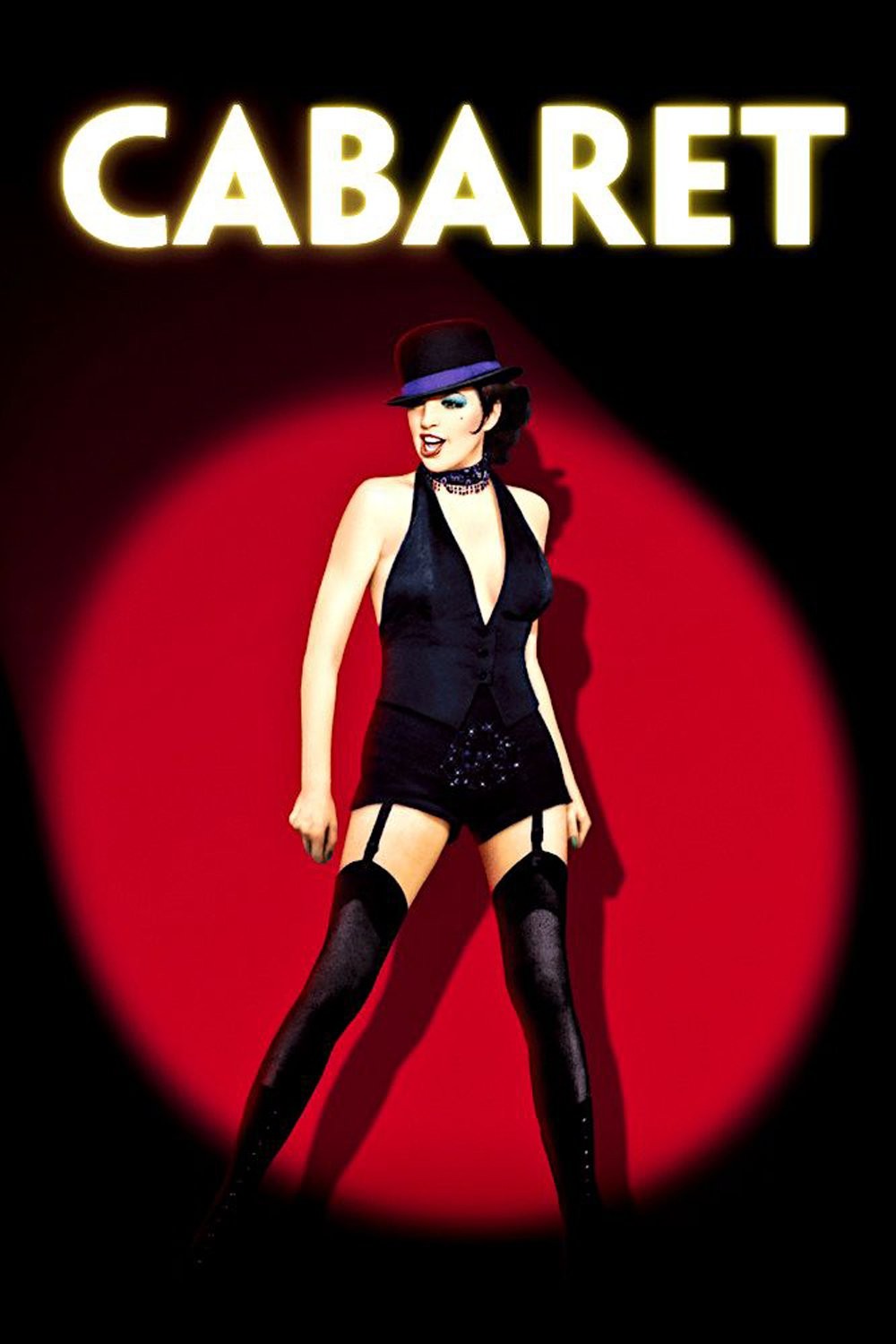
Sally Bowles (Liza Minnelli) é uma dançarina no Kit Kat Club, um cabaré que apresenta alguns números elaborados e outros nem tão elaborados. Sally fica amiga do acadêmico e professor de inglês Brian (Michael York), que vai morar na mesma pensão em que Sally mora. Sally também fica conhecendo uma das alunas de Brian, a judia Natalia Landauer (Marisa Berenson). Natalia está apaixonada por Fritz (Fritz Wepper), um judeu que mente que é protestante.

Sally Bowles (Liza Minnelli) is a dancer at the Kit Kat Club, a cabaret for some elaborate numbers and some not-so-elaborate ones as well. Sally befriends the academic and English teacher Brian (Michael York), who comes to live in the same boarding house as she does. Sally also gets to know one of Brian’s students, Jewish Natalia Landauer (Marisa Berenson). Natalia is in love with Fritz (Fritz Wepper), a Jew who lies saying he’s a Protestant.

Um dia na lavanderia, enquanto tenta s comunicar usando seu pequeno conhecimento do alemão, Sally recebe ajuda de Maximilian (Helmut Griem), um homem muito rico - e casado. Em vez de um triângulo amoroso, Sally, Brian e Maximilian rapidamente se transformam em um trio. O nazismo está à espreita enquanto eles vivem, amam e se divertem, mas Sally tem problemas mais importantes para resolver.

One day at the laundry, while trying to communicate using her weak German, Sally is helped by Maximilian (Helmut Griem), a very rich - and married - man. Instead of a love triangle, quickly Sally, Brian and Maximilian become a trio. Nazism is lurking while they live, love and laugh, but Sally has more important problems.

Sally quer ser uma atriz na Alemanha - como Lya de Putti, ela diz. O cinema alemão estava indo muito bem nos anos 1920 e 1930. O país fez filmes incríveis e exportou diretores - como F.W. Murnau - e atores - como Emil Jannings, o primeiríssimo ganhador do Oscar de Melhor Ator, e a própria Lya de Putti, inspiração de Sally - para Hollywood. Isso significa que Sally tinha razão em se inspirar em atores alemães da época e tinha uma chance de alcançar seu sonho de se tornar uma grande estrela.

Sally wants to be an actress in Germany - like Lya de Putti, she says. German cinema was doing very well in the 1920s and early 1930s. The country made stunning films and exported directors - like F.W. Murnau - and actors - like Emil Jannings, the first-ever Best Actor Oscar winner, and even Lya de Putti, Sally’s inspiration - to Hollywood. This means that Sally was right about being inspired by German actors of the period and had a chance in her dreaming to make it big.

Ao passarem perto do corpo de um homem assassinado pelos nazistas, um motorista diz: “deixe que eles se livrem dos comunistas, depois nós podemos controlá-los”. Quando Brian pergunta quem são “nós”, o motorista responde “a Alemanha, é claro”. Como ele estava errado - e como estão erradas algumas pessoas ainda hoje! Para manter uma sociedade tolerante, é preciso ter tolerância zero com a intolerância. Discurso de ódio deve ser eliminado no começo, para que não se torne ataques de ódio. Se você não pode destruir ativamente a intolerância, você ainda pode se opor em silêncio - como um senhor de idade que permanece sentado quando um menino nazista canta “Tomorrow Belongs to Me” - ou, o que é mais esperto, ir embora como Brian e Maximilian fazem.

While passing by the body of a man murdered by Nazis, a chauffeur says: “let them get rid of the communists, later we can control them”. When Brian asks who’s “we”, the chauffeur says “Germany, of course”. How wrong he was then - and how wrong are some people now! To maintain a tolerant society, we must have zero tolerance for intolerance. Hate speech must be stopped in the beginning, so it won’t become hate acts. If you can’t actively destroy intolerance, you can silently oppose - like the older man who keeps seated when a Nazi boy starts singing “Tomorrow Belongs to Me” - or, which is wiser, flee like Brian and Maximilian do.

Os números musicais acontecem dentro do cabaré e Sally é a grande estrela, mas não podemos nos esquecer de mencionar a performance de Joel Grey como o Mestre de Cerimônias. O vencedor do Oscar de Melhor Ator Coadjuvante, Grey já havia ganhado um prêmio Tony por interpretar o Mestre de Cerimônias na Broadway, onde “Cabaret” teve mais de mil apresentações entre 1966 e 1967.

The musical numbers happen inside of the cabaret and Sally is the big star, but we must not forget to mention Joel Grey’s performance as the Master of Ceremonies. The winner of the Oscar for Best Actor in a Supporting Role, Grey had already won a Tony Award for playing the Master of Ceremonies on Broadway, where “Cabaret” ran from more than a thousand performances between 1966 and 1967.  

O filme foi rodado em locação na Berlim Ocidental, usando muitos dos cenários usados anteriormente em “A Fantástica Fábrica de Chocolate” (1971). Sally Bowles foi inspirada por uma cantora de cabaré e aspirante a estrela de cinema real - mas não muito talentosa: Jean Ross. Jean foi membro do partido Comunista em Berlim e se tornou correspondente na Guerra Civil Espanhola (1936-1939).

The movie was filmed on location in West Berlin, in many of the same sets used for “Willy Wonka & the Chocolate Factory” (1971). Sally Bowles was inspired by a real - yet not very talented - cabaret singer and movie star-wannabe, Jean Ross. Jean was a member of the Communist party in Berlin and became a correspondent in the Spanish Civil War (1936-1939).
Eu tenho uma confissão a fazer: eu nunca tinha assistido a “Cabaret”. Gostei muito do filme, mas não amei. É um bom “slice of life”, e Liza é realmente mágica como Sally - um Oscar merecido! As músicas são tão icônicas que eu já as conhecia e pude cantar junto. “Cabaret” é mais que um filme: é uma experiência cinematográfica. Das boas.

 I have a confession to make: I had never watched “Cabaret” before. I really liked it, but didn’t love it. It’s a good “slice of life” movie, and Liza is indeed magical as Sally - well deserved Oscar win! The songs are so iconic that I already knew all of them beforehand and could sing along. “Cabaret” is more than a movie: it’s a cinematographic experience - a great one.

This is my contribution to the Fifth Broadway Bound blogathon, hosted by Rebecca at Taking Up Room.

Monday, June 3, 2019

O Homem de La Mancha (1972) / Man of La Mancha (1972)


Recentemente, durante a quinta temporada da comédia da Netflix “Grace and Frankie”, Robert (interpretado por Martin Sheen) fez parte de um grupo de teatro gay que decidiu produzir o musical “O Homem de La Mancha”. Robert queria o papel de Dom Quixote, mas acabou sendo Sancho. Em uma cena primordial na temporada, entretanto, Robert canta de maneira magnífica a canção mais famosa do musical, “The Impossible Dream”.

Recently, during the fifth season of the Netflix sitcom “Grace and Frankie”, Robert (played by Martin Sheen) was part of a gay theater group that decided to produce the musical “Man of La Mancha”. Robert wanted the role of Don Quijote, but he ended up as Sancho. In a key scene of the season, however, Robert sings beautifully the best known song of the musical, “The Impossible Dream”.


Esta trama me fez pensar no filme de 1972, “O Homem de La Mancha”, que eu vi e amei durante minha fase de particular interesse por Peter O’Toole, há mais de sete anos. Eu soube que era hora de revisitar este filme querido estrelado por um dos meus atores favoritos, que ainda vivia quando eu vi o filme pela primeira vez.

This whole plot made me think of the 1972 film “Man of La Mancha”, one that I watched and loved back in my Peter O’Toole phase, over seven years ago. I knew it was time to revisit this old favorite starring an old and now gone favorite.


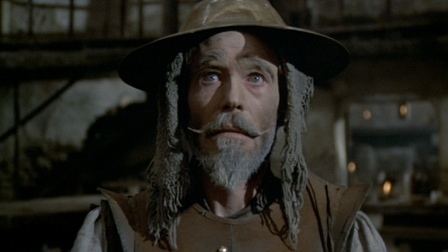
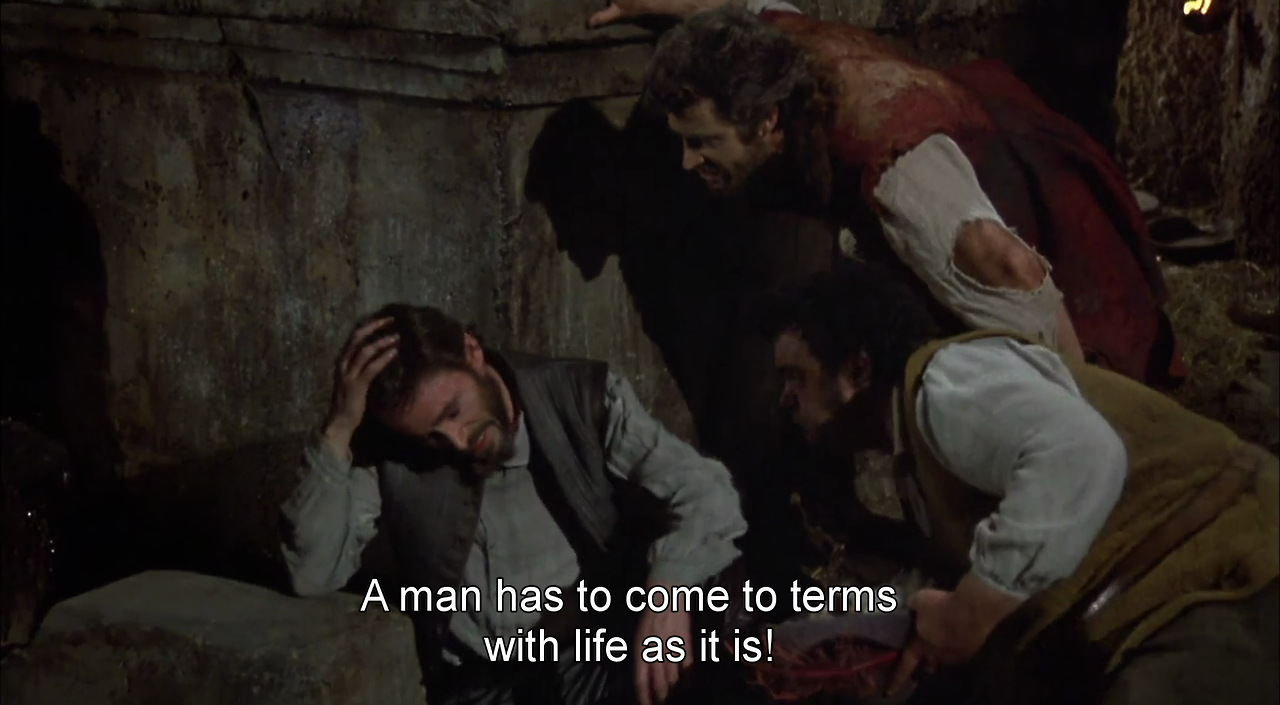
“O Homem de La Mancha” conta uma história dentro de outra. No começo, o escritor e ator Miguel de Cervantes (Peter O’Toole) e seu assistente (James Coco) são presos pela Inquisição durante uma peça. Na prisão, eles encontram todo tipo de gente, todos dispostos a incomodá-los e a queimar os manuscritos de Cervantes. Para salvar seus manuscritos, Cervantes aceita ser julgado por um tribunal fajuto, e assim conta a história de Dom Quixote.

“Man of La Mancha” tells a story within a story. In the beginning, writer and actor Miguel de Cervantes (Peter O’Toole) and his assistant (James Coco) are arrested by the Inquisition as they’re doing a play. Once in the prison, they find all kinds of people, and all willing to bother them and burn Cervantes’s manuscripts. In order to save his manuscripts, Cervantes accepts to be judged by a mock trial and thus tells the story of Don Quijote.


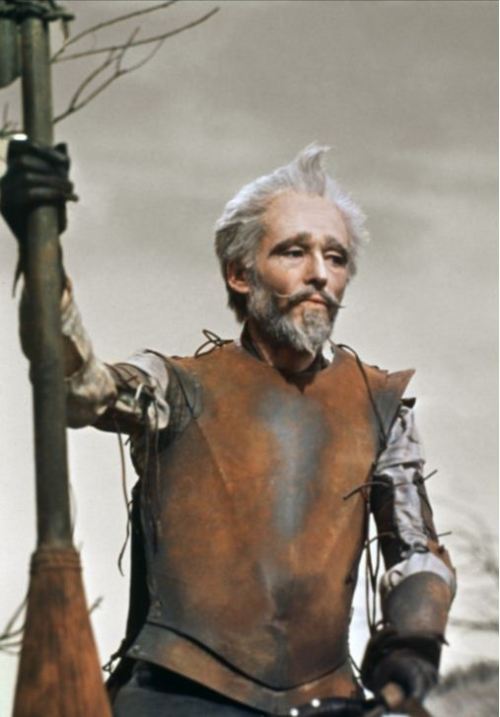
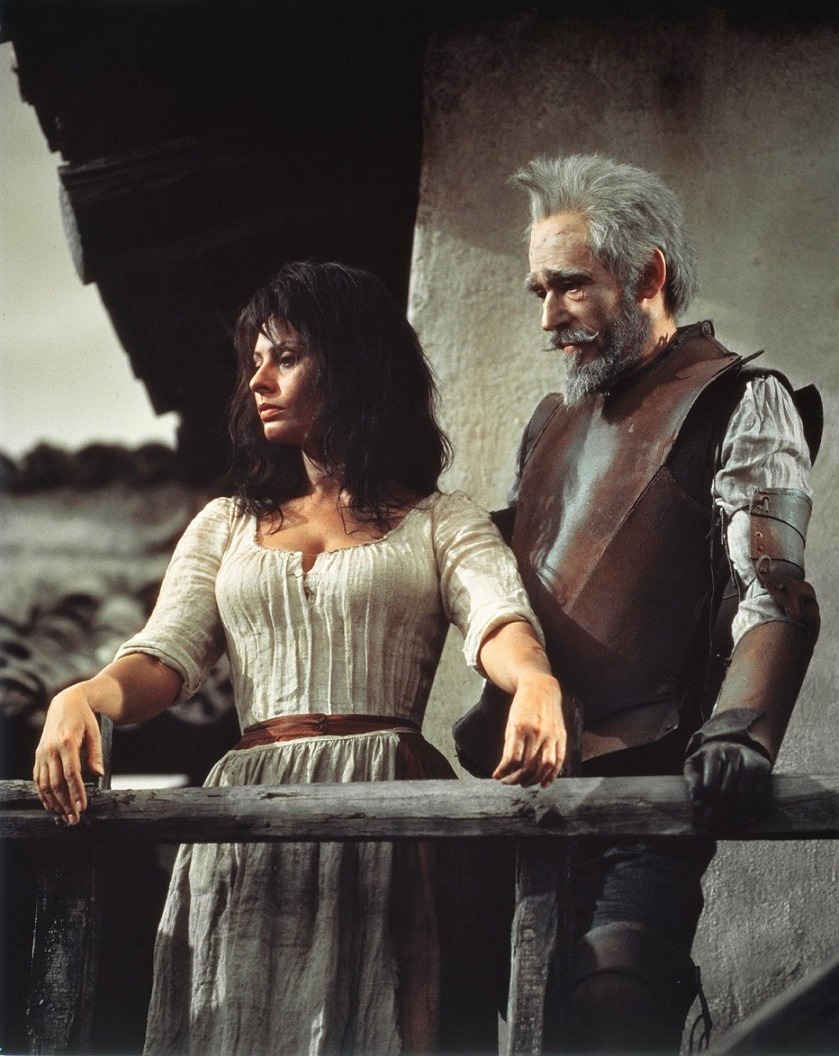
Esta é uma história muito conhecida. Alonso Quijana era um homem velho que amava ler. Ele lei tantas histórias de aventuras que ficou convencido de que ele era um cavaleiro chamado Dom Quixote de La Mancha (novamente Peter O’Toole). Ele convence seu vizinho Sancho Pança (de novo James Coco) a sair em missão ao seu lado. Dom Quixote confunde moinhos de vento com gigantes, pobres estalagens com castelos, uma tigela de barbear com um capacete dourado e a prostituta Aldonza (Sophia Loren) com a donzela Dulcinea.

This is a well known story. Alonso Quijana was an old man who loved to read. He read so much adventure stories that he was convinced he was himself a knight called Don Quijote de La Mancha (once again, Peter O’Toole). He convinces his neighbor Sancho Panza (again James Coco) to go with him and be his sidekick. Don Quijote confuses windmills with giants, poor inns with castles, a shaving pot with a golden helmet and the whore Aldonza (Sophia Loren) with the damsel Dulcinea.


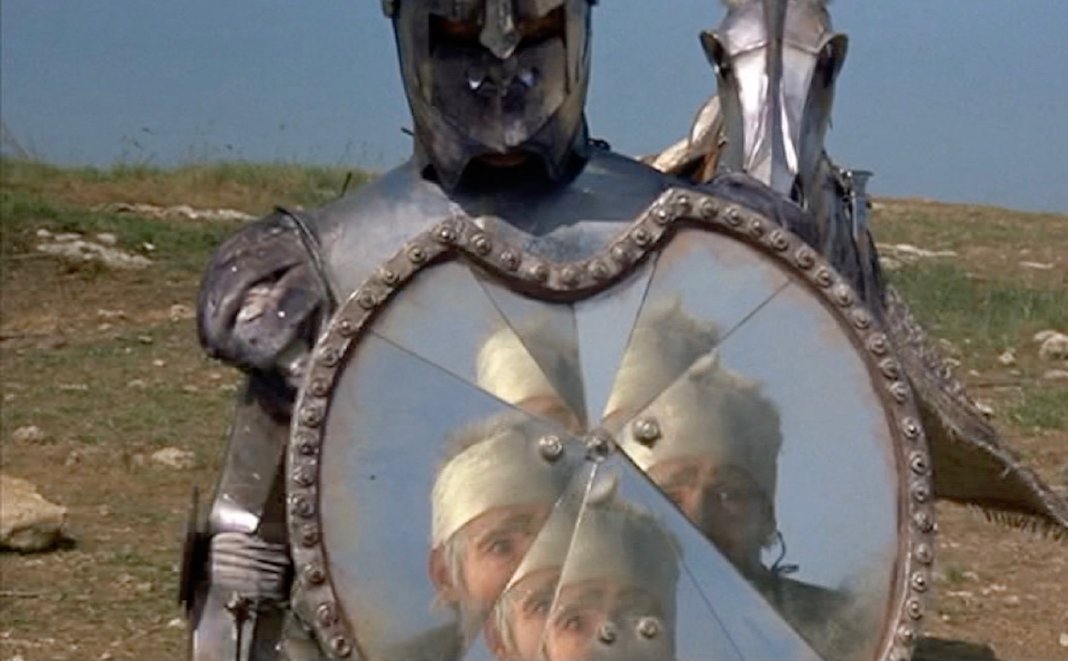
Enquanto isso, a sobrinha de Alonso Quijana, Antonia (Julie Gregg) convence o noivo dela, Sanson Carrasco (John Castle) a ir atrás do tio e fazê-lo olhar para o espelho da realidade - porque Alonso já se tornou motivo de chacota na cidade. Ela diz que “só está pensando nele”, mas sabemos que ela está mais preocupada com a sua própria reputação do que com o tio louco.

Meanwhile, Alonso Quijana’s niece Antonia (Julie Gregg) convinces her fiancée, Sanson Carrasco (John Castle) to go after her uncle and try to makehim look at the mirror of reality - because Alonso has already become laugh stock for the town. She may say she is “only thinking of him”, but we know she is worried more about her reputation than with her crazy uncle.


Miguel de Cervantes nunca considerou Dom Quixote como sua melhor obra. Mesmo assim, ela é a mais lembrada atualmente, e foi o primeiro de seus escritos a ser adaptado para as telas em um curta-metragem francês de 1903. O musical, baseado em apenas uma parte da novela Dom Quixote, estreou na Broadway em 1965 – mesmo tendo sido gerado como uma peça de televisão! O autor Don Wasserman foi chamado pelo diretor musical Albert Marre para transformar sua malsucedida obra de televisão em um musical... e assim a história foi feita.

Miguel de Cervantes never considered Don Quijote as his best work. Nevertheless, it is now his best remembered, and it was the very first of his writings to be adapted to the screen in a 1903 French short film. The musical, based on only a part of the Don Quijote novel, opened on Broadway in 1965 - even though it started as a non-musical teleplay! The writer Don Wasserman was approached by musical director Albert Marre to turn the unsuccessful teleplay into a stage musical... and history was made.


“O Homem de La Mancha, o musical, ganhou cinco prêmios Tony, incluindo um de Melhor Musical. Logo Hollywood se interessou, e Wasserman foi contratado para escrever o roteiro. Marre foi contratado para dirigir, mas foi demitido logo depois por não ter experiência no cinema. No final, Arthur Hiller dirigiu o filme. Obviamente, muitas falas e músicas inteiras tiveram de ser cortadas da peça – e o filme ainda acabou tendo mais de duas horas de duração!

“Man of La Mancha”, the musical, won five Tonys, including one for Best Musical. Soon Hollywood was interested, and Wasserman was hired to write the screenplay. Marre was hired to direct, but fired little after due to his lack of film experience. In the end, Arthur Hiller directed the film. Of course, many lines and whole songs had to be cut for the movie - that still managed to run over two hours!


Kirk Douglas tentou conseguir o papel principal, mas Peter O'Toole foi escolhido para ser Cervantes / Dom Quixote. O'Toole gravou as músicas mas, ao perceber que não cantava bem, procurou alguém para dublá-lo, e assim encontrou o cantor Simon Gilbert. Mesmo sem cantar, O'Toole trouxe emoção para a personagem, o que foi essencial. Sophia Loren cantou suas canções. James Coco está ótimo e divertido, como um bom Sancho deve ser. O filme foi gravado nos estúdios de Dino di Laurentiis em Roma.

As for the leads, Kirk Douglas actively campaigned for the role, but Peter O’Toole ended up as Cervantes / Quijote. O’Toole recorded his songs but, seeing his singing wasn’t good, looked for someone to dub him, and ended up with Simon Gilbert. Even without singing, O’Toole brought a lot of emotion to the character, which was essential. Sophia Loren did her own singing. James Coco is as great and funny as Sancho should be. The film was shot at the Dino di Laurentiis studios in Rome.


Todas as transições da prisão para os cenários da história de Dom Quixote são fantásticas – se você piscar, perderá um grande trabalho de edição. Há também uma cena organizada como se os personagens fossem peças em um jogo de xadrez – é brilhante. O estilo do filme é rústico, do interior mais pobre. Sophia Loren queria que o filme fosse gravado em Andaluzia, na terra de Cervantes, entretanto eu acredito que o estilo rústico foi determinante para evocar o século XVI.

All the transitions from the prison to the scenarios of the Quijote story and back are fantastic - you blink and you’ll miss the great editing work. There is also a scene played as if the characters were pieces in a chess game and it’s brilliant. The overall look of the film is raw, from the poor countryside. Even though Sophia Loren wished to film in the beautiful Andalucía, Cervantes’s home, I believe the rustic look made the film evoke the 16th century well.


O principal legado de “O Homem de La Mancha” é, sem dúvida, a música “The Impossible Dream”. Gravado por cantores e cantoras – incluindo Frank Sinatra e Cher – e com versões em diversas línguas, hoje a canção pode ser considerada mais famosa do que a própria peça.

The main legacy of “Man of La Mancha” is, without a doubt, the song “The Impossible Dream”. Recorded by both male and female voices - including Frank Sinatra and Cher - and with versions in several languages, now the song can be considered more famous than the play itself.


Como curiosidade, uma vez, para uma performance da peça para a caridade, Martin Sheen interpretou o protagonista de “O Homem de La Mancha”. E assim voltamos ao começo do artigo, da mesma forma como o filme volta ao começo de suas histórias concatenadas.

As a curiosity, once, for a charity performance of the play, Martin Sheen played the lead of “Man of La Mancha”. And thus we come full circle with this post, just like the film comes full circle with its intertwined stories.


No começo do falso julgamento, Cervantes é acusado de ser um idealista quando ele diz que o mundo é um lugar ruim, e que a realidade é inferior à ficção. Alonso Quijana estava tão insatisfeito com a realidade que preferiu viver uma vida de ilusão. Eu já pensei que ficção e ilusão são melhores e muito mais interessantes que as lutas e os absurdos da vida real. Cervantes pode ter tentado nos ensinar a lição de que não podemos confundir realidade e ficção, mas com “O Homem de La Mancha” temos uma mensagem mais poderosa: a ficção existe para nos inspirar a enfrentar a vida e, às vezes, podemos trocar uma pela outra – mesmo se isso soar como um sonho impossível.

In the beginning of the mock trial, Cervantes is accused of being a idealist when he says the world is a bad place, and reality is inferior to fiction. Alonso Quijana was so dissatisfied with reality that he preferred to live a life of illusion. I’ve felt that fiction and illusion are better and way more interesting than the struggles and absurd of real life. Cervantes might have wanted to teach us the lesson that we can’t mistake fiction for reality, but with “Man of La Mancha” we get a more powerful message: fiction exists to inspire us to face real life, and sometimes, we can trade one for the other - even if it sounds like an impossible dream.

This is my contribution to the Second Annual Broadway Bound blogathon, hosted by Rebecca at Taking Up Room.

Related Posts Plugin for WordPress, Blogger...