Maio é o mês em que celebramos as mães, as noivas…
e o melodrama. Bem, pelo menos este mês de maio foi melodramático o suficiente
neste blog com uma crítica de um melodrama feito por uma mulher - filmes deste
gênero específico são em geral feitos PARA mulheres, mas dificilmente POR elas.
Há uma mulher forte também por trás do melodrama de hoje: Frances Marion
escreveu o roteiro de “O Campeão”.
May is the month we celebrate mothers, brides… and
melodrama. Well, at least this May was melodramatic enough on this blog with a
review of a melodrama made by a woman - movies from this specific genre are
often targeted to women, but not made by them. There is one strong woman also
behind today’s melodrama: Frances Marion wrote the screenplay for “The Champ”.
Os anos de glória do boxeador Andy (Wallace Beery)
já passaram, mas ele ainda é conhecido como Champ (de “Champion”: campeão). Seu
treinador e gerente de sua carreira é seu filho Dink (Jackie Cooper), que ainda
é um garoto. Os maiores inimigos de Champ são o álcool e as apostas.
Andy (Wallace Beery) is a has-been boxer, but is
still known as Champ. His trainer and career manager is his son Dink (Jackie
Cooper), who is just a boy. Champ’s biggest enemies are alcohol and gambling.
Pai e filho vivem num apartamento de um quarto só
com uma cama que dividem. Tem uma cadeira de balanço igualzinha à de Champ na
minha casa! Numa manhã, Dink está fazendo as tarefas do lar quando Champ chega
com um presente: um cavalo! Eles decidem rebatizar o animal, de Butterfly para
Little Champ, e treiná-lo para se tornar um cavalo de corrida. Um dia, nas
pistas de corrida, Champ encontra uma figura do passado que irá assombrá-lo.
Father and son live in a one-bedroom apartment with
a shared bed. There is a rocking chair exactly like Champ’s in my house! One
morning, Dink is doing the household chores when Champ arrives with a present:
a horse! They decide to rename the animal, from Butterfly to Little Champ, and
train it to become a race horse. One day, on the race tracks, Champ meets a
figure from his past who will haunt him.
Wallace Beery ganhou o Oscar de Melhor Ator -
empatado com Fredric March de “O Médico e o Monstro” - por sua interpretação de
Champ, mas o filme pertence a Dink e sua ampla gama de expressões. Jackie Cooper
mais tarde declarou que Beery tentou aparecer mais que ele a todo momento, mas
os resultados mostram que o ator adulto falhou. O que realmente aconteceu foi a
revitalização da carreira de Beery, que se tornou então o ator mais bem pago da
época quando ele assinou contrato com a MGM.
Wallace Beery won the Best Actor Oscar - tied with
Fredric March from “Dr Jekyll and Mr Hyde” - for playing Champ, but the
movie belongs to Dink and his wide range of expressions. Jackie Cooper later
claimed that Beery tried to upstage him at all times, but results prove that
the adult actor failed. What did happen was the revitalization of Beery’s
career, making him the highest-paid actor of the time when he signed with MGM.
Jackie Cooper foi indicado para o Oscar um ano antes
por “Skippy” e, durante a cerimônia, adormeceu encostado no ombro de Marie
Dressler! Cooper ainda é a única pessoa menor de 18 anos a ser indicado ao
Oscar de Melhor Ator. Frances Marion também ganhou o Oscar na categoria Melhor
Roteiro - História Original. Ela havia escrito a história tendo Wallace Beery
em mente para ser o protagonista.
Jackie Cooper was nominated for the Oscar one year
before for “Skippy” and, during the ceremony, fell asleep on Marie Dressler’s
shoulder! Cooper remains the only person under 18 to be nominated for a Best
Actor Oscar. Frances Marion also won the Oscar in the category Best Writing -
Original Story. She had written the story with Wallace Beery in mind to star.
Dink tem um amigo da sua idade chamado Jonah e,
quando o apresenta para Linda (Irene Rich), Dick enfatiza que “ele é de cor”.
Jesse Scott interpreta Jonah, no primeiro de seus seis papéis no cinema, metade
deles sem receber crédito.
Dink has a friend his age named Jonah and, as he
introduces him to Linda (Irene Rich), Dink emphasizes that “he’s colored”.
Jesse Scott plays Jonah, in the first of six screen roles, half of them
uncredited.
Como escrito na Wikipedia, “a crítica de cinema
Judith Christ declarou que quase todo filme contendo um ator adulto junto a um
ator mirim deve ser comparado com O Campeão em termos da química entre os
atores e a eficácia do filme”. “Química” não é exatamente a melhor palavra para
descrever o que havia entre Beery e Cooper, mas você não pode sentir a
animosidade enquanto assiste ao filme. Talvez o melhor ator mirim desde Jackie
Coogan - de “O Garoto” (1921) de Chaplin - , Cooper é o campeão real aqui.
As written in Wikipedia, “Film critic Judith
Christ has argued that almost any film pairing an adult
actor alongside a child actor must be compared to The Champ in terms of the
chemistry between the actors and the effectiveness of the film.” “Chemistry”
isn’t exactly the best word to describe what was going on between Beery and
Cooper, but you can’t tell about the animosity while watching the film.
Arguably the best child actor since Jackie Coogan - from Chaplin’s “The Kid”
(1921) - , Cooper is the real champion here.
A última vez em que eu contei minha
história de origem de super-heroína cinéfila, dez anos atrás, um
elemento ficou faltando: a influência de meu professor favorito - e também
primeiro crush, mas não vamos nos ater a est aspecto. Aqui está o que realmente
aconteceu.
The last time I told my superhero
cinephile origin story, ten years ago, an element was missing: the influence of
my favorite teacher - and also first real crush, but let’s not dive into this
aspect. Here’s what really happened.
Uma noite, meses atrás, sonhei com meu professor de História do
Ensino Fundamental II. Ele foi meu professor favorito de todos os tempos, uma
pessoa brilhante e um mestre carismático. Eu o culpo e a meus avós pela minha
paixão por cinema clássico. Deixe-me explicar.
One night
months ago I dreamed with my middle school History teacher. He was my favorite
teacher ever, a clever person and a charismatic master. I blame him and my
grandparents for my love for classic movies. Let me explain.
A master like Poitier
No ultimo ano do Ensino Fundamental
II, estávamos estudando a Crise de 1929 e a Grande Depressão. Uma das tarefas
finais que tínhamos na apostila era uma pesquisa sobre filmes dos anos 1930.
Nosso professor pulou a tarefa, mas algo chamou minha atenção. Ao lado do texto,
havia uma foto. Uma foto de
Greta Garbo (abaixo). Eu fiquei embasbacada com a beleza dela. Mantive
aquela imagem num canto da minha mente até finalmente assistir a um de seus
filmes, dois anos depois. O que havia mudado dois anos depois? Uma coisa:
passamos a ter o canal TCM na nossa TV a cabo.
When I was
a senior in middle school, we were studying the 1929 crisis and the Great
Depression. One of the final tasks we had in our textbook was a research about
movies from the 1930s. Our teacher skipped it, probably thinking that teenagers
would be bored by old movies, but something called my attention. Next to the
text, there was a photo. A photo of Greta Garbo (below). I was mesmerized by
her beauty. I kept that image in a corner of my mind until I finally watched
one of her movies, two years later.What had
changed two years later? One thing: we got TCM on cable.
Meus avós frequentemente assistiam
àquele novo canal que tinha filmes e séries antigos. Nos meus raros momentos de
descanso, quando eu tinha tempo para mim durante os brutais estudos para o
vestibular, me juntava a eles, sem preconceito quanto àquelas deliciosas
velharias - afinal, eu queria ser historiadora! Eu me lembro dos dois primeiros
filmes a que assisti com eles no TCM: “Marujo Intrépido” (1937) e “As 7 Faces
do Dr Lao” (1964).
My grandparents were often watching that
new channel that had old movies and TV shows. In my rare free moments, when I
got time during the excruciating pre-SAT studies, I would join them, free of
prejudice against that old stuff - after all, I was going to be a historian! I
remember the first two films I watched with them on TCM: “Captain Courageous”
(1937) and “7 Faces of Dr Lao” (1964).
No meu ultimo ano de Ensino Médio,
meu amor pelos clássicos já existia. Escrevi uma redação sobre os Oscars
Honorários, comparando-os a prêmios de consolação, e fiz uma campanha contra o
tabagismo evocando os tristes fins de estrelas de cinema que fumavam (abaixo).
Comecei a escrever no meu blog, este mesmo blog que você está lendo agora.
In my
senior year of high school, my love for classics was already there. I wrote a
composition about the Honorary Oscars, comparing them to consolation prizes,
and did a campaign against smoking by evoking the sad endings of movie stars
who smoked a lot (below). I started writing on my blog, this same blog you’re
reading right now.
Where did glamour go?
Depois do meu sonho, procurei por
meu professor de História nas redes sociais. Descobri que ele vive agora no
Canadá e mudou radicalmente de profissão. Não mandei um pedido de amizade
porque ele sempre foi muito discreto. Eu ainda tenho - embora minha mãe quase
tenha jogado-os fora recentemente! - todas as provas que fiz quando era sua
aluna. Eu tirei 10 em todas elas. Nós dois seguimos caminhos muito diferentes
do que um dia planejamos, mas eu não podia estar mais feliz. Espero que ele
esteja feliz também.
After my
dream, I looked for my History teacher on social media. I found out he’s living
in Canada now and has changed careers. I didn’t send a friendship request
because he’s always been very discreet. I still keep - even though my mother
almost threw them away recently! - all the tests I took while I was his
student: I got an A in all of them. We both have followed paths completely
different from what we are once planned, but I couldn’t be happier. I hope he’s happy too.
O que seria do cinema sem as duplas dissonantes?
Pessoas que são como yin e yang, mas estão juntas por alguma razão, em uma
missão ou para resolver um problema. Pessoas que são unidas pelo destino, pela
providência ou qualquer outra crença. A primeira dupla dissonante que me vem à
mente são o Gordo e o Magro – Laurel & Hardy – mas assim como eles há dúzias
de duplas juntas para resolverem algumas belas bagunças. Isso acontece num dos
mais icônicos filmes da década de 1960, “No Calor da Noite”.
What would be of cinema if there weren’t mismatched
duos? People who are like yin and yang, but are together for some reason, on a
mission or solving a problem. People who are reunited by fate, providence or
whatever else you believe in. The first mismatched duo that comes to my mind
are Stan Laurel and Oliver Hardy, but like them there are dozens of duos
together to solve a nice mess. This happens in one of the most iconic films of
the 1960s, “In the Heat of the Night”.
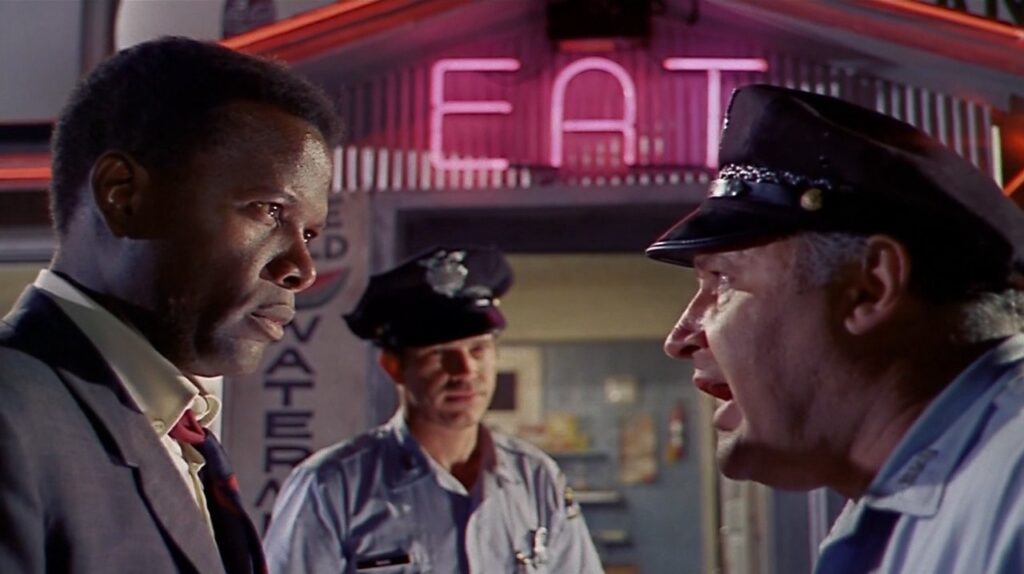
Virgil Tibbs (Sidney Poitier) chega de trem uma
noite em Sparta, Mississippi. Ele mal havia descido do trem quando é conduzido
à delegacia de polícia local como suspeito de assassinato. Mas é claro, pensa o
policial Sam Wood (Warren Oates), pois trata-se de um homem negro estranho com
dinheiro demais na carteira. Tibbs, ele próprio um policial na Pensilvânia,
estava apenas esperando o próximo trem para Memphis, para ir visitar a mãe.
Virgil Tibbs (Sidney Poitier) arrives by train one
night in Sparta, Mississippi. He barely got down the train when he’s taken to
the local police station as suspect for a homicide. Of course, thinks police
officer Sam Wood (Warren Oates), because he’s a foreign black man with too much
money on his wallet. Mr Tibbs, himself a police officer in Pennsylvania, was
just waiting for the next train to Memphis, to visit his mother.
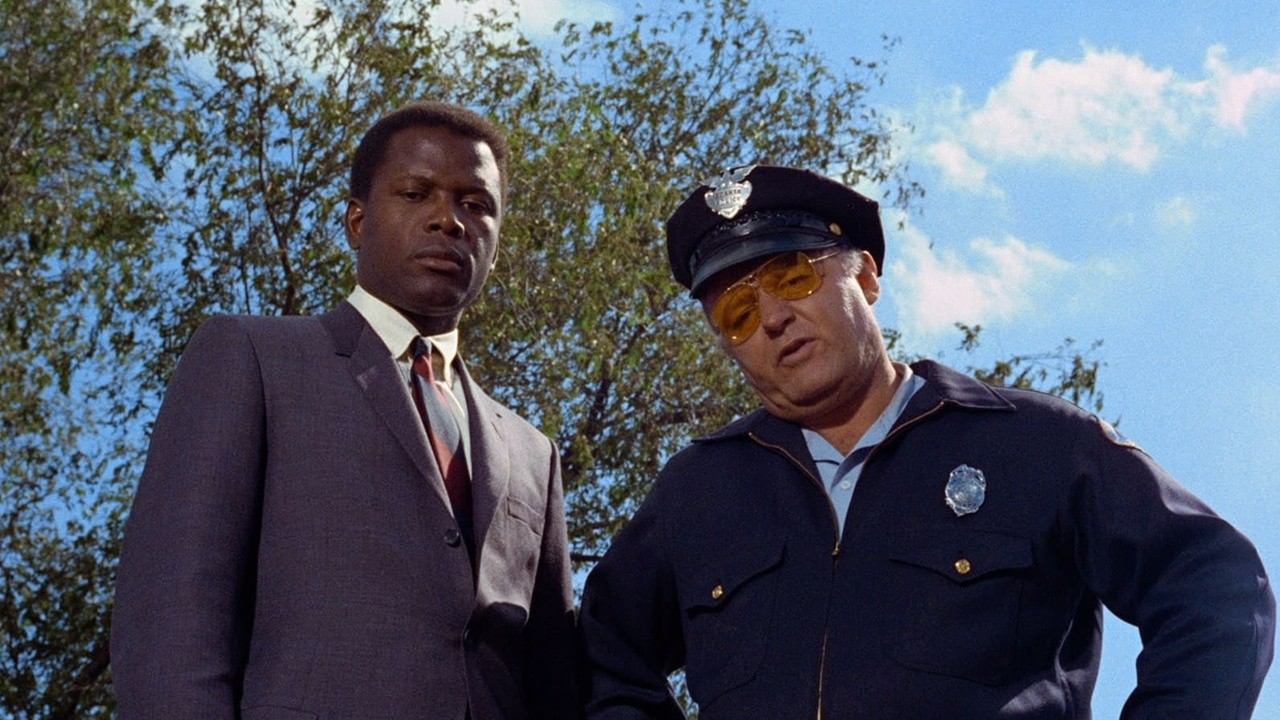
Acontece que Virgil Tibbs é um perito em homicídios,
como seu chefe conta aos policiais que o prenderam. De repente, Tibbs, de
suspeito torna-se investigador do assassinato do Sr Colbert, um homem rico. Ele
trabalhará ao lado do chefe de polícia Bill Gillespie (Rod Steiger), que é o
yin do yang representado por Tibbs.
Virgil Tibbs happens to be an expert in homicides, as
his boss tells the police officers who arrested him. Suddenly, Tibbs goes from
suspect to investigator in the murder of Mr Colbert, a rich man from the town.
He’ll work alongside chief of police Bill Gillespie (Rod Steiger), the yin to
Tibbs’s yang.
Na manhã seguinte, Bill e seus homens encontram
a carteira do Sr Colbert com um homem, Harvey (Scott Wilson), que tentava
escapar para o Arkansas. O suspeito é detido e o caso considerado solucionado
por Bill. Mas não está certo, insiste Tibbs, pois Harvey é canhoto e o Sr
Colbert foi morto por uma pessoa destra. Vendo Tibbs em ação, a Senhora Colbert
(Lee Grant) insiste que ele continue na investigação. Bill não quer trabalhar
com Tibbs, mas este é um “mal” necessário.
The following morning, Bill and his men recover Mr
Colbert’s wallet with a man, Harvey (Scott Wilson), who intended to escape to
Arkansas. The suspect is arrested and the case is considered solved by Bill.
But it isn’t, Tibbs insists, as Harvey is left-handed and Mr Colbert was killed
by a right-handed person. Seeing Tibbs in action, Mrs Colbert (Lee Grant)
insists that he keeps investigating the case. Bill doesn’t want Tibbs working
with him, but the needs Tibbs nevertheless.
Harvey é mais hostil com Tibbs do que com Bill.
Quando os dois ficam presos na mesma cela – porque Tibbs estava “escondendo
evidências” – Harvey pergunta a ele “o que você está fazendo nestas roupas de
homem branco?”. É claro que ninguém seria super simpático estando preso acusado
de um crime, mas é em momentos como este que as pessoas mostram como são de
verdade – e quais os seus preconceitos.
Harvey is more hostile towards Tibbs than Bill. When
the two men share a cell – because Tibbs was “hiding evidence” – Harvey asks
him “what are you doing wearing white men’s clothes?”. Of course nobody would
be fully sympathetic while in a cell accused of a crime, but it’s in moments
like those that the people show their true colors – and prejudices.
O próprio crime pode ter a ver com racismo. O
Sr Colbert foi para Sparta para construir uma fábrica, onde ele empregaria mil
pessoas, metade delas negras. Por enquanto, as únicas pessoas negras na cidade
são o mecânico e sua família e os trabalhadores que colhem algodão na
propriedade do Sr Endicott – ao passar por eles, Bill até mesmo provoca Virgil
dizendo “nada disso foi feito para você, né?”.
The crime itself may be linked to racism. Mr Colbert
went to Sparta to build a factory, where he would hire a thousand men, half of
them black. For now, the only other black people in town are the mechanic and
his family and those picking cotton at Mr Endicott’s property – passing them,
Bill even teases Virgil by saying “nothing of this is for you, uh?”.
Apesar de sua resistência contra Tibbs, Bill
acaba o salvando quando um grupo de jovens delinquentes, dirigindo um carro com
a bandeira confederada na placa, começa a atacar Tibbs num barracão
aparentemente abandonado. Tibbs sofre preconceito em muitos outros momentos,
como quando o atendente do restaurante se recusa a servi-lo, mas estas coisas
são consideradas “normais” por Bill e os demais.
Despite his resistance against Tibbs, Bill ends up
saving him when a group of young troublemakers, driving a car with the
Confederate flag in the plaque, starts attacking Tibbs in a seemingly abandoned
hangar. Tibbs suffers prejudice in many more moments, like when the restaurant
clerk refuses to serve him, but these things are deemed “normal” by Bill and
the others.
A música é do incomparável Quincy Jones, com a
canção de abertura cantada por outra lenda, Ray Charles – esta canção alcançou
o TOP 40 da Billboard quando o filme foi lançado. AS letras das canções são de
Alan e Marilyn Bergman, que se casaram em 1958 e ficaram juntos por 64 anos. “No
Calor da Noite” foi o pontapé inicial para o sucesso do casal no mundo do
cinema, e eles mais tarde ganhariam três Oscars.
The music is by the incomparable Quincy Jones, with
the title song sung by another music legend, Ray Charles – this song made it to
Billboard’s TOP 40 when the movie was released. The lyricists are Alan and
Marilyn Bergman, a couple who married in 1958 and were together for 64 years. “In
the Heat of the Night” was the couple’s breakthrough in the movie industry and
they would go on to win three Oscars.
O editor do filme é Hal Ashby, também
assistente do produtor, e que iria se tornar um diretor de sucesso. Ashby
ganhou o Oscar de Melhor Edição por “No Calor da Noite”, sendo este o
acontecimento que coroou sua parceria com o diretor Norman Jewison, que
convenceu Ashby a se aventurar também na direção. Um dos filmes de maior
sucesso de Ashby na direção foi “Amargo Regresso” (1978).
The editor of the film is Hal Ashby, also assistant to
the producer, who would go on to become a successful director. Ashby won the
Best Editing Oscar for “In the Heat of the Night”, being this the crowning
achievement of his partnership with director Norman Jewison, who convinced Ashby
to try directing as well. One of Ashby’s greatest hits as director was “Coming Home” (1978).
A escolha do elenco foi feita por Lynn Stallmaster.
De acordo com o IMDb, George C. Scott era a primeira escolha para interpretar
Bill Gillespie, mas estava gravando outro filme. A Robert Mitchum foi oferecido
o papel, mas ele o recusou. Rod Steiger, escalado em seu lugar, ganhou o Oscar
de Melhor Ator naquele ano. Por outro lado, a Wikipedia, citando o AFI –
Instituto de Cinema Americano – diz que Poitier e Steiger foram as primeiras
escolhas para os papéis e, sendo velhos amigos, queriam muito trabalhar juntos.
The casting was done by Lynn Stallmaster. According to
IMDb, George C. Scott was the first choice to play Bill Gillespie, but was
working in another movie at the same time. Robert Mitchum was offered the role,
but refused it. Rod Steiger, cast instead, went on to win the Best Actor Oscar
that year. On the other hand, Wikipedia, quoting the American Film Institute,
says that Poitier and Steiger were the first choices for the roles, and, as old
friends, were looking forward to working together.
Eu ouvi numa aula recentemente que os filmes de
Sidney Poitier trazem uma “narrativa de assimilação”, o que quer dizer que seus
personagens são construídos de tal maneira, com tantas qualidades e nenhum
defeito, que as pessoas brancas não têm outra opção a não ser aceitar aquele
homem negro perfeito entre elas. Isso acontece novamente em “No Calor da Noite”
e inclusive foi apontado por catedráticos que Tibbs é uma figura messiânica trazendo
uma comunidade inteira de volta à vida.
I heard in a class recently that Sidney Poitier’s
movies bring an “assimilation narrative”, that is to say that they paint his
characters with so many qualities and no bad characteristic that white people
have no other option than to accept that perfect black man among them. This happens
again in “In the Heat of the Night” and it has even been pointed out by
scholars that Tibbs is a messianic figure bringing a whole community back to
life.
“No Calor da Noite” ganhou cinco Oscars e está
presente em diversas listas da AFI de melhores filmes e personagens – Tibbs é o
número 19 na lista da AFI de 50 heróis mais inspiradores do cinema. O filme é
famoso por uma fala dita de maneira raivosa mas demonstrando muita
personalidade: “They call me MISTER Tibbs!” Mas, como o Oscar provou, este é um
filme tanto sobre Bill Gillespie quanto sobre Virgil Tibbs, pois eles formaram
uma verdadeira dupla dinâmica.
“In the Heat of the Night” won five Oscars and is
cited in several AFI lists of best movies and best characters – Tibbs is the
number 19 in the AFI list of 50 most inspiring screen heroes. The film is
famous for the line with an angry delivery and a lot of personality: “They call
me MISTER Tibbs!”. But, as the Oscar proved, this is as much a film about Bill Gillespie
as it is about Virgil Tibbs, because they were truly a powerful duo.
Charles
Dickens é um dos campeões de adaptações literárias. O site IMDb lista mais de
440 adaptações de obras literárias de Dickens para o cinema e a TV - e Dickens
morreu 25 anos antes da primeira sessão de cinema da história! Seus trabalhos
mais conhecidos, adaptados muitas vezes para as telas, são “Um Conto de Natal”
e “Oliver Twist”. “Um Conto de Natal” vem sendo adaptado desde os primeiros
tempos do cinematógrafo, na década de 1900, enquanto “Oliver Twist” teve
adaptações notáveis em 1922, com Jackie Coogan e o sempre maravilhoso Lon
Chaney, em 1948, nas mãos de David Lean, e em 1968, com um extravagante musical
que faturou vários Oscars.
Charles Dickens
is a champion when it comes to film adaptations of his literary works. He has
over 440 credits on IMDb - even though he passed away 25 years before the first
cinema exhibition. His most well-known
works, translated many times to the screen, are “A Christmas Carol” and “Oliver
Twist”. The first one was adapted since the dawn of cinema, in the 1900s, and
the latter had remarkable adaptations in 1922, with Jackie Coogan and the
always marvelous Lon Chaney, in 1948 by the hands of David Lean, and in 1968,
in a lavish Oscar-winning musical.
Vamos
recapitular a história: Oliver Twist (Mark Lester) é órfão. Depois de ser
vendido para um agente funarário, Oliver foge e vai para Londres. Lá ele conhece
outro menino, chamado de Artful Dodger - algo como “trapaceiro com estilo”-
(Jack Wild), que é parte da gangue de pequenos ladrões chefiados por Fagin (Ron
Moody). Oliver é mandado para as ruas com eles, mas é pego em seu primeiro
roubo. O homem roubado, entretanto, decide levar Oliver para sua casa ao
perceber que o menino não roubou nada. Fagin e o ladrão Bill Sikes (Oliver Reed)
temem que Oliver vá contar ao homem sobre a organização criminosa, por isso
decidem pegar o menino de volta, o que não agrada à namorada de Bill, Nancy
(Shani Wallis).
Let’s
recapitulate the story: Oliver Twist (Mark Lester) is an orphan. After being
sold to an undertaker, Oliver runs away and goes to London. There he meets
another kid, the Artful Dodger (Jack Wild), who is part of old Fagin’s (Ron
Moody) gang of pickpockets. Oliver is sent to the streets with them but is
caught in their first pickpocketing. The robbed man, however, decides to take
Oliver home after seeing he didn’t steal anything. Fagin and thief Bill Sikes (Oliver
Reed) fear that Oliver may tell the nobleman about them, so they decide to
retrieve the boy, something that dissatisfies Bill’s girl Nancy (Shani Wallis).
Com 145
minutos de duração, o filme se arrasta um pouco, com algumas canções que não
ajudam a trama a avançar mas que estão lá para criar um espetáculo. As canções
são boas, mas não pegajosas. A seção de curiosidades do IMDb diz que a
sequência de “Consider Yourself” levou três semanas para ser filmada e a de “Who
Will Buy” levou seis semanas, o que já dá uma ideia dos esforços que foram
dispensados para o filme. Um estúdio inteiro - Shepperton Studios - foi usado
para o filme, com muitos sets imensos construídos e usados ao mesmo tempo. Este
estúdio já havia sido usado para rodar produções como “Dr Fantástico” (1964) e “Lawrence
da Arábia” (1962), mas nunca havia sido ocupado por inteiro por um único filme
até “Oliver!”.
At 145
minutes, the film drags a little, with a couple of songs that don’t advance the
plot but are there for the spectacle. The songs are nice, but not particularly
catchy. The IMDb trivia section says that the “Consider Yourself” number took
three weeks to film and “Who Will Buy” took six weeks, so you can have an idea
of the spectacle that is the film. An entire studio - the Shepperton Studios -
was used for the film, with many huge sets being built and used at the same
time. Shepperton Studios had already been used to film “Dr Strangelove” (1964)
and “Lawrence of Arabia” (1962), but had never been entirely occupied by a
movie production until “Oliver!”.
A
década de 1960 nos Oscars foi dominada por grandes produções e também por
filmes britânicos. “Oliver!” foi o nono musical a ganhar o Oscar de Melhor
Filme - e o quarto a fazê-lo na década de 1960. O filme ganhou cinco outros
Oscars: Melhor Diretor para Carol Reed, Melhor Direção de Arte, Melhor Som,
Melhor Trilha Sonora e um Oscar Honorário para sua coreógrafa. Para além de
suas 11 indicações no Oscar, “Oliver!” já tinha um passado de sucesso nos
palcos: o musical estreou em 1960 em Londres, batendo um recorde com mais de
2600 apresentações, e em 9163 estava na Broadway, onde ganhou três prêmios Tony:
Melhor Música Original, Melhor Condutor ou Diretor Musical e Melhor Design
Cênico.
The 1960s
at the Oscars was dominated by extravagant productions and also British films.
“Oliver!” was the ninth musical to win a Best Picture Oscar - and the fourth to
do so in the 1960s. The movie won five other Academy Awards: Best Director for
Carol Reed, Best Art Direction, Best Sound, Best Score and an Honorary Oscar
for its choreographer. Besides its 11 Oscar nominations, “Oliver!” had already a
successful run as play: the musical opened in 1960 in London, with a record-breaking
run of over 2,600 performances, and in 1963 on Broadway, where it won three
Tony Awards: Best Original Score, Best Conductor or Music Director and Best
Scenic Design.
Ron
Moody havia interpretado Fagin nos palcos de Londres, mas não foi a primeira
opção para interpretar o personagem no filme: Peter O’Toole e Peter Sellers
recusaram o papel e só então Ron Moody foi chamado. Laurence Olivier também foi
considerado para o papel - um papel em que é difícil imaginá-lo. Ron Moody
interpreta Fagin com graça, mas foi Jack Wild, de apenas 15 anos, que se
destacou: sua performance como o Artful Dodger lhe rendeu fama e uma indicação
ao Oscar de Ator Coadjuvante.
Ron Moody
had played the role of Fagin in the London stage, yet he wasn’t the first
choice to play the character in the film: Peter O’Toole and Peter Sellers
turned down the role and only then Moody was called. Laurence Olivier was also
considered for the role - something I can’t imagine him doing. Ron Moody plays
Fagin with playfulness, but it is 15-year-old Jack Wild that was outstanding:
his performance as the Artful Dodger earned him fame and a Best Supporting
Actor nomination at the Oscars.
Muito
mais do que um filme que só interessa àqueles que desejam ver todos os
ganhadores do Oscar de Melhor Filme, “Oliver!” é um filme charmoso e vivaz,
apesar de longo, que agradará a adultos e crianças, e também àqueles que não
conhecem ainda a história de Oliver Twist.
Much more
than a film that only interests Best Picture Oscar completists, “Oliver!” is a
charming, lively yet long film that will please both adults and children, and
even the people who have never heard about the story of Oliver Twist.