} Crítica Retrô: 1939

Tradutor / Translator / Traductor / Übersetzer / Traduttore / Traducteur / 翻訳者 / переводчик

Showing posts with label 1939. Show all posts

Tuesday, October 29, 2024

Variações sobre um mesmo tema: Adeus, Mr Chips (1939 e 1969)


Variations on the same theme: Goodbye, Mr Chips (1939 and 1969)


No dia 15 de outubro o Dia dos Professores é celebrado no Brasil. Eu fui moldada pelos professores que eu tive. Não apenas os que me deram aula, mas especialmente por minha mãe, que esteve em sala de aula por 38 anos ensinando matemática. É por causa dela que eu amo filmes sobre professores. Desta vez trago duas versões da mesma história, filmadas com 30 anos de diferença, sobre um mestre inspirador.


On October 15th, Teacher’s Day is celebrated in Brazil. I’ve been greatly shaped by the teachers I had. Not only the ones who taught me classes, but especially my mother, who was inside classrooms teaching math for 38 years. That’s why I love movies about teachers. This time I bring two versions of the same story, filmed 30 years apart, about an inspiring master.

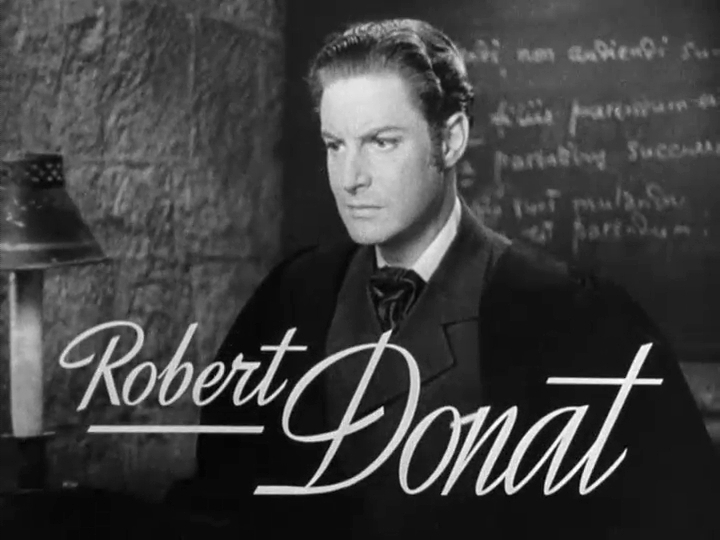
Em 1939, Charles Chipping (Robert Donat) tem 83 anos e leciona há impressionantes 63 anos. Impossibilitado a ir a uma aula inaugural pela primeira vez por causa de uma gripe, ele rememora sua trajetória. Em seu primeiro dia, foi-lhe pregada uma peça por seus alunos e teve problemas para manter a ordem. O aluno mais difícil de controlar é Colley (Terry Kilburn).


In 1939, Charles Chipping (Robert Donat) is 83 years old and has been teaching for impressive 63 years. Unable to go to the inaugural class for the first time due to a cold, he remembers his trajectory. On his first day, he was pranked by his students and had a rough time mantaining peace and order. The hardest student to control is Colley (Terry Kilburn).

Anos depois, já um homem de meia-idade mas ainda um professor impopular, o Sr Chipping viaja para as montanhas com um colega de trabalho e lá conhece Kathy Ellis (Greer Garson em seu primeiro papel no cinema). Eles se encontram novamente em Viena, se divertem muito e se casam. Ela dá a ele o apelido “Chips” e começa a convidar os alunos dele para tomarem chá na cada deles. De repente Chips se torna um professor popular e até conta piadas na sala de aula! Os tempos mudam, a Escola Brookfield para garotos também, mas Chips não muda os tempos – então decidem aposentá-lo contra a vontade dos alunos.


Years later, already a middle-aged man but still an unpopular teacher, Mr Chipping travels to the mountains with a colleague and there he meets Kathy Ellis (Greer Garson in her film debut). They run into each other again in Vienna, have a wonderful time together and get married. She gives him the nickname “Chips” and start hosting teapartys in their residence for his students. Suddenly Chips becomes a popular teacher and even tells jokes in class! Times change, the Brookfield School for Boys too, but Chips doesn’t change with the times – so they decide to retire him against the students’ will.

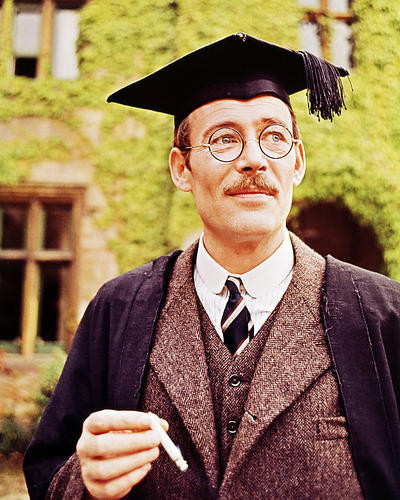
Em 1969 somos informados de que nossa história começa em 1924. Arthur Chipping (Peter O’Toole) é um professor impopular na Escola Brookfield. De férias em Pompeia, ele volta a encontrar a estrela de teatro musical Katherine Bridges (Petula Clark) e eles se divertem muito juntos. De volta a Londres, eles se casam. No primeiro encontro ela já o havia apelidado de “Chips”.


In 1969 we’re informed that our story begins in 1924. Arthur Chipping (Peter O’Toole) is an unpopular teacher at the Brookfield School. While on vacation in Pompeii, he meets again the musical theater actress Katherine Bridges (Petula Clark) and have a wonderful time together. Back in London, they get married. On their first meeting she had already nicknamed him “Mr Chips”.

Por volta dos 15 minutos de projeção temos uma baita surpresa quando o Sr Chips começa a cantar. Ele canta sobre a passagem do tempo e sobre como o mundo ficou mais colorido depois que ele se casou com Kathy. Petula Clark é quem mais canta neste filme que eu não esperava ser um musical, mas Peter O’Toole foi ousado e cantou sem usar dublagem.


At around the 15-minute mark we’re greatly surprised when Mr Chips starts to sing. He sings about the passage of time and how the world got more colorful after he married Kathy. Sure, Petula Clark does the majority of the singing in this film I wasn’t expecting to be a musical, but Peter O’Toole was fierce and did his own singing.

Em 1939, o Sr Chips é Chefe do Departamento na escola durante a Primeira Guerra Mundial. Em 1969, ele vivencia a Segunda Guerra Mundial, em meio à possibilidade de ataques aéreos à escola. Em ambas as versões o Sr Chips sofre diversas perdas durante as guerras, ficando enlutado por causa de pessoas queridas.


In 1939, Mr Chips served as a headmaster of the school during World War I. In 1969, he goes through World War II, with the possibility of airplane attacks to the school. In both versions Mr Chips faces several losses during the wars, grieving those he loved.

Além do período em que se passa a história, a maior mudança de uma versão para a outra foi Kathy. Em 1939 ela tem pouco tempo em cena mas é fundamental para fazer do Sr Chips um professor e uma pessoa mais afável. Em 1969, com uma profissão e uma reputação, ela é co-protagonista e o casamento dura muito mais.


Besides the time frame, the main change from one version to the other was Kathy. In 1939 she is given little screen time but is pivotal to make Mr Chips a more likeable teacher and person. In 1969, with a profession and a reputation, she is a co-lead and her marriage lasts for a much longer time.

A versão de 1939 agradeceu nos créditos a ajuda de Sidney Franklin – diretor não-creditado do filme – e a inspiração fornecida pelo finado Irving Thalberg. O filme foi produzido por Victor Saville, que produziu alguns dos primeiros trabalhos de um jovem desconhecido chamado Alfred Hitchcock. Assim como Hitch, Saville também dirigiu filmes de suspense na Inglaterra no começo dos anos 1930. De acordo com o IMDb, ele produziu 39 filmes entre 1923 e 1962.


The 1939 version acknowledged in the credits the help of Sidney Franklin – uncredited diretor of the movie – and the inspiration of the late Irving Thalberg. The movie was produced by Victor Saville, who produced some of the early films by a then-unknown named Alfred Hitchcock. Like Hitch, Saville also directed thrillers in England in the early 1930s. According to IMDb he produced 39 movies between 1923 and 1962.

A versão de 1969 foi dirigida por Herbert Ross e produzida por Arthur Jacobs, que havia recém produzido “O Fabuloso Dr Dolittle” (1967). Esta foi a estreia de Ross na direção – ele antes trabalhava como coreógrafo. Jacobs queria Rex Harrison, que fez o papel de Dolittle, para ser o Sr Chips, mas ele recusou o papel. Outros nomes considerados foram Richard Burton, Christopher Plummer, Peter Sellers, Albert Finney, Richard Harris e Paul Scofield.


The 1969 version was directed by Herbert Ross and produced by Arthur Jacobs, who had just produced “Dr Dolittle” (1967). This is Ross’ directing debut – he had been working as a choreographer before. Jacobs wanted Rex Harrison, who played the part of Dolittle, to be Mr Chips, but he refused. Other names considered were Richard Burton, Christopher Plummer, Peter Sellers, Albert Finney, Richard Harris and Paul Scofield.

Robert Donat ganhou seu Oscar de Melhor Ator por “Adeus, Sr Chips” mas não viveu até os 83 anos como seu personagem. Na verdade, ele tinha apenas 53 anos quando morreu, depois de completar “A Moradada Sexta Felicidade” (1958). Por sua vez, Peter O’Toole foi indicado a um Oscar por sua performance como o Sr Chips e viveu até os 81 anos. O’Toole foi indicado para oito Oscars, mas nunca ganhou o prêmio.


Robert Donat won his Best Actor Oscar for “Goodbye, Mr Chips” but never lived to be 83 like his character. In fact, he died at only 53, after completing “The Inn of the Sixth Happiness” (1958). On the other hand, Peter O’Toole was nominated for an Oscar for his performance as Mr Chips and lived to be 81. O’Toole was nominated for eight Oscars, but never won the award.

Além da minha mãe, essa dupla de filmes me fez lembrar outro professor de matemática: Júlio César de Mello e Souza, conhecido pelo seu pseudônimo Malba Tahan. Um professor e também escritor de sucesso, ele faleceu poucas horas depois de dar aula. Seu aniversário, seis de maio, é celebrado como Dia Nacional da Matemática.


Besides my mother, the duo of movies reminded me of another math teacher: Júlio César de Mello e Souza, known for his pseudonym Malba Tahan. A teacher as well as a successful wirter, he died mere hours after teaching a class. His birthday, May 6th, is celebrated as National Math Day.

Em seu discurso de aposentadoria o Sr Chips conta a seus alunos que ele pode ter dificuldades de reconhece-los no futuro porque na sua cabeça eles permanecem jovens. Ele também diz que é mentira que ele nunca teve filhos: ele teve milhares deles! Quando perguntada sobre isso, minha mãe não chegou a considerar seus alunos como filhos. Eu, sua única filha, fiquei aliviada, mas ao mesmo tempo sei como ela é amada e lembrada por seus alunos por causa do jeito como ela é tratada quando encontramos algum deles. Como o Sr Chips, ela deixou seu legado.


In his departing speech Mr Chips tells his students that he may have a hard time recognizing them when they grow up because in his mind they remain young boys. He also says that it’s a lie that he didn’t have kids: he had thousands of boys! When asked about that, my mother didn’t go as far as considering her students as her children. I, as her only child, am relieved, but at the same time I know how much she is loved and remembered by her students by the way she is treated whenever we meet one of them. Like Mr Chips, she left her legacy.


O veredicto: a versão de 1939 tem 40 minutos a mais, porém é bem mais emocionante que o remake!


The verdict: the 1939 version is 40 minutes shorter but has a lot more heart than the remake!


Saturday, September 24, 2022

As Aventuras Cinematográficas de Huckleberry Finn

The Cinematic Adventures of Huckleberry Finn

De acordo com o IMDb, a novela de Mark Twain “As Aventuras de Huckleberry Finn” já foi adaptada para o cinema e a TV mais de 20 vezes, começando com “Huck and Tom” – com Jack Pickford como Tom Sawyer – em 1918. Eu escolhi assistir e resenhar três destas adaptações, todas feitas antes de 1940, e comparar com o livro, que eu li há alguns anos. Por isso este post também é por si só, uma aventura – literária e cinematográfica.

According to IMDb, Mark Twain’ novel “The Adventures of Huckleberry Finn” has been adapted to movies and TV shows, so far, more than 20 times, starting with “Huck and Tom” – that had Jack Pickford as Tom Sawyer – in 1918. I chose to watch and review three of those adaptations, all made before 1940, and compare with the book that I have read a few years ago. That’s why this post is, in itself, an adventure – a literary and cinematographic adventure, that is.

O livro, publicado em 1884, conta as muitas aventuras de Huckleberry Finn, camarada de Tom Sawyer, junto ao escravo em fuga Jim ao longo do rio Mississippi. Antes que a aventura comece, Huck é sequestrado pelo pai, um alcoólatra, que quer o dinheiro que Huck ganhou no livro anterior. Todas as versões que eu vi seguem esta história.

The book, published in 1884, tells the many adventures of Huckleberry Finn, Tom Sawyer’s comrade, alongside the runaway slave Jim through the Mississippi River. Before the adventures start, Huck is kidnapped by his alcoholic father, who wants the money Huck got in the previous book. All versions I’ve watched follow this plot.

Encontrei no Internet Archive apenas a primeira metade da versão de 1920, um filme dirigido por William Desmond Taylor que se destaca por ter sido a primeira adaptação do livro solo para o cinema. Aqui, Huck é interpretado por Lewis Sargent, Tom por Gordon Griffith e Jim por George Reed. Esta primeira metade mostra como Huck foi sequestrado por seu pai alcoólatra e como escapou do cativeiro, e termina quando ele encontra Jim, que havia sido vendido para um homem mau e também escapou. Um ponto importante é que a senhora Watson maltrata Jim, se transformando ela própria em um tipo de vilã.

I could find on the Internet Archive only the first half of the 1920 version, a film directed by William Desmond Taylor that was important for being the very first adaptation exclusively of the novel to the big screen. Huck here is played by Lewis Sargent, Tom by Gordon Griffith and Jim by George Reed. This first half shows how Huck was kidnapped by his alcoholic father and escaped captivity, and it ends when he meets Jim, who had been sold to a bad man and also escaped. Something that calls the attention is how harsh Mrs Watson treats Jim, becoming a villainess in her own right.

A versão de 1931 da Paramount, intitulada no Brasil “Mocidade Feliz”, tem Jackie Coogan como Tom Sawyer, Junior Durkin como Huck e Clarence Muse como Jim. Dirigida por Norman Taurog, esta versão toma um bom tempo mostrando as desventuras de Huck na escola antes do sequestro. Jim e Tom resgatam Huck e os três partem para viver aventuras – afinal, não dava para desperdiçar o poder do nome de Jackie Coogan, ainda um grande astro 10 anos após ser descoberto por Chaplin em “O Garoto”. Coogan, Durkin e a maioria do elenco repetem os papéis que interpretaram em “Aventuras de Tom Sawyer” em 1930. Já que Tom é parte da aventura, muitas mudanças foram feitas na história do livro, e apenas uma história é contada: dois homens que dizem ser um Duque e um Rei fingem ser os tios estrangeiros de duas garotas órfãs. Mesmo assim, esta versão conta com um bom elenco, com Coogan, Durkin (que tragicamente morreu poucos anos depois em um acidente de carro), Jane Darwell e Eugene Pallette.

The 1931 version, from Paramount Pictures, has Jackie Coogan as Tom Sawyer, Junior Durkin as Huck and Clarence Muse as Jim. Directed by Norman Taurog, this version takes a good time showing us Huck’s misadventures at school before his kidnapping. Jim and Tom rescue Huck and the three go on to live adventures - after all, you can’t waste Jackie Coogan’s star power, still strong 10 years after his discovery in Chaplin’s “The Kid”. Coogan, Durkin and most of the cast are repeating the roles they played in “Tom Sawyer” in 1930. Since Tom is part of the whole adventure, a lot of changes were made from the book, and only one story is told: two men who say they are a Duke and a King pose as the foreign uncles for two orphaned girls. Nevertheless, this version brings a good cast, with Coogan, Durkin (who tragically died only a few years later in a car crash), Jane Darwell and Eugene Pallette.

E em 1939 a MGM tinha o astro perfeito para ser o protagonista de “As Aventuras de Huck”: Mickey Rooney. Com Rex Ingram como Jim e nada de Tom Sawyer à vista, Rooney é brilhante como o menino-herói. Nesta versão, Huck não é sequestrado pelo pai, mas aceita ir com ele pois Huck está prestes a desapontar a viúva Douglass (Elizabeth Risdon) e a senhorita Wtason (Clara Blandick), que estavam tomando conta dele. Quando Huck deixa o pai, Jim é falsamente acusado de assassinar o garoto, e os dois descem o Mississippi, até que encontram o Rei e o Duque, que primeiro fazem um show e depois fingem ser os tios das órfãs. Este filme tem algumas escolhas estranhas – se vistas com os olhos de hoje – como mostrar como algo positivo o fato de Huck fumar cachimbo e todo um discurso de Huck sobre Jim ser escravo porque foi esse o destino dado a ele por Deus. Há também dois momentos em que Mickey Rooney se veste de menina.

And in 1939 MGM had the perfect star to be the lead of “The Adventures of Huckleberry Finn”: Mickey Rooney. With Rex Ingram as Jim and no Tom Sawyer in sight, Rooney is outstanding as the boy-hero. In this version, Huck isn’t kidnapped by his father, but agrees to go with him as he’s about to disappoint the Widow Douglass (Elizabeth Risdon) and Miss Watson (Clara Blandick), who had been taking care of him. When Huck escapes his father, Jim is falsely accused of murdering the boy, and the two go down the Mississippi, until they meet the King and the Duke, who first put on a show and later impersonate the orphans’ uncles. This movie has some odd choices – as seen nowadays – like showing Huck smoking a pipe as something nice and a whole speech by Huck about Jim being a slave because this was what God intended for him. There are also two moments in which Mickey Rooney dresses in drag.

Houve uma adaptação da história para o programa de TV Climax em 1955, na qual Jim foi completamente apagado. E então, no final dos anos 50, um cão azul andarilho que cantava Querida Clementina foi criado, e batizado de Dom Pixote – Huckleberry Hound no original. William Hanna e Joseph Barbera quase batizaram Zé Colmeia de Huckleberry Bear, mas mudaram de ideia no último minuto. Além do estilo de vida aventureiro, Dom Pixote tem pouco em comum com Huckleberry Finn.

There was an adaptation of the story for the TV show Climax in 1955, in which Jim was completely erased. And then, in the late 1950s, a blue dog wandering and singing Oh My Darling Clementine was created, and baptized Huckleberry Hound. William Hanna and Joseph Barbera almosted baptized Yogi Bear as Huckleberry Bear, but changed their minds in the last minute. Other than his lifestyle, Huckleberry Hound has little in common with Huckleberry Finn.

E então outras adaptações foram feitas. Houve uma em 1960 dirigida por Michael Curtiz (abaixo), com Buster Keaton em um pequeno papel. J. Lee Thompson dirigiu uma versão em 1974 para a tela grande  e no ano seguinte uma adaptação foi feita para a TV, com Ron Howard como Huck. A versão mais recente da história é um curta-metragem de 2020, mas uma nova adaptação para o cinema já está em pré-produção!

And then other adaptations were made. There was one in 1960 directed by Michael Curtiz (below), with Buster Keaton in a small role. J. Lee Thompson directed a version in 1974 for the big screen and the next year a version was made for the small screen, with Ron Howard as Huck. The most recent version of the story is a short film from 2020 and there is another adaptation in the works!

O relacionamento e a camaradagem entre Huck e Jim é uma das coisas mais importantes no livro, e foi traduzida para as telas de maneiras diferentes. Não houve momentos suficientes de Huck-e-Jim no fragmento de 1920 para que eu pudesse ver como os dois personagens interagiam. Na versão de 1931, a presença de Tom Sawyer por todo o filme eclipsou a relacão de Jim e Huck. Há uma verdadeira amizade retratada no filme de 1939, mesmo que o roteiro reforce que Jim não é uma pessoa muito esperta, sendo inclusive infantil algumas vezes.

The rapport and the camaraderie between Huck and Jim is one of the most important things in the book, and it was translated to the screen in different ways. There wasn’t enough of Huck-and-Jim moments in the 1920 fragment for us to see how the two characters interacted. In the 1931 version, the presence of Tom Sawyer all through the movie eclipsed Jim and Huck’s relationship. There is a true friendship portrayed in the 1939 film, even though they reinforce that Jim is a not-so-bright person, even childish at times.

Eu entendo que “As Aventuras de Huckleberry Finn” é um clássico norte-americano e leitura obrigatória em muitas escolas  - mesmo o livro tendo sido envolvido em polêmicas e até mesmo banido em alguns lugares! Eu li o livro já adulta, tentando agigantar meus horizontes quando o assunto é literatura mundial. Eu gostei muito do livro e agora, dando o veredicto sobre as duas adaptações e meia que vi, tenho que dizer que a versão de 1939 com Mickey Rooney é a melhor delas. E a MGM faz magia novamente!

I understand that “The Adventures of Huckleberry Finn” is an American classic and mandatory reading in many schools – even though the book has been involved in polemics and even banned in some places! I read the novel when I was already an adult, broadening my understanding of world literature. I really enjoyed the novel and now, giving the verdict about the two-and-a-half adataptations I watched, I have to say that the 1939 version with Mickey Rooney is the best of them. MGM does it again, folks!

This is my contribution to the Classic Literature in Film blogathon, hosted by Paul at Silver Screen Classics.

Saturday, June 13, 2020

Sherlock Holmes (1939) / The Adventures of Sherlock Holmes (1939)

De acordo com o Livro Guinness dos Recordes, Sherlock Holmes é “o personagem literário humano com mais aparições no cinema e na TV”. Em 2012, quando ele foi reconhecido pelo Guinness, havia 254 filmes e séries envolvendo Sherlock, e isso inclui tanto as adaptações diretas do trabalho de Conan Doyle quanto paródias. Um dos atores mais inesquecíveis a interpretar Holmes foi Basil Rathbone, que encarnou o detetive em 14 filmes, começando em 1939, quando “O Cão dos Baskervilles” e “Sherlock Holmes” estrearam.

According to the Guinness Book, Sherlock Holmes is “the most portrayed literary human character in film & TV”. In 2012, when he was awarded by the Guinness, there had been 254 films and TV shows involving Holmes, no matter if they were direct adaptations of Conan Doyle's work or parodies. One of the most unforgettable actors to portray Holmes was Basil Rathbone, who played the detective 14 times, beginning with  in 1939, when both “The Hound of the Baskervilles” and “The Adventures of Sherlock Holmes” were released.

Descrito como “uma incursão no terror”, “O Cão dos Baskervilles” traz Sherlock (Rathbone) e o doutor Watson (Nigel Bruce) ao encontro do Sir Henry Baskerville (Richard Greene), um herdeiro que está prestes a se mudar para uma mansão em Devonshire após a morte do antigo proprietário. Dr Mortimer (Lionel Atwill) tem certeza de que o tal antigo proprietário, Sir Charles, foi assassinado por um cão colossal, por isso ele contratou Sherlock. Esta primeira aventura foi um grande sucesso, e o segundo filme da dupla chegou aos cinemas em menos de seis meses.

Described as “an incursion in terror”, “The Hound of the Baskervilles” brings Sherlock (Rathbone) and Doctor Watson (Nigel Bruce) to meet Sir Henry Baskerville (Richard Greene), a heir who is about to move to a mansion in Devonshire after the previous owner was found dead. Dr. Mortimer (Lionel Atwill) is certain that the former owner, Sir Charles, was murdered by a canine beast, that's why he hired Holmes. This first adventure was so successful that the second film of the duo hit the theaters within six months.  

Em “Sherlock Holmes”, o nefário Professor Moriarty (George Zucco) acaba de ser absolvido em um julgamento. Seu inimigo, Sherlock Holmes (Rathbone) chega tarde ao tribunal com algumas novas provas, mas Moriarty já está livre. Holmes e Moriarty conversam amigavelmente e dividem uma carruagem ao sair do prédio, mas prometem ficar de olho um no outro. Em casa, Moriarty cuida de suas flores e arquiteta um novo plano infalível para cometer o crime do século.

In “The Adventures of Sherlock Holmes”, the nefarious Professor Moriarty (George Zucco) has just been found not guilty of a few crimes. His nemesis, Sherlock Holmes (Rathbone) arrives late at the court with some new evidence, but Moriarty is already free. Holmes and Moriarty amiably chat and share a carriage as they leave the building, but they promise to keep an eye on each other. At home, Moriarty takes care of his flowers and plots a new infallible plan to commit the crime of the century.

Em casa, Sherlock recebe uma carta e mais tarde a visita de Ann Brandon (Ida Lupino), que acredita que seu irmão recebeu uma ameaça de morte através de um desenho enigmático. Quando Ann e Sherlock estão conversando, Jerrold Hunter (Alan Marshal), noivo e advogado de Ann, chega para dizer que ela está exagerando. Holmes decide investigar o caso mesmo assim – exatamente como Moriarty imaginou que ele faria. Enquanto Sherlock se disfarça para proteger Ann, Watson se torna guardião das joias da Coroa.

At home, Sherlock receives a letter and later the visit of Ann Brandon (Ida Lupino), who believes her brother received a death threat through an enigmatic drawing. When Ann and Sherlock are talking, Jerrold Hunter (Alan Marshal), Ann’s fiancé and solicitor, arrives to say she’s overreacting. Holmes decides to take the case anyway – just like Moriarty imagined he’d do. While Holmes even disguises himself in order to protect Ann, Watson becomes a guardian of the Crown Jewels.

Essa história parece um pouco familiar? Ela já havia sido filmada antes: em 1916, com William Gillette, que escreveu a peça “Sherlock Holmes” baseado nas obras de Conan Doyle, e em 1922, com John Barrymore como Sherlock. Bem, não foi esta história em particular que já havia sido filmada antes: o filme de 1939 faz algumas modificações, como a adição dos personagens Ann Brandon e Jerrold Hunter, e também a trama com as joias da Coroa.

Does this story sound a bit familiar? It had already been filmed before: in 1916, with William Gillette, who wrote the play “Sherlock Holmes” based on Conan Doyle’s works, and in 1922, with John Barrymore as Holmes. Well, it wasn’t this story in particular that was filmed before: the 1939 movie makes a few changes, like adding the characters Ann Brandon and Jerrold Hunter, and also the plot involving the Crown Jewels.

Nestes dois filmes, Watson serve mais como alívio cômico, sendo um homem simplório sempre pasmo com as deduções de Sherlock – e, em “Sherlock Holmes”, ele inclusive tem ciúmes de um garoto esperto, Billy (Terry Kilburn). Watson já foi de tudo no cânone de Sherlock: originalmente o narrador das aventuras, ele já foi o melhor amigo, o ajudante, o alívio cômico e até o interesse amoroso. Se você viu a série Sherlock da BBC, você sabe que até a senhora Hudson insinua que Sherlock e Watson são um casal.

In these two films, Watson is more like comic relief, being a silly man always baffled by Sherlock's deductions – and, in “The Adventures of Sherlock Holmes”, even jealous of a clever child, Billy (Terry Kilburn). Watson has been all kinds of things in the Sherlock canon: originally the narrator of the adventures, he has been the best friend, the sidekick, the comic relief and even the romantic interest. If you have seen the BBC series Sherlock, you know even Mrs Hudson insinuates that Sherlock and Watson are a couple.

Estes dois filmes de Sherlock de 1939 foram produzidos por Darryl Zanuck na 20th Century Fox e têm cerca de 80 minutos de duração cada um. Ambas as histórias se passam no final do século XIX, quando Conan Doyle escreveu suas obras, e ambos os filmes têm um design de produção incrível. Entretanto, havia um problema: estes filmes eram caros demais! Por isso a Fox dispensou Holmes e Watson e os outros 12 filmes com Rathbone e Bruce interpretando os personagens foram produzidos pela Universal e ambientados nos tempos modernos.

These two Sherlock films from 1939 were produced by Darryl Zanuck at 20th Century Fox and run at about 80 minutes each. Both stories are set in the late 19th century, when Conan Doyle wrote the stories, and both movies have great production design. However, there was a problem: those films were too expensive! That's why Fox ditched Holmes and Watson and the other 12 films with Rathbone and Bruce playing the characters were produced at Universal and set in modern times.

“Sherlock Holmes” não foi o primeiro filme a usar a frase “Elementar, meu caro Watson” – “A Volta de Sherlock Holmes” de 1929 foi o primeiro – mas foi este filme que popularizou a frase. Ao contrário do que muitos acreditam, a frase não existe em nenhuma história de Conan Doyle: é uma invenção do cinema.

“The Adventures of Sherlock Holmes” was not the first film to use the quote “Elementary, my dear Watson” – “The Return of Sherlock Holmes” from 1929 introduced it – but it was the movie that made the quote popular. Contrary to popular belief, the quote can’t be found in Conan Doyle’s work: it is a purely cinematic invention.

Basil Rathbone não encabeçava sequer os créditos em “O Cão dos Baskervilles” – o nome de Richard Greene aparecia primeiro porque era uma estrela mais conhecida em 1939. Até Nigel Bruce tinha mais tempo em cena do que Rathbone no primeiro filme! Mas Basil Rathbone, com charme, sabedoria, um violino, um cachimbo e um robe – que foram abandonados nos filmes feitos na Universal – deixou sua marca como Sherlock Holmes, e sempre será lembrado como um dos atores que melhor personificou o famoso detetive.

Basil Rathbone wasn’t even first billed in “The Hound of the Baskervilles” – Richard Greene was, because he was a more established star in 1939. Even Nigel Bruce had more screen time than Rathbone in the first film! But Basil Rathbone, with charm, wittiness, a fiddle, a pipe and a robe – that were abandoned in the movies made by Universal – left his mark as Sherlock Holmes, and will be forever remembered for being one of the actors who perfectly embodied the famous detective.

This is my contribution to The Suave Swordsman: Basil Rathbone blogathon, hosted by Gabriela at Pale Writer.


Thursday, September 5, 2019

A Besta de Berlim (1939) / Hitler – Beast of Berlin (1939)


Alguns dias atrás lembramos os 80 anos desde o começo da Segunda Guerra Mundial. O filme de baixo orçamento “A Besta de Berlim” estreou um mês após o início da guerra. Trata-se de um artefato histórico muito curioso, e é também interessante por trazer Alan Ladd em um papel secundário. A história por trás do filme também mostra como simpatizantes do nazismo agiam nos EUA – não no sentido de colaboração total com o nazismo, mas, mesmo assim, como pessoas que representavam algum perigo para a liberdade de expressão.

A few days ago we remembered the 80 years since World War II began. The B-movie “Hitler – Beast of Berlin” was released a month after the war started. It’s a very curious historical artifact, and it’s also of interest because it brings Alan Ladd in a secondary role. The film’s background also shows how Nazi sympathizers have walked in America – not in the sense of full-on collaboration with Nazism, but as dangerous people nonetheless.


“A Besta de Berlim” – por vezes exibido com o título “Hell’s Devils” – é a história de um grupo da Resistência na Alemanha. O filme começa com imagens reais de desfiles dos nazistas e corta para um desfile encenado, no qual o povo faz a saudação nazista e, quando o desfile acaba, balança a cabeça, consternado – o povo não concorda com a ideologia que está no poder, mas fingir obediência é a única coisa que o povo pode fazer para sobreviver.

“Hitler – Beast of Berlin” - sometimes also presented as “Hell's Devils” - is the story of a Resistance group in Germany. The film starts with real footage of Nazi parades and cuts to a staged parade, in which the people give the Nazi salute and shake their heads in disbelief once the parade is over – they do not agree with the ideology in power, but pretending to obey is what they can do to survive.


Karl (Alan Ladd) e dois amigos fazem a saudação nazista para dois oficiais da SS que entram no restaurante em que eles estão. Um dos amigos inclusive fala alto sobre “queimar museus”, o que agrada aos dois oficiais. Mas não se engane: os três amigos são parte de um movimento pacifista de resistência.

Karl (Alan Ladd) and his two fellows also give the Nazi salute when two SS officers enter the restaurant they're in. One of the friends even talks out loud about “burning museums”, which delights the two officers. But don't be mistaken: the three friends are part of an underground pacifistic movement.


Karl é o mais novo membro do movimento – e está com medo. Ele acredita que Hitler é perigoso e um dia irá começar uma guerra, mas ele olha para o passado e percebe que nenhum reinado de terror durou muito, então se pergunta: por que eles devem arriscar suas vidas distribuindo propaganda antinazista? Hitler cairá um dia, ele diz. Ele tem de ser lembrado de que seus amigos não estão sozinhos combatendo o bom combate – há muitos núcleos de resistência que, juntos, podem fazer a diferença.

Karl is the newest member in the movement – and he's afraid. He believes that Hitler is dangerous and will eventually initiate a war, but he looks at the past and sees that no reign of horror lasted forever, so why risk their lives distributing propaganda? Hitler will fall some day, he says. He has to be reminded that they are not alone in this good fight – there are many underground groups that, together, can make a difference.


Eles imprimem um folheto dizendo que “o mundo inteiro está horrorizado com as brutalidades que vêm acontecendo nessa nação que já foi civilizada”. Bem, a palavra certa não é “horrorizado”: na verdade, os outros países eram ou coniventes ou indiferentes com as atrocidades que já aconteciam na Alemanha, com poucos grupos de pessoas preocupados de fato.
 
They print a leaflet saying that “the entire world is horrified by the brutalities that have been visited upon our once civilized nation.” Well, the word here is not “horrified”: in fact, the other countries were either accomplice or indifferent to the atrocities already going on in German, with few groups of people really concerned.


A técnica do grupo é usar o vento para distribuir o panfleto, mas dois oficiais da SS percebem e confiscam os panfletos de todos os cidadãos que porventura os acham no chão. Mas eles não podem censurar tudo: em lojas e ferrovias, as pessoas estão reclamando da inflação e das condições de trabalho, no rádio e na igreja as pessoas estão ouvindo mensagens pacifistas.

The group's technique is to use the wind to distribute the leaflet, but two SS officers see it and start confiscating the leaflet from all citizens that catch one from the floor. But they can't censor everything: in shops and railroads, people are complaining about the inflation and the work conditions, in the radio and in church people are listening to pacifist messages.


Na resistência há homens de todas as idades, uma mulher, Anna (Greta Granstedt) e até mesmo um padre. Puxa, um dos membros do grupo está infiltrado na Gestapo! Anna é uma mulher esperta: mesmo namorando Karl, ele se recusa a se casar porque “na nova Alemanha, é para isso que as mulheres servem: para ter filhos”, e ela sabe que pode muito mais que isso atuando na resistência. Hans (Roland Drew), o líder do grupo, vive um dilema: ele está dividido entre o trabalho com a resistência e a possibilidade de sair do país com a esposa grávida, Elsa (Steffi Duna).

In the underground there are men of all ages, one woman, Anna (Greta Granstedt) and even a priest. Damn, one of the members of the group is infiltrated in the Gestapo! Anna is a smart woman: even though she dates Karl, she refuses to marry because “in the new Germany, that's what women are for: having children” and she knows she can do much more working with the resistance. Hans (Roland Drew), the leader of the group, lives a dilemma: he is torn between working with the resistance and leaving the country with his pregnant wife, Elsa (Steffi Duna).


Schultz (John Ellis), outro membro da resistência, diz: “campos de concentração estão cheios de pessoas como nós”, e nós somos lembrados de que os primeiros campos de concentração foram construídos em 1933 para presos políticos. E, ao contrário do que se acredita, o mundo já sabia dos campos de concentração antes do final da guerra, porque aqui temos um filme norte-americano de 1939 falando sobre eles e recriando o interior de um deles.

Schultz (John Ellis), another resistance member, says: “concentration camps are full of people like us”, and we're reminded that the first concentration camps were built in 1933 for political prisoners. And, contrary to popular belief, the world did know about concentration camps before the end of the war, because here it is a 1939 American film talking about them and recreating the interiors of one.


Oficiais da SS e da Gestapo são retratados como pessoas rudes, sádicas e depravadas – como eram de fato. Eles torturam os presos para que eles confessem que são “comunistas”, e riem dos homens que são largados quase sem vida nas prisões. Um deles diz ao Padre Pommer (Friederick Giermann) que não há Deus, é Hitler quem toma conta deles.

SS and Gestapo officers are shown as rude, sadistic and depraved – as it should be. They torture the people they arrest, in order to make them confess that they're “communists”, and laugh at the men who are left nearly lifeless in prison cells. One of them says to Father Pommer (Friederick Giermann) that there is no God, Hitler is the one taking care of them.


Foram necessários 10 anos para que Alan Ladd estourasse em Hollywood: ele começou como figurante em 1932, e conseguiu notoriedade apenas em 1942 com “Capitulou Sorrindo”. Antes disso, ele ficou muitos anos fazendo papéis sem receber créditos e até interpretou um animador da Disney na parte em live-action de “O Dragão Relutante” (1941). Em “A Besta de Berlim”, Ladd tem um papel coadjuvante, mas seu personagem é quem faz a coisa mais ousada.

It took 10 years for Alan Ladd to get his big break in Hollywood: he started as an extra in films in 1932, and only got notoriety in 1942 with “The Glass Key”. Before that, he spent many years playing uncredited roles and even acted as a Disney animator in the live-action part of “The Reluctant Dragon” (1941). In “Hitler – Beast of Berlin”, Ladd plays a supporting role, but his character is the one who does the most daring act of them all.
 
"O Dragão Relutante" / "The Reluctant Dragon"
Você deve estar se perguntando: se este filme “A Besta de Berlim” é tão ousado, por que eu nunca ouvi falar dele? Há muitas razões. A mais óbvia é que este não é um filme feito por um grande estúdio, por isso foi facilmente esquecido com o tempo. O filme foi feito por um produtor independente com objetivos de explorar o tema – não com o objetivo mais humano de denunciar os nazistas. Há uma razão ainda pior: quando o filme estreou, muitos cinemas que apoiavam a Alemanha nazista se recusaram a exibir o filme. Muitos estados proibiram sua exibição e a Associação dos Produtores e o escritório do Código Hays se recusaram a dar o selo de aprovação para o filme. Foram os simpatizantes do nazismo que impediram que o filme ficasse mais conhecido.

You must be wondering: if this film “Hitler – Beast of Berlin” is so daring, why haven't I heard of it yet? There are a few reasons. The most obvious one is that this is not a movie made by a big studio, so it was easily forgotten with time. The film was made by an independent producer for exploitation purposes – not the more human purpose of denouncing Nazis. There is an even uglier reason: when the film premiered, many movie theaters that supported Nazi German refuse to screen the film. Many state boards prohibited the film and the MPPA and the Hays office refused to give it a seal of approval. The Nazi sympathizers were the ones that prevented the movie from getting a wide release.


Mesmo tendo sido feito com um orçamento mínimo – o que se nota facilmente – “A Besta de Berlim” consegue alertar, surpreender e inspirar. O filme mostra que ficar de cabeça erguida ao enfrentar o mal é uma virtude, e que todos podem fazer a diferença, onde quer que estejam, na luta do bem contra o mal.

Although made with a minimum budget – and it shows – and not with the best intentions, “Hitler – Beast of Berlin” manages to alert, surprise and inspire. It shows that standing still when facing evil is a virtue and that everybody can make a difference, wherever they are, in the fight of good versus evil.

"Hitler - Beast of Berlin" is avbailable on YouTube.

This is my contribution to The Man who Would Be Shane: The Alan Ladd Blogathon, hosted by Gabriela at Pale Writer.


Related Posts Plugin for WordPress, Blogger...