} Crítica Retrô: Ben Hecht

Tradutor / Translator / Traductor / Übersetzer / Traduttore / Traducteur / 翻訳者 / переводчик

Showing posts with label Ben Hecht. Show all posts

Friday, May 15, 2026

Variações sobre um mesmo tema: O Morro dos Ventos Uivantes (1939 e 2026)


Variations on the same theme: Wuthering Heights (1939 and 2026)

Eu nunca li “O Morro dos Ventos Uivantes” de Emily Brontë, mas anos atrás assisti a uma das adaptações do romance para as telas, mas hoje já me esqueci da maioria dos detalhes. Fiquei curiosa para conferir a nova adaptação e, como li que a versão de 1939 é a melhor até agora, aqui estou para ver e comparar ambas.

I have never read Emily Brontë’s “Wuthering Heights”, but many years ago I watched one of the adaptations of the novel to the screen, even though I forgot most details. I was curious to check out this new adaptation, and as I read that the 1939 version is the best one so far, I’m here to watch and compare both. 


A versão de 2026 começa com um enforcamento e uma ereção - duas coisas que definitivamente não seriam mostradas em 1939 por causa do nefasto Código Hays. Então somos apresentados à garotinha Cathy, cujo pai bêbado adota um menino que ela batiza de Heathcliff em homenagem a um irmão já falecido. Eles são criados como irmãos, mas quando crescem percebem que o amor que nutrem um pelo outro não é fraternal. Mas Cathy (Margot Robbie) se casa com o vizinho Edgar Lynton porque ela pode amar Heathcliff (Jacob Elordi), mas eles viverão na pobreza se ficarem juntos.

The 2026 version starts with a hanging and an erection - two things that definitely wouldn’t be shown in 1939 because of the nefarious Hays Code. Then we’re introduced to the girl Cathy, whose drunk father adopts a boy she baptizes as Heathcliff after her dead brother. They grow up as brother and sister, but only when they get old they understand that their love isn’t fraternal. But Cathy (Margot Robbie) marries their neighbor Edgar Lynton because she may love Heathcliff (Jacob Elordi), but they will live in poverty if they stay together.

A versão de 1939 começa com um homem procurando um lugar para se abrigar durante uma tempestade de neve. Ele chega ao Morro dos Ventos Uivantes e é recebido pelo proprietário Heathcliff (Laurence Olivier), que lhe oferece um quarto. Ele ouve uma mulher gritando no meio da noite e se assusta. Heathcliff sai para perseguir a mulher que grita e uma empregada conta ao hóspede a história de amor de Cathy (Merle Oberon) e Heathcliff.

The 1939 version starts with a man looking for a place to stay during a snowstorm. He arrives at Wuthering Heights and is received by owner Heathcliff (Laurence Olivier), who offers him a bedroom. He listens to a woman screaming in the middle of the night and gets scared. Heathcliff leaves to pursue the screaming woman and a maid tells the guest the love story of Cathy (Merle Oberon) and Heathcliff.

Cathy tem uma infância feliz ao lado do pai e de um irmão, Hindley, que começa a mandar no irmão adotivo deles depois que o pai morre. A alta sociedade aceita e abraça a Cathy adulta e ela se acostuma com uma vida de luxo. Quando Heathcliff foge, Cathy aceita se casar com o vizinho Edgar (David Niven), mas Heathcliff voltará com uma atitude blasé.

Cathy has a happy childhood alongside her father and a brother, Hindley, who starts bossing around their adoptive brother after their father dies. High society accepts and embraces adult Cathy and she gets used to a life of luxuries. When Heathcliff runs away, Cathy accepts to marry neighbor Edgar (David Niven), but Heathcliff will come back with a no-nonsense attitude.

Os dois filmes retratam os empregados do Morro dos Ventos Uivantes de maneiras muito distintas. Na versão de 1939, é a empregada Ellen (Flora Robson) que conta a história toda, o que significa que ela sabe tudo que aconteceu. Na versão de 2026, a empregada Nelly (Hong Chau) é uma personagem enxerida e inconveniente, tramando contra os dois amantes. 

The two movies are very different about how they picture the Wuthering Heights employees. In the 1939 version, it’s maid Ellen (Flora Robson) who tells the whole story, meaning that she knows everything that has happened. In the 2026 version, maid Nelly (Hong Chau) is a nosy and inconvenient character, plotting against the two lovers.


Outra diferença diz respeito à personagem Isabella. Em ambos ela se apaixona por Heathcliff, mas em 1939, interpretada por Geraldine Fitzgerald, ela é só uma jovem apaixonada que tem uma ótima cena de confronto com Cathy, enquanto em 2026, interpretada por Alison Oliver, ela é uma maníaca, com personalidade totalmente amalucada. 

Another difference conceals the character Isabella. In both she falls in love with Heathcliff, but in 1939, played by Geraldine Fitzgerald, she is just a young girl in love that gets an excellent confrontation scene with Cathy, while in 2026, played by Alison Oliver, she is a maniac, with a completely nutty personality.

O roteiro da versão de 2026 foi escrito pela diretora e produtora Emerald Fennell. Sei que ela tem muitos haters, mas considerei OK seu último filme, “Saltburn” (não vi seu filme ganhador do Oscar “Bela Vingança” por causa de um spoiler que arruinou o filme para mim). O roteiro da versão de 1939 ficou a cargo de Ben Hecht, um dos meus roteiristas favoritos, e Charles McArthur, mais conhecido por ter escrito a peça “The Front Page”. Nenhuma dessas versões segue o livro à risca, pois há uma segunda parte ignorada por ambas.

The screenplay for the 2026 version was written by director and producer Emerald Fennell. I know she has plenty of haters but I found her past effort “Saltburn” OK (I didn’t watch her Oscar-winning movie “Promising Young Woman” because I saw a spoiler and it ruined the movie for me). The screenplay for the 1939 version was penned by Ben Hecht, a favorite of mine, and Charles McArthur, best known for having written the play “The Front Page”. None of these two versions follow the book closely, as there is a second part that is ignored by both.


Fennell usa diversas músicas pop na trilha sonora, completa com algumas faixas instrumentais. As músicas grandiosas da versão de 1939 foram compostas por Alfred Newman. Ele foi considerado um prodígio da música quando criança e foi empregado como maestro na Broadway por uma década, começando com apenas 19 anos. Ele iria compor para o cinema e seria indicado ao Oscar 45 vezes, ganhando nove prêmios. Sua mais famosa obra, entretanto, dura alguns segundos: a música que acompanha o logo da 20th Century Fox até hoje.

Fennell uses several pop songs in the soundtrack, complete with some instrumental tunes. The grandiose songs from the 1939 version were composed by Alfred Newman. He was considered a musical prodigy as a child and was employed as a conductor on Broadway shows for a decade, starting when he was only 19. He would go on to score movies and would be nominated for the Oscar 45 times, winning nine awards. His most famous piece however, lasts a few seconds: the tune that accompanies 20th Century Fox logos to this day.

Visualmente impressionante, a versão de 2026 teve figurinos feitos pela renomada Jacqueline Durran e fotografia de Linus Sandgren. A de 1939 teve fotografia de Gregg Toland, um dos maiores diretores de fotografia da História e que ganhou seu único Oscar por esse filme, e figurinos de Omar Kiam - não confundir com o multitalentoso Omar Khayyam

Visually stunning, the 2026 version had costumes made by the renowned Jacqueline Durran and photography by Linus Sandgren. The 1939 version had its photography by Gregg Toland, one of the best cinematographers of all time in his only Oscar win, and costumes by Omar Kiam - not to be confused with the multitalented Omar Khayyam!

Emerald Fennell menciona diversos clássicos como inspiração para seu filme, como “Na Noite do Passado” (1942), “Neste Mundo e no Outro” (1946) e “Pele de Asno” (1970), mas seu filme não está à altura da versão de 1939, que é mais emocionante, igualmente bela e tem excelentes interpretações.

Emerald Fennell mentions several classics as inspirations for her movie, such as “Random Harvest” (1942), “A Matter of Life and Death” (1946) and “Donkey Skin” (1970), but her movie doesn’t stand close to the 1939 version, which is more moving, equally beautiful to look at and a masterclass in acting.

Monday, September 7, 2015

Nada é Sagrado / Nothing Sacred (1937)

Em 1927, William A. Wellman dirigiu “Asas”, famoso por ter sido o primeiro ganhador da história do Oscar de Melhor Filme. Dez anos depois, Wellman trabalhava para David O. Selznick, que tinha ambições multicoloridas naquele ano de 1937. Foi o ano em que a parceria Wellman/Selznick rendeu dois filmes: “Nasce uma Estrela / A Star is Born” (meu filme favorito de todos os tempos) e “Nada é Sagrado / Nothing Sacred”. Enquanto o primeiro é um drama, o segundo é uma das melhores screwball comedies de todos os tempos. E, bônus: em glorioso Technicolor!

In 1927, William A. Wellman directed “Wings”, a film famous because it was the frist ever to win the Best Picture award at the Oscars. Ten years later, Wellman worked for David O. Selznick, who had colorful ambitions for the year of 1937. It was the year in which the Wellman/Selznick partnership originated two movies: “A Star is Born” (my favorite film of all time) and “Nothing Sacred”. While the first one is a drama, the later one is one of the best screwball comedies ever made. And with a bonus: it is in glorious Technicolor!
Wally Cook (Fredric March) é um jornalista que não averiguou bem suas fontes e acabou levando um falso sultão a um grande jantar. Como punição, ele passa a trabalhar na sessão de obituários, mas não por muito tempo: Wally sabe fazer boas reportagens, de “interesse humano”, e convence seu chefe a deixá-lo voltar à ativa para cobrir um caso de contaminação por rádio.

Wally Cook (Fredric March) is a journalist who hasn’t checked his sources and took a fake sultan to a dinner party. As a reprimand, he is sent to the obituaries section, but not for long: Wally knows how to identifies good news and top report things of “human interest”, and that’s how he convinces his boss to send him to cover a case of radium contamination.
Apesar da pouca simpatia dos habitantes da pequena cidade de Warsaw, Wally por fim encontra Hazel Flagg (Carole Lombard), a moça que tem pouco tempo de vida por causa da contaminação. Ele a convence a ir para Nova York, mas há segundas intenções: enquanto Hazel quer se divertir, Wally e a equipe do jornal pensam em explorar o drama dela a qualquer custo. Entretanto, a própria Hazel e o médico excêntrico que a acompanha, o doutor Enoch Downer (Charles Winninger), guardam um segredo.

Although he is not met with niceness by the population of the little town of Warsaw, he eventually finds Hazel Flagg (Carole Lombard), the lady who has little time to live because she was contaminated. He convinces her to go to New York, but with second intentions: while Hazel wants to have fun, Wally and the newspaper team want to explore her drama to the most. However, Hazel and the doctor who is travelling with her, doctor Enoch Downer (Charles Winninger), are keeping a secret.
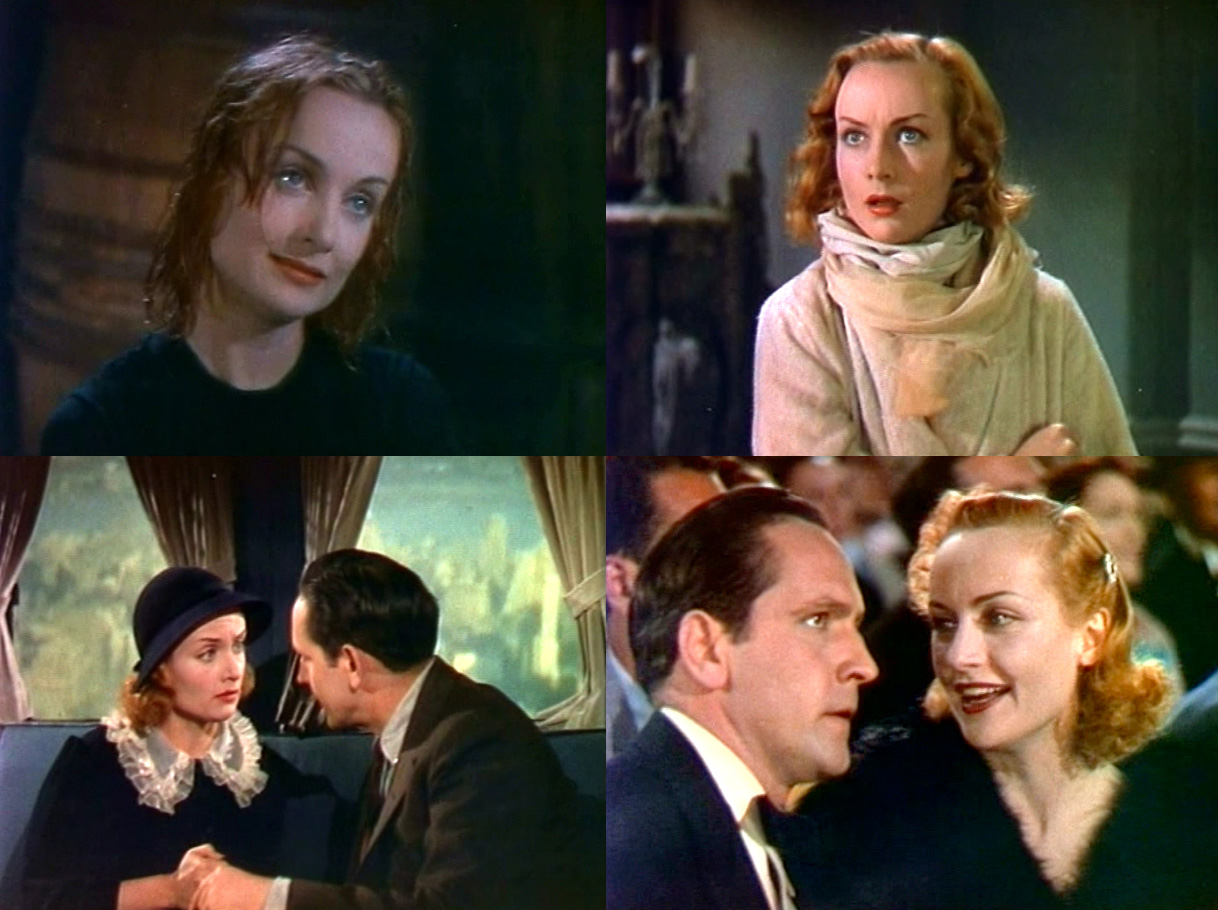
Carole Lombard está, como sempre, ótima. Como Hazel, ela fala rápido, age despretensiosamente e tem expressões faciais impagáveis, melhor ainda captadas em Technicolor. Seu papel havia sido pensado para Janet Gaynor, que contracenara com March em “Nasce uma Estrela / A Star is Born”, obtendo muito sucesso. Apesar do grande talento de Janet, é inegável que não havia melhor escolha que Carole. “Nada é Sagrado / Nothing Sacred” pode não chegar ao nível de maestria de outros filmes da atriz, como “Irene, a Teimosa / My Man Godfrey” (1936), mas está quase lá.

Carole Lombard is great, as always. As Hazel, she is a fast talker who acts carelessly and has amazing facil expressions – that look even better in Technicolor. Her role was intended to be played by Janet Gaynor, who acted alongside Fredric Marc in “A Star is Born” with great success. Even though Janet was talented, we can’t deny that Carole was the best choice. “Nothing Sacred” may not be as good as her other films, like “My Man Godfrey” (1936), but it is in her TOP 5.
Talvez se William Powell interpretasse o jornalista Wally Cook (e eu consigo visualizá-lo perfeitamente no papel) o filme seria ainda melhor. Mas ele não deixa de ser bom, e deve isso a Carole e ao roteirista Ben Hecht. Hecht recebeu das mãos de Val Lewton, então um jovem subordinado de Selznick, um conto de James H. Street e decidiu adaptá-lo para o cinema. Hecht criou um personagem para John Barrymore, seu grande amigo, mas Selznick se recusou a trabalhar com o ator, então nos últimos anos de sua carreira e de sua batalha com o alcoolismo. Hecht abandonou o projeto (embora ainda receba crédito), Selznick fez algumas mudanças no roteiro, os dois fizeram as pazes e trabalharam em mais filmes juntos.

Maybe, if William Powell had played Wally Cook (and I can perfectly envision him in the role), the film would have been even better. But it is a nice movie, thanks to Carole and screenwriter Ben Hecht. Hecht received from Val Lewton, then a Selznick subordinate, a short story written by James H. Street and decided to adapt it to the screen. Hecht wrote the character to John Barrymore, his good friend, but Selznick refused to work with the actor, who was then in the last years of his career and figtning alcoholism. Hecht abandoned the projet (even though he received credit in the movie), Selznick made some changes in the script, the two became friends again and worked togheter in many other films.
É impossível agradar a todos / You can't please them all
Mas precisamos falar sobre o subestimado diretor William A. Wellman. Em minha opinião, Wellman merece um lugar entre os melhores diretores de todos os tempos, junto com Hitchcock, Fellini, Truffaut, Leo McCarey e W.S. Van Dyke. Mas, assim como os dois últimos, Wellman não se tornou um auteur. Wellman não tinha uma marca registrada, não trabalhava com um só gênero ou só um grupo de atores, mas dominava as técnicas de sua arte. Basta uma cena do filme para percebermos isso: quando Wally e Hazel estão andando pelas ruas de Warsaw, eles ficam um longo momento com os rostos encobertos por um tronco de árvore. Como todas as tomadas dos filmes são planejadas, não se trata de um erro, mas sim de um truque de Wellman: filmar uma cena com bom enquadramento é fácil, difícil é filmar uma cena que esconda o rosto dos protagonistas – que estão eles mesmos escondendo suas verdadeiras intenções – de um jeito tão íntimo e revelador.

But we really need to talk about underrated director William A. Wellman. In my opinion, Wellman deserves to be cited among the best directors of all times, next to Hitchcock, Fellini, Truffaut, Leo McCary and W.S. Van Dyke. But, just like the two last ones, Wellman didn’t become an auteur. Wellman didn’t have a registered mark, didn’t work in only one genre or with a small group of actors, but he knew all about the film techniques. In one scene we can realize his status as a master: when Wally and Hazel are walking by the streets of Warsaw, they stay a long while with their faces covered by a tree trunk. Since all the film shots are planned, it is not a mistake, but a trick by Wellman: to shoot a scene with a good framing is easy, but it is difficult to shoot a scene in which the leads’ faces are hidden – because the leads are, themselves, hiding their true intentions – in such an intimate and revealing way.

Em Technicolor, Carole Lombard nunca esteve tão bonita – nem tão frágil. É doloroso pensar que a comédia trata de uma moça destinada a morrer jovem, quando sabemos que o destino de Carole foi a morte em um acidente aéreo em 1942, quando ela tinha apenas 33 anos. Mas esqueçamos por um momento a vida e vamos nos concentrar na arte: porque só Carole Lombard (com uma ajudinha de Wellman, que foi inclusive colocado em uma camisa-de-força em uma brincadeira da atriz) poderia fazer um filme tão delicioso quanto este.

In Technicolor, Carole Lombard never looked so beautiful – or so fragile. It’s painful to think that the comedy is about a woman who is going to die young, when we know that Carole died in a plane crash in 1942, when she was only 33. But let’s forget real life for a moment and pay attention to fiction: because only Carole Lombard (with a little help from William Wellman, who was even put in a straightjacket by Carole in a prank) could make such a delightful film. 
Carole está DESMAIADA / Carole has FAINTED

Nada é Sagrado / Nothing Sacred” (1937) está disponível no YouTube e no Internet Archive. Aproveite!

“Nothing Sacred” (1937) is available on YouTube and Internet Archive. Enjoy!

This is my contribution to the William Wellman Blogathon, hosted by Liz at Now Voyaging.


Related Posts Plugin for WordPress, Blogger...