} Crítica Retrô: 1934

Tradutor / Translator / Traductor / Übersetzer / Traduttore / Traducteur / 翻訳者 / переводчик

Showing posts with label 1934. Show all posts

Wednesday, May 18, 2022

A Conquista da Beleza (1934) / Search for Beauty (1934)


O verão sempre foi sinônimo de beleza e também de saúde. Muitas pessoas começam a malhar na primavera em busca de um “corpo de verão” ideal. Quando pensamos no verão, pensamos em belos corpos na praia, e também corpos sadios, hidratados, bronzeados. A beleza sempre foi mostrada no cinema, mas nunca tão livremente quanto na era pre-Code. E existe um filme pre-Code que mistura beleza e saúde: “A Conquista da Beleza”, de 1934.

Summer has always been synonyms of beauty and also with health. Many people start working out during the spring in order to have an ideal “summer body”. When we think about summer, we think about beautiful bodies on the beach, and also healthy, hydrated, sunbathed bodies. Beauty has always been displayed on cinema, but never so freely than in the pre-Code era. And there is a pre-Code film that brings together beauty and health: “Search for Beauty”, from 1934.  

Larry Williams (Robert Armstrong) e Jean Strange (Gertrude Michael) são um casal de vigaristas que, junto a Dan Healy (James Gleason), criam o mais estranho esquema para enriquecer já visto: eles compram uma revista sobre esportes e contratam como editores dois atletas olímpicos, Don Jackson (Buster Crabbe) e Barbara Hilton (Ida Lupino). Os cabeças dessa ideia enchem a revista de conteúdo de gosto duvidoso - porque sexo vende, diz Larry - e esperam que a revista seja comprada pela população, mais interessada em esportes por causa das Olimpíadas de 1932, sediadas em Los Angeles.

Larry Williams (Robert Armstrong) and Jean Strange (Gertrude Michael) are a couple of con artists who, teamed with Dan Healy (James Gleason), come up with the weirdest get-rich-quickly scheme ever: they buy a sports magazine and hire as editors two Olympic athletes, Don Jackson (Buster Crabbe) and Barbara Hilton (Ida Lupino). The minds behind the idea fill the magazine with salacious content – because sex sells, Larry says – and wait for the magazines to be bought by the people, who are more interested in sports because of the 1932 Olympics, held in Los Angeles.

Don Jackson percebe que Lerry está tentando montar uma “garota perfeita” editando várias fotos de garotas diferentes, literalmente construindo um Frankenstein com uma característica bela de cada uma. Don então sugere que eles façam algo diferente: por que eles não promovem um concurso para encontrar as pessoas mais belas e saudáveis do mundo?

Don Jackson sees that Larry is trying to build a “perfect girl” by editing several photos of different girls, literally building a Frankenstein with a beautiful piece from each girl. Don than suggests they do something else: why don’t they promote a contest to find the most beautiful, healthiest people in the planet?

Barbara começa a desaprovar as “histórias da vida real” que Larry vem publicando. Por causa disso, ela e Don decidem dar o controle criativo da revista para Larry, desde que em troca ele dê a eles os “Health Acres”, uma imensa fazenda que veio junto com a compra da revista. Lá, eles pretendem criar a Meca da saúde, com todos os ganhadores do concurso de beleza como educadores físicos. Jean também se separa de Larry e cai com Don e Barbara para a fazenda, despertando o ciúme de Barbara.

Barbara starts to dislike the “real-life stories” that Larry has been publishing. Because of this, she and Don decide to give Larry creative control of the magazine, as long as he gives them the “Health Acres”, a huge farm that came in with the purchase of the magazine. There, they intend to create a Meca for health, with all the winners of the beauty contest as health instructors. Jean also splits with Larry and follows Don and Barbara to the farm, making Barbara jealous.

Quando as pessoas bonitas chegam ao Health Acres, há uma adorável e inesperada sequência inspirada em Busby Berkeley para promover o exercício físico como forma de ser saudável. Entretanto, os hóspedes do local estão mais interessados em festejar do que em suar a camisa.

When the beautiful people reach Health Acres, there is a lovely, unexpected Busby Berkeley-inspired sequence to promote exercise as the way to stay healthy. However, the guests at Health Acres are more interested in partying than in sweating.

“A Conquista da Beleza” estreou em 1934, por isso pode ser chamado de pre-Code tardio, mas é muito pre-Code. Os atletas são filmados de costas, nus no chuveiro, e no começo do filme Jean usa um binóculo para dar uma olhada nas pernas e partes íntimas de Don. Larry diz que “não há nada de errado com o sexo, desde que ele leve a... aquilo que ele leva” - uma frase impensável de ser pronunciada sob o Código Hays. Há mulheres dançando com pouca roupa... e o filme acaba com o close de uma bunda.

“Search for Beauty” was released in 1934, so it’s a late pre-Code, but it is the most pre-Code a film could be. The athletes are shot from their backs, naked in the shower, and early in the film Jean uses a binocular to take a look at Don’s legs and private parts. Larry says “there’s nothing wrong with sex, as long as it leads to... what it leads to” – an unthinkable line to be used under the Hays Code. There are women dancing in tiny clothes… and the film ends with the close-up of a butt.

Ida Lupino tinha apenas 16 anos quando “A Conquista da Beleza” estreou. Este foi seu primeiro papel em Hollywood - ela já havia participado de sete filmes na sua Inglaterra natal - e é curioso vê-la tão jovem e tão loira. Lupino não ficou feliz em fazer “A Conquista da Beleza”, pois ela estava interessada em papéis mais dramáticos. Outra loira pre-Code que aparece no filme é Toby Wing, interpretando Sally, prima de Barbara e secretária faz-tudo na revista de esportes.

Ida Lupino was only 16 when “Search for Beauty” premiered. This was her first Hollywood role – she had already appeared in seven movies in her native England – and it’s curious to see her so young and so blonde. Lupino was not happy about making “Search for Beauty”, as she was interested in more dramatic roles. Another pre-Code blonde who appears in the film is Toby Wing, playing Sally, Barbara’s cousin and the do-it-all secretary at the sports magazine.

Em geral pensamos em Johnny Weissmuller quando falamos sobre atletas que se tornaram atores, mas Buster Crabbe também foi campeão olímpico de natação antes de ir para Hollywood. Na verdade, Buster Crabbe também interpretou Tarzan, uma só vez: no seriado de 1933 “Tarzan, o Destemido”. Ele também interpretou Flash Gordon e Buck Rogers, e era inclusive amigo próximo de Weissmuller.

We often think about Johnny Weissmuller when we talk about athletes who became actors, but Buster Crabbe was also an Olympic swimming champion before going to Hollywood. In fact, Buster Crabbe also played Tarzan, yet only once: in the 1933 serial “Tarzan the Fearless”. He also played Flash Gordon and Buck Rogers, and was actually good friends with Weissmuller. 

No começo do filme, uma cartela de texto nos informa que o filme apresenta os 30 ganhadores do Concurso de Beleza Internacional - um concurso “internacional” que contou com a participação apenas de Inglaterra, Escócia, Irlanda, Austrália, Nova Zelândia, África do Sul, Canadá e EUA. Antes da sequência de balé, Don esclarece que as pessoas belas foram escolhidas apenas entre os EUA e o Império Britânico - mas não há pessoas negras, pessoas de ascendência asiática ou indígenas entre as mais belas. Claro que deve ter sido divertido para os vencedores do concurso se verem nas telas, mas atualmente, com a busca por mais diversidade no cinema, o filme é um pouco decepcionante. Uma curiosidade que vale a pena mencionar é que uma das vencedoras, que pode ser vista baixo, é ninguém menos que a futura estrela Ann Sheridan.

In the beginning of the film, a title card says that the film presented the 30 winners in the International Beauty Contest – an “international” contest held only with people from England, Scotland, Ireland, Australia, New Zealand, South Africa, Canada and the US. Before the ballet sequence, Don clarifies that the beautiful people were chosen from the US and the British Empire – but there are no black people, no people of Asian descent nor Native Americans among the most beautiful. Of course it must have been fun for the contest winners to see themselves on the screen, but right now, when we ask for more diversity on screen, the film is a bit disappointing. One curiosity worth mentioning is that one of the winners, seen below, is none other than future star Ann Sheridan. 

Na praia, o verão é a época em que belos corpos desfilam - isto é, corpos magros de roupas de banho. Comerciais de cerveja estão cheios de mulheres magras e homens fortes, vendendo a bebida e o sol. Felizmente, as coisas vêm mudando nos últimos anos, com um movimento para maior aceitação corporal: agora todos podem desfilar seus belos corpos durante o verão - porque todos os corpos são bonitos. E você: está pronto para o verão?

On the beach, summer is the time when beautiful bodies parade – that is, skinny bodies in bathing suits. Commercials for beers are full of skinny women and strong men, advertising the beverage and the sun. Luckily, things have changed in the past few years, with a movement for broader body acceptance: now everybody can parade their beautiful bodies during summer - because all bodies are beautiful. How about you: are you ready for summer? 

“A Conquista da Beleza” pode ser visto (sem legendas) no Internet Archive.

“Search for Beauty” can be seen at the Internet Archive.

This is my contribution to the Fun in the Sun blogathon, hosted by the Classic Movie Blog Association.

Saturday, May 18, 2019

Sós no Mundo (1934) / Two Alone (1934)


Uma história de Cinderela – mas feita antes do Código Hays. Isso significa que não há quase nada “de fadas” neste “conto”. Para começar, “Sós no Mundo” é uma história rural de uma órfã que é adotada por fazendeiros para trabalhar para eles. Seu Príncipe Encantado é na verdade um adolescente que fugiu do reformatório. Sua Fada Madrinha é um velho bêbado que todos consideram louco. E seu malvado Padrasto quer mais dela do que apenas seu trabalho...

A Cinderella story – but made in the pre-Code era. This means that there is too little of “fairy” in this “tale”. To begin with, “Two Alone” is a rural tale of an orphan who is adopted by farmers only to work for them. Her Prince Charming is actually a teenager running away from Reform School. Her Fairy Godmother is a drunken old man everyone considers to be crazy. And her evil Stepfather wants more of her than only her ability to work…


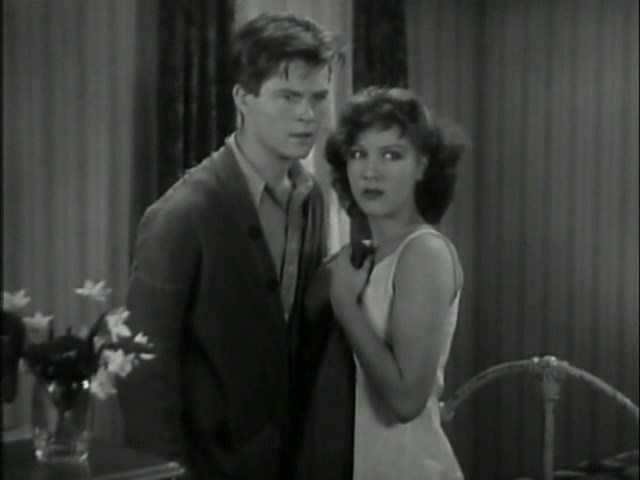
A família Slag vive em uma fazenda. O Sr. Slag (Arthur Byron) e a senhora Slag (Beulah Bondi) têm dois filhos, um garoto e uma garota, e o Sr. Slag adotou uma órfã, Mazie (Jean Parker).  Mas seu objetivo não era dar para Mazie o amor e o carinho que ela nunca recebeu na vida, mas sim fazê-la trabalhar para a família.

The Slag family lives in a farm. Mr. Slag (Arthur Byron) and Mrs. Slag (Beulah Bondi) have two children, a guy and a girl, and Mr. Slag has adopted an orphan, Mazie (Jean Parker). But his goal was not to shower Mazie with the love and care she never had in her life, but rather make the girl work for them.


Um dia, um adolescente fugindo do reformatório aparece na fazenda. Ele, um garoto chamado Adam (Tom Brown), rouba comida de Mazie, mas ela é bondosa o suficiente para tratar das feridas no rosto do rapaz. Naquela noite, Mazie sai de casa para dar algumas roupas para Adam, mas o Sr. Slag os flagra. O Sr. Slag, em vez de entregá-lo para a polícia, decide fazer do garoto também empregado da sua fazenda.

One day, a runaway teenager from Reform School shows up at the farm. He, a boy named Adam (Tom Brown), steals food from Mazie, but she is kind enough to tend to his facial wounds. That night, Mazie leaves the house to give some clothes to Adam, but Mr. Slag catches them. Mr. Slag, instead of turning the boy to the police, decides to make him work at the farm as well.


Alguns meses se passam, e a filha do Sr. Slag vai se casar – com a pior orquestra do mundo tocando na cerimônia. Mazie é humilhada quando tenta parabenizar a noiva, o que a entristece. Adam, agora um empregado da fazenda, diz que um dia ambos estarão livres e felizes longe dali. Sozinhos em casa, eles comem e conversam com Sandy Roberts (Charley Grapewin), um homem considerado louco pela população. Adam beija Mazie, mas depois se sente culpado.

A few months pass, and Mr. Slag’s daughter is going to be married – with the world’s worst orchestra playing at the ceremony. Mazie is humiliated when she tries to congratulate the bride, and that makes her sad. Adam, now working at the farm, tells that one day they both will be free and happy far from there. Home alone, they eat and chat with Sandy Roberts (Charley Grapewin), a man considered crazy by the people. Adam kisses Mazie, but then feels ashamed.


Algum tempo depois, Adam confessa para Mazie que a ama – e, felizmente, ela também o ama! Mas temos mais problemas: quando Adam pede ao Sr. Slag para deixá-lo casar com Mazie, o velho rabugento diz não – porque ele não quer perder dois empregados, e também porque ele está interessado em Mazie, agora quase uma mulher. Amedrontada, Mazie diz a Adam que eles deveriam fugir – e é isso que eles fazem.

A while later, Adam confesses to Mazie that he loves her – and, luckily, she loves him back! But problems arise once more: when Adam asks Mr. Slag to let him marry Mazie, the old man says no – because he doesn’t want to lose two employers, and also because he is interested in Mazie, now almost a woman. Afraid, Mazie tells Adam they should escape – and so they do.


Adam e Mazie querem chegar à casa do antigo empregado de Slag, o bondoso George Marshall (Willard Robertson), que, coincidentemente, também está procurando por Mazie. Muitas reviravoltas acontecem, e temos suspense... e sexo!

Adam and Mazie want to reach the house of Slag’s former employee, the good George Marshall (Willard Robertson), who, coincidentally, is also looking for her. A lot of plot twists happen and there is suspense… and sex!


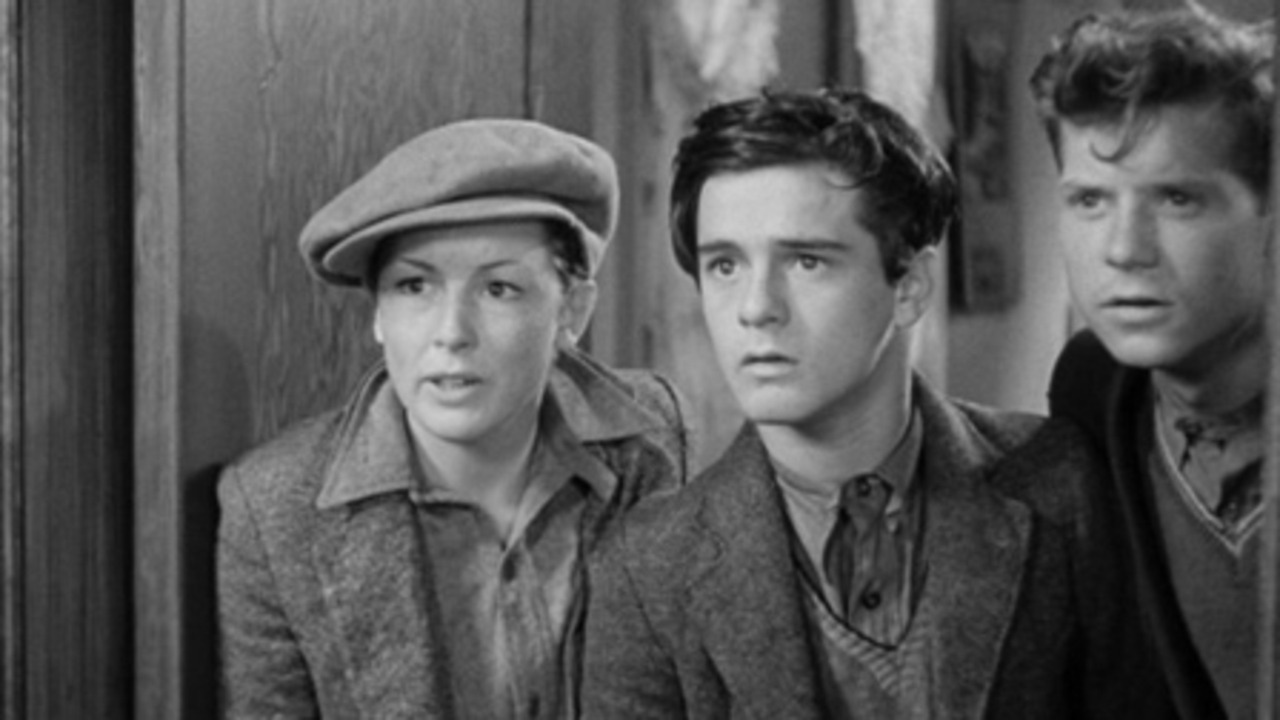
Os anos 30 foram uma boa década para crianças e adolescentes do cinema. As crianças da série “Our Gang” (“Os Batutinhas”) continuaram com o sucesso que tinham na era muda. Shirley Temple, Judy Garland e Mickey Rooney cresceram em frente às câmeras. Os garotos da turma “Dead End Kids” apareceram no teatro e também no cinema em filmes como “Anjos de Cara Suja” (1938). Adolescentes fugitivos eram uma triste realidade durante a Grande Depressão, e foram o foco de “Idade Perigosa” (1933), um filme interessante de William A. Wellman.

The 1930s were a nice decade for kids and teens at the movies. The kids from “Our Gang” kept the success from the silent era. Shirley Temple, Judy Garland and Mickey Rooney grew up in front of the cameras. The “Dead End Kids” appeared at the stage and made it to the screen in films like “Angels with Dirty Faces” (1938). Runaway teens were a sad reality in the Depression Era, and they were the subject of “Wild Boys of the Road” (1933), an interesting little film by William A. Wellman.
 
Idade Perigosa / Wild Boys of the Road
“Sós no Mundo” é um filme B feito pelos estúdios RKO. De acordo com os arquivos do estúdio, o filme foi um fracasso na bilheteria, provavelmente por causa da falta de grandes estrelas no elenco e também por causa da trama complexa. A pobre ZaSu Pitts, interpretando Esthey Roberts – filha de Sandy Roberts – é completamente desperdiçada, pois só aparece em duas cenas.

“Two Alone” is a B-movie made by RKO. According to studio’s records, it was a huge box-office flop, probably due to the lack of A-listers in the cast and the very complex story. Poor ZaSu Pitts, playing Esthey Roberts – Sandy Roberts’s daughter – is completely wasted as she appears in only a couple of scenes.


Jean Parker, então com 19 anos e no começo da carreira, foi emprestada pela MGM, e ela é a melhor em cena em “Sós no Mundo”. Ela interpreta a doce e pobre Mazie de maneira convincente, e seus olhos são brilhantes e expressivos. O belo Tom Brown, com apenas 21 anos na época, já havia sido modelo na infância e feito alguns filmes mudos. Como namorados, Mazie e Adam nos fazem torcer por eles.

Jean Parker, then 19 and in the beginning of her career, was borrowed from MGM, and she is the best in scene in “Two Alone”. She plays sweet and helpless Mazie in a believable way, and her eyes are bright and expressive. Handsome Tom Brown, playing Adam, only 21 at the time, had already been a model in his childhood and appeared in a couple of silent films. As sweethearts, Mazie and Adam are worth rooting for.


“Sós no Mundo” foi dirigido por Elliott Nugent. O nome não parece familiar, né? No começo dos anos 30 Elliott era ator, e logo se tornou também roteirista e diretor. Seu filme mais famoso como diretor provavelmente é a versão de 1939 de “O Gato e o Canário”, com Paulette Goddard e Bob Hope.

“Two Alone” was directed by Elliott Nugent. The name doesn’t sound familiar, does it? In the early 1930s Elliott was actually a leading man, and soon he became also a screenwriter and director. His most famous endeavor as a director is probably the 1939 version of “The Cat and the Canary”, with Paulette Goddard and Bob Hope.

Jean Parker, Elliott Nugent, Tom Brown

“Sós no Mundo” se torna mais emocionante quando nos lembramos de que ainda há muitas crianças e adolescentes órfãos vivendo como Mazie. Adotar crianças para ter empregados sem salário não é coisa do passado. Abuso, tráfico humano, cárcere privado e escravidão de crianças ainda existem. Se o Código Hays não tivesse sido implantado, será que teríamos mais consciência sobre estes temas? Eu não sei, mas ao menos fico feliz que um filme como “Sós no Mundo” exista para nos mostrar como avançamos tão pouco nos últimos 85 anos.

“Two Alone” becomes more poignant as we remember that there are still many orphaned children and teens living like Mazie. Adopting kids to have them as unpaid maids is not a thing from the past. Abuse, human trafficking, false imprisonment and child slavery still exist. If the Hays Code wasn’t implanted, would we be more aware of themes like those? I don’t know, but at least I’m happy a film like “Two Alone” exists to show us we haven’t come very far in the last 85 years.

This is my contribution to the It’s a Young World – Teen Movie Blogathon, hosted by Robin and Crystal at Pop Culture Reverie and In the Good Old Days of Classic Hollywood.


Sunday, April 7, 2019

Escravos do Desejo (1934) / Of Human Bondage (1934)


ESTA CRÍTICA TEM SPOILERS

THIS REVIEW HAS SPOILERS


Quase todos os artistas, não importa qual arte façam, têm um trabalho considerado aquele que muda tudo. O livro que se tornou um best-seller e deu a seu autor muitos prêmios. A pintura que foi vendida a uma grande galeria e deu a seu pintor notoriedade. Ou o filme que fez o mundo todo olhar para um ator ou atriz e dizer: “que talento!”. Para Bette Davis, o filme que mudou tudo foi “Escravos do Desejo”, de 1934 - por vezes também chamado de “Servidão Humana” - o 23º filme da carreira dela em Hollywood - o que prova que são necessários muitos anos para fazer sucesso da noite para o dia.

Almost all artists, no matter the art they make, have one work labeled as a “big break”. That book that became a best-seller and gave its author many prizes. That painting that was sold to a big gallery and gave its painter notoriety. Or that movie that made everybody look at an actor or actress and say: “what a talent!”. For Bette Davis, the big break came with 1934’s “Of Human Bondage”, the 23rd film of her career in Hollywood - proving that it takes many years to become an overnight sensation.


Em Paris, Philip Carey (Leslie Howard) pergunta a seu professor de pintura se algum dia ele será um grande pintor. O professor é sincero: seu pupilo pode conhecer a técnica, mas lhe falta a criatividade de um gênio. Desapontado, Philip decide voltar para Londres e seguir a mesma carreira do pai, tornando-se médico. Detalhe importante: Philip manca por causa d dum defeito de nascença, e isso o envergonha muito.

In Paris, Philip Carey (Leslie Howard) asks his painting teacher if someday he would be a great painter. The teacher is sincere: his pupil may know the technique, but lacks the creativeness of a genius. Bummed, Philip decides to go back to London to follow his father’s footsteps and become a doctor. An important detail: Philip has a limp due to a birth defect and is very self-conscious about it.


Já em Londres, um amigo pede que ele o ajude a conquistar uma garota - por causa de sua estadia em Paris, o amigo acredita que Philip tem mais experiência com as mulheres. A garota em questão é a garçonete Mildred Rogers (Bette Davis). Ela e Philip trocam farpas no primeiro encontro - e Philip usa a péssima cantada “você deveria sorrir mais”. Mildred se enoja com o defeito físico dele.

Once in London, he is asked to help a friend conquer a girl - because he lived in Paris, his friend thinks Philip has more experience with girls. The girl in the picture is waitress Mildred Rogers (Bette Davis). She and Philip end up being rude with each other in their first meeting - with Philip even using, ugh, the pick-up line “you should smile more”. Mildred is disgusted by his limp.


Philip a convida para jantar, e ela aceita. Ele sonha com ela, a convida para sair muitas outras vezes. Philip está obcecado. Mas Mildred é livre - ela é o tipo de personagem feminina livre que o Código Hays mataria muito em breve. Ela flerta com outros clientes, sai com eles e parece não se importar com convites porque recebe muitos deles, o tempo todo.

Philip invites her to go out for dinner, and she accepts. He dreams about her, he invites her out again and again. Philip is obsessed. But Mildred is free - she is the kind of free female character that the Production Code would soon kill. She flirts with other customers, goes out with them and seems unbothered by any invitation because she receives so many so often.


Philip tenta esquecer Mildred saindo com a escritora Norah (Kay Johnson). Agora a situação é inversa: enquanto Philip era apaixonado por Mildred e ela não o amava, agora temos Norah apaixonada por Philip sem ser correspondida. Um dia, Mildred volta - e eu adoraria ver a versão de Norah da história toda, porque temos filmes demais sobre mulheres que arruinaram a vida dos homens, mas poucos sobre mulheres que superaram um amor não correspondido.

Philip tries to forget Mildred by dating writer Norah (Kay Johnson). Now the situation is the inverse: while Philip was devoted to Mildred and she didn’t love him, now we have Norah being devoted to Philip but not being loved by him. Eventually, Mildred comes back - and I’d love to see Norah’s version of the whole story, because there are so many stories of women who ruined men’s lives, but so few of the women who got over loving someone and not being loved back.


Reginald Owen interpreta Thorpe Athelny, um homem que é paciente de Philip, e depois se torna seu amigo e casamenteiro. Ele é construído para ser interessante e criar uma atmosfera acolhedora, mas acaba sendo apenas chato e inconveniente. A filha de Athelny, Sally, é interpretado por Frances Dee. Sally é uma garota doce cuja chance de romance com Philip é arruinada pela, adivinhe, volta de Mildred.

Reginald Owen plays Thorpe Athelny, a man who is first Philip’s patient, then becomes kind of a friend and matchmaker. He is built to be amusing and create a cozy atmosphere, but ends up being only annoying and inconvenient. Athelny’s daughter, Sally, is played by Frances Dee. Sally is a sweet girl whose chance with Philip is ruined by, you guessed it, Mildred’s return.


“Escravos do Desejo” é baseado num romance de W. Somerset Maugham. O autor também escreveu “O Fio da Navalha”, que deu origem a um filme brilhante de 1946. Enquanto “O Fio da Navalha” é uma obra mais espiritual, “Escravos do Desejo” trata dos sentimentos mais crus, como amor, luxúria, desespero, nojo e raiva.

“Of Human Bondage” is based on a romance by W. Somerset Maugham. The author also wrote “The Razor’s Edge”, which was the basis for a brilliant film made in 1946. While “The Razor’s Edge” is a more spiritual work, “Of Human Bondage” is all about the rawest feelings, like love, lust, despair, disgust and anger.


Bette Davis está simplesmente sublime neste filme. Ela é má, mas profundamente humana, e sua transformação é admirável - mas não no bom sentido. Por isso, foi um choque quando ela não foi indicada ao Oscar de Melhor Atriz. No começo dos anos 1930, a Academia permitia que novos candidatos fossem adicionados à cédula na hora da votação, e ela também revelava em que posição os indicados ficaram depois da votação - primeiro, segundo, terceiro lugar e assim por diante. Bette Davis foi tão constante na indicação informal que acabou em terceiro lugar, à frente de Grace Moore, indicada oficialmente pela Academia. O Oscar foi para Claudette Colbert naquele ano e, quando um candidato indicado extra-oficialmente ganhou o prêmio - o que aconteceu na categoria de Melhor Fotografia em 1935 - a Academia proibiu esse tipo de indicação.

Bette Davis is nothing but sublime in this movie. She is vile, but true to the human character, and her transformation is one to admire - not in the good sense. So, it was a shock when she wasn’t nominated for a Best Actress Oscar. Back in the early 1930s, the Academy allowed write-in votes, and it also revealed the positions the nominees eventually came in - first, second, third places and so on. Not only Bette was a write-in in the category, but she also came in third place, in front of real nominee Grace Moore. The Oscar went to Claudette Colbert that year and, when a write-in candidate actually on the award - the Cinematography award in 1935 - the Academy forbade the practice.


Bette Davis estava procurando papéis mais substanciais do que os que lhe eram oferecidos na Warner Brothers. Ela encontrou o que procurava em “Escravos do Desejo”, da RKO, e no final os executivos da Warner fizeram campanha contra ela na corrida do Oscar. Este filme foi um ponto de virada na carreira de Bette, e a prova de que ela nunca teve medo: ela não teve medo de interpretar personagens antipáticas como Mildred, não teve medo de ficar “feia” se isso fosse feito pelo realismo do papel, e nunca teve medo de exagerar – ou ser maior do que a própria vida.

Bette Davis was looking for juicier roles than the one she was being offered at Warner Brothers. She found what she was looking for in RKO’s “Of Human Bondage”, and eventually Warner executives campaigned against her at the Oscar race. This film was a turning point in Davis’s career, and the proof that the actress was never afraid: she was not afraid of playing unsympathetic roles like Mildred, not afraid of becoming “ugly” for a role if it demanded realism, and never afraid to be over the top – or larger than life.

This is my contribution to the Fourth Annual Bette Davis blogathon, hosted by Crystal at In the Good Old Days of Classic Hollywood.


Related Posts Plugin for WordPress, Blogger...