} Crítica Retrô: esportes

Tradutor / Translator / Traductor / Übersetzer / Traduttore / Traducteur / 翻訳者 / переводчик

Showing posts with label esportes. Show all posts

Wednesday, May 18, 2022

A Conquista da Beleza (1934) / Search for Beauty (1934)


O verão sempre foi sinônimo de beleza e também de saúde. Muitas pessoas começam a malhar na primavera em busca de um “corpo de verão” ideal. Quando pensamos no verão, pensamos em belos corpos na praia, e também corpos sadios, hidratados, bronzeados. A beleza sempre foi mostrada no cinema, mas nunca tão livremente quanto na era pre-Code. E existe um filme pre-Code que mistura beleza e saúde: “A Conquista da Beleza”, de 1934.

Summer has always been synonyms of beauty and also with health. Many people start working out during the spring in order to have an ideal “summer body”. When we think about summer, we think about beautiful bodies on the beach, and also healthy, hydrated, sunbathed bodies. Beauty has always been displayed on cinema, but never so freely than in the pre-Code era. And there is a pre-Code film that brings together beauty and health: “Search for Beauty”, from 1934.  

Larry Williams (Robert Armstrong) e Jean Strange (Gertrude Michael) são um casal de vigaristas que, junto a Dan Healy (James Gleason), criam o mais estranho esquema para enriquecer já visto: eles compram uma revista sobre esportes e contratam como editores dois atletas olímpicos, Don Jackson (Buster Crabbe) e Barbara Hilton (Ida Lupino). Os cabeças dessa ideia enchem a revista de conteúdo de gosto duvidoso - porque sexo vende, diz Larry - e esperam que a revista seja comprada pela população, mais interessada em esportes por causa das Olimpíadas de 1932, sediadas em Los Angeles.

Larry Williams (Robert Armstrong) and Jean Strange (Gertrude Michael) are a couple of con artists who, teamed with Dan Healy (James Gleason), come up with the weirdest get-rich-quickly scheme ever: they buy a sports magazine and hire as editors two Olympic athletes, Don Jackson (Buster Crabbe) and Barbara Hilton (Ida Lupino). The minds behind the idea fill the magazine with salacious content – because sex sells, Larry says – and wait for the magazines to be bought by the people, who are more interested in sports because of the 1932 Olympics, held in Los Angeles.

Don Jackson percebe que Lerry está tentando montar uma “garota perfeita” editando várias fotos de garotas diferentes, literalmente construindo um Frankenstein com uma característica bela de cada uma. Don então sugere que eles façam algo diferente: por que eles não promovem um concurso para encontrar as pessoas mais belas e saudáveis do mundo?

Don Jackson sees that Larry is trying to build a “perfect girl” by editing several photos of different girls, literally building a Frankenstein with a beautiful piece from each girl. Don than suggests they do something else: why don’t they promote a contest to find the most beautiful, healthiest people in the planet?

Barbara começa a desaprovar as “histórias da vida real” que Larry vem publicando. Por causa disso, ela e Don decidem dar o controle criativo da revista para Larry, desde que em troca ele dê a eles os “Health Acres”, uma imensa fazenda que veio junto com a compra da revista. Lá, eles pretendem criar a Meca da saúde, com todos os ganhadores do concurso de beleza como educadores físicos. Jean também se separa de Larry e cai com Don e Barbara para a fazenda, despertando o ciúme de Barbara.

Barbara starts to dislike the “real-life stories” that Larry has been publishing. Because of this, she and Don decide to give Larry creative control of the magazine, as long as he gives them the “Health Acres”, a huge farm that came in with the purchase of the magazine. There, they intend to create a Meca for health, with all the winners of the beauty contest as health instructors. Jean also splits with Larry and follows Don and Barbara to the farm, making Barbara jealous.

Quando as pessoas bonitas chegam ao Health Acres, há uma adorável e inesperada sequência inspirada em Busby Berkeley para promover o exercício físico como forma de ser saudável. Entretanto, os hóspedes do local estão mais interessados em festejar do que em suar a camisa.

When the beautiful people reach Health Acres, there is a lovely, unexpected Busby Berkeley-inspired sequence to promote exercise as the way to stay healthy. However, the guests at Health Acres are more interested in partying than in sweating.

“A Conquista da Beleza” estreou em 1934, por isso pode ser chamado de pre-Code tardio, mas é muito pre-Code. Os atletas são filmados de costas, nus no chuveiro, e no começo do filme Jean usa um binóculo para dar uma olhada nas pernas e partes íntimas de Don. Larry diz que “não há nada de errado com o sexo, desde que ele leve a... aquilo que ele leva” - uma frase impensável de ser pronunciada sob o Código Hays. Há mulheres dançando com pouca roupa... e o filme acaba com o close de uma bunda.

“Search for Beauty” was released in 1934, so it’s a late pre-Code, but it is the most pre-Code a film could be. The athletes are shot from their backs, naked in the shower, and early in the film Jean uses a binocular to take a look at Don’s legs and private parts. Larry says “there’s nothing wrong with sex, as long as it leads to... what it leads to” – an unthinkable line to be used under the Hays Code. There are women dancing in tiny clothes… and the film ends with the close-up of a butt.

Ida Lupino tinha apenas 16 anos quando “A Conquista da Beleza” estreou. Este foi seu primeiro papel em Hollywood - ela já havia participado de sete filmes na sua Inglaterra natal - e é curioso vê-la tão jovem e tão loira. Lupino não ficou feliz em fazer “A Conquista da Beleza”, pois ela estava interessada em papéis mais dramáticos. Outra loira pre-Code que aparece no filme é Toby Wing, interpretando Sally, prima de Barbara e secretária faz-tudo na revista de esportes.

Ida Lupino was only 16 when “Search for Beauty” premiered. This was her first Hollywood role – she had already appeared in seven movies in her native England – and it’s curious to see her so young and so blonde. Lupino was not happy about making “Search for Beauty”, as she was interested in more dramatic roles. Another pre-Code blonde who appears in the film is Toby Wing, playing Sally, Barbara’s cousin and the do-it-all secretary at the sports magazine.

Em geral pensamos em Johnny Weissmuller quando falamos sobre atletas que se tornaram atores, mas Buster Crabbe também foi campeão olímpico de natação antes de ir para Hollywood. Na verdade, Buster Crabbe também interpretou Tarzan, uma só vez: no seriado de 1933 “Tarzan, o Destemido”. Ele também interpretou Flash Gordon e Buck Rogers, e era inclusive amigo próximo de Weissmuller.

We often think about Johnny Weissmuller when we talk about athletes who became actors, but Buster Crabbe was also an Olympic swimming champion before going to Hollywood. In fact, Buster Crabbe also played Tarzan, yet only once: in the 1933 serial “Tarzan the Fearless”. He also played Flash Gordon and Buck Rogers, and was actually good friends with Weissmuller. 

No começo do filme, uma cartela de texto nos informa que o filme apresenta os 30 ganhadores do Concurso de Beleza Internacional - um concurso “internacional” que contou com a participação apenas de Inglaterra, Escócia, Irlanda, Austrália, Nova Zelândia, África do Sul, Canadá e EUA. Antes da sequência de balé, Don esclarece que as pessoas belas foram escolhidas apenas entre os EUA e o Império Britânico - mas não há pessoas negras, pessoas de ascendência asiática ou indígenas entre as mais belas. Claro que deve ter sido divertido para os vencedores do concurso se verem nas telas, mas atualmente, com a busca por mais diversidade no cinema, o filme é um pouco decepcionante. Uma curiosidade que vale a pena mencionar é que uma das vencedoras, que pode ser vista baixo, é ninguém menos que a futura estrela Ann Sheridan.

In the beginning of the film, a title card says that the film presented the 30 winners in the International Beauty Contest – an “international” contest held only with people from England, Scotland, Ireland, Australia, New Zealand, South Africa, Canada and the US. Before the ballet sequence, Don clarifies that the beautiful people were chosen from the US and the British Empire – but there are no black people, no people of Asian descent nor Native Americans among the most beautiful. Of course it must have been fun for the contest winners to see themselves on the screen, but right now, when we ask for more diversity on screen, the film is a bit disappointing. One curiosity worth mentioning is that one of the winners, seen below, is none other than future star Ann Sheridan. 

Na praia, o verão é a época em que belos corpos desfilam - isto é, corpos magros de roupas de banho. Comerciais de cerveja estão cheios de mulheres magras e homens fortes, vendendo a bebida e o sol. Felizmente, as coisas vêm mudando nos últimos anos, com um movimento para maior aceitação corporal: agora todos podem desfilar seus belos corpos durante o verão - porque todos os corpos são bonitos. E você: está pronto para o verão?

On the beach, summer is the time when beautiful bodies parade – that is, skinny bodies in bathing suits. Commercials for beers are full of skinny women and strong men, advertising the beverage and the sun. Luckily, things have changed in the past few years, with a movement for broader body acceptance: now everybody can parade their beautiful bodies during summer - because all bodies are beautiful. How about you: are you ready for summer? 

“A Conquista da Beleza” pode ser visto (sem legendas) no Internet Archive.

“Search for Beauty” can be seen at the Internet Archive.

This is my contribution to the Fun in the Sun blogathon, hosted by the Classic Movie Blog Association.

Sunday, March 8, 2020

Laços de Sangue (1951) / Hard, Fast and Beautiful (1951)


Você provavelmente ouviu falar das mães loucas pela fama (“overbearing stage mothers” – mulheres que obrigam suas filhas a entrar para o mundo do entretenimento para que as carreiras das filhas sejam a realização dos sonhos das mães. Estas mulheres também controlam as carreiras das filhas de perto, afinal, tudo que suas filhas alcançam é visto por elas como uma vitória pessoal. Mas este tipo de mulher também age nos bastidores do mundo esportivo. Poderíamos chamá-las de “mães loucas pelo troféu”? Talvez. Vão importa o termo, temos um exemplo perfeito deste tipo abusivo de maternidade no filme “Laços de Sangue” (1951), de Ida Lupino.

You probably have heard about overbearing stage mothers – women who push their daughters to have a career in entertainment as a way to fulfill their own dreams of stardom. These women also control their daughters’ careers close, after all, everything their daughters accomplish is felt by them as a personal victory. But this kind of women also acts backstage in the sports world. Could we call them “overbearing court mothers”? Maybe. No matter the term, we have a perfect example of this abusive kind of motherhood in Ida Lupino’s “Hard, Fast and Beautiful” (1951).


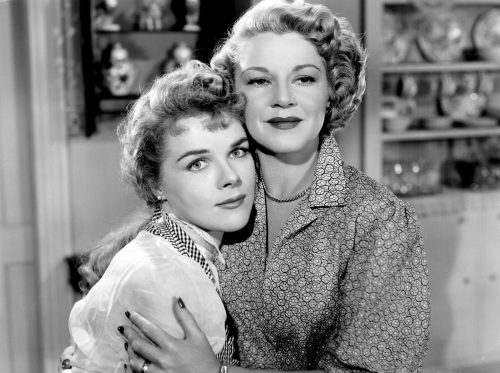
Florence Farley (Sally Forrest) é uma jovem com talento natural para jogar tênis. Ela treina rebatendo a bola contra a porta da garagem de casa, e ela está novamente neste estranho treino quando Gordon McKay (Robert Clarke) a vê. Gordon estudou na mesma escola que ela, e trabalha em um clube local. Ele convida Florence para jogar tênis no clube. Vendo o potencial dela, Clarence (Joseph Kearns), o gerente do clube, se oferece para pagar para que ela participe de torneios de tênis pelo país.

Florence Farley (Sally Forrest) is a young woman with a natural talent to play tennis. She practices by hitting the ball in her garage door, and she’s doing just that when Gordon McKay (Robert Clarke) sees her. Gordon went to the same high school as she, and works in a local club. He invites Florence to go to the club and play. Seeing her potential, Clarence (Joseph Kearns), the club manager, offers to pay for her to participate in tennis tournaments around the country.


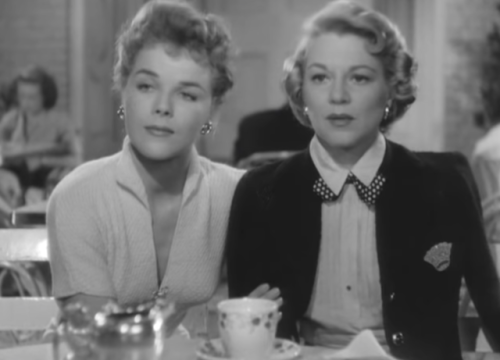
A mãe de Florence, Millie (Claire Trevor), insiste em acompanhar a filha nos torneios. Millie está presente quando Florence impressiona o olheiro Fletcher Locke (Carleton Young). Depois de flertar com Millie, Fletcher embarca na missão de fazer de Florence a campeã nacional das amadoras.

Florence’s mother, Millie (Claire Trevor), insists on accompanying her daughter to the competitions. Millie is there when Florence impresses the scout Fletcher Locke (Carleton Young). After flirting with Millie, Fletcher dives in the mission of turning Florence into the national amateur champion.


Enquanto isso, o pai de Florence, o apático Will (Kenneth Patterson, que se parece com Fredric March), acompanha de casa a carreira da filha, longe de toda a excitação que sua esposa busca. Como amadora, Florence não pode ganhar prêmios em dinheiro, mas pode receber presentes como roupas, descontos na compra de um carro e estadias grátis em hotéis. Ela é como uma influencer, mas do mundo do tênis – e Millie não podia estar mais feliz. Mas as coisas se complicam quando Florence anuncia que vai de casar com Gordon e está pensando em abandonar o esporte.

Meanwhile, Florence’s father, the apathetic Will (Kenneth Patterson, a Fredric March lookalike), follows his daughter’s career from home, far from all the excitement that thrills his wife. As an amateur, Florence can’t receive money prizes, but she can receive little gifts, like clothes, discounts in cars and free stays in hotels. She is like an influencer, but from the tennis world – and Millie couldn’t be happier. But things get complicated when Florence announces she’s marrying Gordon and thinking about abandoning the sport.


É óbvio que conquistar a fama através do esporte era o sonho de Millie, não de Florence. Isso fica claro quando Florence vence sua primeira competição e, quando um repórter de rádio pergunta como ela se sente após ganhar, ela diz para ele perguntar para a mãe dela. Millie responde com perfeição, como uma porta-voz ensaiada.

It’s obvious that becoming notorious through sport was Millie’s dream, not Florence’s. This is clear when Florence wins her first competition and, when a radio reporter asks her how she feels about winning, she tells him to ask her mother. Millie answers him perfectly, as a media-trained spokesperson.


Claire Trevor é uma atriz brilhante e subestimada. Inesquecível em filmes como “No Tempo das Diligências” (1939) e “Paixões em Fúria” (1948), aqui ela é sedutora e manipuladora. Eu entendo que, na juventude, Millie pode não ter tido as mesmas oportunidades de Florence, mas nada justifica manipular alguém para que essa pessoa faça o que você não foi capaz de fazer quando era jovem.

Claire Trevor is a brilliant and underrated actress. Unforgettable in films like “Stagecoach” (1939) and “Key Largo” (1948), here she is seductive and manipulating. I understand that, growing up, Millie may not have had the same opportunities as Florence, but nothing justifies manipulating someone to do what you couldn’t do earlier in your life.


Sally Forrest fo um dos talentos descobertos e cultivados por Ida Lupino enquanto diretora. Vinda da dança, Sally foi protagonista de dois filmes anteriores de Lupino, “Mãe Solteira” (1949) e “Quem Ama Não Teme” (1950). Com olhos brilhantes e uma expressão ingênua, ela faz com que a transformação de Florence no decorrer do filme seja ainda mais notável.

Sally Forrest was one of the talents discovered and cultivated by Ida Lupino as a director. Coming from dance, Sally was the lead of two previous Lupino-directed films, “Not Wanted” (1949) and “Never Fear” (1950). With bright eyes and a naïve expression, she makes Florence’s transformation later in the picture even more notable.


Um usuário do Letterboxd mencionou que Lupino enquadra seus personagens como se eles estivessem em uma partida de tênis metafórica. Isso é visto claramente quando a cerca e o grande girassol servem como uma rede de tênis para separar Florence e Gordon. Florence e Millie por vezes estão separadas por uma mesa, mas eu vejo a dinâmica delas mais como um cabo de guerra, em especial quando Florence percebe que está sendo manipulada.

One reviewer on Letterboxd mentioned that Lupino frames her characters as if they were in a metaphorical tennis match. This happens clearly when the fence and the massive sunflower serve as a tennis net to separate Florence and Gordon. Florence and Millie are sometimes separated by a table, but I see their dynamics more as a tug of war, in special when Florence realizes she’s being manipulated.


“Laços de Sangue” é um filme com ritmo rápido e dinâmico. A ação acontece na casa da família Farley, no clube, em diversos torneios aqui e ali, e a passagem de um cenário a outro é feita com fluidez. Você ficará hipnotizado pelas partidas de tênis mesmo se nunca foi fã do esporte. Sally Forrest foi treinada pela jogadora de tênis profissional Eleanor Tennant.

“Hard, Fast and Beautiful” is a movie with a quick, dynamic rhythm. The action happens in the Farley house, at the club, in several tournaments here and there, and going from one to the other happens with an easy flow. You’ll find yourself hypnotized by the tennis matches even if you’ve never been a fan of the sport. Sally Forrest was coached by professional tennis player Eleanor Tennant.


“Laços de Sangue” tem uma característica irônica, se pensarmos no filme com uma mentalidade moderna: no final, Florence tem de escolher entre uma mãe ciumenta que quer controlar a carreira dela e um homem ciumento que quer que ela abandone a carreira. É irônico pensar que este é o principal conflito em um filme feito pela única mulher diretora da Hollywood dos anos 1950. Mas, uma vez que conhecemos o conjunto da obra de Lupino, aprendemos que ele pode ser resumido em uma palavra: resiliência. E, às vezes, é sendo resiliente que uma mulher consegue o que quer – algo que Millie não aprendeu.

“Hard, Fast and Beautiful” has an ironic twist once we think about it with modern lenses: ultimately, Florence needs to choose between a jealous mother who wants to control her career and a jealous man who wants her to abandon her career. It’s ironic to think that this is the main conflict in a movie made by the only female director working in 1950s Hollywood. But, once we get to know Lupino’s body of work, we learn that it can be summarized in one word: resilience. And, sometimes, it’s by being resilient that a woman gets what she wants – something Millie didn’t learn.

This is my contribution to The 110 Years of Claire Trevor blogathon, hosted by Virginie and Crystal at The Wonderful World of Cinema and In the Good Old Days of Classic Hollywood.


Para saber mais sobre a carreira de Ida Lupino, dê uma olhada no Dossiê Ida Lupino.

To learn more about Ida Lupino’s career, take a look at the Ida Lupino Files.

Saturday, February 2, 2019

Orfeu Negro (1959) / Black Orpheus (1959)


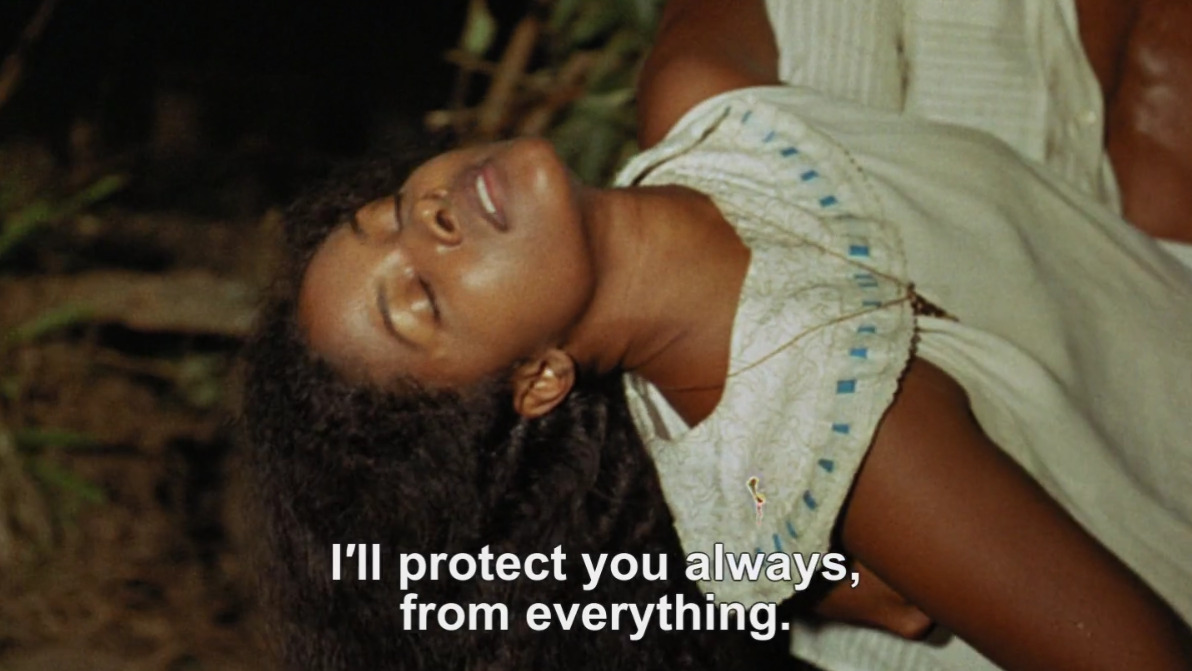
Era uma vez um homem chamado Orfeu. Ele se apaixonou por uma mulher chamada Eurídice, mas o romance deles era assombrado pela morte. Esta é a trama básica da lenda grega de Orfeu e Eurídice – na lenda, Orfeu é o filho do deus Apolo e da musa Calíope, e daí vem seu talento musical. Mas em 1959 Orfeu não precisou ser filho de um deus grego para ser um personagem inesquecível na adaptação tropical da lenda.

Once upon a time, there was a man named Orpheus. He fell in love with Eurydice, but their romance is closely watched by no other than Death. This is the basic storyline of the Greek legend of Orpheus and Eurydice – in the legend, Orpheus is the son of the god Apollo and the muse Calliope, hence his musical talent. But in 1959 Orpheus didn't need to be the son of a Greek god to be a remarkable character in the tropical adaptation of the legend.


O poeta e autor brasileiro Vinícius de Moraes escreveu o musical “Orfeu da Conceição” adaptando a lenda grega para a realidade do Rio de Janeiro. O musical estreou em 1956 – um ano antes de Tennessee Williams escrever sua peça “Orpheus Descending” - e foi um sucesso. As músicas foram compostas por Antônio Carlos Jobim, um dos músicos mais famosos do Brasil na época.

Brazilian poet and writer Vinícius de Moraes wrote the musical play “Orfeu da Conceição” adapting the Greek legend to the reality of Rio de Janeiro. The play opened in 1956 – one year before Tennessee Williams wrote his “Orpheus Descending” - and it was a success. The songs in the play were composed by Antônio Carlos Jobim, one of the most famous Brazilian musicians at the time.


A peça chamou a atenção do autor e diretor francês Marcel Camus. Camus fez uma proposta para adaptar a peça para o cinema, e escreveu o roteiro com Vinícius de Moraes e Jacques Viot. Camus também dirigiu o filme.

The play called the attention of the French author and filmmaker Marcel Camus. Camus made a proposition to adapt the play to the screen, and wrote the screenplay with Vinícius de Moraes and Jacques Viot. Camus ALSO directed the movie.
 
Marcel Camus

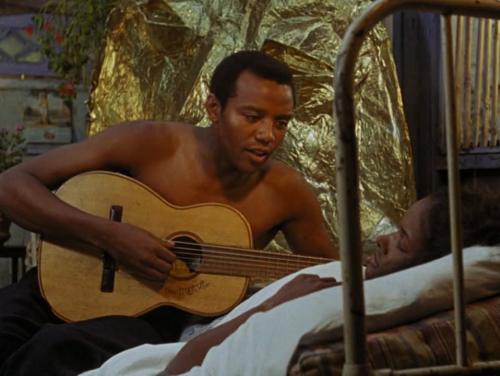
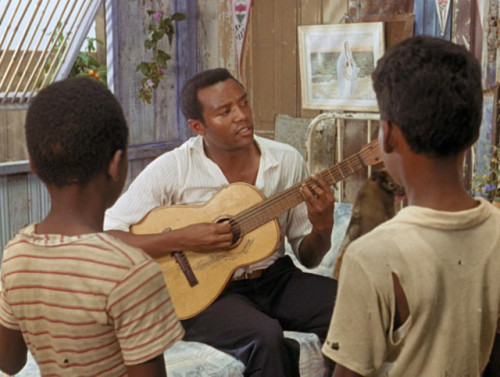
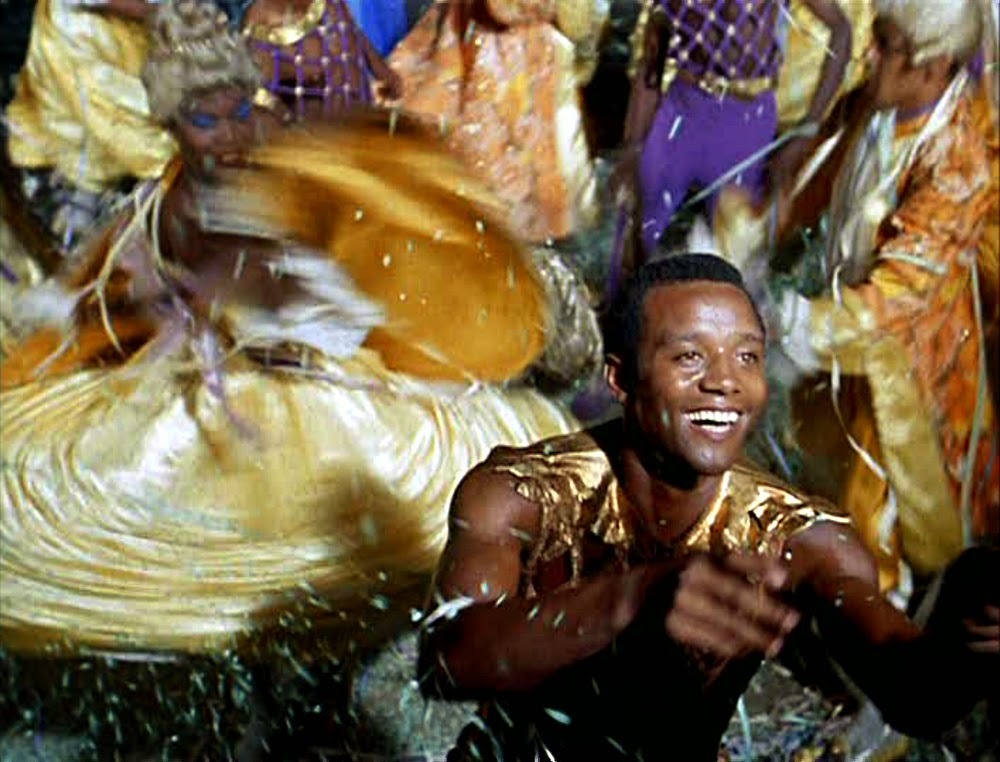
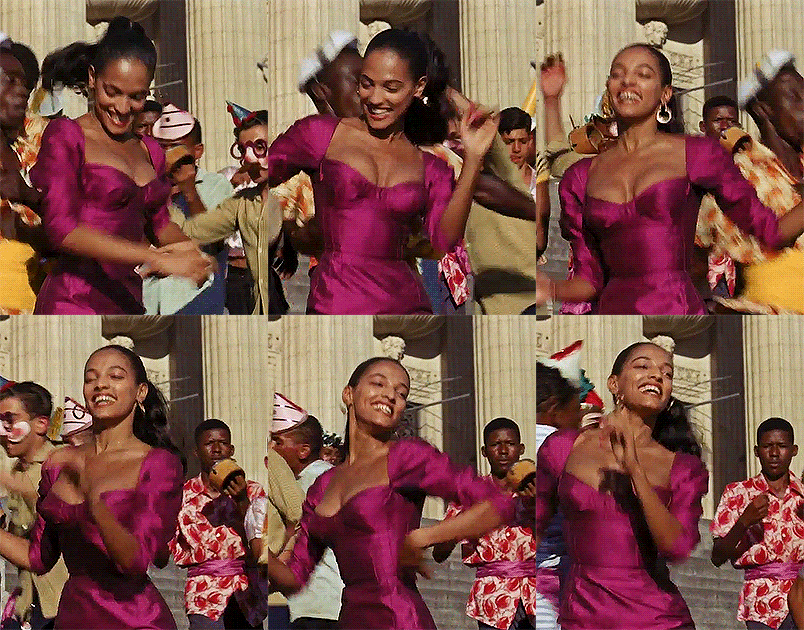
Em “Orfeu Negro” (1959), Orfeu é um motorista e músico – porque é raro viver de música no Brasil, e imagino que também o seja no resto do mundo. Os únicos dias em que ele pode se dedicar totalmente à música são os dias de Carnaval. E bem, qualquer coisa pode acontecer durante o Carnaval no Brasil: pessoas podem se apaixonar, viver experiências inesquecíveis, beijar, rir e chorar, e até mesmo a Morte pode visitar a Terra.

In “Black Orpheus” (1959), Orpheus is a driver and musician – because it's rare to be able to make a living only as a musician in Brazil, and I imagine elsewhere too. The only days he can be a full-time musician is during Carnival. And, well, anything can happen during Carnival in Brazil: people can fall in love, have unforgettable experiences, kiss, laugh and cry, and even Death can walk on Earth.


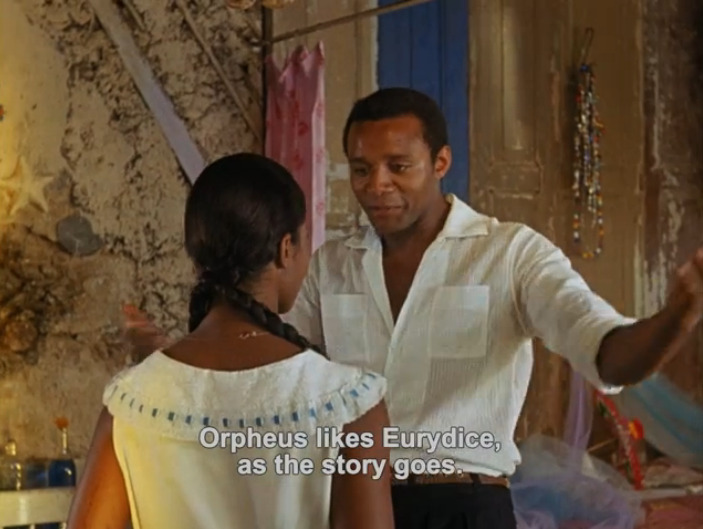
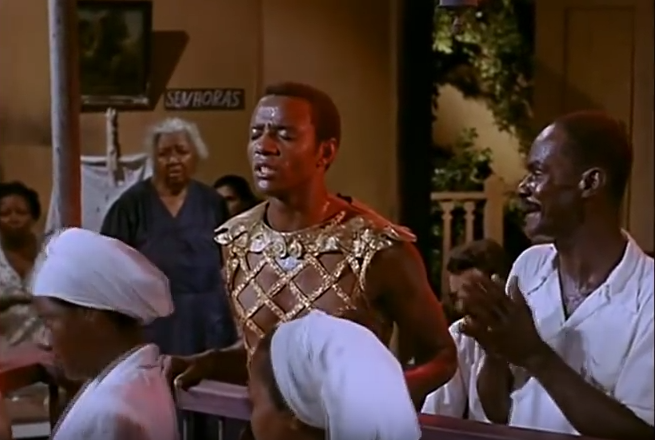
Durante o Carnaval, Orfeu (Breno Mello) conhece e se apaixona por Eurídice (Marpessa Dawn). Mas eles enfrentam problemas: Orfeu tem uma noiva, a ciumenta Mira (Lourdes de Oliveira), e Eurídice está sendo seguida por um estranho que está obcecado por ela. O estranho é a Morte disfarçada.

During Carnival Orpheus (Breno Mello) meets and falls in love with Eurydice (Marpessa Dawn). But there are problems: Orpheus has a fiancée, the jealous Mira (Lourdes de Oliveira), and Eurydice is being followed by a strange man who is obsessed with her. The strange man is actually Death disguised.


É interessante notar que os atores tinham pouca experiência prévia. Breno Mello era um jogador de futebol que, um dia, foi parado na rua pelo diretor Marcel Camus. Camus perguntou a Breno se ele queria fazer parte de um filme e ele foi escolhido – para ser o protagonista! - ali mesmo. Marpessa Dawn, nascida em Pittsburgh – daí vem seu nome exótico – havia feito TV na Inglaterra, mas foi como cantora e dançarina em clubes noturnos na França que ela conheceu Marcel Camus, com quem mais tarde se casou. Breno Mello e Marpessa Dawn faleceram em 2008, ele 42 dias antes dela.

It's interesting to notice that the actors had few previous acting experience. Breno Mello was a soccer player who was, one day, stopped in the streets by director Marcel Camus. Camus asked if Breno wanted to be in a movie, and he was casted – as the lead! - on the spot. Marpessa Dawn, born in Pittsburgh – what explains her exotic name – had been on TV in England, but it was as a singer and dancer in French nightclubs that she met Marcel Camus, whom she later married. Breno Mello and Marpessa Dawn passed away in 2008, 42 days apart.


Adhemar da Silva, que interpreta a Morte, tem uma história ainda mais curiosa: ele era bicampeão olímpico. Vindo de uma família pobre, Adhemar Ferreira da Silva decidiu se tornar atleta em 1947 porque gostou do som da palavra “atleta”. Adhemar competiu em salto triplo e ganhou medalhas de ouro nas Olimpíadas de 1952 e 1956. De acordo com muitas fontes, ele inventou a volta olímpica em 1952, quando correu ao redor do estádio após sua vitória para ficar mais perto do público. Em 1956, ele fez parte do elenco original de “Orfeu da Conceição”, e depois foi escolhido para fazer o filme. Um homem de muitos talentos, Adhemar da Silva ganhou vários campeonatos de salto triplo, falava sete línguas, cantava, tocava violão, foi jornalista, estudou  Belas Artes, Direito, Relações Públicas e Educação Física – e nunca fez outro filme depois de “Orfeu Negro”. Adhemar faleceu em 2001 – no mesmo dia em que o compositor que trabalhou no filme, Luiz Bonfá, também morreu.

Adhemar da Silva, who plays Death, has an even more curious background: he was a two-time Olympic gold medalist. Coming from a poor family, Adhemar Ferreira da Silva decided to become an athlete in 1947 because he liked the sound of the word “athlete”. Adhemar competed in triple jump and won gold medals in the 1952 and 1956 Olympics. According to many sources, he invented the victory lap in 1952, when he ran around the stadium after he won his first Olympic gold medal to greet the crowd. In 1956, he was part of the original play “Orfeu da Conceição”, and from them was hired to do the film. A man of many talents, Adhemar da Silva won several triple jump championships, spoke seven languages, sang, played the guitar, worked as a journalist, studied Art, Law, Public Relations and Physical Education – and never made another film after “Black Orpheus”. Adhemar passed away in 2001 – in the very same day the composer in the film, Luiz Bonfá, also died.


Esta falta de experiência na atuação foi responsável pelas performances naturais dos protagonistas. A falta de dinheiro também foi benéfica, porque ela fez com que Camus utilizasse melhor seus recursos, os recursos naturais ao seu redor, pois o filme foi rodado em uma favela, e não em um estúdio, usando os cenários e as pessoas do local.

This lack of acting experience was responsible for naturalistic performances from all the leads. The lack of money to shoot was also beneficial, because it made Camus use better his resources, there is, the natural resources he had around him, because the film was shot in a shanty town – a favela – and not in a studio, with its local houses and its local people.


“Orfeu Negro” ganhou a Palma de Ouro em Cannes e o Oscar de Melhor Filme em Língua Estrangeira. Como ele foi dirigido e produzido por franceses, o Oscar foi para a França, embora a história e todo o elenco fossem brasileiros.

“Black Orpheus” won the Palme D'Or at Cannes and the Oscar for Best Foreign Language Movie. Since it was directed and produced by French people, the Oscar went to France, even though the story and the whole cast were Brazilian.


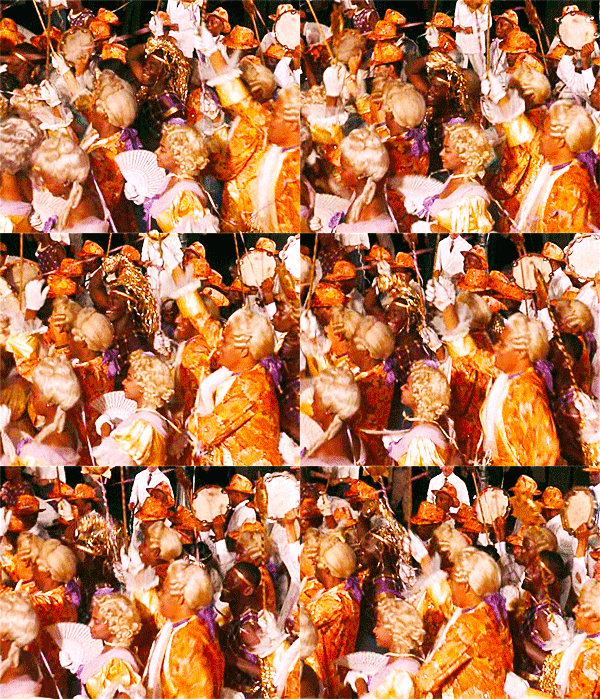
“Orfeu Negro” é um musical, misturando canções da peça, compostas por Antônio Carlos Jobim, e novas canções, escritas para o filme por Luiz Bonfá. Todas as músicas são igualmente adoráveis, e são perfeitas para se conhecer a bossa nova dos anos 50. Há também, obviamente, bastante samba, fotografado lindamente em Eastmancolor.

“Black Orpheus” is a musical, mixing songs from the play, written by Antônio Carlos Jobim, and new songs, written for the film by Luiz Bonfá. All tunes are equally engaging, and are perfect to get to know a little from what Brazilian music sounded like in the 1950s – the Bossa Nova. There is also, of course, a lot of samba, beautifully photographed in Eastmancolor.
 
Lourdes de Oliveira
A ideia de que “qualquer coisa pode acontecer durante o Carnaval” é interessante de ser explorada – porque é verdade. No entanto, o que algumas pessoas interpretam a partir de “Orfeu Negro” é que todo dia é Carnaval no Brasil: nós sempre estamos cantando e dançando, desfilando com roupas minúsculas, e não há lei por aqui. Posso dizer que isso não é verdade – quer dizer, a parte de não haver lei é quase verdade. Assim como “O Dragão da Maldade Contra o Santo Guerreiro” (1969), de Glauber Rocha, que depende muito de rituais e misticismo, “Orfeu Negro” pode criar uma má impressão do país.

The idea that “anything can happen during Carnival” is a good one to be explored – because really anything can happen during Carnival. However, what some people take from “Black Orpheus” is that every day is Carnival in Brazil: we're always singing and dancing, parading with diminutive clothes and there is no law here. I can say this is not truth – I mean, the part about there being no law is almost truth. Just like Glauber Rocha's “O Dragão da Maldade Contra o Santo Guerreiro” (1969), that relies too much on rituals and misticism, “Black Orpheus” can give a bad impression of the country.


Há muitas referências inteligentes à mitologia grega que farão a alegria dos espectadores que já conhecem a lenda de Orfeu e Eurídice – mas o filme pode ser visto também por aqueles que não a conhecem. Mais do que isso: mesmo que o filme tenha uma visão do colonizador acerca dos negros brasileiros, “Orfeu Negro” merece ser visto para ser aproveitado, sentido e discutido.

There are many clever references to Greek mythology that will delight the viewers who are already familiar with the legend of Orpheus and Eurydice – but the film can be viewed by those who don't know the legend as well. More than that: even though the film has the clear European vision of Brazilian black people, “Black Orpheus” deserves to be seen to be enjoyed, felt and discussed.

This is my contribution to the Box Office Jocks blogathon, hosted by Paul and J-Dub at Return to the 80’s and Dubsism.

Related Posts Plugin for WordPress, Blogger...