} Crítica Retrô: Orfeu Negro

Tradutor / Translator / Traductor / Übersetzer / Traduttore / Traducteur / 翻訳者 / переводчик

Showing posts with label Orfeu Negro. Show all posts

Tuesday, May 5, 2020

Orfeu (1950) / Orphée (1950)

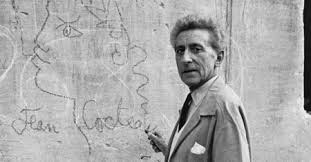
O que torna uma história um clássico? Como o diretor Jean Cocteau diz no começo de “Orfeu” (1950), uma lenda é uma história que ultrapassa as barreiras de tempo e espaço. É uma história universal, que pode acontecer em qualquer lugar, em qualquer momento, com qualquer um. O mesmo acontece com um clássico: é universal. Não importa quanto tempo se passou desde que o clássico surgiu, ele ainda mexe com a gente. E um clássico não é uma obra de arte orgulhosa: ele pode ser adaptado, mudado, subvertido – e ainda haverá uma bela história para ser contada. Esta subversão acontece com a lenda de Orfeu em “Orfeu” (1950), de Jean Cocteau.

What makes a classic? As director Jean Cocteau puts in the beginning of “Orpheus” (1950), a legend is a story beyond time and space. It’s a universal tale that can happen anywhere, anytime, with anyone. The same happens with a classic: it’s universal. No matter how long it has been since the classic appeared, it still speaks with us. And a classic is not a proud work of art either: it can be adapted, changed, subverted – and there will still be a beautiful story to be told. This subversion happens to the legend of Orpheus in Jean Cocteau’s “Orphée”, from 1950.

Orfeu (Jean Marais) é um poeta famoso. Um dia, ele está com um amigo no Café dos Poetas quando conhece Jacques Cegeste (Edouard Dermithe). Cegeste é um jovem poeta brilhante. Ele publicou um livro intitulado “Nudismo”: todas as páginas estão em branco. Cegeste é bancado financeiramente por uma mulher rica, conhecida simplesmente como A Princesa (María Casares). Orfeu fica intrigado com Cegeste, mas não tem tempo de conhecê-lo.

Orphée (Jean Marais) is a famous poet. One day, he is hanging out with a friend at the Poets’ Café when he meets Jacques Cegeste (Edouard Dermithe). Cegeste is a brilliant new poet. He has published a book called “Nudism”: all pages are blank. Cegeste is supported financially by a rich woman, known simply as The Princess (María Casares). Orphée finds Cegeste intriguing, but has no time to get to know him.

Cegeste é atropelado por uma motocicleta em frente ao Café dos Poetas. A Princesa o coloca no carro dela e pede que Orfeu venha com eles para “servir de testemunha”. Orfeu os segue, e percebe que Cesgeste já está morto. A Princesa leva o corpo de Cegeste para casa, onde ela revela sua verdadeira identidade: ela é a Morte. Orfeu, chocado, observa a Morte e Cegeste cruzando o limite entre a vida e a morte e desmaia.

Cegeste is run over by a motorcycle in front of the Poets’ Café. The Princess puts him in her car and asks Orphée to come with them “to serve as a witness”. Orphée goes with them, and realizes Cegeste is already dead. The Princess takes Cegeste’s body to her house, where she reveals to be… Death. A shocked Orphée sees Death and Cegeste crossing the limit between life and death and collapses.

No dia seguinte, Orfeu é levado para casa por Heurtebise (François Périer). A esposa de Orfeu, Eurídice (Marie Déa), está preocupada com o desaparecimento do marido, e ansiosa para contar para ele que ela está grávida. Orfeu não fica nem um pouco animado. Ele está agora obcecado com uma estação de rádio peculiar que dita pequenos versos – versos melhores do que qualquer coisa que ele já escreveu. Orfeu começa a mandar os versos que ouviu no rádio para o jornal e isso chama a atenção do comissário local, porque os versos são idênticos aos escritos de Cegeste, e Orfeu se torna suspeito de matar – ou ao menos sequestrar – Cegeste

The following day, Orphée is taken home by Heurtebise (François Périer). Orphée’s wife, Eurydice (Marie Déa), is worried about her husband’s disappearance, and longing to tell him she found out she’s pregnant. Orphée couldn’t be less thrilled. He is now obsessed with a peculiar radio station that dictates little verses – verses better than everything he ever wrote. Orphée starts sending the verses he hears on radio to the newspaper and it calls the attention of the local commissar, because the verses are just like Cegeste’s work, and Orphée becomes a suspect of killing – or at least kidnapping – Cegeste.

A Morte vem para Eurídice. Orfeu se desespera com a morte de sua esposa, e Heurtebise, que havia se apaixonado por Eurídice, decide ajudar, contando um segredo de outro mundo: “Olhe para um espelho sua vida toda e você verá a Morte trabalhando” – os espelhos são o que separam os vivos dos mortos. Orfeu cruza este limite para trazer sua esposa de volta, mas descobre que a Morte está apaixonada por ele.

Death comes for Eurydice. Orphée becomes desperate with the death of his wife, and Heurtebise, who had fallen in love with Eurydice, decides to help, telling an otherworldly secret: “Look at a mirror your whole life and you’ll see Death working” – mirror are the things that separate the living from the dead. Orphée crosses this limit in order to bring his wife back, but finds out that Death is in love with him.

Foi o próprio Cocteau que escreveu o roteiro, subvertendo a antiga lenda e criando dois malfadados casais: Orfeu e a Morte e Eurídice e Heurtebise. Cocteau também foi o narrado do filme. De certa forma, Cocteau criou uma “trilogia de Orfeu”: três filmes baseados na lenda. “Orfeu” é o segundo da trilogia, sendo os outros dois “Sangue de um Poeta” (1932) e “O Testamento de Orfeu” (1960), seu último filme.

It was Cocteau himself who wrote the screenplay, subverting the old legend and creating two doomed couples: Orphée and Death and Eurydice and Heurtebise. Cocteau also provided the narration. In a certain way, Cocteau built an “Orphic Trilogy”: three films based on the legend. “Orphée” is the second of the trilogy, the other two are “Blood of a Poet” (1932) and “Testament of Orpheus” (1960), his last film.
O compositor Georges Auric fez um excelente trabalho em “Orfeu”, em especial na cena em que Orfeu procura a Morte em uma rua movimentada. Auric teve uma longa carreira no cinema, começando com meu favorito, “A Nós a Liberdade” (1931), trabalhando várias vezes com Cocteau – como na obra-prima “A Bela e a Fera” (1946) –, arrasando em “Rififi” (1955) e até compondo para filmes de Hollywood como “César e Cleópatra” (1945), “A Princesa e o Plebeu” (1953) e “Mais Uma Vez, Adeus” (1961).

Composer Georges Auric did a wonderful job in “Orphée”, in special in the scene in which Orphée looks for Death in a busy street. Auric had a long career in film, starting with my personal favorite “A Nous la Liberté” (1931), working several times with Cocteau – like in his masterpiece “La Belle et la Bête” (1946) –, doing great in “Rififi” (1955) and even composing for Hollywood films such as “Cesar and Cleopatra” (1945), “Roman Holiday” (1953) and “Goodbye Again” (1961).

Nos anos 50, outra adaptação da lenda de Orfeu apareceria e se tornaria filme em 1959: “Orfeu Negro”, com a história ambientada no Rio de Janeiro durante o Carnaval. Esta versão é tão interessante quanto a de Cocteau. Cocteau conseguiu, ao recontar a história, mostrar que o amor após a morte é complicado, e o sacrifício é necessário para atingir a felicidade em todo lugar – até mesmo no submundo. Bravo.

In the 1950s, another adaptation of the legend of Orpheus would appear and become a film in 1959: “Black Orpheus”, with the story set in Rio de Janeiro during Carnaval. This version is as interesting as Cocteau’s. Cocteau managed, with his retelling, to show that love after death is a complicated thing, and sacrifice is necessary to be happy everywhere – even in the underworld. Bravo.

This is my contribution to the Love Goes On blogathon, hosted by Steve at MovieMovieBlogBlog II.

Saturday, February 2, 2019

Orfeu Negro (1959) / Black Orpheus (1959)


Era uma vez um homem chamado Orfeu. Ele se apaixonou por uma mulher chamada Eurídice, mas o romance deles era assombrado pela morte. Esta é a trama básica da lenda grega de Orfeu e Eurídice – na lenda, Orfeu é o filho do deus Apolo e da musa Calíope, e daí vem seu talento musical. Mas em 1959 Orfeu não precisou ser filho de um deus grego para ser um personagem inesquecível na adaptação tropical da lenda.

Once upon a time, there was a man named Orpheus. He fell in love with Eurydice, but their romance is closely watched by no other than Death. This is the basic storyline of the Greek legend of Orpheus and Eurydice – in the legend, Orpheus is the son of the god Apollo and the muse Calliope, hence his musical talent. But in 1959 Orpheus didn't need to be the son of a Greek god to be a remarkable character in the tropical adaptation of the legend.


O poeta e autor brasileiro Vinícius de Moraes escreveu o musical “Orfeu da Conceição” adaptando a lenda grega para a realidade do Rio de Janeiro. O musical estreou em 1956 – um ano antes de Tennessee Williams escrever sua peça “Orpheus Descending” - e foi um sucesso. As músicas foram compostas por Antônio Carlos Jobim, um dos músicos mais famosos do Brasil na época.

Brazilian poet and writer Vinícius de Moraes wrote the musical play “Orfeu da Conceição” adapting the Greek legend to the reality of Rio de Janeiro. The play opened in 1956 – one year before Tennessee Williams wrote his “Orpheus Descending” - and it was a success. The songs in the play were composed by Antônio Carlos Jobim, one of the most famous Brazilian musicians at the time.


A peça chamou a atenção do autor e diretor francês Marcel Camus. Camus fez uma proposta para adaptar a peça para o cinema, e escreveu o roteiro com Vinícius de Moraes e Jacques Viot. Camus também dirigiu o filme.

The play called the attention of the French author and filmmaker Marcel Camus. Camus made a proposition to adapt the play to the screen, and wrote the screenplay with Vinícius de Moraes and Jacques Viot. Camus ALSO directed the movie.
 
Marcel Camus

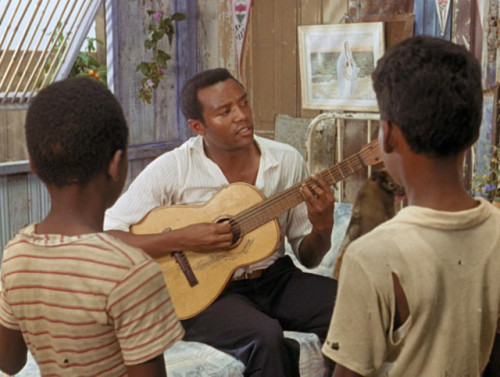
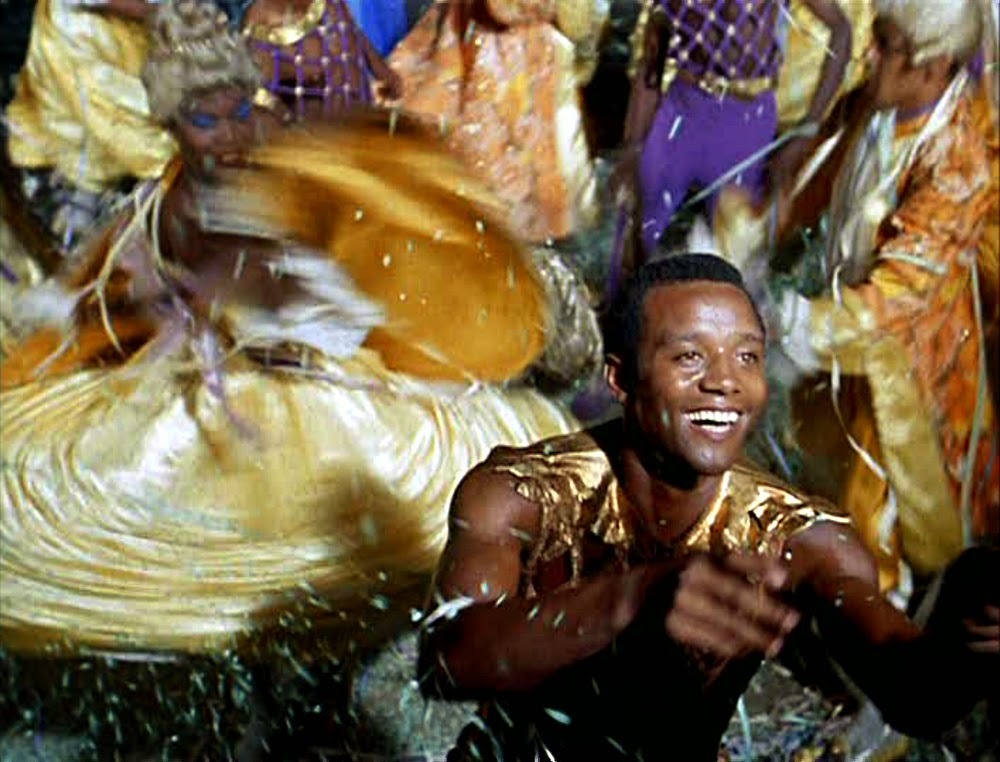
Em “Orfeu Negro” (1959), Orfeu é um motorista e músico – porque é raro viver de música no Brasil, e imagino que também o seja no resto do mundo. Os únicos dias em que ele pode se dedicar totalmente à música são os dias de Carnaval. E bem, qualquer coisa pode acontecer durante o Carnaval no Brasil: pessoas podem se apaixonar, viver experiências inesquecíveis, beijar, rir e chorar, e até mesmo a Morte pode visitar a Terra.

In “Black Orpheus” (1959), Orpheus is a driver and musician – because it's rare to be able to make a living only as a musician in Brazil, and I imagine elsewhere too. The only days he can be a full-time musician is during Carnival. And, well, anything can happen during Carnival in Brazil: people can fall in love, have unforgettable experiences, kiss, laugh and cry, and even Death can walk on Earth.


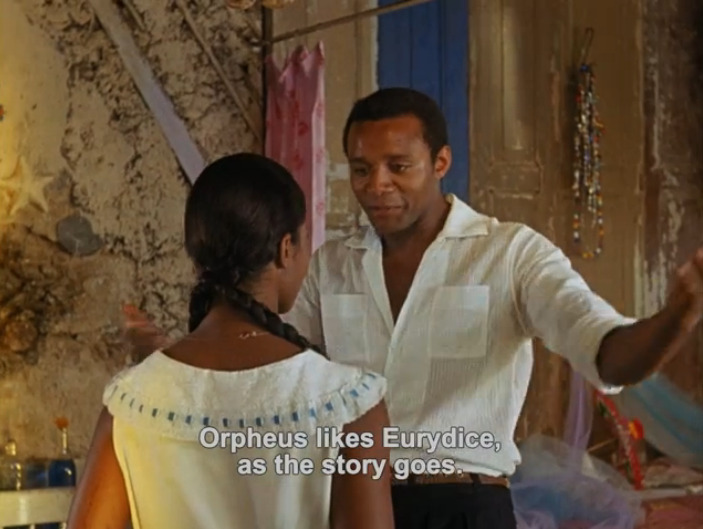
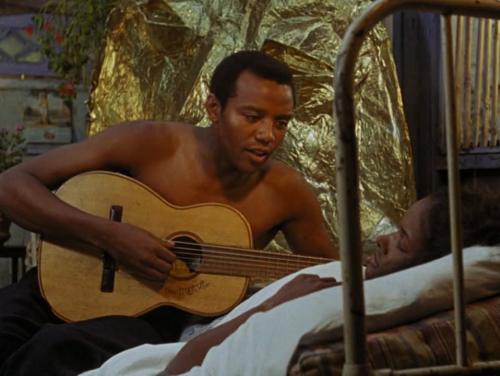
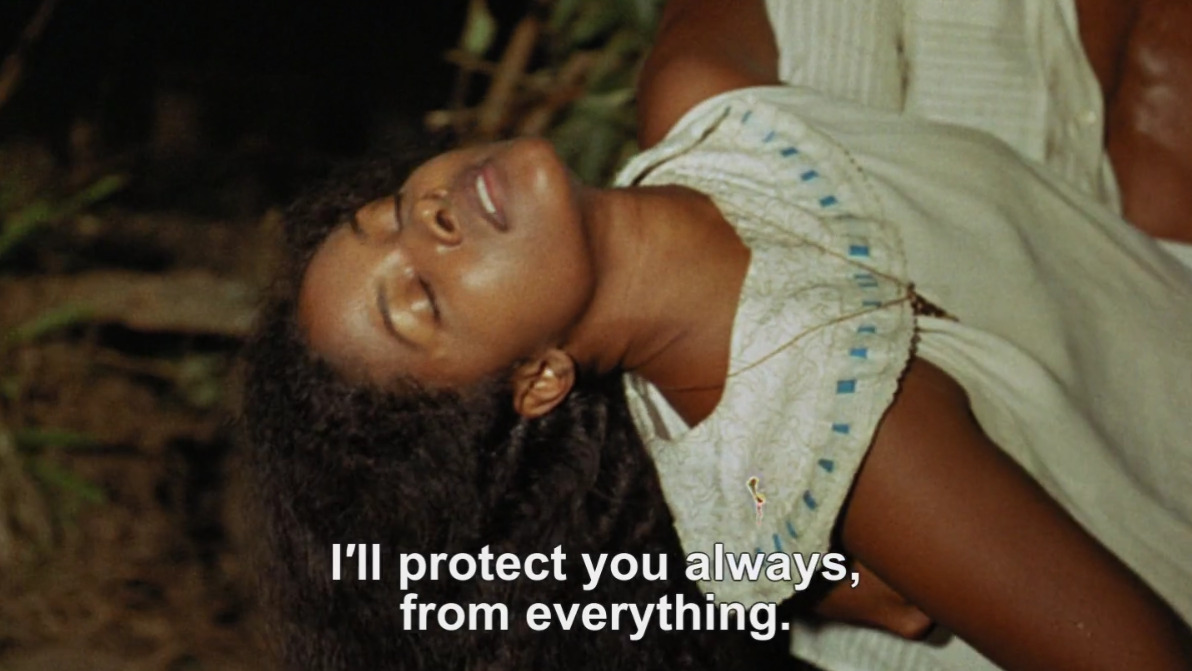
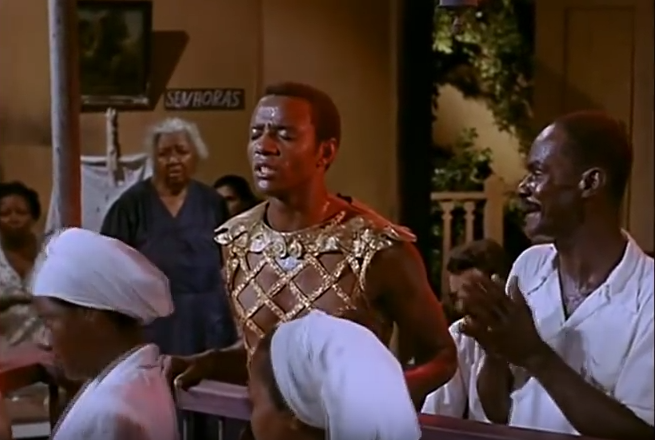
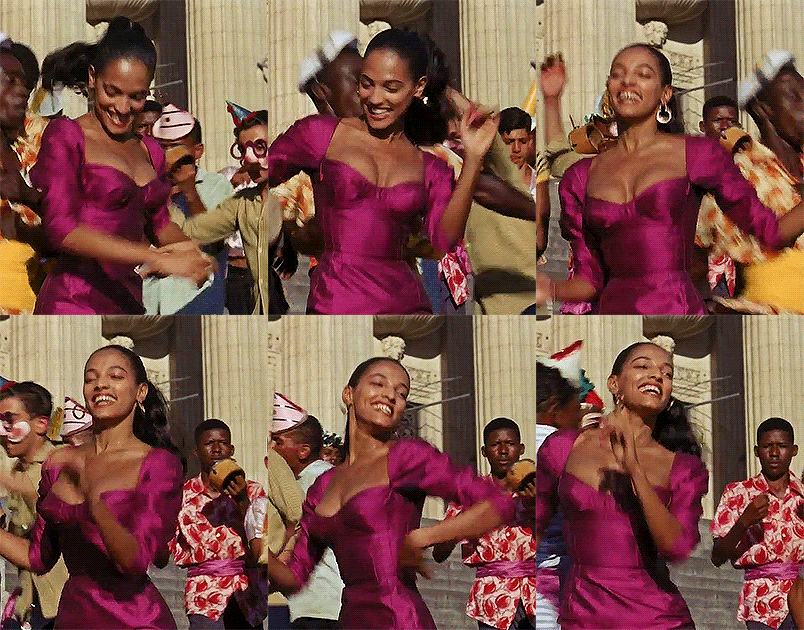
Durante o Carnaval, Orfeu (Breno Mello) conhece e se apaixona por Eurídice (Marpessa Dawn). Mas eles enfrentam problemas: Orfeu tem uma noiva, a ciumenta Mira (Lourdes de Oliveira), e Eurídice está sendo seguida por um estranho que está obcecado por ela. O estranho é a Morte disfarçada.

During Carnival Orpheus (Breno Mello) meets and falls in love with Eurydice (Marpessa Dawn). But there are problems: Orpheus has a fiancée, the jealous Mira (Lourdes de Oliveira), and Eurydice is being followed by a strange man who is obsessed with her. The strange man is actually Death disguised.


É interessante notar que os atores tinham pouca experiência prévia. Breno Mello era um jogador de futebol que, um dia, foi parado na rua pelo diretor Marcel Camus. Camus perguntou a Breno se ele queria fazer parte de um filme e ele foi escolhido – para ser o protagonista! - ali mesmo. Marpessa Dawn, nascida em Pittsburgh – daí vem seu nome exótico – havia feito TV na Inglaterra, mas foi como cantora e dançarina em clubes noturnos na França que ela conheceu Marcel Camus, com quem mais tarde se casou. Breno Mello e Marpessa Dawn faleceram em 2008, ele 42 dias antes dela.

It's interesting to notice that the actors had few previous acting experience. Breno Mello was a soccer player who was, one day, stopped in the streets by director Marcel Camus. Camus asked if Breno wanted to be in a movie, and he was casted – as the lead! - on the spot. Marpessa Dawn, born in Pittsburgh – what explains her exotic name – had been on TV in England, but it was as a singer and dancer in French nightclubs that she met Marcel Camus, whom she later married. Breno Mello and Marpessa Dawn passed away in 2008, 42 days apart.


Adhemar da Silva, que interpreta a Morte, tem uma história ainda mais curiosa: ele era bicampeão olímpico. Vindo de uma família pobre, Adhemar Ferreira da Silva decidiu se tornar atleta em 1947 porque gostou do som da palavra “atleta”. Adhemar competiu em salto triplo e ganhou medalhas de ouro nas Olimpíadas de 1952 e 1956. De acordo com muitas fontes, ele inventou a volta olímpica em 1952, quando correu ao redor do estádio após sua vitória para ficar mais perto do público. Em 1956, ele fez parte do elenco original de “Orfeu da Conceição”, e depois foi escolhido para fazer o filme. Um homem de muitos talentos, Adhemar da Silva ganhou vários campeonatos de salto triplo, falava sete línguas, cantava, tocava violão, foi jornalista, estudou  Belas Artes, Direito, Relações Públicas e Educação Física – e nunca fez outro filme depois de “Orfeu Negro”. Adhemar faleceu em 2001 – no mesmo dia em que o compositor que trabalhou no filme, Luiz Bonfá, também morreu.

Adhemar da Silva, who plays Death, has an even more curious background: he was a two-time Olympic gold medalist. Coming from a poor family, Adhemar Ferreira da Silva decided to become an athlete in 1947 because he liked the sound of the word “athlete”. Adhemar competed in triple jump and won gold medals in the 1952 and 1956 Olympics. According to many sources, he invented the victory lap in 1952, when he ran around the stadium after he won his first Olympic gold medal to greet the crowd. In 1956, he was part of the original play “Orfeu da Conceição”, and from them was hired to do the film. A man of many talents, Adhemar da Silva won several triple jump championships, spoke seven languages, sang, played the guitar, worked as a journalist, studied Art, Law, Public Relations and Physical Education – and never made another film after “Black Orpheus”. Adhemar passed away in 2001 – in the very same day the composer in the film, Luiz Bonfá, also died.


Esta falta de experiência na atuação foi responsável pelas performances naturais dos protagonistas. A falta de dinheiro também foi benéfica, porque ela fez com que Camus utilizasse melhor seus recursos, os recursos naturais ao seu redor, pois o filme foi rodado em uma favela, e não em um estúdio, usando os cenários e as pessoas do local.

This lack of acting experience was responsible for naturalistic performances from all the leads. The lack of money to shoot was also beneficial, because it made Camus use better his resources, there is, the natural resources he had around him, because the film was shot in a shanty town – a favela – and not in a studio, with its local houses and its local people.


“Orfeu Negro” ganhou a Palma de Ouro em Cannes e o Oscar de Melhor Filme em Língua Estrangeira. Como ele foi dirigido e produzido por franceses, o Oscar foi para a França, embora a história e todo o elenco fossem brasileiros.

“Black Orpheus” won the Palme D'Or at Cannes and the Oscar for Best Foreign Language Movie. Since it was directed and produced by French people, the Oscar went to France, even though the story and the whole cast were Brazilian.


“Orfeu Negro” é um musical, misturando canções da peça, compostas por Antônio Carlos Jobim, e novas canções, escritas para o filme por Luiz Bonfá. Todas as músicas são igualmente adoráveis, e são perfeitas para se conhecer a bossa nova dos anos 50. Há também, obviamente, bastante samba, fotografado lindamente em Eastmancolor.

“Black Orpheus” is a musical, mixing songs from the play, written by Antônio Carlos Jobim, and new songs, written for the film by Luiz Bonfá. All tunes are equally engaging, and are perfect to get to know a little from what Brazilian music sounded like in the 1950s – the Bossa Nova. There is also, of course, a lot of samba, beautifully photographed in Eastmancolor.
 
Lourdes de Oliveira
A ideia de que “qualquer coisa pode acontecer durante o Carnaval” é interessante de ser explorada – porque é verdade. No entanto, o que algumas pessoas interpretam a partir de “Orfeu Negro” é que todo dia é Carnaval no Brasil: nós sempre estamos cantando e dançando, desfilando com roupas minúsculas, e não há lei por aqui. Posso dizer que isso não é verdade – quer dizer, a parte de não haver lei é quase verdade. Assim como “O Dragão da Maldade Contra o Santo Guerreiro” (1969), de Glauber Rocha, que depende muito de rituais e misticismo, “Orfeu Negro” pode criar uma má impressão do país.

The idea that “anything can happen during Carnival” is a good one to be explored – because really anything can happen during Carnival. However, what some people take from “Black Orpheus” is that every day is Carnival in Brazil: we're always singing and dancing, parading with diminutive clothes and there is no law here. I can say this is not truth – I mean, the part about there being no law is almost truth. Just like Glauber Rocha's “O Dragão da Maldade Contra o Santo Guerreiro” (1969), that relies too much on rituals and misticism, “Black Orpheus” can give a bad impression of the country.


Há muitas referências inteligentes à mitologia grega que farão a alegria dos espectadores que já conhecem a lenda de Orfeu e Eurídice – mas o filme pode ser visto também por aqueles que não a conhecem. Mais do que isso: mesmo que o filme tenha uma visão do colonizador acerca dos negros brasileiros, “Orfeu Negro” merece ser visto para ser aproveitado, sentido e discutido.

There are many clever references to Greek mythology that will delight the viewers who are already familiar with the legend of Orpheus and Eurydice – but the film can be viewed by those who don't know the legend as well. More than that: even though the film has the clear European vision of Brazilian black people, “Black Orpheus” deserves to be seen to be enjoyed, felt and discussed.

This is my contribution to the Box Office Jocks blogathon, hosted by Paul and J-Dub at Return to the 80’s and Dubsism.

Friday, February 12, 2016

O Brasil e o Oscar – ou a traumática falta dele

Brazil and the Oscars – or the traumatic lack of one

O Brasil pode ter muitas coisas de que se orgulhar: linda natureza, animado carnaval, povo simpático, biodiversidade incrível, cinco títulos de Copas do Mundo. Mesmo assim, o povo ainda amarga uma questão: não temos nenhum Oscar.

Brazil might have many things to be proud of: beautiful nature, exciting Carnaval, nice people, incredible fauna, five World Cups. But the people still mourns one thing: we don’t have any Oscars.

Há todo um clima de união quando um filme brasileiro é indicado à estatueta. De repente, toda a nação se junta em torno desse filme, que passa a ser “o Brasil no Oscar”: nossa grande esperança de mostrar que também temos cultura. Em nenhum outro país uma indicação ao Oscar é capaz de unir um povo, ou os americanos seriam o povo mais unido e contente do mundo.

There is a whole union feeling when a Brazilian film is nominated for the award. Suddenly, the whole nation unites over this film, then considered “Brazil at the Oscars”: out huge hope about showing that we also have a worthwhile culture. In no other country in the world na Oscar nomination is able to unite the people, or else the Americans would be the most united and happiest people in the world.

Em 1960, logo após surgir o prêmio de Melhor Filme em Língua Estrangeira (que até então era uma categoria honorária, sem concorrentes anunciados com antecedência), o Brasil chegou a ganhar o Oscar, mas não levou. Vamos explicar: o roteiro, o elenco, a música, quase tudo era brasileiro em “Orfeu Negro”, que adapta a lenda de Orfeu para a época do Carnaval. Mas o produtor e o diretor do longa-metragem eram franceses, e assim uma produção 100% tropical rendeu mais um Oscar... à França.

In 1960, right after the award for Best Film in a Supporting Language was created (it was until then an honorary category, without nominees announced), Brazil won an Oscar, but didn’t take it home. Let’s explain: the script, cast, songs, almost everything was Brazilian in “Black Orpheus”, an adptation of the Orpheus legend to the Brazilian Carnaval. But the producer and the director were French, and because of this na otherwise 100% tropical production won another Oscar... for France.


Quatro filmes brasileiros foram indicados ao Oscar de Melhor Filme em Língua Estrangeira: “O Pagador de Promessas” (1962), “O Quatrilho” (1994), “O que é isso, companheiro?” (1997) e “Central do Brasil” (1998). Tínhamos a esperança de sermos indicados novamente com o tocante “Que Horas ela Volta?” (2015), mas o filme ficou de fora até mesmo da lista de pré-finalistas e, convenhamos, não tinha chance contra “O Filho de Saul”, produção húngara sobre o Holocausto.

Four Brazilian movies were nominated for the Best Foreign Language Film at the Oscars: “The Given Word” (1962), “O Quatrilho” (1994), “Four Days in September” (1997) and “Central Station” (1998). We had hopes to be nominated again with the touching “The Second Mother” (2015), but the film was shut out even from the shortlist and, we must see it, had no chance against “Son of Saul”, Hungarian production about the Holocaust.

O que é isso, companheiro? / Four days in September

O Pagador de Promessas”, se feito na Itália, poderia ser considerado uma obra-prima do Neorrealismo. Explorando um tema universal, tem todos os ingredientes de um filme estrangeiro inesquecível, capaz de comover pessoas de qualquer nacionalidade. O vencedor daquele ano foi, entretanto, “Sundays and Cybele / Les dimanches de Ville D’Avray”, um filme pouco conhecido.

“The Given Word”, if made in Italy, would be considered a masterpiece of Neorealism. With an universal theme, it has all the ingredients of an unforgettable foreign film, that can move people from all nationalities. The winner that year was “Sundays and Cybele / Les dimanches de Ville D’Avray”, a lesser-known film.

A criatividade do cinema brasileiro foi cortada brutalmente em 1964, quando ocorreu o golpe militar. Nos 21 anos seguintes, o governo censurou muitos filmes. Os filmes independentes tratavam de temas mais imediatos e políticos de forma sutil, sem grande apelo internacional.

The very creative Brazilian cinema suffered a hard blow in 1964, when a military coup d’etat happened. In the 21 years that followed, the government censored many movies. Independent films were made about more immediate and political issues in a subtle way, without much international appeal.

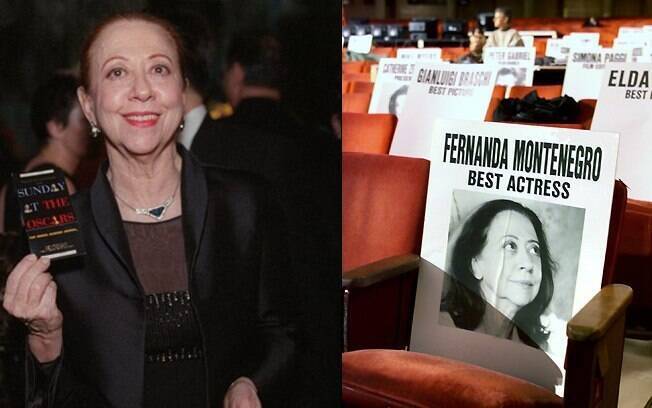
A retomada do cinema brasileiro começa oficialmente em 1995. Em 1999, uma surpresa agradável: além de “Central do Brasil” ter sido indicado como Filme em Língua Estrangeira, a maior atriz do país, Fernanda Montenegro, foi indicada ao prêmio de Melhor Atriz. Cate Blanchett era a favorita, mas em uma noite esquisita, foi Gwyneth Paltrow que ganhou a estatueta, gerando um ódio que muitos cinéfilos brasileiros alimentam contra ela até hoje. Quanto ao Melhor Filme em Língua Estrangeira, o prêmio ficou com “A Vida é Bela”, e arrisco dizer que, se este comovente filme de Roberto Benigni não estivesse na competição naquele ano, teríamos um Oscar para chamar de nosso.

Brazilian cinema is officialy reborn in 1995. In 1999, a pleasant surprise: besides being nominated as Best Foreign Language Film, “Central Station” also led Fernanda Montenegro, considered the finest actress of the country, to be nominated as Best Actress. Cate Blanchett was the favorite, but in a weird night, Gwyneth Paltrow won the award, generating a hatred that many Brazilian cinephiles still have against her. For the Best Foreign Language Film, the award went to “Life in Beautiful”, and I dare to say that, if this moving film by Roberto Benigni wasn’t competing that year, we’d have an Oscar to call ours. 


Em 2002, “Cidade de Deus” não foi indicado na categoria Filme em Língua Estrangeira, mas conseguiu indicações para Edição, Roteiro Adaptado, Fotografia e Diretor, iniciando uma carreira internacional para o diretor Fernando Meirelles. Lembre-se também de que outro brasileiro de sucesso no exterior é Carlos Saldanha, que trabalhou no curta-metragem ganhador do Oscar “Bunny” em 1998, criou o esquilo Scrat da franquia “A Era do Gelo” e dirigiu outro curta-metragem indicado à estatueta, “Gone Nutty” (2002).

In 2002, “City of God” wasn’t nominated among the foreign films, but was in categories such as Editing, Adapted Screenplay, Cinematography and Director, igniting diretor Fernando Meirelles’s international career. Another Brazilian who is successful abroad is Carlos Saldanha, who worked in the Oscar-winning short “Bunny” in 1998, created Scrat the squirrel from the “Ice Age” franchise and directed another short nominated for an Oscar, “Gone Nutty” (2002).

Excluindo os indicados na categoria mais óbvia, o Brasil também já esteve na disputa nas categorias Documentário (com “Lixo Extraordinário”, 2010, e “O sal da Terra”, 2014), Canção Original (quando a animadíssima “Real in Rio” perdeu para “Man or Muppet”, uma música bem ao gosto americano) e Curta-Metragem Live-Action (com “Uma História de Futebol” em 2000). Em 2016, “O Menino e o Mundo” foi indicado na categoria Animação e fez uma grande e bem-sucedida campanha de crowdfunding, mas é provável que o ganhador seja o favorito “Divertida Mente”, elogiado filme da Pixar.

Excluding the nominees in the most obvious category, Brazil was also nominated in the categories Documentary (with “Waste Land”, 2010, and “The Salt of the Earth”, 2014), Original Song (when the groovy “Real in Rio” lost for the shaped-for-American-taste “Man or Muppet) and “Live-Action Short (with “Uma História do Futebol” in 2000). In 2016, “Boy and the World” was nominated in the Animation category and made a successful crowdfunding campaign, but the winner will probably be the favorite “Inside Out”, the acclaimed Pixar movie.

Nós ainda não ganhamos o Oscar. Mas filmes importantes, provocativos e surpreendentemente sensíveis estão sendo produzidos e exportados pelo Brasil, como “Hoje eu quero voltar sozinho / The way he looks” (2014) e “Que horas ela volta? / The Second Mother” (2015). A ditadura tentou destruir a criatividade do cinema brasileiro, mas nossos cineastas se reergueram e estamos evoluindo. Um dia ainda realizaremos o sonho da estatueta dourada – e eu quero estar lá para ver isso acontecer.

We haven’t got an Oscar yet. But importante, provocative and surprisingly sensitive films are being made and exported by Brazil, like “The way he looks” (2014) and “The Second Mother” (2015). The dictatorship tried to destroy the creativity in Brazilian film, but our filmmakers persevered and we’re evolving. One day we’ll fullfil the dream to have the Golden statue – and I will want to be there to witness it. 

Um dia o meme vai acabar!

This is my contribution to the 31 Days of Oscar Blogathon, hosted by the mighty trio Aurora, Kellee and Paula at Citizen Screen, Outspoken & Freckled and Paula’s Cinema Club.
Related Posts Plugin for WordPress, Blogger...