} Crítica Retrô: 1940

Tradutor / Translator / Traductor / Übersetzer / Traduttore / Traducteur / 翻訳者 / переводчик

Showing posts with label 1940. Show all posts

Monday, December 30, 2019

Kitty Foyle (1940)


O que te faz querer ver um filme? É o elenco, o diretor ou a sinopse? Você tem uma lista de filmes para assistir? Você se planeja com antecedência ou assiste a qualquer coisa que encontrar na TV ou no streaming? Você se importa com os prêmios que um filme ganhou ou isso é irrelevante? Estou perguntando porque há muitos, muitos filmes para ver, e algum critério deve ser aplicado para que possamos escolher quais filmes ver e quais deixar passar. “Kitty Foyle”, de 1940, por exemplo, parecia digno de ser visto por ter trazido a única indicação ao Oscar de Ginger Rogers... e ela ganhou o Oscar! E, de fato, “Kitty Foyle” me fez refletir bastante.

What makes you want to watch a movie? Is it the cast, the director or the synopsis? Do you have a watch list? Do you plan ahead or do you watch whatever is on TV or streaming? Do you care if a film has won awards or isn’t it relevant for you? I’m asking because there are many, many movies to see, and some criteria must be applied for us to choose which ones to check and which ones to ignore. “Kitty Foyle”, from 1940, for instance, seemed worth checking out because it brings Ginger Roger’s only Oscar nomination… and she won that Oscar! And, indeed, “Kitty Foyle” made me think a lot.
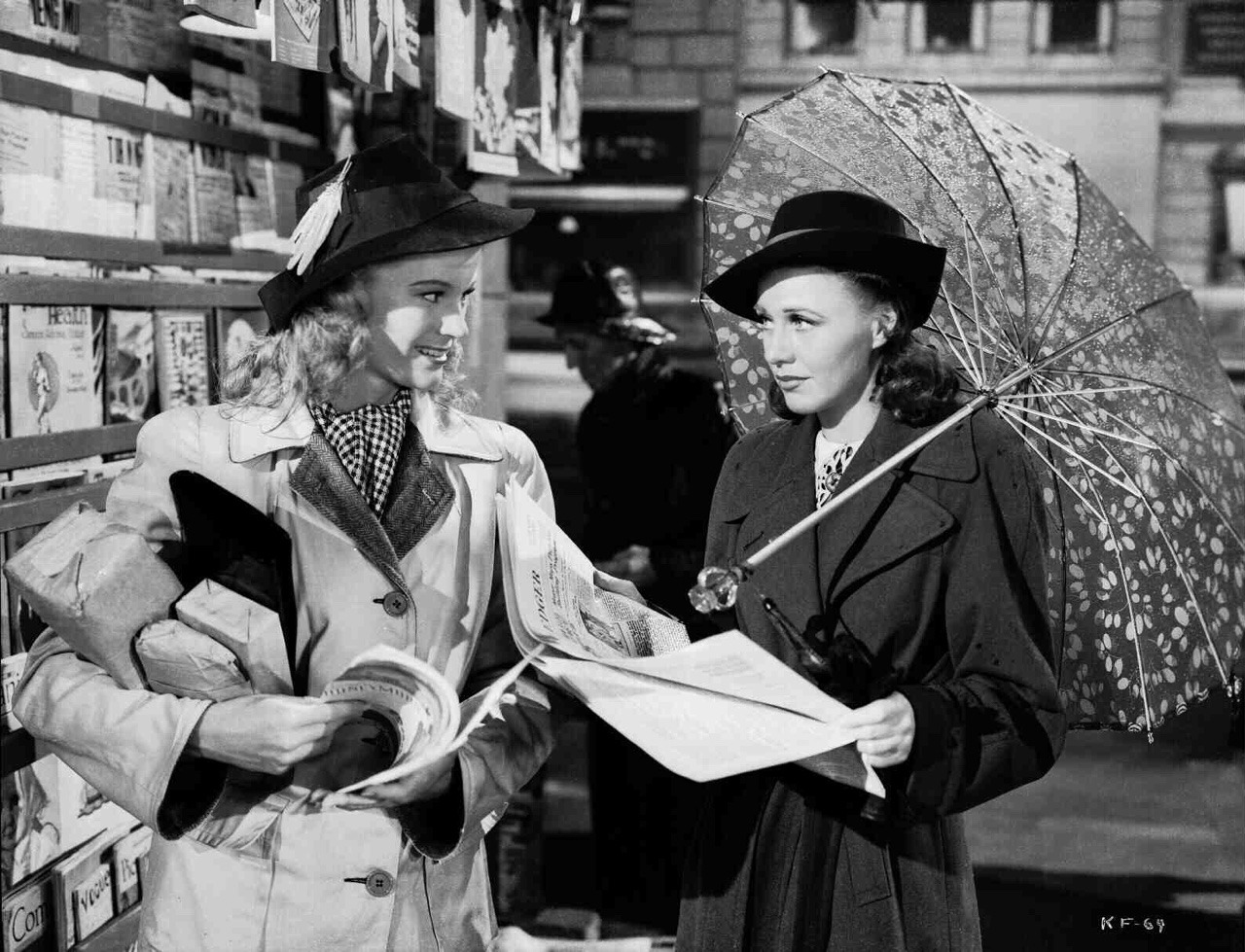

O começo do filme é de doer: em uma breve sequência ambientada no começo do século XX, o filme mostra uma jovem vivendo uma vida perfeita, completa com marido e filhos. A mulher decide “descer de seu pedestal” e perder “privilégios” para conseguir direitos iguais – isto é, poder votar e trabalhar fora de casa. Já dá para perceber que o livro “Kitty Foyle” e o roteiro do filme foram escritos por homens?

The beginning of the film is cringe worthy: in a brief sequence set in the 1900s, the film shows a girl living the perfect life, complete with husband and kids. The woman decided to “climb down her pedestal” and lose her “privileges” in order to achieve equal rights – that is, to be able to vote and join the workforce. Can you see that the novel “Kitty Foyle” was written by a man, and so was the screenplay?


Kitty (uma Ginger Rogers morena) é uma jovem trabalhadora dos anos 40 tendo que escolher entre dois pretendentes. Uma noite, após sair do trabalho, ela acompanha seu namorado médico Mark (James Craig) até a casa de uma paciente. Lá ele ajuda no parto de um bebê e, quando Kitty o ajuda e segura o bebê, ele a pede em casamento. Ela aceita e ainda diz que se sente “tão completa” segurando aquele bebê. Eles planejam se casar naquela mesma noite, mas quando Kitty chega à pensão onde vive, ela encontra seu outro pretendente, Wyn (Dennis Morgan). Só há um problema: Wyn quer ficar com ela, mas se recusa a se divorciar de sua esposa.

Kitty (a brunette Ginger Rogers) is a 1940s “white-collar girl” having to choose between two beaus. One night, after leaving her work, she accompanies her doctor boyfriend Mark (James Craig) to a patient's house. There he helps deliver a baby and, when Kitty helps him and holds the baby, he proposes to her. She says yes, and also says that she feels “so right” holding that baby. They plan to get married that same night, but when Kitty arrives at the boarding house she lives in, she finds her other beau, Wyn (Dennis Morgan). There is only a problem: Wyn wants to be with her, but he won't divorce his wife.


Uma sequência em flashback nos mostra que Kitty havia trabalhado para Wyn como datilógrafa. Em um gesto que deveria ser romântico, mas que se parece mais com assédio no trabalho, ele confessa seu amor por ela. E ela não conhece Mark em circunstâncias mais convenientes: ele a ajuda quando ela acidentalmente dispara o alarme da loja em que havia sido recém-contratada, e ele a chantageia para que ela aceite sair com ele.

A flashback sequence shows us that Kitty had worked for Wyn as a typist. In a move that should be romantic but looks more like workplace harassment, he confesses he loves her. And she doesn't meet Mark in more convenient circumstances either: he helps her when she accidentally sounds the alarm from the store she has just started working in and he humorously blackmails her to go on a date with him.
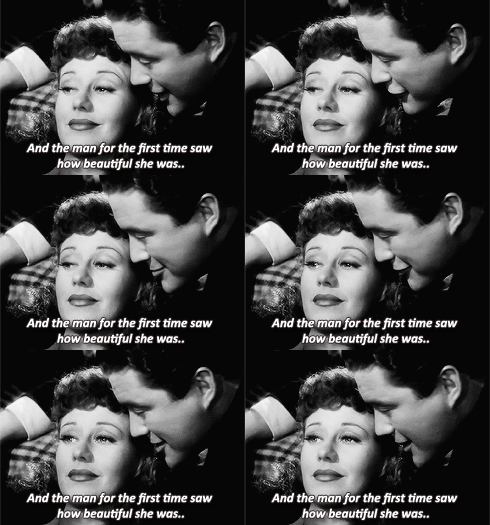

Há momentos mais progressistas no filme. Em um deles, Kitty enfrenta a família rica de Wyn, quando descobre que ele só poderia usar o dinheiro de sua herança se ele e ela vivessem na casa da família. Quando ela protesta por “gente morta poder ditar como Wyn vive sua vida”, nós quase nos esquecemos do discurso datado do começo.

There are more progressive moments in the film. In one of them, Kitty faces Wyn's rich family, when learning that he would only use his inheritance money if he and she lived in the family property. As she protests about how “dead people can say how Wyn must live his life”, we almost forget about the dated speech from the beginning.
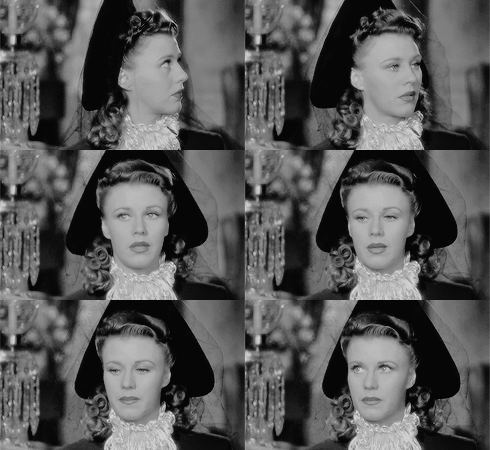

O filme também lida com gravidez fora do casamento, mas encontra uma maneira muito convencional de rapidamente se livrar do assunto. Curiosamente, o livro era muito mais controverso – ele era vendido como “a novela mais ousada sobre uma mulher a ser escrita por um homem” – mas quase todos os temas controversos foram excluídos do roteiro por causa do Código Hays. Mais uma vez, o Código arruinou um filme – afinal, não podemos nos esquecer de que, na época, até a palavra “grávida” era proibida no cinema.

The film also deals with pregnancy out of wedlock, but it finds a very conventional way to quickly erase the subject. Interestingly, the novel was much more controversial – it was marketed as “the most daring novel ever written by a man about a woman” – but nearly all controversial themes had to be excluded from the screenplay due to the Hays Code. Once again, the Code has ruined a movie – after all, let’s not forget that back in the day even the word “pregnant” was forbidden in a film.

O título completo do filme é: “Kitty Foyle – A história natural de uma mulher”.  Isto é revelador, como se contentar-se com menos, com o mais conveniente, fosse o destino de todas as mulheres. Eu costumo dizer que se a poligamia fosse normalizada, 90% de todas as tramas de filmes perderiam o sentido. Isso aconteceria aqui, onde Kitty tem de escolher entre um homem que ela ama demais, mas com quem seu futuro é incerto, e um homem que ela não aprecia muito, mas com quem seu futuro será seguro.

The full title of the film is: “Kitty Foyle – The natural history of a woman”. This is revealing, as if settling for less, for the most convenient, was the fate of all women. I usually say that if polygamy was normalized, 90% of all film plots would stop working. This would happen here, where Kitty needs to choose between a man she loves deeply, but with whom her future is uncertain, and a man that she doesn’t like so much, but with whom her future will be safe.


Gostar de coisas antigas não significa ter valores antiquados. Eu não gostaria de ter nascido nos anos 1930. Eu sei que, se eu tivesse nascido naquela época, minha chance de ser uma mulher comum, dona de casa e mãe, seria muito maior do que minha chance de ter sido uma mulher trabalhadora e independente. Eu acredito que meu ponto de vista feminista é algo único que eu trago para minhas críticas, e tenho de apontar detalhes antiquados em filmes como “Kitty Foyle” para que possamos parar de romantizar a Era de Ouro do cinema como uma época melhor. Ela certamente não foi melhor para todos – talvez apenas para os homens brancos e heterossexuais, e é ótimo que nós, como sociedade, estejamos mudando isso.

Liking vintage things does not mean having vintage values. I don't wish I was born in the 1930s. I know that, if I was born back then, my chance of being a common woman, housewife and mother, would be much bigger than my chance of being an independent career woman. I believe that my feminist point of view is something unique I add to my reviews, and I have to point out those dated details in films like “Kitty Foyle” for us to sometimes stop romanticizing the Golden Age of Film as a better time. It certainly wasn’t better for all – maybe only for straight white man, and it’s so good that we, as a society, are changing this.

O roteiro foi escrito por Dalton Trumbo, com ajuda de Donald Ogden Stewart, mas ele pouco se parece com os melhores trabalhos destes grandes escritores. A história é romântica e por vezes engraçada, mas não tem o charme de “A Princesa e o Plebeu” (1953) de Trumbo e de “Núpcias de Escândalo” (1940) de Stewart.

The screenplay was written by Dalton Trumbo with help from Donald Ogden Stewart, but it hardly looks like the best works by those great writers. The story is romantic and sometimes funny, but lacks the charm of Trumbo’s “Roman Holiday” (1953) and Stewart’s “The Philadelphia Story” (1940).
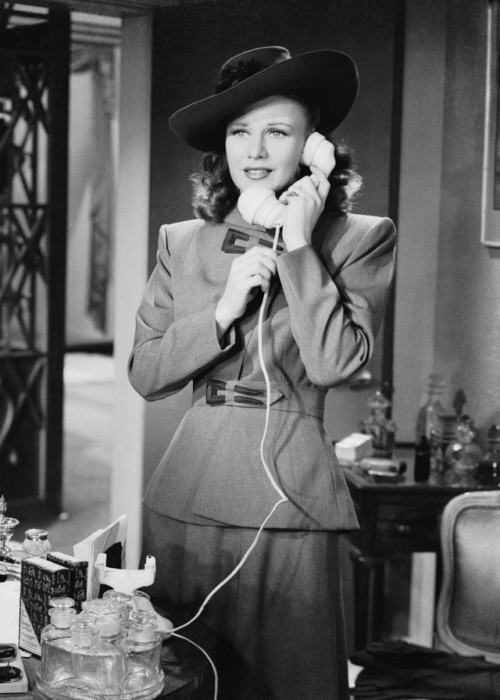

Aliás, Ginger ganhou o Oscar derrotando Katharine Hepburn, de “Núpcias de Escândalo” – que havia se recusado a fazer “Kitty Foyle” – e outras indicadas cujas performances parecem ter merecido mais o prêmio do que ela: Joan Fontaine em “Rebecca” (1940) e a melhor de todas as indicadas, Bette Davis em “A Carta” (1940). Ah, e devemos nos lembrar de que Vivien Leigh sequer foi indicada por sua performance arrebatadora em “A Ponte de Waterloo” (1940)!

By the way, Ginger won her Oscar over Katharine Hepburn, from “The Philadelphia Story” – who had refused to star in “Kitty Foyle” – and other nominees whose performances seem more deserving than hers: Joan Fontaine in “Rebecca” (1940) and, the best of the bunch, Bette Davis in “The Letter”. Oh, and we must remember that Vivien Leigh wasn’t even nominated for her heartbreaking performance in “Waterloo Bridge” (1940)!


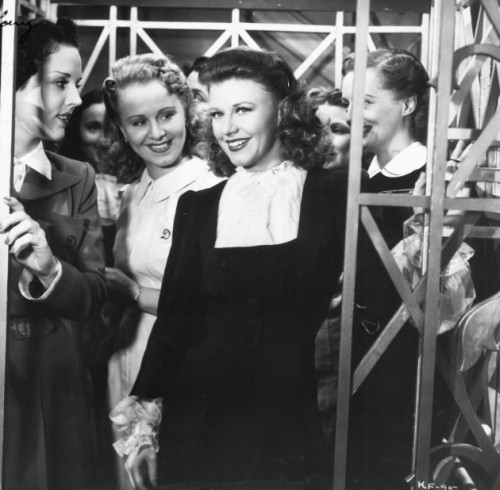
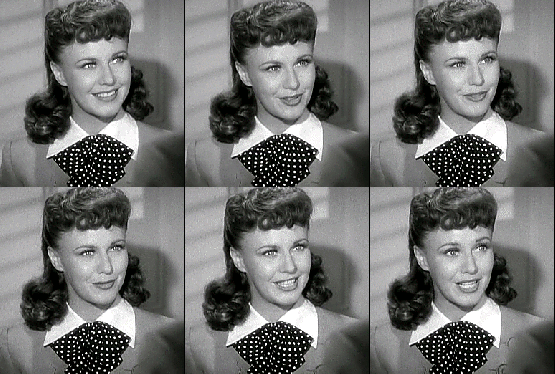
Ginger também lançou moda dentro e for a do filme. Do filme veio o “vestido Kitty Foyle”, um vestido escuro com colarinho e abotoadura brancos. Fora do filme, no Oscar, Ginger usou um vestido que causou frisson: com a parte de cima parecendo uma lingerie, o vestido de seda cinza foi considerado ousado demais. Mesmo que Ginger tenha seguido a sugestão de usar “tons sérios” por causa da guerra que estava em curso, foi a transparência do vestido que gerou críticas.

Ginger also created fashion trends in and outside the film. From the film came the “Kitty Foyle dress”, a dark dress with white collar and cuffs. Outside the film, at the Academy Awards, Ginger wore a dress that caused a stir: with the top part looking like a negligee, the grey silk dress was considered too daring. Although Ginger kept with the suggestion of wearing “muted tones” because of the ongoing war, it was the transparency of her dress that brought criticism.


“Kitty Foyle” é ruim? Não. É datado? Sim. Com um discurso de que o destino da mulher trabalhadora ainda é o casamento, o filme tem as qualidades e os defeitos que também encontramos nos melodramas de Douglas Srik, e nos anos 1950 Sirk provavelmente teria remodelado a história para torná-la mais interessante. Afinal, se havia alguém na Velha Hollywood que conhecia a “história natural de uma mulher”, este alguém era Sirk.

Is “Kitty Foyle” bad? No. Is it dated? Yes. With the speech about how the fate of the “white-collar girl” is still marriage, it has the positive and negative characteristics we also find in Douglas Sirk’s melodramas, and in the 1950s Sirk would probably have revamped the story to make it more interesting. After all, if there was someone in the Old Hollywood who knew about “the natural history of a woman”, this someone was Sirk.

This is my contribution to the Second Fred Astaire and Ginger Rogers blogathon, hosted by Michaela and Crystal at Love Letters to Old Hollywood and In the Good Old Days of Classic Hollywood.
Sunday, June 3, 2018

Melodia da Broadway de 1940 / Broadway Melody of 1940

Alguém tem como sonho ser uma estrela da Broadway. Outra pessoa quer montar um show musical. Há um interesse amoroso, confusão, mal-entendido, uma pouco de drama, um monte de músicas. Eu acabei de descrever todos os musicais já feitos – ou pelo menos boa parte deles? Não importa: para nós, que somos loucos por musicais, a história pode ser a mesma, o final previsível, a maneira como os personagens começam a cantar do nada pode ser até inacreditável. Nós não nos importamos. Os musicais não foram feitos para serem analisados como obras de arte filosóficas e complexas. Eles foram feitos para despertar nossos sentimentos, nos alegrar e nos fazer sorrir. E que sorriso a “Melodia da Broadway de 1940” é capaz de gerar em nós!

Someone has the dream to make it big on Broadway. Someone else wants to put on a show. There is a love interest, confusion, misunderstandings, a little drama, a lot of music. Have I described all musicals ever made – or at least a good part of them? It doesn't matter: for us, who are mad about musicals, the story may be the same, the ending predictable, the bursting-into-song situation unbelievable. We don't care. Musicals were not made to be analyzed as complex philosophical work of arts. They were made for us to feel, to enjoy, and to smile. And what a smile does “Broadway Melody of 1940” brings to our faces!
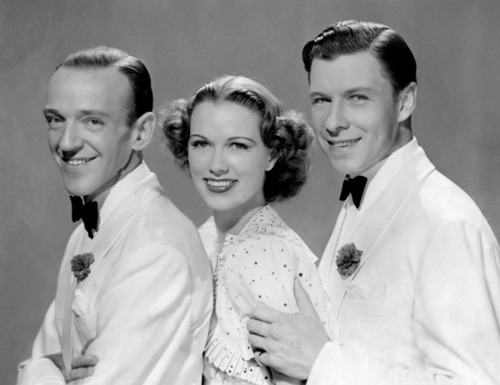
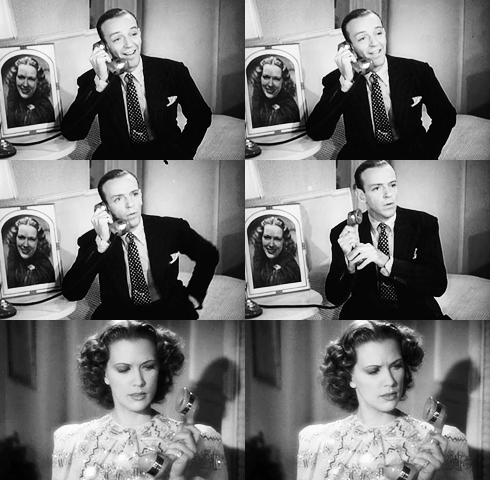
Johnny Brett (Fred Astaire) e King Shaw (George Murphy) são dois dançarinos que sonham em se apresentar na Broadway. Por enquanto, eles se apresentam em um simples salão, e lá são vistos por Bob Casey (Frank Morgan). John acredita que Bob é um cobrador, e por isso diz que se chama King Shaw. O sócio de Bob Casey, Bert Matthews (Ian Hunter), convida Shaw para um teste para ser o parceiro de dança de Clare Bennett (Eleanor Powell). Shaw é bem-sucedido no teste, e não sabe que John está apaixonado por Clare Bennett.

Johnny Brett (Fred Astaire) and King Shaw (George Murphy) are two dancers dreaming about making it big on Broadway. They present an act in a simple ballroom, when they are spotted by Bob Casey (Frank Morgan). John believes Casey is a bill collector, so he says his name is King Shaw. Casey's business partner, Bert Matthews (Ian Hunter), invites Shaw for an audition to be Clare Bennett´s (Eleanor Powell) dance partner. Shaw succeeds in the audition, without knowing that John is in love with Clare Bennett.
Muitos artistas querem assinar um contrato com Matthews e Casey, incluindo uma jovem malabarista, um rapaz com um monociclo, e um casal que faz um número que seria um sucesso com as plateias do vaudeville de 1910 – e todos estes são considerados por Casey “a maior descoberta da vida” dele!

Many artists want to sign a contract with Matthews and Casey, including a young juggler, a guy in a one-wheel vehicle, and a man and woman act that would be great for a 1910 vaudeville audience – and all are called by Casey “the greatest discovery of his life”!
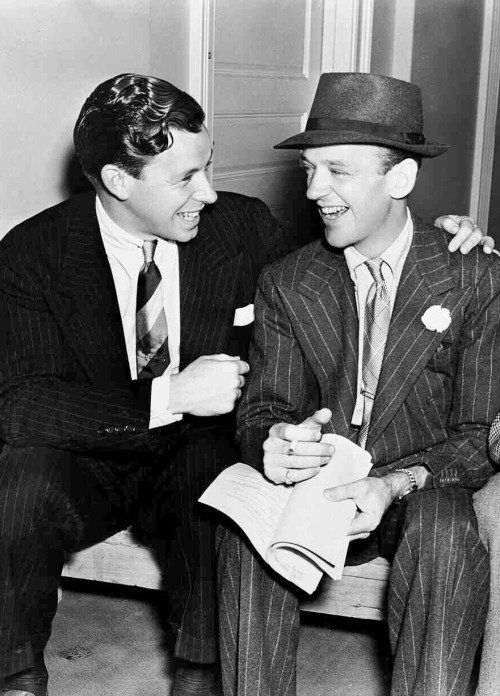
Mas John não se incomoda. Ele é o melhor dos melhores amigos, e realmente deseja que Shaw tenha êxito. John ensaia com Shaw, lhe dá conselhos, inventa desculpas quando John pisa na bola e também recorta notícias de jornal que mencionam Shaw para fazer um livro de recortes. Shaw é um bom dançarino, mas ele também adora se divertir e não leva o trabalho muito a sério – ou pelo menos ele não tem a mesma paixão pela dança que John.

But John doesn't care. He is the best of best friends, and he truly wishes Shaw is successful. John rehearses with Shaw, gives him advice, covers for him when he screws up and also cuts all newspaper notes that mention Shaw for a scrapbook. Shaw is a good dancer, but he also loves to have fun and doesn't take his job very seriously – or at least doesn't have the same passion for dancing that John has.
É adorável ver Fred Astaire agir como bobo apaixonado. Ele é jovial, gentil, e faz com que todos os passos de dança pareçam fáceis. Ele é como um rapaz se apaixonando pela primeira vez – e nós acreditamos nisso, mesmo Fred Astaire tendo 40 anos de idade quando o filme foi gravado! E ele nem aparenta estar intimidado por Eleanor Powell, algo que ele realmente estava: então com 27 anos, Eleanor já era considerada “a melhor sapateadora do mundo”, e Fred acreditava que ela poderia ser melhor que ele. Eleanor, aliás, fez três dos quatro filmes da série “Melodia da Broadway” – em 1936, 1938 e 1940.

It's lovely to see Fred Astaire making a fool of himself because he is in love. He is youthful, suave and makes all his dance steps look easy. He is like a young boy, falling in love for the first time – and we believe in him, even though Fred was 40 when the film was shooting! And he doesn't even show that he was actually intimidated by Eleanor Powell: then at age 27, Eleanor was already considered “the greatest feminine tap dancer in the world”, and Fred believed she could dance better than him. Eleanor, by the way, was in three of the four “Broadway Melody” movies – 1936, 1938 and 1940.
Primeiro eu pensei que Fred Astaire iria “pegar leve” para que seu parceiro George Murphy não parecesse tão inferior a ele. Eu, obviamente, não havia reconhecido Murphy de outros filmes, e também não sabia que George era um ótimo dançarino que havia trabalhado na Broadway por sete anos antes de ir para Hollywood. George Murphy é muito bom na dança, mas não podemos negar que, quando Fred Astaire começa a dançar, algo mágico acontece.
At first I thought Fred would “underdance” so his partner George Murphy wouldn't look bad next to him. I, of course, hadn't recognized Murphy from other movies, and I also didn't know he was an accomplished dancer who worked on Broadway for seven years before going to Hollywood. George Murphy is a very good dancer, but we can't deny that, when Fred Astaire steps in, magic happens.
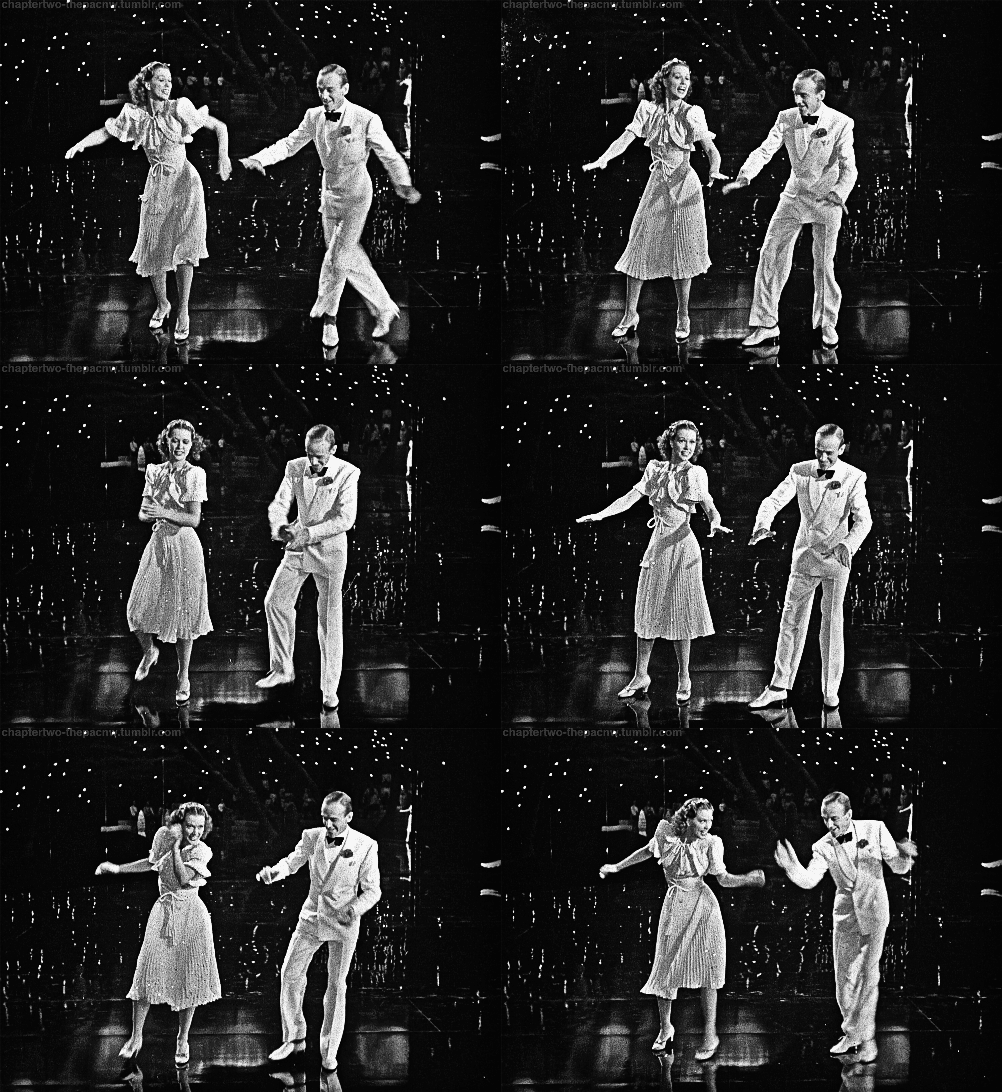
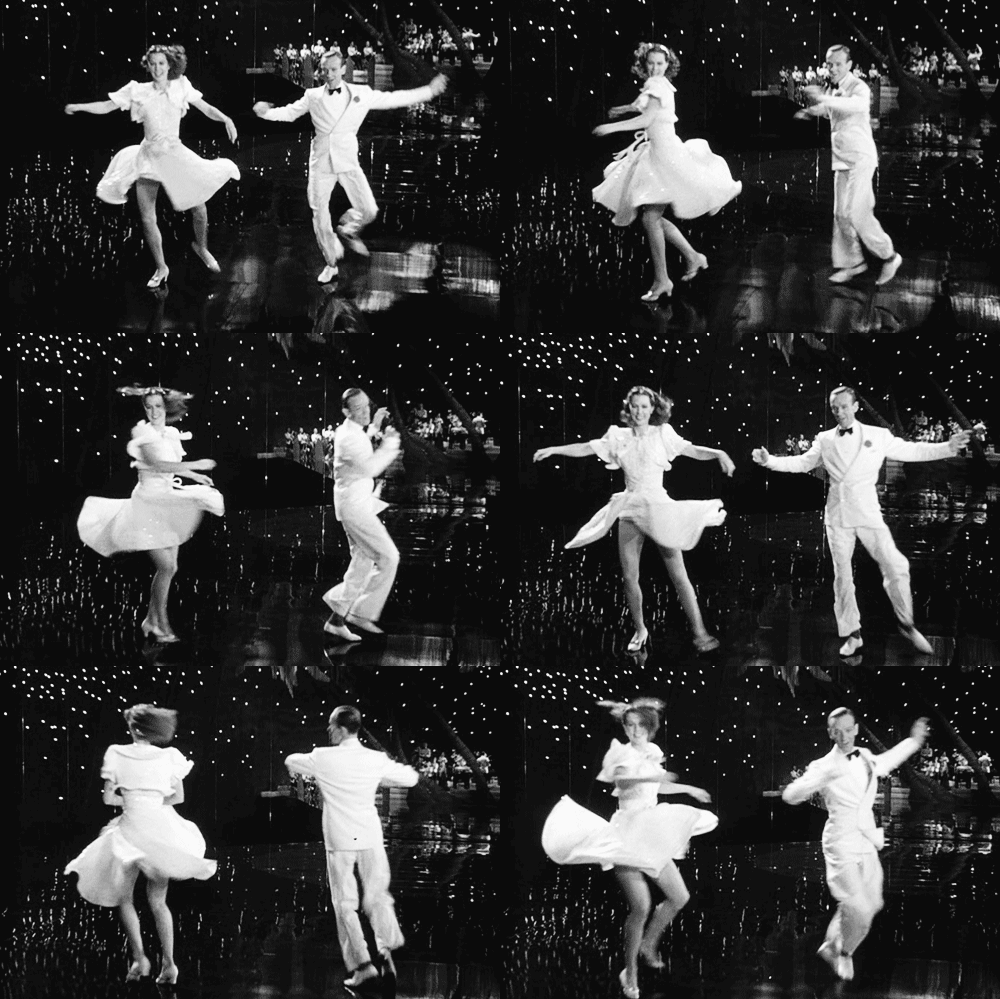
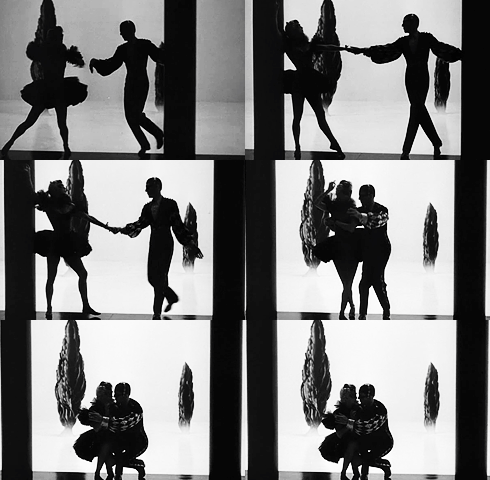
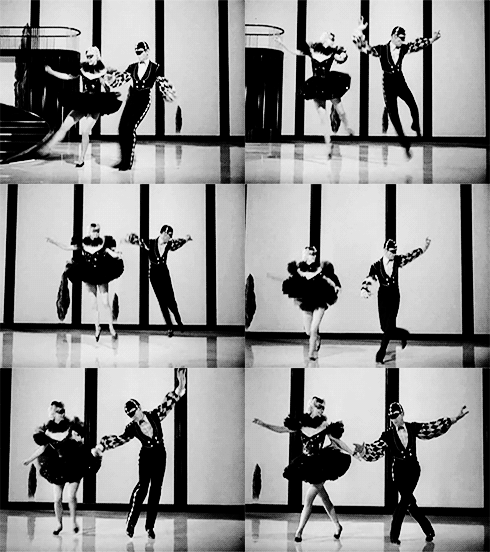
Meu primeiro contato com a “Melodia da Broadway de 1940” foi, de fato, mágica: no documentário “That’s Entertainment!” (1974) há um trecho do número “Begin the Beguine”, com Fred Astaire e Eleanor Powell. Eu fiquei sem reação ao sapateado deles. O número é maravilhoso, e seu visual inspirou a sequência do planetário em “Moonlight”, quer dizer, “La La Land” (2016).

My first contact with “Broadway Melody of 1940” was, indeed, magical: in the 1974 celebration documentary “That's Entertainment!” there is an excerpt of the “Begin the Beguine” number, danced by Fred Astaire and Eleanor Powell. I was just speechless as I saw their tap dance. The number is marvelous, and its look inspired the planetarium sequence in “Moonlight”, I mean, “La La Land” (2016).
De acordo com o IMDb, a “Melodia da Broadway de 1940” foi planejada para ser filmada em cores. Felizmente, isso não foi possível. Devemos nos lembrar de que tudo é pensado para aparecer perfeitamente na tela, e com certeza os números, cenários e figurinos teriam que ser bem diferentes se o filme fosse colorido. O resultado em preto e branco é lindo, às vezes triste, às vezes grandioso, e sempre surpreendente. Nós não conseguiríamos estes efeitos em cores:

According to IMDb, “Broadway Melody of 1940” was planned to shoot in color. Thank God it didn't happen! We must remember that everything is thought to appear perfectly on screen, and for certain the numbers, sets and outfits would have to be different if the film was shot in color. The black and white result is beautiful, sometimes sad, sometimes grandiose, and always mesmerizing. We couldn't get this effect in color:
Há muitos momentos divertidos no filme – e eu aposto que isso tem a ver com Preston Sturges, que foi um dos roteiristas não-creditados. A “Melodia da Broadway de 1940” é mais um daqueles musicais deliciosos que te fazem esquecer seus problemas e obrigações, e simplesmente te divertem. Você pode até ficar com inveja das habilidades de dança de Fred Astaire e Eleanor Powell, mas é um efeito colateral que vale a pena.

There are many fun moments in the movie – and I bet Preston Sturges being one of the uncredited screenwriters has something to do with a few gags. “Broadway Melody of 1940” is another delightful musical that you make you forget your problems and obligations, and just enjoy yourself. You might also be jealous of Astaire’s and Powell’s dancing skills, but it is a fair enough side effect.

This is my contribution to the Broadway Bound blogathon, hosted by Rebecca of Taking Up Room.

Tuesday, February 13, 2018

O Vilão Ainda a Perseguia (1940): Buster Keaton e a paródia

The Villain Still Pursued Her (1940): Buster Keaton and parody

Ainda bem que os valores mudam. Na minha opinião, há progreso quando  há cada vez menos conservadorismo e condenação dos atos. A sociedade progride quando ela se leva menos a sério, e o comportamento das pessoas não precisa ser moldado e condenado por fortes e trágicas lições de moral. É fácil ver um sinal desta mudança: quando uma obra reverenciada, com muito drama e carga moral, é resgatada anos após seu sucesso inicial e parodiada.

Thank God values change. In my opinion, progress means becoming less and less conservative and condemning. Society progresses as it takes itself less seriously, and behaviors don't have to be shaped and condemned by strong and tragic moral lessons. It's easy to see one sign of this change: when a revered work of fiction, heavy on melodrama and morality, is taken years after its initial success and parodied.
Em 1940, Buster Keaton já havia feito todos os seus maiores sucessos. Ele estreou no cinema em 1917, fez curtas e longas-metragens, deixou sua marca na comédia, teve liberdade criativa, perdeu a liberdade criativa indo para a MGM, viu a desgraça e a morte de seu amigo Roscoe 'Fatty' Arbuckle, se casou, teve dois filhos, se divorciou, fez filmes falados, perdeu dinheiro e venceu o alcoolismo. Era uma ótima hora para Buster parodiar uma peça que defendia a abstinência.

By 1940, Buster Keaton had made all his greatest hits. He started in movies in 1917, did short and feature films, left a mark in slapstick comedy, had creative freedom, had his creative freedom taken when he went to MGM, saw the disgrace and death of his friend Roscoe 'Fatty' Arbuckle, got married, had two sons, divorced, starred in talkies, lost money and battled alcoholism. It was a very good time for him to parody a play that advocated temperance.
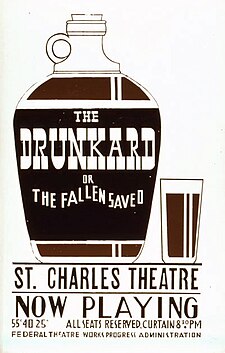
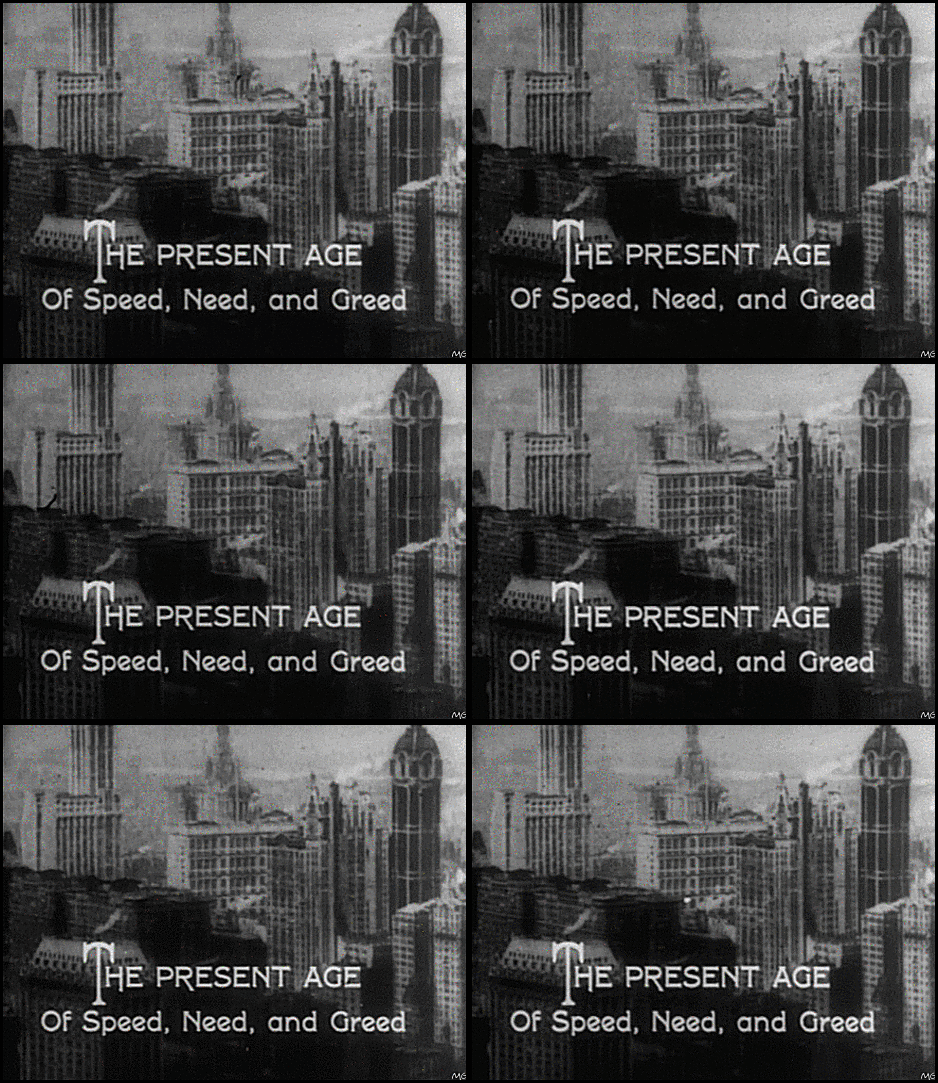
“O Vilão Ainda a Perseguia” é uma paródia da peça “The Drunkard” (O Bêbado), que estreou em 1844 – quase um século antes de o filme ser feito. A peça foi um sucesso, e defendia a temperança – isto é, a abstinência de álcool. Este tema já era motivo de piada havia alguns anos,  quando a peça foi parodiada por W.C. Fields no filme “No Tempo do Onça” (1934). E se você ainda não está convencido de que “O Vilão Ainda a Perseguia” é uma comédia, esta é a mensagem no começo do filme:

“The Villain Still Pursued Her” is a spoof of the play “The Drunkard”, that opened in 1844 – almost one hundred years before the film was made. The play was a big hit, and advocated temperance – that is, abstinence. This theme was already laughable a few years before, when “The Drunkard” was spoofed as the W.C. Fields comedy “The Old Fashioned Way” (1934). And if you're not yet convinced of the comic nature of “The Villain Still Pursued Her”, here it is the opening message:
O filme de 1940 é sobre as atitudes vilanescas de Silas Cribbs (Alan Mowbray) para destruir a vida de Edward Middleton (Richard Cromwell). Por quê? Bem, apenas porque ele odeia Middleton. Cribbs quer levar Middleton à desgraça  ao torná-lo um ébrio. A única pessoa que pode salvar Middleton é seu amigo William (Keaton).

The plot of the 1940 movie conveys Silas Cribbs's (Alan Mowbray) villainous acts to destroy Edward Middleton's (Richard Cromwell) life.Why? Well, just because Cribbs hates Middleton. Cribbs wants to drive Middleton to disgrace by making him a drunkard. The only one who can save Middleton is his friend William (Keaton).
O título do filme vem do curta-metragem silencioso “E o Vilão Ainda a Perseguia”, de 1906, e também de uma animação de 1937 cujo vilão se aprece muito com Cribbs. Você pode esperar muitas paródias da era Eduardiana: a linguagem teatral, complexa e melodramática e os gestos exagerados, por exemplo. É interessante observar que Buster Keaton interpreta o cara sério – um papel que combina perfeitamente com seu rosto imutável.

The title of the film comes from the silent short “And the Villain Still Pursued Her”, released in 1906, and also a 1937 cartoon whose villain looks a lot like Cribbs. You can expect a lot of spoofs coming from the Edwardian era: the complex and melodramatic theater language and the exaggerated gestures, for instance. It's interesting to note that Buster Keaton plays the straight man here – a role that suits his stone face perfectly.
Os atores frequentemente olham para a câmera e dizem algo em tom confidencial para o público. Cribbs foi a inspiração para outros vilões vindos do cinema mudo: Snidely Whiplash, do desenho “Dudley Certinho”, e o professor Fate do filme “A Corrida do Século” (1965). Ao contrário do que se pensa, vilões com capas escuras e cartolas pretas que amarravam donzelas à linha do trem NÃO  eram comuns no cinema mudo.

The actors often look at the camera and say something in a confidential tone to the audience. Cribbs was the inspiration for other silent film-like villains: Snidely Whiplash, from the cartoon “Dudley Do-Right”, and Professor Fate from the movie “The Great Race” (1965). Contrary to what is wildly believed, villains with dark capes and black top hats that tied damsels to tracks were NOT common characters in silent movies.
Foi interessante perceber que Buster não menciona este filme ou sua filmagem em sua autobiografia, “My Wonderful World of Slapstick”. Ele pula direto de seu trabalho como criador de gags para a MGM para seu sucesso na televisão.

Interestingly enough, Buster doesn't mention this movie or its production in his autobiography, “My Wonderful World of Slapstick”. He jumps from his work as a gag advisor at MGM directly to his newfound success on TV.
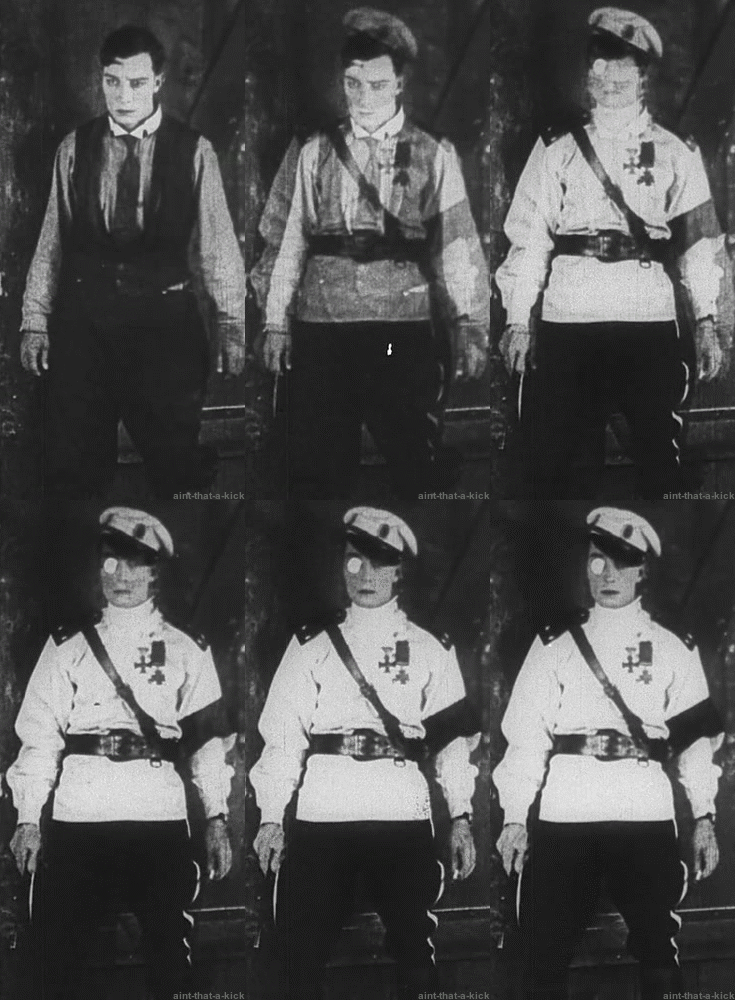
Buster Keaton estava acostumado com paródias. Só em 1923 ele fez duas: o curta-metragem “The Frozen North”, parodiando os westerns de William S. Hart, e seu primeiro longa-metragem, “A Antiga e a Moderna”, parodiando o épico “Intolerência” (1916) de D.W. Griffith. O autor Wes Gehring vai mais além e aponta o clímax de “Amores de Estudante” (1927) como uma paródia de “The Lonely Villa” (1909), de Griffith.

Buster Keaton was no stranger to parodies. In 1923 alone he did two: the two-reeler “The Frozen North”, spoofing the William S. Hart westerns, and his first feature, “The Three Ages”, spoofing D.W. Griffith's epic “Intolerance”,  from 1916. Author Wes Gehring goes further in his book “Parody as a Film Genre: 'Never Give a Saga an Even reak'”, and says that the climax of “College” (1927) is a spoof of Griffith's “The Lonely Villa” (1909).
Erich von Stroheim was also parodied 
in "The Frozen North"!
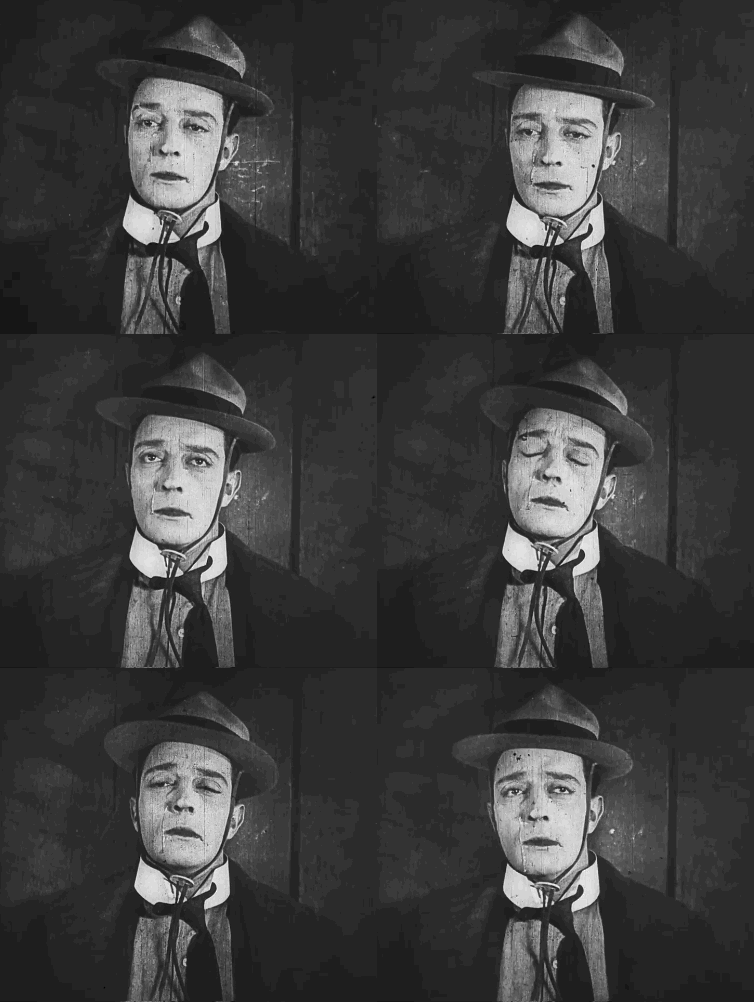
Visto for a do contexto, “The Frozen North” é uma ovelha negra na filmografia de Keaton. Ele tem um tom mais melodramático – algo que é entendido quando descobrimos que se trata de uma paródia. William S. Hart foi um astro de cinema incrivelmente popular, e em 1923 os frequentadores dos cinemas prontamente reconheceram os maneirismos dele assim que Keaton começou a imitá-lo em “The Frozen North”. Tudo grita William S Hart: o chapéu, as roupas, as armas, o tom, o cigarro sendo enrolado com uma mão só – e, claro, o choro.

Seen without context, “The Frozen North” is a very, very odd movie in Keaton's filmography. It has a more melodramatic feeling – and one that is perfectly understood when we learn that it's a spoof. William S. Hart was an incredibly popular film star, and the 1923 moviegoing audience quickly recognized his mannerisms once Keaton started imitating him in “The Frozen North”. Everything screams William S. Hart there: the hat, the clothes, the guns, the tone, the cigarette being rolled with only one hand – and, of course, the crying.
William S. Hart levava sua persona cinematográfica muito a sério, e não ficou feliz quando durante a sequência mais tensa e hilária de “The Frozen North”, Keaton parodiu o hábito do astro de chorar nas telas. Hart pensava que o choro tornava seu caubói mais humano, e não deveria ser usado para arrancar risadas. O resultado foi que Hart não falou com Buster Keaton por dois anos após o filme ser feito.

William S. Hart took himself and his screen persona seriously, and wasn't happy when, during the most tense and hilarious sequence of “The Frozen North”, Keaton spoofed his habit of crying onscreen. Hart thought this made his cowboy human, and it shouldn't be used as a source for laughs. The result is that Hart didn't speak with Keaton for two years after “The Frozen North” premiered.
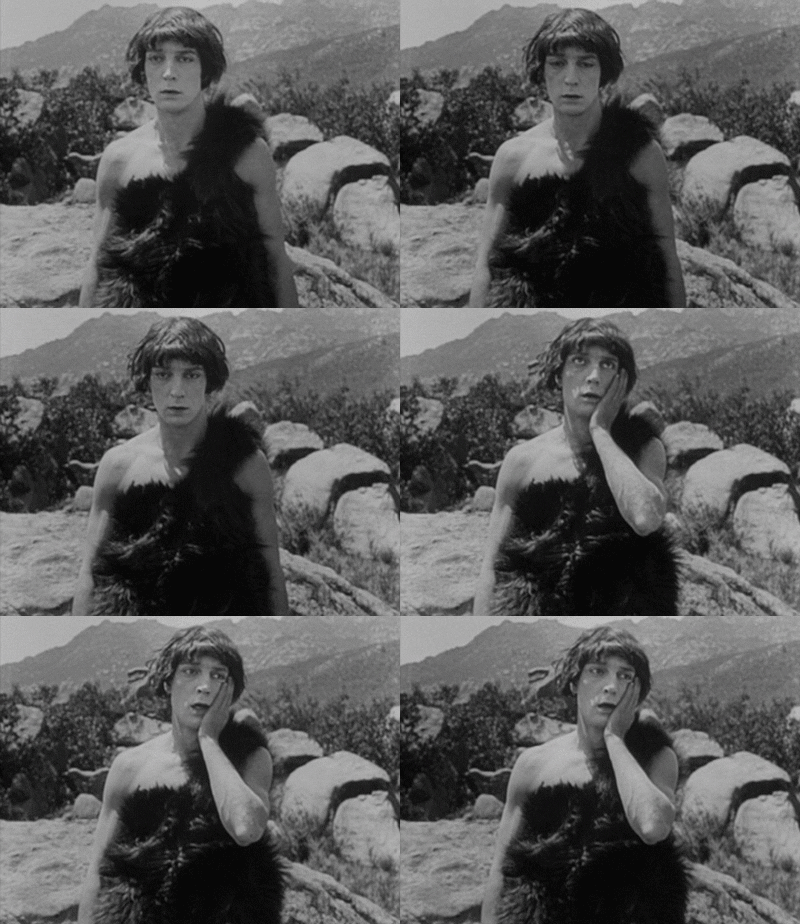
Se Griffith tratou da intolerância em quatro períodos diferentes em seu épico imenso, Keaton falou de amor em três épocas em “A Antiga e a Moderna”. Apaixonar-se, paquerar e desafiar um rival na idade da pedra, na Roma antiga e nos tempos modernos tinha muitas semelhanças – incluindo uma boa quantia de comédia física e exibição atlética. Pelo que eu sei, Griffith não se zangou com esta paródia.

If Griffith dealt with Intolerance in four different time periods in his huge epic, Keaton talked about love in three different time periods in “The Three Ages”. Falling in love, courting and defying romantic rivals  in the Stone Age, Ancient Rome and in modern days had many similarities – including a good amount of physical comedy and athletic exhibition. As far as I'm concerned, Griffith didn't become sour at Keaton for spoofing his work.
É curioso notar que “A Antiga e a Moderna”, 'The Frozen North" E  “O Vilão Ainda a Perseguia” foram todos dirigidos por Edward F. Cline. Com dois veteranos do slapstick juntos, tivemos um truque gratuito no filme de 1940: uma pequena guerra de tortas – sem qualquer razão. Keaton não gostava de torta na cara, que considerava bobo e sem imaginação, e seu personagem de fato não é atingido por nenhuma torta.

Interestingly  enough, both “The Three Ages”, "The Frozen North" and “The Villain Still Pursued Her” were directed by Edward F. Cline. With two slapstick veterans working together, we have a free slapstick trick in the 1940 movie: a brief pie fight – for no reason at all. Buster Keaton didn't like pie fights, considering them cheap and stupid, and his character here is never hit by a single pie.
Como Keaton diz em sua autobiografia, você só pode parodiar sucessos – e nos livro ele usa a palavra 'burlesco' como sinônimo de 'paródia'. De fato, se você fizer piada com algo que seu público não conhece, os esforços são em vão. Além disso, uma paródia é um elogio: você só copia pessoas e obras que te inspiram. Nesse sentido, “The Frozen North”, “A Antiga e a Moderna” e “O Vilão Ainda a Possuía” são todos eficazes, cada um à sua maneira, como paródias que ora homenageiam, ora ridicularizam.

As Keaton says in his autobiography, you can only spoof successes – in the book he uses the word 'burlesque' as a sinonym of 'spoof'. Indeed, if you make fun of something your public doesn't know, all efforts fall flat. Besides that, a parody is a compliment: you often emulate people and works of art that inspire you. In this sense, “The Frozen North”, “The Three Ages” and “The Villain Still Pursued Her” are all effective, each one in its own way, as parodies that sometimes pay tribute, and sometimes are ridicule.

This is my contribution to the Fourth Annual Buster Keaton blogathon, hosted by Lea at Silent-ology.

Saturday, February 3, 2018

Almas Rebeldes (1940) / Strange Cargo (1940)

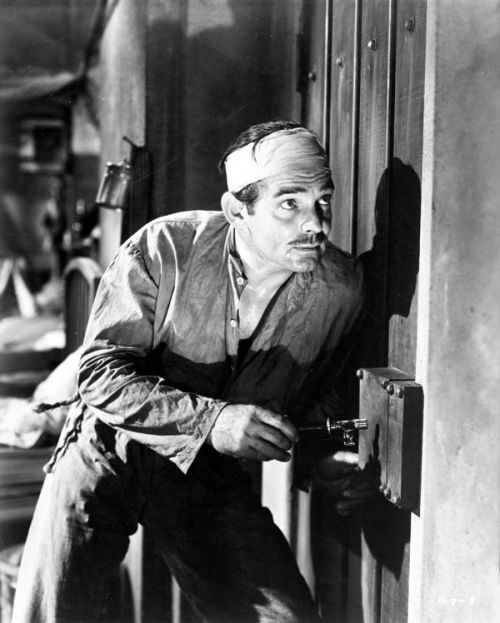
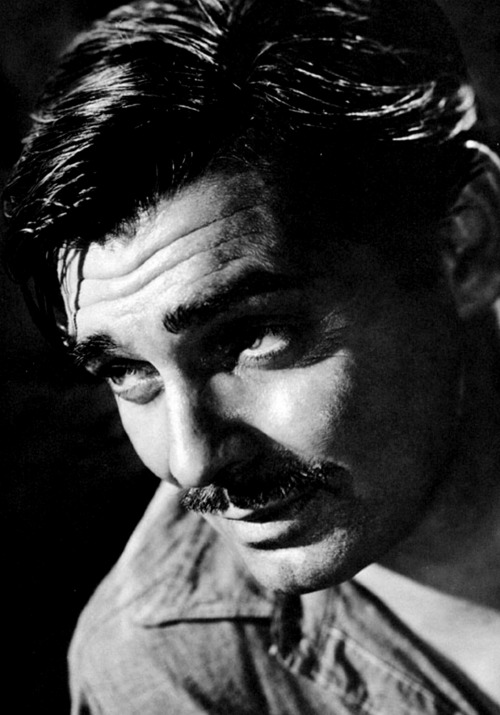
Clark Gable e Joan Crawford fizeram oito filmes juntos. O primeiro deles foi em 1931, e o último em 1940. “Almas Rebeldes” é este último filme da parceria, um filme que veio logo depois de muito sucesso para ambos: em 1939 Gable fez um pequeno filme chamado “E o Vento Levou...” e Crawford foi uma das estrelas de “As Mulheres”. “Almas Rebeldes” foi, para as duas estrelas, uma grande mudança em relação à pompa de seus trabalhos pregressos.

Clark Gable and Joan Crawford made eight films together. Their first pairing was in 1931, and their last in 1940. “Strange Cargo” is this last film they made together, and it came following successes from both: in 1939, Gable was in a little film called “Gone with the Wind” and Crawford was one of the many stars in “The Women”. “Strange Cargo” was a complete change from the glamour and pomp for the two stars.
Apenas pessoas esquecidas vivem na Guiana – um local que, no mundo do cinema, se parece muito com a África de “O Diabo Riu por Último” (1953). Há uma grande prisão lá, para 'homens que perderam as esperanças'. E as mulheres que trabalham no bar local são imigrantes que fariam qualquer coisa para sobreviver. Mas há uma regra: mulheres e prisioneiros não podem ser vistos juntos. É por isso que o prisioneiro Verne (Clark Gable) representa encrenca para Julie (Joan Crawford). O primeiro contato dele é mias para violento que para romântico, e ele só pensa em uma coisa: em fugir.

Only forgotten people live in Guiana – a place that, in the film world, looks a lot like the Africa we see in 1953's “Beat the Devil”. There is a big prison there, for 'men who have lost hope'. And the women who work in the local bar are immigrants who would do anything to survive. But there is a rule: women and inmates can't be seen together. That is why prisoner Verne (Clark Gable) represents trouble to Julie (Joan Crawford). His first approach is more violent than romantic, and he only thinks of one thing: escaping.
Verne tenta fugir pela primeira vez no filme depois de ir trabalhar no porto carregando e descarregando navios. Ele entra no bar de Renard, onde Julie, que ele havia visto mais cedo naquele mesmo dia, trabalha. Enquanto ele se esconde no quarto dela, Julie conta para os guardas o paradeiro de Verne. Ele é recapturado, mas Julie foi encontrada com ele, e por isso deve sair da colônia em até 12 horas.

Verne makes his first attempt to escape in the movie by running away after he goes to the harbor to load ships. He ends up in Renard's bar, where Julie, who he has seen earlier that day, works. While he is hiding in her room, Julie tells the guards where he is. Verne is recaptured, but Julie was found with him, and thus she must leave the colony within 12 hours.
De volta à prisão, Verne se envolve em um plano de fuga com outros oito homens. Seu inimigo, Moll (Albert Dekker), tenta impedir que ele vá com o grupo, mas Verne consegue escapar e segue um mapa à procura da liberdade prometida. Ao mesmo tempo, Julie recusa a oferta do Monsieur Pig (Peter Lorre), que quer sair da colônia com ela, mas aceita a oferta de Marfeau (Bernard Nedell) para ir embora com ele. Obviamente, Marfeau não quer ajudar – ela apenas quer o corpo de Julie só para si.

Back to the prison, Verne gets involved in a nine-men plan to escape. His nemesis, Moll (Albert Dekker), tries to prevent him from going with the group, but Verne manages to escape anyway, and follows a map in search for the promised freedom. At the same time, Julie has refused Monsieur Pig's (Peter Lorre) offer to leave the colony with him, but accepted Marfeau's (Bernard Nedell) offer to leave with him. Of course, Marfeau doesn't want to help – he only wants to have Julie's body for himself.
O agora reduzido grupo de fuga se divide em dois, e dois trios enfrentam os obstáculos da selva. É óbvio que com o tempo surjam brigas dentro dos grupos e alguns fugitivos pereçam. Neste sentido, o filme me fez lembrar o pouco conhecido filme brasileiro de aventura “Arara Vermelha” (1957), sobre um grupo que rouba um diamante e precisa atravessar a selva para escapar com a pedra.

The now reduced escape group is divided by two, and two trios face the hardships of the jungle. Of course, with time there are fights inside the group, and some of the runaways perish. In this sense, the movie reminded me of little-known Brazilian adventure film “Arara Vermelha” (1957), about a group that steals a diamond and has to cross the jungle to escape with the stone.
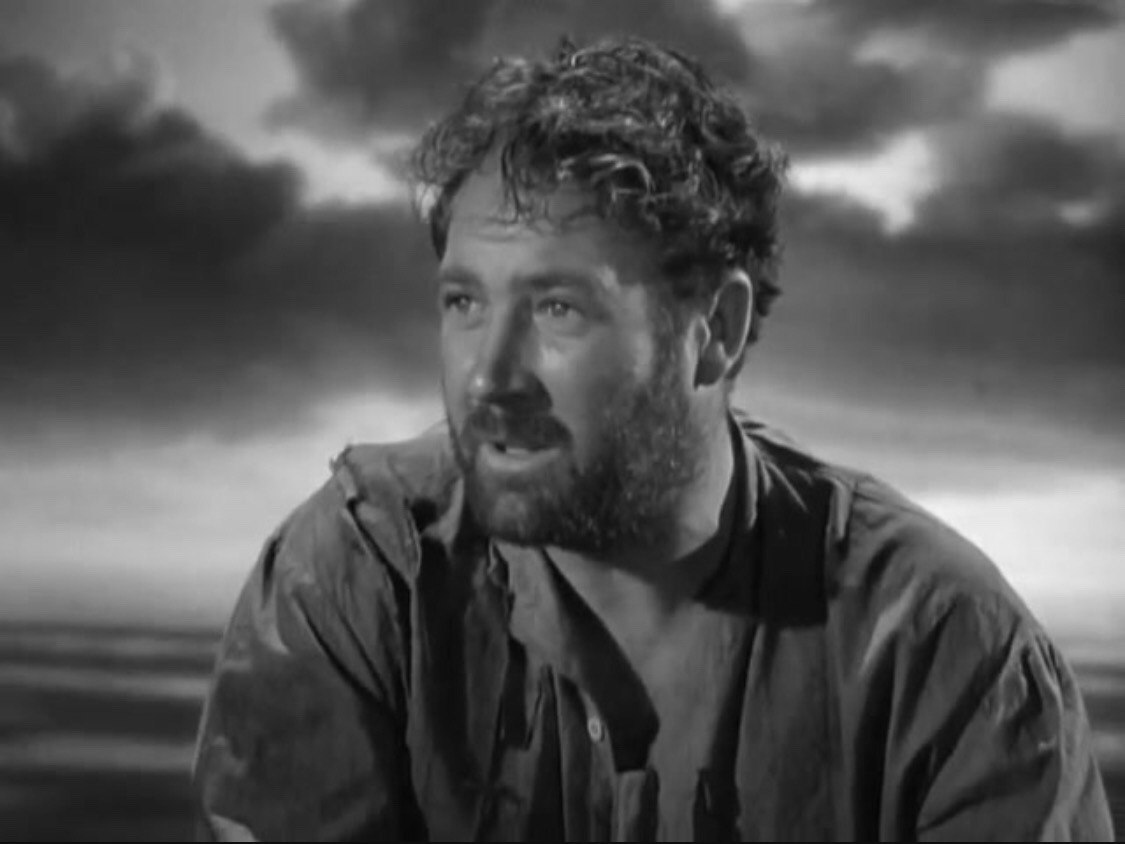
Os coadjuvantes são ótimos. Peter Lorre fala com uma voz suave, porém aterrorizante. Ian Hunter interpreta o misterioso e espiritualizado Crambeau. Em um espaço pequeno e apertado, a câmera foca de baixo para cima em Hessler (Paul Lukas), embora a mesma câmera focalize outros prisioneiros de frente. Com este recurso, Hessler parece mais sombrio e perigoso. É um ótimo efeito que diz muito sobre seu caráter. Aliás, nós só ficamos sabendo qual crime levou Hessler à prisão. Para os outros prisioneiros, a razão para estar lá não importa.

The supporting characters are amazing. Peter Lorre speaks with a suave yet terrifying voice. Ian Hunter plays the mysterious and spiritualized Crambeau. In a tiny, tight space, the camera looks from down to up to Hessler (Paul Lukas), even though the other inmates are shot with a more conventional camera angle. This way, Hessler looks more somber, more dangerous. It's a great effect that says a lot about his character. By the way, we only get to know Hessler's crime. For all the other inmates, the reason for being there doesn't matter.
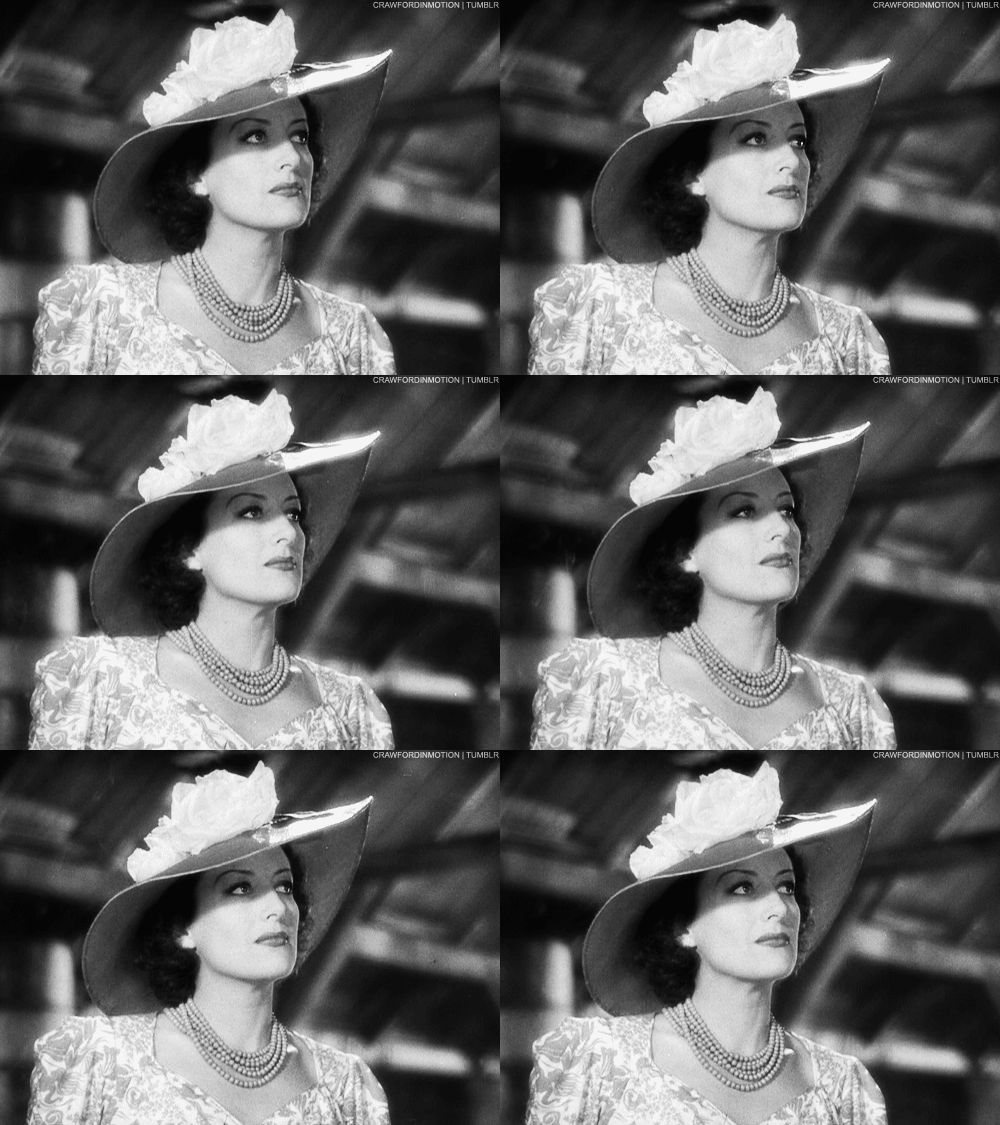
Nenhuma palavra precisa ser dita para que saibamos que Julie é uma prostituta – aliás, a outra garota que vemos acompanhando Julie quando Joan Crawford aparece na tela pela primeira vez é interpretada pela ex-atriz de cinema mudo Betty Compson. Assim como em “Rain” (1932), Crawford é visceral e simples na interpretação de Julie, e tem alguns belos momentos nos quais seu rosto sem maquiagem é focado pela câmera. Dá para imaginar como é ter apenas o mar e o rosto de Joan Crawford na sua frente?

No word has to be said so we know that Julie is a prostitute – by the way, the other girl who is seen accompanying Julie when Crawford first appears on screen is played by former silent sweetheart Betty Compson. Like in “Rain” (1932), Crawford is raw and simple when she plays Julie, and has some beautiful moments in which her make-up free face is focused by the camera. Can you imagine having only the sea and Joan Crawford's face in front of you?
O diretor Frank Borzage tratou de espiritualidade em muitos de seus filmes. Aqui, o tema mostrou ser um problema: a Legião Católica de Decência condenou o filme, causando boicotes em muitas cidades e a completa proibição da exibição de “Almas Rebeldes” em alguns lugares. Eu não acho que o filme 'zombe da Bíblia', como a Legião alegou, pelo contrário: a maneira como o filme lida com redenção é linda e inspiradora.

Director Frank Borzage dealt with spirituality in many of his films. Here, the theme proved to be a problem: the Catholic Legion of Decendy condemned the film, causing boycotts in many cities and the complete censorship of “Strange Cargo” in some places. I don't see the film 'making fun of the Scriptures' as the Legion alleged, on the contrary: the way the film deals with redemption is beautiful and inspiring.
Crambeau (Ian Hunter)
Com uma grande direção de arte – três palavras: selva no estúdio – e muitos personagens interessantes, “Almas Rebeldes” é um filme muito bom. É uma pena que a Legião da Decência tenha impactado negativamente sua performance nas bilheteria. “Almas Rebeldes” pode não ser uma obra-prima, mas é uma mistura curiosa de aventura e espiritualidade, e um filme que merece ser conhecido por mais gente.

With a great art direction – two words: studio jungle – and so many interesting characters, “Strange Cargo” is a very good film. Too bad the Legion of Decency impacted its box office negatively. “Strange Cargo” may not be a masterpiece, but it is a curious blend of adventure and spitituality, and deserves to be better known.


This is my contribution to the Clark Gable blogathon, hosted by Michaela at Love Letter to Old Hollywood.
Related Posts Plugin for WordPress, Blogger...