} Crítica Retrô: paródia

Tradutor / Translator / Traductor / Übersetzer / Traduttore / Traducteur / 翻訳者 / переводчик

Showing posts with label paródia. Show all posts

Saturday, December 30, 2023

O Prêmio de Beleza (1926) / Ella Cinders (1926)

Uma história tão velha quanto o tempo, mas não é A Bela e a Fera. Hoje nosso assunto é Cinderela e todos os elementos familiares que vêm com o conto de fadas: a Fada Madrinha, a abóbora que se transforma em carruagem, o encantamento que acaba à meia-noite, o sapatinho de cristal que é deixado para trás e que o Príncipe experimenta nas mulheres. Todos estes elementos estavam lá quando Georges Méliès fez a primeira Cinderela do cinema, em 1899. Eles estavam todos lá em 1914, quando Mary Pickford estrelou sua própria versão adorável do conto. Mas a era do cinema mudo nem havia chegado ao fim quando a história foi modernizada e subvertida no hilário filme “O Prêmio de Beleza” (1926).


A tale as old as time, but not Beauty and the Beast. Today we talk about Cinderella and all the familiar bits that come in the story: the Fairy Godmother, the pumpkin that becomes a carriage, the enchantment that ends at midnight, the glass slipper lost and left for the Prince to try on the women. They were all there, when Georges Méliès did the first Cinderella in film history, in 1899. They were all there in 1914, when Mary Pickford starred in her own adorable version of the tale. But the silent film era wasn’t over yet when the story was modernized and subverted in the hilarious "Ella Cinders" (1926).

Na cidade de Roseville mora a família Cinder, cuja filha adotiva Ella (Colleen Moore) faz todas as tarefas em casa. Quando chega a notícia de que um concurso de beleza será feito na cidade, com o prêmio sendo uma quantia em dinheiro e uma passagem para Hollywood, todas as garotas ficam animadas, incluindo Ella. Ela economiza dinheiro para tirar uma foto para o concurso, mas não tem roupa para ir ao baile onde a vencedora será anunciada.


In the city of Roseville live the Cinders, whose stepdaughter Ella (Colleen Moore) does all the chores in her house. When news come that a beauty contest is about to take place in town, with the prize being a sum of money and a ticket to Hollywood, all girls get excited, including Ella. She saves money to take a picture for the contest, but has no clothes to go to the ball where the winner will be announced.
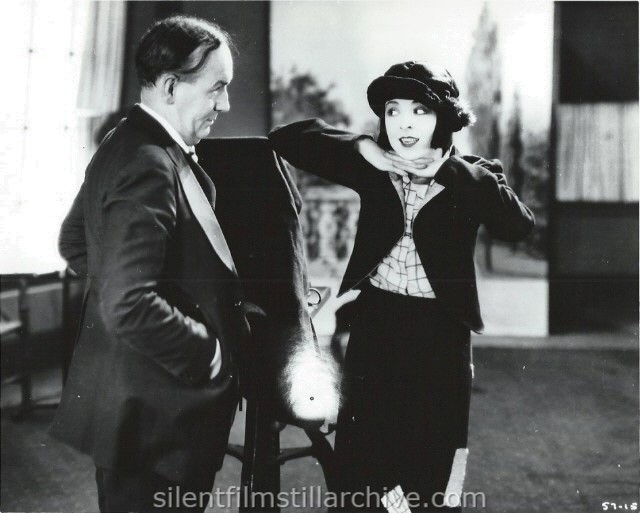
Ella só vai ao baile por insistência de seu amigo Waite (Lloyd Hughes), vendedor de gelo. Lá ela é humilhada e deixa seu sapatinho para trás. No dia seguinte, os jurados do concurso chegam à casa dos Cinder procurando pela filha deles. Ella ganhara o concurso e o resto do filme conta suas aventuras em Hollywood.


Ella only goes to the ball because of the insistence of her friend Waite (Lloyd Hughes), the iceman. There she is humiliated and leaves her shoe behind. The next day, the jurors of the contest arrive at the Cinders’ house in search for their daughter. Ella has won the contest and the remainder of the movie chronicles her misadventures in Hollywood.

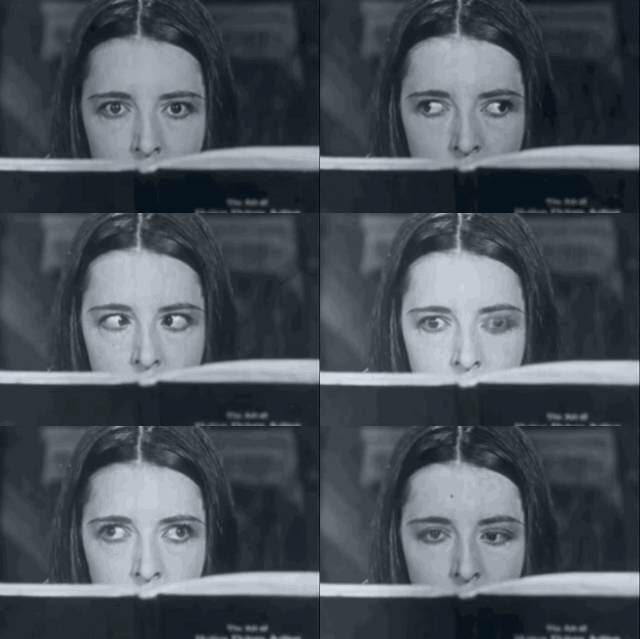
A cena mais icônica do filme chega na marca de 10 minutos: Ella Cinders vesga lendo um livro que ela roubara da meio-irmã Lotta (Doris Baker). De acordo com o IMDb, o truque foi feito de maneira até fácil: um pedaço de papel preto foi colocado num lado da câmera e os movimentos de olho foram filmados, depois o pedaço de papel passava para a outra metade da câmera e o movimento do outro olho era filmado. Quando juntadas as partes, a mágica acontecia.  


The most iconic scene from the movie comes at the 10 minute mark: Ella Cinders cross-eyed over a book she had stolen from her stepsister Lotta (Doris Baker). According to IMDb, the trick was achieved in a rather easy way: a black piece of paper taped half of the camera and the eye movement was recorded, then the piece of paper was moved to the other half of the camera and the other eye movement was then filmed. When the scene played combining the parts, the magic happened.
O conto da Cinderela vem de um livro de 1697 publicado por Charles Perrault, mas a história não surgiu da cabeça dele. O conto em si é muito antigo e passava de geração em geração, mas Perrault foi o primeiro a compilar contos como este e também o pi0neiro em duas outras coisas: chamar a personagem de Cinderela – no francês original, “Cendrillon” – e a mencionar que ela estava usando um sapatinho de cristal – um calçado bem desconfortável. Mas o filme não derivou diretamente do conto de fadas.


The tale of Cinderella came from a 1697 book released by Charles Perrault, but it didn’t come from his mind. The tale itself was very old and passed through several generations, but Perrault was the first to compile tales such as this one and also the first one to both name the character Cinderella – in the original French, “Cendrillon” – and to mention that she was wearing a glass slipper – a rather uncomfortable kind of footwear. But the movie didn’t come directly from the fairy tale.

“O Prêmio de Beleza” foi adaptado de uma tirinha de jornal! A tirinha foi publicada entre 1925 e 1961 e foi criada por Charles Plumb e William M. Conselman do departamento de arte do Los Angeles Times. Um dos roteiristas responsáveis pela adaptação foi Mervin LeRoy, um ex-ator de vaudeville que se tornaria um prolífico diretor em Hollywood. A principal diferença das tirinhas para o filme é que nas tirinhas Ella tem um irmão mais novo chamado Blackie, que não aparece no filme.


“Ella Cinders” was adapted from a comic strip! The strip was published from 1925 to 1961 in American newspapers and was created by Charles Plumb and William M. Conselman from the Los Angeles Times art department. One of the screenwriters responsible for the adaptation was Mervin LeRoy, a former vaudevillian who would become a prolific director in Hollywood. The main difference from the source material is that Ella has a kid brother, Blackie, in the comic strip that is totally absent from the movie.

“O Prêmio de Beleza” foi distribuído pela First National Pictures, produtora e distribuidora que existiu em Holywood entre 1917 e 1936. O diretor é Alfred E. Green, que entrou no cinema como ator em 1912 e dirigiu seu primeiro longa em 1917. Green também aparece em “O Prêmio de Beleza”, interpretando um diretor no estúdio. Já que estamos falando de diretores, devemos mencionar que Frank Capra dirigiu a breve sequência em que Harry Langdon faz uma participação especial.


“Ella Cinders” was made by First National Pictures, a producing and distribution company that existed in Hollywood between 1917 and 1936. The director is Alfred E. Green, who entered films as an actor in 1912 and directed his first feature in 1917. Green also appears in “Ella Cinders”, playing a film director in the studio. Since we’re talking about directors, we should mention that Frank Capra directed the brief sequence with Harry Langdon’s cameo.
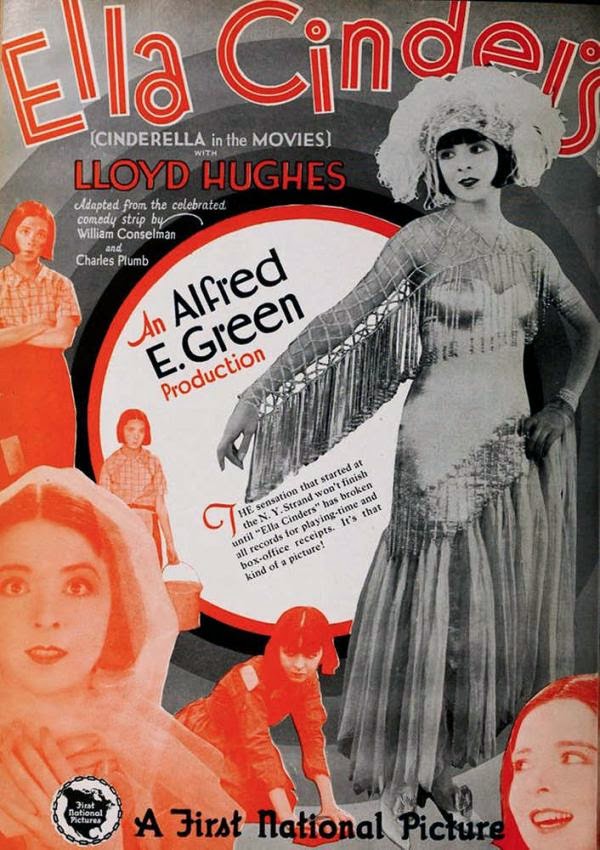
“O Prêmio de Beleza” é hoje o mais famoso filme estrelando Colleen Moore. Com apenas 26 anos quando o filme foi rodado, Moore já estava trabalhando no cinema desde os 18 e já havia influenciado milhões de “flappers” a cortarem o cabelo igual ao dela. O produtor de “O Prêmio de Beleza”, John McCormick, era marido de Moore na época, e Lloyd Hughes, que interpreta o par romântico, já havia feito outros quatro filmes com Moore entre 1923 e 1926. Depois de uma pausa na carreira quando o som chegou ao cinema, Moore fez seus últimos filmes nos anos 1930, aposentando-se em 1934.


“Ella Cinders” is now the most famous movie starring Colleen Moore. Only 26 when the film was shot, Moore already had been working in films since she was 18 and had influenced millions of flappers to cut their hair like hers. The producer of “Ella Cinders”, John McCormick, was Moore’s husband at the time, and Lloyd Hughes, who plays the love interest, had appeared in four other films with Moore between 1923 and 1926. After a career pause when sound came to cinema, Moore made her final films in the early 1930s, retiring in 1934.

Em 2013, “O Prêmio de Beleza” foi selecionado para ser preservado pela Biblioteca do Congresso norte-americano, em uma lista chamada National Film Registry. A versão animada de “Cinderela”, feita por Walt Disney em 1950, também foi selecionada para preservação. O conto foi adaptado dezenas de vezes, mas “O Prêmio de Beleza” traz um retrato fresco da história da moça pobre que triunfa e se mantém aprazível após quase um século de sua estreia, em parte por causa da performance jovial de Colleen Moore como a sonhadora Ella.


In 2013, “Ella Cinders” was selected to be preserved by the Library of Congress in their National Film Registry. The animated version of “Cinderella”, made by Walt Disney in 1950, is also in the Registry. The tale was adapted to the screen dozens of times, but “Ella Cinders” brings a fresh portrait of the rags-to-riches story and remains enjoyable after almost a century from its original release, in part because of Colleen Moore’s jovial performance as the dreamer Ella.


This is my contribution to the Party Like It’s 1899 Blogathon, hosted by Erica at Poppity Talks Classic Film.

Monday, January 30, 2023

Minha Morena Linda (1947) / My Favorite Brunette (1947)


Bob Hope foi um dos artistas mais populares do século XX. Em seus 100 anos de vida, ele fez quase 100 filmes, muitas vezes interpretando a si mesmo. Ele também teve destaque levando entretenimento às tropas norte-americanas em guerras, o que garantiu a ele o título de veterano honorário - foi a única pessoa a receber esta honraria. Ver Hope em ação é sempre uma delícia, e um de seus filmes mais facilmente disponíveis é “Minha Morena Linda” (1947), que é o assunto de nosso post de hoje.  


Bob Hope was one of the most popular entertainers of the 20th century. In his 100 years of life, he appeared in almost 100 movies, many times as himself. He was also a pro at entertaining the US troops in wars, which made him become an honorary US veteran - the only person to receive this honor. Seeing Hope in action is always entertaining, and one of his most easily available movies is “My Favorite Brunette” (1947), which is the subject of today’s post.

Encontramos Ronnie Jackson (Bob Hope) pela primeira vez quando ele está prestes a ser executado na prisão de San Quentin. Um grupo de repórteres chega para entrevistá-lo e animá-lo, dizendo que ele é um cara durão, e ele decide contar sua história num flashback com narração voiceover. Ele costumava trabalhar como fotógrafo de bebês, mas sonhava em se tornar um detetive durão - igualzinho a Humphrey Bogart, em suas próprias palavras.  


We first meet Ronnie Jackson (Bob Hope) when he’s about to be executed in the San Quentin prison. A group of reporters come over to interview him and cheer him up, saying he’s a tough guy, and he decides to tell his story in a flashback with voiceover narration. He used to be a baby photographer, but dreamed about becoming a hard-boiled detective - just like Humphrey Bogart, in his own words.

Um amigo detetive não aceita que Ronnie seja seu sócio, mas deixa que ele atenda ligações telefônicas em seu escritório na sua ausência. É em um desses momentos que entra Carlotta Montay (Dorothy Lamour), uma mulher rica que quer contratar um detetive para encontrar seu marido, que está desaparecido. Ronnie segue Carlotta até uma mansão onde ele descobre que as coisas são um pouco mais complicadas do que pareciam. Lá ele é apresentado a diversos tipos, como o mordomo Kismet (Peter Lorre), e inicia sua investigação.


A detective friend doesn’t accept Ronnie as a partner, but lets him enter his office to take phone calls when he’s away. It’s in one of these moments that enters Carlotta Montay (Dorothy Lamour), a rich woman who wants to hire a detective to find her missing husband. Ronnie follows Carlotta to a mansion where he realizes things are a bit more complicated than they first seemed. There he is introduced to several characters, like the butler Kismet (Peter Lorre), and initiates his investigation.

Como muitos outros detetives famosos, Ronnie tem uma geringonça especial para fazer seu trabalho: uma câmera de fechadura que ele mesmo inventou. E ele tem muitos inimigos em sua cola, incluindo Kismet - Peter Lorre num papel que exigia dele nada além de parecer sinistro, algo em que ele é muito bom, como foi possível ver em “M - O vampiro de Dusseldorf” (1931), de Fritz Lang - e o nem tão ameaçador Willie, interpretado por Lon Chaney Jr.  


Like many other famous detectives, Ronnie has a special gadget to do his work: a keyhole camera he invented himself. And he has many enemies after him, including Kismet - Peter Lorre in a role that demanded from him nothing more than looking sinister, something he’s very good at, as we could see in Fritz Lang’s “M” (1931) - and the not-so-threatening Willie, played by Lon Chaney Jr.

Apenas um ano após o termo “filme noir” ser usado pela primeira vez pelos franceses, Hollywood já estava fazendo paródia do gênero. Claro, eles ainda estavam classificando estes filmes como “filmes de detetives durões”, mas são paródias claras. Duas coisas que o filme noir tem em comum com “minha Morena Linda” são os já mencionados flashback e narração em voiceover, mas podemos adicionar à lista: o detetive - uma participação especial bem bolada -, o mistério complexo e a femme fatale que não é tão “fatale” assim aqui.   


Only one year after the term “film noir” was used by the first time the French, Hollywood was already making fun of the genre. Of course, they were still labeling these pictures as “hard-boiled detective films”, but they are parodies anyway. Two things film noir has in common with “My Favorite Brunette” are the aforementioned flashback structure and voiceover narration, but we can add to the list: the detective - a very wise cameo -, the convoluted mystery and the femme fatale that is not so “fatale” in here.

Conta-se que Bob Hope conheceu Dorothy Lamour em 1932, quando ela era cantor num bar de hotel de Nova York. Com Lamour e Bing Crosby - que Bob também conheceu em 1932 - Bob Hope fez a famosa série de filmes “Road to...”. Nessas comédias, havia elementos de outros gêneros e Hope em geral não ficava com a garota no final: ela preferia ficar com o mais charmoso da dupla, ou seja, Crosby. Hope tentou inverter essa situação em seus filmes solo, como em “Minha Morena Linda”.  


It’s said that Bob Hope met Dorothy Lamour in 1932, when she was a singer at a New York hotel bar. With Lamour and Bing Crosby - who Hope also met for the first time in 1932 - Bob Hope made the famous “Road to…” film series. In these comedies, there were elements of other genres and Hope usually didn’t get the girl in the end: she preferred to be with the most charming of the duo, that is, Crosby. Hope sought to invert this situation in his solo movies, such as “My Favorite Brunette”.

Como ele mesmo, Bob Hope fez cerca de mil aparições na TV e no cinema - isso sem contar no rádio, onde ele também era figurinha carimbada. Ele também apresentou os Oscars 18 vezes. Hope fez uma aparição no Show dos Muppets e participou de alguns especiais dos Muppets rodados na Inglaterra, terra natal de Hope. Diversos clipes de “Minha Morena Linda” foram usados em um episódio da série Muppets Babies.


As himself, Bob Hope counts about a thousand appearances on TV and film - not counting radio, where he was a pro as well. He also hosted the Oscars 18 times. Hope appeared at The Muppet Show and guest starred in some Muppets specials shot in England, Hope’s motherland. Several clips of “My Favorite Brunette” were used in a Muppets Babies episode.

Com muita ação e humor, “Minha Morena Linda” é uma paródia sólida e divertida dos filmes de detetives durões que eram populares na década de 1940. É um filme em domínio público, o que o faz ser facilmente encontrado numa simples busca no YouTube. É um filme que começa e termina com boas risadas - algo que Bob Hope era mestre em entregar para o público.


With a lot of action and humor, “My Favorite Brunette” is a solid and entertaining parody of the hard-boiled detective movies that were popular in the 1940s. It’s a film on the public domain, which makes it pop up several times in a simple YouTube search, and a film that starts and ends with good laughs - something Bob Hope was a master at.


This is my contribution to The Great Muppet Guest Star Caper blogathon, hosted by Gill and Rebecca from RealWeegieMidgtet Reviews and Taking Up Room.  

Friday, June 3, 2022

Uma Pistola para Djeca (1969): faroeste à brasileira


Uma Pistola para Djeca (1969): western, Brazilian style

Era uma vez - em meados do século XX - quando um dos astros mais populares do cinema brasileiro era um caipira, Amácio Mazzaropi. Na verdade, ele nasceu em São Paulo, a maior cidade do Brasil, mas sua persona cinematográfica era a de um homem caipira, o “Jeca”. Em seus filmes, quase todos sucessos de bilheteria, Mazzaropi manteve seu coração no interior do Brasil, mas encontrou inspiração em outros lugares - incluindo no gênero faroeste.

Once upon a time - in the mid 20th century - one of the most popular stars in Brazilian cinema was a man of the countryside, Amácio Mazzaropi. He was actually born in São Paulo, Brazil’s biggest city, but his screen persona was of a man from the countryside, the “Jeca”. In his movies, almost always box-office hits, Mazzaropi kept his heart in the countryside, but found inspiration everywhere - including in the western genre.

Mazzaropi parodiou o faroeste em “Uma Pistola para Djeca” (1969). Neste filme, ele interpreta Gumercindo, um fazendeiro cheio de problemas que acredita que todos estes problemas iriam embora se ele tivesse uma pistola. Um dos problemas é grupal: muitos roubos de gado estão acontecendo na região, afetando vários dos amigos de Gumercindo.

Mazzaropi’s western spoof is “Uma Pistola para Djeca” (A Pistol for Djeca, 1969). In this movie, he plays Gumercindo, a farmer full of troubles who believes all his troubles will go away if he gets a pistol. One of the troubles is a group issue: many cattle robberies are happening in the region, affecting several of Gumercindo’s friends.

Outro problema é com a família: a única filha de Gumercindo, Eulália (Patrícia Mayo), foi estuprada pelo filho do latifundiário mais importante da região, o Coronel Arnaldo (Rogério Câmara). O homem nunca foi julgado por seu crime e agora o neto de Gumercindo, Paulinho (Milton Pereira), sofre na escola porque não tem pai.

Another problem is a family one: Gumercindo’s only daughter, Eulália (Patrícia Mayo), was raped many years ago by the son of the most important landowner of the region, Colonel Arnaldo (Rogério Câmara). The man was never judged by his crime and now Gumercindo’s grandson, Paulinho (Milton Pereira), is bullied at school because he doesn’t have a father.

O desejo de Gumercindo se torna realidade quando a viúva Eufrásia (Zaira Cavalcanti), que está apaixonada por ele, lhe dá uma velha pistola e Gumercindo se torna o “Djeca do sertão”, um verdadeiro justiceiro.

Gumercindo’s wish comes true when the widow Eufrásia (Zaira Cavalcanti), who is in love with him, gives him an old pistol and Gumercindo becomes the “Djeca do sertão” (Djeca of the countryside), a true vigilante.

As roupas usadas pelo Coronel e sua família mostram que o filme não é ambientado no tempo presente: é ambientado no Brasil Colônia (1500-1822), quando quase toda a população vivia em fazendas e sobrevivia com a agricultura. Outros filmes de Mazzaropi se passam neste mesmo período - ou mesmo no Brasil Império (1822-1889), quando a vida rural ainda predominava - e a época é perfeita para os tipos de histórias que Mazzaropi gostava de contar.

The clothes worn by the Colonel and his family point out that the film isn’t set in modern times: it’s set during the Colonial Period in Brazil (1500-1822), when almost everyone lived in farms and survived from agriculture. Some other movies by Mazzaropi are set in this period - and even during the Imperial Period (1822-1889), when the rural lifestyle was still predominant - and the time is perfect for the kind of stories Mazzaropi liked to tell.

Djeca é, obviamente, uma referência a Django, o personagem dos western spaghetti italianos que se tornou ultrapopular desde sua primeira aparição em 1966. Django carrega uma metralhadora dentro de um caixão e é um grande estrategista. Nosso Djeca é um homem dedicado à família, honesto - ao contrário do Coronel, que é um hipócrita - e bem menos violento que Django.

Djeca is, of course, a nod to Django, the character from Italian spaghetti westerns that became ultra-popular since his first film premiered in 1966. Django carries a machine gun inside a coffin and is a huge strategist. Our Djeca - being “Jeca” a not-so-sweet way to call people from the countryside in Brazil - is a family-oriented man, honest - contrary to the Colonel, who is an hypocrite - and not nearly as violent as Django.

Ao contrário da maioria dos faroestes - e pode ser meio polêmico dizer que faroestes têm tramas simples, mas muitos deles realmente têm - a trama de “Uma Pistola para Djeca” é incrivelmente complicada, podendo ser chamada inclusive de “folhetinesca”. Há muitos focos narrativos - a família de Gumercindo, os fazendeiros que foram roubados, a vida amorosa do filho do Coronel - e há também muitos plot twists, pessoas acusadas injustamente e um ajuste de contas final que não acontece num tiroteio - embora haja um tiroteio do qual até as mulheres participam.

Contrary to most westerns - and it may be quite polemic to say that westerns have simple plots, but most of them do - the plot in “Uma Pistola para Djeca” is incredibly complicated, something that can be called “feuilleton style”. There are several narrative focuses - Gumercindo’s family, the farmers who have been robbed, the Colonel’s son’s love life - and there are also many plot twists, wrongly accused people and a final settling of accounts that doesn’t happen in a shooting - even though there is a shooting, and even the women take part in it. 

Mazzaropi teve uma carreira prolífica no cinema que durou quase 30 anos. Em sua primeira década nos filmes, mais ou menos entre 1952 e 1960, ele interpretou personagens vivendo no ambiente urbano e lidando com todo tipo de problema: trabalho, família, romance. Em 1959, entretanto, ele encontrou sua mina de ouro ao interpretar “Jeca Tatu” e dali em diante ele interpretaria sempre um homem simples vivendo numa fazenda e lidando, quase sempre, com a ganância de grandes latifundiários que querem prejudicar os homens simples que plantam para sua subsistência.

Mazzaropi had a prolific career in movies that lasted almost 30 years. In his first decade at the cinema, roughly from 1952 to 1960, he played characters in urban environments dealing with all kind of trouble: work, family, love. In 1959, however, he found his gold mine by playing “Jeca Tatu” and from then on focused in rural tales. In his films as Jeca, he would always play a simple man living in a farm and dealing, usually, with the greed of more powerful landowners who want to harm the little men sowing for subsistence.

Mazzaropi mais uma vez faria uma paródia do faroeste em “O Grande Xerife” (1972). Neste filme, Mazzaropi interpreta um funcionário do correio que de repente é nomeado xerife, exatamente quando acontece um crime e um bandido chamado João Bigode precisa ser preso. Em ambos os filmes, há uma mistura de paródia cômica e musical porque - algo que acontece em todos os filmes de Mazzaropi - há números musicais entrelaçados à narrativa.

Mazzaropi would once again spoof the western in “O Grande Xerife” (The Great Sheriff, 1972). In this movie, Mazzaropi plays a man who works at the post office but is suddenly made sheriff, exactly when a crime happens and a bandit named João Bigode (John Mustache) needs to be arrested. In both movies, there is a mix of comic spoof and musical, because - something that happens in all of Mazzaropi’s movies - there are musical numbers intertwined to the plot.

Quando “Uma Pistola para Djeca” foi feito, em 1969, o Brasil era ainda um país muito rural e conservador. Hoje não é mais um país tão rural, mas infelizmente ainda é bem conservador.  Muitas pessoas podiam, em 1969, se identificar com o Gumercindo de Mazzaropi e sua luta do bem contra o mal - algo, aliás, bem comum no faroeste. As pessoas ainda podem se identificar com isto. O humor no filme é simples, por vezes até pueril, e esta é mais uma razão pela qual Mazzaropi se manteve tão popular - com ou sem paródia.

When “Uma Pistola para Djeca” was made, in 1969, Brazil was still a very rural, conservative country. It’s not such a rural country anymore, but it unfortunately remains conservative. Many people could, in 1969, relate to Mazzaropi’s Gumercindo and his fight of good against evil - something that is, by the way, very common in the western genre. People still can relate to it. The humor in the movie is simple, sometimes even childish, and it’s another reason why Mazzaropi has remained so popular - with or without a spoof.

This is my contribution to The Foreign Western blogathon, hosted by Debra at Moon in Gemini. 

Sunday, November 14, 2021

Monty Python em Busca do Cálice Sagrado (1975) / Monty Python and the Holy Grail (1975)

Dizem que a jornada deve ser sempre melhor que o destino em si. Isso é uma verdade que serve para alguns filmes - aqueles com MacGuffins. Um MacGuffin é algo essencial para a trama de um filme, mas que não tem nenhum outro propósito. Alguns ótimos filmes usam MacGuffins - incluindo o celebrado “Cidadão Kane” (1941) e muitas das produções de Hitchcock. Mas um MacGuffin também pode ser encontrado em comédias, e um excelente exemplo é “Monty Python em Busca do Cálice Sagrado”, de 1975.

It is said that the journey should always be better than the destination itself. This is true in life, and also in some films - those with MacGuffins. A MacGuffin is something essential to drive the plot of a movie, but with no other purpose. Some great movies use MacGuffins - including the celebrated “Citizen Kane” (1941) and many of Hitchcock’s productions. But a MacGuffin can be found in comedies, too, and a great example is “Monty Python and the Holy Grail”, from 1975.

Depois de créditos amalucados e bem-humorados, o filme começa em 932 d.C. Um homem vem trotando e se apresenta como Arthur de Camelot. Ele está procurando pelos mais corajosos cavaleiros para se juntarem à sua Távola Redonda. Estes corajosos homens recebem de Deus a missão de encontrar o Santo Graal - mas o tal cálice sagrado importa menos do que os diversos esquetes medievais pelo caminho.

After some groovy, humorous credits, the film begins in 932 a.D. A man comes trotting and introduces himself as Arthur from Camelot. He is searching for the bravest knights of the land to join his Round Table. These brave men are then given by God the mission to find the Holy Grail - but the Holy Grail matters less than the many medieval sketches along the way.

A grande diferença neste filme é que os cavaleiros se separam, criando pequenas histórias dentro do filme: do encontro de Sir Robin e seus menestréis com uma criatura de três cabeças até o encontro de Arthur com os perigosos Cavaleiros que Dizem Ni, não faltarão risadas nesta missão.

The big difference in this film is that the knights go separate ways, creating small tales inside the movie: from Sir Robin’s encounter with a three-headed riddler accompanied by his minstrels until Arthur meeting the dangerous Knights who Say Ni, there will be lots of laugh in this quest.

Há ótimas e divertidas animações de desenhos medievais conectando as histórias. Terry Gilliam era responsável pelas animações no programa de TV “Monty Python’s Flying Circus”. Gilliam, o único estadunidense no grupo do Monty Python, começou sua carreira como animador e cartunista de tirinhas, e depois mudou-se para a Inglaterra e começou a trabalhar como animador para a série de TV “Do Not Adjust Your Set”, precursora do Monty Python’s Flying Circus. Gilliam co-dirigiu “Monty Python em Busca do Cálice Sagrado” com Terry Jones, sendo responsável pelo estilo do filme.

There are amazing and funny medieval-style animations connecting the tales. Terry Gilliam had been responsible for the animations in the TV show “Monty Python’s Flying Circus”. Gilliam, the only American in the Monty Python group, started his career as an animator and strip cartoonist, then moved to England and started working as an animator for the TV series “Do Not Adjust Your Set”, a precursor to the Monty Python’s Flying Circus. Gilliam co-directed “Monty Python and the Holy Grail” with Terry Jones, being the one responsible for the overall look of the film.

Os membros do grupo Monty Python interpretam vários personagens no filme. Michael Palin interpretou 12 personagens, Eric Idle interpretou sete, John Cleese interpretou seis, Terry Gilliam também interpretou seis, Terry Jones interpretou cinco e Graham Chapman, quatro. Eles trabalharam muito, mas não se divertiram: John Cleese mais tarde admitiu que filmar “Monty Python em Busca do Cálice Sagrado” foi a pior experiência de sua carreira. A maior parte do filme foi rodada na Escócia, com tempo frio e chuvoso.

The members of the Monty Python group play several characters in the film. Michael Palin played 12 characters, Eric Idle played seven, John Cleese played six, Terry Gilliam played six as well, Terry Jones played five and Graham Chapman played four. They had a lot of work, but were not having fun: John Cleese later admitted that “Monty Python and the Holy Grail” was the most miserable shooting experience of his career. Most of the film was shot on location in Scotland, in the cold and rainy weather.

Terry Gilliam considera que o mais próximo do Monty Python que existe nos EUA é Mel Brooks. Assistindo a “Monty Python em Busca do Cálice Sagrado”, lembrei-me do filme de Brooks “A História do Mundo - Parte 1”, feito seis anos após o filme do Monty Python. E Mel também teve muito trabalho com seu filme: ele interpretou cinco papéis e acumulou as funções de diretor, produtor, roteirista, compositor e liricista!

Terry Gilliam thinks that the closest to Monty Python that exists in the US is Mel Brooks. While watching “Monty Python and the Holy Grail”, I couldn’t help but think about Brooks’ “History of the World - Part 1”, made six years after the Monty Python film. And Mel also had a lot of work to do in his film: he played five parts and was the director, producer, writer, composer and songwriter!

Como dito anteriormente, as coisas que acontecem na busca pelo cálice sagrado importam mais que o próprio objeto. De acordo com o IMDb, o filme tem 527 piadas, ou uma piada a cada dez segundos e meio - a graça importava mais que a aventura. Também de acordo com o site, parece que Arthur e seus cavaleiros estão andando em círculos. Não importa se eles encontram o cálice: o que importa é o quanto nos divertimos enquanto o procurávamos.

As said before, the things that happen during the quest for the Holy Grail are more important than the object itself. According to IMDb, this film has 527 jokes, or a joke every ten and a half seconds - the fun mattered more than the adventure. Also according to the site, it looks like Arthur and his knights are wandering in circles during their quest. It doesn’t matter if they get the Grail: what matters is the fun we had while searching for it.

This is my contribution to The Distraction Blogathon, hosted by Rebecca at Taking Up Room.

Related Posts Plugin for WordPress, Blogger...