Dois casais com problemas.
O que eles podem fazer para solucioná-los? Bem, se você pensou em analisar
vidas passadas, está correto – e também de acordo com o diretor e produtor
Cecil B. DeMille e a roteirista Jeanie Macpherson, porque é exatamente isso que
eles fazem para resolver os problemas conjugais dos personagens em “Amor
Eterno”.
Two couples in trouble.
How can you solve these troubles? Well, if you thought about analyzing past
lives, you are correct – and agree with director and producer Cecil B. DeMille
and screenwriter Jeanie Macpherson, because that's exactly what they do to
solve some marital problems in “The Road to Yesterday”.

1925, no Grand Canyon.
Kenneth – ou Ken – (Joseph Schildkraut) acabou de se casar com Malena (Jetta
Goudal), mas ela tem um mau pressentimento sobre a relação, e diz que teve uma
visão do passado mostrando que eles já foram casados em uma vida passada, e ele
a machucou. O melhor amigo de Ken é o pastor Jack (William Boyd), que se
apaixona por Elizabeth – ou Bess – (Vera Reynolds), mas ela insiste que ele
deixe de pregar para se casar com ela – afinal, uma flapper não pode ser esposa
de um pastor! Bess também teve uma sensação estranha ao conhecer John, pois
sentiu que já o havia encontrado antes e inclusive reconheceu uma velha faca
que Jack carrega consigo. Bess está momentaneamente
noiva de Rady (Casson Ferguson).
1925, Grand Canyon.
Kenneth – or Ken – (Joseph Schildkraut) just married Malena (Jetta Goudal), but
she had a bad feeling about their relationship, saying she had a vision from
the past showing that they were already married in a past life, and he hurt
her. Ken's best friend is the Reverend Jack (William Boyd), who falls in love
with Elizabeth – or Bess – (Vera Reynolds), but she wants him to give up his
position in a minister to get married to her – after all, a flapper can’t marry
a minister! Bess also had a strange feeling when she met John, believing she
had met him already and even recognizing an old knife he carries with him. Bess is momentarily engaged to Rady (Casson
Ferguson).

Todos os cinco tomam
um trem para San Francisco depois de uma festa na casa de Ken – cada um por uma
razão. Ken precisa fazer urgentemente uma cirurgia no braço, Malena está
fugindo do marido, Bess e Rady vão se casar e Jack está indo reconquistar Bess.
No meio da noite, o trem colide com outro trem, e Bess tem uma experiência
curiosa envolvendo uma viagem no tempo.
All five people take a
train to San Francisco after a party in Ken's house – every person for a
reason. Ken needs to do an urgent arm surgery, Malena is running away from her
husband, Bess and Rady are going to get married and Jack is going after Bess.
In the middle of the night, the train collides with another train, and Bess has
a weird experience with time travel.
Agora é 1625, na
Inglaterra. Elizabeth – ou Bess – Tyrel é uma herdeira que não quer se casar
com o Lorde Strangevon – ou Ken. Ela foge e conhece um corajoso plebeu chamado
Jack. Mas Lorde Strangevon está atrás dela – e atrás dele está a cigana Malena,
que curou o braço dele e se apaixonou por ele. Na verdade, eles se casaram em
uma cerimônia – e por isso o Lorde Strangevon não pode se casar com Bess! E
onde está Rady? Bem, ele é o idiota local e trabalha em uma taverna – e não
pensa duas vezes para trair seus amigos.
It's now 1625, in
England. Elizabeth – or Bess – Tyrel is an heiress who doesn't want to get
married to Lord Strangevon – aka Ken. She runs away and meets a brave commoner
named Jack. But Lord Strangevon is after her – and after him is the gypsy
Malena, who once cured an arm wound he had and fell in love with him. Actually,
they married in a ceremony – and therefore Lord Strangevon can't marry Bess!
And what about Rady? Well, he is the town's fool and works in a tavern – and he
won't think twice to betrayal his friends.

Misturar o presente e
o passado num mesmo filme não era novidade para DeMille. Ele fez isso antes em
“Os Dez Mandamentos” (1923) – e eu fiquei muito surpresa quando assisti ao
filme e percebi que ele era sobre Moisés abrindo o mar Vermelho E também sobre como
algumas pessoas ignoram e desobedecem aos mandamentos nos tempos modernos. A
versão silenciosa de “Os Dez Mandamentos” é um filme grandioso por causa desta
linha do tempo dupla – mas “Amor Eterno” não chega a ser tão bom quanto o
épico.
Mixing the past and the
present in the same film wasn't something new to DeMille. He did it before in
“The Ten Commandments” (1923) – and I was quite surprised when I watched the
film and realized it was about Moses opening the Red Sea AND also about how
some people ignore and disobey the commandments in modern times. The silent
“The Ten Commandments” is a grand film because of this double timeline – but
“The Road to Yesterday” is not as good as the epic.
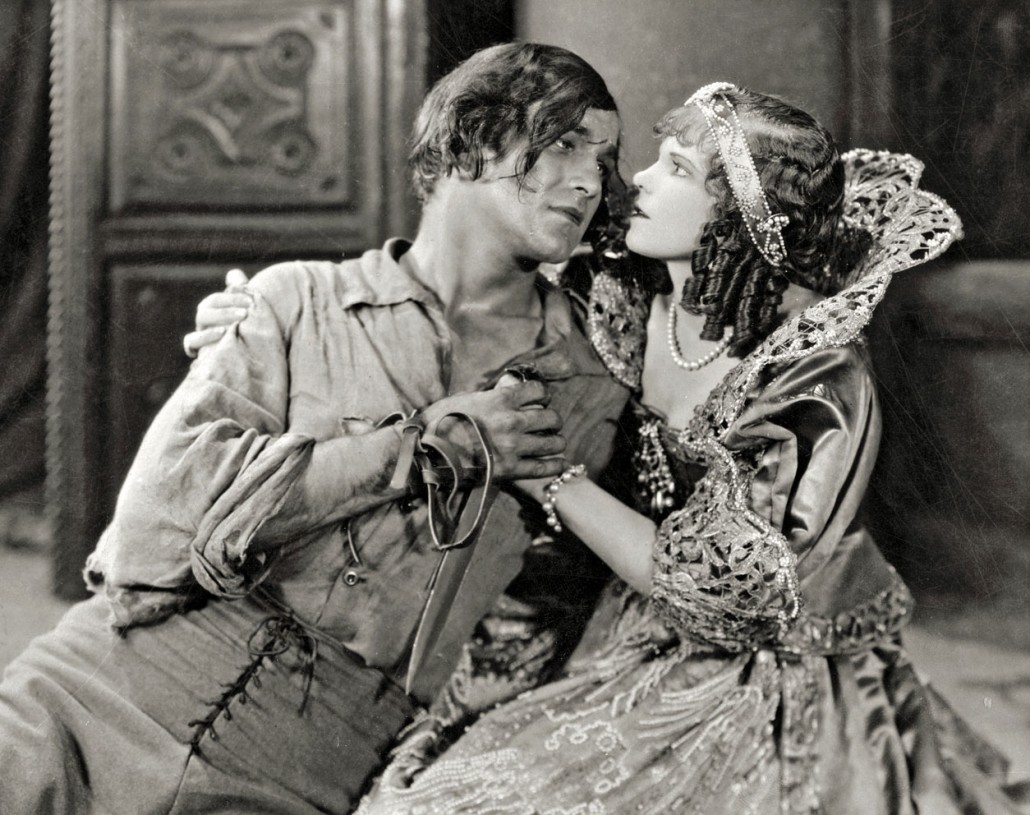
Não foi uma surpresa
ver um tema religioso em um filme de DeMille. Em “Amor Eterno”, além de ter em
Ken – tanto no passado quanto no presente – um exemplo de ateu que desdenha de
Deus, há os temas de reencarnação e espiritualismo, que estavam na moda no
começo do século XX. Não nos esqueçamos de que “Amor Eterno” foi adaptado de
uma peça escrita por Beulah Marie Dix e Evelyn Greenleaf Sutherland que fez
sucesso na Broadway entre 1906 e 1907.
It wasn't a surprise to
see a religious theme in a DeMille movie. In “Road to Yesterday”, besides
having in Ken – both in the past and in the present – an atheist who disdains
of God, there is the themes of reincarnation and spiritualism, which were in
vogue in the early 20th century. Let's not forget that “The Road to Yesterday”
was adapted from a play written by Beulah Marie Dix and Evelyn Greenleaf
Sutherland that was a Broadway hit between 1906 and 1907.

O espiritualismo
estava na moda nos anos 290, logo depois do fim da Primeira Guerra Mundial. De
certa maneira, foi assim que muitas pessoas lidaram com a perda de entes
queridos na guerra: se voltando para a religião e esperando para se comunicar
com os mortos, ou viver outra vida após a morte. DeMille e Jeanie Macpherson
sabiam disso e foram sábios ao escolherem adaptar “Amor Eterno” para as telas –
com a ajuda de um jovem chamado Howard Hawks, que ficou responsável pelos
intertítulos. Depois da Segunda Guerra Mundial, os métodos para processar o
luto mudaram um pouco, e incluíram a criação da cientologia e o aumento do
interesse por ficção científica e por discos voadores.
Spiritualism was in vogue
in the 1920s, following the end of World War I. In a way, it was how many
people grieved the loss of loved ones in the war: turning to religion and the
hope to communicate with the dead, or to go on to live another life. DeMille
and Jeanie Macpherson knew that, and made the wise choice to adapt “The Road to
Yesterday” to the screen – with a young man called Howard Hawks writing the
intertitles for them. After World War II, the grieving methods were a little
different, and included the creation of scientology and the rise of science
fiction and interest in UFOs.
O assunto das vidas
passadas é fascinantes. E fica mais interessante ainda da maneira como é
tratada no filme. Em 1925, Bess encontra sua tia Harriet (Trixie Friganza) e se
diverte ao lembrar que a tia sempre disse que, numa vida passada, ela era a
rainha Mary da Escócia – mas na verdade ela era apenas uma bruta dona de uma
taverna. Isto é algo comum: nós todos gostamos de pensar que, em uma vida
passada, se é que já vivemos antes, fomos tão importantes quanto César e
Cleópatra, mas nós provavelmente fomos – como somos agora mesmo – pessoas
normais vivendo vidas comuns.
The subject of past lives
is fascinating. And it’s even more so in the way it is treated in the film. In
1625, Bess also meets her aunt Harriet (Trixie Friganza) and laughs because the
aunt always said that, in a past life, she was Mary Queen of Scots – but in
reality she was just a brute tavern owner. This is something common: we all
like to think that, in a past life, if we had one, we were as important as
Caesar and Cleopatra, but we much probably were – as we are right now – regular
people living uneventful lives.

Eu gosto
particularmente de algumas noções deste filme, como a de que nossos problemas
ou características têm origem em uma vida passada. Há alguns anos eu me
interesso pelo Espiritismo, uma religião com um número razoável de seguidores
no Brasil. Não sou nenhuma especialista no assunto, mas vejo que algumas coisas
em “Amor Eterno” vão de encontro com a doutrina de Allan Kardec.
I particularly like some
notions in this film, like the one that our current problems and even strengths
may have its origin in a past life. For a few years I’ve been interested in
Spiritism, a religion that has a good amount of followers in Brazil. I’m by no
means an expert, but I see some things in “The Road to Yesterday” that
corroborate with Allan Kardec’s doctrine.

Além de vidas
passadas, o que mais “Amor Eterno” tem a oferecer? Oh, prepare-se, porque tem
muita coisa neste filme: discurso religioso, arco e flecha, figurino de Adrian,
noivados relâmpago, estupro conjugal, esgrima, mulheres vestidas de homens e
uma verdadeira caça às bruxas da era medieval. E tudo isso por causa de uma
viagem no tempo causada por uma experiência de quase morte!
Besides past lives, what
“The Road to Yesterday” has to offer? Oh, brace yourself, because this film has
a lot going on: religious blabbing, archery, gowns by Adrian, quick
engagements, marital rape, fencing, cross-dressing and a true medieval witch
hunt. And all this because of a time travel triggered by a near-death
experience!

“Amor
Eterno” é um pouco cafona? Claro que é! É tão insistentemente cristão quanto
uma aula de catequese e uma tortura deliciosa para alguém como eu, que estudou
em colégio de freiras e adora filmes religiosos. É um filme com muitos
problemas e furos no enredo – como a Fritzi mostra aqui – mas é feito com
capricho, e o resultado entretém. E você nunca mais verá seus déjà vus da mesma
maneira após este filme.
Is “The Road to Yesterday”
a little bit tacky? Of course it is! It’s as preachy as Sunday school and a
delightful torture for someone like me, who went to a Catholic school and is a
sucker for religious movies. It’s a film with a lot of problems and plot holes
– as Fritzi points out here – but it is beautifully made, and a very
entertaining movie. And you’ll never see the déjà vus the same way after
watching it.
This is my contribution to the Time Travel Blogathon, hosted by Rich and Ruth and Wide Screen World and Silver Screenings.