} Crítica Retrô: Clark Gable

Tradutor / Translator / Traductor / Übersetzer / Traduttore / Traducteur / 翻訳者 / переводчик

Showing posts with label Clark Gable. Show all posts

Saturday, June 15, 2019

Casar por Azar (1932) / No Man of Her Own (1932)


Todos nós conhecemos Clark Gable e Carole Lombard como um casal, casados desde 1939 até a morte prematura dela em 1942. Mas, anos antes de eles se apaixonarem na vida real, eles interpretaram um casal em um filme. Em “Casar por Azar” (1932), o nome de Gable apareceu acima do título – sinal de status –, ele não tinha bigode e Carole era uma loura platinada. As coisas eram, com certeza, muito diferentes.

We all know Clark Gable and Carole Lombard as a couple, married from 1939 until his untimely death in 1942. But, years before they fell in love for real, they played a couple in a film. In “No Man of Her Own” (1932), Gable's name was above the title, he had no mustache and Carole was a platinum blonde. Things were, for certain, very different.
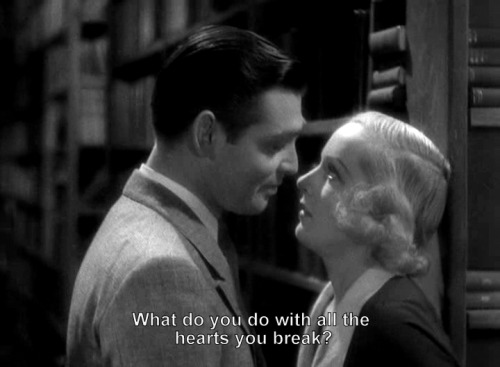

Jerry ‘Babe’ Stewart (Gable) organiza jogos de cartas com três outras pessoas, incluindo sua ex Kay Everly (Dorothy Mackaill). A função de Kay é convencer homens ricos a participar dos jogos, tirando alguns milhares de dólares deles com um jogo manipulado. Quando ele se vê cercado de problemas – as causas destes problemas são Kay e um dos jogadores – Jerry foge e por acaso vai para a cidadezinha de Glendale, onde Connie Randall (Lombard) vive com sua família.

Jerry 'Babe' Stewart (Gable) puts up card games with three other people, including his former girl Kay Everly (Dorothy Mackaill). Kay's function is to lure rich men into playing cards with them, until the man has lost a few thousand dollars in the rigged game. Once in trouble – with both Kay and a player – Jerry runs away and by chance ends up in the small city of Glendale, where Connie Randall (Lombard) and her family live.


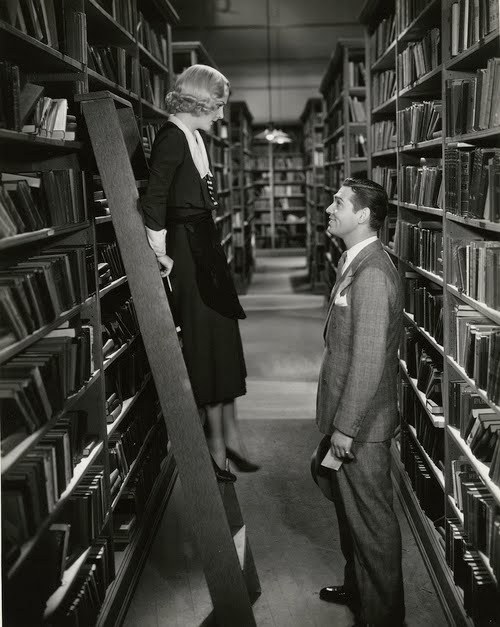
Connie vem de uma família simples e trabalha como bibliotecária. O primeiro encontro de Jerry e Connie é caliente, e eles instantaneamente sentem atração um pelo outro. Ele é mais direto, e ela não é uma garota simplória do interior. Ela quer aceitar as investidas dele, mas reluta em fazê-lo. A sequência labiríntica, qual jogo de gato e rato, na biblioteca filmada em plongée (de cima para baixo) é uma epítome do que é flertar.

Connie comes from a simple family and works as a librarian. Jerry's and Connie's first meeting is a steamy one, with both instantly attracted by each other. He is more straightforward, and she is no simpleton from a small town. She wants to say yes to him, but is reluctant. Their cat and mouse, labyrinthine sequence in the library filmed from above is an epitome of what flirting is.

Agora Jerry e Connie estão juntos, mas ele não pretende ficar muito tempo sem ela. Kay não é mais problema: ela está em um cruzeiro no Caribe. Connie será um grande problema, porque, para manter a farsa, Jerry precisará fingir que tem um emprego. Além disso, Connie começa a suspeitar das noites de jogo de Jerry.

Now Jerry and Connie are together, but he doesn't intend to be with her for long. Kay will be no problem: she is away in a cruise through the Caribbean. Connie will be a great trouble, because, to keep the farce, Jerry will need to pretend he has a job. Besides that, Connie starts to get suspicious of Jerry's game nights.
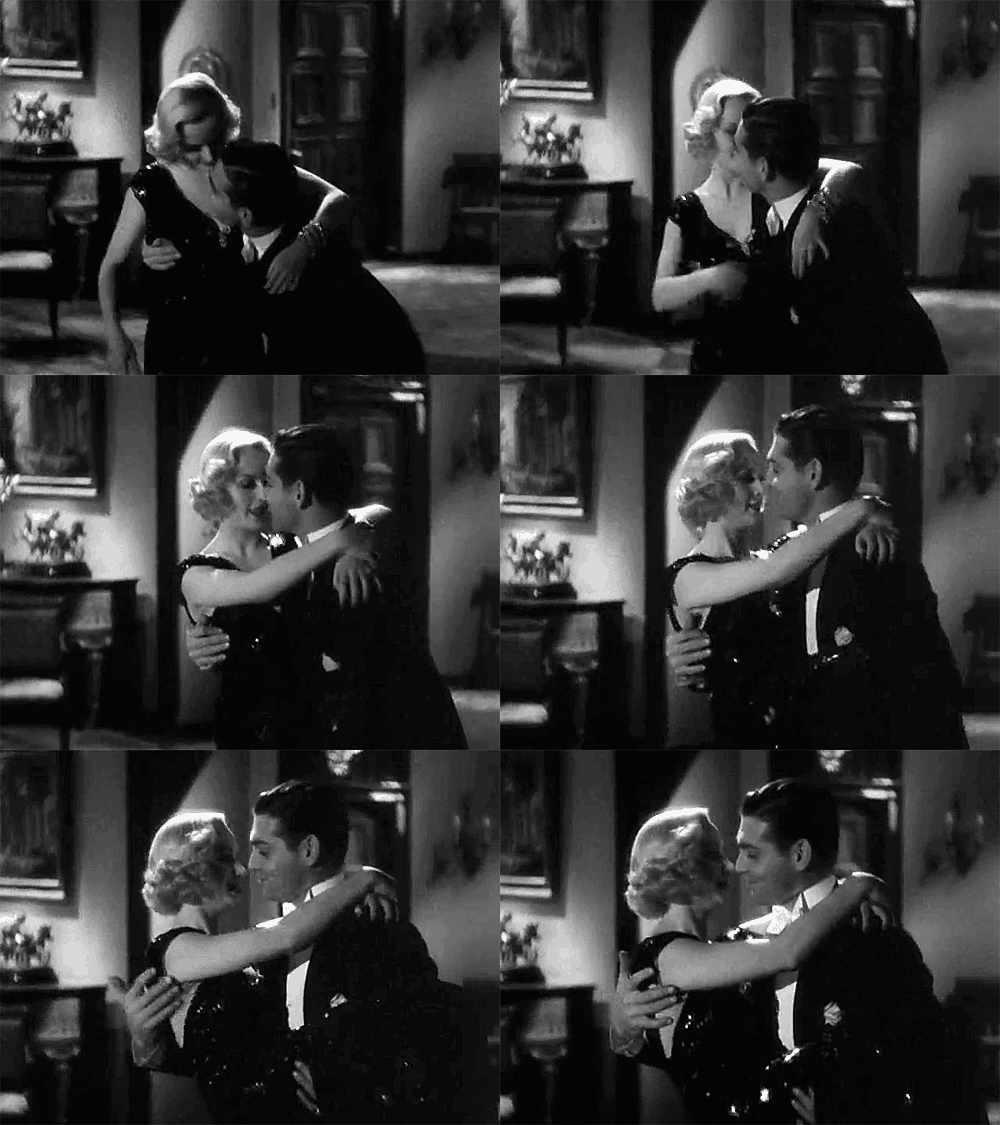

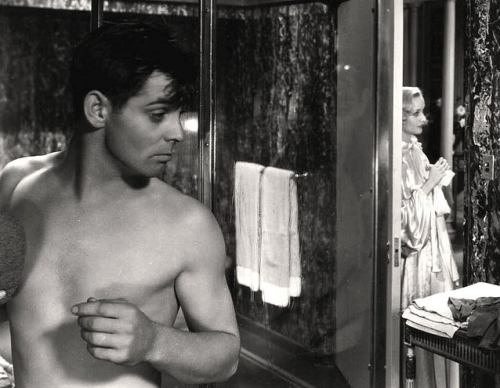
Há poucos filmes pre-Code mais ousados que “Casar por Azar”. Neste filme, temos tanto Dorothy Mackaill quanto Carole Lombard se despindo – e Lombard correndo de lingerie para atender ao telefone e depois colocando pijamas de seda quase transparente -, o peito nu de Gable no chuveiro, muita paquera e referências nem um pouco veladas ao ato de “fazer amor”. E é tudo deliciosamente libertador!

There are few pre-Codes naughtier than “No Man of Her Own”. In this film, we have gratuitous undressing scenes featuring both Mackaill and Lombard – and Lombard running in her underwear to answer a phone and then changing to almost transparent silk pajamas –, Gable's naked torso in the shower, a lot of flirting and unapologetic references to making love. And it's all a delight and so freeing!


O director Wesley Ruggles é um mestre do pre-Code. Além de “Casar por Azar”, ele dirigiu “Santa Não Sou” (1933), com Mae West, e trabalhou sem ser creditado em “Cimarron” (1931) - nos créditos ele não aparece como diretor, mas sim como "uma produção Wesley Ruggles". Ele também fez “Luar, Música e Amor” (1925), no qual tanto Gable quanto Lombard trabalharam como figurantes, sem fazerem cenas juntos. E se você está se perguntando: sim, Wesley é parente do conhecido ator coadjuvante Charles Ruggles – eles são irmãos.

Director Wesley Ruggles is a pre-Code master. Besides “No Man of Her Own”, he directed Mae West’s “I’m No Angel” (1933) and did uncredited work in “Cimarron” (1931) - he doesn't appear as the director in the credits, it's only "a Wesley Ruggles production". He also did “The Plastic Age” (1925), in which both Gable and Lombard appeared as extras, sharing no scenes. And if you’re wondering: yes, Wesley is related to beloved character actor Charles Ruggles – they are brothers.


Tanto Gable quanto Lombard estavam casados quando filmaram “Casar por Azar”. Gable era casado com Rhea Langham, sua segunda esposa. Lombard era casada com o ator William Powell, de quem ela continuou amiga após o divórcio. De acordo com o IMDb, Gable e Lombard se mostraram indiferentes em relação um ao outro durante as filmagens, embora seus personagens tenham muita química.

Both Gable and Lombard were married when they made “No Man of Her Own”. Gable was then married to Rhea Langham, his second wife. Lombard was married to fellow actor William Powell, with whom she remained friends after the divorce. According to IMDb, Gable and Lombard were indifferent at each other while shooting the film, although the two characters have immense chemistry.
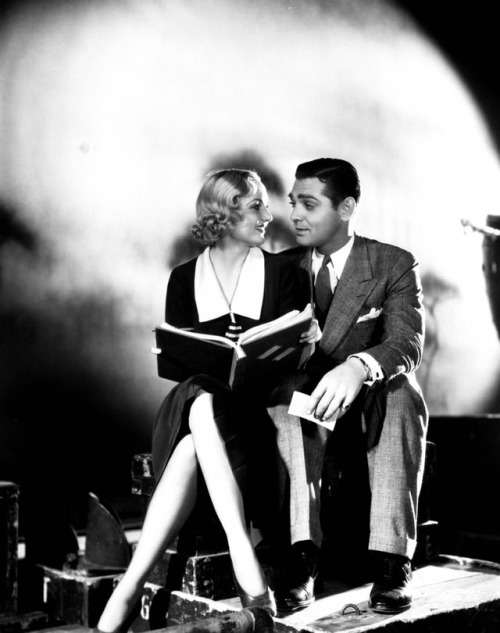

Carole Lombard não foi a primeira opção para interpretar Connie – foi Miriam Hopkins. Curiosamente, aqui Carole se parece um pouco com Jean Harlow, que começou uma bem-sucedida parceria com Gable em 1932. Tanto a persona cinematográfica de Harlow quanto a personagem de Carole têm cabelo claro, grande elegância, otimismo e alegria contagiante.

Carole Lombard wasn't the first choice to play Connie – it was Miriam Hopkins. Curiously, here Carole looks a little like Jean Harlow, who started her successful partnership with Gable in 1932. Both Harlow's screen persona and Lombard's character have light hair, a great fashion sense and a contagious joy and optimism.


“Casar por Azar” não é uma screwball comedy. Ao misturar crime e romance, o filme se parece mais com outras produções estreladas por Clark Gable no período pre-Code – em especial “Possuída”, de 1931 – e ele desafia qualquer tipo de classificação em gêneros e subgêneros. Com 81 minutos, é um filme rápido e divertido – e que mostra tudo o que os cineastas podiam fazer antes de a censura chegar.

“No Man of Her Own” isn’t a screwball comedy. Mixing crime and romance, it looks more like other Clark Gable pre-Codes – 1931’s “Possessed” comes to my mind – and it defies all kinds of classification in genres and subgenres. Clocking in at 81 minutes, it’s a quick, enjoyable movie – and it shows the wonders filmmakers could accomplish before censorship came.

This is my contribution to the Second Clark Gable blogathon, hosted by Michaela at Love Letters to Old Hollywood.


Friday, April 5, 2019

Um Amor de Professora (1958) / Teacher’s Pet (1958)


Em muitos países – por exemplo, no Brasil – não é necessário ter um diploma em jornalismo para ser jornalista. Claro, há muitos colunistas convidados escrevendo em jornais, revistas e sites, e muitos mais que são chamados de jornalistas mas que aprenderam a profissão ao exercê-la todos os dias, durante muitos anos. Um homem que aprendeu jornalismo nas ruas e nas salas de redação dos jornais é o protagonista de “Um Amor de Professora” (1958), interpretado por ninguém menos que Clark Gable – fazendo par com Doris Day, o que pode soar estranho de início, mas funciona como mágica.

In many countries – like in Brazil – it's not necessary to have a degree in journalism to be a journalist. Sure, there are many guest columnists writing for newspapers, magazines and websites, and there are many more who are called journalists but who learned the profession by doing it every day, for many years. One man who learned journalism in the streets and newspapers rooms is the lead of “Teacher's Pet” (1958), played by no other than Clark Gable – in a pairing with Doris Day, which may sound odd at first, but it works like magic.


James ‘Jim’ Gannon (Clark Gable) não precisou ir para a faculdade para se tornar editor de um jornal e autoridade em seu meio. Ele diz a uma preocupada mãe de um dos aprendizes do jornal tudo o que pensa sobre estudar jornalismo na faculdade: é uma perda de tempo, porque só se aprende jornalismo fazendo jornalismo. Esta também é a razão pela qual Jim se recusa a dar uma palestra em um curso de jornalismo – uma recusa que é multiplicada por 100 quando ele descobre que o curso tem uma mulher como professora. E uma mulher que vê o jornalismo como vocação, não como negócio.

James 'Jim' Gannon (Clark Gable) didn't need to go to college to become an editor at a newspaper and an authority in his field. He tells a worried mother of one of the newspaper apprentices what he thinks about going to school to study journalism: a waste of time, because you can only learn journalism by doing it. This is also the reason why Jim refuses to give a lecture at a journalism course – a refusal that is multiplied by 100 when he learns that the course is taught by a woman. And a woman that sees journalism as a profession, while Jim sees journalism as a trade.


Mesmo protestando, Jim é obrigado pelo chefe a ir ao curso de jornalismo dar a palestra. Entretanto, uma carta raivosa de recusa escrita por ele chega antes nas mãos dela e, quando ele está na sala de aula, esperando para falar com a surpreendentemente bela professora Erica Stone (Doris Day), ela lê a carta e ridiculariza o seu conteúdo. Jim então tem uma ideia: ele irá se matricular no curso, e ensinar para a professora que jornalismo não pode ser ensinado em uma sala de aula.

No matter his protests, Jim is obligated by his boss to go to the journalism course to give the lecture. However, an angry letter he wrote arrives before him and, when he is in the classroom, patiently waiting to talk to the surprisingly pretty teacher Erica Stone (Doris Day), she reads his letter and ridicules the content. Jim then has an idea: he will enroll in the course, and teach the professor that journalism can't be taught in a classroom.


Assim Jim se matricula sob o pseudônimo Gallagher e logo se torna um aluno brilhante. Sua escrita é tão boa que Erica  decide ser sua tutora, e ele fica com ciúmes quando ela não pode orientá-lo todas as noites devido aos seus encontros com o renomado psicólogo Dr Hugo Pine (Gig Young). Mesmo quando a verdade sobre a identidade de Jim / Gallagher vem à tona, nada sai como esperado.

So Jim enrolls under the name of Gallagher and soon becomes a stellar student. His writing is so good that Erica decides to tutor him personally, and he gets jealous when she isn't able to tutor him every night because of her meetings with the reputed psychologist Dr Hugo Pine (Gig Young). Even when the truth is told about Jim's / Gallagher's identity, nothing comes as expected.


Clark Gable nunca esteve tão expressivo quanto em “Um Amor de Professora”. Como Hugo, Gig Young não é apenas um rival para Jim, mas também um sabe-tudo – que também dança mambo – que mexe com a confiança de Jim. Mamie van Doren tem um pequeno papel como Peggy, uma cantora que é amiga de Jim, e infelizmente é retratada como uma loira burra para arrancar risadas.

Clark Gable is at his most expressive in “Teacher's Pet”. As Hugo, Gig Young is not only a rival in love to Jim, but also a know-it-all – who also dances mambo – and undermines Jim's confidence. Mamie van Doren has a small role as Peggy, a singer who is a friend of Jim's, and unfortunately is portrayed as a dumb blonde for laughs.


Doris Day e Clark Gable têm uma boa química? Bem, não tenho certeza se ‘química’ é a palavra correta aqui. Doris e seu parceiro e amigo Rock Hudson certamente tinham química, e em alguns filmes eles inclusive usaram a situação de confusão de identidades que é explorada também em “Um Amor de Professora”, mas o que ela mostra com Gable é diferente: o personagem dele está sexualmente atraído por ela, enquanto ela é relutante quanto às investidas dele.

Do Doris Day and Clark Gable have a good chemistry? Well, I don't know if 'chemistry' is the right word here. Doris and her constant partner and friend Rock Hudson certainly had chemistry, and in some movies they even played the situation of mistaken identities explored in “Teacher's Pet”, but what she shows here with Gable is different: his character is lusting over her, while she is reluctant to his acts.


“Um Amor de Professora” foi escrito pela dupla de marido e esposa Michael Kanin e Fay Kanin – o irmão mais novo de Michael é o roteirista Garson Kanin, que por sua vez foi casado com a atriz Ruth Gordon. Graças aos Kanin, “Um Amor de Professora” é muito engraçado, em especial quando Gig Young aparece em cena.

“Teacher's Pet” was written by the husband and wife duo Michael Kanin and Fay Kanin – Michael's younger brother is the more famous screenwriter Garson Kanin, who by his turn was married to actress Ruth Gordon. Thanks to the Kanins, “Teacher’s Pet” is very funny, in special whenever Gig Young was on screen.


Mesmo não gostando de remakes, eu adoraria ver uma versão de “Um Amor de Professora” com os gêneros dos protagonistas trocados. Obviamente, com as redes sociais que temos hoje, seria quase impossível que um professor não conhecesse o rosto de um jornalista que foi convidado a dar palestra para sua turma, mas eu acredito que algum truque poderia ser usado para fazer a história funcionar – com uma jornalista disfarçada, querendo ensinar uma lição a um professor, mudando completamente o visual para se passar por aluna, por exemplo. Mudar os gêneros dos protagonistas certamente criaria novas e interessantes dinâmicas.

As much as I don't like remakes, I'd love to see a gender-bent version of “Teacher's Pet”. Of course, today with social media, it'd be nearly impossible for a teacher to not know the face of a journalist who was invited to give a lecture to their class, but I imagine that some trick could be used to make the plot work – with the undercover female journalist, wanting to teach a lesson to a male teacher, changing her whole look before enrolling in his class, for instance. Bending the genders of the leads certainly would create new and interesting dynamics and situations.


Além de ser um filme delicioso, apesar de pouco conhecido, “Um Amor de Professora” traz um bom debate sobre conhecimento, educação, experiência e sabedoria, e nos ensina que o mais importante é saber equilibrar tudo isso.

Besides being a delightful, yet little know film, “Teacher's Pet” brings a nice debate about knowledge, education, experience and wisdom, and teaches us that the most important thing is balancing all that.

This is my contribution to the Third Doris Day blogathon, hosted by Michaela at Love Letters to Old Hollywood.


Saturday, February 3, 2018

Almas Rebeldes (1940) / Strange Cargo (1940)

Clark Gable e Joan Crawford fizeram oito filmes juntos. O primeiro deles foi em 1931, e o último em 1940. “Almas Rebeldes” é este último filme da parceria, um filme que veio logo depois de muito sucesso para ambos: em 1939 Gable fez um pequeno filme chamado “E o Vento Levou...” e Crawford foi uma das estrelas de “As Mulheres”. “Almas Rebeldes” foi, para as duas estrelas, uma grande mudança em relação à pompa de seus trabalhos pregressos.

Clark Gable and Joan Crawford made eight films together. Their first pairing was in 1931, and their last in 1940. “Strange Cargo” is this last film they made together, and it came following successes from both: in 1939, Gable was in a little film called “Gone with the Wind” and Crawford was one of the many stars in “The Women”. “Strange Cargo” was a complete change from the glamour and pomp for the two stars.
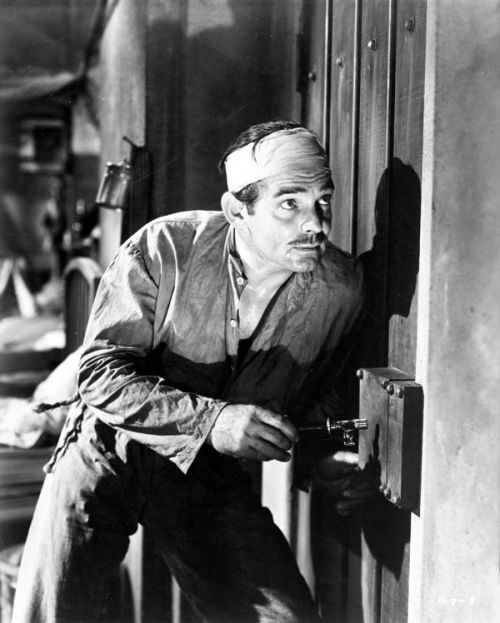
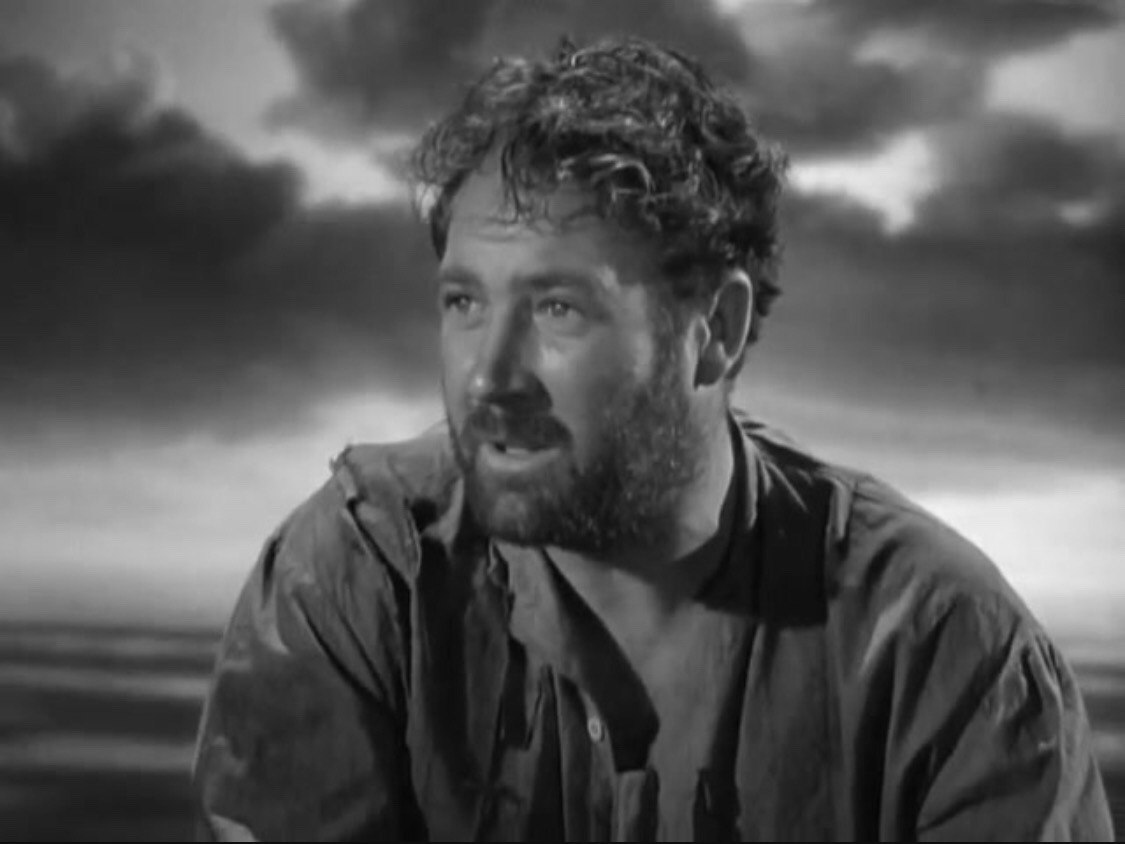
Apenas pessoas esquecidas vivem na Guiana – um local que, no mundo do cinema, se parece muito com a África de “O Diabo Riu por Último” (1953). Há uma grande prisão lá, para 'homens que perderam as esperanças'. E as mulheres que trabalham no bar local são imigrantes que fariam qualquer coisa para sobreviver. Mas há uma regra: mulheres e prisioneiros não podem ser vistos juntos. É por isso que o prisioneiro Verne (Clark Gable) representa encrenca para Julie (Joan Crawford). O primeiro contato dele é mias para violento que para romântico, e ele só pensa em uma coisa: em fugir.

Only forgotten people live in Guiana – a place that, in the film world, looks a lot like the Africa we see in 1953's “Beat the Devil”. There is a big prison there, for 'men who have lost hope'. And the women who work in the local bar are immigrants who would do anything to survive. But there is a rule: women and inmates can't be seen together. That is why prisoner Verne (Clark Gable) represents trouble to Julie (Joan Crawford). His first approach is more violent than romantic, and he only thinks of one thing: escaping.
Verne tenta fugir pela primeira vez no filme depois de ir trabalhar no porto carregando e descarregando navios. Ele entra no bar de Renard, onde Julie, que ele havia visto mais cedo naquele mesmo dia, trabalha. Enquanto ele se esconde no quarto dela, Julie conta para os guardas o paradeiro de Verne. Ele é recapturado, mas Julie foi encontrada com ele, e por isso deve sair da colônia em até 12 horas.

Verne makes his first attempt to escape in the movie by running away after he goes to the harbor to load ships. He ends up in Renard's bar, where Julie, who he has seen earlier that day, works. While he is hiding in her room, Julie tells the guards where he is. Verne is recaptured, but Julie was found with him, and thus she must leave the colony within 12 hours.
De volta à prisão, Verne se envolve em um plano de fuga com outros oito homens. Seu inimigo, Moll (Albert Dekker), tenta impedir que ele vá com o grupo, mas Verne consegue escapar e segue um mapa à procura da liberdade prometida. Ao mesmo tempo, Julie recusa a oferta do Monsieur Pig (Peter Lorre), que quer sair da colônia com ela, mas aceita a oferta de Marfeau (Bernard Nedell) para ir embora com ele. Obviamente, Marfeau não quer ajudar – ela apenas quer o corpo de Julie só para si.

Back to the prison, Verne gets involved in a nine-men plan to escape. His nemesis, Moll (Albert Dekker), tries to prevent him from going with the group, but Verne manages to escape anyway, and follows a map in search for the promised freedom. At the same time, Julie has refused Monsieur Pig's (Peter Lorre) offer to leave the colony with him, but accepted Marfeau's (Bernard Nedell) offer to leave with him. Of course, Marfeau doesn't want to help – he only wants to have Julie's body for himself.
O agora reduzido grupo de fuga se divide em dois, e dois trios enfrentam os obstáculos da selva. É óbvio que com o tempo surjam brigas dentro dos grupos e alguns fugitivos pereçam. Neste sentido, o filme me fez lembrar o pouco conhecido filme brasileiro de aventura “Arara Vermelha” (1957), sobre um grupo que rouba um diamante e precisa atravessar a selva para escapar com a pedra.

The now reduced escape group is divided by two, and two trios face the hardships of the jungle. Of course, with time there are fights inside the group, and some of the runaways perish. In this sense, the movie reminded me of little-known Brazilian adventure film “Arara Vermelha” (1957), about a group that steals a diamond and has to cross the jungle to escape with the stone.
Os coadjuvantes são ótimos. Peter Lorre fala com uma voz suave, porém aterrorizante. Ian Hunter interpreta o misterioso e espiritualizado Crambeau. Em um espaço pequeno e apertado, a câmera foca de baixo para cima em Hessler (Paul Lukas), embora a mesma câmera focalize outros prisioneiros de frente. Com este recurso, Hessler parece mais sombrio e perigoso. É um ótimo efeito que diz muito sobre seu caráter. Aliás, nós só ficamos sabendo qual crime levou Hessler à prisão. Para os outros prisioneiros, a razão para estar lá não importa.

The supporting characters are amazing. Peter Lorre speaks with a suave yet terrifying voice. Ian Hunter plays the mysterious and spiritualized Crambeau. In a tiny, tight space, the camera looks from down to up to Hessler (Paul Lukas), even though the other inmates are shot with a more conventional camera angle. This way, Hessler looks more somber, more dangerous. It's a great effect that says a lot about his character. By the way, we only get to know Hessler's crime. For all the other inmates, the reason for being there doesn't matter.
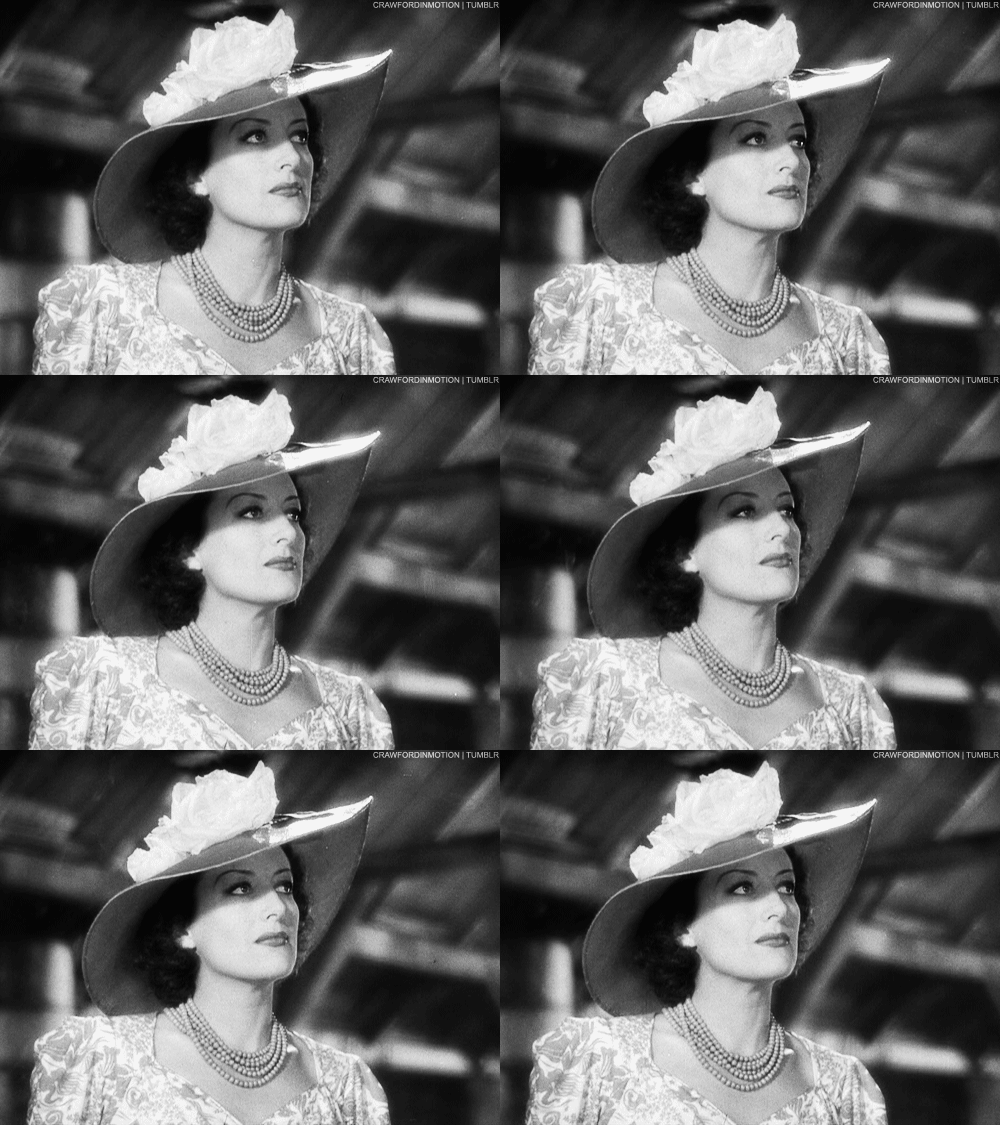
Nenhuma palavra precisa ser dita para que saibamos que Julie é uma prostituta – aliás, a outra garota que vemos acompanhando Julie quando Joan Crawford aparece na tela pela primeira vez é interpretada pela ex-atriz de cinema mudo Betty Compson. Assim como em “Rain” (1932), Crawford é visceral e simples na interpretação de Julie, e tem alguns belos momentos nos quais seu rosto sem maquiagem é focado pela câmera. Dá para imaginar como é ter apenas o mar e o rosto de Joan Crawford na sua frente?

No word has to be said so we know that Julie is a prostitute – by the way, the other girl who is seen accompanying Julie when Crawford first appears on screen is played by former silent sweetheart Betty Compson. Like in “Rain” (1932), Crawford is raw and simple when she plays Julie, and has some beautiful moments in which her make-up free face is focused by the camera. Can you imagine having only the sea and Joan Crawford's face in front of you?
O diretor Frank Borzage tratou de espiritualidade em muitos de seus filmes. Aqui, o tema mostrou ser um problema: a Legião Católica de Decência condenou o filme, causando boicotes em muitas cidades e a completa proibição da exibição de “Almas Rebeldes” em alguns lugares. Eu não acho que o filme 'zombe da Bíblia', como a Legião alegou, pelo contrário: a maneira como o filme lida com redenção é linda e inspiradora.

Director Frank Borzage dealt with spirituality in many of his films. Here, the theme proved to be a problem: the Catholic Legion of Decendy condemned the film, causing boycotts in many cities and the complete censorship of “Strange Cargo” in some places. I don't see the film 'making fun of the Scriptures' as the Legion alleged, on the contrary: the way the film deals with redemption is beautiful and inspiring.
Crambeau (Ian Hunter)
Com uma grande direção de arte – três palavras: selva no estúdio – e muitos personagens interessantes, “Almas Rebeldes” é um filme muito bom. É uma pena que a Legião da Decência tenha impactado negativamente sua performance nas bilheteria. “Almas Rebeldes” pode não ser uma obra-prima, mas é uma mistura curiosa de aventura e espiritualidade, e um filme que merece ser conhecido por mais gente.

With a great art direction – two words: studio jungle – and so many interesting characters, “Strange Cargo” is a very good film. Too bad the Legion of Decency impacted its box office negatively. “Strange Cargo” may not be a masterpiece, but it is a curious blend of adventure and spitituality, and deserves to be better known.


This is my contribution to the Clark Gable blogathon, hosted by Michaela at Love Letter to Old Hollywood.

Saturday, September 23, 2017

Myrna Loy e Jean Harlow: uma amizade

Myrna Loy and Jean Harlow: a friendship


Myrna Williams nasceu em dois de agosto de 1905 em Helena, Montana. Harlean Carpenter nasceu em três de março de 1911 em Kansas City, Missouri. Myrna, agora com o sobrenome Loy, fez seu primeiro filme em 1925. Harlean, agora com o nome Jean Harlow, fez seu primeiro filme em 1928. Em 1934, as duas mulheres se conheceram por intermédio de um homem que ambas amavam – mas Myrna o amava apenas nas telas, e Jean na vida real.

Myrna Williams was born on August 2nd 1905 in Helena, Montana. Harlean Carpenter was born on March 3rd 1911 in Kansas City, Missouri. Myrna, now with the last name Loy, made her first movie in 1925. Harlean, now renamed Jean Harlow, made her first movie in 1928. In 1934, the two women were presented to each other by a man they both loved – but Myrna loved him on screen only, and Jean in real life.


Foi durante um programa de rádio para promover o filme “A Ceia dos Acusados” (1934) que William Powell apresentou sua namorada Jean Harlow para Myrna Loy, sua companheira de cena. Elas logo de cara gostaram uma da outra. Em sua autobiografia, “Being and Becoming”, Myrna Loy se lembra de Harlow:

It was during a radio show appearance to promote “The Thin Man” (1934) that William Powell introduced his girlfriend Jean Harlow to Myrna Loy, his screen partner. They immediately liked each other. In her memoir, “Being and Becoming”, Myrna Loy remembers Harlow:


Jean era sempre muito alegre, divertida, mas ela também era uma mulher sensível com grande dose de autorrespeito. Todo o resto – aquilo era artificial. Ela não era daquele jeito. Ela era apenas uma boa atriz que criou uma caracterização cheia de vida que exalava sex appeal.”.

Jean was always very cheerful, full of fun, but she also happened to be a sensitive woman with a great deal of self-respect. All that other stuff – that was all put on. She wasn't like that at all. She just happened to be a good actress who created a lively characterization that exuded sex appeal.”.


Em 1934, Jean Harlow já havia passado por algumas situações difíceis e estava, finalmente, feliz em sua vida amorosa. Ela estava feliz com Bill, e ficando contente com sua carreira. E em breve ela veria que tinha Myrna como amiga. Quando ela finalmente contracenou com Loy, Jean estava mudando sua persona cinematográfica.

By 1934, Jean Harlow had already had some rough times and was, finally, happy with her love life. She was happy with Bill, and getting happier with her career. And soon now she’d realized she had a friend in Myrna. When she finally worked with Loy, she was making changes in her film persona.


Myrna e Jean fizeram dois filmes juntas, e ambos estrearam em 1936. O que eu acho interessante é que, embora os filmes tenham duas das maiores estrelas da MGM, Myrna e Jean não são colocadas para competir entre si – pelo menos não deliberadamente e de maneira negativa.

Myrna and Jean appeared in two movies together, both released in 1936. What I find interesting is that, although these films have two big stars from MGM, in none of them they are put against each other to compete – at least not in a negative and deliberate way.


Em “Ciúmes”, a esposa Linda, interpretada por Myrna, apenas fica com ciúmes da secretária Whitey, interpretada por Jean, porque é levada a acreditar que ela está seduzindo seu marido, Van, interpretado porClark Gable. Linda ouve coisas ruins sobre Whitey, que não é uma predadora sexual, mas sim uma secretária séria.

In “Wife vs Secretary”, the wife Linda, played by Myrna, only becomes jealous of the secretary Whitey, played by Jean, because she is led to believe that the blonde beauty is seducing her husband, Van, played by Clark Gable. Linda is poisoned against Whitey, who isn’t a man hunter, but a serious secretary.


Em “Casado com Minha Noiva”, Jean e Myrna têm ainda menos tempo juntas em cena. No filme, Gladys (Jean) está ansiosa para se casar com Warren, um jornalista interpretado por Spencer Tracy. Mas ele não pode pensar em casamento porque está sendo processado pela herdeira Connie (Myrna) por causa de uma história que ele publicou sobre a vida amorosa dela. Então, ele decide juntar Connie e Bill (William Powell), um antigo repórter.

In “Libeled Lady”, Jean and Myrna have even less screen time together. In this movie, Gladys (Jean) is really looking forward to getting married to Warren, a journalist played by Spencer Tracy. But he can't think about marriage while he is being sued by heiress Connie (Myrna) because of a story he published about her love life. So, he decides to set Connie up with Bill (William Powell), a former reporter.


Mesmo que “Ciúmes” seja divertido – e tenha também James Stewart bem novinho! – eu acredito que “Casado com Minha Noiva” é um filme melhor. É amalucado, romântico e muito divertido – duas palavras: Bill pescando! Todos os atores envolvidos no filme concordaram comigo, porque, de acordo com Myrna, as filmagens de “Casado com Minha Noiva” foram muito agradáveis e durante os intervalos os atores permaneciam juntos conversando.

Although “Wife vs Secretary” is quite enjoyable – and has a very young James Stewart! - I believe that “Libeled Lady” is a superior film. It's zany, romantic and extremely funny – two words: Bill fishing! All the actors involved agreed with me, because, according to Myrna, the filming of “Libeled Lady” was very pleasant and during breaks the four actors stayed together chatting and laughing.


Jean e Myrna se divertiam juntas, mas só se tornaram amigas íntimas durante as filmagens de “A Comédia dos Acusados” (1936). Foi durante uma viagem de trem que esta história aconteceu – minha anedota favorita envolvendo Myrna Loy. Considerando que “A Comédia dos Acusados” estreou depois dos outros dois filmes que Jean e Myrna fizeram juntas, isto provavelmente aconteceu depois de terem filmado “Ciúmes” e “Casado com Minha Noiva”.

Jean and Myrna had fun together, but they only became intimate friends during the filming of “Another Thin Man” (1936). It was during a train trip that this fun story happened – my favorite anecdote involving Myrna Loy. Considering that “Another Thin Man” was released after the two films Jean and Myrna did together, this probably happened after the shooting of both “Wife vs Secretary” and “Libeled Lady”.


Myrna, Jean e William Powell estavam viajando de trem. Quando eles chegaram ao hotel St. Francis, descobriram que uma suíte chique já havia sido preparada para o famoso casal Powell e Loy, e havia apenas um pequeno quarto disponível para Harlow. Já que Myrna e Bill eram tão bons juntos, a gerência do hotel pensou que eles eram um casal na vida real! A situação foi resolvida colocando Bill no quartinho e as duas moças na suíte. Elas passaram a noite rindo, bebendo e conversando, e a amizade se fortaleceu.

Myrna, Jean and William Powell were travelling by train. When they arrived at the St. Francis Hotel, they found out that a fancy suite had been booked by the famous couple Powell and Loy, with only a small room left available for Harlow. Since Myrna and Bill worked so well together, the management of the hotel thought they were a couple in real life! The situation was solved leaving Bill in the small room and the two girls in the suite. They spent the night laughing, drinking and chatting, and their friendship became stronger.


Aquela confusão me deu uma das melhores amizades. Você poderia imaginar que Jean e eu éramos meninas na escola, de tanto que nos divertimos. Nós ficamos metade da noite acordadas, conversando e tomando gim, às vezes rindo, às vezes discutindo coisas mais sérias...”

That mix-up brought me one of my most cherished friendships. You would have thought Jean and I were in boarding school we had so much fun. We'd stay up half the night talking and sipping gin, sometimes laughing, sometimes discussing more serious things...” 


Jean Harlow fez mais dois filmes depois de “Casado com Minha Noiva” e, eu uma das mais tristes histórias em Hollywood, morreu com apenas 26 anos, deixando seu amado Bill e seus grandes amigos Myrna e Clark Gable devastados.

Jean Harlow made two more movies after “Libeled Lady” and, in one the saddest departures in Hollywood, died at only 26, leaving her beau Bill and her close friends Myrna and Clark Gable devastated.


Foi terrível, um choque horrível; eu amava Jean profundamente. Eu senti uma mistura nauseante de luto, culpa e frustração porque eu não fui capaz de fazer o que poderia tê-la salvado: afastado-a da mãe para que fosse examinada”.

"It was horrible, an awful blow; I loved Jean deeply. I felt a sickening mixture of grief, guilt, and frustration because I hadn't been able to do what might have saved her: get her away from her mother for an examination”.


Se Jean tivesse vivido mais, ela poderia ter trabalhado mais vezes com Myrna – mas eu acho que ela preferiria se casar com Bill (com myrna Loy de madrinha, claro) e deixar o cinema. Mesmo que breve, a amizade de Jean e Myrna foi forte e bela, e podemos sentir isso quando vemos as duas juntas na tela.

If Jean had lived, she could have worked more with Myrna – but I think she’d prefer to marry Bill (with Myrna Loy as a bridesmaid, of course), and retire from the movies. Although brief, Jean and Myrna’s friendship was strong and beautiful, and we can sense it when we see them on screen.

This is my contribution to the Duo Double Feature Blogathon, hosted by Laura at Phillys Loves Classic Movies and Emily at The Flapper Dame.

Related Posts Plugin for WordPress, Blogger...