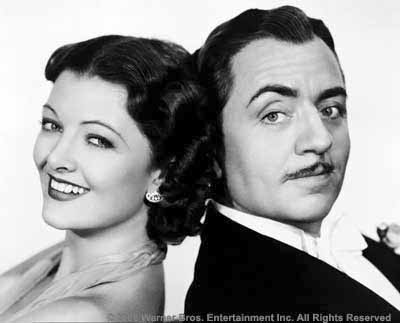
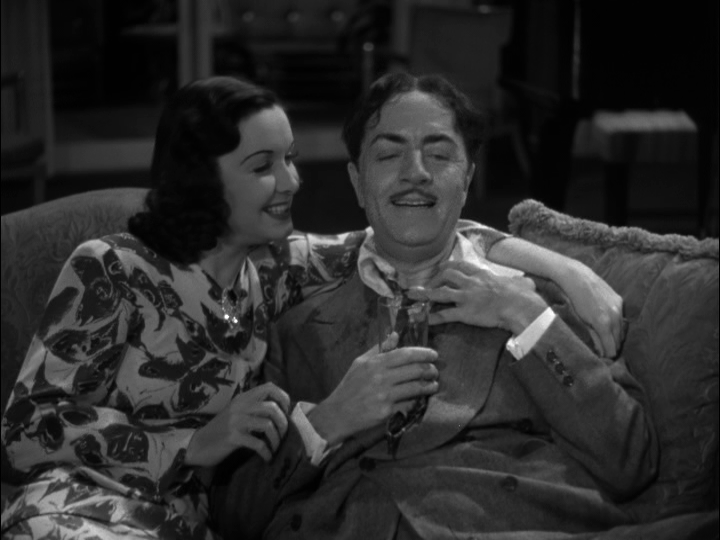
} Crítica Retrô: Myrna Loy

Tradutor / Translator / Traductor / Übersetzer / Traduttore / Traducteur / 翻訳者 / переводчик

Showing posts with label Myrna Loy. Show all posts

Monday, March 31, 2025

O Cantor de Jazz (1927) / The Jazz Singer (1927)


É mentira que eu nunca assisti a “O Cantor de Jazz”. Uma vez eu assisti à metade dele numa aula. Com metade do spoiler, aqui estou eu para escrever sobre este filme que mudou a História. “Esperem um minuto, esperem um minuto! Vocês ainda não ouviram nada” foram as palavras que mudaram tudo. O cinema finalmente podia falar.

It’s a lie that I had never watched “The Jazz Singer”. I once watched about half of it in a class. Half-spoiled, here I am to review this movie that was a game changer. “Wait a minute, wait a minute! You ain’t heard nothing yet” were the words that changed everything. Cinema finally could talk.

Espera-se que Jakie Rabinowitz (Robert Gordon) se torne um Cantor como seu pai (Warner Oland) - seguindo cinco gerações na mesma profissão. Um Cantor ou Hazzan é um músico judeu que apresenta rezas na sinagoga na forma de canções. Para justificar a recusa do menino em se tornar um Cantor, sua mãe (Eugenie Besserer) diz “ele tem todos os hinos na cabeça, mas não no coração”. O pai encontra Jakie cantando ragtime num bar e, trazendo o garoto de forma violenta até em casa, bate nele. Jakie sai de casa e promete nunca mais voltar.

It’s expected that Jakie Rabinowitz (Robert Gordon) becomes a Cantor like his father (Warner Oland) - and five generations before him. A Cantor or Hazzan is a Jewish musician who presents prayers in the synagogue in the form of songs. To justify the boy’s refusal to step up as a Cantor, his mother (Eugenie Besserer) says “he has all the hymns in his head, but not in his heart”. The father finds Jakie singing ragtime tunes at a bar and, violently bringing him home, spanks his son. Jakie leaves home and vows to never return.

Anos depois, encontramos Jack Robin (Al Jolson) como cantor de jazz. Ele tem como fã e amante a bela Mary (May McAvoy), que descreve a maneira como ele canta como “com uma lágrima na voz”. Ela também é artista e arranja um lugar para Jack em seu show. Depois de uma turnê pelo país, eles voltam a Nova York, onde Jack enfrentará seu passado e tomará uma decisão que afetará seu futuro.

Years later, we find Jack Robin (Al Jolson) as a jazz singer. He finds a fan as well as a lover in Mary Dale (May McAvoy), who describes his singing as “having a tear in his voice”. She is an artist too and finds a spot for Jack in her revue. After touring the country, they go back ton New York, where Jack will face his past and make a decision that will affect his future.

Al Jolson, nascido Asa Yoelson no que hoje é a Lituânia, era conhecido como “o Maior Artista do Mundo” em seu auge. O homem que mudou para sempre a Broadway com sua maneira de cantar nos anos 1920, após o ataque a Pearl Harbor se tornou o primeiro cantor a se apresentar para as tropas no front. Al Jolson começou sua carreira no circo e logo galgou seu caminho no vaudeville, na Broadway e no cinema, quase fazendo seu primeiro filme em 1923: “Mammy’s Boy” de D.W. Griffith nunca foi completado. Sua segunda incursão no cinema foi “O Cantor de Jazz”. Influenciando cantores como Bing Crosby, Al Jolson transformava em ouro tudo em que tocava.

Al Jolson, born Asa Yoelson in what is now Lithuania, was known as “the World’s Greatest Entertainer” in his heyday. Forever changing Broadway with his singing style in the 1920s, after Pearl Harbor he became the first singer to entertain the troops overseas. Al Jolson started his career in the circus and quickly moved up to vaudeville, Broadway and cinema, almost making his first film in 1923: D.W. Griffith’s “Mammy’s Boy” was never completed. His second attempt at cinema was “The Jazz Singer”. Influencing crooners such as Bing Crosby, everything that Jolson touched became gold.

Num momento daqueles que você pisca e já passou, é possível ver Myrna Loy como corista no teatro, dizendo sobre Jack: “Ele não tem chance com Mary”. Nascida em 1905, Loy havia sido escalada quase que exclusivamente para interpretar vamps no cinema mudo, mas sua imagem mudou para a de “esposa perfeita” nos anos 1930, culminando com sua escolha como Rainha do Cinema em 1938. A estrela de “O Cantor de Jazz” tomou um caminho diferente: comumente citada como “a menos talentosa entre as protagonistas do cinema mudo”, May McAvoy detestou os papéis que a Warner Bros escolheu para ela após este filme, e se aposentou ao casar em 1929.

In a “blink and you miss it” moment you can see Myrna Loy as a chorus girl at the theater, saying about Jack: “He hasn’t a chance with Mary”. Born in 1905, Loy had been typecast as a vamp in silent movies, but her image changed to a “perfect wife” type in the 1930s, culminating with her being voted the Queen of the Movies in 1938. The lead of “The Jazz Singer” had a different path: often cited as “the least-talented leading lady in silents”, May McAvoy disliked the roles Warner Bros chose for her after this movie, and retired when she got married in 1929.

Parte filme silencioso, parte falado, não é de se espantar que o público enlouquecesse quando de repente ouvissem a voz de Al Jolson. Só que não foi essa a primeira coisa que o público ouviu, aos 22 minutos de projeção. Antes houve músicas interpretadas pelo jovem Jakie e o mais velho Jack, além de um hino judeu. O som sincronizado não era novidade - era possível encontrar efeitos sonoros em filmes anteriores, como em “Don Juan” de 1926 -, a novidade era o diálogo sincronizado à ação. Como curiosidade, devemos citar que tanto Myrna Loy quanto Warner Oland também estavam em “Don Juan”.

Part silent, part talkie, it’s no wonder that the audience would go crazy when suddenly they heard Al Jolson’s voice. Except that this wasn’t the first thing the audience heard, at the 22 minute mark. Before there were songs performed by the young Jakie and the older Jack, as well as a Jewish hymn. Synchronized sound was not new - you could find sound effects in previous films, such as 1926’s “Don Juan” -, the novelty was the synchronized dialogue. As a curiosity, we must sign that both Myrna Loy and Warner Oland also appeared in “Don Juan”.

Mas o plano não incluía ter diálogos sincronizados: só as canções deveriam ter sido gravadas no estúdio. Quando Al Jolson improvisou o “Esperem um minuto…” depois da primeira canção, o produtor Sam Warner gostou tanto que insistiu para manter a frase e mais um pouco de diálogo improvisado. Isso viria com um preço: a produção foi tão estressante para Sam Warner que ele faleceu um dia antes de o filme ser apresentado concluído para o elenco e equipe. O filme estreou nos cinemas muitos meses depois.

But the plan wasn’t to have synchronized dialogue as well: only songs were supposed to be recorded at the studio. When Al Jolson ad-libbed “Wait a minute…” after the first song, film producer Sam Warner liked it so much that he insisted on keeping the line and other improvised dialogue. This would come with a cost: production was so strenuous on Sam Warner that he died the day before the film was released to the cast and crew. The film premiered to the general public many months later.

Tudo é muito divertido até que chegamos a um ponto crítico: de repente lá está ela, a sequência com Al Jolson fazendo blackface. Essa prática deplorável não era condenada em 1927 e podia ser considerada uma forma de retratar a assimilação cultural. Jakie era judeu e, assim como a população negra, considerado um cidadão de segundo categoria. Jolson era um ativista pelos direitos civis em seu tempo - que era obviamente diferente de sê-lo nos anos 1960 - e vê-lo em blackface era como ver alguém se tornar completamente americano. Sim, em certo sentido o blackface definiu o que era a América durante um tempo.

Everything is fun and games until we reach a critical point: suddenly there it is, the infamous sequence of Al Jolson in blackface. This deplorable practice wasn’t frowned upon in 1927 and it could be seen as a way of portraying cultural assimilation. Jakie was Jewish and, like the black population, considered a second-rate citizen. Jolson was a civil rights advocate in his time - that is obviously different from the actors who were civil rights activists in the 1960s - and seeing him in blackface is seeing someone become truly American. Yes, in a sense blackface defined America in its time.

“O Cantor de Jazz” é um filme sobre a luta entre o velho e o novo, a tradição e a modernidade. Em breve, por causa deste filme, o cinema como um todo enfrentaria o mesmo dilema. Um comentário no Letterboxd disse que, se outro filme tivesse dado o passo em direção ao som sincronizado, “O Cantor de Jazz” seria hoje esquecido, e não estava errado. O filme seguinte de Jolson, “A Última Canção” (1928), foi um megassucesso de bilheteria, mas raramente se fala sobre ele hoje. Algumas coisas simplesmente têm que ser, e este filme teve de entrar para a História.

“The Jazz Singer” is a film about the fight between old and new, tradition and modernity. Soon, because of this film, cinema as a whole would face the same dilemma. A Letterboxd comment said that, if another movie had made the leap from silence to synchronized sound, “The Jazz Singer” would be forgotten today, and this is not wrong. Jolson’s subsequent film, “The Singing Fool” (1928), was a box office smash but is rarely talked about today. Some things are simply meant to be, and this film was meant to be enshrined in History.

Saturday, September 23, 2023

A Família do Gênio (1952) / Belles on Their Toes (1952)


Um dos meus filmes favoritos que pode ser chamado de “tesouro escondido” é “Papai Batuta”, comédia de 1950. Apesar de ser divertido e adorável, tem momentos dramáticos e é um deles que torna o filme tão bom. Perto do final, ao receber más notícias por telefone, Lillian Moller Gilbreth (interpretada por Myrna Loy) diz tudo o que está sentindo somente com o olhar. Isto é, obviamente, prova do talento incrível e normalmente subestimado de Myrna Loy. Já que “Papai Batuta” é um dos meus filmes favoritos, eu me pergunto por que demorei tanto para ver a sequência, “A Família do Gênio”, de 1952.


One of my favorite films that can be called a “hidden gem” is the 1950 comedy “Cheaper by the Dozen”. Besides being funny and adorable, it has dramatic moments and it’s one of them that makes the film so good. Near the end, while receiving bad news on the telephone, Lillian Moller Gilbreth (played by Myrna Loy) says everything she’s feeling only with her eyes. This is, of course, proof of Myrna Loy’s incredible and often overlooked talent. Being “Cheaper by the Dozen” one of my favorite films, I wonder why it took me so long to watch the sequel, “Belles on Their Toes”, from 1952.

A história começa no tempo presente: é o dia da formatura de Jane, a mais nova dos Gilbreth. Sua família toda está lá para assistir à cerimônia, incluindo a mãe Lillian (Myrna Loy), que começa a relembrar o passado. Num flashback, somos transportados para os anos 1920, quando uma recém-viúva Lillian tem de tomar conta de doze filhos e ainda apresentar as palestras que seu marido havia sido convidado a apresentar antes de sua morte repentina.


The story begins in the present day: it’s graduation day for Jane, the youngest Gilbreth. Her whole family is there to watch the ceremony, including her mother Lillian (Myrna Loy), who starts remember the past. In flashback, we’re transported to the 1920s, when a recently widowed Lillian has to take care of twelve children and also give the speeches her husband had been asked to give before dying suddenly.


Quando Lillian está fora de casa e também quando está cuidando de assuntos administrativos – ela é uma engenheira à procura de trabalho, afinal – as crianças devem obedecer à irmã mais velha dos Gilbreth, Anne (Jeanne Crain). Estes são tempos difíceis para Anne, que teve de desistir da faculdade para cuidar de seus irmãos, porém há romance e muita diversão no horizonte para ela e os demais Gilbreths.


While Lillian is away and also when she’s taking care of administrative issues – she’s an engineer looking for a job, after all – the children must obey the older Gilbreth, Anne (Jeanne Crain). These are hard times for Anne, who had to drop out of college to take care of her siblings, but there is romance and lots of fun in the horizon for her and the other Gilbreths.

A subtrama que mais chamou minha atenção consiste em Lillian ser chamada para fazer um discurso no clube de engenheiros. Entretanto, quando eles descobrem que L.M. Gilbreth é uma mulher, eles cancelam o convite, porque mulheres não são permitidas no clube de engenheiros. Por causa disso, o senhor Harper (Edward Arnold), cujos empregados foram treinados por Lillian para se tornarem mais eficientes, promete torná-la conhecida no país inteiro. O resultado do esforço do senhor Harper é um newsreel – curta informativo que era exibido antes dos filmes – que mostra a família jantando, algo que o público do cinema acha muito engraçado, provocando o riso generalizado.  


The subplot that called my attention has Lillian asked to give a speech at the engineer’s club. However, when they find out that L.M. Gilbreth is a woman, they cancel the speech, because women aren’t allowed at the engineer’s club. Because of this, Mr Harper (Edward Arnold), whose employees were trained by Lillian for efficiency, vows to make her well-known in the whole country. The result of Mr Harper’s effort is a newsreel that shows the family at dinner, something the people in the theater find amusing, causing lots of laughter.

“A Família do Gênio” é baseado em um livro de 1950 escrito por dois dos filhos de Gilbreth, mas a história foi adaptada para as telas por Phoebe e Henry Ephron. Se você está se perguntando, a resposta é SIM: há uma conexão com a famosa roteirista e diretora Nora Ephron. Phoebe e Henry eram os pais de Nora. Eles conseguiram escrever um filme bem divertido. Uma das minhas partes favoritas é quando um rapaz é desclassificado de um concurso de dança pelo senhor Harper, que estava fingindo ser um dos juízes, e reclama sobre o fato, ao que o senhor Harper responde: “Você estava fazendo a versão sulista dos passos de dança. Isso não é permitido em Nova Jersey!”   


“Belles on Their Toes” was based on a 1950 book written by two of the Gilbreth kids, but the story was adapted to the screen by Phoebe and Henry Ephron. If you’re wondering, the answer is YES: there is a connection to famous screenwriter and director Nora Ephron. Phoebe and Henry were Nora’s parents. They manage to write a very funny movie. One of my favorite parts was when a young man is taken out of a dance contest by Mr Harper, who was posing as a judge, and complains about it, Mr Harper answers: “You we’re doing the Southern version of the steps. This is not allowed in New Jersey!”.

Enquanto “Papai Batuta” foi dirigido por Walter Lang, a sequência foi dirigida pelo menos famoso Henry Levin. Começando como ator de teatro no começo dos anos 1940, Levin foi contratado como diretor de diálogos pelos estúdios Columbia em meados da década. Ele dirigiu mais de 50 filmes em diversos estúdios. “A Família do Gênio” foi seu primeiro filme para a 20th Century Fox.


While “Cheaper by the Dozen” was directed by Walter Lang, the sequel was directed by the less famous Henry Levin. Starting as a stage actor in the early 1940s, Levin was hired as a dialogue director for Columbia Pictures by the middle of the decade. He went on to direct over 50 films in several studios. “Belles on Their Toes” was his first film for 20th Century Fox.

Jeanne Crain é uma das minhas atrizes subestimadas favoritas. Ela é competente tanto no drama quanto na comédia, e está muito charmosa neste filme, que pede dela somente isso: ser charmosa. Ela foi indicada ao Oscar por sua performance em “O que a Carne Herda” (1949) e teve como hobby a pintura, algo que eu explorei AQUI.


Jeanne Crain is one of my favorite underrated actresses. She’s competent in both drama and comedy, and is very charming in this movie, a movie that required only that from her: to be charming. She was nominated for an Oscar for her performance in “Pinky” (1949) and had painting as a hobby, something I explored HERE.

Nem tão bom quanto seu predecessor, mas bom entretenimento mesmo assim. “A Família do Gênio” não foi feito para ser uma obra-prima do cinema, mas diverte, é charmoso e nos faz rir. Pedir o que mais?


Not as good as its predecessor, but nice entertainment nonetheless. “Belles on Their Toes” wasn’t made to be a masterpiece of cinema, but it amuses, charms and makes us laugh. Who could ask of anything more?


This is my contribution to the Everything is Copy blogathon, honoring the Ephron family at the movies, hosted by Rebecca at Taking Up Room.


Wednesday, January 3, 2018

Meu Querido Maluco (1941) / Love Crazy (1941)

Há pouco mais de sete anos, eu me formei no ensino médio e fiz a melhor escolha da minha vida: decidi não ir à formatura e passar a noite vendo dois filmes clássicos na TV. Um desses filmes era o peculiar faroeste “Johnny Guitar” (1954). O outro filme era “A Ceia dos Acusados” (1934) – e foi ele que me apresentou Myrna Loy e William Powell.

A little over seven years ago, I graduated high school and made the best decision of my life: I decided to not attend prom and watch two classic films on TV instead. One of these films was the unusual western “Johnny Guitar” (1954). The other film was “The Thin Man” (1934) – the one that introduced Myrna Loy and William Powell to me.
Os fãs de cinema clássico não podem negar que Powell e Loy são, especialmente quando interpretam Nick e Nora Charles, um exemplo de casal 20. Juntos, eles fizeram 14 filmes, e é uma árdua tarefa escolher o melhor deles. “Meu Querido Maluco”, de 1941, certamente fica entre os 5 melhores porque trata de um assunto que ninguém relaciona com Powell e Loy: o divórcio.

Classic film fans can’t deny that Powell and Loy, especially when playing Nick and Nora Charles, are #relationshipgoals. Together, they made 14 films, and it’s hard to choose the best of the bunch. And “Love Crazy”, from 1941, is among the TOP 5 because it deals with a subject you wouldn’t associate with Powell and Loy: divorce.
É o quarto aniversário de casamento de Steve (Powell) e Susan Ureland (Loy). Eles têm um jeito tradicional de comemorar a data, mas decidem fazer tudo ao contrário... até que a situação foge do controle. Primeiro a mãe de Susan (Florence Bates) chega com um tapete como presente e uma carta para Steve enviar.

It's Steve's (Powell) and Susan Ireland's (Loy) fourth wedding anniversary. They have a traditional way to celebrate, but decide to do it backwards... until everything goes out of control. First Susan's mother (Florence Bates) arrives with a rug as a gift and a letter for Steve to send.
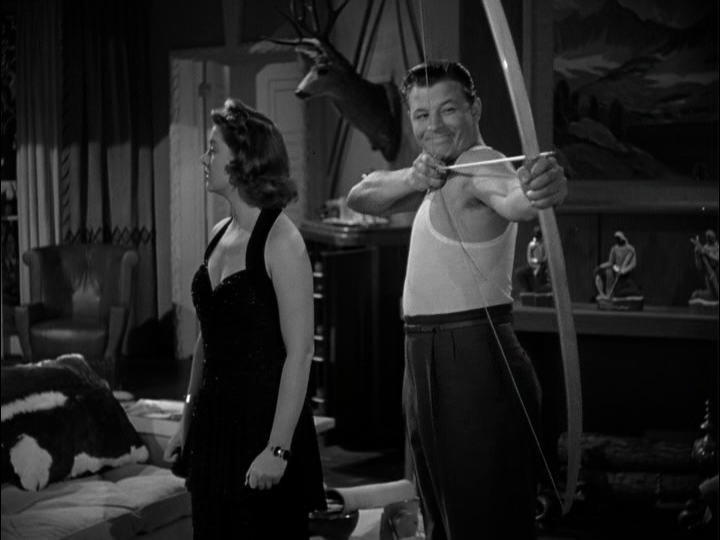
Depois Steve encontra uma velha conhecida, Isobel (Gail Patrick), no elevador, e descobre que eles moram no mesmo andar do prédio – e também descobre que, mesmo sendo casada, Isobel ainda está interessada em conquistar Steve.

Then Steve meets an old acquaintance, Isobel (Gail Patrick), at the elevator, and finds out they now live in the same floor – oh, and also that, even though she is married, Isobel is still interested in pursuing Steve. 
A mãe de Susan, como é de se esperar, é a primeira a reparar que há algo estranho no comportamento de Steve durante e depois do jantar. Quando Susan precisa sair por algumas horas para pegar uma tia na estação de trem, Steve precisa fazer companhia para a sogra. Seguindo o velho estereótipo, ela se mostra uma mulher insuportável, e Steve mente dizendo que vai ver um amigo, mas na verdade sai com Isobel.

Susan's mother, as expected, is the first one to point out that something in Steve's behavior during and after dinner is weird. When Susan has to go out for a couple of hours to get her aunt at the train station, Steve has to stay with his mother-in-law. Following the old trope, she proves to be an unbearable woman, and Steve lies saying he'll meet a friend, but in fact he goes out with Isobel.
Quando Susan descobre como Steve passou a noite, ela fica furiosa. O que se segue é uma sequência muito engraçada envolvendo uma confusão de identidades, e finalmente Susan decide pedir o divórcio. Para que a decisão do tribunal demore o máximo possível, Steve finge ter enlouquecido.

When Susan finds out how Steve spent the evening, she gets mad. A very funny follow-up with a few mistaken identities follow, and finally Susan decides to file for divorce. In order to postpone the divorce from going to court, Steve pretends to be insane.
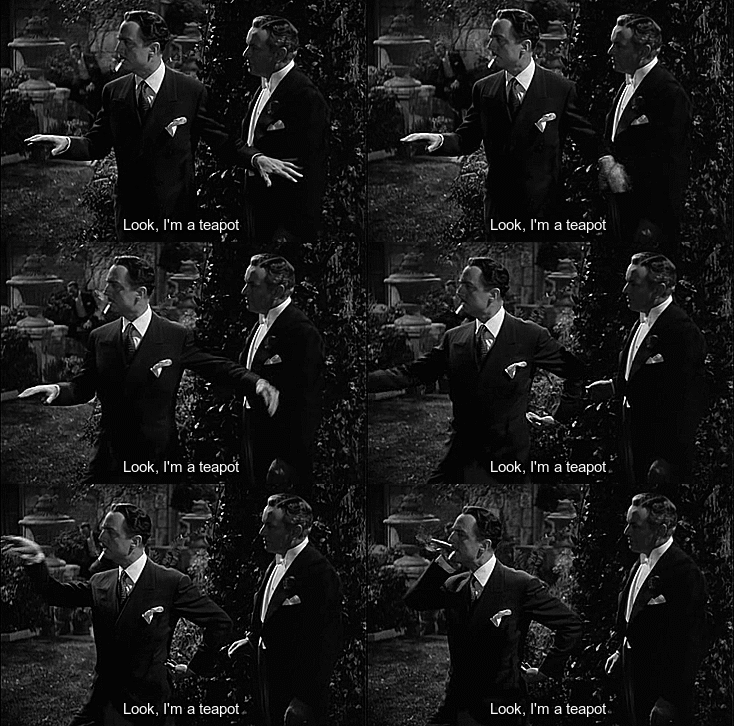
William Powell está simplesmente perfeito como Steve. “Meu Querido Maluco” é um dos pontos altos de sua longa carreira – Powell trabalhou no cinema de 1922 a 1955, em diversos gêneros. Ele era charmoso, às vezes assustador, e tinha um timing especial para a comédia. Neste filme ele tem falas divertidíssimas e, bem, este momento:

William Powell is nothing but delightful as Steve. “Love Crazy” is a highlight in a long career – Powell worked in films from 1922 to 1955, in several genres. He was charming, sometimes scary, and had a special timing for comedy. In this film he has wonderfully funny lines and, well, this moment:
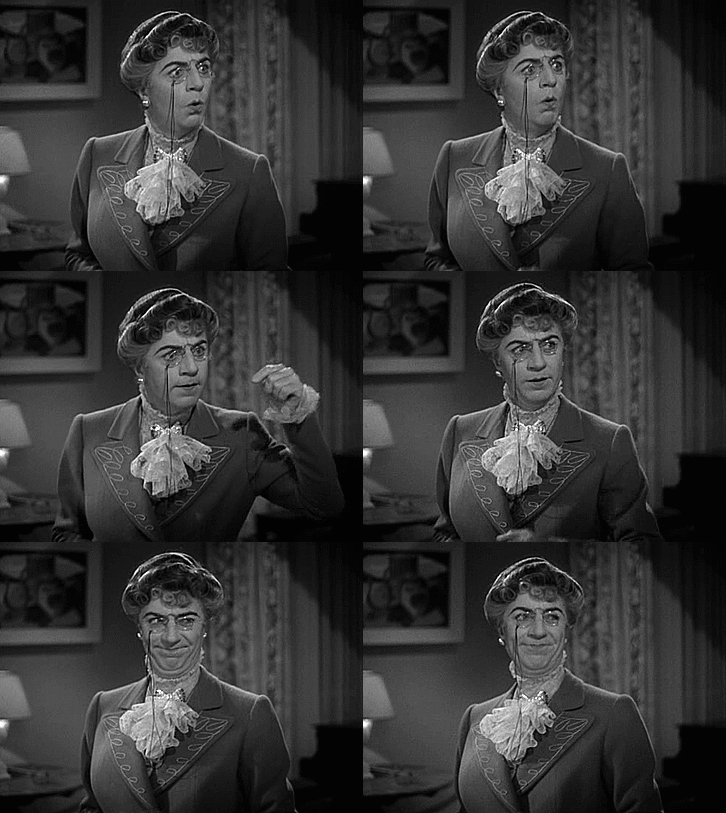
Já falamos o suficiente sobre Myrna e Bill – vamos falar agora sobre os coadjuvantes. Logo no começo do filme, fique com os olhos bem abertos e você verá que o jovem ascensorista é ninguém menos que Elisha Cook Jr. Jack Carson é Ward Willoughby, morador do mesmo prédio em que Steve, Susan e Isobel vivem. Lá pela metade do filme, você verá que a matrona dona da festa, Mrs. Bristol, é interpretada por Kathleen Lockhart, que era esposa de Gene Lockhart e mãe de June Lockhart. Vladimir Sokolof, ator russo que também trabalhou na Alemanha, interpreta um médico, e outro membro da equipe médica é interpretado por Edward Van Sloan, que fez Van Helsing em “Drácula”, de 1931. A secretária ajudando os médicos é May McAvoy, antiga protagonista de filmes mudos, como “Ben-Hur” (1925).

Enough about Myrna and Bill – let’s talk about the supporting cast. In the beginning of the movie, keep your eyes sharp and you'll realize the elevator boy is no other than Elisha Cook Jr.. Jack Carson is Ward Willoughby, also a resident of the building Steve, Susan and Isobel live in. By the middle of the movie, you'll see the matron at the party, Mrs. Bristol, played by Kathleen Lockhart, who was Gene Lockhart's wife and June Lockhart's mother. Vladimir Sokoloff, Russian actor who also worked in Germany, plays a doctor and you'll also find a doctor played by Edward Van Sloan, who was Van Helsing in 1931's “Dracula”. The secretary helping the doctors is May McAvoy, former leading lady in silents like “Ben-Hur” (1925).


Steve e Susan têm tradições e atitudes peculiares, assim como Nick e Nora. Talvez um hipotético divórcio de Nick e Nora se parecesse muito com o que vemos em “Meu Querido Maluco” – embora eu duvide que Nora possa ser tomada pelos ciúmes. Na verdade, Nora provavelmente riria da ideia de que o marido a traiu, pediria um Martini para si e outro para Nick, e continuaria curtindo a vida.

Steve and Susan are as peculiar in their traditions and actions as Nick and Nora. Maybe a Charles vs. Charles divorce would be just like the one in “Love Crazy” – although I doubt that Nora Charles could be consumed by jealousy. Actually, Nora would laugh all the suspicions off, ask a Martini for her, another for Nick, and would keep on enjoying life.
“Meu Querido Maluco” é mais uma das comédias sobre divórcio que – você já deve estar imaginando – não termina em divórcio. Claro que não poderia terminar assim: Powell e Loy tinham muita química, e o apelido de Loy era “A Esposa Perfeita”. Mais uma vez ela teve de provar que era uma nas telas, mostrando como uma esposa deve confiar no marido e aceitar as esquisitices e até criancices dele.

“Love Crazy” is another divorce comedy that – I bet you already know – doesn’t end in divorce. Of course it couldn’t: Powell and Loy had great chemistry, and Loy’s nickname was “The Perfect Wife”. Once again she proved she was one onscreen, showing how a wife must trust her husband and keep up with his shenanigans or even childishness.
“Meu Querido Maluco” deveria figurar entre as melhores comédias já feitas – em muitos momentos, o filme me fez rir mais do que “Cupido é Moleque Teimoso” (1937). Além de ter uma dupla perfeita e um ótimo grupo de coadjuvantes, ainda há as falas engraçadas e uma boa quantidade de comédia física. Mesmo que tenham se passado mais de 75 anos de sua estreia, podemos dizer que “Meu Querido Maluco” ainda é adorável, amalucado e muito divertido.

“Love Crazy” should be among the best screwball comedies ever made – some moments made me laugh harder than I did with “The Awful Truth” (1937). It not only has the perfect duo and a great supporting cast, but also very funny lines and a good amount of physical comedy. Even if more than 75 years have passed after its initial release, we can say something: “Love Crazy” is still lovely, zany and extremely funny.

This is my contribution to the Bill and Myrna New Year’s blogathon, hosted by Emily and Laura at The Flapper Dame and Phyllis LovesClassic Movies.

Saturday, September 23, 2017

Myrna Loy e Jean Harlow: uma amizade

Myrna Loy and Jean Harlow: a friendship


Myrna Williams nasceu em dois de agosto de 1905 em Helena, Montana. Harlean Carpenter nasceu em três de março de 1911 em Kansas City, Missouri. Myrna, agora com o sobrenome Loy, fez seu primeiro filme em 1925. Harlean, agora com o nome Jean Harlow, fez seu primeiro filme em 1928. Em 1934, as duas mulheres se conheceram por intermédio de um homem que ambas amavam – mas Myrna o amava apenas nas telas, e Jean na vida real.

Myrna Williams was born on August 2nd 1905 in Helena, Montana. Harlean Carpenter was born on March 3rd 1911 in Kansas City, Missouri. Myrna, now with the last name Loy, made her first movie in 1925. Harlean, now renamed Jean Harlow, made her first movie in 1928. In 1934, the two women were presented to each other by a man they both loved – but Myrna loved him on screen only, and Jean in real life.


Foi durante um programa de rádio para promover o filme “A Ceia dos Acusados” (1934) que William Powell apresentou sua namorada Jean Harlow para Myrna Loy, sua companheira de cena. Elas logo de cara gostaram uma da outra. Em sua autobiografia, “Being and Becoming”, Myrna Loy se lembra de Harlow:

It was during a radio show appearance to promote “The Thin Man” (1934) that William Powell introduced his girlfriend Jean Harlow to Myrna Loy, his screen partner. They immediately liked each other. In her memoir, “Being and Becoming”, Myrna Loy remembers Harlow:


“Jean era sempre muito alegre, divertida, mas ela também era uma mulher sensível com grande dose de autorrespeito. Todo o resto – aquilo era artificial. Ela não era daquele jeito. Ela era apenas uma boa atriz que criou uma caracterização cheia de vida que exalava sex appeal.”.

“Jean was always very cheerful, full of fun, but she also happened to be a sensitive woman with a great deal of self-respect. All that other stuff – that was all put on. She wasn't like that at all. She just happened to be a good actress who created a lively characterization that exuded sex appeal.”.


Em 1934, Jean Harlow já havia passado por algumas situações difíceis e estava, finalmente, feliz em sua vida amorosa. Ela estava feliz com Bill, e ficando contente com sua carreira. E em breve ela veria que tinha Myrna como amiga. Quando ela finalmente contracenou com Loy, Jean estava mudando sua persona cinematográfica.

By 1934, Jean Harlow had already had some rough times and was, finally, happy with her love life. She was happy with Bill, and getting happier with her career. And soon now she’d realized she had a friend in Myrna. When she finally worked with Loy, she was making changes in her film persona.


Myrna e Jean fizeram dois filmes juntas, e ambos estrearam em 1936. O que eu acho interessante é que, embora os filmes tenham duas das maiores estrelas da MGM, Myrna e Jean não são colocadas para competir entre si – pelo menos não deliberadamente e de maneira negativa.

Myrna and Jean appeared in two movies together, both released in 1936. What I find interesting is that, although these films have two big stars from MGM, in none of them they are put against each other to compete – at least not in a negative and deliberate way.


Em “Ciúmes”, a esposa Linda, interpretada por Myrna, apenas fica com ciúmes da secretária Whitey, interpretada por Jean, porque é levada a acreditar que ela está seduzindo seu marido, Van, interpretado porClark Gable. Linda ouve coisas ruins sobre Whitey, que não é uma predadora sexual, mas sim uma secretária séria.

In “Wife vs Secretary”, the wife Linda, played by Myrna, only becomes jealous of the secretary Whitey, played by Jean, because she is led to believe that the blonde beauty is seducing her husband, Van, played by Clark Gable. Linda is poisoned against Whitey, who isn’t a man hunter, but a serious secretary.


Em “Casado com Minha Noiva”, Jean e Myrna têm ainda menos tempo juntas em cena. No filme, Gladys (Jean) está ansiosa para se casar com Warren, um jornalista interpretado por Spencer Tracy. Mas ele não pode pensar em casamento porque está sendo processado pela herdeira Connie (Myrna) por causa de uma história que ele publicou sobre a vida amorosa dela. Então, ele decide juntar Connie e Bill (William Powell), um antigo repórter.

In “Libeled Lady”, Jean and Myrna have even less screen time together. In this movie, Gladys (Jean) is really looking forward to getting married to Warren, a journalist played by Spencer Tracy. But he can't think about marriage while he is being sued by heiress Connie (Myrna) because of a story he published about her love life. So, he decides to set Connie up with Bill (William Powell), a former reporter.


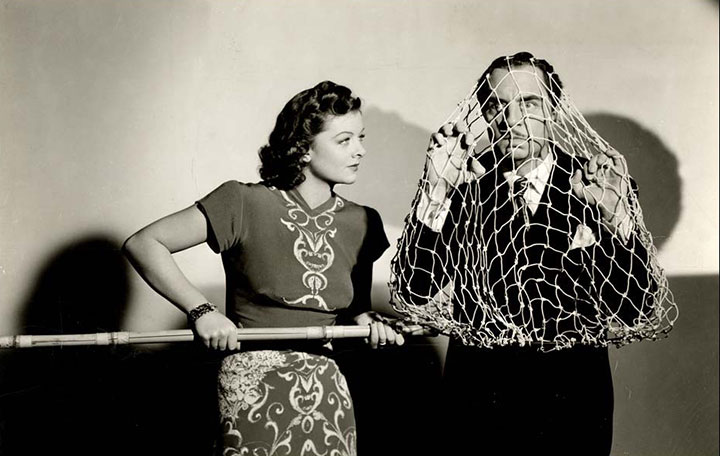
Mesmo que “Ciúmes” seja divertido – e tenha também James Stewart bem novinho! – eu acredito que “Casado com Minha Noiva” é um filme melhor. É amalucado, romântico e muito divertido – duas palavras: Bill pescando! Todos os atores envolvidos no filme concordaram comigo, porque, de acordo com Myrna, as filmagens de “Casado com Minha Noiva” foram muito agradáveis e durante os intervalos os atores permaneciam juntos conversando.

Although “Wife vs Secretary” is quite enjoyable – and has a very young James Stewart! - I believe that “Libeled Lady” is a superior film. It's zany, romantic and extremely funny – two words: Bill fishing! All the actors involved agreed with me, because, according to Myrna, the filming of “Libeled Lady” was very pleasant and during breaks the four actors stayed together chatting and laughing.


Jean e Myrna se divertiam juntas, mas só se tornaram amigas íntimas durante as filmagens de “A Comédia dos Acusados” (1936). Foi durante uma viagem de trem que esta história aconteceu – minha anedota favorita envolvendo Myrna Loy. Considerando que “A Comédia dos Acusados” estreou depois dos outros dois filmes que Jean e Myrna fizeram juntas, isto provavelmente aconteceu depois de terem filmado “Ciúmes” e “Casado com Minha Noiva”.

Jean and Myrna had fun together, but they only became intimate friends during the filming of “Another Thin Man” (1936). It was during a train trip that this fun story happened – my favorite anecdote involving Myrna Loy. Considering that “Another Thin Man” was released after the two films Jean and Myrna did together, this probably happened after the shooting of both “Wife vs Secretary” and “Libeled Lady”.


Myrna, Jean e William Powell estavam viajando de trem. Quando eles chegaram ao hotel St. Francis, descobriram que uma suíte chique já havia sido preparada para o famoso casal Powell e Loy, e havia apenas um pequeno quarto disponível para Harlow. Já que Myrna e Bill eram tão bons juntos, a gerência do hotel pensou que eles eram um casal na vida real! A situação foi resolvida colocando Bill no quartinho e as duas moças na suíte. Elas passaram a noite rindo, bebendo e conversando, e a amizade se fortaleceu.

Myrna, Jean and William Powell were travelling by train. When they arrived at the St. Francis Hotel, they found out that a fancy suite had been booked by the famous couple Powell and Loy, with only a small room left available for Harlow. Since Myrna and Bill worked so well together, the management of the hotel thought they were a couple in real life! The situation was solved leaving Bill in the small room and the two girls in the suite. They spent the night laughing, drinking and chatting, and their friendship became stronger.


“Aquela confusão me deu uma das melhores amizades. Você poderia imaginar que Jean e eu éramos meninas na escola, de tanto que nos divertimos. Nós ficamos metade da noite acordadas, conversando e tomando gim, às vezes rindo, às vezes discutindo coisas mais sérias...”

“That mix-up brought me one of my most cherished friendships. You would have thought Jean and I were in boarding school we had so much fun. We'd stay up half the night talking and sipping gin, sometimes laughing, sometimes discussing more serious things...” 


Jean Harlow fez mais dois filmes depois de “Casado com Minha Noiva” e, eu uma das mais tristes histórias em Hollywood, morreu com apenas 26 anos, deixando seu amado Bill e seus grandes amigos Myrna e Clark Gable devastados.

Jean Harlow made two more movies after “Libeled Lady” and, in one the saddest departures in Hollywood, died at only 26, leaving her beau Bill and her close friends Myrna and Clark Gable devastated.


“Foi terrível, um choque horrível; eu amava Jean profundamente. Eu senti uma mistura nauseante de luto, culpa e frustração porque eu não fui capaz de fazer o que poderia tê-la salvado: afastado-a da mãe para que fosse examinada”.

"It was horrible, an awful blow; I loved Jean deeply. I felt a sickening mixture of grief, guilt, and frustration because I hadn't been able to do what might have saved her: get her away from her mother for an examination”.


Se Jean tivesse vivido mais, ela poderia ter trabalhado mais vezes com Myrna – mas eu acho que ela preferiria se casar com Bill (com myrna Loy de madrinha, claro) e deixar o cinema. Mesmo que breve, a amizade de Jean e Myrna foi forte e bela, e podemos sentir isso quando vemos as duas juntas na tela.

If Jean had lived, she could have worked more with Myrna – but I think she’d prefer to marry Bill (with Myrna Loy as a bridesmaid, of course), and retire from the movies. Although brief, Jean and Myrna’s friendship was strong and beautiful, and we can sense it when we see them on screen.

This is my contribution to the Duo Double Feature Blogathon, hosted by Laura at Phillys Loves Classic Movies and Emily at The Flapper Dame.

Related Posts Plugin for WordPress, Blogger...