} Crítica Retrô: Jeanne Crain

Tradutor / Translator / Traductor / Übersetzer / Traduttore / Traducteur / 翻訳者 / переводчик

Showing posts with label Jeanne Crain. Show all posts

Saturday, September 23, 2023

A Família do Gênio (1952) / Belles on Their Toes (1952)


Um dos meus filmes favoritos que pode ser chamado de “tesouro escondido” é “Papai Batuta”, comédia de 1950. Apesar de ser divertido e adorável, tem momentos dramáticos e é um deles que torna o filme tão bom. Perto do final, ao receber más notícias por telefone, Lillian Moller Gilbreth (interpretada por Myrna Loy) diz tudo o que está sentindo somente com o olhar. Isto é, obviamente, prova do talento incrível e normalmente subestimado de Myrna Loy. Já que “Papai Batuta” é um dos meus filmes favoritos, eu me pergunto por que demorei tanto para ver a sequência, “A Família do Gênio”, de 1952.


One of my favorite films that can be called a “hidden gem” is the 1950 comedy “Cheaper by the Dozen”. Besides being funny and adorable, it has dramatic moments and it’s one of them that makes the film so good. Near the end, while receiving bad news on the telephone, Lillian Moller Gilbreth (played by Myrna Loy) says everything she’s feeling only with her eyes. This is, of course, proof of Myrna Loy’s incredible and often overlooked talent. Being “Cheaper by the Dozen” one of my favorite films, I wonder why it took me so long to watch the sequel, “Belles on Their Toes”, from 1952.

A história começa no tempo presente: é o dia da formatura de Jane, a mais nova dos Gilbreth. Sua família toda está lá para assistir à cerimônia, incluindo a mãe Lillian (Myrna Loy), que começa a relembrar o passado. Num flashback, somos transportados para os anos 1920, quando uma recém-viúva Lillian tem de tomar conta de doze filhos e ainda apresentar as palestras que seu marido havia sido convidado a apresentar antes de sua morte repentina.


The story begins in the present day: it’s graduation day for Jane, the youngest Gilbreth. Her whole family is there to watch the ceremony, including her mother Lillian (Myrna Loy), who starts remember the past. In flashback, we’re transported to the 1920s, when a recently widowed Lillian has to take care of twelve children and also give the speeches her husband had been asked to give before dying suddenly.


Quando Lillian está fora de casa e também quando está cuidando de assuntos administrativos – ela é uma engenheira à procura de trabalho, afinal – as crianças devem obedecer à irmã mais velha dos Gilbreth, Anne (Jeanne Crain). Estes são tempos difíceis para Anne, que teve de desistir da faculdade para cuidar de seus irmãos, porém há romance e muita diversão no horizonte para ela e os demais Gilbreths.


While Lillian is away and also when she’s taking care of administrative issues – she’s an engineer looking for a job, after all – the children must obey the older Gilbreth, Anne (Jeanne Crain). These are hard times for Anne, who had to drop out of college to take care of her siblings, but there is romance and lots of fun in the horizon for her and the other Gilbreths.

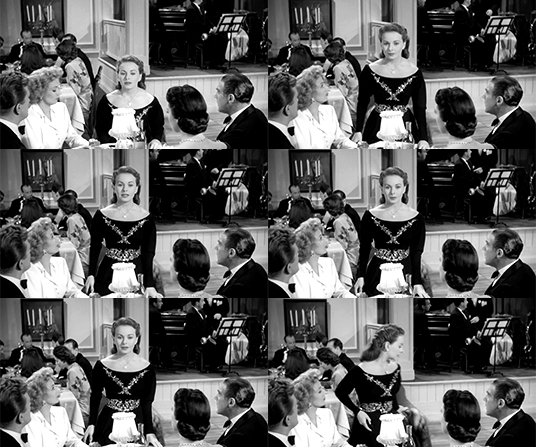
A subtrama que mais chamou minha atenção consiste em Lillian ser chamada para fazer um discurso no clube de engenheiros. Entretanto, quando eles descobrem que L.M. Gilbreth é uma mulher, eles cancelam o convite, porque mulheres não são permitidas no clube de engenheiros. Por causa disso, o senhor Harper (Edward Arnold), cujos empregados foram treinados por Lillian para se tornarem mais eficientes, promete torná-la conhecida no país inteiro. O resultado do esforço do senhor Harper é um newsreel – curta informativo que era exibido antes dos filmes – que mostra a família jantando, algo que o público do cinema acha muito engraçado, provocando o riso generalizado.  


The subplot that called my attention has Lillian asked to give a speech at the engineer’s club. However, when they find out that L.M. Gilbreth is a woman, they cancel the speech, because women aren’t allowed at the engineer’s club. Because of this, Mr Harper (Edward Arnold), whose employees were trained by Lillian for efficiency, vows to make her well-known in the whole country. The result of Mr Harper’s effort is a newsreel that shows the family at dinner, something the people in the theater find amusing, causing lots of laughter.

“A Família do Gênio” é baseado em um livro de 1950 escrito por dois dos filhos de Gilbreth, mas a história foi adaptada para as telas por Phoebe e Henry Ephron. Se você está se perguntando, a resposta é SIM: há uma conexão com a famosa roteirista e diretora Nora Ephron. Phoebe e Henry eram os pais de Nora. Eles conseguiram escrever um filme bem divertido. Uma das minhas partes favoritas é quando um rapaz é desclassificado de um concurso de dança pelo senhor Harper, que estava fingindo ser um dos juízes, e reclama sobre o fato, ao que o senhor Harper responde: “Você estava fazendo a versão sulista dos passos de dança. Isso não é permitido em Nova Jersey!”   


“Belles on Their Toes” was based on a 1950 book written by two of the Gilbreth kids, but the story was adapted to the screen by Phoebe and Henry Ephron. If you’re wondering, the answer is YES: there is a connection to famous screenwriter and director Nora Ephron. Phoebe and Henry were Nora’s parents. They manage to write a very funny movie. One of my favorite parts was when a young man is taken out of a dance contest by Mr Harper, who was posing as a judge, and complains about it, Mr Harper answers: “You we’re doing the Southern version of the steps. This is not allowed in New Jersey!”.

Enquanto “Papai Batuta” foi dirigido por Walter Lang, a sequência foi dirigida pelo menos famoso Henry Levin. Começando como ator de teatro no começo dos anos 1940, Levin foi contratado como diretor de diálogos pelos estúdios Columbia em meados da década. Ele dirigiu mais de 50 filmes em diversos estúdios. “A Família do Gênio” foi seu primeiro filme para a 20th Century Fox.


While “Cheaper by the Dozen” was directed by Walter Lang, the sequel was directed by the less famous Henry Levin. Starting as a stage actor in the early 1940s, Levin was hired as a dialogue director for Columbia Pictures by the middle of the decade. He went on to direct over 50 films in several studios. “Belles on Their Toes” was his first film for 20th Century Fox.

Jeanne Crain é uma das minhas atrizes subestimadas favoritas. Ela é competente tanto no drama quanto na comédia, e está muito charmosa neste filme, que pede dela somente isso: ser charmosa. Ela foi indicada ao Oscar por sua performance em “O que a Carne Herda” (1949) e teve como hobby a pintura, algo que eu explorei AQUI.


Jeanne Crain is one of my favorite underrated actresses. She’s competent in both drama and comedy, and is very charming in this movie, a movie that required only that from her: to be charming. She was nominated for an Oscar for her performance in “Pinky” (1949) and had painting as a hobby, something I explored HERE.

Nem tão bom quanto seu predecessor, mas bom entretenimento mesmo assim. “A Família do Gênio” não foi feito para ser uma obra-prima do cinema, mas diverte, é charmoso e nos faz rir. Pedir o que mais?


Not as good as its predecessor, but nice entertainment nonetheless. “Belles on Their Toes” wasn’t made to be a masterpiece of cinema, but it amuses, charms and makes us laugh. Who could ask of anything more?


This is my contribution to the Everything is Copy blogathon, honoring the Ephron family at the movies, hosted by Rebecca at Taking Up Room.


Saturday, May 25, 2019

Jeanne Crain: pintora / Jeanne Crain: painter


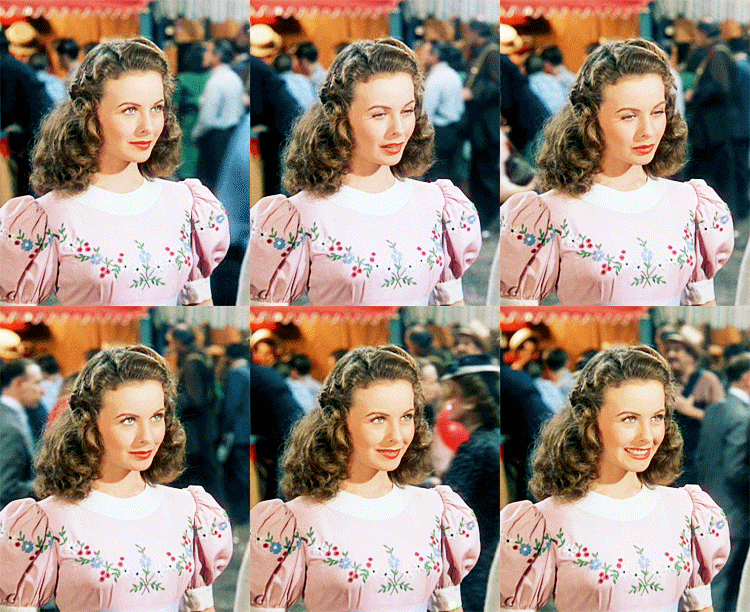
Eu amo, amo, amo Jeanne Crain. Eu amo o cabelo dela – quero imitar aqueles penteados! - o sorriso dela, os olhos dela, o rosto dela. Eu amo os filmes dela. Eu amo a persona doce dela em seus filmes, e as personagens mais distantes dessa doçura em filmes ousados como “O que a Carne Herda” (1949), o primeiro filme que vi com ela. E eu amo o fato de ela ter muitos talentos. Além de ser uma boa – e subestimada – atriz, Jeanne também foi uma ótima pintora.

I love, love, love Jeanne Crain. I love her hair – goals! - her smile, her eyes, her face. I love her movies. I love her sweet on screen persona, that could be changed and challenged in risky movies like “Pinky” (1949), the first I've watched with her. And I love the fact that she had many talents. Besides being a fine – and underrated – actress, Jeanne was also a very good painter.


De acordo com um artigo de 1992 do Chicago Tribune, Jeanne Crain amava arte desde cedo. Na adolescência, ela começou a fazer peças no sul da Califórnia, e logo procurou trabalho como modelo e participou de concursos de beleza para ser notada, com a esperança de se tornar atriz em Hollywood. Funcionou: aos 17 anos ela assinou seu primeiro contrato, e dois anos depois seu primeiro filme estreou.

According to a 1992 Chicago Tribune article, Jeanne Crain loved art since she was young. In her teen years, she started appearing in plays in Southern California, and soon she sought work as a model and participated in beauty contests to be noticed, in the hopes of becoming a Hollywood actress. It worked: at 17 she signed her first contract, and two years later her first film was released.


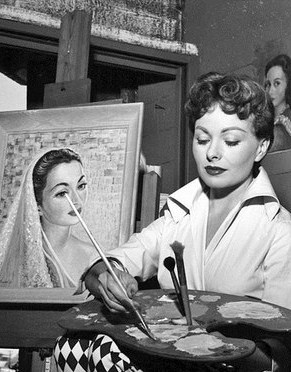
Jeanne Crain passou a se dedicar ao cinema e à família, pois ela teve, pasmem, sete filhos! Seu amor pela arte, pelo desenho e pela pintura, entretanto, não desapareceu. Em 1953 seu marido construiu um estúdio em casa para Jeanne poder pintar. Ela só pôde se dedicar mais à pintura a partir dos anos 70, quando deixou de fazer filmes e apenas esporadicamente fazia televisão. Jeanne pintava principalmente retratos.

Jeanne Crain then dedicated herself to films and to family, as she had astounding seven children! Her love for art, drawing and painting, however, didn't disappear. In 1953 her husband built a studio in their house for Jeanne to exercise her passion. She was only really able to paint more starting in the 1970s, when she stopped making films and only sporadically appeared on TV. Jeanne painted mainly portraits.


Nos anos 80, muitas de suas pinturas foram exibidas em galerias como a Mascagni diItaly e as galerias da Westwood Art Association. Mesmo Jeanne Crain não podendo explorar a paixão pela pintura o tempo todo, ela foi capaz de se tornar uma ótima pintora. Infelizmente, não é possível encontrar muito sobre suas pinturas na internet desde o fechamento do seu site oficial, mas ao menos foi possível ver, com essa pequena amostra, que Jeanne era uma verdadeira artista em mais de um sentido.

In the 1980s, many of her paintings were exhibited in galleries such as the Mascagni diItaly and the Westwood Art Association Galleries. Although Jeanne Crain never explored her passion for painting full-time, she was able to become a fine painter. The worst part is that there is not much about her paintings on the internet since her official website was shut down, but at least we could see, by the small sample, that Jeanne was a true artist in more than one way.


This is my contribution to the Jeanne Crain blogathon, hosted by Christine at Overture Books and Film.


Thursday, December 12, 2013

Jeanne Crain: adorável sofredora

Jeanne Crain: the lovely sufferer


Até o final de novembro, Jeanne Crain era apenas um nome e um rosto bonito que eu tinha em mente. A primeira semana de dezembro foi recheada com três filmes dela e, seguindo a lógica, todos os sábados do mês pertenceram a Jeanne no Telecine Cult. Quem escolheu a programação deve ser muito fã da moça. Se isso não for uma enorme coincidência, será uma bela forma de homenagear Jeanne Crain, que nos deixou há 10 anos. Que tal descobrir mais sobre ela?

Until the end of November, Jeanne Crain was only a name and a pretty face I vaguely knew. The first week of December was full of her films and, following the pattern, all Saturdays of the month belonged to Jeanne Crain at the Brazilian TV channel Telecine Cult. Whoever made the schedule should be a massive fan of hers. If it wasn't an enormous coincidence, it'll be a beautiful way to pay a tribute to Jeanne Crain, who left us 10 years ago. How about discovering more about her?


Jeanne Elizabeth Crain nasceu em 25 de maio de 1925. No Ensino Médio teve sua primeira experiência como atriz ao ser convidada para fazer um teste com Orson Welles. Jeanne não passou, mas decidiu que atuar seria sua profissão. Aos 18 anos estreou como extra em “Entre a Loura e a Morena / The Gang’s All Here” (1943) e conseguiu papéis de maior importância nos anos seguintes. No último dia de 1945, ela se casou com Paul Brooks (nome artístico de Paul Brinkman, um ator de pequenos papéis) e com ele teve sete filhos. Jeanne faleceu em 14 de dezembro de 2003, dois meses após a morte do marido, com quem nem sempre foi feliz.


Jeanne Elizabeth Crain was born on May 25th 1925. At high school she had her first experience as an actress when she was invited to a screen test with Orson Welles. Jeanne wasn't chosen, but she decided that acting would be her profession. At 18 she made her debut as an extra in “The Gang's All Here” (1943) and in the following year she got juicier roles. On New Year's Eve 1945, she married Paul Brooks (a bit-part actor whose real name was Paul Brinkman) and with him she had seven children. Jeanne passed away on December 14 2003, two months after her husband died – and with him she was not always happy.

Na capa da Life, 1945 /
On the cover of Life, 1945
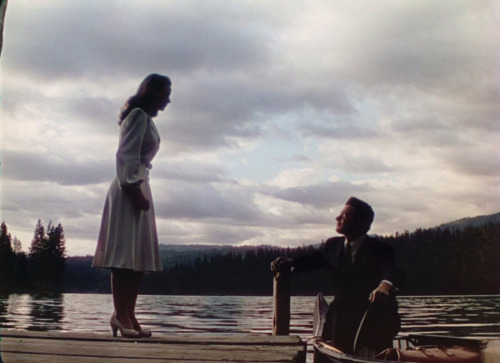
Em “Amar Foi a Minha Ruína / Leave Her to Heaven” (1945), Jeanne interpreta Ruth, a irmã de criação da possessiva Ellen (Gene Tierney), e precisa enfrentar o ódio quando começa a passar tempo demais com o cunhado, Richard (Cornel Wilde). O filme pertence a Tierney e sua beleza estupenda e loucura convincente. Mas Jeanne está lá, sofrendo e ganhando nossa simpatia a cada cena.

In “Leave Her to Heaven” (1945), Jeanne plays Ruth, the foster sister to possessive Ellen (Gene Tierney), and she has to face hate when she starts spending too much time with her brother-in-law, Richard (Cornel Wilde). The film belongs to Tierney, her stupendous beauty and her convincent role. But Jeanne is there, suffering and receiving our sympathy in each scene she is in.


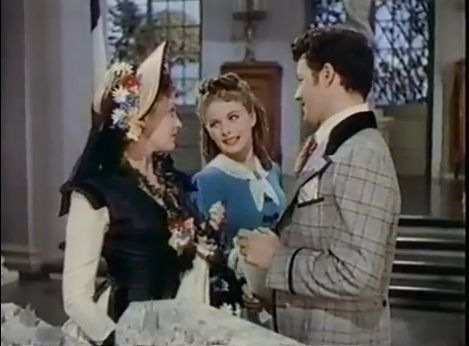
Em “Noites de Verão / Centennial Summer” (1946), filme que eu queria muito ver, Jeanne é Julia, uma moça tímida e inteligente que se encanta pelo francês Philippe (novamente Cornel Wilde), que está na Filadélfia organizando uma exposição em comemoração do centenário da independência americana. Novamente Jeanne deve disputar um homem com a irmã, mas desta vez é Linda Darnell que interpreta a caprichosa Edith. Edith quer apenas mostrar sua habilidade para conquistar qualquer homem, uma vez que está noiva, mas mesmo assim arma uma intriga para ficar com Philippe. Outro triângulo amoroso no filme é formado pelos veteranos Dorothy Gish, Walter Brennan e Constance Bennett.   

In “Centennial Summer” (1946), a film that was in my watchlist, Jeanne is Julia, a shy and smart girl who falls in love with Frenchman Philippe (Cornel Wilde again), a man who is in Philadelphia organizing a fair to celebrate the US independence centennial. Once again Jeanne must compete with her sister for a man, but this time the sister is the capricious Edith, played by Linda Darnell. Edith only wants to show her skill to conquer any man, because she is already engaged, so she plots a plan to get Philippe. Another love triangle in the film is formed by screen veterans Dorothy Gish, Walter Brennan and Constance Bennett.  


Jeanne finalmente consegue conquistar um homem, mas tem seu casamento ameaçado em “Quem é o Infiel? / A Letter to Three Wives” (1949). Ela é Deborah Bishop, a jovem esposa de um militar que acaba de chegar a uma cidadezinha cheia de fofocas. A moça mais perigosa da cidade é Addie Ross, que em um piquenique envia a mesma carta a três mulheres avisando que fugiu da cidade com o marido de uma delas. As outras duas destinatárias da carta são Lora Mae (de novo Linda Darnell), casada com um homem rude que tirou ela e a mãe da pobreza, e Rita (Ann Sothern), uma produtora de rádio casada com o professor de música George (Kirk Douglas), um homem pouco convencional e muito perspicaz.

Jeanne finally gets a man, but has her marriage threatened in “A Letter to Three Wives” (1949). She is Deborah Bishop, the young wife to a military man who just arrived to a little town full of gossips. The most dangerous lady in town in Addie Ross who, during a picnic, sends the same letter to three women telling that she ran away with the husband of one of them. The two other women who receive the letter are Lora Mae (Linda Darnell again), married to a brute man who took her and her mother out of poverty, and Rita (Ann Sothern), a radio producer married to music teacher George (Kirk Douglas), an unconventional and very perceptive man.


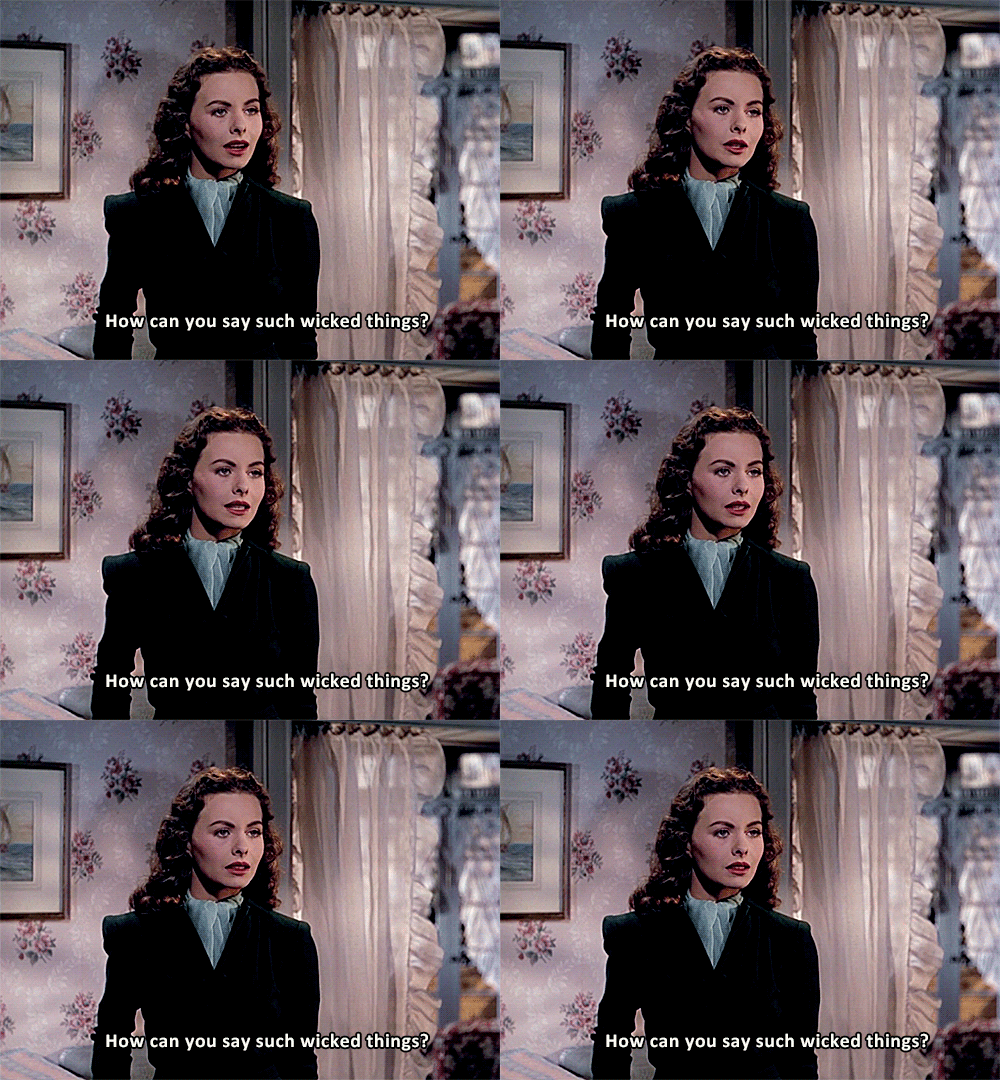
No mesmo ano de 1949 Jeanne deixou de sofrer pelo sexo masculino, mas desempenhou seu melhor papel ainda com sofrimento em “O que a Carne Herda / Pinky”. A história de Pinky Johnson mostra como o racismo ainda era presente no pós-Segunda Guerra e deixa a qualquer espectador indignado. Pinky é uma moça de pele clara, recém-formada em enfermagem, que volta a morar com a avó negra, Dicey Johnson (Ethel Waters). O preconceito e as tentativas de violência contra a moça são várias, mas a situação toma outra dimensão quando ela recebe a herança de Miss Em (Ethel Barrymore), viúva de quem ela cuidou, e é impedida de desfrutar do que ganhou porque é acusada de ter influenciado na escrita do testamento. Pinky é hostilizada, mas vai ao tribunal com toda sua coragem. Esta interpretação fez com que Jeanne fosse indicada ao Oscar de Melhor Atriz, mas perdeu o prêmio para Olivia de Havilland.

In the same year of 1949, Jeanne stopped suffering because of the opposite sex, but played her best role still with suffering in “Pinky”. Pinky Johnson's story shows how racism was still strong right after the Second World War and it leaves any viewer furious. Pinky is a fair-skinned girl, who just finished her degree to become a nurse, and she comes back to live with her black grandmother, Dicey Johnson (Ethel Waters). The girl suffers prejudice and even violent attacks are attempted, but the situation changes when she receives an inheritage from Miss Em (Ethel Barrymore), a widow Pinky took care of. Pinkycan't receive the money because she is accused of having influenced the old woman to rewrite her will. Pinky faces hostile people, but she bravely goes to court to reclaim what is hers. This performance made Jeanne be nominated for the Best Actress Oscar, but she lost the award to Olivia de Havilland. 


Chega 1950 e Jeanne é agora a filha mais velha do casal Frank e Lillian Gilbreth (Clifton Webb e Myrna Loy) que, em 1920, cuidam de seus 12 filhos com disciplina em “Papai Batuta / Cheaper by the Dozen”. Frank quer otimizar o uso do tempo, e para isso faz algumas coisas bizarras, como uma operação de amídalas em massa. Pouco a pouco seus filhos começam a contestar o modo de vida imposto pelos pais, em especial Ann, personagem de Jeanne.

The 1950s arrive and Jeanne is now the oldest daughter of Frank and Lillian Gilbreth (Clifton Webb and Myrna Loy) who, in 1920, take care of their 12 children with a lot of discipline in “Cheaper by the Dozen”. Frank wants to optimize their use of time, that's why he does some odd stuff, like a mass tomsil operation. Little by little their children start to complain about the lifestyle their parents want, in special Ann, Jeanne's character.


Resta mais um filme de Jeanne na programação para eu assistir: “Dizem que é pecado / People will talk”, de 1951, em que ela contracena com o sempre charmoso Cary Grant. A direção é de Joseph L. Mankiewicz, que dois anos antes havia se recusado a dar o papel de Eve Harrington em “A Malvada” para Jeanne, pois a considerava uma atriz limitada. Bem, os vários filmes de Jeanne Crain estão aí para provar o contrário. 

There is one more of Jeanne's films scheduled for me to see “People Will Talk”, from 1951, in which she plays opposite the always charming Cary Grant. The director is Joseph L. Mankiewickz, who two years before had refused to give her the role of Eve Harrington in “All About Eve”, because he considered Jeanne a limited actress. Well, the several films of Jeanne Crain are here to prove him wrong.  


Related Posts Plugin for WordPress, Blogger...