} Crítica Retrô: comédia física

Tradutor / Translator / Traductor / Übersetzer / Traduttore / Traducteur / 翻訳者 / переводчик

Showing posts with label comédia física. Show all posts

Saturday, November 21, 2020

Redescobrindo Marcel Perez / Rediscovering Marcel Perez


Marcel Perez. Robinet. Marcel Fabre. Michel Fabre. Fernandea Perez. Tweedledum. Twede Dan. Tweedy. Todos estes nomes se referem à mesma pessoa: o comediante Marcel Perez. Você pode não ter ouvido falar dele, mas Marcel já foi uma superestrela. Você já deve ter ouvido que Max Linder foi a primeira estrela de cinema internacional, e Chaplin foi a segunda. Entre eles, houve o quase esquecido Marcel Perez, um artista espanhol que foi bem-sucedido nos muitos países em que trabalhou.

Marcel Perez. Robinet. Marcel Fabre. Michel Fabre. Fernandea Perez. Tweedledum. Twede Dan. Tweedy. All those names refer to the same person: comedian Marcel Perez. You may not have heard about him, but once Marcel was a superstar. You may have heard that Max Linder was the first international film star, and Chaplin was the second. In the middle of them, there was the nearly forgotten Marcel Perez, a Spanish performer who found success in the many countries he worked in. 

Nascido na Espanha em 1884 como Marcel Fernández Perez, ele começou sua carreira no show business como palhaço de circo. Seu mais antigo – e muito ousado – filme de que se tem notícia é de 1907: o curta-metragem metragem francês The Short-Sighted Cyclist” (ou “The Near-Sighted Cyclist”), embora haja evidências de que ele já estivesse trabalhando no cinema desde 1900 para companhias como Pathé e Gaumont.

Born in Spain in 1884 as Marcel Fernández Perez, he started his show business career in as a circus clown. His earliest – and one his most daring – known screen appearance dates from 1907, in the French film “The Short-Sighted Cyclist” (or “The Near-Sighted Cyclist”), although there is evidence that he had been in films since 1900, working for companies such as Pathé and Gaumont. 

Em 1910, ele se mudou para a Itália e rapidamente fez enorme sucesso interpretando o personagem Robinet para os estúdios Ambrosio. Em mais de 100 filmes de meio rolo – de cerca de cinco minutos de duração – feitos em um período de cinco anos, Robinet, por vezes com sua esposa Robinette (Nilde Baracchi), vive pequenas aventuras que iam desde um ataque de ciúmes com consequências doloridas, passando pela tentativa de aprender a dirigir mesmo sendo extremamente míope, até várias tentativas de manter limpo seu novíssimo terno branco. Nos EUA, o personagem Robinet era conhecido como Tweedledum.

In 1910, he moved to Italy and quickly found enormous success playing the character Robinet at the Ambrosio studios. In over a hundred split-reel shorts - about five minutes long - made in a period of five years, Robinet, sometimes paired with his wife Robinette (Nilde Baracchi), lives little adventures that could consist in a bout of jealousy with painful consequences, learning how to drive a car despite being extremely nearsighted  or several attempts to keep his brand new white suit clean. In the USA, the character Robinet was known as Tweedledum.


Já que estamos falando de aventuras, o longa-metragem “Viagens Maravilhosas de Saturnino Fanrandola” (1913) traz Marcel Perez em oito aventuras diferentes contadas em menos de 60 minutos. Resgatado quando criança de um naufrágio, Saturnino foi criado por macacos, resgatado novamente por marinheiros e lutou contra piratas, cientistas, gorilas, leões e vilões ambiciosos. É um filme estranho, incrível e bastante surpreendente.

Since we’re talking about adventures, the feature “The Extraordinary Adventures of Saturnino Farandola” (1913) brings Marcel Perez in eight different adventures told in less than 60 minutes. Rescued from a sinking ship as a baby, Saturnino was raised by monkeys, rescued again by sailors and fought pirates, scientists, gorillas, lions and greedy villains. It’s a weird, amazing and extremely surprising film.

Em 1915, com a Primeira Guerra Mundial impactando a indústria do cinema na Itália, Perez mudou-se para os Estados Unidos. Em sua breve passagem por Jacksonville, Flórida, ele trabalhou nos estúdios Vim e fez quatro curtas-metragens como o personagem Bungles, contracenando com Oliver Hardy, então creditado como Babe Hardy. Perez dirigiu os quatro filmes e foi creditado, enquanto ator, como Fernandea Perez. Enquanto diretor, ele sempre foi creditado como Marcel Perez.

In 1915, with World War One impacting the film industry in Italy, Perez moved to the United States. In his brief passage to Jacksonville, Florida, he worked at the local Vim studios and made four short films as the character Bungles, with co-star Oliver Hardy, then billed Babe Hardy. Perez directed the four films and was billed, as an actor, Fernandea Perez. As a director, he was always billed Marcel Perez.

Nos EUA, ele trabalhou tanto como ator quanto como diretor para os estúdios e companhias Vim, Eagle, Jester, Reelcraft e Sanford. Um dos destaques de sua carreira norte-americana é “A Busy Night” (1916), em que ele interpreta todos os 16 personagens – e ainda dirige o filme! Esta é também a primeira vez que Perez dirige um curta de dois rolos – cerca de 25 minutos – como nota o historiador e pianista Ben Model.

While in the USA, he worked as both actor and director for studios and companies Vim, Eagle, Jester, Reelcraft and Sanford. One of the highlights of his American career is “A Busy Night” (1916), in which he plays all sixteen characters – and also directs! It’s also Perez’s first time directing a two-reel film – about 25 minutes long – as film historian and accompanist Ben Model notices.

"Some Hero" (1916)

Em 1920 Perez se casou com a atriz Dorothy Earle, com quem trabalhava frequentemente, e eles tiveram um filho, Marcel Perez Jr. Antes de conhecer Dorothy, a protagonista feminina dos filmes de Perez ainda era Nilde Baracchi, que também emigrou da Europa. Nos filmes feitos para a companhia Eagle, Nilde era creditada como Babette Perez, e nos filmes para a companhia Jester, como Nilde Babette. Dorothy Earle, cujo nome verdadeiro era Esther Lucille Elmendorf, após se casar com Perez ela chegou a assinar o nome como Esther Perez. Ufa! Viu como tudo pode ser bem confuso?

In 1920 Perez married his frequent co-star Dorothy Earle and they had a son, Marcel Perez Jr. Before meeting Dorothy, Perez’s female co-star was still Nilde Baracchi, who also emigrated from Europe. In films made for the Eagle company, Nilde was billed Babette Perez, and in films for the Jester company, she was billed Nilde Babette. Dorothy Earle, whose real name was Esther Lucille Elmendorf, after marrying Perez often used the name Esther Perez. Wow! See how confusing things can get?

Nilde Baracchi and Marcel Perez in "what a Day!" (1918)

Em meados dos anos 20, Perez foi diagnosticado com câncer e teve de amputar sua perna esquerda, fazendo sua última aparição no cinema em “Lash of the Law” de 1926, como um aleijado. Então ele passou a trabalhar apenas por trás das câmeras. Ele dirigiu curtas para o produtor e ator ocasional Joe Rock. Infelizmente, Marcel Perez faleceu em 1919, com apenas 44 anos.

In the mid-1920s, Perez was diagnosed with cancer and had to amputate his left leg, making his last film appearance in 1926's “Lash of the Law”, as an amputee. Then he switched entirely to behind-the-camera work. He directed short films for producer and occasional actor Joe Rock. Unfortunately, Marcel Perez passed away in 1929, at only 44. 

"The Tenderfoot" (1919)

Sim, este homem morreu há mais de 90 anos e nós ainda estamos – ou talvez finalmente estamos – falando sobre ele hoje, porque ele definitivamente merece todos os elogios. Marcel Perez era incrivelmente talentoso, criativo e atlético. Algumas de suas gags desafiam qualquer tipo de lógica, enquanto outras demandam muito fisicamente. Suas expressões faciais e gestos são sempre uma alegria para nossos olhos. Como diretor, ele mostra ser inventivo e sofisticado no uso de técnicas cinematográficas como a split screen. Entre os filmes que estão disponíveis, o mais criativo é “Amor Pedestre” (1914), uma história de amor contada apenas com os pés dos personagens. Você jamais poderia imaginar que pés podem demonstrar tanta emoção, tensão e até erotismo!    

Yes, this man died over 90 years ago and we are still – or maybe finally – talking about him today, because he definitely deserves all the praise. Marcel Perez was incredibly talented, inventive and athletic. Some of his gags defy all kinds of logic, while others are very physically demanding. His facial expressions and gestures are always a delight to watch. As a director, he shows inventiveness and sophistication in his use of film techniques such as the split screen. His most creative film, out of the ones available now, is “Amor Pedestre” (1914), a love story told only with the characters’ feet. You could never imagine that feet can show so much emotion, tension and even eroticism!

O ano de 2020 foi difícil para mim e certamente também foi para muitos de vocês que estão lendo o blog. Mas foi o ano em que descobri Marcel Perez, e isso fez de 2020 um pouco melhor. Foi através da Silent Comedy Watch Party, um evento semanal de exibição ao vivo de comédias mudas, apresentado por Ben Model e pelo historiador de cinema Steve Massa. O evento exibiu, até agora, quatro filmes de Perez ─ na verdade, foi através deste evento que eu fui apresentada a Marcel Perez e não poderia estar mais grata. Antes de criar a Silent Comedy Watch Party, Ben & Steve trabalharam no lançamento de dois DVDs com filmes de Perez, e Steve escreveu um livro sobre o ator e diretor. Com este projeto de resgate, Ben & Steve inclusive conseguiram exibir os filmes para os netos de Marcel Perez e de Dorothy Earle, que até então nunca haviam visto seus avós na tela!   

This year of 2020 was difficult for me and certainly also for many of you reading this blog. But it was the year I discovered Marcel Perez, and that made 2020 a little better. It was through the Silent Comedy Watch Party, a weekly live-stream of silent shorts hosted by Ben Model and film historian Steve Massa. The Party has showed four of Perez’s films so far ─ actually, it was through the Party that I was introduced to Marcel Perez and I couldn’t be more grateful. Before creating the Party, Ben & Steve worked on the release of two DVDs of Perez’s films, and Steve wrote a book about the actor-director. With this rescue project, Ben & Steve even managed to show the films for Marcel Perez’s and Dorothy Earle’s grandchildren, who until then had never seen their grandparents on screen!

Assim como o terno branco de Robinet não conseguiu ficar limpo por muito tempo, eu sei que no final da pandemia não serei a mesma que era no começo. Mas terei certeza de que Marcel Perez foi uma das pessoas que me ajudaram a passar por este momento. Marcel ficou fora dos holofotes por muito tempo. Fico feliz por agora ele receber os elogios que merece, e estou grata porque mais e mais de seus filmes estão sendo (re)descobertos e exibidos. Rir é, de fato, o melhor remédio.    

Like Robinet’s white suit couldn’t be kept clean for long, I know I’ll not end the pandemic being the same I was before. But I’ll be sure that Marcel Perez was one of the people who helped me get through this moment. Marcel Perez was kept out of the limelight for too long. I’m happy he’s getting the praise he deserves now, and I’m grateful more and more of his films are being (re)discovered and made available. Laughter is, indeed, the best medicine.

This is my contribution to A Blogathon to Be Thankful for, hosted by Sally at 18 Cinema Lane.

Sunday, June 9, 2019

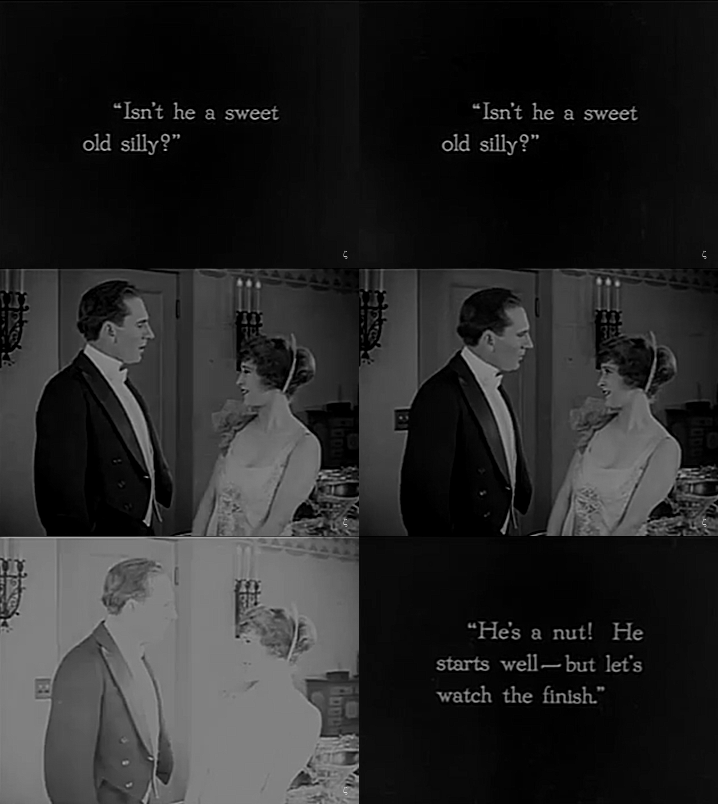
O Maluco (1921) / The Nut (1921)

Ou: por que fiquei maluca por Douglas Fairbanks em “O Maluco” (1921)

Or: why I'm nuts for Douglas Fairbanks in “The Nut” (1921)

No começo dos anos 20, a maioria das frequentadoras das salas de cinema estava apaixonada por Douglas Fairbanks. Elas tinham bom gosto: Doug era bonito, alto, moreno, com um sorriso charmoso e um porte atlético que era sempre explorado nas telas. Por isso seria uma grande surpresa vê-lo em um filme de 1921 interpretando um inventor nerd – e foi uma surpresa muito agradável.

In the early 1920s, most female moviegoers were in love with Douglas Fairbanks. They had good taste: Doug was handsome, tall, with a dark complexion, a charming smile and he always showed his athleticism on screen. So it would come as a huge surprise to see him in a 1921 film playing a nerdy inventor - and it was a very pleasant surprise.


Charlie (Fairbanks) é um inventor. Ele está apaixonado por Estrell (Marguerite De La Motte). Estrell trabalha por uma causa: ela recebe crianças pobres em casa durante uma hora todos os dias, porque ela acredita que casas refinadas irradiam ideias refinadas, por isso as crianças terão mais oportunidades na vida se passarem algum tempo em lugares refinados.

Charlie (Fairbanks) is an inventor. He is love with Estrell (Marguerite De La Motte). Estrell works for a cause: she receives a few poor children in her house one hour every day, because she thinks refined houses irradiate refined ideals, so those kids will have more opportunities when they grow up because they spent time in nice places.


Além de Charlie, outro homem está interessado em Estrell: o apostador Philip (William Lowery). Philip é tão mau que seu telefonista é o diabo em pessoa – e isso não é uma metáfora! Estrell, Charlie e Philip se encontram em uma festa que Charlie organiza para que Estrell possa discursar sobre a sua causa. Embora ela consiga alguns voluntários, uma invenção de Charlie sai do controle e isso acaba atrapalhando a festa.

Besides Charlie, Estrell has another suitor: the gambler Philip (William Lowery). Philip is so bad his telephone operator is the devil himself - and this is not a metaphor! Estrell, Charlie and Philip meet at a party Charlie throws so Estrell can spread the word about her cause. Although she gets some new volunteers, Charlie’s invention gets out of control and this spoils the party.


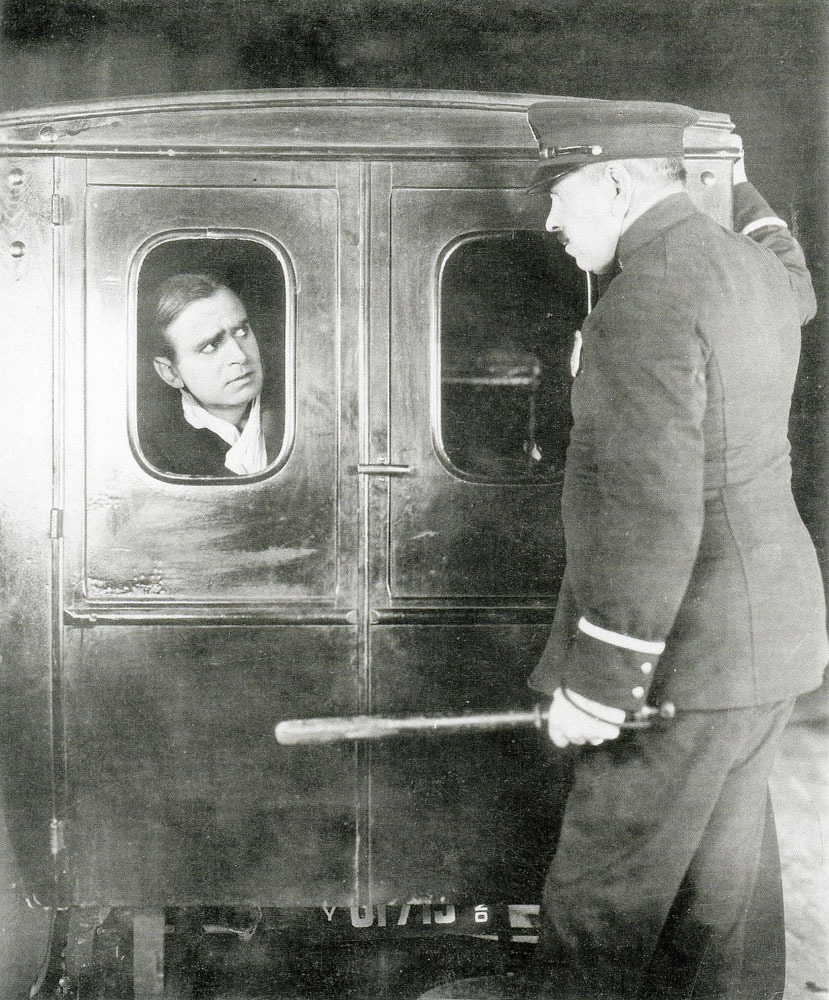
Toda a confusão leva Charlie para a cadeia. Lá, ele é colocado na mesma cela que um criminoso conhecido como Gentleman George (Gerald Pring). George, entretanto, se apresenta como um membro da rica família Vanderbrook – e Charlie acredita que ele tem uma chance de fazer com que Estrell o perdoe se ele conseguir espalhar a teoria dela entre os milionários.

All the confusion leads Charlie to jail. There, he is put in the same cell as a crook known as Gentleman George (Gerald Pring). George, however, introduces himself as a member of the rich Vanderbrook family – and Charlie thinks he has a chance to win Estrell back if he spreads her theory among millionaires.


Charlie fará qualquer coisa para ver Estrell feliz. Enquanto isso, Philip se aproxima dela interessado apenas em um caso rápido e isso desagrada à amante dele a exótica Claudine (Barbara La Marr). Algumas confusões com o Vanderbrook real e o filho dele vão acontecer nesta história sobre criatividade e adoração – e Doug até fará alguns saltos!

Charlie will do anything to see Estrell happy. Meanwhile, Philip gets close to her only interested in a quick affair, and this displeases his lover, the exotic Claudine (Barbara La Marr). A few confusions with the real Vanderbrook and his son will also happen in this tale of creativity and adoration - and Doug even manages to do some jumps!


Sim, Charlie é bonito, alto, moreno, com um sorriso charmoso e um corpo atlético. Mas o que realmente o faz se destacar é como ele trata Estrell. Ele acredita nela e quer que a teoria dela seja um sucesso – muito embora ela seja bem estranha. Em tempos como os nossos, de mansplaining e manterrupting, é raro ver um homem apoiando as ideias de uma mulher. Isso devia ser algo muito mais raro na década de 1920. Ter alguém que lhe estimule e que fique feliz quando você alcança seus objetivos é algo tão raro que esse apoio pode ser mais valioso e atraente que qualquer característica física.

Yes, Charlie is handsome, tall, with a dark complexion, a charming smile and an athletic body. But what makes him really stand out is how he treats Estrell. He believes her and wants to see her theory be successful - even though it sounds very, very odd. In times like today, full of mansplaining and manterrupting, it’s rare to see a man support a woman’s ideas. It must have been even rarer in the 1920s. To have someone who stimulates you and cheers when you achieve your goals is something so rare that this support can be more valuable and attractive than any physical trait.


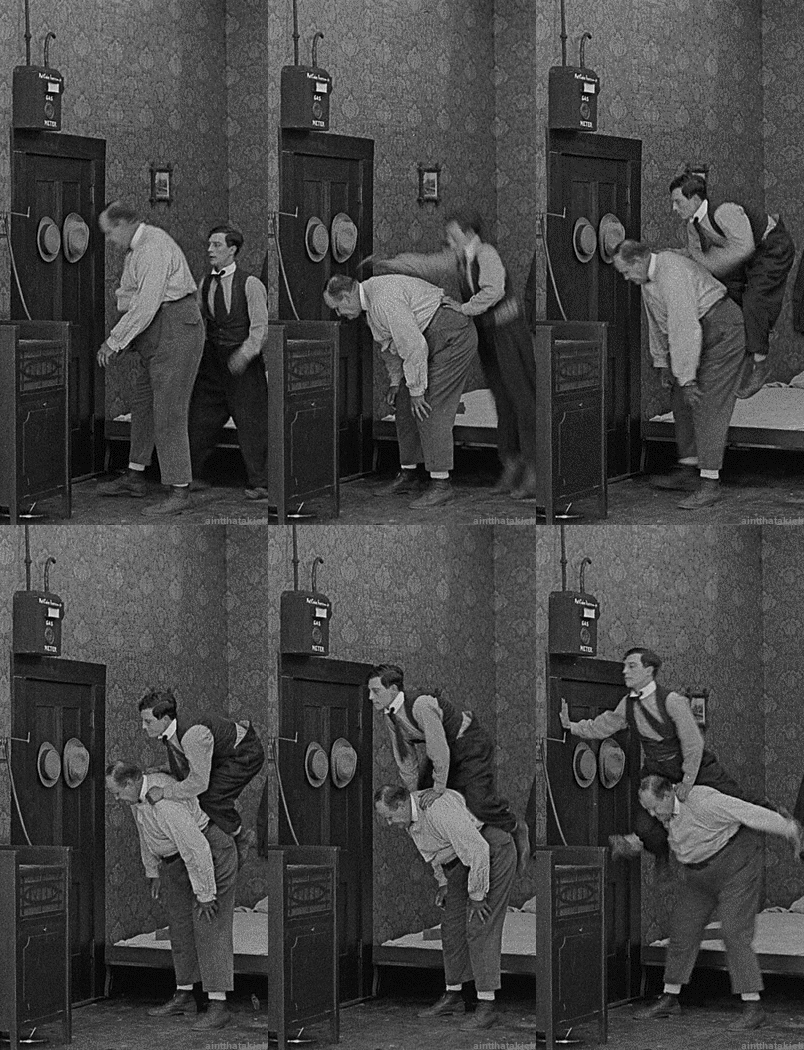
Em 1915, Douglas Fairbanks fez uma comédia chamada “The Lamb” - foi seu primeiríssimo filme. Em 1920, quando o remake foi feito, Doug, agora produtor de suas próprias películas, indicou Buster Keaton para seu papel, um galã sério que foi interpretado com maestria por Keaton em "O Pesado". Em uma troca curiosa, posso visualizar Keaton perfeitamente como o protagonista de “O Maluco”. Como “O Maluco” tem muita comédia – e às vezes comédia física – Buster seria uma escolha perfeita. Além disso, ele poderia fazer a sequência inicial muito bem, pois Buster também se divertiu com algumas maravilhas modernas no curta-metragem “O Espantalho” (1920).

In 1915, Douglas Fairbanks did a comedy film called “The Lamb” - it was his very first film. In 1920, when this film was remade, Doug, already producing his own films, suggested Buster Keaton for his role, a straight lead that he played very well in "The Saphead". In a curious change, I can perfectly envision Buster as the lead in “The Nut”. Since “The Nut” has a lot of comedy – and sometimes relies on physical comedy – Buster would be a perfect choice. Furthermore, he could have played the opening sequence with the inventions very well, because Buster also had a good time with modern marvels in the short “The Scarecrow” (1920).


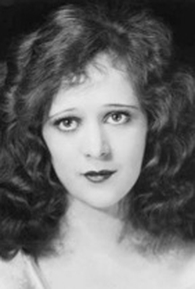
Marguerite De La Motte, que já havia trabalhado com Fairbanks em outros filmes como “A Marca do Zorro” (1920), era a melhor amiga da outra atriz de destaque do filme, Barbara La Marr. A atriz e roteirista La Marr, que também trabalhou com Fairbanks em “Os Três Mosqueteiros” (1921), tem o pequeno papel de uma vamp ciumenta em “O Maluco” - ela é um protótipo de femme fatale. La Marr faleceu tragicamente em 1926, aos 29 anos, vítima de tuberculose.

Marguerite De La Motte, who had worked with Fairbanks in other films such as “The Mark of Zorro” (1920), was best friends with the other important actress in the film, Barbara La Marr. Actress and writer La Marr, who also had worked with Fairbanks in “The Three Musketeers” (1921), has a small role of a jealous vamp in “The Nut” - a femme fatale prototype. La Marr tragically passed away in 1926, at 29, from tuberculosis.

Marguerite de la Motte
Barbara La Marr / William Lowery 

Eu gargalhei em muitas cenas de “O Maluco”. Não apenas as ações eram engraçadas, mas também as cartelas de texto. Houve, no entanto, alguns momentos quando Charlie estava tentando reconquistar Estrell em que as ações pareciam fora do lugar – eu me pergunto se o editor fez escolhas incomuns ou se há alguns fragmentos faltando.

I laughed out loud in many scenes in “The Nut”. Not only the actions were funny, but also the title cards. There were, however, some moments when Charlie was trying to get Estrell back in which the actions looked out of place – I wonder if the editor made unusual choices or if there are fragments missing.


Uma das muitas cartelas de textos hilárias diz: “Talvez a necessidade seja a mãe de todas as invenções – mas o pai delas é um maluco”. Infelizmente, nós vemos todas essas invenções nos primeiros minutos. Eu estava esperando mais criações loucas, mas, com a evolução da história, Charlie teve de mostrar sua criatividade de outras maneiras – por exemplo, usando sua malsucedida máquina de incenso para criar a impressão de que um boneco de cera era um homem de verdade fumando.

One of the many hilarious title cards says: “Maybe necessity is the mother of all inventions – but the father of these is a nut.” Unfortunately, we see all those inventions in the first few minutes. I was expecting more zany creations, but as the story went on, Charlie had to show his creativity in other ways – for instance, using his failed incense machine to make a waxwork look like a real man smoking.


O Maluco” nos mostra que nerds também podiam ser heróis românticos muito antes de se tornar bacana ser nerd. O filme também mostrou que nem todas as mulheres precisam de um homem para salvá-las quando elas estão em perigo: algumas só precisam de alguém para apoiá-las. E “O Maluco” também mostrou que Fairbanks pode ter se tornado uma superestrela com seus filmes de capa e espada, mas foi com comédias modernas que ele começou – e ele se saía muito bem nelas.

The Nut” shows us that nerds could also be romantic heroes way before being nerd became cool. It also showed us that not all girls need a man to save them when they're in danger: some girls just need someone to show support. And “The Nut” also showed that Fairbanks may have became a superstar with his swashbuckler roles, but it was in modern-day comedies that he started and also excelled.

O Maluco” está disponível, sem legendas, no YouTube e Internet Archive.

The Nut” is available on YouTube and Internet Archive.

This is my contribution to the Reel Infatuation blogathon, hosted by Ruth and Maedez at Silver Screenings and Font and Frock.


Sunday, May 20, 2018

Laurel & Hardy


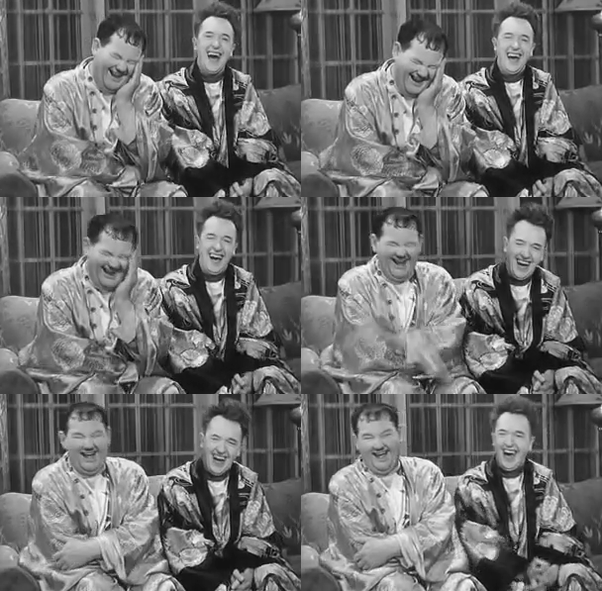
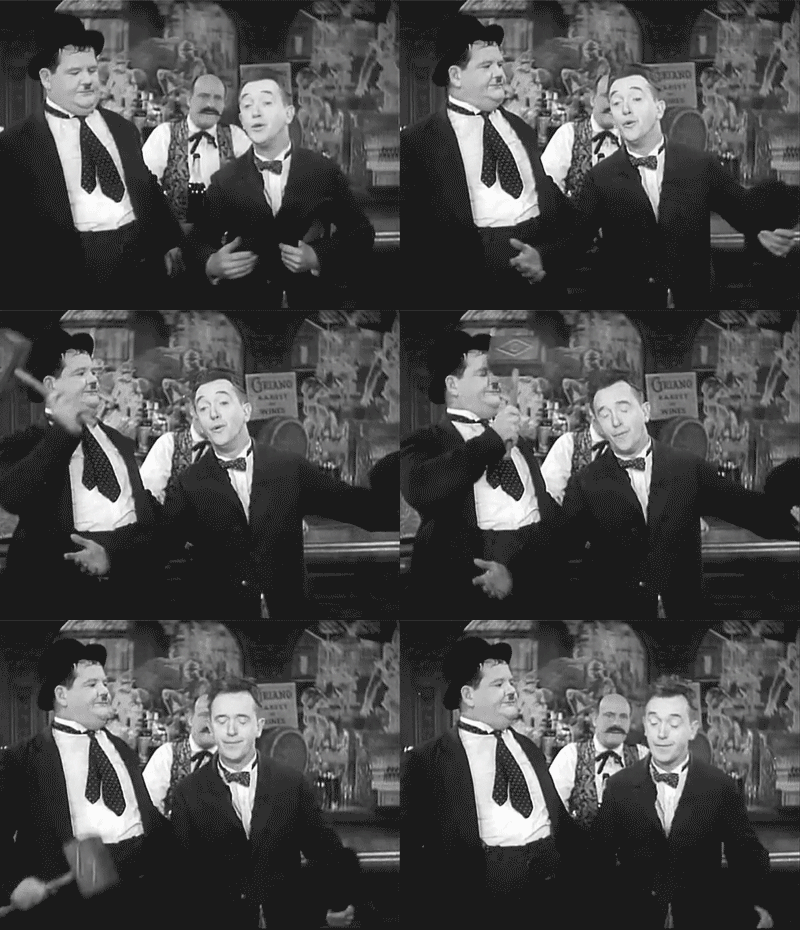
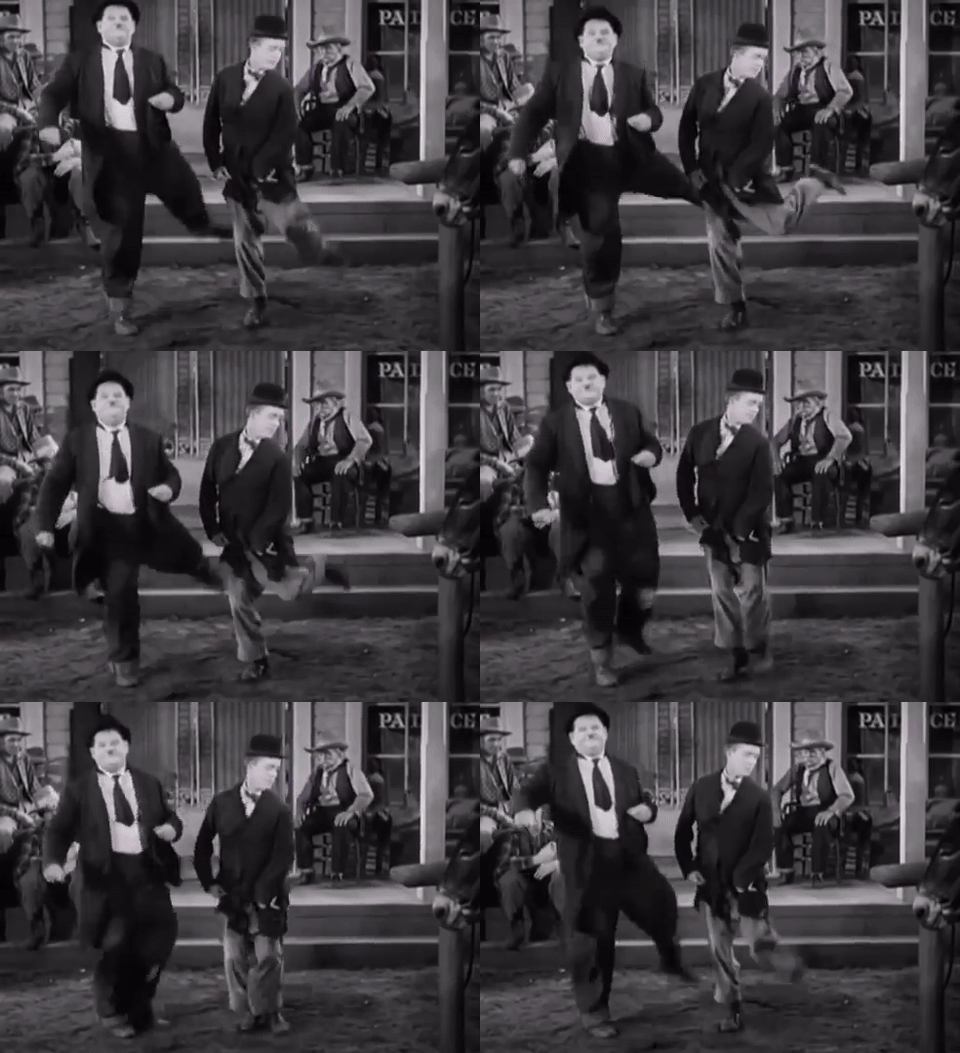
Em 13 de março de 1927, um curta-metragem chamado “Duck Soup” estreou e mudou as carreiras de Stan Laurel e Oliver Hardy para sempre. Ambos já eram comediantes estabelecidos, embora algo desiludidos, mas estavam prestes a se tornar não apenas ídolos do público, mas lendas do cinema.

On March 13th, 1927, a short film called “Duck Soup” was released and it changed the careers of Stan Laurel and Oliver Hardy forever. Both were already established comedians, yet a little sour with their little success, but they were about to become not only movie idols, but also film legends.


Ollie antes de Stan / Hardy before Laurel

Norvell Hardy nasceu na Georgia em 1892. Em 1913, já usando o nome Oliver, que era o primeiro nome do seu pai, Hardy entrou no cinema por trás das câmeras. Primeiro, ele abriu sua própria sala de cinema - Hardy foi o mais jovem gerente de sala de cinema nos Estados Unidos!
Mudando-se para a Florida, para os estúdios Lubin, Hardy se tornou responsável por varias coisas, como objetos de cena e iluminação. Ele apareceu em seu primeiro filme em 1914.
De 1914 a 1926, Hardy fez centenas de filmes, geralmente como coadjuvante e quase sempre como valentão, vilão ou personagem muito nervoso.


Norvell Hardy was born in Georgia in 1892. In 1913, already using the name Oliver, that was his father’s first name, Hardy entered the movie business behind the cameras. First, he opened his own movie theater - Hardy was the youngest movie theater manager in the United States!
Moving to the Lubin studio in Florida, Hardy became responsible for several things, like props and lighting. He appeared in his first film in 1914.
From 1914 until 1926, Hardy made hundreds of films, often as a supporting character and usually as a bully, villain or really nervous character.

Stan antes de Ollie / Laurel before Hardy

Arthur Stanley Jefferson nasceu em Lancashire, Inglaterra, em 1890. Ele veio de uma família do teatro, foi uma criança tímida, fez sua estreia nos palcos quando tinha quase 16 anos e, aos 19, foi contratado pela companhia de Fred Karno como substituto de um cara chamado Charles Chaplin.
Em 1912 a companhia fez um tour pelos EUA, e Stan decidiu ficar por lá - Chaplin só migraria para os EUA dois anos depois. Stan trabalhou no teatro por cinco anos, e em 1917 fez sua primeira aparição no cinema.
Stan normalmente era “escada” para as piadas de outros comediantes - como Larry Semon - e em seus filmes de meados dos anos 1920 já é possível vê-lo interpretando personagens ingênuos.


Arthur Stanley Jefferson was born in Lancashire, England, in 1890. He came from a theater family, was a shy kid, made his stage debut when he was about to turn 16 and, at 19, was employed by Fred Karno’s company as an understudy for a little fella called Charles Chaplin.
In 1912 the company toured the US, and Stan decided to stay - Chaplin would only migrate to the US two years later. Stan worked in theater the five following years, and in 1917 he made his first film appearance.
Stan often played second fiddle to other comedians - such as Larry Semon - and in films from the mid-1920s it’s already possible to see him playing naïve characters.

O primeiro encontro: The Lucky Dog (1921) / The first meeting: The Lucky Dog (1921)

Algumas coisas são questão de timing, não de ocasião. Por exemplo: no primeiro filme juntos, “The Lucky Dog” (1921): Oliver Hardy roubou, espancou e ameaçou Stan Laurel com uma arma. Neste filme. “Stanley Laurel” era um homem que havia sido recém-despejado de uma hospedaria, e encontrava um vira-lata que o ajudava a conquistar uma jovem rica. “Babe Hardy” era um ladrão.
“The Lucky Dog” foi filmado alguns anos antes, provavelmente em 191. Podemos afirmar isso por causa da maquiagem nos olhos de Stan - tendência chamada de “kohl eyes” - algo que ele usava apenas nos seus primeiros filmes na década de 1910.
O segundo filme deles foi “45 Minutes From Hollywood” (1926), mas eles não tinham cenas juntos.


Some things are a matter of timing, not chance. For instance: in their first screen appearance together, in “The Lucky Dog” (1921), Oliver Hardy robbed, punched and threatened Stan Laurel with a gun. In this film, “Stanley Laurel” was a man who had just been expelled from a boarding house, and found a stray dog that helped him conquer a young heiress. “Babe Hardy” was a thief.
“The Lucky Dog” was shot a few years earlier, probably in 1919. We can say that because of Stan’s strong eye makeup- “kohl eyes” -, something he used only in his earlier movies of the 1910s.
Their second film was “45 Minutes From Hollywood” (1926), but they didn’t appear in scenes together.

A dupla e o legado / The duo and the legacy 

Em 1926, tanto Laurel quanto Hardy foram contratados por Hal Roach - Laurel como roteirista, Hardy como coadjuvante. Normalmente se diz que quem sugeriu que eles formassem uma dupla foi Leo McCarey, então funcionário de Hal Roach. Roach preferia dizer que foi ele mesmo que juntos os extremos para fazer rir. Não importa quem foi. A parceria funcionou. E como!

In 1926, both Laurel and Hardy were hired by Hal Roach - Laurel as a screenwriter, Hardy as a supporting player. It’s often said that their pairing was suggested by Leo McCarey, then a Hal Roach employee. Roach preferred to say it was him that brought the extremes together for laughs. No matter who did it, the partnership worked. And how!


Laurel e Hardy fizeram tanto curtas quanto longas-metragens, tanto filmes mudos quanto filmes falados, e trabalharam em vários estúdios, como o de Roach, MGM e Fox. “Caixa de Música” (1932), feito nos estúdios de Roach e distribuído pela MGM, é um curta-metragem maravilhoso dirigido por James Parrott - irmão de Charley Chase - com gags diversas, variadas e fugindo do óbvio. “Caixa de Música” ganhou o primeiríssimo Oscar de Melhor Curta-metragem.

Laurel and Hardy did both short and feature films, both silents and talkies, and worked in several studios, like Roach’s, MGM and Fox. “The Music Box” (1932), made at Hal Roach studios and distributed by MGM, is a superior short film directed by James Parrott - Charley Chase’s brother - with several varied, not so obvious, gags. “The Music Box” went to win the first ever Oscar for Best Short Film.


No cinema eles amavam comédia física e slapstick, e também experimentaram com trocadilhos e humor verbal nos longas-metragens. As histórias de Laurel e Hardy se expandiram para outros meios, como histórias em quadrinhos e, mais tarde, desenhos animados - aliás, Walt Disney gostava muito deles. Eles também eram favoritos nas redes de televisão e nas reprises, e em alguns lugares ainda é possível encontrar filmes deles sendo exibidos. Desta maneira, muitas gerações cresceram com Laurel e Hardy.

In movies they loved physical comedy and slapstick, and also experimented with puns and verbal humor in feature films. Laurel and Hardy’s stories expanded to other media, such as comic books and, later, cartoons- by the way, Walt Disney liked them very much. They were also favorites for reruns on television and syndication, and in some places they are exhibited until today. This way, many generations grew up with Laurel and Hardy.

Laurel and Hardy cartoon from the 1960s
Mas há muitos de nós que não os conhecemos como “Stan e Ollie”. Aqui no Brasil a duplo foi batizada de “O Gordo e o Magro”, o mesmo nome dos países que falam espanhol (“El Gordo y El Flaco”). Na Alemanha, eles eram “Dick und Doof” (“o Gordo e o Bobo”) e em Portugal, “Bucha e Estica”.

But there are many of us who don’t know them as “Stan and Ollie”. Here in Brazil the duo was baptized as “O Gordo e o Magro”, the same as it was in Spanish-speaking countries (“El Gordo y El Flaco”). In Germany, they were “Dick und Doof” (“Fat and Dumb”) and in Portugal they were “Bucha e Estica” (slangs for someone fat and someone slim).

Brazilian cartoonist Angelo France transformed Timon and Pumbaa in Laurel and Hardy 

Não importa como você os chama, você não pode negar que eles eram uma grande dupla. Não importa onde você vá, lá você vai encontrar lembrancinhas, estátuas e muitas, muitas pessoas que têm doces memórias envolvendo Laurel e Hardy.

No matter how you call then, you can’t deny they were a great duo. No matter where you go, you can find memorabilia, statues and many, many people with tender memories involving Laurel e Hardy.


Disney artist Hank Porter drew Laurel, Hardy and the Three Little Pigs in the early 1930s

This is my contribution to the Dynamic Duos in Classic Film blogathon, hosted by Aurora and Annmarie at Once upon a Screen and Classic Movie Hub.
Related Posts Plugin for WordPress, Blogger...