} Crítica Retrô: Jackie Coogan

Tradutor / Translator / Traductor / Übersetzer / Traduttore / Traducteur / 翻訳者 / переводчик

Showing posts with label Jackie Coogan. Show all posts

Saturday, September 24, 2022

As Aventuras Cinematográficas de Huckleberry Finn

The Cinematic Adventures of Huckleberry Finn

De acordo com o IMDb, a novela de Mark Twain “As Aventuras de Huckleberry Finn” já foi adaptada para o cinema e a TV mais de 20 vezes, começando com “Huck and Tom” – com Jack Pickford como Tom Sawyer – em 1918. Eu escolhi assistir e resenhar três destas adaptações, todas feitas antes de 1940, e comparar com o livro, que eu li há alguns anos. Por isso este post também é por si só, uma aventura – literária e cinematográfica.

According to IMDb, Mark Twain’ novel “The Adventures of Huckleberry Finn” has been adapted to movies and TV shows, so far, more than 20 times, starting with “Huck and Tom” – that had Jack Pickford as Tom Sawyer – in 1918. I chose to watch and review three of those adaptations, all made before 1940, and compare with the book that I have read a few years ago. That’s why this post is, in itself, an adventure – a literary and cinematographic adventure, that is.

O livro, publicado em 1884, conta as muitas aventuras de Huckleberry Finn, camarada de Tom Sawyer, junto ao escravo em fuga Jim ao longo do rio Mississippi. Antes que a aventura comece, Huck é sequestrado pelo pai, um alcoólatra, que quer o dinheiro que Huck ganhou no livro anterior. Todas as versões que eu vi seguem esta história.

The book, published in 1884, tells the many adventures of Huckleberry Finn, Tom Sawyer’s comrade, alongside the runaway slave Jim through the Mississippi River. Before the adventures start, Huck is kidnapped by his alcoholic father, who wants the money Huck got in the previous book. All versions I’ve watched follow this plot.

Encontrei no Internet Archive apenas a primeira metade da versão de 1920, um filme dirigido por William Desmond Taylor que se destaca por ter sido a primeira adaptação do livro solo para o cinema. Aqui, Huck é interpretado por Lewis Sargent, Tom por Gordon Griffith e Jim por George Reed. Esta primeira metade mostra como Huck foi sequestrado por seu pai alcoólatra e como escapou do cativeiro, e termina quando ele encontra Jim, que havia sido vendido para um homem mau e também escapou. Um ponto importante é que a senhora Watson maltrata Jim, se transformando ela própria em um tipo de vilã.

I could find on the Internet Archive only the first half of the 1920 version, a film directed by William Desmond Taylor that was important for being the very first adaptation exclusively of the novel to the big screen. Huck here is played by Lewis Sargent, Tom by Gordon Griffith and Jim by George Reed. This first half shows how Huck was kidnapped by his alcoholic father and escaped captivity, and it ends when he meets Jim, who had been sold to a bad man and also escaped. Something that calls the attention is how harsh Mrs Watson treats Jim, becoming a villainess in her own right.

A versão de 1931 da Paramount, intitulada no Brasil “Mocidade Feliz”, tem Jackie Coogan como Tom Sawyer, Junior Durkin como Huck e Clarence Muse como Jim. Dirigida por Norman Taurog, esta versão toma um bom tempo mostrando as desventuras de Huck na escola antes do sequestro. Jim e Tom resgatam Huck e os três partem para viver aventuras – afinal, não dava para desperdiçar o poder do nome de Jackie Coogan, ainda um grande astro 10 anos após ser descoberto por Chaplin em “O Garoto”. Coogan, Durkin e a maioria do elenco repetem os papéis que interpretaram em “Aventuras de Tom Sawyer” em 1930. Já que Tom é parte da aventura, muitas mudanças foram feitas na história do livro, e apenas uma história é contada: dois homens que dizem ser um Duque e um Rei fingem ser os tios estrangeiros de duas garotas órfãs. Mesmo assim, esta versão conta com um bom elenco, com Coogan, Durkin (que tragicamente morreu poucos anos depois em um acidente de carro), Jane Darwell e Eugene Pallette.

The 1931 version, from Paramount Pictures, has Jackie Coogan as Tom Sawyer, Junior Durkin as Huck and Clarence Muse as Jim. Directed by Norman Taurog, this version takes a good time showing us Huck’s misadventures at school before his kidnapping. Jim and Tom rescue Huck and the three go on to live adventures - after all, you can’t waste Jackie Coogan’s star power, still strong 10 years after his discovery in Chaplin’s “The Kid”. Coogan, Durkin and most of the cast are repeating the roles they played in “Tom Sawyer” in 1930. Since Tom is part of the whole adventure, a lot of changes were made from the book, and only one story is told: two men who say they are a Duke and a King pose as the foreign uncles for two orphaned girls. Nevertheless, this version brings a good cast, with Coogan, Durkin (who tragically died only a few years later in a car crash), Jane Darwell and Eugene Pallette.

E em 1939 a MGM tinha o astro perfeito para ser o protagonista de “As Aventuras de Huck”: Mickey Rooney. Com Rex Ingram como Jim e nada de Tom Sawyer à vista, Rooney é brilhante como o menino-herói. Nesta versão, Huck não é sequestrado pelo pai, mas aceita ir com ele pois Huck está prestes a desapontar a viúva Douglass (Elizabeth Risdon) e a senhorita Wtason (Clara Blandick), que estavam tomando conta dele. Quando Huck deixa o pai, Jim é falsamente acusado de assassinar o garoto, e os dois descem o Mississippi, até que encontram o Rei e o Duque, que primeiro fazem um show e depois fingem ser os tios das órfãs. Este filme tem algumas escolhas estranhas – se vistas com os olhos de hoje – como mostrar como algo positivo o fato de Huck fumar cachimbo e todo um discurso de Huck sobre Jim ser escravo porque foi esse o destino dado a ele por Deus. Há também dois momentos em que Mickey Rooney se veste de menina.

And in 1939 MGM had the perfect star to be the lead of “The Adventures of Huckleberry Finn”: Mickey Rooney. With Rex Ingram as Jim and no Tom Sawyer in sight, Rooney is outstanding as the boy-hero. In this version, Huck isn’t kidnapped by his father, but agrees to go with him as he’s about to disappoint the Widow Douglass (Elizabeth Risdon) and Miss Watson (Clara Blandick), who had been taking care of him. When Huck escapes his father, Jim is falsely accused of murdering the boy, and the two go down the Mississippi, until they meet the King and the Duke, who first put on a show and later impersonate the orphans’ uncles. This movie has some odd choices – as seen nowadays – like showing Huck smoking a pipe as something nice and a whole speech by Huck about Jim being a slave because this was what God intended for him. There are also two moments in which Mickey Rooney dresses in drag.

Houve uma adaptação da história para o programa de TV Climax em 1955, na qual Jim foi completamente apagado. E então, no final dos anos 50, um cão azul andarilho que cantava Querida Clementina foi criado, e batizado de Dom Pixote – Huckleberry Hound no original. William Hanna e Joseph Barbera quase batizaram Zé Colmeia de Huckleberry Bear, mas mudaram de ideia no último minuto. Além do estilo de vida aventureiro, Dom Pixote tem pouco em comum com Huckleberry Finn.

There was an adaptation of the story for the TV show Climax in 1955, in which Jim was completely erased. And then, in the late 1950s, a blue dog wandering and singing Oh My Darling Clementine was created, and baptized Huckleberry Hound. William Hanna and Joseph Barbera almosted baptized Yogi Bear as Huckleberry Bear, but changed their minds in the last minute. Other than his lifestyle, Huckleberry Hound has little in common with Huckleberry Finn.

E então outras adaptações foram feitas. Houve uma em 1960 dirigida por Michael Curtiz (abaixo), com Buster Keaton em um pequeno papel. J. Lee Thompson dirigiu uma versão em 1974 para a tela grande  e no ano seguinte uma adaptação foi feita para a TV, com Ron Howard como Huck. A versão mais recente da história é um curta-metragem de 2020, mas uma nova adaptação para o cinema já está em pré-produção!

And then other adaptations were made. There was one in 1960 directed by Michael Curtiz (below), with Buster Keaton in a small role. J. Lee Thompson directed a version in 1974 for the big screen and the next year a version was made for the small screen, with Ron Howard as Huck. The most recent version of the story is a short film from 2020 and there is another adaptation in the works!

O relacionamento e a camaradagem entre Huck e Jim é uma das coisas mais importantes no livro, e foi traduzida para as telas de maneiras diferentes. Não houve momentos suficientes de Huck-e-Jim no fragmento de 1920 para que eu pudesse ver como os dois personagens interagiam. Na versão de 1931, a presença de Tom Sawyer por todo o filme eclipsou a relacão de Jim e Huck. Há uma verdadeira amizade retratada no filme de 1939, mesmo que o roteiro reforce que Jim não é uma pessoa muito esperta, sendo inclusive infantil algumas vezes.

The rapport and the camaraderie between Huck and Jim is one of the most important things in the book, and it was translated to the screen in different ways. There wasn’t enough of Huck-and-Jim moments in the 1920 fragment for us to see how the two characters interacted. In the 1931 version, the presence of Tom Sawyer all through the movie eclipsed Jim and Huck’s relationship. There is a true friendship portrayed in the 1939 film, even though they reinforce that Jim is a not-so-bright person, even childish at times.

Eu entendo que “As Aventuras de Huckleberry Finn” é um clássico norte-americano e leitura obrigatória em muitas escolas  - mesmo o livro tendo sido envolvido em polêmicas e até mesmo banido em alguns lugares! Eu li o livro já adulta, tentando agigantar meus horizontes quando o assunto é literatura mundial. Eu gostei muito do livro e agora, dando o veredicto sobre as duas adaptações e meia que vi, tenho que dizer que a versão de 1939 com Mickey Rooney é a melhor delas. E a MGM faz magia novamente!

I understand that “The Adventures of Huckleberry Finn” is an American classic and mandatory reading in many schools – even though the book has been involved in polemics and even banned in some places! I read the novel when I was already an adult, broadening my understanding of world literature. I really enjoyed the novel and now, giving the verdict about the two-and-a-half adataptations I watched, I have to say that the 1939 version with Mickey Rooney is the best of them. MGM does it again, folks!

This is my contribution to the Classic Literature in Film blogathon, hosted by Paul at Silver Screen Classics.

Friday, April 13, 2018

O Chaplin que Ninguém Viu (1983) / Unknown Chaplin (1983)

Às vezes somos enganados por nossas inferências, e quando vemos dados reais, temos uma surpresa. Deixe-me explicar. Vivien Leigh foi uma atriz esplêndida, uma das melhores de todos os tempos, não? Então nós somos levados a pensar que seu conjunto da obra foi grande e memorável, mas na realidade ela fez apenas 18 filmes. Obviamente, foram quase todos filmes de alta qualidade, mas 18 é um número muito pequeno. Nós poderíamos fazer um festival, durando uma semana, com todos os filmes dela! 

Sometimes we are misguided by our inferences, and when we see real data, we get surprised. Let me explain. Vivien Leigh was a wonderful actress, one of the best ever, right? So we think her body of work was extensive and remarkable, but in reality she only made 18 films. Of course, these are films from the highest quality, but 18 is a surprisingly short number anyway. We could fit her whole filmography into an one-week film festival!
O mesmo não pode ser feito com outras estrelas de cinema. Falemos de Charles Chaplin agora. De acordo com o IMDb, ele fez 87 filmes – sendo ‘ele mesmo’ em apenas um deles – e dirigiu 71 destes filmes. Bastante, não? Mas você acreditaria se eu dissesse que ainda há filmes de Chaplin esperando para serem redescobertos? Ou, pelo menos, havia filmes esperando para serem redescobertos quando Chaplin faleceu, no dia de Natal de 1977. E o documentário “O Chaplin que Ninguém Viu” foi o responsável por finalmente levar estes filmes à luz em 1983.

The same can’t be done with other film stars. Take Charles Chaplin now. According to IMDb, he appeared in 87 films - only one being a cameo - and directed 71 of these films. Quite a lot, right? But would you believe if I told you that there are still Chaplin movies waiting to be discovered? Or at least, there were films waiting to be discovered when he died, on Christmas Day, 1977. And the documentary “Unknown Chaplin” was responsible for finally shining a light on these works in 1983.
Narrado pelo inconfundível James Mason, o documentário é dividido em três episódios, e eles foram originalmente exibidos na Inglaterra em janeiro de 1983. Somados, os episódios perfazem 153 minutos, mais de duas horas e meia, de material quase 100% inédito. Estes fragmentos seriam como “cadernos de esboços de um grande artista”, como define Mason. Então, vamos ver que tesouros o documentário nos traz.

Narrated by the unmistakable James Mason, the documentary has three episodes, and they were originally broadcast in England in January 1983. They make up 153 minutes, more than two and a half hours, of almost 100% unseen Chaplin material. These little bits of film would be like “sketchbooks from a great artist”, as Mason says. So, let’s see the treasures this documentary had for us.

Part 1 - My Happiest Years


Nesta primeira parte, vemos filmagens de teste dos filmes de Chaplin na Mutual Company, feitos entre 1916 e 1917. Chaplin fez 12 curtas-metragens em 16 meses e mais tarde chamou este período na Mutual de “seus anos mais felizes”.

In this first part, we see rushes of Chaplin’s films by Mutual Company, made between 1916 and 1917. Chaplin did 12 two-reelers in 16 months, and later recalled his time at Mutual as “his happiest years”.
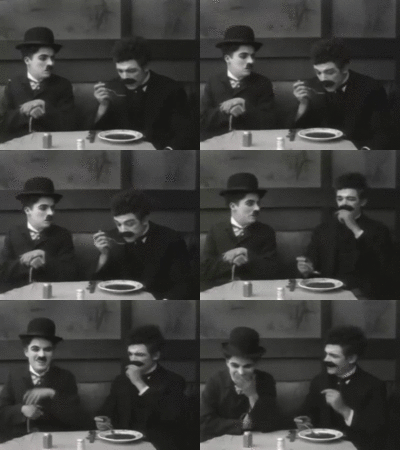
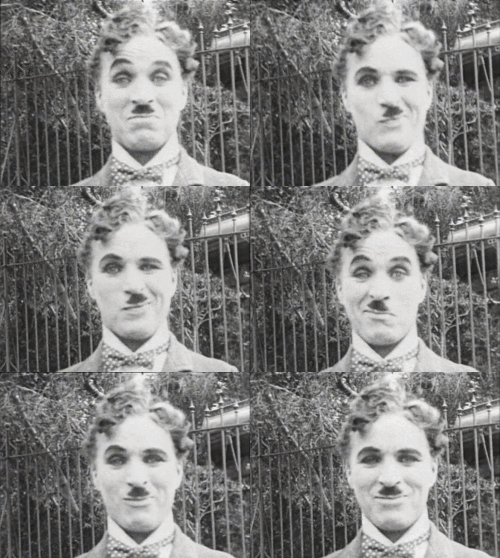
Aos ver estes testes descobrimos que Chaplin improvisava com frequência, ensaiava com as câmeras rodando e ajustava o ritmo com cada tomada – e às vezes ele demorava centenas de tomadas para conseguir a velocidade e o ritmo perfeitos. E, ao contrário de Mack Sennett, ele sempre queria ter uma explicação lógica para o pandemônio na tela.

By watching the rushes we find out that Chaplin improvised a lot, rehearsed while the cameras were rolling and adjusted the pace with each take – and sometimes he took hundreds of takes to find out just the perfect timing. In this phase Chaplin relies a lot on props to make the public laugh. And, unlike Mack Sennett, he always wanted to have a logical explanation for his pandemonium.
Algumas cenas foram descartadas, a exemplo de uma muito perigosa, envolvendo um machado e uma tomada reversa em “Carlitos no Estúdio” (1916), e também a primeira e última cena em que o personagem Carlitos usa óculos.

Some scenes were discarded, like a very dangerous one involving an axe and a reverse shot in “Behind the Screen” (1916), and also the first and only time the Tramp character wore glasses.
Nós também ficamos por dentro do incrível processo criativo por trás de “O Imigrante” (1917), provavelmente o melhor curta-metragem de Chaplin. Foi um filme criado conforme era filmado, com mudanças constantes na história e truques de câmera sagazes.

We also get to know the amazing creative process behind “The Immigrant” (1917), probably Chaplin’s best short film. It was a movie created in the moment, with constant changes in the plot and wise camera tricks.
Desde esta primeira fase, vemos que Chaplin preferia trabalhar com pessoas que não tinham experiência com atuação, o que tornava suas performances mais espontâneas e verdadeiras.

Since this first phase, we can see Chaplin’s preference to work with people who didn’t have an acting background, something that made their performances seem more spontaneous and natural.

Part 2 - The Great Director


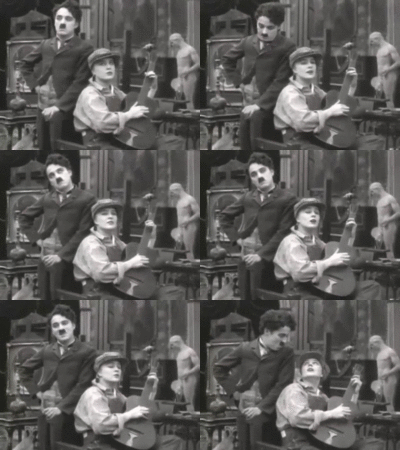
Como o narrador menciona, seus filmes da Mutual tinham de contar suas próprias histórias, pois não havia colaboradores sobreviventes do período para contá-las. Da fase seguinte, que começa com um contrato de distribuição assinado com a First National em 1918, entretanto, ainda havia testemunhas oculares vivas em 1983. Nós vemos entrevistas com amigos, assistentes e, claro, com as estrelas Jackie Coogan, Lita Grey e Georgia Hale.

As the narrator mentions, his Mutual films and rushes had to tell their own backstage stories, since there were no surviving collaborators from this phase. From the following phase, starting with a First National distribution contract signed in 1918, however, there were living eyewitnesses in 1983. We see interviews with friends, assistants and, of course, with the stars Jackie Coogan, Lita Grey and Georgia Hale.
Jackie Coogan
E tem mais: um registro fascinante de um cinegrafista amador no set de “Luzes da Cidade” (1931) mostra Chaplin tentando descobrir como a vendedora de flores cega, interpretada por Virginia Cherrill, poderia confundir seu personagem Carlitos com um milionário.

And there is more: a fascinating amateur movie from the set of “City Lights” (1931) shows Chaplin trying to figure out how the blind flower girl played by Virginia Cherrill would mistake his Tramp character for a millionaire.
Esta segunda parte foca nos maiores sucessos de Chaplin: “O Garoto” (1921), “Em Busca do Ouro” (1925) e “Luzes da Cidade”. Nós também temos a oportunidade única de ver o final de “Luzes da Cidade” gravado com Georgia Hale no papel principal, e a sensação é de que estamos verdadeiramente vendo um tesouro da história sétima arte. Eu considero a performance de Virginia superior, mas ver o que poderia ter sido não tem preço.

This second part focuses on Chaplin’s biggest successes: “The Kid” (1921), “The Gold Rush” (1925) and “City Lights”. We also have the unique chance to see the ending of “City Lights” shot with Georgia Hale in the girl’s role, and we feel like we truly are in front of a treasure from film history. I think Virginia’s performance is the best, but seeing what could have been is priceless.

Part 3 - Hidden Treasures 


Tudo vai bem por enquanto, mas chegou a hora do verdadeiro espetáculo. O que mais se pode esperar de um episódio que começa com um filme caseiro de Douglas Fairbanks de 1929 no qual Chaplin originou a ideia para o balé com o globo terrestre que ele faria 11 anos depois em “O Grande Ditador”?

Things were nice so far, but they were about to become amazing. What else can we expect from an episode that starts with a 1929 Douglas Fairbanks home movie in which Chaplin originated the idea for the globe ballet he would do 11 years later in “The Great Dictator”?
Em meio aos filmes caseiros feitos por diversão sempre que um visitante ilustre ia até o set, encontramos um chamado “How to Make Movies”, feito em 1918, quando Chaplin se mudou para Hollywood, construiu seu próprio estúdio e se tornou um diretor independente. As cenas deliciosas e muito elaboradas mostram Chaplin ganhando seu estúdio de um gênio da lâmpada, e os verdadeiros funcionários do estúdio interpretam suas funções para a câmera – com um toque de humor.

Among home movies, little films made for fun whenever illustrious visitors came to the set and other rarities, we find a film called “How to Make Movies”, made for fun in 1918, when Chaplin moved to Hollywood, built his own studio and became an independent director. The delightful and elaborate scenes we see show Chaplin earning his studio from a Genie in the Lamp, and the real studio employees are playing their functions to the camera – with a humorous twist.
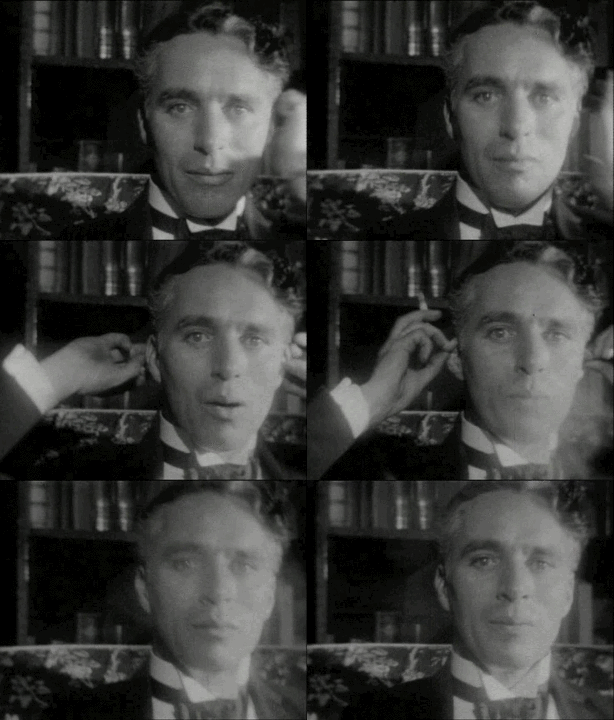
Com Chaplin, as gags poderiam ser descartadas, mas nunca abandonadas. Elas seriam usadas novamente anos depois, modificadas e melhoras. Você se lembra da sequência das pulgas circenses em “Luzes da Ribalta” (1952)? Bem, isso já havia sido tentado antes, em uma sequência mostrada pela primeira vez no documentário, mais de 60 anos depois de ter sido filmada. A pequena sequência de “The Professor”, que nunca foi finalizado, pode ser agora algo que os maiores fãs de Chaplin já conhecem, mas em “O Chaplin Que Ninguém Viu” as cenas eram inéditas – uma descoberta.

With Chaplin, the gags could be discarded, but never abandoned. They would be used again years later, modified and improved. Do you remember the flea circus sequence from “Limelight” (1952)? Well, it had been tried before, in a segment that was shown for the first time in the documentary, more than 60 years after it was shot. The little sequence from the unreleased “The Professor” may now be a familiar one for die-hard Chaplin fans, but in “Unknown Chaplin” it was something brand new – a discovery.

“O Chaplin que Ninguém Viu” é uma delícia para qualquer fã de Chaplin – que, aliás, tinha a claquete marcada com “Chas Chaplin” na época da Mutual. Aqueles que já viram mais filmes de sua obra serão os que tirarão mais proveito do documentário e, como eu, podem inclusive mudar de opinião sobre uma ou outra coisa ao desligar a TV.

“Unknown Chaplin” is a delight for any Chaplin fan – who, by the way, had his clapperboards marked with “Chas Chaplin” in his Mutual years. The ones who have already watched many Chaplin films will be the ones who will enjoy the documentary the most, and, like me, they may even have some opinions changed when they turn off the TV.

This is my contribution to the Charlie Chaplin blogathon, hosted by Little Bits of Classics and Christina Wehner.


 “All images from Chaplin films made from 1918 onwards, Copyright © Roy Export S.A.S. Charles Chaplin and the Little Tramp are trademarks and/or service marks of Bubbles Inc. S.A. and/or Roy Export”

Related Posts Plugin for WordPress, Blogger...