} Crítica Retrô: tribunal

Tradutor / Translator / Traductor / Übersetzer / Traduttore / Traducteur / 翻訳者 / переводчик

Showing posts with label tribunal. Show all posts

Thursday, March 30, 2017

Variações sobre um mesmo tema: 12 Homens e uma Sentença (1957 e 1997)

Variations on the same theme: 12 Angry Men (1957 & 1997)

Quando os remakes são necessários? Eu costumava achar que remakes nunca eram necessários – até ver o filme feito para a TV “12 Homens e uma Sentença”, de 1997. Sim, é exatamente igual ao filme de 1957, e Jack Lemmon era basicamente minha única razaão para vê-lo. Mas ver este filme me deu a reposta para minha questão inicial: remakes são necessários para contar grandes histórias para as novas gerações.

When are remakes necessary? I used to think that remakes are never necessary – until I saw the 1997 TV movie “12 Angry Men”. Sure, it is exactly like the 1957 movie, and Jack Lemmon was basically my only reason to see it. But it made gave me an answer for my initial quesiton: remakes are necessary to tell great stories to younger generations.
O próprio filme de 1957 é um remake de um filme para a TV feito  em 1954. Isto significa que a versão de 1997 significou apenas que a história voltou às origens – mas, desde vez, a cores. E as cores são, de fato, o elemento principal aqui.

The 1957 film is itself a remake of a 1954 TV attraction. It means that the 1997 version is only the story coming back to its origins – but, this time, in color. And color is, indeed, the main element here.
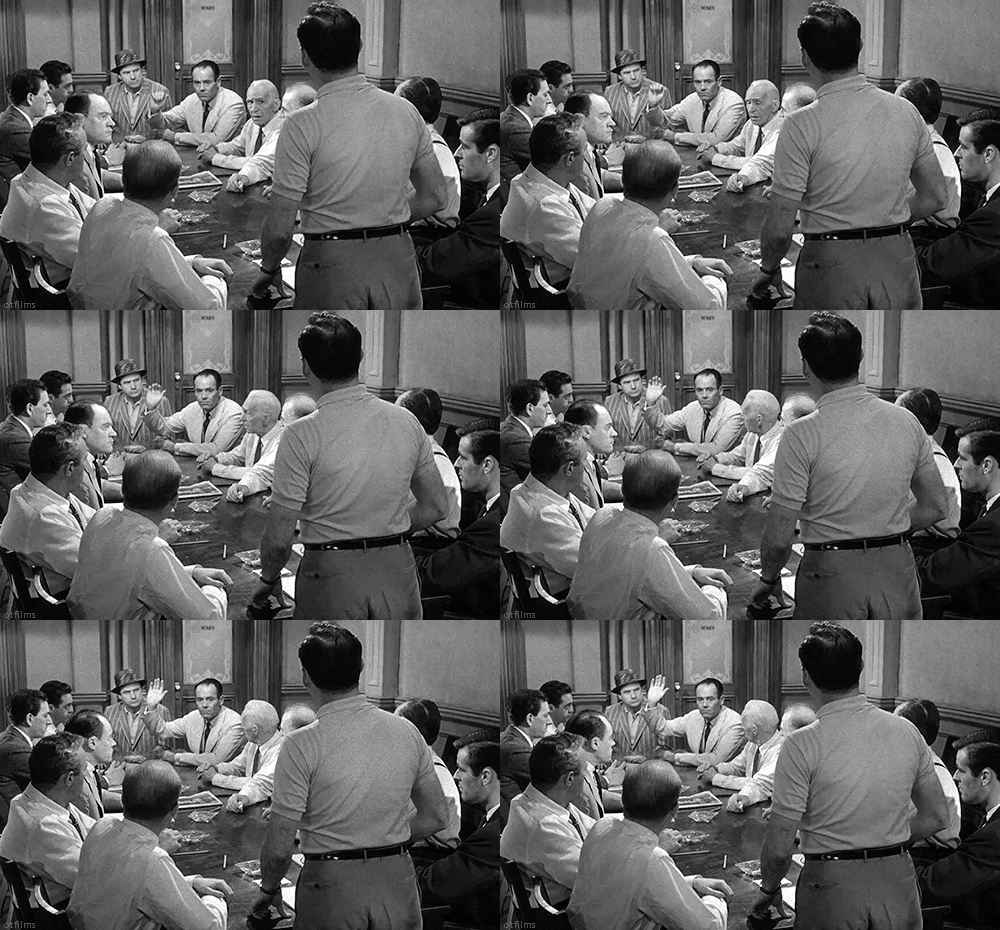
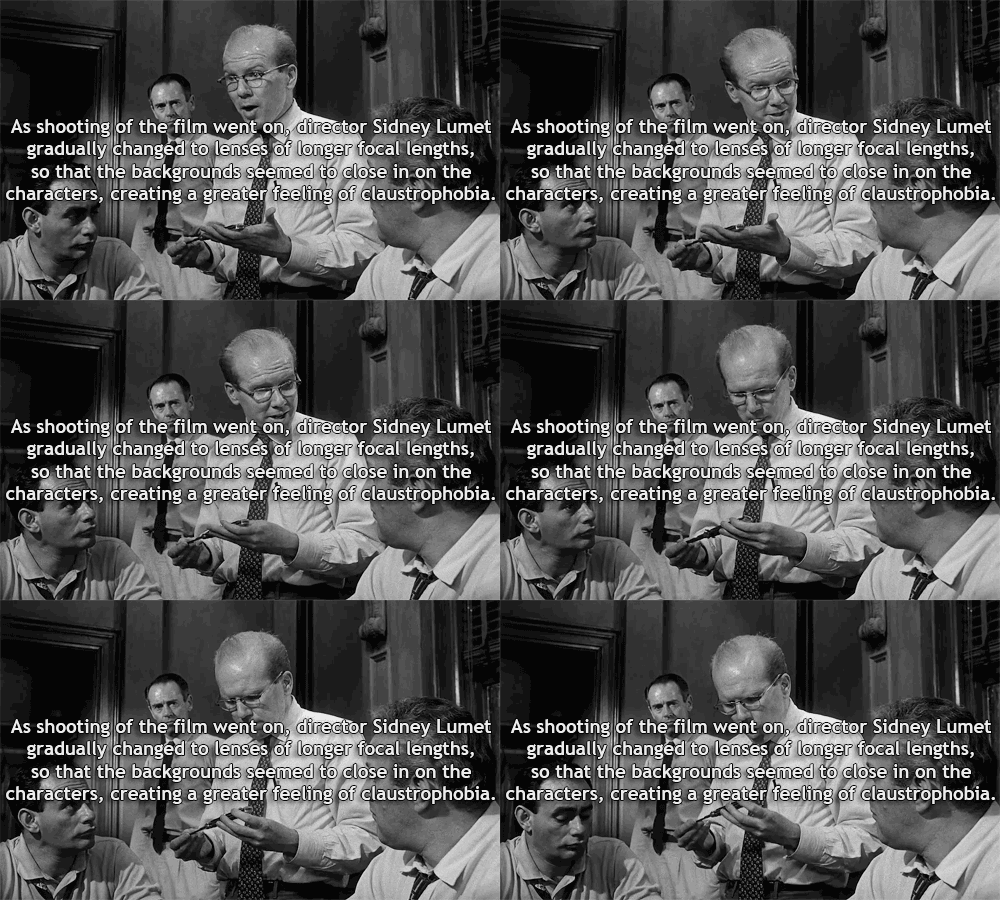
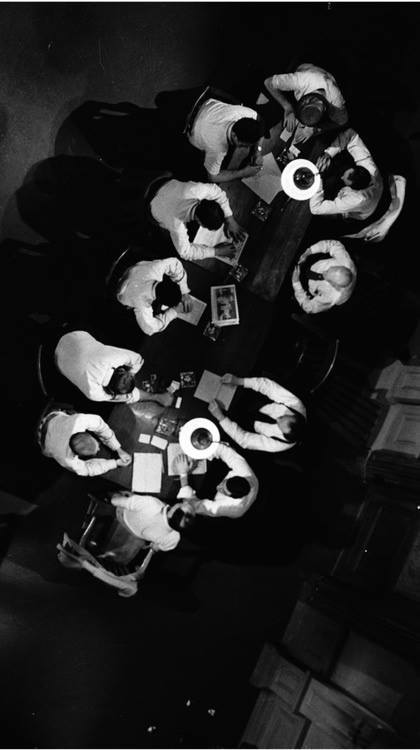
A trama se desenrola em um único ambiente – a sala em que os jurados estão reunidos para decidir o veredicto – e a exigência principal é que nós, enquanto espectadores, sintamos como o lugar é claustrofóbico. Neste sentido, a versão de 1957 funciona melhor: o suor em preto e branco fica mais evidente, e todo o ambiente parece mais opressivo que em 1997.

The story unfolds in only one environment – the room in which the jury is left to decide the verdict – and a main exigence is that we, as viewers, must feel how claustrophobic the place is. In this sense, the 1957 version works better: sweat in black and white appears better, and the whole environment seems more oppressive than it did in 1997.
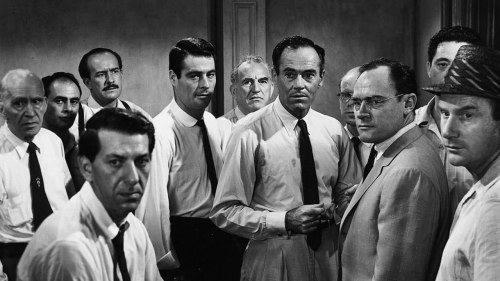
E então chegamos à cor da pele. Na versão de 1997 temos quatro jurados negros, entre jovens e velhos. Na de 1957, você pode adivinhar: não há nenhum. E tem mais: em 1997  o próprio acusado é negro. Em 1957 ele apenas vem de um bairro pobre, e é de origem filipina.

And then we come to skin color. In the 1997 version, there are four black jurors, old and young. In the 1957 version, you guessed: not even one. And there is more: in the 1997 version the accused is himself black. In the 1957 one he only comes from the slums and is Filipino.
Ainda mais interessante que o componente racial é a idade, especificamente na versão de 1997. Nesta, a idade dos jurados varia muito, enquanto na de 1957 eles parecem regular em idade. Na versão mais recente, temos Hume cronyn como o jurado mais velho, Jurado nº 9, e ele é abertamente desrespeitado. Ele é quase careca e usa uma bengala – e também é sempre interrompido quando tenta dar sua opinião na primeira meia hora do filme. É preciso que Jack Lemmon, como o Jurado nº 8, o defenda e exija que os outros o deixem falar. E aí é formada uma conexão instantânea entre eles.

Even more interesting than the race component is the age, especifically in the 1997 version. In it, the jurors' age vary a lot, while in the 1957 version they looked basically the same age. In the most recent version, we have Hume Cronyn as the oldest juror, Juror #9, and he is by far the most disrespected. He is nearly bald and walks with a cane – and is also interrupted whenever he tries to give his opinion in the first half an hour or so. It takes Jack Lemmon, as Juror #8, to stand for him and ask the others to let him talk. A connection is then instantly formed between the two.
O jurado que aparenta menos idade é o que mais desrespeita os outros, incluindo o nº 8: ele desconsidera as ideias de Jack Lemmon e tenta confrontá-lo no banheiro. Era de se esperar que os jurados mais jovens tivessem a mente mais aberta, e é o oposto que ocorre. É mais fácil para os jurados mais velhos serem empáticos com o acusado, com uma exceção: George C. Scott como o Jurado nº 3 será difícil de convencer porque ele está julgando o caso de maneira emocional.

The juror who looks the youngest is the most disrespectful towards the others, including #8: he takes Jack Lemmon's ideas for granted and tries to confront him in the bathroom. We were expecting the youngest jurors to be more open-minded, and the opposite happens. It's easy for the older jurors to feel empathy for the accused, withone exception: George C. Scott as Juror #3 will be difficult to convince because he's using his emotions to judge the case.
Com remakes focados só em mulheres, como o remake de “Ghostbusters” de 2016 e o futuro remake de “11 Homens e um Segredo”, eu não pude parar de pensar em uma nova versão da história: o filme “12 Mulheres e uma Sentença”. Bem, o próprio título não é muito bacana, porque soa como uma comédia misógina. Mas o sexismo vai mais fundo aqui: eu acho que nunca haverá uma versão toda feminina do filme porque nem na vida real as pessoas aceitariam bem um júri só de mulheres – exceto em casos em que isto é uma estratégia da defesa ou da acusação. Em outros casos haveria protestos, e pessoas dizendo algo estúpido como “mulheres sozinhas não podem julgar um caso porque elas serão guiadas pela emoção e não pela razão”.

With the many women-focused remakes, like the “Ghostbusters” one in 2016 and the upcoming “Ocean’s Eleven”, I couldn’t stop thinking about a new version of the story: a “12 Angry Women” film. Well, the title itself is not encouraging, because it sounds like a stupid misogynistic comedy. But the sexism is even deeper here: I think there will never be an all-female version of the movie because not even in real life people would accept an all-female jury – except when it's part of the defense's or the prosecution's strategy. In other cases there would be protest, with people saying something stupid like “women alone can’t judge a case because they’d be driven by emotion and not reason”. 
Jack Lemmon foi, sem dúvida, a alma do filme – assim como Fonda foi da versão de 1957. Ele não é um herói perfeito: ele vota em “inocente” não porque ele acredita na inocência do réu, mas sim porque não está convencido de sua culpa. Ele acredita que o caso deve ser analisado com cuidado, afinal, eles estão decidindo se um jovem vai ou não receber a pena de morte! Ele é apenas justo, ele é apenas humano – e o faro de que um personagem assim seja considerado um herói e uma inspiração nos diz muito sobre a corrupção já enraizada na sociedade.

Jack Lemmon was, without a doubt, the heart and soul of this movie – just like Fonda was in the 1957 version. He is not a flawless hero: he votes “not guilty” not because he is sure of the  innocence of the accused, but because he is not either sure of his guilt. He thinks the case must be thought over, after all, they could be sending a young man to the death row! He is only fair, he is only human – and yet the fact that such a character is considered a hero and an inspiration tells a lot about how corrupt society is becoming in its roots.
No ano seguinte à estreia do telefilme, este esteve no centro de um momento inesquecível na história do Globo de Ouro. Na categoria de Melhor Ator em Minissérie Filme para TV, Ving Rhames ganhou o prêmio. Chocado, durante seu discurso ele disse que não merecia o prêmio e chamou Jack Lemmon para o palco – e simplesmente deu a estatueta a Lemmon. Houve muito burburinho e mal-estar ao redor do evento. Ambos os atores foram aplaudidos de pé, e Rhames não quis receber a estatueta de volta. Mais tarde, a Hollywood Foreign Press Association, entidade responsável pelo prêmio, deu uma cópia da estatueta a Rhames.

The year after the TV movie was released, it was in the center of an unforgettable moment in Golden Globes history. In the Best Actor in a TV Movie or Miniseries category, Ving Rhames won the award. In awe, during his speech, he said he didn't deserve the award and called Jack Lemmon to the stage – and simply gave the trophy to Lemmon. There was a lot of buzz and a good deal of awkwardness surrounding the event. Both actors received an standing ovation, and Rhames didn't accept the trophy back. Later, the Hollywood Foreign Press Association, the entity responsible for the Golden Globes, gave Rhames a duplicate of the trophy.
Jack Lemmon fez tudo ser melhor – comédias, dramas, remakes e até premiações!

Jack Lemmon made everything better – comedies, dramas, remakes and even award shows!


This is my contribution to the Jack Lemmon blogathon, hosted by my friend Rich at Wide Screen World and moi right here at Critica Retro.

Saturday, June 11, 2016

Fúria / Fury (1936)

Às vezes precisamos de um soco no estômago. Um soco metafórico, obviamente: algo que nos tire da zona de conforto, que nos incomode, que nos deixe insatisfeitos com nós mesmos. Isso é possível com muitos filmes. Isso aconteceu comigo vendo o primeiro filme feito por Fritz Lang em Hollywoo, “Fúria” (1936), que tenta responder duas perguntas principais: Por que coisas ruins acontecem com pessoas boas? E como isso pode destruir a bondade que existe nelas?

Sometimes we need a punch in the stomach. A metaphoric punch, obviously: something to take us out of our comfort zone, to bother us, to leave us dissatisfied with ourselves. This is possible with many films. This happened to me while I was watching Fritz Lang's first Hollywood film, “Fury” (1936), that tries to answer two main questions: Why bad things happen to good people? And how can these things destroy the goodness in those people?
Joe Wilson (Spencer Tracy) era um cara legal. Ele queria se casar com seu grande amor, Katherine Grant (Sylvia Sidney), mas para isso precisava juntar dinheiro. Ele prospera junto dos irmãos com um posto de gasolina em Chicago, enquanto Katherine vai trabalhar em outra cidade. Quando Joe finalmente consegue o dinheiro, decide ir até sua amada, acompanhado de seu fiel cachorro Rainbow (Terry, mais conhecido por interpretar Toto em “O Mágico de Oz” em 1939). E no caminho começam os problemas.

Joe Wilson (Spencer Tracy) was a nice guy. He wanted to marry his sweetheart, Katherine Grant (Sylvia Sidney), but to do it he needed to save money. He does well with his brothers in a gas station in Chicago, while Katharine goes to work in another town. When Joe finally gets enough money, he decides to go meet his sweetheart, carrying along his loyal dog Rainbow (Terry, best known for playing Toto in “The Wizard of Oz” in 1939). And then troubles start.
Joe é detido na estrada e levado para ser interrogado sobre o sequestro de uma moça. Infelizes coincidências levam o delegado a acreditar que Joe sabe algo sobre o crime, e ele é preso até que os fatos sejam apurados. Mas não dá tempo de descobrir a verdade: em pouco tempo se espalha a notícia de que um envolvido no sequestro foi preso, e ninguém quer saber a versão de Joe antes de formarem uma opinião sobre ele. Em uma poderosa e sábia metáfora envolvendo pessoas fofoqueiras e galinhas cacarejantes, fica claro que a verdade é o que menos importa quando os ânimos estão em ebulição.

Joe is stopped on the way and taken to be asked about the kidnapping of a girl. Unfortunate coincidences make the sheriff believe that Joe knows something about the crime, and he is arrested until the facts are checked. But there is no time to find out the truth: quickly the news about a man involved in the kidnapping being arrested spread through town, and nobody wants to know Joe's version before making a judgement about him. In a powerful and wise metaphor involving people who spread gossips and sassy chickens, it becomes clear that the truth is the less important thing when there is too much animosity.
E é por isso que eles colocam fogo na delegacia – e vibram com a ideia de Joe sendo queimado vivo. Quando os verdadeiros sequestradores são presos e confessam o crime, todos os moradores que apoiaram o linchamento preferem esquecer o infortúnio. Mas Joe, que sobreviveu, não esquecerá: ele quer vingança, e mais nada. E há um povoado inteiro a ser julgado e condenado – não apenas os 22 homens acusados de homicídio, mas suas famílias, as pessoas que passaram adiante o boato, e as que se deliciaram com a morte de um inocente.

And that's why they burn down the jail – and rejoice with the idea of Joe being burned alive. When the real kidnappers are arrested and confess the crime, all the people who supported the lynching prefer to forget the misfortune. But Joe, who survived, won't forget: he wants revenge, and nothing else. And there is a whole town to be condemned – not only the 22 people indicted for murder, but their families, the people who spread the rumors and the ones who became happy with the death of an innocent man.
A verdade é que somos julgados diariamente – e em geral por pessoas que têm pouca ou nenhuma moral para nos julgar. E é quando isso acontece que ficamos menos esperançosos com relação à humanidade, perdemos a confiança em outras pessoas e até mesmo pensamos em vingança. Isso já aconteceu comigo.

The truth is that we are all judged every day – and in general by people who have no moral to judge us. And it is when this happens that we lose hope for mankind, can't trust people and even think about revenge. This already happened to me.

Este é um dentre muitos filmes sobre o perigo das massas sedentas por justiça, nem um pouco abertas ao diálogo. Outros filmes com o tema são “Consciências Mortas” (1943) e “”O Sol é para Todos” (1962). Há também um tema menos abordado, que é a corrupção por amizade. Todos na cidade querem defender os culpados – porque, no fundo, todos são também um pouco culpados, inclusive o delegado.

This is one among many movies about the dangers of the mobs looking for justice and not interested in dialog. Other movies about the theme are “The Ox-Bow Incident” (1943) and “To Kill a Mockingbird” (1962). There is also a less common theme, the 'corruption by friendship'. Everybody in the city want to stand for the guilty ones – because, deep down inside, they are all guilty, including the sheriff.
Spencer Tracy está ótimo em momentos tão contrastantes: do moço apaixonado ao sobrevivente cheio de ódio, ele brilha e convence, embora o destaque seja para sua versão mais sombria. Walter Abel também está espetacular como o advogado de acusação, que usa muito a técnica de “você pode apagar uma pergunta da ata, mas não da mente dos jurados”.

Spencer Tracy is great in very distinct moments: from the young man in love to the survivor full of rage, he shines and is convincing, although he is better as the darkest version. Walter Abel is also spectacular as the district attorney, who uses the technique of “you can erase an answer from the report, but not from the jury's minds”.
Fritz Lang havia acabado de sair da Alemanha nazista, e podemos ver reflexos de seu último filme alemão, “M” (1931), em “Fúria”. Entretanto, Lang estava mergulhando em um problema atual de seu novo país, o linchamento, e conseguiu fazer um filme pertinente não apenas para 1936, mas também para os dias atuais. Em “Fúria”, aprendemos que às vezes a razão não consegue vencer a bestialidade. Mas é sempre bom tentar manter a razão – afinal, é ela que nos torna humanos.

Fritz Lang had just left Nazi Germany and we can see an influence from his last German film, “M” (1931), in “Fury”. However, Lang was dealing with a current problem happening in his new country, lynching, and was able to make a pertinent film not only for 1936, but also nowadays. In “Fury”, we learn that sometimes reason cannot defeat bestiality. But it is always good to try to keep reason – after all, it is reason that makes us human.

This is my contribution to the Order in the Court! The Classic Courtroom Movies blogathon, hosted by Theresa and Lesley at Cinemaven’s Essays from the Couch and Second Sight Cinema.

Saturday, April 12, 2014

O vento será tua herança (1961) / Inherit the Wind (1961)

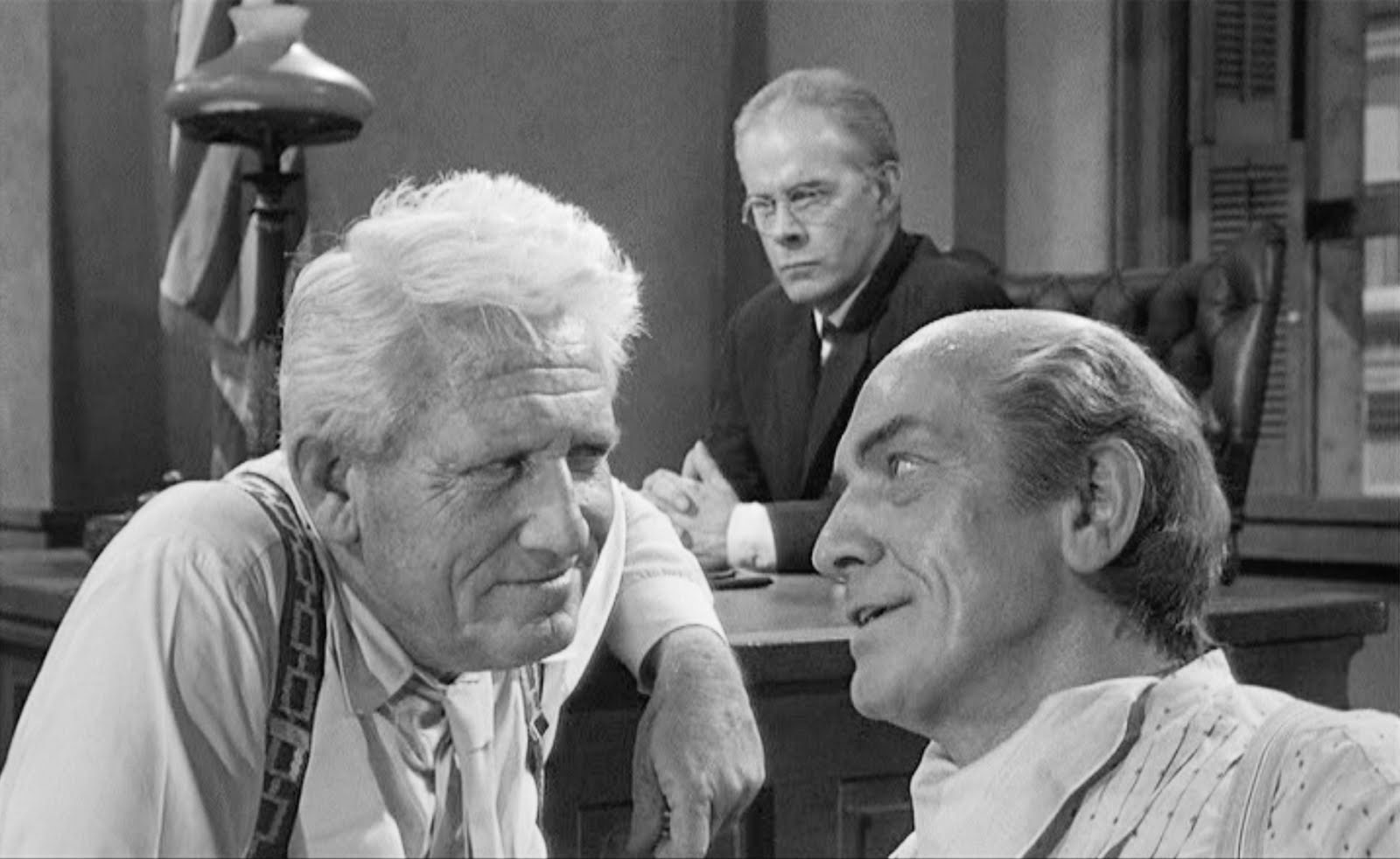
O vento será tua herança” é um filme, sobretudo, sobre as relações entre o velho e o novo. O tema principal é o embate entre religião e ciência e, por consequência, entre as velhas e novas crenças. E na tela vemos atores de diversas faixas etárias, desde os mais experientes, ganhadores do Oscar, até novatos na profissão, passando por intérpretes com uma carreira ainda em construção. Embora tenhamos nossa opinião sobre a questão central, criacionismo contra evolucionismo, não podemos negar que o filme só é esplêndido graças à mistura do antigo e do novo. 

Inherit the Wind” is above all a movie about the relationship between old and new. The main theme is the feud involving science and religion and, as a consequence, the old and the new beliefs. On the screen we see actors of several ages, from veteran Oscar winners to newcomers, and also the ones still building a career and playing in new genres. We may have our personal opinion about the main theme (Creationism versus Evolutionism), but we cannot deny that the film is only fantastic because of this mix of old and new.


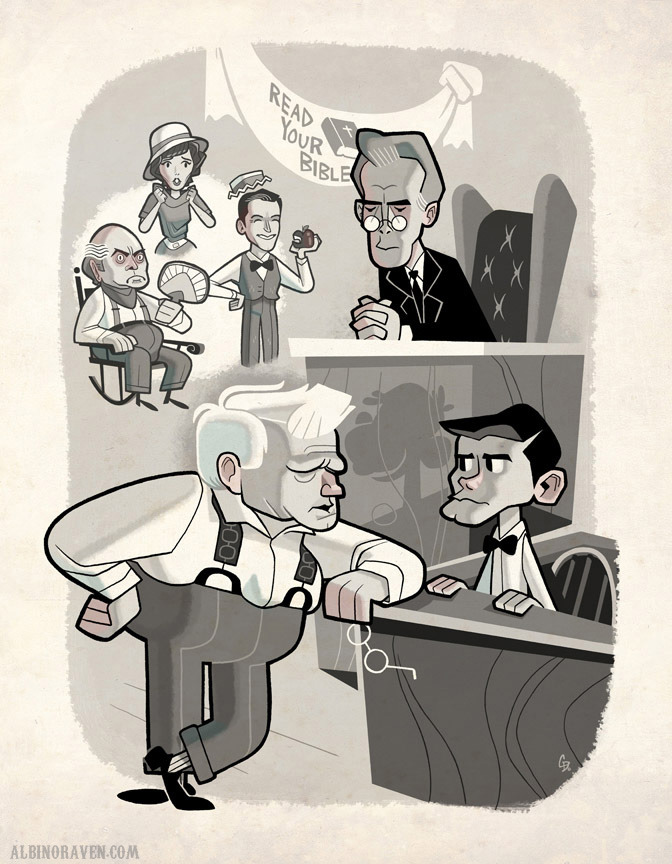
Anos 1920, cidade de Hillsboro. Além de ser afastado da escola, o professor Bertram Cates (Dick York) é preso por estar ensinando a teoria da evolução de Darwin para sua turma de biologia. O que era uma questão local acaba se tornando um debate que chama a atenção do país inteiro, boa parte graças à cobertura da imprensa. Entre os jornalistas destaca-se E.K. Hornbeck (Gene Kelly), que faz de tudo em busca de uma grande notícia. E o debate toma tamanhas proporções que são chamados dois renomados advogados para o caso: Matthew Harrison Brady (Fredrich March) fica com a acusação e Henry Drummond (Spencer Tracy) com a defesa. Para piorar a situação, a namorada de Bertram, Rachel (Donna Anderson), é filha do pastor que o está perseguindo.

1920s, city of Hillsboro. Teacher Bertram Cates (Dick York) is withdrawn from his classes at scholl and also arrest because he is teaching Darwin's evolutionary theory at his Biology class. This local question becomes a national debate thanks to the press coverage. Among the journalists we have E.K. Hornbeck (Gene Kelly), who can do anything for a scoup. And the debate becomes so big that two famous lawyers are called: Matthew Harrison Brady (Fredrich March) works for the prosecution and Henry Drummond (Spencer Tracy) is hired for the defense. To make things worse, Bertram's girlfriend, Rachel (Donna Anderson) is the daughter of  the preacher who is discursing against him.


Muitas vezes o filme mostra como toda a situação é absurda. Em pouco tempo nós nos cansamos e ficamos com raiva da música-tema dos conservadores, “Give me that old time religion”. A recepção calorosa de Matthew Brady é acompanhada por coros de mulheres pedindo decência e um desfile com muitos cartazes que dizem “deixem o demônio longe de Hillsboro”, “fora com Darwin” (“down with Darwin” no original), “não coloque uma cauda em mim” (?!), “Godliness, not gorillas”, “ateísta, volte para seus macacos”, “você não pode nos fazer de macacos” e alguns até aproveitam a situação para fazer propaganda de seus restaurantes, anunciando que “a comida é celestial”. Isso tudo contribui para que o debate pareça ridículo, mas não se engane: em muitos locais (atenção, leitores americanos), os pais ainda podem proibir seus filhos de terem aulas que contradigam o criacionismo!

At many moments the film shows how absurd the situation is. We quickly get tired and angry at the conservative theme song “Give me that old time religion”. The warm wlecome to Matthew Brady is filled with choruses of women asking for decency and a parade of posters saying “leave the devil far from Hillsboro”, “down with Darwin”, “don't put a tail in me” (?!), “Godliness, not gorillas”, “atheist, go back to your monkeys”, “you can't make us monkeys” and even some use the situation to advertise their restaurants, saying that “the food is heavenly”. This makes the debate look ridiculous, but don't be fooled: in many places (attention, American readers), parents can still forbid their children to attend classes that contradict creationism.


Mesmo que quase todos vejam o filme já acreditando na teoria da evolução, há ainda um interessante debate que devemos acompanhar. Embora as testemunhas chamadas por Drummond sejam recusadas pelo tribunal, ele ainda consegue dar seu recado, e o faz de maneira muito interessante: chamando Brady, o advogado da acusação, como testemunha, e fazendo-o confrontar os fatos da Bíblia e os fatos científicos. Mas não se enganem: o filme tem um rumo bem diferente do esperado!

Even though most of us see the movie with the firm belief in the evolutionary theory, there is still an interesting debate we should follow. Although the witnesses called by Drummond are not accepted by the court, he still can make his point, and does it in a very interesting way: he calls Brady, the prosecution lawyers, as a witness, and makes him compare stuff written at the Bible and the scientific facts. But don't be fooled: the film follows not as you expect!


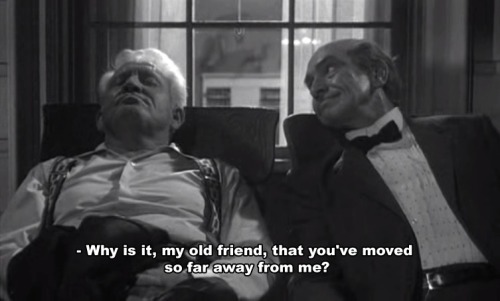
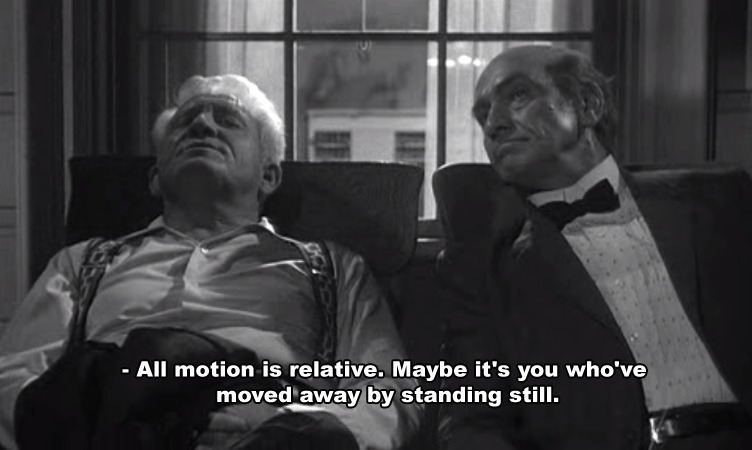
Tanto Spencer Tracy quanto Fredric March tinham dois Oscars na bagagem. March era três anos mais velho que Tracy. Dois dos melhores atores dos anos 30 estão aqui mais velhos, March careca e Tracy mais gordo, mas o talento continua o mesmo. É impossível escolher qual dos dois está melhor, e ambos são absolutamente críveis e, como bons advogados, têm argumentos muito convincentes. Brady e Drummond são velhos conhecidos cujos caminhos se desviaram em um ponto da vida e, mesmo de lados opostos, ainda se estimam. Prova disso é a conversa que têm na varanda. Observe, nesta cena, como as cadeiras de balanço oscilam em direções opostas: são as opiniões conflitantes mostradas através de uma perspicaz metáfora visual.

Both Spencer Tracy and Fredric March had two Oscars. March was three years older than Tracy. Two of the best actors from the 1930s are older here, March is bald and Spencer is a bit fatter, but the talent didn't change. It's impossible to point out who is better, both are believable and, as good lawyers, have very convincing arguments. Brady and Drummond are old acquaintances whose paths deviated somewhere in life and, although they are at opposite sides of the court, they still like each other. We can see it with the conversation they have at the balcony. Pay attention on how the rocking chairs move in different directions: their opposite opinions are shown through this wise visual metaphor.


Mais uma do time mais velho é Florence Eldridge, que interpreta Sarah, a esposa de Brady, e era também casada com March na vida real. Florence alcançou fama e colecionou elogios na década de 1920, tanto nas telas quanto nos palcos. Ao se casar com March, em 1927, sua carreira passou a ser composta de personagens coadjuvantes nas telas, mas ainda alguns sucessos no teatro. Enquanto March e Tracy fizeram seus últimos filmes em 1967, Florence atuou pela última vez em 1978, dez anos antes de falecer e três anos depois de ter ficado viúva de March.

Another actress from the older generation is Florence Eldridge, who plays Sarah, Brady's wife. Florence was also married to March in real life. She became famous in the 1920s, and was successful both in film and theater. When she got married to March, in 1927, she started playing character parts onscreen, but still had a lot of success at the theater. March and Tracy did their final films in 1967, and Florence acted for the last time in 1978, three years before dying and ten after March had passed away.


Gene Kelly, vivendo já a decadência dos musicais, desempenha muito bem um papel que não é de todo dramático, mas sim bastante irônico. Na turma mais nova também estão Donna Anderson, naquele que é seu papel mais conhecido, e o sempre reconhecível Dick York, com sua expressão de espanto que ficaria famosa no rosto de Darrin Stephens, esposo da protagonista da série “A Feiticeira”. Este foi o último filme de York, que passou então a atuar exclusivamente na TV. Curiosidade: York foi o responsável por escrever a cena da prisão de seu personagem em “O vento será tua herança”.

Gene Kelly, experiencing the decadence of musicals, perfectly plays a role that is not totally dramatic, but very ironic. Other young performers are Donna Anderson, in her best known role, and the always recognizable Dick York, whose shock expression became famous at Darrin Stephens's face, when he played the husband of the lead in “Bewitched”. This was York's last film, and from then on he only worked on TV. Trivia: York was the one who wrote the prison scene for his character in “Inherit the Wind”.


O filme é a adaptação de uma peça que conta, com várias mudanças, o evento de 1925 que ficou conhecido como “Scopes Monkey Trial”, sendo Scopes o sobrenome do professor real. Os nomes foram todos trocados e aqui uma decisão é muito curiosa: Matthew Brady, nome escolhido para o advogado conservador, foi o responsável pela acusação no caso que acabou com a carreira de Roscoe “Fatty” Arbuckle. Os autores da peça também aumentaram a tensão acrescentando cenas de hostilidade para com Drummond. E lembre-se de que a peça foi escrita durante o McCarthismo, e o direito de pensar livremente é um ponto fundamental.

The film is an adaptation of a play that tells, with several factual changes, the 1925 event that became known as “Scopes Monkey Trial”, since Scopes was the last name of the real teacher. The names were all changed for the play and movie, and here we have a very curious decision: Matthew Brady, the name chosen for the conservative lawyer, was the name of the guy responsible for the prosecution on the case that ended Roscoe 'Fatty' Arbuckle's career. The authors of the play also added the tension by adding hostility situations towards Drummond. Remember that the play was written during McCarthism, and the right of free thinking is a main point. 
 
By Glen Brogan
Mesmo depois de escrever tudo isso sobre o filme, creio que ainda não lhe fiz justiça. Nem se o roteiro inteligentíssimo estivesse publicado aqui, ainda não seria suficiente para demonstrar a grandeza do filme. Veja (ou reveja) “O vento será tua herança”. Preste atenção nos diálogos, nos detalhes, tire um tempo para refletir depois que o filme acabar. Talvez não seja um filme que mudará drasticamente sua vida. Mas, se todos vissem este filme, creio que o mundo seria um lugar melhor.

Even after writing that much about the film, I don't think I've been fair to it. Not even if the very witty screenplay was published here, it still wouldn't be enough to show how wonderful the film is. Watch (or rewatch) “Inherit the Wind”. Pay attention to the dialogs, the details, take your time to think when the film is over. Maybe it won't be a film that will change your life drastically. But if everybody could watch this film I believe the world would be a better place.

This is my contribution for the Diamonds and Gold Blogathon, hosted by dynamic duo Rich at Wide Screen World and Patricia at Caftan Woman.


P.S.: Não se esqueçam de conferir minhas duas novas empreitadas: a coluna semanal Crítica Retrô no site Os Cinéfilos e o blog de literatura Diário de uma Quase-Escritora.
Related Posts Plugin for WordPress, Blogger...