} Crítica Retrô: filme para TV

Tradutor / Translator / Traductor / Übersetzer / Traduttore / Traducteur / 翻訳者 / переводчик

Showing posts with label filme para TV. Show all posts

Friday, February 20, 2026

Kenneth Williams: Fantabulosa! (2006)


Eu venho escrevendo sobre filmes antigos há 16 anos. O próprio cinema tem pouco mais de 130 anos. E todos os dias eu aprendo alguma coisa nova sobre a Sétima Arte. Por exemplo: através de minha amiga Virginie, que escreve majoritariamente no site The Wonderful World of Cinema, eu descobri uma série de filmes que nunca havia ouvido falar anteriormente: a franquia Carry On. Trinta e um filmes da franquia foram feitos na Inglaterra entre 1958 e 1992, além de vários spin-offs na televisão e nos palcos. Um nome recorrente no elenco destes filmes foi Kenneth Williams. Acredito que não há jeito melhor de conhecer alguém do que aprendendo sobre sua vida, e felizmente houve uma cinebiografia feita para a TV de Kenneth Williams, filme que vi e agora escrevo sobre em honra ao seu centenário.   

I’ve been writing about old movies for sixteen years now. Cinema itself is a little over 130 years old. And everyday I learn something new about the movie world. For instance: through my friend Virginie who writes mainly at The Wonderful World of Cinema I got to know a film series I had never heard about before: the Carry On movie franchise. Thirty-one movies of the franchise were made in England between 1958 and 1992, plus several spin-offs on television and on stage. A recurring name in the cast was Kenneth Williams. I believe there is no better way to get to know someone than learning about their life, and luckily there is a biopic made for TV about Kenneth Williams, the movie I watched and now review, as part of his centennial celebration.

Começamos com Kenny (Michael Sheen), um exuberante solteirão vivendo num apartamento com o mínimo de mobília. Um flashback começa e somos apresentados ao pequeno Kenny, um garotinho que tem seu cabelo cortado pelo próprio pai. Sua mãe fala assim sobre seu pai: “ele é um menino, não é como nós” e mostra para Kenny um vestido que ela estava costurando para ele. Usando o vestido, Kenny desempenha um papel nos palcos e recebe elogios de um jornal. 

We start with Kenny (Michael Sheen), a flamboyant bachelor living in an apartment with minimal furniture. A flashback begins and we’re introduced to little Kenny, a boy having his hair cut by his father. His mother tells him about the father: “he’s a man, not like us” and shows Kenny a dress she made for him. Wearing the dress, Kenny appears on stage and receives praise from a local newspaper.


Já adulto, Kenneth se junta a uma trupe de teatro e demonstra ser um grande comediante, mesmo ao tentar ser um ator dramático. Ele então consegue um trabalho no rádio. É interessante notar como a trajetória de Kenneth até então se assemelha com a de muitos atores e atrizes de Hollywood das décadas de 1930 em diante, especialmente daqueles que faziam comédia.

Now an adult, Kenneth joins a theater group and proves himself to be a great comedian, even when he’s trying to be a serious actor. He then finds a job on the radio. It’s interesting to notice how Kenneth’s trajectory so far is similar to many Hollywood actors of the 1930s onwards, especially those in comedy.

O programa de rádio é um sucesso e o próximo passo é óbvio: a televisão! Vale lembrar que a TV apareceu e se popularizou na Inglaterra antes de isso acontecer nos EUA. Sua fama televisiva dura pouco, pois ele é criticado por seu colega Tony (Martin Trenaman) e os produtores da BBC que queriam um programa mais sério, sem as vozes e as personagens de Kenny. 

The radio show becomes popular and the next step was clear: television! Let’s remember that TV appeared and popularized sooner in England then it did in the US. His television fame doesn’t last long, as he is criticized by both his coworker Tony (Martin Trenaman) and the BBC producers who wanted to make a more realistic show, without Kenny’s voices and characters.

A tristeza não dura muito porque ele é recrutado para o cinema! Sua aparição nos filmes da franquia Carry On começa em 1958 com “Carry On Sergeant” e segue em frente em outros 25 filmes. Podemos ver referências a eles na cinebiografia através dos diferentes figurinos que Kenneth usa no set junto à amiga Joan Sims (Beatie Edney). Além de seu trabalho no cinema, podemos vê-lo em ação nos palcos e televisão, e também fazendo e perdendo amigos e se envolvendo em novos relacionamentos.

Sadness doesn’t last long as he’s recruited to the movies! His appearance in the Carry On films begins in 1958 with “Carry On Sergeant” and went on in 25 more movies. We can see them referenced in the biopic by the various costumes Kenneth is wearing on set alongside his friend Joan Sims (Beatie Edney). Besides his work in cinema, we see him starring on stage and TV, and also making and losing friends and forging new relationships.

Como muitos outros atores - como muitas outras PESSOAS - Kenneth tinha uma relação complicada com os pais. Ele era muito próximo de sua mãe, Lou (Cheryl Campbell), que sempre o apoiou, mas era distante do pai, Charlie (Peter Wight). O pai falava para o filho conseguir um bom trabalho desde menino e não aprovava que ele fosse um ator, mesmo ouvindo os programas de rádio de Kenny quando estava sozinho em casa. Numa noite, Kenneth está passando aspirador em seu apartamento vestindo só uma sunga e impede que o pai entre e faça uma visita, algo que fez grande mal à já pouco saudável relação deles.  

Like many other actors - like many other PEOPLE - Kenneth had a complicated relationship with his parents. He was very close with his supportive mother, Lou (Cheryl Campbell), but distant from his father, Charlie (Peter Wight). The father talked about him getting a good job since he was little and disapproved of him being an actor, even though he would listen to Kenneth’s radio shows when alone at home. One night, Kenneth is vacuuming his apartment only in swimming suits and refuses to let his father in, something that harmed their already poor relationship for good.

Kenneth ouve pela primeira vez falar de “ser queer” no livro “The City and the Pillar”. Para ele, beijar e transar são coisas nojentas, mas ele dissipa sua energia se masturbando. Ele seria hoje considerado um assexual homorromântico. A mãe dele já o via assim.

Kenneth first learns about “queerness” in the book “The City and the Pillar”. For him, kissing and having sex are totally disgusting, but he dissipates his energy by masturbating. He would be considered now a homorromantic asexual individual. His mother already understood that.

Baseado no livro “The Diaries of Kenneth Williams”, publicado postumamente em 1992, “Fantabulosa” é um bom filme feito para a TV, categoria que até alguns anos atrás era sinônimo de algo malfeito. Embora sua atuação possa parecer um bocado afetada e irritante no começo, o camaleônico Michael Sheen faz um bom trabalho.

Based on the book “The Diaries of Kenneth Williams”, posthumously published in 1992, “Fantabulosa” is a good made-for-TV movie, a category that, until recent years, has been associated with poorer production values. Although his acting is a bit affected and even annoying in the beginning, the chameleon Michael Sheen does a good job.

Há citações de Shakespeare e George Bernard Shaw no filme. Mas eu escolho terminar esta crítica com uma citação dele mesmo, Kenneth Williams: “A citação, como a oportunidade, a comida, e o amor, tem que vir no momento certo. Gritada, pode mandar seu ego lá para o tornozelo”.

There are quotes from Shakespeare and George Bernard Shaw in the movie. But I choose to end this review with a quote from the man himself, Kenneth Williams: “The quote, like opportunity, food and love, has got to come at the right moment. Blurted out, it can send your ego round your ankles.”

This is my contribution to the Carry On Kenny blogathon, hosted by Virginie at The Wonderful World of Cinema.

Thursday, March 30, 2017

Variações sobre um mesmo tema: 12 Homens e uma Sentença (1957 e 1997)

Variations on the same theme: 12 Angry Men (1957 & 1997)

Quando os remakes são necessários? Eu costumava achar que remakes nunca eram necessários – até ver o filme feito para a TV “12 Homens e uma Sentença”, de 1997. Sim, é exatamente igual ao filme de 1957, e Jack Lemmon era basicamente minha única razaão para vê-lo. Mas ver este filme me deu a reposta para minha questão inicial: remakes são necessários para contar grandes histórias para as novas gerações.

When are remakes necessary? I used to think that remakes are never necessary – until I saw the 1997 TV movie “12 Angry Men”. Sure, it is exactly like the 1957 movie, and Jack Lemmon was basically my only reason to see it. But it made gave me an answer for my initial quesiton: remakes are necessary to tell great stories to younger generations.
O próprio filme de 1957 é um remake de um filme para a TV feito  em 1954. Isto significa que a versão de 1997 significou apenas que a história voltou às origens – mas, desde vez, a cores. E as cores são, de fato, o elemento principal aqui.

The 1957 film is itself a remake of a 1954 TV attraction. It means that the 1997 version is only the story coming back to its origins – but, this time, in color. And color is, indeed, the main element here.
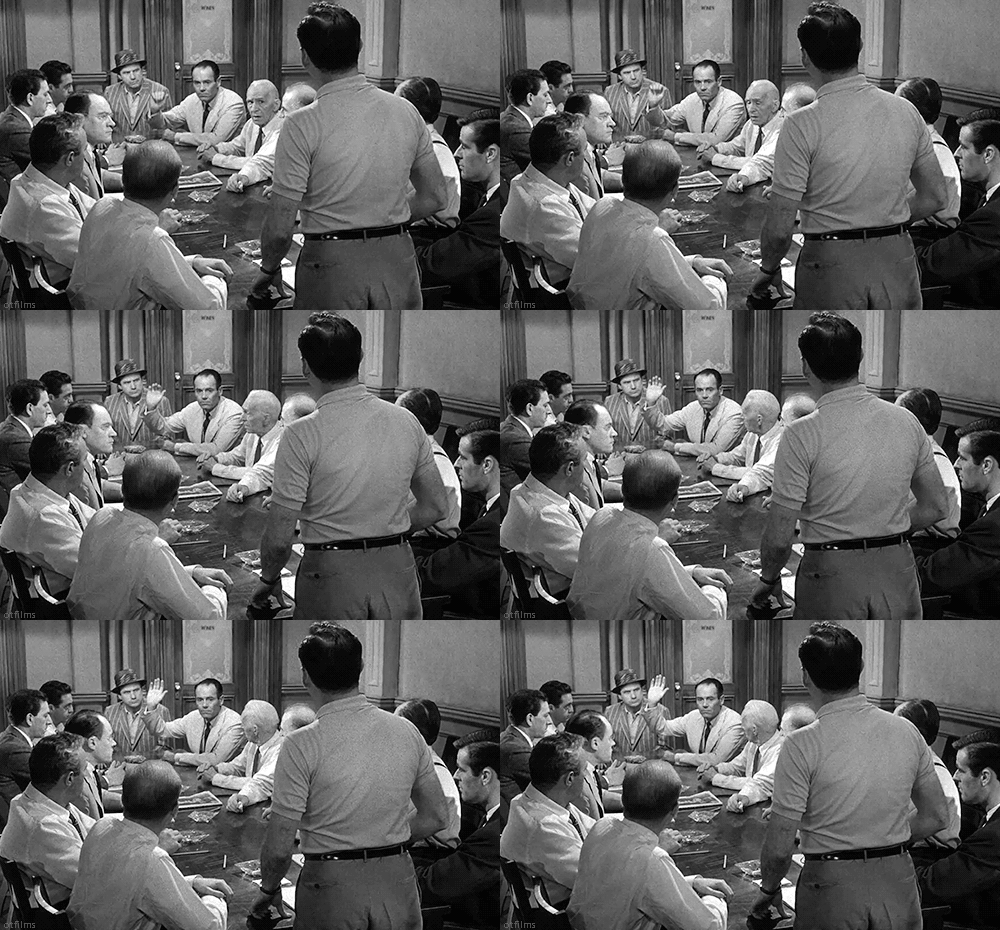
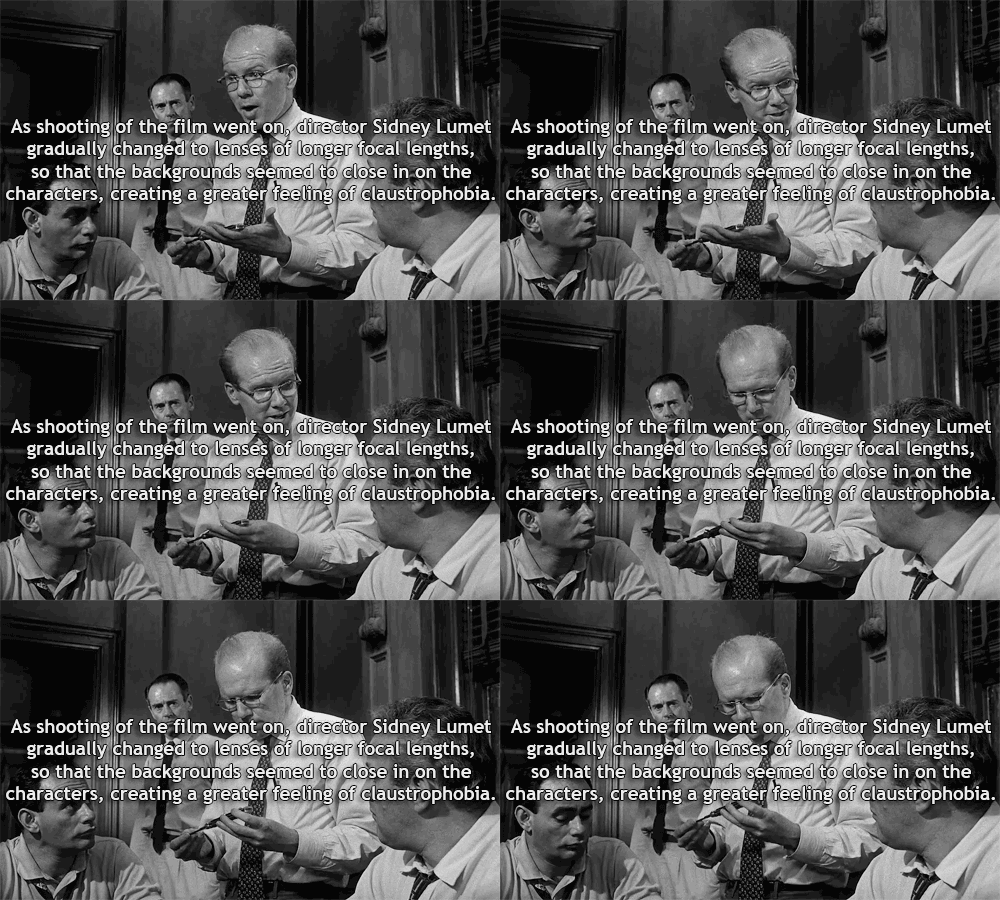
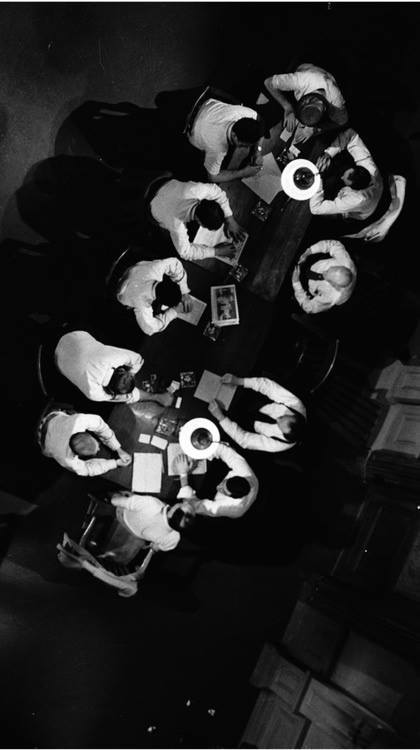
A trama se desenrola em um único ambiente – a sala em que os jurados estão reunidos para decidir o veredicto – e a exigência principal é que nós, enquanto espectadores, sintamos como o lugar é claustrofóbico. Neste sentido, a versão de 1957 funciona melhor: o suor em preto e branco fica mais evidente, e todo o ambiente parece mais opressivo que em 1997.

The story unfolds in only one environment – the room in which the jury is left to decide the verdict – and a main exigence is that we, as viewers, must feel how claustrophobic the place is. In this sense, the 1957 version works better: sweat in black and white appears better, and the whole environment seems more oppressive than it did in 1997.
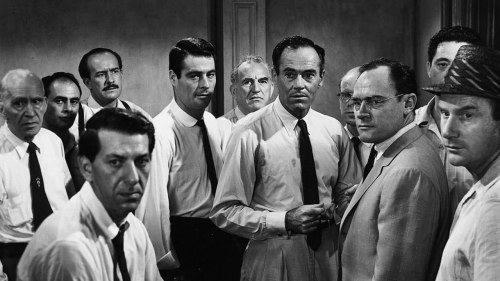
E então chegamos à cor da pele. Na versão de 1997 temos quatro jurados negros, entre jovens e velhos. Na de 1957, você pode adivinhar: não há nenhum. E tem mais: em 1997  o próprio acusado é negro. Em 1957 ele apenas vem de um bairro pobre, e é de origem filipina.

And then we come to skin color. In the 1997 version, there are four black jurors, old and young. In the 1957 version, you guessed: not even one. And there is more: in the 1997 version the accused is himself black. In the 1957 one he only comes from the slums and is Filipino.
Ainda mais interessante que o componente racial é a idade, especificamente na versão de 1997. Nesta, a idade dos jurados varia muito, enquanto na de 1957 eles parecem regular em idade. Na versão mais recente, temos Hume cronyn como o jurado mais velho, Jurado nº 9, e ele é abertamente desrespeitado. Ele é quase careca e usa uma bengala – e também é sempre interrompido quando tenta dar sua opinião na primeira meia hora do filme. É preciso que Jack Lemmon, como o Jurado nº 8, o defenda e exija que os outros o deixem falar. E aí é formada uma conexão instantânea entre eles.

Even more interesting than the race component is the age, especifically in the 1997 version. In it, the jurors' age vary a lot, while in the 1957 version they looked basically the same age. In the most recent version, we have Hume Cronyn as the oldest juror, Juror #9, and he is by far the most disrespected. He is nearly bald and walks with a cane – and is also interrupted whenever he tries to give his opinion in the first half an hour or so. It takes Jack Lemmon, as Juror #8, to stand for him and ask the others to let him talk. A connection is then instantly formed between the two.
O jurado que aparenta menos idade é o que mais desrespeita os outros, incluindo o nº 8: ele desconsidera as ideias de Jack Lemmon e tenta confrontá-lo no banheiro. Era de se esperar que os jurados mais jovens tivessem a mente mais aberta, e é o oposto que ocorre. É mais fácil para os jurados mais velhos serem empáticos com o acusado, com uma exceção: George C. Scott como o Jurado nº 3 será difícil de convencer porque ele está julgando o caso de maneira emocional.

The juror who looks the youngest is the most disrespectful towards the others, including #8: he takes Jack Lemmon's ideas for granted and tries to confront him in the bathroom. We were expecting the youngest jurors to be more open-minded, and the opposite happens. It's easy for the older jurors to feel empathy for the accused, withone exception: George C. Scott as Juror #3 will be difficult to convince because he's using his emotions to judge the case.
Com remakes focados só em mulheres, como o remake de “Ghostbusters” de 2016 e o futuro remake de “11 Homens e um Segredo”, eu não pude parar de pensar em uma nova versão da história: o filme “12 Mulheres e uma Sentença”. Bem, o próprio título não é muito bacana, porque soa como uma comédia misógina. Mas o sexismo vai mais fundo aqui: eu acho que nunca haverá uma versão toda feminina do filme porque nem na vida real as pessoas aceitariam bem um júri só de mulheres – exceto em casos em que isto é uma estratégia da defesa ou da acusação. Em outros casos haveria protestos, e pessoas dizendo algo estúpido como “mulheres sozinhas não podem julgar um caso porque elas serão guiadas pela emoção e não pela razão”.

With the many women-focused remakes, like the “Ghostbusters” one in 2016 and the upcoming “Ocean’s Eleven”, I couldn’t stop thinking about a new version of the story: a “12 Angry Women” film. Well, the title itself is not encouraging, because it sounds like a stupid misogynistic comedy. But the sexism is even deeper here: I think there will never be an all-female version of the movie because not even in real life people would accept an all-female jury – except when it's part of the defense's or the prosecution's strategy. In other cases there would be protest, with people saying something stupid like “women alone can’t judge a case because they’d be driven by emotion and not reason”. 
Jack Lemmon foi, sem dúvida, a alma do filme – assim como Fonda foi da versão de 1957. Ele não é um herói perfeito: ele vota em “inocente” não porque ele acredita na inocência do réu, mas sim porque não está convencido de sua culpa. Ele acredita que o caso deve ser analisado com cuidado, afinal, eles estão decidindo se um jovem vai ou não receber a pena de morte! Ele é apenas justo, ele é apenas humano – e o faro de que um personagem assim seja considerado um herói e uma inspiração nos diz muito sobre a corrupção já enraizada na sociedade.

Jack Lemmon was, without a doubt, the heart and soul of this movie – just like Fonda was in the 1957 version. He is not a flawless hero: he votes “not guilty” not because he is sure of the  innocence of the accused, but because he is not either sure of his guilt. He thinks the case must be thought over, after all, they could be sending a young man to the death row! He is only fair, he is only human – and yet the fact that such a character is considered a hero and an inspiration tells a lot about how corrupt society is becoming in its roots.
No ano seguinte à estreia do telefilme, este esteve no centro de um momento inesquecível na história do Globo de Ouro. Na categoria de Melhor Ator em Minissérie Filme para TV, Ving Rhames ganhou o prêmio. Chocado, durante seu discurso ele disse que não merecia o prêmio e chamou Jack Lemmon para o palco – e simplesmente deu a estatueta a Lemmon. Houve muito burburinho e mal-estar ao redor do evento. Ambos os atores foram aplaudidos de pé, e Rhames não quis receber a estatueta de volta. Mais tarde, a Hollywood Foreign Press Association, entidade responsável pelo prêmio, deu uma cópia da estatueta a Rhames.

The year after the TV movie was released, it was in the center of an unforgettable moment in Golden Globes history. In the Best Actor in a TV Movie or Miniseries category, Ving Rhames won the award. In awe, during his speech, he said he didn't deserve the award and called Jack Lemmon to the stage – and simply gave the trophy to Lemmon. There was a lot of buzz and a good deal of awkwardness surrounding the event. Both actors received an standing ovation, and Rhames didn't accept the trophy back. Later, the Hollywood Foreign Press Association, the entity responsible for the Golden Globes, gave Rhames a duplicate of the trophy.
Jack Lemmon fez tudo ser melhor – comédias, dramas, remakes e até premiações!

Jack Lemmon made everything better – comedies, dramas, remakes and even award shows!


This is my contribution to the Jack Lemmon blogathon, hosted by my friend Rich at Wide Screen World and moi right here at Critica Retro.
Related Posts Plugin for WordPress, Blogger...