} Crítica Retrô: efeitos especiais

Tradutor / Translator / Traductor / Übersetzer / Traduttore / Traducteur / 翻訳者 / переводчик

Showing posts with label efeitos especiais. Show all posts

Friday, May 2, 2025

Inferno (1911) / Dante’s Inferno (1911)


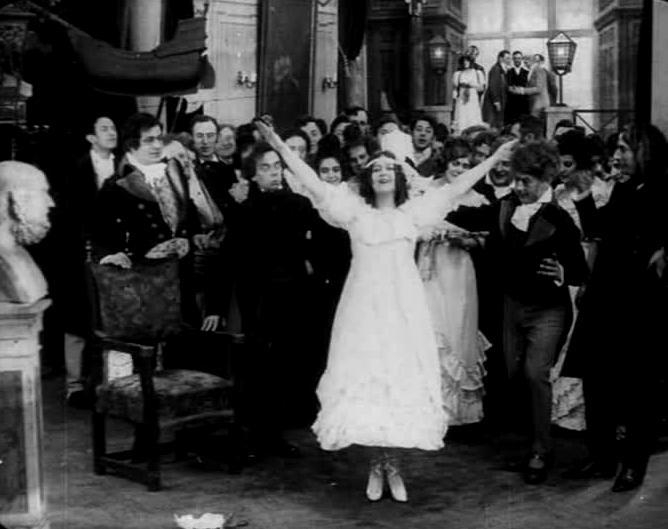
Quando falamos de autores de livros no gênero aventura, quem vem à sua mente? Pode ser Mark Twain com sua dupla Tom Sawyer e Huck Finn, ou talvez Júlio Verne. Dificilmente pensaríamos em alguém como Dante Alighieri como autor de aventura, mas o IMDb não pensa assim. O filme de 1911 “Inferno”, adaptado da “Divina Comédia” de Dante, é um dos primeiros filmes classificado como “aventura” no IMDb.

When we talk about book authors in the adventure genre, who comes to your mind first? It might be Mark Twain with his duo Tom Sawyer and Huck Finn, or maybe Jules Verne. We hardly think of someone like Dante Alighieri as an adventure author, but IMDb thinks differently. The 1911 movie “Dante’s Inferno”, adapted from his “Divine Comedy” is one of the earliest movies labeled “adventure” on IMDb.

Dante (Salvatore Papa) é uma alma vagando por uma floresta quando bestas ferozes (pessoas vestidas em roupas de animais, completas com rabos) impedem que ele deixe o lugar. Ele é resgatado por Virgílio (Arturo Pirovano), mas eles marcham direto para o inferno. Numa excursão guiada pelo poeta, Dante visita os círculos do inferno. Enquanto isso, sua amada Beatrice confiou em Virgílio para ajudá-la a se reunir com Dante.

Dante (Salvatore Papa) is a soul walking through a forest when ferocious beasts (people dressed in animals’ clothes complete with tails) stop him from leaving the place. He’s rescued by Virgilio (Arturo Pirovano), but they march straight to hell. In an excursion guided by the poet, Dante visits all the circles of hell. Meanwhile, his beloved Beatrice has trusted Virgilio to reunite her with Dante.

No último parágrafo me referi a Virgílio como “poeta”, mas ele foi mais que isso. Ele foi O poeta da Roma Antiga, da Idade Média e também do início da modernidade, apenas recentemente deixando os bancos escolares e caindo parcialmente no esquecimento. Ele ficou famoso com, acima de tudo e até hoje, com sua Eneida, um poema épico.

In the last paragraph I referred to Virgilio - or Virgil - as “poet”, but he was more than that. He was THE poet of Ancient Rome, the Middle Ages and even the early modern times, leaving the school benches and thus fading into partial obscurity only very recently. He became famous with, above all and until today, his Aeneid, an epic poem.

Dante ouve a história de vida, ou melhor, a história de morte, de muitas almas que estão no inferno. Não é possível aprofundar nas histórias num filme que dura 65 minutos, mas há pequenos vislumbres de pelo menos três histórias que acontecem em cenários variados. Aqui algum conhecimento da “Divina Comédia” pode ajudar, porque há figuras ilustres contando suas histórias e não é fácil reconhecê-las no filme.  

Dante hears the life story, or rather death story, of many souls who are in hell. Not much can be told deeply in a movie that lasts 65 minutes, but there are small snippets of at least three stories that happen in diverse settings. Here some knowledge of the “Divine Comedy” may help, because there are illustrious figures telling their stories and it’s not easy to recognize them in the film.

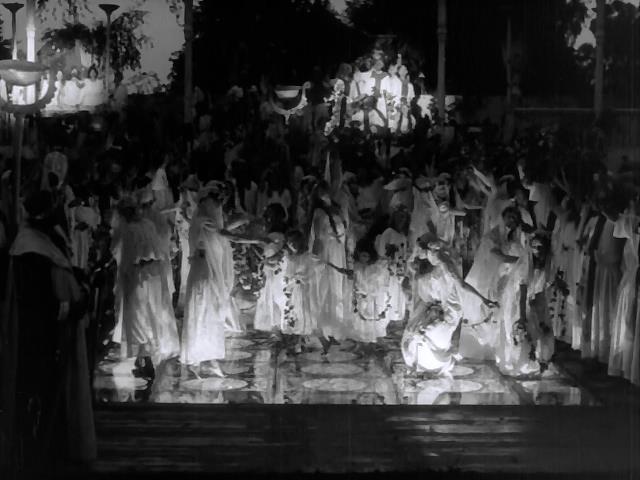
Enquanto há alguns efeitos especiais muito bons, como almas flutuando acima da cabeça de Dante, há também alguns primitivos, como as já mencionadas bestas e o cão de três cabeças, Cerberus. Multidões de figurantes, em sua maioria nus, foram necessários para fazer o filme. Você poderia pensar que muita tecnologia seria demandada para transportar para as telas as coisas imaginadas por Dante Alighieri, como uma chuva de fogo, mas mais uma vez o primeiro cinema mostra como era inventivo.

While there are some very good special effects, like souls floating over Dante’s head, there are also primitive ones, like the aforementioned beasts and the dog with three heads, Cerberus. Crowds of extras, most of them naked, were necessary to make this movie. You might think that a lot of technology would be necessary to portray on screen the things imagined by Dante Alighieri, such as a rain made of fire, but once again the early cinema shows its inventiveness.

O visual do filme foi inspirado pelo artista Gustave Doré. Suas xilogravuras feitas para ilustrar a “Divina Comédia” de Dante foram seu passaporte para a fama e também a inspiração para o filme. Embora não elogiado em vida como um grande artista, os talentos de Doré foram reconhecidos após sua morte com apenas 52 anos.

The overall look of the film was inspired by artist Gustave Doré. His wood-engravings made to illustrate Dante’s “Divine Comedy” were his passport to fame and also the inspiration for the movie. Although not praised in life as a great artist, Doré’s talents were recognized after his death at only 52.

O cinema era um negócio de família para Giuseppe de Liguoro, que atuou em “Inferno” e também foi um dos diretores. Vindo da aristocracia, ele dirigiu 91 filmes na era muda. Um de seus filhos, Eugenio, por vezes atuava nos filmes do pai, e seu outro filho, Wladimiro, se tornou ator / diretor / diretor de fotografia.

Cinema as a family affair can be found in Giuseppe de Liguoro, who acted in “Dante’s Inferno” and is also one of the directors. Coming from an aristocratic background, he directed 91 films in the silent era. One of his sons, Eugenio, sometimes acted in his films, and his other son, Wladimiro, became an actor / director / cinematographer.

Custando o dobro de outro épico do primeiro cinema, “Quo Vadis?”, feito no ano seguinte, “Inferno” é atualmente o mais antigo longa-metragem preservado e ajudou a trilhar o caminho para os longas por onde passou, fosse na Europa ou nos Estados Unidos, em sessões com custo diferenciado do ingresso, educando  o público para deixá-los acostumados a ficar sentados por períodos mais longos de tempo.

Costing twice as much as the early epic “Quo Vadis?”, made the following year, “Dante’s Inferno” is now the oldest surviving feature film and helped pave the way for features whenever it was exhibited, be it Europe or the United States, in sessions that had a different pricing and educated their public to make them used to sitting through longer periods of time.

Considerado perdido por muitos anos, uma cópia foi encontrada na Filmoteca Vaticana, um arquivo criado pelo Papa João XXIII em 1959. Tive sorte de encontrar uma cópia cristalina e restaurada no YouTube. “Inferno” demorou três anos para ficar pronto, e é ótimo que possamos nos deliciar com essa estranha aventura saída da mente de um dos maiores escritores da História.

Presumed lost for many years, a copy was found at the Filmoteca Vaticana, an archive established by the Pope John XXIII in 1959. I was lucky enough to find a pristine restored copy on YouTube. “Dante’s Inferno” took three years to make, and it’s great that we can still rejoice at this strange adventure taken from the mind of one of the greatest writers in History.

This is my contribution to the Adventurethon, hosted by Gill and Barry at Realweegiemidget Reviews and Cinematic Catharsis.

Sunday, January 27, 2019

Contos de Hoffmann (1916) / Tales of Hoffmann (1916) / Hoffmanns Erzählungen (1916)


ESTA CRÍTICA CONTÉM SPOILERS

THIS ARTICLE HAS SPOILERS

De acordo com o dicionário Oxford, o termo robô foi originado nos anos 1920, em uma peça tcheca chamada “R.U.R Rossum’s Universal Robots”, vindo da palavra tcheca robota, que significa trabalho forçado. O filme “Hoffmanns Erzählungen”, ou “Contos de Hoffmann”, foi feito antes de 1920, mas tem um robô - ou melhor, um autômato. Robô e autômato são sinônimos até hoje.

According to the Oxford Dictionary, the term robot was originated in the 1920s, coming from a Czech play called “R.U.R Rossum’s Universal Robots”, and came from the Czech word robota, meaning forced labor. The film “Hoffmanns Erzählungen”, or “Tales of Hoffmann” was made before 1920, but it has a robot - or better, an automaton. Robot and automaton are used as synonyms until now.


No Prelúdio, conhecemos o jovem E.T.A Hoffmann (Kurt Wolowsky), que mora com o tio e o enfurece com seu hábito de desenhar caricaturas. Perto da casa de Hoffmann podemos encontrar os alquimistas Coppelius (Friedrich Kühne) e Spalanzani (Lupu Pick) que, como bons alquimistas, querem produzir ouro, mas a partir de partes do corpo humano. Um dia, Hoffmann fica de castigo por causa de uma caricatura que ele desenhou do Conde Dapertutto (Werner Krauss), mas o jovem escapa e encontra o esconderijo dos alquimistas, e lá fica horrorizado com as experiências deles. Hoffmann desmaia na rua e é salvo por uma dançarina chamada Angela (Relly Ridon), uma mulher casada cobiçada por um médico. Depois que Hoffmann se recupera, Angela morre subitamente depois de uma última dança.

In the Prelude, we get to know the young E.T.A. Hoffmann (Kurt Wolowsky), who lives with his uncle and enrages him with his habit of drawing caricatures. Near Hoffmann’s place we can find the alchemists Coppelius (Friedrich Kühne) and Spalanzani (Lupu Pick) who, as good alchemists, want to make gold, but out of people’s body parts. One day, Hoffmann is grounded because of a caricature he drew of Count Dapertutto (Werner Krauss) but the young man escapes and finds the alchemists’ place, where he gets horrified with their experience. Hoffmann collapses in the street and is saved by a dancer named Angela (Relly Ridon), a married woman coveted by a doctor. After Hoffman recovers, Angela dies suddenly after a last dance.


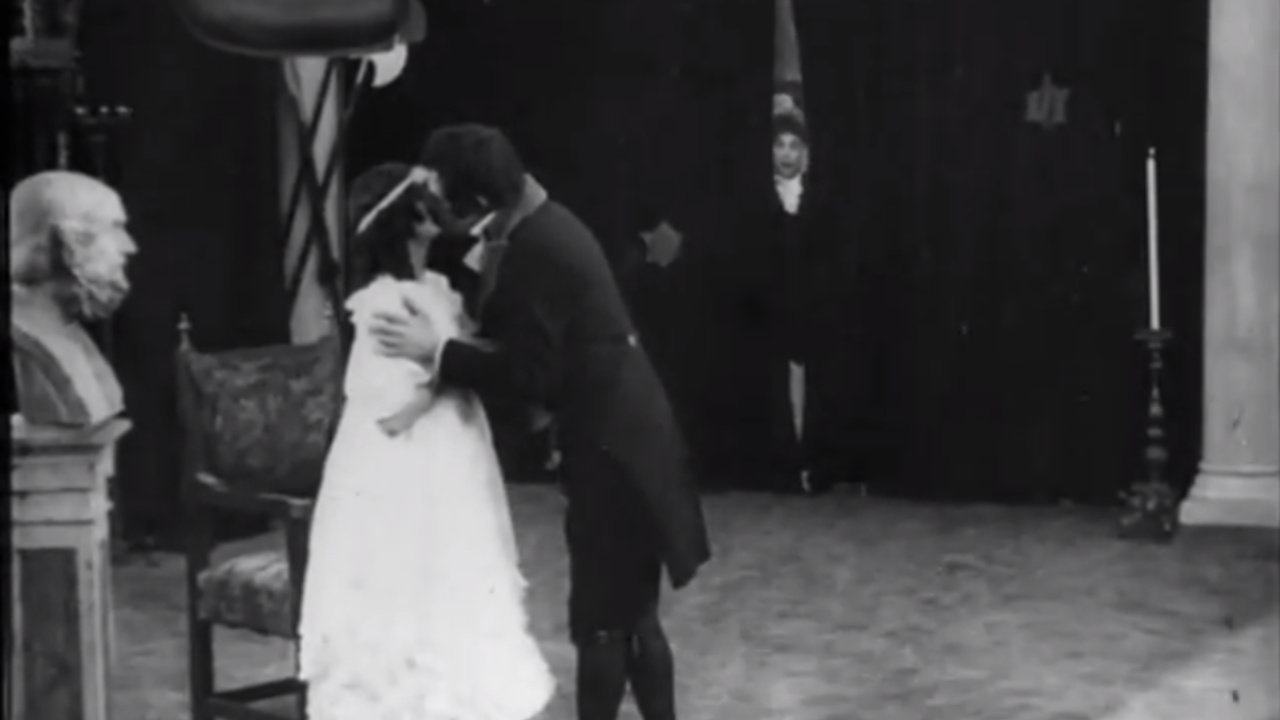
Quando começa o Primeiro Ato, encontramos Hoffmann já como homem maduro - agora interpretado por Erich Kaiser-Titz - e amante da atriz Stella (Kathe Oswald). Quando o noivo de Stella flagra os dois, Hoffmann foge. Em uma pequena cidade, ele encontra Coppelius e Spalanzani, agora um vendedor de óculos e um diretor de museu, com a mais nova invenção deles: Olympia (Alice Hechy), um autômato quase real. Ao usar os óculos especiais e mágicos de Coppelius, Hoffmann se apaixona por Olympia, acreditando que ela é uma mulher real, mas ele tem seu coração partido ao tirar os óculos.

When the First Act begins, we find Hoffmann as a mature man - now played by Erich Kaiser-Titz - and the lover of actress Stella (Kathe Oswald). When Stella’s fiancé find the two, Hoffmann escapes. In a small town, he meets Coppelius and Spalanzani, now a glass seller and a museum director, with their newest invention: Olympia (Alice Hechy), a life-like automaton. While wearing Coppelius’s special magical glasses, Hoffmann falls in love with Olympia, believing she is a real girl, only to have his heart broken when the glasses are removed.


Então, para esquecer Olympia, Hoffmann vai ao teatro e se apaixona pela rica Giulietta (Thea Sandten) - que está mais interessada em seus pretendentes viciados em jogo. De volta ao lar, Hoffmann namora Antonia, a filha de Angela - a mulher que o ajudou muitos anos antes - que foi proibida pelo pai de dançar e que também é cortejada pelo médico que cobiçava sua mãe, o vingativo doutor Miracle (Andreas von Horn).

Then, to forget Olympia, Hoffmann goes to the theater and falls for the rich Giulietta (Thea Sandten) - who is more interested in her gambling suitors. Back home, Hoffmann dates Antonia, the daughter of Angela - the woman who helped Hoffmann many years before - who is forbidden to dance by her father and who is also courted by the doctor who courted her mother, the revengeful doctor Miracle (Andreas von Horn).
 
Prolific actress Thea Sandten was killed in Auschwitz in 1943

E.T.A. Hoffmann realmente existiu: ele foi um autor de literatura fantástica do século XVIII e início do século XIX. “Os Contos de Hoffmann” são uma coletânea dos contos dele em forma de ópera, composta por Offenbach em 1881. Para o filme de 1916, os roteiristas - uma dupla que incluía o diretor Richard Oswald - mudaram a ordem dos atos da ópera.

E.T.A. Hoffman really existed: he was a writer of fantastic literature from the 18th and early 19th centuries. “The Tales of Hoffmann” is a collection of his stories in the shape of an opera, composed by Offenbach in 1881. For the 1916 film, the screenwriters - a duo that included director Richard Oswald - changed the order of the acts of the opera to film.


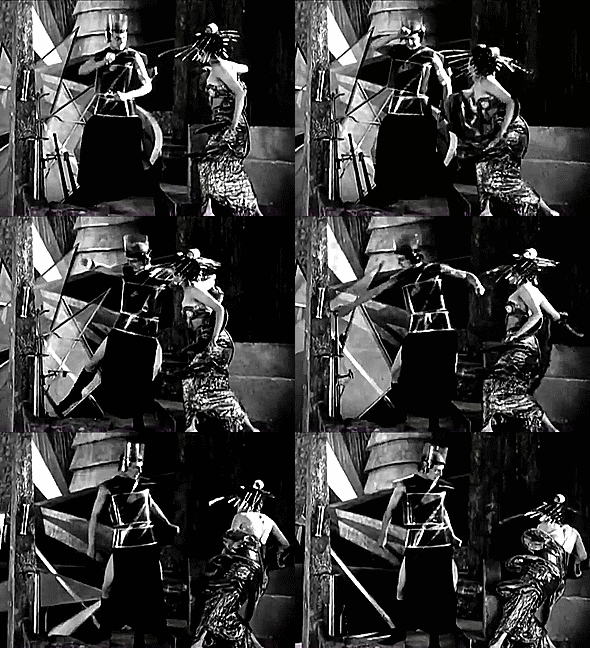
A história do autômato é interessante, mas muito curta - dura cerca de 15 minutos. O filme alemão “A Boneca”, de 1919, por outro lado, traz uma história de amor com autômato maior e melhor. Algo a se notar em “Contos de Hoffmann” é o uso de efeitos especiais para mostrar o autômato, em versão miniatura, girando dentro de uma caixa. Não encontrei detalhes sobre como isso foi feito, mas uma cena semelhante aparece em “A Noiva de Frankenstein” (1935), com miniaturas se mexendo dentro de garrafas. No filme de Hollywood, o efeito foi obtido quando se colocaram os atores em jarras gigantescas em frente a um veludo preto, e a cena gravada foi editada junto aos atores interpretando os cientistas.

The automaton story is interesting, but very short - it lasts about 15 minutes. The German film “The Doll”, from 1919, on the other hand, has a nicer and longer automaton love story. The one thing to notice in “Tales of Hoffmann” is the use of special effects to show Olympia the automaton, in a miniature version, moving inside a box. I couldn’t find how it was made, but a similar scene appears in “The Bride of Frankenstein” (1935), with miniatures moving in bottles. In this Hollywood film, the effect was achieved by putting the actors in huge jars in front of black velvet then mixing and lining up this footage with the footage of the scientists.


Fica óbvio que o banqueiro Elias, um personagem menor, é judeu - algo que depois é inclusive mencionado e confirmado em uma carta. Muitos judeus trabalhavam com finanças, na Alemanha e no resto do mundo, e há a ideia geral de que judeus têm talento para os negócios. Uma das razões para a perseguição de judeus na era nazista foi o ressentimento em relação à banqueiros judeus que, diretamente ou não, teriam ajudado na derrota da Alemanha na Primeira Guerra Mundial.

It’s clear to the eyes - and later stated in a letter - that the banker Elias, a minor character, is a Jew. Many Jews worked in the financial field, in German and elsewhere, and there is the general idea that Jews have a talent for business. One of the reasons for the persecution of Jews during the Nazi era was the bitterness towards Jewish bankers who, directly or indirectly, might have helped Germany to be defeated in World War I.


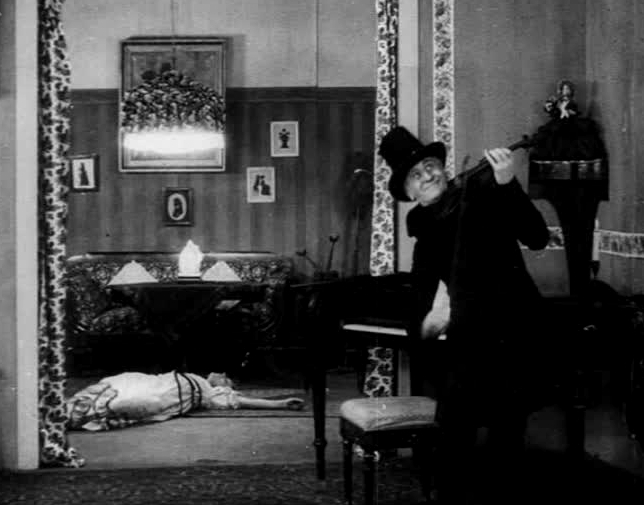
Os belos cenários em cenas de interiores são a melhor coisa de “Contos de Hoffmann” - um filme sobre um homem que não consegue ser feliz no amor. A versão que temos disponível, com 67 minutos, é considerada incompleta pelo site silentera.com, mas não há quase nada faltando e as histórias podem ser compreendidas sem problemas. Servindo mais como uma curiosidade e uma experiência, “Contos de Hoffmann” é para os mais loucos cinéfilos e os mais audaciosos aventureiros do cinema.

The gorgeous interior sets are the best thing about “Tales of Hoffmann” - a film about a man who can’t find happiness in his love life. The print we have available now, with 67 minutes, is considered incomplete by the site silentera.com, but there isn’t much missing and the stories can be understood perfectly. Serving as more of a curiosity and an experience, “Tales of Hoffmann” is for the craziest cinephiles and the most daring screen adventurers.

This is my contribution to the Robots in Film blogathon, hosted by Quiggy and Hamlette at The Midnight Drive-In and Hamlette’s Soliloquy.


Sunday, April 15, 2018

Papai Noel Conquista os Marcianos (1964) e outras vezes em que o cinema foi a Marte


Santa Claus Conquers the Martians (1964) and other film trips to Mars


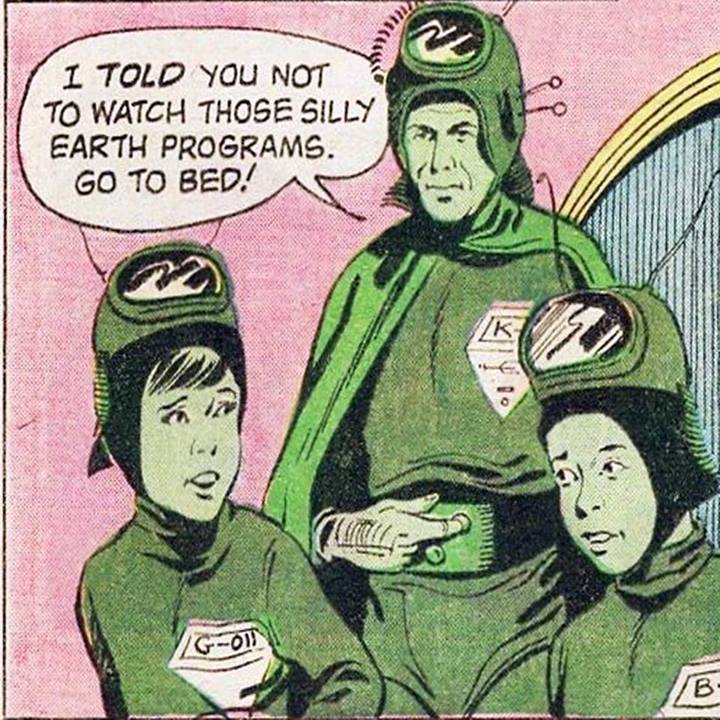
Um repórter da TV, falando diretamente da oficina do Papai Noel no Polo Norte, onde os ajudantes de Noel acabam de mostrar um boneco de um marciano, diz: “Se há [pessoas em Marte] eu espero que elas tenham alguém lá como você, Noel, para levar alegria e felicidade para todas as crianças marcianas”. Corte para os marcianos. Eles são exatamente como os bonecos e não, eles não têm um Papai Noel, mas têm a capacidade de ver os programas de TV da Terra. E, de acordo com um velho sábio, é a ausência de um Papai Noel – e a ausência de uma infância – que causa a tristeza nas crianças marcianas. Por isso, um grupo de marcianos decide vir à Terra para sequestrar o Papai Noel.

A TV reporter, speaking from Santa’s workshop at the North Pole, where the helpers just presented a Martian doll, says: “If there are [people on Mars] I hope they have someone like you up there, Santa, to bring joy and good cheer to all the Martian children”. Cut to the Martians. They are exactly as the doll predicted, and no, they not have a Santa Claus, but they are able to watch TV programs from Earth. And, according to a wise old man, it’s this lack of a Santa Claus – and the extended lack of a childhood – that is leaving Martian kids sad. So a group of Martians decide to come to Earth and kidnap Santa Claus.
É assim que tem início um marco do cinema ruim. Entre atores cobertos de maquiagem verde horrível, crianças sem expressão, piadas sem graça e o próprio Papai Noel, uma coisa salva “Papai Noel Conquista os Marcianos”: Marte. Não, o cenário não é bonito nem sequer bem elaborado, mas é algo que me fez pensar: por que o cinema é tão fascinado por Marte?

This is how a pinnacle of awful filmmaking unfolds. Among actors wearing horrible green make-up, children giving awful performances, unfunny jokes and Santa Claus himself, one thing kind of saves “Santa Claus Conquers the Martians”: Mars. No, the set is not gorgeous or even elaborate, but it is something that made me think: why is the film world so fascinated with Mars?
A resposta é simples: porque somos fascinados pelo desconhecido. E desde que Marte continue inexplorado, não há limite para a imaginação, e filmes no planeta vermelho podem ter praticamente qualquer coisa – até pílulas como refeição, homens verdes maus e um sistema que permite que os marcianos vejam programas de TV da Terra (por que eles não faziam seus próprios programas de TV?).

The answer is simple: because we are fascinated by the unknown. And as long as it remains unknown, there is no limit to imagination, and films set on Mars can have literally anything – even people who eat pills as meals, evil green men and some kind of system that allows Martians to watch TV shows made on Earth (why didn’t Martians make their own TV shows?).
O primeiro cineasta a ir a Marte, surpreendentemente, não foi Georges Méliès, mas Thomas Edison. Em 1910, Edison produziu “A Trip to Mars”, na qual um homem se torna astronauta após descobrir o pó da ‘gravidade reversa’, e em Marte ele encontra marcianos enormes que podem congelar os terráqueos com um simples sopro. Não há limites entre a ficção científica e o horror puro neste filme de cinco minutos.

The first filmmaker to go to Mars, surprisingly, wasn’t Georges Méliès, but Thomas Edison. In 1910, he produced “A Trip to Mars”, in which a man becomes an astronaut thanks to the discovery of the powder of ‘reverse gravity’ and finds out that Martians are HUGE and can freeze Earth people with only a blow. There is no boundary between science fiction and pure horror in this five-minute film.
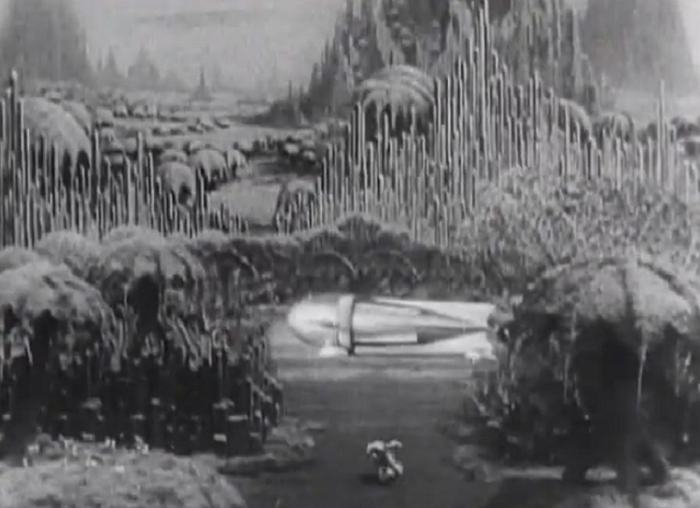
Em 1918, um grupo muito criativo de dinamarqueses fez o filme “Viagem a Marte” (ou “Himmelskibet”). Nele, um grupo de cientistas liderados por Avanti Planetaros (Gunnar Tolnaes) desafia todos os céticos e chegam a Marte em seis meses – que é, de fato, o tempo que uma viagem ao planeta vermelho demoraria hoje!

In 1918, a group of very creative Danish people made a film called “A Trip to Mars” (aka “Himmelskibet”). In it, a group of scientists led by Avanti Planetaros (Gunnar Tolnaes) challenges all naysayers and reach Mars in six months – what is, indeed, the time a trip to the Red Planet would take today!
Mas nada poderia prepará-los para o que encontram lá: uma sociedade evoluída, na qual todas as pessoas são vegetarianas e pacifistas, e a guerra e o sofrimento foram abolidos. O líder deles é um homem sábio e ninguém teme a morte. Os marcianos contam que eram como as pessoas da Terra, mas aprenderam a viver em paz. A mesma paz não é compartilhada com o cinema soviético, como podemos ver em “Aelita, Rainha de Marte”, de 1924.

But nothing could prepare them for what they find there: an evolved society, where all people are vegetarians and pacifists, and all war and suffering has been abolished. Their leader is a wise man and nobody fears death. The Martians tell them that they were once like people on Earth, but they learned to live better and in peace. The same peace is not shared with the Soviet cinema, as we can see in the 1924 production “Aelita, Queen of Mars”.
Himmelskibet
Himmelskibet
Aelita
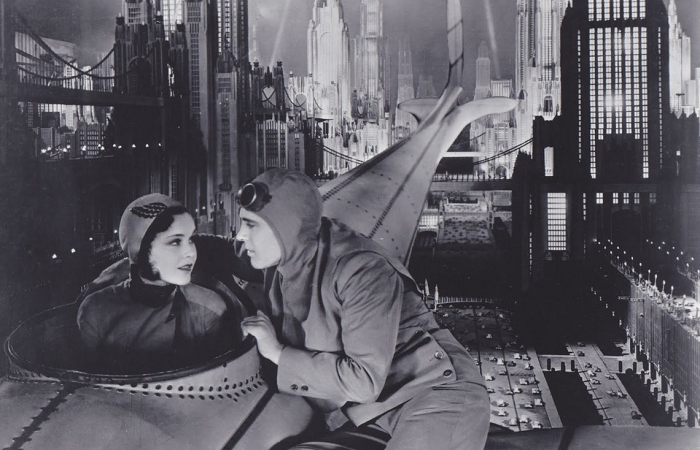
Com a chegada do som, Marte se tornou sinônimo de filme B. Dos anos 30 aos 70, quase todos os filmes sobre expedições a Marte eram seriados ou produções de baixo orçamento. “Fantasias de 1980”, de1930, é um dos mais estranhos de todos. Ele conta a história de um homem chamado J-21 (John Garrick), que, para impressionar a mulher que ama e ganhar o direito de se casar com ela, vai a Marte com um amigo e com um homem que foi morto em 1930 e ressuscitado pela ciência em 1980 (interpretado por El Brendel). Em Marte, eles descobrem uma sociedade em que todos têm um irmão gêmeo (um gêmeo bom e um mau), mas os marcianos são agradáveis, usam pouca roupa, o cenário é lindo e a líder é a rainha Loo Loo (Joyzelle Joyner). Para ser sincera, eu gostaria de visitar esta versão de Marte.

When sound came, Mars became a synonym of cheap movie. From the 1930s until the 1970s, almost all films about expeditions to Mars were serials or low-budget productions. “Just Imagine”, from 1930, is one of the weirdest of them all. Set in the 1980s, it tells the story of a man called J-21 (John Garrick), who, in order to impress his sweetheart and be allowed to marry her, goes to Mars with a friend and a man who was killed in 1930 and resurrected by science in 1980 (played by El Brendel). On Mars, they find a society in which everybody has a twin (one evil and one good), but the Martian people are welcoming, wear few clothes, the set is exquisite and their leader is queen Loo Loo (Joyzelle Joyner). To be sincere, I’d like to visit this version of Mars.
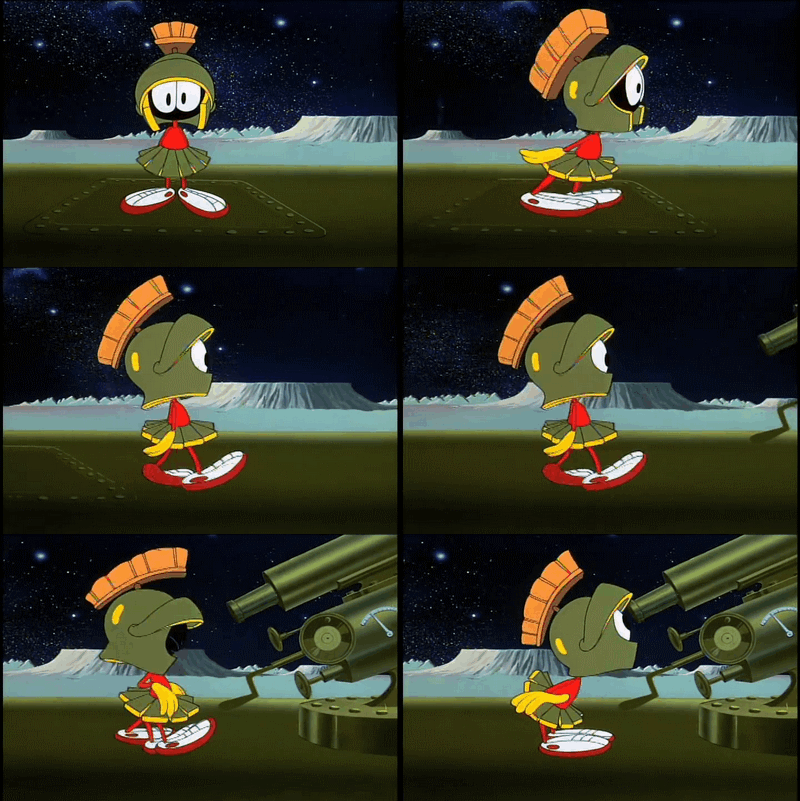
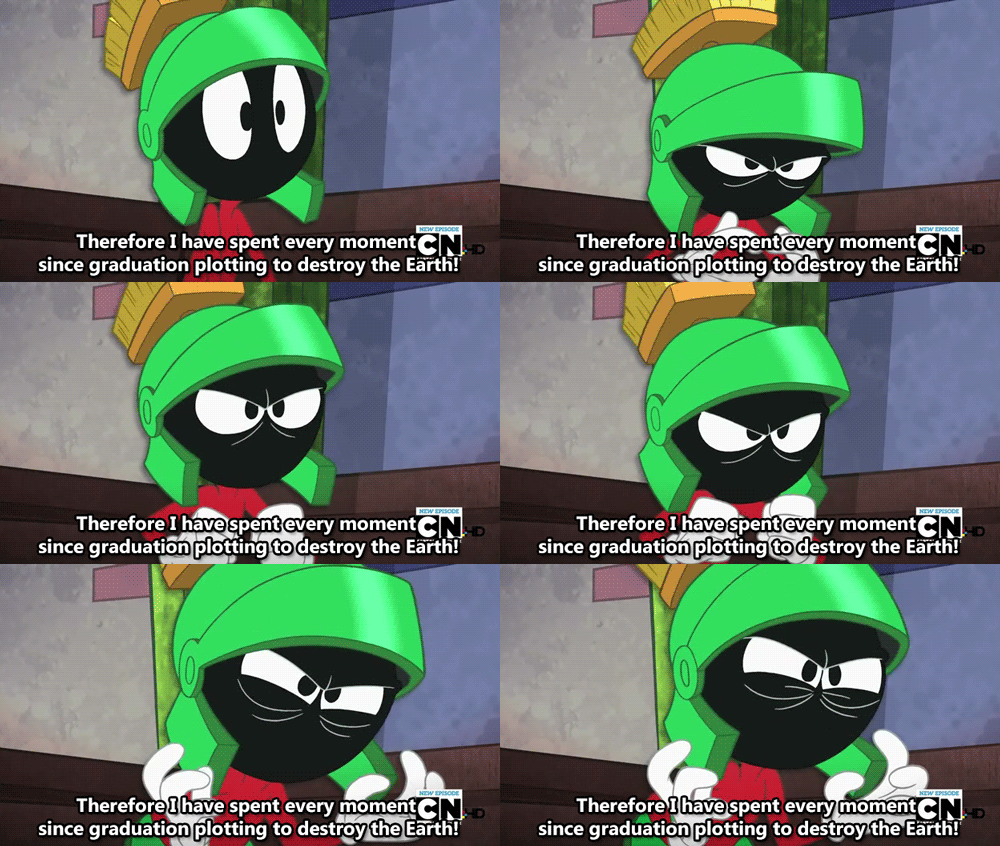
Buster Crabbe, como Flash Gordon, pode ter ido a Marte no seriado de 1938, mas os anos 50 foram a década que trouxe real interesse em viagens espaciais, tanto em filmes quanto em desenhos. Estudos traçam a origem da ideia de que alienígenas são ‘homenzinhos verdes’ até uma lenda contada no século XII, mas foi com as histórias de ficção científica dos anos 1940 e 50 que a ideia se popularizou. Por isso conhecemos Marvin o Marciano em 1948, e ele apareceu em outros desenhos nas décadas seguintes, incluindo o famoso curta “Duck Dodgers in the 24 ½th Century”, de 1953.

Buster-Crabbe-as-Flash-Gordon may have been to Mars in the 1938 serial, but the 1950s were the decade that brought real interest in space travelling, both on feature film and animation. Studies trace the idea of aliens being ‘little green men’ back to a legend told in the 12th century, but it was with science fiction stories from the 1940s and 50s that the idea became popular. No wonder we got Marvin the Martian in 1948, and he appeared in other cartoons the following decades, including the famous “Duck Dodgers in the 24 ½th  Century”, from 1953.
Marvin, 1948: nice skirt
Marvin, 2012: more relatable
Quem mais, além de Pernalonga, já foi a Marte? Ou melhor, quem ainda não foi a Marte? Tom e Jery já foram. Abbott e Costello também. Como vimos, Papai Noel também. Matt Damon esteve lá recentemente – e poderia ter ficado por lá. O que todos esses filmes sobre Marte têm a nos ensinar, não importa quão ridículos ou estúpidos eles sejam?

Who else, besides Bugs Bunny, has been to Mars? I mean, who hasn’t been to Mars? Tom and Jerry have. Abbott and Costello have. As we just saw, Santa Claus had. Matt Damon had been there recently – and he could have been left there. What all those films about Mars teach us, no matter how campy or stupid they are?
Eles nos ensinam que nós amamos o desconhecido e as muitas possibilidades que vêm com ele, mas só até certo ponto. Quando chegam a Marte, todos os personagens, em especial nos filmes mais antigos, encontram seres vivos semelhantes ao homem. Os marcianos podem falar outra língua, usar roupas engraçadas, ser maiores que nós, mas eles sempre se parecem conosco na ficção. Até Marvin tem um cachorro de estimação, o K-9! Explorar pode ser excitante, desde que estejamos no controle. Hoje sabemos que, se há vida em Marte, ela não se parece em nada com os humanos da Terra. Então, talvez, seja mais interessante para nós nos conformarmos com rostos familiares em planetas estranhos – talvez, nesta situação, a ficção científica será mais emocionante que a realidade.

They teach that we love the unknown and its many possibilities, but until a certain point. Once on Mars, almost all characters, especially in older films, find human-like life. Martians may speak a different language, dress funny, be bigger than us, but they always looked like us in fiction. Even Marvin has a dog, K-9, as a pet! Exploring is exciting, as long as we are in control. Today, we know that, if there is life on Mars, it’s nothing like humans on Earth. So, maybe, it’s more interesting for us to conform to familiar faces in strange planets – maybe, in this case, science fiction will be more exciting than reality.

This is my contribution to the Outer Space on Film blogathon, hosted by Debbie from Moon in Gemini.

Wednesday, June 24, 2015

A Dama de Xangai (1947) / The Lady from Shanghai (1947)

Era a noite de Natal de 2009. A única fonte de luz na sala escura era a tela da televisão. Foi então que eu vi um filme que me marcou profundamente, cujos diálogos e imagens continuam vivos, perfeitos, em minha mente, mesmo eu nunca mais tendo visto o filme novamente. Que obra me causou tamanha impressão? Aquela que considero a obra-prima de Orson Welles, o cineasta que foi de menino prodígio a maldito em uma só encarnação: “A Dama de Xangai”, de 1947.

It was Christmas night, 2009. The only source of light in the dark room was the TV screen. It was then that I watched a film that touched me deeply, whose dialogues and images remain alive, perfect, in my mind, even though I never rewatched it. Which movie caused this to me? The one I consider to be Orson Welles’ masterpiece - Welles, the filmmaker who went from prodigious child to maudit in a single incarnation - : “The Lady from Shanghai”, from 1947.

Em um podcast presente no curso “Investigating Film Noir”, o professor Richard L. Edwards e seu convidado chamam 1947 de “o ano do suicídio no cinema”. Não, nenhum artista / diretor se matou naquele ano, felizmente. O argumento é que o ano já começou com um personagem inesquecível que imagina como seria o mundo sem ele em “A Felicidade não se Compra”, e os cadáveres se amontoam em outras tantas produções do ano – em especial em filmes noir como “A Dama de Xangai”.

In a podcast that was parto f the online course “Investigating Film Noir”, professor Richard Edwards and his guest call 1947 “the year of suicide at the movies”. No, no artist / director committed suicide that year, thankfully. The explanation is that the year already started with an unforgettable character imagining how the world without him would be in “It’s a Wonderful Life”, and the corpses keep appearing in other movies released that year - especially in noirs like “The Lady from Shanghai”.

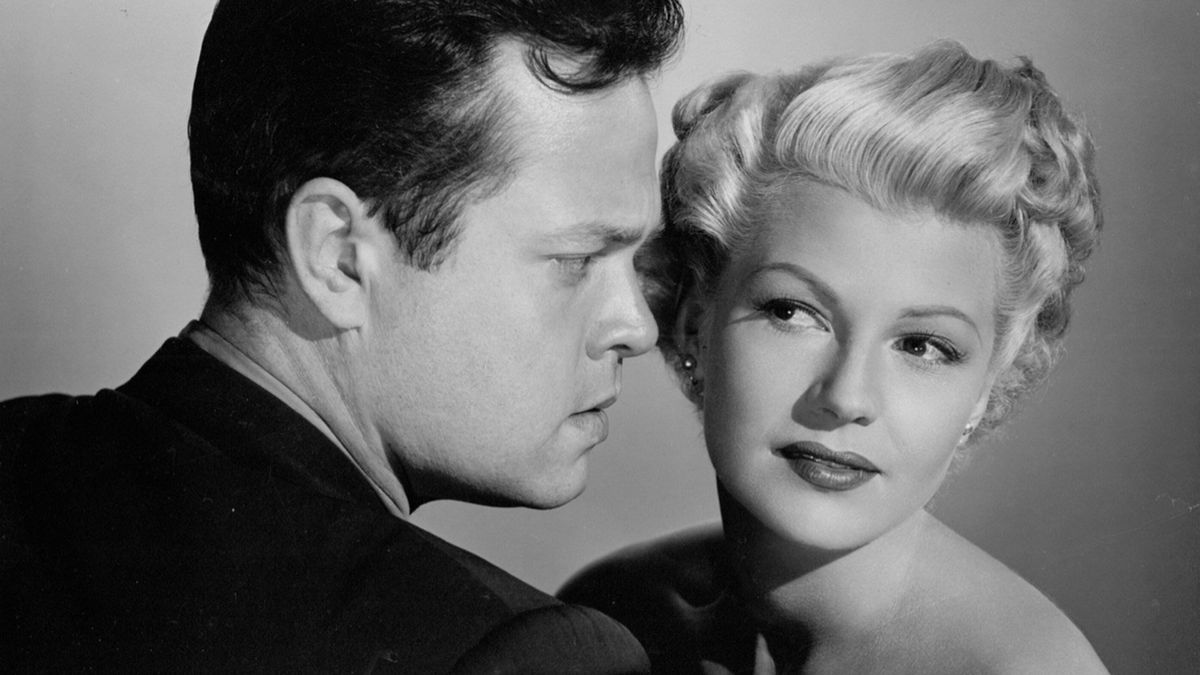
Além de dirigir, roteirizar e produzir o filme, Orson Welles interpreta o protagonista Michael O'Hara. Ele é um irlandês à procura de emprego que acaba contratado pelo advogado manco Arthur Bannister (Everett Sloane), após Michael salvar a jovem esposa de Arthur, Elsa (Rita Hayworth), de um assalto. A partir daí, uma trama de assassinato e luxúria se desenrola.

Besides directing, producing and writing the screenplay, Orson Welles plays the lead Michael O’Hara. He is an Irishman looking for a job who ends up being hired by the lawyer with a limp Arthur Bannister (Everett Sloane), after Michael saves Arthur’s young wife Elsa (Rita Hayworth) from a robbery. From then on, a plot full of lust and murder starts.

Uma das minhas cenas favoritas no filme cita o Brasil, e eu fiquei em êxtase quando isso aconteceu. É raro uma citação séria e profunda sobre este país tropical e caliente, mas encontramos isso no filme graças a um episódio interessante da história: em 1942, Orson Welles passou um tempo no Brasil filmando um documentário, “It's All True”, que nunca ficou pronto. Ele esteve em Fortaleza, e de lá tirou uma anedota perfeita para “A Dama de Xangai”. A anedota gira em torno de dezenas de tubarões que enlouquecem e começam a comer uns aos outros. Fascinante e premonitório.

One of my favorite scenes in the film mentions Brazil, and I was ecstactic when I saw it. It’s rare to see Brazil mentioned in a serious and deep way, but we find it in this movie thanks to an interesting episode in flm history: in 1942, Orson Welles spent some time in Brazil shooting a documentary, “It’s All True”, that was never finished. He went to Fortaleza, where he got a perfect story for “The Lady from Shanghai”. The story is about dozens of sharks that go mad and start eating each other. Fascinating and prescient.

Outra cena inesquecível envolve Arthur Bannister em um julgamento... usando ele mesmo como testemunha. Aqui não importam os argumentos, as perguntas, os diálogos: a cena existe apenas para mostrar a confusão deliciosa da justiça no mundo do filme noir (e, por que não?, no mundo real também) e é a situação ridícula ao extremo (sequer o juiz parecia interessado no caso).

Another unforgettable scene involves Arthur Bannister in a trial… calling himself as a witness. Here there is no importance given to the arguments, the questions, the dialogues: the scene exists simply to show the delicious mess that is justice in the world of film noir (and why not? In the real world as well) and it is ridiculous to the extreme (even the judge seemed nor interested in the case).

Mas a cena mais memorável ainda é a do clímax, que acontece em uma sala de espelhos em um circo itinerante. A fotografia da sequência é de tirar o fôlego, e em muitos momentos chama mais atenção que a própria ação. Os personagens se confundem e se multiplicam na sala de espelhos, formando um quebra-cabeça tão fascinante quanto a trama do filme (Welles se inspirou em “O Gabinete do Doutor Caligari”, 1920, para criar o cenário, e contou com ajuda do especialista em efeitos especiais Lawrence W. Butler, que trabalhou em “O Ladrão de Bagdá”, de 1940). O que estraga um pouco a cena (e eu só percebi após rever a cena múltiplas vezes) é a trilha sonora assustadora e pesada que começa quando tiros são disparados. A sequência teria ficado melhor sem música, apenas com o som dos tiros, e Orson Welles concordava com isso: o ator / diretor ficou furioso com a trilha sonora escolhida para a cena!

But the most memorable scene is the climax, in a fun house from a travelling show. The photography in the sequence is breathtaking and in many moments it calls more attention than the action itself. The characters multiply in the mirror room, creating a puzzle as fascinating as the plot of the film (Welles was inspired by “The Cabinet of Dr Caligari”, 1920, to create the set, and was helped by the special effects expert Lawrence W. Butler, who worked in “The Thief of Bagdad”, from 1940). What ruins the scene a little (and I only realized it after multiple viewings of the scene) is the heavy and scary soundtrack that begins the moment the first guns are shot. The sequence would have been better without music, only with the sound of the gunshots, and Orson Welles agreed with thay: the actor / director got mad at the soundtrack chosen for the scene!

A Dama de Xangai” é um filme de Orson Welles. Isso significa que a filmagem foi conturbada (com direito a alugar o iate de um sempre bêbado Errol Flynn no México), o filme ficou longo demais (155 minutos no corte de Welles), o estúdio fez muitas alterações na sala de edição e as plateias americanas não gostaram muito do resultado, enquanto os europeus adoraram. Mas, sendo um filme de Welles, pode esperar que, ainda mutilado, tenha indícios de obra-prima. Ao final, “A Dama de Xangai” se transformou nisto: uma soma de cenas memoráveis em um filme noir que, apesar de tudo, não deixa de ser brilhante.

The Lady from Shanghai” is a film by Orson Welles. This means that the shooting was complicated (in Mexico they even rented the yacht belonging to a permanently drunk Errol Flynn), the film was too long (155 minutes in Welles’ cut), the studio made many changes at the editing room and the American audience didn’t like it very much, while the Europeans loved it. But, being a film by Welles, you can always expect that, even mutilated, it contains traces of a masterpiece. In the end, “The Lady from Shanghai” became this: a sum of memorable scenes in a film noir that, despite it all, can be considered brilliant.


This is my contribution to the “…And Scene!” Blogathon, hosted by Sister Celluloid! And Cut!
Related Posts Plugin for WordPress, Blogger...