} Crítica Retrô: sci-fi

Tradutor / Translator / Traductor / Übersetzer / Traduttore / Traducteur / 翻訳者 / переводчик

Showing posts with label sci-fi. Show all posts

Saturday, December 21, 2024

Blade Runner (1982)

 No último ano e meio, fiz um curso online sobre cinema de ficção científica, focando em como o cinema previu a Inteligência Artificial e o Metaverso décadas antes de estas coisas existirem. Por causa desta aula decidi finalmente assistir a “Blade Runner - Caçador de Androides”, mesmo tendo recebido um imenso spoiler durante a aula. Como acredito que o mais importante não é o final, mas a jornada, decidi seguir com meu plano de ver o filme. Aqui estão minhas opiniões:


For the past year and a half, I’ve been taking an online course about sci-fi cinema, focusing on how movies predicted Artificial Intelligence and the Metaverse decades before those things appeared. Because of this class I decided to finally watch “Blade Runner”, even though in the class I received a massive spoiler. Believing that the most important isn’t the outcome, but the journey, I decided to nevertheless watch the movie. Here are my thoughts:


O ano é 2019. Há carros voadores em Los Angeles e o ser humano está colonizando outros planetas. Uma companhia vem criando Replicantes, androides que são similares às pessoas na aparência, força e inteligência, para serem usados como escravos. Depois de uma rebelião, fica acertado que Replicantes podem ficar só em outros planetas. Se um Replicante é encontrado na Terra, é eliminado por um caçador de androides.


The year is 2019. There are flying cars in Los Angeles and mankind is colonizing other planets. A company has created Replicants, androids that are similar to people in appearance, strength and intelligence, to be used as slaves. After a rebellion, Replicants need to stay only on other planets. If a Replicant is found on Earth, it is destroyed by the Blade Runners.


Um dos caçadores de androides é Deckard (Harrison Ford, apenas cinco anos depois de “Star Wars”), que descobre que memórias estão sendo implantadas nos Replicantes para deixá-los ainda mais parecidos com humanos. A missão dele é destruir quatro Replicantes - sem criar laços com eles, o que se mostra impossível.


Such a Blade Runner is Deckard (Harrison Ford, only five years after “Star Wars”), who finds out that memories are being implanted in the Replicants to make them even closer to humans. His mission is to destroy four Replicants - without creating bonds with them, which proves impossible.


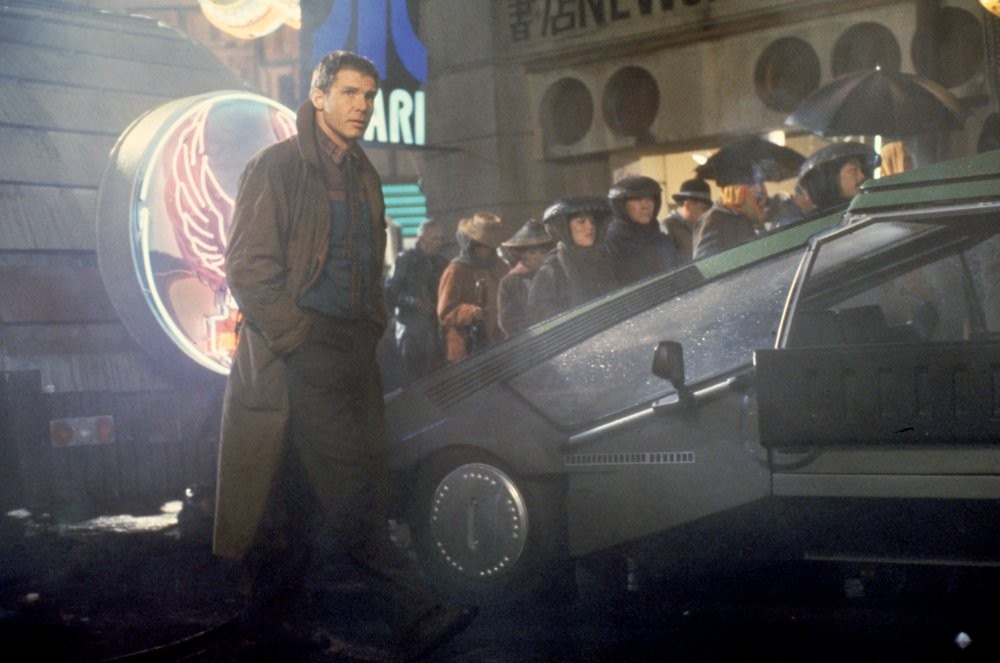
Filmes ambientados no futuro costumam ser demasiado otimistas quanto às coisas que alcançaremos até que o futuro se torne presente. Filmes e séries de TV de ficção científica como “Blade Runner” previram que teríamos carros voadores no século XXI, assim como prédios ultra-altos, chamadas de vídeo e equipamentos que respondem a comandos de voz - pelo menos nestes eles acertaram! Outra coisa que o filme acertou foi no multiculturalismo: há pessoas de todo lugar e etnia na Los Angeles de 2019. Eles não previram, entretanto, a xenofobia que infelizmente viria junto.


Films set in the future usually are over-optimistic with all the things that will be accomplished until the future becomes present. Sci-fi movies and TV shows like “Blade Runner” predicted that we’d have flying cars in the 21st century, as well as ultra-high buildings, video calls and equipments that answer to voice commands - at least these they got right! Another thing that the movie got right was multiculturalism: there are people from all places and ethnicities in 2019 Los Angeles. They didn’t predict, however, the xenophobia that would unfortunately come with it.


“Blade Runner” foi produzido por Run Run Shaw, que viveu até os 106 anos e em sua longuíssima vida produziu 380 filmes. O diretor Ridley Scott considerou rodar o filme em Hong Kong, onde Shaw mantinha seus negócios, mas teve de se contentar em filmar em Hollywood. O filme estourou o orçamento e o clima no set era tenso, especialmente entre Scott e o astro Harrison Ford.


“Blade Runner” was produced by Run Run Shaw, who lived to be 106 and in his long long life produced 380 films. The director Ridley Scott considered shooting the movie in Hong Kong, where Shaw had his enterprises, but had to film in Hollywood nevertheless. The movie ended up being over-budget and the mood on the set was tense, especially between Scott and the star Harrison Ford.


O roteiro é de Hampton Fancher e David Peoples, baseado no romance “Androides sonham com ovelhas elétricas?”, de Philip K. Dick, de 1968. O filme começou a ser planejado em 1975. O autor do romance aprovou e elogiou a escolha de elenco, dizendo que tanto Harrison Ford quanto Rutger Hauer eram perfeitos para os papéis. Infelizmente, Philip K. Dick nunca viu o filme completo, pois faleceu no começo de 1982, ano de estreia do filme.


The screenplay is by Hampton Fancher and David Peoples, based on the novel “Do androids dream of electric sheep?” by Philip K. Dick, from 1968. The film started being planned in 1975. The author of the novel approved and highly praised the casting, claiming that both Harrison Ford and Rutger Hauer were perfect for their roles. Unfortunately, Philip K. Dick never saw the completed film, as he died in early 1982, the year the movie was released.


“Blade Runner” inaugurou a tendência de um filme ter mais de uma versão final. Aqui há duas: uma com e outra sem narração, e os finais também diferem. Em 2007 o público viu a “versão do diretor”, vinda de um negativo que não foi apresentado ao público em 1982.


“Blade Runner” inaugurated the tendency to have more than one final version. There are two: the one with and the one without narration, and they have different endings. In 2007 the audience saw the “director’s cut”, coming from a negative that was not presented to the public back in 1982.


A música foi “composta, arranjada, executada e produzida por” Vangelis, um mestre da música eletrônica. Devemos agradecer a ele pela criação de um clima perfeito durante o assassinato de um Replicante - ou, como é dito dentro do filme, uma “aposentadoria”. Há também ótima música quando Rachael (Sean Young) desfaz seu penteado - que foi inspirado em Joan Crawford!-, antes de beijar Deckard. Surpreendentemente, a cena mais emocionante da morte de Batty (Rutger Hauer) não é acompanhada de música.


The music was “composed, arranged, performed and produced by” Vangelis, a master in electronic music. We should thank him for the moody music during the assassination of a Replicant - or, as it’s called within the film, a “retirement”. There is also great music when Rachael (Sean Young) undoes her hair - that was inspired by Joan Crawford! -, before kissing Deckard. Surprisingly, the more emotional scene of  Batty’s (Rutger Hauer) death has no soundtrack.



Fiquei surpresa ao notar que “Blade Runner” não é um filme muito longo. Com quase duas horas de projeção (118 minutos), é muito mais curto que outras ficções científicas feitas mais ou menos na mesma época, como “2001: uma Odisseia no Espaço” (149 minutos de duração), e até mesmo a sequência “Blade Runner 2049”, que tem 164 minutos de duração!


I was surprised that “Blade Runner” isn’t a very long movie. Clocking in at nearly two hours of projection (118 minutes), it’s much shorter than other sci-fi movies made around the same time, such as “2001: a Space Odyssey” (149 minutes long), and even the sequel “Blade Runner 2049”, that is 164 minutes long!


Deckard diz que Replicantes são como quaisquer outras máquinas: podem ser benéficas ou uma ameaça. O mesmo pode ser dito sobre todas as novas tecnologias, incluindo a IA e o Metaverso. Não é a tecnologia que é inerentemente boa ou ruim, é nosso uso delas. Se tivermos que tirar uma lição de “Blade Runner”, esta é uma boa.


Deckard says that Replicants are like any other machine: either a benefit or a hazard. The same can be said about all new technologies, including AI and the Metaverse. It’s not the technology that is inherently good or bad, it’s how we use them. If we have to come up with a lesson from “Blade Runner”, this is as good as any other.


Friday, February 23, 2024

Zardoz (1974)


Eu ouvi falar pela primeira vez sobre o filme “Zardoz” (2974), estrelando Sean Connery, quando foi exibido numa sessão da meia-noite no Festival de Cinema do TCM em 2017. Estas sessões da meia-noite são eventos divertidos que exibem aqueles filmes que de tão ruins, chegam a ser bons. Na ocasião, uma das cinéfilas presentes até trouxe biscoitos de Zardoz para a plateia. Eu não tinha biscoitos para comer quando assisti a Zardoz, mas certamente tive uma experiência interessante.


I first heard about the movie “Zardoz” (1974), starring Sean Connery, when it was shown in a midnight screening at the TCM Film Festival in 2017. These midnight screening are fun-filled events showcasing so-bad-it’s-good movies. At the occasion, a film fan even brought Zardoz cookies for the audience. I had no cookies when watching “Zardoz”, but I certainly had an interesting experience.

Um ser imortal. Um Deus falso por ocupação e um ilusionista por inclinação. Este é Arthur Frayn (Niall Buggy), que vive em uma imensa cabeça flutuante – Zardoz – que dá ordens a soldados parcialmente vestidos e depois vomita armas. Arthur é assassinado pelo exterminador Zed (Sean Connery), que então vai para o Vortex, um local mítico onde todos podem controlá-lo com um único olhar.   


An immortal being. A fake God by occupation and a magician by inclination. This is Arthur Frayn (Niall Buggy), living in a huge floating head – Zardoz – that gives orders to barely-dressed soldiers and then vomits guns. Arthur is killed by the exterminator Zed (Sean Connery), who then goes to the Vortex, a mythical place where everybody can control him with only one look.

No Vortex, onde as pessoas comem pão verde, Zed permanece para ser estudado por May (Sara Kestelman), que está pesquisando sobre sexualidade humana. Ele fica lá apesar dos protestos de Consuella (Charlotte Rampling), que sabe que “o monstro”, que é como se referem a Zed, causará muitos desentendimentos. A May são dados sete dias para concluir sua pesquisa, e depois disso Zeb será sacrificado. Mas ele tem uma missão muito maior a cumprir.


At the Vortex, where they eat green bread, Zed stays to be studied by May (Sara Kestelman), who is researching about human sexuality. He stays despite Consuella’s (Charlotte Rampling) protests, as she knows that “the monster”, as they call Zed, will cause a lot of disagreements. May is given seven days to conclude her research, and after that Zed will be sacrificed. But he has a much bigger mission to accomplish.

Há infelicidade no Vortex porque não existe a morte. Envelhecer é uma punição e as pessoas ou ficam apáticas ou vivem como boêmios sofredores. Zed pode ser o salvador deles, fazendo uma conexão bem óbvia entre Zardoz e O Mágico de Oz.


There is unhappiness in the Vortex because there is no death. Aging is a punishment and the people either become apathetic or live as suffering bohemians. Zed may be their savior, as he makes a quite obvious connection between Zardoz and The Wizard of Oz.

“Zardoz” se passa no ano 2293. A ficção científica tem sido desde os anos 1950 uma área perfeita para a imaginação fluir livremente, mesmo em filmes de baixo orçamento. Na época, mais e mais pessoas se convenceram de que podiam fazer filmes, sendo diretores, atores ou acumulando funções. A paixão pelo cinema fez com que pessoas deixassem de ser meros espectadores e se tornassem cineastas – veja, por exemplo, o inesquecível Ed Wood. “Zardoz” é um descendente direto do cinema de Wood.  


“Zardoz” is set in the year 2293. Science fiction had been since the 1950s a perfect area for the imagination to flow freely, even in B-movies. At that time, more and more people believed they could make films, as directors, actors or multi-hyphenates. The passion for film made people stop being only spectators and converted them into filmmakers – see, for instance, the unforgettable Ed Wood. “Zardoz” is a direct descendant of Wood’s cinema.

Mas há uma coisa bacana que podemos encontrar mesmo nos piores filmes de ficção científica: geringonças legais. Em “Zardoz” todo mundo do Vortex tem um anel que fala, responde a perguntas e projeta hologramas. Descobrimos com uma simples busca no Google que companhias da área de tecnologia já estão fazendo “smart rings”, ou anéis digitais. Tais objetos servem para medir estatísticas de saúde, como padrões de sono, ritmo cardíaco, nível de estresse e temperatura corporal.


But one nice thing we can find even in the worst sci-fi movies are the cool gadgets. In “Zardoz” everybody in the Vortex has a ring that talks, answers questions and projects holograms. We learn from one simple Google search that tech companies are already making “smart rings”. Such gadgets serve to measure health statistics, such as sleep pattern, cardiac rhythm, stress level and body temperature.

Sean Connery teve dificuldades para encontrar bons papéis depois de anos interpretando James Bond. Aqui, ele está ou usando o uniforme ridículo dos exterminadores ou disfarçado de noiva! Sua sorte só iria mudar em meados dos anos 80, com “O Nome da Rosa” – pelo qual ele ganhou um Bafta – e “Os Intocáveis” – que lhe rendeu um Oscar. A outra protagonista de “Zardoz”, Charlotte Rampling, não estava tentando se aventurar em papéis diferentes, mas fez o filme porque se tratava de “poesia. Ele claramente declara: ame seu corpo, ame a natureza, e ame sua origem”.


Sean Connery had difficulty finding good roles after his James Bond years. Here, he is either wearing the ridiculous exterminator uniform or is disguised as a bride! His luck would only change in the mid-80s, with “The Name of the Rose” – for which he won a Bafta – and “The Untouchables” – that gave him an Oscar. The other “Zardoz” lead, Charlotte Rampling, was not trying to venture into different roles, but did the film because it was “poetry. It clearly states: love your body, love nature, and love what you come from”.

O filme foi escrito, produzido e dirigido por John Boorman. Ele fez grande sucesso em 1972 com “Amargo Pesadelo” e depois tentou filmar uma adaptação da saga de O Senhor dos Anéis, e foi durante a preparação para este filme cancelado que ele começou a escrever “Zardoz”. Ultraconfiante, Boorman definiu sua criação como “mais perto da melhor literatura de ficção científica que é mais metafísica. A maioria da ficção científica que dá um mau nome ao gênero é de histórias de aventuras em trajes especiais”.


The movie was written, produced and directed by John Boorman. He had a big hit in 1972 with “Deliverance” and then had tried to film an adaptation of the Lord of the Rings saga, and it was during the preparation for his aborted movie that he started writing “Zardoz”. Über-confident, Boorman defined his creation as “closer to the better science fiction literature which is more metaphysical. Most of the science fiction that gives the genre a bad name is adventure stories in space clothes”.

Faz muito sentido quando descobrimos que John Boorman confessou ter usado drogas enquanto escrevia e dirigia várias cenas do filme. Também faz sentido que o figurino hediondo tenha sido desenhado pela esposa de Boorman, Christel Kruse, e não um estilista profissional. Um filme com status de cult, mas ao qual eu não quero assistir de novo: como eu o considerei longo demais e às vezes sem sentido, estou feliz por finalmente riscar “Zardoz” da minha lista – com ou sem biscoitos.


It makes a lot of sense when we learn that John Boorman confessed he used drugs while writing and directing several scenes in the movie. It also makes sense that the infamous costumes were made by Boorman’s wife, Christel Kruse, not a professional stylist. A film with a cult following, but one I don’t want to watch again: as I felt it to be too long and sometimes pointless, I’m happy to say I’ve experienced “Zardoz” – with or without cookies.


This is my contribution to the Sixth So Bad It’s Good Blogathon, hosted by Rebecca at Taking Up Room.

Friday, April 28, 2023

Aelita – A Rainha de Marte (1924) / Aelita, Queen of Mars (1924)

 ESTA CRÍTICA TEM SPOILERS / THIS REVIEW HAS SPOILERS


Marte! O sonho de muitos aventureiros, astronautas e lunáticos. Um local que já foi visitado, através do cinema: eu já escrevi sobre viagens cinematográficas para Marte antes, mas há uma lista infindável de filmes com passagem por Marte. Um destes filmes, feito na União Soviética na era muda, é o estranho filme de propaganda “Aelita – A Rainha de Marte”, de 1924.

Mars! The dream of many adventurers, astronauts and lunatics. A place that was already visited, through cinema: I’ve talked about movie trips to Mars before, but there is a never-ending list of films with a passage to Mars. One of these films, made in the Soviet Union in the silent era, is the strange propaganda flick “Aelita, Queen of Mars”, from 1924.

Em Marte, a rainha Aelita (Yuliya SoIntseva) vê num telescópio os habitantes do planeta vizinho, a Terra, com genuína curiosidade. Ela se apaixona por um dos terráqueos. Enquanto isso, na Terra, muitas pessoas em laboratórios recebem uma estranha mensagem: “Anta Odeli Uta”. Acreditando ser uma mensagem de Marte, o engenheiro Loss (Nikolai Tsereteli) decide construir uma nave espacial para visitar o planeta vermelho.

On Mars, Queen Aelita (Yuliya SoIntseva) sees throw a telescope the inhabitants of the neighboring planet, Earth, with genuine curiosity. She falls in love with one of them. Meanwhile, on Earth, several people in laboratories receive a strange message: “Anta Odeli Uta”. Believing it’s a message from Mars, the engineer Loss (Nikolai Tsereteli) decides to build a spaceship to visit the red planet.


Depois de seis meses trabalhando numa usina, Loss volta para casa e encontra a esposa Natasha (Valentina Kuindhzi) numa pose comprometedora com um canalha. Loss atira em Natasha e decide que é hora de ir para Marte. No planeta vermelho, ele encontra Aelita e causa profundo impacto com mudanças para os menos afortunados.

After six months working on a power plant, Loss returns home to find his wife Natasha (Valentina Kuindhzi) in a compromising pose with a scoundrel. Loss shoots Natasha and decides it’s the ideal time to go to Mars. On the red planet, he meets Aelita and has a deep impact on changing how things happen there for the less powerful.


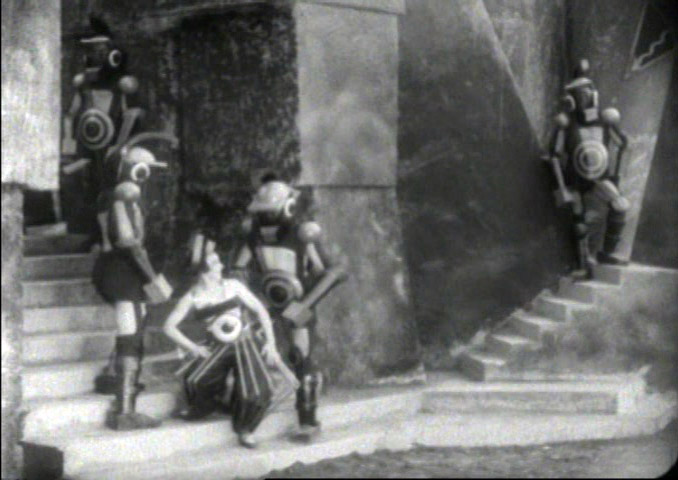
Marte em “Aelita” é futurístico, mas não muito. As roupas usadas pelos marcianos são brilhantes e curiosas – mais curiosas que belas. Não há equipamentos futurísticos mostrados além do estranho telescópio do começo do filme. É futurístico em Marte, mas a norma social vigente é construída em cima da escravidão.

Mars in “Aelita” is futuristic, but not so much. The clothes worn by the Martians are shiny and curious – more curious than charming. There is no futuristic gadget shown other than the weird-looking telescope from the beginning. It’s futuristic on Mars, but the societal norm is built on slavery.


Loss acredita que pode ajudar a “reconstruir a Rússida” com sua missão para Marte. A mensagem “Anta Odeli Uta” é recebida em quatro de dezembro de 1921: apenas quatro anos após a Revolução Russa. Neste sentido, “Aelita” é um tipo estranhíssimo de propaganda, pois os russos vão para Marte para ajudar a estabelecer uma União de Repúblicas Socialistas Soviéticas por lá.

Loss believes he can help “reconstruct Russia” with his mission to Mars. The message “Anta Odeli Uta” is received on December 4th, 1921: only four years after the Russian Revolution. In this sense, “Aelita” is the oddest kind of propaganda, as the Russians who go to Mars help establish a Union of Socialist Soviet Republics there.

Yuliya SoIntseva é mais lembrada hoje como a primeira mulher a ganhar o prêmio de Melhor Direção no Festival de Cinema de Cannes, com o filme “A Epopeia dos Anos de Fogo” (1961). Yuliya foi casada com o diretor Aleksandr Dovzhenko e estreou como assistente de direção no seu filme “Terra” (1930), hoje um clássico cult. “Aelita” foi o primeiro trabalho de Yuliya como atriz, e ela apareceu em outros sete filmes até 1930, quando fez a mudança para trás das câmeras. Yuliya dirigiu 14 filmes entre 1939 e 1980.

Yuliya SoIntseva is best remembered today as the first female filmmaker to win the Best Director Award at the Cannes Film Festival, with the film “The Story of the Flaming Years” (1961). Yuliya was married to the director Aleksandr Dovzhenko and debuted as assistant director in his film “Earth” (1930), now a cult classic. “Aelita” was Yuliya’s first role as an actress, and she appeared in seven more films until 1930, when she went behind the cameras for good. Yuliya directed 14 films between 1939 and 1980.

O director Yakov Protazanov estava voltando do exílio. Ele havia deixado o país durante a Revolução Russa, e fez filmes na França e na Alemanha enquanto estava exilado. Protazanov fazia filmes desde 1909, quando dirigiu seu primeiro curta, e escreveu boa parte dos filmes que dirigiu.

Director Yakov Protazanov was coming back from exile. He had fled the country during the Russian Revolution, and made films in France and Germany while on exile. Protazanov had been making films since 1909, when he directed his first short, and he had written a good amount of the movies he directed.

Algo que ninguém esperava: o filme é baseado num romance de Tolstoy. Mas não é Lev Tolstoy: o autor é Alexei Tolstoy, um homem provavelmente assombrado por ter o mesmo nome de um autor conhecidíssimo. Mais lembrado hoje exatamente por escrever o material que deu origem a “Aelita”, Alexei Tolstoy é também o autor de “The Golden Key, or Buratino’s Adventure”, algo que surgiu como um fanfic de Pinóquio.

Something nobody expected: the movie is based on a novel by Tolstoy. But it’s not Leo Tolstoy: the author is Alexei Tolstoy, a man probably plagued by having the same last name of a remarkable writer. Best remembered today exactly for writing the material that gave birth to “Aelita”, Alexei Tolstoy is also the writer of “The Golden Key, or Buratino’s Adventure”, something that was originally a Pinocchio fanfic.

Eu ouvi falar tanto de “Aelita” nos últimos anos e estava animada por finalmente poder conferir o filme. Infelizmente, minhas expectativas eram altas demais, e acabei a sessão frustrada. Eu esperava mais cenas em Marte e, o pior de tudo, o filme tem meu tipo mais odiado de Deus ex machina: a resolução “foi tudo um sonho” – neste caso, foi tudo um sonho acordado. Eu reconheço a importância de “Aelita” para a história da ficção científica e como o filme influenciou o retrato de Marte e dos marcianos em filmes subsequentes. Há muito para se gostar em “Aelita” – isto é, se você não estiver esperando um filme só sobre Marte. É possível fazer uma viagem melhor para Marte em outros filmes.

I’ve heard about “Aelita” so much over the years and was excited to finally see it. Unfortunately, my high expectations weren’t met and I left the session underwhelmed. I expected more scenes in Mars, and, the worst of all, the movie had my least favorite kind of Deus ex machina: the “it was all a dream” resolution – in this case, it was all a daydream.  I recognize the importance “Aelita” has in sci-fi history and in shaping the overall look of Mars and Martians in future films. There is plenty to like in “Aelita” – that is, if you don’t come expecting a huge Mars festival. You can take a better trip to Mars elsewhere..


This is my contribution to the Futurethon, hosted by Gill and Barry at Realweegiemidget Reviews and Cinematic Catharsis

Thursday, February 20, 2020

Fantasias de 1980 (1930) / Just Imagine (1930)


Imagine como o mundo vai ser daqui a 50 anos. Veículos voadores são obrigatórios em todas as previsões futurísticas, mas queremos mais: como as pessoas vão se vestir? Que tipo de música estará na moda? As pessoas serão conhecidas pelo nome ou por um número? Como será o namoro? Nós visitaremos outros planetas? Todas estas questões são respondidas em “Fantasias de 1980” – mas quase nenhuma projeção deste estranho filme se concretizou.

Just imagine how the world will be 50 years from now. Flying vehicles are a must in all futuristic predictions, but we want more: how will people dress? Which kind of music will be in vogue? Will people be called by names or numbers? How will dating be like? Will we visit other planets? All these questions are answered in “Just Imagine” – but almost nothing predicted by this strange film became true.


Nós não sabemos o porquê, mas o filme previu que em 1980 o governo diria às pessoas com quem elas deveriam se casar. Ah, e as pessoas teriam letras e números para identificá-las ao invés de nomes. E é assim que somos apresentados a LN-18 (Maureen O’Sullivan) e J-21 (John Garrick), dois apaixonados que, de acordo com o governo, não foram feitos um para o outro. Ele gosta dela porque ela é uma “garota à moda antiga”, como aquelas de 1930 – como a avó de J-21, ele diz! Ele até canta uma canção sobre garotas à moda antiga...

We don't know why, but the film predicted that in 1980 the government would tell people who they must marry. And, oh, people would have letters and numbers to identify them, not names. So this is how we're introduced to LN-18 (Maureen O'Sullivan) and J-21 (John Garrick), two lovebirds who, according to the government, weren't made for each other. He likes her because she's an “old-fashioned girl”, like the ones from the 1930s – like J-21's grandmother, he says! He even sings about the old-fashioned gals...


Depois da música, J-21 ainda está triste porque não pode se casar com LN-18, mas seu colega de quarto o convida para ver um cientista tentar um feito extraordinário: trazer um homem de volta à vida! Em um laboratório cheio de luzes e equipamentos, o experimento é um sucesso, e um homem (El Brendel) que foi atingido por um raio e morto durante uma partida de golfe em 1930 é ressuscitado. O cientista liberta sua cobaia, e o pobre homem é recebido por J-21 e seu amigo RT-42 (Frank Albertson), que apresentam o novo mundo a ele, e ele escolhe o “nome” Single-O.

After the song, J-21 is still sad because he can't marry LN-18, but his roommate invites him to see a fellow scientist try something astounding: to bring a dead man back to life! In a laboratory full of lights and paraphernalia, the experiment is successful, and a man (El Brendel) who was struck by lightning and killed during a game of golf in 1930 is resurrected. The scientist sets his experiment free, and the poor man is greeted by J-21 and his friend RT-42 (Frank Albertson), who present the new world to him, and he chooses the “name” Single-O.


A comida e a bebida foram substituídas por pílulas saborizadas. Bebês são feitos e entregues por máquinas após o casal depositar uma moeda e escolher o gênero da criança. Por causa destas mudanças, Single-O diz sem parar “Dê-me os velhos tempos de volta”, e seus amigos modernos acham graça do saudosismo dele.

Food and drinks were replaced by flavored pills. Babies are made and delivered by machines after the couple puts a coin and selects the gender of the kid. Because of these changes, Single-O keeps repeating “Give me the good old days”, which amuses his modern-day pals.


A amiga de LN-18, D-6 (a adorável Marjorie White), decide ajudá-la e organiza um encontro com J-21. Quando este encontro é interrompido pelo noivo que o governo escolheu para LN-18, J-21 fica com o coração partido. Entretanto, um estranho o chama e o leva até um cientista que oferece a ele... uma viagem para Marte! J-21 aceita a missão, porque assim ele mostrará seu valor e o tribunal terá de deixá-lo se casar com LN-18.

LN-18’s friend D-6 (the lovely Marjorie White) helps her and stages a meeting with J-21. When this meeting is interrupted by LN-18’s government-assigned fiancé, J-21 is left heartbroken. However, a stranger approaches him and takes him to a scientist who offers him… a trip to Mars! J-21 accepts the mission, because this will show how distinguished he is, and the tribunal will have to let him marry LN-18.


J-21, RT-42 e Single-O – como clandestine – vão a Marte num foguete. Depois de um mês – um intervalo de tempo ridículo, eu sei – eles chegam a Marte, e aqui algumas cópias do filme passam a ser em tons de sépia. Nossos heróis sépia – com trajes especiais vagabundos e nenhum capacete – encontram marcianos em tons de sépia com roupas minúsculas e linguagem difícil – eles só se comunicam através de gestos e gritos – e todos têm um gêmeo do mal! Isso é muito diferente de, digamos, como os marcianos foram retratados em “Himmelskibet” (1918), onde eram vegetarianos e pacifistas.

J-21, RT-42 and Single-O – as a stowaway – go to Mars on a rocket. After one month – a ridiculous amount of time, I know – they get to Mars, and here some copies of the film become sepia-toned. Our sepia heroes – with lousy special suits and no helmet at all – meet sepia-toned Martians with minimum clothing and poor language skills – they only communicate through gestures and screams – and everybody has an evil twin! This is very different from, let’s say, the Martians in “Himmelskibet” (1918), who were vegetarians and pacifists.


Como esse filme tão ruim chega a ser bom? Primeiro, é um musical sem músicas interessantes. Claro, John Garrick é um bom cantor, mas nos anos 30 havia muitos como ele em Hollywood. Segundo, é uma comédia, e com El Brendel como alívio cômico. Brendel é pouquíssimo lembrado atualmente, e algumas de suas piadas são tão bobas que são engraçadas. “Fantasias de 1980” é o filme mais conhecido de Brendel, mas ele também pode ser visto em um pequeno papel cômico em “Asas” (1927).

What makes this movie so bad it’s actually good? First, it’s a musical without any memorable tunes. Sure, John Garrick is a fine singer, but back at the 1930s there were many like him in Hollywood. Second, it’s a comedy, and with El Brendel as comic relief. Brendel is hardly remembered nowadays, and some of his jokes and gags are so silly that they become entertaining. “Just Imagine” is Brendel’s best known film, but he can also be seen in a small comic relief role in “Wings” (1927).


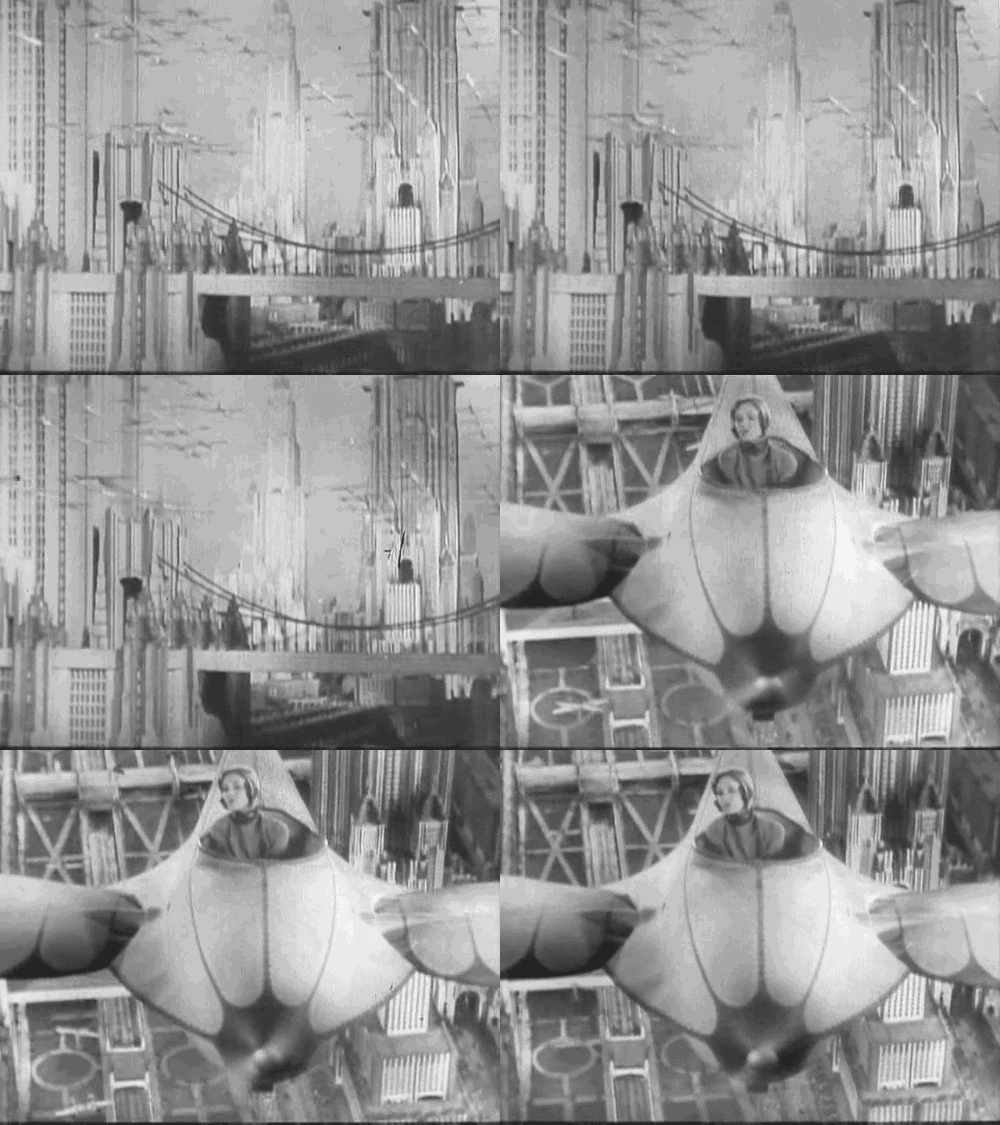
Mesmo sendo um filme bobinho, “Fantasias de 1980” tem um estilo impressionante. Ele foi indicado ao Oscar de Direção de Arte, e a metrópole de 1980 realmente se parece com, bem, a cidade de “Metrópolis” (1927). Além disso, o filme tem a honra de ser o primeiro filme de ficção científica sonoro – e também o primeiro musical de ficção científica! – feito em Hollywood. E ele também foi o último filme de ficção científica de grande orçamento feito por um grande estúdio – no caso a Fox – até os anos 50. Todas as outras tentativas de se fazer ficção científica nas décadas de 30 e 40 foram de estúdios pequenos, e algumas sequências, tomadas e cenários de “Fantasias de 1980” foram reciclados por estes estúdios em suas produções.

Even though it’s a silly movie, “Just Imagine” has an impressive look. It was nominated for an Art Direction Oscar, and the 1980 metropolis really looks like, well, the city from “Metropolis” (1927). Besides that, the film has the honor of being the first science fiction talkie – and also the first science fiction musical! – made in Hollywood. And it was also the last big-budget sci-fi made by a big studio – Fox here – until the 1950s. All other attempts of doing sci-fi in the 30s and 40s were by poverty row studios, and some sequences, shots and sets from “Just Imagine” were recycled by those studios in their productions.


Como é dito no começo do filme, muitas coisas podem mudar em 50 anos. Os cineastas certamente não contaram com mais uma guerra mundial, nem mesmo com mudanças na música e na moda. Mesmo assim, algumas previsões se mostraram corretas. Há telas que mostram o lado de fora para quem está dentro de um apartamento, como as câmeras de monitoramento que temos agora. Um vestido formal se transforma em camisola, em um momento muito pre-Code. Em 1930, o filme foi uma curiosa previsão do futuro, mas hoje, em 2020, é um também curioso vislumbre do passado.

Like it's said in the beginning of the film, a lot of things can change in 50 years. The filmmakers certainly didn't count on another world war, not even with the changes on music and fashion. Nevertheless, they predicted some things right. There are screens that show the outdoors to people indoors, like the monitoring cameras we have now. A dinner dress transforms itself into a nightgown, in a moment that screams pre-Code! In 1930, the film was a curious prediction of the future, but now, in 2020, it’s an equally curious glimpse of the past.

This is my contribution to the Second So Bad It’s Good blogathon, hosted by Rebecca at Taking Up Room.

"Just Imagine" can be found on YouTube.


Related Posts Plugin for WordPress, Blogger...