} Crítica Retrô: Roscoe Fatty Arbuckle

Tradutor / Translator / Traductor / Übersetzer / Traduttore / Traducteur / 翻訳者 / переводчик

Showing posts with label Roscoe Fatty Arbuckle. Show all posts

Tuesday, March 10, 2020

Bancando o Águia (1924) / Sherlock Jr (1924)


Mise-en-abyme. Você pode não ter ouvido este termo – mas certamente sabe o que é: você já leu um livro ou, mais provável, viu um filme que usa esta técnica. Mise-en-abyme é uma narrativa dentro da narrativa, ou, no cinema, um filme dentro do filme. O primeiro deste tipo é provavelmente “The Countryman and the Cinematograph”, de 1901, mas um dos exemplos mais memoráveis vem de 1924, quando Buster Keaton não apenas apresentou um filme dentro do filme em “Bancando o Águia”, mas também entrou na tela para ser o herói com quem sonhava.

Mise-en-abyme. You may not have heard this term – but you certainly know what it is: you already have read a book or, more probably, seen a film that uses this technique. Mise-en-abyme is the narrative-within-a-narrative, or, in cinema, a film-within-a-film. The first of its kind is probably “The Countryman and the Cinematograph”, from 1901, but one of the most memorable examples comes from 1924, when Buster Keaton not only featured a film within a film in “Sherlock Jr”, but also entered the screen to be the hero of his dreams.
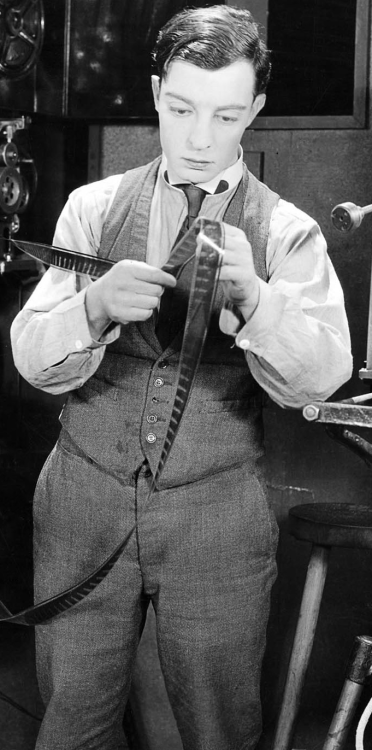

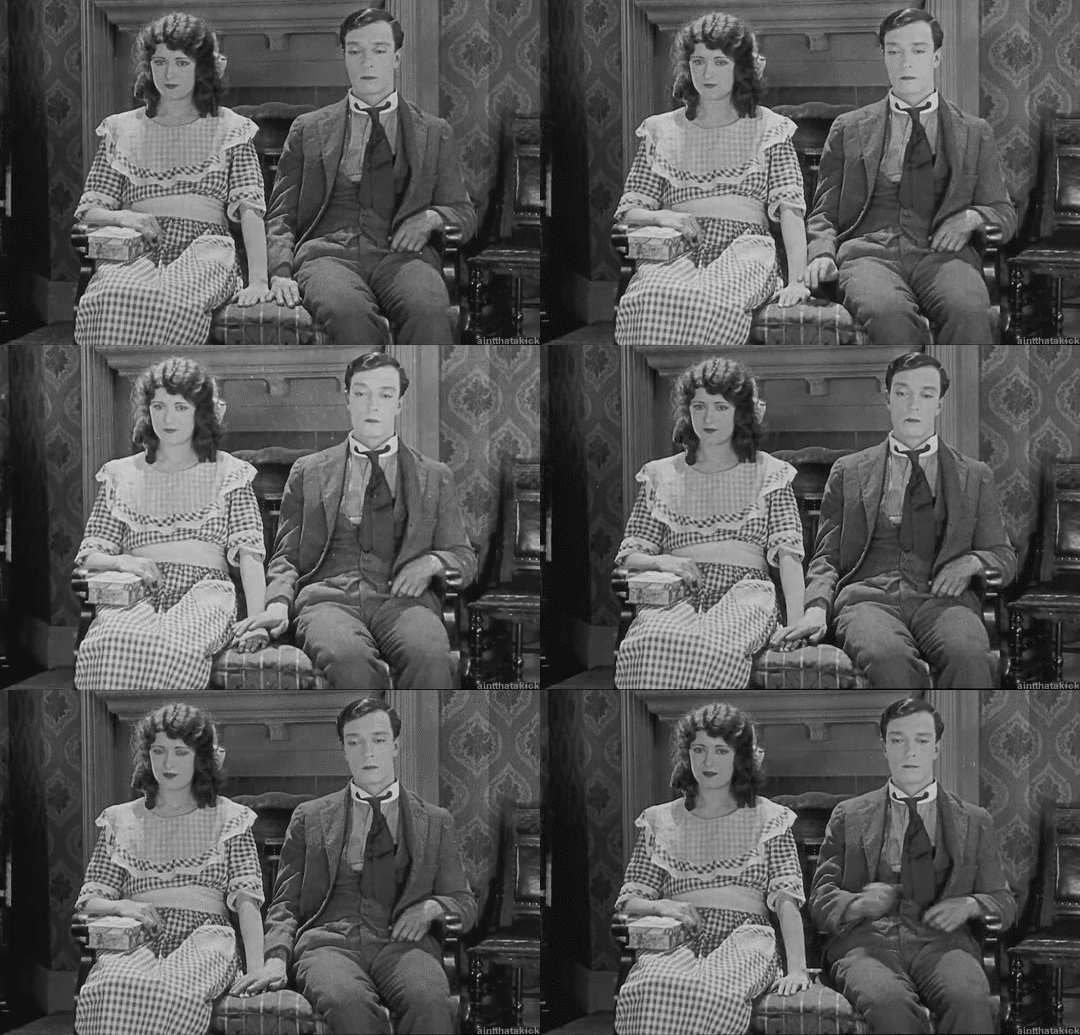
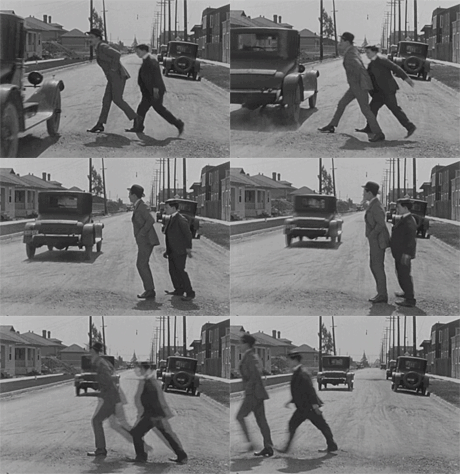
Um garoto (nosso Buster) é projecionista num cinema e aprendiz de detetive. Ele está apaixonado por uma garota (Kathryn McGuire), que também é cortejada por outro cara, o “Sheik Local” (Ward Crane). Um dia, o Sheik rouba um relógio do pai da garota e a culpa recai sobre Keaton. Buster segue o rival por um tempo, em uma cena perfeitamente coreografada, mas mais uma vez é enganado por ele.

A boy (our Buster) is a movie theater projectionist and a detective-in-training. He is in love with a girl (Kathryn McGuire), who is also courted by another guy, the Local Sheik (Ward Crane). One day, the Local Sheik steals a watch from the girl’s father and the blame falls on Keaton. Buster follows the Local Sheik for a while, in a perfectly choreographed scene, but is once again outsmarted by him.


Triste com seu fracasso investigativo, Buster vai trabalhar no cinema. O filme daquela noite é “Corações e Pérolas”, um romance de mistério e aventura sobre pérolas roubadas, estrelado pela mente brilhante de Sherlock Jr. Buster cai no sono na sala de projeção e sonha que está no filme – na verdade, a garota, o pai e a mãe dela e o Sheik Local estão todos no filme. Como Sherlock Jr, Buster tem inclusive seu próprio assistente, Gillette – uma homenagem a William Gillette, o primeiro ator a interpretar Sherlock nos palcos. Gillette é interpretado por Ford West, que também é o gerente do cinema e patrão de Buster.

Sad with his investigative failure, Buster goes to work in the movie theater. That night’s movie is “Hearts and Pearls”, a mystery-adventure-romance about stolen pearls starring the master mind Sherlock Jr. Buster falls asleep in the projection cabin and dreams he’s in the movie – indeed, the girl, her father, mother and the Local Sheik are all characters of the movie. As Sherlock Jr, Buster even has his own assistant, Gillette – an homage to William Gillette, the first actor to play Sherlock on stage. Gillette is played by Ford West, who also plays the theater manager.
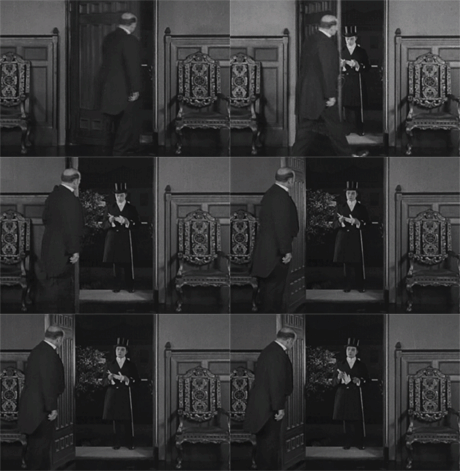

O roteiro foi escrito por Jean Havez e Joe Mitchell, colaboradores frequentes de Buster, e Clyde Bruckman, um brilhante escritor de gags que co-dirigiu “A General” (1926). Lutando contra o alcoolismo desde o começo da era falada do cinema, Bruckman nunca recuperou sua carreira e se matou em 1955 usando a arma de Buster Keaton.

The screenplay was written by Jean Havez and Joe Mitchell, frequent Keaton contributors, and Clyde Bruckman, a brilliant gag writer who co-directed “The General” (1926). Battling alcoholism starting in the beginning of the sound era, Bruckman never regained his career and killed himself in 1955 using Buster Keaton’s gun.
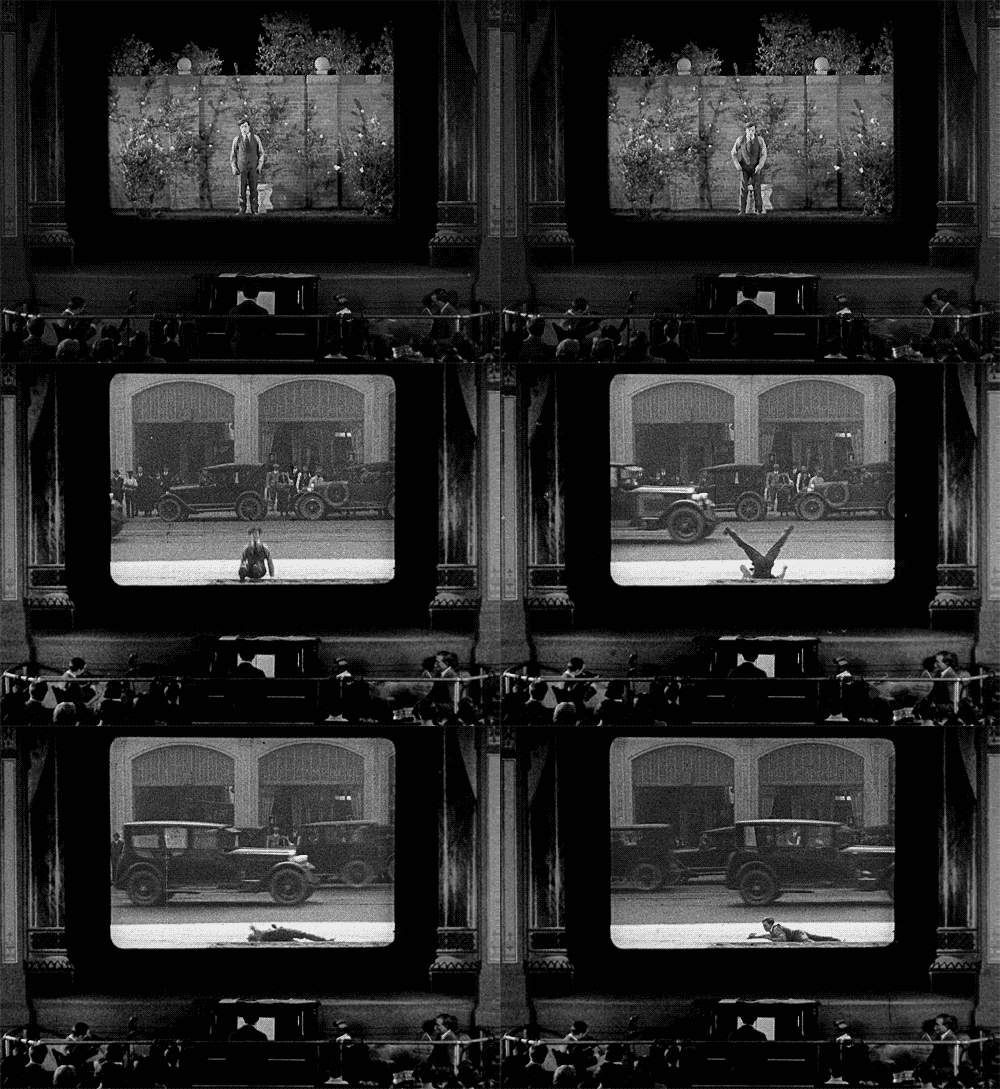

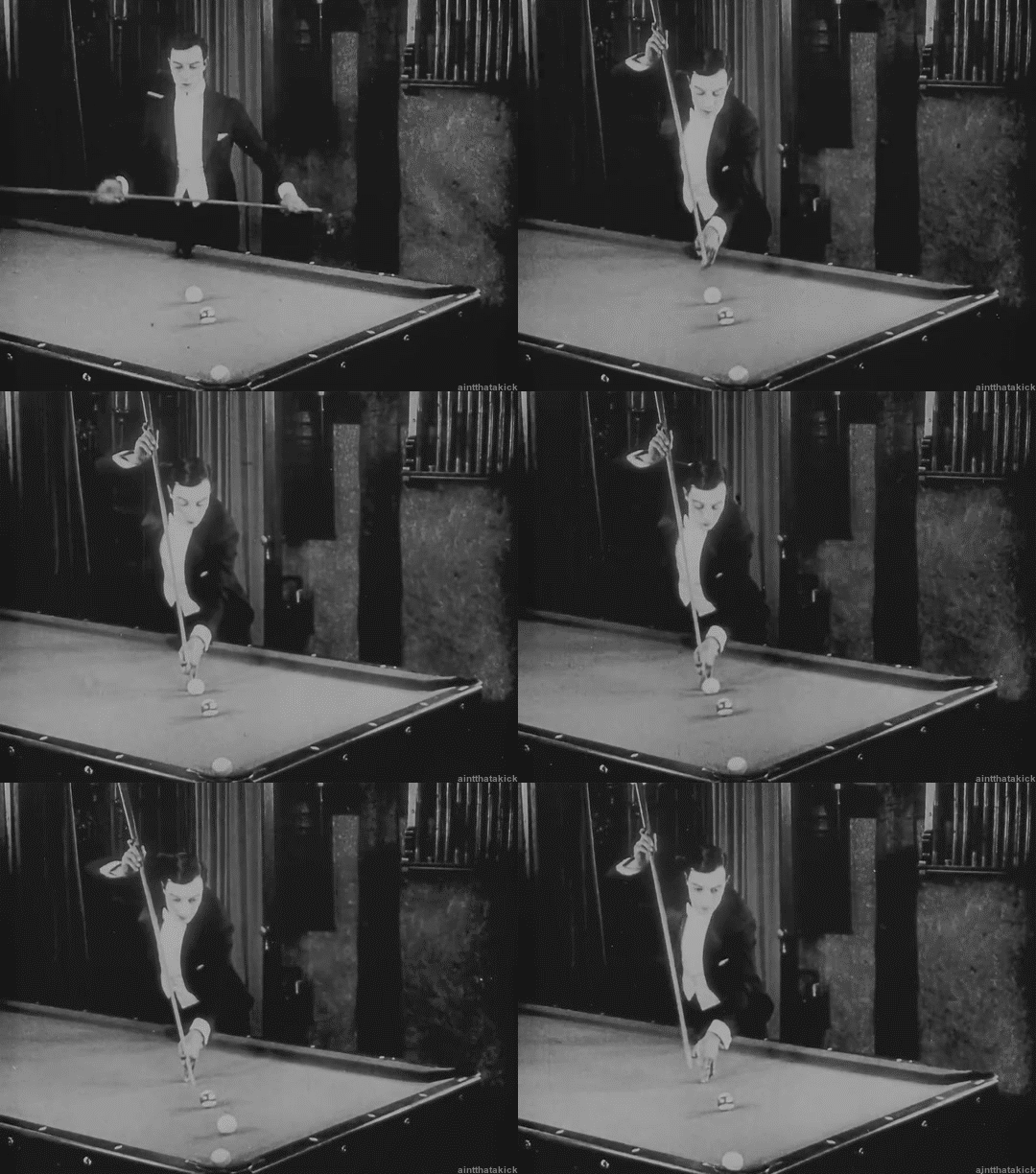
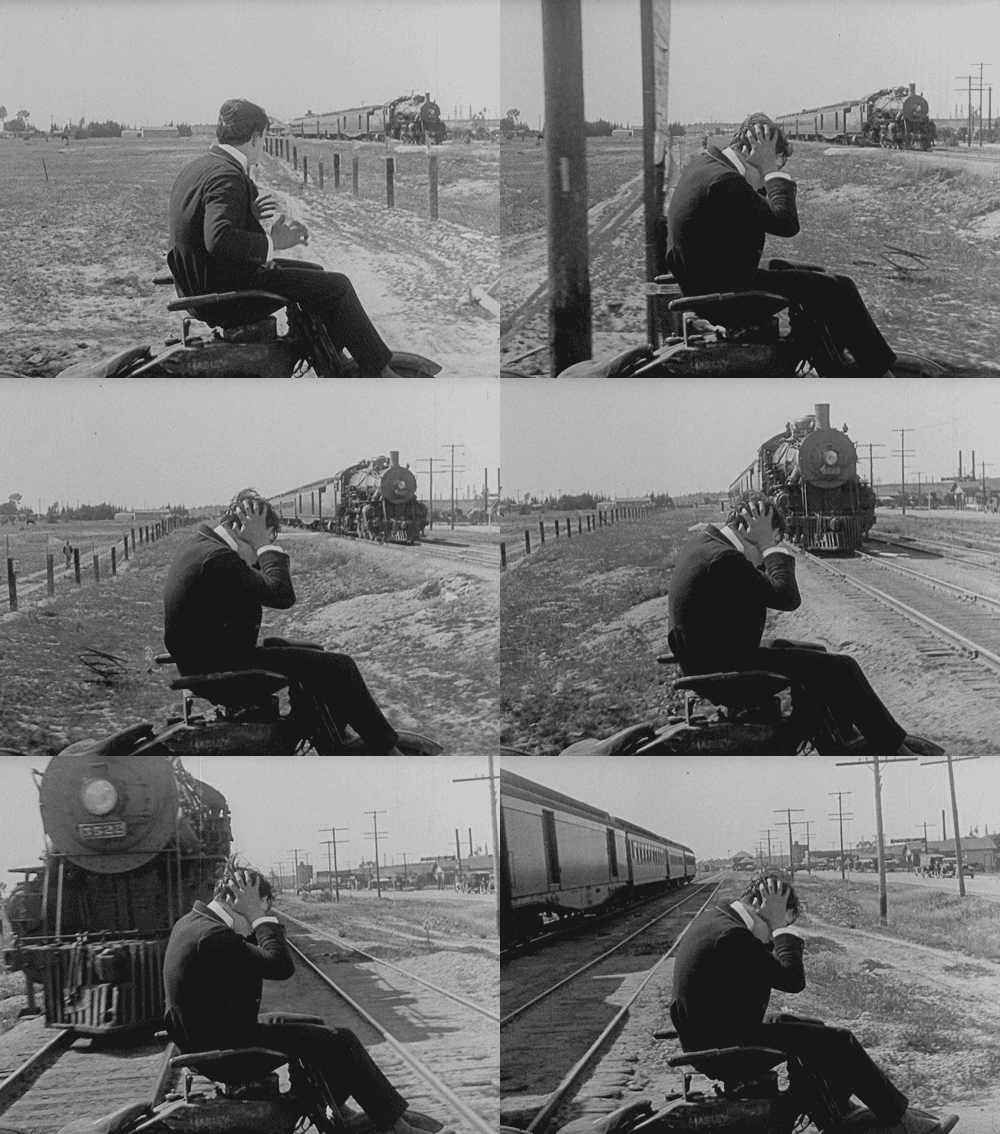
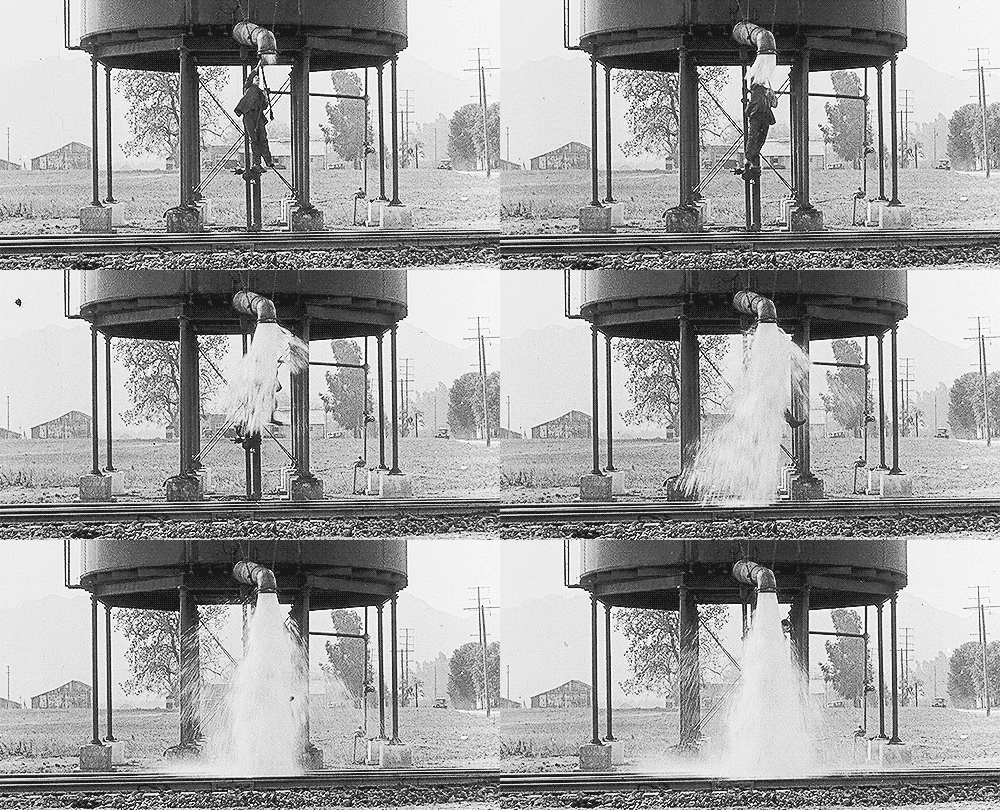
“Bancando o Águia” traz a famosa cena da caixa d’água em que Buster quebrou o pescoço – mas não percebeu que estava quebrado até os anos 30, quando consultou um médico por causa de dores de cabeça. Também merece ser mencionada a sequência do bilhar. Buster teve de praticar por quatro meses e demorou cinco dias para filmar a sequência, e na tela ela flui com facilidade e mágica. Outra sequência memorável, porém perigosa, envolve Buster andando numa moto sem motorista, evitando acidentes por um triz.

“Sherlock Jr” brings the infamous water tower stunt in which Buster broke his neck – but didn’t realize it was broken until the 1930s, when he saw a doctor and complained about migraines. It’s also worth mentioning the pool playing sequence. Buster had to practice for four months and took five days to shoot the sequence, and in the screen it flows easily and magically. Another memorable yet dangerous sequence involves Buster riding in a motorcycle without a driver, avoiding accidents by a millimeter.
TRAIN!
Muito se debate sobre se Roscoe Arbuckle trabalhou ou não como diretor neste filme. Roscoe e Buster eram bons amigos, e foi nos curtas de Arbuckle que Buster estreou no cinema. Buster nos conta o que aconteceu de verdade no set de “Bancando o Águia” em sua autobiografia “My Wonderful World of Slapstick”: Roscoe ainda era um pária por causa do escândalo de Virginia Rappe alguns anos antes. Buster lhe ofereceu um trabalho como diretor sob um pseudônimo. Entretanto, Roscoe era insuportável no set. Sem autoconfiança e muito nervoso, ele fazia, segundo Buster, Kathryn McGuire chorar doze vezes por dia. Buster então convenceu Marion Davies a contratar Roscoe para dirigir o filme “O Moinho Vermelho” – e ela o fez, deixando que Buster dirigisse “Bancando o Águia” sozinho.

It’s debated whether or not Roscoe Arbuckle worked as a director in this film. Roscoe and Buster were good friends, and it was in Arbuckle’s shorts that Buster got his start in the movies. Buster tells us what really happened on the set of “Sherlock Jr” in his autobiography “My Wonderful World of Slapstick”: Roscoe was still a pariah due to the Virginia Rappe scandal a few years before. Buster offered him a directing job under a pseudonym. However, Roscoe was just irascible on set. Without self-confidence and very nervous, he’d make, as Buster states, Kathryn McGuire cry a dozen times a day. Buster then convinced Marion Davies to hire Roscoe to direct her picture “The Red Mill” – which she did, and Buster alone directed “Sherlock Jr”.
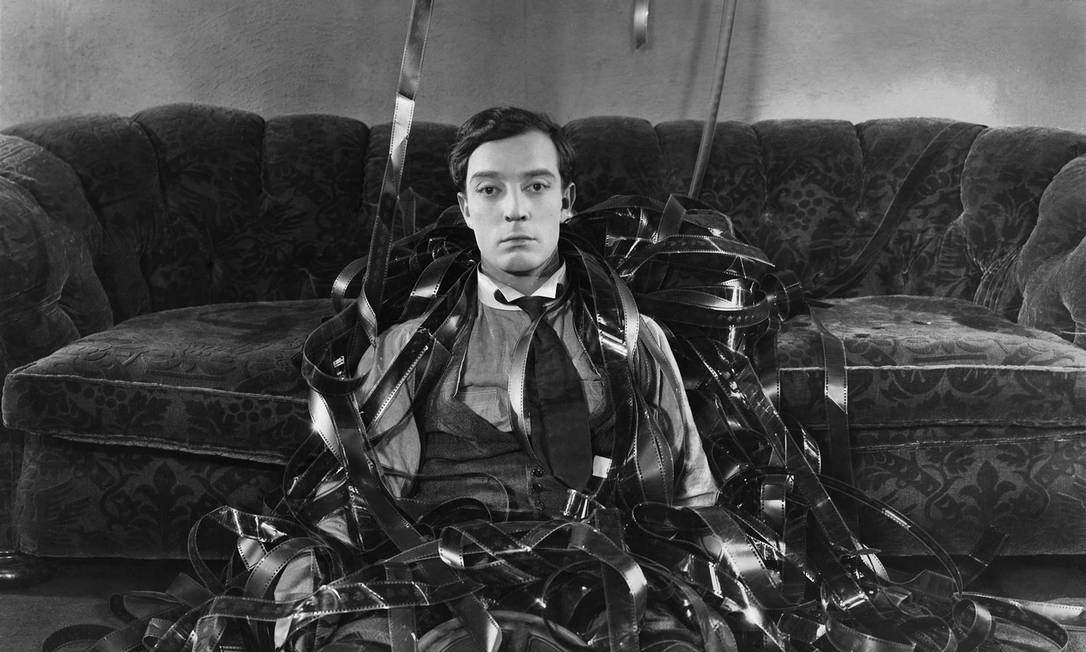

Assim como muitos outros, eu adoraria se “Bancando o Águia” fosse mais longo – afinal, quando mais Buster Keaton, melhor. Entretanto, este filme de 44 minutos consegue contar duas histórias paralelas, apresentar muitas gags e, o mais importante, mostrar como o cinema pode ser ao mesmo tempo escapismo e inspiração.

As I’m sure many others would, I’d love if “Sherlock Jr” was longer – after all, the more Buster, the better. However, this 44-minute film manages to tell two parallel stories, deliver a lot of gags and, the most important, show how cinema can be at the same time escapism and inspiration.


This is my contribution to the Sixth Annual Buster Keaton blogathon, hosted by Lea at Silent-ology.

Monday, February 8, 2016

Fatty Arbuckle e Buster Keaton: quando o aluno supera o mestre

Fatty Arbuckle and Buster Keaton: when the pupil surpasses the master


Todos os gênios do mundo tiveram um mentor, uma influência, um apoiador, alguém que abriu caminho para que ele depois brilhasse. No cinema, todos os grandes astros começaram com papéis coadjuvantes em filmes estrelados por outras pessoas, mais famosas e poderosas que os iniciantes. E é quando o mestre sente afeição e confiança no estreante que uma relação de apadrinhamento e até de amizade surge, durando tanto quanto uma vida.

All geniuses had a mentor, and influence, a supporter, someone who showed them the path to success. In the film world, all big stars started in supporting roles to more famous and powerful leads. And, when the master feels affection and something special in the newcomer, a mentorship and even friendship begins, sometimes lasting a lifetime.
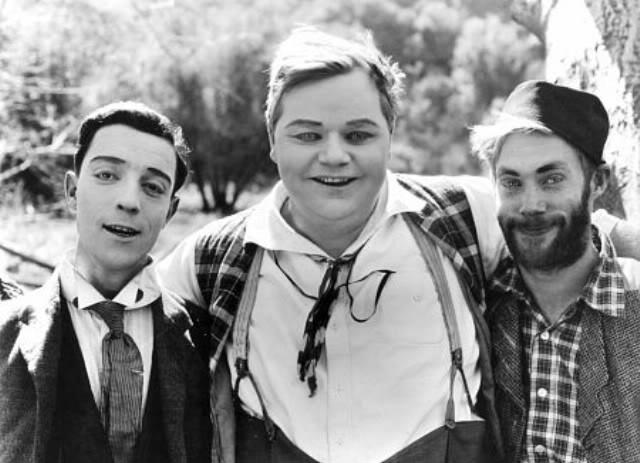
Em 1917 um homem magro, de grandes olhos, cabelos pretos e um belo sorriso estreava no cinema. Ele serviria de coadjuvante para um dos maiores comediantes da época, um homem muito gordo e popular, chamado Roscoe 'Fatty' Arbuckle. O coadjuvante se chamava Joseph Frank Keaton, ou melhor, Buster Keaton. O jovem Buster, então com 22 anos, nem tinha tanto destaque assim: uma só cena, em que ele compra melaço do vendedor Fatty. O filme é “The Butcher Boy” (1917).

In 1917 a thin, big-eyed, dark-haired man with a beautiful smile made his debut in the movies. He would be a supporting player for one of the greatest comedians of the time, a chubby and popular man named Roscoe 'Fatty' Arbuckle. The supporting player was Joseph Frank Keaton, or better, Buster Keaton. Young Buster, then 22 years old, didn't have a lot of screen time: only one scene, in which he buys molasses from Fatty the salesman. The film is “The Butcher Boy” (1917).
Roscoe 'Fatty' Arbuckle era um simpático ator cômico dos palcos que estreou no cinema em 1909. Em 1913, contracenou pela primeira vez com a amiga e parceira Mabel Normand, e em 1914 conheceu um homem recém-chegado em Hollywood, mas que já começava a escrever e dirigir seus próprios filmes: Charles Chaplin. Entre os atores com quem Fatty trabalhava com frequência estavam Al St. John, seu sobrinho, e Minta Durfee, sua esposa desde 1908. Era um negócio bastante familiar.

Roscoe 'Fatty' Arbuckle was a sympathetic comic actor from the theater who made his debut in the movies in 1909. In 1913, he shared the screen for the first time with his friend and partner Mabel Normand and in 1914 he met a man who had just arrived in Hollywood, but who already directed and wrote his own movies: Charles Chaplin. Among his usual screen partners were Al St. John, his nephew and Minta Durfee, his wife since 1908. Strictly family business. 
Joe Keaton (pai) e Buster (filho), como bons defensores do vaudeville, relutaram em estrear no cinema. Mas uma ajuda de Arbuckle os fez mudar de ideia: Buster pediu uma câmera de cinema emprestada para o já estabelecido astro, e Arbuckle cedeu o equipamento. Em seu quarto de hotel, Keaton desmontou a câmera e montou-a novamente, estudando a composição e o funcionamento mecânico do objeto. No dia seguinte, Keaton e Arbuckle já começaram a trabalhar juntos.

Joe Keaton (father) and Buster (son), as good vaudevillians, didn't want to star in films. But a little help from Arbuckle made them change their minds: Buster borrowed a camera from the well-known star, and Arbuckle was happy to lend it. In his hotel room, Keaton dismantled the camera and reassembled it, all this while minuciously studying the components and the mechanical part of the object. The following day, Keaton and Arbuckle started working together.
Talvez a união deles tenha sido obra do destino. Há boatos de que Keaton tinha grande ressentimento de Arbuckle, pois o gordo comediante havia copiado em um de seus filmes uma rotina que Keaton apresentava no vaudeville. Verdade ou boato, o que se sabe é que os dois se conheceram em Nova York, na sede dos estúdios Comique, que pertencia a Arbuckle. O estúdio funcionava no terceiro andar de um prédio, e nos outros dois as irmãs Talmadge, Norma e Constance, trabalhavam em seus respectivos filmes. Keaton se casaria com a menos famosa das irmãs, Natalie Talmadge, em 1921.

Maybe their partnership was fate. There are rumors that Keaton had hard feelings about Arbuckle, because he had copied in a movie a routine Buster originated in vaudeville. True or false, what we know is that they met in New York, at the headquarters of the Comique studios that belonged to Arbuckle. The studio was on the third floor of a building. On the first and second floor the Talmadge sisters shot their films. Keaton would later marry the least famous of the sisters, Natalie Talmadge, in 1921.
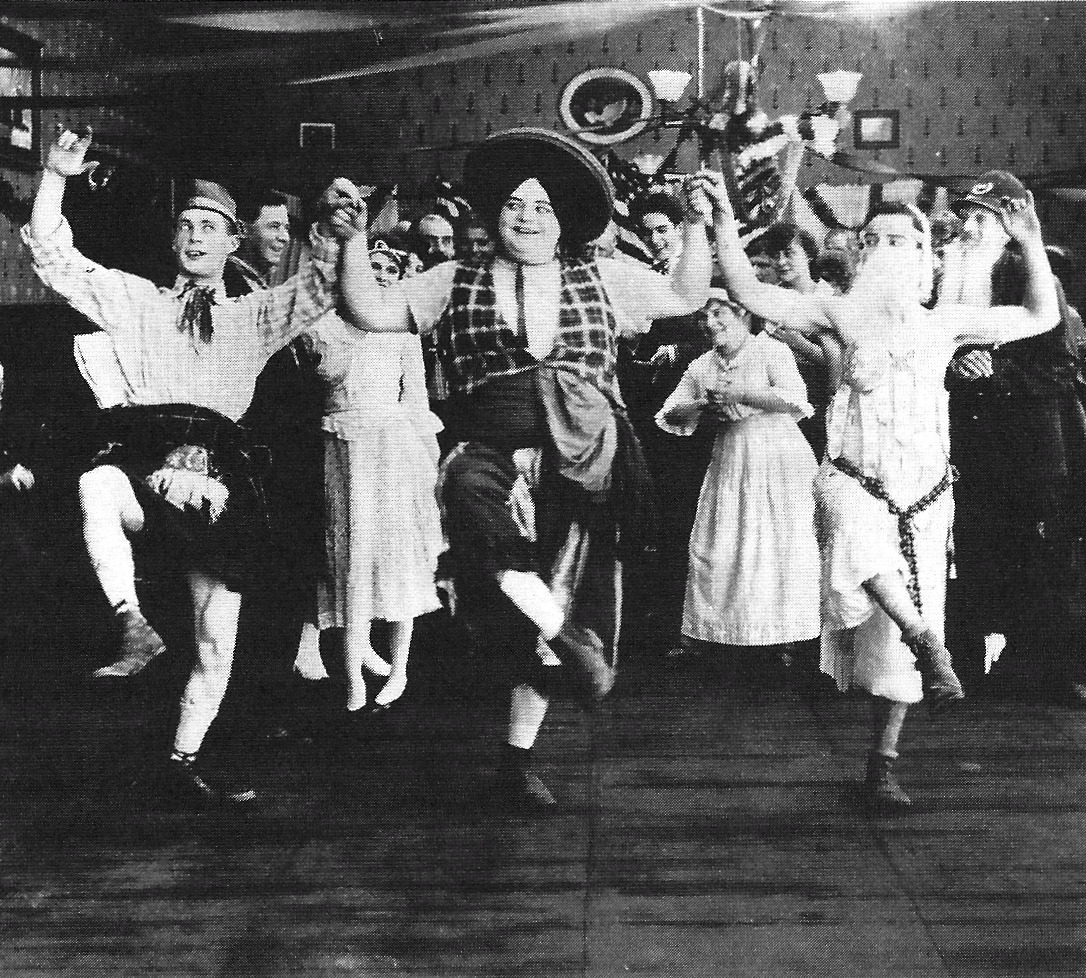
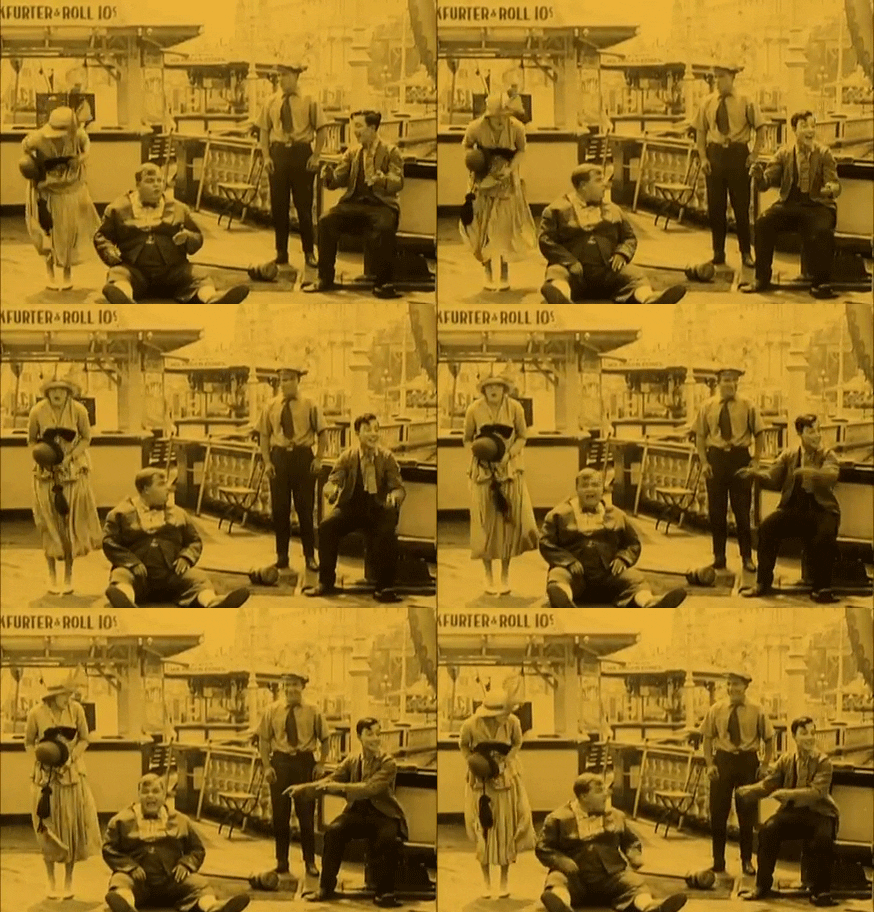
Ao lado de Arbuckle, os papéis de Keaton eram muito diferentes daqueles pelos quais ele ficou conhecido mais tarde. Keaton raramente fazia acrobacias ousadas, era coadjuvante e... sorridente. Em “Oh, Doctor!” (1917) seu bom-humor desperta a ira de seu pai, interpretado por Arbuckle. Em “Good Night, Nurse!” (1918) Buster é um médico que flerta desajeitadamente com um Roscoe disfarçado de enfermeira. Em “Coney Island” (1917), meu favorito dos filmes de Arbuckle e Keaton, Buster gargalha longamente em duas cenas!

With Arbuckle, Keaton's roles were much unlike the ones that made him more famous later on. Keaton rarely performed acrobatics, was a supporting character and often smile. In “Oh, Doctor” (1917), his great sense of humor is the reason for his father's anger – the father is played by Arbuckle. In “Good Night, Nurse!” (1918), Buster is a doctor who flirts with Roscoe, disguised as a nurse. In “Coney Island” (1917), my favorite of the Arbuckle-Keaton films, Buster laughs out loud in two scenes!
Em 1920, Arbuckle aceitou uma proposta incrível da Paramount: um contrato de três milhões de dólares por três anos e dezoito filmes. Ele transferiu para Keaton sua parte no estúdio Comique. A esta altura, Arbuckle já havia ensinado a Keaton todas as minúcias do trabalho de ator, diretor, roteirista, comediante e acrobata. Ainda em 1920, Douglas Fairbanks indicou Keaton para estrelar o remake de seu filme “The Lamb”, e assim Keaton protagonizou seu primeiro longa-metragem: “The Saphead”.

In 1920, Arbuckle accepted an incredible offer from Paramount: a three-million-dollar contract that covered three years and eighteen films. He gave Buster his share of the Comique studios. At this time, Arbuckle had already taught Keaton all about being an actor, director, writer, comedian and acrobat. Still in 1920, Douglas Fairbanks asked Keaton to star in the remake of his film “The Lamb”, and that's how Keaton starred in his first feature film: “The Saphead”.
1921 foi o ano fatal para a carreira de Arbuckle: ele se envolveu no escândalo da morte da aspirante a atriz Virginia Rappe, após uma festa regada a álcool. Keaton, Chaplin e Mabel Normand saíram em defesa do amigo quando ele foi injustamente acusado de estuprar Virginia e, mesmo sendo absolvido após três julgamentos, Arbuckle teve sua reputação destruída.

1921 was the fatal year for Arbuckle's career: he got involved in the scandal of the death of aspiring actress Virginia Rappe after a booze-filled party. Keaton, Chaplin and Mabel defended their friend when he was injustly accused of raping Virginia. Even though he was considered innocent after three trials, Arbuckle had his reputation destroyed.
Dos amigos, Buster foi o que mais se esforçou para ajudar Arbuckle: ele filmou um roteiro de Arbuckle, dando origem ao curta-metragem “Daydreams” (1922), e ofereceu o posto de co-diretor de “Sherlock Jr” (1924) ao amigo. Não se sabe se as cenas filmadas por Arbuckle foram usadas ou descartadas.

From the friends, Buster was the one who made the biggest effort to help Arbuckle: he filmed one of Roscoe's scripts, the short film “Daydreams” (1922) and offered Fatty the job of co-director in “Sherlock Jr” (1924). It's not known if the scenes shot by Arbuckle were used or discarded.
Arbuckle voltou aos palcos em meados dos anos 20, e também trabalhava por trás das câmeras sob o pseudônimo William Goodrich. Em 1927, ele ajudou um jovem comediante a conseguir um lugar em Hollywood. O nome desse jovem que impressionou Fatty Arbuckle era Bob Hope.

Arbuckle went back to the stage in the mid-1920s, and also worked behind the cameras under the pseudonym William Goodrich. In 1927, he helped a young comedian get a job in Hollywood. The young man who impressed Fatty Arbuckle was Bob Hope.
Buster Keaton se transformou em um dos maiores comediantes da história, até perder o controle criativo sobre seus filmes em 1928, quando foi contratado pela MGM. Arbuckle foi perdoado por Hollywood e recontratado pela Warner em 1933, mas a alegria durou pouco: Roscoe ‘Fatty’ Arbuckle fez dois curta-metragens e morreu logo após assinar um contrato para um longa-metragem. Hoje é mais lembrado pelo escândalo que arruinou sua carreira, mas deveria ser reconhecido como o grande artista e aquele que ensinou ao inigualável Keaton tudo sobre o cinema.

Buster Keaton became of the greatest comedians in film history until he lost creative control over his films when he was hired by MGM in 1928. Arbuckle was pardoned by Hollywood and hired again by Warner Brothers, but his happiness didn't last long: Roscoe 'Fatty' Arbuckle did two short films and died right after he was signed to make a feature. Today he is best remembered by the scandal that ruined his career, but he should be recognized as a great artist and the one guy who taught Keaton everything about the movies.
Keaton e Arbuckle fizeram 14 filmes juntos. Treze deles (pois “A Country Hero” está perdido) podem ser vistos NESTA PLAYLIST.

Keaon and Arbuckle did 14 films together. Thirteen of them (because “A Country Hero” is lost) can be wacthed in THIS PLAYLIST.


This is my contribution to the Second Annual Buster Keaton Blogathon, hosted by Lea at Silent-ology.
Related Posts Plugin for WordPress, Blogger...