} Crítica Retrô: Carmen Miranda

Tradutor / Translator / Traductor / Übersetzer / Traduttore / Traducteur / 翻訳者 / переводчик

Showing posts with label Carmen Miranda. Show all posts

Thursday, June 18, 2026

Alô Alô Carnaval (1936)


Todo filme clássico pode ser considerado uma janela para o passado, para outro tempo e lugar - um artefato histórico. Mas alguns personificam o “artefato histórico” mais que outros. Musicais, por exemplo: tem jeito melhor ou mais prazeroso de descobrir as músicas que nossos antepassados ouviam e gostavam do que assistindo a um musical? Na minha opinião, não tem. Tendo estreado há 90 anos, o musical brasileiro “Alô Alô Carnaval” é um retrato de mais de uma arte num passado distante, mas não esquecido. 

Every classic film can be considered a window to the past, to another time and place - a historical artifact. But there are some that personify the “historical artifact” more than others. Musicals, for instance: is there a better or more pleasant way to discover the songs that our forefathers listened to and liked than by watching a successful musical? In my opinion, there isn’t. Released 90 years ago, the Brazilian musical “Alô Alô Carnaval” is a portrait of more than one art in a past long gone, but not forgotten.

Dois homens, o Sr Prata e o Sr Tomé, querem organizar um espetáculo. A primeira tentativa deles é negada porque o dono do teatro disse que viria uma companhia estrangeira para usar o teatro. Os dois homens então vão para um cassino. Lá, eles bebem, flertam, apostam. O dono do teatro os procura no outro dia para dizer que a companhia estrangeira não virá e eles podem organizar o show no Cassino Mosca Azul. Essa é a história. 

Two men, Mr Prata and Mr Tomé, want to put on a show. Their first attempt is denied because the patron said he had a foreign company coming to use his theater. The two men then go to a casino. There, they drink, they flirt, they gamble. The patron comes back another day and says the foreign company isn’t coming after all and they can put on the show at the Blue Fly Casino. And that’s the plot.

Mais da metade do filme é usado para mostrar o espetáculo. Há um pianista e uma cantora lírica, mas a maioria das canções são sambas. Tem um samba em particular que começa com os versos de Os Lusíadas, o mais famoso poema épico da língua portuguesa. Isso mostra que o samba é muito mais que um ritmo, é cultura pura. Isso também pode ser visto durante o Carnaval com os desfiles das escolas de samba: não é só um show - mesmo sendo sempre um espetáculo para os olhos -, é uma aula de cultura. 

Over half of the movie is used to showcase the spectacle. There is a pianist and a lyrical singer, but most of the songs are sambas. There is one particular samba that starts with verses from Os Lusíadas, the most famous epic poem in the Portuguese language. This shows that samba is much more than a rhythm, it’s pure culture. This can also be seen during Carnaval with the parades of samba schools: it’s not just a show - and it always is a feast for the eyes -, it’s a whole lesson in culture.

Prata e Tomé apostam no Cassino Mosca Azul, uma diversão comum na época, mas que logo seria proibida. Dez anos após este filme estrear, os cassinos foram proibidos no Brasil após um pedido da muito religiosa Primeira Dama, esposa do novo presidente Eurico Gaspar Dutra. Ela também pediu que o Comunismo fosse banido no país e que fosse construída uma capela dentro da residência presidencial. Todos os pedidos se tornaram realidade graças ao seu querido marido.

Prata and Tomé gamble at the Blue Fly casino, a common diversion of the time, but it would soon be ruled out. Ten years after this movie was released, gambling was banned in Brazil per request of the very religious First Lady, wife of the new president Eurico Gaspar Dutra. She also asked for Communism to be banned in the country and for the construction of a chapel inside the presidential residence. All requests were accepted by her darling husband.

Obviamente, o destaque é Carmen Miranda. Ela primeiro canta, na metade do filme, uma canção com sua irmã Aurora e mais tarde volta para um número solo. “Alô Alô Carnaval” é importante porque é o único filme atualmente conhecido e preservado feito por Carmen Miranda no Brasil - preservação audiovisual é um tópico delicado aqui, pois muitos filmes estão perdidos: todos os de ficção feitos antes de 1913 e muitos outros de anos mais recentes.

Of course, the highlight is Carmen Miranda. She first sings, in the middle of the film, a tune with her sister Aurora and later comes back for a solo number. “Alô Alô Carnaval” is important because it’s the only known extant and preserved film made by Carmen Miranda in Brazil - film preservation is a delicate topic here, as so many movies were lost: all fictional ones made before 1913 and many more from most recent years.

Eu gostaria de destacar outra dupla: as Irmãs Pagãs - aqui creditadas literalmente Pagan I e Pagan II. Elvira Pagã e Rosina Pagã, juntas, gravaram 13 discos nos anos 1930, se separando quando Elvira se casou em 1940. Elvira, entretanto, continuou sua carreira solo e se tornou uma famosa vedete. 

I’d like to highlight another duo: the Pagan sisters - here credited literally as Pagan I and Pagan II. Elvira Pagã and Rosina Pagã, together, recorded 13 albums in the 1930s, splitting when Elvira got married in 1940. Elvira, however, continued her solo career and became a famous “vedete” - actress from musical theatre.

Com um papel breve de alívio cômico, temos o comediante Oscarito. Nascido na Espanha em 1906 como Oscar Lorenzo Jacinto de la Inmaculada Concepción Teresa Díaz, ele fez turnê com o circo trabalhando como palhaço, acrobata e violinista. Ele fez seu primeiro filme em 1935, mas apenas nos anos 1950 chegaria ao seu ápice como comediante, quando formou dupla com outro ator popular, Grande Otelo

With a brief role as comic relief, we have comedian Oscarito. Born in Spain in 1906 as Oscar Lorenzo Jacinto de la Inmaculada Concepción Teresa Díaz , he toured with the circus working as a clown, an acrobat and a violin player. He made his first film in 1935, but only in the 1950s he would reach his peak as a comedian, when he was paired with another popular actor, Grande Otelo.  

O filme foi feito pelos estúdios da Cinédia no Rio de Janeiro. O estúdio foi planejado como uma construção moderna feita para colocar o Brasil em pé de igualdade com os grandes no mundo do cinema. O diretor Humberto Mauro fez o filme inaugural e muitos outros se seguiram, como “Limite” de Mário Peixoto e “O Ébrio” de Gilda de Abreu em 1946. O estúdio também foi utilizado por Orson Welles para gravações de “É Tudo Verdade”. O estúdio ainda existe como locação e centro de memória. 

This film was made by the studios Cinédia from Rio de Janeiro.  The studio was planned as a modern facility built to make Brazil become a big player in the cinema world. Director Humberto Mauro made the inaugural film there and many more came, such as Mário Peixoto’s “Limite” and Gilda de Abreu’s “O Ébrio” (“The Drunkard”, 1946). It was also used by Orson Welles in shootings for “It’s All True”. The studio still stands as a location and memorial center.

Podemos dizer que Prata e Tomé eram um casal “queer coded”, como fica claro quando saem de casa ambos de pijama. Eles brincam, antes desta cena, que a dupla cantando no cassino era um “casal”. Não havia nada parecido com o Código Hays no cinema brasileiro, mas devemos nos lembrar de que o Brasil é o maior país católico do mundo e o conservadorismo está entranhado nas nossas raízes, infelizmente. Pessoas LGBTQ foram e são comumente tratadas como piada.

We could say that Prata and Tomé were a “queer coded” couple, as it is clearer in the sequence where they leave their house both in pajamas. They joke, before that scene, that the duo singing at the casino were a “couple”. There wasn’t anything like the Hays Code in Brazilian cinema, but we must remember that Brazil is the biggest catholic country in the world and conservatism is deep in our roots, unfortunately. LGBTQ people were and are often treated as a joke.

“Alô Alô Carnaval” circula no YouTube como uma versão de 60 minutos que por vezes fica difícil de ver ou escutar. Em geral pensamos como filmes mudos como a maioria dos filmes perdidos, mas em países onde a memória é menosprezada filmes mais recentes também podem estar perdidos. O Brasil tem um problema de memória, não apenas cinematográfica. Como historiadora, estou lutando para mudar isso e essa blogagem coletiva é um bom pontapé inicial.

“Alô Alô Carnaval” circulates on YouTube as a 60-minute version that sometimes is hard to see and hard to hear. We usually think about silent films as most lost films, but in countries where memory is taken for granted more recent movies can be lost as well. Brazil has an issue with its memory not only in the movie world. As a historian, I’m fighting for change and this blogathon is a good starting point.

This is my contribution to the 6th Luso World Cinema blogathon, hosted by me here at Crítica Retrô and by my friend Beth at Spellbound with Beth Ann.


Saturday, July 1, 2023

Minha Secretária Brasileira (1942) / Springtime in the Rockies (1942)


Um mesmo filme pode ser visto de formas diferentes por diferentes públicos. Aspectos culturais podem nos fazer focar em um detalhe do filme e não vê-lo como ele foi primeiramente concebido. Tomemos como exemplo um filme estrelado por Betty Grable, “Minha Secretária Brasileira”. No Brasil, quando o filme estreou e mesmo hoje, ninguém o procura por causa de Grable: todos queremos ver Carmen Miranda, daí vem o título em português – o título original é “Springtime in the Rockies”, ou “Tempo de Primavera nas Montanhas Rochosas”. Para nós do lado debaixo do Equador, este filme é todo sobre Carmen Miranda.


The same film can be seen differently by different audiences. Cultural aspects may make us focus on a detail of the film and not see it as it was first conceived. Take for instance the Betty Grable vehicle “Springtime in the Rockies” (1942). In Brazil, when it premiered and even today, nobody went to the movies to see Grable: we all wanted to see Carmen Miranda. That’s why the film got a different title here: “My Brazilian Secretary”. For us below the Equator, this movie is all about Carmen Miranda.


Vicky Lane (Betty Grable) e Dan Christy (John Payne) são uma dupla no palco e fora dele. Ela é visitada uma noite em seu camarim por seu antigo parceiro de dança, Victor Prince (Cesar Romero), que quer retomar a parceria. Para a sorte de Victor, isto acontece na mesma noite em que Dan é pego em mais uma de suas aventuras com outras mulheres. Farta do comportamento de Dan, Vicky o deixa e volta para Victor.


Vicky Lane (Betty Grable) and Dan Christy (John Payne) are an item on and outside the stage. She is visited one night in her dressing room by her former dance partner, Victor Prince (Cesar Romero), who wants to resume their partnership. Luckily for Victor, this happens the same night Dan was in another of his adventures with other women. Fed up with Dan’s actions, Vicky leaves him for Victor.


A velha-porém-nova dupla, Victor e Victoria, sai em turnê pelas Montanhas Rochosas do Canadá e Dan vai atrás deles, com o objetivo de reconquistar Vicky. Ele leva consigo seus novos empregados: o criado McTavish (Edward Everett Horton), a secretária irlandês-brasileira Rosita Murphy (Carmen Miranda) e os seis irmãos de Rosita (interpretados pelos integrantes d’O Bando da Lua). Dan planeja usar Rosita para despertar o ciúme de Vicky.


The old-now-new duo, Victor and Victoria, go on tour to the Canadian Rockies and Dan goes after them, wishing to reconquer Vicky. He takes with him his new employees: valet McTavish (Edward Everett Horton), Irish-Brazilian secretary Rosita Murphy (Carmen Miranda) and Rosita’s six brothers (played by the men in the band O Bando da Lua). Dan plans to use Rosita to make Vicky jealous.


O destaque do elenco é Edward Everett Horton como McTavish, o criado de Dan. Um homem ultra-inteligente que tem vários diplomas universitários, ele agora quer aprender sobre coisas práticas da vida. Como sempre, Horton rouba a cena sempre que aparece. Há também espaço para a assistente pessoal de Vicky, Phoebe (Charlotte Greenwood), brilhar, quando ela fala sobre querer ter todos os homens antes de fazer seu próprio pequeno número de dança.


The highlight of the cast is Edward Everett Horton as McTavish, Dan’s valet. An ultra-intelligent man who has several college degrees, he now wants to learn the practical things in life. As always, Horton steals all the scenes he’s in. There is also space for Vicky’s personal assistant Phoebe (Charlotte Greenwood) to shine, when she talks about wanting all the men before doing her own little dance number.


Os cenários mostrados são simplesmente maravilhosos e nos fazem querer visitar as Montanhas Rochosas canadenses. Viajar através dos filmes é uma realidade: de fato, nós acabamos conhecendo muitos lugares primeiro através dos filmes, e só depois na vida real, quando viajamos. Dan diz que não precisa de uma bela vista quando tem Vicky consigo, mas eu discordo: as paisagens são mais bonitas que Betty Grable.


The landscapes shown are simply outstanding and make you wish to visit the Canadian Rockies. Travelling through movies is a reality: in fact, we get to know most places first through movies, and only later in real life, when we travel. Dan says that he needs no scenery when he has Vicky, but I disagree: the landscapes are more beautiful than Betty Grable.


“Minha Secretária Brasileira” é um remake de “Segunda Lua de Mel”, filme de 1937 estrelado por Tyrone Power e Loretta Young. Alice Faye deveria interpretar a protagonista, mas engravidou e precisou deixar a produção. Entra então Betty Grable e suas pernas de um milhão de dólares: o resultado é excelente. Grable traz vitalidade e atrevimento ao papel, estando perfeita tanto em momentos musicais quanto nos não-musicais.


“Springtime in the Rockies” is a remake of “Second Honeymoon”, a 1937 film starring Tyrone Power and Loretta Young. Alice Faye was supposed to play the lead, but got pregnant and had to leave the film. Enter Betty Grable and her million dollar legs and the result is amazing. Grable brings vitality and sass to the role, being perfect in both musical and non-musical moments.


Os números de dança ficaram a cargo do lendário coreógrafo Hermes Pan. Tendo trabalhado em filmes como “O Picolino” (1935) até “Minha Bela Dama” (1967), Pan foi um colaborador constante nos filmes de Fred Astaire, e até foi dublê de corpo de Astaire. Hermes Pan também dançou em frente às câmeras, tendo dançado em quatro filmes com Betty Grable, mas este não é o caso em “Minha Secretária Brasileira”.


The dances were staged by the legendary choreographer Hermes Pan. A choreographer who worked in films like “Top Hat” (1935) to “My Fair Lady” (1964), Pan was a constant collaborator on Fred Astaire movies, and even was Astaire’s body double. Hermes Pan also danced on screen, appearing alongside Betty Grable in four movies, but not in this “Springtime in the Rockies”.


O diretor é Irving Cummings. Hoje um nome praticamente esquecido, na Era de Ouro de Hollywood Cummings dirigiu vários filmes de sucesso. Ele começou como ator na Broadway, sendo parte da lendária companhia de teatro de Lillian Russell. Ele fez seu primeiro filme como ator em 1909 e em 1920 era um protagonista popular, quando começou a dirigir. Alguns dos filmes que ele dirigiu foram “No Velho Arizona” (1928), “A Pequena Órfã” (1935) com Shirley Temple, “Serenata Tropical” (1940) e “Minha Namorada Favorita” (1942).


The director is Irving Cummings. Now a practically forgotten name, in the Golden Age of Hollywood Cummings directed several successful pictures. He had his start as an actor on Broadway, being part of the legendary Lillian Russell’s company. He made his first film as an actor in 1909 and by 1920 was a popular leading man, when he started directing. Some of the films he directed were “In Old Arizona” (1928), “Curly Top” (1935) with Shirley Temple, “Down Argentine Way” (1940) and “My Gal Sal” (1942).


Não importa se você for ver o filme por Betty Grable ou por Carmen Miranda. “Minha Secretária Brasileira” é um musical muito divertido. Pode não ter músicas chiclete ou números de dança exagerados, mas é um bom exemplo do que os estúdios de Hollywood estavam fazendo nos anos 40: puro entretenimento.


No matter if you watch it for Betty Grable or Carmen Miranda, “Springtime in the Rockies” is a very enjoyable musical. It may not have catchy songs or over-the-top dance numbers, but it is a fine example of what Hollywood studios were doing in the 1940s: pure entertainment.


This is my contribution to the Betty Grable blogathon, hosted by Rebecca at Taking Up Room.

Wednesday, May 3, 2023

As duas Carmens do cinema brasileiro


A tale of two Carmens


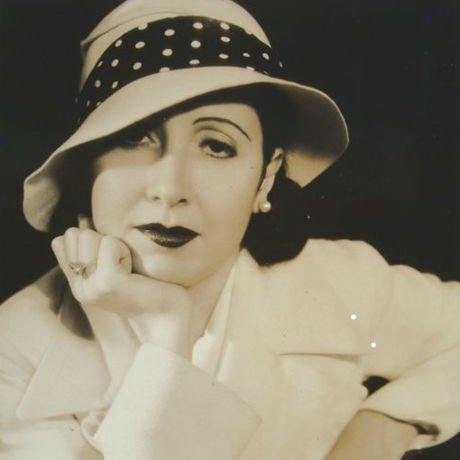
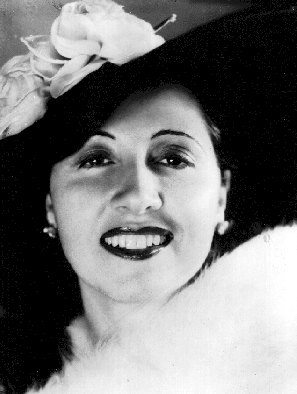
Ambas nasceram em Portugal, chegaram ao Brasil ainda crianças e encontraram seu lugar na história do cinema brasileiro. Foram ambas batizadas como Maria do Carmo, e ambas escolheram Carmen como nome artístico. Ambas partiram cedo demais. Elas são a atriz, produtora e diretora Carmen Santos e a multiartista Carmen Miranda – as duas Carmens do cinema brasileiro.

They were both born in Portugal, arrived in Brazil as children and found their place in Brazilian film history. They were both christened Maria do Carmo, and both chose Carmen as their stage name. They were both gone too soon. They are actress, producer and director Carmen Santos and entertainer Carmen Miranda – the two Carmens from Brazilian cinema.


Maria do Carmo Santos Gonçalves nasceu na cidadezinha de Vila Flor em 1904 e chegou ao Rio de Janeiro aos oito anos de idade. Ainda adolescente, parou de estudar e arrumou um emprego para ajudar a família. Primeiro foi costureira numa loja, e depois se tornou vendedora. Em 1919, aos 15 anos, fez seu primeiro filme. A verdade sobre como ela foi descoberta é incerta: primeiro ela declarou à imprensa que foi descoberta imitando Mary Pickford na loja onde trabalhava. Em outra entrevista, disse que nunca havia ido ao cinema antes de fazer o filme, e fez o teste por diversão. A verdade é que ela conseguiu o papel principal em “Urutau” (1919), um filme que seria exibido poucas vezes por seu diretor, o americano William Jansen. Quando deixou o Brasil, Jansen levou consigo todas as cópias do filme.

Maria do Carmo Santos Gonçalves was born in the small town of Vila Flor in 1904 and arrived in Rio de Janeiro at age eight. Barely a teenager, she stopped studying and got a job to help her family. First she was a seamstress at a shop, and later became a saleswoman. In 1919, at age 15, she made her first film. The truth about how she was discovered is uncertain: at first she told the press that she was discovered while imitating Mary Pickford at the shop she worked in. In another interview, she said she had never been to the movies before starring in one, and made a screen test for fun. The truth is that she got the lead role in “Urutau” (1919), a film that would be screened only a few times by its maker, the American William Jansen. When he left Brazil, Jansen left with all the copies of the film.


Maria do Carmo Miranda da Cunha nasceu em Marco de Canaveses em 1909 e chegou ao Brasil quando tinha apenas um ano de idade. Já adolescente, empregou-se numa chapelaria. Em 1926 foi figurante em seu primeiro filme, “A Esposa do Solteiro”, de Carlo Campogalliani. Em 1929 começou a cantar no rádio e em 1930, depois de gravar o sucesso “Taí”, Carmen se tornou uma superestrela. Ela foi a primeira pessoa a assinar um contrato com uma estação de rádio no Brasil e logo se tornou a pessoa mais bem-paga no rádio. A transição para os filmes era um caminho natural, e entre 1932 e 1939 fez seis filmes, aparecendo como ela mesma na maioria. Infelizmente, quase todos estes filmes foram perdidos.

Maria do Carmo Miranda da Cunha was born in Marco de Canaveses in 1909 and arrived in Brazil when she was only one year old. As a teenager, she found work in a hat store. In 1926 she was an extra in her first film, Carlo Campogalliani’s “A Esposa do Solteiro” (“The Single Man’s Wife”). In 1929 she started singing on the radio and in 1930, after recording the hit song “Taí”, Carmen became a superstar. She was the first person to ever sign a contract with a radio station in Brazil and soon she became the highest-paid professional in radio. Her transition to the movies was a natural step, and between 1932 and 1939 she made six films, most of them appearing as herself. Unfortunately, almost all of these films are lost.


Carmen Santos chamou muito a atenção da imprensa com seu primeiro filme. A imprensa faria dela uma superestrela – sem que um único filme dela chegasse às telas na década seguinte. Seus dois esforços subsequentes seriam dirigidos por Leo Merten, um realizador tchecoslovaco: “A Carne” (1924) e “Mademoiselle Cinema” (1925). Em ambos, além de ser a estrela, Carmen era também produtora, pois havia fundado sua própria produtora, a Films Artístico Brasileiro, FAB. Ambos os filmes jamais são projetados, pois os negativos são destruídos por incêndios e acidentes no laboratório onde eram revelados e armazenados.

Carmen Santos garnered a lot of press attention with her first work. The press would make her a superstar – without a single film with her reaching the theaters in the following decade. Her next two efforts would be directed by Leo Merten, a filmmaker from Czechoslovakia: “A Carne” (“The Flesh”, 1924) and “Mademoiselle Cinema” (1925). In both, besides being the star, Carmen was also a producer, as she had founded her own production company, Films Artístico Brasileiro, FAB. Both movies never see the light of the day, destroyed by fires and accidents at the movie lab.


Em 1939, enquanto cantava no Cassino da Urca, Carmen Miranda atraiu a atenção do empresário da Broadway Lee Shubert, que a contratou para seu novo espetáculo. Carmen aceitou o convite de ir para a Broadway com uma condição: ela queria levar consigo o grupo musical Bando da Lua. Com tudo acertado, Carmen zarpou. Ela teve muito sucesso na Broadway, mas foi criticada por brasileiros: algumas pessoas achavam que ela estava apresentando uma imagem estereotipada do país e, quando ela voltou para fazer shows no Brasil, disseram que ela voltou americanizada.

In 1939, while singing at the Casino da Urca, Carmen Miranda called the attention of Broadway impresario Lee Shubert, who hired her for his new revue. Carmen accepted the invitation to go to Broadway, with one condition: she wanted to take with her the musical group Bando da Lua. When everything was settled, off went Carmen. She had a lot of success on Broadway, but was criticized by Brazilians: some people believed she was presenting a stereotyped image of the country and, when she returned for shows in Brazil, that she returned “Americanized”.


Carmen Santos poderia ter existido, mas ela já era uma estrela, graças à proximidade com o jornalista Pedro Lima, da revista Cinearte. Figurinha carimbada na revista, Carmen era sempre questionada sobre seus próximos projetos. Estes próximos projetos vieram quando ela conheceu o cineasta Humberto Mauro em Cataguases, Minas Gerais. Com Mauro ela finalmente apareceu nas telas: ela protagonizou quatro dos filmes do diretor, “Sangue Mineiro” (1929), “Favela dos Meus Amores” (1935), “Cidade Mulher” (1936) e “Argila” (1942).

Carmen Santos could have given up, but she was already a star, thanks to being close to journalist Pedro Lima from the magazine Cinearte. An habitué at the magazine, Carmen was always questioned about her next projects. The next projects came as she met filmmaker Humberto Mauro in Cataguases, Minas Gerais. With Mauro she finally appeared on screen: she starred in four of his films, “Sangue Mineiro” (“Blood from Minas”, 1929), “Favela dos Meus Amores” (“My Love, the Shanty Town”, 1935), “Cidade Mulher” (“Woman City”, 1936) and “Argila” (“Clay”, 1942).


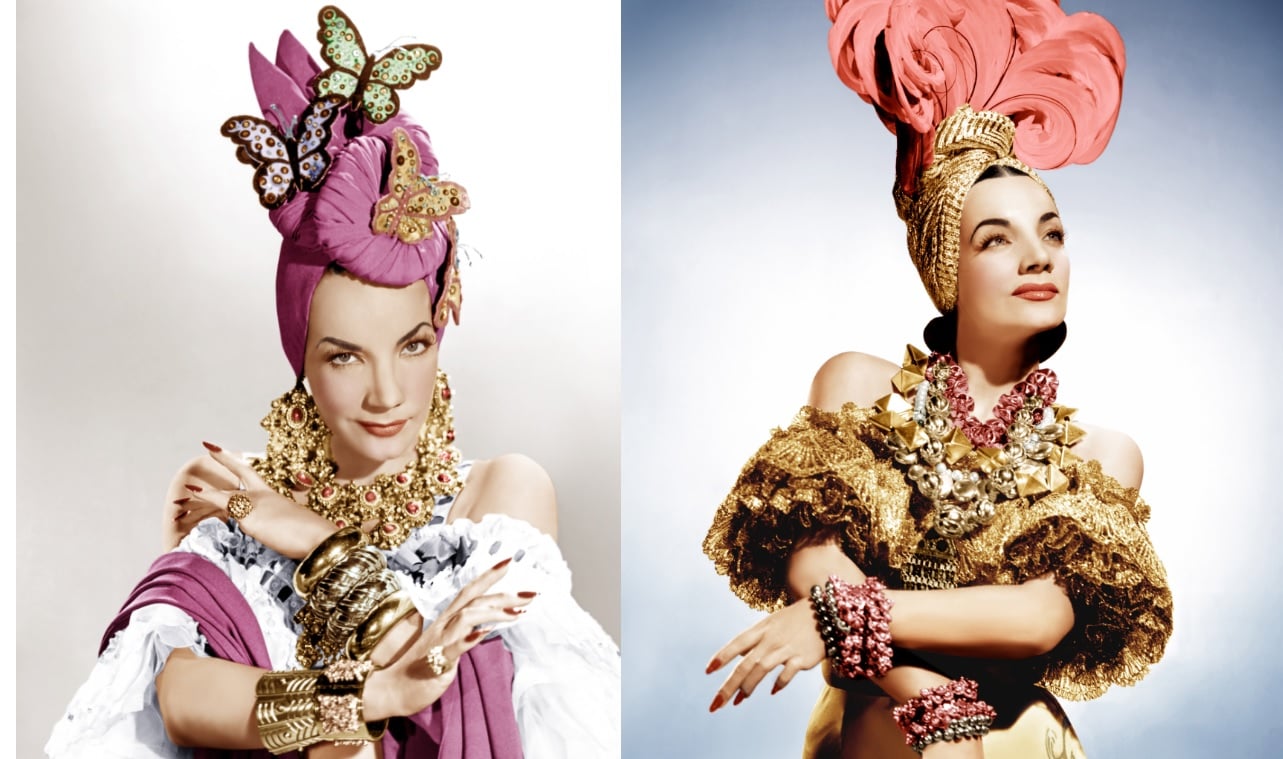
Carmen Miranda fez sucesso imediato na Broadway, e Hollywood era o próximo passo, naturalmente. A “Brazilian Bombshell” fez seu primeiro filme em Hollywood em 1940, “Serenata Tropical”. Durante a Segunda Guerra Mundial, e graças à Política da Boa Vizinhança, Carmen Miranda fez oito filmes. Em março de 1941, ela colocou as marcas de suas mãos e pés na calçada do Grauman’s Chinese Theater, tornando-se a primeira pessoa da América Latina a fazê-lo.

Carmen Miranda was an instant hit on Broadway, and Hollywood was the natural next step. The “Brazilian Bombshell” made her first film in Hollywood in 1940, “Down Argentine Way”. During World War II, and thanks to the Good Neighborhood Policy, Carmen Miranda made eight movies. In March of 1941, she imprinted her hand and feet at the Grauman’s Chinese Theatre, becoming the first Latin person to do so.


O projeto seguinte de Carmen Santos seria o melhor filme brasileiro já feito: o clássico cult “Limite” (1931), dirigido por Mario Peixoto, um cinéfilo que faria apenas este filme. Mesmo com um papel pequeno, Carmen rouba a cena neste filme silencioso tardio. Seu novo projeto, novamente com Peixoto, seria “Onde a Terra Acaba”, um filme deixado incompleto por Peixoto e finalizado por outro cineasta, Otávio Gabus Mendes.

Carmen Santos’s next project would be the best Brazilian film ever: the cult classic “Limite” (1931), directed by Mario Peixoto, a cinephile who would go on to make only this movie. Even with a small role, Carmen steals the scene in this late silent. Her next project, again with Peixoto, would be “Onde a Terra Acaba” (“Where land ends”), a film that was left incomplete by Peixoto, and finished by another filmmaker, Otávio Gabus Mendes.


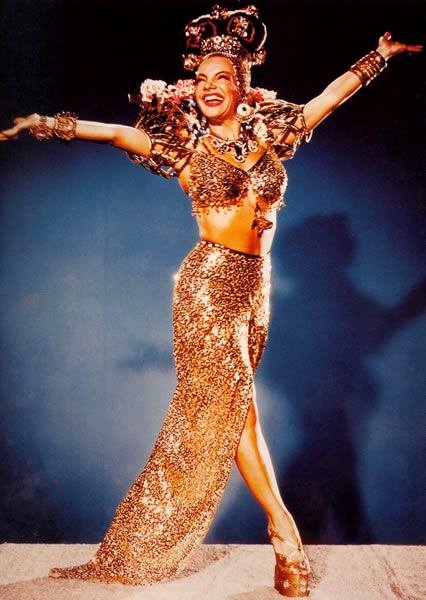
Um dos maiores sucessos de Carmen Miranda foi “Entre a Loura e a Morena” (1943), de Busby Berkeley. Seu número “The Lady in the Tutti-frutti Hat” foi levado a outro nível graças ao talento de Berkeley para composições caleidoscópicas. O filme foi um grande sucesso de bilheteria e as imagens de frutas gigantes dançando ao redor de Carmen se tornaram icônicas. Em 1945 ela se tornou a mulher mais bem-paga dos Estados Unidos.

One of Carmen Miranda’s biggest hits was Busby Berkeley’s “The Gang’s All Here”, from 1943. Her routine “The Lady in the Tutti-frutti Hat” was enhanced by Berkeley’s caleidoscopic vision for musical numbers. The movie was a huge box-office hit and the images of giant fruits dancing around Carmen became iconic. In 1945 she became the highest paid woman in the whole United States.


Em 1934, com ajuda financeira do marido e consultoria técnica de Humberto Mauro, Carmen Santos funda uma nova produtora, primeiro chamada Brasil Vox Films e mais tarde Brasil Vita Films. Seu sonho é produzir, dirigir e protagonizar um filme sobre a Inconfidência Mineira, movimento de 1792 que buscou fazer do Brasil um país independente. Tal filme só seria finalizado em 1948.

In 1934, with the financial help of her husband and technical help from Humberto Mauro, Carmen Santos founds a new production company, first named Brasil Vox Films and later changed to Brasil Vita Films. Her dream is to produce, direct and star in a movie about the Inconfidência Mineira, a 1792 movement that sought to make Brazil an independent country. This film would only be finished in 1948.


Com o fim da Segunda Guerra Mundial, Carmen Miranda fez seus primeiros filmes em preto e branco. Este “rebaixamento” mostra que Hollywood estava menos interessada em fazer musicais para o público de casa e também menos interessada em promover uma Política da Boa Vizinhança com países latino-americanos. A carreira de Carmen estava em declínio, mas ela ainda trabalhava, agora livre do contrato com o estúdio. Ela ainda tinha sucesso gravando discos e fazendo aparições em clubes noturnos e na TV.

With the end of World War II, Carmen Miranda made her first black and white movies. This “demotion” shows that Hollywood was less interested in making musicals for the public in the home front and also less interested in promoting a Good Neighborhood Policy with Latin American countries. Her career was in decline, but she still worked, now free from her studio contract. She still enjoyed success recording discos and appearing in nightclubs and on TV.


Dois dos filmes de Carmen Santos com Humberto Mauro feitos nos anos 1930 foram sucesso de público e crítica, mas hoje estão perdidos. Seu épico “Inconfidência Mineiro” também está perdido. Sua produtora / estúdio sofreu com dificuldades financeiras. E ainda assim ela não desistia. A única coisa que impediu Carmen Santos de fazer mais pelo cinema brasileiro foi a morte: Carmen faleceu em 1952, aos 48 anos, depois de uma batalha contra o câncer.

Two of Carmen Santos’s films with Humberto Mauro made in the 1930s were hits with the public and the critics, but are now lost. Her epic “Inconfidência Mineira” is also lost. Her production company / studio faced financial problems. And yet she wouldn’t give up. The only thing that stopped Carmen Santos from doing more for Brazilian cinema was death: Carmen died in 1952, aged 48, after a battle against cancer.


Diz-se que Carmen Miranda usava barbitúricos e outros remédios para cumprir uma agenda extenuante como atriz e cantora. Ela passou por uma reabilitação mas não foi suficiente. Pouco depois de receber o convite para ter seu próprio programa de televisão, Carmen Miranda faleceu em 1955, aos 46 anos, de ataque cardíaco horas após sua última performance na televisão.

It’s said that Carmen Miranda used barbiturates and other medicines to be able to follow extenuating routines as actress and singer. She went to a detoxification but it wasn’t enough. Just after receiving the invitation to have a TV show all her own, Carmen Miranda died in 1955, aged 46, of cardiac arrest mere hours after her last performance on television.


Carmen Santos foi quase esquecida após sua morte. Ela foi casada apenas uma vez e teve dois filhos, um menino e uma menina. Em tempos mais recentes, Carmen está sendo redescoberta e ganhando o espaço que merece na história do cinema brasileiro: o lugar de uma verdadeira pioneira, que merece ser inspiração para todos nós.

Carmen Santos was nearly forgotten after her death. She was married only once and had two children, a boy and a girl. In recent times, Carmen is being rediscovered and given the place she deserves in Brazilian film history: the place of a true pioneer, who should be an inspiration to all of us.


Estima-se que sessenta mil pessoas foram ao funeral de Carmen Miranda no Brasil, e meio milhão viram o cortejo do corpo pelas ruas do Rio de Janeiro. Nunca esquecida, sempre um ícone, Carmen Miranda foi frequentemente imitada, mas nunca igualada.

It’s estimated that sixty thousand people were at Carmen Miranda’s funeral in Brazil, and half a million could see her body as it paraded Rio de Janeiro. Never forgotten, always an icon, Carmen Miranda was imitated often, but never equaled.


This is my contribution to the Third Luso World Cinema Blogathon, hosted by Beth Ann at Spellbound and me here at Crítica Retrô.

Monday, November 30, 2020

Announcing the Second Luso World Cinema Blogathon


Are you ready to say so long, farewell, auf Wiedersehen, goodbye to 2020? I certainly am. And there is no better way to say goodbye to a year than to start planning for the next year, so here it is something to look forward to in the beginning of 2021: our Luso World Cinema Blogathon is back!


The Luso World Cinema Blogathon was held for the first time in 2019, hosted by me here at Crítica Retrô and by Beth at Spellbound by Movies. We were more than thrilled when the blogathon won the award for Best Classic Film Event of the year, tied with the equally amazing 4th Alfred Hitchcock blogathon, hosted by Maddy at Maddy Loves Her Classic Films. Hooray!


The Luso World Cinema Blogathon once again accepts posts about films made in Lusophone countries, that is, countries that speak Portuguese – see the list below –, and film stars with Luso heritage, that means, film stars of Portuguese descent. This list includes natives like Carmen Miranda, Rodrigo Santoro, Sônia Braga (recently named one of the 25 best actors of the 21stcentury!), Raul Roulien, Maria de Medeiros and also Keanu Reeves, Mary Astor, Louise Fazenda, Tom Hanks, Joe DeRita, James Franco, Daniel Brühl, Auli'i Cravalho (the voice of Disney's Moana!), Nestor Paiva, Amy Poehler, Dorothy DeBorba and many more you can find listed HERE. You can write an overview of those people's lives or careers or focus on a specific film or TV show they made.

Here are a few lists of movies from Lusophone countries:

List of films from Portugal

List of films from Brazil

List of films from Cape Verde

List of films from Mozambique

List of films from Angola

List of films from Guinea-Bissau

List of films from São Tomé and Príncipe

List of films from Equatorial Guinea

List of films from East Timor

There are many options for the blogathon! You can be inspired also by our list of contributors from our first year, found HERE.

And here they are, the banners!

Actress Louise Fazenda

Actress Mary Astor

Actor Tom Hanks

Brazilian actor Rodrigo Santoro

Actor Daniel Brühl, whose father was born in Brazil

Portuguese director Manoel de Oliveira

Scene from the Brazilian film "Macunaíma" (1969)

Singer Emilinha Borba in the Brazilian film "Garota Enxuta" (1959)

Luso-Brazilian entertainer Carmen Miranda

Scene from the Angolan film "Santana" (2020)

Brazilian actress Sônia Braga in "Kiss of the Spider Woman" (1985)


Our contributors so far:


Crítica Retrô - The Career of Grande Otelo

Silver Screenings - Louise Fazenda in Hearts and Flowers (1919) and Down on the Farm (1920) 

Realweegiemidget Reviews -  Keanu Reeves in "The Devil's Advocate" (1997)

Taking Up Room - Carmen Miranda in "The Gang's All Here" (1943)

Dubsism - Tom Hanks in "Apollo 13" (1995)

Ana Roland - Alberto Cavalcanti's "Went the Day Well?" (1942)

Wide Screen World - Fernando Meirelles' "The Two Popes" (2019)

A Shroud of Thoughts - O Pátio das Cantigas (1942)

Spellbound by Movies - Casa de Lava (1995)

Hollywood Kitchen - Carmen Miranda's recipe of Creme de Abacate (yes, it's a podcast!)

Moon in Gemini - Ruy Guerra's Eréndira (1983)

Pop Culture Reverie - Central do Brasil / Central Station (1999)

Crimson Kimono - A Guerra de Beatriz (2013), a filme from East Timor

18 Cinema Lane - Daniel Brühl in Ladies in Lavender (2004)


You can find Beth's announcement HERE.

Até 2021!

Related Posts Plugin for WordPress, Blogger...