} Crítica Retrô: Luso blogathon

Tradutor / Translator / Traductor / Übersetzer / Traduttore / Traducteur / 翻訳者 / переводчик

Showing posts with label Luso blogathon. Show all posts

Friday, June 19, 2026

The Sixth Luso World Cinema blogathon is here!

The World Cup is on its way. Portugal, searching its first title, is a strong contender, as is Brazil, already five times champion. Cape Verde is a surprise with a goalkeeper that became an overnight celebrity.

But I don’t like soccer. So let’s focus on the Luso World I understand the most: Luso cinema. Once again I’m happy to co-host the Luso World Cinema blogathon and bring Luso pride and culture to you. Let’s go!


I kick things off with a review of Carmen Miranda’s only extant film from her Brazilian career: “Alô Alô Carnaval” from 1936.


On my companion blog Lost and Found Films, I tell the story of the restoration of the Brazilian classic "Limite" (1931)


Terry from A Shroud of Thoughts introduces us to TV star from Portuguese descent Karen Valentine


Quiggy from The Midnite Drive-In talks about a more than risqué film: the pure cringe "Blame it on Rio" (1984) 


Debra from Moon in Gemini reviews the Brazilian film “Desmundo” (2002), spoken in archaic Portuguese! 


Rebecca from Taking Up Room brings Carmen Miranda back in "Springtime in the Rockies" (1942)!


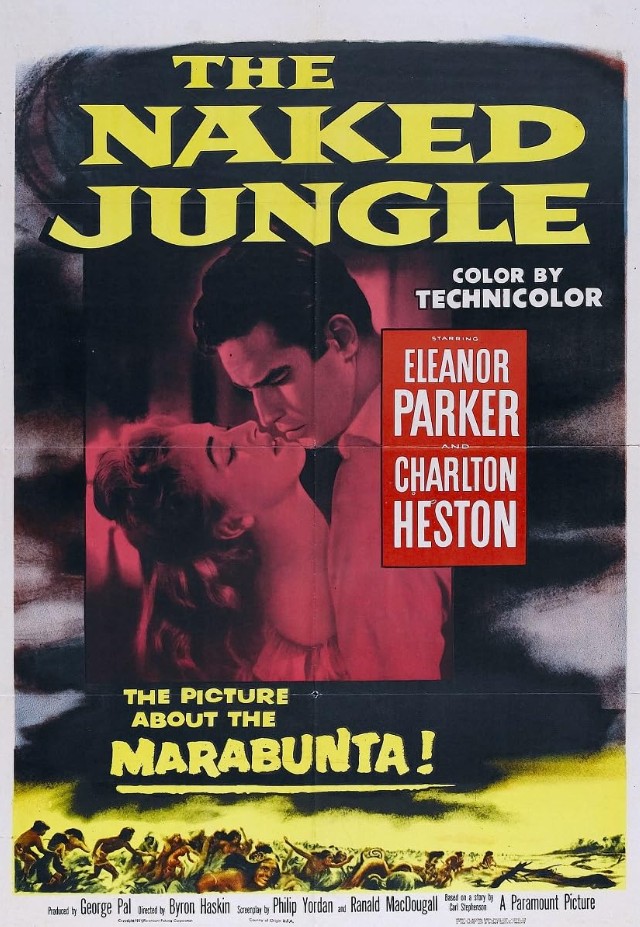
Sally from 18 Cinema Lane talks what she liked and disliked about "The Naked Jungle" (1954), set in the Amazon rainforest.


Don’t forget to come back and also visit Spellbound with Beth Ann!

Thursday, June 18, 2026

Alô Alô Carnaval (1936)


Todo filme clássico pode ser considerado uma janela para o passado, para outro tempo e lugar - um artefato histórico. Mas alguns personificam o “artefato histórico” mais que outros. Musicais, por exemplo: tem jeito melhor ou mais prazeroso de descobrir as músicas que nossos antepassados ouviam e gostavam do que assistindo a um musical? Na minha opinião, não tem. Tendo estreado há 90 anos, o musical brasileiro “Alô Alô Carnaval” é um retrato de mais de uma arte num passado distante, mas não esquecido. 

Every classic film can be considered a window to the past, to another time and place - a historical artifact. But there are some that personify the “historical artifact” more than others. Musicals, for instance: is there a better or more pleasant way to discover the songs that our forefathers listened to and liked than by watching a successful musical? In my opinion, there isn’t. Released 90 years ago, the Brazilian musical “Alô Alô Carnaval” is a portrait of more than one art in a past long gone, but not forgotten.

Dois homens, o Sr Prata e o Sr Tomé, querem organizar um espetáculo. A primeira tentativa deles é negada porque o dono do teatro disse que viria uma companhia estrangeira para usar o teatro. Os dois homens então vão para um cassino. Lá, eles bebem, flertam, apostam. O dono do teatro os procura no outro dia para dizer que a companhia estrangeira não virá e eles podem organizar o show no Cassino Mosca Azul. Essa é a história. 

Two men, Mr Prata and Mr Tomé, want to put on a show. Their first attempt is denied because the patron said he had a foreign company coming to use his theater. The two men then go to a casino. There, they drink, they flirt, they gamble. The patron comes back another day and says the foreign company isn’t coming after all and they can put on the show at the Blue Fly Casino. And that’s the plot.

Mais da metade do filme é usado para mostrar o espetáculo. Há um pianista e uma cantora lírica, mas a maioria das canções são sambas. Tem um samba em particular que começa com os versos de Os Lusíadas, o mais famoso poema épico da língua portuguesa. Isso mostra que o samba é muito mais que um ritmo, é cultura pura. Isso também pode ser visto durante o Carnaval com os desfiles das escolas de samba: não é só um show - mesmo sendo sempre um espetáculo para os olhos -, é uma aula de cultura. 

Over half of the movie is used to showcase the spectacle. There is a pianist and a lyrical singer, but most of the songs are sambas. There is one particular samba that starts with verses from Os Lusíadas, the most famous epic poem in the Portuguese language. This shows that samba is much more than a rhythm, it’s pure culture. This can also be seen during Carnaval with the parades of samba schools: it’s not just a show - and it always is a feast for the eyes -, it’s a whole lesson in culture.

Prata e Tomé apostam no Cassino Mosca Azul, uma diversão comum na época, mas que logo seria proibida. Dez anos após este filme estrear, os cassinos foram proibidos no Brasil após um pedido da muito religiosa Primeira Dama, esposa do novo presidente Eurico Gaspar Dutra. Ela também pediu que o Comunismo fosse banido no país e que fosse construída uma capela dentro da residência presidencial. Todos os pedidos se tornaram realidade graças ao seu querido marido.

Prata and Tomé gamble at the Blue Fly casino, a common diversion of the time, but it would soon be ruled out. Ten years after this movie was released, gambling was banned in Brazil per request of the very religious First Lady, wife of the new president Eurico Gaspar Dutra. She also asked for Communism to be banned in the country and for the construction of a chapel inside the presidential residence. All requests were accepted by her darling husband.

Obviamente, o destaque é Carmen Miranda. Ela primeiro canta, na metade do filme, uma canção com sua irmã Aurora e mais tarde volta para um número solo. “Alô Alô Carnaval” é importante porque é o único filme atualmente conhecido e preservado feito por Carmen Miranda no Brasil - preservação audiovisual é um tópico delicado aqui, pois muitos filmes estão perdidos: todos os de ficção feitos antes de 1913 e muitos outros de anos mais recentes.

Of course, the highlight is Carmen Miranda. She first sings, in the middle of the film, a tune with her sister Aurora and later comes back for a solo number. “Alô Alô Carnaval” is important because it’s the only known extant and preserved film made by Carmen Miranda in Brazil - film preservation is a delicate topic here, as so many movies were lost: all fictional ones made before 1913 and many more from most recent years.

Eu gostaria de destacar outra dupla: as Irmãs Pagãs - aqui creditadas literalmente Pagan I e Pagan II. Elvira Pagã e Rosina Pagã, juntas, gravaram 13 discos nos anos 1930, se separando quando Elvira se casou em 1940. Elvira, entretanto, continuou sua carreira solo e se tornou uma famosa vedete. 

I’d like to highlight another duo: the Pagan sisters - here credited literally as Pagan I and Pagan II. Elvira Pagã and Rosina Pagã, together, recorded 13 albums in the 1930s, splitting when Elvira got married in 1940. Elvira, however, continued her solo career and became a famous “vedete” - actress from musical theatre.

Com um papel breve de alívio cômico, temos o comediante Oscarito. Nascido na Espanha em 1906 como Oscar Lorenzo Jacinto de la Inmaculada Concepción Teresa Díaz, ele fez turnê com o circo trabalhando como palhaço, acrobata e violinista. Ele fez seu primeiro filme em 1935, mas apenas nos anos 1950 chegaria ao seu ápice como comediante, quando formou dupla com outro ator popular, Grande Otelo

With a brief role as comic relief, we have comedian Oscarito. Born in Spain in 1906 as Oscar Lorenzo Jacinto de la Inmaculada Concepción Teresa Díaz , he toured with the circus working as a clown, an acrobat and a violin player. He made his first film in 1935, but only in the 1950s he would reach his peak as a comedian, when he was paired with another popular actor, Grande Otelo.  

O filme foi feito pelos estúdios da Cinédia no Rio de Janeiro. O estúdio foi planejado como uma construção moderna feita para colocar o Brasil em pé de igualdade com os grandes no mundo do cinema. O diretor Humberto Mauro fez o filme inaugural e muitos outros se seguiram, como “Limite” de Mário Peixoto e “O Ébrio” de Gilda de Abreu em 1946. O estúdio também foi utilizado por Orson Welles para gravações de “É Tudo Verdade”. O estúdio ainda existe como locação e centro de memória. 

This film was made by the studios Cinédia from Rio de Janeiro.  The studio was planned as a modern facility built to make Brazil become a big player in the cinema world. Director Humberto Mauro made the inaugural film there and many more came, such as Mário Peixoto’s “Limite” and Gilda de Abreu’s “O Ébrio” (“The Drunkard”, 1946). It was also used by Orson Welles in shootings for “It’s All True”. The studio still stands as a location and memorial center.

Podemos dizer que Prata e Tomé eram um casal “queer coded”, como fica claro quando saem de casa ambos de pijama. Eles brincam, antes desta cena, que a dupla cantando no cassino era um “casal”. Não havia nada parecido com o Código Hays no cinema brasileiro, mas devemos nos lembrar de que o Brasil é o maior país católico do mundo e o conservadorismo está entranhado nas nossas raízes, infelizmente. Pessoas LGBTQ foram e são comumente tratadas como piada.

We could say that Prata and Tomé were a “queer coded” couple, as it is clearer in the sequence where they leave their house both in pajamas. They joke, before that scene, that the duo singing at the casino were a “couple”. There wasn’t anything like the Hays Code in Brazilian cinema, but we must remember that Brazil is the biggest catholic country in the world and conservatism is deep in our roots, unfortunately. LGBTQ people were and are often treated as a joke.

“Alô Alô Carnaval” circula no YouTube como uma versão de 60 minutos que por vezes fica difícil de ver ou escutar. Em geral pensamos como filmes mudos como a maioria dos filmes perdidos, mas em países onde a memória é menosprezada filmes mais recentes também podem estar perdidos. O Brasil tem um problema de memória, não apenas cinematográfica. Como historiadora, estou lutando para mudar isso e essa blogagem coletiva é um bom pontapé inicial.

“Alô Alô Carnaval” circulates on YouTube as a 60-minute version that sometimes is hard to see and hard to hear. We usually think about silent films as most lost films, but in countries where memory is taken for granted more recent movies can be lost as well. Brazil has an issue with its memory not only in the movie world. As a historian, I’m fighting for change and this blogathon is a good starting point.

This is my contribution to the 6th Luso World Cinema blogathon, hosted by me here at Crítica Retrô and by my friend Beth at Spellbound with Beth Ann.


Monday, April 20, 2026

Announcing the Sixth Luso World Cinema blogathon


We’re still here. Brazil didn’t win its second consecutive Oscar, but our nominated film “The Secret Agent” (above) for sure created a buzz. Meanwhile, our desire to celebrate Luso Pride and the contribution made by Lusophone actors, directors, casts and crews for the world of cinema has not grown any smaller. With this in mind, Beth from Spellbound with Beth Ann and me here at Crítica Retrô are proud to announce that the Luso World Cinema blogathon is back for the sixth time, starting on June 19th (Brazilian Cinema Day) and going to the 21st.

If you want to take part, here are the rules:

The Luso World Cinema Blogathon once again accepts posts about films made in Lusophone countries, that is, countries that speak Portuguese – see the list below –, and film stars with Luso heritage, that means, film stars of Portuguese descent. This list includes natives like Carmen Miranda, Rodrigo Santoro, Sônia Braga, Raul Roulien, Maria de Medeiros and also Keanu Reeves, Mary Astor, Louise Fazenda, Tom Hanks, Joe DeRita, James Franco, Daniel Brühl, Auli'i Cravalho, Nestor Paiva, Amy Poehler,  Dorothy DeBorba and many more you can find listed HERE. You can write an overview of those people's lives or careers or focus on a specific film or TV show they made. We also accept the quite rare portraits of Portuguese, Brazilian or other Luso people in film, like in 1937’s “Captain Courageous”, in which Spencer Tracy plays a Portuguese sailor, for instance.

Here are a few lists of movies from Lusophone countries:

List of films from Portugal: https://en.wikipedia.org/wiki/Category:Portuguese_films

List of films from Brazil: https://en.wikipedia.org/wiki/Category:Brazilian_films

List of films from Cape Verde: https://en.wikipedia.org/wiki/Category:Cape_Verdean_films

List of films from Mozambique: https://en.wikipedia.org/wiki/Category:Mozambican_films

List of films from Angola: https://en.wikipedia.org/wiki/Category:Angolan_films

List of films from Guinea-Bissau:  https://en.wikipedia.org/wiki/Category:Bissau-Guinean_films

List of films from São Tomé and Príncipe: https://en.wikipedia.org/wiki/Cinema_of_S%C3%A3o_Tom%C3%A9_and_Pr%C3%ADncipe

List of films from Equatorial Guinea: https://en.wikipedia.org/wiki/Category:Equatoguinean_films

List of films from East Timor: https://en.wikipedia.org/wiki/Category:East_Timorese_films


The list of contributions so far:

Crítica Retrô: Alô Alô Carnaval (1936)

Lost & Found Films: The restoration of "Limite" (1931)

A Shroud of Thoughts: Karen Valentine 

Classic Film and TV Corner: Mary Astor in "Dodsworth" (1936)

The Midnite Drive-In: Blame it on Rio (1984)

Sally Silverscreen: The Naked Jungle (1954)

Taking Up Room: Carmen Miranda in "Springtime in the Rockies" (1942)

Moon in Gemini: Desmundo (2002)

You can grab a banner here and spread the news!

Limite (1931)


Maria de Medeiros

Carmen Miranda

Nha Fala (2002)

Cavalo Dinheiro (2014)

Dorothy DeBorba

Barbie Ferreira


Thursday, June 19, 2025

The Fifth Luso World Cinema blogathon is here!

 You blinked and the big day arrived!


It's June 19th, Brazilian Cinema Day. On June 19th, 1898, the Italian entrepreneur Affonso Segreto shot the first film in Brazil, a view from his ship pointing towards the Baía de Guanabara. This film is now lost - in fact, the earliest surviving film from Brazil is from 1909, and the earliest surviving fiction is from 1913 - but the date remains as a way to celebrate a rich cinema, that now finally has an Oscar!

Me and my co-host Beth Ann from Spellbound with Beth Ann chose the date to celebrate all things related to Luso cinema and Lusophone heritage. It's been an honor to co-host this blogathon, as every year I learn more and broaden my horizons.

Without further ado, here are the fabulous contributions for the blogathon:

I write about Silvino Santos, a filmmaker from the jungle, and the parallels with my great-grandfather.


Gill from Realweeiemidget Reviews focuses on the caper "That Man from Rio" (1964).


Kristina from Speakeasy chronicles her experience watching two movies with Coffin Joe (aka Zé do Caixão)


Maddy from Classic Film & TV Corner highlights the trajectory of the Miranda Sisters, Carmen and Aurora.


Quiggy from The Midnite Drive-In talks about a bizarre love triangle in a movie set in the Amazon, "Creature from the Black Lagoon" (1954).


Ruth from Silver Screenings brings a Casablanca knock-off, the low-budget film "Storm Over Lisbon" (1944).


At A Shroud of Thoughts, Terence tells us about the life and career of Nestor Paiva, a character actor with more than 400 roles in 30 years.


Debbie from Moon in Gemini reviews the delightful "Tune In Tomorrow" (1990), a romantic comedy with Keanu Reeves, who has Portuguese blood. 


At Taking Up Room, Rebecca shines a light on Mary Astor's performance in "Dodsworth" (1936).


Sally from 18 Cinema Lane reviews three episodes of Touched by an Angel guest starring Jasmine Guy.


My co-host Beth closes the event by telling about that time when TCM called Carmen Miranda a Latin AND Hispanic icon.


It was again a lot of fun! Obrigada!

Thursday, April 3, 2025

Announcing the Fifth Luso World Cinema blogathon


Hello again from sunny Brazil! This year has already brought something brand new: an Oscar for a Lusophone country with the victory of “I’m Still Here” in the Best International Film category. It was the fifth time Brazil was up for this award – it’s a shame that Portugal and other Lusophone countries were never even nominated. Because of this historical win, we - that is, me and Beth from Spellbound with Beth Ann - decided to make a change in the Luso blogathon this year: instead of hosting on the usual date, May 5th, we decided to start the event on June 19th, when we celebrate Brazilian Cinema Day. The event will continue until June 22nd – plenty of time to contribute with a text and/or read the entries.

The rules are simple:

The Luso World Cinema Blogathon once again accepts posts about films made in Lusophone countries, that is, countries that speak Portuguese – see the list below –, and film stars with Luso heritage, that means, film stars of Portuguese descent. This list includes natives like Carmen Miranda, Rodrigo Santoro, Sônia Braga, Raul Roulien, Maria de Medeiros and also Keanu Reeves, Mary Astor, Louise Fazenda, Tom Hanks, Joe DeRita, James Franco, Daniel Brühl, Auli'i Cravalho (the voice of Disney's Moana!), Nestor Paiva, Amy Poehler,  Dorothy DeBorba and many more you can find listed HERE. You can write an overview of those people's lives or careers or focus on a specific film or TV show they made. We also accept the quite rare portraits of Portuguese, Brazilian or other Luso people in film, like in 1937’s “Captain Courageous”, in which Spencer Tracy plays a Portuguese sailor, for instance.

Now a little intermission to know more about us, your hostesses:


Here are a few lists of movies from Lusophone countries:

List of films from Portugal: https://en.wikipedia.org/wiki/Category:Portuguese_films

List of films from Brazil: https://en.wikipedia.org/wiki/Category:Brazilian_films

List of films from Cape Verde: https://en.wikipedia.org/wiki/Category:Cape_Verdean_films

List of films from Mozambique: https://en.wikipedia.org/wiki/Category:Mozambican_films

List of films from Angola: https://en.wikipedia.org/wiki/Category:Angolan_films

List of films from Guinea-Bissau:  https://en.wikipedia.org/wiki/Category:Bissau-Guinean_films

List of films from São Tomé and Príncipe: https://en.wikipedia.org/wiki/Cinema_of_S%C3%A3o_Tom%C3%A9_and_Pr%C3%ADncipe

List of films from Equatorial Guinea: https://en.wikipedia.org/wiki/Category:Equatoguinean_films

List of films from East Timor: https://en.wikipedia.org/wiki/Category:East_Timorese_films

We have banners for you to spread the news about the blogathon:

Mary Astor

Ilhéu de Contenda / The Island of Contenda (1996)

A Trança Feiticeira / The Bewitching Braid (1996)

Trikal (1985)

Air Conditioner (2020)

Rio, Zona Norte / Rio, Northern Zone (1957)


Mulheres de Beira / Border Women (1923)

Mark Ruffalo


Carmen Miranda

Tom Hanks


Maria de Medeiros


Jasmine Guy

Yvonne Furneaux in Lisbon (1956)


Lena Horne

Who's doing what:

Crítica Retrô: Silvino Santos, a filmmaker from the jungle

Spellbound with Beth Ann: That time when TCM called Carmen Miranda a Latin AND Hispanic icon

Realweegiemidget Reviews: That Man from Rio (1964)

Cinematic Catharsis: Tombs of the Blind Dead (1972)

Hollywood Kitchen: Louise Fazenda's Cookie Recipe

Speakeasy: Zé do Caixão a.k.a Coffin Joe

Classic Film and TV Corner: The Miranda Sisters

Taking Up Room: Mary Astor in "Dodsworth" (1936)

Moon in Gemini: Keanu Reeves in "Tune In Tomorrow" (1990)

A Shroud of Thoughts: Nestor Paiva

The Midnite Drive-In: The Creature from the Black Lagoon (1954, set somewhere in Brazil) 

18 Cinema Lane - Jasmine Guy's episodes of  "Touched by an Angel"

Silver Screenings - Storm Over Lisbon (1944)
Related Posts Plugin for WordPress, Blogger...